Showing posts sorted by relevance for query STADIUM. Sort by date Show all posts

Wednesday, March 30, 2022

UNLIKE TRUMP RALLIES

Research Shows NFL Stadium Openings in 2020 Had No Impact on Local COVID-19 Infections

NFL Football Stadium

The findings may inform decisions on holding large outdoor gatherings amid future public health crises.

As with most everything in the world, football looked very different in 2020. As the Covid-19 pandemic unfolded, many National Football League (NFL) games were played in empty stadiums, while other stadiums opened to fans at significantly reduced capacity, with strict safety protocols in place.

At the time it was unclear what impact such large sporting events would have on Covid-19 case counts, particularly at a time when vaccination against the virus was not widely available.

Now, MIT engineers have taken a look back at the NFL’s 2020 regular season and found that for this specific period during the pandemic, opening stadiums to fans while requiring face coverings, social distancing, and other measures had no impact on the number of Covid-19 infections in those stadiums’ local counties.

As they write in a new paper published in the Proceedings of the National Academy of Sciences, “the benefits of providing a tightly controlled outdoor spectating environment — including masking and distancing requirements — counterbalanced the risks associated with opening.”
NFL Stadium Openings Impact COVID

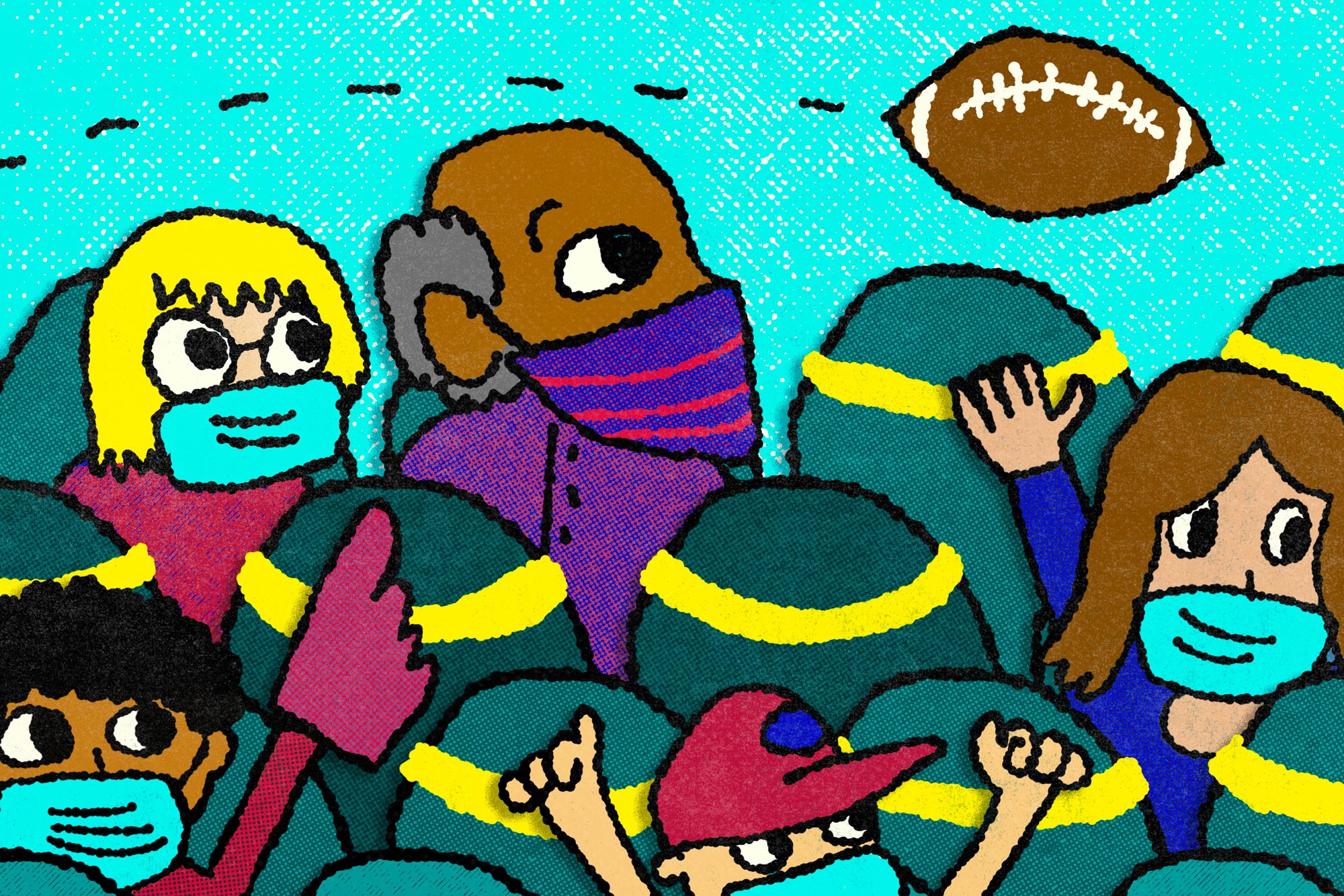
An MIT study finds NFL stadium openings had no impact on local Covid-19 infections during the 2020 season. Credit: Jose-Luis Olivares, MIT

The study concentrates on the NFL’s 2020 regular season (September 2020 to early January 2021), at a time when earlier strains of the virus dominated, before the rise of more transmissible Delta and Omicron variants. Nevertheless, the results may inform decisions on whether and how to hold large outdoor gatherings in the face of future public health crises.

“These results show that the measures adopted by the NFL were effective in safely opening stadiums,” says study author Anette “Peko” Hosoi, the Neil and Jane Pappalardo Professor of Mechanical Engineering at MIT. “If case counts start to rise again, we know what to do: mask people, put them outside, and distance them from each other.”

The study’s co-authors are members of MIT’s Institue for Data, Systems, and Society (IDSS), and include Bernardo García Bulle, Dennis Shen, and Devavrat Shah, the Andrew and Erna Viterbi Professor in the Department of Electrical Engineering and Computer Science (EECS).

Preseason patterns

Last year a group led by the University of Southern Mississippi compared Covid-19 case counts in the counties of NFL stadiums that allowed fans in, versus those that did not. Their analysis showed that stadiums that opened to large numbers of fans led to “tangible increases” in the local county’s number of Covid-19 cases.

But there are a number of factors in addition to a stadium’s opening that can affect case counts, including local policies, mandates, and attitudes. As the MIT team writes, “it is not at all obvious that one can attribute the differences in case spikes to the stadiums given the enormous number of confounding factors.”

To truly isolate the effects of a stadium’s opening, one could imagine tracking Covid cases in a county with an open stadium through the 2020 season, then turning back the clock, closing the stadium, then tracking that same county’s Covid cases through the same season, all things being equal.

“That’s the perfect experiment, with the exception that you would need a time machine,” Hosoi says.

As it turns out, the next best thing is synthetic control — a statistical method that is used to determine the effect of an “intervention” (such as the opening of a stadium) compared with the exact same scenario without that intervention.

In synthetic control, researchers use a weighted combination of groups to construct a “synthetic” version of an actual  scenario. In this case, the actual scenario is a county such as Dallas that hosts an open stadium. A synthetic version would be a county that looks similar to Dallas, only without a stadium. In the context of this study, a county that “looks” like Dallas has a similar preseason pattern of Covid-19 cases.

To construct a synthetic Dallas, the researchers looked for surrounding counties without stadiums, that had similar Covid-19 trajectories leading up to the 2020 football season. They combined these counties in a way that best fit Dallas’ actual case trajectory. They then used data from the combined counties to calculate the number of Covid cases for this synthetic Dallas through the season, and compared these counts to the real Dallas.

The team carried out this analysis for every “stadium county.” They determined a county to be a stadium county if more than 10 percent of a stadium’s fans came from that county, which the researchers estimated based on attendance data provided by the NFL.

“Go outside”

Of the stadiums included in the study, 13 were closed through the regular season, while 16 opened with reduced capacity and multiple pandemic requirements in place, such as required masking, distanced seating, mobile ticketing, and enhanced cleaning protocols.

The researchers found the trajectory of infections in all stadium counties mirrored that of synthetic counties, showing that the number of infections would have been the same if the stadiums had remained closed. In other words, they found no evidence that NFL stadium openings led to any increase in local Covid case counts.

To check that their method wasn’t missing any case spikes, they tested it on a known superspreader: the Sturgis Motorcycle Rally, which was held in August of 2020. The analysis successfully picked up an increase in cases in Meade, the host county, compared to a synthetic counterpart, in the two weeks following the rally.

Surprisingly, the researchers found that several stadium counties’ case counts dipped slightly compared to their synthetic counterparts. In these counties — including Hamilton, Ohio, home of the Cincinnati Bengals — it appeared that opening the stadium to fans was tied to a dip in Covid-19 infections. Hosoi has a guess as to why:

“These are football communities with dedicated fans. Rather than stay home alone, those fans may have gone to a sports bar or hosted indoor football gatherings if the stadium had not opened,” Hosoi proposes. “Opening the stadium under those circumstances would have been beneficial to the community because it makes people go outside.”

The team’s analysis also revealed another connection: Counties with similar Covid trajectories also shared similar politics. To illustrate this point, the team mapped the county-wide temporal trajectories of Covid case counts in Ohio in 2020 and found them to be a strong predictor of the state’s 2020 electoral map.

“That is not a coincidence,” Hosoi notes. “It tells us that local political leanings determined the temporal trajectory of the pandemic.”

The team plans to apply their analysis to see how other factors may have influenced the pandemic.

“Covid is a different beast [today],” she says. “Omicron is more transmissive, and more of the population is vaccinated. It’s possible we’d find something different if we ran this analysis on the upcoming season, and I think we probably should try.”

Reference: “Public health implications of opening National Football League stadiums during the COVID-19 pandemic” by Bernardo García Bulle, Dennis Shen, Devavrat Shah and Anette E. Hosoi, 22 March 2022, Proceedings of the National Academy of Sciences.
DOI: 10.1073/pnas.2114226119

Thursday, November 24, 2022

NFL stadium subsidies are a giant turkey for taxpayers


BY RYAN LANIER, 
OPINION CONTRIBUTOR - 
11/23/22 
Associated Press/Ron Jenkins


On Thanksgiving Day, the National Football League (NFL) will continue its longstanding tradition of playing football on one of America’s oldest national holidays. While the practice of celebrating Thanksgiving Day with a battle on the gridiron extends back to 1920, the Detroit Lions have been featured in the annual game since 1934. In 1966, they were joined by the Dallas Cowboys. The third game this year will be hosted by the Minnesota Vikings. As families gather for turkey, stuffing, and pumpkin pies, they will have the opportunity to enjoy a slate of games that highlight a less noble tradition in American sports: taxpayer subsidization of professional sports stadiums.

The three hosts of the Thanksgiving games on Nov. 24, 2022, have all benefited from substantial taxpayer support to build their stadiums. Ford Field, home of the Lions and site of the first game, was constructed using $110 million in public funds. Dallas’ AT&T Stadium, the location of the second game, cost taxpayers $325 million when it opened in 2009. Minnesota’s U.S. Bank Stadium, the final Thanksgiving Day host stadium, was completed in 2016 using $498 million in public funds.


One of the three visiting teams, the Buffalo Bills, who play against the Lions, also received taxpayer support when they completed a deal in October 2022 with the state of New York and Erie County for $850 million from taxpayers to pay for stadium construction. The other two visiting teams, the New York Giants and New England Patriots, who will be playing the Cowboys and Vikings, respectively, completed their stadiums without any public assistance. The success of building the Giants’ MetLife Stadium and New England’s Gillette Stadium demonstrate that municipalities do not need to fork over hundreds of millions of dollars in taxpayer funds to retain a team within its boundaries. Team owners, worth billions of dollars, have the resources to finance their own upgrades to existing facilities or to build new stadiums.

Unfortunately, the Giants and Patriots are rare exceptions to the rule in stadium financing. Of the 30 stadiums housing the 32 NFL franchises, 27 were completed using taxpayer funds. Los Angeles’ SoFi Stadium, home of the Rams and Chargers, is the only other NFL stadium built exclusively using private money. As a result, future Thanksgiving games for years to come will be far more likely to be held in stadiums constructed at taxpayer expense.

An often-overlooked aspect of stadium financing is where the revenue goes. In many instances, the team owners, not the municipalities, own the stadiums and take home a large portion of the profits from tickets, concessions, and corporate sponsorships. Municipalities may get back some of the money spent on the stadium by taxing targeted industries or through rent paid by teams. However, despite claims to the contrary, stadiums rarely, if ever, generate enough new economic activity in a city or state to justify the public financing.

ADVERTISING


Even those who elect to enjoy a family dinner away from the excitement, disappointment, and arguments that accompany NFL games, particularly the bitter rivalry of the Giants and Cowboys, cannot escape the impact of the games on their finances. Thanks to the tax code, taxpayers who will never set foot in a stadium or watch a game will be subsidizing the contests. A provision in the Tax Reform Act of 1986 allows municipalities to receive a tax exemption for stadium subsidy bonds if 90 percent of those bonds are publicly funded. In practice, this means that stadium bonds are untaxed by the federal government, leaving all taxpayers, regardless of their interest in sports, on the hook for the bill. Putin’s Thanksgiving Day charadeThere is good in this divided country — we just need to look

Taxpayer subsidized stadiums have long been a scourge on taxpayers. Despite constant promises that a publicly funded stadium will generate jobs and economic growth, study afterstudy have proven otherwise. The limited economic gains and potential economic loss associated with publicly financed stadiums leave taxpayers a lot to be unthankful for this year.

Thanksgiving is supposed to be a day of reflection on the good things that have happened in the past year, and the billionaire owners of the Bills, Cowboys, Lions, and Vikings will all be grateful for the hundreds of millions of dollars they’ve received from taxpayers to fund the construction of their stadiums. Taxpayers, meanwhile, will surely not be grateful for the reminder of how much of their money has been spent on these projects when they sit down to watch the games.


Ryan Lanier is State Government Affairs Associate at Citizens Against Government Waste.TAGS STADIUM SUBSIDIES

Monday, May 23, 2022

CRIMINAL CAPITALI$M
California Mayor Resigns Amid Baseball Stadium Deal Scandal

AP / AP NEWS
Mon, May 23, 2022

FILE - Fans line up outside Angel Stadium of Anaheim for an opening day baseball game between the Los Angeles Angels and the Chicago Cubs in Anaheim, Calif., on April 4, 2016. The mayor of the Southern California city of Anaheim is resigning amid a swirling political scandal over the sale of Angel Stadium to the baseball team. Mayor Harry Sidhu is quitting his post effective Tuesday, May 24, 2022, his lawyer, Paul S. Meyer, said in a statement Monday. He said the stadium negotiations were lawful and that Sidhu didn't ask for campaign contributions linked to the deal. 
(AP Photo/Mark J. Terrill, File) (Photo: via Associated Press)More


ANAHEIM, Calif. (AP) — The mayor of the Southern California city of Anaheim is resigning amid a swirling political scandal over the sale of Angel Stadium to the baseball team.

Mayor Harry Sidhu is quitting his post effective Tuesday, his lawyer, Paul S. Meyer, said in a statement Monday. He said the stadium negotiations were lawful and that Sidhu didn’t ask for campaign contributions linked to the deal.

“Mayor Harry Sidhu has always, as his foremost priority, acted in the best interests of the City of Anaheim, and he does so today,” Meyer said in a statement.

The resignation comes a week after the Orange County city of 347,000 people said it learned Sidhu was being investigated by federal officials in relation to the stadium deal.

Since then, Sidhu’s colleagues on the city council have called for him to resign and raised questions about whether the stadium sale can move forward. The city is expected to discuss the stadium plan at a meeting Tuesday.

“No one ever wants to see their mayor resign in difficult circumstances like this but we do welcome this resignation,” city spokesman Mike Lyster said. “We will welcome some clarity as part of a larger effort to evaluate the situation we’re in and figure out the best path forward for our city.”

Anaheim has been negotiating the sale of the land around the stadium to the Los Angeles Angels. The team would agree to stay in the city through 2050 and buy the stadium and its surrounding parking lots, where it would build homes, shops and restaurants.

The Los Angeles Times reports that Sidhu is being investigated by federal officials for allegedly giving confidential information to the Angles at least twice during negotiations in the hope of getting a campaign donation.

Sidhu has not been charged with a crime.

The scandal has ballooned in Anaheim since last week when a former chamber of commerce executive was charged by federal officials of lying to a mortgage lender as part of a broader investigation. This weekend, a California Democratic Party official resigned her post after it came to light she was a cooperating witness in the probe, and authorities said they suspected she had paid bribes to public officials.

This article originally appeared on HuffPost and has been updated.

State attorney general asks for hold on Angel Stadium land sale amid corruption probe

Bill Shaikin
May 16, 2022·

Fans enter Angels Stadium before the team's season opener against the Houston Astros in April. (Ashley Landis / Associated Press)

Harry Sidhu made it his business and his campaign promise in 2018: I’m the mayor that is going to keep the Angels in Anaheim for decades to come.

In 2022, Sidhu is campaigning for re-election as mayor. The city had agreed to sell Angel Stadium and the surrounding parking lots to the team owner in 2019, but the state housing agency had found the deal in violation of California affordable housing law.

Anaheim could have redone the deal. Instead, the city remained liable for a $96-million fine.

That, according to an FBI affidavit filed Monday in Orange County Superior Court, was because Sidhu wanted to see the deal through to solicit a campaign contribution from the Angels.

“We’ll push them at least [to] have a million dollars,” Sidhu said, unaware the FBI had arranged for the conversation to be recorded. “You know, for [an Angels official] to say ‘no’ is bad.”

The Angels official was not identified.

On Monday, the state attorney general asked a court to put the $320 million sale on hold. The court filing explained why: a detailed FBI affidavit showed Sidhu is under investigation for public corruption, and the attorney general said he does not yet know whether the facts uncovered in the investigation could make the sale illegal.

“We will determine what this means for the stadium plan in the days ahead,” Anaheim spokesman Mike Lyster said in a statement.

Marie Garvey, the spokeswoman for Angels owner Arte Moreno's company, declined to comment on Monday's developments. She also declined to say whether Moreno wished to continue to pursue the project.

"It would be inappropriate to comment at this time," Garvey said.

In the affidavit, there is no evidence of wrongdoing by anyone associated with the Angels and no evidence the proposed solicitation was made.

However, FBI special agent Brian Adkins wrote: “I believe Sidhu illustrated his intent to solicit campaign contributions, in the amount of $1,000,000 … in exchange for performing official acts intended to finalize the stadium sale for the Angels.”

Adkins also wrote that he found probable cause to believe that Sidhu shared confidential information about sale negotiations with the Angels — as the city was negotiating against the team — “with the expectation of receiving a sizeable contribution to his reelection campaign from a prominent Angels representative.”

Adkins also said Sidhu “has attempted to obstruct an Orange County grand jury inquiry into the Angel Stadium deal.” The agent also said he believed there was probable cause that Sidhu “may have engaged in criminal offenses,” including fraud, theft or bribery, making false statements, obstruction of justice and witness tampering.

Anaheim Mayor Harry Sidhu, shown at his home, sought campaign contributions from the Angels, according to an FBI affidavit filed Monday in Orange County Superior Court. (Karen Tapia / Los Angeles Times)

The attorney for Sidhu, Paul Meyer, said: “We are making no comment at this time.”

In a statement, Anaheim City Manager Jim Vanderpool said: “We are troubled by this. Throughout this process, Anaheim staff and the City Council have worked in good faith on a proposal that offered benefits for our community.

“What has been shared with us was unknown to the city administration before today, and what is being described falls outside of the city’s process on the stadium.”

Sidhu and the city administration carefully managed the release of stadium-related information to the public. In 2019, when the city extended the Angels’ window to opt out of their stadium lease by one year, the city declined to highlight that it also had reinstated the lease in full, giving the team control of the land through 2038. That meant the city had handcuffed itself in negotiations, since the option of demolishing the stadium in one year and selling the land for half a billion dollars was off the table.

In December 2019, the city announced the sale price at $325 million, later reduced to $320 million. The city said the price could be adjusted for development credits but did not say how much, although The Times reported then that the actual price could be half the announced rate. Nine months later, the city announced the actual cash price: $150 million.

And last month, the city announced a settlement with the state: more affordable housing in the city, but less on the stadium site. It was not until this month that the city disclosed how much less: about 80%.

In March, an Orange County Superior Court judge ruled that the city had not violated the Brown Act — the state’s open government law — in negotiating the sale. The citizens’ group that filed suit against the city had asked a judge to nullify the sale.

“There is no basis to nullify the decision,” Judge David Hoffer wrote in his ruling.

But, according to Adkins, Sidhu’s actions “may have affected the ruling” because a cooperating witness said Sidhu gave him information about a land appraisal so he could share that information with the Angels. Because that information came from a closed session of the city council, Adkins wrote, “Sidhu’s actions may have violated the Brown Act.”

Adkins said he believed Sidhu “knowingly provided confidential information intended for the sole use of Anaheim and its negotiating team to the Angels … with the intent of concealing his actions from the negotiating team and the public, for the purpose of assisting the Angels and himself at the expense of the city of Anaheim.”

Angels owner Arte Moreno (Sean M. Haffey / Getty Images)

Sidhu, according to the affidavit, met with a witness who was cooperating with the FBI investigation, although the mayor was unaware the person was an FBI source, and coached the witness to lie to the county grand jury about what the two had discussed and when they had discussed it.

The evidence, according to the affidavit, also showed Sidhu pursued an Arizona address to register his helicopter, despite the fact that he lived in Anaheim and based the helicopter out of Chino.

Had he registered the helicopter in California, he would have owed $15,888 in sales tax. Had he registered the helicopter in Arizona, he would have owed a $1,025 vehicle tax.

Adkins said there was no record of Sidhu registering the helicopter in either state.

On Monday afternoon, just before news of the affidavit broke, the city councilman who has been the most vocal opponent of the stadium deal – primarily because of what he considered a rushed and secretive process – said he was interested that the state housing agency had taken a renewed interest in the stadium deal.

The state housing agency told the Los Angeles Times on Friday it objected to the city’s proposed solution to violations of affordable housing law: absolving Moreno of almost all of his commitment to build affordable housing there.

Moreno’s development company would return $96 million in credits from the $320-million sale – so the city could say taxpayers had not paid the $96 million -- but the company had the potential to make more money from the hundreds more units of housing it could sell at market rate.

“What I was most concerned about seems to be playing out,” said councilman Jose Moreno, no relation to the Angels owner.

“At the end of the day, out of this illegal land sale, Arte Moreno and the city of Anaheim’s leadership are continuing to maximize the private profits for Arte Moreno and the private interests of the development site, and not looking out for the public benefits.”

Within two hours, he and everyone else at City Hall had learned the mayor was under investigation for corruption. Sidhu has not been charged with a crime.

This, Jose Moreno said, called for a complete do-over of the stadium deal.

“The news of Mayor Sidhu’s alleged political corruption regarding the Anaheim Stadium deal is both unfortunate and tragic,” Moreno said.

“My hope for the people of Anaheim is that this matter is fully investigated and brought to closure so we can move on developing a more open, transparent and legal land deal that truly benefits the people of Anaheim and puts trust back into our local affairs.”

Times staff writer Adam Elmahrek contributed to this report.

This story originally appeared in Los Angeles Times.

Thursday, October 06, 2022

'A time to help': Indonesians ran to aid of fleeing fans in stadium stampede

AFP - Yesterday 

As one of the deadliest disasters in the history of football unfolded before his eyes at an Indonesian stadium, photographer Adi Bowo Sucipto put his camera down and rushed to help.


People pay their respects to the victims at Kanjuruhan stadium in Malang after a stampede that killed at least 131 people in one of the deadliest disasters in football history© JUNI KRISWANTO


People light candles as they gather on Wednesday to pray in memory of the victims of a stampede© Juni Kriswanto

After police fired tear gas into packed terraces triggering the crush that killed 131 people, fleeing spectators sought refuge in the stadium's media centre.

A man was convulsing and gasping for air as Sucipto helped him into the centre. Like so many others who were trampled or suffocated in the crush Saturday, the man died, he said.

"I was shocked. It was traumatic and I eventually stepped aside," said the 43-year-old, who has worked as a photographer for more than a decade and was covering the match for a local news agency.


Photographer Ari Bowo Sucipto recounts his experiences helping victims during the Kanjuruhan football stadium disaster in Malang© JUNI KRISWANTO

In the aftermath of witnessing the horrors at Kanjuruhan stadium, Sucipto now beats himself up, guilty that he didn't run to the aid of others suffering that night.

"Why couldn't I help more?" he asked, saying he now becomes emotional when he sees the Arema FC fans donning the home team's jersey.


A group of people carry a man off the field at Kanjuruhan stadium on the night of the disaster© STR

Around the stadium in the city of Malang, there were others who witnessed the tragedy unfold and rushed to the aid of those caught in the stampede.


Food kiosk vendor Edy Tanto said he rushed to provide water from his shop to victims whose eyes were stung with the tear gas© JUNI KRISWANTO

Edy Tanto's kiosk on the outer ring of Arema FC's stadium was packed with fans without tickets watching the derby against fierce rivals Persebaya Surabaya before the final whistle.

Related video: Indonesia presses for answers after football stadium stampede that killed 125

As fans rushed to express their displeasure at the first home defeat in more than two decades to their adversaries from the biggest city in East Java, the tide turned.

Tanto said he saw people begin to pour out of the stadium when chaos erupted.

He rushed to provide water from his shop to victims whose eyes were stung with the tear gas, which witnesses said police had fired into the stands.

"I couldn't think straight," Tanto told AFP as he sat cross-legged on the floor of his shop.

"I just thought of helping them."

- 'A time to help' -


Some grabbed water from his fridges in a panicked search for anything that could ease their stinging eyes.

"I didn't think about the money. We also took pity on them as they walked in (to the shop) staggering and with short breath," Tanto told AFP.

A similar scene played out on the other side of the stadium.

Another food stall vendor said she rushed to help the tear-gassed supporters who ran to her shop to find cover, while police officers did nothing.

A woman died on the floor of her kiosk, she said, and officers who were standing inside started to fan her with cardboard.

"I was emotional and I scolded the police -- I don't care about their ranks," said the woman, who requested anonymity for fear of reprisal from the authorities.

She said she told them, "You know the supporter was dead, why did you keep fanning her?"

When the surreal scene of officers fanning a lifeless body was unfolding, the kiosk owner told AFP she was massaging another woman who had fled the hail of tear gas to soothe her.

Accounts show these are just a few of the many stories of selflessness that took place in Malang Saturday evening.

Men carried unconscious strangers to ambulances and supporters dragged their friends from the crush refusing to let go, saving their lives on a night when they were only supposed to be enjoying the match.

Like Sucipto, other photographers and video journalists working that night in the stadium stopped shooting to wrest fleeing football fans who were trapped in the human crush near an exit.

"It was a time to help as there were so many victims," Sucipto said.

mrc/jfx/mtp/dhc

Monday, May 30, 2022

CRIMINAL CAPITALI$M
Will Angels bail on Anaheim after FBI probe into political corruption sinks stadium deal?

Josh Peter, USA TODAY - 


ANAHEIM, Calif. – Madelyn Valdes wore her Angels cap, Angels pullover jacket and, while sitting among a crowd of 28,228 at Angel Stadium Thursday night, a look of concern.

It had nothing to do with Shohei Ohtani, the team’s two-way star, giving up two home runs in a 6-3 loss to the Toronto Blue Jays. Because despite a recent slump, the Angels are 27-21 entering Sunday and averaging home crowds of almost 32,000 – the third-highest attendance in the American League.

“It’s really nice to have the energy and all of Orange County to come out and support the team now," Valdes, 42, told USA TODAY Sports.

But Valdes, a disabled U.S, Army veteran and Anaheim resident, said she’s worried the Angels might leave town after what has transpired: An FBI investigation into corruption in Anaheim prompted the City Council on Tuesday to cancel the planned $320 million sale of Angel Stadium and the 153 acres of surrounding property to SRB Management, which is led by Angels owner Arte Moreno.


© Josh Peter, USA TODAY Sports
Madelyn Valdes, a disabled U.S, Army veteran and Anaheim resident, says she's worried the Angels may leave the city.

Still no deal after more than a decade of talks between the team and the city – and another setback for Moreno's hopes of building a sports-themed entertainment district on the stadium site.

Harry Sidhu on Monday announced he was stepping down as Anaheim’s mayor, with the FBI accusing Sidhu of planning to solicit at least $500,000 from Angels contingent on the stadium and land sale being completed. He also stands accused of bribery, obstruction of justice, and witness tampering, according to the affidavit.

The Angels have not been accused of wrongdoing by the FBI, and in a statement the team said, “We are currently exploring all of our options.’’

What immediately came to mind for Valdes was Long Beach, the Los Angeles County city about 30 miles west of Anaheim where city officials and Angels executives discussed in 2019 the possibility of the team moving.

“That would be devastating,’’ Valdes said, with Las Vegas and Nashville seeking an Major League Baseball team and the Angels having previously engaged in talks with city officials in Tustin, a city in Orange County. “This is another kind of rough kick to the old baseball hardgear.’’

Valdes noted the FBI investigation that has at least temporarily derailed the stadium and land sale comes less than three years after Angels pitcher Tyler Skaggs died from an opioid-related overdose.

Eric Kay, the Angels’ communications director at the time of Skaggs’ death, was found guilty of supplying drugs to Skaggs. He was convicted of distribution of a controlled substance resulting in death and conspiracy to possess with intent to distribute controlled substances. Kay is due to be sentenced June 28.

The Angels faced no criminal charges, but the club has been accused of negligence in a civil lawsuit filed by Skaggs’ family.

The team said an independent investigation led by a former federal prosecutor hired by the Angeles “confirmed that no one in management was aware, or informed, of any employee providing opioids to any player, nor that Tyler was using opioids."

But while looking out at the field from her seat in the right-field terrace section Thursday night at Angel Stadium, Valdes said of her beloved team, “It just seems like behind the scenes and out here, we operate differently."

Scott Tenley, a former federal prosecutor in Los Angeles and Orange County, said the federal investigation that followed Skaggs’ death and the current FBI investigation in Anaheim raises questions for the Angels.

“Obviously they recently had a run-in with the criminal justice system themselves on the Skaggs’ death, and there’s probably a lot of scrutiny in how their legal department is keeping them in compliance in all parts of the organization," Tenley told USA TODAY Sports. “I would just think about what is the culture that exists in the organization, what the internal controls in the organization are.

"And while stadium financing and potential drug distribution are very, very different, it just sets the tone of how secretive are employees? Or how much do the individuals at the top of the Angels’ organization not know what’s going on down below that? The Angels might want to investigate and put new policies and procedures into place."

As in the matter of Skaggs’ death, the Angels are defending themselves in the negotiations over the stadium and land sale.

“SRB and Angels Baseball have acted in good faith throughout their dealings with the City of Anaheim with the sole purpose to create a good and fair agreement for the residents of Anaheim and the Angels,” Angels attorney Allan Abshez wrote in a letter sent to Anaheim’s city manager.

But Councilman Jose Moreno said negotiations became “bad faith’’ when the Angels or a consultant working for the Angels received privileged information from Sidhu, the former mayor.

The information included an appraisal of the land that the city council voted to keep private despite objections from Councilman Moreno and a second council member. Moreno said he wanted the information to be public to allay any suspicions that the Angels were getting a sweetheart deal.

“It appears that (Sidhu), on at least two specific occasions, provided City-specific information to the Angels,’’ the FBI affidavit states.

“There are things that could have been worse for the Angels in the affidavit,’’ said Tenley, the former prosecutor. “They could have been listed as people who were engaged in criminal activity."

Tenley cited two aspects of the stadium negotiations that could be problematic for the Angels. The first, he said, is a federal crime known as “honest services fraud."

“So if they’re a participant in any way in the mayor breaching his duty of honest services to the city by stealing confidential information and providing it to the Angels to benefit the Angels, that could open them up to criminal liability," he said. “It kind of turns on, did they know it?’’

Council member Moreno said it should have been clear the information was confidential because the City Council had discussed the matter extensively during open sessions.

Tenley said the Angels also could face criminal charges if the team was aware Sidhu expected a campaign contribution for a role in helping them secure a favorable stadium and land sale. Sidhu, who was elected mayor in 2018 after campaigning to keep the Angels in Anaheim, faced re-election this year.

In the affidavit, a transcript of a phone call the FBI said it recorded between Sidhu and an informant shows Sidhu claimed an Angels representative asked him, “What can I do for your election?’ I said, 'Let me finish your deal first, and then we'll talk about that.' "

But in the affidavit, FBI agent Brian Adkins wrote, “I am unaware of any information confirming that Angels Representative 1 has, in fact, been solicited by (Sidhu) in the matter described herein, or is otherwise aware of Sidhu’s stated intent to do so."

After initially indicating it would push the city to honor the planned sale, the Angels indicated they have changed course.

“Given that the City Council unanimously voted to cancel the stadium land agreement, we believe it is the best interest of our fans, Angels Baseball and the community to accept the City’s cancelation,’’ Marie Garvey, a spokeswoman for the Angels owner and his SRB Management company, said in a statement. “Now we will continue our focus on our fans and the baseball season."

Garvey declined to comment on whether the team still is exploring all of its options.

Sue Laverty, sitting next to her husband at the Angels game Thursday night, said she used to ride her bike to Angel Stadium when it was being constructed. The stadium, which seats a capacity of 45,050, opened in 1966 and is the fourth-oldest stadium in Major League Baseball behind Fenway Park (1912), Wrigley Field (1914) and Dodger Stadium (1962).

“My girlfriend and I used to ride our bikes from the other side of Anaheim and ride around the parking lot and eat lunch and then ride back home,'' Laverty said. "I would hate to see the Angels move out of the city, but I’m not real fond of them being called the L.A. Angels now either. They’re Anaheim to me and they always will be.''

The day after Anaheim’s council members voted to kill the planned sale, however, Long Beach officials sounded ready to renew the courtship.

“If the Angels are interested in continuing those initial discussions, Long Beach would reengage in those discussions and seek direction from the City Council,’’ read a statement issued by the city manager.

Under a cloud of uncertainty, the Angels season and the FBI investigation are unfolding simultaneously.

“It’s heartbreaking because you want to know that everybody’s doing the right thing," said Valdes, the military veteran and diehard Angels fan. “But I love my city and I love my team. So I’m not going to abandon them."


May 28: Los Angeles Angels second baseman Luis Rengifo catches the ball as he turns a double play in the fifth inning against the Toronto Blue Jays at Angel Stadium.

This article originally appeared on USA TODAY: Will Angels bail on Anaheim after FBI probe into political corruption sinks stadium deal?

Sunday, June 22, 2025


The Dodgers were about to break their silence on Trump’s immigration crackdown. Then federal agents showed up


Natasha Chen and Kyle Feldscher, CNN
Sat, June 21, 2025 

A small group of demonstrators protests outside the entrance of Dodger Stadium on Thursday, claiming the organization supports federal immigration efforts in Los Angeles. - Etienne Laurent/AFP/Getty Images


After about two weeks of building public pressure for the Los Angeles Dodgers to speak out against immigration raids throughout the metro area, the team announced on Friday a partnership with the city to commit $1 million to assist families of impacted immigrants – a statement that was delayed by one day after dozens of federal law enforcement showed up just outside the vast parking lot surrounding Dodger stadium.

As one of the City of Angels’ first major professional sports teams, the Dodgers are a cornerstone of Southern California culture. Their interlocking LA logo is as iconic as the Hollywood sign, recognized around the world and worn as a symbol of pride by millions of Angelenos.

In times of crisis, teams like the Dodgers are usually a rallying point – a unifying force in moments of struggle. But over the last few weeks, as major protests popped up in Los Angeles in response to increased immigration raids by the Trump administration in the Southern California area, the Dodgers became a target of local ire. It was a tough demotion from being the subject of local adoration just months ago during a World Series championship parade.

On June 6, raids outside a Home Depot and an apparel warehouse in Los Angeles set off days of protests and, on some nights, clashes between demonstrators and law enforcement. President Donald Trump on June 7 deployed National Guard troops to the city to “temporarily protect ICE” – the US Immigration and Customs Enforcement – “and other United States Government personnel who are performing Federal functions” and to protect federal property, according to a memo – overriding California Gov. Gavin Newsom, who called the move a “brazen abuse of power.”

Families have been split, people were arrested by plain-clothes agents wearing masks and hats and Trump and his administration reveled in the chance to clash with Democratic politicians. As fear spread throughout Los Angeles, many of the city’s institutions spoke up to defend the undocumented immigrants and asylum seekers who were being picked up by the federal government.

But not the Dodgers. The team – whose stadium itself is part of the long story of the Latino experience in Los Angeles, given the land on which it sits was once home to a Mexican-American neighborhood that fought for years against being displaced – was publicly quiet for two weeks about the tension gripping its city.

The silence infuriated many members of the fanbase, who felt abandoned by their team

“I just feel like the organization, as a whole, needed to say something. The fanbase is predominantly Latinos, and we have been supporting them forever,” said Amanda Carrera, a Dodgers fan who was demonstrating outside of Dodger Stadium on Thursday.

On Wednesday night, the Los Angeles Times reported that the team would be breaking that silence with a plan to support immigrant communities in the city.

A few dozen people were also protesting as the Dodgers played the San Diego Padres. They shouted to keep “ICE out of LA” and “ICE out of Dodger Stadium.” Many expressed anger toward the Dodger organization for remaining silent on the issue plaguing a core part of their fanbase. “And so why should we keep supporting them if they don’t support us?” Carrera asked. “And, as heartbreaking as it sounds, it’s like we love our team so much and it just feels like they don’t love us.”
A strange day in Chavez Ravine

It was against that backdrop that federal law enforcement arrived just outside the vast Dodger Stadium parking lot on Thursday morning.

Reports began to circulate that federal agents were present at the stadium outside downtown LA, sparking concerns the Trump administration’s immigration crackdown was coming to the home of the World Series champions hours before a game against the San Diego Padres. Protesters rushed to the area and began chanting anti-ICE slogans at the federal agents.

In the team’s telling, agents from ICE arrived at Dodger Stadium and asked for permission to access the parking lots. The Dodgers said no.

The Trump administration’s version of what happened is quite different. US Customs and Border Protection vehicles were in a parking lot on the grounds, and one of them had a car malfunction that caused them to stay longer, according to an official who maintained there were no operations related to the MLB franchise.


Unidentified agents and their vehicles at Gate E of Dodger Stadium in Los Angeles. - Zin Chiang/dpa/picture alliance/Getty Images

The ICE account on X even called out the Dodgers directly, saying their post was false.

“We were never there,” the post read.

There has been an influx of CBP agents in the Los Angeles area on the heels of the protests against Trump’s immigration enforcement agenda. The Department of Homeland Security surged agency personnel to the region, including border agents, to respond to those protests and many have remained in the area.

“This had nothing to do with the Dodgers. CBP vehicles were in the stadium parking lot very briefly, unrelated to any operation or enforcement,” Assistant Secretary Tricia McLaughlin said in a statement.

An Echo Park Rapid Response community activist, who did not want to be named, told CNN that early Thursday morning, members of the community signaled “what they called a really heavy ICE presence at the Home Depot in Hollywood,” so they headed that way.

The activist said they saw two people being detained at a Home Depot and followed the vehicles in which the detainees were taken away to near Dodger Stadium.

They saw a CBP agent, the activist said, whom they had also seen and spoken to at the Home Depot. “I asked what they were doing. He responded they bring the detainees there (near Dodger Stadium) to process them,” the activist said. “They conduct their investigation there without public interference, (…) that they can’t do it in the Home Depot parking lot because the public makes it too dangerous.”

CNN has contacted CBP and ICE for clarification regarding the community member’s description of events.

Another activist in the area, Chelsea Kirk, followed what she believed to be ICE vans from the Home Depot to Dodger Stadium’s Gate A entrance. She later followed them to a second entry point at Gate E, where the unmarked vans and agents in tactical gear remained for a few more hours.

Protesters gathered at Gate E before dispersing in the early afternoon. Demonstrators gathered again in the early evening to protest outside Gate A, as the Dodgers played the San Diego Padres. They shouted to keep “ICE out of LA” and “ICE out of Dodger Stadium.” Many expressed anger toward the Dodger organization for remaining silent on the issue plaguing a core part of their fanbase.

“Why should we keep supporting them if they don’t support us?” Carrera asked. “And, as heartbreaking as it sounds, it’s like we love our team so much and it just feels like they don’t love us.”

With the attention on the presence of federal agents Thursday, the original plan for the Dodgers to announce support for the immigrant community was delayed.

Dodgers President Stan Kasten said Thursday that the delay was “because of the events earlier today,” the Los Angeles Times reported.
Frustration and fear run deep in LA

No matter the agency or their purpose, the appearance of federal agents at Dodger Stadium is enough to create a high-profile event, given the atmosphere gripping Los Angeles.

Some businesses have been closing early, with more customers staying home. As the school year wound down, some students wept openly in class, worried about the future of their families. Relatives stayed away from graduation ceremonies, while some nannies chose to stay close to their employers’ homes, only taking the children around the block instead of public parks.

Rumors of where ICE will be or how it will be meeting the White House’s demands for more arrests have been rife, not just in LA but around the country. With the FIFA Club World Cup attracting soccer fans to stadiums throughout the US, there have been worries federal agents could target people coming to the games.

So, when reports of federal agents being outside Dodger Stadium began to circulate on Thursday, protesters flocked to the team’s complex just outside of downtown Los Angeles. Images from the parking lot outside the stadium showed a line of police blocking protesters from being near the large group of unmarked federal law enforcement vehicles that had gathered in the stadium’s expansive concrete apron.

With the White House expecting ICE to arrest 3,000 people per day and Los Angeles-area officials telling the public they don’t have any idea where federal agents will pop up next, the entire area is on edge.

Los Angeles Mayor Karen Bass said during a news conference Friday the agents didn’t provide any identification, so they aren’t sure who they are or what they were doing.

“We’re not sure who these armed men are,” she said. “They show up without uniforms, they show up completely masked, they refuse to give ID, they are driving regular cars with tinted windows, and in some cases out of state license plates. Who are these people? And frankly, the vests they have on looked like they ordered them from Amazon.”


Protesters demonstrate not far from federal agents staged outside a gate of Dodger Stadium on June 19 in Los Angeles. - Mario Tama/Getty Images

Carerra said she’s organizing a protest later this week and she hears mixed things about whether people actually want to be in public.

“The community has voted to protest. They want to come out and do it, but I think that there is the other half that’s scared,” she said.

“It’s scary when you see images and videos of people being kidnapped. You know, I mean, ICE agents, unmarked vehicles, masks covering their face. … We don’t even know who to trust. We don’t know, like, are these actually, actual agents or not, you know? So, there’s a lot of fear. It’s horrible. It’s so just heartbreaking.”

The tension meant many fans lashed out at the Dodgers for not having done more to express support for their fans, many of whom are Latino. The replies to the Dodgers’ X account were full of fans demanding the team say something condemning the federal government’s actions or – at the very least – express support for the immigrant community in LA.

Vice President JD Vance traveled Friday to Los Angeles, where he toured a multiagency Federal Joint Operations Center before meeting with leadership and Marines. While speaking with the press, Vance defended the administration’s controversial use of the California National Guard in Los Angeles after a federal appeals court allowed President Donald Trump to maintain control over thousands of guardsmen.

“That determination was legitimate, and the president’s going to do it again if he has to, but hopefully it won’t be necessary,” Vance said.

The vice president is the highest-ranking administration official to travel to Los Angeles since protests roiled the city following ICE raids and troop deployments earlier this month.

Fans demand more from the Dodgers

As the Dodgers delayed their announcement, Al Aguilar stood outside Dodger Stadium with a sign that read “Los Doyers Silent? Silent” on Thursday afternoon. He said the team’s history in LA should make it more understanding of the pressure on the community.

He said the Dodgers buying the Chavez Ravine land at a discounted price and the eviction of the final families remaining on the land came with the stipulation the stadium would be used for the community. He said Latinos largely stayed away from the team until Fernandomania – the debut of Dodger legend Fernando Valenzuela and his subsequent success – in 1981 made fans for life.

That history isn’t forgotten today, he said.

“Nothing was said. They were silent about the issues going on, not even taking sides. They could say, ‘We believe in equal rights, constitutional rights, due process,’ without taking sides, just those things, but they didn’t say anything,” Aguilar told CNN.


Dodgers Stadium. - Etienne Laurent/AFP/Getty Images

He added, “With the amount of Latin American players that they have, with the community being behind them all these years, being (forgiven) – if you were thrown out of your houses and dragged out for a sports franchise that interrupted the community, you might have feelings about that.”

When singer Nezza performed the National Anthem ahead of a game last weekend, as “No Kings” protests were taking place around the nation and LA was enduring another weekend of protests, she decided to do so in Spanish. What sparked more outrage against the Dodgers was the fact that she said a Dodgers employee specifically asked her not to.

“I didn’t really see an issue with it and I wanted people to know that I’m with them and I’m standing by them,” Nezza told CNN on Tuesday.

An unidentified person, who Nezza says is a Dodgers employee, can be heard on a video saying to the singer, “We are going to do the song in English today, so I’m not sure if that wasn’t relayed.”

Following her performance, the Dodgers employee – who she would not name – called Nezza’s manager almost immediately and told them to never call or email them again, and their client was not welcome back, according to the singer.

The Dodgers have said publicly there are “no consequences or hard feelings” regarding her performance and she is not banned from – and is welcome to return to – the stadium.

Nezza, whose parents are both immigrants, said she hasn’t been contacted by the team and doesn’t plan on attending the stadium again.

“I don’t feel welcome to come back,” she said.

Carerra said that attitude from the team confused and angered many fans.

“That’s kind of what’s been the confusion because they have spoken out against or regarding other social issues before,” she told CNN. “They’ve made statements before about things, and so, you know, the fact that it’s taking them this long is just, it’s very confusing, and it hurts.”

‘Can we even trust them?’

Frustration with the Dodgers could ease among fans after Thursday’s confrontation with the Trump administration and the club’s new pledge of support for immigrant families.

Gary Lee, the founder of DodgersNation.com, said silence is the Dodgers’ “default position” on the immigration crackdown, but the announcement by the team on how it plans to assist immigrants in the area was a relief.

“The Dodgers have arguably been more culturally influential to the city of Los Angeles” than other sports franchises, Lee said, “so there seems to be more responsibility to the community on their shoulders than any other franchise, including the Lakers.”

While the planned announcement didn’t immediately materialize after Thursday’s incident with federal agents, the Dodgers on Friday ended up announcing “$1 million toward direct financial assistance for families of immigrants impacted by recent events in the region” with “additional announcements with local community and labor organizations” to be shared in the coming days.

“What’s happening in Los Angeles has reverberated among thousands upon thousands of people, and we have heard the calls for us to take a leading role on behalf of those affected,” Kasten, the Dodgers president, said Friday. “We believe that by committing resources and taking action, we will continue to support and uplift the communities of Greater Los Angeles.”

Part of the calls for action came from more than 50 Los Angeles leaders who wrote an open letter asking the team to denounce ICE raids.

In response to the Friday announcement, Reverend Zach Hoover, Executive Director of LA Voice, federation of PICO California, said, “The Dodgers have taken a meaningful step toward addressing the fear in our communities. By committing real resources to immigrant families, they’re showing that moral courage and civic leadership still matter in Los Angeles, and that we can heal the wounds of hate with the power of love. We pray this is just the beginning—because dignity demands more than silence, and faith calls us to act.”

But for some fans, the damage is done regardless of what the team says. Carerra told CNN the amount of public pressure on the Dodgers has her questioning the team in ways she never would have before. Regardless of the Dodgers’ statement of support or whether or not the club really threw federal agents off Dodger Stadium property on Thursday, she’s wondering if it’s all a public relations move.

“It’s like, can we even trust them? Like, can we trust them up to this point that what they’re doing isn’t just to kind of, you know, protect themselves, and that sucks. I hate that it has to get to this point,” she said.

CORRECTION: This story has been corrected to note the Dodgers were not the first major professional sports team in Los Angeles.

CNN’s Diego Mendoza, Martin Goillandeau, Rebekah Riess, Jacob Lev and Taylor Romine contributed to this report.

For more CNN news and newsletters create an account at CNN.com

Tuesday, July 18, 2023

Review: The Pink Floyd Exhibition is a Must-See For Every Music Fan

POSTED BY AESTHETIC MAGAZINE ⋅ JULY 8, 2023 ⋅
By: Curtis Sindrey


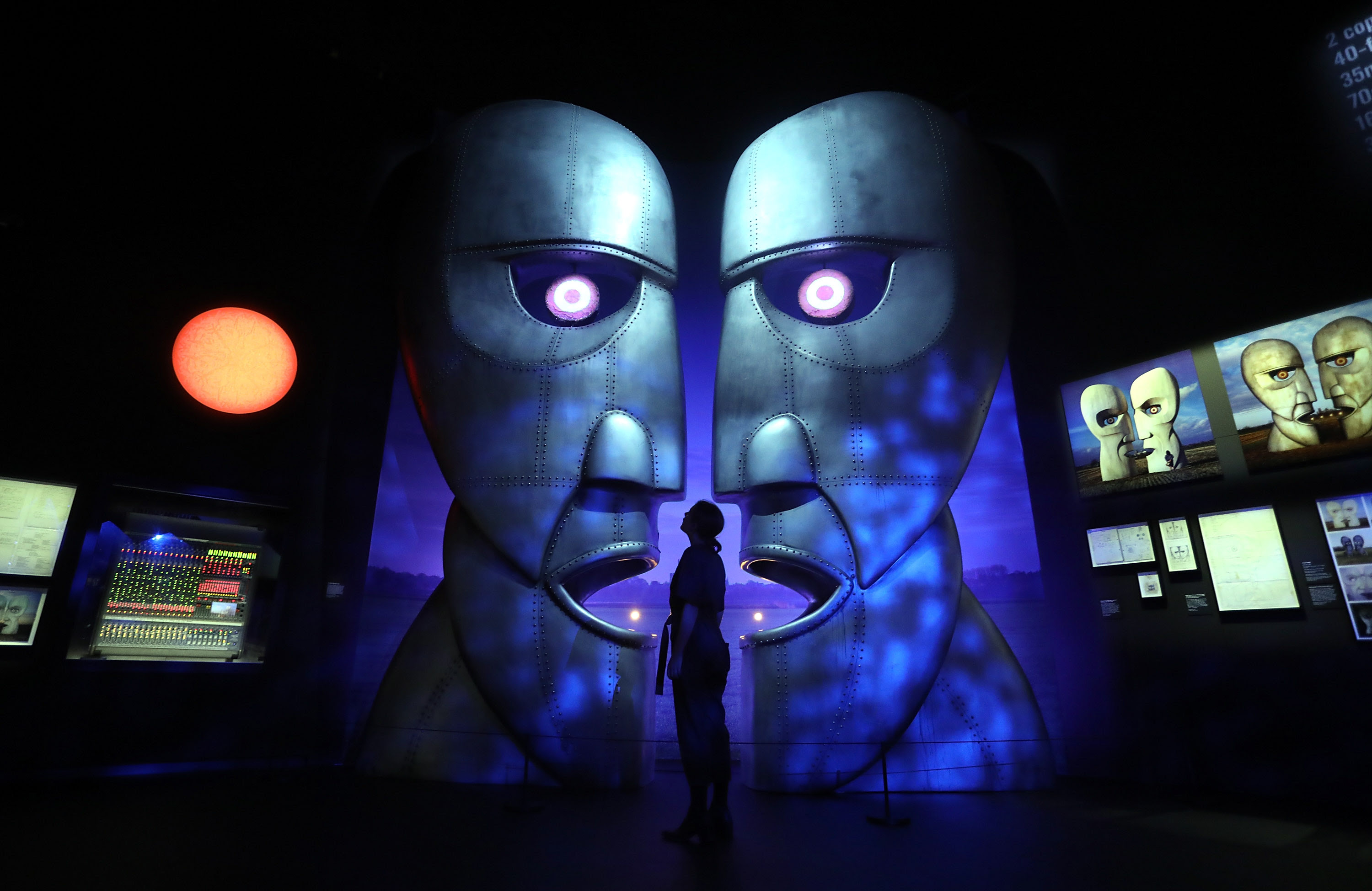
What is there left to say about Pink Floyd? A lot apparently with the opening of a new exhibition that extensively details every era of the iconic psych-rock band’s multi-decade career that produced some of the most beloved rock music of all-time including the now legendary albums Wish You Were Here, The Wall, and Dark Side of the Moon.

As soon as you put on the complimentary headphones, and you walk into the exhibition, it’s more than overwhelming to take everything in. The exhibition, which opened on June 16th, features over 350 objects from throughout Pink Floyd’s existence, from concert posters, to original instruments, to stage props, and everything in between.

Starting in the mid-1960’s, you quickly get introduced to the band’s initial lineup featuring troubled frontman Syd Barrett, who struggled with mental health issues throughout his tenure with the band. During this time, the band developed a strong appreciation for blues legends like Blind Boy Fuller, along with Pink Anderson, and Floyd Council, the band’s namesakes.

As Pink Floyd dived deeper into the 1960’s, so did their level of experimentation and their embrace of everything psychedelia. By the release of their 1967 debut album, The Piper at the Gates of Dawn, the group had already been heavily experimenting with projectors and light/sound manipulation to give the audience an elevated experience. And by their 1970’s creative peak and beyond, it was so enlightening to see the band’s sonic evolution in terms of the on-stage visual effects they once used, to the wide assortment of guitars, basses, drums, synths, and other instruments that came to define the Pink Floyd sound.

One of the most interesting aspects of the exhibition was the complete visual history of the band. Brought to life in part by designer duo Storm Thorgerson and Aubrey Powell, the exhibition includes many concert posters, album designs, and more, that take you into the creative brainstorm of some of Pink Floyd’s most iconic album covers. It was especially fascinating to see the creative process behind a pair of my favourite album covers of Wish You Were Here, and The Wall. The WYWH section goes into great detail about the making of the inner sleeve artwork (spoiler: the “wave-less” effect was made with the model doing a handstand while wearing a scuba mask underwater). The exhibition also shows the design process behind the iconic WYWH album cover that depicts too men shaking hands with one of the men on fire.

Overall, this new Pink Floyd exhibition is a must-see for not only Pink Floyd fans but for fans of that beloved era of music. There are so many pieces of memorabilia, instruments, etc, that you almost need to walk through twice just to take everything in. The exhibition is a touching, informative, entertaining, and exhaustive examination of a band’s influence that goes beyond music and extends almost into the cosmos.


How rare footage of Pink Floyd concert dubbed 'the Woodstock of Hamilton' made it to the big screen

An estimated 52,000 people attended the 1975 show. 

Pink Floyd at Ivor Wynne Stadium
Over 50,000 fans showed up to watch Pink Floyd play at Ivor Wynne Stadium in 1975. (Submitted by Jacob Tutt)

Nowadays it's hard to imagine being Jim 'Speedy' Kelly, the lone man with a camera in a crowd of 52,000 fans at the 1975 Pink Floyd show at Hamilton's Ivor Wynne Stadium. 

Speedy's footage gives a glimpse into an almost-forgotten moment in Hamilton history.

More than 50,000 hippies made a pilgrimage to the heart of Hamilton to see the psychedelic British band. 

"When the gates got torn down, thousands of people poured in there," said Rob Gronfors, who went to the concert when he was around 12 with his older brother. 

A prolific concert videographer, Speedy caught bands like Rush, Led Zeppelin and Alice Cooper on Super 8 film.

When Speedy died in 2021, he left all of his films to Gronfors, his good friend — including the Pink Floyd concert at Ivor Wynne Stadium.

Pink Floyd
Pink Floyd on stage at Ivor Wynne Stadium in 1975. (Submitted by Jacob Tutt)

Gronfors said the original Super 8 film was grainy, but he was approached by a few people who said they could restore the footage into 4K quality, with the help of artificial intelligence.

The rare footage of the Hamilton Pink Floyd concert is part of a double bill alongside Pink Floyd: Live at Pompeii at Playhouse Cinema, playing Saturday evening and then again on Aug. 2. 

"Pink Floyd never recorded anything in 1975. It's just not out there on any YouTube channels or anything," Gronfors said.

The Ivor Wynne show was "like the Woodstock of Hamilton," said Jacob Tutt, manager of Playhouse Cinema. 

Tutt said footage of Pink Floyd was so rare in the 70s that most fans likely wouldn't have recognized the band members. 

"Through the 70s and 80s, there's very little concert footage that's out there to see of Pink Floyd playing," he said. 

Fans outside Ivor Wynne.
Fans just outside Ivor Wynne Stadium in 1975, where Pink Floyd played for 50,000 people. (Submitted by Jacob Tutt)

Photos from the concert show the toll the 52,000 fans took on the quiet neighbourhoods surrounding the stadium. 

Gronfors described the scene to CBC's Commotion earlier this week.

"The stadium was right in the middle of a wartime-houses subdivision," he said.

"They had the nice porches with the pillars and little tiny front yards to the street. Well, everybody's front yard was just full of all these... hippies, I'll say, passing joints around, drinking—just enjoying the day and having fun." 

"It was the first major concert event that happened at Ivor Wynne Stadium," Tutt said.

The promoter who booked Pink Floyd, Tutt said, had a number of other major acts set to play at stadium. But the Pink Floyd concert "set a precedent" against large concerts in the city for decades.

"There were never any concerts or major musical acts that played at Ivor Wynne Stadium until I think 2012, when The Tragically Hip played," he said. 

Fans at Ivor Wynne
The size of the crowd at the Pink Floyd concert in 1975 set a precedent for not hosting big performers at the stadium for the next 40 years. (Submitted by Jacob Tutt)

Gronfors said the show itself "made history." 

It was the last North American date of the 'Wish You Were Here' Tour, he said, and the band didn't want to bring any leftover fireworks back to England. 

"They decided to blow them all off. Let's have a huge send off and and unfortunately some of them hit the scoreboard and wrecked the Hamilton Tiger Cats scoreboard," he said. 

People sitting outside Ivor Wynne Stadium in 1975.
The neighbourhood around Ivor Wynne Stadium was overwhelmed by the crowds that came out for the 1975 Pink Floyd concert. (Submitted by Jacob Tutt)

Gronfors posts the restored footage shot by Speedy on the YouTube channel he created last year, where you can also see clips and hear audio from Van Halen, Alice Cooper, Rush, Cheap Trick and others from the 1970s. Gronfors, who goes by the name Dolph on the channel, also tells the stories of some of the shows.

But while the channel lets people watch the concerts at home, Gronfors said he knows Speedy would be happy his videos are being screened at a theatre. 

"He would be ecstatic. He would be so happy. It makes my heart boom. You know, I'm a spiritual person, so Speedy is definitely there through my eyes. He's definitely going, 'Way to go, Dolph. Way to go.'" 

People in a stadium.
Rob Gronfors went to the Pink Floyd concert at Ivor Wynne Stadium in 1975 when he was around 12 years old. (Submitted by Jacob Tutt)