A war neglected by the world — Afghanistan and Pakistan
First published at Europe Solidaire Sans Frontières.
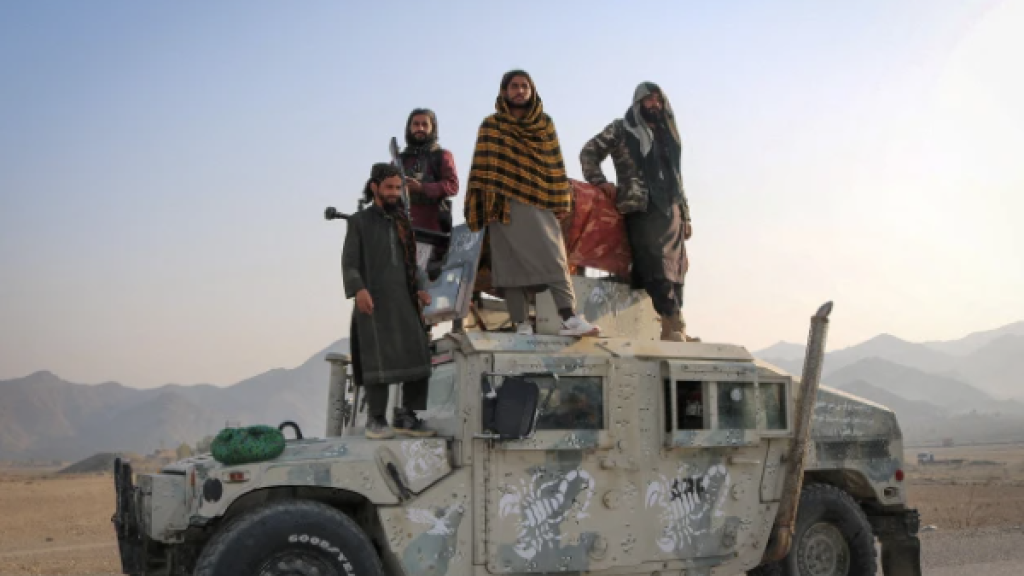
The recent war between Afghanistan and Pakistan has been overshadowed by the attack on Iran by U.S. and Israeli imperialism. Yet the Afghan-Pakistan war, which began 21-22 February 2026 has resulted in heavy causalities on both sides. It was launched by the Pakistan Air Force airstrikes on Eastern Afghanistan (Nangarhar, Paktika, and Khost provinces).
The right-wing Pakistan Government of Mian Shahaz Sharif described these strikes as a response to consistent militant attacks inside Pakistan. He called them “targeted” on the camps of the Tehrik-i-Taliban Pakistan (TTP) and Islamic State — Khorasan Province.
On 26 February 2026, the Afghan Taliban government launched retaliatory attacks beginning with massive border clashes. Pakistan then launched a military campaign called “Operation Ghazab Lil Haq.” Pakistan’s defense minister announced the countries were in “open war” after several days of fighting. Airstrikes and artillery exchanges reportedly hit areas including Kabul, Kandahar, and Paktia. As of 5th March 2026, heavy shelling continued along the disputed Durand Line border between the two countries.
While both sides claim heavy military losses, actual numbers are disputed. Yet civilians are the main causalities as in any war, and tens of thousands of people are displaced near the border.
Despite’s Trump initially describing the Pakistani Air Force attack on different districts of Afghanistan as “good”, the coordinated attack on Iran by the United States and Zionist Israel has shifted world attention and Trump has also forgotten to comment on this war.
How has religious fanaticism spread in Afghanistan and Pakistan?
With complete silence by all the main imperialist countries toward this escalating war between Afghanistan and Pakistan, the role of U.S. imperialism in promoting religious fundamentalism in Afghanistan during the 1980s has been forgotten. Yet to understand the present war we must revisit the past.
A radical Afghan military officers’ group led by Noor Mohammed Tarakai was able to bring down the corrupt Daud government in 1978. A year later, the Soviet Union sent forces to shore up the new government.
This triggered Washington to work with the Saudi Kingdom to pour modern weapons and unleash massive economic support to the religious fanatic groups interested in bringing down the regime. Along with its support to these reactionary forces, U.S. foreign policy felt no shame in siding with the Zia Ul Haq military dictatorship in Pakistan. This despite the regime’s having just hanged deposed Prime Minister Zulfiqar Ali Bhutto in April 1979 on a false accusation of murder.
For over 10 years after the suspicious death of dictator Zia Ul Haq in an airplane accident, U.S. imperialism supported religious fanaticism in both countries. This meant support to the Pakistani governments led by Benazir Bhutto and Mian Nawaz Sharif, while aiding the Mujahidin in Afghanistan to come into power in 1992.
The Taliban used Pakistan to educate and train itself before being able to take over Kabul in 1996.
The Pakistan ruling elite welcomed Taliban government and gave an impression that this was their act. The Taliban’s first actions on assuming governmental power were the public hanging of Najib Ullah (who had remained in the UN headquarters in Kabul after being deposed in 1992) and the banning of girls’ education.
However, after 9/11, NATO forces led by the United States overthrew the Taliban. Despite the Taliban’s control over less than half of the country, toppling the regime and occupying the country was Washington’s demand, while other options were available for removing Taliban from power. By installing a pseudo-civilian government, the NATO occupation of Afghanistan led to the spread of religious fundamentalism in Pakistan.
In Pakistan General Musharaf had overthrown the Mian Nawaz Sharif right-wing government in 1999. The Khaiber PukhtonKhwa province, bordering Afghanistan, was led by the religious fanatic MMA [Islamic coalition ed] government, which provided support to the Taliban fleeing to Pakistan in the aftermath of the NATO attack. They encouraged the setting up of thousands of Madrassas, since 1980 which enabled the Taliban to capture real street power.
Following the withdrawal of U.S.-led forces on August 15, 2021, the Taliban returned to power. Despite vague promises, they established an all-male government led by Supreme Leader Mullah Hibatullah Akhundzada. This “second time” regime, following their 1996–2001 rule, prioritizes Taliban interpretation of strict Sharia laws.
The Indian connection
As of early 2026, the relationship between the Taliban government in Afghanistan and Indian right-wing government of Modi instituted a pragmatic relationship. While India does not formally recognize the Taliban regime, it upgraded its technical presence in Kabul to a full embassy and is actively engaging to protect its strategic, economic, and security interests in the region.
This relationship was created in response to the changing geopolitics of the South Asian region. Following the India-Pakistan four-day war in May 2025, U.S. imperialism lowered its relationship with India, apparently because Trump was annoyed at Modi’s refusal to stop the war. Although Pakistan had received and spent US$45 billion from China for developing the China-Pakistan Economic Corridor (CPEC), Trump was favored by military generals and civilian government of Shahbaz Sharif over China.
The Trump card
Trump, to ensure that Pakistan was on his side before attacking Iran in June 2025, invited and warmly welcomed to the White House field marshal Asim Munir, anointing him as his “more favored general”. Days later, the U.S. Air Force and Navy attacked three nuclear facilities in Iran as part of its Twelve-Day War, carried out under the code name Operation Midnight Hammer. President Trump said the strikes “completely and totally obliterated” Iran’s key nuclear enrichment facilities. Despite this claim, Trump has again attacked Iran with the same excuse this February.
Meanwhile, Indian imperialism responded to the deepening U.S.-Pakistan relationship by providing more support to the Taliban. This resulted in more attacks inside Pakistan during the last six months,
The war
Pakistan’s launching a full-fledged attack on the Taliban-led government is related to escalating terrorist activities in KP province. It is estimated that almost 30% of the Khaiber Pakhtunkhawa (KP) province is effectively controlled by Tehreek Taliban Pakistan (TTP) at least at night, with full support from the Taliban in Afghanistan.
In January 2026, Pakistan recorded 87 militant attacks nationwide, 38 of them in KP, the highest among provinces. According to statistics released by the Islamabad-based think tank Pakistan Institute for Conflict and Security Studies (PICSS), combat-related deaths in January 2026 rose by 43% compared to December 2025. A total of 361 people were killed during the month.
In February 2026, there were major terrorist attacks in Khaiber Pakhtunkhwa Province. In a 6 February 2026 suicidal attack on an Islamabad Mosque, 40 were killed and more than 170 injured. The Islamic State–Khorasan (IS-K) targeted the Shia Mosque during Friday prayers.
In another major attack on 16 February 2026 at Bajaur district in Khyber Pakhtunkhwa, 11 security personnel plus one child) were killed. The TTP claimed responsibility for bombing and shooting what were merciless and unrelenting attacks on mosques and markets. They were daring enough to take on hard targets, including army bases and airports, and shameless enough to take on soft ones, such as schools and shrines. They decapitated Pakistani police officers and soldiers, then uploaded videos to social media for the world to see.
The growing influence and persistent terrorist attacks are becoming a challenge to the Pakistani state. Between 2018-2022, Pakistan Prime Minister Imran Khan from the Tahreek Insaf (PTI), promoted negotiations with religious fanatics as a way to counter their influence. While he was in office, 12 hard-core members of the TTP were released from custody. In fact, Pakistan has previously negotiated at least a half-dozen “peace deals” with the TTP. These negotiations have reinforced the influence of religious fanatics, turning Pakistan into another Afghanistan.
As Ashan Butt, Associate Professor at George Mason University, wrote in Aljazeera on 27 Oct 2021:
The TTP’s desire is to overthrow, violently or otherwise, the Pakistani state and impose their interpretation of Sharia throughout the country. There is no offering short of this, no concession or act of generosity, that Islamabad will be able to buy TTP forbearance with.
In fact, all a peace deal will do — all it has ever done, when it comes to the TTP — is allowing it to regroup, reorganise, rearm, and bolster its capacity for death and destruction.
Imran Khan was the avatar for a deeply sympathetic position towards the Taliban. Not for nothing did he earn the moniker ‘Taliban Khan’.
Negotiation with religious fanatics is never an option for peace. Imran Khan, now imprisoned on corruption charges, later revealed that he had invited 5000 Taliban to Pakistan in the name of rehabilitation. After his government lost a vote of no confidence, the Taliban terrorist activities grew to a record level in all parts of Pakistan. Still till the present day, the PTI government in KP province continues to promote negotiations with fanatics.
Over 50,000 Pakistanis have been killed by terrorist attacks by the Taliban in Pakistan over the past 20 years.
After a series of disappointing performances by consecutive civilian governments since the departure of General Musharaf’s dictatorship in 2008, the overall Pakistani political landscape has moved further right. This is very favorable constituency for promotion of religious fundamentalist groups and ideology.
The civilian governments, instead of learning lessons, promote one or another other religious groups, only turning against them on another occasion. Then they attempt to rid the country of these state-sponsored religious fanatics by banning, jailing and killing them.
None of these religious fanatic organizations are Indigenous to Pakistan.
Despite these experiences, the military-dominated civilian governments never sever their relationship with those ideologies or develop effective strategies to counter them. Yet the military remains the de facto power broker, forging and dissolving alliances and governments, however best suited its interests. As a result, of Pakistan’s 29 Prime Ministers since independence in 1947, none has completed a full five-year term.
Military operations have never been a real solution to end the domination of religious fanaticism.
Military operations by Pakistan army
Pakistani forces have conducted at least 10 major military operations, along with numerous smaller operations, since 2001:
- Operation Enduring Freedom (2001–2002),
- Operation Al Mizan (2002–2006),
- Operation Zalzala (2008),
- Operations Sher Dil, Rah-e-Haq,
- Rah-e-Rast (2007–2009),
- Rah-e-Nijat (2009–2010),
- Operation Zarb-e-Azb (2014–2016): Launched in June 2014 in North Waziristan after the Karachi airport attack, this massive, sustained offensive aimed to dismantle the TTP and allied foreign fighters, displacing hundreds of thousands,
- Operation Radd-ul-Fasaad (2017–Present): A nationwide, broad-spectrum operation launched to eliminate the “residual/latent threat” of terrorism, combining military action with intelligence-based operations (IBOs),
- Operation Azm-e-Istehkam (Announced 2024): A proposed, highly contentious, and, in some accounts, unlaunched operation aimed at curbing the resurgence of militants in the frontier regions,
- Recent Kinetic Actions (2025):
None has resulted in the elimination of fanaticism, on the contrary more fanatic groups emerged.
The military has continued targeting militant hideouts in mountainous regions near the Afghan border, often using helicopters and, according to recent reports, initiating “open war” against the TTP due to increased insurgency.
Pakistan has two religious states on its borders: Iran and Afghanistan, but while the Taliban is always seeking to expand their religious revolution to Pakistan, Iran has never done so because of minority Shia community. The presence of these two states with religious extremist in power is another favorable objective realty for the spread of religious fundamentalist ideas.
After failing to curb the consistent rise of religious fanatic groups, a war has been started but it cannot lead to a permanent solution for either Afghanistan or Pakistan.
There will be more bloodshed despite a possible ceasefire between the two.
We cannot support this war. The bombing of Afghanistan or terrorism in Pakistan will not bring peace. Instead, we demand war and terrorist activities by the Taliban must stop immediately.
Neither Pakistan nor any other nation should recognise the Taliban government as the legitimate Afghan government. Trade must be restored with Afghanistan through the traders’ community independently of Afghan government.
Pakistani government must change its policies towards the fanatic religious groups. They must sever their state links to help them. There should be no state subsidies and no discriminatory laws against any religion or religious minority.
Further, the government must separate itself from the U.S. Trump administration. There should be no Pakistani representation on Trump’s so-called Board of Peace and a withdrawal of nominating Trump for the Noble Peace Prize.
These transitional measures cannot be expected of the present government of Pakistan, which has broken all records of sycophancy in support of Trump.
We must build our own political power independent of these capitalist and feudal led parties. That would be a permanent solution to the rise of religious fundamentalism — and a road towards Socialism.
Farooq Tariq is President Haqooq Khalq Party Pakistan, member global council Fight Inequality Alliance and executive committee member Asian Peoples Movement on Debt and Development (APMDD).
Afghanistan–Pakistan war, militarism and a left response to the regional crisis
A version of this was first published at Alternative Viewpoint.
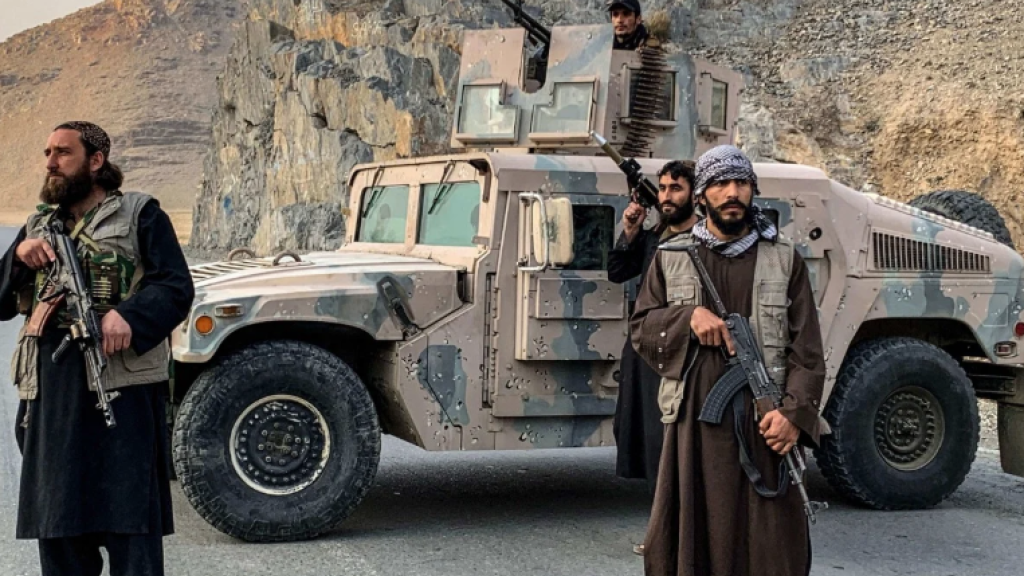
As cross-border strikes intensify and Pakistan’s defence minister declares “open war” against the Afghan Taliban government, the long arc of Islamabad’s Afghanistan policy appears under severe strain. Is this merely another episode in a volatile frontier relationship — or the blowback of decades of militarised strategy and proxy politics?
In this conversation, Pakistani left activist, academic and journalist Farooq Sulehria examines the crisis through a structural lens: the legacy of “strategic depth,” the Frankenstein logic of jihadist patronage, the ideological character of the Taliban regime, and the dangers of campism within sections of the left. Rejecting both state militarism and theocratic authoritarianism, Sulehria argues that the current confrontation reflects a deeper crisis of the regional order — one whose costs will be borne overwhelmingly by working people on both sides of the Durand Line.
Pakistan’s defence minister has declared “open war” on the Afghan Taliban government. Is this escalation a tactical rupture or does it mark the exhaustion of Pakistan’s long-standing Afghanistan doctrine?
It is neither a tactical rupture nor the exhaustion of Pakistan’s “strategic depth” policy. Instead, the recent declaration of war by defence minister Khawaja Asif reflects Islamabad’s frustration over the ongoing conflict.
Prior to declaring war, Pakistan would have made preparations. It was only after exhausting other alternatives that Pakistan ultimately designated the Taliban regime — which they had assisted in establishing — as an adversary. Ironically, Asif expressed gratitude to Allah Almighty on his X account when the Taliban defeated the US and regained control of Kabul.
Border clashes between the two countries have escalated into Pakistani attacks on Kabul and other towns since October. Qatar, Turkey and China have facilitated 65 rounds of talks between Kabul and Islamabad since then. However, the Movement of Pakistani Taliban/Tehrik-e-Taliban Pakistan (TTP) has intensified its terrorist activities in Pakistan, having been provided safe havens in Afghanistan by the Taliban regime.
The dispute between Kabul and Islamabad arises from the TTP’s presence in Afghanistan. The TTP is targeting military and police forces in addition to civilians. Last year, nearly 1000 terror attacks were reported, the majority claimed by the TTP.
Since October, Pakistan has closed its border and halted trade with Afghanistan. As a landlocked country, Afghanistan relies on Pakistan for trade with India and has a significant dependence on Pakistani imports, particularly wheat, vegetables and medicines.
In the Balochistan province, nationalists have intensified their militant activities, occasionally attracting global attention. Pakistan accuses India of supporting these Baloch separatists. Furthermore, the Taliban regime has established relations with New Delhi, much to Islamabad’s frustration, to counter Pakistani pressure.
Domestically, Pakistan has justified the existence of safe havens for the Afghan Taliban in the aftermath of 9/11 under the concept of strategic depth. This concept suggests using Afghanistan as Pakistan’s “friendly backyard,” in the event of a conflict with the significantly larger India.
The concept of “strategic depth” has influenced Islamabad’s policy for decades. Has this doctrine now collapsed, and if so, what might take its place?
On the contrary, mainstream media commentators viewed as unofficial spokespersons of the Pakistani establishment have been talking of regime change in Kabul. At this stage, it is difficult to substantiate whether Islamabad is planning regime change in Kabul, especially given the lack of concrete evidence. However, such thinking cannot be ruled out.
Islamabad has been exploring the possibility of a coup or regime change that would benefit Pakistan. While such a coup or regime change would not solve Pakistan’s problems, such wild ideas reflect Islamabad’s obsession with strategic depth.
One may dismiss regime change as a conspiracy theory or conjectural fantasy, but the escalation to rein in the Taliban regime mirrors Islamabad’s desperation to pursue the idiomatic strategic depth.
Islamabad portrays the crisis as being centred on TTP sanctuaries in Afghanistan. To what degree is this conflict a result of Pakistan’s historical engagement in proxy warfare and its support for militant groups?
This is a classic example of Frankenstein’s monster or the sorcerer’s apprentice, as expressed in the German idiom.
Pakistan is both the origins and a fertile breeding ground for Islamic fundamentalism. Since the so-called “Afghan Jihad”, which was derisively termed the “Dollar Jihad” by domestic critics, Pakistan has fostered the Jihad industry.
Initially, the objective was to support the Afghan Mujahideen against the Soviet occupation; later, it was directed against India. The state’s classification of some Taliban members as “good” and others as “bad” indicates that its policy remains unchanged.
At the same time, how should we assess the Taliban regime’s responsibility? Has Kabul failed — or refused — to restrain cross-border militancy for ideological or strategic reasons?
Yes, the Afghan regime appears to have done little to rein in the TTP. Commentators have noted the regime’s inability to exert control over this group. There are ideological reasons for such an outcome as well as practical considerations and geopolitical calculations. The Taliban regime has adeptly and strategically utilised the TTP, to garner support from New Delhi.
Should the current confrontation be viewed primarily as a clash between two regimes driven by security concerns, both influenced by decades of conflict, or as merely a straightforward instance of aggression and retaliation?
Neither side appears willing to pursue diplomatic avenues.
This raises questions about the nature of the Taliban regime, which has implemented policies akin to women’s apartheid and has effectively introduced slavery, demonstrating a lack of belief in contemporary diplomatic practices and norms.
The Taliban has a limited social base and maintains control through fear and intimidation. Their support primarily derives from extremist religious factions within the country.
Meanwhile, the military, which governs the Islamic Republic of Pakistan, approaches every issue through a lens of securitisation.
Since returning to power in 2021, the Taliban have struggled with economic collapse, diplomatic isolation and internal factional tensions. How do these pressures shape their stance toward Pakistan?
As soon as they recaptured Kabul, they rebelled against Pakistan. It appears they recognised that Pakistan lacked the economic and diplomatic influence needed to provide the Taliban regime with legitimacy and stability.
They sought to establish relations with China, Russia, Turkey and the Gulf states, along with India, to Pakistan’s frustration. Islamabad was excluded from these developments.
Notably, immediately after the Taliban solidified their rule, second-tier officials began issuing statements critical of Pakistan. My Afghan comrades interpret these statements as attempts to garner social support within Afghanistan, where Pakistan is widely unpopular.
From a left perspective, how should one characterise the Taliban regime today: as a nationalist-Islamist formation seeking sovereignty or as a fundamentally reactionary project whose regional behaviour reflects its ideological core?
Unfortunately, there has been a tendency to characterise the Afghan Taliban as a form of nationalists. Tariq Ali’s work, The Forty-Year War in Afghanistan: A Chronicle Foretold, exemplifies this view, as he seeks to portray the Taliban as Islamo-nationalists. Such perspectives reveal a profound misunderstanding of the Taliban movement, which represents one of the most extreme manifestations of Islamic fundamentalism.
Nationalism emphasises the concepts of nation and national identity, language, history and culture. In contrast, Islamic fundamentalism prioritises Sharia, aiming to return to a perceived Muslim (Arab) past, in which the nation is regarded as a fifth column that threatens to divide the Ummah. Culture is perceived as an impurity, with cultural practices such as music and dance deemed sinful under Sharia law.
Interestingly, some leftist perspectives have absurdly characterised the Taliban as an expression of class struggle. During the war against Iraq, the Ayatollahs in Iran incorporated and subsumed nationalism into their Sharia project. Similarly, in their conflict with Pakistan, the Taliban regime references the nation alongside religion. However, this does not fundamentally alter their character.
In my opinion, attempts to frame the Taliban as nationalists or as subalterns involved in class struggle were early indicators of campism emerging in the aftermath of 9/11.
The Taliban claims that it defends Afghan sovereignty against violations by Pakistan. How does one critically engage that claim without romanticising a deeply authoritarian regime?
The Taliban regime is framing the Pakistani attacks as a violation of sovereignty. However, Pakistan is framing the TTP safe havens and their infiltration as a violation of sovereignty. It is a clash of barbarisms. Neither side can claim any moral superiority.
From one viewpoint, the monster had legitimate grievances against Herr Frankenstein. From another viewpoint, one may express sympathy for Victor Frankenstein. Tragically, innocent civilians will bear the consequences.
Since 1979, Afghans have continued living under hellish conditions. People in Pakistan, particularly in the bordering Khyber Pakhtunkhwa province, have suffered greatly since 9/11. Thousands of lives have been claimed through senseless violence by the Taliban, military operations conducted by the Pakistani state, and endless tribal and sectarian disputes triggered by this conflict.
We should avoid reducing it to an Af-Pak affair, however. Western imperialism is the original sinner here.
Regional powers — China, Iran, Russia, and Gulf states — have moved quickly to call for de-escalation. What does this episode reveal about the fragility of the wider regional order?
A couple of days after Pakistan’s declaration of war, the US-Israel attack on Iran and the ensuing situation have overshadowed the Af-Pak conflict.
This conflict is not only regional, but underscores the growing number of nation-state wars. The United Nations has been rendered obsolete. No matter how hypocritical and problematic the global liberal order was, the Trumpist alternative is proving even more dangerous.
Incidentally, Trump has praised the Pakistani attack on Afghanistan.
Both Pakistan and Afghanistan are grappling with severe economic crises. How does the militarised escalation relate to the realities of class — including unemployment, displacement, and refugees — on both sides of the Durand Line?
Indeed, this situation will disproportionately impact the working classes. Life is set to become even more arduous. The continuing conflict in West Asia will exacerbate their suffering.
In a conflict between a militarised post-colonial state and a theocratic regime, what principle should the left adopt? How can it oppose both militarism and religious authoritarianism without sliding into geopolitical campism?
To defeat the Taliban, Pakistan must adopt a secular approach. This is a fundamental precondition. The Taliban regime should not be recognised. Nevertheless, it is crucial to express solidarity with the Afghan people, particularly Afghan women.
The Af-Pak conflict has fostered chauvinism on both sides, which undermines working-class solidarity. The left should not align itself with either Islamabad or Kabul.
We oppose the war and demand justice and democracy, as well as an end to the apartheid faced by women in Afghanistan. We must hold both the Taliban and their imperial or regional backers accountable for their war crimes, just as we did with their predecessors, the Mujahideen.
Ironically, I have observed social media posts from some Pakistanis, including self-proclaimed leftists, who support the Pakistani invasion, citing the Taliban’s barbaric and fundamentalist nature as justification. This mindset can be described as “internal Orientalism”, rooted in Pakistani chauvinism to frame this conflict within the narrative of a Clash of Civilisations.
Does this crisis create an opening to rethink security-state politics across the region and is there any realistic space today for cross-border progressive solidarity between Pakistani and Afghan civil society forces?
Rather than focusing solely on an Af-Pak cross-border solidarity initiative, I propose a broader South Asia-wide project. We can realistically rely primarily on the diasporic Afghan progressives, given the severe repression of Afghanistan's civil society.
In Pakistan, progressive voices are marginalised. However, we urgently need such a project. By extending our efforts to encompass South Asia, we can strengthen and consolidate these initiatives. The newspaper I co-edit, Daily Jeddojehad (Struggle), will be taking some modest initial steps in this direction.

No comments:
Post a Comment