[Editor’s note: Sabrina Fernandes will be speaking at Ecosocialism 2026, September 11-13, Magan-djin/Brisbane, Australia. For more information on the conference visit ecosocialism.org.au.]
Sabrina Fernandes is a Brazilian political economist who has published books and articles on ecosocialism, internationalism, leftist organising, Global South politics and ecosocial transitions. Fernandes is also a member of the Global Ecosocialist Network.
Speaking with Federico Fuentes for LINKS International Journal of Socialist Renewal, Fernandes puts the case for ecosocialism, notes some of its important contributions to modern Marxist theory, and explains why we need an eco-territorial internationalism.
Ecosocialism has been gaining traction within the radical left. How do you define it?
Some people still view ecosocialism as just socialism with environmentalism added on, or that it means you are a socialist who is also interested in the environment, climate change, etc. But I understand ecosocialism as a strain within Marxism and socialism that does not treat nature as just another issue we occasionally talk about and sometimes forget. Nature is central for ecosocialists — it is something we read into class, gender, race and capitalist exploitation.
The prefix “eco” is not there by chance. “Eco” modifies how we think about a socialist society. It reflects our understanding that we cannot build socialism on a scorched Earth and that we must consider the planet we will inherit. Ecosocialists do not separate the struggle against capitalism from the struggle against capitalism’s destruction of nature.
We also understand that a post-capitalist society must do more than just overcome capitalism. It will have to overcome productivism, extractivism and other practices that disrespect nature and cause irreparable damage to Earth. We need to change the mode of production not just to end labour exploitation but also the exploitation of nature.
Anti-imperialist ideas are very important on the left, particularly with more wars and imperialist interventions in the Global South. How can ecosocialist ideas better equip us to fight imperialism?
Ecosocialists in Brazil and Latin America are well aware we need to be anti-imperialist. I live in Brazil where United States President Donald Trump is intervening in our elections, scheduled for October. Imperialism is definitely a major challenge. But being anti-imperialist is not enough — we need to be ecologically anti-imperialist.
Imperialism cannot simply be reduced to imperialist powers intervening in the economies and politics of the Global South, or superexploiting labour there. It also turns nature in the Global South into resources. If our anti-imperialism does not take nature into account, we can end up replicating practices that destroy nature in the name of fighting imperialism.
An example is the Amazon forest, which spans across nine South American nation-states. The Amazon is also home to hundreds of indigenous groups that have lived there and taken care of this territory for thousands of years. The Amazon is the result of their labour and care for nature.
If we treat anti-imperialism as simply a question of Brazil versus the US, or Colombia versus the US, we can end up arguing against imperialists destroying our forest, but saying that if South American governments do it, that is fine, or at least within our rights. This is a vulgar notion of sovereignty, but standard among the developmentalist left, and even some in the socialist left.
We need to talk about sovereignty, but if we treat it as simply a question of property, control or dominion, we can end up replicating imperialist frameworks. The sovereignty we fight for must be ecological sovereignty, which intertwines internationalism and concerns over sovereignty with the notion of ecosystemic responsibility.
Of course, we know that global imbalances, developmental inequalities, colonial legacies, and imperialism still exist. But we can not genuinely fight imperialism if we replicate imperialist notions of development, especially around nature.
Our pathway must be different, building ecological anti-imperialism and showing in practice that another way of life is possible — one that adjusts our mode of living and mode of production in accordance with nature.
Regarding imperialism and nature, ecosocialists have developed important ideas such as sacrifice zones. Could you explain this concept?
Sacrifice zones is a concept from the environmental justice movement. It reflects the level of inequality and violence seen when certain regions are treated as completely disposable. These zones are seen as worth sacrificing for the good of the economy or nation-state.
Sacrifice zones are ultimately places to displace economic externalities. When I started studying economics, we were taught to treat costs that do not fit within the model as externalities. Ultimately, someone has to deal with that externality.
As Karl Marx explained in Capital Volume 2, crisis is inherent to capitalism. A convenient way to manage a crisis is organising zones where its impacts are felt hardest. These are mostly territories already subjected to colonialism, imperialism, racial oppression, dispossession, etc, making them vulnerable to further exploitation.
Chile has got to a point where you have officially recognised sacrifice zones to deal with the effects of copper mining. Local communities are forced to deal with health impacts, with water being taken away and soil being contaminated. As such, people there have started organising around this question of sacrifice zones.
Nowadays, due to what is called the “green transition” — which is really about decarbonising electricity rather than a real transition — what we find are green sacrifice zones. These zones come with a twist though: they are justified with the argument that you cannot complain about lithium or cobalt mining because we need these minerals to fight climate change.
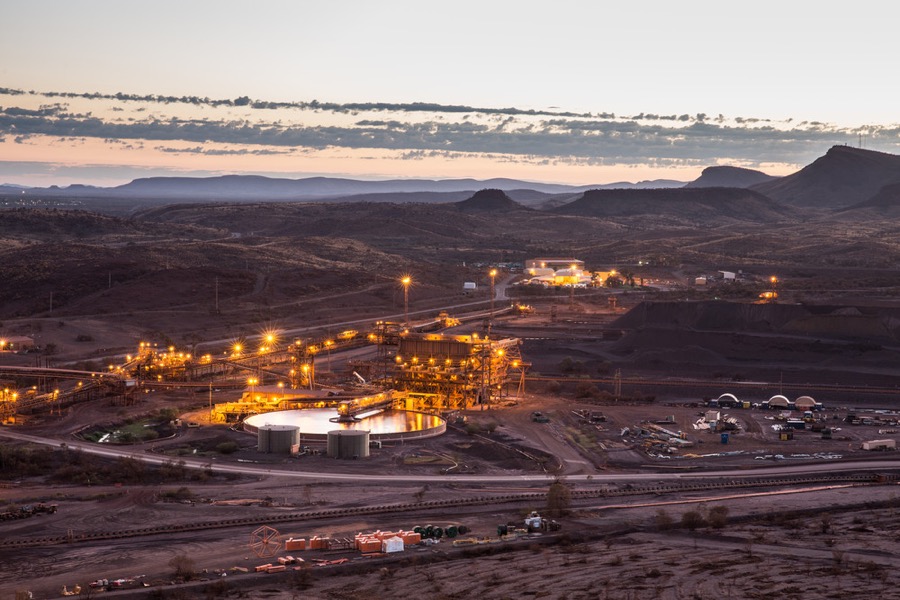
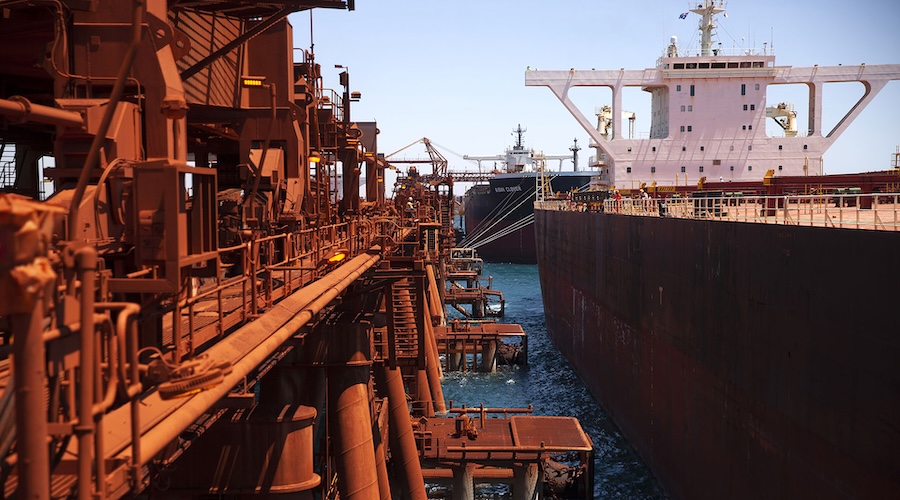
This is just a rehash of the argument to justify iron ore mining because we needed this for “development” and “progress”. The difference now is that if you resist green sacrifice zones, you are supposedly not just against progress but against fighting climate change — a quite perverse argument.
So, it is important to take the sacrifice zone concept seriously and develop ideas on production that manage impacts without sacrificing specific people or territories. That involves questions of industrial policy, trade, sufficiency, growth, etc. That is why socialists have been discussing with degrowthers and post-growthers to achieve a synthesis that acknowledges the realities of inequalities between the Global North and South.
Is this where the ecosocialist concept of “ unequal ecological exchange” can be useful?
Yes. Unequal economic exchange can be seen in the flow of goods. Global South countries primarily export cheap raw materials and import expensive manufactured goods. This trade imbalance creates an economic hole in Global South economies and makes them dependent on the Global North, resulting in dependent capitalism.
Unequal economic exchange also acknowledges workers in the Global South are super exploited compared to the labour of workers in the North. They may not earn as much as the elites in their countries, but there is a difference between workers’ pay in the Global North and South.
Ecosocialists also want unequal ecological exchange in the conversation, because until now the transformation of nature into resources has been mostly ignored. An example is meat. Argentina and Brazil export a lot of meat to the US, Europe and China. But they are not just exporting animals — through a lot of cruelty — but the water, soil, nutrients and everything else needed to grow that animal too.
Unequal ecological exchange happens there, and we need to raise this as it connects to ecological anti-imperialism and the question of degrowth. We need to ensure a just degrowth that does not create more inequalities, but instead accounts for them.
Are there other ecosocialist concepts that can help us better understand the world today?
Something ecosocialists talk about is eco-territorial internationalism. I helped develop this concept with Breno Bringel and others. It grapples with the view many socialists hold of the state as being above everything else. Even though as ecosocialists we engage with the state, we find this view problematic.
Dealing with issues of sovereignty or democracy participation only through the state can end up simply replicating colonial relationships, especially with regards to indigenous peoples with traditional connections to territory. It can also distract us from areas that could hold solutions.
Right now, the far right in South America is seeking to take over the state, and in many places has done so. One important way to fight back is by taking the state back from the far right. But we can also do other things along the way, and this affects how we think about international solidarity.
A great example of eco-territorial internationalism is energy sector trade unions connecting across borders to promote work stoppages and strikes to stop oil exports to Israel. Brazil finally stopped exporting oil to Israel last year after this kind of pressure. This did not come from the state or government, but an alliance of trade unions working with people in solidarity with Palestine across different countries. Together, they tracked the oil and the ports where it was switching ships to get to Israel.
But imagine if Brazil was still under a far-right government. Arguing that we must first elect a progressive government before applying this pressure would not make sense. Eco-territorial internationalism allows us to find other avenues for internationalism that are not just about the state.
Another important concept that I recently learnt about is terricide. This concept was developed by Moira Millán, a Mapuche writer, warrior and defender of indigenous territories in Argentina.
The concept of terricide reminds us that ecocide is not just about the death of nature, but the death of our world-making with nature. We are not just destroying the territory but also our sense of belonging, cultures and ways of existing.
We need to fight terricide on all fronts. Some believe fighting for better environmental management or against environmental crimes is enough, but terricide reminds us that we are becoming more alienated from nature and this must be reversed.
The far right is not in government in Brazil, but it is still present in the form of Bolsonarism, the political movement behind former far-right president Jair Bolsonaro. How do you view the resurgence of the far right?
Brazil had four years of Bolsonaro government [between 2019-2022], and the far right is making a very strong comeback across the region right now. We saw this in Chile with José António Kast’s election [in 2025], Abelardo de la Espriella was just elected in Colombia, and, of course, there is Javier Milei in Argentina.
We also have Trump’s attacks on Venezuela, a country in a very tough situation especially after the earthquakes, and recent right-wing wins in Peru and Bolivia. Things are not very easy right now; in fact they are really bad. And not just in South America, we are seeing this basically everywhere.
Moreover, the far right are quite connected and working together to advance their perspectives and objectives. They want to gain or retain power, but also retain a specific mode of production and a certain flow of goods and resources.
An example of this is Trump’s Shield of the Americas. This organisation only involves right-wing presidents in the region and was created with the supposed purpose of fighting criminal organisations and drug cartels. But Trump wants to use it to empower himself to continue with extrajudicial killings and interventions in other countries. The ultimate aim is ensuring a favourable flow of goods and services into the US as he imposes sanctions on everybody else.
We cannot treat this comeback of the far-right as just ideological. Yes, these people are very authoritarian, they hate everyone, and are very sexist and racist. But they also want to further entrench a very violent form of capitalism. That is why we need to fight the far right on the economic and environmental fronts.
What has the far-right’s rise meant in terms of the environment?
It is interesting to see how nature is treated amid this neo-fascist wave.
On one hand, the far-right directly destroys nature through pillaging for resources, deforestation, mining for rare earth minerals, etc. Brazil has large rare earth mineral reserves that China is interested in, which matters a lot to the US. The US is not happy with [Brazilian president] Lula [da Silva] because, even though Lula is not a big nationalist and is pro-extractivism, he has a different policy to the Bolsonaro family, which prefers to give away Brazil’s minerals to the US.
On the other hand, the Lula government wants to use rare earth minerals, be it for wind turbines and other technologies to fight climate change, or even in military tech. Lula promotes a capitalist model of the energy transition within Brazil, more akin to energy addition or diversification. So, things are complex; they are not as binary as some think.
The Lula government sees nature as something to control. They might not sound like your standard climate denialist, but they fit the profile for partial denialisms. That is why we need to talk about the dangers of green capitalism. There is a tendency to accept certain aspects of climate change as long as they can profit from them. But if a fact is an obstacle to profit and growth, then it is ignored or downplayed.
Even with Trump, he is willing to pull out of the Paris Accords, defund science, etc, but he is also quite happy to promote a huge resource grab to build renewables for his friends in Silicon Valley.
We have also seen the emergence of an eco-fascist trend within the far-right…
Yes. In Europe, we have an eco-fascist trend that says climate change and catastrophe are coming, therefore we must protect ourselves from immigrants. That is where authoritarianism comes in. So, we also need to be aware of this danger.
The main proponents of eco-fascism are found in more developed economies. But the Global South is not immune. Many big business sectors want the far-right in power to enable more violence against indigenous communities and relaxed environmental laws. At the same time, these business sectors know climate change is affecting their crops, and that they will also be subject to environmental collapse. They are preparing for it, including through resource grabs.
So, we need a more complex view of society. Otherwise, we may think the only climate denialists are those who say climate change is the fault of volcanoes or does not exist at all. But that is only a very specific and fringe aspect of denialism.
Climate denialism is everywhere — even on the left. The developmentalist left pretends the situation is not as serious as it is while continuing to promote productivism.
Socialists traditionally place great emphasis on working-class struggles. Ecosocialists have sought to raise the importance of struggles by peoples of the Global South and, in particular, indigenous peoples. How do these struggles intersect?
As capitalism gets more complex, it takes on a different face depending on where you are in the world. In Nordic countries it might look more like a welfare state, whereas in El Salvador it can have a very authoritarian character. Meanwhile, in places such as the Congo it can mean slave labour to obtain cobalt.
But while the faces are different, capitalism remains the same, and each face is interconnected. So, how capitalism looks to people depends on where they fit within it.
In this sense, indigenous struggles are not separate from working-class struggles. In reality, indigenous peoples are expelled from their lands and turned into workers in the city. As capital expands, indigenous people are de-territorialised and become completely dependent on selling their labour power for much less than what they produce. This process is at capitalism’s core.
An indigenous group today may live isolated in their territory and not yet be subject to direct proletarianisation. But their territory will be slowly taken away, because the whole world is subject to proletarianisation. So, how could I treat indigenous struggles as separate from working class struggle?
This is where, again, eco-territorial internationalism is a useful lens. It shows us that these connections and potential alliances exist.
These are not just based on thinking that what is happening to someone else is morally awful and deserves our sympathy and support. Eco-territorial internationalism shows us that, in the end, we are all part of the same “we” and that our solidarity is built on something more concrete than just compassion. By moving beyond morality to political economy, we see how we are all fighting on the same basis and the same fronts.
Drawing out these connections is part of our job. We also must make sure we do not box ourselves into orthodox identities — which were not all that orthodox even in the writing of Karl Marx or other original Marxist thinkers such as Rosa Luxemburg.
Could you expand on this?
Claudia Horn has just published a beautiful edition of Rosa Luxemburg’s Herbarium, in which Luxemburg catalogued species of plants. The book contains a touching letter Luxemburg wrote from prison, discussing a buffalo outside her prison that she felt a lot of empathy for, showing there was a lot of sensitivity for other beings, not just humans, in many of the writings and struggles of the past.
Understanding this is key. It is also why I think ecosocialism is quite a strong and potent movement, even if we are small compared to the world at large. Ecosocialism reminds us that to succeed we need to become different as a species. We need to change relationships — both among ourselves and with nature.
This means having to go back a little to the basics and, at the same time, adapting a little. It means looking at technology, economic production and how the family organises care labour in a different way. All these things matter and I think the working class is interested in this conversation.
That is why a big demand for ecosocialists is reducing the workweek or workday. Everybody wins with this demand. We have to both learn to live within our means and make sure that gains in productivity and efficiency flow to workers, not billionaires.
This is a conversation that goes to the core of working-class struggles, but it is also a conversation about nature. The synthesis is quite obvious if you really look into it.
Could you talk about some positive projects or ideas in terms of building alternatives that point to how an ecosocialist society could look?
Last year, during COP30 in Brazil, we had a really big struggle against the government. Lula’s government was pushing the dredging of a river in the Amazon. With droughts becoming more extreme, mining companies and agribusiness can no longer export goods along the river year-round, hence their need to dredge it.
The area is heavily affected by mining, with a lot of mercury sediment in the riverbed. Dredging activity would have brought that all up and mixed it into the water, affecting not only indigenous communities in the area, but every person who lives and depends on the river.
So, this was happening while the government was being all climate friendly at COP30. Of course this inconvenienced the climate leader image it was trying to portray.
At the time, I said this was one of the biggest, perhaps strongest, class struggles in the country, but it was not led by a traditional left party or trade union. It was led by indigenous peoples and allies who occupied Cargill and the local airport. They insisted this could not happen without consulting them.
We can take some lessons from this movement, not just in terms of exposing the hypocrisy but of the destruction that the government promotes. One lesson is not to back down, because in the end they won.
Of course, we know that consultancy processes established through things such as [International Labor Organization] Convention 169, even if important, will not save us from destruction, especially as indigenous people have no veto power. But from this struggle, we could move onto further conversations around agroecology and food sovereignty.
Is agroecology another example of how change can be promoted at the local level?
There is a misconception that agroecology cannot be scaled up; that you cannot produce food for the entire planet using agroecological methods. The argument says we need to instead push to adjust industrial agriculture, through things such as supplements that help cows emit less methane.
This kind of thinking is promoted by many environmental NGOs and organisations, with financing from groups such as the Gates Foundation. It is even promoted directly by agribusiness corporations, such as the Brazilian meatpacking and processing giant JBS. It seeks to obstruct alternatives: rather than changing the way we produce, they want to limit discussion to technological changes and innovations.
But agroecology is scalable — it might not look the same everywhere, because we are talking about different biomes, different soil composition, growing different things, but it is scalable.
This discussion also challenges us to think about food differently; to think about reducing animal exploitation and meat intake, and introducing other crops in our diet.
This may not be commercially viable for capitalism, but it is part of traditional cultures and heritage. That is why the internationalist element of agroecology is really important: we need to think about food production around biomes and what is possible within planetary boundaries.
We already have pockets of great agroecological production in Latin America, Africa, Europe, India. This also requires us to think about machinery for agroecological production in different ways, such as projects to build tractors better suited for small-scale producers.
So now the discussion is about connecting to questions of industrial policy too. This is one of my major interests. Things are happening, but are often dismissed because these alternatives are not embedded in the statist model.
You referred to the difficulties of raising real alternatives. There is also a strong sense that things have gotten so bad that it might be too late to truly change things, or that such change is not even possible. What are your thoughts on this?
A big issue we face is that our imagination has been captured, our horizon has been limited. People say “tell me a country where ecosocialism is working.” Well, if for something to work it requires a whole country, then I cannot give you an example — but I can also say that there is no country where capitalism is working fully; in fact, it is collapsing everywhere.
But we should not limit ourselves to the state level. We should look at examples at the level of sectors and alliances that are forging alternative modes of living and production.
When we do, we see that change is already happening. We can see pushback against utilities’ privatisation and struggles to expand free transit in many areas in the Global North and South. These are ecosocialist struggles.
We have a lot to be proud of and build on. This can help us not feel so distraught. It is easy to be pessimistic. Things are not going completely in our favour right now, but everything is not lost.
I have been talking with Michael Löwy, also from the Global Ecosocialist Network, about how a lot of people are very fatalistic right now.
Of course, the data is very bad and the sensationalism around social media is not helping — telling people that everything is lost and that they should run to the mountains produces a lot of likes and online engagement, which means there are many irresponsible people doing that. Yet, everything is not lost and running to the mountains is a luxury reserved for the very few.
We have a responsibility to help each other and to value good news. This is not the same as saying everything is fine and I do not need to do anything. We need to tell the hard truths, but also value good news, get inspired by that, learn how to build from it, and organise together, as internationalists, for a real ecosocialist transition.


.jpg)