The Global Costs Of Instability In The Strait Of Hormuz – Analysis

March 5, 2026
Observer Research Foundation
By Pratnashree Basu
The Strait of Hormuz has once again emerged as a fulcrum of geopolitical risk and economic disruption in the early months of 2026. On 2 March 2026, Iran’s Islamic Revolutionary Guard Corps declared the waterway, the narrow throat between the Persian Gulf and the Gulf of Oman, through which roughly 20 percent of the world’s crude oil and a substantial share of liquefied natural gas transit daily, effectively closed to commercial shipping and threatened to attack any vessel attempting passage. This marked Iran’s most explicit and forceful maritime stance yet, following intensifying conflict with Israel and the United States, including coordinated strikes on Iranian territory.
The immediate and palpable impact of this escalation has been a near collapse of normal shipping flows. In response to heightened risk, international tanker companies and container operators are haltingbookings and cancelling transits across the strait. At the same time, insurers are withdrawing coverage, making trade through the Hormuz commercially unfeasible. With roughly 10 percent of the global container fleet now caught in a bottleneck near Hormuz, the crisis starkly illustrates how swiftly geopolitical risk can translate into logistical paralysis.
These developments have sent shockwaves through international energy markets. Following Iran’s warnings of closure, crude oil prices surged, with Brent crude rising by 8.6 percent amid reports of halted tanker traffic and escalating tensions. Both market psychology and the potential for a direct supply shortfall are reflected in this price increase. Traders are also factoring in the potential for long-term disruption at a chokepoint that supports energy flows to Asia, Europe, and beyond. At the same time, officials and investors recognise that even a brief obstruction in Hormuz can raise input costs across the transportation, industrial, and energy sectors. Reports from shipping analytics indicate that freight costs for very large crude carriers bound for Asia have spiked, illustrating how risk repricing along one route reverberates through global transport markets. Higher insurance premiums — rising by as much as 50 percent — further embed elevated costs into the logistics ecosystem, dampening trade and squeezing profit margins for shippers and commodity buyers alike.
The significance of Hormuz as a maritime artery cannot be overstated. At about 33 km at its narrowest point, it is one of the world’s most critical chokepoints, with oil, gas, and petrochemical exports from producers in Saudi Arabia, the United Arab Emirates, Kuwait, Qatar, and Iran traversing this corridor en route to global markets. The strait’s closure thus represents not just a regional flashpoint but a systemic risk to global energy security. While the most immediate focal point of disruption has been energy, the interconnectedness of global supply chains means the spillovers extend far more broadly. Maritime freight rates, particularly for oil tankers, have spiked dramatically.
From an operational perspective, shipping companies and ports are scrambling to adapt. Carriers are exploring long reroutes around Africa’s Cape of Good Hope or seeking transhipment options that avoid the Gulf entirely, since Hormuz is essentially off-limits. These changes, however, involve clear trade-offs, including longer journey times, higher fuel consumption, and increased congestion at other hubs. These inefficiencies ripple through inventory cycles, delivery schedules, and consumer prices in importing economies, not just the cost of a single voyage.
The crisis exposes fundamental vulnerabilities in the global trade system that extend beyond economic calculations. The geographic concentration of energy exports through a narrow seaway demonstrates how systemic shocks from regional conflicts can be transmitted instantaneously. Maritime chokepoints, far from being passive conduits of commerce, are potential fault lines that governments and corporate organisations must confront. This realisation is likely to shape longer-term planning, from energy diversification strategies to naval deployments aimed at ensuring freedom of navigation.
India’s exposure vividly illustrates the geopolitical–economic nexus. Estimates indicate that almost half of the country’s monthly oil imports pass through the Strait of Hormuz. As a major importer, India sources a significant portion of its crude and LNG via routes through the strait. With tanker movements stalled and supply chains disrupted, New Delhi has issued advisories for Indian-flagged vessels to exercise extreme caution, highlighting the risk to national trade interests and the safety of seafarers.
Similar risks exist in the Indo-Pacific region for China, the world’s largest importer of crude; a protracted closure or ongoing risk premium on Gulf crude supplies would restrict refinery throughput, strain inventories, and potentially lower export competitiveness amid higher input costs. In the European Union(EU), where energy markets remain sensitive to global oil and LNG prices, heightened volatility amplifies cost-of-living pressures and complicates monetary policy for growth and inflation control. Japan and South Korea, heavily reliant on imported energy and lacking substantial domestic resources, are especially vulnerable even to brief disruptions; delays in LNG and oil deliveries can necessitate stockpile draws and refinery slowdowns, raising production costs and increasing inflationary pressure. Together, these patterns show how chokepoint risk translates into actual economic vulnerability for major importers, strengthening the motivation for strategic reserves and diverse sourcing.
Yet even as the world reels from these impacts, debate continues over the nature and duration of the disruption. The current crisis reaffirms that maritime routes are both strategic and economic assets, linking producers with consumers across hemispheres while remaining vulnerable to geopolitical turbulence. The interplay of conflict, risk pricing, and supply-chain mechanics in the Strait of Hormuz vividly illustrates how rapidly regional hostilities can translate into global economic stress. This emphasises the need for both crisis management and structural resilience, including investment in diversified commerce corridors, alternative energy routes, and cooperative marine security frameworks, alongside strengthened diplomatic channels to lower escalation risks.
The crisis unfolding in the Middle East is arguably the most severe in decades. Beyond the battlefield, it constitutes a systemic stress test for global maritime commerce and energy supply chains, highlighting the fragility of interconnected systems and the need for robust policy responses that address both the immediate impacts and the structural vulnerabilities exposed by such disruptions.
About the author: Pratnashree Basu is an Associate Fellow at the Observer Research Foundation.
Source: This article was published by the Observer Research Foundation.
Observer Research Foundation
ORF was established on 5 September 1990 as a private, not for profit, ’think tank’ to influence public policy formulation. The Foundation brought together, for the first time, leading Indian economists and policymakers to present An Agenda for Economic Reforms in India. The idea was to help develop a consensus in favour of economic reforms.
COMMENT: Iran's oil war could reshape the global economy — and Europe has the most to lose
.jpg)
Iran's retaliatory strikes on American and British oil tankers and, most dramatically, on oil storage facilities in the United Arab Emirates, have pushed an already fragile global energy market to breaking point. The Strait of Hormuz remains effectively blocked. Oil and fertiliser prices are surging. Fuel costs in Britain have doubled. And the reverberations are only just beginning, with people fleeing the UAE and Qatar as fast as they can.
The immediate consequences are stark enough: 800-plus Iranians are dead and a growing number of Americans, Kuwaitis, Lebanese, Israelies and others. Even if hostilities were to cease tomorrow - purely hypothetical scenario - the damage to freight rates and insurance premiums would persist for months, if not years. Ships and their cargoes are insured separately, and underwriters have no appetite for risk in what has become the most volatile chokepoint in global trade. Every barrel transiting the Persian Gulf now carries a hefty geopolitical surcharge, and that cost will be passed directly to consumers at a record-breaking speed. Probably the fastest increase since the 2020 Coronavirus (COVID-19) spike.
The latest numbers speak for themselves. Roughly 20% of the world's natural gas and up to 30% of its oil passes through the narrow mouth of the Hormuz Strait, connecting the Persian Gulf to the Gulf of Oman and on to the Indian Ocean. Of the cargo that reaches the Indian Ocean, some 80% is bound for South-East Asia - principally China, India, Japan and South Korea. Only 15-20% heads to Western Europe and elsewhere, but don't let that calm readers in London into thinking that risk price is spreading far and wide.
This matters enormously. China absorbs between 30% and 40% of that 80% share. India takes a substantial portion of the remainder. These are the two great locomotives of global economic growth, and both now face a sharp and unavoidable increase in the cost of energy. Beijing may have stockpiled strategic reserves and developed alternative supply routes - including the Power of Siberia pipeline and shipments via Vladivostok - but restructuring supply chains is a process, not an event. In the near term, the hit is real.
The likely outcome is not collapse but deceleration. China's growth rate could slip from 5% to 4%, still impressive by Western standards, but a meaningful slowdown for an economy on which much of the developing world depends. India faces a similar trajectory. And when the world's primary growth engines lose momentum, the drag is felt everywhere. Countries teetering on the edge of positive growth risk tipping into contraction, with all the social and political instability that entails.
Europe's position is particularly precarious, as Tucker Carlson remarked on his latest podcast this week. On paper, only 10-15% of Persian Gulf energy supplies are destined for European markets. But context is everything. The continent entered the winter heating season with underground gas storage already below 30%. The Netherlands, once a pillar of European gas security, has seen reserves plummet to a catastrophic 11%. With a month and a half of winter still ahead, every percentage point of supply matters.
For Britain, the unlucky Chancellor of the Exchequer, Racheael Reeves, was blindsided by events (again) despite careful planning for the spring financial statement. British homes are particularly vulnerable at the moment, as around 20% of the country's gas supply comes from Qatar as liquid natural gas (LNG), which could add around GBP500 to households' annual bills, already under immense pressure. For them, a sigh of relief, however, as spring appears to be a saving grace as thermostats turn down.
There is no evidence that summer will bring relief for the rest of Europe. The EU's increasingly brutal heatwaves drive air-conditioning demand that rivals winter heating loads. The continent faces the unenviable task of replenishing its depleted reserves amid sustained global supply disruption - and must do so while drawing down strategic stocks once considered untouchable.
On currency markets, predictions of a dollar crash appear premature. The greenback remains anchored to the fundamentals of the American economy, which continues to post roughly 3% growth with inflation contained below 4%. The United States' $921bn trade deficit - near its post-2022 record - is a structural vulnerability, not an acute crisis. The dollar's real weakness is not economic but political: Washington's aggressive use of dollar-denominated sanctions has accelerated de-dollarisation, not because the currency is unsound, but because it is feared as a weapon.
The gold market tells a more revealing story. Prices have surged past $5,500 per troy ounce, with some analysts forecasting $5,600 in the near term. Gold's role as the ultimate safe haven is being reaffirmed in spectacular fashion, and these elevated levels are unlikely to retreat even if a ceasefire materialises.
For oil-producing nations outside the conflict zone, the picture is mixed. Higher prices mean higher revenues, and the prospect of increased supply volumes to China, India and - eventually - a chastened Europe is commercially attractive. But no economy is hermetically sealed. Higher global energy prices feed through into domestic inflation, squeeze industrial margins and invite tighter monetary policy. For countries already struggling with anaemic growth, the net effect may be negative even as headline oil revenues climb.
The geopolitical implications are perhaps the most consequential of all. A Europe pushed to the wall on energy security will find it increasingly difficult to sustain support for Ukraine (US isn't helping). With reserves dwindling and prices climbing, the fiscal and political space for continued military and economic assistance is shrinking by the week. What is clear is that Iran's strikes have altered the calculus for every major economy on earth. This is not a regional skirmish with localised consequences. It is a systemic shock to the architecture of global energy trade, and its effects will be measured in slower growth, higher prices and harder choices for years to come.
The Strait of Hormuz crisis may yet prove to be the United States' "Suez Crisis" and Europe's final jolt to break free from Washington's increasingly insane actions.
Iran war: How exposed are European economies?
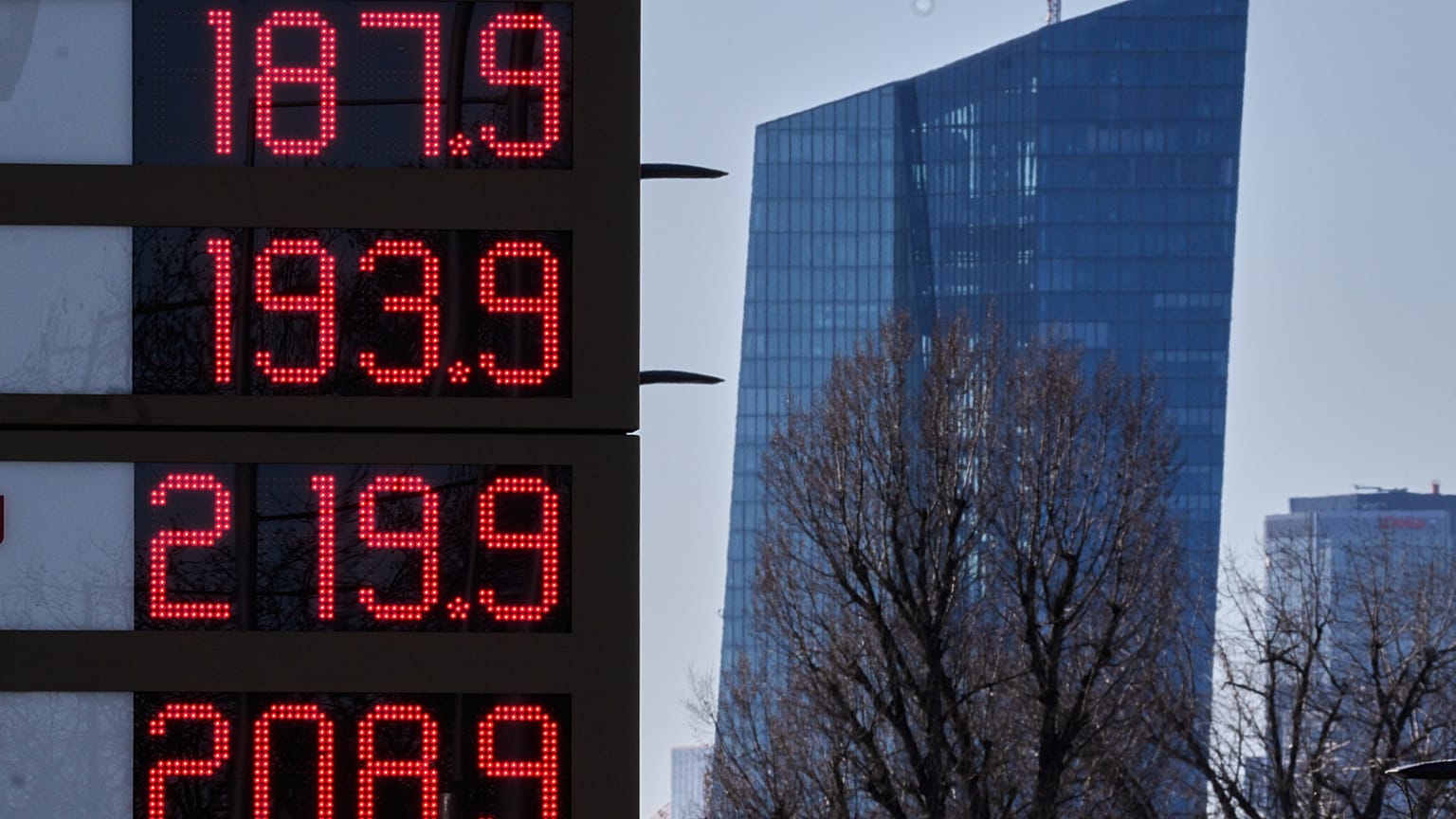
The closure of the Strait of Hormuz has sent gas prices surging by 60%, putting additional strain on Europe's already-depleted winter inventories and prompting economists to revise their 2026 growth and inflation outlooks.
Dutch TTF natural gas futures — Europe's benchmark price — hit €50 per megawatt-hour on Thursday morning, up 60% since US and Israeli strikes on Iran closed the Strait of Hormuz
The move is the continent's sharpest energy shock since the 2022 crisis, and it is landing on a market that was already dangerously exposed: gas inventories across Europe stand at their lowest seasonal levels in years.
With the strait — which carries roughly a fifth of the world's oil trade — still closed, economists and energy analysts warn that even a brief disruption could inflict damage on European growth, push inflation back above target and potentially force the European Central Bank (ECB) to revisit interest rate paths they had only recently stabilised.
Why the Strait of Hormuz matters for Europe
Around 20% of global oil supply and roughly one-fifth of global liquefied natural gas (LNG) trade pass through the strait, making it one of the most strategically important energy corridors in the world.
For Europe, the stakes are considerable. Qatar supplies approximately 15% of the continent's total LNG imports, making unimpeded passage through the strait a matter of energy security.
Europe’s exposure to Gulf energy flows has increased considerably since the continent dramatically reduced imports of Russian fossil fuels after 2022.
Bridget Payne, head of energy forecasting at Oxford Economics, said trade disruption rather than lost production is currently the primary concern.
She estimates oil supply could be disrupted by around 4 million barrels per day over the coming quarter.
While Gulf producers have spare capacity to offset Iranian supply losses, Payne warned that alternative shipping routes can only handle about one-third of the oil normally passing through Hormuz.
Europe entered March with unusually low gas storage levels. Inventories across the continent stood at roughly 30%, with Germany — Europe’s largest economy — reporting reserves as low as 21.6%.
Oxford Economics warned that disruptions to Qatari LNG exports could force Asian buyers to compete more aggressively with Europe for cargoes, potentially making it harder for European countries to refill gas storage ahead of next winter.
Inflation and growth risks rising
Higher energy prices are expected to feed through into inflation across Europe.
"Europe's depleted gas stores and reliance on transport routes via the Middle East point to heightened risks of a larger inflationary supply shock. That could become an additional drag on our already below-consensus forecast for 2026 GDP growth," said Oliver Rakau, chief Germany economist at Oxford Economics.
Oxford Economics expects the conflict to raise eurozone headline inflation by 0.3–0.5 percentage points in 2026, pushing it to around 2.3%.
Higher energy costs could also reduce household purchasing power, trimming economic growth.
Rakau estimates the shock could lower eurozone GDP growth by around 0.1 percentage points to roughly 1.0% this year.
Economists at Goldman Sachs said the conflict in Iran has already prompted revisions to their forecasts for economic growth, inflation and central bank policy.
“We are making changes to our growth, inflation and central banks forecasts in light of the evolving conflict in the Middle East,” said Sven Jari Stehn, chief European economist at Goldman Sachs.
Goldman Sachs also estimates that higher energy prices would trim economic growth by 0.1 to 0.2 percentage points this year across the eurozone, the United Kingdom, Sweden and Switzerland.
However, the outlook could deteriorate if energy prices rise more sharply or remain elevated for longer.
In a downside scenario, oil prices could remain near $80 (€74) per barrel while gas prices stay around €70 per megawatt-hour, according to the bank's estimates.
In a severe scenario, oil could reach $100 (€92) per barrel and gas €100 per megawatt-hour.
In more severe scenarios, the impact could be much larger.
Headline inflation by late 2026 could be nearly two percentage points higher in a downside scenario and as much as 3.6 percentage points higher in a severe shock.
Goldman said it would expect the ECB to deliver two 25 basis point rate hikes in the second half of 2026 in the severe downside scenario, should energy price increases generate significant second-round effects on core inflation.
Logistics disruptions add pressure
The war is also disrupting global logistics networks, adding further uncertainty for European trade.
According to Freightos research head Judah Levine, military strikes and retaliatory attacks in the region have already forced several shipping companies to suspend bookings to Persian Gulf ports.
"The US-Israel strikes on Iran and subsequent Iranian retaliation are driving significant logistics disruptions in the region which could start to be felt more broadly if the conflict stretches on," said Levine.
The Strait of Hormuz handles approximately 2% to 3% of global container volumes, and around 100 container vessels are currently stranded in the Persian Gulf.
Some of the world’s largest carriers, including Hapag-Lloyd and MSC, have halted bookings to and from Gulf ports, while CMA CGM has stopped accepting shipments to the region entirely.
The crisis has also revived concerns about the Red Sea.
The Houthis, who paused attacks on commercial vessels in October, have threatened to resume strikes, prompting the few carriers who had returned to that route to divert back around the Cape of Good Hope, further increasing transport costs.
Meanwhile, disruptions to major Gulf aviation hubs have reduced global air cargo capacity.
Qatar Airways Cargo, Emirates SkyCargo and Etihad together account for roughly 13% of global air freight capacity and play a key role in connecting Asia and Europe.
With many flights grounded and regional airspace closed, freight forwarders are beginning to charter direct flights between Asia and Europe, a shift that is already pushing up transport costs.
Freight rates from Southeast Asia to Europe have risen more than 6% in recent days, according to the Freightos Air Index.
Currency markets reflect rising risk aversion
Financial markets are also reacting to the geopolitical uncertainty.
European currencies have weakened as investors move toward safe-haven assets such as the US dollar and gold.
According to Michał Jóźwiak, market analyst at financial services firm Ebury, the euro has fallen about 1.8% against the dollar since the conflict intensified.
The sell-off has been even more pronounced in Central and Eastern Europe.
The Hungarian forint has weakened nearly 5% against the dollar, while the Polish zloty has dropped around 3.5%, marking one of the sharpest weekly moves since the start of the Ukraine war in 2022.
Further weakness in European currencies could also amplify inflationary pressures by increasing the cost of imports.
A fragile energy balance
For Europe, the unfolding conflict underscores the vulnerability of its post-Russia energy model.
While the continent has significantly reduced its reliance on Russian pipeline gas since 2022, much of that supply has been replaced by seaborne LNG.
This shift has made Europe more exposed to disruptions along global shipping routes and to geopolitical tensions in key transit regions such as the Middle East.
With gas inventories already low and the seasonal refilling of storage facilities under way, any prolonged disruption to energy flows from the Gulf could quickly ripple through European markets and economies.
What are Europe's oil route alternatives to the Strait of Hormuz?
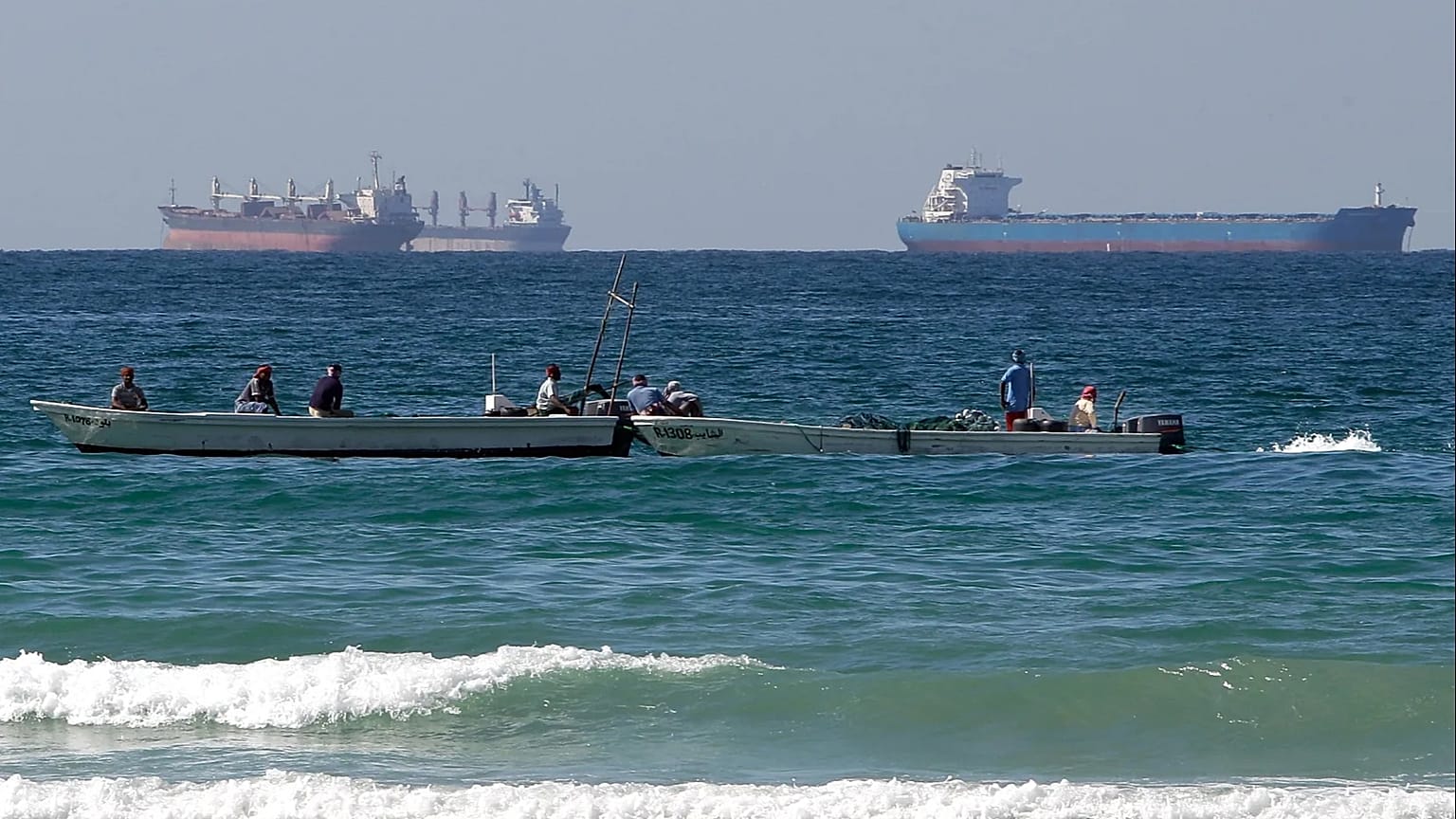
Many European countries like Italy, Greece, Spain, Poland and Belgium rely on the Strait of Hormuz for imports or refining. Experts say the closure of this corridor will not cut off Europe’s oil supply, but will continue to drive up oil prices and disrupt markets.
As military escalation surges in the Middle East, Iran's announcement of the closure of the Strait of Hormuz has sent crude oil and natural gas prices soaring.
Faced with rising energy costs at home, European leaders are scrambling to avoid a cascading energy crisis, and are especially concerned about mitigating the price shock already being felt in markets.
Many European countries like Italy, Greece, Spain, Poland and Belgium rely on the Strait of Hormuz for imports or refining. Experts say the closure of this corridor will not cut off Europe’s oil supply, but will continue to drive oil prices and disrupt markets.
Lying between the Persian Gulf and the Gulf of Oman, the Strait is a narrow shipping corridor largely under Iranian control, and serves as one of the world’s most critical energy choke points for oil, accounting for 20% of global production.
Johannes Rauball, a senior crude analyst at the real-time data and market intelligence firm Kpler, estimated Hormuz-related disruptions to last another three to four weeks, keeping Europe exposed to elevated prices and volatility, with crude prices currently carrying a risk premium of around $15 (€13) per barrel.
"(Prices) will begin stabilizing once credible prospects of US–Iran talks emerge, or if flows via the Hormuz restart. We expect most of the risk premium to fall when negotiations look tangible, and largely disappear once a structured agreement is reached," Rauball told Euronews.
The European Commission is convening technical experts on Wednesday to address the new energy crisis, which severely complicates the bloc's ongoing battle to cut high electricity prices in a bid to re-industrialise the EU27's competitiveness.
While the bloc's oil imports are diversified, with Norway (14.6%), the United States (14.5%), and Kazakhstan (12.2%) ranking as the top three major suppliers, several EU countries do import oil from Gulf producers.
Saudi Arabia accounted for 6.8% of the bloc's total imports in the first 9 months of 2025, according to EU data, with Spain, Germany, France, and the Netherlands the bloc's top importers.
Iraq has already recorded oil production shut-ins as a result of the military strikes, Rauball said. Other Gulf states — including the UAE, Kuwait, Saudi Arabia, and Qatar — have roughly 10–20 days of flexibility before shut-ins are required, assuming normal production rates.
Alternative oil routes
Baird Langenbrunner, Research Analyst at the Global Energy Monitor, said there are two viable oil pipelines that could serve as an alternative to the Strait of Hormuz.
The first option is the Saudi East-West crude oil pipeline, which has a capacity of 5 million barrels per day. It runs east-to-west across Saudi Arabia from the Abqaiq processing center to Yanbu on the Red Sea
"Yanbu wasn’t designed to be Saudi Arabia’s main export hub, so its infrastructure and tanker-loading capacity will likely constrain actual throughput," Langenbrunner told Euronews.
Parallel pipeline infrastructure along this route could be temporarily converted to carry extra oil, Langenbrunner added, increasing the total takeaway to 7 million barrels per day.
"That would compete with carrying other important liquids to Yanbu," Langenbrunner added.
The second alternative is the Habshan–Fujairah oil pipeline in the United Arab Emirates (UAE), which could transport crude oil to the Fujairah terminal on the Gulf of Oman, but Langenbrunner pointed out it has a much lower daily capacity of 1.8 million barrels.
"The UAE already uses it as a routine export route, because it bypasses insurance and security costs of transiting the strait, and there’s not much spare capacity to use," the energy analyst added.
The recently built Goreh-Jask Crude Oil Pipeline in Iran would, in theory, be capable of bypassing the Strait, he explained, but not without complications.
"This pipeline sits in Iran, which was already under heavy US sanctions and whose infrastructure is under direct military attack. In addition, its confirmed capacity is around 300,000 barrels per day, quite small compared to what the strait handles each day," Langenbrunner said.
Ultimately, only a small fraction of what normally flows through the Strait could transit alternative pipeline routes, compared to the 20 million barrels per day that transit that corridor.
All the while, shipping through the Strait of Hormuz between Iran and Oman has ground to a near halt after vessels in the area were hit as Iran retaliated against US and Israeli strikes.
Shipping insurers have announced they are cancelling war risk coverage after the Iranian armed forces, the Islamic Revolutionary Guard Corps, said the Strait was closed, and tankers are also likely to avoid transiting the Red Sea via the Suez Canal to reach Europe.
"For volumes that can’t go through pipelines and rely on ships, an alternative is to re-route tankers around the Cape of Good Hope to reach Europe, which adds substantial time and cost to transit," Langenbrunner said. "And this only helps oil not already trapped in the Persian Gulf."
North Sea, North Africa and Latin America
North Sea production remains one of Europe’s most secure alternative supply sources.Crude from offshore fields in Norway and the UK can be shipped directly by tanker to European ports.
The US and West Africa also offer viable substitutes, with producers such as Nigeria and Angola shipping crude directly to Europe along Atlantic tanker routes.
North Africa, particularly Algeria and Libya, provides very short-haul Mediterranean supply routes into Southern Europe. These shipments avoid major global chokepoints and benefit from minimal transport distance. But political instability, especially in Libya, poses recurring risks to sustained supply.
Caspian and Central Asian producers such as Kazakhstan and Azerbaijan offer additional diversification. Their crude typically travels by pipeline to Black Sea export terminals before being shipped through the Turkish Straits into the Mediterranean.
Latin American suppliers, notably Brazil and Guyana, can deliver crude to Europe via Atlantic tanker routes that avoid Middle Eastern chokepoints altogether.
Pauline Heinrichs, Lecturer in War Studies at King's College London, said that if Europe wants to take security strategy seriously, it will need to reduce the insecurity from fossil fuel dependency.
“Our security strategy is currently reduced to responding to fossil fuel-induced crises, and I mean that both in terms of fossil fuels themselves, but also the powers that depend on fossil fuels to support their power, including the United States," Heinrichs said.

No comments:
Post a Comment