
‘Stark global inequality’: Calls for taxes on private jets grow louder as uber-wealthy flee Dubai
Private jets are up to 14 times more polluting than commercial planes – and are now being used to escape escalating conflict in the Middle East.
Price-gouging private jet firms have been inundated with demand, as the uber-wealthy scramble to flee Dubai amid the war on Iran.
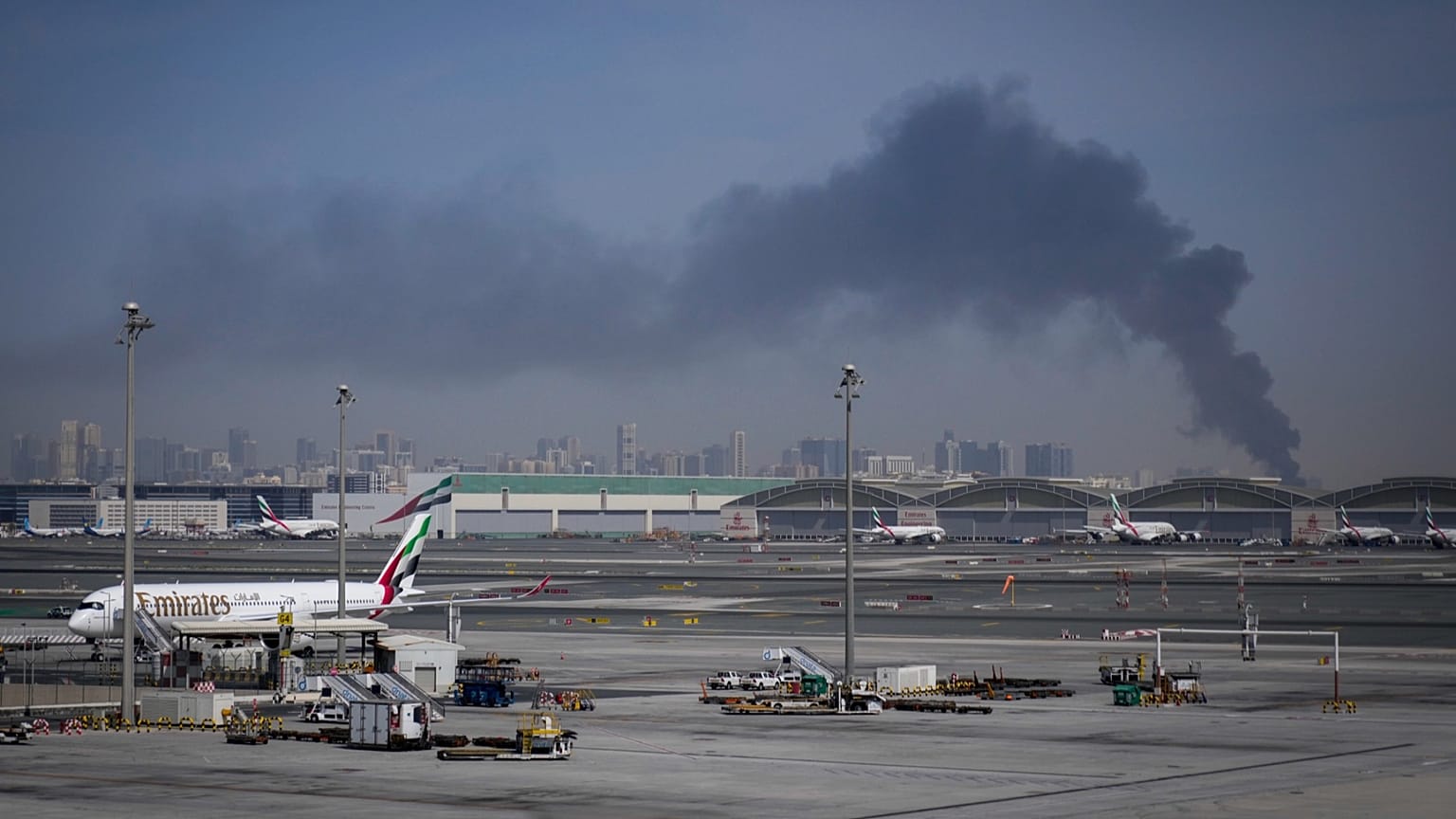
After strikes targeted luxury hotels and Dubai International Airport – the UAE’s main aviation hub – officials confirmed that all flights had been grounded over the weekend. Following the 48-hour shutdown, Dubai International resumed a limited service, with airlines such as Emirates stating priority was being given to passengers with earlier bookings.
With thousands stranded and fearing for their safety, many attempted to escape Dubai and drive four hours to Muscat in Oman. Some even attempted a 10-hour journey over to Riyadh, the capital of Saudi Arabia.
However, the majority of commercial flights from Muscat to Europe were fully booked until later this w
Due to skyrocketing demand, the price of chartered flights has reportedly spiked – with the mega-rich forking out a staggering €200,000 to get out of the city or nearby regions.
Football superstar Cristiano Ronaldo’s private jet left Saudi Arabia on Monday night, while Italy’s defence minister Guido Crosetto and his family returned home on a military aircraft last weekend.
‘Flying above the chaos’ in Dubai
Tyrone Scott of War on Want, a UK-based charity that works to fight poverty and defend human rights, tells Euronews Green that the influx of private jet use exposes a “stark global inequality”.
“When crises hit, the world’s wealthiest can quite literally fly above the chaos, while millions of others are left trapped in conflict zones or facing closed and heavily secured borders,” he says.
Dubai has long been a playground for the rich, attracting wealthy individuals due to its glitz and glamour, and lack of income tax. But its appeal – amplified by social media influencers – has been built on the backs of migrant workers, who human rights organisations say have faced systematic exploitation.
In 2023, non-profit FairSquare found that migrant construction workers on Dubai’s COP28 site were put to work outdoors in extreme heat that “posed serious threats to their health and could be fatal”.
A 2024 investigation also warned that low-income migrant workers in the UAE were being disproportionately affected by a prolonged dengue outbreak following devastating spring flooding.
“As cases of dengue have rampaged through the community, the toll on migrant workers, who live in marginalised neighbourhoods and struggle to access quality healthcare, has been particularly harsh,” James Lynch, FairSquare’s co-director, said at the time.
For these workers, who are the backbone of Dubai’s impressive skyline and vast shopping centres, escaping the conflict isn’t an option.
“The inequality at the heart of this story is also the root of the climate crisis,” says Hannah Lawrence, a Stay Grounded spokesperson.
“While the super-rich are able to pay tens of thousands of Euros to flee on private jets, those most impacted by war and the climate crisis cannot.”
Lawrence argues that safety should not depend on one’s ability to afford a private jet. “Everyone deserves safety and a future in which they can thrive,” she adds.
“We must end the skyrocketing inequality of private jets, luxury tourism and the privileges of the ultra-rich.”
‘Escalating climate breakdown’
Private jets are also notorious for their environmental impact, which studies show is a huge contributor to climate change.
Analysis from Transport & Environment found that private flights are five to 14 times more polluting than commercial planes per passenger, and 50 times more polluting than trains. Despite this, private jet emissions have increased by 46 per cent between 2019 and 2023.
“At a time of escalating climate breakdown and global instability, it’s indefensible that this level of carbon-intensive luxury remains largely untaxed and unregulated,” Scott says.
“Governments should be looking seriously at measures like strong wealth taxes and levies on private jet use to curb excessive emissions and ensure the richest contribute their fair share to addressing the crises their lifestyles help fuel.”
Can a wealth tax help fight the climate crisis?
Calls for more aggressive taxes on carbon-intensive luxury items and fossil fuel profits have gotten louder in recent years, as the super-rich continue to flout what Oxfam describes as “gross carbon recklessness”.
A report from the NGO group published in January found that the richest one per cent exhausted their annual carbon budget just 10 days into 2026. This is where CO2 emissions exceed limits to keep the world within 1.5℃ of warming, as set out in the Paris Agreement.
The analysis also found that the richest 0.01 per cent exceeded their carbon limit in the first 72 hours of the New Year (3 January). Experts argue the uber-wealthy must slash their emissions by 97 per cent by 2030 to meet legally-binding climate targets.
Oxfam is now calling on governments to introduce a ‘Rich Polluter Profits Tax’. It says implementing such a policy on 585 oil, gas and coal companies – which many wealthy individuals invest in – could generate more than €340 billion in the first year.
It is also urging a ban or punitive tax on “carbon-intensive luxury items” such as super-yachts and private jets. The carbon footprint of a super-rich European, accumulated from nearly a week of using these fuel-guzzling modes of transport, matches the lifetime carbon footprint of someone in the world’s poorest one per cent.
How climate change disproportionately affects the poor
Scientists have repeatedly warned that poorer nations will be most impacted by climate change, despite often having the smallest contribution to rising temperatures.
A 2025 report from World Weather Attribution analysed 22 climate-fuelled disasters from last year, and found that globally, women carry an ‘unequal burden’ that often increases their risk from dangerously high temperatures.
However, the inequality goes much further, and can actually be seen in scientific evidence itself. Many of WWA’s studies in 2025 focused on heavy rainfall events in the Global South, a collective term for countries in Africa, Asia, Latin America and Oceania (but not Australia and New Zealand) which are commonly referred to as “developing” or “less developed” nations.
In general, these countries are poorer than nations in North America and Europe, have higher levels of income inequality and suffer lower life expectancy.
But scientists repeatedly found gaps in observational data, arguing that reliance on climate models developed mainly for the Global North prevented them from drawing confident conclusions.
“This unequal foundation in climate science mirrors the broader injustices of the climate crisis,” the report adds.


No comments:
Post a Comment