
File photo of members of Hezbollah. Photo Credit: Fars News Agency
March 5, 2026
EurActiv
By Sarantis Michalopoulos
(EurActiv) — Nicosia faces a severe security challenge after Hezbollah’s recent attack on British military bases in Cyprus, where the main concern is the possibility of a large-scale drone attack.
The southeastern Mediterranean island, currently holding the EU Presidency, finds itself vulnerable due to its strategic location. Although Lebanon may appear to be far from Europe, it is only a 40-minute flight from Cyprus, putting the island well within reach of Iran-backed Hezbollah’s unmanned aerial vehicles.
Greek media reported that while drones are difficult to detect and intercept, NATO and allied forces in the region maintain the capability to do so. Still, if dozens of drones were launched at once, it would make defending the island challenging.
Cyprus hosts two British military bases that have already been targeted by Iranian and Hezbollah-linked operations.
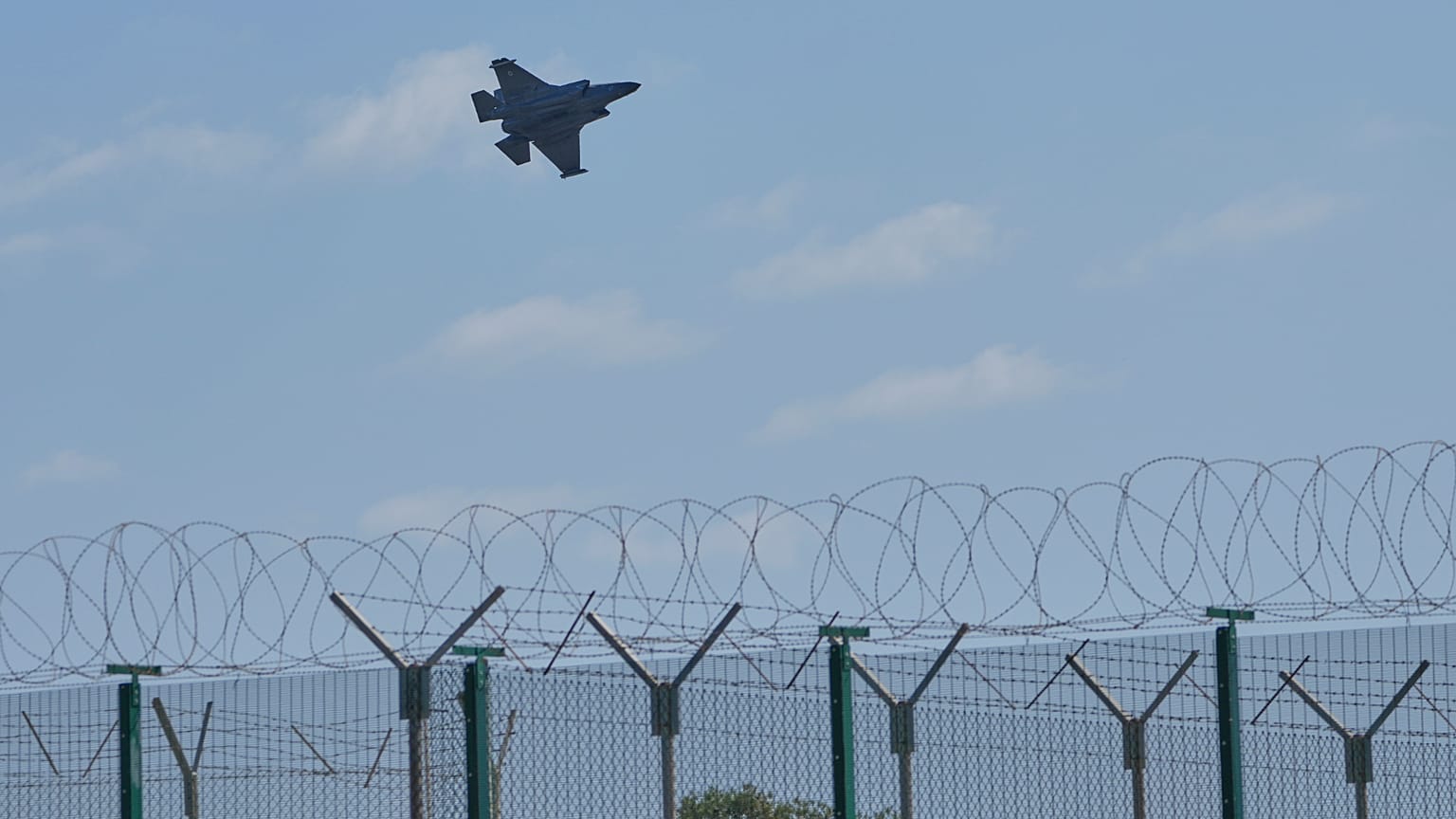
In response to the escalating threat to Cyprus, several EU countries are sending military support: Greece has deployed two frigates and four F-16 fighter jet, France sent the aircraft carrier Charles de Gaulle, and Germany and Italy are considering sending frigates.
Berlin, however, is not currently planning to provide military support for Cyprus, the government said on Wednesday.
Greece, meanwhile, said that its mission is to support Cyprus’ defence, not the British bases. London, however, has focused on protecting its installations, recently deploying the Royal Navy air‑defence destroyer HMS Dragon.
The Israeli Defence Forces stated on Tuesday that they had deployed troops further into southern Lebanon after Hezbollah began launching rockets and unmanned aerial vehicles into northern Israel early on Monday.
The Lebanese President on 2 March asked Hezbollah to surrender their weapons. However, analysts consider this scenario extremely unlikely.
Amidst the heightened security threat, the Cypriot government will issue a decree prohibiting the use of drones by private individuals.

March 5, 2026
Turkiye said that NATO air defenses destroyed a ballistic missile fired from Iran as it headed into Turkish airspace on Wednesday, marking the first time the alliance member has been drawn into the expanding Middle East conflict.
It was unclear where the missile was headed, but a NATO spokesperson said the trans-Atlantic defense bloc condemned Iran’s targeting of Turkiye and that it stood firmly with all allies.
The Turkish defense ministry said the missile had passed over Iraq and Syria before it was downed by NATO air and missile defense systems stationed in the eastern Mediterranean.
There was no immediate comment from the United States, which has air forces stationed at Incirlik base in Turkiye’s south.
The base is in a province bordering Hatay province, where Turkish authorities said debris from the intercepting NATO missile had fallen.
“We warn all parties to refrain from actions that would lead to further escalation of conflict in the region. In this context, we will continue to consult with NATO and our other allies,” the defense ministry said, adding there were no casualties or injuries.
“All necessary steps to defend our territory and airspace will be taken resolutely and without hesitation. We remind all parties that we reserve the right to respond to any hostile actions against our country,” it added.
Two other initial statements by senior Turkish officials about the incident did not mention NATO’s Article 4, which states that allies will “consult together whenever, in the opinion of any of them, the territorial integrity, political independence or security” of a member is threatened.
Turkish Foreign Minister Hakan Fidan conveyed a protest to Iranian counterpart Abbas Araqchi in a call after the incident, a Turkish diplomatic source said.
Ankara sought to mediate talks between Iran and the United States in the weeks before the US and Israel launched strikes against Iran, triggering missile and drone attacks by Tehran. Several countries in the Gulf and elsewhere have been caught in the fallout.
What to know about France's Charles de Gaulle aircraft carrier and its Mediterranean deployment
 Copyright By U.S. Marine Corps photo by Maj. Joshua Smith - This image was released by the United States Navy with the ID 190424-M-BP588-1005
What to know about France's Charles de Gaulle aircraft carrier and its Mediterranean deployment
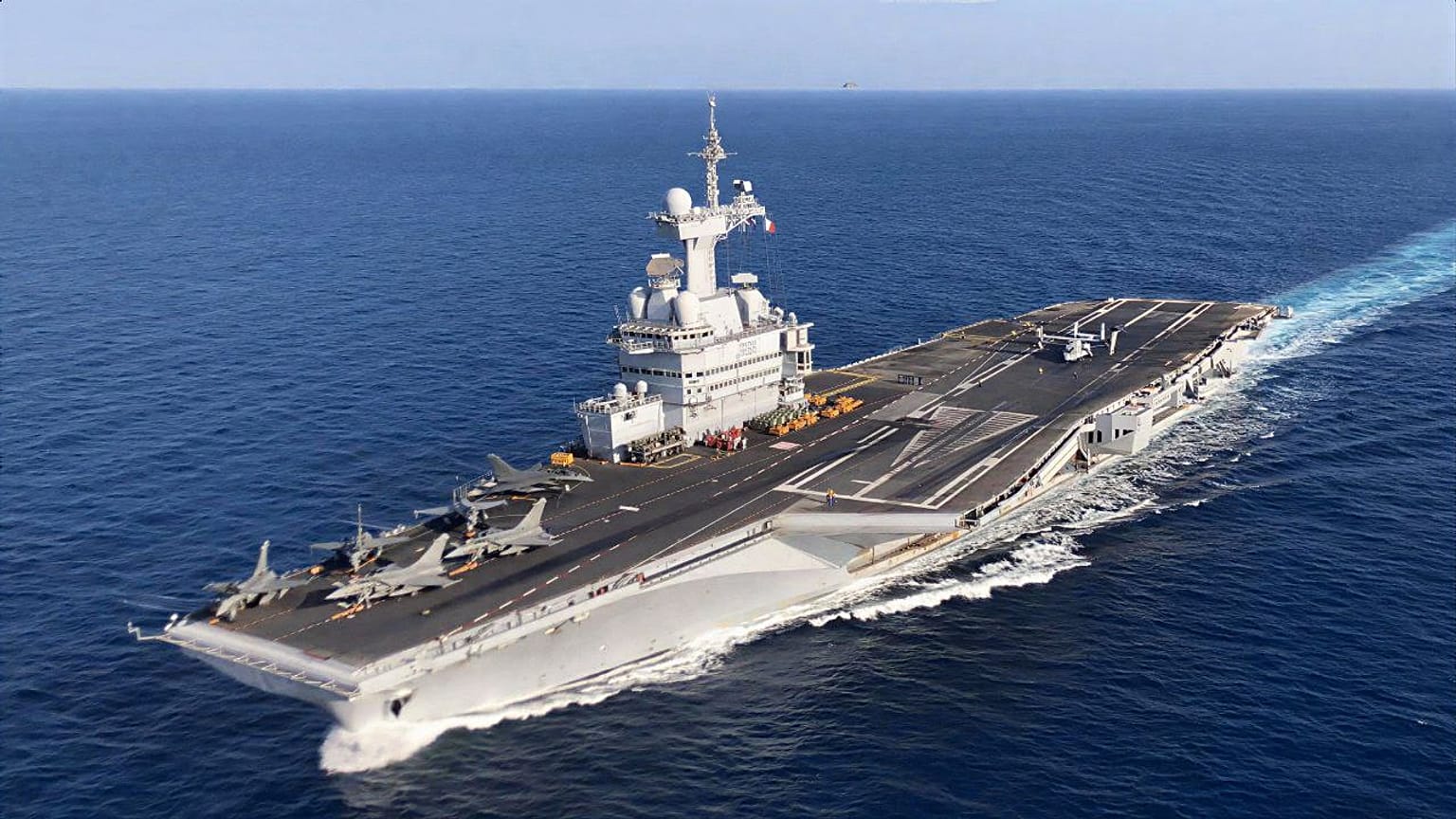
Since 2001, the Charles de Gaulle has served as the crown jewel of French military might. It is the only nuclear-powered aircraft carrier outside the US fleet and has just been deployed in the eastern Mediterranean following the outbreak of the Iran war.
France deployed its nuclear-powered aircraft carrier Charles de Gaulle to the eastern Mediterranean, redirecting the vessel from North Atlantic operations as the Iran war escalates, threatening to spill over outside of the Middle East.
French President Emmanuel Macron announced the deployment during a televised address Tuesday evening. "I have ordered the Charles de Gaulle aircraft carrier, its air assets, and its escort of frigates to set course for the Mediterranean," he said.
The carrier group was pulled from Mission Lafayette 26 in the North Atlantic and Baltic Sea, where it had participated in NATO exercises. The vessel made a stopover in the Swedish port of Malmö last week before receiving new orders.
The Charles de Gaulle is expected to take approximately 10 days to reach the eastern Mediterranean.
France deployed its nuclear-powered aircraft carrier Charles de Gaulle to the eastern Mediterranean, redirecting the vessel from North Atlantic operations as the Iran war escalates, threatening to spill over outside of the Middle East.
French President Emmanuel Macron announced the deployment during a televised address Tuesday evening. "I have ordered the Charles de Gaulle aircraft carrier, its air assets, and its escort of frigates to set course for the Mediterranean," he said.
The carrier group was pulled from Mission Lafayette 26 in the North Atlantic and Baltic Sea, where it had participated in NATO exercises. The vessel made a stopover in the Swedish port of Malmö last week before receiving new orders.
The Charles de Gaulle is expected to take approximately 10 days to reach the eastern Mediterranean.
Armament and strike capability
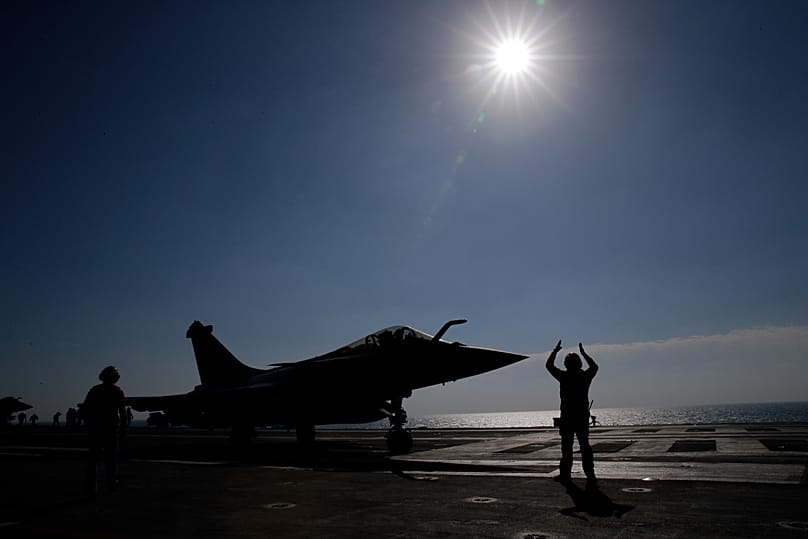
The vessel carries 20 Rafale fighter jets and two E-2C Hawkeye airborne early warning aircraft that will contribute to securing regional airspace, according to France 24.
The 42,500-tonne carrier measures 261 metres in length and is powered by two K15 nuclear reactors, the same type that powers France's Le Triomphant-class submarines.
This propulsion system provides virtually unlimited operational range, allowing the vessel to operate for extended periods without refuelling.
 Rafale on the deck of the Charles de Gaulle, file image Copyright 2016 The Associated Press. All rights reserved.
The ship can accommodate approximately 40 aircraft, though it typically operates with between 20 and 30 depending on the mission. The current deployment includes the 20 Rafale M fighters and two Hawkeye aircraft.
The embarked Rafale M aircraft can carry SCALP air-to-ground missiles with ranges exceeding 500 kilometres, AM39 Exocet anti-ship missiles, and laser- or GPS-guided bombs. In air superiority configuration, the aircraft carry Meteor air-to-air missiles.
The carrier itself is equipped with Aster 15 surface-to-air missiles for point defence, 20mm Giat guns and electronic warfare systems. The vessel projects air power rather than engaging in direct surface combat.
The vessel carries 20 Rafale fighter jets and two E-2C Hawkeye airborne early warning aircraft that will contribute to securing regional airspace, according to France 24.
The 42,500-tonne carrier measures 261 metres in length and is powered by two K15 nuclear reactors, the same type that powers France's Le Triomphant-class submarines.
This propulsion system provides virtually unlimited operational range, allowing the vessel to operate for extended periods without refuelling.
The ship can accommodate approximately 40 aircraft, though it typically operates with between 20 and 30 depending on the mission. The current deployment includes the 20 Rafale M fighters and two Hawkeye aircraft.
The embarked Rafale M aircraft can carry SCALP air-to-ground missiles with ranges exceeding 500 kilometres, AM39 Exocet anti-ship missiles, and laser- or GPS-guided bombs. In air superiority configuration, the aircraft carry Meteor air-to-air missiles.
The carrier itself is equipped with Aster 15 surface-to-air missiles for point defence, 20mm Giat guns and electronic warfare systems. The vessel projects air power rather than engaging in direct surface combat.
History of operations in war theatres
The Charles de Gaulle's operational history includes missions during Operation Enduring Freedom, Libya operations in 2011, the campaign against Islamic State in Syria and Iraq between 2015 and 2019, and deployments in the Indian Ocean during Operation Agapanthus.
The carrier encountered difficulties during its early service years, including propulsion failures and radiological contamination incidents among crew members that required major overhauls.
In 2020, the vessel was temporarily disabled amid the spread of COVID-19 among its 1,760 crew during a Mediterranean mission.
 Picture of the Charles de Gaulle's command bridge CC BY-SA 3.0, https://commons.wikimedia.org/w/index.php?curid=38736
France operates only one aircraft carrier. When the vessel enters dry dock for extended maintenance periods every few years, France temporarily loses the naval projection capability that distinguishes it from other European navies.
The deployment follows Iran's statement that its forces effectively closed the Strait of Hormuz. Approximately 20% of global oil and liquefied natural gas passes through the waterway.
Macron also announced Tuesday that France was sending additional air defence units to Cyprus following Iranian drone strikes on the British Royal Air Force base at Akrotiri. The frigate Languedoc and additional air defence assets arrived off Cyprus on Tuesday, according to reports.
The Charles de Gaulle's operational history includes missions during Operation Enduring Freedom, Libya operations in 2011, the campaign against Islamic State in Syria and Iraq between 2015 and 2019, and deployments in the Indian Ocean during Operation Agapanthus.
The carrier encountered difficulties during its early service years, including propulsion failures and radiological contamination incidents among crew members that required major overhauls.
In 2020, the vessel was temporarily disabled amid the spread of COVID-19 among its 1,760 crew during a Mediterranean mission.
France operates only one aircraft carrier. When the vessel enters dry dock for extended maintenance periods every few years, France temporarily loses the naval projection capability that distinguishes it from other European navies.
The deployment follows Iran's statement that its forces effectively closed the Strait of Hormuz. Approximately 20% of global oil and liquefied natural gas passes through the waterway.
Macron also announced Tuesday that France was sending additional air defence units to Cyprus following Iranian drone strikes on the British Royal Air Force base at Akrotiri. The frigate Languedoc and additional air defence assets arrived off Cyprus on Tuesday, according to reports.
Drone attacks on British base in Cyprus spark concern, but no NATO or EU response
 Copyright AP Photo
Cyprus is one of four EU countries that are not NATO members – but the UK, which has sovereign bases on the island, is.
Drone activity targeting British military facilities in Cyprus has raised security concerns in recent days, but the incidents have so far not prompted formal consultations within either NATO or the European Union over collective defence measures.
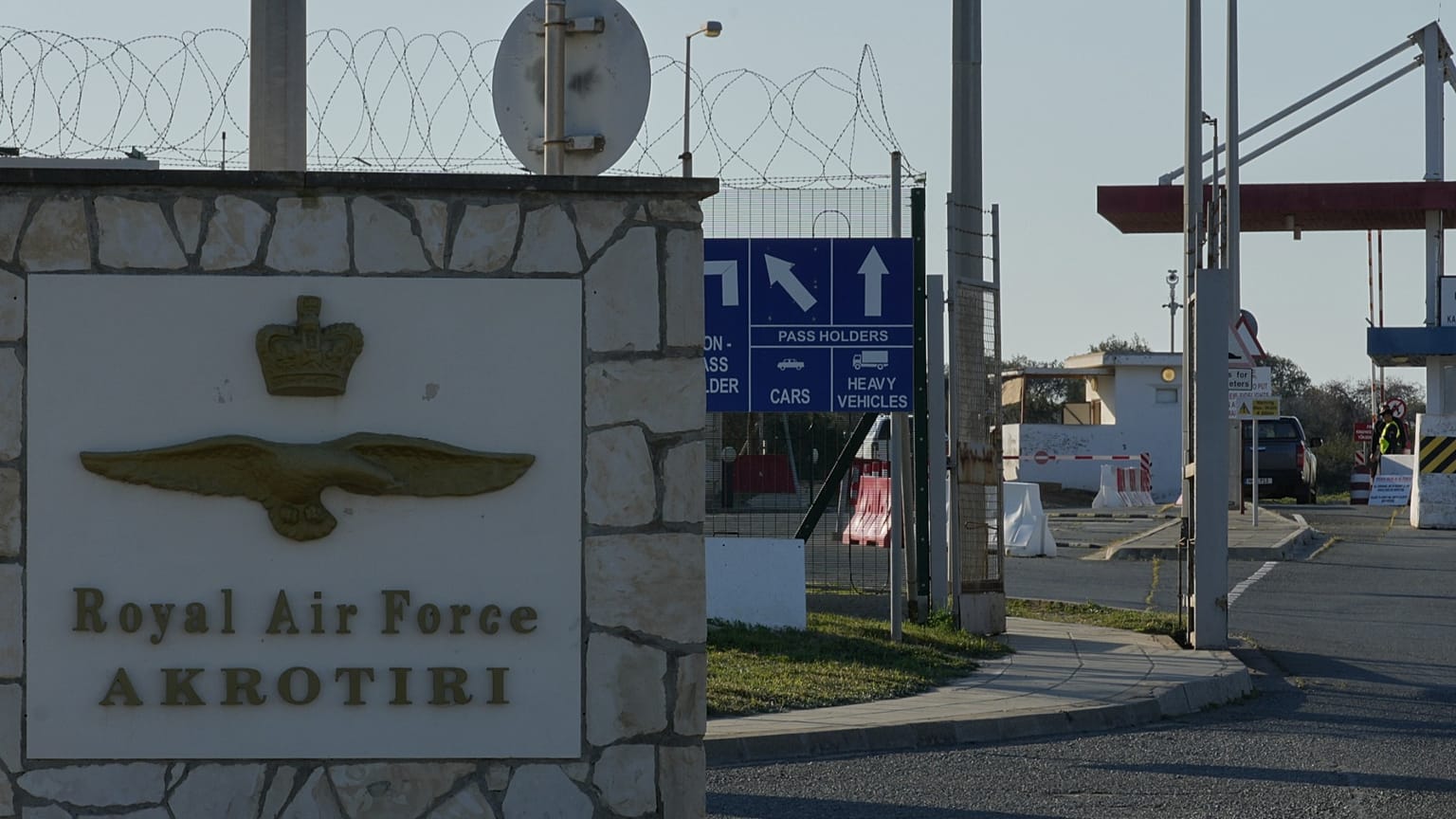
Two drones targeting a British base in Akrotiri were intercepted on Monday after another attack on Sunday caused limited damage.
Britain is a member of NATO, but a source at the military alliance confirmed to Euronews on Tuesday that no dedicated discussion had been held among the 32 allies over the incident, which is so far considered to have been quite small.
NATO allies can trigger Article 4 to request consultations among all allies if they feel their territorial integrity, political independence or security is threatened. Poland is the most recent ally to have triggered the article following multiple airspace violations by Russia in September last year.
NATO chief Mark Rutte also stressed during a visit to North Macedonia on Tuesday that the military alliance is "not itself involved" in what's happening in the Middle East, but that it will "defend every inch of NATO territory" if needed.
"Let's be absolutely clear-eyed to what's happening here. Iran is close to getting its hands on a nuclear capability and on a ballistic missile capability," he said.
"I think we are all better off with him (Iranian Ayatollah Ali Khamenei, killed on Saturday by a strike) gone and with the nuclear and ballistic capability being beaten and degraded as it is as we speak."
Rutte reiterated that the operation against Iran was carried out by the US and Israel, and while some allies are providing support, this is being done on a bilateral basis.
Cyprus, one of only four EU member states that is not in NATO, has been receiving help from other member states, with Greece and France both deploying capabilities to help defend the island.
Athens has already sent four F-16 fighter jets and two frigates to the island, while a Cypriot official confirmed to Euronews that Paris is supplying anti-missile and anti-drone systems, as well as a frigate.
Cyprus President Nikos Christodoulides confirmed he is also in contact with German Chancellor Friedrich Merz and Italian Premier Giorgia Meloni.
But this assistance is being lent on a bilateral basis, with "no specific discussion" held so far about the bloc’s mutual defence clause, a European Commission spokesperson confirmed on Tuesday.
"It seems to be very clear the Republic of Cyprus was not the target," Paula Pinho told reporters. "Obviously, it causes anxiety in the people, that's why we also wanted to express our support, that we stand collectively with the member state in the face of any threat."
On the possible activation of Article 42.7 – the EU’s mutual defence clause – Pinho stressed that it "would be for the EU member state, which in this case is victim to a claimed armed attack, to exercise the legal and political assessment" before triggering it.
Drone activity targeting British military facilities in Cyprus has raised security concerns in recent days, but the incidents have so far not prompted formal consultations within either NATO or the European Union over collective defence measures.
Two drones targeting a British base in Akrotiri were intercepted on Monday after another attack on Sunday caused limited damage.
Britain is a member of NATO, but a source at the military alliance confirmed to Euronews on Tuesday that no dedicated discussion had been held among the 32 allies over the incident, which is so far considered to have been quite small.
NATO allies can trigger Article 4 to request consultations among all allies if they feel their territorial integrity, political independence or security is threatened. Poland is the most recent ally to have triggered the article following multiple airspace violations by Russia in September last year.
NATO chief Mark Rutte also stressed during a visit to North Macedonia on Tuesday that the military alliance is "not itself involved" in what's happening in the Middle East, but that it will "defend every inch of NATO territory" if needed.
"Let's be absolutely clear-eyed to what's happening here. Iran is close to getting its hands on a nuclear capability and on a ballistic missile capability," he said.
"I think we are all better off with him (Iranian Ayatollah Ali Khamenei, killed on Saturday by a strike) gone and with the nuclear and ballistic capability being beaten and degraded as it is as we speak."
Rutte reiterated that the operation against Iran was carried out by the US and Israel, and while some allies are providing support, this is being done on a bilateral basis.
Cyprus, one of only four EU member states that is not in NATO, has been receiving help from other member states, with Greece and France both deploying capabilities to help defend the island.
Athens has already sent four F-16 fighter jets and two frigates to the island, while a Cypriot official confirmed to Euronews that Paris is supplying anti-missile and anti-drone systems, as well as a frigate.
Cyprus President Nikos Christodoulides confirmed he is also in contact with German Chancellor Friedrich Merz and Italian Premier Giorgia Meloni.
But this assistance is being lent on a bilateral basis, with "no specific discussion" held so far about the bloc’s mutual defence clause, a European Commission spokesperson confirmed on Tuesday.
"It seems to be very clear the Republic of Cyprus was not the target," Paula Pinho told reporters. "Obviously, it causes anxiety in the people, that's why we also wanted to express our support, that we stand collectively with the member state in the face of any threat."
On the possible activation of Article 42.7 – the EU’s mutual defence clause – Pinho stressed that it "would be for the EU member state, which in this case is victim to a claimed armed attack, to exercise the legal and political assessment" before triggering it.
Greece, France and Germany send forces to Cyprus after Iran-made drone strikes
 Copyright AP Photo/Petros Karadjias
Both Greece and France have agreed to send frigates to Cyprus after a UK air base was targeted by Iranian-made drones on Monday. France will also send additional land-based, anti-drone and anti-missile systems to the country.
Cypriot officials say France will dispatch a warship to Cyprus to help bolster the country’s anti-drone defences after several Iranian-made drones were launched towards a British military base on the eastern Mediterranean island.
France will also send additional land-based, anti-drone and anti-missile systems to the country, officials confirmed Tuesday.
Germany also responded positively to a request to send a warship, according to three officials who spoke on condition of anonymity because they were not permitted to provide details publicly.
The equipment will arrive in Cyprus as soon as possible, they said.
Greece has already sent four F-16 fighter jets to Cyprus while two of its frigates are on their way.
Cyprus President Nikos Christodoulides confirmed he was in contact with German Chancellor Friedrich Merz and Italian Premier Giorgia Meloni in what he said was "immediate (Greek) response being followed by other European states".
"This proves in practice that Greece is paving the way for how the European Union should respond to such cases," Christodoulides said on Tuesday.
Christodoulides made the statement during a meeting between him and his Defence Minister Vassilis Palma and Greek Defence Minister Nikos Dendias and Greek Chief of Defence Staff General Dimitris Houpis in Cyprus.
The moves are part of the activation of the Greek-Cypriot Unified Defence Doctrine, a common strategic plan between Athens and Nicosia in the event of a threat.
Cypriot officials say France will dispatch a warship to Cyprus to help bolster the country’s anti-drone defences after several Iranian-made drones were launched towards a British military base on the eastern Mediterranean island.
France will also send additional land-based, anti-drone and anti-missile systems to the country, officials confirmed Tuesday.
Germany also responded positively to a request to send a warship, according to three officials who spoke on condition of anonymity because they were not permitted to provide details publicly.
The equipment will arrive in Cyprus as soon as possible, they said.
Greece has already sent four F-16 fighter jets to Cyprus while two of its frigates are on their way.
Cyprus President Nikos Christodoulides confirmed he was in contact with German Chancellor Friedrich Merz and Italian Premier Giorgia Meloni in what he said was "immediate (Greek) response being followed by other European states".
"This proves in practice that Greece is paving the way for how the European Union should respond to such cases," Christodoulides said on Tuesday.
Christodoulides made the statement during a meeting between him and his Defence Minister Vassilis Palma and Greek Defence Minister Nikos Dendias and Greek Chief of Defence Staff General Dimitris Houpis in Cyprus.
The moves are part of the activation of the Greek-Cypriot Unified Defence Doctrine, a common strategic plan between Athens and Nicosia in the event of a threat.
Drones likely from Hezbollah
A drone struck the UK base, RAF Akrotiri, shortly after midnight on Monday and caused only minor material damage to an aircraft hangar.
Another two drones were intercepted by British warplanes on the same day after they were scrambled from the air base, officials said.
Cyprus' government said the drones were launched from Lebanon, likely by Hezbollah militants.
UK Prime Minister Keir Starmer said on Monday that British military bases in Cyprus will not be used by Washington for its operations in Iran, despite criticism from US President Donald Trump.
Starmer announced on Sunday that he had agreed to a US request to use British bases for a "specific and limited defensive purpose".
But in comments to parliament on Monday, he said this would not include bases on the Mediterranean island.
"The bases in Cyprus are not being used and not going to be used by the US ... because they're not suitable," he said.
A drone struck the UK base, RAF Akrotiri, shortly after midnight on Monday and caused only minor material damage to an aircraft hangar.
Another two drones were intercepted by British warplanes on the same day after they were scrambled from the air base, officials said.
Cyprus' government said the drones were launched from Lebanon, likely by Hezbollah militants.
UK Prime Minister Keir Starmer said on Monday that British military bases in Cyprus will not be used by Washington for its operations in Iran, despite criticism from US President Donald Trump.
Starmer announced on Sunday that he had agreed to a US request to use British bases for a "specific and limited defensive purpose".
But in comments to parliament on Monday, he said this would not include bases on the Mediterranean island.
"The bases in Cyprus are not being used and not going to be used by the US ... because they're not suitable," he said.

No comments:
Post a Comment