Showing posts sorted by date for query HINDUISM IS FASCISM,. Sort by relevance Show all posts

Wednesday, November 19, 2025


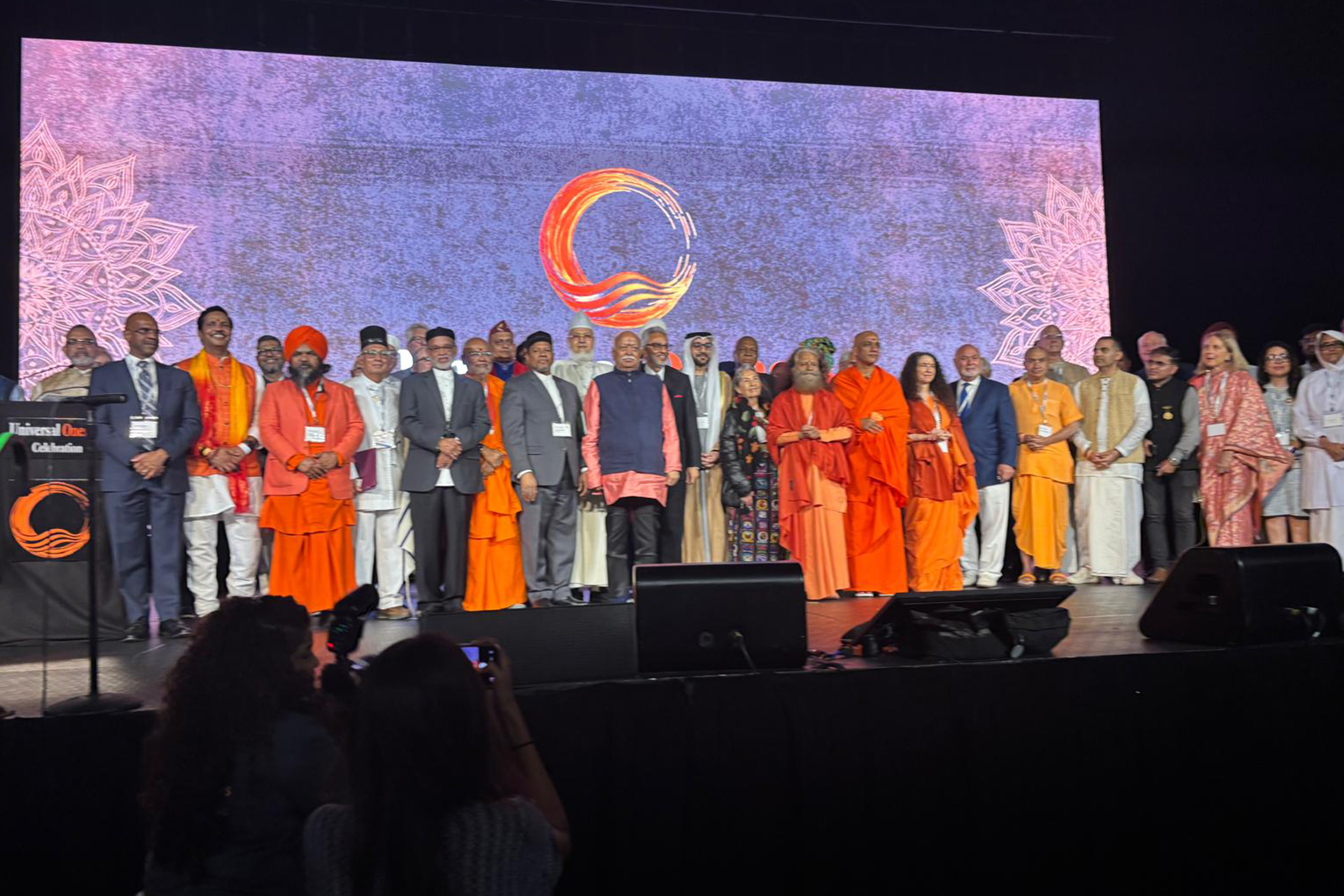
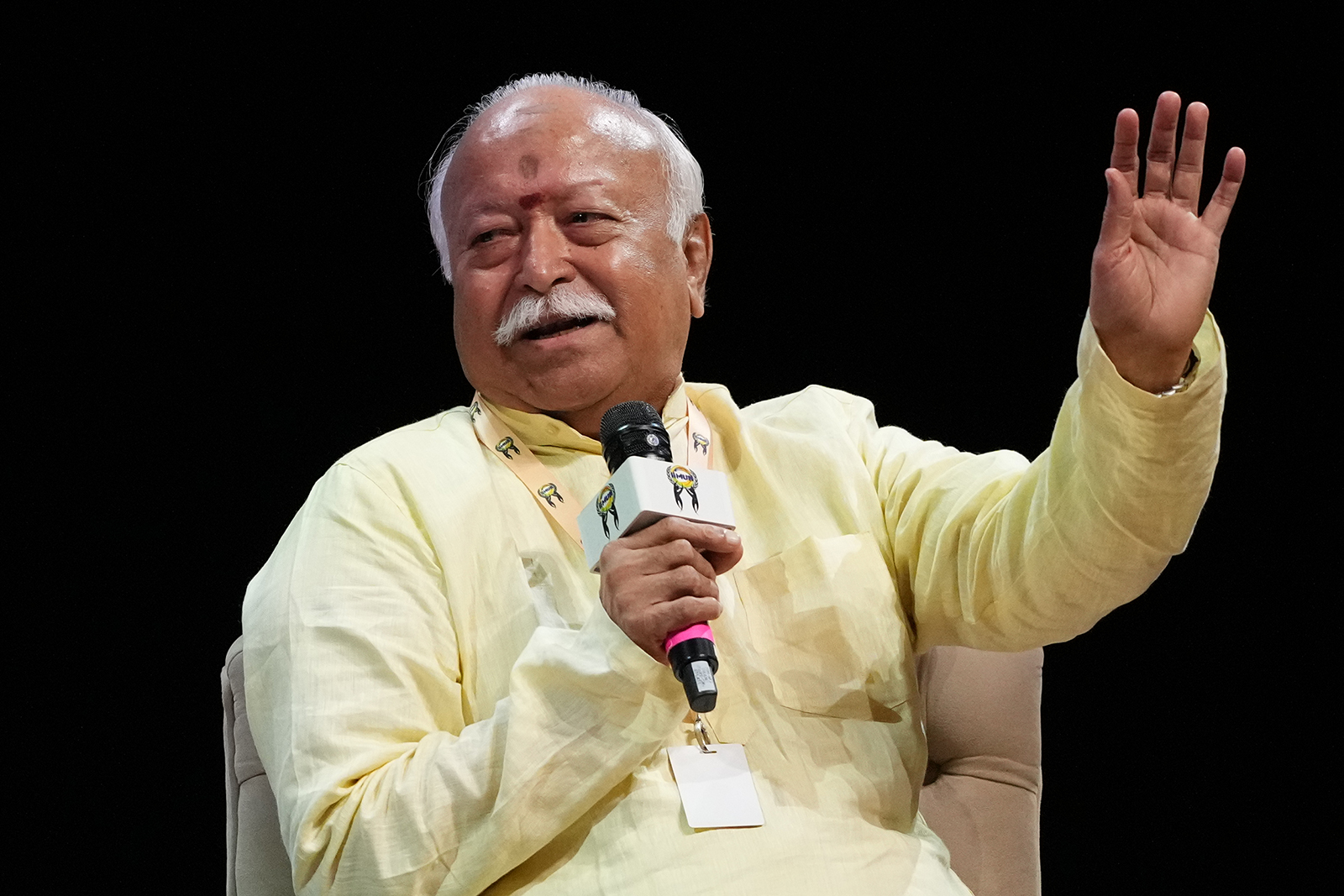
Lobbying Games: RSS Connections in US


Ram Puniyani 


Does RSS need lobbying to project its image as pro-US, as India sometimes is not toeing the US line in its foreign policy?


RSS - HINDU FASCISTS 

As Rashtriya Swayamsevak Sangh (RSS) has completed 100 years of its existence, one new, not widely known fact has come to surface. Many YouTube and online news channels have been discussing RSS hiring a lobbying firm in the US. Interestingly, the firm hired for its lobbying happens to be the same one which is lobbying for Pakistan.

One recalls that when Narendra Modi became the Chief Minister of Gujarat, he had hired a firm for hyping his image “… Washington-based firm, APCO Worldwide, was hired by Modi sometime in August 2007, in the run-up to an important Assembly election, to improve his image before the world.” Incidentally, APCO, the subsidiary of a US law firm, also did image-building for many dictators, and even canvassing for wars where the states hiring them needed it.

It seems lobbying is an important part of image-building, which constructs ‘social common sense’ and helps in ‘manufacturing consent’. The latter phrase was devised by renowned human rights proponent Noam Chomsky. 

Read Also: RSS @100: ‘Static Content, Changing Language’

 The Print news portal and many other sources report, “According to an investigation by news outlet Prism, the law firm received $330,000 to lobby officials in the US Senate and House of Representatives on behalf of RSS. Lobbying reports accessed by the American news outlet indicated that the significant sum was paid out during the first three quarters of 2025. Public documents accessed by The Print add that the firm was hired on behalf of the RSS on 3 March …” 

What is the source of this funding?

RSS is a non-registered body and claims that “guru dakshina” (disciples’ gift to teacher) is the sole source of its funding! These are complex issues.

Non-registered bodies are spending large sums of money in the US! Sunil Ambekar of the RSS denies this but this is very much available on reliable web sites of companies and also of the US Senate. It is mandatory in the US to declare such funding from abroad.

Earlier, this non registered body was investigated for income tax purposes. The tribunal examining its case said, “The tribunals, appreciating the true spirit of gratitude that underlies the idea of a Guru Dakshina, granted tax exemption to funds so collected by RSS. However, the very character of such funds undergoes a paradigm change when the “Guru” diverts a portion of those funds to pay a foreign firm for lobbying with a foreign government… if one can take the liberty of interpreting “lobbying” as “educating” the foreign public functionaries.” 

Anyway, why does this divisive organisation, which till yesteryear believed in working in silent mode, need to hire this lobbying agency and pay it through via media for image creation for American policy-makers and people at large?

As a matter of fact, RSS-BJS-BJP’s (Bhartiya Jan Sangh, Bharatiya Janata Party) policies have been very aligned with US policies overall, more particularly in the 1950s and 1960s. They were the ones to support US invasion of Vietnam, its aggression in different parts of the world and put pressure on Indian government to be pro-US when India was non-aligned and was benefiting in setting up modern institutions with the help of different countries, including the then USSR (Russia), which was regarded as a stark enemy by the Western world.

Many Indians, posing to be patriotic but lured by dollars, settled in the US and a large number of them were supporters of this Right-wing organisation to preserve sanskar (values) in the country of their origin and to inculcate these sanskar in the new generation. Many of them rose to high political positions in the US and were pro-RSS-BJP.

So, where is the need for this type of lobbying? There is a rise of some new factors that are RSS to do this. One; that they want to present themselves as pro-US, as India sometimes is not toeing the US line in its foreign policy.

More than this, many US organisations, working independently of State control or with the goal of monitoring human rights status worldwide, have been coming out with human rights violations in other countries, and pointing out the anti-equality stance of RSS whose branch is HSS (Hindu Swayam Sevak Sangh) in US. One such organisation working meticulously is that of Hindus of Indian origin, which stands for liberal values -- ‘Hindus for Human Rights’.

There are other US-based organisations that are coming out with comprehensive reports on the acts of the RSS combine. The Indian Religious Freedom Report 2024 shows a decline in religious freedom in India. “In 2023, religious freedom conditions in India continued to deteriorate. The government, led by the Bharatiya Janata Party (BJP), reinforced discriminatory nationalist policies, perpetuated hateful rhetoric, and failed to address communal violence disproportionately affecting Muslims, Christians, Sikhs, Dalits, Jews, and Adivasis (indigenous peoples). Continued enforcement of the Unlawful Activities Prevention Act (UAPA), Foreign Contribution Regulation Act (FCRA), Citizenship Amendment Act (CAA), and anti-conversion and cow slaughter laws resulted in the arbitrary detention, monitoring, and targeting of religious minorities and those advocating on their behalf.”(Report of The U.S. Commission on International Religious Freedom (USCIRF).

The reputed Rutgers Center for Security of Race and Rights, in collaboration with Denver and Columbia University scholars, has come out with a detailed report about RSS combine’s role in promoting hate, sectarian nationalism and violence. This centre, since the September 11th (2001) attacks, is monitoring the attacks on Muslim, Arab, and South Asian communities who have faced increased discrimination and prejudice.

A lack of knowledge about these diverse communities facilitates false stereotypes associating them and Islam with terrorism. The Center for Security, Race and Rights works across racial and religious lines to address the underlying structural and systemic causes of Islamophobia and xenophobia against people of Arab, African, and South Asian descent. 

This report points out the role of Hindutva in America, particularly their activities posing ethno-nationalist threat to equality and pluralism. It gives the outline of demonisation of Muslims and Arabs and gives the outline of hate speeches.

Hindutva in America is also a matter of concern for them and the report deals with the activities related to their agenda. The report outlines the role of Hindu nationalist groups in the US in promoting a narrow, politicised version of Hinduism tied to the Hindutva ideology. Also, they emphasise upper-caste dominance, martial pride, religious intolerance, and ethno nationalism.

It is a significant report and outlines the roles of organisations like HSS and VHPA who use youth programmes and summer camps (e.g., Bal Vihar, Balagokulam) to instil Hindutva values in children—teaching prejudice toward non-Hindus and reinforcing caste hierarchies.

With such reports and oppositions floating in the US, no wonder that RSS has hired a lobbying agency to promote its image.

The writer is a human rights defender and a former professor at the Indian Institute of Technology, Bombay. The views are personal.


LA REVUE GAUCHE - Left Comment: Hinduism Is Fascism


 INDIA

Cow Vigilantism: Allahabad HC Flags Arbitrary FIRs, Demands Accountability


A first information report (FIR) is a document prepared by police organisations in many South and Southeast Asian countries, including MyanmarIndiaBangladesh and Pakistan, when they receive information about the commission of a cognisable offence, or in Singapore when the police receive information about any criminal offence. It generally stems from a complaint lodged with the police by the victim of a cognisable offence or by someone on their behalf,

Wikipedia · Text under CC-BY-SA license

CJP Team 


The Court exposes the way a regulatory law has become a system of targeted persecution of minorities through arbitrary FIRs under the 1955 law while ignoring the Supreme Court’s binding directives to prohibit group violence.

In its recent ruling in Rahul Yadav v. State of Uttar Pradesh (Criminal Misc. Writ Petition No. 9567 of 2025), a Bench of Justices Abdul Moin and Abdhesh Kumar Chaudhary of the Allahabad High Court has expressed concern and alarm at the cavalier and arbitrary manner in which police authorities in Uttar Pradesh were registering First Information Reports (FIRs) under the Uttar Pradesh Prevention of Cow Slaughter Act, 1955. The Bench noted that:

The matter might have ended at this stage requiring the respondents to file a counter affidavit. However, the matter cannot be treated to be so simple inasmuch as this Court is deluged with such matters on the basis of First Information Reports being filed left and right by the authorities and complainants under the provisions of the Act, 1955. (Para 15)

In this case, officers intercepted the transportation of nine living and healthy progeny of cows within Uttar Pradesh. Even though a slaughter or transport across state lines was not in issue, the owner of the vehicle was charged under Section 3, Section 5A, and Section 8 of the 1955 Act and Section 11 of the Prevention of Cruelty to Animals Act, 1960.

In determining that no offense had occurred, the Court ordered protection for the petitioner and went even further, directing the Principal Secretary (Home) and Director General of Police to personally file affidavits explaining this misuse pattern. The bench also asked for an explanation as to why the State has not issued a formal Government Order (GR) to carry out the Supreme Court’s binding directions from the judgment in Tehseen S. Poonawalla v. Union of India (July 2018) to prevent mob violence and cow vigilantism.

The Preventive Measures mandated by the apex court in the Tehseen S. Poonawalla  case have been encapsulated in this action-oriented pamphlet widely disseminated by Citizens for Justice and Peace that may be read here.

For over a decade, CJP has systematically documented and intervened against the abuse of the “cow protection” laws. Since 2017, CJP’s legal and advocacy teams have tracked the rise of mob vigilantism, along with its legal facilitators, all over India — fact-finding, litigation, and public education being the methods of doing this work. Investigations like India: The New Lynchdom (2018, CJP) and Cow Vigilantism: A Tool for Terrorising Minorities (2020, CJP) have mapped hundreds of instances where such laws have reportedly been used to sanction mob, extrajudicial violence, and have documented how the criminal justice system has been captured, even driven, by majoritarian agendas. Against this background, this becomes an important moment of judicial awareness of what CJP and other human rights defenders have been implementing for years.

It is important to note that this order is not limited to a single petitioner. It represents a judicial and legal recognition that the ongoing misuse of the 1955 Act occurs as part of a broader culture of impunity that encourages vigilantes, criminalizes livelihoods, and undermines the rule of law.

Statutory Background of the UP Prevention of Cow Slaughter Act, 1955

The 1955 Act was made to ban the killing of cows and their offspring and to control the transport of cows, all for the purpose of implementing Article 48 of the Constitution. The Act defines three regular aspects, where slaughter is banned under Section 3, transport within U.P. out-of-state is restricted under Section 5A, and punishment of three to ten years’ rigorous imprisonment and fine of ₹3–5 lakh is introduced under Section 8 for violations. Section 2(d) defines “slaughter” as “killing by any method whatsoever, and includes maiming and inflicting physical injury which in the ordinary course will cause death.” This definition shows that there must be some form of harm that would ultimately lead to death.

The Court emphasised that this requirement is routinely overlooked. It quoted Kaliya v. State of U.P. (2024 126 ACC 61), in which the Allahabad High Court cautioned that the conveyance of cows or calves in Uttar Pradesh does not invoke Section 5A since it only prohibits transport outside of that state. It also relied on the case of Parasram Ji v. Imtiaz (AIR 1962 All 22), a 1962 decision from the Allahabad High Court, which held that there is a difference between mere preparation and an attempt to slaughter. Preparation does not constitute an offence under the Act if the cow is tied up, for example. By citing Parasram Ji, the Bench emphasized that there was more than sixty years of settled law that the police were ignoring.

In this case, where slaughter, maiming, or interstate transportation was not charged, none of the violations applied. The judgment reminded us again of the Court’s own earlier warnings. In Rahmuddin v. State of U.P.(Criminal MISC. Bail Application No. – 34008 of 2020), the Court noted that the Act was being “misused against innocent persons” when it mentioned the meat was recovered, but often claimed all the meat to be cow meat without a laboratory test. In Jugadi Alias Nizamuddin v. State of U.P. (Criminal MISC Anticipatory Bail Application U/S 438 CR.P.C. No. – 182 of 2023), bail was granted before an arrest, as only cow-dung and a rope were recovered, but it was branded a “glaring example of misuse of penal law.” These rulings serve the greater purpose of demonstrating the number of mechanical FIRs that are being registered, even before investigation, and the abuse and incarceration that innocent people continue to experience.

Ambiguous legal provisions and ineffective procedural safeguards enable police overreach and selective police power against certain communities, mostly Muslims and Dalits. Consequently, the findings of the Allahabad High Court lend judicial authority to what human-rights defenders have been calling, for a long time, a systematic abuse of “cow-protection” laws.

This detailed legal explainer prepared by CJP in 2018 de-constructs how such laws have become a source of victimization.

The Court’s reasoning: From Casual FIRs to Vigilantism

After concluding that there was no offence made out, the Bench stated it was “deluged with such matters” resulting from indiscriminate First Information Reports (FIRs) under the 1955 Act (para 15). It directed the Principal Secretary (Home) and the DGP to show cause why the officers continue to lodge these FIRs in spite of the clear judicial precedent, in particular, the cases of Kaliya and Parasram Ji refer to cases in para 15. The Court required that the affidavits submitted by the officers included relevant affidavit material as to the taking of proposed disciplinary action by the State against the complainants and police personnel for making unwarranted FIRs, and if not, the Court required explanation for why the State did not issue a formal “Government Order” to legally preclude any such future FIRs, which served, in proportion, to undue disadvantage of cost in furthering the FIR towards frivolous case of prosecution.

In a serious observation, the Bench did not merely engage in procedural fault-finding; it also uncovered a more pervasive social consequence:

Yet another connected aspect of the matter under the garb of the Act, 1955 is vigilantism which is being practiced by various persons. Why we say this is because a few days back, a Bench of this Court was seized of a matter in which the car of the person was stopped by vigilantes and thereafter, it was not traceable. (See- Criminal Misc. Writ Petition No. 9152 of 2025 Inre; Bablu Vs. State of U.P and Ors). In the said writ, instructions have been called for by the Court. Violence, lynching and vigilantism is the order of the day. (Para 30).

The Court relied on Bablu v. State of U.P. (W.P. No. 9152 of 2025), where vigilantes encircled a vehicle, which later went missing, to illustrate how misuse of the statute invites disorder. Moreover, it established the illustration of occurrence within the wider phenomenon of “mob violence” by linking directly with the reasoning of the Supreme Court in Tehseen S. Poonawalla v. Union of India that “vigilantism cannot, by any consideration, be allowed to take shape… it ushers in anarchy, chaos and disorder.”

National Legal Framework: The Tehseen S. Poonawalla Mandate

In the case of Tehseen S. Poonawalla v. Union of India, the Supreme Court remarked on the very real and concerning increase in lynchings and violence related to cows. The Court, speaking through Chief Justice Dipak Misra, A.M. Khanwilkar, and D.Y. Chandrachud, found that lynching was “a failing of the rule of law and of the lofty ideals of the Constitution itself.” The Court noted that State agencies have the “primary responsibility” to protect against cow-vigilantism or any type of mob violence.

In paragraph 40 of the judgement, the Supreme Court gave a thorough set of preventative, remedial, and punitive directions: every district must appoint a nodal police officer (not below the rank of Superintendent) for oversight for prevention of mob violence; identify sensitive areas; establish fast-track courts for lynching cases; develop compensatory schemes for victims under Section 357A of the CrPC; and identify negligent officials and hold them accountable.

Despite these unequivocal mandates, however, the Allahabad High Court found that Uttar Pradesh had taken no action to meaningfully operationalise the Supreme Court directions. It found that a circular issued by the DGP on 26 July 2018 could not substitute for a Government Order issued under Article 162 of the Constitution, as such an order would reflect Government policy. The Bench thus required an explanation for the non-compliance and required affidavits showing compliance, on the basis that the lack of the Government Order undermined the prevention and punishment framework contemplated by the Supreme Court.

Notwithstanding these clear directions, the Allahabad High Court noticed that Uttar Pradesh had taken no decisive steps toward operationalizing the guidelines. Its finding was that a circular issued by the DGP on 26 July 2018 was not an adequate alternative to a Government Order issued pursuant to Article 162 of the Constitution. Only a Government Order could adequately reflect the policy of the Government. The Bench mandated a rationale of non-compliance and required affidavits evidencing compliance, noting that, absent an order from the Government, the preventive and punitive framework envisaged by the Supreme Court simply could not be accomplished.

Constitutional Implications: Articles 14, 19, and 21

The aggressive and arbitrary usage of the 1955 Act violates the equality, liberty, and due-process guarantees of the Constitution. Article 14 guarantees equality before the law, and this equality is violated when FIRs are lodged with no basis in fact or when officers exercise their discretion to target only particular communities. The equal protection principle is breached when FIRs are lodged “left and right” (para 15) when there are no fundamental elements of an offence. Therefore, non-arbitrariness, which is at the heart of Article 14, is violated.

Article 19 protects against arbitrary seizure of vehicles or criminalizing intra-State cattle transport, colloquially known as the “anti-cow slaughter provisions,” which interfere with unreasonable restrictions on the lawful trade, profession, and movement of citizens. Kaliya v. State of U.P. explicitly clarified that intra-State transport is not an offence. It is clear how restrictions on engaging in an occupation, profession, or trade when they are established directly restrict citizens’ economic liberty.

Under Article 21, the arbitrary actions are a further deprivation of liberty and dignity without due process of law. In Rahmuddin, the Court noted that accused persons languish in prison because meat samples are rarely sent for analysis and dispose of the need for due process. The combination of legal negligence and social malice undermines the conception of equal citizenship and uses the protection of cows as an excuse to persecute people. The High Court, accepting that using the 1955 Act has “wasted precious judicial time” (para 41) and that citizens should not have to “spend valuable money and time” to seek relief, demonstrates that this violation is both an individualized violation and a burden on the judiciary.

As CJP’s analyses have frequently stated, police impunity and informally inflicted violence contribute to the sense that “there are two sets of citizens: one protected by the law and the other punished by law.”

The judgment’s call for the most senior officials to be held individually accountable brings back an important idea behind constitutional governance: that executive negligence in the enforcement of the fundamental rights of every citizen cannot be excused by the silence of an institution. When the authorities of the State ignore orders made by the Supreme Court and allow vigilantes to act, the authorities of the State cease to execute their constitutional duty to uphold the rule of law.

Misuse, Vigilantism, and the Rule of Law

The Allahabad High Court’s ruling in Rahul Yadav exposes that the U.P. Prevention of Cow Slaughter Act has transitioned from a regulatory instrument to a tool for arbitrary prosecution. The Court explicitly points out that “under the garb of the Act is vigilantism,” giving judicial voice to what human-rights reporting has documented for some time—that the selective enforcement of cow-protection laws legitimizes mob violence to the detriment of threatened communities.

In reports like Divide and Rule in the Name of the Cow, CJP documents how false charges of cow slaughter/transport have been aimed at Muslims and Dalits. Sabrang’s investigations show that even after Tehseen Poonawalla, most States have not yet implemented mandatory measures as required, such as putting in place effective nodal officers or monitoring hate crimes regularly. This collection of ground reports gives both the socio-legal context to what the High Court has now acknowledged formally: the misuse of the 1955 Act has become institutionalized.

The Bench’s instruction that the Principal Secretary (Home) and DGP provide personal affidavits marks a moment when the judiciary will demand institutional accountability, not just individual relief. Whether this results in real change will depend on what the State does, if it finally issues the long-overdue Government Order required by Tehseen S. Poonawalla and takes corrective action with respect to the errant officials.

The abuse of the 1955 Act, therefore, remains a legal and moral paradox—a law intended to protect life but used under circumstances that inhibit liberty, equality, and the viability of constitutional democracy.

The judgment in Rahul Yadav v. State of Uttar Pradesh can be read here

The judgment in Tehseen S. Poonawalla v. Union of India can be read here

The judgment in Kaliya v. State of U.P. can be read here

The judgment in Parasram Ji v. Imtiaz, can be read here

The judgment in Rahmuddin v. State of U.P. can be read here

The judgment in Jugadi Alias Nizamuddin v. State of U.P can be read here

The judgment in Bablu v. State of U.P. can be read here

Courtesy: Sabrang India


LA REVUE GAUCHE - Left Comment: Hinduism Is Fascism

Saturday, October 25, 2025

Taliban & Hindutva Patriarchy: What’s Similar, What’s Different


Ram Puniyani 


The degree of patriarchal control and abuse of human rights is not yet seen under Hindutva nationalism ruling India today. but the seeds of rigid patriarchy are very much thriving.


Amir Khan Muttaqi. Image Courtesy: Wikimedia Commons

When the government of India gave a red-carpet welcome to the Taliban delegation led by their Minister of Education Amir Khan Muttaqi, Army veteran Lt. Gen Prakash Katoch asked: “Should India be seen deferring to the Taliban? Taliban’s human rights record, particularly its regressive misogynistic policies are well known. No doubt, developing relations with the Taliban is a geostrategic requirement.”

The women of Afghanistan who are deprived of human rights, particularly education and assembly, must be feeling betrayed, particularly after women journalists were denied entry into the first press conference held in the Afghan Embassy in Delhi. Of course, due to heavy criticism, women were allowed to attend the next press conference.

As the Taliban came to power, their edicts came as a shock to the world at large. This is the same group that had destroyed Gautam Buddha’s majestic statues, 53 and 35 meters tall, despite requests from various powers in the world. The world is watching the gross abuse of human rights. It is the same Taliban which had imposed jizya (a tax) on non-Muslims.

The Taliban is an outcome of the youth (then) who were indoctrinated in a few madrassas in Pakistan, including the famous Lal Masjid in Pakistan. While now it has not only assumed its own agency, the circumstances in which they came up need to be recalled.

The Taliban has been indoctrinated in a particular version of Islam put forward by Maulana Wahab. When the erstwhile Soviet Union army occupied Afghanistan (1979-89), the US was not in a position to send its own army as their forces were demoralised due to their defeat in Vietnam.

The Kissinger (former US Secretary of State Henry Kissinger) Doctrine was implemented, which aimed to fight the enemy (the communists) by using Asian Muslim youth. The madrassas were promoted and funded by the US. Academic and author Mahmood Mamdani in his book, Good Muslim Bad Muslim, on the basis of CIA documents, tells us how the Mujahideen were “indoctrinated and supplied with $8,000 million and 7,000 tonnes of armament”, including the latest stringer missiles.

These trained elements joined the anti-Soviet forces and the Soviet army faced defeat. America got total dominance through war against Afghanistan, and Iraq in particular. The Islam they practice is said to be the most conservative. The concept of human rights does not find any place in this version and women and subordinate sections of society face worst violations of human rights and their subjugation, as per various reports.

This degree of patriarchal control and abuse of human rights is not yet seen in the Hindutva nationalism ruling India today. As such, the seeds of rigid patriarchy are very much there and concept of human rights is gradually being replaced by ‘rights for the elite upper caste and rich’ and ‘duties for the poor and marginalised’.

The Rashtriya Swayamsevak Sangh (RSS), the parent organisation of the ruling Bharatiya Janata Party (BJP) and Rashtra Sevika Samiti, dealing with women, is an exclusively male organisation. It is based on the Brahminical version of Hinduism, in contrast to the liberal and inclusive Hinduism of Mahatma Gandhi, the one who was killed by a person steeped in Hindu nationalist ideology.

When B R Ambedkar was burning the Manu Smriti, the second RSS chief, M.S. Golwalkar, was writing eulogies for books like Manu Smriti. After the Indian Constitution was implemented, the RSS’s mouthpiece came out with scathing criticism of this book saying it nothing Indian about it.  

“Consider how Madhav Sadashiv Golwalkar, regarded as the most consequential head of the RSS, believed women were misled by modernity. Citing a couplet that states that “a virtuous lady covers her body”, Golwalkar, according to Caravan, lamented that “‘modern’ women think that ‘modernism’ lies in exposing their body more and more to the public gaze. What a fall!”

Read Also: Hindutva’s War on Women: The Gendered Face of ‘Saffron Fascism’

When Laxmi Bai Kelkar (1936) wanted women to be incorporated in RSS, she was in turn asked to start the Rashtra Sevika Samiti, a subordinate organisation. In its very name the word, swayam, is missing, which stands for self.

Later Vijaya Raje Scindia (the then Vice President of BJP) went on to glorify Sati (wife immolation on the funeral pyre of husband). BJP leader Mridula Sinha also advised women to conform to the norms of family where husband is supreme. (Savvy, April 1994). The RSS progeny has been opposed to women wearing jeans, and celebrating Valentine’s Day.

As the feminist movement came up, it went on for reforms like abolition of dowry, female infanticide and other abominable practices against women. RSS never initiated any of these struggles, but did not oppose these reforms. But, it was against the Hindu Code Bill giving women some semblance of equality to some extent.

As India has some democratic space after Independence, though it is going for a free fall since the past few decades, the admirable struggle by women did get them a better place in the society. The march toward equality did take a few steps.

Today, the RSS has Rashtra Sevika Samiti, Durga Vahini and the BJP women’s wing, whose values derive from the core RSS ideology of graded hierarchy and gender inequality. Here Manu Smriti has an important place, as their basic philosophy is rooted in understanding where a ‘Muslim man’ is the culprit while not challenging patriarchal values.

It is true that the condition of women in Afghanistan and some other Muslim countries affected by communal/fundamentalist Islam is bad. The Taliban sits at the bottom of this list.

In India, as the grip of Hindu nationalism increases, the patriarchal ideology is not being challenged by the RSS stable, while the feminist movement is doing its best to challenge the prevalent patriarchy. So, currently the degree of Taliban patriarchy is at the bottom. Hindu nationalism has basic similarity with them at the ideological level, but the women’s movement has made some significant yet inadequate strides.

What is similar between these two is the seed of patriarchy, while the degree of its social manifestation is diverse. Politics hiding under the garb of religion uses the identity aspects of the religion to retain feudal values with the added spice of hate for people of other religions. Christian fundamentalism in various places reportedly also propagates the same. Nazism, a full-blown fascist regime, also defined the place of women in the kitchen, church and children.

While we condemn patriarchy and non-recognition of the concept of human rights, we should be aware that every sectarian nationalism structured around the identity of a religion or the superiority of one race, shares many of these despicable norms.

 The writer is a human rights activist, who taught at IIT Bombay. The views are personal.

Thursday, October 23, 2025

HINDUTVA IS FASCISM

Inside India's RSS, the legion of Hindu ultranationalists

Nagpur (India) (AFP) – Brandishing bamboo sticks and chanting patriotic hymns, thousands of uniformed men parade in central India, a striking show of strength by the country's millions-strong Hindu ultranationalist group.


Issued on: 23/10/2025 - 


The Rashtriya Swayamsevak Sangh (RSS) marked its 100th anniversary this month © Idrees MOHAMMED / AFP


The Rashtriya Swayamsevak Sangh -- the National Volunteer Organisation, or RSS -- marked its 100th anniversary this month with a grand ceremony at its headquarters in Nagpur.

AFP was one of a handful of foreign media outlets granted rare access to the group, which forms the ideological and organisational backbone of Prime Minister Narendra Modi's Bharatiya Janata Party (BJP), in power since 2014.

At the parade, RSS volunteers in white shirts, brown trousers and black hats marched, boxed and stretched in time to shrill whistles and barked orders.

"Forever I bow to thee, loving Motherland! Motherland of us Hindus!" they sang, in a scene that evoked paramilitary drills of the past.


"May my life... be laid down in thy cause!"
'Proud'

Hindus make up around 80 percent of India's 1.4 billion people.

Founded in 1925, the RSS calls itself "the world's largest organisation", though it does not give membership figures.

At the heart of its vision is "Hindutva" -- the belief that Hindus represent not only a religious group but are India's true national identity.

At the heart of the RSS's vision is "Hindutva" -- the belief that Hindus represent not only a religious group but are India's true national identity © Idrees MOHAMMED / AFP


"They are willing to fight against those who will come in their way... that means minorities, Muslims, Sikhs, Christians and other Hindus who do not subscribe to the idea," historian Mridula Mukherjee said.

RSS chief Mohan Bhagwat uses softer language, saying that minorities were accepted but that they "should not cause division".

Anant Pophali, 53, said three generations of his family had been involved with the group.

"The RSS made me proud to be an Indian," the insurance company worker said.
Bloody origins

The RSS was formed during the imperial rule of the British.

But it diverged sharply from that of independence efforts by Mahatma Gandhi and the Congress Party, whose leader Jawaharlal Nehru considered them "fascist by nature".

Mukherjee said archives showed "a link between the RSS and fascist movements in Europe".

"They have said, very clearly, that the way the Nazis were treating the Jews should be the way our own minorities should be treated," she told AFP.

The RSS does not comment directly on such parallels, but Bhagwat insisted that "today we are more acceptable".

The RSS was an armed Hindu militia during the bloody 1947 partition of India and the creation of Muslim-majority Pakistan.

Hindu extremists blamed Gandhi for breaking India apart.

A former RSS member assassinated him in 1948, and the group was banned for nearly two years.

The RSS was an armed Hindu militia during the bloody 1947 partition of India and the creation of Muslim-majority Pakistan © Idrees MOHAMMED / AFP

But the RSS rebuilt quietly, focusing on local units known as "shakhas" to recruit.

Today, it claims 83,000 of them nationwide, as well as over 50,000 schools and 120,000 social welfare projects.

At a shakha in Nagpur, Alhad Sadachar, 49, said the unit was "meant to develop togetherness".

"You can get a lot of good energy, a lot of good values, like helping those in need", he said.

At a shaka that AFP was allowed to attend, dozens of members –- many middle-aged or elderly, and not in uniform –- gathered for an hour of calisthenics and song.

But in a show of symbolism, they congregated beneath a saffron flag -- the colour of Hinduism -- rather than India's tricolour.
'A country that is one'

The RSS remains deeply political.

The group re-emerged in the late 1980s, spearheading a movement that ended with a violent mob demolishing a centuries-old mosque in Ayodhya -– now replaced by a gleaming temple to the Hindu god Rama.

"That was the turning point," said Mukherjee, the historian, adding that the RSS was "able to create a mass mobilisation on religious issues, that became at its heart clearly anti-Muslim".

The group helped deliver Modi's BJP party an electoral landslide in 2014.

Since then, Modi -– a former RSS "pracharak", or organiser -- has pursued policies that critics say marginalise India's estimated 220 million Muslims, 15 percent of the population.

"There has been a clear increase in terms of violence, lynching and hate speech since Modi has taken over," said Raqib Hameed Naik, director of the US-based Center for the Study of Organized Hate.

RSS leaders deny it has participated in atrocities.
The RSS is deeply political and helped deliver Narendra Modi's BJP party an electoral landslide in 2014 © Idrees MOHAMMED / AFP


"Those allegations are baseless," Bhagwat said.

"Atrocities were never done by the RSS. And if it happens anyway, I condemn that."

Under Modi, it has expanded its reach.

"The RSS has been able to stir Indian society in a direction that is more nationalistic, less liberal in a Western sense," said Swapan Dasgupta, a former nationalist parliamentarian.

But volunteer Vyankatesh Somalwar, 44, said the group only pushed "good values".

"The most important thing is to contribute to your country," he said. "A country that is one, above all."

© 2025 AFP

Thursday, October 02, 2025

Modi’s reaction to protests in India’s Ladakh may alienate a vital community


Explainer


The geopolitically sensitive region of Ladakh in northern India recently experienced an unusual wave of anger after four civilians were killed in a protest by police, and a popular environmental activist was arrested. The discontentment in this fragile territory may not bode well for India’s Prime Minister Narendra Modi.


Issued on: 30/09/2025 - 
FRANCE24
By: Diya GUPTA


Indo-Tibetan Border Police (ITBP) personnel stand guard near closed shops as a girl enjoys a chocolate after curfew was partially relaxed for a few hours in Leh on September 27, 2025. © Tauseef Mustafa, AFP

Known for its stark beauty and strategic importance in South Asia, India’s northern Ladakh region had remained relatively calm for decades, despite being outlined by some of the most volatile borders in the world. That changed on September 24, after weeks of demonstrations and protests culminated in some of the worst violence in the area since the late 1980s.

Four died and dozens were injured after police opened fire when protesters – who had been peacefully demonstrating for weeks prior – set alight a local office of India’s ruling BJP (Bharatiya Janta Party), injuring security personnel. India’s Home Ministry said police fired in “self-defense” and blamed the violence on “provocative speeches” by Sonam Wangchuk, a popular climate activist who had led the demonstrations since September 10 by going on hunger strike. Wangchuk was subsequently arrested under India’s stringent National Security Act, for allegedly inciting violence.

The protests in Ladakh and, more significantly, New Delhi’s reaction to them, do not bode well for the Modi-led government, eroding trust in a region that has historically aligned with India’s central government during wars and frequent scuffles along the Line of Actual Control (LAC): the de facto line that separates Indian-controlled territory from territory controlled by China.

Growing demands for autonomy

The growing discontentment among Ladakhi people – particularly the younger generations – has been brewing for at least six years.

Ladakh was semi-autonomous until 2019 when the BJP government split it from the former Indian-administered state of Jammu and Kashmir. Under the new law, Ladakh lost its ability to self govern and was folded into India’s direct administrative control. At the time, many Ladakhi people including Wangchuk accepted the new administration, unlike in neighbouring Kashmir, which suffered a spate of violence and crackdown on any dissent.

But over time, Ladakhis began to feel that direct control from the centre did not work in their favour. The ruling BJP party within the territory agreed to autonomy: a promise that has not been met.

"People realised that losing all autonomy was a problem. We lost control over the land, over our own employment and many important decisions are in the hands of bureaucrats who don’t have knowledge of the people or culture," says Mohommad Ramzan Khan, a local lawyer who was born and raised in Ladakh’s capital Leh. Khan is a member of the Leh Apex Body, one of the groups responsible for organising the protests. "We had been appealing for statehood – some legislative control or constitutional safeguard that would give local people agency," he says.

A police vehicle torched by demonstrators is pictured along a street near the Bharatiya Janata Party (BJP) office in Leh on September 24, 2025. © Tsewang Rigzin, AFP


One of the most pressing issues aside from widespread unemployment, according to Khan, is how Ladakh’s fragile lands and ecosystems have been handled. "The land is linked to the culture here, and its ecosystem is very vulnerable to all of these industries and hotels that are opening," he explains. Since bringing Ladakh under its control, the government has announced large-scale tourism, solar and industrial projects in Ladakh that require thousands of acres of land. Khan adds that despite the rampant development, Ladakh’s youth remain unemployed.

Ladakh’s local advocacy bodies, which mainly comprised the Leh Apex Body and Kargil Democratic Alliance, had been appealing for autonomy for years, but the Modi-led central government continues to ignore the demands. The frustrated Ladakhi population, led largely by the two groups and Sonam Wangchuk, began a formal demonstration on September 10. Wangchuk – considered a hero by many for his environmental work – went on a hunger strike along with his followers, refusing to eat until their demands were met.
‘A kind of Gen-Z revolution’

The protests remained peaceful until the 14th day of the hunger strike, when two elderly demonstrators on hunger strike collapsed and had to be hospitalized. This was the turning point that, according to Khan, spurred Ladakh’s youth to join the movement.

Khan was shocked by what he saw the next day. Martyrs Park, where the protests were taking place, was so full of protesters there was barely any space to move. "There must have been six or seven thousand people there. I hadn’t expected it at all." Khan adds that most of the protesters on that day were young, and as Wangchuk himself said in a video statement, "It was an outburst of youth, a kind of Gen-Z revolution, that brought them to the streets."

An injured protester undergoes treatment at a local hospital in Leh on September 25, 2025. © Tauseef Mustafa, AFP


Khan says the younger generation "seemed frustrated with all of us appealing for peaceful protests" and became rowdy. "They threw stones, torched a police vehicle and then went up to the BJP office and burnt it. I think they were fed up with us too. They had lost that faith in government and democracy."

Sonam Wangchuk made public appeals to end the violence, and called off his own hunger strike before his arrest on September 26. Since the clashes, a curfew has been in place in several parts of the territory.

A case of tragic irony

In a case of tragic irony, one of the four local men who were killed at the protests was a 46-year-old soldier who served in the Indian army and fought in the 1999 Kargil war against Pakistan. Videos of the man's tearful father have been going viral on social media.

Ladakhi soldiers have played a key role in fighting India’s battles along these volatile borders. The region has seen multiple wars over the past decades with Pakistan and with China, with whom India has had several border skirmishes in recent years.

Read moreChinese weapons pass combat test in India-Pakistan clash – with flying colours

"My own father and grandfather served with the Indian army," says Ramzan Khan. "Almost every home in the area has someone who’s fought at the border – so there’s a huge sense of betrayal right now, and a huge change of sentiment towards the central government." Indian officials have also labelled the protesters ‘anti-national’, even alleging that they may have had foreign influence and funding from Pakistan or China. "There has been a huge shift in sentiment – not towards the country, but towards the administration".

Supporters of the Aam Aadmi Party (AAP) take part in a candlelight vigil protesting against the arrest of climate activist Sonam Wangchuk, at Jantar Mantar in New Delhi on September 26, 2025. © AFP

According to Taiwan-based Indo-China analyst Aadil Brar, media in China has been pointing out the irony in arresting Wangchuk (who is well known in China as the inspiration behind a hugely popular Bollywood film) and labelling him ‘anti-national’. Wangchuk had vocally called for the boycott of Chinese goods to protest against the ‘expansionist’ attitude of the Chinese government. "The patriotic voice that spoke out against China is now being detained by his own government for a peaceful protest. In that regard, Indian democracy comes across as unstable and fragile in the Chinese media," he says.
‘A playground for India and China’

Brar says that while there hasn’t been any official word from China, the context of the protests means they have greater geopolitical significance. Ladakh is a high-altitude plateau that is flanked by two contentious zones. To its east lies Aksai-Chin, which is held by China but claimed by India, and to its West lies Gilgit Baltistan, in Pakistan-administered Kashmir.

This undated handout photograph released by the Indian Army on February 16, 2021 shows Chinese soldiers and tanks during military disengagement along the Line of Actual Control. © Indian army via AFP


"You have to think of this region as a militaristic playground for India and China. This is an active military zone between two nuclear armed powers, with thousands of troops on either side: by some reports, over 100,000 each. Both countries have invested so much to develop the region's infrastructure. And Ladakh holds so much historical significance. In the Chinese narrative, the border remains unsettled. So you have to place the protests and uprisings within that framework. The ongoing discontentment will not be a good thing for New Delhi, especially in the long run."

For now, China and India are experiencing a moment of relative calm along the border. Ladakh’s future and autonomy are still to be determined, but the Modi government's attitude towards the protests is likely to alienate a community of people whose cooperation has been key in maintaining relative stability. Whether that instability will affect relationships and borders with India’s neighbours is yet to be seen.