It’s possible that I shall make an ass of myself. But in that case one can always get out of it with a little dialectic. I have, of course, so worded my proposition as to be right either way (K.Marx, Letter to F.Engels on the Indian Mutiny)
Wednesday, March 11, 2026
SPACE/COSMOS
European space technology investment needs a new perspective
By Dr. Tim Sandle SCIENCE EDITOR DIGITAL JOURNAL March 8, 2026
The International Space Station will be guided back to Earth in 2030, marking the end of its three-decade mission - Copyright AFP/File Chanakarn Laosarakham
Market data suggests ‘SpaceTech’ investment has rebounded strongly. However, there is a disproportion among the leading centres. Europe remains behind the U.S. and China as funding within the European Union remains fragmented and concentrated in early-stage rounds.
Digital Journal has heard from Daiva Rakauskaitė, a woman in venture capital with over 30 years of experience. She currently operates Aneli Capital. Rakauskaitė explains what Europe needs to do to narrow the gap, including accelerating capital deployment and strengthening growth-stage funding. She also looks at the SpaceTech areas which look most attractive for Central and Eastern European start-ups. Opportunities for European start-ups in the space sector
Growing defence spending, Europe’s push for greater strategic resilience amid shifting U.S. policy, and increasing demand for commercial space applications are creating new opportunities for European start-ups. However, European companies still face many challenges, including funding, that could further increase the gap between Europe and the U.S. and China, Rakauskaitė observes.
Last year, space technology startups raised $12.4 billion in venture capital funding, 48% more than in 2024. This is according to estimates by Seraphim Space. The total surpassed the 2021 peak of $10.9bn and marked a full recovery from the previous pullback.
The lion’s share of last year’s investments, 60%, were raised by the U.S. companies, which increased overall funding by 130% year over year. Meanwhile, funding in Europe grew by 25%, primarily driven by increased defence spending and renewed focus on resilience, but the deal count fell by 15%. Lagging behind
The latest McKinsey space report notes that in recent years, the European space sector has lagged behind the U.S. and China, primarily due to fragmented governmental funding and subscale private investments. Other issues, such as talent shortages and difficulties scaling production, also affected European space companies.
According to Rakauskaitė the current pace of investment in Europe needs to accelerate for the continent to remain competitive.
“As competition with the US and China intensifies, the coming years will be decisive for turning political ambition into industrial scale. Europe must speed up capital deployment and strengthen growth-stage funding and commercialization. Helping more startups enter and scale would narrow the gap, boost competitiveness, and drive innovation. Rising defence spending and expanding market demand point in the right direction, creating strong momentum for new technologies and major opportunities for European startups,” Rakauskaitė says.
According to Rakauskaitė, key areas of focus for European space startups include satellites in low Earth orbit and medium Earth orbit used for Earth observation, intelligence, and secure communications.
Manufacturing satellite systems is a particularly good niche for CEE startups, which already have established players such as NanoAvionics in Lithuania and SatRev in Poland. Rakauskaitė stresses that the CEE region has not only experience, but also lots of hidden talent that could pave the way for a stronger European space industry.
One of the issues regarding funding European startups, according to the McKinsey report, is that private investment in European space is focused primarily on earlier-stage projects, and close to 70% of investments in space industry companies are below €10 million.
“Based on these statistics, I would expect an increase in later-stage investments in SpaceTech companies over the next 2–3 years, as more commercial solutions are brought to market. More active participation of EU pension fund capital in the venture capital ecosystem is also likely during this period,” Rakauskaitė clarifies.
Currently, pension funds in Europe have massive assets – around €3 trillion – only a fraction of which actively participate in the European VC ecosystem, whereas in the US, such practice is much more common.
However, Rakauskaitė also emphasizes that, beyond increasing funding, it should be accepted as natural that a portion of these investments will not yield returns. Therefore, it is equally important to accelerate the commercialization of early-stage companies to maximize the impact of those that do succeed.
“Way too often, startups spend too much in the development phase. While for space companies pathways to commercialization are limited in the early days, they should still look for ways to find small revenue streams – whether through dual-use applications, data services, pilot contracts with defence institutions. Early commercial validation not only strengthens resilience, but it also makes companies significantly more attractive to later-stage investors and strategic buyers,” Rakauskaitė concludes.
Oval orbit casts new light on black hole - neutron star mergers
Artist’s impression of an eccentric neutron star–black hole binary. The neutron star’s path is shown in blue and the black hole’s motion in orange as the two objects orbit each other. The eccentricity shown here is exaggerated compared to the real system, GW200105, to make the effect on the orbital motion clearer.
Credit: Geraint Pratten, Royal Society University Research Fellow, University of Birmingham
Scientists have uncovered the first robust evidence of a black hole and neutron star crashing together but orbiting in an oval path rather than a perfect circle just before they merged. This discovery challenges long-standing assumptions about how these cosmic pairs form and evolve.
Researchers from the University of Birmingham, Universidad Autónoma de Madrid, and Max Planck Institute for Gravitational Physics published their findings today (11 Mar) in The Astrophysical Journal Letters.
Most neutron star-black hole pairs are expected to adopt circular orbits long before merging. But the analysis of the gravitational-wave event GW200105 shows that this system travelled on an oval orbit long before merging to form a black hole 13 times more massive than the Sun. An oval orbit is something never seen before in this kind of collision.
Dr Patricia Schmidt, from the University of Birmingham, said: “This discovery gives us vital new clues about how these extreme objects come together. It tells us that our theoretical models are incomplete and raises fresh questions about where in the Universe such systems are born.”
The researchers analysed data from LIGO and Virgo detectors using a new gravitational‑wave model developed at the University of Birmingham’s Institute of Gravitational Wave Astronomy. This allowed them to measure both how ‘oval’ the orbit was (eccentricity) and any spin‑induced wobbling (precession). This is the first time these two effects have been measured together in a neutron star–black hole event.
Geraint Pratten, a Royal Society University Research Fellow from the University of Birmingham, said: “The orbit gives the game away. Its elliptical shape just before merger shows this system did not evolve quietly in isolation but was almost certainly shaped by gravitational interactions with other stars, or perhaps a third companion.”
A Bayesian analysis comparing thousands of theoretical predictions to the real data, showed that a circular orbit is extremely unlikely, ruling it out with 99.5% confidence.
Past analyses of GW200105, which assumed a circular orbit, underestimated the black hole mass and overestimated the neutron star mass. The new study corrects these values and finds no compelling evidence of precession, indicating that the eccentricity was imprinted by its formation rather than by spins.
Gonzalo Morras, from the Universidad Autónoma de Madrid and the Max Planck Institute for Gravitational Physics, said: “This is convincing proof that not all neutron star–black hole pairs share the same origin. The eccentric orbit suggests a birthplace in an environment where many stars interact gravitationally.”
This discovery challenges the prevailing view that all neutron star–black hole mergers arise from a single dominant formation channel and highlights the need for more advanced waveform models capable of capturing the full complexity of these systems.
The study helps to explain the growing diversity seen in compact-binary mergers and opens the door to identifying even more unusual pathways as the number of gravitational-wave detections continues to grow.
IMAGE CAPTION – please credit Geraint Pratten, Royal Society University Research Fellow, University of Birmingham:
Artist’s impression of an eccentric neutron star–black hole binary. The neutron star’s path is shown in blue and the black hole’s motion in orange as the two objects orbit each other. The eccentricity shown here is exaggerated compared to the real system, GW200105, to make the effect on the orbital motion clearer.
‘Orbital eccentricity in a neutron star – black hole merger’ - Gonzalo Morras, Geraint Pratten, and Patricia Schmidt is published by The Astrophysical Journal Letters.
Notes for editors:
As well as being ranked among the world’s top 100 institutions, the University of Birmingham is the most targeted UK university by top graduate employers. Its work brings people from across the world to Birmingham, including researchers, educators and more than 40,000 students from over 150 countries.
About the Max Planck Institute for Gravitational Physics
The Max Planck Institute for Gravitational Physics (Albert Einstein Institute) based in Potsdam and Hannover, Germany, is a leading international research centre. The research programme covers the entire spectrum of gravitational physics: from the giant dimensions of the Universe to the tiny scales of strings. The unification of all these important research branches under one roof is unique in the world.
About Universidad Autónoma de Madrid
Universidad Autónoma de Madrid (UAM) is a public university with an outstanding international reputation for its high-quality teaching and research. Founded in 1968, it is recognized as one of the best Spanish universities in both national and international rankings. UAM has 8 Faculties/Schools -Science, Economics and Business Studies, Law, Arts and Humanities, Medicine, Psychology, Teachers Training and Education and a School of Engineering, and several affiliated centres, offering a wide range of studies in humanities and scientific and technical fields. Currently it has about 30,000 students, 2,800 professors and researchers and nearly 1,000 administrative staff.
Journal
The Astrophysical Journal Letters
Method of Research
Observational study
Subject of Research
Not applicable
Article Title
Orbital eccentricity in a neutron star – black hole merger
Article Publication Date
11-Mar-2026
REGALADE, the most extensive catalogue of galaxies for modern astronomy
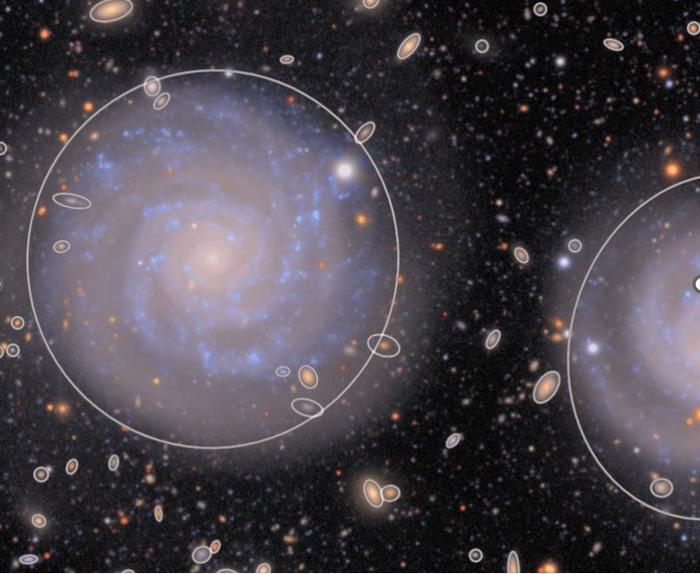
This unprecedented astronomical work, led by the UB’s Institute of Cosmos Sciences and the Institute of Space Studies of Catalonia (ICCUB-IEEC), covers the entire sky and brings together nearly eighty million galaxies.
Credit: Credits: NSF–DOE Vera C. Rubin Observatory/NOIRLab/SLAC/AURA.
An international team of scientists led by the Institute of Cosmos Sciences at the University of Barcelona (ICCUB) and the Institute of Space Studies of Catalonia (IEEC) has presented REGALADE, an unprecedented catalogue covering the entire sky and bringing together nearly eighty million galaxies. The work, published in the journal Astronomy & Astrophysics, marks a turning point for astronomy and opens up a new scenario that allows researchers to explore cosmic events with a degree of precision never before achieved.
The study was led by Hugo Tranin, a researcher at ICCUB, and included the participation of ICCUB-IEEC researchers Nadia Blagorodnova, Marco Antonio Gómez Muñoz and Maxime Wavasseur. The study combines expertise in time-domain astrophysics, binary star evolution, large astrophysical catalogues and multi-messenger astronomy, with the aim of developing comprehensive resources that enable the scientific exploitation of the new generation of time-based cartographies with observations from both the ground and space.
A catalogue with precise distances and measurements
When a telescope detects a sudden phenomenon, such as a supernova or the merger of two black holes or neutron stars, astronomers need to know where to look and how far away the event occurred. This requires identifying the galaxy where the event takes place. To date, catalogues were incomplete beyond about 300 million light-years, leaving large gaps in the map of the nearby universe.
REGALADE fills these gaps by combining data from large surveys and cleaning them using data from the Gaia mission to remove stars mistakenly classified as galaxies. The result is a catalogue of high purity and integrity that includes precise distance and size measurements for all galaxies, and stellar masses for most of them.
“REGALADE began as a challenge to improve the user experience: astronomers relied on many popular catalogues, but each one only covered part of the sky or lacked key information,” explains Hugo Tranin, lead author of the study.
“By merging data from 14 widely used catalogues and deep imaging surveys, we now have a single, unified place to look up distances and features of galaxies,” he adds. “This dramatically simplifies the daily work of astronomers and allows our team to obtain distances for more than 75% of the transient phenomena reported worldwide each day.”
The team has also launched an interactive sky viewer that allows the public to explore the REGALADE catalogue and navigate millions of galaxies with just a few clicks.
The scale and depth of REGALADE are extraordinary: it covers the entire sky to more than six billion light-years, and can map nearly 10% of the volume of the observable universe. This comprehensiveness allows astronomers to identify many more host galaxies for all types of cosmic events, from infrared to X-rays, and significantly improve strategies for tracking gravitational waves.
According to Nadia Blagorodnova, co-author of the article, “observatories such as Vera Rubin will detect millions of cosmic events every night.” “REGALADE,” she explains, “ensures that we can identify their host galaxies quickly and accurately, allowing us to rapidly classify rare transient phenomena, such as luminous red novae, which are stellar mergers that our team is actively studying. This will open the door to the discovery of completely new types of celestial phenomena.”
What happens when a solar superstorm hits Mars? Thanks to the European Space Agency’s Mars orbiters, we now know: glitching spacecraft and a supercharged upper atmosphere.
In May 2024, Earth was hit by the biggest solar storm recorded in over 20 years. It sent our planet’s atmosphere into overdrive, triggering shimmering auroras that were seen as far south as Mexico.
A new study to be published in Nature Communications on Thursday 5 March reveals in greater depth how this intense, stormy activity affected the Red Planet.
“The impact was remarkable: Mars’s upper atmosphere was flooded by electrons,” says ESA Research Fellow Jacob Parrott, lead author of the study. “It was the biggest response to a solar storm we’ve ever seen at Mars.”
The superstorm caused a dramatic increase in electrons in two distinct layers of Mars’s atmosphere at altitudes of around 110 and 130 km, with numbers rising by 45% and a whopping 278%, respectively. This is the most electrons we’ve ever seen in this layer of martian atmosphere.
“The storm also caused computer errors for both orbiters – a typical peril of space weather, as the particles involved are so energetic and hard to predict,” adds Jacob. “Luckily, the spacecraft were designed with this in mind, and built with radiation-resistant components and specific systems for detecting and fixing these errors. They recovered fast.”
Pioneering a new technique
To investigate the superstorm’s impact on Mars, Jacob and colleagues used a technique currently being pioneered by ESA known as radio occultation.
First, Mars Express beamed a radio signal to TGO at the very moment it was disappearing over the martian horizon. As TGO vanished, the radio signal was bent (‘refracted’) by the various layers of Mars’s atmosphere before being picked up by the orbiter, allowing scientists to glean more about each layer. The researchers also used observations from NASA’s MAVEN mission to confirm the electron densities.
“This technique has actually been used for decades to explore the Solar System, but using signals beamed from a spacecraft to Earth,” says Colin Wilson, ESA project scientist for Mars Express and TGO, and co-author of the study. “It’s only in the past five years or so that we’ve started using it at Mars between two spacecraft, such as Mars Express and TGO, which usually use those radios to beam data between orbiters and rovers. It’s great to see it in action.”
ESA uses orbiter-to-orbiter radio occultation routinely at Earth, and plans to use it more regularly in future planetary missions.
Different worlds, different weather
The superstorm was experienced very differently at Earth and Mars, highlighting the differences between the two worlds.
At Earth, the response of the upper atmosphere was more muted, thanks to the shielding effect of Earth’s magnetic field. As well as deflecting a lot of solar storm particles away from Earth, the magnetic field also diverted some towards Earth’s poles, where they caused the sky to light up with auroras.
While their differences can make it tricky to compare planets directly, understanding how solar activity impacts the residents of the Solar System – in other words, space weather forecasting – is hugely important. At Earth, solar storms can be dangerous and damaging for astronauts and equipment up in space, and can disrupt our satellites and systems (power, radio, navigation) further down.
However, studying space weather is difficult as the Sun throws out radiation and material erratically, making targeted measurements largely opportunistic. “Fortunately, we were able to use this new technique with Mars Express and TGO just 10 minutes after a large solar flare hit Mars. Currently we’re only performing two observations per week at Mars, so the timing was extremely lucky,” adds Jacob.
Together, these events sent fast-moving, energetic, magnetised plasma and X-rays flooding towards Mars. When this barrage of material hit the planet’s upper atmosphere it collided with neutral atoms and stripped away their electrons, causing the region to fill up with electrons and charged particles.
“The results improve our understanding of Mars by revealing how solar storms deposit energy and particles into Mars’s atmosphere – important as we know the planet has lost both huge amounts of water and most of its atmosphere to space, most likely driven by the continual wind of particles streaming out from the Sun,” says Colin.
“But there’s another side to it: the structure and contents of a planet’s atmosphere influence how radio signals travel through space. If Mars’s upper atmosphere is packed full of electrons, this could block the signals we use to explore the planet’s surface via radar, making it a key consideration in our mission planning – and impacting our ability to investigate other worlds.”
***
Notes for editors
‘Martian ionospheric response during the May 2024 solar superstorm’ by J. Parrott et al. will be published on Thursday 5 March in Nature Communications. DOI: 10.1038/s41467-026-69468-z
The May 2024 solar storm was monitored and observed after it struck Earth by numerous ESA missions and covered in a number of subsequent web stories, including:
Several ESA missions are either currently or soon-to-be keeping an eye on our star. ESA’s Solar Orbiter is continuously observing the Sun up close and tracking its activity (including the May 2024 superstorm). Solar Orbiter will soon be joined by Smile, a mission to understand how Earth’s magnetic field responds to the solar wind scheduled to launch in spring 2026, and later by Vigil (2031), which will spot potentially hazardous solar activity in near-real-time.
The initial dose of radiation delivered to Mars orbit by the solar storm, measured by TGO in May 2025, was reported in Semkova et al.: doi.org/10.1016/j.lssr.2025.02.010
Over the weekend of 10–12 May 2024, Earth was struck by the largest solar storm in more than a decade. Positioned between the Sun and Earth, the ESA/NASA Solar and Heliospheric Observatory (SOHO) caught the entire solar outburst on camera.
This simulation shows how charged particles (plasma) from the Sun, blasted out on 20 May 2024, spread through the Solar System. The Sun lies at the centre of the circle, and the positions of several planets and spacecraft are shown.


No comments:
Post a Comment