Monday, March 31, 2025

Banning Public Eating and Drinking during Ramzan is Cruelty


Ramzan/Ramadan

In 610 CE, Muhammad ibn Abdullah ibn Abd al-Muttalib felt a message from Allah through archangel Gabriel; thus began his mission of spreading Islam and Allah’s message. According to the Quran, Quran was revealed to Muhammad in the month of Ramzan.

In Islam, one whole month of Ramzan is devoted to fasting. The Islamic calendar is lunar, thus shorter than the solar year by 10 to 11 days; thus Ramadan comes in every season.

Quran 2:184185;187 (Sahih International):

“[Fasting for] a limited number of days. So whoever among you is ill or on a journey [during them] – then an equal number of days [are to be made up]. …

“The month of Ramadhan [is that] in which was revealed the Qur’an, a guidance for the people and clear proofs of guidance and criterion. So whoever sights [the new moon of] the month, let him fast it. …”

“It has been made permissible for you the night preceding fasting to go to your wives [for sexual relations]. … And eat and drink until the white thread of dawn becomes distinct to you from the black thread [of night]. Then complete the fast until the sunset. And do not have relations with them as long as you are staying for worship in the mosques.”

Religious fasting is an old practice that is observed by believers of various faiths, including Buddhism, Christianity, and Hinduism. Many people also fast for medical, health, or other reasons.

For Sunni Muslims, fasting from dawn to sunset is one of the five pillars of Islam. The other four are declaration of faith, prayer, alms-giving, and pilgrimage. For Shia Muslims, see Ancillaries of the Faith for Twelvers and for Ismailis, see Seven Pillars of Ismailism.

Time variance

Today, Muslims are to be found all over the world. In some places especially the far northern hemisphere, time between a sunrise and sunset can exceed 20 hours, making the fasts very long.

Longest Fasting Hours:

  1. Sweden (Kiruna): 20 hours 30 minutes
  2. Norway: 20 hours 30 minutes
  3. Finland (Helsinki): 19 hours 9 minutes
  4. Iceland (Reykjavik): 19 hours 59 minutes
  5. Greenland (Nuuk): 20 hours
  6. Canada (Ottawa): 16.5 hours
  7. Algeria: 16 hours 44 minutes
  8. Scotland (Glasgow): 16.5 hours
  9. Switzerland (Zurich): 16.5 hours
  10. Italy (Rome): 16.5 hours
  11. Spain (Madrid): 16 hours
  12. United Kingdom (London): 16 hours
  13. France (Paris): 15.5 hours

Shortest Fasting Hours:

  1. Brasilia, Brazil: 12-13 hours
  2. Harare, Zimbabwe: 12-13 hours
  3. Islamabad, Pakistan: 12-13 hours
  4. Johannesburg, South Africa: 11-12 hours
  5. Montevideo, Uruguay: 11-12 hours
  6. Buenos Aires, Argentina: 12 hours
  7. Christchurch, New Zealand: 12 hours
  8. Dubai, UAE: 13 hours
  9. New Delhi, India: 12.5 hours
  10. Jakarta, Indonesia: 12.5 hours
  11. Madina, Saudi Arabia: 13 hours
  12. New York, USA: 13 hours (approx)
  13. Istanbul, Turkey: 13 hours (approx)

White thread of dawn

There are places where “the white thread of dawn” doesn’t show up for months because the Sun doesn’t set for months: Svalbard, Norway gets no sunset for 1/3rd of the year, from about 19 April to 23 August. Same is the case with Finland’s northernmost point which is without sunset for 72 days in Summer.

The world’s northernmost mosque is in Tromsø, Norway. Muslims living there had a serious problem as to what time they should offer fajr (dawn) prayers (and begin their fast or sehri) and perform the maghrib (sunset) prayer (and break their fast or iftari) as for two whole months, between May and July, the Sun never sets there.

Sandra Maryam Moe, deputy director of Alnor Senter in Tromsø, Norway:

“We finally asked a shaykh in Saudi Arabia, and he gave us a fatwa  [instruction] with three choices: Follow the timetable of Makkah, follow the timetable of the nearest city that does have a sunrise or sunset, or estimate the time and set a fixed schedule. We decided to follow Makkah for the part of Ramadan that falls under the Midnight Sun or Polar Nights, and then, for the other times, we follow our own sun.”

“Tromsø’s Alnor Senter and Al Rahma mosques have opted to sync their congregations’ prayer schedule to sunrise and sunset in Mecca” IMAGE/Fortunato Salazar/BBC

But not everyone follows the Mecca time. Two members of Al Rahma mosque, originally from France, follow the Paris time for sehri and iftari.

For most people, fasting for an entire month is not an easy or practical task, especially those whose daily-survival depends on hard labor. Muslims make a quarter of the world’s population and live in many countries, including those with Muslim majority. In many of these countries, eating or drinking anything during daytime in Ramzan is a crime.

Actually, it should be a crime to stop people from consuming food or drinking liquid at any time.

The Case of Mohammed Shami

On March 4, 2025, during a cricket match between Australia and India, Muslim Indian cricketer Mohammed Shami drank water or a beverage. A fellow Muslim, Maulana Shahabuddin Razvi Bareilvi, called him a “criminal” for drinking during Ramzan (watch the above video).

“The five important pillars of Islam include roza or fasting which is mandatory. If a sensible and healthy adult doesn’t observe the fast than that person would be guilty of great sin and be answerable in God’s court. India’s famous cricketer Mr. Mohammed Shami quenched his thirst during a cricket match. Everyone was watching him. Since he was playing the game, it meant he was healthy and robust. In this fit condition, he not only didn’t fast, but also drank water in front of everyone present. The world watched him drinking water. So, he became a source of conveying the wrong message to the people; and, by not fasting he committed a sin. He shouldn’t have done that. In the eyes of Islamic sharia, he is a criminal and a sinner. He’ll have to answer Khuda [God in Persian language].”

Translated in English from Hindi/Urdu from the above video.

If Maulana Shahabuddin Razvi Bareilvi thinks Mohammed Shami is “a criminal and a sinner,” and will have to answer Khuda than let Khuda take care of Shami rather than playing Khuda‘s Khuda. Like many people nowadays, he tried to stay in the news by creating news.

Shami was trolled online, with some supporting him and others criticizing him. Of course, a Hindutva leader from Prime Minister Narendra Modi’s party did not let this opportunity go to erroneously and overtly display his anti-Muslim rhetoric:

“We stand against such extremism. This is not a part of our Hindu religion. We say that in Islam, it is written, either you accept Islam, or you will be converted, or you will be killed. Now, even Mohammed Shami is experiencing this himself. This is why we praise our Hindu religion because such extremism does not exist in our faith,”

Former Indian cricketer Harbhajan Singh, a Sikh, defended Shami:

“I think I just want to say that this is my personal view-I might be wrong or right. Sports should be treated separately. People who feel religion is playing this role or that role, I think it’s fine to kind of do your routine-what you do in your religion. But people expecting Shami to do this or Rohit Sharma to do this or any XYZ to do this or that during a certain period (is not fair).”

“You might be doing it because you are sitting at home or doing your own routine work. But when you are playing as a sportsman, if you don’t keep yourself hydrated, you might collapse.”

“And of course, with the kind of heat they are playing in, I think they need to drink water. They can’t go through the game without having a drink or a snack. It’s your body, after all-you need fuel.”

Former Pakistani fast bowler Shoaib Akhtar commented indirectly:

Roza is not an excuse. Its a motivation. Nothing should stop your from training. Use it in your benefit.”

One wonders what kind of inspiration one gets in 82 °F (27.8 °C) weather with a sweating body, hungry stomach, and dry mouth. Yes, some people have willpower or faith and can fast in extreme weather but not all people can. It would have been better if Akhtar had kept his mouth shut.

It is people like Akhtar who just don’t want people like Shami to emerge as inspiration for those who don’t want to fast but have to do so or have to pretend under pressure.

Decades back, I was visiting Karachi, a seaport and the largest city in Pakistan. I asked the driver to stop the vehicle by Rehmat-e-Shereen sweet shop — they make extremely delicious sweets. I bought the sweets and asked the driver to join me. He hesitated: “It’s Ramzan.” I asked: “Are you fasting?” The reply was in the negative. He parked the car in a quiet place and we enjoyed our goodies. This was not an isolated case. Many people have to pretend in public that they’re fasting because the atmosphere has gotten very fanatical.

Many Muslim countries have laws enforcing eating and drinking abstention.

Times have changed

Gods of all religions may have been omnipresent, but their knowledge of geography, technology, science, economy, physical, sexual, emotional needs, dehydration, and so on, was extremely limited. Knowledge of that time was dependent on the information of followers, whose knowledge was in turn restricted to the areas they resided in, or the places they journeyed and from the knowledge they gained from foreigners passing through their towns and cities.

When Muhammad died in 632, the Muslim territory consisted of a very small portion of present day Saudi Arabia. Check the map below where Mecca and Medina are shown in sky blue color. Yes, that small area was the first Islamic state.
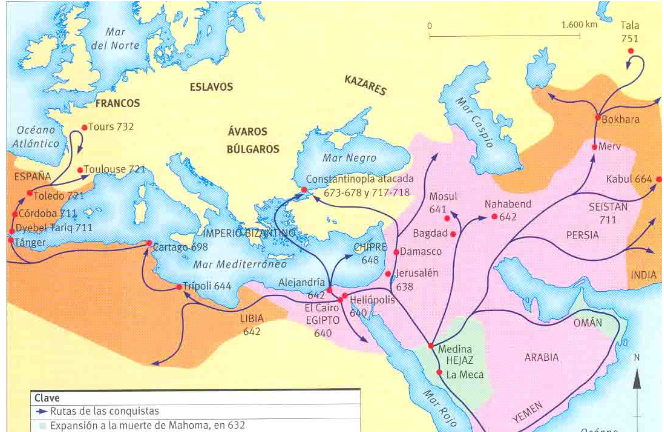
MAP/ucr.edu

Below is the map of today’s Saudi Arabia.
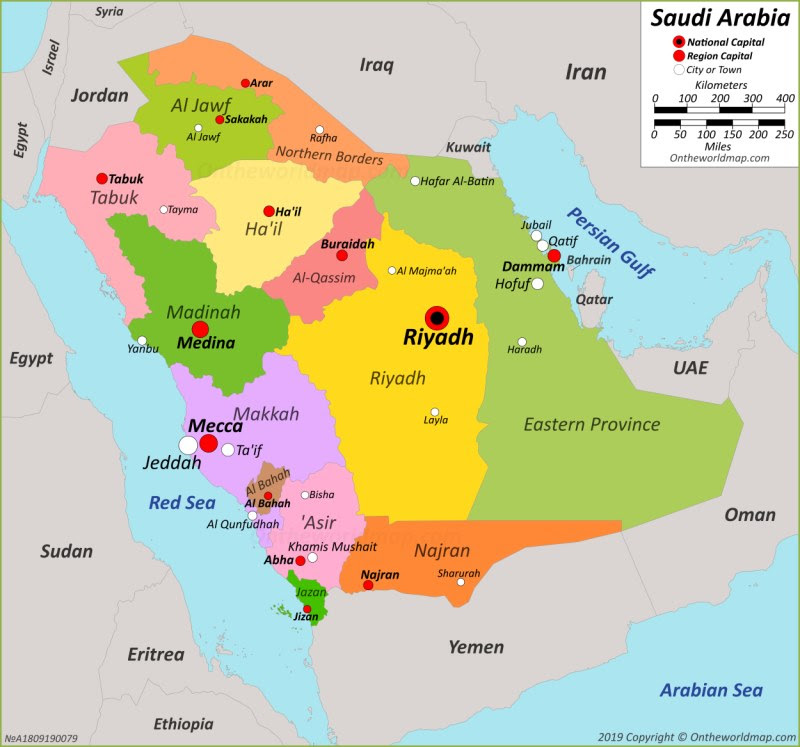
MAP/On The World Map

Anyone who believes s/he has a mission would want to see their message spread far and wide. But Muhammad may never have thought in his wildest dreams, that one day there would be so many Muslims all over the world. (Same is true of Christianity. It was Roman emperor Constantine the Great’s conversion to Christianity in the 4th century that made it the world religion it is today.)

1/4th of world’s population today is Muslim. The following map shows countries around the world with estimates of Muslim population.
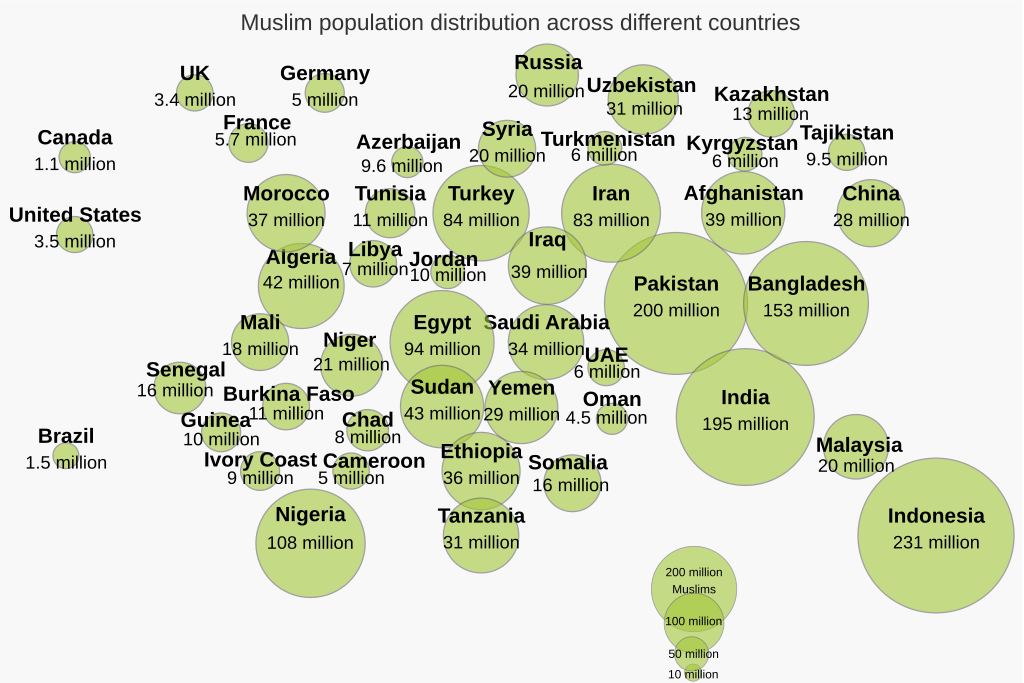
MAP/Pew Research Center/Wikipedia

The Muslims during Muhammad’s time were a small community with a totally different pattern of life than what we find today. Today you visit Muslim majority countries and in most of them (non-Muslim countries too) you would find majority of people hustling trying to make ends meet in extreme heat and polluted environment, amidst:

  1. Corporations are busy looking for ways to cut cost and increase profit.
  2. Governments are busy carrying out demands of corporations and businesses to relax business laws as much as possible who in turn may bribe them for being “business friendly.”
  3. Clergy is busy issuing edicts and making common person’s life more miserable.

National Public Radio’s Diaa Hadid’s report of May 2018 “Breaking Pakistan’s Ramadan Fasting Laws Has Serious Consequences” depicts the hell common people go through to survive and to take care of their family, but with an added burden of selling and consuming food and drink behind close door.

Ramzan is a problematic time for Pakistan’s poorest workers, many of whom don’t fast. Hadid was in an industrial city of Faisalabad where she visited a tea stall, near cotton-weaving factories. The owner Javed said people cannot eat outside but can eat inside the stall. Still he gets harassed by the authorities for purposes of extortion.

“JAVED: (Through interpreter) If I stopped working, I can’t provide for my family. And if I don’t fast, I’m not considered a good Muslim.”

Then there is 50 year old Farid, who makes $230 a month and has to take care of 4 children.

FARID ABBAS: (Through interpreter) It’s really tough for us. Anyone who works for 16 hours, how can he fast?

In Karachi, Hadid met Dr. Sayid Tipu Sultan who supervises 3 hospitals.

SAYID TIPU SULTAN: It is very dangerous to fast in this terrible heat [around 110 degrees]. Dozens of people there died because of heatstroke.”

For cleric Saifallah Rabbani workers talking about difficulty in fasting during hot temperature is simply an excuse.

RABBANI: (Through interpreter) These are lame excuses. This is laziness. According to Islam, if they are Muslim, they should be fasting.

Hadid found liberal atmosphere at LUMS (Lahore University of Management Sciences) in Lahore where Sher Ali, a Muslim who doesn’t fast, was drinking coffee. Sara, a Christian is also there. She avoids giving her last name for safety reasons.

SARA: Non-Muslims have been beaten up in the streets for, you know, they’ve been caught eating food in the past. And that’s happened in my hometown. So that’s a very oppressive side of, you know, this month that’s supposed to present piety and everything spiritual and love and what not.

This was Pakistan in 2018. Things haven’t got any better; but have gotten worse.

Dr. Sultan is so right but it’s clerics like Saifallah Rabbani who control the mike and the mob to unleash, when it serves their purpose. Neither the government nor the army has any time about these kind of issues.

Many other Muslim countries are harsh with people eating or drinking in public during Ramadan too. See here and here.

Progressive Muslims should raise their voices against this menace of clerics and religious authorities who are unjustly and cruelly forcing people to go without food and drink the whole month. Those who could eat or drink do it behind close doors but at the risk of violence and extortion.

B.R. Gowani can be reached at brgowani@hotmail.comRead other articles by B.R..

Struggling to Provide and Survive during the Ramadan Genocide

I saw a hunger not only for food to supply the Iftar meal, but also for safety, for peace, for an end to this nightmare.


A person putting lids on small meal trays.
A food kitchen prepared 1,000 meals for Iftar — before it had to close due to the Israeli blockade. Photo: Farida Algoul

In Gaza, where the threads of life and death intertwine, and where moments of worship intersect with the horrors of war, people live their daily lives with unyielding resilience. During the holy month of Ramadan, which is supposed to be a time of peace and tranquility, the people of Gaza found themselves surrounded by unending, unimaginable death and destruction.

Preparing maftoul for the displaced

Preparing Iftar — the meal at the end of the day when we break our daily Ramadan fast — was a daily struggle, especially for women who bear the primary responsibility of caring for their families. Amid scarce resources, prolonged power outages, and the collapse of essential services, the women of Gaza fought an uphill battle to provide a meal for their families under nearly impossible living conditions.

Despite the difficulties, we held onto our Ramadan traditions — and as we did, we made sure that we supported each other. Just a few weeks ago, as part of my regular work in a local soup kitchen, I went to the markets to see how I could feed the many displaced people who were forced to flee from the north to central Gaza. For months now, there has been a serious shortage of meat and vegetables.

All Gazans love maftoul, a Palestinian couscous dish. So together with many other Palestinian women, with minimal ingredients, and with only firewood for fuel, we worked all day to prepare this wonderful dish for the Iftar meal. Making the maftoul is a labor of love that involves moistening the bulgur wheat, coating it with flour, then rolling the grains between your palms to form larger, irregular shapes.

The maftoul is then cooked with spices, and when available, other vegetables and meat, to create the dish we all love and look forward to eating when we break our fast. On this day, feeling both exhausted and fulfilled, we were able to feed more than 1,000 fasting people.

Trays of bulgur wheat being prepared for creating maftoul.
Preparing the bulgur wheat for maftoul. Photo: Farida Algoul

Sadly, the Israeli blockade forced the soup kitchen to close and we were no longer able to provide Iftar.

Only bread and tea for Iftar

Mid-Ramadan, Israel renewed its active genocide of the Palestinian people, conducting airstrikes that resulted in daily massacres of hundreds of people. Once again death and injury were ever-present and inexorable — every single day — for every single Palestinian. There was no escape. Half of the dead were children. The injured were almost less fortunate, forced to endure amputations without the help of anesthesia. We are all hungry, we are all thirsty and exhausted.

In addition to the scarcity of food, women faced a severe shortage of fuel and firewood. With electricity often cut off for hours or even days, cooking was an exhausting and dangerous task. Many women resorted to burning old clothes, broken furniture, or even plastic to light a fire for cooking. This exposed them to the risk of burns and forced them to inhale toxic fumes that threatened their health and that of their children.

The cold nights added to our suffering, with freezing winds seeping through the tents. At least eight children, and probably many more, died from hypothermia in the past month. There was also a serious lack of clean water and many children suffered from diarrhea and dehydration. Many families survived only on bread and tea. For some, the Iftar meal consisted of only water. With Israel’s ongoing blockade of all humanitarian aid and the ceaseless, merciless bombing, families’ chances of getting food are shrinking.

As I walked through the refugee camp where I worked to distribute what little food there was, I saw a different kind of hunger — a hunger for safety, for peace, for an end to this nightmare. People were not waiting for Iftar with excitement; they were waiting for the bombs to stop, for the gunfire to cease.

Every family in Gaza is living in a constant state of fear, uncertainty, and unimaginable sorrow.

No food, no shelter

My Aunt Hanin and her family, which includes two children with special needs, were left with nothing after their home was completely destroyed. With nowhere else to go, they built a makeshift tent in the Al-Aqsa camp in the northern part of Gaza and have been living without even the most basic necessities of life: no water, no sanitation, and very little food.

I visited her on the first day of Ramadan and was struck by the deep sadness and exhaustion etched into her features. “I don’t know what to cook for my children,” she told me. “There are no vegetables, no food of any kind. My children have diarrhea and struggle to eat anything solid — they need soup because of their condition.” Her voice began to break, and tears welled up in her eyes.

I have not seen my Aunt Hanin and her family since the bombing started again. We don’t know where they are and can’t communicate with them since electricity is very scarce and internet is extremely intermittent. I pray that they are safe.

With thousands of families again forced to flee their homes, and with no schools, mosques, or other shelters left to offer refuge, many families are living in the streets among piles of garbage. Among the women who have sought shelter in garbage dumps is Farah. Displaced from Beit Hanoun, and four months pregnant, she walked barefoot to the center of the Gaza Strip on the twenty-third day of Ramadan, where she has been living in a makeshift tent in a garbage dump. The garbage is toxic and the stench is overwhelming and sickening. Farah miscarried earlier this week.

The crushing psychological toll

Beyond food shortages, there is an emotional and psychological weight that is crushing our spirits. We are always afraid, always on the verge of despair. Every mother setting a meager table for Iftar did so with a heart full of grief, knowing that someone was missing. Every father trying to provide for his family struggled against impossible odds. Children who should be excited for Eid were instead traumatized by the horrors they have witnessed.

We mourned Hossam Shabat, the 23-year-old brave and talented journalist who Israel targeted and succeeded in murdering during Ramadan. In his beautiful last letter to the people of Gaza he implored us “do not stop speaking about Gaza. Do not let the world look away. Keep fighting,keep telling our stories — until Palestine is free.” So selfless and courageous.

Today, we weep for his mother and the thousands of other mothers of Gaza whose children have been martyred. Despite their despair, and conscious of God, they did their best to provide Iftar.

A smiling young man wearing a Press jacket.
Hossam Shabat. Photo shared on his X account.

Our thoughts of past Ramadans, some filled with laughter and prayers, were this year drowned out by the cries of mourning mothers and the deafening silence of absence. War darkened our days and stolen the warmth and spirituality of Ramadan. Our memories of past celebrations was bittersweet, as this was not our first Ramadan marred by violence and grief. In 2014, more than 1,400 Palestinians were killed by Israeli airstrikes; 250 in 2021; last year 2,300; and this year, more than 1,000 so far.

But before the genocide, no matter how difficult our circumstances, we had at least some food and enough peace for the whole family to gather for the breaking of the fast. Our Iftar meal would start with dates and water, followed by dishes like maqluba, grilled fish, and soup, along with salads and appetizers. The smell of freshly baked bread would fill the houses, and the warmth of family conversations would create an indescribable sense of closeness.

After Iftar, families would gather to perform Taraweeh prayers at the mosque, while the streets would be filled with worshippers and the beautiful sounds of Qur’an recitation. Children would play in the alleys lit with lanterns, while families exchanged visits, offering traditional sweets like qatayef and knafeh. Though our lives have always been difficult, Ramadan in Gaza is not just about fasting from food — it is about fasting from pain and trying to hold onto hope despite the harsh realities.

We are just trying to stay alive. Violence and death, pain, hunger, thirst, cold. Despite our depleted bodies and minds, we still work to strengthen our Taqwa; we remained conscious of God. This year during Ramadan we continued to hang lanterns and paint murals on the remains of our demolished walls, in our attempt to create hope amid the devastation. Our fragile existence left us with few choices, but we remained steadfast in our beliefs and our devotion to Ramadan. Insha’Alla we would have some food each day for Iftar.

  • First published at we are not numbers.
  • Farida Algoul is an English teacher and interpreter, embodying resilience and passion in every facet of her work. Originally from Hirbia, her journey began when her family was displaced to Gaza in 1967, a place she now proudly calls home. Read other articles by Farida.

    “Love Your Neighbor” Pope-Vance Controversy


    Recent news reports brought to my attention something that I completely missed when it first happened almost two months ago: JD Vance opining ignorantly and dangerously on Jesus of Nazareth’s teachings about “doing unto others as you would have done unto you.” Less than a month into the Trump/Musk/MAGA regime, Vance said this:

    “You love your family, and then you love your neighbor, and then you love your community, and then you love your fellow citizens in your own country, and then after that you can focus and prioritize the rest of the world.”

    Two weeks later in a letter to US Catholic Bishops, Pope Francis responded strongly to this outrageous distortion of the teachings of Jesus, explaining:

    Christian love is not a concentric expansion of interests that little by little extend to other persons and groups… The human person is a subject with dignity who, through the constitutive relationship with all, especially with the poorest, can gradually mature in his identity and vocation. The true ordo amoris that must be promoted is that which we discover by meditating constantly on the parable of the ‘Good Samaritan’ (cf. Lk 10:25-37), that is, by meditating on the love that builds a fraternity open to all, without exception.

    Worrying about personal, community or national identity, apart from these considerations, easily introduces an ideological criterion that distorts social life and imposes the will of the strongest as the criterion of truth.

    I exhort all the faithful of the Catholic Church, and all men and women of good will, not to give in to narratives that discriminate against and cause unnecessary suffering to our migrant and refugee brothers and sisters. With charity and clarity we are all called to live in solidarity and fraternity, to build bridges that bring us ever closer together, to avoid walls of ignominy and to learn to give our lives as Jesus Christ gave his for the salvation of all.

    You don’t have to be Christian or a religious person or even a supporter of Pope Francis to appreciate his willingness to speak truth to power, and his efforts to get US Catholic Bishops to do the same. On this issue, the Pope demonstrated timely and important moral leadership.

    As I’ve gone through life I’ve increasingly come to view this particular teaching of Jesus of Nazareth as both an ideal I should very consciously, daily, strive for, as well as a needed approach when it comes to building organizations and movements that are about systemic political, economic and social change.

    In my 21st Century Revolution book I said this along these lines: “There are many aspects of a winning strategy, but the one that I have come to believe is most fundamental, the one that is the key link to the social transformation process so urgently needed, is this: building and deepening a way of working together and developing organizations that is collaborative, respectful, democratic to its core and which, as a result, is truly transformative, built to last.” (pps. 22-23)

    In other words, we need a way of working which puts love for others at the center. And this is true for each of us in the way we go about our organizing work whether we are Christian, religious in some other way, agnostics or atheists.

    Vance speaking about his “concentric circles” approach to loving others is, however, of value. It helps to deepen our understanding of what is motivating him, Trump, Musk and other leading MAGA’s, with corruption and dishonesty at obscene levels among the billionaires and power-hungry politicians who lead this retrograde movement.

    Fortunately, not all who voted for the MAGA’s in 2024 are this far gone. Polls and other developments, like the recent victory of a Democratic State Senate candidate in Lancaster County, Pa. in a district held by Republicans since 1889 (!), are concrete evidence of some MAGA disillusionment. Our job as progressive organizers is to do the visible and activist movement-building and outreach right now to keep this momentum going. Next up for all of us should be taking part in the massive and extensive April 5 Hands Off action this Saturday.

    We must hold fast to the vision of a world where, yes, “do unto others as you would have done unto you” is a guiding principle of how human societies are organized. We’ll only get there if we live our lives accordingly.

    Ted Glick works with Beyond Extreme Energy and is president of 350NJ-Rockland. Past writings and other information, including about Burglar for Peace and 21st Century Revolution, two books published by him in 2020 and 2021, can be found at https://tedglick.com. He can be followed on Twitter at twitter.com/jtglickRead other articles by Ted.
    Trump’s vindictiveness never ends


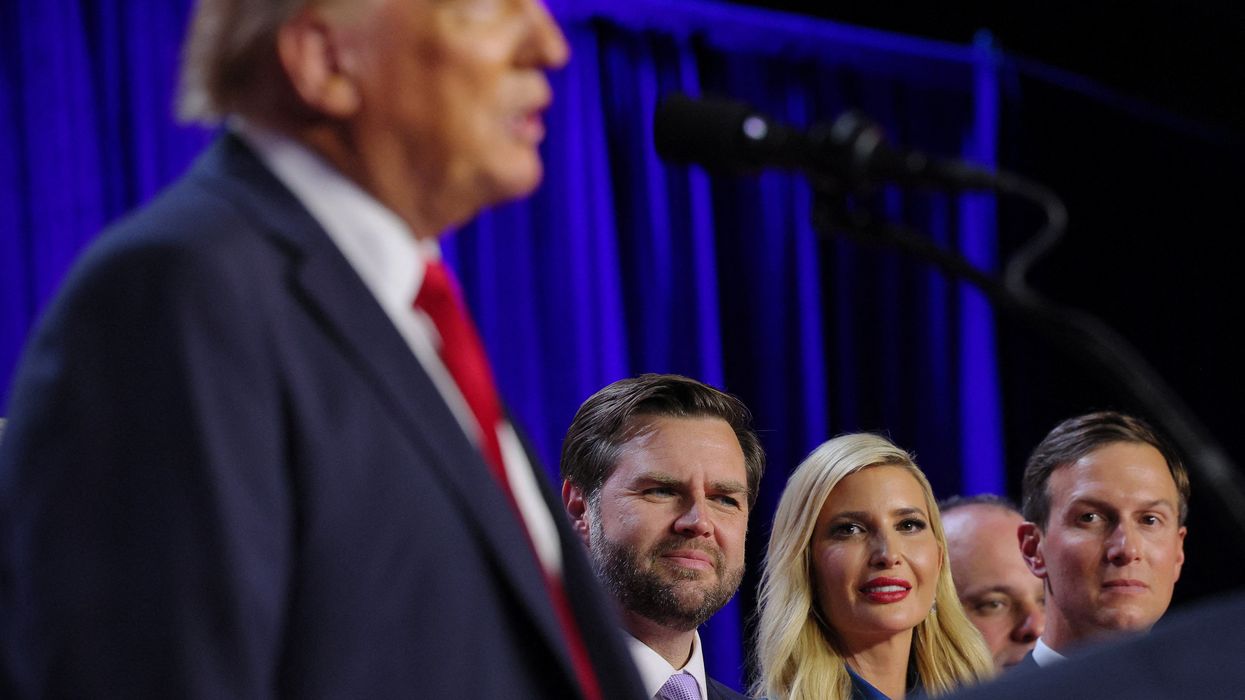
    JD Vance, Ivanka Trump and her husband Jared Kushner listen as Donald Trump speaks at his election night rally at the Palm Beach County Convention Center in West Palm Beach, Florida, U.S., November 6, 2024. REUTERS/Brian Snyder
    March 31, 2025

    Last week I wrote to you about Trump’s crackdown on the pillars of civil society — the universities, the scientific community, the media, the legal profession, and the arts — with the clear intent of intimidating them into silence.

    Today I want to take a deeper dive into what Trump’s crackdown on the legal community — especially large law firms in Washington — actually means.

    Frankly, I couldn’t give a s--- about large law firms in Washington. They make boatloads of money for their partners. Even those whose partners are active Democrats push the party rightward as they round up campaign donations from corporate C-suites and Wall Street and urge Democratic members of Congress to move to the “center.”

    But Trump’s bullying of Washington law firms is cutting off the litigation lifeline for nonprofit public-interest groups to challenge his policies — which is exactly why he’s doing it.

    The latest example came last Tuesday in a Trump executive order aimed at the law firm Jenner & Block, stripping it and its lawyers of security clearances and access to government buildings.

    What had Jenner done wrong? It once employed attorney Andrew Weissmann after he worked as a prosecutor in Robert S. Mueller III’s special counsel investigation of Trump in his first term. Weissmann left Jenner in 2021, but Trump’s vindictiveness never ends.

    In announcing its executive order, the White House accused Jenner of participating in “the weaponization of the legal system against American principles and values” and called out Weissmann by name.

    A federal judge termed Trump’s attempt to punish Jenner “reprehensible” and issued a temporary restraining order blocking it.

    Before targeting Jenner, Trump went after lawyers at Covington & Burling. What had they done wrong? A few of their attorneys had represented former special counsel Jack Smith after he investigated Trump’s role in the January 6, 2021, attack on the U.S. Capitol.

    Trump has also targeted Perkins Coie, a law firm with ties to a dossier of opposition research against Trump that circulated during the 2016 campaign.

    “It sends little chills down my spine,” U.S. District Judge Beryl A. Howell said in court as she granted Perkins Coie a temporary restraining order, suggesting Trump’s order is unconstitutional. In a filing last week, Trump’s Justice Department sought to remove Judge Howell from the case, accusing her of being “insufficiently impartial.”

    Trump issued a nearly identical executive order targeting law firm Paul Weiss.

    Its offense? One of its former partners, Mark Pomerantz, had left the firm to join the Manhattan district attorney’s office to help investigate allegations that Trump had overstated the values of his properties to obtain bank loans.

    Rather than fight, though, Paul Weiss cut a deal with Trump. After meeting with him for three hours at the White House, its chairman, Brad Karp, agreed to devote $40 million worth of pro bono work “to support the administration’s initiatives,” Trump said in a post on Truth Social. Karp also acknowledged unspecified “wrongdoing” on the part of Pomerantz. Trump then rescinded his order against the firm.

    The fifth big law firm that Trump has targeted is Skadden Arps.

    What had it done? A few of its lawyers had worked pro bono on behalf of plaintiffs who said Dinesh D’Souza defamed them in his documentary, falsely accusing them of ballot fraud in the 2020 election. (D’Souza has previously admitted that the movie was “flawed” and apologized to one of the plaintiffs.)

    On Friday, Trump announced that Skadden had reached “a settlement,” agreeing to do $100 million of pro bono work for causes Trump supports. “We very much appreciate their coming to the table,” Trump said.

    Trump’s orders (and threats of orders) against law firms violate the firms’ and their lawyers’ rights to free speech and association, as well as the right to counsel guaranteed by the Sixth Amendment.

    Even worse, they send a chill across the entire American legal community along with a warning: Don’t attack Trump. Don’t let your partners or associates attack him, ever. Force them to sign agreements before they depart your firm promising not to attack or prosecute Trump ever. Don’t take cases from nonprofits or anyone else challenging Trump.

    Trump’s moves come directly out of the authoritarian playbook. Leaders of other countries that have sought to undermine democratic systems and the rule of law — Russia, Turkey, and Hungary — have similarly attacked lawyers.

    “The law firms have to behave themselves,” Trump said at a Cabinet meeting last Monday. “They behave very badly, very wrongly.”

    “It’s scary,” said a former Biden administration official who’s been pulled into Trump-era litigation and needed a lawyer. The former official had lined up a pro bono lawyer from a major law firm that dropped his case the day after Trump issued his executive order against Perkins Coie, saying it “discovered” a conflict of interest.

    Five other firms said they had conflicts, the former official said, including one where “the partner called me livid, furious, saying that he’s not sure how much longer he’s going to stay there,” said the former official, “because the leadership didn’t want to take the risk.” The person spoke on the condition of anonymity to avoid further difficulty obtaining a lawyer.

    Major law firms are also refusing to take public-interest cases challenging Trump, saying they can’t risk it if Trump goes after them as a result.

    Litigation against an administration often requires vast resources — experienced lawyers versed in the relevant case law and scores of paralegals doing research across thousands of pages of evidence.

    Last Friday, Trump said in a memorandum that lawyers aren’t supposed to file lawsuits or engage in court action unless there is “a basis in law” that is not “frivolous.” The clear suggestion is that he and Attorney General Pam Bondi, not courts, should determine who meets the criteria.

    The memorandum also directed Bondi to consider “imputing the ethical misconduct of junior attorneys to partners or the law firm when appropriate” — a clear swipe at pro bono cases in which junior attorneys take the lead to gain litigation experience.

    Shame on Trump and on those who work for him.

    And shame on any law firm that caves in to Trump after he has targeted them, or any firm that caves in to Trump in advance — refusing to take cases that challenge him because they fear his wrath.

    By settling with Trump, two of the firms that Trump targeted — Paul Weiss and Skadden Arps — have disgraced the legal community and turned their backs on their public duty to fight tyranny.

    I put them in the same category as Columbia University, which surrendered its integrity to Trump’s illegal and unconstitutional demands without putting up a fight — thereby encouraging him to go after other universities.

    By contrast, kudos to the three firms — Jenner & Block, Perkins Coie, and WilmerHale — that have chosen to fight Trump rather than settle.

    Jenner said in a statement that its lawsuit is intended to “stop an unconstitutional executive order that has already been declared unlawful by a federal court.”

    Jenner has also created a website — Jenner Stands Firm — to publicize its filing and to highlight newspaper editorials criticizing the executive orders and comments from law school professors questioning the legality of Trump’s actions.

    Democracy requires courage. It necessitates people and organizations that put principle before money.

    I hope any budding lawyer seeking employment at a big Washington law firm — and every potential client in America needing legal representation in Washington — takes note of the difference between the two sets of firms, and acts accordingly.

    Robert Reich is a professor of public policy at Berkeley and former secretary of labor. His writings can be found at https://robertreich.substack.com/."
    Look around: The signs of a Trump recession are everywhere


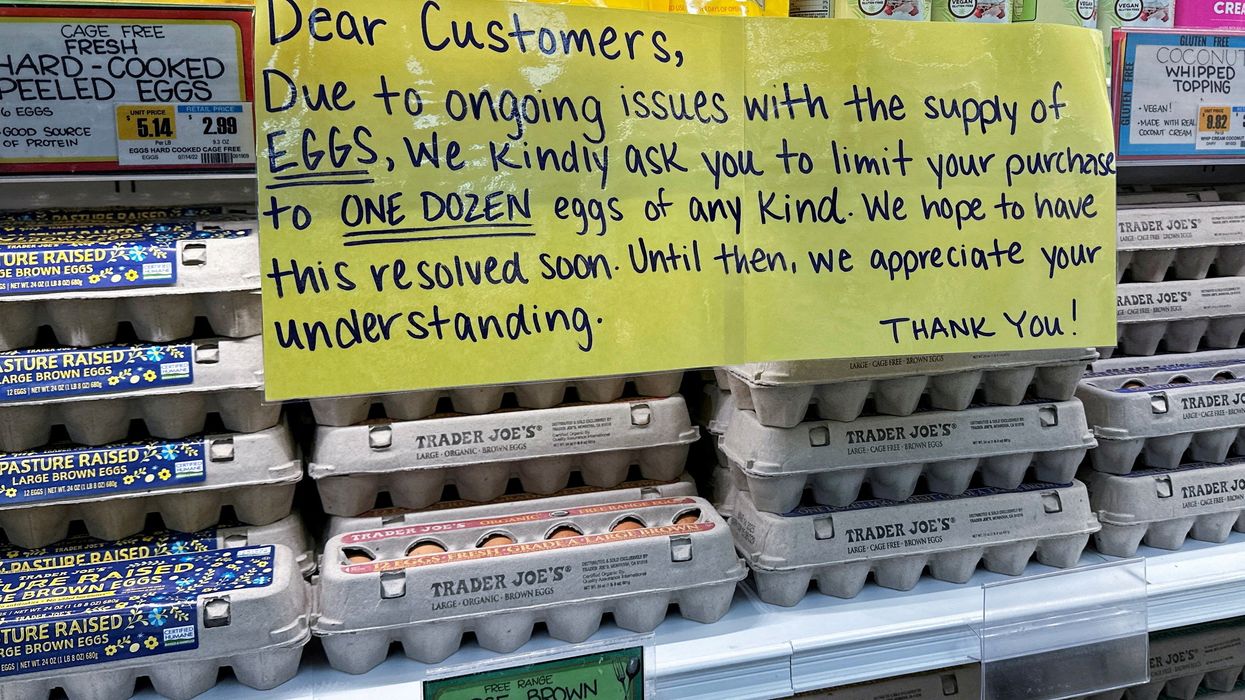
    FILE PHOTO: A sign for customers shopping for eggs at Trader Joe's hangs by cartons of eggs in Merrick, New York, U.S., February 10, 2025. REUTERS/Shannon Stapleton/File Photo

    David McWilliams
    March 31, 2025
    ALTERNET

    Once you start looking, the signs of an American recession are everywhere.

    The second-hand market is heating up, a classic pre-recession indicator. People are unloading luxury goods. Second-hand clothes apps, such as RealReal, Depop and Grailed, are filling up with designer handbags and sneakers bought during the la-la economy of the pandemic. This always happens before a crash.

    You might remember that eBay boomed before the 2008 recession. People panic-sold designer handbags faster than you could say Anglo Promissory Note. Splurges always lead to sell-offs.

    It looks like 2025 will be the year the pandemic chickens come home to roost. When the plague hit five years ago this week, governments closed down our economies and rather than impoverish workers who were forced to stay home, national treasuries opened the fiscal and monetary spigots. Government spending soared and interest rates were cut to negative territory. About $15 trillion (€13.85 trillion) of fiscal/monetary sweeties were doled out by the world’s richest governments to protect their stay-at-home electorates. (The governments had no choice; a great depression would have accompanied the plague.)

    Investment and speculation took off in a splurge of credit, consumption and debt. As sure as night follows day, the credit cycle rolls and we are about to pay a terrible price for the emergency economics of Covid-19.

    In tune with our always-on age, the coming American recession will be live-streamed on Instagram. Every small change in consumer confidence and business sentiment will be videoed, shared, commented on and thus amplified. We are witnessing the TikTok-isation of the business cycle, meaning the economic cycle – previously a slow-moving, deliberate phenomenon – will pick up pace, becoming fitful and immediate.

    In the past, it took people time to realise that the economic backdrop was changing. Today, with social media and a US president who behaves more like a near-bankrupt day trader than a long-term investor, our collective time horizons have been slashed from years to months, weeks to minutes. The impact of a slowing economy on investment and spending will be almost instantaneous.

    The latest signs from the American heartland are not encouraging. The average voter’s confidence about their economic prospects is falling quicker than at almost any other time on record. The litany of surveys pointing to recession, or more accurately a Trump-cession, not to mention the sell-off in American stock markets, suggests we are on the cusp of something enormous. The incoherence of Trump economics – with its on-and-off tariffs – is making already indebted consumers and businesses even more anxious.

    Punters across all income brackets are panicking and consumer confidence is collapsing, although it is richer workers who are most worried. This probably reflects the fact that middle-class Americans are heavily invested in the stock markets, which are back to where they were in September and falling farther. Since Trump was inaugurated, the percentage of voters who are worried about their job has shot up from 30 per cent to close to 80 per cent of all those surveyed. The number of consumers worried that businesses might close has spiked up to the highest level since records began in the middle of the 1980-81 recession.

    People’s confidence about where their income will be in a year has plummeted to the lowest level since 2009, right after the Great Crash. Worse still, the average American is now more worried about inflation than at any time since the beginning of the pandemic, when prices shot up because of the shutdown of industry.

    This combination of a rapidly weakening economy and fear of inflation points to an old enemy not seen since the 1970s: stagflation, where unemployment and inflation rise together. In such an environment, prices rise at the same time as incomes fall. The main trigger is the broad electorate’s understanding that tariffs are a tax on spending that will raise the price of goods for working Americans.

    What is going on in corporate America, the part of the economy that was supposed to be boosted by Trump? Earnings are an important leading indicator, as profit squeezes foreshadow lay-offs and investment cuts. Corporate profits surged in 2021 but have now entered a slower growth phase. By the third quarter of 2024, US corporate profits fell 0.4 per cent quarter-on-quarter, the first decline in years. By late 2024, year-on-year profit growth was 5.9 per cent, down from more than 20 per cent in 2023 – this is a huge slowdown in margins.

    All the while the nonsense that is Trump’s economic plan continues to be “sane-washed” by many writers and commentators as if there is some brilliant economic rabbit about to be pulled out of a hat by the sages of Mar-a-Lago. Declaring a trade war on your four biggest trading partners – Canada, Europe, China and Mexico – will simply push up American prices, robbing US consumers.

    Tariffs are a way of taking something away from somebody. Trade allows better, cheaper products to come in from abroad, putting manners on local crony businesses. Tariffs protect second-rate local businesses, allowing them to sponge off consumers, flogging second-rate goods when punters could be buying superior imported stuff. In the end, tariffs take from buyers and give money to yellow-pack local sellers who can’t compete in the international market. There’s a reason that low tariffs, which have been reduced continuously in the past 50 years, corresponded with the greatest expansion of the global economy ever seen.

    Protectionism is a sign of weakness, not strength. Americans are not being “ripped off”; in fact, they are being enriched by having access to better, cheaper, superior products made by more productive people. Rather than being the beginning of a great new era of American prowess, tariffs are a sign of insecurity and fear, marking the end of the great American century that began after the end of the first World War.

    The fascinating thing is that the average “Joe Six Pack” American appreciates this; otherwise, why is he so fearful about the future?
    Trump's 'taking down everything Black': Fired Kennedy Center VP slams president's takeover


    Photo by Nicholas Wright on Unsplash
    March 31, 2025


    President Donald Trump’s efforts to take over cultural institutions and attack diversity, equity and inclusion programs has centered on the Kennedy Center for the Performing Arts, the venerable arts institution in Washington, D.C. The Kennedy Center was established by Congress and has been run by a bipartisan board since it opened in 1971, but Trump upended that in February when he moved to install his loyalists in key positions and make himself chair. Last week, the Kennedy Center’s new leadership fired at least seven members of its social impact team that worked to reach more diverse audiences and artists, including the vice president and artistic director of Social Impact, Marc Bamuthi Joseph. The acclaimed artist and playwright joins Democracy Now! to discuss Trump’s changes at the Kennedy Center, which he criticizes for destroying a “sanctuary for freedom of thought and freedom of creative expression.” Joseph notes that while the Kennedy Center has not yet made drastic programming changes, the rhetoric from Trump and others “severely restricts and almost criminalizes demographic realities outside of white, straight, male Christianity.”


    This is a rush transcript. Copy may not be in its final form.

    AMY GOODMAN: This is Democracy Now!, democracynow.org. I’m Amy Goodman, as we turn to the Trump administration’s intensifying attacks on cultural institutions and diversity, equity and inclusion efforts, including the John F. Kennedy Center for the Performing Arts.


    In February, President Trump ousted the center’s longtime chair, David Rubenstein, made himself chair of the board. Trump also fired longtime President Deborah Rutter. Last week, the Kennedy Center fired at least seven members of its Social Impact initiative, including its vice president, artistic director, the renowned artist Marc Bamuthi Joseph. The team aimed to expand the art center’s reach to diverse audiences, to commission new works by Black composers. The job terminations come weeks after President Trump took over the Kennedy Center and also appointed his allies, including his chief of staff, Susie Wiles, to the board, and her mother and second lady Usha Vance and two hosts on Fox News, Laura Ingraham and Maria Bartiromo.

    Marc Bamuthi Joseph recorded this video from his office just after he was fired.
    MARC BAMUTHI JOSEPH: Well, I am sitting in my office at the Kennedy Center one last time. It’s funny. I’m taking things down, like this red, black and green American flag and this extraordinary piece of artwork that my man Greg made that honors Stevie Wonder and this poster from BAM and a commemorative album that was organized by Swizz Beatz. Basically, I’m taking down everything Black in my office, just as the new leadership of the Kennedy Center is doing its best to disavow much of the literal color that has made this place special. I am grieving and angry and also ready to be rid of the moral injury that has come with being in this place. It’s hard to say goodbye, but it isn’t hard to say goodbye to an oppressive situation. So, may liberation be my liturgy. I’m proud of what we made here. We will always have an impact.


    AMY GOODMAN: Marc Bamuthi Joseph, speaking after he was fired as vice president and artistic director of Social Impact at the Kennedy Center for the Performing Arts, the last time he was in his office. And this is a portion from Marc Bamuthi Joseph’s spoken word performance Friday, when he went back to Oakland for a timely production with the Oakland Symphony titled “The Forgiveness Suite,” accompanied by musician Daniel Bernard Roumain.
    MARC BAMUTHI JOSEPH: Steps to grace. Face the hurt. Unthread the truth. Choose mercy. Engage your transgressors. Say I leave this pain with you. Grace requires a loosening of other people’s stuff for American-socialized Black girls who considered shame reflexively when self-love wasn’t enough. Grace is never enough when the forgiveness isn’t deserved. But here you are, facing the truth, reconciling the pain by extending grace.


    AMY GOODMAN: You’ve been listening to Marc Bamuthi Joseph. He joins us right now from Virginia.


    Welcome to Democracy Now!, Bamuthi. Talk about what happened last week. Talk about what’s happening to the Kennedy Center.

    MARC BAMUTHI JOSEPH: Peace, Amy. Good morning to you, and good morning to everyone listening and watching.

    I feel so privileged to be the child of immigrants and having lived in the state of California for a long time. Moving to D.C. infused me with a different sense of patriotism and connection to the American promise, to the plurality that makes this country truly great.

    There has been, as you’ve distilled, an infusion of a kind of binary political discourse into what’s supposed to be a sanctuary for freedom of thought and freedom of creative expression. The Kennedy Center, it should be said, has not officially canceled any performances or explicitly contractually removed themselves from relationship to any artists. But as you’ve been describing so diligently and so bravely over the course of your entire career, we create atmosphere through rhetoric. The stated agenda as institutionalized in spaces like the National Endowment for the Arts, let’s say, severely restricts and almost criminalizes demographic realities outside of white, straight, male Christianity. The specific attack on gay, trans and drag performers has narrowed the cultural radius at the Kennedy Center significantly, so that artists feel like they can’t in good conscience come to the Kennedy Center. So you’re seeing artists like Issa Rae or the producers of Hamilton or the artist Rhiannon Giddens remove themselves from their relationship to the Kennedy Center.


    And that, in turn, trickles down to the brave staff, who are arts professionals who care about cultural providence and have to do their very best to make it possible for artists to continue to be at their best. But against the backdrop of this oppressive regime and this politically narrow board of directors, that’s extraordinarily difficult to do.

    AMY GOODMAN: I mean, you have this unbelievable moment that we just played, Jon Batiste playing “Star-Spangled Banner.” President Trump is saluting —

    MARC BAMUTHI JOSEPH: Yes.

    AMY GOODMAN: — at the Super Bowl, and he had just fired him from the board of trustees of the Kennedy Center —


    MARC BAMUTHI JOSEPH: Yeah.

    AMY GOODMAN: — along with many others. And then John F. Kennedy, you’ve got the portrait there in the John F. Kennedy Performing Arts Center.

    MARC BAMUTHI JOSEPH: Yes.

    AMY GOODMAN: And when he came for his board meeting, President Trump as chair, what he put up, new portraits, himself, his wife, Usha Vance and Vice President Vance.


    MARC BAMUTHI JOSEPH: Yeah, you know, what you’re seeing all over government are folks who aren’t necessarily experienced in the lines or departments or vectors of action that they’re supposed to lead. And there is no formal experience in either nonprofits, arts management or the art of curation that is now present at the top of the organizational chart, beginning with the board chair. So, you know, the desire to satisfy one’s ego or the desire to be vengeful, apparently, has superseded the desire to serve this nation in terms of making a safe space for artists, particularly artists from historically marginalized communities or historically minoritized communities to thrive.

    The work that we did in Social Impact — and I’m so proud of my team, my staff and all of my colleagues who supported us — you know, that work was meant to focus on the historically marginalized, but also it connected to this idea of the constitutionality of inspiration. Our belief is that you cannot be — you cannot have access to the franchise, to the American franchise, if you don’t have access to the impulse of creativity, that just like you have access to the ballot box or equal protection under the law under the 14th Amendment, you also have access and protection to inspiration. How can you be an American if you cannot hope? And who authors hope more than artists? So, this diminishment of creativity, of ideas, the diminishment of folks’ access to high-level inspired works of art is among the more un-American things, I think, that a leader would do.

    AMY GOODMAN: During your time there, Marc Bamuthi Joseph, you helped launch the Culture Caucus, which offered two-year residencies with groups —

    MARC BAMUTHI JOSEPH: Yes.

    AMY GOODMAN: — that work with queer and trans youth, formerly incarcerated people —

    MARC BAMUTHI JOSEPH: Yes.

    AMY GOODMAN: — the disabled community.

    MARC BAMUTHI JOSEPH: Yes.

    AMY GOODMAN: You also established a national partnership —

    MARC BAMUTHI JOSEPH: Yes.

    AMY GOODMAN: — called Conflux, which worked with the National Arab Orchestra —

    MARC BAMUTHI JOSEPH: Yes.

    AMY GOODMAN: — the First Nations community and World Pride.

    MARC BAMUTHI JOSEPH: Yes.

    AMY GOODMAN: Your audience, mainly wealthy and white.

    MARC BAMUTHI JOSEPH: Yes.

    AMY GOODMAN: And can you talk about the direction that Trump is now taking the performing arts center in? We heard from, what, Steve Bannon, one of his allies, that he had spoken to Ric Grenell, the new head of the Kennedy Center, that they’re going to be bringing, what, in one of the first performances, the January 6th Choir to perform there to usher —

    MARC BAMUTHI JOSEPH: Yes.

    AMY GOODMAN: — in a new era of culture in the new Kennedy Center.

    MARC BAMUTHI JOSEPH: Yeah, I won’t speak to the president’s curatorial tastes. They speak for themselves. I think maybe what I would point to is the list of maybe more than 200 musicians who didn’t want their music played at his rallies. That speaks to a broader environment, I think, and disconnect between the arts community and the political direction of the president of the United States.

    All the work that you cited, that’s the work that we stand on and that we’re proud of. You know, your listeners and your viewers know, going out to have a date night or a family night is increasingly expensive — parking and food, and, you know, not to mention the cost of the tickets themselves, child care. A lot of the work that we did was we lowered the barrier to entry from a financial standpoint, but also from a social standpoint. You know, my folks always want to know who all gonna be there, right? Well, what we did in Social Impact was we helped usher in a culture of invitation. The Kennedy Center, historically, at its best, produces more than 2,000 events a year.

    So, maybe less than focus on what happens curatorially, I think we all have to ask ourselves: How many artists are willing to come into a space with such a narrow field of cultural vision? What is the scale of the Kennedy Center going to be like six months from now or a year from now?

    What happens inside the building is only as powerful as the people and the artists within it. So, you know, God bless all the curators at the Kennedy Center, but maybe more importantly, God bless the artists, who now have perhaps one less venue to share their work with the world. And then, God bless the audiences, because audiences or, you know, American citizens, folks who have less access to inspiration erode the democracy from the point of a lack of sight onto the creative horizon.

    AMY GOODMAN: I wanted to also ask you, Bamuthi, about Trump’s executive order —

    MARC BAMUTHI JOSEPH: Yes.

    AMY GOODMAN: — signed last week, appointing the vice president, JD Vance, to eliminate, quote, “divisive, race-centered ideology,” unquote, from Smithsonian museums, research centers and the National Zoo. The order, called “Restoring Truth and Sanity to American History,” aims to remove exhibits and programs that portray U.S. history and values as “inherently harmful and oppressive,” unquote. It cites in particular the National Museum of African American History and Culture, which opened in 2016. The Smithsonian operates independently, since it was established as a public-private partnership by Congress in 1846, but roughly receives 60% of its funding from the federal government. You know, you’re an Oakland guy, but you’ve moved to Washington —

    MARC BAMUTHI JOSEPH: Yeah.

    AMY GOODMAN: — for your job, that you were just fired from, and I’m sure you’ve spent time at the African American museum. The significance of —

    MARC BAMUTHI JOSEPH: Absolutely.

    AMY GOODMAN: — putting Vance in charge of deciding what exhibits are appropriate or not, what is American or not?

    MARC BAMUTHI JOSEPH: Yeah. Yeah. It is chilling. It is a harbinger. It is a signifier in the most ominous of terms.

    I think about the words of John F. Kennedy inscribed on the wall at the Kennedy Center. Kennedy spoke of an America that was unafraid of grace and beauty. I think about the writers and the teachers who made me, everyone from Dr. Daniel Omotosho Black at Clark Atlanta University to the author Toni Morrison, the poet Nikki Giovanni. I think about how they all authored the story of our overcoming.

    America is actually built on struggle. And, you know, it’s obviously impossible to decouple American history from a genocidal, hyper-patriarchal, hyper-capitalist frame and origin story. But the idea of democracy itself is a radical idea. The Constitution itself is a critical theory. It describes a way, a populist way, that requires participation in order to actually make the country thrive. In order to be — in order to fully participate in the democracy, you have to sublimate or suppress your apathy.

    My partners at SOZO Artists and I think about the idea that the way to turn apathy into empathy is to infuse inspiration as a conversion element. These museums, these Smithsonian museums, inspire folks because they distill the story of our overcoming. You enter — even if you entered one of the Smithsonian institutions apathetic as to the idea of struggle or overcoming, you are inspired inside of that institution, and you leave a more compassionate and more empathetic human being. So, you know, this description of what the Smithsonian institutions do, particularly what we call the “Blacksonian” here locally, that description is severely un-American and disconnected from the American promise. But maybe more critically, it minimizes the opportunity to generate empathy among not only the citizens of this country, but visitors from all over the world.

    AMY GOODMAN: Marc Bamuthi Joseph, I want to thank you so much for being with us, renowned artist and playwright, fired from his role as vice president and artistic director of the Kennedy Center’s Social Impact initiative.