Saturday, September 27, 2025


'Against Erasure': Gaza's photographers fight to be seen


Culture


From the show

arts24

"Art is my way of turning pain into hope." Those are the words of Gaza-based photographer Belal Khaled, whose images have been seen by millions and published in Time, the Guardian and The Wall Street Journal. His work, along with that of 10 other Gaza-based photographers, is at the heart of a powerful new exhibition at P21 Gallery in London, titled "Against Erasure: Photographs from Gaza." In a war where foreign reporters have been banned from Gaza, these photojournalists risk their lives to document what's happening and ensure their stories are not silenced.

We speak with Belal Khaled, who returned to Gaza the day the war began, and the exhibition's curator, Yahya Zaloom, about photography as resistance, the role of artists in times of conflict and the very real dangers faced by those behind the lens, including the late Fatma Hassona, killed in an Israeli air strike shortly after the film about her experience "Put Your Soul on Your Hand and Walk" was selected for the Cannes Film Festival.

Read more'Put Your Soul on Your Hand and Walk': Haunting tribute to Gaza journalist who refused a quiet death

"Against Erasure: Photographs from Gaza" runs until October 10 at P21 Gallery, London.


Living in hell: Brazil's domestic workers

REPORTERS

Issued on: 26/09/2025 - 13:05


Brazil employs more domestic workers than any other country in the world, with almost 6 million in total, according to official figures. Some 91 percent of these nannies, cooks and cleaners are women and 67 percent are Black. But the majority of these women – victims of modern slavery – are paid by the day and have no employment contract or social security cover. Some of them end up being trafficked into prostitution. FRANCE 24's Fanny Lothaire, Marine Resse and Mathieu Lemé report.


Bodies of five suspected migrants found in desert in northern Libya, aid groups say

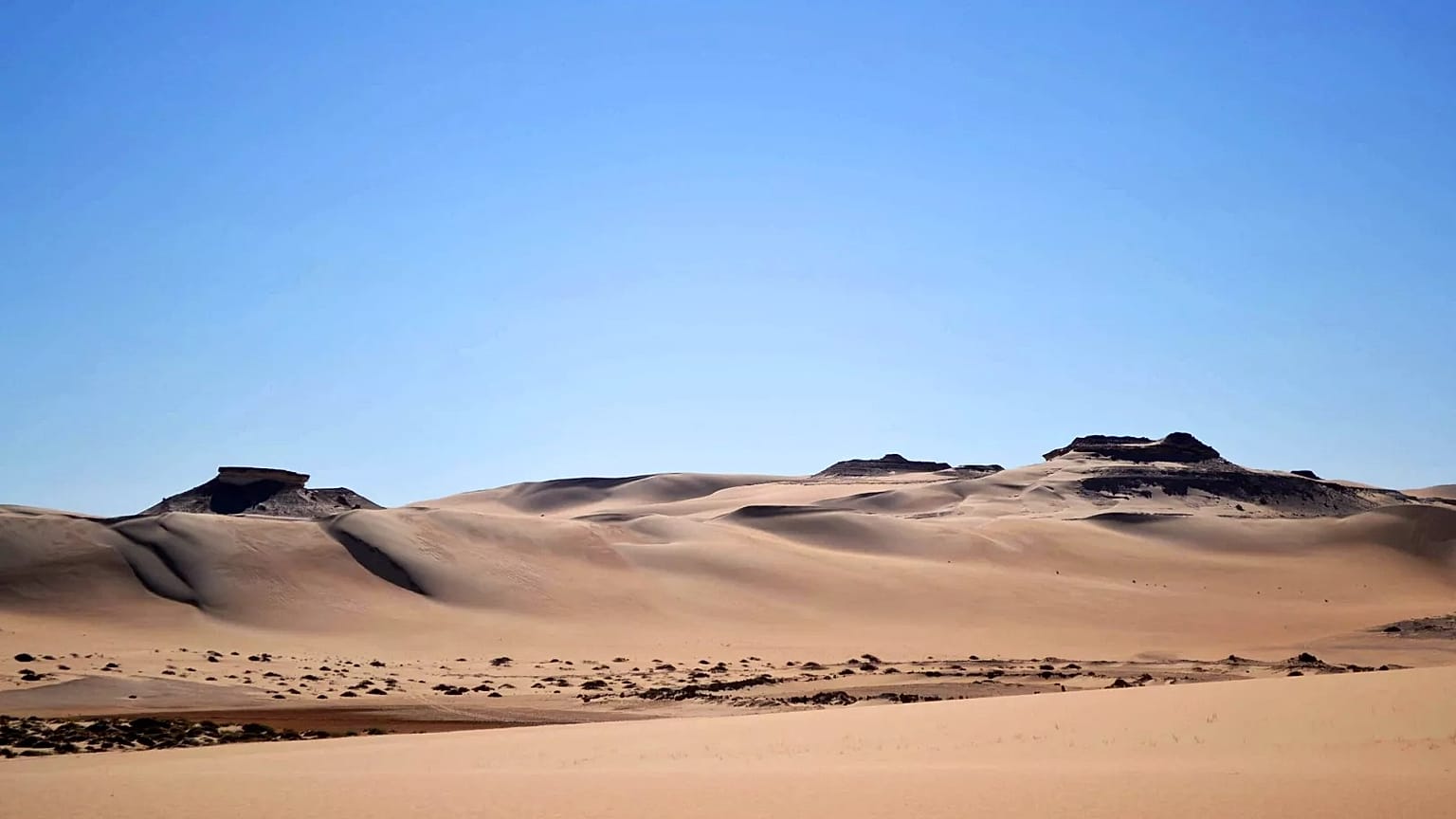
The Great Sand Sea along the northern edge of the Sahara, September, 2012
Copyright AP Photo

By Gavin Blackburn
Published on 

Libya, which shares borders with six countries and has a long coastline along the Mediterranean, has been a main transit point for migrants trying to reach Europe.

The decomposed bodies of five suspected migrants have been recovered in eastern Libya, local aid groups said on Thursday.

Recovery crews worked with local authorities to recover the remains which were located around 550 kilometres south of Tobruk, in an area called the Great Sand Sea.

The recovered remains were taken to Tobruk, according to the Red Crescent. It said that one of the "tragedies that embody the grave dangers faced by migrants traveling through the desert, the so-called 'death journey.'"

Abreen, a local aid group that tracks migrant deaths in Libya, said in a statement that the remains were likely of migrants from Sudan.

The group posted photos of the recovery operation, including one that showed the clothing of a decomposed body.

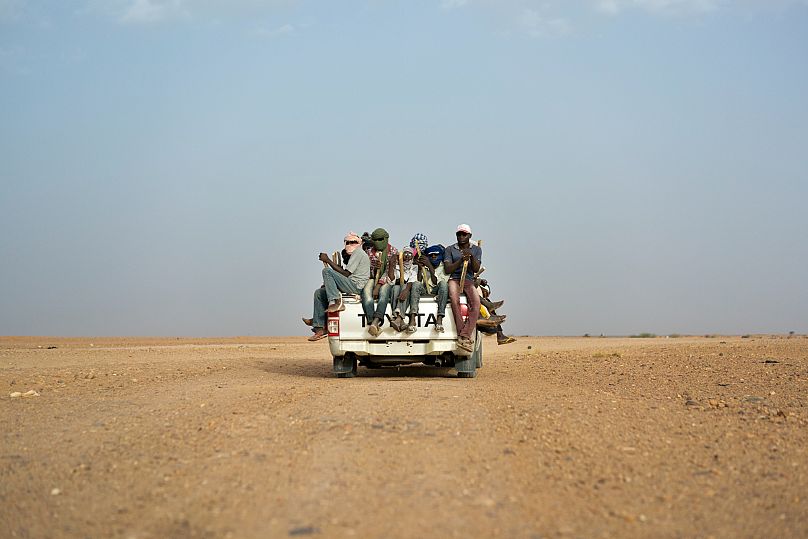
Nigeriens and third-country migrants head towards Libya from Agadez, 4 June, 2018 AP Photo


Libya, which shares borders with six countries and has a long coastline along the Mediterranean, has been a main transit point for migrants trying to reach Europe who are fleeing war and poverty in Africa and the Middle East.

Most have to embark on dangerous trips overland or by sea.

Drowning incidents near the country's coast have been common. In December, at least 61 migrants, including women and children, drowned off the town of Zuwara on Libya's western coast.

While in May, at least seven Sudanese migrants died after a vehicle carrying 34 people broke down in the Libyan desert after crossing the border from Chad, said Ebrahim Belhassan, director of the Kufra Ambulance and Emergency Services.

They were discovered in the sand dunes after 11 days, having run out of food and water, he said.

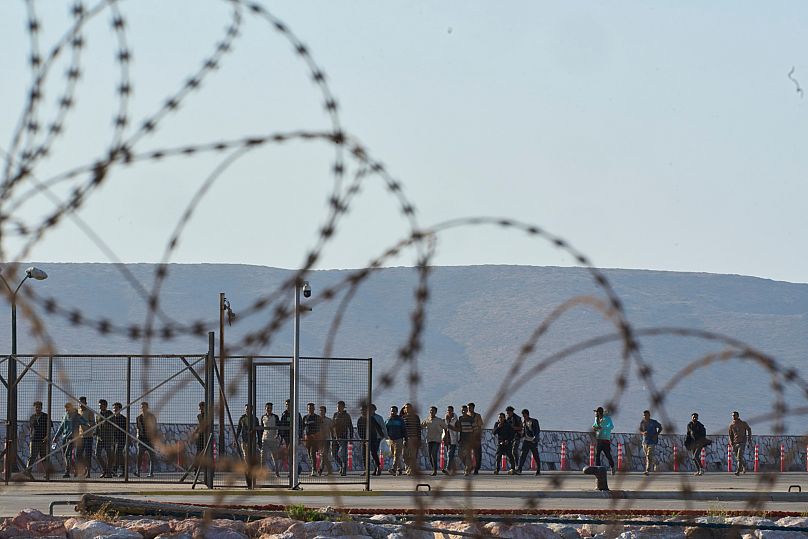
Migrants rescued south of Crete after making the journey from Libya walk after their arrival at the port of Lavrio, 10 July, 2025 AP Photo

The International Organisation for Migration (IOM) estimates around 787,000 migrants and refugees from various nationalities were living in Libya as of 2024.

The United Nations refugee agency (UNHCR) said that in 2021, 32,400 refugees and migrants had made the crossing from Libya to Europe, more than twice as many as in 2020.

In April, European Commission President Ursula von der Leyen proposed to increase staffing for Frontex, the EU’s external border and coastguard agency, by 30,000, a number that could provide a significant boost in its mission to secure Europe's external borders.


Empire / Michael Hardt and Antonio Negri. p. cm. Includes bibliographical ... 4.3 The Multitude against Empire. 393. Notes. 415. Index. 473. Page 11. PREFACE.

Page 1. MULTITUDE. WAR AND DEMOCRACY. IN THE AGE OF EMPIRE. MICHAEL HARDT. ANTONIO NEGRI ... pdf. 33. Richard Haass, for example, the U.S. State Department ...


Why Portugal and Spain are the most vulnerable European countries to blackouts

Portugal and Spain are the most vulnerable European countries to blackouts
Copyright AP Photo

By Diana Rosa Rodrigues
Published on 

The general blackout on 28 April could be a recurring scenario due to limited connections to the continental power grid, according to a new study.

About 60 million people were left without electricity for several hours in April this year following a massive blackout that left Portugal and Spain in the dark. It was the largest blackout in modern history, a nightmarish scenario that is unlikely to be repeated - or perhaps not.

Portugal and Spain are the most vulnerable countries in Europe to blackouts, according to a study by the British think tank Ember, which focuses on energy transition.

“The Iberian Peninsula is more vulnerable to blackout risks than other European countries due to limited connections to the continental grid," the study says.

"After the blackout, Spain and Portugal urged the EU to support new interconnection projects, citing stronger links as essential to avoid future disruptions."

How long did it take Spain and Portugal to recover from the blackout?


Ember outlines how Spain managed to fully recover from the incident after 16 hours, aided by France and Morocco.

“Just 10 minutes after the blackout, the first France-Spain power line was re-energised, quickly followed by the interconnection with Morocco and other connections with France," the study explains.

"With the help of hydroelectric and gas units, full restoration was achieved in Spain around 4 am on 29 April, about 16 hours after the incident."

It did not specify the recovery time for Portugal, but Portuguese Environment Minister Maria Graça Carvalho said in May that the country restored its electricity grid after ten hours.

"We had a complete recovery after 10 hours, which for an event of this kind is an exemplary recovery," she stated.

According to the preliminary report by the European Association of Electricity Transmission System Operators (ENTSO-E), which detailed the recovery timings of the two countries, unlike Spain, Portugal did not have immediate external support, starting the process of restoring electricity independently.

Less than an hour after the failure, REN (the company in charge of Portugal's electricity grid) activated hydroelectric plants in the country with autonomous start-up capacity, namely the Castelo de Bode hydroelectric plant and the Tapada do Outeiro combined cycle plant.

The recovery progressed in phases, with the first energy supply islands within the country starting to operate between 4:00 pm and 5:30 pm, ensuring the gradual restoration of the grid. Iberian reinforcement only arrived from 6:36 pm, when the first interconnection with Spain was restored. The restoration of electricity accelerated from that moment, with the Portuguese system benefiting from the stability of the neighbouring grid.

As for the causes that led to the blackout, a Spanish government report points to a "multifactorial origin", with the incident resulting from episodes of overvoltage. The document ruled out the possibility of cyberattacks and external interference, instead reinforcing that the incident stemmed from systemic failures, such as insufficient planning and vulnerabilities in voltage control on the electricity grid.

The final report conclusions from European operators (ENTSO-E) are expected to be released in October.

Limited import capacity

The Spanish recovery reveals the importance of electricity imports, which are apparently very limited in mainland Europe.

“Adding up the maximum electricity demand of countries with three or fewer import directions and a potential import rate of 25 per cent or less, up to 55 per cent of the European electricity system can be considered at risk due to limited emergency import options," Ember's analysis says.

"Three countries – Spain, Ireland and Finland – are particularly exposed, with very little support available from neighbours in case of grid incidents."

Portugal relies almost exclusively on Spain, which means that in case of problems in the neighbouring country, Portugal has few import alternatives.

The importance of interconnections between EU countries is also proven by the case of Ukraine and Moldova, which, according to the study, "would have faced a severe loss of power due to Russian aggression had it not been for cross-border electricity exchange with EU neighbours".

Portugal and Spain push Brussels for more interconnections in the EU

Following the major blackout, the governments of Portugal and Spain called on the European Commission for political and financial commitments to advance interconnections between the Iberian Peninsula and the rest of the European Union.

“A firm political and financial commitment is needed at all levels to ensure the rapid and effective integration of the Iberian Peninsula into the EU energy system," explained the ministries of Environment and Energy of Portugal and Ecological Transition of Spain.

"This will require an additional leap in interconnectivity and substantial investment in European electricity grid infrastructure."

In the letter, addressed to the European Energy Commissioner Dan Jørgensen, it proposed holding “a ministerial meeting later this year, in which, together with France and the Commission, a roadmap with milestones and concrete steps to follow to achieve European targets for 2030 and 2040 can be agreed”.


Trump signals to Erdoğan that US could lift ban on F-35 sales to NATO ally Turkey

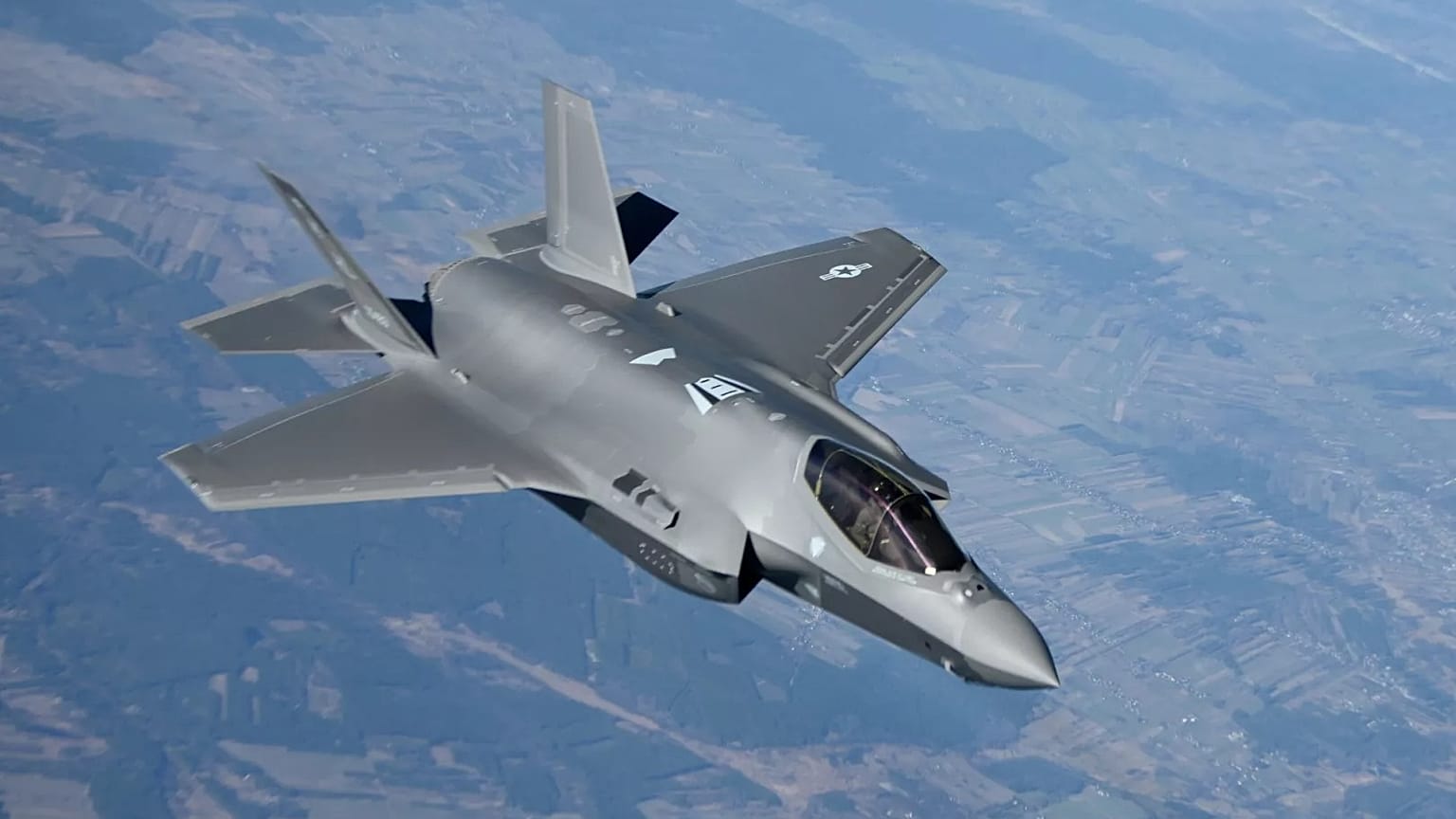
A US Air Force F-35 Lightning II aircraft departs from a KC-10 Extender aircraft after receiving fuel over Poland, 24 February, 2022
Copyright AP Photo

By Gavin Blackburn
Published on 

The US removed Turkey from its flagship F-35 fighter jet programme after Turkey purchased the S-400 air defence system from Russia.

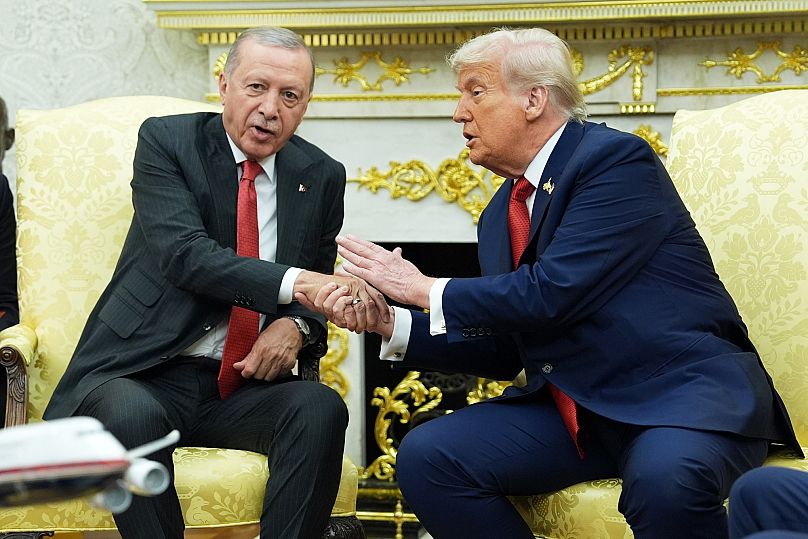
US President Donald Trump held talks with Turkey's President Recep Tayyip Erdoğan at the White House on Thursday and signalled that Washington might soon lift its hold on sales of advanced fighter jets to Ankara.

During Trump's first term, the US removed Turkey from its flagship F-35 fighter jet programme after Turkey, a NATO ally, purchased an air defence system from Russia.

US officials worried that Turkey's use of the S-400 surface-to-air missile system could be used to gather data on the capabilities of the F-35 and that the information could end up in Russian hands.

Trump started his two-hour meeting with Erdoğan by offering hope that a resolution to the matter could be found during the leaders' talks.

"He needs certain things, and we need certain things, and we're going to come to a conclusion. You'll know by the end of the day," Trump said.

The president added to Erdoğan, "And I think you’ll be successful with buying the things" you would "like to buy."

US President Donald Trump shakes hands with Turkey’s President Recep Tayyip Erdoğan during a meeting in the Oval Office, 25 September, 2025 AP Photo

The president, in a brief exchange with reporters as he bid farewell to Erdoğan, called it a "good meeting" but did not offer further details.

It was Erdoğan's first trip to the White House since 2019. They forged what Trump described as a "very good relationship" during his first White House term.

Over the years, US officials have cited concerns about Turkey's human rights record under Erdoğan and the country's ties with Russia.

Tensions between Turkey and Israel, another important American ally, over Gaza and Syria have made relations difficult with Turkey at times.

In remarks to reporters, Trump focused his concerns on Turkey's continued economic relationship with Russia.

Turkey has been one of the biggest buyers of Russian fossil fuel since the European Union announced in early 2023 it would boycott most Russian seaborne oil.

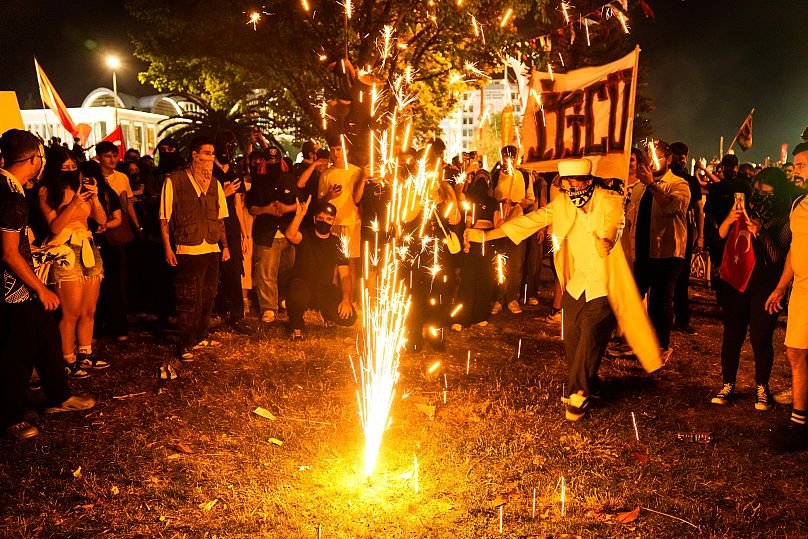
People light flares during a protest called by main opposition Republican People's Party outside the City Hall in Istanbul, 1 July, 2025 AP Photo

Since January 2023, Ankara has purchased more than $90 billion (€77 billion) in Russian oil, coal and natural gas. Only China and India have bought more from Russia in that period.

"The best thing he could do is not buy oil and gas from Russia," Trump said of Erdoğan.

Trump added that Erdoğan is respected by both Russian President Vladimir Putin and Ukrainian President Volodymyr Zelenskyy.

"I think he could have a big influence if he wants to," Trump said.

The push on Erdoğan to become more engaged in pressuring Putin comes after Trump earlier this week said he believed Ukraine could win back all the territory it has lost to Russia in the war.

It was a dramatic shift from Trump's repeated calls for Kyiv to make territorial concessions to end the fighting.

Erdoğan has made clear he is eager to see the suspension on F-35s lifted, telling Trump that he came prepared to "thoroughly discuss" the issue.

The Turkish president was even blunter in a television interview this week.

"I don't think it's very becoming of strategic partnership and I don't think it’s the right way to go," he said in an interview on Fox News Channel's "Special Report with Bret Baier."

Past reluctance to engage with Turkey

Democratic President Joe Biden's administration kept Erdoğan, who has served as president since 2014 and was prime minister for more than a decade before that, at an arm's length during Biden's four years in office.

The reluctance to engage deeply was borne out of Turkey's record of democratic backsliding as well as Ankara's close ties to Moscow.

Opposition parties and human rights organisations have accused Erdoğan of undermining democracy and curbing freedom of expression during his more than two decades in power.

International observers say that baseless investigations and prosecutions of human rights activists, journalists, opposition politicians and others remain a persistent problem in Turkey.

Trump sees Erdoğan as a critical partner and credible intermediary in his effort to find ends to the wars in Ukraine and Gaza.

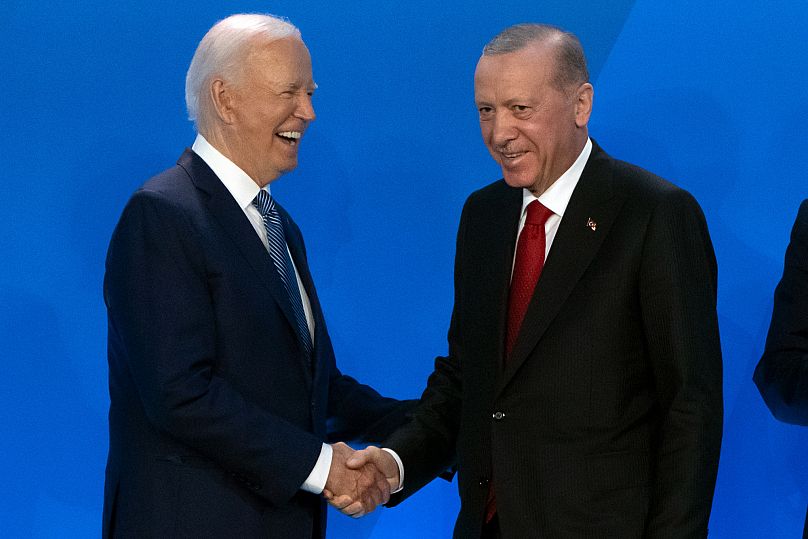
Former US President Joe Biden greets Recep Tayyip Erdoğan at the NATO summit in Washington, 10 July, 2024 AP Photo

The Republican's administration is also largely in sync with Turkey's approach to Syria as both nations piece together their posture toward the once isolated country after the fall of Syrian leader Bashar al-Assad in December.

Trump and European leaders have followed Erdoğan in embracing Syrian President Ahmad al-Sharaa, who once commanded a rebel group that was designated a foreign terrorist organisation.

Trump also said that Erdoğan deserves credit for backing the rebel forces that ousted al-Assad from Syria.

"I think President Erdoğan is the one responsible for Syria, for the successful fight in ridding Syria of its past leader," Trump said.

"He doesn't take the responsibility, but it's actually a great achievement."

Additional sources 


British court throws out terror-related charge against Kneecap member Liam Óg Ó hAnnaidh

"Proceedings against the defendant were instituted unlawfully and are null."

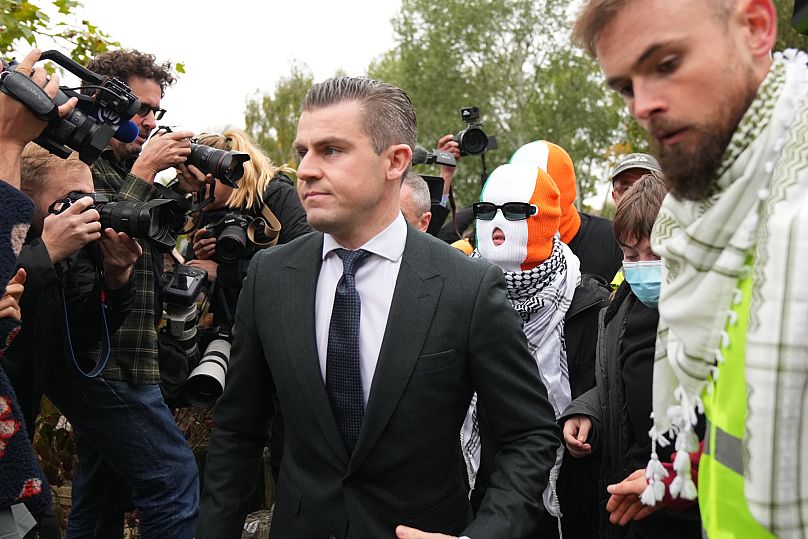
Kneecap members arrive at Woolwich Crown Court in London - Friday 26 September 2025
Copyright AP Photo

By David Mouriquand
Published on 

The Kneecap band member, who performs under the name Mo Chara, appeared in court for the third time on terror charges today. The UK court has ruled that these charges cannot continue.

A London court has thrown out a terror-related charge against a member of the Belfast rap trio Kneecap.

Rapper Mo Chara, whose real name is Liam Óg Ó hAnnaidh, had been charged with a single count for allegedly waving a flag in support of proscribed terror organisation Hezbollah at a gig in London in November last year.

Chief Magistrate Paul Goldspring sitting at Woolwich Crown Court said today that the case should be thrown out following a technical error in the way the charge against the rapper was brought.

"Proceedings against the defendant were instituted unlawfully and are null."

Indeed, during last month’s second court appearance, defence counsel Brenda Campbell KC told the court that the Attorney General had not given permission for the case to be brought against the defendant when police informed him he was to face a terror charge on 21 May.

Following his ruling, the judge concluded: "Mr Ó hAnnaidh, you are free to go," which was met by cheers in the public gallery.

Taking to X to celebrate, the band’s manager Daniel Lambert wrote: “We have won!!!!!! Liam Óg is a free man. We said we would fight them and win. We did (twice). Kneecap has NO charges OR convictions in ANY country, EVER. Political policing has failed. Kneecap is on the right side of history. Britain is not. Free Palestine.”

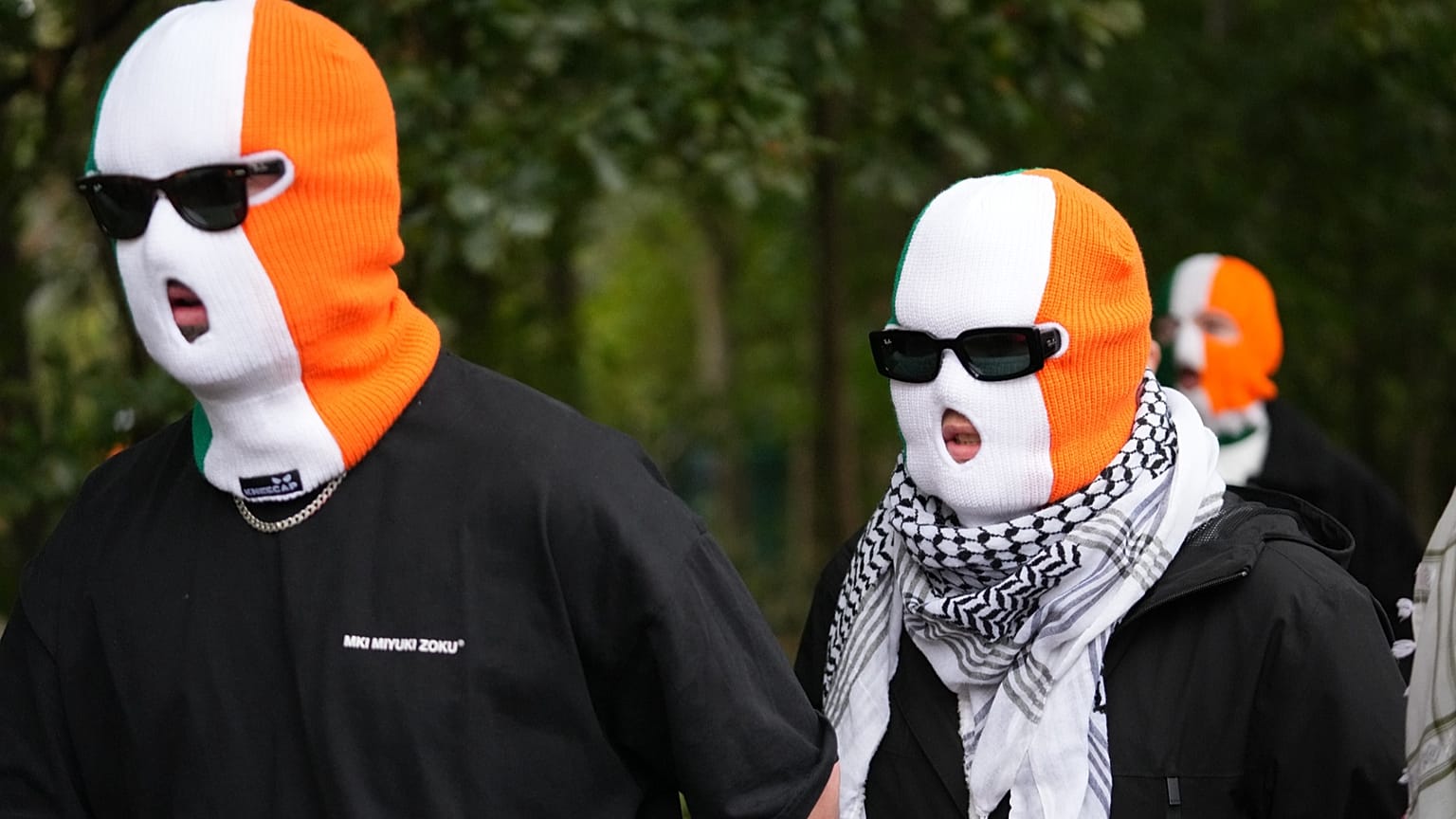
A person believed to be Liam Óg Ó hAnnaidh, aka Mo Chara, in a mask, arrives at Woolwich Crown Court in London - 26 September 2025 AP Photo

Kneecap have consistently denied supporting either Hamas or Hezbollah and said that they do not incite or condone violence, despite criticism for their politically-charged live shows

The band has denied accusations of anti-Semitism, claiming that those attacking the band “weaponize” the false accusation to “distract, confuse, and provide cover for genocide.”

Kneecap has frequently used their platform at various music festivals to speak out not against the Jewish people but against Israel's war in Gaza.

Since Hamas’ attack on Israeli citizens on October 7, 2023, multiple UN human rights experts have stated that Israel’s military actions in Gaza amount to genocide, with the International Court of Justice finding claims of genocide plausible. The Integrated Food Security Phase Classification announced that people in the Gaza Strip are officially facing “a man-made” famine in the territory.

Israel has rejected the genocide accusations and maintain that its operations are lawful acts of self-defence. Claims Kneecap have vocally rebuked. And continue to do so.