Thursday, October 16, 2025

US may double support for Argentina to $40bn conditional on policy reforms

SCREWING OVER US FARMERS FOR MILEI

US may double support for Argentina to $40bn conditional on policy reforms
This substantial US financial package represents a critical lifeline for Argentina, which has defaulted on its sovereign obligations three times since 2000, as it seeks to cover foreign currency debt payments in 2026.
By Mathew Cohen October 16, 2025

The United States has purchased Argentine pesos on the open market and is establishing a $20bn facility to invest in Argentine sovereign debt, Treasury Secretary Scott Bessent confirmed on October 15. Combined with the initial $20bn currency swap line, total US support for Argentina would reach $40bn.

Bessent described the arrangement as "a private-sector solution to Argentina’s coming debt payments."

Argentine markets responded positively, with the benchmark Merval index surging 10% during the trading session. Local stocks closed up 1.7% after rising over 4% earlier, while international dollar bonds gained ground. The Argentine peso declined 1.7% to 1,378 per dollar.

While President Donald Trump initially suggested US support would hinge on President Javier Milei's performance in the upcoming midterm elections, Bessent said the assistance is "policy-specific" and will continue "as long as Argentina continues enacting good policy."

“A win [for Milei in the mid-terms] would entail keeping a blocking level on any bad policy, for the president to be able to veto the policies. And so [the aid] is not election-specific; it is policy-specific," he said in a bit to clarify Trump's earlier comments.

This assurance comes as Milei faces a challenging electoral landscape. Polls show a tight race between his La Libertad Avanza party and Peronist Fuerza Patria, with LLA trailing by over 10 points in Buenos Aires province. Political scientist Gustavo Marangoni told AFP that Milei has "no chance of winning a majority," estimating his party would capture approximately one-third of available seats.

Central Bank President Santiago Bausili confirmed the $20bn currency swap would be operational within two weeks, following intensive documentation work. "We've been working for the past two weeks, essentially day in and day out, with full dedication to complete the documentation associated with the swap, and we hope to be able to execute the free market agreement containing the terms of the swap very soon," Bausili told Infobae.

This substantial US financial package represents a critical lifeline for Argentina, which has defaulted on its sovereign obligations three times since 2000, as it seeks to cover foreign currency debt payments in 2026. However, the conditional nature of US support hinted at by Trump poses a major challenge for the libertarian administration.

“The current strategy is extremely fragile,” Barry Eichengreen, a professor of economics and political science at the University of California, Berkeley, told NBC News.

“Even if Argentines manage to skate through thin ice this time, there are always more bumps in the road."

Argentina also enjoys the backing of the IMF, with a $44bn programme renegotiated last April which granted a further $20bn Extended Fund Facility (EFF). Bloomberg estimates Buenos Aires' current exposure to the fund to be around $55bn.

Argentines will go to the polls on October 26 to elect half of the seats in the Chamber of Deputies and a third of the seats in the Senate, where Milei currently lacks the support needed to advance his bold economic plans.

Bessent, who recently described Argentina as a "systemic ally" of the US, expressed confidence that Milei's right-wing coalition would "do quite well and continue his reform agenda."
Trump's $20bn boost for Argentina comes with electoral strings

Trump's $20bn boost for Argentina comes with electoral strings
"We're not going to let somebody get into office and squander the taxpayer money from this country. I'm not gonna let it happen," Trump said. "If [Milei] loses, we are not going to be generous with Argentina."
By Mathew Cohen October 15, 2025

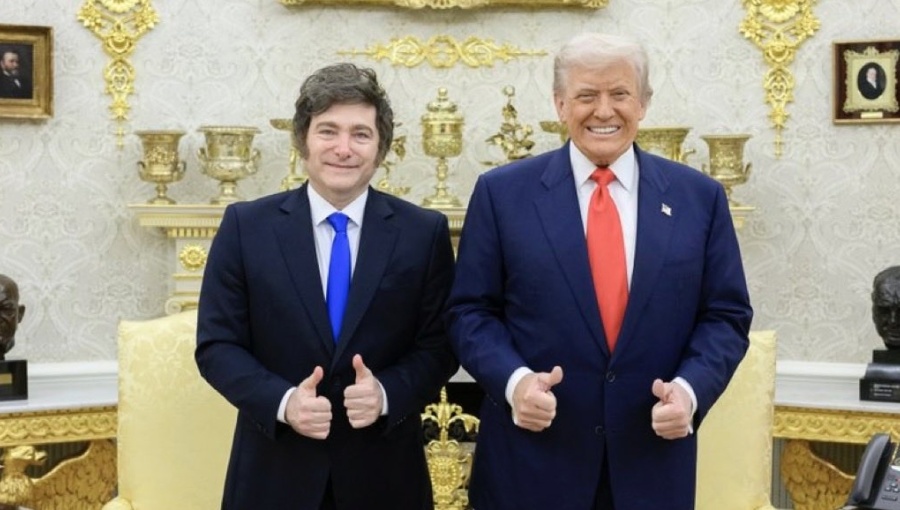
Argentine President Javier Milei met with US President Donald Trump at the White House on October 14 to strengthen bilateral ties, securing a crucial endorsement ahead of Argentina's upcoming midterm legislative elections.

The meeting followed the US activation of a $20bn currency swap with Argentina, triggering a massive rally in Argentine stocks and bonds. The libertarian leader arrived in Washington at 1:00 a.m. local time amid heightened security, staying at the official Blair House residence across from the White House, which is reserved for close allies to the president, Infobae noted.

Trump publicly backed Milei's electoral prospects during their meeting. "Your career has been an amazing one, and it's going to continue with the election. You're going to win the election. We're going to endorse you. I'm going to endorse you today. Fully endorse you," Trump told Milei in front of reporters.

However, he attached a critical condition to his support. "If a socialist wins, you feel a lot differently about making an investment," Trump stated.

"We're not going to let somebody get into office and squander the taxpayer money from this country. I'm not gonna let it happen," he said. "If [Milei] loses, we are not going to be generous with Argentina."

Argentines will go to the polls on October 26 to elect half of the seats in the Chamber of Deputies and a third of the seats in the Senate, where Milei currently lacks the support needed to advance his reform agenda.

Despite suggestions that assistance is tied to electoral results, Trump insisted the Treasury swap agreement was about helping "our neighbours." US Treasury Secretary Scott Bessent, who recently described Argentina as a "systemic ally" of the US, expressed confidence that Milei's right-wing coalition would "do quite well and continue his reform agenda."

This unprecedented US intervention in Argentine finances underscores the strategic importance both leaders place on their ideological alliance. While the $20bn swap provides critical financial support for Argentina's 2026 debt obligations, Trump's explicit electoral endorsement and conditional aid threats represent a remarkable departure from traditional diplomatic norms, potentially influencing voter sentiment as the midterm elections fast approach.

Broadway enters an anxious time as labour action threatens to roil theatres

By The Associated Press
October 15, 2025 

A Broadway street sign appears in Times Square, in New York on Jan. 19, 2012. (AP Photo/Charles Sykes, File)

Broadway is a tense place these days after two major labor unions authorized strike action amid ongoing contract negotiations with producers.

Actors’ Equity Association — which represents over 51,000 members, including singers, actors, dancers and stage managers — and American Federation of Musicians Local 802 — which represents 1,200 musicians — have voted in favor of a strike authorization, a strategic step ahead of any work stoppage. No strike has been called.

Members of both unions are currently working under expired contracts. The musicians’ contract expired on Aug. 31, and the Equity contract expired on Sept. 28.

Both unions want pay increases and higher contributions by producers toward employee health care costs, a key sticking point. Actors Equity also wants producers to hire more backup performers and stage managers, add protections for performers in the event of injury and put limits on how many performances in a row actors can be asked to do without a day off.

The health of Broadway — once very much in doubt due to the COVID-19 pandemic — is now very good, at least in terms of box office. The 2024 to 2025 season took in US$1.9 billion, the highest-grossing season in recorded history, overtaking the pre-pandemic previous high of $1.8 billion during the 2018 to 2019 season. It has been a long road back from the days when theaters were shuttered and the future looked bleak.


The unions are pointing to the financial health of Broadway to argue that producers can afford to up pay and benefits for musicians and actors. Producers, represented by The Broadway League, counter that the health of Broadway could be endangered by increasing ticket prices.

“On the heels of the most successful season in history, the Broadway League wants the working musicians and artists who fueled that very success to accept wage cuts, threats to healthcare benefits, and potential job losses,” Local 802 President Bob Suttmann said in a statement Tuesday.

A strike would cripple most of Broadway, but some shows might continue. “Beetlejuice” and “Mamma Mia!” arrived as part of tours and so do not have a traditional Broadway contract. And shows playing at nonprofit theaters, such as the musical “Ragtime” at Lincoln Center Theater and the play “Punch” from the Manhattan Theatre Club, have separate labor agreements.

The most recent major strike on Broadway was in late 2007, when a 19-day walkout dimmed the lights on more than two dozen shows and cost producers and the city millions of dollars in lost revenue.

More than 30 members of Congress, including the entire New York delegation, have signed a letter urging all sides to bargain in good faith and avoid a strike.

“A disruption to Broadway will result in significant economic disruption to not just the New York metropolitan area but harm theater workers and patrons across the country and around the world,” the letter states.

Mark Kennedy, The Associated Press
THE GRIFT

G20 risk watchdog warns of ‘significant gaps’ in global crypto rules

By Reuters
Published: October 16, 2025 

A statue of U.S. President Donald Trump holding a bitcoin in recognition of his support for cryptocurrency is displayed on the National Mall with the Washington Monument behind, Wednesday, Sept. 17, 2025, in Washington. (AP Photo/Alex Brandon)

PARIS/LONDON - There are “significant gaps” in countries’ attempts to regulate fast-growing crypto markets, which could potentially harm financial stability, the G20’s risk watchdog warned on Thursday.

The Financial Stability Board (FSB), a body founded in the aftermath of the global financial crisis, made a series of recommendations on rules for crypto in 2023, to try to bring it in line with the mainstream financial sector.

In Thursday’s review, it said while some progress had been made, international implementation and coordination of rules remained too “fragmented, inconsistent, and insufficient to address the global nature of crypto-asset markets.”

Financial stability risks remain “limited at present” it assessed, but they are now rising with the surge in bitcoin and other cryptocurrencies having doubled the value of the global crypto market to US$4 trillion over the last year.

“This is consequential,” FSB secretary general John Schindler told Reuters, describing the concerns raised in the review. “These crypto assets can move across borders very easily, much more easily than other financial assets.”

Stablecoin rules lacking


This year’s surge in the value of the crypto market has come against a backdrop of U.S. President Donald Trump’s pro-crypto stance.

Schindler said there was a need for close monitoring as crypto becomes increasingly connected with the traditional financial system and stablecoins - cryptocurrencies pegged to the dollar for the most part - become more widely used.

One of the key concerns flagged by the FSB’s report was that hardly any countries have complete regulatory frameworks for stablecoins yet.

While still small in comparison to the bitcoin-dominated cryptocurrency markets, the market for stablecoins has grown by almost three-quarters over the last year to just under $290 billion, a trajectory expected to continue with U.S. rules on them now in place

The FSB’s report reviewed 29 jurisdictions’ implementation of crypto and stablecoin recommendations, including the U.S., EU, Hong Kong and the UK, although the U.S. only participated in the stablecoin aspect. El Salvador, where the world’s largest stablecoin, Tether, is based did not take part, however.

Schindler said the latest review had still been worthwhile even without El Salvador’s input given the FSB was already aware of the risks, but stressed the need for better global cooperation and coordination from all jurisdictions going forward.

“We can all put in place frameworks, but if there are people who are not cooperating and helping each other, it’s just going to be really challenging because these things just they don’t observe borders,” he said.

Risks ‘limited at present’ but growing

Global rulemakers were jolted in action by the collapse of crypto exchange FTX and demise of TerraUSD/Luna coins in 2022.

There has been major jitters over the last week too, with the largest crypto crash in history on Friday triggering almost $20 billion of liquidations in the market.


The FSB’s report laid out a list of eight recommendations for jurisdictions to speed up the implementation of comprehensive and globally consistent rules and for better cross-border cooperation and coordination.

They follow similar concerns raised by the European Union’s securities watchdog in April that even small markets can be the source of bigger problems in the financial system.

Even if countries have their own regulatory regimes, they can still be impacted by the activities of crypto companies who are headquartered offshore, Schindler said.

Reporting by Elizabeth Howcroft in Paris and Marc Jones in London; Editing by Louise Heavens
Canadian customer satisfaction gap widens between big banks and midsized lenders: 
J.D. Power

By The Canadian Press
October 16, 2025 

Bank towers are shown from Bay Street in Toronto's financial district, on Wednesday, June 16, 2010. THE CANADIAN PRESS/Adrien Veczan

TORONTO — A new report finds the gap in bank customer satisfaction between Canada’s Big Five banks and midsized lenders is widening, with satisfaction at smaller banks rising.

A J.D. Power survey finds customer satisfaction with the Big Five lenders fell seven points from last year to 604 on a 1,000-point scale, while satisfaction with midsize lenders rose five points to 649.

Royal Bank ranked No. 1 in bank customer satisfaction among the Big Five for a second consecutive year.

The report said Tangerine Bank scored the highest among midsize lenders for the 14th year in a row.

Paul McAdam, senior director of banking and payments intelligence at J.D. Power, notes that while satisfaction with Canada’s largest banks declined, these lenders still account for the largest share of the consumer market.


He says midsize banks are outperforming their larger counterparts in aspects such as ease of use and personalization.

This report by The Canadian Press was first published Oct. 16, 2025.
Canada's Industry minister says relief coming for tariff-hit softwood lumber sector

By The Canadian Press
Updated: October 16, 2025


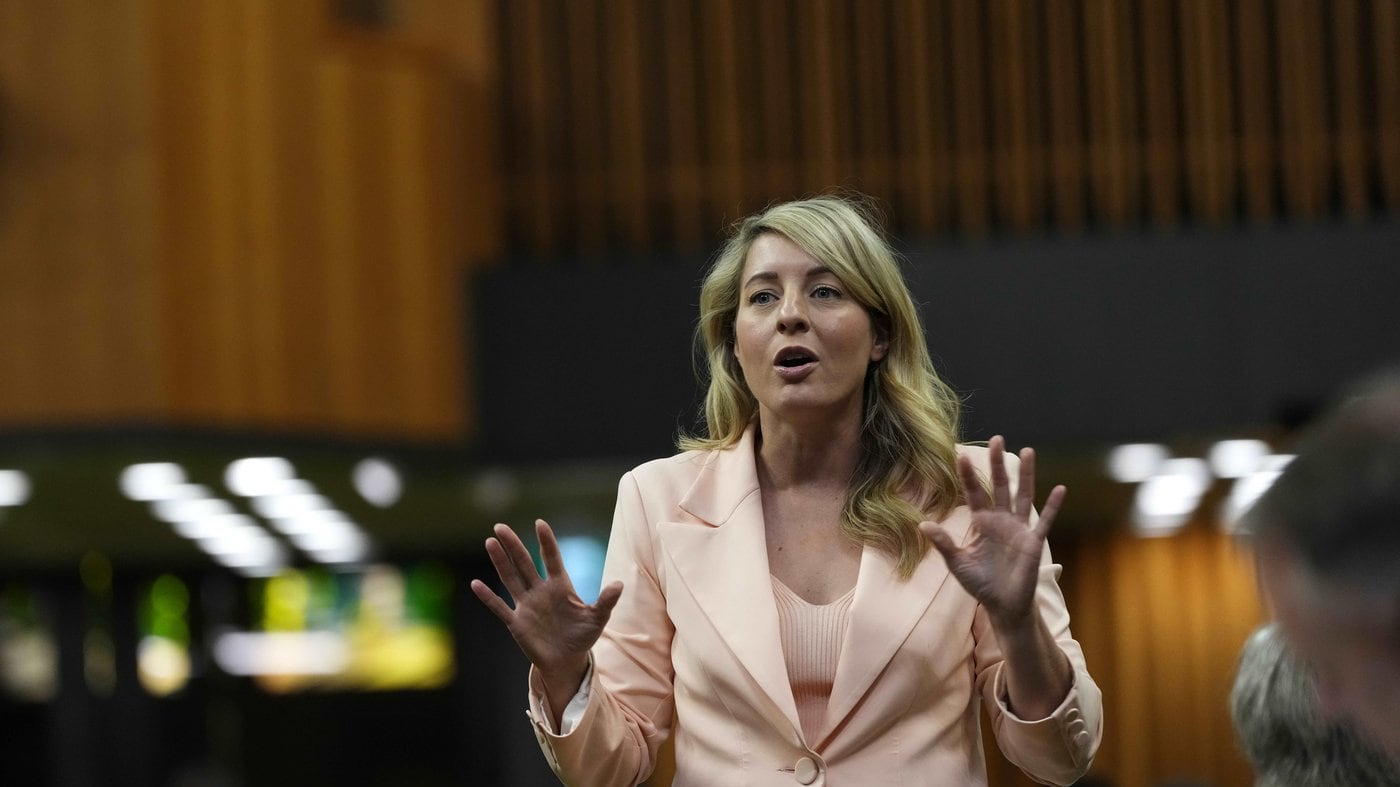
Minister of Industry Melanie Joly rises during question period in the House of Commons on Parliament Hill in Ottawa on Friday, Sept. 26, 2025. THE CANADIAN PRESS/Justin Tang

OTTAWA — Federal Industry Minister Melanie Joly said financial relief is coming soon for Canada’s tariff-struck softwood lumber sector.

The minister said in Fredericton Wednesday the government will provide funding through banks, backstopped by the Business Development Bank of Canada, in the “coming days.”

“That’s for supporting, right now, our businesses to make sure that they stay afloat,” Joly said. “Meanwhile, we will make sure that we work on a buy-Canadian policy to have our homes and our major projects and our infrastructure being built with the great softwood from New Brunswick.”

While the vast majority of Canadian trade with the U.S. is exempted from tariffs because of the Canada-U.S.-Mexico Agreement, U.S. President Donald Trump has targeted the steel, aluminum, auto, energy and lumber sectors with duties.

In August, Prime Minister Mark Carney announced a $1.25 billion aid package to support the softwood lumber sector.

Joly said the funding will go toward ensuring businesses stay afloat while dealing with “unjustifiable” tariffs, adding the government will also offer support for operations and capital expenditures.

The minister said the government funding will be provided based on individual companies’ needs.

“We’re cutting red tape and we’re using the banking system to make sure that funding is available,” she told reporters Wednesday. “It’s not a question of how much each province will have, it’s ultimately what are the needs of the companies across the country.”

The Business Development Bank of Canada said in a news release Wednesday that the program will make it easier for the country’s softwood lumber businesses to access $700 million in new term loans or letters of credit through their primary financial institution.

It said the program was designed after discussions with companies, industry associations and financial institutions.

“BDC emphasized the program is not intended as a cure-all for the sector’s considerable challenges but rather act as a complementary tool with other financial options and government support programs to help these businesses continue to operate and better manage through an ever-evolving situation,” said the news release.

Minister of Energy and Natural Resources Tim Hodgson said in the release that the forest sector continues to face “unjustified duties” when exporting lumber to the U.S.

“We are working as Team Canada to support and retool our forest sector to protect jobs, strengthen competitiveness and resilience, and Buy Canadian to use more Canadian wood at home,” he said.

Joly said Wednesday she is following the development of the softwood lumber industry closely because it relates to national security.

“Because if one day Canada is not in a time of peace, we need to have steel plants, we need to have aluminum plants, we need to have lumber also,” she said.

This report by The Canadian Press was first published Oct. 15, 2025.


Catherine Morrison, The Canadian Press.

With files from Hina Alam in Fredericton.


New $10 cap on NSF fees could save Canadians $600 million a year: Credit Counselling Society

By Pat Foran
Published: October 16, 2025 

There’s an array of choice when it comes to picking the right credit card, each having its own unique features and perks. Credit cards are displayed in Montreal, Wednesday, December 12, 2012. THE CANADIAN PRESS/Ryan Remiorz

When paying a bill, if there’s not enough money in an account to cover the transaction, banks will often charge a Non-Sufficient Funds (NSF) charge.

The fees have been a major cause of frustration for some because even if an account is one dollar short, it could result in a $48 penalty.

But, a $10 dollar cap is coming on March 12, 2026.


“I think I’m not the only one dealing with this issue, which can be very expensive for many people,” said Elvira Townsend of Surrey, B.C.

Townsend told CTV News she always tries to pay her bills on time, but recently her bank balance dropped to minus nine dollars and she was immediately charged an NSF fee of $48, putting her account $57 in arrears.

“I was stressed out because I’m on disability and right now money is really tight, so I was like wow I have to come up with this,” she said.

Townsend said she applied for overdraft protection in the past, but her bank denied her because she has a low credit score.

“It’s very unfair and it’s very upsetting because I know there are a lot of people struggling,” Townsend said. “I’m struggling and that $48 - even if (it) was for minus one dollar - it’s a lot.”

Currently, Canada’s major banks charge $45 to $48 per NSF transaction and the charges have helped banks with profits since they were first implemented.

“These fees hit people who can least afford them, so families living paycheque to paycheque find it especially difficult,” said Tina Filion with the Credit Counselling Society.

Changes to the fees will be implemented March 12, 2026. There will be a $10 cap on NSF fees, meaning banks can’t charge more than one NSF fee within 72 hours, there can be no NSF fee if an account is short by less than $10, and banks must alert customers and give them time to deposit funds before charging an NSF fee.

Filion said 34 per cent of Canadians are charged with at least one NSF fee each year.

“We’re talking about $600 million staying in people’s pockets, so it’s pretty huge,” she said.

“This is something positive, so people should celebrate this,” added Alejandra Ruiz Vargas, president of Acorn Canada.

Acorn is a group that advocates for low- and moderate-income people and has been fighting for NSF reforms.


Ruiz Vargas said while lowering NSF fees from $48 to $10 is a good start, Canadian banks should follow the lead of American banks where many have scrapped the fees altogether.

“This is good, very good, however, it’s not perfect, because as I mentioned it should be taken off completely, like they did in the U.S. They did it there and the banks there are still making a profit,” said Ruiz Vargas.

Townsend is hopeful more changes can be made to help her and others with lower incomes so they can become eligible for overdraft protection.

“I hope they can make changes to the rules and allow people like me to have overdraft protections which is important,” she said.


Pat Foran

CTV News Toronto Consumer Alert Video Journalist
Toronto renters should make about $44 hourly to comfortably afford a one-bedroom apartment: report

By Alex Arsenych
 October 16, 2025 


If a renter in Toronto wants to dedicate about a third of their paycheque to a one-bedroom apartment each month, they should be making roughly $44 an hour.

That’s according to Zoocasa, a real estate website, which crunched the numbers after several provinces recently raised their minimum wages to keep pace with the rising cost of living.

As of Oct. 1, Ontario raised that wage to $17.60 per hour, reflecting a $0.40 increase from the previous rate.READ MORE: Ontario’s minimum wage is rising in October. But is it enough for workers to support themselves full-time?

Zoocasa analyzed data from Rentals.ca across 51 Canadian cities to reveal what a single earner should make at minimum to rent a one-bedroom apartment affordably under the 32 per cent rule.

Typically, the “golden rule” of budgeting for housing costs is touted as spending no more than 32 per cent of your gross annual income, according to Zoocasa.


“It’s a standard that’s supposed to leave room for food, transportation, savings, and a little breathing room for the unexpected,” the report reads.

Assuming minimum wage employees work 37.5 hours every week, Ontarians would bring home a $31,680 pre-tax annual income, making their ideal rent roughly $845 per month.

But Zoocasa’s report reveals the average rent for a one-bedroom unit in Toronto costs about $2,295, which is nearly triple the amount of what full-time minimum wage earners can comfortably afford on their own.

Torontonians should be making at least $86,062 annually, or $44.13 hourly, if they want to rent a one-bedroom apartment on their own, according to the study. That figure is 151 per cent higher than the province’s new minimum wage.

Across the Greater Toronto Area (GTA), North York renters would need to earn $41.62 per hour; Mississauga calls for $41.12 per hour, while Brampton renters need $39.38 hourly to afford the same units. These figures represent wage gaps from 124 to 137 per cent.

Outside of the GTA, renters in Greater Sudbury need $40.93 an hour, Waterloo renters need $39.42 per hour, and London renters need $32.96 per hour, reflecting wage gaps ranging from 87 to 133 per cent. This reveals cities once painted as an affordable housing option are currently inaccessible to full-time minimum wage earners, Zoocasa notes.

“Ontario’s housing costs continue to outpace wage growth at nearly every level, confirming that incremental wage adjustments are insufficient to bridge the affordability gap,” the report reads.

Here is how much rent costs for one-bedroom units across Ontario in October and the required income to comfortably afford them on a single income:


CityAverage rent in OctoberRequired annual incomeRequired hourly wage
Toronto$2,295$86,062$44.13
Oakville$2,226$83,475$42.81
Kanata$2,221$83,288$42.71
Etobicoke$2,183$81,862$41.98
North York$2,164$81,150$41.62
Mississauga$2,138$80,175$41.12
Greater Sudbury$2,129$79,838$40.94
Kingston$2,122$79,575$40.81
Vaughan$2,120$79,500$40.77
Burlington$2,094$78,525$40.27
Scarborough$2,055$77,062$39.52
Waterloo$2,050$76,875$39.42
Brampton$2,048$76,800$39.38
Guelph$2,009$75,338$38.63
Barrie$1,979$74,212$38.06
Ottawa$1,977$74,138$38.02
Ajax$1,954$73,275$37.58
East York$1,940$72,750$37.31
Cambridge$1,880$70,500$36.15
Kitchener$1,836$68,850$35.51
Oshawa$1,821$68,288$35.02
Brantford$1,720$68,250$35.00
Hamilton$1,787$67,012$34.15
London$1,714$64,275$32.96
Niagara Falls$1,694$63,525$32.58
Windsor$1,685$63,188$32.40
St. Catharines$1,676$62,850$32.23
Peterborough$1,668$62,550$32.08


Alex Arsenych

Opens in new window

CTVNewsToronto.ca Journalist

‘Hold them to account’: Joly threatens legal action against Stellantis over Jeep production shift to U.S.

NATIONALIZE JEEP UNDER WORKERS CONTROL


By Stephanie Ha
Updated: October 15, 2025
The Stellantis sign is seen outside the Chrysler Technology Center, Jan. 19, 2021, in Auburn Hills, Mich. Stellantis on April 26, 2023. (AP Photo/Carlos Osorio, File)

Less than 24 hours after automaker Stellantis announced that it is shifting production of the Jeep Compass from Ontario to the U.S., the federal government says it’s considering taking legal action against the company.

In a letter to Stellantis CEO Antonio Filosa, Industry Minister Mélanie Joly emphasized that Stellantis has “made important commitments to Canada and to its workforce.”

“Should Stellantis choose not to respect its obligations, we will act in the interests of all Canadians and hold the company to full account, and exercise all options, including legal,” the letter goes on to say.

Bloomberg was first to report on the threat of legal action.

On Tuesday, Stellantis announced it would be shifting Jeep production slated for its Brampton, Ont. plant to its Belvidere Assembly Plant in Illinois, creating 3,300 new jobs in the U.S. by 2027. The announcement was part of a US$13-billion investment by Stellantis to expand production in the U.S. over the next four years.


Speaking to reporters in Fredericton, N.B. on Wednesday, Joly said she spoke to Stellantis’ CEO the day before.

“We’ve invested millions of dollars in that facility based on the commitment that they would be investing in a new model,” Joly said to reporters. “And so that’s why, if they don’t do so, we’ll hold them to account.”

Federal Industry Minister Melanie Joly says the decision by automotive plant Stellantis to move its planned production of its Jeep Compass from Brampton, Ont., to Illinois is completely unacceptable. THE CANADIAN PRESS/Hina Alam

In 2022, Stellantis committed C$3.6 billion to retool the Brampton and Windsor, Ont. assembly plants to align with the company’s electric vehicle and battery development goals. Both the federal and provincial governments then committed C$1.4 billion for the upgrade, to total C$5 billion.

In her letter to Stellantis, Joly highlighted the funding provided to the company by both Ottawa and Ontario.

“Stellantis agreed with the Government of Canada and the Province of Ontario to maintain its full Canadian footprint, including Brampton, in exchange for substantial financial support,” Joly wrote.

“Anything short of fulfilling that commitment will be considered as default under our agreements,” she added.

Work at the Stellantis plant in Brampton was put on pause in February amid threats from U.S. President Donald Trump to impose tariffs on Canadian goods. That work has not resumed. The automaker’s facility in Windsor, meanwhile, is still expanding to produce electric vehicle batteries.

Joly is also calling on the company to quickly “identify new mandates for Brampton that ensure the facility remains central” to the company.


Ontario Premier Doug Ford says Stellantis has given him assurances that the Brampton plant will continue operations in the future. (CTV News)

Ontario Premier Doug Ford says Stellantis has given him assurances that the Brampton plant will continue operations in the future.

“I had a conversation with the president of Stellantis yesterday,” Ford said to reporters in Kenora, Ont. on Wednesday. “He said, well, they are going to postpone it for a year. They are going to find a new model.”

Ford also said there are plans to add a third shift in Windsor that would potentially allow 1,500 of the 3,000 impacted employees to transfer to that facility.

In a statement to CTV News Toronto, Stellantis said Canada is “very important” to the company, pointing to its 100-year history in the country.

“We are investing. We are adding a third shift to the Windsor Assembly Plant to support increased demand of all versions of the Chrysler Pacifica and the new SIXPACK-powered Dodge Charger Scat Pack and R/T models,” the company wrote.

“We have plans for Brampton and will share them upon further discussions with the Canadian government.”

Since his re-election, Trump has reiterated his desire to move vehicle production back to the U.S. to help revive manufacturing and provide more jobs for Americans.

Last week, U.S. Commerce Secretary Howard Lutnick dismissed any prospect of a comprehensive auto deal with Canada while speaking under Chatham House Rules at the US-Canada Summit hosted by BMO and Eurasia Group in Toronto.

Earlier this year, Trump imposed a 25 per cent tariff on all vehicle imports to the U.S., but made a carveout for the American-made parts of cars compliant with the Canada-U.S.-Mexico Agreement (CUSMA).

With files from CP24’s Codi Wilson and CTV News’ Spencer Van Dyk

Stephanie Ha

Supervising Producer, Ottawa News Bureau, CTV News


Stellantis to pour €11bn into US expansion to avoid tariff-induced losses

FILE - Shoppers look over a 2025 Dodge Charger Daytona hardtop in the Stellantis display at the Colorado Auto Show on 17 April 2025, in Denver.
Copyright Copyright 2025 The Associated Press. All rights reserved.

By Una Hajdari with AP
Published on 

The car giant says its biggest-ever US investment will increase output by 50%, add more than 5,000 jobs, and counter some tariff costs by boosting North American profitability.

Stellantis says it will invest $13 billion (€11.17bn) over the next four years to expand its manufacturing capacity in the United States, a move the carmaker says will lift its domestic vehicle output by 50% and create more than 5,000 jobs.

The world’s fourth-largest carmaker said on Tuesday the investment will support the launch of five new models, including a Dodge Durango to be built in Detroit and a mid-size truck to be assembled in Toledo, Ohio.

The new jobs will be spread across plants in Illinois, Ohio, Michigan and Indiana.

Stellantis, formed four and a half years ago from the merger of Fiat Chrysler and PSA Peugeot, hopes to offset some of the expected €1.5bn cost of tariffs this year on cars produced in Canada and Mexico by boosting North American profitability with new model launches such as the revived Jeep Cherokee.

The new products will come on top of 19 ‘refreshed’ models across all US assembly plants planned through 2029, the company said.

“This investment in the US — the single largest in the company’s history — will drive our growth, strengthen our manufacturing footprint and bring more American jobs to the states we call home,” chief executive Antonio Filosa said in a statement.

Stellantis’ US operations include 34 manufacturing plants, parts distribution centres, and research and development sites across 14 states.

Of the 16 million cars Stellantis produces for sale in the US market, 8 million are made in domestic plants and another 4 million in Canada and Mexico — all with a high proportion of US components. A further 4 million are imported from Europe and Asia, with virtually no US components.

In pursuit of a US turnaround, Filosa is also relaunching in the second half of 2025 models that previous management scrapped two years ago, including a new Jeep Cherokee, which will be built in Mexico, and the popular ICE (internal combustion engine) Dodge Charger.

Earlier this year, Stellantis also brought back the Ram Hemi V8 in response to dealer and customer demand.

In July, the Netherlands-based group reported half-year results that included losses of €2.3bn. During the period, US shipments fell by nearly a quarter as the carmaker reduced imports of vehicles produced abroad.