Thursday, October 16, 2025

Study Proves Strong Impact Of Taking Molecular TB Diagnostics Closer To The People – OpEd

Credit: Citizen News Service

By  and 

An important scientific study published in The Lancet shows the strong public health impact of deploying molecular diagnostics closer to the people.


This multi-country randomised controlled study shows that if we deploy battery-operated, laboratory independent and true point-of-care molecular test Truenat at the primary healthcare level, then same day test and treat can become a reality. Diagnosing TB early and accurately is a critical pathway towards right treatment as well as stopping the spread of infection.

The study enrolled around 4000 participants in 29 primary healthcare clinics of Tanzania and Mozambique during August 2022 and June 2023. In one study-arm, 2007 participants were accessing primary healthcare clinics equipped with point-of-care molecular test Truenat. In the second study-arm, 1980 people were served by primary healthcare clinics with no molecular test, but their samples were collected and sent to a laboratory with molecular test Gene Xpert (11-16 km away) and their test reports transported back. Both these molecular tests are WHO recommended ones.

Same day test and treat becomes a reality for 4-in-5 TB patients when POC tests deployed

The study found that 97% of TB patients could begin treatment within 7 days when point-of-care Truenat was deployed at the primary care level. But only 63% could do so when samples were sent to a remote lab where Gene Xpert was deployed.

More importantly, 82.2% of the TB patients who were diagnosed with Truenat at the primary care level, could be initiated on right TB treatment on the same day – so, same day test and treat could become a reality in remote peripheral settings. But only 3% could get same day treatment initiation if tested by Gene Xpert deployed in a remote lab.

Study authors categorically state that “this study provides strong evidence supporting the placement of low complexity molecular TB diagnostics at primary care level, to enable same-day diagnosis and treatment initiation.”


TB deaths were 3-fold among those who were in the study-arm where samples were to be sent to a remote lab equipped with Xpert (2.1%) compared to those who were in the study-arm with Truenat deployed at the primary care level (0.7%). Eliminating diagnostic delays and delays between diagnosis and treatment can save lives.

By not deploying point-of-care molecular TB tests we are programming to fail on “same day test and treat” too – and thereby failing to reduce unnecessary human suffering and risk of untimely death due to TB. Also, we cannot break the chain of infection transmission unless we diagnose TB early and accurately and initiate right treatment without any delay.

1.5 times more people began treatment within 7 days when POC molecular test deployed at primary care level

Study authors observed that “we found that the placement of the Truenat platform with MTB Plus and MTB-RIF Dx assays at clinics combined with rapid communication of results and same-day TB treatment initiation led to a 1.5 times higher proportion of people starting treatment for microbiologically confirmed TB within 7 days.”

It is also important to note that study researchers had found major problems with sputum transport systems which negatively impacted the TB programme. Study authors noted that “study site assessments revealed operational issues [with Gene Xpert] (for example, sputum container stockouts and delays in sample transport) leading to occasional referral of patients instead of samples. To address this issue, sputum containers were stocked throughout, and samples were collected at least twice weekly. Off-site laboratories received Xpert MTB/RIF Ultra cartridges for sample testing.”

So, even if so-called hub-and-spoke model or sputum referral system works ‘perfectly’ (like in this study) then too TB programme outcomes are majorly compromised. One can imagine when real life problems mar this hub-and-spoke model then TB programme outcomes would be getting even more compromised.

In the study-arm where Truenat was deployed at the primary care level, it took an hour to find if a person has active TB disease (and if so, then whether the TB bacteria is resistant to one of the two most effective anti-TB medicines, rifampicin). The person was asked to wait for one hour and if found positive for TB, then treatment could be initiated on the same day for over 82% patients.

This Lancet publication co-authored by Dr Celso Khosa of Instituto Nacional de Saúde in Mozambique, Dr Adam Penn-Nicholson of FIND in Geneva, and other researchers from several medical and scientific institutions, is among the very few studies that have compared the difference it makes by deploying molecular diagnostics at primary care level with off-site remote laboratory with centralised or semi-centralised molecular testing (and samples sent to the lab and reports back to the peripheral clinic). Most other studies have compared the difference between a bad TB upfront test (sputum microscopy, which badly underperforms in diagnosing TB) at primary care level with off-site molecular testing.

Truenat molecular test is also the largest used molecular test deployed in India – a nation home to world’s largest number of people with TB. It is deployed in over 90 countries now. For example, the largest rollout of Truenat in Africa took place last year in Nigeria with AI-enabled handheld X-Rays and solar-power charging capabilities in remote peripheral areas.

Replace microscopy with 100% upfront POC molecular TB test

Ahead of the world’s biggest TB and lung disease conference (Union World Conference on Lung Health) that will be held next month, this study published in the Lancet provides potentially groundbreaking scientific evidence for high TB burden countries on the major difference it makes by deployment of WHO recommended point-of-care molecular test Truenat at the primary care level.

If we are to serve the underserved, take best of healthcare and social support services with equity, rights and human dignity.

If we are to end TB we cannot afford any delays – be they diagnostic delays or delays spanning many days between diagnosis and initiation of treatment. Moreover, deploying point-of-care health technologies at the point-of-need helps break the barriers people face in accessing centralised healthcare services.

All world leaders at the United Nations General Assembly High Level Meeting on TB in 2023 had committed to completely replace microscopy with upfront molecular TB tests by 2027. With the light this study shines on bringing molecular tests to the primary care level, all efforts must be full throttle to replace microscopy with point-of-care molecular tests that are deployable in high-burden settings.

Do away with hub-and-spoke model when every spoke can be a hub

Study authors stated: “Although Xpert MTB/RIF, endorsed by WHO in 2011, revolutionised TB and rifampicin resistance detection, its impact has been limited. High costs and operational requirements (eg, stable electricity, temperature control, and dust-free environments) have confined its use to centralised laboratories in hub-and-spoke models. New molecular and point-of-care diagnostics are emerging that might be deployed in primary care clinics or even in communities. Portable battery-operated molecular testing platforms, such as the Molbio Truenat platform (endorsed by WHO in 2020), offer the potential to further decentralise molecular testing.”

This randomized control study provides pathbreaking science to call for transforming every ‘spoke’ into a hub by deploying WHO recommended point-of-care molecular tests like Truenat which are battery-operated (with solar power recharging capabilities), laboratory independent, and decentralised. More importantly, it is a multi-disease molecular testing platform for over 40 diseases, such as TB, HIV (including viral load, testing) hepatitis B and C virus, human papilloma virus (HPV – which causes a lot of cervical cancers), several sexually transmitted infections, leprosy, vector-borne diseases like malaria, among others.

Earlier this week while launching an important WHO report on antimicrobial resistance, WHO Director General Dr Tedros Adhanom Ghebreyesus too had underpinned the importance of “rapid and point-of-care molecular testing” for preventing AMR – because correct and timely diagnosis for multiple diseases must be made accessible to all equitably – especially those who are underserved. Linkage to standard treatment, care and support also should be made accessible to all if we are to prevent AMR, along with optimal infection prevention and control, vaccination, water, sanitation and hygiene, and other health and social support.

  • About the authors: Shobha Shukla is the founding Managing Editor of CNS (Citizen News Service) and Bobby Ramakant works as CNS Health Editor. Both are on the boards of Global Antimicrobial Resistance Media Alliance (GAMA) and Asia Pacific Media Alliance for Health, Gender and Development Justice (APCAT Media). Follow them on Twitter/X: @Shobha1Shukla, @BobbyRamakant, @CNS_Health


China increasing its lead in robot technology use

China increasing its lead in robot technology use
China added 295,000 industrial robots in 2024 alone — more than the rest of the world combined. / bne IntelliNews
By Ben Aris in Berlin October 16, 2025

China is consolidating its dominance in the global industrial robotics market, accounting for 41% of the world’s operational robot stock and more than half of all new installations in 2024, according to new data from the International Federation of Robotics (IFR).

The country added 295,000 industrial robots in 2024 alone — more than the rest of the world combined — bringing its total operational stock to two million units, or more than four-times the number installed in Japan, the world’s second-largest market.

China’s relentless automation drive reflects a combination of structural demand and strategic policy. Faced with rising labour costs, demographic decline and ambitions to upgrade its manufacturing base, Beijing has turned industrial robotics into a national priority. “No other country is installing robots at the scale or speed of China,” the IFR noted in its World Robotics 2025 report.

According to Capital Economics, China now deploys more industrial robots annually than the next five countries combined — including Japan, the United States, South Korea and Germany. While these advanced economies remain important centres of robotic innovation and development, China has emerged as the global epicentre for deployment and operational scale.

In 2022, China installed 290,300 units, compared to 50,400 in Japan and 39,600 in the US. Its lead has only widened since. The country has now led the world in annual installations for more than a decade, but the stock gap is now becoming entrenched, with installed robots per country diverging sharply.

Policy-driven expansion China’s automation push is not solely market-driven. The government has poured investment into domestic robot manufacturers and tied robotics to industrial policies like “Made in China 2025” and the broader goal of reducing reliance on foreign core technologies.

While early waves of industrial robots in China were largely imported, particularly from Japanese and German firms, the past five years have seen rapid expansion of Chinese firms in both manufacturing and systems integration. According to IFR data, local manufacturers now account for a growing share of installations, particularly in sectors such as electronics, automotive, and metals.

Implications for global competitiveness China’s scale in robotics is transforming its position in global value chains. “The focus in Western discourse often remains on who makes the robots,” one industry analyst noted, “but increasingly the more relevant question is who uses them — and how effectively.” On this metric, China is outpacing its rivals.

This shift has prompted concern in Western capitals, where industrial policy is again at the forefront. The US and EU have announced subsidies and funding for advanced manufacturing and supply chain security, but there is growing acknowledgement that deployment substantial lags behind China’s robot roll out.

From imitation to scale

While critics have long accused Beijing of relying on subsidies, forced tech transfer, or acquisition to develop its robotics sector, the current scale of deployment is difficult to dismiss.

“Industrial policy is not unique to China,” a European robotics executive told IFR, “but its ability to scale and iterate across sectors has no peer.”

Data from the IFR shows China’s robot deployment continues to grow even in a period of global economic uncertainty. Western economies remain technologically competitive in high-end robot design, software, and integration — but the centre of gravity in factory automation has shifted decisively East.

As the world moves further into the era of smart manufacturing, the question is no longer whether China will dominate industrial robotics, but how the rest of the world will respond.

Iranian oil tankers begin shutting off locations after mass reveal

Iranian oil tankers begin shutting off locations after mass reveal
Iranian oil tankers begin shutting off locations after mass reveal / bne IntelliNews
By Newsbase MENA synidcation October 15, 2025

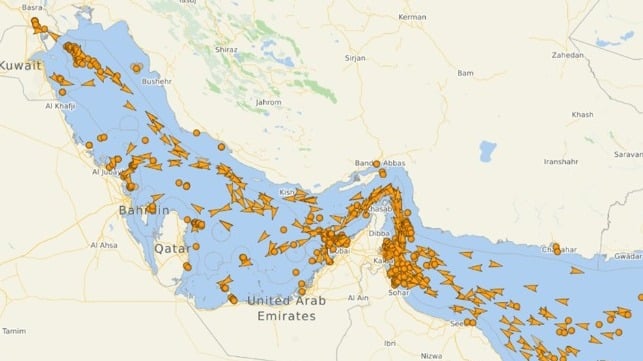
Iran-flagged oil tankers have again started shutting off their Automatic Identification System (AIS), according to TankerTrackers.com in an interview with IntelliNews on October 15.

Earlier on October 13, for the first time since 2018, Iranian tankers began transmitting genuine location signals over the AIS, a vessel-monitoring service that tracks shipments and oil storage.

TankerTracker.com CEO Samir Madani said that "2/3rds of the NITC fleet was online. Today, it’s back down to 1/3rd," potentially indicating a change of strategy from the Iranian state-owned oil transporting company.

The company had initially said on the social platform X that the change, citing two different AIS data providers. For the first time in seven and a half years, the positions of Iranian oil tankers have reappeared on global maps. The data analytics firm said it was unaware of the reason behind the shift.

There has been no official comment from Iranian officials who have kept quiet about production and exports since US sanctions came into force in 2018.

Iranian news website Energy Press quoted an “informed source” as saying that “the news was probably fake, but if true, it was a major and deliberate sabotage against Iran’s oil interests.”

IntelliNews' sister energy website Newsbase was able to check vessel movements on vesselfinder.com and view the live positions of a number of Iranian tankers in the Persian Gulf and the Gulf of Oman.

According to the in-house investigation, however, the Iranian ships’ destinations were not apparent, in contrast with vessels from other countries.

The apparent change in behaviour comes weeks after Britain, France, and Germany moved to revive UN measures against Iran, reinstating six earlier resolutions that initially imposed restrictions between 2006 and 2010. Among the restored measures is UN Security Council Resolution 1929, which calls for the inspection of Iranian cargoes in ports and on the high seas.

A senior Iranian lawmaker sitting on the parliament’s National Security and Foreign Policy Committee warned this week that Tehran would not let any “harassment” of its tankers go unanswered.

Some local outlets cast the possible new AIS broadcasts as a show of power at sea — a signal that Iran may be ready to respond in kind if its vessels are seized.

Abdullah Babakhani, an energy sector analyst, speaking with Etallat newspaper, said: "If this trend proves sustainable, it must be recognised as the most significant sign of change in Iran's export behaviour since 2018. Such a move could be a prelude to Iran's limited return to maritime transparency, or an indication of behind-the-scenes negotiations regarding energy route security in the Persian Gulf."

Responding to why, after activating the snapback mechanism, Iran decided to reveal its tankers' positions, he explained: "The answer to this question is critical and multi-layered, because it has technical, political, and security dimensions. To answer, several scenarios must be considered together to clarify why, precisely after the snapback mechanism's activation, Iran (or its shipping network) decided to reveal tanker positions after seven and a half years of concealment."

This energy analyst explained: "The analysis occurs at three levels. First is the technical and operational level, which comprises three parts. Firstly, the return to actual AIS data may indicate a change in operational directives for Islamic Republic shipping or companies associated with Iranian oil.

Secondly, the technical objective may be reducing seizure risk or misidentification by Western naval forces or third countries. During the harsh sanctions period, tankers would spoof their positions, showing locations like Oman or Indonesia; this caused errors and, in some cases, mistaken seizures.

Thirdly, under current conditions, Iran may wish to demonstrate that its tankers are operating in international waters and within IMO regulatory frameworks, making them citable in international bodies from a maritime law perspective."

Hamid Hosseini, energy analyst and spokesperson for the Union of Exporters of Oil, Gas, and Petrochemical Products, said: "Recent events relate entirely to new sanctions conditions and behaviour of countries opposing Iran. Throughout past years, switching off the automatic identification system (AIS) was a defensive method for us to prevent tanker seizure risk," he said.

"When a vessel isn't recognised and its position is falsified, the opposing country doesn't know its cargo and destination, and political pressure for seizure decreases. But now conditions have changed. We've reached a stage where we must be more transparent, because threats have lessened and concealment costs have increased."

This energy sector analyst added: "This concern is real, but we must understand we've entered a new phase. When sanctions and global oversight have become this complex, absolute concealment itself can be more troublesome."

After Years in the Dark, Iran's Tankers Switch AIS Transponders Back On

Tankers
Tanker traffic shown on VesselFinder.com on October 15, including tankers at Iranian terminals

Published Oct 15, 2025 4:20 PM by The Maritime Executive


For reasons not yet apparent, Iranian flagged tankers have turned their AIS transmitters back on. For the past seven years, since 2018 when the United States re-imposed sanctions, most Iranian-flagged tankers have travelled the seas with their AIS transmitters turned off in a bid to disguise sanctions-breaking traffic.

The phenomenon has been reported independently by several AIS signal aggregators, and is visible in location plots provided by VesselFinder.com and MarineTraffic.org. Kpler report that 80% of Iranian tankers have transmitted a location signal within the last 48 hours.

It is not clear why AIS systems have been turned back on, simultaneously and across the Iranian-flagged fleet, a move that seems counter-intuitive since snap-back sanctions were re-imposed on Iran by the United Nations on September 28.

Dalga Khatinoglu, an oil & gas analyst writing for Iran International, speculates that the move may be an attempt by Iran to assert legitimacy. It may also be connected to warnings by the United States that travelling without AIS transponders switched on is a contravention of International Maritime Organisation rules, and hence legitimate cause to interdict any such tankers travelling ‘dark’ at sea. Khatinoglu also speculates that the move may have been a response to requirements issued by China, which imports 90% of the oil exported by Iran.

AIS non-transmission and spoofing is associated with transshipments at sea, where it is important for the success of transshipment operations that the location of both the donor ship and receiver be either hidden, or better still to be spoofed to a non-contentious location. In a business where capital costs are very high, chartering time costs money. On top of the cost of involving two VLCCs on at least two transshipment operations per cargo, the process extends shipping times to an average of 10 weeks per shipment.

These extra costs, when compared with straightforward three-week terminal-to-terminal shipments, are expenses borne by Iran on top of the need to discount cargos by up to 10% per barrel. A reversion to conventional tankering operations would thus save Iran considerable sums of money - provided China will still accept cargos. The switch-on of AIS transmitters may be an indication indeed that China has provided such assurances.

Bringing Iran to heel, with a ceasefire still shakily in place in Gaza, has now assumed greater importance in terms of the United States midwifing a wider peace in the Middle East. Both China and Iran may be concerned that any American attempt to increase pressure on Iran, which is evidently in a precarious position in terms of domestic stability, would involve interceptions of Iranian tankers at sea. Hence the Iranian move to remove the clandestine element to their export of oil may be an attempt to safeguard oil as a critical source of finance, and to make legitimization of seizures at sea more difficult.

Top illustration courtesy VesselFinder.com


Indonesia’s $80bn giant seawall

Indonesia’s $80bn giant seawall
/ Medbn - Unsplash
By bno - Surabaya Office October 15, 2025

Indonesia’s ambition to build a colossal seawall along the northern coastline of Java has ignited both hope and heated debate. Valued at around $80bn, the project aims to safeguard the island’s coastal cities from tidal floods, erosion, and land subsidence. The plan envisions a structure stretching at least 500 kilometres, though some reports suggest the final blueprint could extend beyond 700 kilometres, from the westernmost tip of Banten to Gresik in East Java, as reported by The Straits Times and Jakarta Globe.

Java’s northern coast is home to more than half of Indonesia’s population and generates roughly 56% of the nation’s GDP, according to Antaranews. President Prabowo Subianto has framed the project not merely as an infrastructure investment but as a national imperative, a defence mechanism to protect Indonesia’s economic backbone from the rising tides. The initiative also carries a geopolitical dimension. During his state visit to Beijing in October, Prabowo pitched the project to Chinese President Xi Jinping. Coordinating Minister Airlangga Hartarto later confirmed that Indonesia had extended similar offers to Japan, South Korea, and European partners, with the Netherlands and South Korea already showing interest due to their own experience in coastal engineering.

To ensure execution, Prabowo has established the North Java Coast Seawall Management Authority, a specialised body tasked with integrating decades of fragmented studies into a coherent plan. Yet, despite this high-level coordination, questions over its feasibility and potential consequences are beginning to surface.

A coastline in crisis

Communities along Java’s north coast have long lived with water creeping closer each year. In the Demak regency, villagers such as Ms Pangestuti have endured nearly a decade of flooded homes, cooking in kitchens knee-deep in seawater. “We trust the government will help us,” she told The Straits Times, voicing a common sentiment of weary optimism.

The government’s pilot project, the Semarang–Demak Seawall, launched under former President Joko Widodo, is halfway complete and set for completion by 2026. The 6.7-kilometre wall doubles as a toll road and has been hailed as the first step toward the larger coastal defence network. Officials say the overall design will not be a single continuous structure “resembling the Great Wall of China,” but rather a combination of customised fortifications, mangrove restoration zones, and population relocation areas, depending on local conditions, The Straits Times reported.

The urgency is undeniable. Parts of Semarang and Jakarta are sinking faster than global sea levels are rising due to uncontrolled groundwater extraction. According to the National Development Planning Agency (Bappenas), 18% of Indonesia’s GDP originates from Jakarta alone, and 26% from the wider metropolitan area. Protecting this economic zone, said Minister Rachmat Pambudy, “means protecting the backbone of Indonesia’s economy.”

Between hope and hardship

While the seawall offers a lifeline to flood-prone areas, not everyone welcomes it. Fishermen and fish farmers in Bedono and Sayung complain that the ongoing construction has altered water circulation and reduced brackish water supply, crucial for milkfish cultivation. One farmer told The Straits Times that his fish now grow more slowly and taste muddy because seawater can no longer flow freely into his ponds. Traditional fishermen, too, say their daily catch of fish, crab, and mussels has dwindled, slashing incomes by as much as 75%.

Experts have warned that these community-level disruptions are just the beginning. According to Karsa City Lab, a Jakarta-based think tank cited by The Straits Times, the government must avoid a top-down approach that sacrifices local livelihoods for engineering grandeur. “No one should feel overlooked,” its managing director, Dedi Kusuma Wijaya said, suggesting creative mitigation strategies such as hydroponic farming and retraining for affected workers.

The government insists that the seawall’s design will incorporate local adaptation, but details remain murky. Deputy Minister Rachmat Kaimuddin said areas with high population density or economic significance, such as Jakarta, Semarang, Cirebon, and Pekalongan, will receive fortress-style defences. Less dense regions may instead adopt a “retreat” strategy, moving residents inland and reinforcing coastlines with mangroves or hilly dikes.

Environmental and financial crosscurrents

Environmentalists are among the project’s most vocal critics. Large concrete structures could disrupt tidal flows, harm marine ecosystems, and accelerate sediment buildup. The loss of mangrove forests, they argue, will remove natural barriers that provide both protection and carbon storage. Jakarta Globe reported that Deputy Public Works Minister Diana Kusumastuti has already acknowledged the need for “minor changes” to the masterplan, signalling that early assessments may have underestimated environmental impacts.

Beyond ecology, the financing remains contentious. With a cost that dwarfs even Indonesia’s new capital city project, the government hopes to secure international investors under a public–private partnership model. Yet none of the invited countries, not even China, has committed funding so far, and negotiations remain at a “nascent stage,” according to Jakarta Globe. Critics fear the project could burden public finances, particularly if environmental mitigation and compensation for displaced communities are not properly budgeted.

Question of justice

At its core, the seawall debate is not just about engineering, but about how Indonesia defines fairness and development. Coastal residents want protection, but they also want inclusion. Economists warn that an overemphasis on Java’s infrastructure could deepen regional inequality, reinforcing the island’s dominance while leaving other provinces behind.

Environmental groups argue that focusing on groundwater management, urban planning, and mangrove restoration could provide more sustainable protection at a fraction of the cost. Yet politically, a monumental project like the seawall carries symbolic weight, a demonstration of state capacity and presidential resolve. As one official told The Straits Times, “President Prabowo wants to execute it.”

Indonesia’s giant seawall is both a symbol of ambition and a test of accountability. If executed wisely, it could become a global model of climate adaptation for developing nations. But without careful planning, environmental safeguards, and community participation, it risks turning into a monument of misplaced priorities, an $80bn wall that protects some while drowning out others.

For now, the project stands as both a promise and a warning: a reminder that in a country of 17,000 islands, every solution must navigate not just the sea, but the tides of human consequence.


Turkey widens doorway to workers from Turkic-speaking countries

Turkey widens doorway to workers from Turkic-speaking countries
Casting workers seen at work at a Turkish industrial site. / Volcanicaa, cc-by-sa 4.0
By bne IntelliNews October 15, 2025

Turkey has significantly simplified its employment rules for citizens of Turkic-speaking countries, particularly those of Azerbaijan, Kazakhstan, Uzbekistan, Kyrgyzstan and Turkmenistan.

The changes mean that approved nationals of these countries can now work and conduct business freely in Turkey without obtaining citizenship or special permits, with some exceptions in areas including the armed forces and law enforcement.

The decision to relax the rules, announced in a presidential decree published in the Official Gazette, followed discussions on creating a common economic and labour space that took place between national leaders during the October 6-7 Twelfth Summit of the Organization of Turkic States (OTC) held in Gabala, Azerbaijan.

Some analysts sense some anxiety in Russia over the strengthening of the Turkic bloc. Moscow is widely seen as losing ground to other powers in trade, investment and geopolitics in Central Asia given the sheer concentration and resources it must expend on its war in Ukraine. The only country in Central Asia that is not Turkic-speaking is Persian-speaking Tajikistan, where Russian leader Vladimir Putin last week attended a Central Asia-Russia Summit.

Turkey’s workforce move also comes with Russia gearing up to expel as many as 770,000 migrants, largely Central Asians, as part of a crackdown on non-Russians whom Russian officials have determined should not be present in Russia.

More openings on the jobs market in Turkey, meanwhile, could be created as some of the millions of Syrian war refugees in the country head home following the fall last December of the Bashar al-Assad regime.

Those who qualify for the new work and business freedoms in Turkey must have a residence permit, not pose a threat to national security, prove their ties to Turkish society and, where required, prove the equivalence of professional certificates obtained abroad to Turkish certification.

In April, in a statement, the Turkish Migration Service said that 121,990 Turkmen citizens had obtained official Turkish residence permits. Second in terms of permits were Azerbaijanis (85,331 people), followed Russians (81,413), Iranians (76,416) and Syrians (73,063).

The published decree confirms an amendment of the Regulation on the Implementation of the Law on the Free Practice of Professions and Crafts by Turkish-speaking Foreigners in Turkey and Their Employment in State or Private Organisations, Institutions or Workplaces.

Young Ukrainians asylum seekers fleeing the war for Germany surges

Young Ukrainians asylum seekers fleeing the war for Germany surges
Asylum applications in Germany by young Ukrainians have swelled tenfold since Kyiv lossened travel restrictions. / bne IntelliNews
By Ben Aris in Berlin October 16, 2025

The number of young Ukrainians fleeing the war and seeking asylum in Germany has surged, following Kyiv's decision to partially lift its travel ban for men aged 18 to 22, according to figures from the German Interior Ministry, reported by Die Welt.

Ukrainian asylum applications in Germany have ballooned tenfold, from around 100 per week before the policy change to approximately 1,000 per week in recent months, according to local data.

The regulation, which Kyiv implemented earlier this year, allows men under 22 who were already abroad or studying abroad to extend their stay or travel more freely — a move officials framed as a minor adjustment aimed at mitigating growing criticism of Bankova’s increasingly aggressive conscription tactics.

Ukrainian politicians have denied that the change has prompted a large-scale departure of draft-age men. However, the German data suggests otherwise.

The sharp increase in asylum applications, overwhelmingly from young men, has raised concerns in both Berlin and Brussels about the potential impact on Ukraine’s mobilisation efforts and broader EU migration policy, which could give Russia the edge on numbers.

Ukraine introduced a blanket travel ban for men aged 18 to 60 shortly after Russia’s full-scale invasion in February 2022, in an effort to maintain sufficient manpower for its armed forces. Exceptions have since been made for humanitarian, educational and professional reasons, but Kyiv has faced growing pressure over the social and political implications of conscription.

The Interior Ministry did not provide a detailed age breakdown of the new asylum seekers but confirmed to Die Welt that most are young and male, consistent with Ukraine’s revised policy.

Ukrainian authorities have defended the decision, arguing it affects a relatively small group and does not undermine military readiness. “There is no mass exodus,” senior officials have said, insisting that enlistment and mobilisation measures remain in place.

Still, the sharp increase in asylum claims in Germany — which already hosts over 1.1mn Ukrainian refugees — may complicate EU coordination on migration policy and military assistance. With Ukraine preparing for a third year of full-scale war, Western governments are watching closely for any signs of mobilisation fatigue or domestic instability.

German officials have not indicated plans to alter their asylum policy in response but have acknowledged the numbers are “notable and being monitored.” The development comes as EU capitals continue to debate burden-sharing mechanisms and support packages for Ukraine in 2025.

Desertions swell

The exodus of young men, thanks to the easing of travel restrictions, comes on top of reports of the number of desertions from the Armed Forces of Ukraine (AFU) swelling.

Over the past year, twice as many military personnel have left their units without authorisation in Ukraine as during the first two and a half years of the conflict, according to the Ukrainian publication Strana, citing the Prosecutor General's Office.

According to the agency, a total of nearly 290,000 criminal cases for unauthorized abandonment and desertion were opened during the conflict. Between January 2022 and September 2024, 90,000 cases were opened, and another 200,000 in the last year. Experts says that the true number of those who went AWOL is almost certainly significantly higher than the official figures.

In August, Ukrainska Pravda, citing the Prosecutor General's Office, reported that 110,511 cases of unauthorised absence from service in the Ukrainian army had been registered since the beginning of 2025 – more than all the cases brought in the previous three years of the conflict with Russia combined.

The lack of manpower and falling number of fresh recruits is having a catastrophic effect on the AFU’s ability to defend the frontline in Donbas, where kilometre-long unmanned holes are opening up, Ukrainska Pravda reported earlier this month.