Tuesday, December 02, 2025


Too many cooks? Trump’s growing army of Ukraine negotiators


ANALYSIS


With the quartet of Marco Rubio, Steve Witkoff, Jared Kushner and Daniel Driscoll, US President Donald Trump’s team of negotiators pushing for peace in Ukraine seems to be growing by the minute. And they are all throwing their own ideas and strategies into the mix. Facing them is Russian President Vladimir Putin's trusted aide Kirill Dmitriev, whose diplomatic one-man show has steadfastly advanced the Kremlin’s demands.


Issued on: 30/11/2025 
FRANCE24
By: Sébastian SEIBT

THE FOUR STOOGES, 
MOE, LARRY, CURLY, SHEP
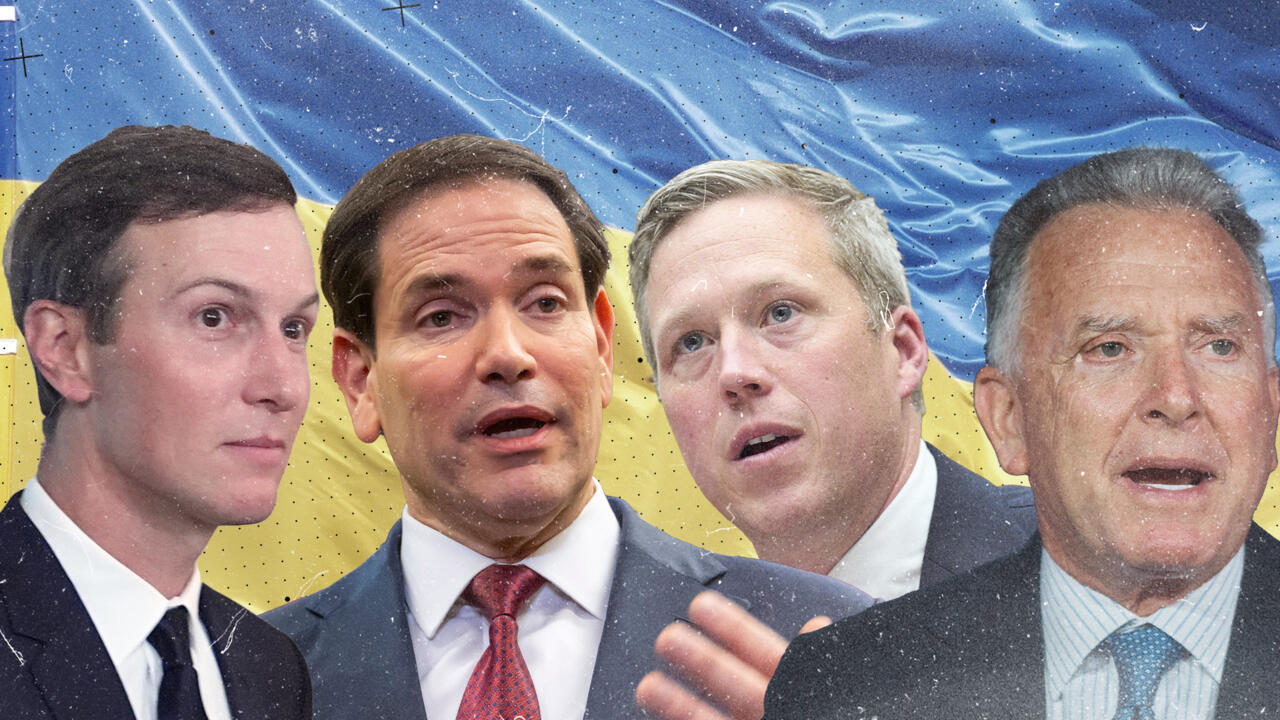
From left to right: Jared Kushner, Marco Rubio, Daniel Driscoll and Steve Witkoff. All four are now involved in Washington’s diplomatic efforts to get a peace plan in Ukraine in place. © Studio graphique France Médias Monde


Are too many cooks spoiling the broth? The question has come to the fore as US President Donald Trump now seems to have sent the entirety of his closest advisers to try to negotiate a peace deal between Russia and Ukraine.

Last week, US Army Secretary Daniel Driscoll became the latest to be added to an already crowded list of dealmakers, flying to Ukraine to present Kyiv with a new US peace proposal after having met a Russian delegation in the United Arab Emirates.

“US Army secretaries are not usually involved in negotiating peace deals,” The New York Times remarked in an analysis looking at the possible reasoning behind the unusual move.

READ MOREWhat we know about the revised US plan for peace in Ukraine

Whirlwind diplomacy

Just days before Driscoll was assigned his new diplomatic role, the Financial Times revealed that Trump’s son-in-law, Jared Kushner, had been added to the mix too, having attended a November 23 meeting with Ukraine and its European backers in Geneva.

But the new have not replaced the old. At least not yet. Steve Witkoff, Trump’s special peace envoy, is continuing to play a leading role and is due to meet Russian President Vladimir Putin next week.

In parallel, US Secretary of State Marco Rubio stated in Geneva that there was “still some work to be done” on the plan that had just been put forward by Witkoff. Trump has not argued against it.

The mixed messaging and increasing number of negotiators stands in stark contrast with the Kremlin's decision to task just one man with doing the same job: Russian sovereign wealth fund boss Kirill Dmitriev.

“They look like amateurs,” René Lindstaedt, an expert in US politics at the University of Birmingham, said of the US diplomatic team. “They don’t look like they’re in control, like they’re representing a super power.”

Washington's approach has raised eyebrows within Trump’s own camp. “Senators like (former Republican Senate leader) Mitch McConnell have criticised the ‘mess’, fuelling media narratives of turmoil,” said Inderjeet Parmar, a professor in international politics at City St George’s University of London.
Three-front offensive

Analysts, however, caution that there may be a type of Trumpian logic to the apparent cacophony.

Parmar said it aligns with “Trump's style of letting the ‘all-stars’ test ideas independently.”

Lindstaedt agreed: “He kind of sends several people running and then just sees who comes back with the best ideas or best results.”

This means that until Trump has decided on his favourite strategy, American diplomats are working on three different fronts: the talks in Geneva led by Rubio’s more Ukraine-leaning sympathies, the army secretary’s negotiations with the Russians in Abu Dhabi, and finally, Witkoff’s upcoming meeting with Putin in Moscow.

But the three paths of negotiation do not carry the same weight. Lindstaedt said that it would have been “natural” for Rubio, as the top US diplomat, to coordinate the different talks, but noted “I don’t think Rubio is aware of all the activities that are going on, and so he’s not really able to”.

He added that Witkoff is – at least on paper – meant to carry out his negotiations in close coordination with Rubio, but that this does not seem to be happening.

“(Rubio) seems to have been caught off guard,” he said, pointing also to Driscoll’s sudden appearance on the diplomatic stage.
‘The adults in the room’

The secretary of state’s time in the spotlight could soon be over, suggested Scott Lucas, a specialist in international relations and US foreign policy at the University of Birmingham.

He described Rubio as one of "the adults in the room", along with special envoy for Ukraine Keith Kellogg, who helped reestablish US military assistance to Ukraine over the summer, albeit through the sale of equipment through NATO countries, and to resume intelligence sharing.

But Rubio has since suffered from “Kellogg having been pushed out”, Lucas added.

It does not help that the “Rubio line”, which calls for bolstering Ukraine's defences, rhymes badly with Trump’s aim of signing a peace deal “as soon as possible”. At one point, the US leader said he wanted to see an end to the fighting by Thanksgiving (November 27), but later backed away from that goal.
Driscoll – the 'JD Vance guy'

Lucas said that Trump’s new diplomatic reinforcements are “not necessarily pro-Kremlin in the sense that they like the Russians” but that they think “it’s a win-win situation in terms of the economic projects” they can secure by reviving trade relations with Moscow. Even if that would mean that Ukraine would have to cede territory to its Russian aggressor.

This is why Witkoff, the man behind the controversial 28-point peace plan that was recently put on the table, suddenly experienced plenty of wind in his sails.

At least until Bloomberg this week exposed his negotiation tactics. The news agency sparked shock waves after publishing the transcript of a telephone conversation Witkoff allegedly had with Putin's foreign affairs adviser, coaching Moscow on how to get Trump onboard the more pro-Russian peace plan.

READ MOREUS envoy Witkoff advised Russia on getting Trump to Ukraine deal, Bloomberg reports

The revelation was not good news for Trump, Lindstaedt said, noting it could hurt his pro-Ukrainian Republican constituencies.

This could explain why Kushner and Driscoll suddenly entered the picture, injecting some fresh – but different – blood into the situation.

Driscoll is a “JD Vance guy”, he said. The two went to Yale together, and share the same vision of what potential peace in Ukraine should look like.

“Basically he’s JD Vance's proxy,” Lindstaedt said, and will likely open up for the vice president to get involved in any deal-making on the war in Ukraine indirectly.

This could spell trouble for Kyiv. “Vance is very anti-Ukraine,” he noted.

All the more reason for Trump to usher Kushner onto the scene.

“If Trump is unsure of whether he can trust his people in government, he reaches out to family,” Lindstaedt said.

As Trump himself put it in a speech to the Israeli Knesset in October following the US-engineered Gaza ceasefire deal, “we always bring Jared when we want to get that deal closed”.

Lindstaedt said Trump views his son-in-law as his “natural successor” and considering Kushner also has business dealings in Russia, it is ultimately in his interest “to make sure there’s peace between Ukraine and Russia so that they can resume normal relations” with Moscow.

Parmar, of City St George’s, said “Kushner has quietly re-emerged as an informal but influential ‘fixer’” in the administration's push for a peace deal.

But, he concluded, “his involvement—unofficial yet central—has added to the chaotic optics of the negotiations, drawing criticism for bypassing traditional diplomatic channels and raising questions about conflicts of interest tied to his business ties”.

This article was adapted from the original in French by Louise Nordstrom.

From Honduras to Poland, Trump meddles in elections as never before


By AFP
December 1, 2025

LEGOMAN

A portrait of US President Donald Trump made out of Legos is seen as part of Christmas decorations at the White House - Copyright AFP SAUL LOEB


Shaun TANDON

The United States has meddled for decades in elections around the world. But no modern president has done so as brazenly as Donald Trump.

Forget shady CIA-hatched plots or surreptitious media campaigns. Trump has openly called on other countries’ electorates to vote for his right-wing friends, often deploying his favorite tool of social media.

Most recently, Trump on his Truth Social platform endorsed Honduran right-wing candidate Nasry Asfura as “the only real friend of Freedom” and vowed to work with him. Asfura held a narrow lead after voting Sunday.

“I cannot think of a time when a US president was willing to just openly state his preferences in foreign elections in this way, at least in modern history,” said Thomas Carothers, director of the democracy, conflict and governance program at the Carnegie Endowment for International Peace.

Trump has felt especially emboldened in Latin America, where the United States has long intervened.

Trump’s secretary of state, Marco Rubio, has belittled Colombia’s elected left-wing president, Gustavo Petro, as a “lunatic,” and imposed sanctions on a Brazilian judge who prosecuted former far-right president Jair Bolsonaro for trying to overturn election results.

In Argentina, Trump promised $20 billion to prop up the struggling economy but warned it would vanish if voters rejected President Javier Milei in legislative elections. The firebrand libertarian’s party ultimately triumphed.

“It’s a consistent attempt to influence the politics, to reinforce what I think they see as already a shift towards the right that’s gaining force across the region,” said Will Freeman, a fellow on Latin America at the Council on Foreign Relations.

In Venezuela, where there is no election to influence, Trump has suggested the use of US military might to remove leftist leader Nicolas Maduro.


– Eye on Europe –


Trump has also sought to tip the scales in Europe. His homeland security chief, Kristi Noem, on a visit to Poland openly endorsed Karol Nawrocki, the conservative candidate for president who went on to win.

Trump had less success in Romania, where a far-right ally lost the presidential election, but only after a previous vote was controversially annulled.

Vice President JD Vance on a trip to Germany publicly attacked restrictions on the far-right AfD party. Trump or his aides have heaped praise on British anti-migrant lawmaker Nigel Farage and criticized a court ruling in France against far-right leader Marine le Pen.

The Trump administration has also stripped back decades of efforts to promote democracy overseas, with Rubio issuing a cable instructing embassies to avoid most commentary on the legitimacy of elections abroad.

The stance mirrors Trump’s approach to elections at home. He refused to accept his 2020 loss and was charged with trying to overturn results in the state of Georgia — a case dropped last week in light of his 2024 election victory.

Trump, perhaps mindful of his own experience, has publicly urged Israel’s president to pardon scandal-tainted Prime Minister Benjamin Netanyahu.


– Unique Trump approach –


Ironically, Trump in a speech in Riyadh in May denounced interventionism, at least in the Middle Eastern context, saying that past US efforts had turned into disasters.

Political scientist Dov Levin in a 2021 book found that the United States had intervened in foreign elections more than 80 times since the end of World War II — more than any other country.

Still, Carothers said that Trump was unique not only in his public methods but in his apparent motivations.

“It’s different than during the Cold War when the United States often favored a particular person, but they did so for geostrategic reasons,” he said.

“What we have here is more that Donald Trump feels he has a group of friends out there in the world whom he wants to help,” he said.

Carothers said that only Russia came close in tactics, with the Kremlin weighing in heavily to make known its preferences in former Soviet bloc countries, such as recently in Moldova where its candidate lost.

“A very high percentage of European leaders would like to see Viktor Orban lose the next election, but they’re not going to say so out loud,” he said, referring to Hungary’s right-wing populist prime minister.

Trump welcomed Orban to the White House last month. Speaking together to reporters, Trump said that European leaders needed to appreciate Orban more.


Trump accuses Honduras of ‘trying to change’ outcome of presidential vote


US President Donald Trump on Monday accused Honduras election officials of “trying to change” the outcome of the presidential vote after the race was too close to call in the digital preliminary results, and the remaining votes are being counted by hand. Trump, who has thrown his weight behind the conservative candidate, warned there will be “hell to pay” if he considers the final results manipulated.


Issued on: 02/12/2025 
By: FRANCE 24

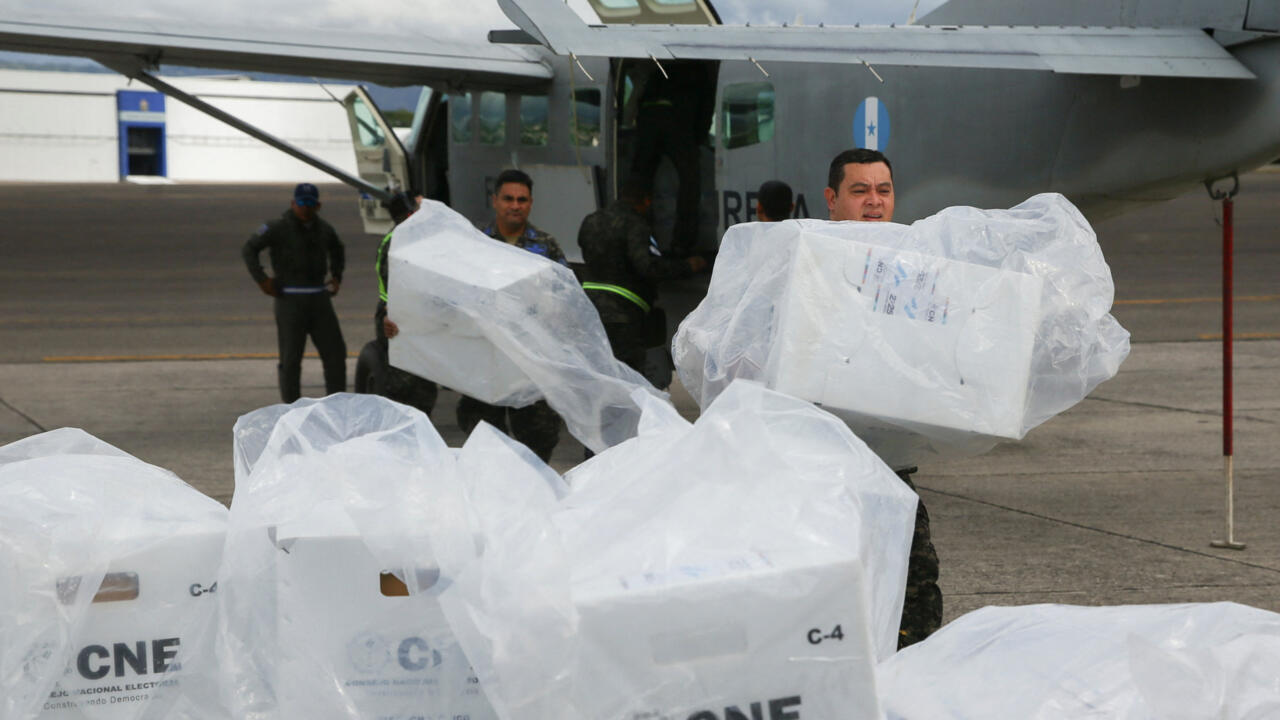
Honduran Air Force members unload packages carrying marked ballots from Bay Islands, after the general election, in Tegucigalpa, Honduras, on December 1, 2025. © Jose Cabezas, Reuters

Donald Trump accused election officials in Honduras on Monday of “trying to change” their presidential election outcome, as a partial digital tally revealed the two frontrunners are locked in a “technical tie".

The National Electoral Council (CNE) has called for “patience” as it starts a manual count of the November 30 vote, in one of Latin America’s most impoverished and violent countries.

Trump-backed Nasry Asfura, 67, led 72-year-old rival Salvador Nasralla by just 515 votes, making it a “technical tie", CNE head Ana Paola Hall said on social media, although the race is too close to call after a preliminary count.

“Looks like Honduras is trying to change the results of their Presidential Election. If they do, there will be hell to pay!” Trump claimed on social media without providing proof of his accusation.

READ MORETrump-backed conservative Asfura takes narrow lead in Honduras presidential vote

Trump has become increasingly vocal about his support for allies in the region, previously threatening to cut aid to Argentina and Honduras if his picks did not win.

Ally Javier Milei was victorious in Argentina’s mid-term elections.

Days before the Honduras vote, former Tegucigalpa mayor Asfura won the Republican leader’s backing – as the US president sought to put his finger on the scale in yet another Latin American election.

Nasralla told reporters on Monday that despite Trump’s endorsement of his rival, he was confident the election would swing in his favor.

“I know I’ve already won. This morning, they sent me a figure that puts me ahead,” he told reporters about the preliminary count.

Nasralla clarified in a post on X that “we are not declaring ourselves winners, we are just projecting the results.”
Swing to the right

The election is a clear defeat for ruling leftists trailing far behind in the vote count.

A swing to the right could help build US influence in a country that under leftist government had increasingly looked to China.

The election campaign was dominated by Trump’s threat and the surprise announcement that he would pardon former Honduran president Juan Orlando Hernandez of Asfura’s National Party.

Hernandez is serving a 45-year prison sentence in the United States, where he had been accused of belonging to one of “the largest and most violent drug trafficking conspiracies in the world".

Some Hondurans have welcomed Trump’s intervention, saying they hope it meant migrants will be allowed to remain in the United States.

Many Hondurans have fled north to escape grinding poverty and violence, including minors fearing forced recruitment by gangs.

This escape route has become more difficult since Trump’s immigration crackdown, and nearly 30,000 Honduran migrants have been deported since his second term started in January.

The clampdown has dealt a severe blow to the country of 11 million people, where remittances accounted for 27 percent of GDP last year.
‘Want to escape poverty’

Others reject Trump’s perceived meddling.

“I vote for whomever I please, not because of what Trump has said, because the truth is I live off my work, not off politicians,” Esmeralda Rodriguez, a 56-year-old fruit seller, told AFP.

Michelle Pineda, a 38-year-old merchant, hoped the winner sees the country “as more than just a bag of money to loot".

Preemptive accusations of election fraud from the ruling party and opposition have sparked fears of unrest.

The vote count has progressed slowly, and final results could take days.

Lawmakers and hundreds of mayors were also elected in the fiercely polarised nation, which has swung back and forth between nominally leftist and conservative leaders.

Long a transit point for cocaine exported from Colombia to the United States, Honduras is now also a drug producer.

But the candidates barely addressed drug trafficking, poverty or violence on the campaign trail.

“I hope the new government will have good lines of communication with Trump, and that he will also support us,” said Maria Velasquez, 58.

“I just want to escape poverty.”

(FRANCE 24 with AFP)


'Hall of Shame'? White House launches website to attack 'media offenders'


EXPLAINER

The White House launched a "media offenders" page on its official website Friday, naming outlets it accuses of bias and "fake news" – including 2025 Pulitzer Prize finalist the Boston Globe, CBS News and the UK’s Independent. Critics fear the initiative is aimed at delegitimising the very media outlets who could hold US President Donald Trump to account.


Issued on: 01/12/2025 
FRANCE24
By: Anaelle JONAH


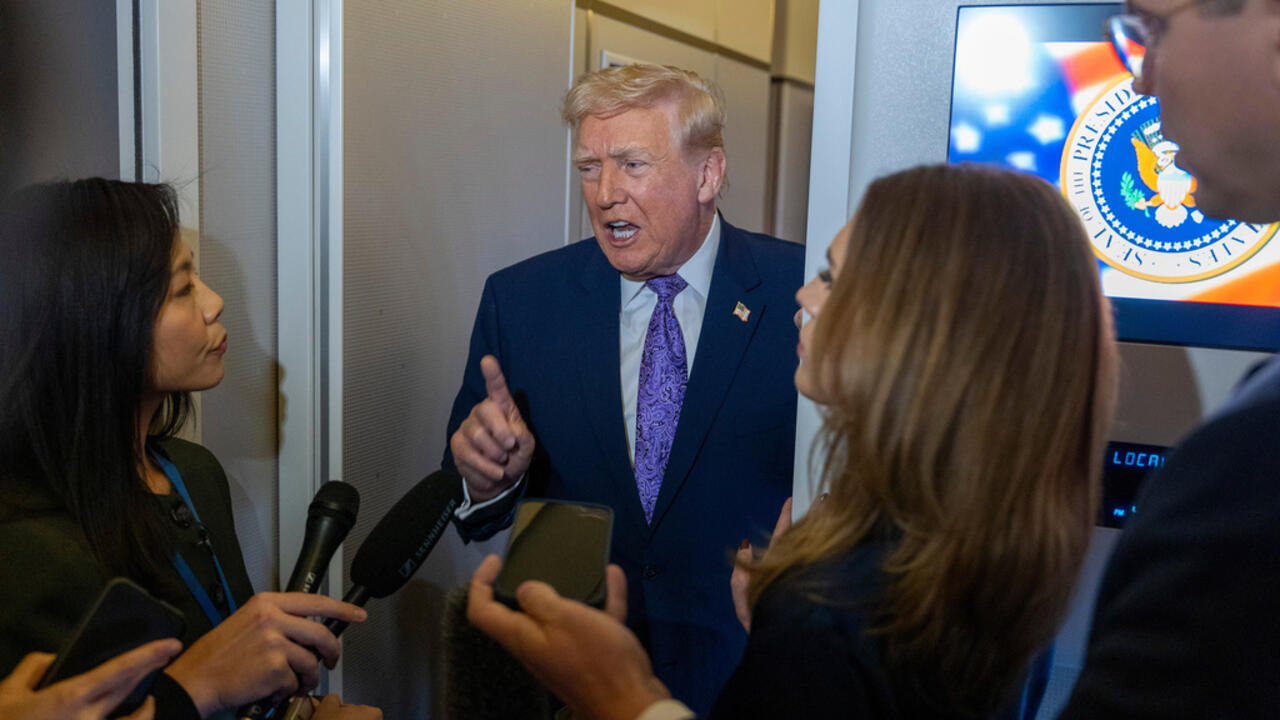
US President Donald Trump speaks with reporters while in flight on Air Force One on November 30, 2025. © Alex Brandon , AP

The White House on Friday launched a new "Media Offender of the Week" page targeting outlets it accused of bias and inaccuracies, prompting warnings from analysts that the initiative is part of a broader effort to delegitimise the press, one of the pillars responsible for holding power to account.

The White House named The Boston Globe – a finalist for three Pulitzer Prizes just this year – CBS News and The Independent as its inaugural "offenders of the week" for stories the White House says misrepresented Trump’s positions. It also featured a "Hall of Shame" list of allegedly "misleading" articles, calling out TV stations CNN and MSNBC alongside The Washington Post (whose staff and affiliates have won more than 70 Pulitzers).

The official White House X account promoted the initiative, stating: "Tired of the Fake News? We've got the place for you. Get the FACTS. Track the worst offenders. See the Fake News EXPOSED."

The rollout came as tensions between the White House and the media continue to escalate, with Trump directing a series of personal insults at reporters and pursuing legal action against several major news organisations, most recently suing the BBC for $1 billion. US broadcasters ABC and CBS both agreed to pay up to $16 million to settle legal disputes filed by Trump.

Aboard Air Force One on November 14, Trump told a Bloomberg reporter "Quiet, piggy" after she asked a question he disliked. He later called an ABC correspondent "a terrible person and a terrible reporter", described a New York Times journalist as "a third-rate reporter who is ugly, both inside and out" and asked a CBS News reporter, “Are you stupid?
‘Fake news’

The White House page opens with the heading: "Misleading. Biased. Exposed." before listing dozens of articles it accuses of slanted coverage. It also invites users to sign up for weekly updates on the "truth".

Speaking to FRANCE 24, David Lipson, an associate professor of American studies at the University of Strasbourg, said this initiative "is part of a generalised strategy to delegitimise traditional media – to gain control over the media narrative".

Lipson said the initiative effectively formalises one of Trump's favourite slogans – "Fake news" – which the president has repeatedly, and erroneously, claimed to have coined. "It's as if he said, 'I'm going to use executive power to make my catchphrase official'," according to Lipson, who added that the site's theatrical "Hall of Shame" category reflects Trump's "showbiz side".

Lipson suggested the timing of the site launch may have been influenced by a recent video featuring US veterans, including Senator Mark Kelly, and former US intelligence officials reminding military personnel that they should refuse unlawful orders – a video showcased on the site’s front page.

The White House said some news outlets had "subversively implied that President Trump had issued illegal orders" before asserting that "every order President Trump has issued has been lawful".

The Pentagon has since announced an investigation into Senator Kelly shortly after Trump accused him of sedition, “punishable by DEATH” in a Truth Social post.

"Given how close the timing is, we can imagine that this was the triggering event," Lipson said.

Kelly has dismissed the threat as the actions of “bullies”, adding that it would not stop him and his colleagues in Congress “from doing our jobs and holding this administration accountable”.

READ MORETrump says AP will be restricted from White House until it adopts 'Gulf of America'
‘Unprecedented’

Shortly after the site’s launch, journalists identified several errors on the site, including an entry wrongly attributing a press briefing question to a Fox News reporter. The page was quietly taken down before reappearing without the Fox reference.

The tracker, which is once again live, currently lists as many as 31 "offenses", naming and shaming reporters from outlets around the world. Among the stories flagged are: "Coast Guard will no longer classify swastikas, nooses as hate symbols" by The Washington Post, "The View's Whoopi Goldberg Makes Up a Song to Slam Trump for Building White House Ballroom" from ABC News and "Trump's autocratic dreams come true as National Guard turns DC into a police state" from The Hill.

Lipson warned that the initiative risks functioning as a way to pressure the press and could lead to self-censorship. "It is, after all, the official White House website," he said. "A civil servant might think: 'If they attack Senator Mark Kelly, maybe I shouldn't speak out too much.' That's where you get a chilling effect."

He noted that past presidents, notably Richard Nixon, also tried to intimidate the press. But he said the current administration’s approach was "really unprecedented".

"Trump doesn't hide any of his intimidation tactics," Lipson said.

Despite the attention surrounding the launch, Lipson questioned its long-term impact, saying many mainstream outlets appear to view it as a "gimmick".

"It already feels forgotten," he said. "What we should really question is its effectiveness, especially at a moment when we're already seeing cracks within the Republican camp."

The White House did not respond to a request for comment.
US Supreme Court hears major online music piracy case


By AFP
December 1, 2025


The US Supreme Court heard arguments on whether internet service providers may be held liable for the online pirating of copyrighted music - Copyright AFP/File Drew ANGERER

The US Supreme Court heard arguments on Monday on whether internet service providers should be held liable for the online pirating of copyrighted music by their users.

Cox Communications, a major broadband ISP, is asking the court to throw out a jury verdict awarding $1 billion in damages to Sony Music Entertainment and other record labels.

Cox was accused in the high-stakes 2019 case of failing to take action against customers accused of illegally downloading copyrighted music.

Joshua Rosenkranz, an attorney representing Cox, warned of “cataclysmic” consequences if the court did not limit the company’s copyright liability.

The only way for an ISP to avoid liability is to “cut off the internet, not just for the accused infringer, but for anyone else who happens to use the same connection,” Rosenkranz said.

“That could be entire towns, universities or hospitals, turning internet providers into internet police,” he said.

A majority of the nine justices appeared sympathetic to the argument that many innocent subscribers could be punished for the actions of a few.

At the same time, several questioned whether Cox should entirely escape liability.

Cox, even when it is aware of copyright infringement by particular users, has apparently been “doing nothing,” said Justice Sonia Sotomayor.

“Why aren’t you contributing to that infringement?” Sotomayor asked.

Justice Ketanji Brown Jackson also expressed skepticism of Cox’s position.

“What concerns me a bit is you’re encouraging us to adopt a common law rule that would essentially eliminate liability,” Jackson said.

Rosenkranz objected to the claims that the company was doing nothing to crack down on habitual copyright offenders.

Cox sends out hundreds of warnings to subscribers each day and has suspended tens of thousands of accounts accused of copyright infringement, he said.

Paul Clement, representing Sony and the other music labels, said Cox is not doing enough to tackle the problem and cannot escape liability.

“Liability for copyright infringement is not limited to direct infringers, but extends to those who induce, cause or materially contribute to the infringement of others,” Clement said.

The Supreme Court is expected to issue a ruling in the case before the end of its term in June.
Apple AI chief leaving as iPhone maker plays catch-up


By AFP
December 1, 2025


Apple says that Senior Vice President Machine Learning and AI Strategy John Giannandrea will retire early in 2026, acting as an advisor during his remaining time at the company - Copyright GETTY IMAGES NORTH AMERICA/AFP JUSTIN SULLIVAN

Apple on Monday said the head of its artificial intelligence team is stepping down, and the effort is to be led by a veteran engineer from Google and Microsoft.

The plan for Apple senior vice president of Machine Learning and AI Strategy John Giannandrea to retire early next year comes after the tech giant stumbled in efforts to show it was not being left behind on the technology.

Giannandrea will serve as an advisor to Apple during his remaining time with the company, according to the iPhone maker.

“We are thankful for the role John played in building and advancing our AI work,” Apple chief executive Tim Cook said in a post announcing the news.

Researcher Amar Subramanya has joined Apple as a vice president and will lead in “critical areas,” including AI foundation models and machine learning, according to the company.

Subramanya was most recently a corporate vice president of AI at Microsoft, prior to that spending 16 years at Google where he was head of engineering for the Gemini digital assistant before leaving, Apple said.

Apple cited Subramanya’s experience integrating AI into features and products as “important to Apple’s ongoing innovation and future Apple Intelligence features.”

Giannandrea joined Apple in 2018, heading the company’s AI efforts. Apple early this year delayed the release of an improved Siri digital assistant and is now promising it for next year.

Meanwhile, Google, Microsoft, OpenAI and other tech rivals have been releasing ever-improved AI models and features in a fierce race to lead in the technology.

Apple has been under pressure to show it is not being left behind when it comes to artificial intelligence, with the potential to change how people engage with the internet and computers.

Cook cited AI as “central to Apple’s strategy” and said Subramanya will bring “extraordinary AI expertise” to his role reporting to senior vice president of Software Engineering Craig Federighi.

“Craig has been instrumental in driving our AI efforts, including overseeing our work to bring a more personalized Siri to users next year,” Cook said.

On a recent earnings call, Cook touted the latest Apple devices and the tech giant’s custom chips and efforts to enhance products and services with artificial intelligence.
A TALE OF TWO STATE APPS

Concern as India orders phone manufacturers to preload govt app

By AFP
December 2, 2025


New Delhi has given manufacturers 90 days to comply with new rules saying the app "Sanchar Saathi" -- meaning communication partner in Hindi -- must be "pre-installed on all mobile handsets manufactured or imported for use in India" - Copyright AFP/File Idrees MOHAMMED

India has ordered smartphone makers to pre-install a government-run cyber security app that cannot be removed, a move that has raised concerns about users’ privacy.

The country has a massive 1.16 billion mobile phone users, according to government data from 2024, and authorities say the app will better protect them from fraud.

Late on Monday, New Delhi gave manufacturers 90 days to comply with new rules saying the app “Sanchar Saathi” — meaning communication partner in Hindi — must be “pre-installed on all mobile handsets manufactured or imported for use in India”.

The order, detailed in a press release, also asked phone makers to ensure the app was “readily visible and accessible to the end users at the time of first use or device setup and that its functionalities are not disabled or restricted”.

The government said the app was designed to allow users to block and track lost or stolen phones.

It also lets them identify and disconnect fake mobile subscriptions made in their name, among other functions.

Government figures show the app has already helped trace more than 2.6 million phones.

However, rights advocates and politicians have sounded the alarm over potentially serious consequences.

Advocacy group Internet Freedom Foundation (IFF) said Tuesday it was concerned about the new directive.

The order “represents a sharp and deeply worrying expansion of executive control over personal digital devices”, it said in a statement on X.

“The state is asking every smartphone user in India to accept an open ended, updatable surveillance capability on their primary personal device, and to do so without the basic guardrails that a constitutional democracy should insist on,” the IFF said.

For devices that have already been manufactured and exist in the market across the country, the government mandated that “the manufacturer and importers of mobile handsets shall make an endeavour to push the App through software updates.”

Cyber security analyst Nikhil Pahwa said the rules were “clearly” an invasion of privacy.

“How do we know this app isn’t used to access files and messaging on our device, which is unencrypted on device? Or a future update won’t do that?” he said on X.

“This is clearly an invasion of our privacy,” he added.

Prime Minister Narendra Modi’s opponents in the Congress party demanded an immediate rollback of the order, calling the move unconstitutional.

“Big Brother cannot watch us,” Congress politician KC Venugopal said on X.

“A pre-loaded government app that cannot be uninstalled is a dystopian tool to monitor every Indian,” he added.

“It is a means to watch over every movement, interaction and decision of each citizen.”

In August, Russia issued a similar directive ordering manufacturers to include a new messaging platform called Max on all new phones and tablets, but rights advocates warned the app could be used as a powerful surveillance tool.

‘I don’t trust it: Russians sceptical about state-backed messenger


ByAFP
November 30, 2025


Russian social media giant VK unveiled the app earlier this year 
- Copyright AFP FADEL SENNA

A new Russian messaging platform that authorities hope will replace WhatsApp and Telegram is getting rave reviews from government officials, but on the streets of Moscow, reception has been mixed.

Max, released by Russian social media giant VK earlier this year, has been touted as a “super app” — capable of doing everything from accessing government services to ordering a pizza, similar to China’s WeChat or Alipay.

The government has directed manufacturers to include it on all new phones and tablets starting September 1, while simultaneously blocking calls on its foreign-owned rivals in what critics have called a brazen attempt to force users to switch.

Officials insist Max is safe and will cut Russia’s dependence on foreign-owned platforms that store data abroad, but rights advocates warn the app — which lacks end-to-end encryption — could be used as a powerful surveillance tool.

“I don’t trust it much,” said Ekaterina, a 39-year-old doctor who refused to give her last name.

Her employer required her to install the application for work but she mainly uses WhatsApp for personal communication, she said.

“There’s a personal history of messages that I don’t want to lose, as well as work-related communication,” she said of WhatsApp.

“I have many clients on it.”

– ‘I don’t see a problem’ –

Russians may not have much of a choice.

On Friday, media regulator Roskomnadzor announced it was considering fully banning WhatsApp, accusing it of being a vessel to perpetrate “crime”. It had already blocked calls on the platform from August.

WhatsApp, which boasts almost 100 million users in the country, accused Russia of wanting to ban it because it is “secure”.

“The situation is mixed,” 33-year-old Andrei Ivanov told AFP.

He said he feared information from WhatsApp could be “stolen by other countries”, but that it was “convenient to communicate there”.

“It is a certain restriction of our freedoms,” Ivanov said of the plans to strong-arm users into switching.

WhatsApp, owned by US technology giant Meta, uses end-to-end encryption. This means messages are scrambled when they leave the sender’s device and can only be read by the recipient.

The platform says it uses Meta’s servers to store encrypted messages while they are being delivered but deletes them once this is done, and has refused to hand them over to governments.

Some in Moscow were unconvinced, nonetheless.

“I understand that everything created abroad is now a threat to us,” said Russian pensioner Sergei Abramov, 67.

He said he saw no “big problem” if WhatsApp got shut down.

Maria Isakova, a 36-year-old designer, agreed.

“Our nation is inherently good at adapting to changing circumstances. We adapt — there are other messengers, there are alternatives to switch to,” she said.

“I don’t see any issues.”
How Australia plans to ban under-16s from social media


By AFP
December 1, 2025


Starting December 10, some of the world's largest social media platforms will be forced to remove all users under the age of 16 in Australia - Copyright AFP/File David GRAY

Australia will soon ban under-16s from the likes of Facebook and TikTok, a world-first move of huge interest to all those worried about the harms of social media.

Internet regulators the world over are watching to see if Australia can rein in the tech giants — but questions remain as the ban approaches on December 10.

Here’s what we know about how Australia will enforce the new restrictions.

– Prove age –

Starting December 10, some of the world’s largest social media platforms will be forced to remove all users under the age of 16 in Australia.

Hundreds of thousands of adolescents are expected to be impacted, with Instagram alone reporting about 350,000 Australian users aged 13 to 15.

Not every Australian will have to prove their age, only those suspected of falling foul of the ban.

And young users will still be able to access some social media without logging in — they just cannot register for their own accounts.

– Verification –

Social media platforms will be held responsible for weeding out underage accounts.

A number of trials have looked at different ways to do so, but the Australian government has so far refused to settle on a universally agreed method.

Meta, the parent company of Facebook, has started deactivating accounts based on information such as the age given when they were created.

Account holders flagged by mistake could verify their age using a “video selfie” or by providing government-issued ID, Meta said.

– Who’s in and out –

Which platforms fall under the ban continues to be debated.

Facebook, Instagram, Snapchat and TikTok are covered, as are streaming platforms including Kick and Twitch.

YouTube was added, despite the government’s suggestion that it would be exempt so that children could watch lessons online.

Other popular apps and websites such as Roblox, Pinterest and WhatsApp are currently exempt — but the list remains under review.

– Just browsing –

Australia expects rebellious teens will do their best to skirt the laws.

Guidelines warn they might try to upload fake IDs or use AI to make their photos appear older.

Platforms are expected to devise their own means to stop this happening.

“Of course, no solution is likely to be 100 percent effective all of the time,” the internet safety watchdog has said.

– Harsh penalties –

Australia concedes the ban will be far from perfect at the outset, and some underage users will fall through the cracks as issues are ironed out.

But platforms face the threat of $32 million fines if they fail to take “reasonable steps” to comply.

It remains unclear how Australia’s internet safety regulator would interpret or enforce what counts as reasonable.

“‘Reasonable steps’ means platforms have to act to enforce the restrictions in a way that is just and appropriate in the circumstances,” the regulator’s guidelines say.

Australia ban offers test on social media harm


By AFP

Dec 1, 2025


Researchers are pondering the impact of Australia's world first teen ban on social media - Copyright AFP Marvin RECINOS
Katie Forster

Australia’s under-16 social media ban will make the nation a real-life laboratory on how best to tackle the technology’s impact on young people, experts say.

Those in favour of the world-first December 10 ban point to a growing mass of studies that suggest too much time online takes a toll on teen wellbeing.

But opponents argue there is not enough hard proof to warrant the new legislation, which could do more harm than good.

Adolescent brains are still developing into the early 20s, said psychologist Amy Orben, who leads a digital mental health programme at the University of Cambridge.

A “huge amount” of observational research, often based on surveys, has tracked a correlation between teen tech use and worse mental health, she told AFP.

But it is hard to draw firm conclusions, because phones are so ingrained into daily life, and young people may turn to social media because they are already suffering.

“With technology, because it’s changing so fast, the evidence base will always be uncertain,” Orben said.

“What could change the dial are experimental studies or evaluations of natural experiments. So evaluating the Australia ban is hugely important because it actually gives us a window on what might be happening.”

– No ‘smoking gun’ –

To try and shed light on the cause-and-effect relationship, Australian researchers are recruiting 13- to 16-year-olds for a “Connected Minds Study” to assess how the ban affects their wellbeing.

A World Health Organization survey last year found that 11 percent of adolescents struggled to control their use of social media.

Other research has shown a link between excessive social media use and poor sleep, body image, school performance and emotional distress, such as a 2019 study of US schoolchildren in JAMA Psychiatry that found those who spent over three hours a day on social media could be at heightened risk for mental health problems.

So some experts argue the right time to act is now.

“I actually don’t think this is a science issue. This is a values issue,” said Christian Heim, an Australian psychiatrist and clinical director of mental health.

“We’re talking about things like cyberbullying, the risk of suicide, accessing sites on anorexia nervosa and self-harm,” he told AFP.

Evidence of a risk is growing, Heim said — pointing to a 2018 study by neuroscientist Christian Montag that linked addiction to the Chinese messaging app WeChat to shrinking grey matter volume in part of the brain.

“We can’t wait for stronger evidence,” Heim said.

Scott Griffiths of the Melbourne School of Psychological Sciences said a “smoking gun research study” was unlikely to emerge soon to prove the harms of social media.

But the ban was worth trying, he said.

“I’m hopeful that the major social media companies seeing this full-throated legislative action come into play will finally be motivated to more meaningfully protect the health and wellbeing of young people.”

– ‘Too blunt’ –

More than three-quarters of Australian adults agreed with the new legislation before it passed, a poll indicated.

However, an open letter signed by more than 140 academics, campaigners and other experts cautioned that a ban would be “too blunt an instrument”.

“People were saying: ‘Well, kids are getting more anxious. There must be a reason — let’s ban social media’,” argued one signatory, Axel Bruns, a digital media professor at Queensland University of Technology.

Children may simply have more reasons to be anxious, under pressure from pandemic-interrupted schooling and troubled by wars in Gaza and Ukraine, he told AFP.

And a ban might push some teens to more extreme, fringe sites, while preventing other marginalised young people from finding community.

Noelle Martin, an activist focused on image-based online abuse and deepfakes, feared the Australian ban would do little to help, given the country’s history on enforcement of existing laws.

“I don’t believe it will stop, prevent or do much to meaningfully combat this issue,” Martin said.

In any case, the political decision has been taken in Australia.

“Social media is doing social harm to our children,” Prime Minister Anthony Albanese said this year.

“There is no doubt that Australian kids are being negatively impacted by online platforms, so I’m calling time on it.”

‘Rescued my soul’: Hong Kong firefighters save beloved pets

By AFP
December 2, 2025


Fifteen-year-old poodle Jason was rescued by firefighters from the Wang Fuk Court blaze and reunited with owner Jacky Lee - Copyright AFP Peter PARKS
Zoe LOW

When Jacky Lee first heard about a raging fire at the Hong Kong housing estate where she lived, she rushed back to save Jason, her 15-year-old grey poodle still at home, fearing she would never see him again.

Lee arrived to find Wang Fuk Court complex engulfed in what would become the Chinese city’s deadliest blaze in decades, with at least 151 people killed when seven high-rises were burned to charred husks.

The 43-year-old airline engineer joined the crowd waiting anxiously at a nearby school-turned-shelter on Wednesday for news on rescue efforts.

After midnight, as the flames grew, a district councillor told her that the search for pets had ended.

Then, just as all seemed lost, her phone rang. A firefighter called to ask if she had a dog in unit 2703 of the Wang Kin House tower.

A day after the blaze started, Jason reappeared, cradled in the arms of a volunteer after he was saved from the still-burning towers.

“He was still shaking when I saw him from afar, then I called his name, he saw me and stopped. Then he smiled,” Lee told AFP.

“I was so happy I was out of my mind, I felt like I was in shock.”

A firefighter later told Lee they were able to coax Jason into a carrier after spotting his name left on little notes she had stuck onto walls.

The firefighters had “also rescued my soul”, Lee later wrote on social media.

– ‘Will to live’ –

The fire burned for more than 40 hours, and during that time Hong Kong social media was flooded with posts from worried pet lovers.

Pets are much-loved in the city, where pampered pooches are often pushed around the streets in prams, and shops selling animal outfits dot many neighbourhoods.

Animal welfare groups taking care of rescued pets shared pictures online, trying to match them to owners.

The SPCA in Hong Kong said 209 animals — including dogs, cats, fish, hamsters, turtles and more — were taken from the buildings, 63 of them had died.

District councillor Lau Chun-hoi said he still hoped more pets that survived, citing reports of strays.

“Animals have a very strong will to live,” Lau told AFP, proposing that food and water be left out on some of the buildings’ floors for them.

He urged people to check in on Wang Fuk Court residents who may have lost pets in the fire because “in their hearts, pets are family too”.

Remembrance messages were being shared on social media.

“Be good when you get to the rainbow bridge, play with the older brothers and sisters, grandpas and grandmas from the neighbourhood,” one user wrote.

Lee meanwhile called on the government to provide pet-friendly temporary housing, saying it was tough for displaced residents to arrange it on short notice.

The poodle had become timid and was reluctant to leave Lee’s side.

But, Jason was going to be alright: the vet said, aside from mild dehydration, the dog was already back to his fluffy, perky self.


From porcelain to tweed, EU opens protected label to crafts


By AFP
December 1, 2025


Europe's glassblowers, potters, jewellers and more will be able to register their product names under the EU's new geographical indication scheme for crafts and industries - Copyright AFP MEHDI FEDOUACH

Traditional crafts from French Limoges porcelain to Irish Donegal tweed became entitled to EU protected status as of Monday — on a par with agricultural products from Champagne to Parma ham.

Europe’s glassblowers, potters, jewellers and more will be able to register their product names under the bloc’s new geographical indication (GI) scheme for craft and industrial goods, extending the well-established system used for food and drink.

Under a law adopted in 2023 and taking effect December 1, the system offers protection for “iconic goods such as Bohemian glass, Limoges porcelain, Solingen knives and Donegal tweed, whose reputation and quality stem from their place of origin”, the European Commission said.

Geographical indications are intellectual property rights that link a product’s qualities, reputation, or features to its place of origin, the commission said.

Craftspeople and the European Parliament have long pushed for the extension of GI labels to non-food products in a bid to fight counterfeiting and support the sectors concerned.

The law draws on more than 30 years of experience with agricultural GIs, which safeguard over 3,600 names, generate around 75 billion euros ($87 billion) annually and account for some 15 percent of EU food and drink exports, according to Brussels.

The registration process for regional crafts will take place in two stages: first at national level, then at EU level.

“We are not only safeguarding the unique skills and traditions of our artisans, but also creating new opportunities for growth, jobs and many SMEs,” said the bloc’s industry chief Stephane Sejourne.
CRIMINAL CAPITALI$M

South Korean leader calls for penalties over e-commerce data leak


By AFP
December 1, 2025


Coupang is South Korea's most popular e-commerce platform, serving millions of customers with lightning fast deliveries of super cheap products, from groceries to gadgets - Copyright AFP/File Ed JONES

South Korea’s president ordered on Tuesday swift action to penalise those responsible for a major data leak at e-commerce giant Coupang affecting more than 33 million customers.

It was “astonishing that the company failed to recognise the breach for five months”, President Lee Jae Myung said, adding that the “scale of the damage is massive”.

Coupang is South Korea’s most popular online shopping platform, serving millions of customers with lightning-fast deliveries of products from groceries to gadgets.

Seoul has said the leak took place through overseas servers from June 24 to November 8.

But Coupang only became aware of it last month, according to police and local media, who said the company had issued a complaint in November against the alleged culprit — a former employee and a Chinese national.

On Tuesday, Lee ordered the government to “strengthen fines and make punitive damages a reality”, calling for “substantive and effective countermeasures”.

“The cause of the accident must be quickly identified and (those responsible) must be held strictly accountable,” he said.

Police said Monday they were tracing computer IP addresses and looking into possible international collaboration as part of their investigation.

They warned the leak could “threaten the daily lives and safety of every single citizen”.

Coupang has told customers that their names, email addresses, phone numbers, shipping addresses and some order histories had been exposed in the leak.

But the company said their payment details and login credentials had not been affected.

The case follows a major breach at South Korea’s largest mobile carrier SK Telecom, which was fined about 134 billion won ($91 million) in August after a cyberattack exposed data on nearly 27 million users.

South Korea is among the world’s most wired countries, but has also been a target of hacking by arch-rival North Korea.

Police announced last year that North Korean hackers were behind the theft of sensitive data from a South Korean court computer network — including individuals’ financial records — over a two-year period.

And last month Yonhap News Agency reported that South Korean authorities suspected a North Korean hacking group may be behind the recent cyberattack on cryptocurrency exchange Upbit, which led to the unauthorised withdrawal of 44.5 billion won in digital assets.