Friday, February 27, 2026

‘Sacrificed futures’: German BASF chemical workers protest looming job cuts

By AFP
February 27, 2026


BASF employees protested at plans to cut jobs in Berlin - Copyright AFP John MACDOUGALL


Clement Kasser with Sam Reeves in Frankfurt

Waving placards reading “Broken Agreements, Sacrificed Futures”, hundreds of workers from chemical titan BASF protested in Berlin Friday over plans to axe jobs in Germany and shift them to Asia.

The looming cuts at a major office employing some 3,000 administrative staff in the capital are the latest sign of the huge pressures facing Germany’s traditional industries.

They are part of a cost-cutting drive by the world’s biggest chemical company, which has been battered by high energy costs in Germany, weak demand and massive overcapacity on global markets.

“What BASF is doing is not right,” Jesus Pinate, who works in BASF’s HR division, told AFP at the protest.

“They are taking away important jobs, a bunch of people are going to be unemployed,” added the 33-year-old, as some 300 protesters waved the red and white flags of the IGBCE chemical workers union.

They also brandished placards emblazoned with various messages playing on the company’s name, such as “Berliners Axed, Shareholders Flourishing” and “Budget Above Staff Futures?”

Berlin mayor Kai Wegner addressed the protesters outside the BASF offices in Berlin, telling them that we “are fighting together for this site”

“We are fighting together for your jobs with the works council, with the union, and with the Berlin legislature — I am sure that we will achieve something here”.

Outlining the plans Friday as it unveiled downbeat financial results, BASF said that back-office jobs would be reduced including at the Berlin office — the European hub of the global business services division — although it did not give a figure.

A whole range of administrative tasks will in future be carried out at a new site to be established in India, as well as at an existing centre in Malaysia, the group said.


– ‘Uncertain future’ –


“We will adapt our existing location structures and achieve significant cost savings as a result,” BASF chief financial officer Dirk Elvermann told reporters.

He offered assurances that the Berlin hub would not be closed completely but conceded that it “will be smaller in terms of staffing than it is today”.

Union representatives however slammed the plans to “relocate large parts” of the Berlin operation to India, and accused management of breaching existing agreements.

Europe’s biggest economy has faced a storm of problems in recent years, from a manufacturing slump and fierce competition from China to weak demand in key export markets and high energy prices.

Firms large and small are shedding jobs, and there is a steady drumbeat of redundancy announcements in sectors ranging from automotive to factory equipment makers.

BASF’s latest results highlighted their problems — adjusted operating profit, a key metric for investors and analysts, slipped to 6.6 billion euros ($7.8 billion) in 2025 from 7.2 billion the year before.

Sales meanwhile fell to 59.7 billion euros, from 61.4 billion in 2024. The company’s shares fell by two percent after the results were announced.

The group, with around 110,000 staff worldwide, is hoping for a turnaround through its cost savings, targeting in particular its historic site in Ludwigshafen, the largest chemical complex in the world.

BASF CEO Markus Kamieth said Friday his message was that “cost pressure will naturally remain”.

“We will continue to seek constant productivity improvements and cost reductions in the coming years, especially in Europe, but also worldwide.”

But such comments will likely offer little solace to the BASF workers in Berlin whose jobs are facing the axe.

“I think we’re all disappointed,” Iris Esteves, a 40-year-old taking part in the demonstration, told AFP.

“I feel uncertain about the future. Nobody knows if our job is going to be transferred.”


Chemical giant BASF to shift jobs from Germany to Asia


By AFP
February 27, 2026


BASF reported falling sales in 2025 - Copyright AFP Punit PARANJPE

BASF signalled on Friday it would shift jobs from its home market of Germany to Asia, as the struggling chemical giant seeks to aggressively cut costs.

The vast German chemical sector has been mired in crisis in recent years due to overcapacity, weak demand and high energy costs.

BASF, the world’s biggest chemical group and a key supplier to industries ranging from automotive to agriculture, has launched a major savings drive, in particular directed at its operations in Germany.

In its latest move, the group said it intended to cut administrative jobs, including at a major hub in Berlin, without giving a precise figure.

It outlined plans to build up hubs for a range of back-office roles in Asia — a new one to be opened in India, and an existing centre in Malaysia.

“We will adapt our existing location structures and achieve significant cost savings as a result,” BASF chief financial officer Dirk Elvermann told reporters, as the group reported falling operating profits and sales for 2025.

“We want to achieve efficiency gains through competitive service levels and targeted digitalisation, and we will also significantly reduce our overall workforce in the digital sector.”

The business services division has about 8,500 employees in total.

He insisted that “we do not plan to close Berlin” but added that the “hub will be smaller in terms of staffing than it is today”.

There was no “concrete figure” for future staffing levels in the German capital, he said.

On Friday a union representing BASF workers was organising a protest at the group’s business services hub in Berlin, which has some 3,000 staff, against what it said were plans to “relocate large parts” of the business to India.

BASF reported Friday that its adjusted operating profit, a key metric for investors and analysts, slipped to 6.6 billion euros ($7.8 billion) in 2025 from 7.2 billion the year before.

Sales fell to 59.7 billion euros, from 61.4 billion in 2024.

BASF said it had cut around 4,800 jobs in recent times, and had achieved cost savings of 1.7 billion euros in 2025, ahead of its goals.

Its savings drive is targeted in particular at its historic site in Ludwigshafen, western Germany, the largest chemical complex in the world.

Germany's Chancellor Merz kicks off China visit with landmark Airbus deal

German Chancellor Friedrich Merz began his pivotal visit to China by announcing a significant Airbus order from Beijing, which is poised to purchase up to 120 aircraft, including A320neo and A350 models.


Issued on: 26/02/2026 - RFI

Friedrich Merz speaks ahead of his departure for China, in Brandenburg, Germany, 24 February. AP - Michael Kappeler

Jan van der Made


The deal, if signed, will be worth billions of euros and was announced alongside Chinese Premier Li Qiang. It would also bolster Airbus production in Hamburg and Toulouse, potentially securing thousands of European jobs.

“We have just received news that the Chinese leadership will order a larger number of additional aircraft from Airbus,” Merz stated, highlighting Germany’s drive to strengthen economic links amid global trade strains.

The two-day trip – Merz’s first to China as chancellor – aims to mend Berlin-Beijing relations strained by tariffs, technology curbs and the war in Ukraine.

Chinese President Xi Jinping, second from right meets with German Chancellor Friedrich Merz, second left, at the Diaoyutai State Guesthouse in Beijing on 25 February. © Jessica Lee / AP

Accompanied by CEOs from Volkswagen, BMW, Mercedes-Benz and Siemens, Merz seeks fairer market access and supply chain resilience. Meetings with Li Qiang and President Xi Jinping covered electric vehicles, rare earths and green energy, with Germany pushing joint projects while urging reciprocity.

Differing styles

Merz’s pragmatic, export-driven approach contrasts with French President Emmanuel Macron’s recent China visits. Macron’s 2023 Beijing trip, alongside EU Commission President Ursula von der Leyen, blended deal-making with criticism of China's neutrality over Ukraine and trade distortions.

His 2025 solo visit secured Airbus orders, but advanced little on EU-wide de-risking. France prioritises “strategic autonomy” for its nuclear and luxury sectors, often pursuing national gains over collective EU leverage – a point of friction with Berlin.

Germany, reliant on China for 10 percent of its exports, bets on transactional engagement to foster World Trade Organization compliance and openness.

While France opts for high-profile diplomacy that can fragment unity, both strive to revive ties hampered by bans on Huawei products, Xinjiang sanctions and EV probes, but Germany’s methodical style may deliver more durable results.

Protests outside the German embassy decried Uyghur issues, while Greens at home questioned Merz’s priorities. A joint statement committed to “resilient supply chains".

(with newswires)
French Senate backs New Caledonia reform, but consensus remains elusive

France’s Senate has approved a controversial constitutional reform aimed at reshaping the future of New Caledonia, setting the stage for a political battle as the bill heads to the National Assembly.


Issued on: 25/02/2026 - RFI

The Senate chamber, the upper house of the French Parliament. © Alain Jocard / AFP

Backed by a comfortable majority of 215 votes to 41 on Tuesday, the text – championed by the government as a pathway to renewed stability in the Pacific territory – now faces a far more uncertain reception among MPs.

Opening the debate, Prime Minister Sébastien Lecornu framed the reform as a necessary step forward.

“The status quo is not a viable option,” he told senators, warning that inaction would amount to abandoning “republican ideals, social progress and the renewed construction of peace” in the archipelago.

The government has presented the proposal as a carefully negotiated compromise, built on agreements reached with a majority of New Caledonia’s political forces – notably the Bougival Agreement of July 2025 and the Élysée–Oudinot Agreement signed in January 2026 under President Emmanuel Macron.

The bill lays out a two-step roadmap. First, it provides for a local referendum to be held before 26 July, 2026, asking New Caledonian voters to approve or reject the Bougival agreement.

Second, it proposes embedding in the French Constitution the creation of a “State of New Caledonia” – a unique entity within the Republic, with its own nationality and the capacity for international recognition.

Senators also backed an amendment setting 20 December, 2026 as the latest possible date for long-delayed provincial elections – a crucial vote that will determine the composition of the territory’s local government after repeated postponements since 2024.


No easy alternative

For the government, the reform represents the best route forward, with ministers warning that the alternative to a political process is continued uncertainty.

That argument has found backing among the Senate’s right-leaning majority, which broadly supports the agreements as the most realistic compromise on the table.

Yet the situation on the ground remains fragile. The pro-independence FLNKS movement has rejected the deal, arguing it falls short of full sovereignty – a position that raises questions about the reform’s legitimacy in the territory.

Several lawmakers have warned that pushing ahead without broader consensus risks reigniting tensions in Nouméa, particularly given the memory of the deadly unrest in May 2024.

Doubts also extend beyond the independence camp, with some non-independence figures questioning whether the reform can deliver lasting stability.

The Socialist Party, meanwhile, abstained in the Senate, signalling a cautious stance and calling for more time to rebuild dialogue.


Potential pitfalls


While the Senate vote gives the government some momentum, the road ahead looks far less certain.

The bill faces a difficult passage in the National Assembly from 31 March, with opposition expected from both the left and the far right, and the risk of procedural battles complicating debates.

Much will depend on Socialist MPs, who hold a pivotal position but remain wary. They have already signalled that, without changes to the timetable or approach, they are likely to vote against the reform.

Critics argue the government has prioritised speed over consensus, raising concerns over both its method and its ability to secure a durable settlement.

(with newswires)


Environmental reporting varies sharply across French media, study shows


A new study has revealed significant disparities in the way the French media reports on environmental issues, with overall coverage remaining limited, particularly in France’s regional newspapers.


Issued on: 26/02/2026 - RFI

A new report has shown that despite growing visibility, environmental issues remain unevenly covered across the media in France. (Illustration) Journalists crowd around Swedish climate activist Greta Thunberg at a protest in Berlin, 2019. © AFP

Environmental issues remain “under‑reported” in the French print media, although they attract slightly more attention than on television and radio, according to a new study by the Media Observatory on Ecology (Omé), cited by France Inter on Thursday.

In 2025, environmental topics accounted for around six percent of press coverage overall. The figure rises to just over eight percent in the national press – across daily newspapers and magazines – but falls to 4.6 percent in regional dailies. Audiovisual outlets trail slightly, at roughly five percent.

Print media, however, appear to provide more steady coverage. Unlike television and radio, which tend to focus on immediate events such as heatwaves or floods, newspapers are less driven by the news cycle and more likely to follow stories over time.

Training and resources


Coverage varies significantly from one title to another. Among the strongest performers are Le Monde, Libération and La Croix. At Le Monde, for example, environmental issues feature in around nine percent of articles, compared with just 3 percent at the weekly Journal du Dimanche.

A marked divide also remains between national and regional outlets. Claire Morvan of the Omé observatory says some regional newsrooms are only beginning to strengthen their expertise.

“Several editorial teams have told us they are in the process of training their journalists, whereas the national press made its commitments a year or two ago,” she said.

“There are powerful lobbies and well-organised communicators in certain sectors. Covering these topics requires real expertise, which is why training remains such a key challenge,” particularly for regional titles.

In-depth reporting still uneven

The study underlines the importance of more analytical reporting – articles that go beyond events to examine the causes, consequences and possible solutions to climate change.

Here, publications such as L’Humanité and Nouvel Obs stand out, while regional titles including La Dépêche du Midi, Le Télégramme and Corse-Matin fall behind. For Eva Morel of the Quota Climat association, this kind of journalism is essential.

“These articles connect what we observe with the underlying causes and offer concrete solutions,” she said. “That is exactly what has been shown to encourage action.”

Business dailies are among the most active in this area, with Les Echos and La Tribune at 14 and 21 percent respectively, leading the field, reflecting a more cross-cutting approach that integrates environmental questions across different sections.


At the other end of the scale, the weekly news opinion magazine Marianne and Journal du Dimanche devote the least space to environmental topics with both under five percent in their coverage. In the regional press, coverage remains lower overall, although Nice-Matin, Var-Matin and Le Populaire du Centre stand out as relative exceptions.

The report also highlights the continued use of pejorative language in some outlets, citing terms such as “green ayatollah”, “punitive ecology” and “green Khmer”. Journal du Dimanche is identified as the most frequent user, followed by Marianne and Le Point.

The findings are based on real-time monitoring of 55 print titles, including national and regional newspapers, magazines and AFP, with more than 8,000 articles analysed each day, providing a detailed snapshot of how environmental issues are treated across the French press.

(with France Inter/France Info)
THE EPSTEIN CLASS


Epstein files reveal links to Senegal and Cote d'Ivoire circles of power


Jeffrey Epstein cultivated close ties with West African political elites, forging a relationship with Karim Wade, son of former Senegalese president Abdoulaye Wade, and Nina Keita, niece of Ivorian President Alassane Ouattara – according to emails and financial records related to the convicted sex offender released by the United States government last month.


Issued on: 26/02/2026 - RFI


]
Karim Wade as he was being arrested for corruption in Dakar in April 2013. Documents appear to show a close relationship between Jeffrey Epstein, the convicted sex offender, and Wade, before and after his arrest. AFP PHOTO


Epstein had a close relationship with Karim Wade, who he considered a powerful figure in Africa, and contacts with Nina Keita, who helped connect him to her uncle, according to emails, scheduled meetings, investment projects and loans interviewed by the French news agency AFP.

The mention of a person's name in the Epstein files does not imply wrongdoing, and exchanges with Karim Wade show no link to sex trafficking crimes, but they do reveal a close personal connection and that the two men had business ties.


'Important player'

Nicknamed the "Minister of Heaven and Earth" for the multiple portfolios he held including international cooperation, energy, and air transport, Karim Wade was a powerful figure in Senegal until April 2012, when his father's bid for a third term as president sparked deadly riots.

Epstein described Wade as "one of the most important players in Africa".

The two met in 2010 and quickly developed a rapport. After their first meeting in Paris, Epstein wrote to Wade on 15 November, 2010: "Thanks for coming. I think there are many things to consider... I feel confident that we will have fun."

"Have a safe trip back to your paradise Island," Wade replied.

Epstein put Wade in touch with close contacts, such as Ehud Barak, then Israel's defence minister.

He also put him in touch with Chinese businessman Desmond Shum to discuss "offshore banking”, and the two met in Beijing in May 2011, according to the documents – the same month that Wade planned a tour for Epstein through Senegal, Mali and Gabon.

The friendship continued even after Abdoulaye Wade left office. When Senegalese authorities started looking into the family’s assets, Epstein proposed that Karim Wade use his house in Florida, writing: "You and your family are welcome to use my house in Palm Beach. Staff is there, pool etc. You will not suffer."

Numerous files suggest Epstein became financially involved on Karim Wade's behalf after Wade was arrested in 2013, and sentenced to six years in prison for corruption in 2015.

Other files suggest that Epstein covered at least $50,000 in fees for the US lobbying firm Nelson Mullins, which Wade's entourage hired to secure his release.
'Pretty girls'

The documents show that Nina Keita was close to both Epstein and Karim Wade, and that she acted as a regular intermediary while Wade was in prison.

Keita also helped put Epstein in contact with her uncle, the president of Cote d’Ivoire, and his team.

When Epstein traveled to Abidjan and met Ouattara in 2012, Keita booked him what she called the "ministerial suite" of the luxury Hotel Ivoire.

Ahead of the visit, Epstein had said he hoped to see "very pretty girls there, as well as interesting places".

Keita, a former model, replied: "You will!"

Emails show at least one instance when she sent Epstein photos and the phone number of a young woman who he met at the Ritz hotel in Paris in August 2011.

After the meeting he asked for photos of the woman’s sister. “I prefer under 25,” he wrote to Keita.

Now the deputy general director of an Ivorian petroleum stocks company, Keita appears in a February 2019 will in which Epstein requested that debts owed to him by a number of people be cancelled upon his death.

Epstein was found hanged in his New York jail cell in August 2019, while he was awaiting trial on charges of abusing girls at his Palm Beach home and on his private island in the Caribbean.

(with AFP)
Israel Responsible for Two-Thirds of Journalist Deaths in 2025: Press Freedom Group

The number of journalists killed by Israel is remarkably high even when compared to the number of journalists killed in other conflict zones.


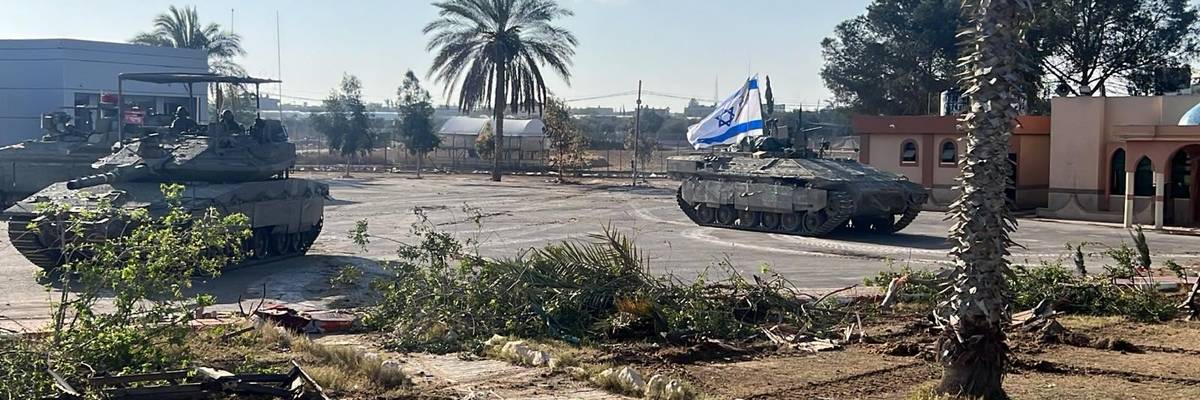
Israeli tanks are seen by the border in Rafah, Gaza on May 6, 2024.
(Photo by IDF - Handout/Anadolu via Getty Images)


Brad Reed
Feb 26, 2026
COMMON DREAMS

A new report from a major press freedom group has found that a record 129 journalists were killed in 2025, and that Israel was responsible for two-thirds of the worldwide total.

The Tuesday report from the Committee to Protect Journalists says that the Israeli military has cumulatively killed more journalists than any other government since CPJ started tracking reporter deaths in 1992, with the vast majority being Palestinian media workers in Gaza.

The report also finds an increase in the use of drones to attack journalists, with Israel accounting for more than 70% of the 39 documented instances of reporters killed by drone strikes.

The number of journalists killed by Israel is remarkably high even when compared to the number of journalists killed in other conflict zones.

Only nine journalists were killed in Sudan, for example, while just four journalists were killed in Ukraine, despite both countries being in the midst of brutal conflicts that have collectively killed hundreds of thousands of people.

A report issued in December by Reporters Without Borders similarly found that Israel was responsible for the most journalists deaths in 2025, the third consecutive year that the country had held that distinction.

The CPJ report also points the finger at governments for not taking their responsibilities to protect journalists seriously.

“The rising number of journalist deaths globally is fueled by a persistent culture of impunity,” the report states. “Very few transparent investigations have been conducted into the 47 cases of targeted killings (classified as ‘murder’ in CPJ’s longstanding methodology) documented by CPJ in 2025—the highest number of journalists deliberately killed for their work in the past decade—and no one has been held accountable in any of the cases.”

CPJ CEO Jodie Ginsberg said that attacks on the media are “a leading indicator of attacks on other freedoms, and much more needs to be done to prevent these killings and punish the perpetrators,” adding that “we are all at risk when journalists are killed for reporting the news.”

Record killing of journalists reveals rising global threat to press freedom

A report published on Thursday has found a sharp rise in journalist deaths worldwide, underscoring the increasing dangers of reporting, particularly from conflict zones, even as the need for reliable information becomes ever more pressing.


Issued on: 27/02/2026 - RFI

The Committee to Protect Journalists, based in New York, has released its annual report. AFP - ED JONES


A record 129 journalists and media workers were killed worldwide in 2025, according to the Committee to Protect Journalists (CPJ), marking the deadliest year since the organisation began tracking such data more than three decades ago.

It is the second consecutive year that a record number of deaths has been reached.

“Journalists are being killed in record numbers at a time when access to information is more important than ever,” CPJ chief executive Jodie Ginsberg said. “We are all at risk when journalists are killed for reporting the news.”

More than three-quarters of the fatalities in 2025 occurred in conflict zones, reflecting the intensity and spread of modern warfare – and the crucial role journalists play in documenting it.


Israel responsible for half of journalist deaths in 2025, RSF report finds


Israel drives surge

The CPJ attributed roughly two-thirds of the total deaths to Israeli military actions, with 86 journalists and media workers killed by Israeli fire during the year.

More than 60 percent of those were Palestinians reporting from Gaza, highlighting the extraordinary risks faced by local reporters covering the conflict from within.

Israel has strongly rejected the findings. A military spokesperson said the CPJ report relied on “general allegations, data of unknown origin and pre-determined conclusions”. The Israeli military maintains it does not deliberately target journalists.

“Throughout the war there have been numerous cases in which terrorists operated under a civilian guise, including posing as journalists to advance terror activities,” the military spokesperson told reporters, adding that any action taken was based solely on alleged involvement in such activities.

They also dismissed claims of intentional harm to civilians, including journalists’ family members, as “completely false”.

Both Ukraine and Sudan also recorded increases in media worker deaths compared with the previous year. In Ukraine, four journalists were killed by Russian military drones – the highest annual figure since 2022, when 15 were killed in the early phase of the war.

In Sudan, paramilitary forces have been blamed for multiple killings.

The CPJ noted the growing use of drones in modern warfare as a significant factor, documenting 39 cases of reporters being killed in drone attacks overall – including 28 in Gaza and five in Sudan, attributed to the Rapid Support Forces.

Global decline in freedom of expression over last decade, watchdog warns


Targeted killings

While conflict zones remain the most dangerous environment for journalists, the CPJ report also highlights persistent risks in countries far from active war zones – often linked to corruption, organised crime and weak legal protections.

A “culture of impunity” continues to endanger reporters, the organisation said, pointing to a lack of transparent investigations and accountability in many cases.

In Mexico, six journalists were killed in 2025 – none of the cases have been solved. The Philippines recorded three fatal shootings of journalists, reinforcing long-standing concerns about press safety.

Elsewhere, journalists were targeted for their reporting on corruption and criminal networks. In Bangladesh, a reporter was hacked to death by suspects allegedly linked to a fraud ring. Similar killings tied to organised crime were recorded in India and Peru.

The report also drew attention to state actions against journalists. In Saudi Arabia, prominent columnist Turki al-Jasser was executed following convictions on charges the CPJ described as “spurious national security and financial crime allegations” – a move it says reflects the use of legal systems to silence dissent.

It was the first documented killing of a journalist in the country since the 2018 murder of Jamal Khashoggi.

(with newswires)
Water Scarcity As A Primary Driver Of Future Conflict – Analysis


February 27, 2026 
By Dr. Majid Rafizadeh

Water scarcity is rapidly emerging as one of the most consequential threats to global security. This is particularly evident in regions already burdened by environmental stress.

The Middle East stands out as uniquely vulnerable due to its arid climate. Historically, conflicts in this region have been mostly explained in media outlets through ideological, sectarian, territorial and geopolitical lenses. However, environmental constraints can intensify tensions due to the fact they create new arenas of competition.

Water scarcity will likely become a primary catalyst of future conflicts, particularly in states such as Iraq, Syria and Yemen, unless governments urgently adopt comprehensive strategies to address this issue.

The consequences of inaction are multidimensional, including large-scale population displacement, internal unrest and a worsening of the economic situation.

The structural roots of water scarcity in the Middle East are complex. Without doubt, climate change has intensified existing environmental constraints, as it has caused higher temperatures and more prolonged droughts and increased evaporation rates. As a result, climatic shifts reduce the replenishment of surface water and groundwater alike.

In countries where agriculture remains a major contributor to national income, declining water availability not only threatens food security but also economic stability.

Desertification is also advancing across large swathes of the region. This is transforming productive land into barren terrain and forcing rural populations to migrate toward urban centers. In other words, the environmental dimension of water scarcity intersects with social, political and economic landscapes.

Another issue to focus on is that some Middle Eastern countries rely heavily on water sources originating beyond their borders. Iraq, for instance, depends overwhelmingly on the Tigris and Euphrates rivers, which originate in Turkiye and flow through Syria before reaching Iraqi territory. This means that, in the absence of binding regional agreements governing water allocation, competition over shared rivers can escalate into diplomatic crises or even military confrontations.

The Middle East has also experienced rapid population growth over the past several decades, with urban populations growing at especially high rates. It follows that expanding cities require vast quantities of water for consumption, sanitation and energy production.

At the same time, if the infrastructure is old and distribution systems are inefficient, this can result in substantial water losses. The problem is that water management policies are fragmented in some countries, with overlapping mandates and little coordination among organizations.

In addition, agricultural policies often prioritize short-term production goals over long-term sustainability.

When it comes to water scarcity, Iraq, Syria and Iran are badly affected. Iraq, in particular, is facing a dramatic decline in water availability due to several factors, including climate change, pollution and domestic mismanagement. Reduced river flow has also devastated agriculture, particularly in southern regions.

This has caused farmers, deprived of their livelihoods, to migrate to urban centers, increasing unemployment and placing additional pressure on public services. Water contamination resulting from industrial discharge and inadequate sanitation infrastructure has also produced severe public health crises.

If the situation continues, the implications for Iraq’s national security are profound. As water scarcity undermines agricultural production, the country becomes increasingly dependent on food imports. In addition, competition among provinces and ethnic groups over access to water resources can run the risk of intensifying internal divisions.

Meanwhile, Syria’s water infrastructure has been severely damaged by years of conflict, leaving many people without reliable access to clean water. Prolonged drought has devastated rural communities, contributing to migration. And Yemen’s water crisis is one of the most severe in the world, with groundwater depletion proceeding at an unsustainable pace.


Water scarcity amplifies existing sources of tension rather than acting as an isolated cause of conflict. In societies already divided along ethnic, sectarian or political lines, unequal access to water can deepen these divisions. In other words, water security has increasingly become inseparable from national security.

If governments fail to act decisively, the consequences could be severe. Firstly, large-scale displacement could overwhelm urban centers and neighboring countries, generating humanitarian crises with regional repercussions.

Secondly, declining agricultural output will lead to food shortages. This can provoke price spikes and social unrest.

Thirdly, interstate disputes over shared rivers could intensify. In the most severe cases, the combination of economic collapse, political instability and humanitarian emergencies could potentially lead to state failure.

Addressing the water crisis requires a multifaceted, multidimensional and cooperative approach. Regional water agreements are essential for managing transboundary rivers. In addition, infrastructure modernization — including the adoption of efficient irrigation technologies and wastewater recycling — can significantly enhance water productivity. This requires agricultural reform.

Technological innovations can also offer solutions, particularly when it comes to renewable energy integration. Expanding energy capacity powered by solar or wind energy could free up reliable water supplies. There should also be education programs and publicity campaigns to raise awareness of this issue, while promoting and encouraging water conservation.

Water scarcity will likely be a primary driver of future conflicts. In several countries in the Middle East, it is critical to recognize the urgency of this issue and address declining water resources.

This article was published at Arab News

Dr. Majid Rafizadeh

Dr. Majid Rafizadeh is a Harvard-educated Iranian-American political scientist. X: @Dr_Rafizadeh


Iran urges US to drop ‘excessive demands’ to reach deal


By AFP
February 27, 2026


Iran has asked the US to lower its demands during a last-ditch bid to avert fresh war - Copyright AFP Adam BERRY

Iran said Friday that in order to reach a deal, the United States will have to drop its “excessive demands”, tempering the optimism expressed after talks seen as a last-ditch bid to avert war.

The Oman-mediated talks follow repeated threats from President Donald Trump to strike Iran, and with the United States conducting its biggest military build-up in the region in decades.

Trump on February 19 gave Iran 15 days to reach a deal, and while Iran has insisted the discussions focus solely on its nuclear programme, the US wants Tehran’s missile programme and its support for militant groups curtailed.

The Wall Street Journal reported on Thursday that Trump’s negotiating team would demand that Iran dismantle its three main nuclear sites and hand over all its remaining enriched uranium to the United States.

Without specifying what demands he was referring to, Iran’s Foreign Minister Abbas Araghchi on Friday told his Egyptian counterpart that “success in this path requires seriousness and realism from the other side and avoidance of any miscalculation and excessive demands”.

Following the talks in Geneva on Thursday, Araghchi told state TV that the negotiations “made very good progress and entered into the elements of an agreement very seriously, both in the nuclear field and in the sanctions field”.

He said the next round would take place in “perhaps less than a week”, with technical talks at the UN’s nuclear agency to begin in Vienna on Monday.

Omani Foreign Minister Badr Albusaidi also announced technical discussions were to be held next week in Vienna.

“We have finished the day after significant progress in the negotiation between the United States and Iran,” he said in a post on X.

Araghchi, in a post on X, called the latest round of talks “the most intense so far”.

“It concluded with the mutual understanding that we will continue to engage in a more detailed manner on matters that are essential to any deal — including sanctions termination and nuclear-related steps,” he wrote.

UN nuclear chief Rafael Grossi joined the negotiations, a source close to the talks told AFP.


– ‘Big lies’ –


US President Donald Trump said in his State of the Union address that Iran had “already developed missiles that can threaten Europe and our bases overseas, and they’re working to build missiles that will soon reach the United States of America”.

He also accused Iran of “pursuing sinister nuclear ambitions”, though Tehran has always insisted its programme is for civilian purposes.

The accusations were delivered in the same forum in which then-president George W. Bush laid out the case for the invasion of Iraq in 2003.

The Iranian foreign ministry called these claims “big lies”.

On Wednesday, US Secretary of State Marco Rubio said on Wednesday that Iran is “not enriching right now, but they’re trying to get to the point where they ultimately can”, adding that Tehran “refuses” to discuss its ballistic missile programme and “that’s a big problem”.

Iran’s President Masoud Pezeshkian insisted ahead of the talks that the Islamic republic was not “at all” seeking a nuclear weapon.

US Vice President JD Vance told the Washington Post on Thursday there was “no chance” that a long-threatened strike on Iran would result “in a Middle Eastern war for years with no end in sight”.

Parallel to the talks is a dramatic US military buildup in the region, with the USS Gerald R. Ford, the world’s largest aircraft carrier, sent to the Mediterranean this week.

Washington currently has more than a dozen warships in the Middle East: one aircraft carrier — the USS Abraham Lincoln — nine destroyers and three other combat ships.

It is rare for there to be two US aircraft carriers in the region.

The maximum range of Iran’s missiles is 2,000 kilometres (1,200 miles), according to what Tehran has publicly disclosed.

However, the US Congressional Research Service estimates they top out at about 3,000 kilometres — less than a third of the distance to the continental United States.

A previous attempt at negotiations collapsed when Israel launched strikes on Iran last June, beginning a 12-day war that the US briefly joined to bomb Iranian nuclear sites.

In January, Tehran launched a mass crackdown on nationwide protests, killing thousands of people according to rights groups.

Protests have since resumed around Iranian universities.
]

How America lit the fuse on Iran's nuclear programme

Iran and the United States made "significant progress" during talks in Switzerland on Thursday, according to mediators, with both sides agreeing to resume negotiations in Austria next week.


Issued on: 27/02/2026 - RFI

I
n this photo released by the Iranian Presidency Office, President Masoud Pezeshkian, second right, listens to the head of Atomic Energy Organization of Iran Mohammad Eslami as he visits an exhibition of Iran's nuclear achievements, in Tehran, Iran, on April 9, 2025. AP

By: Jan van der Made

Washington is demanding curbs on Iran's missile programme, its network of regional proxies, and above all its nuclear capabilities - a demand that carries a particular historical irony, given that it was the United States itself that launched Iran's nuclear ambitions in 1953 under Eisenhower's Atoms for Peace initiative.

The talks, brokered by Oman, follow repeated threats from Donald Trump to strike Iran militarily. The US president gave Tehran a 15-day deadline to reach a deal last Thursday.

The two sides, however, remain some distance apart on scope. Iran has insisted the discussions be confined to its nuclear programme, while Washington wants Tehran's missile arsenal and its financial and operational support for militant groups across the region brought to the table as well.


'Atoms for peace'

Iran's nuclear programme was launched with American help in 1953 under President Dwight Eisenhower's Atoms for Peace initiative, a Cold War effort to balance the threat of nuclear conflict with the promise of uranium's peaceful applications.

1970s advertisement of Boston Edison, a company that made nuclear plants Boston Edison


In 1967, the Tehran Nuclear Research Center, equipped with a US-made five megawatt nuclear research reactor fueled by highly-enriched uranium, started operating. One year later, Tehran signed the Non Proliferation Treaty allowing the International Atomic Energy Agency (IAEA) to inspect its nuclear sites.

In March 1974, the Shah unfolded plans to build 23 nuclear plants by the year 2000, claiming the energy would be used as a substitute for oil. Loans worth billions and nuclear cooperation agreements were signed with the US, France, Germany, South Africa and others.

1979 Revolution


When Ayatollah Khomeini's revolution installed an anti-western theocracy most western nuclear companies withdrew from Iran — but the programme continued with Russian and Chinese assistance.

The first allegations that Iran was pursuing an atomic bomb emerged in 1984, based on reports from West German intelligence, though the IAEA found nothing to substantiate them at the time. Iran meanwhile acquired nuclear expertise from both Russia and China, including a 915MW water reactor built with Russian assistance at the existing Bushehr complex.

Conspiracy theories have since added further layers of mystery to Iran's suspected pursuit of a nuclear weapon.

Merlin program


In his 2006 book State of War New York Times investigative journalist James Risen alleged that the CIA may inadvertently have helped Iran develop a nuclear weapon.

Under an operation codenamed Merlin, a Russian defector working for the CIA was tasked with posing as a disgruntled nuclear scientist willing to sell classified bomb designs to Tehran.

The CIA had doctored the blueprints beforehand, inserting deliberate flaws in the hope that Iran would build a faulty device and set its nuclear programme back by years.

Risen's conclusion was the opposite: the Iranians identified the flaw, and the blueprints may in fact have advanced rather than hindered their weapons development. The operation has since passed into popular culture, providing the basis for the Israeli television series Tehran, created by Moshe Zonder.

The CIA source who disclosed the Merlin programme to Risen, Jeffrey Sterling, was subsequently prosecuted under the Espionage Act, sentenced to three and a half years in prison, and released in 2018.

People's Mujaheddin

It was not until 2002 that the question of Iran's nuclear ambitions entered the public domain in earnest. At a press conference in Washington on 14 August of that year, the Paris-based opposition group Mujaheddin-e-Khalq (MEK), which had fought first against the Shah and later against the Khomeini regime, claimed to have satellite evidence that Iran was running two top-secret nuclear facilities, at Natanz and Arak.

A year later, the IAEA reported that Iran had failed to declare certain uranium enrichment activities. Iran has maintained ever since that its nuclear programme is entirely peaceful, insisting it has enriched uranium to less than five per cent, consistent with the requirements of a civilian power plant.

Iran went to considerable lengths to deny any ambition to develop a nuclear weapon. Its supreme leader stated repeatedly on his official website that the use of nuclear weapons was a "great sin," that Iran did "not accept nuclear weapons because of our beliefs," and that "according to Islamic thought, a weapon that destroys civilians is prohibited."

None of it persuaded Washington or its regional ally Israel, which feared it would be the primary target should Iran ever acquire the bomb.

Israeli Prime MinisterBenyamin Netanyahu speaking at the UN in 2012 about a possible Iranian nuclear deal. Reuters/Lucas Jackson


Ali Khamenei believes that his survival, and that of his regime, depends on possessing a nuclear weapon," according to Adrian Calamel, co-author of a report on Iran's foreign influence operations.

The allegations surrounding Iran's nuclear activities eventually led to sweeping sanctions and a prolonged diplomatic process, culminating in the signing of the Joint Comprehensive Plan of Action (JCPOA) in 2015. The agreement was struck between Iran and the so-called G5+1: the five

permanent members of the UN Security Council (the United States, China, Russia, France and the United Kingdom) plus Germany. Its aim was to curtail Tehran's nuclear programme in exchange for a gradual lifting of sanctions.

The deal did not hold. Mounting criticism, led most vocally by Israeli prime minister Benjamin Netanyahu, culminated in the United States unilaterally withdrawing from the agreement on 8 May 2018, during Donald Trump's first term in office. Washington promptly reimposed sweeping sanctions on Iran's oil, banking and shipping sectors, triggering a severe economic contraction.

The remaining signatories attempted to salvage the agreement, establishing the Instex mechanism to facilitate limited trade with Iran. It was never adequate compensation for the loss of access to the US-linked global financial system.

From mid-2019, Iran responded with a series of calculated breaches of its JCPOA commitments, gradually raising enrichment levels, expanding its stockpiles and increasing the number of advanced centrifuges in operation, while continuing to permit IAEA monitoring.

Diplomacy shifted into crisis management mode. European governments pressed both sides to step back from the brink, while indirect contacts between Washington and Tehran continued through European, Omani, Swiss and Qatari intermediaries, focusing on prisoner exchanges, de-escalation in the Gulf and limited sanctions relief.

Formal negotiations to restore or extend the JCPOA proceeded fitfully under successive American administrations, but were repeatedly derailed by regional instability, domestic political pressures in both Tehran and Washington, and a fundamental mistrust over which side should move first: sanctions relief or nuclear rollback.

(With newswires)


Israeli leaders and citizens begin emergency preparations amid US-Iran war concerns

Israeli leaders and citizens begin emergency preparations amid US-Iran war concerns
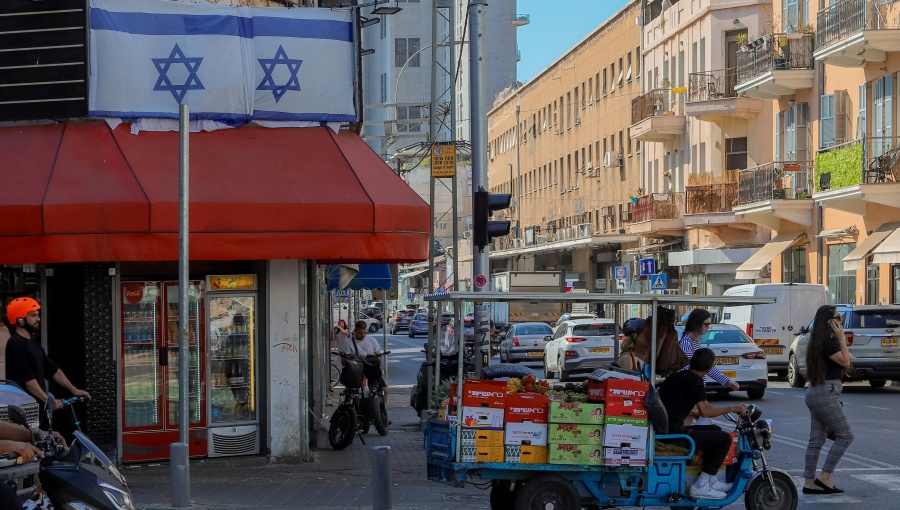
Street in Tel Aviv, Israel. / CC: aes on Unsplash
By bnm Tel Aviv bureau February 27, 2026

Amid rising concerns over a potential US-Iran war, Israeli citizens are on high alert in preparation for any potential attacks against the country by Tehran.

Diplomatic efforts in Geneva stalled on February 26 between the Iranians and Americans, as reports indicate the two sides could not reach an agreement. Iranian and American negotiators briefly suspended their third round of talks on February 26, then resumed the same day.

Meanwhile, Israel's Home Front Command has remained silent on whether to raise threat levels as a potential conflagration.

Still, the possibility of a US strike on Iran remains on the table. Speaking at his first State of the Union from Washington since being re-elected, Trump said "our enemies are scared...and America is respected like never before" prior to adding that "for decades it had been the policy of the United States never to allow Iran to obtain nuclear weapons."

“I will never allow the world's number one sponsor of terror, which they are by far, to have a nuclear weapon,” Trump concluded.

The silence from Israeli defence authorities has not prevented local officials from activating contingency plans.

Municipal preparations are already underway, suggesting that local authorities are hedging against sudden escalation whilst avoiding public alarm.

"Last week we were at a meeting with the head of the National Emergency Authority, in order to also clarify things and prepare," Haim Bibas, Mayor of Modi'in-Maccabim-Re'ut, told N12. Zvika Brut, Mayor of Bat Yam, added: "We are prepared to go from zero to one hundred, meaning to a full state of emergency within 20 minutes, in all aspects, but on the other hand, we are also busy maintaining calm at the moment, explaining to the public that right now it is a complete routine."

Ramat Gan Mayor Carmel Shama HaCohen added that the city has equipped itself with Starlink satellite systems to maintain communications if electricity and internet networks are damaged. HaCohen confirmed the city is "in an emergency state of distributing informational materials, updating the lessons we have learned and the improvements we have made to the emergency system."

The Assuta hospital network has converted its Ramat HaHayal parking lot into a 200-bed emergency facility. "When necessary, the Assuta Ramat HaHayal parking lot becomes a hospital complex for 200 inpatient beds," CEO Gidi Leshetz confirmed in a press statement.

Tel Aviv residents also expressed mounting anxiety. "I'm a little stressed just because of the children and grandchildren. I have a bag by the door at home with a few things that I need," Dafna Gordon explained, whilst Yaarit Atal noted: "The uncertainty is what's stressful, that we don't know what the future holds."


UN urges action to prevent full civil war in S.Sudan


Geneva (AFP) – The UN rights chief voiced alarm Friday at the deteriorating situation in South Sudan, calling for "urgent action" to avert a return to full-scale civil war.


Issued on: 27/02/2026 - RFI

UN peacekeepers are deployed in Jonglei State, South Sudan © Luis TATO / AFP

"We need urgent action to preserve the peace agreement and prevent fragmentation and cycles of retaliation that could herald a return to all-out civil war," Volker Turk said in an address to the United Nations Human Rights Council.

Violence has risen in recent weeks as a power-sharing deal between rival generals, Salva Kiir and Riek Machar, has unravelled.

At least 280,000 people have been displaced since December in the worst-hit state, Jonglei.

Turk warned that the situation had deteriorated further in January, as "human rights violations and abuses surged by 45 percent" compared to a month earlier.

Last month alone, he said his office had documented that 189 civilians had been killed and many more injured.

The UN rights chief said he was "horrified" to learn of the attack last weekend by government forces and allied militia on a village in Ayod County in Jonglei.

"Witnesses told my colleagues that troops ordered residents to gather, and then opened fire on the crowd, killing 21 unarmed civilians including women and children," Turk said.

He warned that "military discipline appears to have collapsed" on both sides of the conflict, with troops demonstrating "a near-total disregard for civilian protection".

His team, he said, had recorded a 40-percent increase compared to 2024 in the number of people killed and injured in the conflict last year, to more than 5,100.

Turk decried rampant sexual violence, and said his team had documented "a disturbing increase to 550 in the number of civilians abducted by opposition forces and their allies in 2025".

He voiced particular concern at hate speech and incitement to violence targeting entire communities and ethnic groups in the country.

"In one audio recording authenticated by the UN mission, a senior military official urged his forces to spare no lives, and to destroy civilian homes, livestock, and property," he told the council.

"Acts of hate speech and incitement to violence may amount to international crimes," Turk said, cautioning that "those responsible for such crimes may be prosecuted under international law."

The rights chief also warned that South Sudan had become "extremely dangerous for humanitarian workers", with 350 attacks on staff and facilities last year -- more than one third more than in 2024.

© 2026 AFP
FinCEN’s Warning—And The Predictable Failure Of Prohibition – OpEd


Removal of liquor during Prohibition in the United States. 
Photo Credit: Author unknown, Wikipedia Commons


February 27, 2026 
By Roger Bate


Over the past few years, quiet but extraordinary warnings have emerged from the US Treasury Department. The Financial Crimes Enforcement Network reports that illicit e-cigarettes are being used as part of trade-based money-laundering schemes linked to fentanyl trafficking. Illegal vaping products are no longer just a regulatory nuisance or a youth-use talking point. They have become a financial instrument in the cartel economy.

The finding matters because it exposes a reality many policymakers have spent years denying—prohibition does not eliminate markets, it reorganizes them. And when demand persists, prohibition reliably hands control to the most ruthless and well-organized suppliers.

We are now watching that process unfold in real time in the US vaping market. And let’s be clear where the blame lies: The CDC’s Office on Smoking and Health and the FDA’s Center for Tobacco Products have deliberately obscured relative risk and forced nicotine markets underground, where criminal supply now thrives beyond any meaningful oversight.

From Regulation to Underground Supply


Vaping emerged as a harm-reduction alternative for smokers. In the UK and New Zealand and other countries that allowed regulated products to compete openly with cigarettes, smoking rates declined rapidly.

In the United States, by contrast, legal vaping has been squeezed by a combination of bans, frozen approvals, and enforcement-first regulation. The result is not a smaller market. It is a market that has largely gone underground.


By the government’s own admissions, only a small fraction of vaping products currently sold in the US are formally authorized. In practical terms, this means that most adults who vape are buying products that exist outside the legal framework, often without realizing it. In many local markets—especially convenience stores that I’ve personally investigated—illegal disposable vapes appear to make up the majority of sales.

This is not a fringe phenomenon. It is a parallel national supply chain.

What enforcement is actually finding

Recent enforcement actions give a sense of scale. Federal agencies have seized hundreds of thousands—and in some cases millions—of illegal vaping devices in single operations. Entire warehouses have been cleared of products that were never approved and were often deliberately mislabeled to evade customs scrutiny.

Authorities have acknowledged that thousands of distinct unauthorized vaping products are circulating in the US market. Most are manufactured overseas and enter the country through misdeclared shipping, freight forwarding, or informal cross-border routes. Once inside, distribution frequently overlaps with existing smuggling corridors linked to Mexico—routes long used for narcotics, weapons, and cash.

In several cases, vape shops raided by law enforcement turned out to be fronts for broader criminal activity, including drug distribution and money laundering. This is what happens when a consumer market is forced into the shadows: it is absorbed into criminal infrastructure that already knows how to move goods and money at scale.

Why Prohibition Fails—Every Time

None of this is surprising. Prohibition has a long and well-documented track record.

When governments criminalize supply while demand persists, they do not create safer markets. They create markets optimized for secrecy, intimidation, and profit maximization. Compliance-oriented firms exit. Criminal organizations enter. Oversight disappears.

This is not a failure of enforcement. It is the economic logic of prohibition.

Alcohol prohibition produced bootleg liquor, poisonings, and organized crime. The war on drugs professionalized trafficking and entrenched violent networks. High-tax cigarette regimes fueled smuggling and counterfeiting. Illicit vaping follows the same pattern, only faster.

The Danger of Illicit Products

One deeply uncomfortable consequence of this policy choice is now becoming harder to ignore: some illicit vaping products may be genuinely dangerous.

Devices of unknown origin may contain contaminants, inconsistent nicotine delivery, or poorly designed heating elements that generate toxic byproducts. Consumers have no reliable way to know what they are inhaling. There are no ingredient disclosures, no enforceable product standards, no recalls, and no liability.

When harms emerge, prohibition advocates predictably blame vaping itself. That conclusion reverses responsibility.

If an illicit vape injures someone, the fault does not lie with legal manufacturers who were barred from selling regulated products. It does not lie with compliant retailers shut out of the market. And it does not lie with consumers responding rationally to demand.

The responsibility lies with the policy decision that forced supply underground.

Regulatory Theater—and Real Victims

The current response—more raids, more seizures, more press conferences—does not address the underlying problem. It merely treats the symptoms.

Consumers know illegal vapes remain easy to find. Retailers face inconsistent and selective enforcement. Criminal networks adapt faster than regulators can respond. Each seizure is followed by replenishment through new channels.

This is not effective governance. It is regulatory theater with a massive human cost.

If unsafe illicit vaping products cause injuries or deaths, responsibility does not end with smugglers or foreign manufacturers. FDA and CDC officials who spent years demonizing harm reduction, blocking lawful products, and insisting on abstinence-only nicotine policy cannot plausibly claim clean hands.

They were warned. They were shown the incentives. They ignored the evidence.

When agencies deliberately eliminate regulated supply and then express shock that unregulated products fill the gap, they are not passive observers. They are participants. And when the foreseeable consequences include criminal enrichment and consumer harm, there is no moral distance to hide behind.

Owning the Consequences

FinCEN’s warnings should have forced a reckoning. Instead, they have been treated as an inconvenience.

But the lesson is unavoidable: prohibition does not protect public health from organized crime. It funds it. It empowers it. And it makes consumers less safe in the name of protecting them.

If illicit vaping products turn out to be dangerous, that fact does not vindicate prohibition. It indicts it. Dangerous underground markets are not evidence that harm reduction failed. They are evidence that regulation was abandoned.

And the harms that follow are not accidents. They are outcomes—ones that the FDA and CDC helped engineer, and for which they should be held accountable.

This article was published by Brownstone Institute

Roger Bate

Roger Bate is a Brownstone Fellow, Senior Fellow at the International Center for Law and Economics (Jan 2023-present), Board member of Africa Fighting Malaria (September 2000-present), and Fellow at the Institute of Economic Affairs (January 2000-present).