Chinese battery material makers push for higher prices as cobalt rally hits supply chain
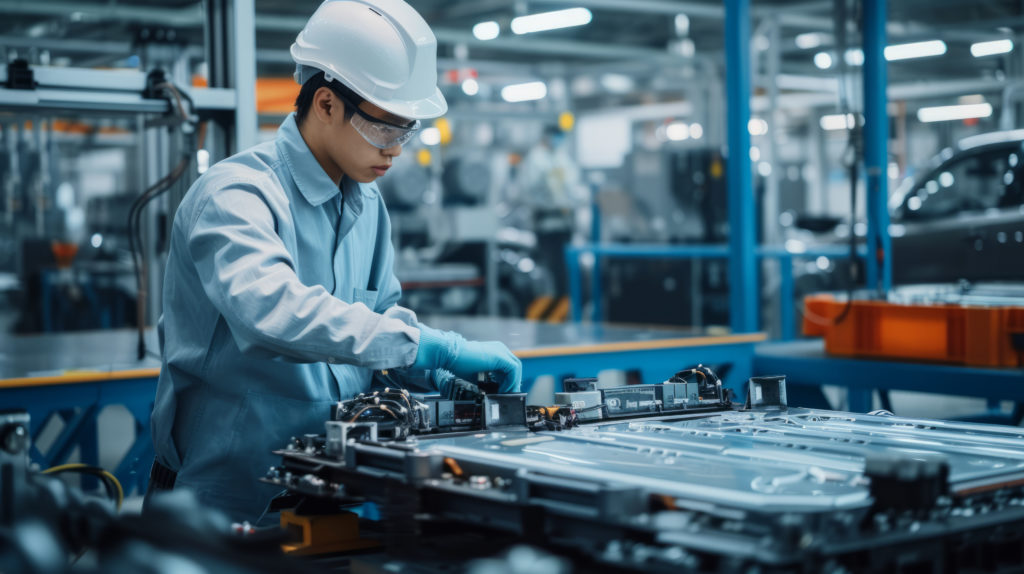
Suppliers to China’s electric-vehicle battery makers are pushing for higher prices for key cobalt-based materials, aided by a sharp rebound in cobalt and a tightening market for raw materials in batteries.

Makers of nickel-manganese-cobalt (NCM) precursors, the feedstock used to produce cathodes for NCM batteries, which are used in roughly a fifth of Chinese EVs, have sought higher offers for long-term contracts in recent weeks, according to three traders and producers who spoke on the condition of anonymity.
NCM precursors are normally priced at a fixed discount to spot cobalt sulfate in China, typically at around 10%, but producers are now pushing for discounts closer to 5%, the sources said.
Some are also seeking to further reduce discounts on spot orders next year, one source added.
Whether buyers will accept higher-than-desired offers is unclear and the sources said negotiations could be difficult because major NCM battery makers can choose from a wide pool of suppliers.
The price push is the first in nearly two years and comes as cobalt markets rebound, with prices more than doubling this year after export restrictions were imposed by the Democratic Republic of the Congo, the world’s top producer.
Cobalt traded near $24 a pound on Thursday, up from around $10 per pound before Congo’s export ban was rolled out in late February, helping to end a three-year slump for the battery metal.
The higher offers also coincide with signs of an uptick in China’s battery market after a downturn, which started in 2023, was sparked by excess capacity.
“The rebalancing of supply and demand has slightly increased battery and supply chain pricing from trough levels,” said Yuqian Ding, head of China autos research at HSBC, in a November 11 note.
Lithium-ion batteries using NCM chemistries are favoured in longer-range and performance-focused EVs, while lithium iron phosphate batteries dominate the mass-market segment.
(By Dylan Duan, Lewis Jackson and Zoey Zhang; Editing by Thomas Derpinghaus)
Chinese Solar Giants Bet on Batteries to Survive Industry Meltdown

Chinese solar equipment producers are shifting from panels to battery storage to tackle a chronic oversupply in the panel and equipment market that has crashed many sector players’ bottom lines.
The latest to make the move was one of the largest in the sector, Longi Green Energy Technology. Bloomberg cited a security filing by the company showing that it was planning to buy a majority stake of 62% in local battery storage maker PotisEdge.
The surge in EVs and solar and wind power installations has resulted in excessive manufacturing capacity in these key non-hydrocarbon energy industries, igniting price wars that have hurt most companies in the sector, including the biggest solar panel manufacturers. Chinese authorities realized last year that cutthroat competition, overcapacity, and low-quality manufacturing are hurting enterprises.
Meanwhile, the companies rushed to cut costs, with the biggest solar players in the country slashing close to a third of their workforce in 2024 alone. Longi Green Energy, Jinko Solar, Trina Solar, JA Solar, and Tongwei together cut as many as 87,000 jobs last year, according to Reuters calculations based on security filings.
Now, they are looking for a turnaround amid continued losses despite the government crackdown on overcapacity. The combined losses of the country’s six biggest solar panel and cell manufacturers doubled in the first half of 2025, to $2.8 billion. Longi, however, managed to trim the loss in the third quarter thanks to cost-cutting efforts, and its leadership is confident the company will return to the black in the current quarter.
Energy storage is a growth market globally as the countries with the highest density of wind and solar installations realize those sources of electricity need backup to reduce the waste of output commonly called curtailment, which becomes necessary when panels and turbines generate more electricity than the grid needs because they cannot respond to demand fluctuations the way baseload capacity can.
By Irina Slav for Oilprice.com

No comments:
Post a Comment