POSTMODERN GUNBOAT DIPLOMACY

US Defence Secretary Pete Hegseth on Thursday announced “Operation SOUTHERN SPEAR” to target “narco-terrorists", as regional tensions rose over a US naval buildup in Latin American waters. Hegseth gave no details on the mission or how it differs from existing military operations.
Issued on: 14/11/2025
By: FRANCE 24
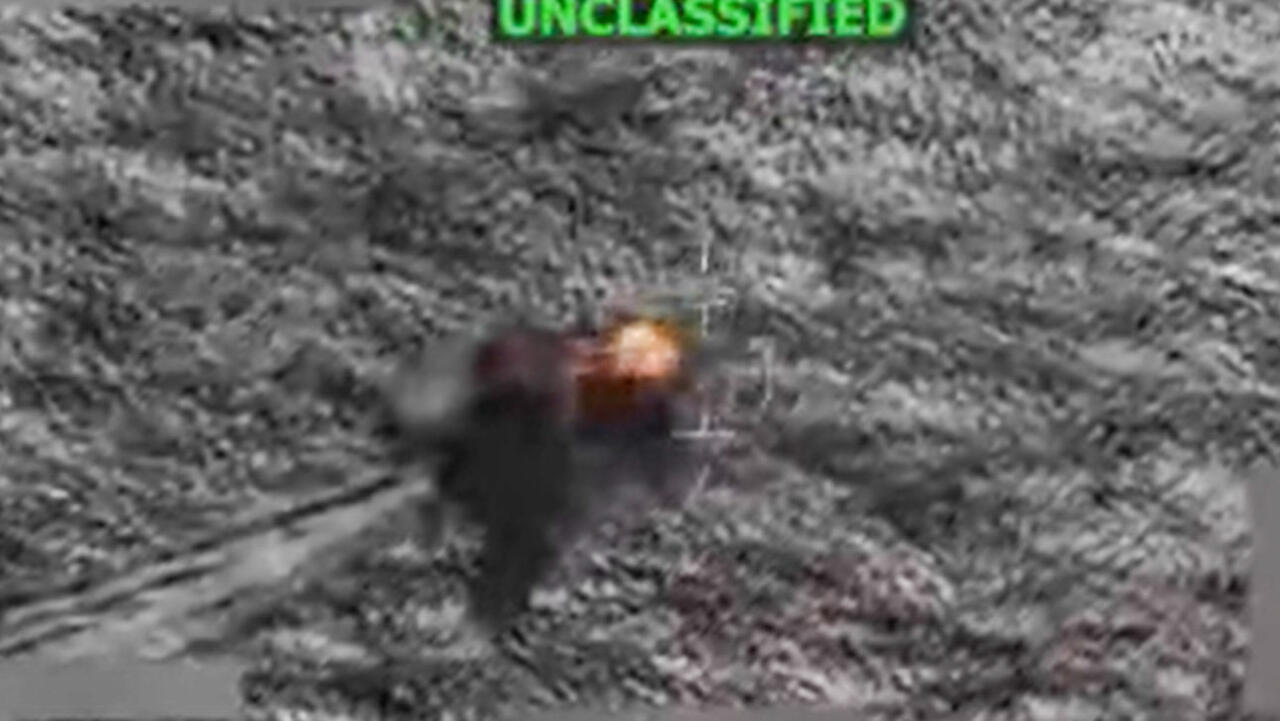
US Defence Secretary Pete Hegseth announced Thursday a military operation to "remove narco-terrorists", amid growing concerns that a US naval build-up in Latin American waters could presage land strikes and a wider conflict.
"Today, I'm announcing Operation SOUTHERN SPEAR," Hegseth posted on X. "This mission defends our Homeland, removes narco-terrorists from our Hemisphere, and secures our Homeland from the drugs that are killing our people."
The post gave no details of what the operation would entail or how it might differ from military actions already being undertaken.
President Donald Trump's administration is conducting a military campaign in the Caribbean and eastern Pacific, deploying naval and air forces for what it calls an anti-drugs offensive.
01:09
US forces have carried out strikes on about 20 vessels in international waters in the region since early September, killing at least 76 people, according to US figures.
Asked for clarification on the precise nature of Operation Southern Spear, a Pentagon spokesperson simply referred inquiries back to Hegseth's post on X.
CBS News on Wednesday cited multiple sources as saying senior military officials had presented Trump with updated options for potential operations in Venezuela, including strikes on land.
Venezuela announced Tuesday what it called a major, nationwide military deployment to counter the growing US naval presence off its coast – including a newly arrived US aircraft carrier strike group in the region.
Caracas fears the deployment, which also includes F-35 stealth warplanes sent to Puerto Rico and six US Navy ships in the Caribbean, is a regime change plot in disguise.
(FRANCE 24 with AFP)
Report: U.S. Military Destroys 20th Suspected Drug Boat
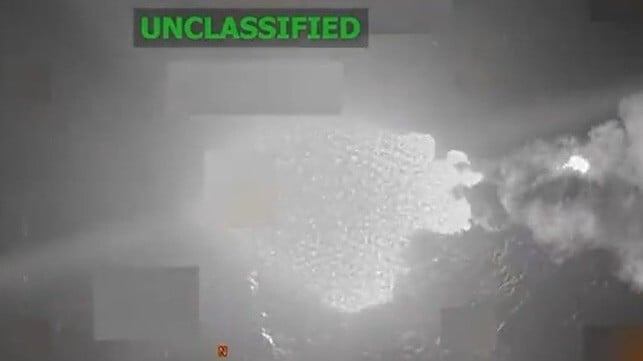
The U.S. military has killed another four suspects in its new airstrike campaign against suspected smuggling boats off Latin America, according to CBS and the New York Times. The strike is the 20th in the series, and brings the total number of deceased to 80 people.
Pentagon officials confirmed the attack to both outlets, but a formal announcement of the action is still pending, reportedly because top officials are awaiting video footage.
The attacks are controversial in legal circles, both for its compliance with American law and for compliance with international human rights law, and have attracted scrutiny. "The US must halt such attacks and take all measures necessary to prevent the extrajudicial killing of people aboard these boats, whatever the criminal conduct alleged against them," said UN High Commissioner on Human Rights Volker Turk last week.
Colombia has ceased sharing intelligence with U.S. forces over its concerns about the strikes, and the United Kingdom has decided to stop reporting the movements of suspicious boats in the Caribbean to the U.S.-led counternarcotics consortium, Joint Interagency Task Force West. The family of one of the deceased, Colombian fisherman Alejandro Carranza, has promised to sue the administration in U.S. courts for wrongful death; they have already retained an American attorney.
Out of 20 strikes, only two survivors have been rescued, one Colombian and one Ecuadorian national. Both have been repatriated, and the Ecuadorian national has been released without charges because of lack of evidence.
The Pentagon has pledged that the attacks will continue. In addition, it is building up a substantial task force near Venezuela's coast, consistent with a large-scale military action. Sources within the department have told CBS that while no decision has been made to move ahead, the president has been briefed on possible strike options, to include attacks on land targets. The carrier USS Gerald R. Ford is now approaching the staging area, bringing four squadrons of F/A-18 Super Hornet strike fighters and three additional destroyers - enough capacity to consider a sustained air campaign.
Secret DOJ memo justifying Trump's lethal
boat strikes hinges on his own words: report
Robert Davis
November 13, 2025
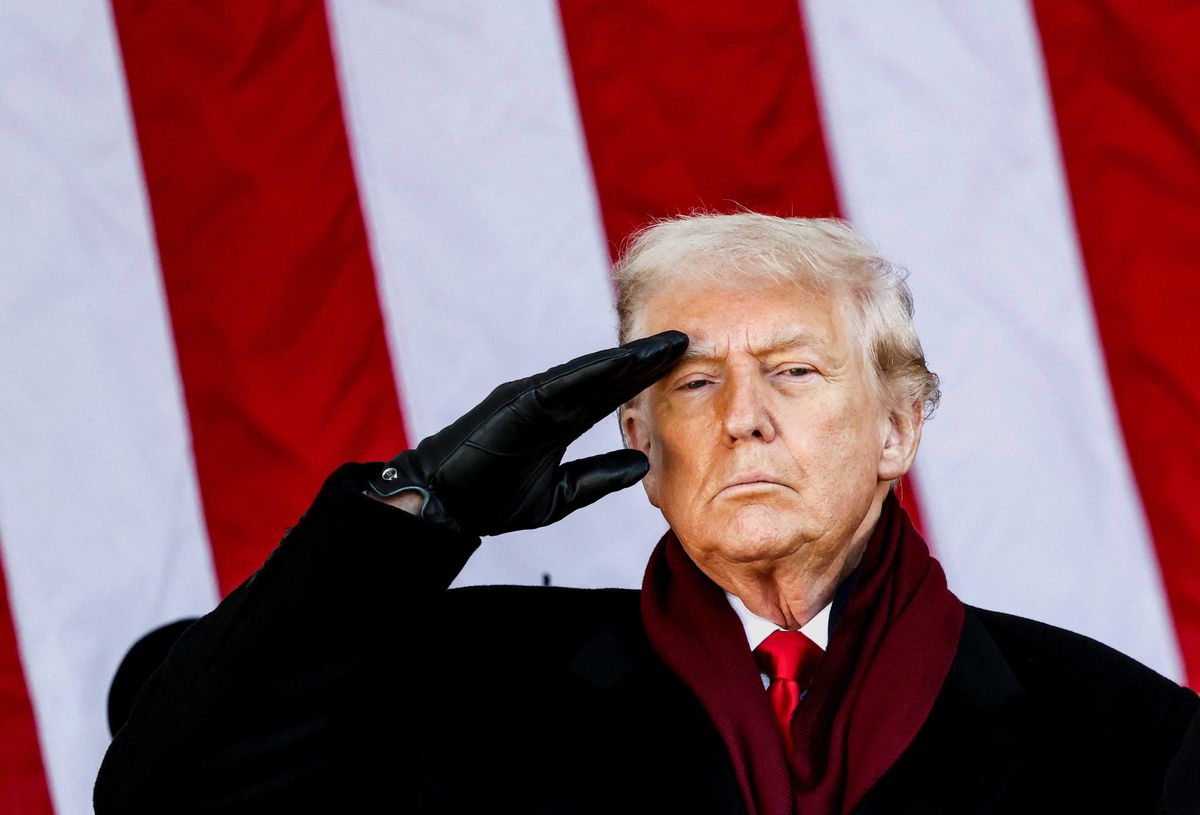
U.S. President Donald Trump salutes during a Veterans Day ceremony at Arlington National Cemetery in Arlington, Virginia, U.S., November 11, 2025. REUTERS/Kevin Lamarque
The Justice Department authored a secret memo saying it is relying on President Donald Trump's own words to justify the lethal boat strikes that have been carried out in international waters, according to a new report.
The New York Times reported on Thursday that the memo was written by the Justice Department Office of Legal Counsel, and is about 40 pages long. The report indicates that it "contradicts" experts in several ways, like suggesting the strikes are in response to an armed conflict.
About 80 people have been killed in the strikes, although the Trump administration has provided little evidence justifying the attacks.
"The memo, which was completed in late summer, is said to open with a lengthy recitation of claims submitted by the White House, including that drug cartels are intentionally trying to kill Americans and destabilize the Western Hemisphere," the report reads in part. "The groups are presented not as unscrupulous businesses trying to profit from drug trafficking, but as terrorists who sell narcotics as a means of financing violence."
"Based on such claims, the memo states that Mr. Trump has legitimate authority to determine that the United States and its allies are legally in a formal state of armed conflict with 'narco-terrorist' drug cartels, according to the people who have read the document," it adds. "The rest of the memo’s reasoning is based on that premise."
Read the entire report by clicking here.
“No more unjust wars. No more Libya. No more Afghanistan. Long live peace,” said the president of Venezuela.
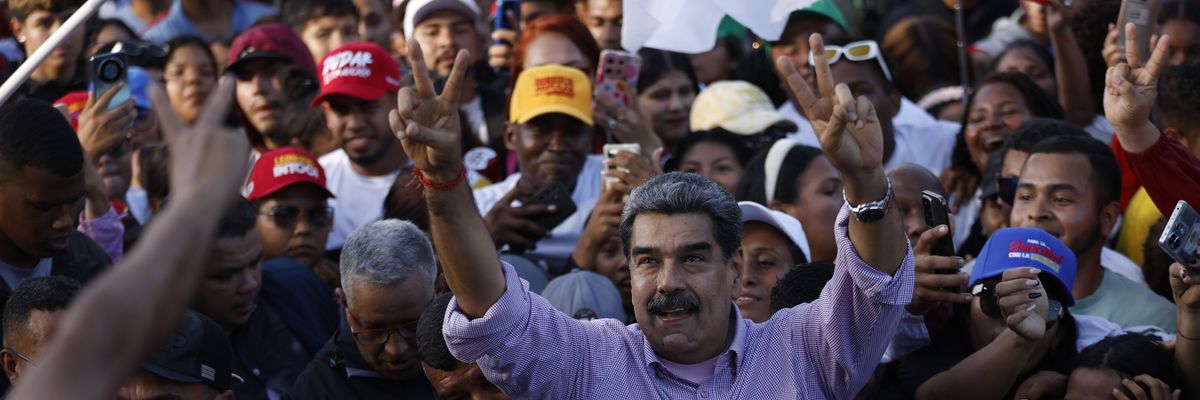
Venezuela’s President Nicolas Maduro waves to supporters during a demonstration on Youth Day in Caracas, Venezuela on November 13, 2025.
Jon Queally
Nov 14, 2025
COMMON DREAMS
Just as Secretary of Defense Pete Hegseth announced new branding for the US military campaign in Latin America, now known as “Operation Souther Spear,” the president of Venezuela, Nicolas Maduro, on Thursday offered a message of peace directly to the people of the United States as he warned against further conflict.
In an exchange with a CNN correspondent during a rally for the nation’s youth in Caracas, Maduro urged President Donald Trump not to prolong the region’s military engagement. Asked if he had a message for the people of the United States, Maduro said in Spanish: “To unite for the peace of the continent. No more endless wars. No more unjust wars. No more Libya. No more Afghanistan.”
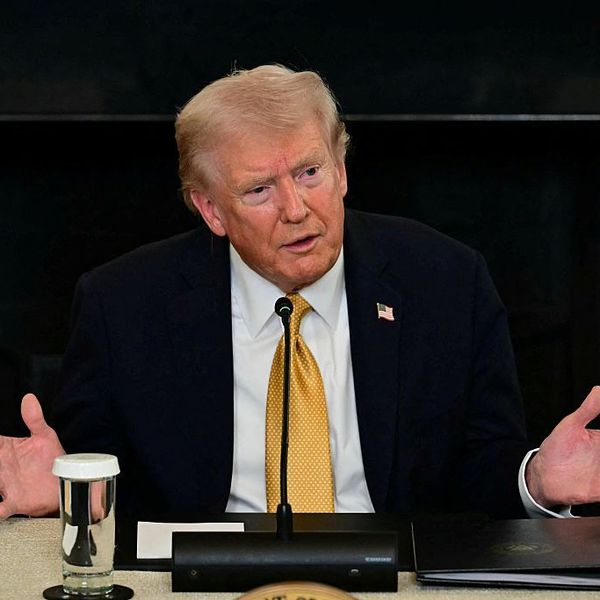
‘They’re Going to Be, Like, Dead’: Trump Says Land Strikes on Venezuela Are Next
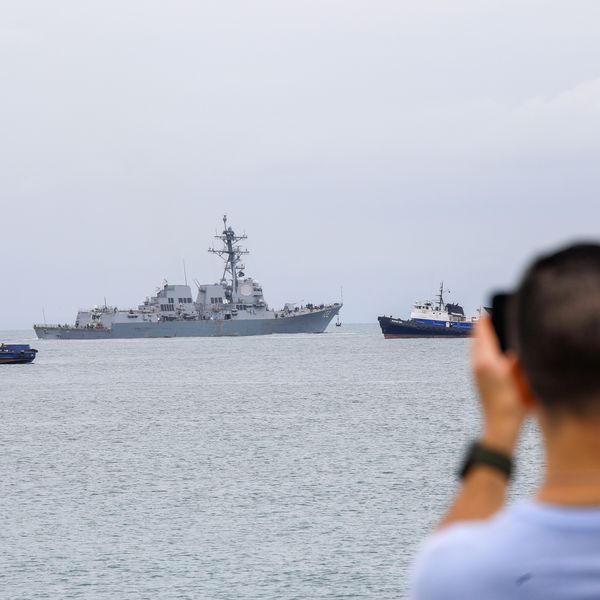
UN Experts Decry Trump Warmongering Against Venezuela as ‘Extremely Dangerous Escalation’
Asked if he had anything to say directly to Trump, Maduro replied in English: “Yes peace, yes peace.”
Hegseth’s rebranding of operations in Latin America, which has included a series of extrajudicial murders against alleged drug runners both in the Caribbean and in the Pacific, also arrived on Thursday.
He said that attacks on boats, which have now claimed the lives of at least 80 people, are part of President Donald Trump’s targeting of “narco-terrorists.” However, the administration has produced no evidence proving the allegations against these individuals nor shared with the American people the legal basis for the extrajudicial killings that deprive victims of due process.
With a significant military buildup that includes the world’s largest aircraft carrier, the USS Gerald R.Ford, fears have grown that Trump is considering a wider military attack on targets inside Venezuelan territory, despite having no congressional authorization for such use of force against a nation with which the US is not at war.
CBS News reports that Trump has been briefed on possible military “options” for an assault on Venezuela, while anti-war voices continue to warn against any such moves.
“Regime Change” in Venezuela Is a Euphemism for U.S.-Inflicted Carnage and Chaos
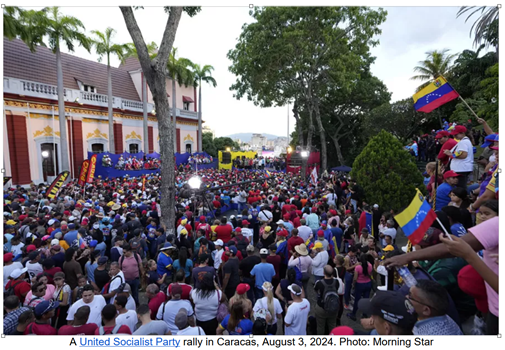
For decades, Washington has sold the world a deadly lie: that “regime change” brings freedom, that U.S. bombs and blockades can somehow deliver democracy. But every country that has lived through this euphemism knows the truth—it instead brings death, dismemberment, and despair. Now that the same playbook is being dusted off for Venezuela, the parallels with Iraq and other U.S. interventions are an ominous warning of what could follow.
As a U.S. armada gathers off Venezuela, a U.S. special operations aviation unit aboard one of the warships has been flying helicopter patrols along the coast. This is the 160th Special Operations Aviation Regiment (SOAR) — the “Nightstalkers” — the same unit that, in U.S.-occupied Iraq, worked with the Wolf Brigade, the most feared Interior Ministry death squad.
Western media portray the 160th SOAR as an elite helicopter force for covert missions. But in 2005, an officer in the regiment blogged about joint operations with the Wolf Brigade as they swept Baghdad detaining civilians. On November 10, 2005, he described a “battalion-sized joint operation” in southern Baghdad and boasted, “As we passed vehicle after vehicle full of blindfolded detainees, my face stretched into a long wolfish smile.”
Many people seized by the Wolf Brigade and other U.S.-trained Special Police Commandos were never seen again; others turned up in mass graves or morgues, often far from where they’d been taken. Bodies of people detained in Baghdad were found in mass graves near Badra, 70 miles away — but that was well within the combat range of the Nightstalkers’ MH-47 Chinook helicopters.
This was how the Bush–Cheney administration responded to Iraqi resistance to an illegal invasion: catastrophic assaults on Fallujah and Najaf, followed by the training and unleashing of death squads to terrorize civilians and ethnically cleanse Baghdad. The UN reported over 34,000 civilians killed in 2006 alone, and epidemiological studies
Iraq has never fully recovered—and the U.S. never reaped the spoils it sought. The exiles Washington installed to rule Iraq stole at least $150 billion from its oil revenues, but the Iraqi parliament rejected U.S.-
The neocon dream of “regime change” has a long, bloody history, its methods ranging from coups to full-scale invasions. But “regime change” is a euphemism: the word “change” implies improvement. A more honest term would be “government removal”—or simply the destruction of a country or society.
A coup usually involves less immediate violence than a full-scale invasion, but they pose the same question: who or what replaces the ousted government? Time after time, U.S.-backed coups and invasions have installed rulers who enrich themselves through embezzlement, corruption, or drug trafficking—while making life worse for ordinary people.
These so-called “military solutions” rarely resolve problems, real or imaginary, as their proponents promise. They more often leave countries plagued by decades of division, instability, and suffering.
Kosovo was carved out of Serbia by an illegal US-led war in 1999, but it is still not recognized by many nations and remains one of the poorest countries in Europe. The main U.S. ally in the war, Hashim Thaçi, now sits in a cell at the Hague, charged with horrific crimes committed under cover of NATO’s bombing.
In Afghanistan, after 20 years of bloody war and occupation, the United States was eventually defeated by the Taliban—the very force it had invaded the country to remove.
In Haiti, the CIA and U.S. Marines toppled the popular democratic government of Jean-Bertrand Aristide in 2004, plunging the country into an ongoing crisis of corruption, gang rule, and despair that continues to this day.
In 2006, the U.S. militarily supported an Ethiopian invasion of Somalia to install a new government—an intervention that gave rise to Al Shabab, an Islamic resistance group that still controls large swaths of the country. U.S. AFRICOM has conducted 89 airstrikes in Al Shabab-held territory in 2025 alone.
In Honduras, the military removed its president, Mel Zelaya, in a coup in 2009, and the U.S. supported an election to replace him. The U.S.-backed president Juan Orlando Hernandez turned Honduras into a narco-state, fueling mass emigration—until Xiomara Castro, Zelaya’s wife, was elected to lead a new progressive government in 2021.
Libya, a country with vast oil wealth, has never recovered from the U.S. and allied invasion in 2011, which led to years of militia rule, the return of slave markets, the destabilizing of neighboring countries and a 45% reduction in oil exports.
Also in 2011, the U.S. and its allies escalated a protest movement in Syria into an armed rebellion and civil war. That spawned ISIS, which in turn led to the U.S.-led massacres that destroyed Mosul in Iraq and Raqqa in Syria in 2017. Turkish-backed, Al Qaeda-linked rebels finally seized the capital in 2024 and formed a transitional government, but Israel, Turkey, and the U.S. still militarily occupy other parts of the country.
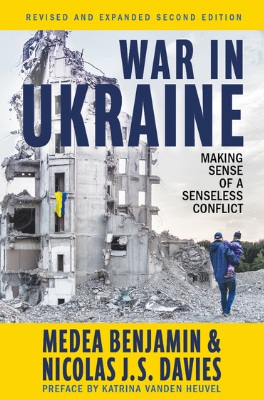
The U.S.-backed overthrow of Ukraine’s elected government in 2014 brought in a pro-Western leadership that only half the population recognized as a legitimate government. That drove Crimea and Donbas to secede and put Ukraine on a collision course with Russia, setting the stage for the Russian invasion in 2022 and the wider, still-escalating conflict between NATO and Russia.
In 2015, when the Ansar Allah (Houthi) movement assumed power in Yemen after the resignation of a U.S.-backed transitional government, the U.S. joined a Saudi-led air war and blockade that caused a humanitarian crisis and killed hundreds of thousands of Yemenis—yet did not defeat the Houthis.
 That brings us to Venezuela. Ever since Hugo Chavez was elected in 1998, the U.S. has been trying to overthrow the government. There was the failed 2002 coup; crippling unilateral economic sanctions; the farcical recognition of Juan Guaido as a wannabe president; and the 2020 “Bay of Piglets” mercenary fiasco.
But even if “regime change” in Venezuela were achievable, it would still be illegal under the UN Charter. U.S. presidents are not emperors, and leaders of other sovereign nations do not serve “at the emperor’s pleasure” as if Latin America were still a continent of colonial outposts.
In Venezuela today, Trump’s opening shots—attacks on small civilian boats in the Caribbean—have been condemned as flagrantly illegal, even by U.S. senators who routinely support America’s illegal wars.
Yet Trump still claims to be “ending the era of endless wars.” His most loyal supporters insist he means it—and that he was sabotaged in his first term by the “deep state.” This time, he has surrounded himself with loyalists and sacked National Security Council staffers he identified as neocons or warhawks, but he has still not ended America’s wars.
Alongside Trump’s piracy in the Caribbean, he is a full partner in Israel’s genocide in Gaza and the bombing of Iran. He has maintained the global empire of U.S. military bases and deployments, and supercharged the U.S. war machine with a trillion dollar war chest—draining desperately needed resources out of a looted domestic economy.
Trump’s appointment of Marco Rubio as Secretary of State and National Security Advisor was an incendiary choice for Latin America, given Rubio’s open hostility to Cuba and Venezuela.
Brazilian President Lula made that clear when he met Trump in Malaysia at the ASEAN conference, saying: “There will be no advances in negotiations with the United States if Marco Rubio is part of the team. He opposes our allies in Venezuela, Cuba, and Argentina.” At Lula’s insistence, Rubio was excluded from talks over U.S. investments in Brazil’s rare earth metals industry, the world’s second largest after China’s.
Cuba-bashing may have served Rubio well in domestic politics, but as Secretary of State it renders him incapable of responsibly managing U.S. relations with the rest of the world. Trump will have to decide whether to pursue constructive engagement with Latin America or let Rubio corner him into new conflicts with our neighbors. Rubio’s threats of sanctions against countries that welcome Cuban doctors are already alienating governments across the globe.
Trump’s manufactured crisis with Venezuela exposes the deep contradictions at the heart of his foreign policy: his disastrous choice of advisers; his conflicting ambitions to be both a war leader and a peacemaker; his worship of the military; and his surrender to the same war machine that ensnares every American president.
If there is one lesson from the long history of U.S. interventions, it’s that “regime change” doesn’t bring democracy or stability. As the United States threatens Venezuela with the same arrogance that has wrecked so many other countries, this is the moment to end this cycle of imperial U.S. violence once and for all.


No comments:
Post a Comment