Indiginous protesters blocked the main entrance of COP30 in Brazil on Friday, demanding stronger climate action and direct recognition of their rights.
Issued on: 14/11/2025 -
By: FRANCE 24
Brazil set out to host this year's United Nations climate talks with a promise to spotlight Indigenous peoples whose way of life depends on the Amazon rainforest. Those groups are seizing the chance.
For the second time this week, Indigenous protesters on Friday disrupted entry to the main venue for COP30 to demand progress on climate change and other issues. Though their march was peaceful – it required conference participants to detour through a side door, leading to long lines to get in for the day's events – one protester likened it to “a scream” over rights violated and decisions made without consulting the Indigenous communities.

01:49
Brazilian military personnel kept demonstrators from entering the site. The protesters, most in traditional Indigenous garb, formed a human chain around the entrance to keep people from getting in. Other groups of activists formed a secondary chain around them.
Paolo Destilo, with the environmental group Debt for Climate, joined the human chain encircling the protesters, saying he wanted to give Indigenous communities a chance to have their voices heard.
“This is worth any delays to the conference,” he said, adding: “If this is really to be Indigenous peoples’ COP, like officials keep saying, these types of demonstrations should be welcomed at COP30.”
The two-week conference began Monday with countries offering updated national plans to fight climate change. Scientists say it appears likely the world will blow past a goal set in the 2015 Paris Agreement to hold Earth's warming to 1.5 degrees Celsius (2.7 Fahrenheit) since pre-industrial times.
Members of the Munduruku Indigenous group led the demonstration that blocked the main entrance, demanding a meeting with Brazilian President Luiz Inácio Lula da Silva.
“President Lula, we are here in front of COP because we want you to listen to us. We refuse to be sacrificed for agribusiness,'' protesters said in a written statement in Portuguese released by the Munduruku Ipereg Ayu Movement. "Our forest is not for sale. We are the ones who protect the climate, and the Amazon cannot continue to be destroyed to enrich large corporations.”
Munduruku leaders had a series of demands for Brazil. They included revoking plans for commercial development of rivers, canceling a grain railway project that has raised fears of deforestation and clearer demarcations of Indigenous territories. They also want a rejection of deforestation carbon credits.
Conference president André Corrêa do Lago, a veteran Brazilian diplomat, met with the group as they blocked the entrance. He cradled a protester's baby in his arms as he talked, smiling and nodding. After a prolonged discussion, do Lago and the protesters moved away from the entrance together. The entrance opened at 9:37am.
The United Nations Framework Convention on Climate Change told conference participants “there is no danger” from what they called a peaceful demonstration.
Conference CEO Ana Toni said at a news conference that Belem is the most inclusive COP for Indigenous people with more than 900 Indigenous people registered, far exceeding the old record of 30.
And she said they are being heard.
“We are listening to their voices,” she said. “The reason for having a COP in the Amazon is for us to listen to the very people that are the most vulnerable.”
Harjeet Singh, a veteran activist against the fossil fuels that are driving Earth's dangerous warming, said the protest reflects frustration that past COPs “have not delivered”.
"We should look at this as a message and signal from Indigenous people, who have not seen any progress over the past 33 years of COP, that all these conversations have not led to actions,” Singh said. “They are the custodians of biodiversity and climate and clearly, they are not satisfied with how this process is doing.”
Separately, Indigenous leaders from across the Ecuadorian Amazon used a COP30 side event in Belem to warn that oil drilling, mining and agribusiness expansion are pushing the rainforest closer to an irreversible tipping point.
The session, hosted by Amazon Watch and Indigenous leaders from Kichwa and other nations, focused on the rollback of environmental and Indigenous protections, fossil-fuel contamination along the Napo and Amazon rivers, and demands for direct climate finance for Indigenous communities. Speakers also raised alarm about political decisions in Ecuador, including an upcoming referendum that Indigenous groups fear could weaken constitutional “rights of nature” and collective Indigenous rights.
Leonardo Cerda, a Kichwa leader from Napo, said Indigenous leaders traveled more than 3,000 kilometres along the Napo and Amazon rivers to reach COP30.
“It is very important for us that the rights of Indigenous peoples are recognized at the COP30 negotiating tables, because many times decisions made here directly affect our territory,” he said. “During our journey along the Napo and Amazon rivers, we were able to see how the fossil fuel industry has threatened an ecosystem as fragile as the Amazon and the peoples who live in it.”
(FRANCE 24 with AP)
By AFP
November 14, 2025

Members of the Indigenous movement Munduruku Ipereg Ayu hold a protest outside the United Nations climate summit venue in Belem, Brazil - Copyright AFP Pablo PORCIUNCULA
Magali Cervantes and Ivan Couronne
Dozens of Indigenous protesters, some holding babies, peacefully blocked the entrance to the UN climate summit in Brazil on Friday to demand a meeting with President Luiz Inacio Lula da Silva and discuss their plight in the Amazon.
The human barrier of around 60 men and women, most in traditional garb and headdresses, lasted about two hours and prompted the head of COP30, Brazilian diplomat Andre Correa do Lago, to come out to see them.
It was the second time this week that Indigenous protesters disrupted the United Nations climate negotiations, which is being attended by tens of thousands of delegates from around the world.
This time, attendees were requested to go in through a side entrance after passing a checkpoint manned by soldiers.
“Fighting for our territories is fighting for our lives,” read a banner held by one demonstrator from the Munduruku tribe in protest against major infrastructure projects in the Amazon region.
“We demand to see President Lula, but unfortunately we aren’t succeeding, as usual,” said one woman, who also called for meetings with Environment Minister Marina Silva and Sonia Guajajara, the minister for Indigenous Peoples.
“We have never been heard,” she said.
Correa do Lago and COP30 CEO Ana Toni later left with the protesters to talk to them in a court near the COP30 site. Correa do Lago told AFP that Silva and Guajajara would be there, too.
“We must absolutely listen to them,” Correa do Lago told reporters.
– ‘No danger’ –
There was “no danger” posed by this “peaceful demonstration,” the UN said in a message to attendees.
Once it was over, the thousands of attendees waiting outside in the baking sun were able to get into the venue through the main gate.
Brazil on Thursday defended security at COP30 after concerns were raised earlier this week over the previous demonstration.
On Tuesday evening, Indigenous protesters and their supporters stormed the negotiation venue and clashed with guards in scenes rarely witnessed at a UN climate conference.
When asked by AFP on Thursday about the possible need for additional security measures in Belem, Correa do Lago replied: “No need, it was really a minor incident.”
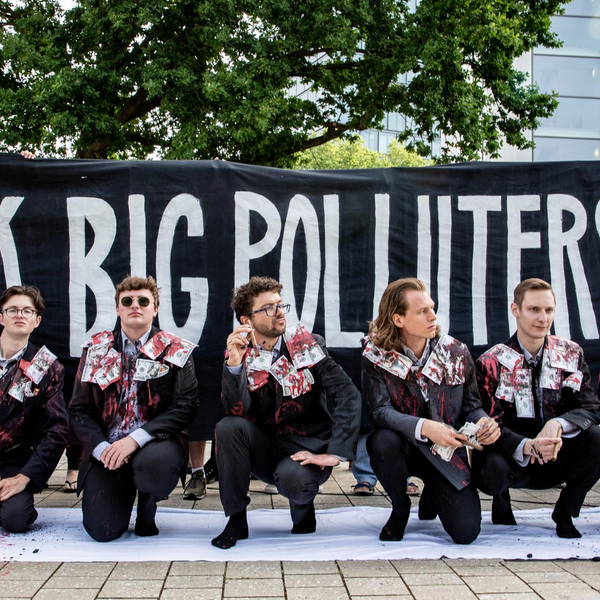
Brazil climate summit hosts highest ever share of fossil fuel lobbyists
One in 25 participants at the Cop30 climate summit in Brazil is tied to the oil and gas sector, the highest concentration of fossil fuel lobbyists so far at the United Nations climate talks. Their presence is driving growing unease over influence, conflicts of interest and the way the negotiations are being shaped.
Issued on: 14/11/2025 - RFI

Kick the Big Polluters Out, a coalition of 450 NGOs, says overall attendance at Cop30 sits at 56,118 as of 10 November – and 1,603 of these attendees have links to the oil and gas industry.
The coalition says that while the total is lower than at some past summits, the concentration inside the talks is at its highest point.
It added that this count has risen sharply since it recorded 500 attendees with fossil fuel ties at the Glasgow summit five years ago. This rise has continued even as pressure builds for a shift away from fossil fuels.
The group of lobbyists in Belém is bigger than almost every national delegation. Brazil is the only country with a larger presence, at 3,805 people. China follows with 674, then Nigeria, Indonesia and the Democratic Republic of Congo. The UN puts the total of official delegates at 11,991.
Growing unease
In a letter dated 1 October, 225 organisations urged the Cop30 presidency to stop inviting major polluters into the talks. They wrote that the figures show “the urgency of protecting United Nations climate negotiations by establishing clear conflict of interest policies and accountability measures”.
They added that “big polluters should not have access to climate policy making”.
Allowing industry representatives into negotiations, they argued, lets them “continue to influence and undermine the international response”.
Lobbyists include corporate leaders, technical experts and energy specialists, whose interests can clash with climate goals. Some form groups such as the International Emissions Trading Association, which has a pavilion at the summit.
Behind closed doors
Blue zone accreditation gives observers – including environmental NGOs, youth groups, women’s rights organisations and unions – access to negotiation rooms.
States can close meetings to observers, but special party overflow badges allow some people to remain without speaking rights. At least 600 lobbyists hold this badge.
The influence of fossil lobbyists often outweighs that of NGOs due to economic weight, Fanny Petitbon, from the climate campaign group 350.org, told RFI – adding that NGOs defend the public good while lobbyists defend economic interests.
This pressure has contributed to a long-running taboo around fossil fuels in UN climate talks, she said. “It makes no more sense than inviting the tobacco industry to a conference on fighting cancer.”
Banks in the mix
Japan has 33 lobbyists on site, including members of Osaka Gas. Norway has 17, including six from Equinor. France’s delegation of 449 includes at least 22 people linked to the sector, including five TotalEnergies executives. They include chief executive Patrick Pouyanné.
TotalEnergies was found guilty two weeks ago by a French court of misleading commercial practices, over claims it could reach carbon neutrality by 2050 while increasing oil and gas production.
The list of accredited people consulted by RFI also includes representatives from banks BNP Paribas and Crédit Agricole. Both rank among the top 30 financiers of fossil projects.
The annual Banking on Climate Chaos report said in June that the world’s 65 largest banks provided $869 billion of funding to fossil fuels in 2024, a rise of 23 percent.
Disclosure fight
In a statement, Kick the Big Polluters Out said it counts as lobbyists delegates who can reasonably be assumed to seek influence over policy in the interests of the fossil industry or its shareholders.
It also included financial institutions that have provided major support to fossil firms since the Paris Agreement.
The coalition said it had secured a new rule this year requiring all registered participants at Cop30 to declare any potential conflict of interest. They must state who funds their participation, whom they work for, the nature of their link, their role and their actor group.
This rule does not apply to state delegation badges.
“It is clear we cannot solve a problem by giving power to those who caused it,” said Jax Bongon from IBON International in the Philippines, which has recently been hit by two typhoons. “Yet 30 years and 30 Cop summits later, more than 1,500 fossil fuel lobbyists walk through the climate negotiations as if nothing had happened."
He added: "It is exasperating to see their influence grow year after year, making a mockery of the process, and the communities that suffer the consequences.”
This article was adapted from the original version in French by RFI's Géraud Bosman-Delzons
Analysis finds 1,600 fossil fuel representatives at UN climate summit in Brazil, outnumbering almost every country delegation.
One in every 25 COP30 attendees is a fossil fuel lobbyist, according to a new analysis by the Kick Big Polluters Out (KBPO) coalition.
It found that more than 1600 fossil fuel lobbyists have been granted access to the UN climate summit in Belém, significantly outnumbering almost every country delegation at the talks. Only the host country, Brazil, has sent more people, with a delegation of 3805.
KPBO says this is a 12 per cent increase from last year’s climate talks in Baku, Azerbaijan and is the largest concentration of fossil fuel lobbyists at COP since the coalition started analysing attendees in 2021.
The overall number of fossil fuel representatives at COP30 is less than it was at COP29 in Baku last year, but the proportion is higher as there are fewer people in total attending the talks in Belém.
What counts as a fossil fuel lobbyist?
For its analysis, the KPBO coalition uses the provisional list of COP30 participants published by the UNFCCC on 10 November. It uses only the information provided on this list to determine if a delegate has ties that would qualify them as a fossil fuel lobbyist.
The analysis defines a fossil fuel lobbyist as any delegate who represents an organisation or delegation that aims to influence climate policy in favour of the fossil fuel industry or specific fossil fuel companies.
This includes financial representatives from institutions that have provided major funding to fossil fuel companies since the Paris Agreement was signed.
Fossil fuel lobbyists outnumber delegates from vulnerable nations
The analysis found that fossil fuel lobbyists outnumber official delegates from the Philippines 50 to 1 - despite the country being hit by devastating typhoons during the climate conference.
“Just days after devastating floods and supertyphoons in the Philippines, and amid worsening droughts, heatwaves, and displacement across the Global South, we see the very corporations driving this crisis being given a platform to foist the same false ‘solutions’ that sustain their profit motives and undermine any hope of truly addressing the climate emergency,” said Kick Big Polluters Out member Jax Bonbon from IBON International in the Philippines.
“COP30 promises to be an ‘Implementation COP,’ yet it has so far failed to implement even a basic and long-overdue demand of kicking Big Polluters out of a conference meant to address the crisis they created.”
There are 40 times more fossil fuel lobbyists than attendees from Jamaica, still reeling from Hurricane Melissa, which was supercharged by climate change.
Overall, fossil fuel lobbyists received two-thirds more passes for COP30 than all of the delegates from the 10 most climate vulnerable nations combined.
Where are fossil fuel lobbyists coming from?
Major trade associations remain the biggest vehicle for fossil fuel influence, according to the KBPO coalition. The International Emissions Trading Association brought 60 representatives, including delegates from oil and gas giants ExxonMobil, BP, and TotalEnergies.
COP30 is the first of these annual UN climate talks where all non-government participants are expected to publicly disclose who is funding their participation and confirm their individual objectives align with those of the UNFCCC. The new requirement doesn’t, however, apply to those who are attending with government badges.
The KBPO coalition says this is a “concerning oversight” given 164 fossil fuel lobbyists gained access through government badges.
Separate research by Transparency International has found that 54 per cent of participants in national delegations either didn’t disclose the type of affiliation they have or selected a vague category like “Guest” or “Other”. Several national delegations, including Russia, Tanzania, South Africa and Mexico, didn't disclose the affiliation of any of their delegates holding a Party badge, it said.
“At COP29, our analysis showed that nearly one in six participants failed to disclose details of their affiliations, with many linked to fossil fuel interests,” explains Maíra Martini, CEO of Transparency International.
“This pattern is repeating at COP30, with more than half of all delegation members withholding or obscuring their affiliations, threatening to undermine trust and tilt decisions away from the needs of people and the planet.”
Which EU countries brought fossil fuel representatives to COP30?
An open letter from Fossil Free Politics to Climate Commissioner Wopke Hoekstra earlier this year called on the EU to protect the UN climate talks from fossil fuel industry influence and not bring any fossil fuel lobbyists to COP30
The EU appears to have taken note as the only people in its delegation that are not from an EU institution or its advisors were three journalists and film-makers.
“It is a strong signal from the European Commission to not bring fossil fuel lobbyists to COP for the second year in a row," says Kim Claes, Corporate Capture campaigner at Friends of the Earth Europe.
“Now it’s time to enshrine this approach in EU policy and ensure that national delegations at COP follow suit.”
Following the work of Fossil Free Politics groups, Germany and Austria also committed ahead of COP30 not to bring fossil fuel lobbyists to the talks.
Other EU Member States, however, brought 84 lobbyists into the UN climate conference in their official delegations, according to a more detailed analysis by Fossil Free Politics in collaboration with the KBPO coalition.
France brought 22 - five from TotalEnergies, including CEO Patrick Pouyanné.
In October this year, a Paris court ruled that TotalEnergies had misled consumers in its advertising by giving the impression that it is part of the solution to climate change despite continuing to promote and sell more fossil fuels.
Specifically, TotalEnergies claimed that it put "climate at the heart of its strategy, with the aim of providing cleaner, safer and more affordable energy to as many people as possible" and that it had set the ambition to achieve net zero by 2050.
The company was ordered to stop the unlawful advertising and must display the ruling prominently on its website for a period of 180 days. It was the first time France's greenwashing laws had been applied to a major fossil fuel company.
Sweden had the next largest fossil fuel delegation with 18, and Italy brought 12 lobbyists.
Among other EU Member State delegations, Denmark brought 11 lobbyists, while Belgium and Portugal brought 8 each. Finland brought 2, and the Netherlands and Greece brought 1 each.
Do UN climate talks need better accountability?
A report from Transparency International published earlier this year looked at how fossil fuel actors influence the UN climate negotiation process.
It drew on 39 interviews with climate negotiators, UNFCCC observers, and researchers alongside field observations from COP29 in Baku and the 2025 mid-year climate talks in Bonn.
The report found that these interests shape everything from the foundational rules of the UN Framework Convention on Climate Change (UNFCCC) to the outcomes of COP meetings, weakening global efforts to tackle the climate crisis.
Brice Böhmer, climate and environment lead at Transparency International, says if COP30 is the "COP of truth", the Presidency and UNFCCC Secretariat should now "commit to reviewing and strengthening participant disclosure rules ahead of future summits, ensuring integrity and accountability at every level".
Alongside measures to strengthen the disclosure requirements from participants, Transparency International is also calling for representatives from the fossil fuel industry to be excluded entirely from national delegations.
Th KPBO coalition says that its recent findings also reinforce the urgent need to establish clear conflict of interest policies and accountability measures at the UN summit.
Lien Vandamme, senior human rights and climate change campaigner at the Center for International Environmental Law (CIEL), a member of the coalition, says we need to "urgently reform the rules of climate negotiations".
Vandamme adds that talks need to "allow voting when consensus is weaponised, adopt enforceable conflict-of-interest rules, create real compliance and enforcement so promises have consequences, and protect civic space and human rights so people and science — not polluters— can accelerate the phaseout of fossil fuels and deliver real finance at scale."
“We see the very corporations driving this crisis being given a platform to foist the same false ‘solutions’ that sustain their profit motives.”

Brazil’s President Luiz Inacio Lula da Silva is seen during the COP30 UN Climate Change Conference opening ceremony in Belem, Para State, Brazil, on November 10, 2025.
(Photo by Pablo Porciuncula/ AFP via Getty Images)
Brad Reed
Nov 14, 2025
COMMON DREAMS
A environmental advocacy group is warning about the potential “corporate capture” of the COP30 climate summit being held this week in Belém, Brazil.
In a report released on Friday, the Kick Big Polluters Out (KBPO) coalition said it tallied the “largest ever attendance share” for fossil fuel lobbyists, dimming hopes of reaching a breakthrough agreement to curb emissions.
RECOMMENDED...
Army of 5,000+ Fossil Fuel Lobbyists Has ‘Stranglehold on Climate Action’ at COP30: Report

‘Against Humanity’: Leaders Denounce Fossil Fuel-Loving Trump as He Skips Out on Global Climate Summit
In fact, KBPO found that fossil fuel lobbyists at the conference outnumber the delegations of every nation attending, with the lone exception being Brazil, which is hosting COP30.
In total, KBPO counted 1,602 fossil fuel lobbyists at the climate summit.
The number of fossil fuel lobbyists at COP30 increased by 12% from last year’s COP29 held in Baku, Azerbaijan, and lobbyists represent one out every 25 participants at this year’s conference.
The KBPO report puts this into perspective by contrasting the number of lobbyists in attendance with the number of delegates from nations that have suffered the most from extreme weather brought about by human-induced climate change.
“Fossil fuel lobbyists outnumber official delegates from the Philippines by nearly 50 to 1—even while the country is being hit by devastating typhoons as the UN climate talks are underway,” the report notes. “Fossil fuel lobbyists sent more than 40 times the number of people than Jamaica, which is still reeling from Hurricane Melissa.”
Jax Bongon, climate justice policy officer at the sustainable development advocacy organization International IBON and a member of the KBPO coalition, said the heavy presence of lobbyists is “making a mockery of the process” of trying to negotiate a deal to reduce global carbon emissions.
“Just days after devastating floods and supertyphoons in the Philippines, and amid worsening droughts, heatwaves, and displacement across the Global South,” Bongon said, “we see the very corporations driving this crisis being given a platform to foist the same false ‘solutions’ that sustain their profit motives and undermine any hope of truly addressing the climate emergency.”
The report also called out several wealthy nations for including fossil fuel lobbyists in their delegations.
“ France brought 22 fossil fuel delegates, with five from TotalEnergies, including CEO Patrick Pouyanné,” KBPO noted. “Japan’s delegation contained 33 fossil fuel lobbyists, among them Mitsubishi Heavy Industries and Osaka Gas; and Norway snuck 17 into the talks, including six senior executives from its national oil and gas giant Equinor.”
Although the US under President Donald Trump is not taking part in this year’s negotiations, Sen. Sheldon Whitehouse (D-RI) is attending COP30 as the lone federal representative of the US government.
According to Politico, Whitehouse intends to hammer the Trump administration for continuing to focus exclusively on fossil fuel production at a time when the rest of the world is moving on to producing renewable energy sources.
“Amidst sinking approvals and a shellacking in the most recent elections, it’s no surprise the Trump administration is unwilling to defend the fossil fuel industry’s unpopular and corrupt climate denial lies on the global stage,” Whitehouse told Politico.
By AFP
November 14, 2025

TotalEnergies CEO Patrick Pouyanne is one of the few oil executives at COP30 - Copyright AFP Mauro PIMENTEL
Julien MIVIELLE
The head of France’s TotalEnergies, one of the few oil executives to attend UN climate talks in Brazil, jousted Friday with activists, defended his presence and sidestepped questions about his sector’s role in global warming.
After speaking in a panel at COP30 in Belem, TotalEnergies chief executive Patrick Pouyanne was confronted by a Greenpeace activist over demands that the fossil fuel industry compensate victims of extreme weather events.
“There have been cyclones in the Caribbean for decades,” Pouyanne retorted.
When told they were “accelerating,” he replied: “I am not a scientist.”
“I am not a meteorologist,” Pouyanne said when asked by AFP about science showing hurricanes are becoming more intense.
“I simply observe that, unfortunately, there were (cyclones), there are still (cyclones) and there will be more.”
The IPCC, the UN-mandated body that assesses climate science, has concluded that climate change is not expected to increase the total number of tropical cyclones, but that the frequency of more intense storms will rise.
Emissions from burning fossil fuels — oil, gas and coal — are the main drivers of climate change.
Pouyanne attended an event on decarbonizing the oil and gas industry. An executive from Brazilian state-owned energy firm Petrobras and a government official also spoke.
The head of COP30, Brazilian diplomat Andre Correa do Lago, cancelled his appearance to speak with Indigenous protesters who had blocked the main access to the conference center.
The Greenpeace activist pointed to a report from NGOs denouncing the presence of many lobbyists tied to the fossil fuel industry at COP30.
A total of 1,602 delegates with links to the oil, gas and coal sectors have headed to Belem, equivalent to around one in 25 participants, according to Kick Big Polluters Out (KBPO), which analyzed the list of attendees.
“I am not a lobbyist at all. … You are very wrong,” Pouyanne said.
“I was invited. I came and I believe in dialogue. I don’t think we will make progress on climate through exclusion because otherwise what will happen? We will stay in our corner, we’ll make our oil and that’s it?”
He also was skeptical about the prospect of a roadmap for phasing out fossil fuels, an idea that some countries, including France, would like to officially launch at COP30.
“It’s a European vision, organized by governments. Perhaps we should also trust the stakeholders who are investing,” Pouyanne said.
“Thinking that we’ll succeed through regulation alone — we’re starting to realize that won’t work.”

November 15, 2025
Anbound
By Yi Wang
The 30th Conference of the Parties (COP30) to the United Nations Framework Convention on Climate Change (UNFCCC) is currently being held in Belém, Brazil, from November 10 to 21. The summit coincides with the 10th anniversary of the Paris Agreement, yet growing signs of backsliding in global climate negotiations are cause for concern.
Major Emitters Absent
Worsening geopolitical tensions, economic slowdowns, and rising unemployment have led many governments to prioritize domestic issues, dampening enthusiasm for climate policymaking and international cooperation. According to media reports, fewer than 60 national leaders have confirmed attendance at COP30 this year. U.S. President Donald Trump has decided not to send any senior federal officials from Washington to the summit, with only representatives from the U.S. Embassy in Brazil expected to attend. Fortunately, delegations from 26 U.S. states will participate. China will be represented by Vice Premier Ding Xuexiang, while Japanese Prime Minister Sanae Takaichi will be absent. India will send a delegation led by Environment Minister Bhupender Yadav. By contrast, European participation is relatively strong: U.K. Prime Minister Keir Starmer, French President Emmanuel Macron, German Chancellor Friedrich Merz, and European Commission President Ursula von der Leyen are all expected to attend COP30.
At the Belém Summit, the reduced presence of top-level representatives from the world’s largest emitters is likely to hinder substantive progress on key issues such as climate finance and emissions reduction responsibilities. It may also lead to scaled-back or delayed implementation of climate pledges. Longstanding divergences between developed and developing countries, rooted in differing interests and priorities, continue to complicate global climate governance.
High Energy and Water Consumption in the “Smart Industry”
Digital technologies are empowering urban governance and driving low-carbon urban transitions. It is a shared frontier of innovation and experimentation worldwide, often considered to be one of the best practices for climate resilience. Yet, as global digital transformation accelerates, tensions between technological progress and sustainability are becoming increasingly visible. There is controversy over whether technological innovation comes at the expense of humanity’s basic conditions for survival and development.
Artificial intelligence (AI), semiconductor manufacturing, cloud data centers, and cryptocurrency mining have all driven energy and water consumption to unprecedented levels, placing immense strain on the environment’s carrying capacity. By 2030, global freshwater demand is expected to exceed supply by 40%, leaving an estimated 1.6 billion people without access to safe drinking water.
Training generative AI models, for instance, is a process that consumes vast amounts of electricity and water. As the global AI race intensifies, the demand for computing power continues to soar. Technology giants OpenAI, Oracle, and Related Digital plan to jointly build a data center complex exceeding one gigawatt in capacity in Saline Township, Michigan, by early 2026, to expand the United States’ AI infrastructure. The investment is projected to reach about USD 50 billion, a one-gigawatt computing facility where its electricity is capable of powering roughly 750,000 U.S. homes.
Collective Action in the Face of Disasters
What is particularly alarming is that climate change is causing extreme weather events to become more frequent and unpredictable, and even the most advanced technologies struggle to keep up with the pace of floods, storms, and droughts. In today’s highly digitized and interconnected urban environments, large-scale power outages can bring smart cities, reliant on communication technologies and the Internet of Things (IoT), to a halt almost instantly. Equally concerning is the social cost of climate change. This could very well add significant pressure to social systems, triggering widespread public dissatisfaction and potentially disrupting social order.
On April 28, 2025, the southern Iberian Peninsula experienced a massive power outage. Major cities in Spain and Portugalwere left without electricity, with parts of southern France also affected. The blackout impacted approximately 60 million people and caused disruptions to urban supply chain. In some areas, the power failure lasted for over ten hours. Mobile networks and internet services were completely disrupted, and underground transportation systems were thrown into chaos. Public sectors crucial to daily life, such as communications and healthcare, were severely impacted.
This summer, China faced the simultaneous challenges of extreme heat and flooding, with several cities plunged into chaos. The weather’s extremity surpassed previous records, leading to water and power shortages, along with breakdowns in communication and transportation systems. Emergency responses were delayed in some regions. On June 20, the looting of shops in Huaiji County of Guangdong Province in Southern China, triggered by floods, trended as the top news story. This is a clear example on how public disorder during a disaster often garners more media attention than the disaster itself.
Symbiosis Evolution
Climate change is no longer merely a matter of graphs on temperature and data predictions; it has evolved beyond a single environmental issue and is now viewed as a complex systemic problem intricately linked to energy transitions, technological advancement, employment growth, and the continuous improvement of living standards. Scientists point out that there are significant interactions between critical components of the Earth system, where one “tipping point” may trigger another, leading to a cascade effect and further destabilization of the system as a whole. Clearly, countries’ climate governance capabilities are facing an unprecedented challenge.
Climate strategies are increasingly intertwined with national security, economic policies, industrial policies, and environmental agendas. Decision-makers must rethink their approach to climate governance, leveraging their unique strengths and fostering coordination among various stakeholders. Although the United States has become less proactive in multilateral climate negotiations, the global momentum for emissions reduction and decarbonization continues to build, becoming an unstoppable trend, one that developed nations cannot afford to ignore. Developing countries, on the other hand, are eager to play a more central role, actively participating in climate dialogues, expanding green supply chains, and strengthening collaboration in environmental science, global disaster relief, and public health. They are also exploring solutions based on self-organizing governance.
At its core, global climate governance must aim for a “minimum consensus” and rationally construct an order where different groups can coexist and develop together. Every single individual must make some form of change, in one way or another.
Anbound
Anbound Consulting (Anbound) is an independent Think Tank with the headquarter based in Beijing. Established in 1993, Anbound specializes in public policy research, and enjoys a professional reputation in the areas of strategic forecasting, policy solutions and risk analysis. Anbound's research findings are widely recognized and create a deep interest within public media, academics and experts who are also providing consulting service to the State Council of China.
University of Oxford launches Nature’s Intelligence Studio at COP30
A COP30 push to learn from nature’s intelligence to tackle today’s and tomorrow’s climate, energy, and industrial challenges through bio-inspired innovation
Belém, Brazil / Oxford, UK - 14 November 2025: The University of Oxford’s TIDE Centre today launched the Nature’s Intelligence Studio, a new programme to translate principles observed in biological systems into technologies that support the energy transition and wider sustainability goals, while ensuring fair benefit-sharing with communities in biodiverse regions.
Professor Amir Lebdioui, Director, TIDE Centre, University of Oxford, said: ‘The developing world holds most of the planet’s biodiversity, which is a vast library of biological intelligence built over 3.4 billion years of evolution. Yet, this extraordinary asset remains largely untapped for local development and sustainable innovation.’
Nature-inspired innovation means learning from and emulating ideas from nature, which is a billion years of R&D ahead of us and has learned to adapt to changing environments.
The Nature’s Intelligence Studio will translate nature’s principles into practical solutions through the three initial projects:
The Energy Atlas of Nature’s Innovations, developed in collaboration with Asteria, an AI-powered start-up with a platform leveraging over 4 million scientific articles connected to biomimicry, that connects specific industrial energy challenges to biological models;
An Ideathon in collaboration with the Development Bank of Latin America and the Caribbean to support pilot innovations that demonstrate performance in the field and generate a new wave of bio-inspired prototypes from the global south;
A benefit-sharing legal framework so communities whose biodiversity underpins discovery share in the value.
The goal is clear: align conservation and industrial decarbonisation so the standing forest becomes an engine of innovation.
The programme is featured in the COP30 action agenda and has been endorsed by Ambassador André Corrêa do Lago, President of COP30, as an example of how science and innovation can link conservation with sustainable development in the Amazon: ‘In the heart of the Amazon, COP30 reminds us that nature holds the key to innovation — and the Nature’s Intelligence Studio embodies this new approach: protecting nature while learning from its intelligence.’
Backed by close to £1 million from Oxford, philanthropic foundations, and the Development Bank of Latin America and the Caribbean (CAF), the Studio will initially operate between Oxford and Belém, before expanding to other high-biodiversity regions.
Alicia Montalvo, Manager of Climate Action and Positive Biodiversity, CAF, said: ‘At CAF, we believe that Latin America and the Caribbean’s extraordinary biodiversity holds the key to a new model of development, one that is both innovative and inclusive. Our collaboration with Oxford through the Nature’s Intelligence Studio embodies this vision: connecting science, policy, and entrepreneurship to turn bio-inspired ideas into real solutions for the planet.’
Nature-inspired innovation (also referred to as biomimicry, biomimetics, or biodesign) examines how organisms solve functional problems and applies those principles to human design. It does not involve the use of living organisms; rather, it studies mechanisms - such as bioluminescence in fireflies or aerodynamic tubercles on whale fins - and recreates them through engineering.
This approach is directly relevant to climate and energy: it can replace energy-intensive processes with more efficient, circular alternatives and create new economic incentives for conservation in regions that are critical carbon sinks.
Deuza Santos, Intellectual Property and Entrepreneurship Manager, National Institute of Amazonian Research (INPA), said: ‘The launch of Nature’s Intelligence Studio during COP30 in Belém represents a strategic milestone in repositioning the Amazon on the global stage. This initiative reframes the rainforest not merely as a biome to be preserved, but as a living repository of intelligence and a bank of solutions for contemporary industrial and environmental challenges.
‘The Studio will act as a bridge, connecting the vast biological knowledge catalogued by regional science with the innovation expertise and development policies of its international partners.’
-END-
Call for collaboration
Researchers, innovators, and industry partners are invited to contribute use cases to the Energy Atlas of Nature’s Innovations (available at oxford-asteria.fly.dev), participate in forthcoming Ideathons, and co-develop bio-inspired prototypes. Expressions of interest: tide@qeh.ox.ac.uk.
Media contact
Sara Torres Raisbeck, Outreach Officer, TIDE Centre — tide@qeh.ox.ac.uk
Notes to editors
Terminology: Nature-inspired innovation differs from nature-based solutions. The former replicates functional principles observed in organisms; the latter employs ecosystems themselves (e.g. wetlands) to deliver services.
Evidence base: Further background includes Professor Amir Lebdioui’s research on the economic potential of bio-inspiration (Environmental and Resource Economics, 2022).
Economic potential: The Fermanian Business & Economic Institute estimates that bio-inspiration could add approximately US$1.6 trillion to global output by 2030 across sectors including energy, architecture, and engineering.
Partners and roles: TIDE Centre (Oxford) leads research, policy engagement, and innovation design; CAF co-funds and co-hosts activities; the Museum of the Amazonas and INPA will host activities in Belém (including an exhibition) and provide scientific expertise; Asteria provides AI infrastructure for the Energy Atlas.
Access: Energy Atlas demo—oxford-asteria.fly.dev.
About the University of Oxford
Oxford University has been placed number 1 in the Times Higher Education World University Rankings for the tenth year running, and number 3 in the QS World Rankings 2024. At the heart of this success are the twin-pillars of our ground-breaking research and innovation and our distinctive educational offer.
Oxford is world-famous for research and teaching excellence and home to some of the most talented people from across the globe. Our work helps the lives of millions, solving real-world problems through a huge network of partnerships and collaborations. The breadth and interdisciplinary nature of our research alongside our personalised approach to teaching sparks imaginative and inventive insights and solutions.
Through its research commercialisation arm, Oxford University Innovation, Oxford is the highest university patent filer in the UK and is ranked first in the UK for university spinouts, having created more than 300 new companies since 1988. Over a third of these companies have been created in the past five years. The university is a catalyst for prosperity in Oxfordshire and the United Kingdom, contributing around £16.9 billion to the UK economy in 2021/22, and supports more than 90,400 full time jobs.
.jpeg)
November 14, 2025
ABr
By Luciano Nascimento
For the organizations and social movements participating in the People’s Summit in Belém, countries and decision-makers have remained silent or proposed completely ineffective solutions, jeopardizing the goal set in the 2015 Paris Agreement to limit the average global temperature rise to 1.5°C.


The Summit officially opened on Wednesday (Nov. 12) as one of the events of the 30th United Nations Climate Change Conference (COP30). It brings together approximately 1,300 social movements, networks, and grassroots organizations from around the world. The event runs until November 16 at the Federal University of Pará, on the banks of the Guamá River. The opening speeches expressed support for Palestine and criticized the lack of backing for popular participation in the conferences.
“We decided more than two years ago, when we learned that COP30 would take place in our country – and specifically here in the state of Pará – that, given the challenges posed by the COP, we should build one of the largest uprisings of the working class in our country, mobilizing the working class of the world,” said Ayala Ferreira, a member of the Summit’s organizing committee and of the Landless Rural Workers’ Movement (MST).
“Over 30,000 people are expected to attend the Summit, organized as a concrete response by civil society to what participants describe as the COP’s inertia and lack of commitment. According to the Summit’s leaders, even after 30 editions, the COP has delivered few tangible results and continues to exclude local populations from decision-making.”
Before the opening, hundreds of people marched with flags defending water, opposing mining exploitation, and rejecting the use of fossil fuels. Flags representing riverside communities, landless workers, quilombolas, coconut breakers, people affected by dams, people with disabilities, and women were carried through the university grounds, reflecting the diversity of participants. Palestinian flags also waved in every corner, accompanied by chants of “Free Palestine.”
“From Palestine to the Amazon, crimes against humanity persist, and so does people’s resistance. In Palestine, the genocide has been ongoing for two years and has yet to cease. Even after the agreement [signed between Israel and Hamas two months ago], Israel’s crimes continue,” said Palestinian activist Jamal Juma.
Uniting agendas
The program includes debates on territories and food sovereignty, historical reparation and environmental racism, a just energy transition, the fight against fossil fuel extraction, participatory governance, democracy and the internationalism of peoples, just cities and vibrant peripheries, popular feminism, and women’s resistance.
According to the organizers, the goal is to “strengthen grassroots organization and bring together unified agendas – socio-environmental, anti-patriarchal, anti-capitalist, anti-colonialist, anti-racist, and rights-based – while respecting their diversity and specificities, united for a future of good living,” as stated in the People’s Summit manifesto, another act of climate resistance launched by the movement.
Ivan González, a member of the Summit’s organizing committee and of the Trade Union Confederation of the Americas (CSA–TUCA), highlighted the efforts of organizations to take part in the debates and influence the decisions made at the COP.
“This effort we have made to be at the Summit is going well – with great difficulty, but still going well. Especially because ordinary people do not have the means to mobilize millions in funds to influence government decisions, particularly at the COP and other governance spaces,” said González. “We are here because we want to show that the people – or rather, individuals – defend our planet, especially against this capitalism that feeds on bodies, labor, and nature,” he added, expressing solidarity with struggles in Burkina Faso, the Congo, Nepal, Palestine, Latin America, and the Caribbean.
Solutions
One of the main points raised at the People’s Summit is the recognition that decision-making countries have either remained silent or proposed completely ineffective solutions to address the climate crisis. Participants point out that extreme weather events, droughts, floods, landslides, and so-called “false climate solutions” only deepen environmental and climate inequality and injustice, disproportionately affecting the most vulnerable populations.
González recalled that social movements have developed solutions rooted in solidarity to address problems arising from the climate crisis and other challenges. He cited as an example the solidarity kitchens, set up during the COVID-19 pandemic to provide free meals to people in vulnerable situations.
“Solidarity kitchens were a grassroots initiative created by social movements during the pandemic and under the Bolsonaro administration. They have helped build an alliance in defense of agroecology and unite rural, urban, and indigenous movements to think beyond immediate crises. For instance, when an extreme weather event leaves thousands homeless, as happened in Rio Grande do Sul state, it is the emergency solidarity kitchens that emerge as the most immediate popular response,” he stated.
“And we believe it is from this process of building popular action that the answer to confronting the climate crisis we face today will emerge,” he added.
November 14, 2025
By Dr. Imran Khalid
If global climate diplomacy feels stuck, China’s new 2035 roadmap offers a reminder that ambition and realism can coexist. As world leaders gather in Belém, Brazil for COP30, the stakes could not be higher. The planet is warming faster than most governments are acting. Yet amid stalled commitments and wavering political will, Beijing’s steady march toward a green transition stands out—less as rhetoric, more as strategy.
In October, China unveiled updated climate targets for 2035: a 7-10 percent reduction in greenhouse gas emissions, non-fossil fuels to make up over 30 percent of its energy mix, and wind and solar capacity to grow to six times its 2020 levels. It also pledged to expand forest coverage and make electric vehicles the mainstream choice for new car sales. These are not abstract promises. They are sector-specific, measurable, and precisely timed to align with the next phase of global climate action. According to the International Energy Agency, China already accounts for over 60 percent of global solar manufacturing capacity. This is proof that policy alignment, not slogans, drives progress.
Contrast this with the United States, which under President Trump has withdrawn from the Paris Agreement and halted climate funding for developing countries. Domestically, the administration continues to promote oil and gas exploration, including drilling in Alaska’s Arctic National Wildlife Refuge. The message is unmistakable: domestic energy dominance takes precedence over global climate cooperation. Even as many U.S. states and corporations pursue net-zero commitments, the absence of federal leadership leaves a vacuum that reverberates across climate negotiations.
But the divergence between the world’s two largest economies runs deeper than policy. It reflects two fundamentally different views of globalization and responsibility. China now treats climate action as an economic opportunity, a way to lead in emerging industries, deepen strategic partnerships, and reengineer its growth model for the long term. The United States, at least for now, sees climate rules as limits on its sovereignty and industrial freedom. Where Washington retreats, Beijing builds. Through initiatives such as the BRICS green finance mechanisms and the Belt and Road Initiative’s new Green Silk Road, China is filling the institutional gap the West once occupied.
This leadership gap matters. For developing nations already facing floods, heatwaves, and food insecurity, COP30 is more than another climate summit, it is a test of credibility. With Washington stepping back, Beijing’s consistency assumes outsized importance. Its zero-tariff access for green technologies, combined with massive investments in solar, wind, and electric vehicles, has already helped push global costs down. These are tangible contributions, not diplomatic talking points. For much of the Global South, China’s approach offers not just technology, but dignity. It is a model of partnership rather than prescription.
Still, China’s transition remains a balancing act. Coal continues to play a role in its energy mix, and regional disparities persist between industrial output and environmental goals. Yet the trajectory is unmistakable. China is investing in green innovation, scaling up renewables, and embedding sustainability across its broader development strategy. Its upcoming fifteenth Five-Year Plan is expected to deepen this integration further, linking emission goals with industrial upgrading, digitalization, and infrastructure planning
What makes Beijing’s approach distinctive is its systemic logic. Climate policy is not treated as a standalone concern but as part of an economic transformation. The Belt and Road Initiative’s Green Silk Road, for example, now emphasizes sustainable projects, from solar parks in Kenya to hydropower modernization in Central Asia. These aren’t merely reputational exercises; they illustrate how climate action can align with development and diplomacy simultaneously.
The economic rationale is just as compelling. China’s dominance in photovoltaic manufacturing and battery technology has generated global economies of scale. Its electric vehicle sector, propelled by domestic demand and policy incentives, has become a global leader. These industries not only reduce emissions but create jobs, attract investment, and expand affordable access to green technologies.
For developing countries, this accessibility could be transformative. A solar microgrid built with Chinese components can power a rural hospital in Nigeria or a small factory in Southeast Asia, cutting emissions while improving livelihoods. China’s willingness to share technology through trade and investment makes it a collaborator rather than a gatekeeper in the energy transition.
Climate diplomacy, after all, is not a zero-sum game. The European Union continues to play a constructive role, and many U.S. states, cities, and corporations remain committed to net-zero goals despite federal retreat. But the absence of a coordinated U.S. leadership voice at COP30 will be felt. It creates space—and a moral test—for others to lead by example. Beijing, through its mix of planning and pragmatism, has stepped into that void.
This evolution also carries geopolitical weight. Climate policy has become a new form of soft power, a means of building trust and shaping global norms. China’s emphasis on cooperation over confrontation allows it to engage across continents with a narrative centered on shared growth and responsibility. It reframes climate leadership not as sacrifice, but as a pathway to prosperity.
As COP30 begins, the question is no longer whether China is doing enough, but whether others are prepared to match its pace, scale, and seriousness. The climate crisis is too vast for moral grandstanding or nationalist withdrawal. Leadership now means credibility, consistency, and the courage to align ambition with action.
The success of COP30 will depend on more than polished communiqués. It will hinge on who arrives with plans already in motion and technologies ready to share. China’s climate strategy, grounded in domestic transformation and international engagement, offers a working model: pragmatic, ambitious, and increasingly influential. If the world is to make real progress in Belém, it will need more than pledges. It will need examples. And right now, China is providing one.
Dr. Imran Khalid
Dr. Imran Khalid is a geostrategic analyst and columnist on international affairs. His work has been widely published by prestigious international news organizations and journals.
By AFP
November 13, 2025

Australia and Turkey are both bidding to host COP31 next year and neither is backing down - Copyright AFP Mauro PIMENTEL
Nick Perry
Diplomats chasing a good coffee at the COP30 climate summit in Brazil essentially have two choices: the Australians pouring flat whites, or the Turkish offering strong brews right next door.
Their proximity is convenient for a caffeine fix but awkwardly close for Australia and Turkey, which are locked in a stalemate over who should host next year’s UN climate talks.
Both countries are bidding for COP31 and neither is backing down, creating an unwanted distraction at the ongoing negotiations where Brazil is desperate to show that climate diplomacy still works.
Canberra and Ankara are under pressure to break the impasse and avoid a scene in Belem, a city in the Amazon Rainforest steamy enough without any added drama.
The host must be chosen by consensus so unless Australia or Turkey withdraws its bid, or they somehow agree to share the duty, both countries will miss out.
Such an occurrence would be unprecedented, and see COP31 hosting rights default to Germany, which does not want the job.
Against this backdrop, some observers detect a calculated move in positioning the Australian and Turkish pavilions as close as possible within the cavernous COP30 venue.
“100 percent deliberate. The Brazil presidency is like, sort this out,” Kathryn McCallum, an activist from Climate Action Network Australia, told AFP in Belem.
“They don’t want it dragging down this really critical conversation.”
– Tough talk –
The close confines did not deter roughly two dozen Australian and Pacific supporters from promoting their COP31 bid on Thursday in full view of the Turkish pavilion and its crescent moon flag.
On a recent evening, AFP saw an excited crowd swarm the Australian pavilion when Queen Mary of Denmark — a native of Tasmania — paid a royal visit.
Apart from the lure of free coffee, Turkey’s on-site calligrapher has proved a big hit, with visitors to its pavilion leaving with customized illustrations and woven tote bags.
But away from the COP30 pavilions, soft diplomacy is giving way to hard talk.
Brazil has appointed an envoy to nudge Australia and Turkey toward agreement before the summit wraps up on November 21, but neither country is blinking.
On Thursday, Prime Minister Anthony Albanese told reporters in Sydney that Turkish President Recep Tayyip Erdogan was “maintaining his position in response to Australia maintaining our position.”
When asked by AFP if confident of a resolution in Belem, Turkish climate diplomat Aysin Turpanci said: “We are still committed to host COP31.”
Australia had engaged with Turkey “at the highest levels” and wanted to see the matter resolved, the country’s assistant climate minister Josh Wilson told AFP.
“But it’s clear from my engagement in recent days that our bid has very broad and strong international support,” he said, adding the case for Australia to co-host with the Pacific was “compelling.”
But Turkey, too, is confident it has the numbers.
“The chances for Turkey and Australia are fifty-fifty,” a source from the Turkish delegation told AFP.
– Down to the wire –
Past summits have entertained competing bids but “there’s never been one that has gone to the wire like this,” Alden Meyer, a COP veteran from climate think tank E3G, told AFP.
Under the COP rules, hosting duties rotate through five blocs of countries.
In 2026, that falls to the Western European and Other States — two dozen countries mostly in Europe but also Turkey, Australia, Canada and a few others.
If no consensus is reached the summit reverts to Bonn, a city in western Germany that hosts the UN’s climate secretariat.
“I can imagine — I know — that Germany is not looking to host this COP,” Jennifer Morgan, a former climate envoy to Germany, told AFP in Belem.
As both countries dig their heels in, Ethiopia is already celebrated being endorsed for COP32 in 2027 — underscoring how little time next year’s hosts will have to prepare.
Among those also awaiting an outcome in Belem are Pacific nations, which have long campaigned to bring the world’s attention to the climate peril at their doorstep.
“The sooner we know, the better — and hopefully in Australia,” Vishal Prasad, the Fijian director of Pacific Islands Students Fighting Climate Change, told AFP.
By AFP
November 12, 2025

Brazilian Indigenous leader and environmentalist Raoni Metuktire suggested he would give the country's President Luiz Inacio Lula da Silva an earful over a controversial oil exploration project - Copyright AFP Pablo PORCIUNCULA
A renowned Brazilian tribal chief said Wednesday on the sidelines of UN climate talks that he would not hesitate to give the president a “talking-to” if he ignored concerns over oil exploration near the mouth of the Amazon River.
President Luiz Inacio Lula da Silva openly backed the controversial drilling project which began in October when oil giant Petrobras secured a license after a years-long battle.
Raoni Metuktire, the nonagenarian leader of the Kayapo people who rose to fame in the 1980s campaigning against deforestation with British musician Sting, is attending COP30 talks in the Amazon city of Belem.
“I support President Lula, but he must listen to us… He must respect us,” Raoni told journalists after taking part in the opening of the People’s Summit — a parallel event which aims to give voice to those often not heard in high-level climate negotiations.
“I will make an appointment with him, and, if necessary, I will give him a talking-to so that he listens to me,” said Raoni — instantly recognizable for the large wooden plate in his lower lip.
His comments were translated into Portuguese from his Kayapo language.
The Indigenous leader also highlighted government plans for the Ferrograo railway — a nearly 1,000-kilometer (620-mile) project to transport grain across Brazil, including through the Amazon — and ongoing deforestation.
“If these bad actions continue, we will have problems,” Raoni said.
Amazon deforestation has steadily declined since Lula’s return to power, after having increased sharply under the presidency of his far-right predecessor Jair Bolsonaro.
Raoni was one of the figures who symbolically presented Lula with the presidential sash during his inauguration for a third term in 2023.
Lula has repeatedly stated his belief that the world is not ready to move away from fossil fuels, and that expanding oil production in Brazil — the world’s eighth largest producer — will help finance the energy transition.
However, at a leaders’ summit last week ahead of COP30, he warned that “Earth can no longer sustain the development model based on the intensive use of fossil fuels.”

No comments:
Post a Comment