It’s possible that I shall make an ass of myself. But in that case one can always get out of it with a little dialectic. I have, of course, so worded my proposition as to be right either way (K.Marx, Letter to F.Engels on the Indian Mutiny)
In early October, the IMO Marine Environment Protection Committee (MEPC 82) agreed that the concept of “polar fuels” would be further considered at a technical committee meeting in January, setting a clear pathway for future black carbon regulation.
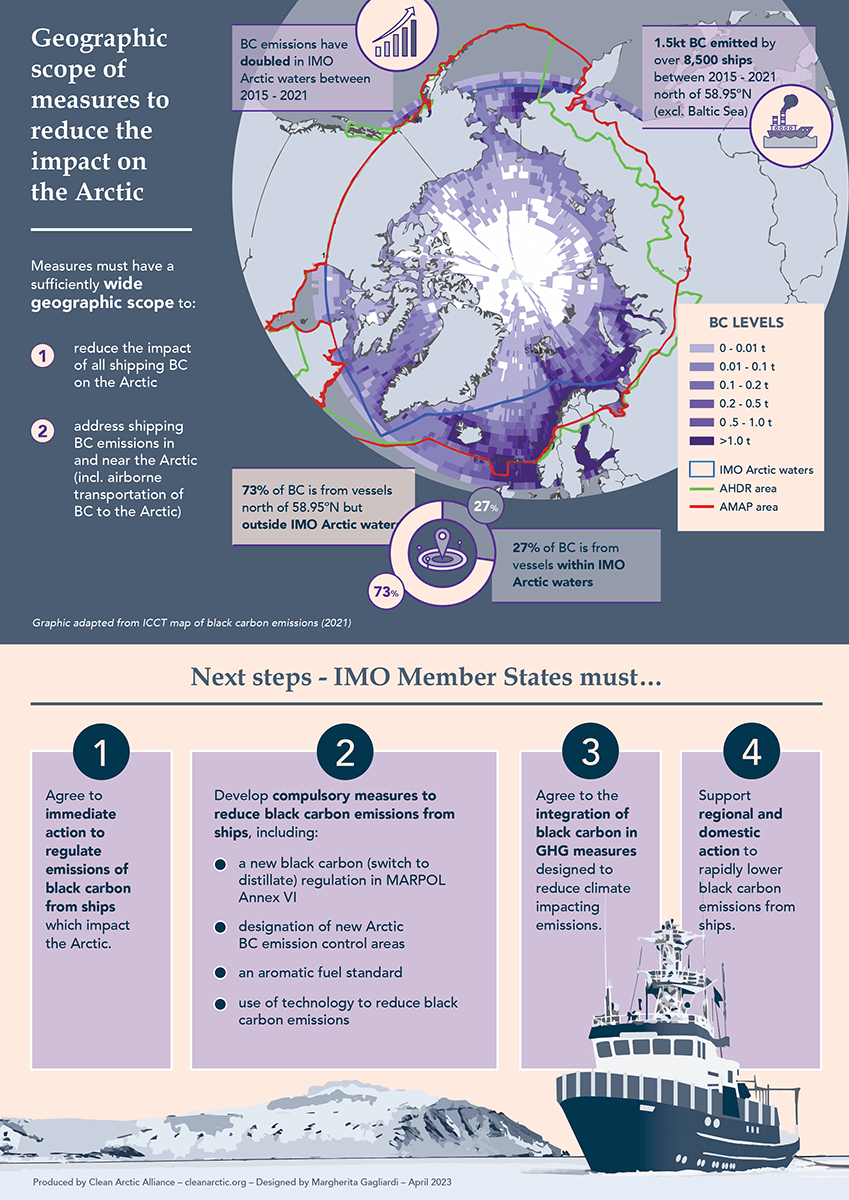
This new course must see the IMO and its Member States develop mandatory regulations to reduce black carbon emissions - and these new rules must be prepared in a matter of months so that they can be approved at MEPC 83 in April 2025 and adopted by 2026.
Progress is certainly to be welcomed - after all, IMO has been discussing the Arctic impact of black carbon from ships since 2011. There are many ways that ships can reduce their black carbon emissions, but without rules in place, emissions are increasing globally - and have more than doubled in the Arctic.
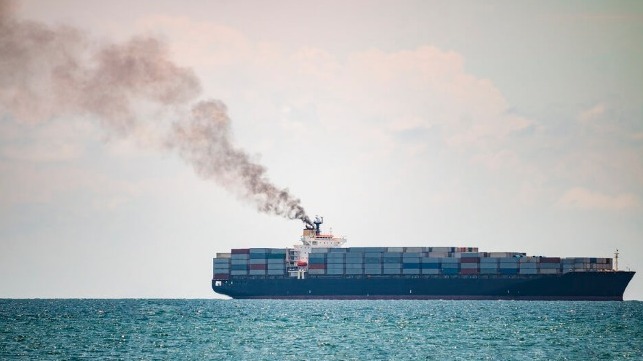
Black carbon is a short-lived climate pollutant, produced by the incomplete burning of fossil fuels, with an impact more than three thousand times that of CO2 over a 20-year period. It makes up around one-fifth of the climate impact of international shipping, which contributes around three percent of all human sources of climate-warming greenhouse gases. Not only does it contribute to warming while in the atmosphere, black carbon also accelerates melting when it falls onto snow and ice.
This melting exposes darker areas of land and water which then absorb further heat from the sun, while the reflective capacity of the planet’s polar ice caps is severely reduced. More heat in the polar systems results in increased melting. This is the loss of the albedo effect, and it is a serious concern: scientists recently announced that the Arctic’s reflectivity has weakened by 24% since 1980.
Declines in sea ice extent and volume are leading to a burgeoning social and environmental crisis in the Arctic, while cascading changes are impacting global climate and ocean circulation. Scientists have high confidence that processes are nearing points beyond which rapid and irreversible changes on the scale of multiple human generations are possible.
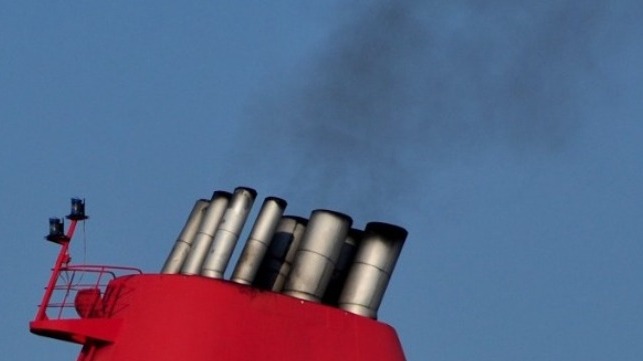
The shipping industry can reduce black carbon emissions by switching ships from using dirty residual fuels - like heavy fuel oil - to lighter distillates. This alone could reduce black carbon emissions by between 50 and 80 percent, depending on the type of engine, while installing technology such as diesel particulate filters would remove further black carbon from ships’ exhausts, much like cars today.
IMO Member States have now been tasked with providing comments and proposals on the concept of polar fuels. The Clean Arctic Alliance’s submission to MEPC 82 set out the fuel characteristics that would distinguish polar fuels from residual fuels, and thus lead to fuel-based reductions in black carbon emissions from ships. Some countries have suggested that any outcome on polar fuels could be first included in existing best practice guidance, but a number of Arctic countries at MEPC 82 supported the idea of mandatory regulation.
It would be irresponsible and reckless for the IMO to further delay the shipping sector’s response to the significant threat to the Arctic and to Arctic tipping points (changes that are virtually impossible to reverse) posed by black carbon emissions. To continue to allow unregulated emissions of a short-lived climate forcing pollutant in the Arctic is quite simply negligent, and will have unprecedented repercussions for the planet and humanity globally. There is little time left if the IMO is to have any impact on slowing down the loss of Arctic sea ice or the melting of the Greenland ice sheet.
It will be important, however, to ensure that a move from dirty heavy fuels to lighter diesel fuels does not prevent the flourishing of other cleaner new fuels or other forms of propulsion, including wind power. The black carbon regulation must be written in such a way that it requires ships operating in or near to the Arctic to move to cleaner distillate fuels, but also allows the use of “new” low- or zero-carbon, non-fossil fuels or other forms of propulsion that are now becoming commercially available.
The clock is ticking. The IMO and its Member States have just a few months to develop these mandatory regulations, which must be effective in radically reducing black carbon emissions. These new rules can and must be approved at MEPC 83 in April 2025 and adopted by 2026.
Other issues: Emission Control Areas at MEPC 82
During MEPC 82, two new emission control areas (ECA) were adopted and will come into effect from 1 March 2026, covering the Canadian Arctic waters and the Norwegian Sea. ECAs, which are sea areas with stricter rules, are designed to require ships to reduce nitrogen oxides (NOx), sulfur oxides (SOx), and particulate matter (PM) emissions. Since they also enforce the use of cleaner fuels by ships, they have a co-benefit of reducing black carbon emissions.
At MEPC 82, the Committee heard a presentation led by the government of Portugal setting out background studies for a further ECA in the North Atlantic. The boundaries of this future ECA have not yet been decided but could potentially stretch from Portuguese waters to the coast of Greenland, reducing NOx, SOx and PM, with consequent improvements in air quality and the health of coastal communities along the European western seaboard.
Creation of this ECA would ensure that black carbon emissions would be further reduced, which is good news for the Arctic. When ships sail north of 60 degrees, their impact from black carbon emissions is the greatest. However, as black carbon remains in the atmosphere for a few days or weeks, dependent on prevailing winds, it can be transported to the Arctic from further south. Any measures to reduce black carbon emissions from ships sailing north of 40 degrees North - just north of the Mediterranean Sea - will be immensely beneficial in terms of reducing the impact of shipping’s black carbon emissions on the Arctic.
While this is all very welcome news, it does not negate the need for an Arctic-wide black carbon regulation. The new ECAs and a future Atlantic ECA will improve air quality and the health of coastal populations, but until the IMO puts in place mandatory rules, shipping's black carbon emissions remain totally unregulated.
Dr Sian Prior is Lead Advisor to the Clean Arctic Alliance, and Dave Walsh is the Alliance’s Communications Advisor.
The opinions expressed herein are the author's and not necessarily those of The Maritime Executive.
Saturday, July 27, 2024
Wash U researchers quantify solar absorption by black carbon in fire clouds
New findings from Chakrabarty lab will help make climate models more accurate as massive wildfires become more common
\
WASHINGTON UNIVERSITY IN ST. LOUIS
In an actively warming world, large-scale wildfires are becoming more common. These wildfires emit black carbon to our atmosphere, one of the most potent short-lived atmospheric warming agents. This is because of its strong sunlight absorption characteristics. But scientists have yet to get a handle on the extent of atmospheric warming caused by black carbon in pyrocumulonimbus (pyroCb) clouds that develop from high-intensity wildfires.
In their most extreme form, these wildfire clouds will inject smoke into the upper troposphere and lower stratosphere where it can linger and impact stratospheric temperatures and composition for several months. Some of the details of that impact have been investigated now thanks to new research from Washington University in St. Louis’ Center for Aerosol Science & Engineering (CASE).
The research was led by Rajan Chakrabarty, a professor in WashU’s McKelvey School of Engineering and his former student Payton Beeler, now a Linus Pauling distinguished post-doctoral fellow at Pacific Northwest National Laboratory. The study was published in Nature Communications.
“This work addresses a key challenge in quantifying black carbon’s radiative effect in the upper atmosphere,” Chakrabarty said.
The team made airborne measurements from within the upper portion of an active pyroCb thunderstorm in Washington state as part of the 2019 NOAA/NASA Fire Influence on Regional to Global Environments and Air Quality (FIREX-AQ) field campaign, he added.
“We considered the full complexity and diversity of the measured black carbon size and morphology on a per-particle basis for accurate estimation of its solar absorption. What we discovered is that a pyroCb black carbon particle absorbs visible sunlight two times as much as a nascent black carbon particle emitted from smaller fires and urban sources,” he said.
The authors uniquely combined measurements of black carbon mass and the thickness of organic coatings on individual particles in the plumes with a detailed single-particle optics model. They used a numerically exact particle-resolved model to calculate the black carbon optical properties and quantified how much light those black carbon particles are absorbing (and thus how much more heat they bring to the upper atmosphere).
In addition, the work highlights the unique light absorption properties of black carbon in pyroCbs clouds versus black carbon from wildfires that does not end up in pyroCbs and black carbon from urban sources.
The next step in this research is to take further measurements and do a more precise study of the black carbon behavior in the stratosphere.
Black carbon injected into the lower stratosphere by recent pyroCb events in Canada and Australia have traveled around the globe, persisted for months, and altered dynamic circulation and radiative forcing across large regions, Chakrabarty noted. These thunderstorms are deemed responsible for 10% to 25% of the black carbon in the present day lower stratosphere, with impacts extending to both the Northern and Southern Hemispheres. Scientists are increasingly observing how much it impacts climate but there is more to learn.
“We need more direct measurements of pyroCb black carbon light absorption measurements to better constrain climate model predictions of stratospheric warming,” Chakrabarty said.
Beeler P, Kumar J, Schwarz JP, Adachi K, Fierce L, Perring AE, Katich JM, Chakrabarty RK. Light absorption enhancement of black carbon in a pyrocumulonimbus cloud. Nat Commun 15,6243 (2024). DOI: https://doi.org/10.1038/s41467-024-50070-0
This research has been supported by the National Aeronautics and Space Administration (grant nos. 80NSSC18K1414 and NNH20ZDA001N- ACCDAM), the National Oceanic and Atmospheric Administration (grant no. NA16OAR4310104), the National Science Foundation (grant nos. AGS-1455215 and AGS-1926817), the US Department of Energy (grant no. DE-SC0021011), and the Simons Foundation’s Mathematics and Physical Sciences division. L.F. was supported by the U.S. Department of Energy (DOE) Atmospheric System Research (ASR) program via the Integrated Cloud, Land-Surface, and Aerosol System Study (ICLASS) Science Focus Area. Additional support was provided by the Laboratory Directed Research and Development program (Linus Pauling Distinguished Postdoctoral Fellowship Program). Pacific Northwest National Laboratory is operated for DOE by Battelle Memorial Institute under contract DE-AC05-76RL01830.
Black carbon derived from wheat straw burning mitigates antibiotic resistance gene dissemination in soil-crop systems under polyethylene and biodegradable plastic mulch film residues
Credit: Manman Cao, Shuai Ma, Fei Wang, Xiaoyan Yuan, Safdar Bashir, Dandan Xu, Huanhuan Geng, Junhong Li & Ke Sun
A new study published in New Contaminants reveals that black carbon formed during wheat straw burning can significantly reduce the spread of antibiotic resistance genes in soil and soybean crops, offering a promising strategy for safer and more sustainable farming in regions burdened by plastic mulch debris.
Every year, millions of hectares of farmland accumulate fragments of polyethylene and biodegradable mulch films. These residues gradually break down into microplastics that reshape soil chemistry, disrupt microbial communities, and accelerate the proliferation and movement of antibiotic resistance genes. This process increases the risk that crop plants will carry antibiotic resistant bacteria onto dinner plates.
In many farming regions, particularly remote areas of China, straw burning remains a common practice due to narrow planting windows and limited agricultural infrastructure. Burning produces black carbon rich ash that mixes with surface soil. Although typically linked with air pollution concerns, black carbon may play an overlooked role in soil health. Until now, however, its influence on antibiotic resistance in fields contaminated with plastic mulch had never been clarified.
To address this knowledge gap, researchers led by Manman Cao and Shuai Ma investigated how two types of plastic mulch residues, polyethylene and a biodegradable film, interact with black carbon produced either through direct straw burning or added as an external material. The team tracked antibiotic resistance genes across soil, roots, leaves, and soybean seeds from early growth through maturity. They also examined how bacterial communities responded to these combined stressors.
The findings were striking. While mulch film residues alone increased soil antibiotic resistance gene abundance by up to 38 percent within only fifteen days, the presence of black carbon reversed these effects. In soils containing polyethylene or biodegradable film residues, black carbon treatments lowered antibiotic resistance gene levels by 30 to nearly 50 percent during early incubation. As soybeans matured, black carbon continued to suppress antibiotic resistance in non rhizosphere soil, rhizosphere soil, root surfaces, leaves, and even seeds. In some cases, reductions reached more than 90 percent in plant tissues.
“Black carbon created by straw burning is often viewed only as a source of environmental risk, but our study shows that it can also provide important benefits,” said Fei Wang, corresponding author of the study. “By changing soil chemistry, reshaping microbial communities, and altering the surface properties of mulch film fragments, black carbon slows the movement of antibiotic resistance genes from soil into crops. This offers a practical pathway to reduce agricultural antibiotic resistance in regions where mulch film pollution is common.”
Importantly, the team found that although straw burning initially disturbed soil microbes, the microbial communities recovered fully within three months and did not experience long term harm. At the same time, black carbon altered nutrient availability and modified the physical and chemical aging of mulch films, which contributed to reduced gene transfer.
These findings suggest that black carbon has potential as a natural and scalable tool for agricultural management. As the global threat of antibiotic resistance grows, strategies that suppress its spread through soil and food systems are urgently needed.
“Given the vast areas of farmland where straw burning and mulch film residues coexist, understanding their interactions is essential,” Wang added. “Our results provide a scientific basis for using black carbon more thoughtfully to protect soil health, crop safety, and public health.”
The authors note that future studies should evaluate long term crop rotation systems and environmental conditions to optimize black carbon applications across diverse agricultural landscapes.
===
Journal reference: Cao M, Ma S, Wang F, Yuan X, Bashir S, et al. 2025. Black carbon derived from wheat straw burning mitigates antibiotic resistance gene dissemination in soil-crop systems under polyethylene and biodegradable plastic mulch film residues. New Contaminants 1: e013
Black carbon derived from wheat straw burning mitigates antibiotic resistance gene dissemination in soil-crop systems under polyethylene and biodegradable plastic mulch film residues
Thursday, January 23, 2025
An IMO Commitment to Polar Fuels Could Cut Black Carbon Emissions
The International Maritime Organization’s (IMO) Pollution Prevention and Response (PPR) subcommittee meets in London from January 27th to 31st to consider important unfinished business related to the environmental and climate impacts of international shipping’s growing presence in the Arctic. With this sensitive region being the canary in the mine for global climate breakdown, and with 2024 marked as the first year the Earth surpassed 1.5 degrees Celsius of warming, it is crucial to pay close attention to what happens - or does not happen - during this meeting.
The question, unresolved since 2011, is whether the IMO should take mandatory action and impose requirements on the shipping industry to cut black carbon emissions in and near the Arctic. The Arctic is already at 2.5oC heating, with international shipping among the sectors contributing to this warming With the Arctic warming now four times faster than the rest of the planet and the short-lived climate forcer black carbon emitted in or near the Arctic being five times more potent a climate pollutant than when emitted outside the Arctic, it’s clear that the shipping sector must act.
Black carbon emissions from the shipping sector’s burning of residual fuels, such as heavy fuel oil (HFO), are a several thousand times more potent climate forcer than CO2 in the short term, and threaten the snow and ice-covered regions of the Arctic, primarily due to loss of albedo when it deposits on reflective surfaces.
Fortunately, fuels like HFO can be replaced with distillates or other cleaner fuels which can cut black carbon emissions by over 50%, and reduces their climate warming impacts drastically - effectively overnight. Thousands of ships already switch between residual fuels and distillates on a regular basis when entering IMO designated emission control areas (ECAs), with any additional fuel cost fully built in and accepted by the shipping industry. In the Arctic, distillate fuel is readily available and in widespread use, mainly by smaller vessels. However, larger ships, oil and chemical tankers, bulk carriers and general cargo vessels can and must implement a fuel switch.
Following IMO discussions in 2024 regarding the concept of ‘polar fuels’ - fuels acceptable for use in polar waters due to the lower emissions of black carbon - the International Organization for Standardization (ISO) proposed to define the characteristics of such polar fuels using four fuel quality criteria, the same that are used to characterize DMA distillates in the 2024 ISO standard. Since DMA dominates the global marine distillate market, these lower black carbon-producing DMA distillates – i.e. ’polar fuels’ - can be supplied to ships and bunkerers anywhere required for Arctic operations. The challenge for PPR12 will be to agree on the fuel quality criteria that would define ‘polar fuels,’ opening the way for a mandatory approach to the use of these fuels and other new and existing non-residual fuels with similarly low black carbon emissions in the Arctic under MARPOL Annex VI.
A second Arctic-specific issue under consideration at PPR12 concerns oil spills. Norway has proposed a possible definition of polar oil fuels which would be acceptable for use and carriage for use as fuel in Arctic waters under MARPOL Annex I. Norway first proposed to expand the output on reducing the risks of use and carriage of heavy fuel oil to include an upper pour point limit (the lowest temperature at which a fuel or lubricant will flow under specific conditions) in the definition of HFO in 2022. New fuel blends created to meet the requirements of the 2020 global 0.5% sulphur fuel cap have pour points above 0oC. Virtually all distillates including the proposed DMA ‘polar fuels’ have pour points of 0oC or less. Norway proposes a slightly different definition for ‘pour point polar fuel distillates’ than the ISO proposal for ‘distillate polar fuels’ which reduce black carbon.
Norway’s proposed MARPOL Annex I amendment encompasses the Polar Code’s Arctic Waters. This area however excludes a large part of the Arctic around Iceland and off the Norwegian coast, where ship activity and black carbon emissions are very high. To be effective at reducing black carbon emissions, a polar fuels regulation would need to cover the whole Arctic and not just the waters where ice cover or loose ice is likely to be present.
The IMO has committed to take global regulatory action to cut ship CO2 and greenhouse gas emissions at a meeting of its Marine Environment Protection Committee (MEPC 83) in April. The fact that black carbon isn’t a greenhouse gas but a form of particulate matter - soot - should not be an obstacle to similar regulatory action to reduce Arctic black carbon ship emissions and the impact on the Arctic.
In fact, in light of the strength of black carbon’s radiative forcing effect and given that the Arctic is facing the likelihood of exceeding multiple climate thresholds or ‘tipping points’ - the loss of summer sea ice, melting of the Greenland ice sheet, slowing of the Atlantic Meridional Oceanic Circulation (AMOC) - the IMO should not hesitate to act now to reduce black carbon emissions.
It is imperative that during PPR 12, member states endorse the concept of polar fuels - including distillate-grade marine fuels such as DMA or new fuels resulting in comparable or lower black carbon emissions - and agree as a matter of urgency to regulate emissions of black carbon from Arctic shipping.
Bill Hemmings is Black Carbon Advisor to the Clean Arctic Alliance.
The opinions expressed herein are the author's and not necessarily those of The Maritime Executive.
Thursday, April 06, 2023
Black Carbon: The "Low-Hanging Fruit" for Clean Shipping
Shipping is a highly polluting industry. Between 2007 and 2012, it was responsible for roughly three percent of global greenhouse gas emissions from fossil fuel use and industrial processes, or around one billion tonnes of CO2 equivalent per year.
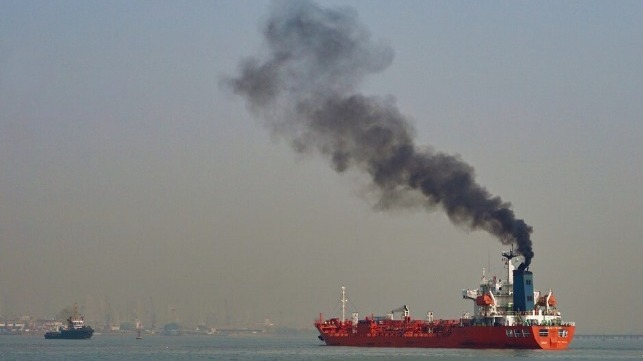
Ship exhaust may also contain “black carbon” – sooty particles that absorb sunlight and trap heat in the atmosphere, contributing to global warming. Black carbon rapidly accelerates ice melt when it lands, by darkening surfaces and thus reducing how much sunlight they reflect. At the same time it poses a serious health risk to coastal communities.
Environmental groups say this climate and health threat could easily be eradicated if ships were forced to use cleaner fuels.
The impact on warming
Black carbon is produced when ships burn heavy fuel oil, which is “a hazardous, toxic tar-like fuel”, says Andrew Dumbrille, an advisor to both the Clean Arctic Alliance, a group of 20 nonprofits, and to the Inuit Circumpolar Council, which represents all Inuit from Alaska, Canada, Greenland and Chukotka on internationally important matters. “It is literally the stuff at the bottom of the barrel,” he says.
“You have to heat it up to use it… it’s like burning tar, one could walk on it,” he says. “Our global trade system is enabled by this highly polluting by-product fuel.”
Black carbon emissions are responsible for around 20% of the shipping industry’s climate impact over a 20-year period, according to the Clean Arctic Alliance.
It is “especially damaging, and has a disproportionate impact, when it is released in or near the Arctic,” says Sian Prior, lead adviser to the alliance.
The Arctic is already warming almost four times faster than the global average, at 0.73C per decade compared to the global average of 0.19C per decade between 1979–2021, according to a 2022 study by Finnish researchers.
“When black carbon settles in the polar environment… the surface starts absorbing more and more heat because it’s dark,” says Prior. “So you lose the albedo effect, which is the reflectivity of the snow and the ice.”
This leads to a vicious cycle of warming. Less sea ice means more open, dark ocean which absorbs more heat and accelerates temperature rise, not just in the Arctic but worldwide.
“Some of that warming is going to be transported further south,” says Pam Pearson, director of the International Cryosphere Climate Initiative. “So a warmer Arctic also translates into warmer mid-latitudes because of black carbon.”
If the Arctic sea ice melts completely during the summer, there is going to be “so much more sea level rise and extreme weather globally,” says Pearson.
A 2021 report by the Climate Crisis Advisory Group warned that the Arctic is “ground zero” for cascading climate impacts across the planet.
Rising temperatures there are leading to warmer ocean temperatures and shifts in atmospheric circulation, and are expected to weaken the jet stream, leading to more extreme weather.
The impact on Arctic communities
“The melting of sea ice is [causing] global climate disruption, but also local, cultural disruption,” says Dumbrille. Black carbon’s impact is already being felt by indigenous communities living in the Arctic.
There are serious health risks associated with exposure to black carbon. A component of fine particulate matter, black carbon has been linked to lung and heart disease and can impair cognitive and immune functions.
“Black carbon is changing our culture,” says Lisa Koperqualuk, vice president international of the Inuit Circumpolar Council.
She explains that the rapid melting of ice is drastically changing the Inuit way of life by delaying harvesting seasons and making it more difficult for communities to travel. “We call the ice our highway,” she says. “We use it to travel and to go hunting on the edge of the sea ice.”
There are concerns that black carbon could contaminate the main food source for Inuit communities, seafood, according to Koperqualuk. “The migration patterns of animals could also change [as the ocean warms] because there are some marine mammals that follow colder waters,” she says.
“The Arctic is a very important area to protect and to keep as pristine as possible, not only for our culture, but for the [entire] world,” says Koperqualuk. “The Arctic is linked to the rest of the globe. So protecting it is protecting the world as well.”
The rise (and fall?) of black carbon
Between 2015 and 2019, the Arctic saw an 85% rise in black carbon due to increased shipping traffic.
“Black carbon emissions are increasing because there are more and more ships going to the Arctic. In recent years, there have been more oil tankers and bunker carriers going to the Arctic,” says Prior.
Maritime traffic grew by 25% between 2013 and 2019, while the distance covered by ships in the region increased by 75%.
The increase in shipping traffic in the Arctic is “very much related to the loss of sea ice,” says Prior. The ice is also “forming later in the year and melting earlier,” she says. This means that more ships are able to sail for longer periods in the Arctic region.
It’s leading to a “really nasty feedback loop,” says Pearson. “As you lose more sea ice, you get more ships, more emissions, [and] less sea ice.”
There is an easy way to rapidly cut black carbon emissions, according to environmental groups.
If all ships using heavy fuel oil were to switch to a cleaner distillate fuel (similar to diesel) there would be an immediate reduction of around 44% in black carbon emissions from these ships, according to the Clean Arctic Alliance. If all ships also installed diesel particulate filters, which capture soot, black carbon could be reduced by over 90%.
Black carbon could rapidly disappear from the atmosphere if regulations were introduced
Black carbon is a short-lived climate pollutant with a lifespan of just a few days or weeks, whereas CO2 can remain in the atmosphere for 300 to 1,000 years. This means that black carbon could rapidly disappear from the atmosphere if regulations were introduced.
“Black carbon could be resolved very quickly, which is why we call it the ‘low hanging fruit’,” says Prior. “Whereas with carbon dioxide you’ve got a very potent warming gas that is staying in the atmosphere for hundreds of years.”
If the European Union required ships sailing in the Arctic to switch from bunker fuels to cleaner distillate fuels, it would reduce their black carbon emissions in Arctic waters by 50–80%, according to analysis by the International Council on Clean Transportation (ICCT).
Technically, it is easy for ships to make the switch. “It’s seen as an overnight solution, because ship engines can run, and already do run, on both heavy bunker fuel and lighter distillate fuel,” says Dumbrille.
“Most engines can just switch between the fuels. In fact, they often do already,” says Prior. “Ships often use the lighter diesel fuels in the coastal waters, and then switch over to the heavy fuels when they’re offshore.”
But uptake of distillate fuels is lagging due to cost. They are more expensive due to higher demand (especially from road vehicles) and because they require more refining, says Dumbrille.
“It’s about twice as expensive to use the cleaner fuel,” says Bryan Comer, who leads the marine programme at the ICCT.
The need for stronger regulations
Regulations are needed to force ship operators to switch to distillate fuel. In November 2021, the International Maritime Organization (IMO), the UN body overseeing shipping, adopted a resolution urging ship operators to switch to cleaner fuels in the Arctic in a bid to reduce black carbon emissions. But it was a voluntary measure, which relied on governments to introduce supportive policies. Environmental groups are calling for mandatory regulations to drastically slash black carbon emissions in the Arctic.
Regulations are already in place around the North American coastline, where the IMO introduced an emission control area (ECA) in 2012, requiring ships to limit their nitrogen oxide (NOx), sulphur oxide (SOx) and particulate matter pollution. This regulation has incentivised many ship operators to switch to distillate fuel. ECAs have also been established in the Mediterranean, the North Sea and Baltic Sea.
Environmental groups would like the North America ECA to be extended to the Arctic.
“Arctic communities were overlooked when the North America ECA was established,” says Comer. “Some would argue that’s environmental injustice and environmental racism.”
It is important that existing loopholes, which enable ship operators to continue using heavy fuel oil, are removed from new IMO regulations, experts argue. Currently, many ships in the ECA use scrubbers to remove their exhaust fumes from the atmosphere and comply with regulations, without having to switch to a more expensive distillate fuel.
“There are loopholes within the ECA… so you can still carry on using heavy fuel oil but install a scrubber to reduce your sulphur emissions,” says Prior.
Although scrubbers reduce air pollution, they are still incredibly polluting as they dump the chemicals removed from the exhaust directly into the ocean. By using scrubbers, “you are taking an atmospheric pollution problem and turning it into an ocean pollution problem,” says Prior.
If the North American emissions control area is extended to the Arctic “you’d want to see that high sulphur fuels would not be allowed, even if ships have a scrubber,” says Comer. “Instead, they should be required to use distillate fuels.”
A proposal to extend the ECA is likely to be brought to the IMO this year, but it won’t get much air time until 2024, says Comer. This year the IMO is set to review its long-term emissions reduction strategy and decide whether to adopt a net zero by 2050 target.
The current IMO target, which campaigners say is woefully inadequate, is to halve shipping emissions by 2050. Without further action, shipping emissions are projected to reach 90-130% of their 2008 levels by 2050.
“It is very inadequate,” says Dumbrille. “To be aligned with the Paris Agreement, [the target] needs to be at least 100% by 2050, ideally 100% by 2040, and 50% by 2030.”
“If you’re thinking about a 50% reduction in greenhouse gas emissions by 2030, dealing with black carbon should be at the top of your list,” he says.
“I’m not holding my breath at the moment… it’s going to take a couple more years,” says Prior, noting that there is still quite a lot of opposition within the industry. “It’s frustrating when [tackling black carbon] should be low-hanging fruit, especially compared to what needs to happen to decarbonise the whole sector.”
Isabelle Gerretsen is a freelance journalist based in London who covers climate and environmental issues for a wide range of news outlets including Climate Home News, the BBC and CNN International.
This article appears courtesy of China Dialogue Ocean and may be found in its original form here.
The International Maritime Organization (IMO) recently pledged to respond to industry concerns over the criteria and implementation of its Carbon Intensity Indicator (CII) rating system after the review process is completed this year. With this in mind, maritime executives should expect CII to become even more influential as enforcement mechanisms and unintended consequences are addressed.
One such unintended consequence of the regulation that is already becoming apparent is the industry’s focus on slow steaming to improve CII ratings. Relying solely on slow steaming, and taking a static view on CII regulations more broadly, is a significant risk. While it’s true that slow steaming can improve CII ratings, it is by no means a silver bullet and it certainly has flaws.
Vessels will slow down, meaning that the global fleet will need to expand to transport the same volume of goods. Ultimately, this will increase the global fleet’s lifecycle emissions – so slow steaming is counterintuitive to the environmental aims of CII. Once widely recognized, this makes it likely that the IMO will incentivize other solutions for attaining A and B ratings, which will themselves grow in importance as a mark of pedigree between different shipowners.
While the regulatory penalty for CII non-compliance is currently minimal, the commercial impact may yet be substantial. For example, if freight rates are high, a competitive advantage is held by those who can move fast while maintaining a favorable CII rating. Additionally, as more customers press for carbon-neutral shipping of goods, a superior CII rating may become a license to operate for reputable cargo owners.
Ultimately, vessel efficiency and charter rates, emissions and profits, are only set to become more intertwined. For those who recognize this clear direction of travel, and appreciate the need to look beyond slow steaming for true solutions, clean technology is an obvious place to start the search.
Retrofit-ready technology
Clean technologies, such as air lubrication systems, offer a logical opportunity to improve vessel efficiency, thereby reducing fuel use, and in turn reducing OPEX and emissions. Plus, saving fuel becomes even more important as more expensive, less energy-dense alternative fuels are introduced to the mix.
If the shipping industry is to complete its decarbonization puzzle, improving the efficiency of the massive existing fleet must not be overlooked. While newbuilds do remain a key piece of that puzzle, it is simply too emission-intensive to build all of the new ships required. Bearing that in mind, most, if not all shipowners will seek to retrofit some of their existing vessels to improve efficiency.
Having said that, it may be challenging to determine which clean technology or technologies will lead to genuine, proven efficiency improvements on existing vessels. So, what should shipowners look for in a clean technology?
The first step is to check whether, from a technical perspective, it is feasible to retrofit a specific clean technology to a specific vessel – making sure to properly understand the payback equation given the remaining lifecycle of the vessel.
The next step is to check that a solution can be installed efficiently. A lot of clean technologies can be installed during a ship’s scheduled drydocking period, maximizing trading time. Looking at the full lifecycle of, and total cost of ownership for, a technology is also key. Systems with minimal impact on the vessel’s equipment footprint and that are easy-to-use and maintain should be prized.
Efficient installation depends upon resilient supply chains. For example, at Silverstream Technologies, we focus on supply chain resilience, which requires a diversity of suppliers as well as strong relationships with OEMs and local entities. This enables us to deliver systems within six months, on time and within budget.
Verified emissions data
As is the case with most strategic decisions in the modern shipping industry, clean technology choices should be underpinned by data. A proven track record of emissions reduction claims and case studies spanning each specific vessel type are vital. At Silverstream, for example, looking at the hydrodynamics, we know that our technology works well for almost all vessels that have a large, flat bottom such as LNGCs, cruise ships and VLCCs.
In general, shipowners should be skeptical of clean technology providers that lack transparency and don’t openly publish performance data for their technology. Shipowners and operators can also help move the data conversation forward by bringing strong operational data and a clear understanding of their ship’s operational profile to the table.
Shipowners and operators should also look for emissions savings that have been independently verified. This is often achieved when a technology goes through systematic testing phases in collaboration with class societies. Technologies that can be switched on and off can also offer a simple way to accurately measure real-life operational performance.
It is also important to consider the emissions reduction data across the entire operational range of the vessel, not only a single point of optimization, as well as whether that voyage was typical of how the ship is usually operated. Exploring how the new technology will interact with other equipment and clean technology onboard the vessel, and supporting this with data and simulations where possible, is also valuable. While some clean technologies complement each other well and lead to greater efficiency gains, others can actually hinder one another. Factoring all of these data points into the set will make the insights more realistic and accurate.
Shipowners large and small, from all over the world, can leverage the opportunities to gain competitive advantage presented by the industry’s decarbonization transition. If they have done their due diligence, and they have considered the key factors outlined above, it’s a case of being decisive, taking the decarbonization bull by the horns, and installing the right clean technology to make an impact today.
David Connolly is Chief Technologist at Silverstream Technologies.
The opinions expressed herein are the author's and not necessarily those of The Maritime Executive.