PETRO-IMPERIALISM
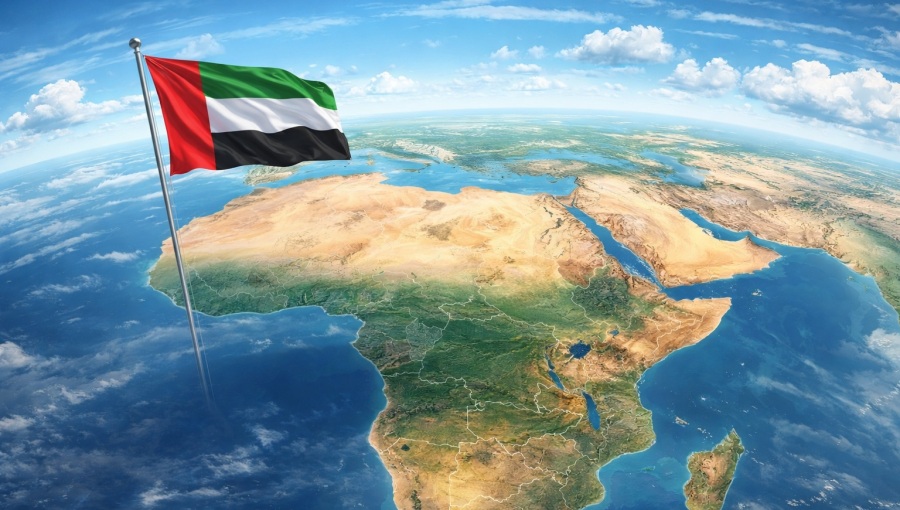
The United Arab Emirates (UAE) has stepped up the size and scale of commercial and strategic investment activity across Africa in recent months, with initiatives spanning ports and logistics, renewable energy, digital infrastructure and financial services, as Emirati state-backed groups and corporates look for growth markets – and influence – beyond the Gulf.
The federation of seven emirates has long used its sovereign wealth funds and state-owned companies to drive investments, focusing on long-term economic stability and securing supply chains. The UAE rapidly emerged as a dominant economic and security actor in Africa, investing over $110bn in new projects between 2019 and 2023. It has also become a key security partner for over two dozen African nations, focusing on the Horn of Africa, North Africa, and the Sahel, making it a significant player in regional geopolitics.
“The United Arab Emirates has quietly but decisively positioned itself as one of Africa’s most consequential economic partners. Through its Comprehensive Economic Partnership Agreement (CEPA) program, the UAE is reshaping how trade, investment, and mobility between the Gulf and Africa are structured,” wrote Seade Caesar, Executive Director, Africa Global Policy and Advisory Institute.
“What began as a diversification strategy away from oil has evolved into a sophisticated form of economic diplomacy, anchored in bilateral agreements that go far beyond tariff reduction.”
CEPAs include tariff liberalisation, but their main value lies in services trade, investment protection, business mobility, and regulatory cooperation. For the UAE, Caeser argues, they serve three interconnected goals:
1) to diversify away from hydrocarbons by guaranteeing steady access to food, raw materials, and intermediate goods; 2) to lower regulatory barriers for UAE firms in logistics, finance, construction, aviation, and digital services; and, 3) beyond commerce, using CEPAs as instruments of economic diplomacy to reinforce its role as a global trade hub linking Africa, Asia, and Europe.
“Africa fits this strategy well. Its demographic growth, urbanization, and continental market integration offer scale, while its infrastructure and financing gaps create space for Gulf capital and expertise,” Caeser writes.
Alongside CEPA agreements, a key new plank of its current investment drive in Africa is digital infrastructure. In November 2025, the UAE announced a $1bn “AI for Development Initiative” aimed at expanding AI infrastructure and services across Africa, framing the programme around public services and climate and development priorities.
While that’s a long-term project yet to bear tangible fruit, a spate of deals in transport and trade sectors have been announced in 2026 that are set to make a more immediate and visible impact, while cementing the UAE’s position among the continent’s biggest investors.
Transport, trade and logistics
Dubai-owned DP World, a global ports and logistics operator, has continued to position Africa as a priority market. The company said in January its $442mn investment in Somaliland’s Berbera port remains on track despite regional political tensions over the breakaway Somalian territory’s status.
(In 2026, the UAE is strengthening its partnership with the African Union to support peace, security, and sustainable development, with a specific focus on water initiatives. But its involvement has also faced scrutiny regarding its role in regional conflicts, such as the war in Sudan, where it has been accused of backing the Rapid Support Forces (RSF), a notorious paramilitary group fighting government forces since April 2023).
Abu Dhabi’s AD Ports Group (ADX: ADPORTS), a state-backed ports, maritime and logistics developer, has been expanding its African footprint in Tanzania, Angola and the Republic of Congo. It is now exploring infrastructure opportunities in Nigeria, as part of a broader agenda tied to the country’s Lagos–Calabar corridor and other strategic transport assets across West Africa. A formal agreement with the Nigerian authorities is under discussion that could see UAE capital deployed into port and trade infrastructure projects.
In Egypt, AD Ports has disclosed plans to increase its stake in Alexandria Container & Cargo Handling, a key operator at Egypt’s Mediterranean gateway. The move, announced in late 2025, is part of a strategy to expand international terminals portfolio and strengthen links between Gulf and Mediterranean trade routes.
Egyptian transport authorities have also highlighted growing cooperation with UAE-linked logistics firms in Red Sea and Suez Canal corridor developments. Water Alliance Ventures, a consortium comprising UAE-based renewable energy developer AMEA Power and Spain’s Cox Water (MSE: COXG), has held talks with Egyptian authorities to explore cooperation and investment opportunities in seawater desalination projects across Egypt.
Nigeria, meanwhile, has also deepened trade and investment ties directly with the UAE. Earlier this year, the two countries signed a CEPA intended to boost trade facilitation and investment flows across sectors including machinery, construction equipment, cocoa and export-oriented manufacturing. The UAE’s Minister of Investment Mohamed H. Alsuwaidi, has projected that the government and private sector of the federation will invest over $10bn into the Nigerian economy alone within the coming years.
First Abu Dhabi Bank (ADX:FAB), the UAE’s largest lender, is preparing to open a representative office in Lagos as part of a strategy to expand its presence in sub-Saharan Africa, marking its first physical entry into West Africa. First Abu Dhabi Bank already has exposure to Nigeria through its involvement with the African Export-Import Bank (Afreximbank) in financing infrastructure. The lender participated in funding Phase 1, Section 2 of the Lagos–Calabar Coastal Highway project, contributing $1.126bn. It currently operates in Egypt and Libya, and the addition of Nigeria will expand its international network to 22 countries.
The UAE has also deepened formal economic ties with the Democratic Republic of Congo (DRC) through the signing of a CEPA in early January. The agreement is expected to support trade, logistics cooperation and investment flows, with Congolese authorities highlighting mining and agriculture as priority sectors. The deal reflects Abu Dhabi’s interest in securing supply-chain relationships in critical minerals while expanding its commercial presence in Central Africa.
The UAE and Sierra Leone in mid-February also signed a CEPA aimed at expanding trade, investment and private sector cooperation between the Gulf and West Africa, with a focus on high -value sectors, including minerals, iron ore, bauxite and agriculture. Bilateral non-oil trade reached $153mn in 2025. The agreement is expected to accelerate that growth by opening additional channels for private sector participation and long-term investment partnerships.
“As 2026 unfolds, attention is shifting to the next wave of African partners. Among the most discussed are Ghana and Rwanda. Both countries occupy strategic positions within Africa’s political economy, and both align closely with the UAE’s long-term objectives in logistics, services, finance, and regional market access. This examines why these countries matter, what the UAE is seeking, and what African policymakers should be prioritizing as CEPA talks deepen,” wrote Caesar of the Africa Global Policy and Advisory Institute.
Beyond infrastructure, private capital flows from the UAE to Africa are broadening. A Dubai-based company recently committed around $1.6bn in investments across Nigeria, Ghana and Kenya in AI infrastructure and agricultural land projects over the next two years, including data centre and farm assets aimed at food security and digital capacity.
Green energy, regional power
In Angola, meanwhile, Abu Dhabi Future Energy Company (Masdar) signed a power purchase agreement (PPA) for the 150MW Quipungo solar project, adding to its pipeline in African power markets where EV and industrial electrification agendas are gaining traction.
The contract represents the primary phase of "Project Royal Sable," a broader 500MW green energy scheme spanning three distinct locations, and is seen as a critical step for Angola as it seeks to fix chronic power shortages in its southern regions and reduce its heavy dependence on traditional hydroelectric plants by tapping into the country's vast, underused solar potential.
Through its Infinity Power partnership, Masdar currently manages 1.3GW of clean energy across Egypt, South Africa, and Senegal. With a massive 13.8GW development pipeline, the Angolan venture supports the company’s global ambition to reach a 100GW capacity by 2030.
Meanwhile, Gabon has signed three memoranda of understanding with the UAE covering the mining, digital and logistics sectors, as the country seeks to accelerate economic transformation and attract foreign investment. The agreements are intended to boost local value creation and enhance Gabon’s appeal to international investors, the presidency said in a statement outlining the outcomes of the Abu Dhabi visit.
In mining, the MoU focuses on the exploration, development and commercialisation of gold projects in mineral-rich regions of the country. Gabon has been seeking to diversify its resource base beyond oil, with gold and other minerals identified as priority growth areas.
In the digital sector, Gabon renewed its partnership with Presight (ADX:PRESIGHT), an artificial intelligence and data analytics firm that is a subsidiary of Abu Dhabi-based technology group G42. Presight specialises in AI-driven big data analytics and digital transformation solutions for governments and enterprises.
The renewed cooperation aims to support the digital modernisation of Gabon’s public administration and key government services through artificial intelligence, advanced analytics and big-data systems, according to the statement.
UAE investment is not limited to commerce. The Gulf state’s development foundations and finance vehicles also back regional projects, while bilateral trade has grown significantly: the UAE’s trade with Africa reached roughly $107bn in 2024, reflecting expanding commercial linkages, according to government figures.
The UAE’s prime objectives
Taken together, the recent flow of announcements points to a UAE strategy that pairs infrastructure-heavy investments (ports, logistics, power) with enabling platforms (AI/data capacity and financial services).
“Understanding the UAE’s motivations is essential for effective negotiation. The UAE is not primarily seeking access to African consumer markets for finished goods. Instead, itis focused on three deeper objectives,” writes Caesar: control and efficiency of trade corridors, services leadership in strategic sectors, and long-term investment in strategic assets.
“The UAE prioritizes securing and optimizing ports, airports, shipping lanes, and logistics hubs that link Africa to global markets. By investing in corridor infrastructure, the UAE reduces supply-chain risk, shortens delivery times, and positions itself as an indispensable transit and re-export gateway for African trade.
“Rather than competing on manufactured goods, the UAE seeks dominance in high-values ervices such as finance, logistics, construction, aviation, and digital platforms. CEPAs open regulatory space for Emirati firms to operate, scale, and embed themselves deeply within African economies.
“The UAE targets assets tied to food security, energy transition, minerals, and industrial inputs. Through CEPAs, it secures predictable investment conditions, aligns projects with sovereign wealth strategies, and ensures stable access to resources critical for long-term economic resilience.”

No comments:
Post a Comment