Lenin, democracy and the anti-Leninist shortcut
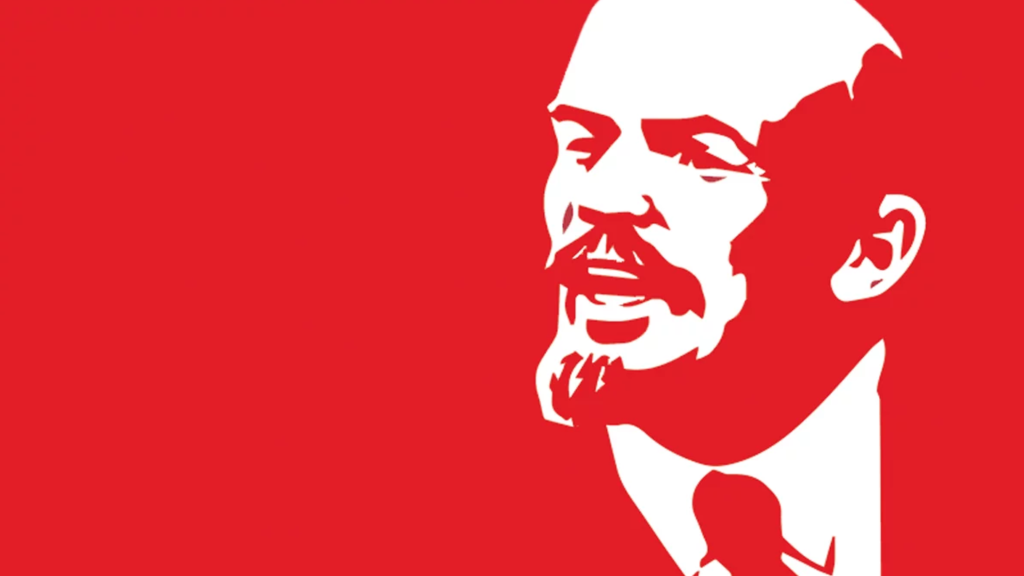
Dan La Botz’s essay, “Goodbye to Lenin and Leninism” indicts Vladimir Lenin for the outcomes of the Russian Revolution, directly linking Bolshevik methods to subsequent tragedy: the suppression of opposition, the Cheka, the Kronstadt uprising, the ban on factions, and the erosion of Soviet democracy. The force of this indictment is undeniable; these tragedies are historical facts (Bhatti, Shah, and Bharti 2025, 1-20). Yet a Marxism that refuses to confront defeat honestly abandons its own critical foundation.
La Botz’s argument is weakened by its historical framing. He interprets the revolution’s degeneration primarily as a product of Lenin’s moral failures, largely abstracted from its material context: civil war, foreign invasion, economic collapse, famine, social fragmentation and international isolation. Lenin appears as a moral tragedian rather than an historical actor shaped by objective forces. Such an approach substitutes moral condemnation for historical materialist analysis grounded in concrete conditions.
La Botz highlights the “ratchet effect,” suggesting each authoritarian measure created conditions for further repression. While the Constituent Assembly’s suppression, the Cheka, War Communism, Kronstadt and the ban on factions undeniably restricted working-class democracy, the ratchet metaphor flattens the complexity of these processes. Revolutions are not mechanical sequences; each Bolshevik decision was shaped by the shifting and coercive pressures of war, famine, sabotage and social disintegration.
La Botz draws a straight line from What Is to Be Done? to Joseph Stalin, but this teleological reading obscures substantial complexity. The Bolsheviks seized power amid social collapse and multiple competing pressures: the fall of the old regime, attempts at bourgeois restoration, imperial intervention, peasant demands for land, and workers’ demands for dignity. The soviets emerged organically from these conflicts. The Bolsheviks prevailed because they acted on these demands when every other major party failed to
Anti-Leninist critics often overlook this reality. The Bolsheviks did not secure power solely through manipulation or organisational centralism. Their influence grew because every other major party compromised with the Provisional Government, the war effort, the landlords or the bourgeois order. The Mensheviks and Right Socialist Revolutionaries squandered critical opportunities, restraining the revolution rather than advancing it (Lenin 1917). The Bolsheviks were far from faultless, but they were not a conspiratorial sect isolated from society. In 1917, they gave organisational expression to the revolutionary aspirations of workers, soldiers and peasants (Brovkin 1990, 350–373).
Democracy and class
In examining democratic forms, La Botz presents the Constituent Assembly as the primary democratic alternative, but this framing is insufficiently concrete. The Assembly captured a static electoral snapshot taken during a rapidly shifting revolution, whereas the soviets functioned as living organs of class struggle. A Marxist analysis must always ask: democracy for which class? The Assembly was dominated by parties that no longer reflected the revolution’s real social divisions, especially following the split between the Right and Left Socialist Revolutionaries. The soviets, despite their limitations, were rooted in the ongoing self-activity of workers, soldiers and peasants.
The central issue is not a simple choice between soviets and parliament, but the process by which soviet democracy was subordinated to party-state domination. Serious critique must address how soviet power was displaced by party and state structures under the intense pressures of isolation and civil war, rather than drawing a direct equation between Lenin’s decisions and Stalinism.
This distinction is key. Without it, La Botz’s argument reduces democracy to a formalism that obscures the difference between bourgeois parliamentarism and proletarian democracy. Marxists should neither defend the suppression of working-class political freedoms nor claim universal suffrage in a class society represents the highest form of democracy. Soviets, councils, strike and factory committees, and soldiers' committees are not merely symbolic; they are mechanisms for direct rule by the exploited. The tragedy in Russia was not the Bolsheviks’ devotion to soviet power, but the gradual erosion of that power under civil war, social collapse and bureaucratisation.
Lenin’s conception of the party
La Botz is also too quick to treat Lenin’s theory of organisation as the original sin. While authoritarian tendencies undeniably existed in Lenin’s conception of the party — and figures such as Rosa Luxemburg and Leon Trotsky identified the dangers of his centralism — later “democratic centralist” organisations often degenerated into small-scale bureaucracies of their own. Polemics, however, should not substitute for analysis. The essential question remains: why did Lenin’s organisational model initially resonate so powerfully with revolutionaries?
Tsarist Russia was an autocracy that lacked stable law, a functioning parliament, and basic freedoms of the press, assembly and organisation. Revolutionaries faced arrest, exile, infiltration and death. No loose educational society could sustain a revolutionary movement under such conditions. Lenin’s insistence on discipline, professional revolutionaries and centralised organisation was not mere authoritarianism; it was a considered response to illegality and state repression. One can critique the model’s dangers without pretending that an obvious democratic alternative existed.
La Botz advocates “more democracy” as a solution but does not specify what forms that democracy should take or in what contexts. Moving beyond critique requires proposing concrete democratic structures capable of withstanding both revolutionary and counterrevolutionary pressures. Such structures would include: freely elected soviets at every level, with delegates elected and recallable by their base; pluralism among socialist tendencies and parties to ensure genuine debate within soviets; institutional independence of unions and workplace committees from both party and state; protections for opposition rights, including minority press and assembly freedoms; rotation of offices to prevent entrenchment; and regular congresses and assemblies, where major decisions are openly discussed and voted upon.
Safeguards against bureaucratic overreach, such as transparency requirements, publication of meeting records and strict term limits, are essential. Democratic control over armed forces and militias, with officers elected by rank-and-file soldiers, further anchors accountability. Critiquing Leninist choices without reckoning with the realities of counterrevolution produces moral clarity at the expense of strategic substance; concrete proposals such as these are what can actually guide the construction of democracy during revolutionary upheaval.
Kronstadt
Kronstadt represents the most challenging case. The rebels articulated legitimate demands: free soviet elections, freedom of organisation for socialist and anarchist groups, release of political prisoners, union rights, and an end to party privilege. These demands expressed the profound exhaustion of the revolutionary population. The Bolshevik crackdown was a serious blow to socialist democracy.
Nevertheless, La Botz risks flattening a complex tragedy into a convenient illustration. Kronstadt occurred after years of civil war, famine, blockade, insurrection, economic collapse and White terror. The Bolsheviks feared, with some justification, that any concession could open a breach for counterrevolution. That fear does not justify every action taken, but it clarifies why the issue was never simply “democracy versus dictatorship.”
The same considerations apply to War Communism and the Cheka. These were not socialist achievements but emergency measures adopted under conditions of social collapse. Some became monstrous, generating institutions and practices that later served bureaucratic consolidation. To present them primarily as expressions of Leninist doctrine is misleading; they were, above all, responses to siege conditions.
The Bolsheviks were not governing a stable workers’ republic and resorting to gratuitous coercion. They were governing a starving, invaded and disintegrating country while the former ruling classes attempted to reclaim power with foreign backing. Context does not excuse every action but, without it, criticism collapses into moralising.
Material roots of Stalinism
La Botz’s central weakness lies in his neglect of the international dimension. Lenin recognised that socialism could not be built in isolated, underdeveloped Russia alone. The Bolsheviks staked their future on the prospect of international revolution, particularly in Germany, but that prospect was never realised (Rosenberg 1934).
Once this wager failed, the Russian Revolution was left in isolation: the working class shrank, the soviets lost their vitality, the economy collapsed, and the party was left to administer scarcity. The state took on the burden of national survival. Bureaucracy expanded not simply because of Lenin’s organisational theory, but because a social layer was objectively required to direct labour, allocate scarce resources, discipline the peasantry and hold the country together.
This constitutes the material root of Stalinism. Stalinism was neither the inevitable fulfillment of Leninism nor a mysterious betrayal with no structural explanation. It represented a bureaucratic resolution to the contradiction between a proletarian revolution and the absence of the material and international conditions required for socialism. Leninism did contain elements — substitutionism, top-down centralism, faction suppression, party monopoly — that made this outcome more likely. Yet Stalinism also constituted a qualitative counterrevolution within the revolution: the consolidation of a new bureaucratic ruling stratum over and against the working class.
Against La Botz’s assertion that Lenin led inevitably to Stalin, John Westmoreland argues that the claim Leninism produced Stalinism is a fiction and that “Stalinism was the negation of Leninism” (Westmoreland 2020). A more precise Marxist formulation is that Stalinism emerged from the defeat, isolation and bureaucratic deformation of a revolution that Lenin simultaneously led, defended and, at critical moments, compromised. Lenin was neither wholly innocent nor simply culpable. He was a revolutionary whose politics embodied both the highest aspirations of working-class self-emancipation and dangerous substitutionist tendencies that proved catastrophic under extreme historical pressure.
Lenin as a strategist
This is why “Goodbye to Lenin and Leninism” is an inadequate response. We do not need Lenin as an icon, an artifact, a doctrine or an organisational brand. Lenin’s embalmed figure belongs in the history of failed political cults. Marxists must, however, study Lenin as a strategist of revolutionary rupture, party-building, imperialism, war and state power. To discard Lenin entirely is to discard not only his mistakes but also the fundamental revolutionary question he posed: how can the working class move from protest to power?
La Botz does not provide a substantive answer. He advocates building democratic socialist organisations — a goal few would oppose. But democracy alone is not a strategy. The capitalist class commands a state apparatus: courts, police, prisons, borders, banks, media, armies and, when needed, fascist reserves. A revolutionary movement requires organisation, discipline, leadership and the capacity for decisive action. The alternative to bureaucratic centralism is not vague democratic moralism, but a genuinely democratic revolutionary organisation grounded in the self-activity of the working class.
This requires rejecting the party’s monopoly over the working class. It entails defending the existence of factions and tendencies, and guaranteeing the independence of unions, councils, social movements and organs of struggle. It requires recallable delegates, open debate, pluralism among working-class parties and protection of the socialist opposition. It also means establishing workers’ control over production, rather than limiting change to state ownership. Soviets must function as living institutions, not as formalities. The party should seek leadership through political persuasion, not through administrative command.
These principles are not abstract ideals. In Argentina’s recuperated factories, workers have established elected workplace assemblies that make major decisions collectively and allow delegates to be recalled at any time (Tauss 2014). In Chile’s social uprising, horizontal networks played an essential coordinating role, though debate continues over whether such networks can sustain mobilisation without physical anchors: classrooms, neighbourhoods, workplaces and organic friendships (Joignant and Garrido-Vergara, 2025).
Drawing on these experiences, contemporary organising can ground democratic practice in collective control, accountability and the genuine exercise of power from below. No revolutionary politics can avoid coercion, rupture and confrontation with the old order. The bourgeoisie will not be voted out of existence and quietly accept defeat. Any serious socialist revolution will face sabotage, capital flight, legal obstruction, media hysteria, police resistance, armed reaction and imperial pressure.
To defend against these threats, democratic forms of self-defence become necessary. This could include workers’ militias or self-defence units accountable to elected assemblies, legal defense committees to protect activists from repression, rapid response teams to counter state violence, and solidarity funds for supporting those targeted by the authorities. All such forms must be firmly anchored in the movement’s democratic structures to prevent the rise of unaccountable security bodies and maintain the trust and participation of the working class. The working class will need democratic organs capable of defending the revolution.
Neither Lenin cult nor anti-Leninist shortcut
The lesson of Russia is not that power corrupts and should therefore be avoided. That is anarcho-liberal despair. The lesson is that working-class power must remain democratic, pluralist, internationalist and rooted in mass participation — or it will be captured by a bureaucracy claiming to act in the class's name.
Lenin must be criticised rigorously: the ban on factions, the suppression of Kronstadt, one-party rule, the subordination of unions, and the roots of substitutionism, all demand serious reckoning. But that criticism should be conducted from within a Marxist framework, not from the standpoint of a disillusioned liberal democrat startled by the violence and complexity of revolutionary history.
La Botz’s essay is valuable in reminding us that socialism without democracy degenerates into domination. Yet it falls short by portraying Leninism primarily as a sequence of authoritarian choices, rather than a contradictory revolutionary politics forged under extreme historical pressure. The task is not simply to reject Lenin, but to discard Leninism as dogma while preserving the essential questions Lenin posed: organisation, power, revolution, imperialism and the state.
The future socialist movement requires neither a Lenin cult nor an anti-Leninist shortcut that confuses renunciation with strategy. It needs what the Russian Revolution embodied at its best and forfeited at its worst: the self-emancipation of the working class, organised democratically, acting internationally, and taking power without surrendering it to a party-state that rises above the class itself.
The urgent task is to build organisations and movements, where democracy is not merely an aspiration but a lived practice — and to carry that practice into every site of struggle, so that the possibility of genuine working-class power is renewed in our own time.
Anthony Teso was an activist in the late 1960s and early ’70s and is currently a member of the Democratic Socialists of America, Tempest Collective and Solidarity in the United States.
References
Bhatti, Gul-i-Ayesha, Syed S. Shah, and Simant S. Bharti. “The Political Economy of Revolution: Examining the Transition From Marxist–Leninist Economics to Russian State Capitalism.” Journal of International and Area Studies 32, no. 2 (2025): 1-20. https://doi.org/10.1177/18793665251401934
Brovkin, Vladimir. “Workers‘ Unrest and the Bolsheviks‘ Response in 1919.” Slavic Review 49, no. 3 (1990): 350-373. https://doi.org/10.2307/2499983
Editors. “Constituent Assembly.” Britannica. https://www.britannica.com/topic/Constituent-Assembly-Russian-government
Editors. “Kronstadt Rebellion.” Britannica. https://www.britannica.com/event/Kronshtadt-Rebellion
Editors. “Russian Civil War | Casualties, Causes, Combatants, & Outcome.” Britannica. https://www.britannica.com/event/Russian-Civil-War
Joignant, Alfredo and Garrido-Vergara, Luis. “Revisiting the Chilean Social Uprising: Explanations, Interpretations, and Over-Interpretations.” Latin American Research Review, 2025 https://www.cambridge.org/core/journals/latin-american-research-review/article/revisiting-the-chilean-social-uprising-explanations-interpretations-and-overinterpretations/119A011B3A7F0E58F8BAEE0C4C7EDCDC
Lenin, Vladimir. “The Russian Revolution and Civil War.” Marxists.org (1917). https://www.marxists.org/archive/lenin/works/1917/sep/29.htm.
Rosenberg, Arthur. A History of Bolshevism: From Marx to the First Five-Year Plan. Chapter 11. https://www.marxists.org/archive/rosenberg/history-bolshevism/ch11.htm
Tauss, Aaron. “Argentina’s Recuperated Workplaces.” Workerscontrol.net. 2014. https://www.workerscontrol.net/authors/argentina%E2%80%99s-recuperated-workplaces
Westmoreland, John. “Did Lenin inevitably lead to Stalin?”, Counterfire. 2020 https://www.counterfire.org/article/did-lenin-inevitably-lead-to-stalin/
Saying goodbye to Lenin?
In “Saying Goodbye to Lenin?,” Paul Le Blanc engages in a critical dialogue with Dan La Botz’s “Goodbye to Lenin and Leninism,” as published in LINKS International Journal of Socialist Renewal. Le Blanc’s response is appearing simultaneously on LINKS and Communis.
Dan La Botz, a scholar, activist, and writer of merit and distinction has just published a consequential essay. He declaims “Goodbye to Lenin and Leninism” (and really means it). The publication of this essay may well be considered an intellectual tour de force, taking its own place in a long debate which has unfolded over more than a century.
In the wake of the 1917 Russian Revolution, and especially during the Red Decade of the 1930s, significant numbers of intellectuals and workers believed socialist revolution was the wave of the future — and for many of them, Vladimir Lenin represented its glowing symbol. In stark contrast, by the 1950s comparatively few left-of-center scholars and intellectuals in “the West” were inclined to uphold Lenin’s heritage. Of course, substantial countervailing materials of varying quality emanated from the massive Stalin-influenced Communist movement, but also from the surviving fragments of Trotskyism. These were generally dismissed (in at least a few cases quite unfairly) by those predominant in the intellectual mainstream. But hostility towards Lenin and Leninism was certainly the norm.
There were a few with some standing among serious intellectuals and scholars who represented a countercurrent. One could count them on one’s fingers and toes and still have a few digits left: Isaac Deutscher, E.H. Carr, Eric Hobsbawm, Erich Fromm, Herbert Marcuse, C.L.R. James, Raya Dunayevskaya, Hal Draper, Ernest Mandel, Arno Mayer, even (mostly between the lines, but sometimes explicitly) Hannah Arendt. This small group hardly offered an uncritical view of Lenin, and by no means marched in lockstep on all matters. With exceptions here and there, few considered themselves to be Leninists, but they all put forward — at least sometimes — sympathetic perspectives on Lenin. Such perspectives were generally ignored, dismissed, marginalized. To put it in a more contemporary language, sometimes individuals giving voice to such views were “cancelled” altogether.
Pride of place was given, instead, to those producing works that tilted strongly toward the rejection of Lenin, his ideas, and his efforts. Among the most prominent were such figures as Sidney Hook, Bertram D. Wolfe, James Burnham, Leonard Schapiro, Daniel Bell, Isaiah Berlin, Raymond Aron, Will Herberg, Alfred G. Meyer, Robert V. Daniels, Walt Rostow, Jeanne Kirkpatrick, and Richard Pipes. These included a fair number of former leftists and ex-Leninists. Many occupied positions of considerable influence in the intellectual mainstream — especially in universities and anti-Communist governmental agencies.
Reflecting the impact of recurring waves of radicalization over the past five decades, however, there has been an immense amount of new and important scholarship opening the way for more serious — and sympathetic — considerations of Lenin and the Leninist heritage. One can find this in the work of Moshe Lewin, Alexander Rabinowitz, Ronald Suny, Lars Lih, John Riddell, Tamas Krausz, Kevin Anderson, Alan Shandro, Jodi Dean, August Nimtz, Lara Doud, Alla Ivanchikova, and many more. Much of it was reflected in the four month-long “Leninist Days” series held between January and May 2024, and much of it will be represented in the forthcoming Cambridge Companion to Lenin.
It is, however, within different circles that Dan is inclined to focus his attention: among the rising numbers of young left-wing activists (including in the ranks of the increasingly substantial Democratic Socialists of America). They are wrestling with the question of questions — what is to be done? — and some have been giving attention to what might be usefully gleaned from the Leninist tradition. It is precisely here that Dan La Botz’s contribution is designed to have the most vibrant impact.
I have much respect for Dan. Although I knew I would not agree with him on all matters, I also looked forward to what he might bring to the collective process of understanding of Lenin — especially at this moment in history. And yet Dan’s essay is profoundly disappointing. One salient feature is the fact that he essentially ignores the new studies that have been pushing forward over the past thirty years. Instead, we are treated to an essay reflecting the “mature” (de-radicalized) Sidney Hook and Bertram D. Wolfe of the 1950s and 1960s. Nor does Dan offer much — aside from impressionistic tidbits and undocumented or lightly documented assertions — about how all of this relates to activist efforts of today and tomorrow.
To seriously contest all that Dan puts forward would require a book — or even several books. I certainly do not have time for that, nor would many readers be inclined to embark on such a reading project. In what follows I will offer only a brief and punctual critique of what Dan has to say.1
Not the Christ (or the Anti-Christ)
A positive feature of Dan’s article involves a very healthy refusal to go along with the deification of Lenin. “Consider this: after his death in 1924, at the age of 53, he was virtually canonized, his embalmed body in its open casket in his tomb in Red Square became a place of pilgrimage for tens of millions of the Communist faithful.” Among the many revolutionaries who shared this healthy disgust was Lenin’s close comrade and companion of many years, Nadezhda Krupskaya, who hoped to head off such an atrocity with this public statement:
Comrades, workers and peasants! I have a great request to make of you: do not allow your grief for Ilych to express itself in external veneration of his person. Do not create memorials to him, palaces named after him, magnificent celebrations in his memory, etc. All of this meant so little to him in his lifetime: he found it all so trying. Remember how much poverty and disorder we have in our country. If you want to honor the name of Vladimir Ilyich, build day care centers, kindergartens, homes, schools … etc., and most importantly try in all things to fulfill his legacy.2
But as Dan rightly complains, the legacy of Lenin’s ideas “received similar treatment.” Lenin was turned into “the god of a state religion,” a religion crafted by a bureaucratic clique, headed by Stalin, bent on providing justification for its own power. As Dan notes, even opponents of Stalin were not immune from the lure of treating Lenin’s ideas not as containing notions that might be right or wrong, but rather as holy writ which could not be questioned by true revolutionaries. (Sadly, the same is true of what is written by other revolutionaries — Karl Marx, Leon Trotsky, Rosa Luxemburg, Mao Zedong, and more.) Recoiling against such toxic stuff, Dan concludes his essay with these wise words:
One does not need Lenin to be a socialist or a revolutionary. One does not need Lenin to create a socialist organization. One needs only socialist principles, democratic discussion and members’ commitment and self-discipline. Our socialist organizations must be genuinely and thoroughly democratic, including in their relations with the labor and social movements. Democracy is at the heart of our socialism.
One could agree completely with this (as I think Lenin himself would have), while adding that it is still the case that socialists of our own time might have something useful to learn from Lenin and his comrades, not only to help them understand what happened in history, but also to help them sort through what might make sense in our present-day situation. Lenin was surely not right about everything — but just as surely, he had to be right about some things.
While acknowledging that Lenin “was an extraordinary political leader,” Dan correctly insists that “we must be discerning to discover the significance of Lenin’s thought and work.” But what he offers in this essay does not seem truly “discerning” — it certainly does not stand as a serious effort to participate in the process of exploring how and why things unfolded as they did in history. Instead, it seems crafted to achieve a specific political outcome: say good-bye to Lenin and get others to do likewise.
Why does Dan believe it is important to achieve such outcome? It seems that this paragon of revolutionary virtue has for him become the opposite:
Lenin’s experience, his life and his work, both intellectual and practical, brought him into conflict with the underlying principles of Marxism and democratic socialism. Most importantly, they broke with the idea that a socialist revolution and the creation of a socialist society would have to be democratic … Lenin’s conception of the party was from the beginning authoritarian, and as the man who dominated the party’s leadership, he was the ultimate authority.
This culminated in the creation of the Stalinist order — or as Dan puts it: “Lenin gives Stalin power to run the one-party state.” James Burnham was apparently on target in 1945 in arguing that Stalin was truly Lenin’s heir: “There is nothing basic that Stalin has done … nothing from the institution of terror as the primary foundation of the state to the assertion of a political monopoly, the seeds and even the shoots of which were not planted and flourishing under Lenin.”3
To the extent that such things are true, it is essential to inoculate socialist activists of today and tomorrow from such poisonous influence. But the historical reality does not conform to what Dan seems to believe. Before moving to political conclusions, it might be useful to give a few examples of serious flaws in Dan’s historical account.
Lenin’s conception of the party
Lars Lih, in his massive study Lenin Rediscovered, coined the term “textbook version of Lenin” in reference to anti-Lenin distortions predominant among Cold War scholars, which were recycled over and over again throughout the English-speaking world. He hilariously skewered them with all the skill of someone shooting fish in a barrel. Unfortunately, Dan seems quite under the spell of this warped textbook Lenin. To be sure, this is not how he understood Lenin’s ideas when he was a Leninist militant, before breaking from the “illusions” of his youth.
Be that as it may, Dan now presents a malformed historical understanding in the account offered to his readers. Not everything he says is wrong. He correctly notes, for example, that a majority of delegates to the second congress of the Russian Social Democratic Labor Party (RSDLP) rejected the appeal of the General Jewish Labor Bund to be able to organize Jewish workers separately, causing the Bund to walk out of the congress. Then he asserts this “meant that Lenin’s followers were now the majority, or Bolsheviks, while Julius Martov’s adherents were the minority, the Mensheviks. With the Bundists out of the way, Lenin presented his plan for party organization, What Is To Be Done?, leading to the debate with Martov and his followers.” Dan adds that “Martov had not written a single comprehensive document such as Lenin’s” — which is also true, but at this point his account is already going seriously wrong.
It should be emphasized that What Is To Be Done? was not simply Lenin’s “comprehensive document.” At this point in time (before the Bolshevik-Menshevik split), what Dan calls Lenin’s “followers” were, in fact, co-thinkers gathered around the Marxist paper Iskra. A different Dan — Theodore Dan, an RSDLP comrade who later became a leader of the Menshevik faction under Martov — offers an important insight. It was he who smuggled the first copies of this work into Russia, and later explained that “the basic objective of What Is To Be Done? was the concretization of the organizational ideas formulated in the Iskra program,” adding that “Potresov [another prominent RSDLP militant who would soon be a Menshevik] expressed the attitude of all members of the editorial board and the closest contributors to Iskra when he wrote Lenin (22 March 1902): ‘I’ve read your little book twice running and straight through and I can only congratulate its author. The general impression ... is superlative.”4
Lenin himself later insisted that this work “is a summary of Iskra tactics and Iskra organizational policy in 1901 and 1902. Precisely a ‘summary,’ no more and no less.”5 Martov felt no need to write something that had already been written by his pro-Iskra comrade Lenin. Nor was it this document that resulted in the Lenin-Martov rupture. Lenin and Martov were in conflict at the RSDLP’s 1903 congress not about the conceptions in Lenin’s 1902 book, but around two different issues.
The first issue, as Dan La Botz points out, involved Lenin’s disagreement with Martov’s belief that party membership should include “activists who accepted the party’s program, supported the party financially, and worked under the “guidance of one of its organizations.” Lenin, on the other hand, insisted that party membership should include “personal participation in one of its organizations,” because Martov’s more elastic definition “opens the door to all the elements of confusion, vacillation, and opportunism.” Lenin was not happy that he lost the vote on this, but he was hardly inclined to split the RSDLP over the matter.6
Dan aptly summarizes the second issue dividing Lenin and Martov: “Later at that congress, there were two proposals for the Iskra editorial board — to include six comrades (Georgi Plekhanov, Pavel Axelrod, Vera Zasulich, Lenin, Martov, and Alexander Potresov) or three (Plekhanov, Lenin and Martov). This led to a split after Lenin’s proposed 3-person board won the vote and Martov refused to accept the decision.”
Dan fleetingly offers a reasonable summary of Lenin’s conception of organization: “Lenin called for an open debate on issues within the party to be followed by a democratic decision and then, the decision having been made, by unity in action.” Of course, the Mensheviks also agreed with this approach in principle, but they ended up interpreting it far more loosely.
By 1904, a deeper fissure opened up over the question of whether the working class should form an alliance with the capitalists against the Tsarist monarchy (the Menshevik position) or whether a worker-peasant alliance was needed to stand against both the monarchy and the capitalists (the Bolshevik position). Dan cites approvingly Rosa Luxemburg’s 1904 polemic with Lenin, which leans toward the Menshevik position on organizational matters — but as time went on, her thinking shifted. By 1911 (while still disagreeing with what she saw as Lenin’s rigidity) she was writing in exasperation about the Mensheviks that “there is no place in the ranks of the party of the revolutionary proletariat for this liquidationist, opportunist purification. There is no serious difference in the political evaluation of the Mensheviks between us and Lenin’s current.”7
Authoritarian personality?
Certain passages in Dan’s essay give a sense of Lenin as a quintessential authoritarian. He tells us: “Several leading socialists were fiercely critical of Lenin based on their reading of Lenin’s What Is To Be Done? and other writings such as his pamphlet, Two Tactics of Social-Democracy in the Democratic Revolution, their personal familiarity with Lenin, and their observations of his leadership of the Bolsheviks.”
Dan goes on to make generalizations about specific leading socialists who had bad if not terrible things to say about Lenin: Luxemburg, the pre-1917 Trotsky, David Riazanov, and Maxim Gorky. We will return to this point shortly — but we should also note that he says little about the specific content of the writings that he implies they did not like. There is little that he provides about What Is To Be Done? (of which we have already spoken) and he actually has nothing at all to say about the content of Two Tactics of Social-Democracy in the Democratic Revolution. We will deal more substantially with this 1905 work later in this response.
On the allegation that Lenin actually displayed an authoritarian personality, Dan provides nothing to prove his point. This is important, given that there is considerable evidence that seems to go the other way. Not that Lenin was one-dimensionally “good.”
A cousin of Winston Churchill, the sculptor Clare Sheridan, caught the complexity as she labored to mold a likeness of the revolutionary leader in 1920. Lenin’s condition for allowing her to do this was that he not be interrupted in his work — for example, when a worker came in to discuss important matters with him. She offered this description:
The Comrade remained a long time, and conversation [with Lenin] was very animated. Never did I see anyone make so many faces. Lenin laughed and frowned, and looked thoughtful, sad, and humorous all in turn. His eyebrows twitched, sometimes they went right up, and then they puckered together maliciously.8
The highly respected Lenin scholar Carter Elwood (if anything anti-Leninist in his own orientation) has emphasized in his final collection of penetrating essays, The Non-Geometric Lenin, that political idolaters and many critics who focus exclusively on his revolutionary politics miss “a man with non-revolutionary interests and human foibles.” But “neither the hagiographic nor the linear Lenin was a very interesting individual.” There were more dimensions to this person. Elwood notes “he was at times considerate and friendly, or on other occasions condescending and demeaning, in the same fashion as many other people are when confronted with complex personal problems.” He adds that “a balanced and comprehensive view of Lenin” requires going beyond politics “to study his relations with those around him” and as “a person with normal interests in food, drink, holidays and tramping through the mountains.”9
Essential details of this “non-geometric Lenin” have, in fact, long been available. According to so sharp a political opponent as the prominent Menshevik Raphael Abramovitch, who knew him personally and spent time visiting him and his companion Nadezhda Krupskaya in their 1916 Swiss exile, “it is difficult to conceive of a simpler, kinder and more unpretentious person than Lenin at home.” Martov never forgave this erstwhile friend who came to develop, in his opinion, “that contempt and distrust for people which contributed so much to his emergence as a leader.” But Martov also concurred with others that there were not “any signs of personal pride in Lenin’s character,” that he sought, “when in the company of others, an opportunity to acquire knowledge rather than show off his own.”10
Isaac Don Levine cited these comments in a 1924 study of Lenin. This Russian-born US journalist was uncompromisingly critical of Lenin and became a pillar of anti-Communism. But quite familiar with the details of his life, Levine commented that the Communist leader “derived genuine pleasure from associating with children and entertaining them,” and that he had an “effeminate weakness for cats, which he liked to cuddle and play with.” The knowledgeable Levine reported that other enthusiasms included bicycling, amateur photography, chess, skating, swimming, hunting — though Lenin was sometimes not inclined to actually shoot the animals he hunted (“well, he was so beautiful, you know,” he said of a fox whose life he refused to take).
According to one acquaintance, British diplomat Bruce Lockhart, he was “the father of modern ‘hiking’ … a passionate lover of outdoor life.” And, of course, Lenin loved music. “During his life in Switzerland Lenin immensely enjoyed the home concerts that the political emigrants improvised among themselves,” the journalist reported. “When a player or singer was really gifted, Lenin would throw his head back on the sofa, lock his knees into his arms, and listen with an interest so absorbing that it seemed as if he were experiencing something very deep and mysterious.”11
Other, more explicitly political qualities were naturally also emphasized by the shrewd anti-Communist Levine — those of a personality “concise in speech, energetic in action, and matter-of-fact,” with an unshakeable faith in Marxism, although “extraordinarily agile and pliant as to methods,” with an “erudition” that could be termed “vast.” His “capacity to back up his contentions [was] brilliant.” While he had an ability “to readily acknowledge tactical mistakes and defeats,” he was never willing to consider “the possible invalidity of his great idea” (revolutionary Marxism). Levine concludes:
The extraordinary phenomenon about Lenin is that he combined this unshakeable, almost fanatic, faith with a total absence of personal ambition, arrogance or pride. Unselfish and irreproachable in his character, of a retiring disposition, almost ascetic in his habits, extremely modest and gentle in his direct contact with people, although peremptory and derisive in his treatment of political enemies, Lenin could be daring and provocative in his policies.12
A shrewd and knowledgeable anti-Communist, George F. Kennan, has insightfully suggested the difference between the leadership qualities of Lenin and Stalin. Serving in the U.S. embassy in Moscow from the early 1930s to the late 1940s, and fluent in Russian, it was part of his job to assess Soviet leadership. He later commented that Lenin
was spared that whole great burden of personal insecurity which rested so heavily on Stalin. He never had to doubt his hold on the respect and admiration of his colleagues. He could rule them through the love they bore him, whereas Stalin was obliged to rule them through their fears.13
What of the socialist critics of Lenin whom Dan cites — Luxemburg, Trotsky, Gorky, Riazanov? Here we find fluctuating attitudes and mixed feelings, which included respect and affection.
In 1911, Luxemburg wrote to a friend: “Yesterday Lenin came, and up to today he has been here four times already. I enjoy talking with him, he’s clever and well educated, and has such an ugly mug, the kind I like to look at.” Nor was she alone in being drawn to Lenin’s charm. “I have never met anyone who could laugh so infectiously as Vladimir Ilyich,” commented Maxim Gorky.
It was even strange that this grim realist who so poignantly saw and felt the inevitability of great social tragedies, the man who was unbending and implacable in his hatred of the capitalist world, could laugh so naively, could laugh to tears, barely able to catch his breath.14
Trotsky agreed:
At some gatherings at which there were not many people, Lenin would sometimes have a fit of laughter, and that happened not only when things went well, but even during hard and difficult moments. He tried to control himself as long as he could, but finally he would burst out with a peal of laughter which infected all the others.
Not surprisingly, however, Trotsky also stressed Lenin’s political intensity:
The whole of Marx can be found in The Communist Manifesto, in the preface to his Critique, in Das Kapital. Even if he were not the founder of the First International, he would forever remain what he had been till now. Not so Lenin, whose whole personality is centered in revolutionary action. His scientific works were only preliminary to action. If he had never published a single book, he would forever have entered history just as he had entered it now: as a leader of the proletarian revolution, a founder of the Third International.15
George Kennan’s insightful reflections on the political impact of Lenin’s personal qualities are also worth considering:
Endowed with this temperament, Lenin was able to communicate to his associates an atmosphere of militant optimism, of good cheer and steadfastness and comradely loyalty, which made him the object of their deepest admiration and affection and permitted them to apply their entire energy to the work at hand, confident that if this work was well done they would not lack for support and appreciation at the top of the Party. In these circumstances, while Lenin’s ultimate authority remained unquestioned, it was possible to spread initiative and responsibility much further than was ever the case in the heyday of Stalin’s power.16
This brings us to David Riazanov — the remaining Lenin critic Dan tells us about. He was a brilliant, pioneering, compulsively productive Marx scholar, and an uncompromisingly independent revolutionary who John Reed remembered as “a bitterly objecting minority of one.” The Marx-Engels Institute flourished from 1919 to 1930 under his directorship, despite the fact that he crossed swords with Lenin and other comrades more than once.
The bureaucracy was tightening its grip when he argued at the 1924 party congress that “without the right and responsibility to express our opinions, this cannot be called the Communist Party.” In a speech at the Institute of Red Professors, he declared: “I am not a Bolshevik, I am not a Menshevik, and I am not a Leninist. I am only a Marxist, and as a Marxist, I am a communist.” Yet his prestige continued to soar, and among his important contributions was an outstanding, widely read popular study Karl Marx and Friedrich Engels: An Introduction to Their Lives and Work.17
In 1927, the same year that Riazanov was awarded the Lenin Prize, Stalin visited the Marx-Engels Institute. Noting prominently displayed portraits of Marx, Engels, and Lenin, he asked: “Where is my portrait?” Riazanov’s revealing answer: “Marx and Engels are my teachers; Lenin was my comrade. But what are you to me?” This attitude certainly contributed to his doom and that of the Marx-Engels Institute.18
Opponent of democracy?
Dan tells us:
Lenin’s experience, his life and his work, both intellectual and practical, brought him into conflict with the underlying principles of Marxism and democratic socialism. Most importantly, they broke with the idea that a socialist revolution and the creation of a socialist society would have to be democratic.
Dan’s rejection of this rupture is absolute and uncompromising: “Democracy is at the heart of our socialism. Luxemburg was right: there is no socialism without democracy, and no democracy without socialism.”
Yet Dan’s eloquent denunciation profoundly distorts Lenin’s life and work. For example, the Mensheviks rejected Lenin’s 1905 classic Two Tactics of Social-Democracy in the Democratic Revolution because it polemicized against their strategic orientation of an alliance of workers with liberal capitalists to overthrow the tsar. Instead, Lenin insisted on a revolutionary alliance of the workers and peasants to overthrow the tsarist order and establish a bourgeois democracy (which he and most other Marxists believed would provide a basis for a future working-class socialist revolution). As the Menshevik Raphael Abramovitch complained, this added up to “a bourgeois revolution without the bourgeoisie.”19
But neither did Lenin’s polemic project a revolution without democracy. On the contrary, Lenin argued that “both the direct interests of the proletariat and those of its struggle for the ultimate aims of socialism require the fullest possible measure of political freedom, and, consequently, the replacement of the autocratic form of government by the democratic republic” — a point repeated throughout this work, and one on which Bolsheviks and Mensheviks agreed. But he went on to make the essential Bolshevik point:
Only the proletariat can be a consistent fighter for democracy. It may become a victorious fighter for democracy only if the peasant masses join its revolutionary struggle. If the proletariat is not strong enough for this, the bourgeoisie will be at the head of the democratic revolution and will impart to it an inconsistent and self-seeking nature.20
However, with the onset of World War I, notes Nadezhda Krupskaya in her Reminiscences of Lenin, the nature and role of democracy became an even more urgent question animating Lenin’s thinking, and he arrived at “a very clear and definite view of the relationship between economics and politics in the epoch of struggle for socialism.”21 Stressing that “the role of democracy in the struggle for socialism could not be ignored,” Krupskaya quotes Lenin as insisting that democracy is necessary for the achievement of socialism in two respects: first, the working class cannot carry out a socialist revolution unless it is prepared for that through struggles for democracy; and second, “socialism cannot maintain its victory and bring humanity to the time when the state will wither away unless democracy is fully achieved.”22
Lenin’s linkage of the socialist goal with “the withering away of the state” is a matter that deserves more attention. He sees the existence of genuine democracy, to the extent that it becomes a habit in the way people function as decision-makers, as inseparable from achieving the desired goal of a stateless socialism. But he also believed it was an essential element in a political strategy to replace capitalism with socialism:
We must combine the revolutionary struggle against capitalism with a revolutionary program and tactics in respect of all democratic demands, including a republic, a militia, election of government officials by the people, equal rights for women, self-determination of nations, etc. So long as capitalism exists all these demands are capable of realization only as an exception, and in incomplete, distorted form. Basing ourselves on democracy as already achieved, and showing up its deficiency under capitalism, we demand the overthrow of capitalism and expropriation of the bourgeoisie as an essential basis both for abolishing the poverty of the masses and for fully and thoroughly implementing all democratic transformations. Some of those transformations will be started before the overthrow of the bourgeoisie, others in the course of this overthrow, and still others after it. The social revolution is not a single battle but an epoch of a series of battles on all and every problem of economic and democratic transformations, whose completion will be effected only with the expropriation of the bourgeoisie. It is for the sake of this ultimate goal that we must formulate every one of our democratic demands in a consistently revolutionary manner.23
Marx, Lenin and the Russian Revolution
We have seen that Dan believes Lenin was not only breaking with the idea that socialism is inseparable from democracy (a point that we have sharply challenged here), but that he was also in conflict “with the underlying principles of Marxism.” One could reframe this by saying that Lenin was trying to make a socialist revolution in what was very much the wrong kind of country. To put it a bit differently, one can refer to George Lichtheim’s assertion:
The uniqueness of Lenin — and of the Bolshevik organization which he founded and held together — lay in the decision to make the agrarian upheaval do the work of the proletarian revolution to which all Social-Democrats were in principle committed.24
La Botz explains to us,
At the base of Marx’s thinking was, first, the notion that socialism would arise in a capitalist society where industrial production made possible an abundance of goods and services. Second, he believed that a large industrial working class ... would have the knowledge and power to democratically and collectively organize production and social life for the benefit of the entire society.
But Russia was an economically and industrially backward country in which the working class was a small minority and the peasants made up over 80 percent of the labor force. “Neither Marx and Engels, nor Lenin, nor Luxemburg or Trotsky,” La Botz writes, “believed peasants could lead a revolution or that a socialist revolution was possible in a predominantly peasant society.” To make a revolution in a country such as Russia with an authoritarian party — which is how La Botz (with Lichtheim and others) described Lenin’s organization — was a recipe for an authoritarian nightmare.
This merits more substantial exploration than is possible here. The short answer is this:
- Lenin’s party, we have argued here, was not an authoritarian organization.
- Marx had a far more complex and evolving approach than La Botz perceives. He did believe that a revolutionary socialist process could be unleashed in backward Russia, provided that the Russian revolution would help generate a worldwide revolution, involving working-class upheavals in more advanced industrial countries.25
- Lenin was keenly aware of this, had no illusions that socialism could be achieved within an isolated agrarian country such as Russia, and saw the revolution he helped lead as constituting “a besieged fortress” until joined by the spread of revolution to other lands, especially including industrially advanced countries. This was the point of creating the Communist International.26
- Trotsky’s theory of permanent revolution outlined all of this in advance. Trotsky’s perspective converged with the analyses and efforts of Lenin and others to make it so.27
Among the most readable and reliable presentations on Russia’s inspiring 1917 revolution are John Reed’s classic Ten Days That Shook the World, available in many editions, and China Miéville’s more recent October, The Story of the Russian Revolution.28
As things turned out, this brave effort failed. The worldwide revolutionary ferment definitely existed, but it did not triumph in the way or the time framework that Lenin and his comrades had anticipated. What followed was the rise of the bureaucratic-authoritarian order that took the name of “Communism.” Among the efforts to come to grips with this is my own recent study, October Song: Bolshevik Triumph, Communist Tragedy, 1917-1924 (Chicago: Haymarket Books, 2017).
What to do?
There is, truly, much to be done. Revolutionary socialists must be actively engaged with comrades of various groups in efforts to build class-conscious struggles of the actual, diverse working class — through mass movements and united front coalitions — geared to win victories beneficial to the working class and all oppressed people. This should involve a blend of mass actions, socialist agitation/education, and socialist electoral work, combining to guide the efforts of an evolving network of revolutionary collectives. That is not enough, but it is a start.
As we continue to create what is needed, we must be committed, “first, to learn, secondly, to learn, and thirdly, to learn, and then to see to it … that learning shall really become part of our very being.”29 In contrast to what Dan La Botz urges us to do, I believe that this involves not saying goodbye to Lenin and Leninism but continuing to learn critically from Lenin and his comrades’ experiences, successes, shortcomings, mistakes, and unfinished tasks.
- 1
A different way of seeing Lenin is indicated in my recent essay “Essential and Distinctive Qualities in Lenin as Applied to Today’s Socialist Struggle in the United States,” published under the title “Lenin and Today’s Socialist Struggle in the United States,” available through Communis (https://communispress.com/lenin-and-todays-socialist-struggle-in-the-u-s/) and LINKS (https://links.org.au/lenin-and-todays-socialist-struggle-united-states).
- 2
Quoted in Robert H. McNeal, Bride of the Revolution: Krupskaya and Lenin (London: Victor Gollancz, 1973), 242.
- 3
James Burnham, “Lenin’s Heir,” Partisan Review, vol. XII, no. 1, Winter 1945, 71.
- 4
Theodore Dan, The Origins of Bolshevism (New York: Schocken Books, 1970), 236, 237-238.
- 5
V.I. Lenin, “Preface to the Collection Twelve Years” (1907), Collected Works, Vol. 13 (Moscow: Progress Publishers, 1978), 102.
- 6
This dispute is described in detail, with documentation, in Paul Le Blanc, Lenin and the Revolutionary Party (Chicago: Haymarket Books, 2015; originally published in 1990), 63-64.
- 7
Rosa Luxemburg, “On the Situation in the Russian Social Democracy,” Special Section: Selected Political and Literary Writings, Revolutionary History, Volume 10, Number 1, 72; also see a different translation in The Rosa Luxemburg Reader, ed. by Peter Hudis and Keven B. Anderson (New York: Monthly Review Press, 2004), 272.
- 8
Clare Sheridan, Mayfair to Moscow—Clare Sheridan’s Diary (New York: Boni and Liveright, 1921), 120.
- 9
Carter Elwood, The Non-Geometric Lenin: Essays on the Development of the Bolshevik Party 1910–1914 (London: Anthem Press, 2011), xiv, xvii, xviii.
- 10
Martov and Abramovitch quoted in Isaac Don Levine, The Man Lenin (New York: Thomas Seltzer, 1924), 13, 36.
- 11
Levine, 157, 160, 176.
- 12
Levine, 179, 192, 193.
- 13
George F. Kennan, Russia and the West Under Lenin and Stalin (New York: New American Library, 1962), 243.
- 14
Maxim Gorky, Untimely Thoughts: Essays on Revolution, Culture, and the Bolsheviks, 1917–1918 (New Haven, CT: Yale University Press, 1995), 268; The Letters of Rosa Luxemburg, ed. by Georg Adler, Peter Hudis, Annelies Laschitza (London: Verso, 2011), 298.
- 15
Leon Trotsky, On Lenin: Notes Towards a Biography (London: George G. Harrap and Co., 1971),165, 146.
- 16
Kennan, Russia and the West Under Lenin and Stalin, 244.
- 17
Nicolás González Varela, “David Riazanov, a Revolutionary Scholar of Marxism,” Jacobin, February 27, 2024, https://jacobin.com/2024/02/david-ryazanov-revolutionary-marxism-scholar. Riazanov’s dual biography of Marx and Engels is available through the Marxist Internet Archive: https://www.marxists.org/archive/riazanov/works/1927-ma/index.htm.
- 18
González Varela, “David Riazanov.” On the Marx-Engels Institute, see a useful Wikipedia entry https://en.wikipedia.org/wiki/Marx%E2%80%93Engels%E2%80%93Lenin_Institute and an article in the Marxist Internet Archive: https://marxists.architexturez.net/archive/riazanov/bio/bio02.htm.
- 19
Raphael Abramovitch, The Soviet Revolution, 1917-1939 (New York, International Universities Press 1962), 214.
- 20
V.I. Lenin, “Two Tactics of Social-Democracy in the Democratic Revolution,” Collected Works, Vol. 9 (Moscow: Progress Publishers, 1962), 23, 60.
- 21
Lenin, “Two Tactics,” Collected Works, Vol. 9, 29; N.K. Krupskaya, Reminiscences of Lenin (New York: International Publishers, 1971), 328.
- 22
Krupskaya, 328.
- 23
Lenin, “The Revolutionary Proletariat and the Right of Nations to Self-Determination, Collected Works, Vol. 21 (Moscow: Progress Publishers, 1964), 408-409; Krupskaya, 328-329.
- 24
George Lichtheim, Marxism, An Historical and Critical Study (New York: Frederick A. Praeger, 1965), 333. Lichtheim also portrayed Lenin in the same way La Botz does, as an authoritarian insisting on “dictatorial control within a ‘narrow’ party of ‘professional revolutionaries’” (330).
- 25
See Teodor Shanin, Late Marx and the Russian Road: Marx and the Peripheries of Capitalism (originally published in 1983 by Monthly Review Press), and two studies by Kevin Anderson: Lenin, Hegel, and Western Marxism, A Critical Study (Chicago: Haymarket Books, 2023; originally published in 1995) and The Late Marx’s Revolutionary Roads: Colonialism, Gender, and Indigenous Communism (London: Verso, 2025).
- 26
See the invaluable essays in John Riddell, Lenin’s Comintern Revisited (Leiden: Brill, 2026).
- 27
Beginnings of critical-minded exploration can be found in Leon Trotsky, Permanent Revolution and Results and Prospects (New York: Pathfinder Press, 1969); Michael Löwy, The Politics of Combined and Uneven Development: The Theory of Permanent Revolution (London: Verso, 1981); Ernest Mandel, Trotsky as Alternative (London: Verso, 1995).
- 28
China Miéville, October, The Story of the Russian Revolution (London: Verso, 2017). For a succinct summary, one might consult Paul Le Blanc, “Russia 1917,” LINKS (https://links.org.au/paul-le-blanc-russias-1917-revolution-and-problems-socialist-organization), also available through Communis, December 26, 2025, (https://communispress.com/russia-1917/) and Solidarity (https://solidarity-us.org/russias-1917-revolution-problems-of-socialist-organization/).
- 29
V.I. Lenin, “Better Fewer, But Better” (1923) in Paul Le Blanc, ed. Lenin: Revolution, Democracy, Socialism, Selected Writings (London: Pluto Press, 2008), 339.
