WAR IS ECOCIDE
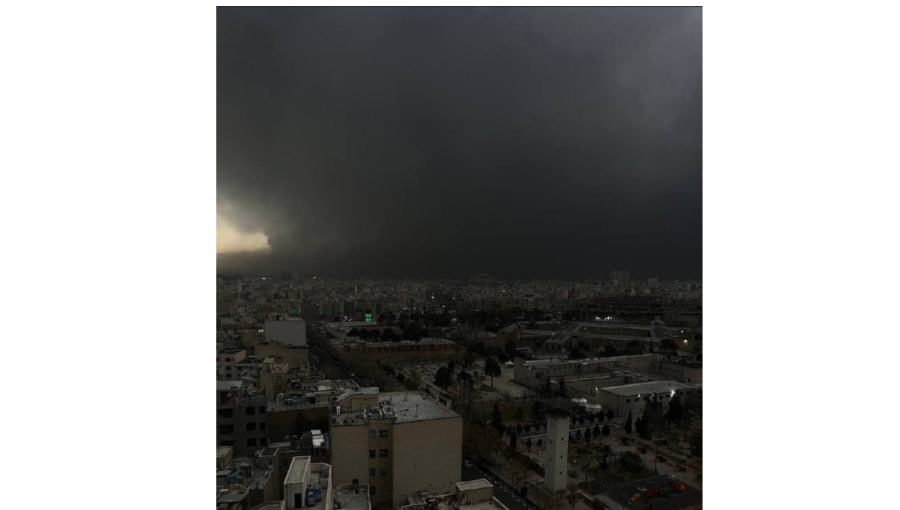
Missile strikes on fuel storage facilities in and around Tehran on March 8 triggered massive fires and sent toxic smoke across the Iranian capital, raising health concerns for millions of residents and prompting warnings of hazardous pollution drifting towards neighbouring countries.
Central Asian authorities issued health advisories and air quality alerts after vast plumes of toxic smoke drifted eastwards, raising concerns across the region about hazardous pollution and the possibility of acid rain.
Meteorological agencies across Central Asia began monitoring the movement of the smoke plume as satellite imagery and atmospheric models indicated it was travelling north-east across the Caspian region towards Kazakhstan and other parts of the region.
Four oil depots and a petroleum logistics site in Tehran and the nearby city of Karaj, west of the capital, were hit in the strikes, according to local authorities. Fires erupted after fuel tanks were breached, sending thick black clouds of smoke into the sky and igniting petrol that spilled into surrounding streets.
Video footage circulating online showed flames spreading through residential areas near one depot, with shops and homes ablaze as burning fuel ran along roadways. Local officials said six people were killed and 20 wounded at one of the targeted sites.
The fires released a mix of petroleum products and industrial chemicals into the air, creating dense smoke that spread across much of the city. Authorities warned that the fumes could pose serious health risks to residents in the metropolitan area of roughly 10mn people.
Rain fell over Tehran the following morning, prompting warnings from officials about possible chemical contamination. Residents reported throat irritation and burning eyes after the rainfall. The smog from the fires was so thick resident’s turned on headlamps to drive during the day and some have likened the effect to a “nuclear winter” following a major explosion.
Esmaeil Baqaei, spokesman for the Iranian foreign ministry, said the strikes “are releasing hazardous materials and toxic substances into the air”, which are “endangering lives on a massive scale”. Officials said the fires released complex hydrocarbons as well as sulphur and nitrogen oxides that can form acidic compounds in the atmosphere.
Iran’s environmental agency advised residents to remain indoors, while the Iranian Red Crescent warned that airborne chemicals could contribute to acid rain and cause damage to skin and lungs. It advised residents to avoid switching on air conditioning or going outside immediately after rainfall, The Guardian reported.
Iran’s UN ambassador Amir Saeid Iravani said the broader US-Israeli attacks have killed at least 1,332 Iranian civilians and wounded thousands.
Meteorological forecasters said pollution from the fires could move eastwards across Central Asia. The Caspian Post reported that calm winds, fog and temperature inversion expected in Almaty, Kazakhstan, on March 9 could trap pollutants close to the ground and worsen air quality.
Regional health experts have advised residents to limit outdoor activity and reduce time spent outside, particularly those with chronic lung, cardiovascular or allergic conditions.
Public health departments in parts of southern Kazakhstan and Kyrgyzstan issued precautionary guidance urging residents to monitor air quality updates and prepare for possible pollution episodes. Authorities also recommended that schools limit outdoor activities and that people with chronic lung or allergic conditions carry necessary medication.
Satellite imagery circulating among regional monitoring agencies showed thick smoke bands extending hundreds of kilometres from northern Iran, though the extent of cross-border pollution will depend heavily on wind patterns in the coming days.

No comments:
Post a Comment