Showing posts sorted by date for query UCP. Sort by relevance Show all posts

Thursday, February 26, 2026

AB NDP’s Rakhi Pancholi dismantles Danielle Smith’s referendum claims

February 23, 2026
RABBLE.CA


UCP strategists must be thanking their Judeo-Christian deity she’s not the leader of the Opposition!
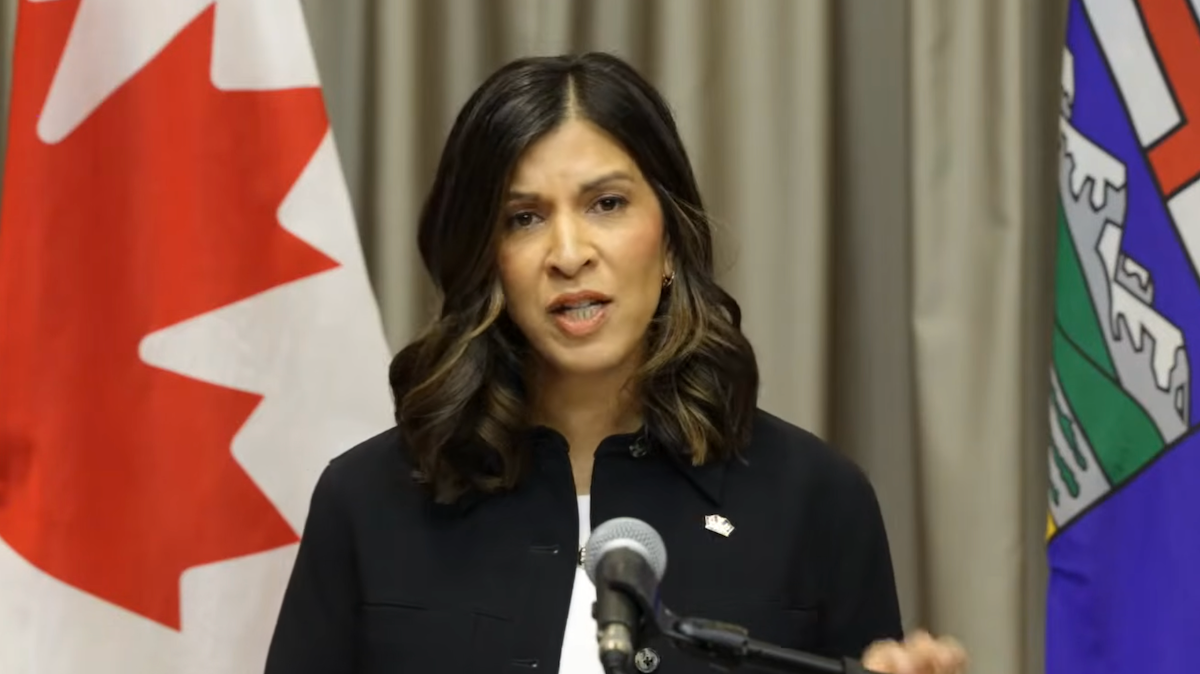
Alberta NDP Deputy Leader Rakhi Pancholi as she eviscerated Premier Danielle Smith’s claims and policies with forensic precision during a news conference Friday.
 Credit: Alberta NDP


With Alberta NDP Leader Naheed Nenshi nowhere to be found Friday morning, Rakhi Pancholi took up the task of eviscerating the long list of intentionally confusing referendum questions announced by Premier Danielle Smith in her prime-time televised message the day before, not to mention the way the premier coddles separatists, her dog whistling about immigration, and her refusal to take responsibility for her government’s fiscal mismanagement.

“Cut the bullshit! Call the election!” Pancholi began her Friday morning news conference, cutting right to the chase.

“Danielle Smith and the UCP did not campaign on nine new referendum questions,” the Opposition party’s deputy leader immediately continued. “They do not have a mandate from Albertans for this. Not on separatism, not on pulling out of the CPP, not on breaching the Charter rights of Albertans, not on coal mining in the Eastern Slopes, and not on bringing in two-tier health care!

“The premier is trying to distract us ahead of a UCP budget that will contain billions of dollars in deficits,” Pancholi rolled on. “She’s trying to distract us from separatism – which she put on the agenda and is already putting our province at risk. The premier is blaming oil prices and immigration for her poor planning and financial mismanagement.” (And, as ever, she’s also blaming long gone former prime minister Justin Trudeau, it must be added.)

After that, it just got better. Pancholi never faltered in her forensic deconstruction of the house of cards Smith has built, starting with the premier’s plan for nine murkily worded referenda next October 19, the point of which appears to be to create a constitutional crisis in Canada that will help break up the federation.

Over the next half hour, Pancholi repeated the mild profanity she started with two more times – just to make sure everyone was awake and understood that she, at least, had had enough of Smith’s constant nonsense, and that political discourse in Alberta is shifting whether the UCP likes it or not.

One imagines the post-adolescent pundits at this province’s plethora of well-funded right-wing propaganda platforms were sharpening their crayons to accuse Pancholi of having a potty mouth. It won’t work. She sounded impassioned, not profane. And Albertans who listen to her presentation will want to hear more.

On the low oil prices the premier blames for Thursday’s sad-sack deficit budget: “Oil production is hitting record levels, and resource revenue from the past five years is the highest it has been in decades. Only the UCP can blow a resource boom!”

On the premier’s pivot to condemning immigration from demanding it: “The hypocrisy on immigration is unreal! Less than two years ago, in 2024, Danielle Smith herself asked Justin Trudeau to increase immigration levels because Alberta wanted more than what Ottawa was offering. Also in 2024, she stated publicly that she wanted to double Alberta’s population to 10 million people, grow cities like Red Deer 10 times their size to one million, all while promoting the ‘Alberta is Calling’ campaign asking people from Canada and around the world to make Alberta their home.

“She did all this without a thought or plan for how to create the jobs, build the houses, schools and hospitals that we already needed!”

And now, Pancholi continued, the premier wants us to blame immigrants and asylum seekers and to send us to the polls to vote on a raft of referenda to enable such a campaign pulled right from the pages of Donald Trump’s agenda. “Again, what a load of absolute bullshit! She’s trying to make people angry about things that she can’t even back up with facts. She’s stoking the flames and raising the temperature. This is the opposite of leadership!”

Pancholi’s performance made an interesting contrast to the premier’s “media availability” the same day, during which Smith was by turns shouty, defensive, cranky and smug, all the while offering a master class in gaslighting. Just listening to Smith was exhausting. More than a whiff of panic was in the air.

But the UCP, after all, is a party that has made a cult of avoiding deficits at any cost. Now they’re going to bring down a budget expected to have a deficit of at least $6 billion to $8 billion because … what? They haven’t figured out the price of oil fluctuates?

Once again, Alberta is reduced to playing to poor little rich kid of Confederation, only this time with a separatist problem of its own creation to complicate matters. UCP fiscal incompetence will be revealed in all its glory Thursday, and blaming Trudeau and asylum seekers isn’t going to cut the mustard with anybody except the UCP’s MAGA base.

“The UCP has been in power for six years now,” explained Pancholi. “This is the premier’s fourth budget and will now be her second big deficit. Tell me how this is not a disaster in managing Alberta’s finances!”

When a reporter suggested it might be dangerous for the NDP to demand an election – after all, they might just get their wish – Pancholi said confidently she was willing to take the risk. As she put it in her formal remarks: Danielle Smith “wants to champion direct democracy? We have a direct democracy, and it’s called a general election. Call it!”

Packed Emergency Rooms, crowded classrooms, a million Albertans without a family doctor, no caps on sky-high insurance rates, soaring utility bills, the lowest minimum wage in Canada? “Where’s the premier’s leadership on any of this?”

So, concluded Pancholi, who ran for the NDP leadership in 2024 but dropped out in favour of Nenshi when his victory was clearly inevitable: “Cut the bullshit, premier! Stop with the distractions, and if you’re so convinced this is what Albertans want, call an election and let Albertans decide.”

It was a delight to see Pancholi tear into the UCP with an aggressive spirit that has been largely missing from Alberta politics on the Opposition side since Jason Kenney defeated Rachel Notley’s one-term government in April 2019.

This is what NDP members thought they were voting for when they chose Nenshi as leader in June 2024. Instead, it has been almost completely absent since Nenshi took over.

And where was Nenshi Thursday night, immediately after Smith’s remarks, or Friday morning for the news conference Pancholi handled so well? The deputy leader assured reporters that her leader had just returned from a well-deserved vacation and would reappear soon. I’m sure the UCP was relieved.

Danielle Smith remains a talented communicator skilled at setting political narratives before the Opposition gets out of their seats. She is not to be underestimated.

Pancholi, a lawyer by profession, seems to have the ability to destroy an overconfident and glib witness with forensic precision. With 20/20 hindsight, we can see that she might have been the perfect opponent for a premier with such a casual relationship with the truth and such a destructive ideology.

We can only hope that Nenshi has the sense to set her loose on the premier while he practices politics in full sentences, or whatever his passive strategy is called.


Alberta politics

David J. Climenhaga

David Climenhaga is a journalist and trade union communicator who has worked in senior writing and editing positions with the Globe and Mail and the Calgary Herald. He left journalism after the strike... More by David J. Climenhaga

Danielle Smith announces anti-immigration referendum for Oct. 19


February 20, 2026
RABBLE.CA


Alberta premier’s referenda may play in Ponoka but not in Powell River or Peterborough – that’s probably the idea.

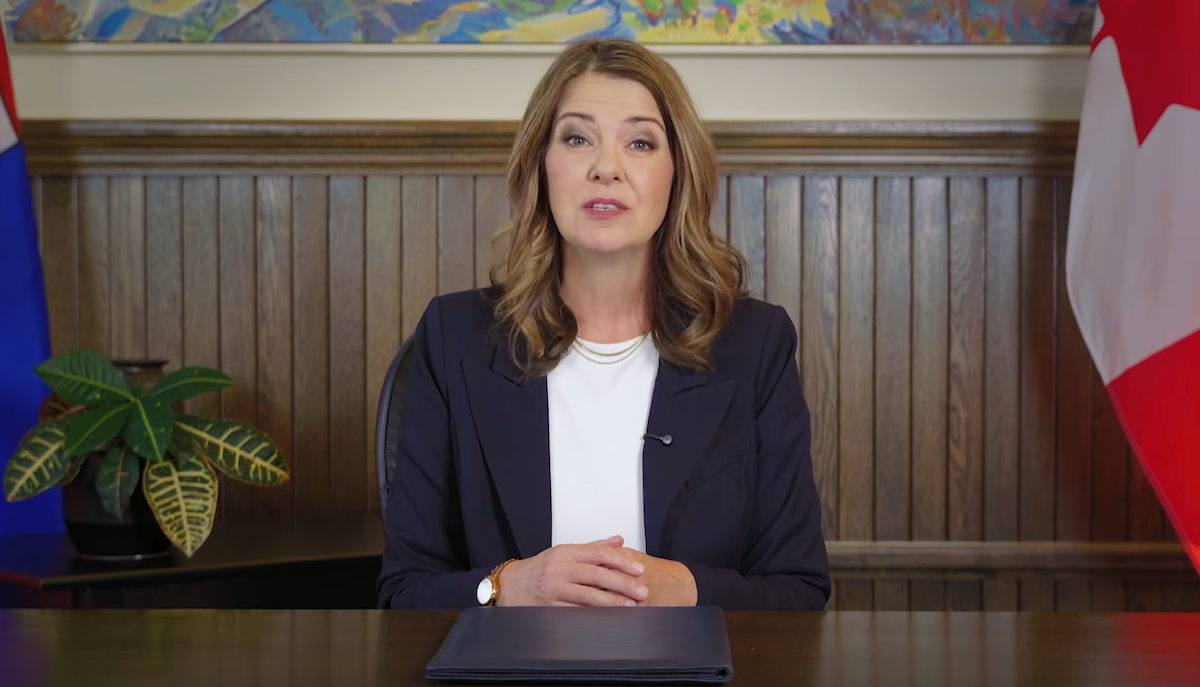
Alberta Premier Danielle Smith during her fire-free fireside chat about Alberta’s economy and her referendum plans. Credit: Government of Alberta

Alberta Premier Danielle Smith yesterday announced a raft of referendum questions for October 19 demanding provincial intrusion into federal jurisdiction, cutting services to new Canadians and other anti-immigrant measures, and seeking significant changes to the Canadian constitution.

There will be five wordy policy referenda focusing on immigration and clearly designed to appeal to the United Conservative Party (UCP)’s base, but worded to sound reasonable at an inattentive glance. There will be four additional questions asking voters to approve an effort to negotiate major constitutional changes.

Needless to say, once it gets a border or two away from Wild Rose Country’s well-trained voters, all this is likely to float about as well as the proverbial lead balloon.

But if nothing changes in the way the federation is structured, that will be just fine with Smith and her political brain trust. This is because the plan described in her 13-minute televised message last night at suppertime is clearly designed to succeed at the first step, passage by a majority of however many Albertans bother to vote, and thereafter to get bogged down in opposition from other provinces and the complexities of the Canadian Constitution’s amending formula. This will advance the United Conservative Party’s separatist agenda.

In the meantime, with her finger-pointing about how falling oil prices and Liberal politicians are responsible for rising costs and tighter spending in Alberta, her televised chat yesterday evening was also an opportunity to lower expectations for next Thursday’s provincial budget.

As retired Mount Royal University political science professor Keith Brownsey observed yesterday after the video had been aired, “what we have here is a premier blaming immigrants for her government’s failures to maintain health care, education and other social services. What she forgot to mention is that most ‘immigrants’ to Alberta come from other parts of Canada.”

“I can guarantee that there will be no constitutional changes,” Dr. Brownsey added. “She seems to be setting the province up for a vote on independence.”

Smith acknowledged that all the referenda ideas came out of her government’s directed and supporter-packed “Alberta Next” policy snake-oil road shows, but framed that as if it were a good thing.

Throughout the fire-free fireside, she blamed most of the province’s problems on lower-than-expected oil prices, immigrants, and Justin Trudeau, not necessarily in that order. The focus on immigration was widely expected, in part thanks to a couple of her advisors’ intemperate social media posts in the previous few hours.

Smith pointed to Trudeau Era immigration policies as the cause of the province’s shortage of classroom space for the children of new Albertans. Never mind her UCP government’s failure to plan for growth everyone knew for years was coming, or to fund it.

And while she barely mentioned the lack of capacity in Alberta’s hospitals that has seen them descend into chaos in recent months, that glossed over the fact it’s been more than 40 years since a new hospital was built in Edmonton while the population of Alberta’s capital city has more than doubled. It would have been hard to deny that Trudeau was prime minister for less than a quarter of that time.

Naturally, Smith also made no mention of the multi-millions of dollars her government has hosed away on ideological projects and political mischief to own the Libs in Ottawa, like that $70 million for almost unusable children’s “Tylenot” purchased during a short-lived national shortage of acetaminophen in 2022. The Globe and Mail reported yesterday that that Alberta has just spent another $718,000 to destroy what was left.

Nor did Smith say anything about her call less than two years ago for Alberta’s population to double to 10 million people – the better to throw our weight around in Confederation. Or the UCP’s successful advertising campaigns calling on Ontario and B.C. residents to move here. This caught the attention of her own party’s highly influential MAGA base and by the summer of 2024 she had jumped onto the anti-immigration bandwagon.

So her dream of Red Deer, a city of 100,000 souls best known as a coffee and gas stop halfway between the fleshpots of Calgary and Edmonton, hitting a population of a million any time soon will have to be put back on ice for a long spell.

“Alberta taxpayers can no longer be asked to continue to subsidize the entire country through equalization and federal transfers, permit the federal government to flood our borders with new arrivals and then give free access to our most-generous-in-the-country social programs to anyone who moves here,” Smith complained, exploiting her government’s carefully nurtured popular misunderstanding of how federal transfer payments work.

Turns out the population growth she was demanding so recently is “financially crippling and undercuts the quality of our health care, education and other social services.” You know, like public health care, which her government is striving to dismantle.

Hilariously, the premier assured listeners that despite low oil prices and the cost of all those immigrants, “the approved wage increases for our doctors, nurses and teachers will remain in place so we can continue to attract the skilled professionals needed to catch up with our growth.”

Nice to know. I wonder who informed her that, unlike the United States she so admires, even governments in this country have to abide by legal contracts and the rule of law? Can you imagine what would have happened if the UCP had tried to roll back just-negotiated wages with skilled health-care professionals? It wouldn’t have been pretty.

So here are Smith’s planned referenda questions, in her own words: Do you support the Government of Alberta taking increased control over immigration for the purpose of decreasing immigration to more sustainable levels, prioritizing economic migration and ensuring Albertans have first priority to new employment opportunities?
Do you support the Government of Alberta introducing a law mandating only Canadian citizens, permanent residents and individuals with an Alberta approved immigration status will be eligible for provincially funded programs such as health, education and other social services?
Assuming that all citizens and permanent residents continue to qualify for social support programs, as they do now, do you support the Government of Alberta introducing a law requiring all individuals with a non-permanent legal immigration status to be resident in Alberta for at least 12 months before qualifying for any provincially funded social support programs?
Assuming that all citizens and permanent residents continue to qualify for public health care and education as they do now, do you support the Government of Alberta charging a reasonable fee or premium to individuals with a non-permanent immigration status living in Alberta for their and their families use of the health care and education systems?
Do you support the Government of Alberta introducing a law requiring individuals to provide proof of citizenship, such as a passport, birth certificate or citizenship card, to be eligible to vote in a provincial election to strengthen Alberta’s constitutional and fiscal position within a united Canada.

Needless to say, much of this makes little sense upon examination. It is mostly bad policy that would not save money and in some cases would violate the constitution we have now. In addition, it would be mean-spirited and often cruel. The final point is a solution in search of a problem, although one that is fiercely believed in by MAGA fantasists.

In addition, the government will seek approval to work with “other willing provinces” to amend the Canadian Constitution in four ways, Smith said. It is not completely clear if this is supposed to be one referendum question with four bullets or four referenda. Have provincial governments and not the federal government select the justices appointed to provincial Kings Bench and appeals courts?
Abolish the unelected federal Senate.
Allow provinces to opt out of federal programs intruding on provincial jurisdictions such as health, education and social services without losing any of the associated federal funding for use in their own provincial social programs.
Better protect provincial rights from federal interference by giving a province’s laws dealing with provincial or shared constitutional areas of jurisdiction priority over federal laws when in conflict with one another.

All these ideas are likely to be immediately rejected by other provinces. Which, as previously noted, is probably the point.

The NDP Opposition, foolishly, decided to wait until this morning after the news cycle has moved on to respond. That fits with Leader Naheed Nenshi’s wish to do politics in full sentences. It doesn’t show much understanding of how political discourse is carried on in this era, though. The UCP, I am sure, was delighted.


Alberta politics


David J. Climenhaga

David Climenhaga is a journalist and trade union communicator who has worked in senior writing and editing positions with the Globe and Mail and the Calgary Herald. He left journalism after the strike... More by David J. Climenhaga


Avi Lewis answers rabble’s NDP leadership questionnaire


February 23, 2026
rabble.ca

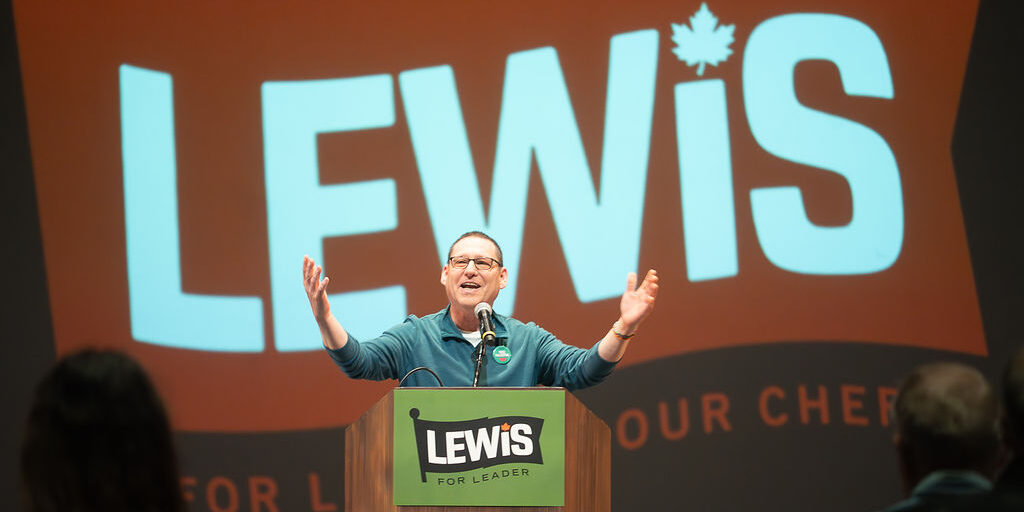
rabble is asking each of the candidates for the NDP leadership seven questions on party strategy, Indigenous issues, dealing with Donald Trump and more. Here are the answers from Avi Lewis.


Avi Lewis at a campaign event. Credit: Avi Lewis / X

Please tell our readers three policies you would champion as NDP leader.

As NDP leader, I would champion the creation of public options in every sector of our economy where the market is failing. While one-in-four Canadians live in food-insecure households and food bank usage skyrockets, Galen Weston, the owner of Loblaws, is worth $18 billion. This is classic market failure, and shows who benefits and who suffers in our current economy, where every sector is dominated by a handful of colluding corporations. It’s why our campaign is proposing a public option for cell phones, internet, postal banking, and groceries. Think Costco run as a public service – a public network of 50 grocery stores across the country would offer 30 to 45 per cent cheaper food prices and cost $300 million a year to run. That’s just one half of one percent of the defence budget.

Second, we are running on a Green New Deal to create over a million good-paying union jobs in every corner of this country by investing two per cent of Canada’s GDP in tackling the climate emergency, creating decades of employment for trades workers, care workers, transportation workers, youth, scientists, fossil fuel workers, and more. This work will be supported by a new generation of green public corporations like neighbourhood utilities, heat pump manufacturers and installers, the care economy (care work is low carbon!) electric bus factories and more.

Thirdly, a national rent cap that will give power back to renters and put an end to steep rent hikes. The cap will mean that rent cannot be raised by more than the rate of inflation in each province or territory including for vacant units, so landlords cannot jack up rents between tenants. The federal government can do this by implementing backstop legislation that strengthens provincial and territorial rent controls.


Which Carney government legislative initiatives would you change, if you could, and in what way?

First of all, I would repeal the major projects provisions in Bill C-5. It allows the federal government to approve projects, including fossil fuel infrastructure, while bypassing consultations and environmental assessments. It’s the type of bill that would make Stephen Harper blush, ignoring Indigenous rights and flagrantly disregarding the fact that we’re in a climate emergency. We need powerlines, not pipelines – especially not if they’re rushed through over the objections of communities who are trying to protect our air, water and land.

Additionally, Bill C-12 is an assault on the fundamental rights of migrants, refugees, and all Canadian citizens. Rather than keeping us safe, this bill creates a deportation machine that drags us ever closer to the horrors happening in the US. This law opens the door to a new wave of human rights abuses, and tears at the social fabric of communities. We should scrap this law and follow the lead of Spain, who are giving legal status to half a million migrant workers.

Finally, I’m deeply concerned by provisions in Bill C-9 that restrict our constitutional right to peacefully protest. Bill C-9 is an attack on our civil liberties and charter rights. It is designed to limit freedom of expression and the ability of people to organize and speak out for justice, including and especially those organizing for justice in Palestine. I support the cross-country, multi-faith coalition of organizations – including many civil society groups and the Canadian Labour Congress, who are calling on the federal government to withdraw this dangerous legislation.

How would you combat separatism in Quebec and Alberta?

The stoking of Alberta separatism by Danielle Smith, who has cleared the way for a referendum to be held is a dangerous development. This is a cause that appears to be fuelled by American foreign interference, with Trump administration officials meeting with leading separatists. We must strongly reject these efforts, and do everything we can to help Naheed Nenshi win the next provincial election. In my meeting with Mr. Nenshi, I emphasized how I will do everything I can to make this happen, and thanked him for his and the Alberta NDP’s steady work opposing the most right-wing government in this country.

In addition to being dangerous, it’s also a distraction from Danielle Smith’s agenda of cuts and privatization. The UCP government recently passed Bill 11, a blueprint for American style two-tier health care in Alberta. It is an open invitation to US health insurance companies to come in and cannibalize our precious public health care system. We must not let this happen. That’s why the federal government needs to start strongly enforcing the Canada Health Act, to stop this sell off of medicare dead in its tracks.

Regarding Quebec separatism, the key to addressing it for the NDP is by demonstrating that we are a viable option for Quebec’s progressive majority. This includes having a leader who can not only communicate with people in Quebec in French, but also a leader who understands Quebec’s unique culture and politics. It means upholding the Sherbrooke Declaration and connecting with Quebeckers on the basis of shared social democratic values and ideas. I’m proud to have the support of Charles Taylor, who kept the flame alive for the NDP in Quebec decades before the Orange Wave. The task of reconnecting with Quebec would be fundamental if I have the honour of serving as leader.

What would your conditions be for supporting a Liberal minority government?


If the NDP holds a clear balance of power under my leadership I would like to go in with just one demand: proportional representation. Not a commitment to studying it further, doing it later, holding a referendum or some other way for the Liberals to wriggle out of the commitment – but its full implementation after a citizens’ assembly to decide the exact type of electoral system. It is the reform that unleashes all of the other reforms, and it will end once and for all the phenomenon of “strategic voting” where people feel pressure to vote against something, rather than voting for whichever party or candidate truly aligns with their values.

It is also vital to preventing false majorities where a party that wins 36 per cent of the vote wields almost absolute power. What happens if Poilievre wins the next election in such a scenario? All of the progress made by the NDP in the last parliament, from dental care to the first steps on pharmacare, will be put at risk. This is why electoral reform is so important. Rather than a menu of demands, the NDP should have one clear condition next time and it should be proportional representation.

If you were in charge of Canada-U.S. relations, what would your strategy be for dealing with the Trump administration?


We need an independent foreign policy that pursues alliances with a host of like-minded countries. There is strength in numbers, and we should prioritize deepening ties with progressive governments including Mexico, Brazil, Colombia and Spain, to stand up to Trump collectively. All of these countries have not hesitated to chart their own course on the world stage, including by condemning the genocide in Palestine and standing up against the bullying of smaller nations in the Western Hemisphere by the Trump administration. The Carney government has been silent on these matters, and the NDP must be a principled voice for human rights and justice without exceptions. In addition, we should not be pursuing deeper military integration with the United States, like the “Golden Dome” missile defence system, which Prime Minister Carney continues to entertain.

As well as an independent foreign policy, we must also build an independent and resilient domestic economy that can withstand the shocks of Trump’s tariffs. Our economy has become far too intertwined and reliant on our neighbour to the south. That’s why we’re running on a plan to expand public ownership, creating new Canadian crown corporations to deliver affordable services from groceries to telecoms to postal banking. And finally, we need to push back against the tariffs with a tax on oil and gas exports to the US, which will also help fund the creation of sustainable jobs and finance the transition to clean energy that we desperately need. 

What steps would you take to decrease growing economic inequality in Canada?

Our campaign is putting forward a comprehensive tax plan for the 99 per cent to tackle inequality and raise the money that we need to properly fund our public services. Inequality in this country has reached unfathomable levels. The top one per cent own almost a quarter of Canada’s net wealth. Meanwhile, the six biggest banks raked in $70 billion in profits last year. Fountains of wealth are being generated, but it’s not trickling down to working people, it’s stuck at the top. We need a government with the courage and political will to finally go after it.

That’s exactly what our plan proposes. The centrepiece of it is a wealth tax of one per cent on the top one per cent, rising to three per cent on the largest fortunes. Such a tax would impact only a small number of people, but it could generate $40 billion a year in new revenue. In addition, we’re calling for capital gains income to be treated the same as employment income, a tax on inheritance of wealth over $5 million, a new income tax bracket for the richest Canadians, a tax on excess corporate profits, and giving the CRA the resources it needs to go after tax cheats.

On the income support side, we would lift people out of poverty with a major increase to income support for disabilities (raising the Canada Disability Benefit to $2150 per month), seniors, families with children and low income adults. We would also create a national framework for a guaranteed liveable basic income, as proposed by Leah Gazan in Bill C-223, to establish a social floor below which no one can fall.

What measures are necessary to empower Indigenous communities in Canada and assure their prosperity?


Empowering and supporting Indigenous communities is threaded throughout our campaign platform on many levels – from our vision of an electric bus revolution that re-connects communities and addresses safety on every Highway of Tears in this land to investing in the care economy, including culturally-appropriate childcare and elder care, to ensuring that impacted Indigenous communities benefit from the wealth generated by mining on traditional territories.

When it comes to development on Indigenous lands, the UN Declaration on the Rights of Indigenous Peoples principle of Free, Prior, and Informed Consent must be fully respected and honoured. This requires true, meaningful consultation in partnership and collaboration with First Nations, Métis, and Inuit governments, including with traditional governance systems and structures. Meaningful consultation includes ensuring that all community voices who wish to participate are included in the formal process for projects, but additionally that communities are able to have continued dialogue with the federal government should new issues arise during project development and operations.

Another absolutely crucial element is adopting a “For Indigenous, By Indigenous” Housing Strategy. The housing crisis affecting First Nations, Inuit and Métis communities is a national emergency. Nearly one in six Indigenous people live in homes needing major repairs that are considered unsuitable for the number of people living there. This is a denial of fundamental human rights, and it has dire consequences for people’s health and wellbeing. The strategy would close the housing gap between Indigenous and non-Indigenous communities, through massive investments in urban, rural and Northern Indigenous housing projects, working alongside Indigenous leadership.

Finally, I would like to acknowledge Tanille Johnston’s plan for Indigenous reconciliation and empowerment, it’s an outstanding document that I fully support.


Monday, February 09, 2026


Inside the Right-Wing Movement Pushing Alberta to Secede From Canada


Trump officials have repeatedly met with secessionist leaders from the province, which has large oil and gas deposits.
PublishedFebruary 9, 2026

A member of the public wears a "Make Alberta Great Again" hat during the Help Us Make Sovereignty for Alberta Happen event organized by the Alberta Prosperity Project in Sherwood Park, Alberta, Canada, on March 16, 2025.
Artur Widak / NurPhoto via Getty Images


Honest, paywall-free news is rare. Please support our boldly independent journalism with a donation of any size.

Aseparation movement in the Canadian province of Alberta claims to be gaining steam, and its leaders say they now have a meeting booked with U.S. Treasury Department officials. They will be asking for a line of credit worth $500 billion in U.S. currency to help transition Alberta from a Canadian province into a U.S. state.

Led by businessman Mitch Sylvestre, the Alberta Prosperity Project has launched a petition through a campaign called Stay Free Alberta to build support for a referendum to separate from Canada. The group has no official support from any of the elected parties in Alberta.

Behind its rallying cry of faith, family, and freedom, the Alberta Prosperity Project wants a new constitution for Albertans — one “that recognizes the Supremacy of God as foundational to Civil Society and the Rule of Law.”

Unlike in the province of Quebec, where separatist leaders hold elected office, Alberta’s separatist movement has no formal foothold in its province’s politics. Quebec, an overwhelmingly French-speaking province, is the only jurisdiction in Canada with a sizable sovereignty movement. That province had referenda in 1980 and 1995 that asked whether or not Quebecers wanted to separate from Canada, the latter narrowly failing. The separatist political party, Parti Québécois, is expected to form the next provincial government, and has promised a referendum in its first mandate.

Officially, the governing United Conservative Party of Alberta (UCP) is not advocating for sovereignty. Alberta Premier Danielle Smith says she wants Alberta to remain in Canada. However, the idea of sovereignty has been used by the UCP to try to push forward policies that the government of Alberta supports, especially related to oil and gas. On February 4, Smith issued a letter demanding that Alberta be given more say over judicial appointments. She also questioned why three judges of the nine on the nation’s Supreme Court came from Quebec (Quebec is governed under the Civil Code and not Common Law. As such, it has more representation at the Supreme Court for when Civil Code matters arise).


Mark Carney Warns “American Hegemony” Is Destroying World Order in Candid Speech
States like Canada have long known the current system of international rules-based order is a “fiction,” Carney said.  By Sharon Zhang , Truthout January 20, 2026


Smith is using the sovereigntist movement to try to extract gains from Ottawa but is not formally supporting the movement. When pressed by journalists about members of her caucus having signed the pro-separation petition, Smith told the Canadian press that she doesn’t “police” members of her caucus and they’re free to sign whatever petitions they would like.

At the end of 2022, the UCP passed an act called the Alberta Sovereignty within a United Canada Act. It allows the Alberta government to challenge federal laws that it believes are an overreach into provincial jurisdiction (though the Canadian Constitution already allows for this). The UCP has also lowered the threshold of signatures required to trigger a referendum and extended the period of time to collect signatures. The separatists would need to have almost 178,000 signatures by May for a referendum to go ahead. There are 5 million people who live in the province.

The separatists would need to have almost 178,000 signatures by May for a referendum to go ahead.

Jeremy Appel, author of a forthcoming book about Smith, says there has been a sovereignty movement in Alberta going back to when the province first joined Canada in 1905. From the beginning, the movement was mostly concerned with fighting to maintain provincial control over Alberta’s resources. Then, the federal government created the National Energy Program in the 1980s, which gave Ottawa more control over oil and gas in Alberta, to the chagrin of many Albertans.

Appel believes that the sovereignty movement has its roots in this history but projects its discontent on the ruling status quo. “Canada’s state institutions have been completely hollowed out by neoliberalism and Smith is responding to this wave of anger and discontent stemming from that by … displacing the causes onto ‘woke’ liberals in Ottawa and Montreal,” he explained.

Separatist sentiment rises when Liberal Party politicians are elected in Ottawa, and they tend to be calmed when Conservative Party politicians are in office, he added.

While polls show that popular support for sovereignty in Alberta is on the rise, there is also considerable opposition. Former Progressive Conservative provincial representative for Alberta, Thomas Lukaszuk, recently filed a petition to remain part of Canada. His petition collected 438,568 signatures and was submitted to the legislative assembly on December 1, 2025, one month before the deadline. If it meets the deadline with the required number of signatures, the question about separatism will be put to Albertans in a referendum.

Alberta Prosperity Project leaders have met with U.S. State Department officials at least three times.

The Financial Times reports that Alberta Prosperity Project leaders have met with U.S. State Department officials at least three times.

Prime Minister Mark Carney reacted to the news that Trump officials had met with the sovereignty activists, saying, “I expect the U.S. administration to respect Canadian sovereignty.”

Appel points to the fact that it isn’t just separation activists who are meeting with U.S. officials. Premier Danielle Smith travelled to Mar-a-Lago in January 2025, 10 days before Donald Trump’s inauguration. Smith’s current Chief of Staff Rob Anderson is a former member of the province’s legislative assembly and an Albertan separatist who has an undergraduate degree from Brigham Young University in Utah. On social media, Anderson said the current movement to secede was triggered by Albertans’ hatred for former Prime Minister Justin Trudeau.

British Columbia Premier David Eby reacted to this news by saying this to CBC: “If you are crossing a border to seek the support of a foreign government to break up our country because you don’t have the support and the resources and the ability within our own country to advance that conversation, and you’re asking the Americans or any other government, I mean that is the definition of treason.”

Trump has consistently referred to Canada as the 51st state, and this group of separatist activists might give the president some of what he wants. With the U.S. administration already meddling in Venezuela over access to oil reserves, Alberta could serve a similar purpose for Trump, giving the United States access to another large deposit of oil and gas. Appel believes that this movement could easily serve as a toehold for the Trump administration to get into Canada.

Trump has consistently referred to Canada as the 51st state, and this group of separatist activists might give the president some of what he wants.

Canada and the United States have a deeply intertwined energy market. In 2023, 21 percent of all Canadian hydrocarbon exports went to the United States, worth some $163 billion in Canadian currency. Of the crude oil that the United States imported, nearly 60 percent came from Canada and almost 100 percent of the natural gas came from Canada.

Alberta produces around 84 percent of Canada’s crude oil. More than any other province, Alberta relies on the United States to purchase its oil.
First Nations leaders have been outspoken against the Alberta sovereignty movement. At a press conference, Trevor Mercredi, grand chief of Treaty 8 First Nations of Alberta, said: “Our treaties are with the imperial crown, not with the province of Alberta. Alberta has never been party to the treaties and has no jurisdiction over our lands.”

“I’m calling on all international nations and communities to support the First Nations movement in Alberta, to tell the Alberta government that what they are doing is unconstitutional, and that the foreign interference has to stop,” said Chief Allan Adam from the Athabasca Chipewyan First Nation.


This article is licensed under Creative Commons (CC BY-NC-ND 4.0), and you are free to share and republish under the terms of the license.


Nora Loreto is a writer and activist based in Quebec City. She is also the president of the Canadian Freelance Union.

Monday, February 02, 2026

Worker Agenda Podcast Alberta Federation of Labour's (AFL)

 The first episode of the Worker Agenda Podcast launches today on the Real Talk Ryan Jespersen platform. Be sure to check it out on YouTube or wherever you get your podcasts.


Your hosts are the Alberta Federation of Labour's (AFL) president and secretary treasurer, Gil McGowan and Cori Longo, in conversation with journalist and filmmaker, Omar Mouallem.

The first episode dives deep into an issue that's top of mind for all Albertans: AFFORDABILITY. We look at policy solutions such as public auto insurance, re-regulating power, and an excess profits tax on groceries. We also hear from workers in Red Deer, including a shop steward for United Food and Commercial Workers (UFCW) Local 401 working at a grocery store, whose co-workers struggle to feed themselves properly; as well as a local parent whose eighteen-year-old child is struggling to break into the workforce.

The UCP government’s current agenda includes many things that Albertans didn’t vote for, and don’t support, like two-tier health care, pulling Alberta out of the CPP and the RCMP, the undemocratic use of the Notwithstanding Clause to strip Albertans of their rights, and the introduction of legislation designed to facilitate a dangerous and destabilizing referendum on leaving Canada. The AFL’s Worker Agenda, on the other hand, outlines bold and proven policies that address the issues Albertans are really worried about, like the cost-of-living crisis, stagnant wages, job uncertainty, and crumbling public services.

Send an email to your MLA, asking them to make the Worker Agenda THE agenda for Alberta!

The Worker Agenda Podcast aims to shine a spotlight on the major problems Albertans are grappling with, along with the potential solutions. A new episode will be posted on the first Sunday of every month from now through to September. Leave a comment to let us know what you think, and share clips with your network!

Standing up for Canada!


Standing up for Canada!


Hello Friends,

I hope you’re well. I can’t believe it’s February already!

Like many of you, I’ve found 2026 to be an alarming cycle of fast-paced news, much of which has been both disturbing and disheartening. Amidst the chaos of both local and international turmoil, I truly hope you’re finding time for yourself, for your loved ones, and for doing things that bring you peace. 


Remember, rest can be a radical act of resistance in a world that’s constantly pulling your attention in competing directions. This is because rest (as I’m still learning) is what gives us the strength to move forward in our collective work towards a better Alberta. 


…and speaking of collective work, I wanted to talk about an issue that’s on so many of your minds right now: the future of our province and country.

Renouncing Separatism and Standing Up For Canada


Recently, we learned the disturbing news that Alberta separatists have been conspiring with senior Trump officials to undermine Canada’s sovereignty. This news is deeply troubling. We need leaders to speak clearly and call this out. 


Multiple premiers, including David Eby in B.C. and Wab Kinew in Manitoba are speaking out; even Ontario Conservative Premier Doug Ford has called on Alberta’s Premier to stand up. We’re seeing leadership from across our country stand up for Canada - with one exception: Danielle Smith. 


Premier Smith has paved the way for separatism to flourish in Alberta, and has fanned the flames through her language, legislation, and actions. She is willing to risk Alberta’s economy, our safety, and our country all to appease a small percentage of Albertans. I can’t believe I’m quoting Doug Ford, but he’s right: enough is enough.


This week, I was extremely proud to stand alongside our leader, Naheed Nenshi, to unequivocally renounce separatism and pledge my allegiance to Canada. Please know that me and our Alberta New Democrat team will always fight for Canada - and we won’t back down. 

Watch my video message by clicking here.

Thank you, always


I’m grateful to all of you who’ve volunteered, donated, and helped throughout 2025. I’m so proud to have learned that we, the NDP, outfundraised the UCP in the final quarter of last year. I want to keep that momentum going, as the next election could come anytime. Any amount makes a huge difference! 


Please don’t hesitate to reach out anytime, friends. I love hearing from you.


Take care of yourself, and each other,

Janis

Thursday, January 22, 2026

How the Alberta MOU Violates Canada’s 
Climate Obligations

How the Alberta MOU Violates Canada’s Climate Obligations

This post provides a summary of a much longer analysis, one version of which is available on both the Rideau Institute website, and the original on RI Senior Fellow Craig Martin’s Substack.

While there has been much discussion of the Canada-Alberta Memorandum of Understanding (the MOU), there has been rather less analysis of whether it is consistent with Canada’s international law obligations.

There has been much debate about the new Memorandum of Understanding (the MOU) that the federal government and Alberta signed in December. As most readers will recall, it envisions a rapid expansion of Alberta’s production of bitumen from its oil sands fields, the development of a new pipeline from Alberta to the Pacific coast for export to Asia of the expanded oil production, and a massive expansion of electrical generation for data centers and new infrastructure. The agreement also provides for all of this to be facilitated by a streamlining of the climate and energy-related regulatory process, exempting Alberta from many of the current climate and energy policy regulations that would be implicated by the planned expansion.

Canada has both legal and moral obligations to do its fair share in responding to the climate change crisis….

While there has been much discussion of the Canada-Alberta Memorandum of Understanding (the MOU), there has been rather less analysis of whether it is consistent with Canada’s international law obligations. Canada has both legal and moral obligations to do its fair share in responding to the climate change crisis—and understanding what these obligations are, and whether policies such as this new agreement violate them, should be of considerable importance to all Canadians.

Key Elements of the Canada-Alberta MOU

In a nutshell (as most Canadians will know), the federal government and Alberta signed a new Memorandum of Understanding (the MOU) that envisions a rapid expansion of Alberta’s production of bitumen from its oil sands fields, the development of a new pipeline from Alberta to the Pacific coast for export of the expanded oil production to Asia, and a massive expansion of electrical generation for data centers and new infrastructure. All of this is to be facilitated by a streamlining of the regulatory process, and exempting Alberta from current climate and energy policy regulations, including the carbon pricing standards under the Greenhouse Gas Pollution Pricing Act (the GGPPA), and the federal Clean Energy Regulation enacted under the Canadian Environmental Protection Act. The plan assumes that its impact on greenhouse gas (GHG) emissions will be offset by a massive carbon capture, utilization and storage (CCUS) project. The entire project is to be privately funded, and it envisions buy-in and involvement of the First Nations.

Canada’s Legal Obligations – The ICJ Decision

[T]here have been several groundbreaking decisions by international tribunals on the obligations of states regarding their response to the climate change crisis, culminating with the Advisory Opinion on the Obligations of States in Respect to Climate Change from the International Court of Justice (ICJ) just last summer.

Critics, including some within the government itself, quickly condemned the project for making the achievement of Canada’s climate goals—particularly its ultimate long-term goal of attaining net-zero by 2050—all but impossible. But there has also been widespread support for the project as being a boon for the Canadian economy. Strangely, there has been little discussion of how the project relates to Canada’s legal obligations. Yet in just the last year, there have been several groundbreaking decisions by international tribunals on the obligations of states regarding their response to the climate change crisis, culminating with the Advisory Opinion on the Obligations of States in Respect to Climate Change from the International Court of Justice (ICJ) just last summer.

The ICJ established that the states have a fundamental obligation, under both treaty and customary international law, not to harm the climate system. This obligation requires that states take increasingly ambitious action to reduce their net GHG emissions, to do their part in achieving the consensus goal of keeping the average global temperature increase to 1.5º Celsius above pre-industrial levels. This is an obligation of conduct, which requires states to act with due diligence in setting and implementing the measures necessary to reduce their GHG emissions. In addition, states have obligations to cooperate with one another in this effort, and they have separate obligations under human rights law to prevent harm to the climate system, given that it is a precondition to the enjoyment of other fundamental rights.

The MOU…now more clearly violates Canada’s climate change obligations.

Canada’s climate plans submitted in accordance with the Paris Agreement, which committed Canada to be net-zero by 2050, were already deemed insufficient to fulfill Canada’s fair share of the reductions required to meet the global 1.5º C objectives. The MOU, however, now more clearly violates Canada’s climate change obligations. The expansion of bitumen extraction and processing will directly produce an increase in GHG emissions that cannot be completely mitigated by the CCUS project, even if the developing technology for that project is entirely successful. What is more, the expanded energy generation called for will also likely increase emissions. Finally, the relaxation of regulations and the exemptions afforded Alberta will weaken and undermine the Canadian climate change law and policy regime in ways that will further lead to a reduction in the rate at which GHG emissions are being reduced within Canada.


The adoption of such plans in and of itself constitutes a violation of the due diligence obligations identified by the ICJ. Far from increasing the ambitiousness of its plans to reduce GHG emissions, Canada is, with this MOU, implementing plans that will directly increase GHG emissions, weaken its climate change law and policy regime, and make it virtually impossible to meet its already insufficient targets.

There is real injustice in failing to do one’s part in resolving a problem that one has helped to cause, and which is causing harm to innocent people.

Some may think such obligations abstract and of little matter. But Canada is among the group of Western states that are responsible for creating the bulk of historic GHG emissions, and thus bear disproportionate responsibility for creating this existential crisis for humanity. The obligations identified by the ICJ are owed in large part to the states of the Global South, and the peoples of those states, which are highly vulnerable to the increasingly dire consequences of climate change, and which contributed almost nothing to the causes of this crisis. There is real injustice in failing to do one’s part in resolving a problem that one has helped to cause, and which is causing harm to innocent people.

Canada must do its fair share to help the world deal with the crisis.

Finally, Canada owes obligations, as a matter of human rights, to the people of Canada—both those currently alive but also those of future generations. We are now on a trajectory of hitting a temperature increase of 3.8º C by 2100, which will be catastrophic for human civilization. Canada must do its fair share to help the world deal with the crisis.


Our next post will examine Prime Minister Carney’s landmark speech at Davos, Switzerland on 20 January 2026; take stock of President Trump’s so-called Board of Peace for Gaza, and update on the increasingly dire situation in Ukraine

Photo credit: Craig Martin – AI generated (Alberta oil sands).

Ceasefire.ca is a public outreach project of the Rideau Institute linking Canadians working together for peace. We need your support more than ever to promote an independent, sovereign and viable Palestinian state, to help bring peace to Ukraine and to advance our common security globally. 


The Grassy Mountain coal project already had a fair hearing. It was rejected in the 2021 joint review panel for reasons that it would create great environmental harm for little economic benefit. But the Minister of Energy interfered in the AER process to revive the project. How can the public or investors have any trust in Alberta’s regulatory processes when the UCP government interferes in independent processes? #ableg