Monday, April 01, 2024

Corporate Profiteering Destroyed the Baltimore Bridge


 APRIL 1, 2024
Faceboo

Photograph Source: NTSBgov – Public Domain

The collapse of the Francis Scott Key Bridge in Baltimore has sent shock waves throughout the United States. The bridge was not built to withstand a direct hit from a container ship as large as the Dali, which brought down the structure within minutes after its engine failed and it became an uncontrollable force drifting toward the bridge.

The incident is a symbol of how unfettered capitalism has resulted in safety concerns becoming secondary to profits.

The Dali, operated by shipping giant Maersk, was carrying more than 800 tons of corrosive and flammable materials. Transportation secretary Pete Buttigieg likened the 95,000-ton ship to an aircraft carrier and the New York Times explained that “When the bridge was built, cargo ships were not the size they are today.” In fact, such ships have grown steadily in size over the past few decades. One economist told the Times that shipping companies “did what they thought was most efficient for themselves—make the ships big—and they didn’t pay much attention at all to the rest of the world.” This in turn has forced nations to expand waterways to accommodate the behemoths, often at the expense of the public.

Some 90 percent of all traded goods that are shipped from one part of the world to the other are transported by water. As corporate appetites for profits have increased, so has globalized trade. And, safety concerns have taken a back seat, as per an investigation published by Jacobin.

In 2023, the U.S. Department of Labor investigated a complaint against Maersk and concluded that the company had violated the Seaman’s Protection Act by retaliating against a whistleblower employee. At stake was the fact that, as per the Labor Department, “Reporting Policy requires seamen to report safety concerns to the company and allow it time to abate the conditions before reporting to the [U.S. Coast Guard] or other regulatory agencies.” In other words, Maersk, which is one of the world’s top shipping companies, tried to protect itself from government regulators.

A similar scenario of compromising safety in service of profits has unfolded at Boeing, one of the world’s top airplane manufacturers. After an Alaska Airlines flight in January 2024 was forced to make an emergency landing when the Boeing 737 Max plane lost a panel mid-flight, the New York Times published a bizarrely headlined story: “Boeing Faces Tricky Balance Between Safety and Financial Performance.” The story points out a conundrum for Boeing’s executives: “Should they emphasize safety or financial performance?”

The Times explained that, for years the company “put too much emphasis on increasing profits and enriching shareholders with dividends and share buybacks, and not enough on investing in engineering and safety.”

It’s worth stating the obvious: An unsafe aircraft is not an aircraft, it’s a death trap. And yet, within a capitalist framework, everything boils down to a cost-benefit analysis. If the cost of safety for companies like Boeing or Maersk outweighs the financial benefits, it’s simply not worth it for executives and shareholders. While the Alaska Airlines flight thankfully did not result in any deaths this time, hundreds of people on board 737s in 2018 and 2019were not so lucky. Workers at Boeing factories in Washington and South Carolina where aircraft are assembled are required to work at breakneck speed and compromise on safety in the interest of churning out planes as fast as possible.

Who pays the price for such corporate hubris? Vulnerable workers and the public. In the case of the Baltimore bridge accident, all 22 workers on board the Dali were of Indian origin and their quick thinking in notifying authorities that the ship lost power helped ensure that casualties were minimized. As of this writing, they remain trapped on board the ship with one worker having been treated at a hospital for minor injuries.

Meanwhile, the six people who are presumed dead and two who were rescued from the frigid waters were all immigrant workers from Mexico and Central America, working on the bridge as part of a construction crew.

These are the same sort of people who suffer racist attacks and ridicule from white supremacist forces in the U.S. A right-wing outlet posted a virulently racist cartoon of the Dali’s crew on social media. And only weeks earlier, Georgia’s unhinged ultraconservative Congressional representative Marjorie Taylor Greene heckled President Joe Biden during his State of the Union address about a white woman who “was killed by an illegal,” in an attempt to whip up anti-immigrant frenzy.

Greene appeared utterly unconcerned about the fact that construction workers in the U.S. hail disproportionately from Latin American immigrant communities and many die from work-related injuries. According to the Bureau of Labor Statistics, in 2022, “Foreign-born Hispanic or Latino workers accounted for 63.5 percent (792) of total Hispanic or Latino worker fatalities (1,248).”

Taxpayers also pay the price for corporate profiteering at the expense of safety. The U.S. Army Corps of Engineers is apparently footing the bill for the massive cleanup operation from the Baltimore bridge accident. And, President Biden announced that the federal government would “pay the entire cost of reconstructing that bridge.” Meanwhile, Grace Ocean Private, the Singapore-based company that owns the Dali, is expected to invoke a centuries-old maritime law to limit its liability—the same law that the owners of the RMS Titanic used to limit theirs.

In the case of Boeing, the state of Washington in 2013 gave the company the largest ever tax break in the state’s history in exchange for housing its factory and spurring the creation of jobs. The cost to taxpayers was nearly $9 billion. And, because Washington’s governor failed to make job retention a condition for the massive tax break, Boeing then had it both ways when it cut its labor costs by slashing about 15 percent of its workforce in the state a few years later. Washington eventually eliminated the tax break but Boeing still reaps tens of millions of dollars in other state-level incentives tied to aerospace manufacturing.

It’s critically important to contextualize accidents that are the result of corporations putting profits over safety and people. These incidents are not isolated or unpredictable. They are the cost of doing business—a cost that the rest of us pay for in money and lives.

This article was produced by Economy for All, a project of the Independent Media Institute.

Sonali Kolhatkar is the founder, host and executive producer of “Rising Up With Sonali,” a television and radio show that airs on Free Speech TV (Dish Network, DirecTV, Roku) and Pacifica stations KPFK, KPFA, and affiliates. 


LA REVUE GAUCHE - Left Comment: Search results for BALTIMORE 


EXPLAINER

Who is Istanbul Mayor Imamoglu who won big in Turkey local elections?

Opposition party CHP deals surprise blows to Erdogan as hopes raised for Imamoglu presidency in 2028.


Published On 1 Apr 20241 Apr 2024

The opposition in Turkey has claimed a big victory over President Recep Tayyip Erdogan and his Justice and Development Party (AK Party) in local elections with the main opposition Republican People’s Party (CHP) claiming wins in the major cities of Istanbul, Ankara and Izmir.

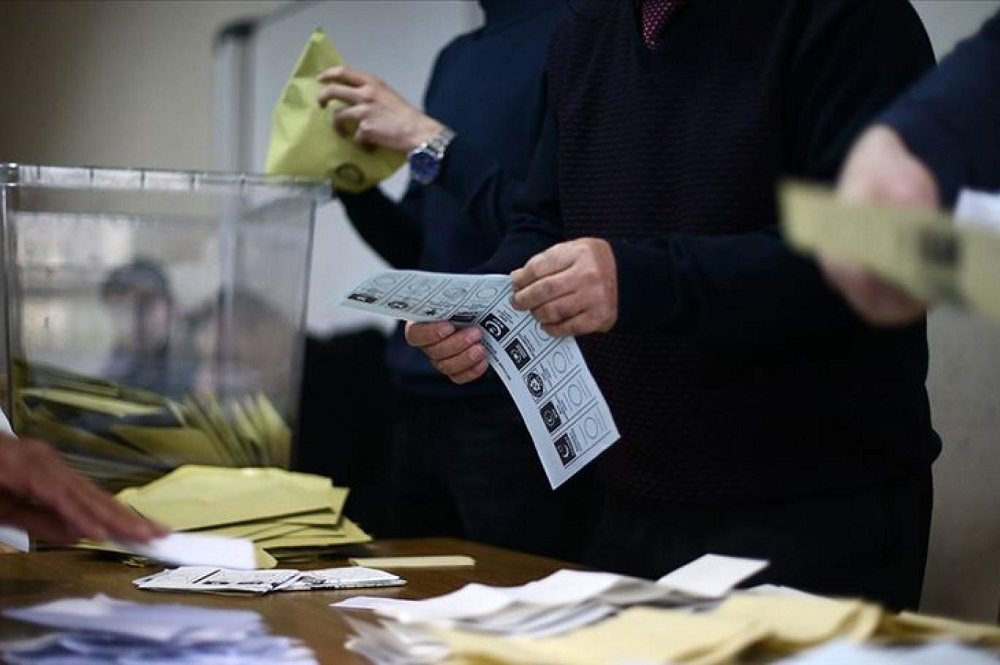
In the final count after Sunday’s voting, the CHP won 37.8 percent of the ballots, followed by the AK Party with just under 35.5 percent, according to the Daily Sabah newspaper.

KEEP READING
Turkey’s opposition in electoral battle to keep hold of major cities

Turkey’s opposition wins rerun of Istanbul mayoral vote

Istanbul’s CHP mayor, Ekrem Imamoglu, held the city, defeating AK Party candidate and former Environment and Urbanisation Minister Murat Kurum with just more than 51 percent of the vote. Erdogan, 70, was born and raised in Istanbul and served as its mayor in the 1990s, so the defeat was seen as a personal blow.
Who is Ekrem Imamoglu?

Imamoglu, 53, was elected mayor of Istanbul – Turkey’s economic hub and largest city with 16 million people – in 2019, ending 25 years of rule by the AK Party and its conservative predecessors.

Imamoglu’s career mirrors Erdogan’s: Both began their political careers in Istanbul in the 1990s and had them obstructed by legal issues.

Imamoglu is from the secularist CHP, joining in 2008 and becoming mayor of Istanbul’s Beylikduzu district 10 years ago.

He studied business administration at Istanbul University, graduating in 1994, the year Erdogan became mayor, before going into his family’s construction business.

Erdogan entered politics with the Islamist Welfare Party and in 2001 cofounded the AK Party, on whose ticket he became prime minister at the end of 2002.

In 2022, Imamoglu was sentenced to two years and seven months in prison and banned from politics on charges of insulting Turkey’s Supreme Election Council. He has appealed the case, but the appeals court has yet to rule.

The charges stem from Imamoglu’s first mayoral win. The AK Party complained of “irregularities”, which forced a rerun of the election. Imamoglu, who won a second time, described the cancellation of the first round as “foolishness”.

The mayor denied insulting electoral council members with the comment, saying he was responding to Interior Minister Suleyman Soylu, who called Imamoglu “a fool” and accused him of criticising Turkey.

Imamoglu was seen as a strong potential challenger against Erdogan in the 2023 presidential race, but he did not run, and Erdogan won against CHP rival Kemal Kilicdaroglu, winning 52 percent of the vote.
Where has CHP declared wins?

The CHP’s candidates won in 35 of Turkey’s 81 provinces, including Antalya, Denizli and Izmir.

Besides Imamoglu declaring victory in Istanbul, CHP Mayor Mansur Yavas also held on to the capital, Ankara, defeating his challenger, veteran politician Turgut Altinok, with just more than 60 percent of the vote.


Are the results a surprise?

In the May 2023 presidential election, the opposition strove to unseat Erdogan and his AK Party. The CHP had hoped to have a chance against Erdogan after domestic economic turmoil and the fallout from the devastating February 2023 earthquakes in southern Turkey.

The efforts failed as Erdogan won another five-year presidential term and an AK Party-led coalition won a majority in parliament, dealing a blow to the CHP and the opposition.

After last year’s elections, the nationalist IYI, or Good, Party split from the CHP, and a Kurdish-focused party, now renamed the DEM Party, fielded its own candidates against the CHP in the local elections, which it did not do in 2019.

Opinion polls before Sunday’s voting had indicated that the AK Party would make a strong showing, but that was not the case.

How did the opposition hold on to its advantage?

There has been rising discontent in Turkey due to its economic decline, which resulted in nearly 70 percent inflation and a rising cost of living.

Analysts speculated that the AK Party did worse than predicted due to the economy and, in Istanbul, Imamoglu’s appeal beyond the CHP’s secular base.

“The economy is probably the number one issue in these elections,” said Vehbi Baysan, assistant professor at Ibn Haldun University in Istanbul.
What was the reaction?

Opposition supporters lit torches and waved flags in Istanbul, celebrating the wins.

A voter from Istanbul told Al Jazeera’s Sinem Koseoglu: “We love our mayor very much. He’s fair and treats everyone equally. He prevented corruption. He spends Istanbul’s money on Istanbul.”

But supporters of the AK candidate were unhappy, saying Kurum had stood by them.
How did Erdogan react?

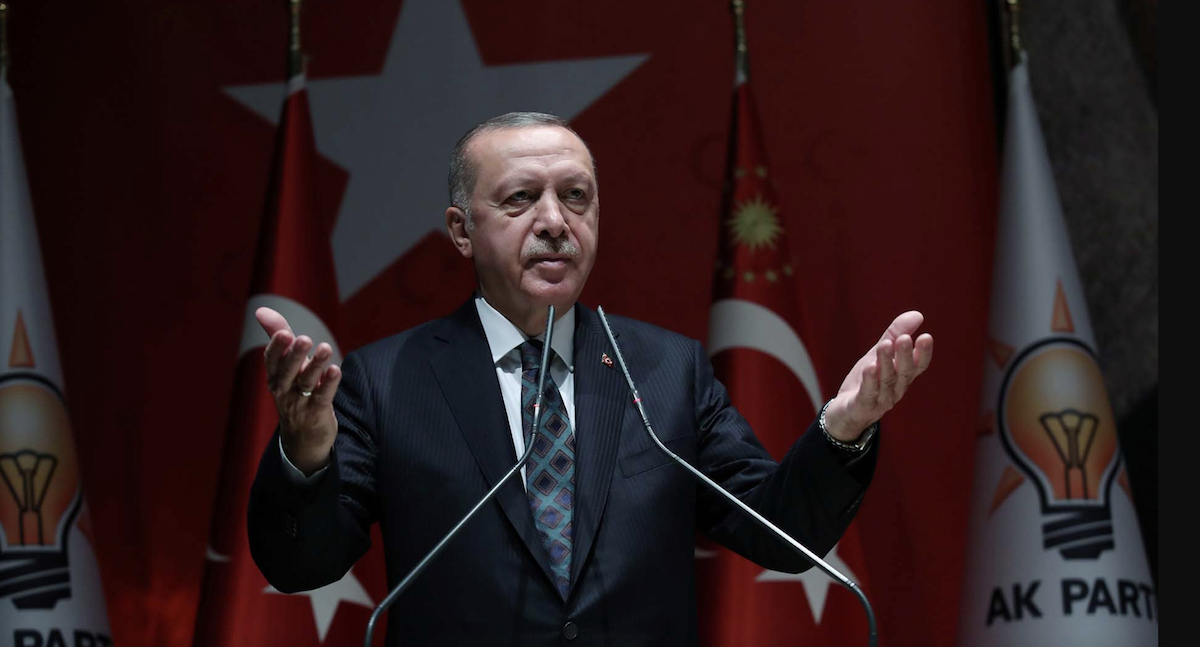
Erdogan delivered a speech from the balcony of the presidential palace, saying his party had suffered “a loss of altitude” across Turkey and the people had delivered a “message”.

“Unfortunately, nine months after our victory in the May 28 elections, we could not get the result we wanted in the local election test,” Erdogan added. “We will correct our mistakes and redress our shortcomings.”

He promised to press ahead with an economic programme introduced last year aiming to combat inflation.

What will happen next?

Some observers predicted these local elections will give Imamoglu the support he needs to follow in Erdogan’s footsteps, rising from Istanbul’s mayor to Turkey’s president in the 2028 race.

Erdogan has indicated that he will not run for a fourth term in 2028, nor is he eligible to run, according to the current constitution.

However, Ahmet Kasim Han, political science professor at Istanbul’s Beykoz University, said before the local elections: “If Murad Kurum loses and Ekrem Imamoglu wins, that is going to force Erdogan to probably run himself in 2028, rather than going through the hassle of picking an alternative.”

Erdogan can run for another term if parliament calls for snap elections or if a change in the constitution is passed, Mehmet Celik, editorial coordinator at Daily Sabah, explained in an episode of Al Jazeera’s Inside Story on Sunday.

Han postulated that hypothetical snap elections would take place “very close to 2028”.


SOURCE: AL JAZEERA AND NEWS AGENCIES


Erdogan's party suffered a major defeat. How did it happen?


Turkish President Erdogan vows to make amends after humbling local election loss

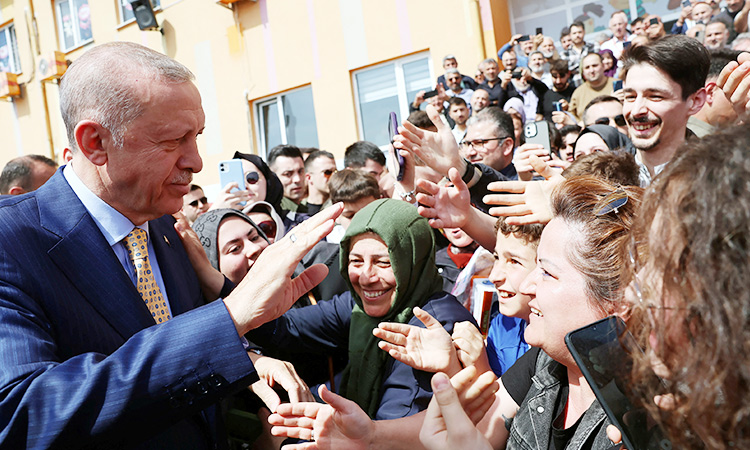
Erdogan-supporters

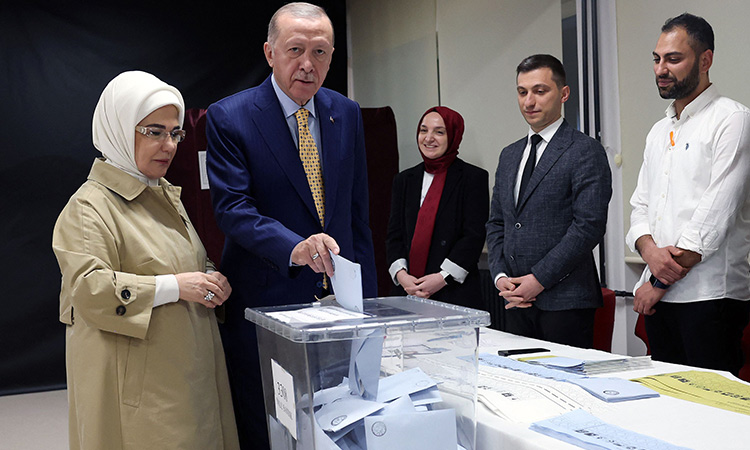
Tayyip Erdogan greets his supporters as he leaves a polling station during the local elections in Istanbul on Sunday. AFP

President Tayyip Erdogan vowed on Monday to correct any mistakes that led to his party's defeat in Turkey's local elections where the opposition capitalised on economic woes and alienated Islamist voters, casting uncertainty over his reform plans.

Sunday's vote marked Erdogan and his AK Party's (AKP) worst defeat in more than 20 years in power, revitalising the opposition party and strengthening Istanbul Mayor Ekrem Imamoglu's standing as the president's main rival.

Redrawing a political map long dominated by the AKP, the Republican People's Party (CHP) won the popular vote for the first time in decades and swept most of the main cities, penetrating far into conservative central Turkey.

Analysts said voters lost patience with both a cost-of-living crisis driven by near 70% inflation and Erdogan's divisive political style.

The result bruised his hopes of adopting a new constitution, which could potentially extend his rule beyond 2028 when his term ends, they said. Though AKP and its allies have a majority in parliament, Erdogan would need broader support or a successful referendum for a new constitution.

Erdogan-wife-vote Recep Erdogan and his wife cast their votes in Istanbul. AFP

Erdogan delivered a sombre and introspective speech in the early hours of Monday. "This is not an end for us, but actually a turning point," he said, acknowledging a "loss of altitude" for the AKP.

"If we made a mistake, we will fix it," he told crowds gathered at AKP headquarters in Ankara, without indicating what changes he might make within his party or in policy.

In response, Turkish stocks rose and the lira — which has shed more than 80% of its value in five years — touched another record low versus the dollar on a holiday for many world financial markets.

INFLATION BITES

Erdogan made an abrupt U-turn in economic policy after his triumph in a national election last year, resulting in aggressive interest rate hikes to rein in inflation expectations that soared under his years-long unorthodox policy stance.

Erdogan has asked for patience with slower economic growth and high borrowing costs, promising reprieve later this year, and Finance Minister Mehmet Simsek said on Monday the belt-tightening programme would carry on.

But AKP election candidates were thumped in the cities of Istanbul and Ankara and even in deeply pro-Erdogan strongholds like Bursa, Afyonkarahisar and Adiyaman provinces.

"I think it's mainly about the economy and in particular the inflation...story. I think voters decided to punish Erdogan for these reasons," said Wolfango Piccoli, co-president of political risk consultancy Teneo.

He said AKP lost control of industrial regions where lots of workers are on a minimum wage, which has trailed inflation despite big rises.

AKP overall "suffered due to over-confidence hubris," Piccoli said, pointing to the success of the Islamist New Welfare Party, which emerged as the third biggest party in a big surprise, with 6.2% support.

New Welfare benefited by taking an even more hardline stance than Erdogan against Israel over the Gaza conflict, which helped draw pious voters away from the Islamist-rooted AKP, analysts said.

'SICK OF FIGHTING AND ARGUING'

The CHP — the party of modern Turkey's founder Mustafa Kemal Ataturk — won near 38% support nationwide, more than two points ahead of the AKP and shattering the ceiling of 25% support it has had this century.

Opposition Cumhuriyet newspaper called it "A historic victory," that taught Erdogan a lesson.

The CHP's Imamoglu won 51% support in Istanbul, Turkey's largest city, 11 percentage points ahead of his AKP challenger despite polls pointing to a close race.

He won despite the collapse of an opposition alliance after last year's election defeats, reaching out to Kurds and others typically outside of the secularist CHP base.

"The period of one-person rule has ended as of today," Imamoglu, 53, told thousands of jubilant supporters on Sunday evening.

The former businessman, who entered politics in 2008, had defeated Erdogan's candidate in the local election five years ago, ending 25 years of rule in the city by AKP and its Islamist predecessors. He is now touted as a presidential challenger.

"We didn't vote for (AKP) obviously due to the economic conditions and promises that were not kept," said accountant Onur Hizmetci, 42, adding he had voted AKP the last 15 years.

"All parties need to move away from polarisation and do something for our country with unity," he said in a public square on the Asian side of Istanbul. "People are sick of fighting and arguing."

Reuters