Why Dalit History Month Matters
Since 2015, every April, the month of Ambedkar’s birth, Dalit History Month is observed globally—not only to remember Ambedkar’s legacy, but to assert the long-buried, violently erased histories of Dalit resistance and intellectual contribution.
Outlook Web Desk
Updated on: 18 April 2025

Dalit History Month Photo: Artwork by Ishita Abha Dhuriya
On a scorching April afternoon in 1936, a crowd gathered in Lahore to hear a speech that would never be delivered.
Dr. B.R. Ambedkar, the towering jurist and anti-caste revolutionary, had been invited to preside over the annual conference of the Jat-Pat Todak Mandal, a Hindu reformist group committed, at least nominally, to challenging caste hierarchies. But the organisers—anxious about the radical content of his address—eventually withdrew the invitation. The speech, which Ambedkar had titled Annihilation of Caste, was deemed too incendiary for their sensibilities. It condemned not only the caste system, but the very foundations of Hindu orthodoxy that sustained it.
Later that year, Ambedkar, in open defiance of his censorship, would go on to publish the speech himself: “I do not believe that we can build up a free society in India so long as there is a trace of this ill-treatment and suppression of one class by another.” He wrote.
Nearly a century later, His words continue to resonate as the movement for caste equality, resistance, and justice fights on.
Since 2015, every April, the month of Ambedkar’s birth, Dalit History Month is observed globally—not only to remember Ambedkar’s legacy, but to assert the long-buried, violently erased histories of Dalit resistance and intellectual contribution.
The idea emerged in 2015, sparked by a collective of Dalit women scholars and artists, including Thenmozhi Soundararajan, Christina Dhanaraj, Maari Zwick-Maitreyi, and Sanghapali Aruna. Inspired by Black History Month in the United States, the movement sought to create a similar space for Dalit histories—stories that had long been excluded from official textbooks, academic syllabi, and public memory. But Dalit History Month is not a carbon copy of its American counterpart. It emerges from a specific Indian reality, where caste functions not as an old wound but a living system, mutating through institutions, languages, and even progressive politics.
While its epicentre was initially digital—with zines, social media campaigns, and oral history projects—the impact has since rippled across classrooms, campuses, public lectures, and community festivals in India and the diaspora.
For centuries, the writing of Indian history has been dominated by the upper-caste, whether in colonial bureaucracies or post-Independence nationalist historiography. The result is a vast erasure of Bhakti poet-saints like Ravidas and Chokhamela, of anti-caste reformers like Iyothee Thass and Savitribai Phule, of contemporary thinkers like Sharmila Rege, Gail Omvedt, and Suraj Yengde. Where Dalit figures do appear, they are often decontextualised, sanitised, or tokenised. Even Ambedkar—whose intellectual stature is unparalleled—is routinely reduced to the symbolic role of “Father of the Constitution,” his radicalism obscured under layers of nationalistic piety.
Dalit History Month is not merely about representation. It is about reclamation. It is an assertion of epistemic sovereignty—the right to name, to narrate, and to know on one’s own terms.
Dalit History Month
Subverting the Brahminical Patriarchy's Gaze in Poetry and on Social Media
Malayalam and English poet Aleena speaks of her experiences in dealing with bigotry and how Savarnas perceive her online
Avantika Mehta
Updated on: 18 April 2025
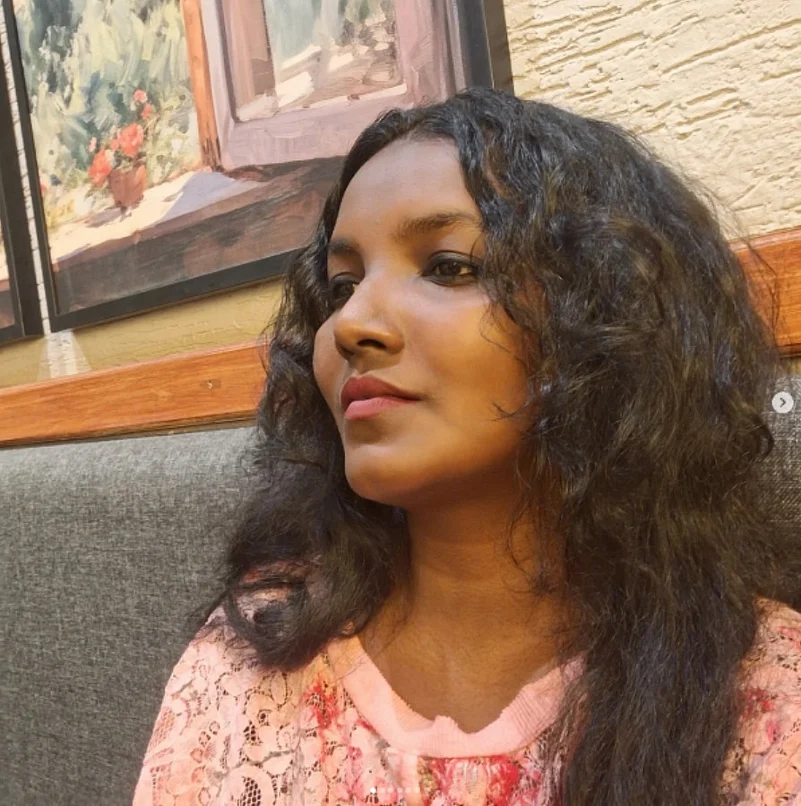
Aleena is a 29-year-old poet from Kerala, is well-known for her collection of poems in Malayalam called Silk Route. Photo: X
Aleena is a 29-year-old poet from Kerala, is well-known for her collection of poems in Malayalam called Silk Route. The book won her the 2021 Kerala State Sahitya Akademi Kanakashree Award. She also writes in English and recites her poems on her Instagram @iseesomeletters where she has amassed over 60K followers in the last one year. Outlook's Avantika Mehta spoke to her on her message and medium. Excerpts
Q
As a writer, are you more comfortable with Malayalam?
A
Actually, I can feel this difference that with Malayalam being my mother tongue, I find a bit like I have to control myself when I write in Malayalam. Like that theory you know: bilingual people when they have to talk about something uncomfortable they switch into the other language. This is very, very true in my case. Because when I am writing in Malayalam. I kind of tend to project my feelings into my characters. Like I never speak from a personal. Like a first person narrative. I make characters, and I make the characters speak.
But in English I am more me. It’s easier to use I, you narratives. So, in Malayalam poetry I like to hide myself. In English poetry, I can be more myself; I can be loud. In Malyalam, I second guess myself: Is this appropriate? How will people react
Q
When you were writing Silk Route, did you feel the same way?
A
When I was writing that poems which are in Silk Route, I wasn't very concerned about how these poems will be perceived. I wasn't considered a poet yet. I just finished college by that time. So I thought I can do whatever I want because I am not considered a poet, and so, nobody is going to take this (my book) seriously and there won't be any scrutiny. So, I felt free in that sense.
Q
Do you feel the pressure now with the accolades and the followers?
A
Yeah, of course. Right now I have this pressure to make the poems as good as possible. I feel like somehow I am losing that rawness which actually defined my poetry. Now I am spending more time trying to make the poems good rather than preserving their rawness. I think hopefully I get a balance of it in a while. I also think I need to chase this balance. And that I should never reach it because if I reach it then I will be like very comfortable in writing. So I should always fall a step behind.
Q
Do you like being uncomfortable in your writing?
A
Actually this uncomfortable is a normal. If I am comfortable. I start to wonder what's wrong. You know this is a problem of, like, growing up in lot of discomfort. That becomes your normal.
Q
Tell me about your childhood?
A
I grew up in a village in Kerala, in a very hilly,. And my childhood is like my Amma, my grandma, my father was in Saudi that time when I was in school. And he didn't make any money and he just came back with a lot of debt. I'm not blaming him. We had a lot of like economic problems.
To give you an idea, my brother is with me currently in Kochi. He's just visiting me. So he didn't like the shower gel I use and he wanted me to buy a soap for him. We were on the search for a soap. And I told him, yeah, you take whatever soap you want. And he was asking me: did you play some rich simulation game or something? Because we used to shower with washing soaps. And that was like a revelation to me. Yeah, it did happen. We used to like shower with washing soaps.
And now as when I grew up and I started making money, I can buy soaps. This is kind of a privilege. We had to be very miserly with like toothpaste; We have to like find alternatives to do it. That kind of childhood I had: There were a lot of economic hardships.
Q
In some of the Silk Route poems, you juxtapose the supernatural and politics. How does that work for you?
A
When I was a child there was this church organisation near my home. So they had a small library, library means a bookshelf that was the library. I got to read a lot of fairy tales from there like Grimm's Fairy Tales and some diluted versions of One Thousand and One Nights so I was intrigued by magic and supernatural from my childhood itself. It became like a part of me. And as a kid I used to believe that this magic is true. Ghosts are true. That was my reality back then.
Then when I learned all this politics, all these terms like social justice and everything, that magic and supernatural part is still there with me. It was only organic for me to incorporate this supernatural into the politics, or personal things I want to convey.
Also, my community has always incorporated supernatural to fight caste. Because we have myths, like Odian and everything. Odian is a shape shifter from our community. Odian used to be a threat to upper caste people because Odian is not a lower caste person anymore. He doesn't have to obey the caste norms. And he is a shape shifter He shifts into animals so he is not even human anymore. He stands in the realm between humanity and animosity so he can be violent he can be anything he wants so that kind of supernatural stories where he used to fight caste from the beginning.
I think this is a continuation of the storytelling, story inventing—my people always used to do—that's how I approach this. I like that the idea that supernatural is a fight against oppression and norms. Just like people are so afraid of ghosts because ghosts look like human. But they are not human. So ghosts doesn't obey the human imposed morality. There is no morality for the ghosts too. So people are so afraid of people who stand outside this morality like people who are mentally ill, like all these things.
Q
Do you feel the same about you? Do you feel like you are sort of outside of what is Brahminical patriarchal norms which kind of rule India?
A
I am trying to actually; It's lot of conditioning. We can only try to think outside of Brahminical patriarchy, or capitalistic things. It would be very disingenuous if I say that I am outside all of this. It's not that easy. It's a complex thing. So I am only trying to. And, I say that not to suggest that it is impossible to get out of it. But, it can be achieved I think. Maybe one step behind. Always.
Q
Perhaps that's also a little bit like being comfortable?
A
Yes, you want to always be achieving it. Because once you get too comfortable then there seems to be a slide back. Because every day we are learning new things. Every day we are seeing new kind of crimes—new kind of hate crimes. So there’s always something new with this Brahminical patriarchy. We can only aspire to get out of it and try our best to get out of it.
Q
Your Instagram receives a lot of hate. Why do you think that is?
A
I don't know how to explain it but I think I’m like every Dalit stereotype out there— I'm dark, I have curly hair, I have this kind of round face. I look like a Dalit person of their imagination. My Dalit-ness is on my appearance itself. My caste is on my appearance. So they can't just look away from my Dalit-ness even if they wanted to, and I am so uncomfortable to look at for them. If it was a fair-skinned, polished-looking Dalit woman, then I think she might have gotten lesser hate. Because I look so untouchable that it's disgusting for them.
My presence— me appearing on their forum page—it's too much for them.
Q
Do you feel like it fuels your creative process?
A
It actually makes me more angry than I already am. It makes me angrier, meaner, pickier. It doesn't hinder me at all. All this hate I am seeing as like how online bigotry works, how caste adapted to this whole digital social media thing. I will become an expert soon regarding that.
I am trying to learn. I am trying to understand. I am trying to dissect all the hate I am getting. I do this comment analysis of the comments I get, where is it coming from. I think I will compile it into a book sooner or later. Because, for example in Dalit studies, we are the subjects—Dalit people are the subjects.
We never look at Savarnas and try to understand from where this bigotry is coming? Like, how is this their mentality? So, they are never the subjects. There might be studies on them. But compared to how they study us, how they make us objects. Compared to that, there is like very little information on their part, about them. I am looking at them with this weird curiosity that: you little people are very funny.
Q
Just like in your poems. You are turning it on their head, aren't you?
A
Yeah, it feels very nice to subvert this gaze back into them. It might also give a sense of power. Like Gopal Guru wrote in one of his essays, that some people are born with the silver spoon of theory and some people are born with the pot of data around their necks.
They (upper caste people) are the custodians of theory, and we people (Dalits) are just like data—we are born data. Our history, our resilience, our legacy is just data for them. So it feels very nice to subvert this. Like, let me be the theoretician now, and I'll study you.
Malayalam and English poet Aleena speaks of her experiences in dealing with bigotry and how Savarnas perceive her online
Avantika Mehta
Updated on: 18 April 2025
Aleena is a 29-year-old poet from Kerala, is well-known for her collection of poems in Malayalam called Silk Route. Photo: X
Aleena is a 29-year-old poet from Kerala, is well-known for her collection of poems in Malayalam called Silk Route. The book won her the 2021 Kerala State Sahitya Akademi Kanakashree Award. She also writes in English and recites her poems on her Instagram @iseesomeletters where she has amassed over 60K followers in the last one year. Outlook's Avantika Mehta spoke to her on her message and medium. Excerpts
Q
As a writer, are you more comfortable with Malayalam?
A
Actually, I can feel this difference that with Malayalam being my mother tongue, I find a bit like I have to control myself when I write in Malayalam. Like that theory you know: bilingual people when they have to talk about something uncomfortable they switch into the other language. This is very, very true in my case. Because when I am writing in Malayalam. I kind of tend to project my feelings into my characters. Like I never speak from a personal. Like a first person narrative. I make characters, and I make the characters speak.
But in English I am more me. It’s easier to use I, you narratives. So, in Malayalam poetry I like to hide myself. In English poetry, I can be more myself; I can be loud. In Malyalam, I second guess myself: Is this appropriate? How will people react
Q
When you were writing Silk Route, did you feel the same way?
A
When I was writing that poems which are in Silk Route, I wasn't very concerned about how these poems will be perceived. I wasn't considered a poet yet. I just finished college by that time. So I thought I can do whatever I want because I am not considered a poet, and so, nobody is going to take this (my book) seriously and there won't be any scrutiny. So, I felt free in that sense.
Q
Do you feel the pressure now with the accolades and the followers?
A
Yeah, of course. Right now I have this pressure to make the poems as good as possible. I feel like somehow I am losing that rawness which actually defined my poetry. Now I am spending more time trying to make the poems good rather than preserving their rawness. I think hopefully I get a balance of it in a while. I also think I need to chase this balance. And that I should never reach it because if I reach it then I will be like very comfortable in writing. So I should always fall a step behind.
Q
Do you like being uncomfortable in your writing?
A
Actually this uncomfortable is a normal. If I am comfortable. I start to wonder what's wrong. You know this is a problem of, like, growing up in lot of discomfort. That becomes your normal.
Q
Tell me about your childhood?
A
I grew up in a village in Kerala, in a very hilly,. And my childhood is like my Amma, my grandma, my father was in Saudi that time when I was in school. And he didn't make any money and he just came back with a lot of debt. I'm not blaming him. We had a lot of like economic problems.
To give you an idea, my brother is with me currently in Kochi. He's just visiting me. So he didn't like the shower gel I use and he wanted me to buy a soap for him. We were on the search for a soap. And I told him, yeah, you take whatever soap you want. And he was asking me: did you play some rich simulation game or something? Because we used to shower with washing soaps. And that was like a revelation to me. Yeah, it did happen. We used to like shower with washing soaps.
And now as when I grew up and I started making money, I can buy soaps. This is kind of a privilege. We had to be very miserly with like toothpaste; We have to like find alternatives to do it. That kind of childhood I had: There were a lot of economic hardships.
Q
In some of the Silk Route poems, you juxtapose the supernatural and politics. How does that work for you?
A
When I was a child there was this church organisation near my home. So they had a small library, library means a bookshelf that was the library. I got to read a lot of fairy tales from there like Grimm's Fairy Tales and some diluted versions of One Thousand and One Nights so I was intrigued by magic and supernatural from my childhood itself. It became like a part of me. And as a kid I used to believe that this magic is true. Ghosts are true. That was my reality back then.
Then when I learned all this politics, all these terms like social justice and everything, that magic and supernatural part is still there with me. It was only organic for me to incorporate this supernatural into the politics, or personal things I want to convey.
Also, my community has always incorporated supernatural to fight caste. Because we have myths, like Odian and everything. Odian is a shape shifter from our community. Odian used to be a threat to upper caste people because Odian is not a lower caste person anymore. He doesn't have to obey the caste norms. And he is a shape shifter He shifts into animals so he is not even human anymore. He stands in the realm between humanity and animosity so he can be violent he can be anything he wants so that kind of supernatural stories where he used to fight caste from the beginning.
I think this is a continuation of the storytelling, story inventing—my people always used to do—that's how I approach this. I like that the idea that supernatural is a fight against oppression and norms. Just like people are so afraid of ghosts because ghosts look like human. But they are not human. So ghosts doesn't obey the human imposed morality. There is no morality for the ghosts too. So people are so afraid of people who stand outside this morality like people who are mentally ill, like all these things.
Q
Do you feel the same about you? Do you feel like you are sort of outside of what is Brahminical patriarchal norms which kind of rule India?
A
I am trying to actually; It's lot of conditioning. We can only try to think outside of Brahminical patriarchy, or capitalistic things. It would be very disingenuous if I say that I am outside all of this. It's not that easy. It's a complex thing. So I am only trying to. And, I say that not to suggest that it is impossible to get out of it. But, it can be achieved I think. Maybe one step behind. Always.
Q
Perhaps that's also a little bit like being comfortable?
A
Yes, you want to always be achieving it. Because once you get too comfortable then there seems to be a slide back. Because every day we are learning new things. Every day we are seeing new kind of crimes—new kind of hate crimes. So there’s always something new with this Brahminical patriarchy. We can only aspire to get out of it and try our best to get out of it.
Q
Your Instagram receives a lot of hate. Why do you think that is?
A
I don't know how to explain it but I think I’m like every Dalit stereotype out there— I'm dark, I have curly hair, I have this kind of round face. I look like a Dalit person of their imagination. My Dalit-ness is on my appearance itself. My caste is on my appearance. So they can't just look away from my Dalit-ness even if they wanted to, and I am so uncomfortable to look at for them. If it was a fair-skinned, polished-looking Dalit woman, then I think she might have gotten lesser hate. Because I look so untouchable that it's disgusting for them.
My presence— me appearing on their forum page—it's too much for them.
Q
Do you feel like it fuels your creative process?
A
It actually makes me more angry than I already am. It makes me angrier, meaner, pickier. It doesn't hinder me at all. All this hate I am seeing as like how online bigotry works, how caste adapted to this whole digital social media thing. I will become an expert soon regarding that.
I am trying to learn. I am trying to understand. I am trying to dissect all the hate I am getting. I do this comment analysis of the comments I get, where is it coming from. I think I will compile it into a book sooner or later. Because, for example in Dalit studies, we are the subjects—Dalit people are the subjects.
We never look at Savarnas and try to understand from where this bigotry is coming? Like, how is this their mentality? So, they are never the subjects. There might be studies on them. But compared to how they study us, how they make us objects. Compared to that, there is like very little information on their part, about them. I am looking at them with this weird curiosity that: you little people are very funny.
Q
Just like in your poems. You are turning it on their head, aren't you?
A
Yeah, it feels very nice to subvert this gaze back into them. It might also give a sense of power. Like Gopal Guru wrote in one of his essays, that some people are born with the silver spoon of theory and some people are born with the pot of data around their necks.
They (upper caste people) are the custodians of theory, and we people (Dalits) are just like data—we are born data. Our history, our resilience, our legacy is just data for them. So it feels very nice to subvert this. Like, let me be the theoretician now, and I'll study you.