Wednesday, July 02, 2025

 FRANCE

The Water Management Of Ancient Arles
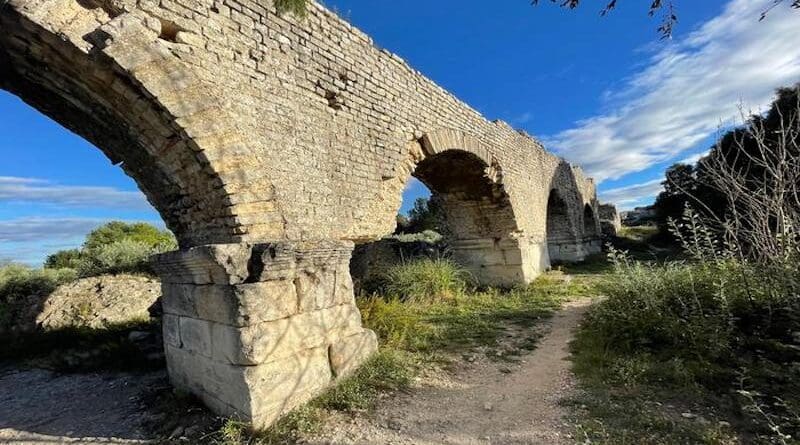
Bridge of the Roman aqueduct in Arles CREDIT: Cees Passchier


By 

Researchers from Johannes Gutenberg University Mainz (JGU), the University of Oxford, and the University of Innsbruck have deciphered the complex history of the ancient aqueduct system of Arles in Provence.


This was made possible by aqueduct carbonates – limescale deposits – that had deposited in the aqueducts, basins, and lead pipes, as well as lumps of aqueduct carbonate that had been used as building aggregate in the roof of the Baths of Constantine. The researchers published their findings in the renowned scientific journal Geoarchaeology.

Carbonates for the Complete Picture

“This study clearly shows how a Roman aqueduct worked over several centuries and was transformed at different times by the Romans, efficiently maintained and modified, and hence this is one of the clearest examples of a sustainable water management system from antiquity,” says Dr. Gül Sürmelihindi from the Institute of Geosciences at JGU who conducted the study.

“Unlike previous studies, where we mostly dealt with a single aqueduct, here we investigated the complex water supply of ancient Arles, consisting of several aqueducts, a basin and connected water structures in the city,” added Prof. Dr. Cees Passchier from the Institute of Geosciences at Mainz University, who participated in the study.

While some relationships between different elements of the city’s water supply system had been suggested for some time, the researchers have now succeeded in confirming the picture with solid archives from the Arles water system and proving the long-life cycle of the Roman aqueduct of Arles. Initially from 3 BCE onwards, an aqueduct from the south flank of the Alpilles hills supplied the city of Arles with water.

However, after almost a hundred years, an additional aqueduct was built from the northern side of the same hills, whose water joined that of its southern counterpart in an existing basin that was part of the original aqueduct. With the opening of the northern aqueduct, the southern one took on a new purpose: it was now diverted to power a huge 16-wheeled complex of water mills at neighbouring Barbegal, as the researchers confirmed in an earlier study – also through the analysis of the carbonates.


The researchers further confirmed that the basin originally functioned as a header basin upstream of an aqueduct arcade bridge: such basins were inserted so that sand and other suspended matter could settle. The northern aqueduct was then added later in an improvised manner, which can be seen from the architectural remains of its higher-level entrance to the basin. Another piece of the puzzle came from collapsed ceiling pieces of the Baths of Constantine in Arles, whose water supplier was so far unknown.

“We found aqueduct carbonates in these collapsed ceiling fragments that belonged to the northern aqueduct. Evidently, when the baths were built in the early fourth century AD on the orders of Emperor Constantine, the aqueduct was apparently restored and the chipped-off carbonates were used here as building material in the roof of the bath,” said Sürmelihindi.

In this way, the researchers were able to answer the previously unanswered question of how the bath was supplied with water and until when the Roman aqueduct was in use – at least until the time when the baths were built, since the carbonate cleaned out of the aqueduct was used in its construction, and most likely the aqueduct worked well into the fifth century AD until the arrival of invading Franks and Burgundians.

The role of large lead pipes from Roman time that ran across the bed of the Rhône River and were discovered in the 19th century was also debated for a long time. In which direction did these pipes transport water? The researchers were also able to solve this with the help of carbonates: deposits with similar isotopic composition to those found in the aqueducts in the north and south branches were also found in the lead pipes, confirming that an inverted siphon from the Arles aqueduct was supplying the Trinquetaille quarter on the opposite side of the river.

Isotope analysis provides insight into the deposition period

“Without the aqueduct carbonate archives, it would be impossible to reconstruct these relationships” said Passchier. “But because the deposits are heavily contaminated with clay, they cannot be dated using standard dating technologies. Instead, we analyzed stable oxygen and carbon isotopes from the carbonates and cross-correlated the isotopic profiles to see the times of their simultaneous deposition,” added Sürmelihindi. “This allowed us to identify the same annual layers in the carbonates and thus determine their relative depositional periods and thus the historical timing of modifications and changes made to the Arles water supply system.”


Spain And Brazil Push Global Action To Tax The Super-Rich And Curb Inequality

Luxury Jet Airplane Aircraft Business limo

By 

Spain and Brazil have launched a joint initiative to promote higher tax contributions from the super-rich worldwide, aimed at tackling soaring inequality by ensuring those with the most pay their fair share.


Presented during the UN’s 4th International Conference on Financing for Development – taking place this week in Sevilla, Spain – the proposal highlights a growing problem: the richest individuals often contribute less to public finances than ordinary taxpayers, thanks to lower effective tax rates and legal loopholes.

“Our countries need more and more public revenues to meet their needs. Inequality is a problem everywhere and the richest pay less than the middle class – even less than lower-income taxpayers,” said Spain’s Secretary of State for Finance Jesús Gascón, during a press conference at the conference venue, where temperatures have soared to record highs in recent days.

The two governments are calling on others to join a drive for a fairer, more progressive global tax system. They point to a stark reality: the wealthiest one per cent of the global population owns more than 95 per cent of humanity combined.

Sharing knowledge, closing gaps

In today’s interconnected world access to reliable data is essential. The initiative prioritises information sharing – between governments and tax authorities – to help expose gaps in tax systems, close loopholes and combat evasion and avoidance.

Improving data quality and building national capacities for data analysis will help tax administrations identify where and how wealth is concentrated, how much is currently being paid and what needs to change.


Though some progress has already been made, the countries say much more must be done and many more countries should come on board.

“There’s a real need to know who the beneficial owners are behind companies and legal structures used to conceal wealth,” said Mr. Gascón. The initiative also proposes technical cooperation, training in data analytics and peer review mechanisms to strengthen national tax systems.

A global wealth registry?

Spain and Brazil are even considering steps toward a global wealth registry – acknowledging that this would take time, political will and major national efforts.

But the aim is clear: more transparency, more accountability and fairer contributions from the richest.

“We cannot tolerate the intensity of inequality, which has been increasing in recent years,” said Brazil’s Minister-Counsellor to the UN, José Gilberto Scandiucci denying that this was some kind of far-leftist agenda.

“This is a moderate initiative to confront a very radical reality.”

The proposal forms part of the Seville Platform for Action, which is turbocharging voluntary actions to help reach the Sustainable Development Goals (SDGs) – currently way off track for the 2030 deadline.

G20 highlights ‘high worth’ factor

It also follows the 2024 agreement by the G20 industrialised nations who met in Rio (Brazil) last year – the first international accord to commit to a joint tax agenda for high-net-worth individuals.

A three-month work plan is now being drawn up with regular meetings planned to track progress. The goal – bring more countries, international organisations and civil society on board to push forward tax reforms targeting the ultra-rich.

“If we want to effectively tax the super-rich, fight inequality and make our tax systems fairer and more progressive, we need political will – and we need to act within our means,” Mr. Gascón added.


Violent Extremism Erodes Local Climate Resilience In The Sahel – Analysis

Africa globe


By 

Jihadist groups and militarised counter-terrorism responses have weakened traditional approaches to resolving climate disputes.


By Fahiraman Rodrigue Koné

The Sahel is one of Africa’s most climate-vulnerable areas. The region increasingly experiences extreme weather such as floods and droughts, and ongoing land degradation, depleting the natural resources vital to local economies.

Between 1979 and 2010, average temperatures in the region rose by 0.6°C to 0.8°C, and further increases of 3°C to 6°C are projected by the end of the 21st century.

Recent Institute for Security Studies (ISS) research examining the nexus between climate change and insecurity reveals that rural Sahelians have long relied on indigenous dispute resolution mechanisms to address climate-related tensions. The effects of climate change and rapid population growth have intensified competition over arable land, water and pasture – often leading to local conflicts. 

Historically, the peaceful management of such tensions ensured the equitable use of scarce resources during periods of climatic stress. However, the intensification of jihadist violence in the Sahel is eroding social cohesion in several localities. That makes it more difficult for communities to resolve resource-based tensions and in doing so, withstand the effects of climate change.


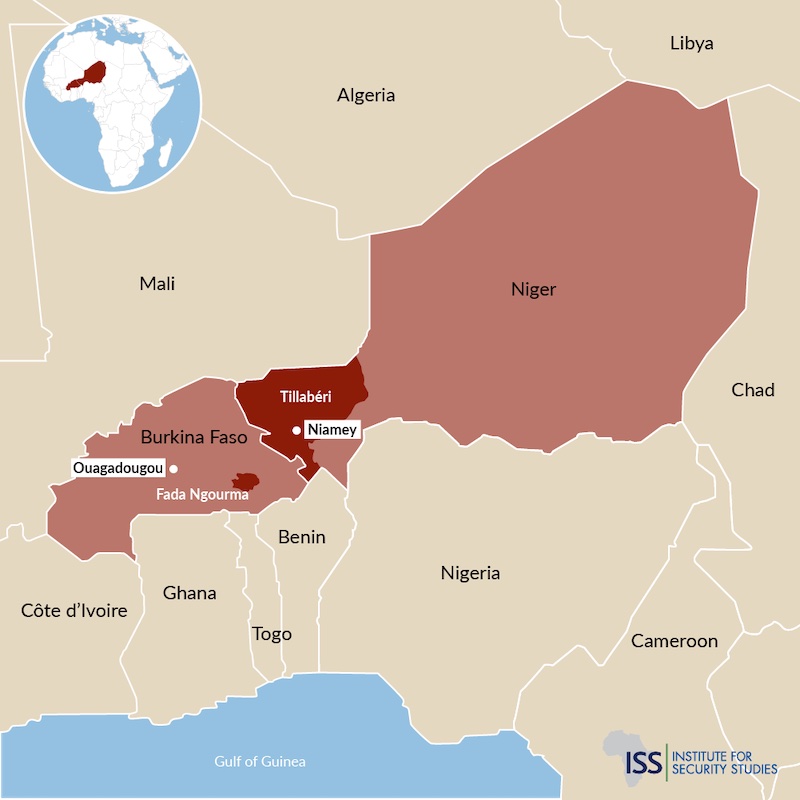
Tillabéri in Niger and Fada-Ngourma in Burkina Faso

ISS research in Tillabéri and Fada-Ngourma (see map) reveals that natural resource management is traditionally based on the coexistence of three production systems – pastoralism, agriculture and fishing, particularly around the Niger River.

These systems often compete for limited resources. They have coexisted through codified practices and norms grounded in customary law that govern interactions among socioeconomic groups. This approach represents a complex social architecture overseen by lineage heads, land chiefs, village chiefs and religious leaders, who monitor resource access and resolve disputes. Their authority maintains harmony within families, clans, casts and ethnic groups.

Nonetheless, the study found that resource-based conflicts continue in the context of increasing resource scarcity. These disputes include tensions between sedentary and nomadic herders, farmers, transhumant herders and farmers, and breeders and fishermen. The most frequent conflicts – particularly during periods of scarcity – arise between farmers and herders.

Most interviewees had greater trust in customary institutions than in the state’s formal dispute resolution structures

In response, Burkina Faso and Niger have established structures to arbitrate these natural resource disputes. In Niger, the Rural Code enabled land commissions at regional, departmental, communal and village levels. In Burkina Faso, legislation on rural land tenure created a Village Land Conciliation Commission in each village. But these entities – typically headed by prefects, governors or central government officials – struggle to manage tensions effectively.

In both ISS case studies, most interviewees expressed greater trust in customary institutions than in the state’s formal dispute resolution structures, which were often perceived as lacking legitimacy, impartiality and transparency. Concerns about corruption also undermine their credibility. In contrast, the strength of traditional institutions lies in their proximity to local communities and their ability to avoid cumbersome bureaucratic processes.

Trust in these institutions is rooted in two factors. First, the moral legitimacy of customary figures such as religious leaders, land chiefs and village heads, who are widely recognised as guardians of social order. Second, their conciliatory approach to dispute resolution, which prioritises the preservation of communal harmony and familial ties.

This traditional governance structure has long supported community resilience to climate shocks. However, it is increasingly threatened by the growing influence of violent extremist groups and the overly militarised counter-terrorism responses of Sahelian states.

Groups such as Jama’at Nasr al-Islam wal-Muslimin (JNIM) and the Islamic State in the Greater Sahara have frequently attacked communities and local religious leaders. With their deep-rooted authority and strong influence, these leaders are targeted for several reasons.

Many community leaders have been killed or displaced, leading to a reduced capacity to mediate social tensions

First, to weaken their influence and impose the jihadist groups’ authority by subjugating dissenters. Second, because the leaders represent a community order that the groups seek to dismantle. This is either because the hierarchical structures of customary or religious leadership conflict with the extremists’ egalitarian vision of Islam, or because the local leaders are viewed as state collaborators.

Many community leaders have been killed, threatened or displaced, leading to a loss of authority and a reduced capacity to mediate social tensions. In some areas, jihadist groups impose governance systems based on oppressive rules that directly challenge the legitimacy of traditional land tenure systems and destabilise local governance. 

Several leaders and fighters within extremist groups originate from the Fulani community. Generalisations implying widespread Fulani sympathy for jihadist groups have fuelled retaliatory attacks, cycles of violence and social exclusion. In turn, these dynamics have led some Fulani individuals to join armed groups – either as a means of self-protection or to seek revenge against security forces.

State-led security initiatives have sometimes aggravated local tensions. In Burkina Faso, the recruitment of civilian volunteers for counter-terrorism operations has inadvertently exposed some communities to jihadist reprisals, further eroding public trust in the state to provide security.

These ongoing cycles of violence and deteriorating local governance undermine the social consensus needed to manage natural resources. Ultimately, it is not just resource scarcity that threatens climate resilience in the Sahel, but the breakdown of the traditional systems that once ensured their equitable management.

Strengthening community resilience to climate change requires strengthening local governance structures

The Sahel crisis underscores the need for a multidimensional approach to regional stability. While climate adaptation strategies must include technical interventions such as agronomic innovations, long-term resilience demands that the underlying drivers of insecurity are addressed. These drivers fuel the region’s political, humanitarian and environmental fragility.

Strengthening community resilience to climate change requires strengthening local governance structures. Sahelian governments – particularly in Niger, Mali and Burkina Faso – must go beyond military responses and invest in restoring social cohesion.

A sustainable future also depends on meaningful support for community dialogue, conflict mediation and empowering traditional institutions as part of a comprehensive strategy for peace and stability.


ISS

The Institute for Security Studies (ISS) partners to build knowledge and skills that secure Africa’s future. Our goal is to enhance human security as a means to achieve sustainable peace and prosperity. The ISS is an African non-profit organisation with offices in South Africa, Kenya, Ethiopia and Senegal.


Trump Flip-Flops On Iran, Again: Why? – OpEd

US President Donald Trump. Photo Credit: POTUS, X

By 

The US President Donald Trump’s latest Truth Social post on Iran nuclear issue reads as follows: “Tell phony Democrat Senator Chris Coons that I am not offering Iran ANYTHING, unlike Obama, who paid them $Billions under the stupid “road to a Nuclear Weapon JCPOA (which would now be expired!), nor am I even talking to them since we totally OBLITERATED their Nuclear Facilities.” 


Trump’s post suggests that the Iran question threatens to move to the centre court of American party politics. Trump is upset by Senator Coon’s criticism, who is a senior lawmaker in the Senate from Delaware (Joe Biden’s ‘eyes and years’, as New York Times once put it) for the past 15 years. 

Interestingly, Senator Coon is an ordained elder with West Presbyterian Church, who continues to preach regularly at houses of worship across Delaware and, importantly, is committed to bipartisan engagement in politics aiming to bring Americans of all backgrounds, faiths, and political parties together through a celebration of spirituality and prayer. Coon has an evangelical base, regularly participates in the weekly Senate Prayer Breakfast, and is one opposition politician who can attract a hefty breakaway wing of MAGA movement if it were to splinter over Trump’s abandonment of campaign pledge on farewell to arms. 

Coon has trenchantly criticised Trump’s handling of the Iran question. In doing so, he aligned with four other senior Democratic senators — Senate Minority Leader Chuck Schumer (D-N.Y.), Senate Appropriations Ranking Member Patty Murray (D-Wash.), Senate Armed Services Ranking Member Jack Reed (D-R.I.), and Senate Intelligence Committee Vice Chairman Mark Warner (D-Va.) 

They have issued a statement on the Iran question on June 18 which argued that: 1. The eruption of Israel-Iran conflict represented “a dangerous escalation that risks igniting a broader regional war” 2.  Trump should “prioritise diplomacy and pursue a binding agreement that can prevent a nuclear-armed Iran. 3. Trump should not expand US engagement in the war, given the “lack of preparation, strategy, and clearly defined objectives, and the enormous risk to Americans and civilians in the region.” 4. Trump administration is yet to provide answers to fundamental questions, such as 

  • Intelligence Community’s current assessment of Iran’s nuclear program, its leaders’ intent, and its capabilities; 
  • the objective of US military intervention in Iran, especially Trump’s call for “UNCONDITIONAL SURRENDER” by Iran; 
  • the estimated scope and duration of any US military campaign;
  • the risk to US forces across its bases in the region; 
  • evacuation plans for US citizens; and, most important, 
  • the constitutional or statutory authority that would underpin the military intervention. 

On the last point, in a stinging rebuke, the five senators reminded  Trump that “Congress is an equal partner in preserving and defending US national security around the world, and Congress has not provided authorisation for military action against Iran… The United States cannot sleepwalk into a third war in as many decades. Congress has a critical role to play in this moment.”

Trump is unused to checks and balances. What made Trump particularly furious would be that Sen. Coon also happens to be a member of the Senate Foreign Relations committee and a staunch supporter of Israel and a guest speaker at AIPAC events. 

Coon is an interesting politician who can take bold positions. Last year, for example, he opposed a resolution proposed by Senator Bernie Sanders that would have applied human rights norms to US assistance for Israel, while on the other hand, urging the Biden administration to recognise a “non-militarised” Palestinian state after the end of the Gaza war! 

The bottom line is that a groundswell of opinion is building up in the US, reminiscent of the undercurrents after President Kennedy’s assassination that eventually swept America as Lyndon Johnson accelerated the Vietnam War, ultimately turning it into a tsunami that forced him to retire from politics. 

In reality, Trump’s options are limited. He is insisting that the air strikes of June 22 “obliterated” Iran’s nuclear sites. That is to say, the Iranian bomb is no longer a compelling reality.  

On the other hand, Israel is mighty upset that Iran has given it such a battering that its economy is in shambles and it cannot hope to take on Iran directly. It expects the US to do the heavy lifting, which, to my mind — and, perhaps, special envoy Steve Witkoff’s mind too— Trump is loathe to do. (More about Witkoff later.)

If Trump embarks on the war path regardless, he needs a mandate from the UN Security Council and the US Congress. But neither is likely forthcoming. That aside, if Iran inflicts serious damage to the US interests in a military confrontation, it can potentially become a hot button issue in the mid-term elections next year that could mean an ignominious end to MAGA movement and Trump’s legacy. 

What is the alternative? I would go back to Trump’s default position and do ground work to negotiate the so-called Comprehensive Peace Agreement, which Witkoff had promised as recently as last week in a CNBC interview. 

Trump should have known that Iran’s political rhetoric at the level of the Supreme Leader is mostly meant for the domestic audience of observant Muslims. Any Iran expert at the Quincy Institute for Responsible Statecraft could have compiled a list of past instances in such volatile moments in the US-Iran standoff during the past 47 years and someone in the White House could have prepare a bulky document and got Trump to glance through it.

The problem with the White House all along has been that it eats out of Israeli hands — with a new exceptions such as Barack Obama. But that habit is no longer viable, since a point has come when the US and Israeli interests no longer converge.

Simply put, Trump had no conceivable reason to name calling Grand Ayatollah Ali Khamenei on the eve of the funeral ceremony for top military commanders and nuclear scientists martyred during Israel’s 12-day war against Iran, which he could not even attend due to security considerations.

What would Trump have done in a similar situation at the Cathedral Church of Saint Peter and Saint Paul in the City and Episcopal Diocese of Washington if body bags were to arrive from Middle East? A Fox News interview? A post on Truth Special?

Life moves on. Trump should return to a priori history and let Witkoff negotiate the agreement that he promised. Let things cool down meanwhile  through the multiple back channels that are available.


M.K. Bhadrakumar

M.K. Bhadrakumar is a former Indian diplomat.