
Sunday, July 27, 2025

July 25, 2025

Image by Paul Arky.

Paul Bley: The Logic of Chance

Written by Arrigo Cappelletti in 2004.

Translated from the Italian by Gregory Burk in 2010.

Published by Vehicule Press, Montreal, Quebec, Canada.

Who is Paul Bley? Much of the curiosity about this enigmatic jazz pianist is the result of an aura of mystery which Bley appears to have cultivated. Born in Montreal in 1932, he was filling in for the great Oscar Peterson as a teenager. Peterson introduced him to Charlie Parker and all the other birds migrating through Montreal. Next thing you know, Paul Bley moved to Manhattan at age 18 and enrolled at Juilliard in 1950.

Oh, to be a pianist sitting at the center of the bebop revolution in New York in 1950 – what an incredible life! The clubs, the nightlife, the music, the city! Bley blows into town, 18 years old, a fully-formed pianist who had played with Bird, filled in for Oscar, and could stroll the piano like Bud Powell. His first recording as a leader, in 1953, features Charles Mingus on bass and Art Blakey on drums, both legendary leaders of monumental jazz bands.

Paul Bley’s second release as a leader the following year, the self-titled album, Paul Bley, features less well-known but formidable support from drummer Al Levitt and bassists Percy Heath and Peter Ind. Levitt and Ind were both students of the blind pianist, Lennie Tristano, who ran a cult-like studio where he and Charlie Parker and Charlie Mingus worked out a lot of the ideas of bebop and “east coast jazz.”

In addition to Peter Ind, Tristano taught Lee Konitz, Warne Marsh, Billy Bauer, Ronnie Ball and Sal Mosca. In a book by Peter Ind devoted to his teacher, entitled JazzVisions: Lennie Tristano and his Legacy, Ind says that Paul Bley frequently came by Lennie Tristano’s home/studio. Bley was certainly familiar with The Tristano Method by that time, as were the other members of his trios.

The Tristano Method is to learn a song by singing it – all of it – the melody, the bridge, the solos, until the song is memorized. Then the song is played in every possible key signature, until the soloist can move the melody around, up and down, through all the keys. Then the song is played at varying tempos and time signatures. Through this process – worked out together by Lennie Tristano and Charlie Parker – every song is essentially memorized, taken apart, and reassembled in a way suited to the soloist.

Sonny Rollins and John Coltrane both used this method, notoriously practicing for hours on end in a way that exhausted less determined players. Many other horn players, emulating Bird, also indirectly learned The Tristano Method through imitation. The pianists who could play this way predated Paul Bley, but not by much, and included Bud Powell, Oscar Peterson and Ahmad Jamal. If you listen to Paul Bley’s first albums with Peter Ind or Charles Mingus from the early 1950s, you would be hard pressed to distinguish him from Ahmad Jamal’s trio from the same era.

The formula was established: Play a tune until you can remake it, then put your own name on it. Like his contemporary, pianist Bill Evans, who Paul Bley is credited with mentoring at the Lenox School of Jazz, Bley could have spent the rest of his life as the top pianist in the land, with his own band or with others, playing breathtaking variations of popular tunes. But he couldn’t take it.

Something broke. That’s the problem with The Tristano Method. Once you achieve it, you tire of it, you feel trapped by it, you have to fight your way out of it. Paul Bley just stopped playing the song, only hinting at it now and then. He began chasing a different sound, a new sound set free of rhythm, melody and harmony.

In 1957, Paul Bley started dating the cigarette girl at the Birdland jazz club, named Carla Borg. Together, they followed Chet Baker out to Los Angeles in 1957, and that’s where they changed jazz history.

***

In 1958 at the Hillcrest Club in Los Angeles, “The Fabulous Paul Bley Quintet,” as it was billed, included Paul Bley on piano, Ornette Coleman on alto saxophone, Don Cherry on pocket trumpet, Charlie Haden on bass, and Billy Higgins on drums. It is the first known recording of what would become The Ornette Coleman Quartet, destined to change The Shape of Jazz to Come. Paul Bley was proud of the fact that he was the only piano player who worked with Ornette for decades.

The Hillcrest Club recording was not pressed until 1970, so in 1958, almost no one knew about Ornette. Paul Bley returned back east in 1960 to take part in a series of workshops and recordings made by George Russell and His Orchestra. Also in the orchestra were pianist Bill Evans and saxophonist Ornette Coleman. The result was Jazz in the Space Age, a somewhat stiff performance that became the Big Bang of modern jazz.

As the pianoless Ornette Coleman Quartet flipped the post-Parker jazz world on its head, Paul Bley went a different direction. In 1961, he hooked up with clarinetist Jimmy Giuffre and bass player, Steve Swallow, to make what many people considered to be “third stream” music, a largely improvised ballet of consummate musicians intensely listening to each other. Their first recording as The Jimmy Giuffre 3 appeared on the brand-new ECM record label in 1961 and the trio toured Europe later that year.

In 1959, Carla Borg became Carla Bley, an introverted pianist whom Paul encouraged to write. And write she did! She wrote five of the nine pieces on the 1962 release, Footloose, Paul’s first album as a leader since 1957. With Steve Swallow on bass and Pete LaRoca on drums, the effervescent piano has been cited by none other than Keith Jarrett as one of the major influences on his development.

In 1963, Paul Bley accepted the piano chair for the Sonny Rollins band. The story of his selection is one of the great moments in jazz history. The audition was held at Birdland in New York and it came down to Paul Bley or Herbie Hancock. Another guy who was looking for a pianist heard about the audition and sat in: trumpeter Miles Davis. Sonny got to choose first and he picked Paul Bley. Miles “settled” for Herbie Hancock, who became a star in Miles’ second great quartet.

Sonny Rollins and Paul Bley were made for each other. They both could play one song for unimaginable lengths of time, with Bley providing the landing strip to guide Sonny’s solos back to Earth. They went into the studio with tenor saxophonist Coleman Hawkins to record Sonny Meets Hawk, with Bob Cranshaw on bass and Roy McCurdy on drums.

When it came time to play his solo on “All the Things You Are” – the kind of show tune jazz was moving away from – Bley never once touched the melody. Years later, guitarist Pat Metheny described Bley’s solo as “the shot heard ’round the world.” Bley told Aiden Levy, author of the mammoth biography, Saxophone Colossus: The Life and Music of Sonny Rollins, that “I did not play the song at all. Not only was I ‘elastically’ away from the song, I never really bounced back … [but] I always knew where I was.”

This is the story of the mystery of Paul Bley. You know he’s there. You can hear him behind you. But when you go to look for him, he vanishes. It’s like a game he plays; he’s always there but never where you’re looking.

The Sonny Rollins Band toured Japan for the first time that fall, and it had a profound impact on both Rollins and Bley. When they returned , Rollins formed a nonprofit organization to promote yoga in the United States. Bley got back with his trio of Steve Swallow on bass and Pete LaRocca on drums. That also didn’t last long. Soon Carla Bley was living with Steve Swallow and Swallow was replaced in the band by Gary Peacock, with Paul Motian replacing LaRocca on drums.

***

Biographer Arrigo Cappelletti accurately captures this mercurial nature in Paul Bley: The Logic of Chance. The cover photo is a picture of Bley’s back as he plays a grand piano. He points out that Bley always sings softly as he plays, a residue of The Tristano Method. He says Bley’s work with Jimmy Giuffre was “anchored to the silences.” Paul Bley knew how to use the absence of sound better than anyone. As the music of Miles Davis, John Coltrane and Ornette Coleman became thicker and thicker, Paul Bley’s music became thinner, purer, cleaner.

Bley returned to the U.S. only to be dumped by Sonny Rollins, dumped by his wife, Carla Bley, who was now partnered with his bass player, and thanks to Paul was becoming more famous than he was. In a chapter of Cappelletti’s book entitled, “A Brief Description of Some Compositions,” all five pieces discussed were written by Carla Bley, none by Paul. Ouch. Maybe it was a team sport, but shortly thereafter Bley started a long-term relationship with Annette Peacock, wife of his bass player Gary Peacock.

Bley bought the “first-ever” Moog synthesizer and played it almost exclusively from 1969 to 1971. In 1972 he recorded his first album of solo piano music, Open To Love, which is, of course, on ECM Records. That is the same year ECM released Keith Jarrett’s first solo album, Facing You, and Chick Corea’s first solo album, Improvisations, Volume 1. All three landmark recordings were made at the Arne Bendiksen Studio in Oslo, Norway. That must be some piano!

Bley was indeed “open to love,” as he divorced Annette Peacock and married videographer Carol Goss in 1972. Together, they founded Improvising Artists, Inc., in 1974, (https://www.improvart.com/) which put out many important recordings during its short run, including Jaco with Jaco Pastorious on bass, Paul Bley on piano, Pat Metheny on guitar, and Bruce Ditmas on drums.

One reason Paul Bley is not a household name is that he became an expatriate and moved to Europe in 1980. A similar fate happened to pianist Bud Powell and saxophonist Sidney Bechet. From 1980 to 1985, all Bley’s recordings were made in Europe. In 1985, he was reunited with his friend and former employer, Chet Baker, in Copenhagen. During the 1980s, he mostly recorded solo albums or with a revolving cast of European trios. Half of the articles written about Paul Bley in the extensive bibliography in Cappelletti’s book are not in English. Cappelletti is Italian.

In 1989, Paul Bley reunited with Jimmy Giuffre and Steve Swallow for a series of concerts in New York, as well as Charlie Haden and Paul Motian for concerts in Montreal and Milan. He remained ferociously inventive for two more decades, with new European partners and old American favorites. Carol Goss started the Not Still Art Festival in New York in 1996 which is still operating (https://www.improvart.com/nsa/).

At the age of 76, in 2008, Paul Bley gave his last performance, playing solo piano in Oslo, Norway. It was released in 2014 by ECM Records as Play Blue, an anagram of his name. He died in Florida, of all places, at the age of 83 in 2016.

Here it is, ten years later, and I ask my smart speaker to “play Paul Bley,” and she acts like I’m having a stroke. No matter how slowly I say his name, or how much I annunciate, I cannot get Amazon to play Paul Bley. Ask for Carla Bley, and she never stops going (much of it performed by Paul Bley). His autobiography, Stopping Time, is out of print; used copies sell for $60. The book, Time Will Tell: Conversations With Paul Bley, also out of print, will set you back $140 for a used copy.

A pianist who belongs with Glenn Gould and Oscar Peterson among the most famous Canada has produced, a pianist who drives several of the most important jazz recordings of all time, a pianist so ahead of the curve we have yet to catch up – Paul Bley is virtually invisible in contemporary culture. Who is Paul Bley? When you find out, you won’t believe it!

Steve O’Keefe is the author of several books, most recently Set the Page on Fire: Secrets of Successful Writers, from New World Library, based on over 250 interviews. He is the former editorial director for Loompanics Unlimited.

Better to Reign in Art Than Serve the Algorithm: Ozzy Osbourne as One of the Last Rebels


 July 25, 2025

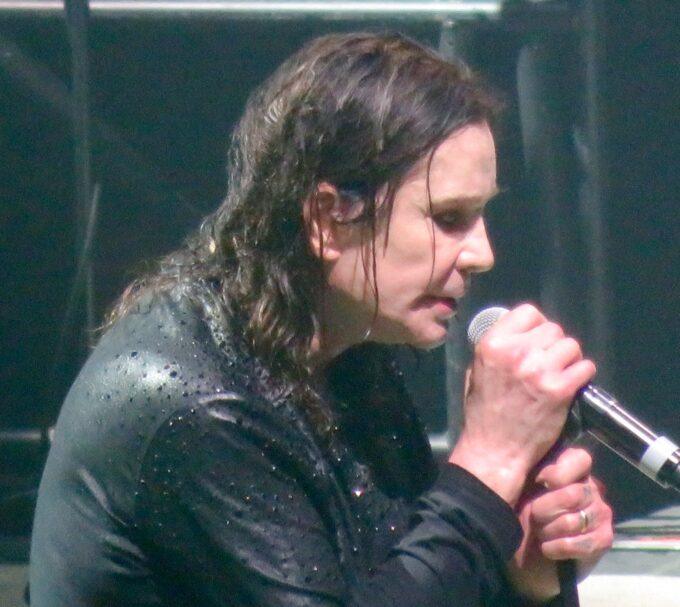
Ozzy Osbourne performing in Birmingham, England with Black Sabbath, February 2017. Photo: Wikimedia Commons. CC BY-SA 4.0

My wife recently told our 23-year-old nephew about how Ozzy Osbourne bit the head off a live bat. It was in 1982 on the appropriately named, “Diary of a Madman,” tour. Blood dripped down the heavy metal dark lord’s chin to an enthralled, yet horrified audience in Des Moines, Iowa. Ozzy thought that the bat was fake, and grew exhausted with subsequent requests for him to use his teeth to decapitate winged creatures. In the immediate aftermath of his death, PETA issued a statement praising Ozzy for the “gentle side he showed to animals.” The bat-homicide was an unintentional anomaly, but it still became an immortal part of rock and roll lore. Our nephew was curious, surprised, and confused. He had never heard of anything so bizarre, a reaction he communicated with repetition of an inquisitive, “No!?”

23-year-olds have come of age in a stale and stagnant culture. It is the culture of the pre-packaged interview, the “social media consultant,” the Instagram filter, the carefully parsed public relations-penned announcement, statement, or apology, the focus group tested product, and the imperialistic, hegemonic algorithm, forever directing people what to consume, when to feel, and how to think. It is all dull, monotonous, and mundane drag; an endless bore that results in a sad status quo of late senior citizens, like the 76-year-old Ozzy Osbourne, being more fascinating and daring than young pop stars. 

Here is a question: When was the last time you remember a pop star doing anything interesting? And by “interesting,” I don’t mean interesting to you, as tastes are subjective, but culturally interesting enough to generate conversation, and to make people respond like my nephew, “What!? No!?”

Pop stars are no longer exciting, adventurous, or innovative, because they no longer live or create as human beings. Instead, they actually self-apply the term, “brand.” In their ambition to become walking and talking, sentient incarnations of the golden arches, white swoosh, or gray apple, they cannot risk surprising their fan base, because surprise could lead to alienation, and alienation could lead to loss of profit. One journalist for the Guardian lamented that his celebrity interview subjects no longer meet in bars for a few drinks, but instead invite him to a hotel suite packed wall to wall with publicists, agents, handlers and unidentified nervous nellies who say, “You can’t ask that” or “you can’t answer that.” Of course, the control team is largely unnecessary, because the celebrities give scripted answers anyway. Their words are meticulously crafted to appeal to the broadest set of social media users. The same newspaper ran an interview with Kathryn Frazier, a “rock star whisperer,” who helps musicians acquire and navigate fame. A major part of the operation is rising to high levels of “influencer” stardom. In a culturally catastrophic inversion, marketing is no longer a tool to sell a product. It is the goal itself. Once the marketing succeeds in building a massive online following for a human “brand,” the record company is ready to sell the product. Creativity and originality are as dead as the bat whose brain Ozzy Osbourne crushed with his molars. 

Vox surveyed the dry and decaying cultural landscape, and concluded, “Everyone’s a sellout now,” advising readers that if they want success in a “creative field,” they have no choice but to rise through the ranks on Tik Tok. Imagine Joni Mitchell posting videos about her shoe collection and skin care routine in the 1970s or Herbie Hancock sharing a “sponsored” reel for Versace, and you can begin to estimate the damages to artistic independence and integrity – and flat out fun – that our society is currently inflicting on itself.

Even though I was already an admirer of Black Sabbath, I reacted like my nephew when an older friend told me about when he saw the inventors of heavy metal for the first time. He had never even heard of Black Sabbath. They were on their first American tour, opening for some inferior band at the Auditorium Theatre. “The lights went out, the whole place was dark,” my friend said, “Then we heard the crushing opening chord to ‘Black Sabbath,’ the lights started flashing like in some crazy movie, and then Ozzy came out in a black jacket and hood, crouched low, looking like a vampire.”

As a guitarist who toughed it out in rock bands his entire life, the introduction to Black Sabbath was a defining moment in his musical formation. On the simpler level of human experience, he said, “I felt excited and scared at the same time.” 

A cliched phrase is “fear of the unknown.” It describes a natural instinct that humans have developed for survival. Black Sabbath’s music was not only scary because of the deliberately spooky aesthetics and lyrics that Ozzy, Tony Iommi, Geezer Butler, and Bill Ward built around it, but also because it was unknown. The invention of a new art form unnerved the audience. Black Sabbath rebelled against the protocol and parameters of their time, and in doing so, became timeless. 

Their first four records constitute one of the greatest runs in the history of rock music, standing alongside any single artist or band in terms of musicianship, originality, and depth. While Ozzy’s antics, such as the aforementioned bat incident, might have become as recognizable as the music itself, his songs were not only musically groundbreaking, but also lyrically brilliant. Critics have a tendency to overlook or dismiss lyrical substance from bands that play heavy music. Black Sabbath was the Edgar Allan Poe of rock and roll, alchemizing the macabre into an inspection of the core elements of life. Their expression of dark passions and questions explored the deepest subject matter, such as mortality, the influence of death on life, and questions of justice. 

“War Pigs” is a strong candidate for the greatest anti-war song ever written. Ozzy Osbourne explained that the “flower children” writing protest songs against the Vietnam War wrote only light material, fodder for sing-a-longs. Black Sabbath aimed to write a song that captured the sound of evil itself. The original title was “Walpurgis,” meaning the witches’ sabbath. “Walpurgis is like Christmas for Satanists,” bassist and co-writer Geezer Butler said, “And to me, war was the big Satan.”

“War Pigs” is one example of something that is increasingly rare in popular music: artistry. “Children of the Grave,” “Sweet Leaf,” “Supernaut,” “Hole in the Sky,” and so many other songs capture a group of musicians who mastered a craft, and fused their mastery with a desire to say something relevant about human life and the state of the world. Crucial to these songs were the songwriting contributions and vocals stylings of Osbounre. His voice was unique and forceful, and it certainly helped that he could make it sound as creepy as a snake slithering down a dark alley. 

The music created a genre, inspiring all the musicians that played Ozzy Osbourne’s massive farewell show on July 5th: Metallica, Slayer, Alice in Chains, Steven Tyler, and on an on. It also made its mark in surprising centers of musical architecture. Jazz Sabbath, a collective of jazz musicians led by pianist, Adam Wakeman, has released three great tribute records to their namesake. 

Larkin Poe, a sister blues-folk duo, credit Ozzy Osbourne as a major vocal influence, “an old-time singer.” 

Ozzy’s solo music never reached the heights of Black Sabbath, but songs like “No More Tears,” “Mama, I’m Coming Home,” and of course, “Crazy Train,” demonstrate that he was more than capable of creating powerful music without the other members of Sabbath. 

None of this is to say that Ozzy Osbourne did not become a “brand” himself. The reality television show that aired on MTV, the TV commercials in which he appeared, and even his touring music festival, Ozzfest, all reaped the pecuniary benefits of his frightening-turned-lovable image. What distinguishes Ozzy from the boring and unimaginative pop stars of the algorithm is that it was an image he created. And when he created that image, he was often battling against record company executives, promotors, and PR stiffs. Finally, it was an image he created in congruence with his music, in order to sell his music. He wasn’t a mere image with songs in the background. No “rock star whisperer” was going to tame Ozzy Osbourne. 

The death of Ozzy Osbourne is most heartbreaking for those who knew and loved him. It is also sad for anyone who cares about cultural vibrancy and musical artistry. Ozzy Osbourne was one of the last rebels who made it on a grand level – selling out arenas and stadiums, rising to the top of the charts. Anyone honest would have to acknowledge that it is impossible to imagine the rise of anyone like Ozzy in the contemporary “marketplace,” which more than anything is what it sounds like – a zone where commerce has finally won its ancient fight with art. 

The Prince of Darkness leaves his Earthly home when the United States is regressing into an increasingly repressive and religious home of Satanic Panic paranoiacs. In 2023, Sam Smith and Kim Petras performed their pop duet, “Unholy,” dressed as devilish ministers, surrounded by fire and backup singers whose outfits borrowed heavily from the horror movie, The Ring. Republican officials, such as Senator Ted Cruz, whined that it was “devil worship,” while right wing podcast buffoons claimed that it was part of a conspiracy to lead children to Satanism. Have these people ever heard of Ozzy Osbourne? What will they do when they find out that he actually sang, “Would you like to see the Pope on the end of a rope?” and “My name is Lucifer, please take my hand”?


In Paradise Lost, John Milton famously writes Lucifer as declaring, “Better to reign in Hell than serve in Heaven.”

Because of his Luciferian rebellion, fighting for freedom, personal expression, and self-earned artistry, Ozzy Osbourne reigned on Earth. Contemporary celebrities know only how to serve. This isn’t exactly heaven. 

David Masciotra is the author of six books, including Exurbia Now: The Battleground of American Democracy and I Am Somebody: Why Jesse Jackson Matters. He has written for the Progressive, New Republic, Liberties, and many other publications about politics, literature, and music. He and his wife live in Indiana, where he teaches at Indiana University Northwest.   

David Masciotra is the author of six books, including Exurbia Now: The Battleground of American Democracy and I Am Somebody: Why Jesse Jackson Matters. He has written for the Progressive, New Republic, Liberties, and many other publications about politics, literature, and music. He and his wife live in Indiana, where he teaches at Indiana University Northwest.  


War Pigs
Black Sabbath
Producer
Rodger Bain
Track 8 on
The Vinyl Collection 1970-1978
Sep. 18, 1970
3

War Pigs Lyrics


As the opening track of the influential Black Sabbath album, Paranoid, “War Pigs” was originally titled “Walpurgis.” Walpurgis Night takes place on the 30th April to mark the eve of the feast day of Saint Walpurga, an 8th-century English missionary to the Frankish Empire. It is also believed to be the night of a witches’ meeting or sabbath. The instrumental outro is entitled, “Luke’s Wall.” It is one of the most-covered songs in history and is frequently ranked among the greatest rock songs of all time.

[Instrumental Intro]

[Verse 1]
Generals gathered in their masses
Just like witches at black masses
Evil minds that plot destruction
Sorcerer of death's construction
In the fields, the bodies burning
As the war machine keeps turning
Death and hatred to mankind
Poisoning their brainwashed minds

Oh, Lord, yeahhttp://

[Instrumental Break]

[Bridge]
Politicians hide themselves away
They only started the war
Why should they go out to fight?
They leave that all to the poor, yeah
Time will tell on their power minds
Making war just for fun

Treating people just like pawns in chess
Wait till their judgment day comes, yeah

[Guitar Solo]


[Verse 2]
Now, in darkness, world stops turning
Ashes where their bodies burning
No more war pigs have the power
Hand of God has struck the hour
Day of Judgment, God is calling
On their knees, the war pigs crawling
Begging mercies for their sins
Satan, laughing, spreads his wings

Oh, Lord, yeah

[Instrumental Outro]


The song talks about war and—like the hippies—Black Sabbath was totally against it, specifically the Vietnam War (occurring at the time), and although Geezer Butler has stated that:

[“War Pigs” is] totally against the Vietnam War, about how these rich politicians and rich people start all the wars for their benefit and get all the poor people to die for them.

And in an interview with Mojo in 2017:

Britain was on the verge of being brought into it, there was protests in the street, all kinds of anti-Vietnam things going on. War is the real Satanism. Politicians are the real Satanists. That’s what I was trying to say.

Ozzy Osbourne has said that:

[The group] knew nothing about Vietnam. It’s just an anti-war song.