With Ferry Strikes, Ukraine Narrows Russia's Options at Kerch Strait
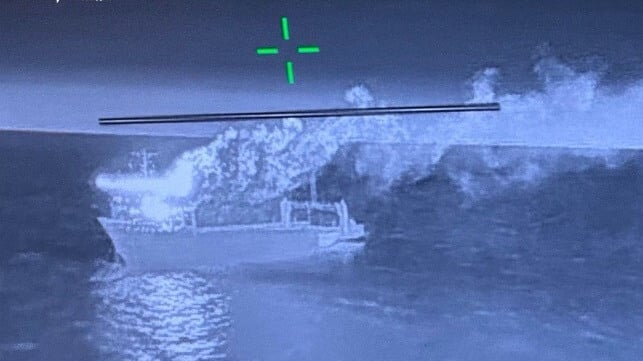
Ukraine has launched attacks on two railway ferries that Russia was using to supplement its rail line from the Russian mainland across the Kerch Strait Bridge to Crimea.
In the attack, the 150-meter ro/ro rail/vehicle carrier Slavyanin (IMO: 8300169) was disabled and the 125-meter Avangard (IMO 9522403) was damaged. Rendering these two vessels unfit for sailing now means that Russian has no rail ferries left in service on the Black Sea.
From imagery released by the Ukrainian military intelligence organization HUR, it appears that both attacks took place at sea. HUR did not reveal what strike method was used.
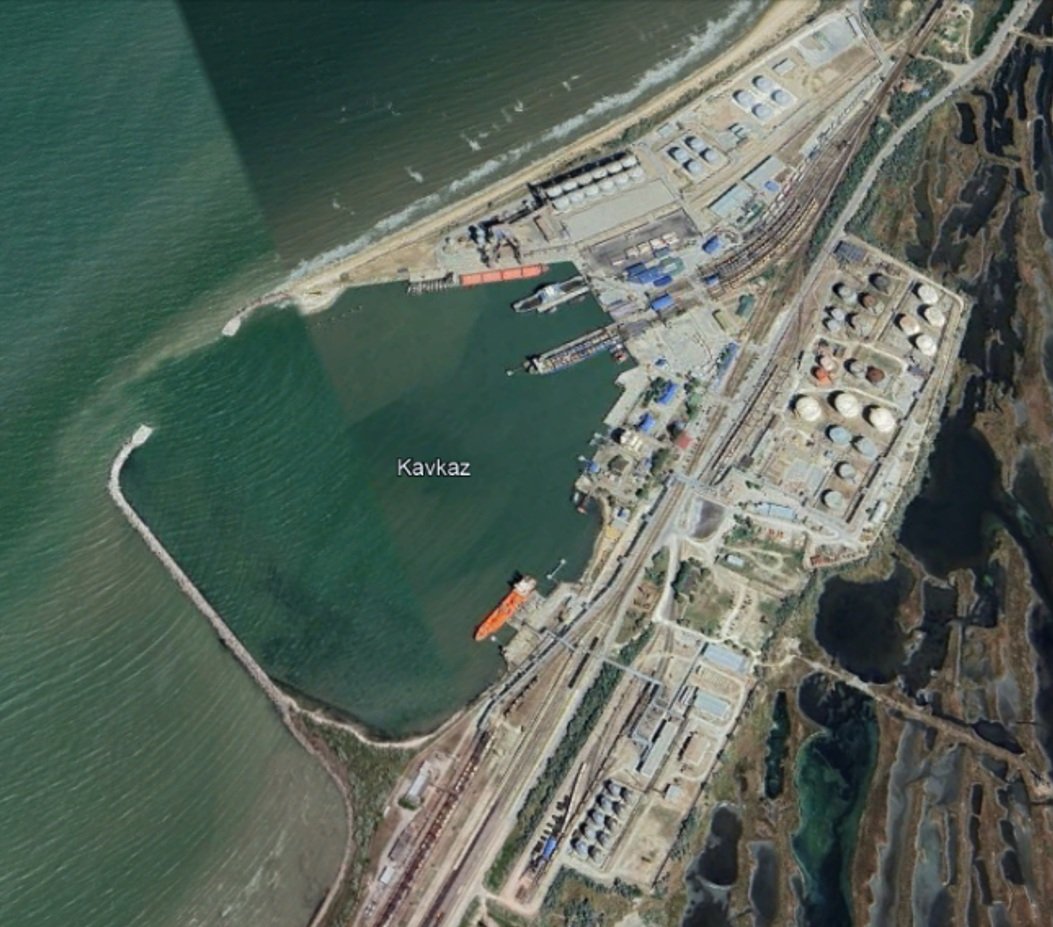
A busy Kavkaz ferry port in 2023, with two rail ferries docked (Google Earth/Landsat/Copernicus)
At the same time as the vessels were hit, the Ukrainians also attacked the port of Kavkaz, the rail and car ferry terminus in Krasnodar on the Russia mainland. Kavkaz has been hit before, as has Avangard: Ukraine struck the ferry at berth using ATACMS rockets in 2024.
The terminus on the Crimean side is a short nine nm voyage away. When there were sufficient ferries, the port at Kavkaz was also used to serve rail ferries sailing to Samsun in Turkey, thereby avoiding transits through Georgia.
Russia has for some time now sent flammable and explosive rail cargoes across the Kerch Strait using rail ferries. It is unclear whether it has done so in order to reduce the risk of Ukraine targeting the bridge when an explosive or flammable goods train is crossing. Ukraine has pulled off such an attack before, with the subsequent fire of oil wagons causing secondary damage. It is also possible that a previous attack may have weakened the bridge structure so much that oil wagon trains are now too heavy for the calculated load-bearing classification of the railway bridge. In either case, Russia may now have no choice but to make further use of the Kerch Bridge, which is the only available rail route into Crimea from Krasnodar.
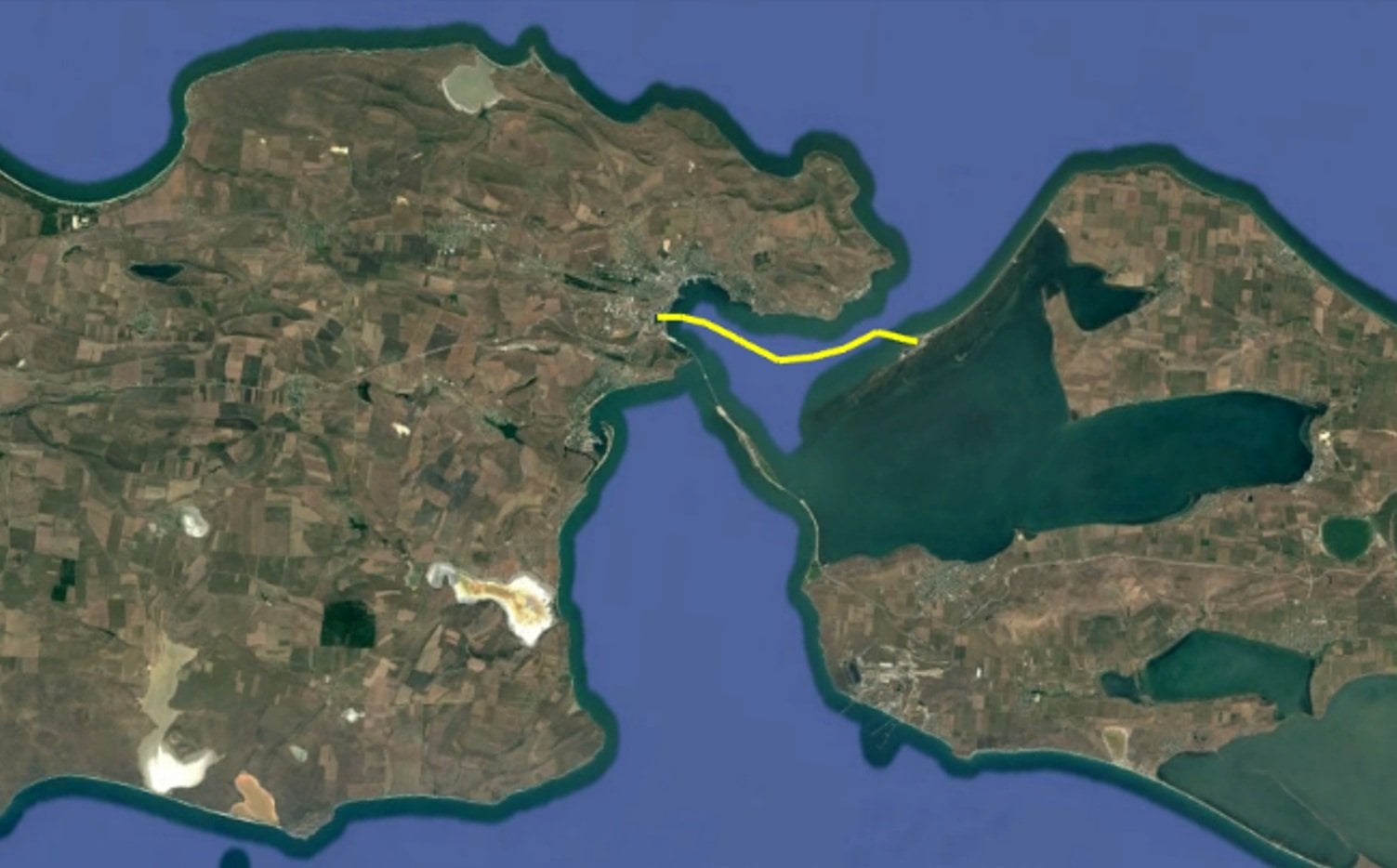
The Kerch-Kavkaz ferry route in yellow, to the north of the Kerch Strait Bridge (Google Earth/CJRC)
What makes the situation worse for the Russians is that rail routes to Crimea and the Russian front line in the Kherson region, which have been constructed as a fall-back along the Sea of Azov coastline through Mariupol and Melitopol, are becoming increasingly vulnerable to Ukrainian drone attack. Ukraine has been steadily increasing the depth of its “drone zone,” an area beyond the front line stretching deep into Russian-held territory in which most tactical movement is detected by a constant drone presence overhead and then attacked.
The Ukrainian’s next move is likely to be yet another attack on the Kerch Bridge itself, now that it has become the critical remaining link over which the Crimea can be supported by bulk heavy rail traffic from Russian territory. As an alternative to rail traffic for bulk goods, the Russians are still using coastal vessels to support their forces in Crimea, but these are vulnerable to Ukrainian sea drone attack.
Greek-Operated Tanker Hit by Unknown Assailants Near CPC Terminal
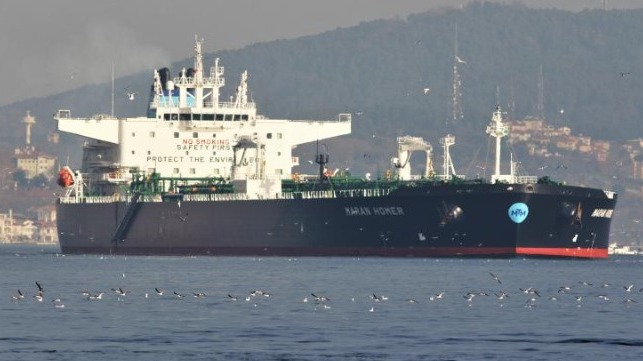
The Greek-owned tanker Maran Homer (IMO 9761372) has been hit by an attack while awaiting loading at the port of Novorossiysk, Russia, according to Greece's shipping ministry.
Operator Maran Tankers Management reports that Maran Homer was struck by an unknown object at 0435 local time on Saturday. The tanker was located in international waters of the Black Sea and was awaiting instructions to load Kazakh-origin oil at the Caspian Pipeline Consortium (CPC) single-point mooring terminal.
The tanker sustained only minor damage to the deck and deck equipment, the company said. The vessel was in ballast at the time of the strike, and there were no signs of pollution. Following the attack, the ship departed the scene and got under way.
Ukraine has not claimed responsibility for the strike.
The Maran Homer's specific destination is of consequence, as there are two terminals at Novorossiysk: the Sheskharis terminal in the inner harbor, which exclusively loads Russian oil and has been repeatedly attacked by Ukrainian forces; and the CPC terminal in deep water outside the harbor, which loads mostly Kazakh oil piped overland through Russia.
Ukraine has attacked the CPC pipeline, loading terminal and associated tanker traffic in the past. These actions have attracted pushback from the U.S. government, which views the CPC as essential to American interests in the region. Chevron and ExxonMobil hold minority ownership stakes in the CPC pipeline and terminal, and taken together, the two American companies own 75 percent of Kazakhstan's Tengiz field, the prolific field that feeds the pipeline. The CPC loading terminal is a key bottleneck for Tengiz, as Kazakhstan has few other export routes to get its oil to global markets. Warnings of potential Ukrainian strikes on the loading terminal (among other factors) have delayed the ramp-up of Tengiz to full rated capacity, according to Reuters.
The CPC pipeline's largest shareholder is Russian midstream company Transneft, which earns transit revenue for the barrels that pass through the system. Ukraine views Russian energy assets - Transneft included - as top-priority targets, as petroleum revenue is essential to covering the cost of Russia's ongoing invasion.
Top image: Maran Homer in a calmer era, 2017 (file image courtesy Cengiz Tokgöz / VesselFinder)

No comments:
Post a Comment