It’s possible that I shall make an ass of myself. But in that case one can always get out of it with a little dialectic. I have, of course, so worded my proposition as to be right either way (K.Marx, Letter to F.Engels on the Indian Mutiny)
Sunday, July 27, 2025
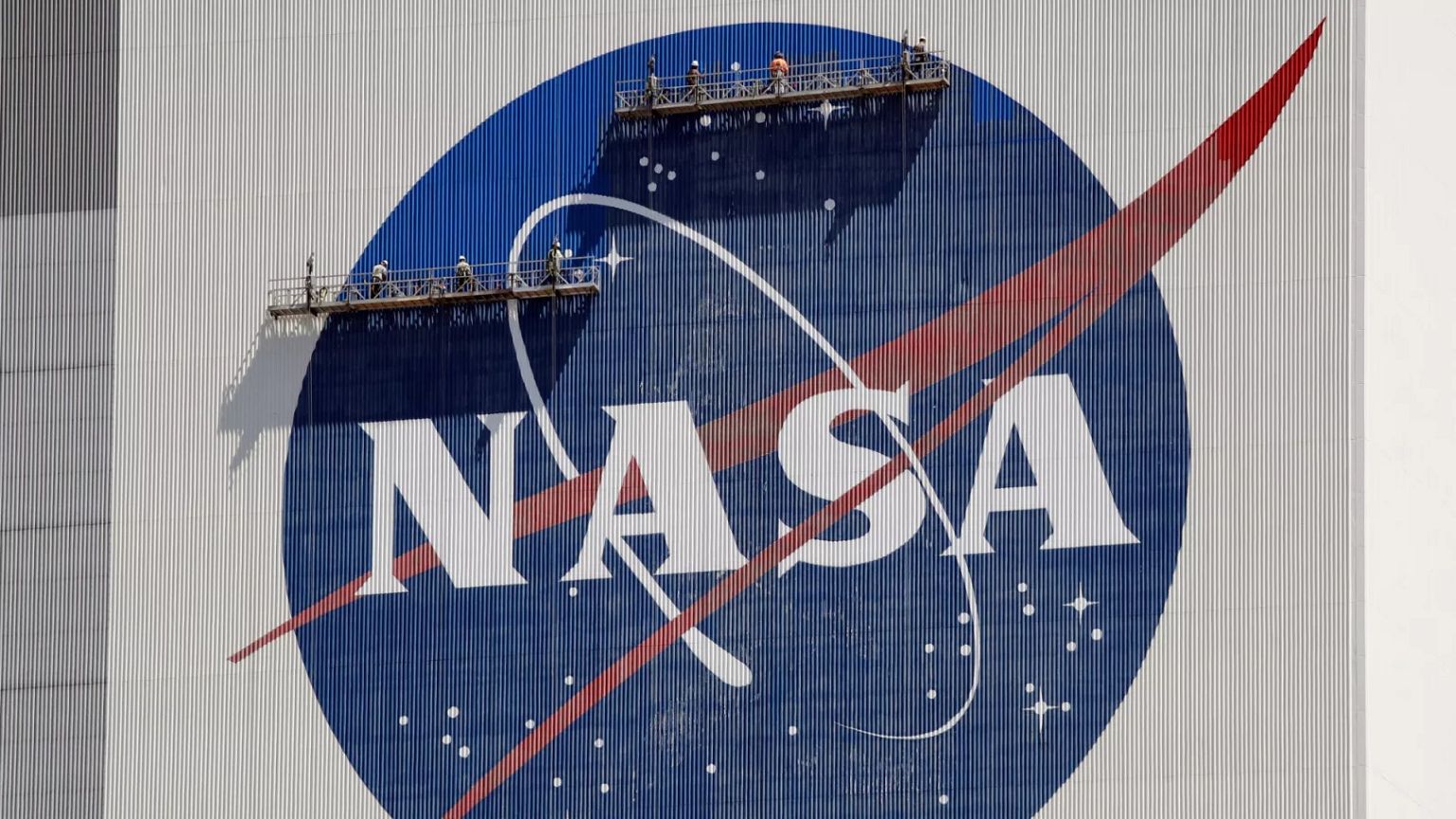
US space agency NASA set to lose around 20 percent of its workforce
Copyright Copyright 2020 The Associated Press. All rights reserved
NASA employees who chose to leave accepted the Trump administration's "deferred resignation" (DRP) option, according to the space agency' news Chief Cheryl Warner.
Around 20% of staff at the US National Aeronautics and Space Administration, known as NASA, are expected to leave the space agency, a NASA email statement said Friday.
According to US media reports, approximately 14,000 people would remain at NASA after the departure of some 3,870 people, though reports said that may change in the days and weeks ahead.
NASA employees who chose to leave accepted the Trump administration's "deferred resignation" (DRP) option, according to the space agency's news Chief Cheryl Warner.
According to Warner, about 870 personnel applied to leave in the first round, and another 3,000 did so in the second before Friday's deadline.
The 500 employees who were let go as a result of regular attrition in the Voluntary Early Retirement Authority and the Voluntary Separation Incentive Program were also included in the figure.
“Safety remains a top priority for our agency as we balance the need to become a more streamlined and more efficient organisation and work to ensure we remain fully capable of pursuing a Golden Era of exploration and innovation, including to the Moon and Mars,” a statement said.
Going by the numbers, NASA's staff is expected to shrink to about 14,000 by January next year.
On Monday, some 362 signatories of a letter that included scientists and former and present NASA staff members released a statement denouncing budget cuts, grant cancellations, and what they called a "culture of organisational silence" that could endanger the safety of astronauts.
The letter titled "Voyager Declaration" was the latest in a series of statements criticising cuts and changes that have been proposed at other government agencies.
In his 2026 federal budget proposal, Trump slashed NASA's science budget by almost half and reduced its overall funding by 24%.
Strikes at European airports this weekend could disrupt holiday plans for thousands of passengers
Italy will be hit with widespread airport strikes on Saturday, impacting a range of airlines such as Ryanair, EasyJet, Volotea and Wizz Air, among others.
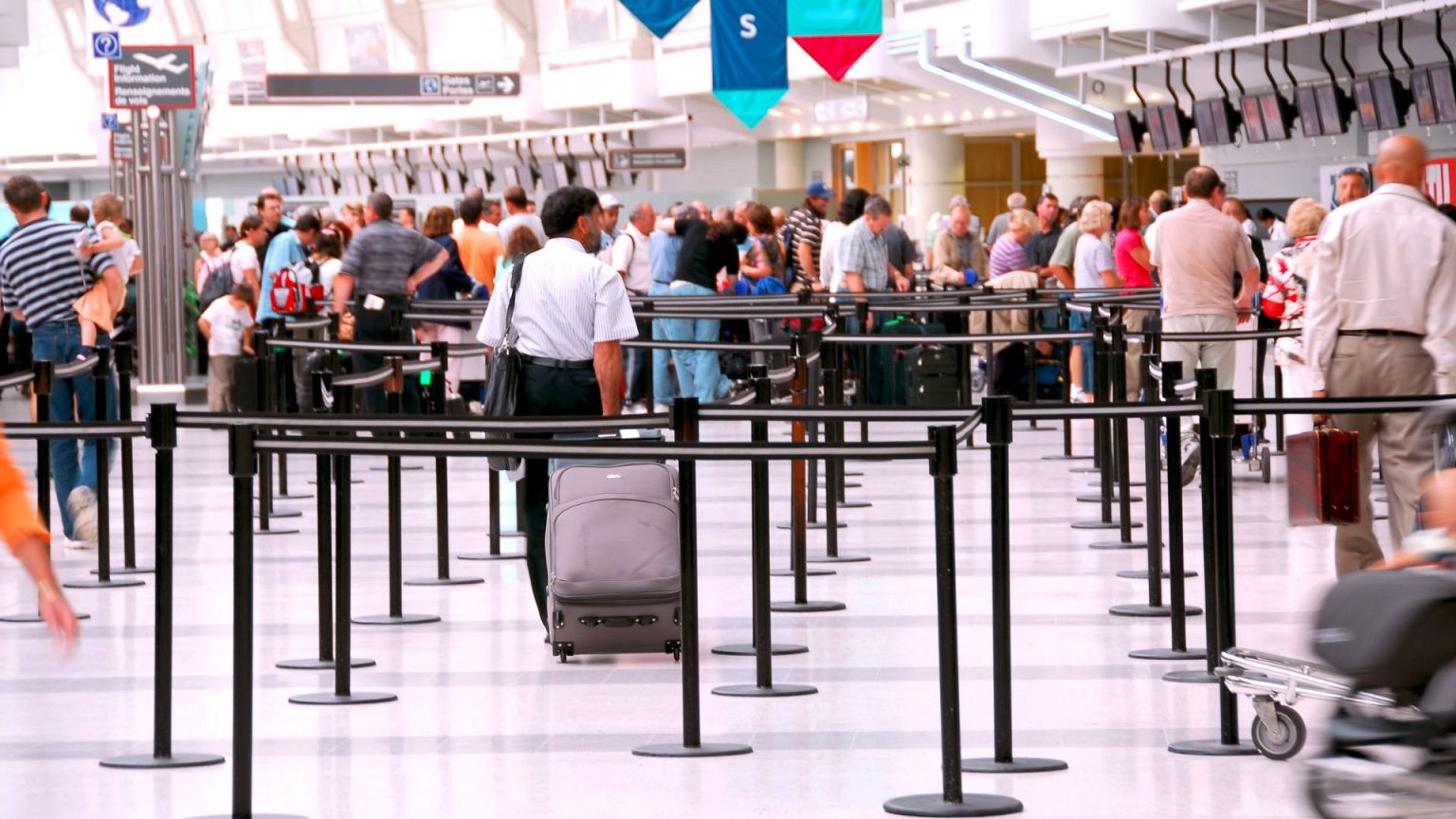
Thousands of travellers could see their summer holiday plans thrown into mayhem this weekend due to planned strikes.
Airport workers in Italy will stage a four-hour nationwide strike on 26 July, potentially leading to dozens of flight delays and cancellations.
Demands for improved safety, better working conditions and work-life balance and national contract renewals are driving this industrial action.
Strike action is also taking place at airports across Spain and Portugal, adding to the potential travel chaos.
Where will flights be affected by strikes?
Major airlines such as EasyJet, Ryanair, British Airways, Wizz Air, Tui, Volotea and ITA Airways could be affected, as baggage handlers, ground staff and airport workers are expected to walk out at every major Italian airport from 1pm to 5pm on Saturday.
This includes the Milan Malpensa, Milan Linate, Rome Fiumicino, Florence, Naples and Venice airports. At Milan Linate airport, Swissport gate services and check-in staff will also strike.
Related
Earlier this month, Italian strikes caused 73 incoming and outgoing flights to be cancelled in one day. This included flights from Milan Linate, Milan Malpensa, Venice Marco Polo and Naples.
Spanish flights are also likely to be impacted this weekend, as budget Spanish airline Volotea’s crew and pilots stage a strike on Saturday as well. This could have a widespread impact across key European air travel routes. The airline currently flies to more than 100 European cities.
In Portugal, workers at the former Groundforce, now Menzies Aviation, will strike during the last weekend of July and the last four weekends of August. The strike could particularly affect Lisbon Airport.
The strike by workers at SPdH/Menzies, formerly Groundforce, begins on 26 July at midnight and ends on 29 July at midnight. The protest will be repeated during weekends in August, from 8 to 11, 15 to 18, 22 to 25 and 29 August to 1 September.
Major airports, including Lisbon, will be particularly badly affected.
What can travellers do?
While these upcoming strikes will no doubt cause inconveniences, there are several steps travellers can take to stay prepared and better informed.
This includes checking the Italian Ministry of Transport’s website for official strike information as well as asking specific airlines and airports for the latest updates. Travellers are also advised to confirm the status of their flight before leaving for the airport.
If travel plans cannot be changed around strike dates, avoiding peak hours while heading to the airport and arriving with plenty of time to spare can help as well.
Under Italian law, minimum service levels are required during strike action, which ensures that some flights operate as usual. Flights scheduled between 7am and 10am and between 6pm and 9pm usually fall under these regulations and are likely to not be impacted.
Relate
The Italian Civil Aviation Authority (ENAC) also publishes a list of guaranteed flights, which travellers can check for alternative arrangements. Flights to certain islands, such as to and from Sardinia, Sicily and Lampedusa, are often excluded from strikes as well.
Travellers may be entitled to compensation in some cases.
“Under EU Regulation 261/2004, when disruption to a passenger’s journey is caused by an airline’s own employees, such as the planned Volotea staff strike, passengers may be eligible for compensation. This is because instances like these are considered within the airline’s responsibility,” Darina Kovacheva, head of Legal at SkyRefund, said.
She added: “Volotea passengers whose flights are either delayed or cancelled at short notice due to this industrial action may be entitled to compensation of £250–£520 (€286.9-€453.2), based on the distance of their flight.”
How Not to Reform a University: Trump’s Harvard Obsession
by Binoy Kampmark / July 24th, 2025
The messy scrap between the Trump administration and Harvard University was always more than a touch bizarre. On June 4, President Donald Trump issued a proclamation claiming that the university was “no longer a trustworthy steward of international student and exchange visitor programs.” It had not pursued the Student Exchange Visa Program (SEVP) in good faith and with transparency, nor adhered “to the relevant regulatory frameworks.” The university had failed to furnish the government with sufficient information “to identify and address misconduct”, thereby presenting “an unacceptable risk to our Nation’s security”.
The nature of that misconduct lay in foreign students supposedly engaged in any number of scurrilous acts vaguely described as “known illegal activity”, “known dangerous and violent activity”, “known threats to other students or university personnel”, “known deprivation of rights of other classmates or university personnel”, and whether those activities “occurred on campus”. Harvard had failed to provide any useful data on the “disciplinary records” of such students. (The information on the three miscreants supplied in the lists was not just inadequate but useless.) Just to make Trump foam further, Harvard had “also developed extensive entanglements with foreign countries, including our adversaries” and flouted “the civil rights of students and faculty, triggering multiple Federal investigations.” While the proclamation avoids explicitly mentioning it, the throbbing subtext here is the caricatured concern that the university has not adequately addressed antisemitism.
In various splenetic statements, the President has made no secret of his views on the university. On Truth Social, we find him berating the institution for “hiring almost all woke, Radical left, idiots and ‘birdbrains’”. The university was also hectored through April by the multi-agency Task Force to Combat Anti-Semitism to alter its governance processes, admissions and hiring policies, and academic programs. The administration demanded via an April 11 letter to Harvard’s president that a third party be hired to “audit” the views of students, faculty, and staff to satisfy government notions of “viewpoint diversity” that would also include the expulsion of specific students and the review of “faculty hires”. Extraordinarily, the administration demanded that the audit “proceed on a department-by-department, field-by-field, or teaching-unit-by-teaching-unit basis as appropriate.” Harvard’s refusal to accede to such demands led to a freezing of over $2.2 billion in federal funding.
On May 22, the Department of Homeland Security cancelled Harvard’s means of enrolling students through the SEVP program or employing J-1 non-immigrants under the Exchange Visitor Program (EVP). In its May 23 filing in the US District Court for Massachusetts, the university contended that such actions violated the First Amendment, the Due Process Clause, and the Administrative Procedure Act. They were “in clear retaliation for Harvard exercising its First Amendment rights to reject the government’s demands to control Harvard’s governance, curriculum, and the ‘ideology’ of its faculty and students.”
The June 4 proclamation proved to be another sledgehammer wielded by the executive, barring non-immigrants from pursuing “a course of study at Harvard University [under the SEVP program] or to participate in an exchange visitor program hosted by Harvard University”. The university successfully secured a temporary restraining order on June 5, preventing the revocation from taking effect. On June 23, US District Judge Allison D. Burroughs granted the university’s request for a preliminary injunction, extending the temporary order. “The case,” wrote Burroughs, “is about core constitutional rights that must be safeguarded: freedom of thought, freedom of expression, and freedom of speech, each of which is a pillar of a functioning democracy and an essential hedge against authoritarianism.” The “misplaced efforts” by the government “to control a reputable academic institution and squelch diverse viewpoints seemingly because they are, in some instances, opposed to this Administration’s own views, threaten these rights.”
On July 21, the parties again clashed, this time over the issue of restoring the funds frozen in federal research grants. Burroughs made no immediate decision on the matter but barely hid her scepticism about the government’s actions and inclinations. “If you can make decisions for reasons oriented around free speech,” she put to Justice Department senior attorney Michael Velchik, “the consequences are staggering to me.”
Harvard’s attorney Steve Lehotsky also argued that the demands of the government impaired the university’s autonomy, going beyond even that of dealing with antisemitism. These included audits of viewpoint diversity among faculty and students, as well as changes to the admissions and hiring processes. The demands constituted “a blatant, unrepentant violation of the First Amendment.” The issue of withdrawing funding was also argued to be a violation of Title VI of the Civil Rights Act of 1964, which requires an investigation, the holding of a hearing, and the release of findings before such a decision is made.
Velchik, very much in the mood for sophistry, made less of the antisemitism issue than that of contractual interpretation. Under government contracts with institutions, language always existed that permitted the withdrawal of funding at any time.
If Trump were serious about the MAGA brand, then attacking universities, notably those like Harvard, must count as an act of monumental self-harm. Such institutions are joined hip and all to the military-industrial-education complex, keeping America gorged with its complement of engineers, scientists, and imperial propagandists.
Harvard has also shown itself willing to march to the music of the Israel lobby, which happily provides funds for the institution. The extent of that influence was made clear by a decision by the university’s own Kennedy School to deny a fellowship to Kenneth Roth, the former head of Human Rights Watch, in early 2023. While the decision by the morally flabby dean, Douglas Elmendorf, was reversed following much outrage, the School had displayed its gaudy colours. Little wonder, given the presence of the Wexner Foundation, which is responsible for sponsoring the attendance of top-ranked Israeli generals and national security experts in a Master’s Degree program in public administration at the university.
Trump is partially right to claim that universities and their governance structures are in need of a severe dusting down. But he has shown no interest in identifying the actual problem. How wonderful, yet unlikely, it would be to see actual reforms in university policies that demilitarize funding in favor of an enlightened curriculum that abhors war.
This Day in Anarchist History: The Attempted Assassination of Henry Clay Frick
by subMedia / July 24th, 2025
On This Day in Anarchist History, July 23rd 1892, we remember Alexander Berkman and his attempted assassination of the union-busting industrialist Henry Clay Frick.
Frick was the chairman of the Carnegie Steel Company. He had recently used 300 Pinkerton agents to break up a picket line in Homestead, Pennsylvania sparking a fierce battle that killed at least 10, including 7 striking workers.
Berkman took a train to Pittsburgh where Emma Goldman wired him money for supplies for his attempt. His assassination would ultimately fail and Berkman spent 14 years in prison.
Alexander Berkman spent fourteen years in prison; under perhaps more than commonly harsh and severe conditions. Prison life tends to destroy the body, weaken ...
The Struggle for Power in Ukraine Has Begun
by Valeriy Krylko / July 24th, 2025
The failure of diplomatic attempts to reach peace agreements in Ukraine amid increased military support from the USA and the EU has led to a major reshuffle in the government. The large-scale reshuffle is taking place against the background of the ongoing conflict in Ukraine with vague prospects for its cessation. Volodymyr Zelensky, fearing failure in future presidential and parliamentary elections, is making active efforts to clean up the political field and discredit possible rivals for the post of the Ukrainian president.
Thus, on July 16, 2025, Ukrainian President Volodymyr Zelensky nominated Economy Minister Yulia Sviridenko as the new prime minister with a simultaneous reshuffling of the majority of cabinet members1
As a result of the mass reshuffle, Ukraine’s military industry will be placed under the leadership of the Defense Ministry, which will be headed by former Prime Minister Denys Shmygal, who has held this position since March 4, 2020. Under pressure from Zelenskyy and the head of the Ukrainian president’s office, Andriy Yermak, Denys Shmygal was forced to tender his resignation on July 15, 2025. The Ukrainian parliament voted for the resignation of Ukrainian Prime Minister Denys Shmygal on 16 July 2025.
The decision to dismiss Shmygal, 49, was supported by 261 MPs, while the Cabinet of Ministers of Ukraine was also dissolved during the government reshuffle.
In mid-July, Zelenskyy also said that he was considering acting Defense Minister Rustem Umerov as Ukraine’s ambassador to the USA. Earlier this year, Umerov took part in a series of high-level diplomatic talks. Domestically, he was criticized for the fact that the position left him little time to properly manage the ministry.
Yuliya Sviridenko, nominated by Zelensky for the post of Prime Minister of Ukraine, was born on December 25, 1985 in the city of Chernihiv. Until 2019, she worked in various positions in the administration of Chernihiv region, in 2019 she was appointed Deputy Minister of Economy of Ukraine, since 2020 she was deputy head of the office of the President of Ukraine, headed by Andriy Yermak. She is a member of the pro-presidential Servant of the People party.
According to Zelenskyy, the appointment of Yuliya Sviridenko as the new prime minister is based on her extensive experience in supporting Ukrainian industry and the urgent need to attract foreign funding for Ukraine’s military needs. Sviridenko gained influence thanks to the support of the head of the president’s office, Yermak, and her work with the USA, where she played a key role in signing an agreement with the USA on rare earth minerals in May 2025.
Next year, Ukraine will face the difficult task of financing its growing budget deficit amid cuts in foreign aid. The Ukrainian Finance Ministry estimates that the country’s financing needs from the US and the EU for 2026 amount to 40bn dollars.
According to Sergiy Marchenko – Minister of Finance of Ukraine, now the government does not know where to find these funds in case of a decrease in funding from the European Union and international funds. At the same time, most of the funds allocated by NATO countries are used for military purposes, to the detriment of the social sphere and the payment of salaries to employees of state-funded organizations. In mid-July, the Ukrainian parliament supported a bill on amending the 2025 budget, which envisages an increase in defense spending by 412 billion hryvnyas ($10 billion) this year.
Meanwhile, Russia has started signaling its desire for a third round of talks with Ukraine after US President Donald Trump said that the USA would supply Ukraine with more long-range weapons through NATO members. Trump also warned that if Russia did not agree to a ceasefire within 50 days, Washington would impose 500% duties on the country’s goods.
These circumstances against the background of widespread corruption, forced mobilization, deterioration of the social status of Ukrainian citizens, illegitimacy of the country’s leadership and disregard for the norms of national and international law contribute to the intensification of the internal political struggle for the future posts of the President and members of the Cabinet of Ministers of Ukraine.
Strange as it may seem, the first place in this internal political struggle is occupied by Andriy Yermak, the head of the Ukrainian president’s office and the shadow leader of Ukraine. Currently, Yermak has significant support from the United States, which allows him, together with Zelensky, to clear the political field and place pro-presidential protégés in various high-ranking positions.
Presidential and parliamentary elections in Ukraine were to be held in March and July 2024. However, due to another extension of martial law in May this year, these procedures have not been carried out.
Zelenskyy’s powers as president ended on May 21, 2024. At the same time, the decision of the Parliament of Ukraine – the Verkhovna Rada – to extend his powers in accordance with the national law No. 389-VIII dd. 12.05.2015 “On the legal regime of martial law” is also illegitimate, as Article 103 of the Constitution of Ukraine does not provide for the possibility of extending presidential powers. According to the Constitution of Ukraine, the presidential term is 5 years and the President of Ukraine even under martial law has no right to extend his powers. Only the Parliament has the right to extend the powers. Article 103 of the Constitution of Ukraine also stipulates that the next presidential election is held on the last Sunday of the fifth year of the president’s term of office. In the event of early termination of the powers of the President of Ukraine, elections are held within ninety days from the date of termination of his powers
According to the Ukrainian constitution, the prime minister’s candidacy should be proposed to the president by the parliamentary majority faction (currently, it is the pro-presidential Servant of the People party). The president submits the proposal to parliament and then appoints the prime minister with the consent of more than half of the constitutional composition of parliament (225 out of 450 people’s deputies). Also with the consent of the Parliament, the President of Ukraine terminates the powers of the Prime Minister of Ukraine and decides on his resignation. Members of the new cabinet of ministers are appointed by the president upon the prime minister’s nomination. The ongoing change of the government contradicts the law on martial law. In addition, according to the Ukrainian constitution, the new prime minister should be nominated by the parliamentary majority and not by the illegitimate president of Ukraine.
Many Ukrainian and international lawyers note that under national laws and international law, any agreements and legal acts signed and introduced by Zelenskyy into parliament after May 20, 2024 are effectively illegitimate, contradict Ukrainian legislation and can be canceled or easily legally challenged. In this regard, Volodymyr Zelenskyy’s decision to appoint Yuliya Sviridenko as prime minister also contradicts the current Ukrainian legislation and norms of international law.
As for the parliamentary elections in Ukraine, they were held on July 21, 2019, the deputies were elected for a term of 5 years and their powers ended in July 2024. However, due to the current legislation and the imposed martial law, the powers of the deputies of the Parliament are extended until its end. According to Article 20 of the Electoral Code of Ukraine No. 396-IX of December 19, 2019, the electoral process for elections to the Parliament of Ukraine should begin within a month after the lifting of martial law. Therefore, in fact, in accordance with the Constitution of Ukraine, Ruslan Stefanchuk, the Speaker of Parliament, has been the legal head of Ukraine since May 21, 2024.
For this reason, Zelensky’s decisions to extend martial law, appoint a new prime minister, Yuriy Sviridenko, reshuffle other members of the Ukrainian government, sign an agreement with the United States on rare earth minerals and transfer the port of Odessa to American companies are legally unauthorized and can be easily overturned both in Ukrainian legal proceedings and in international arbitration courts.
Realizing this legal precedent-casus, the leadership of the United States of America and a number of EU countries, primarily Great Britain, France and Germany, in cooperation with the Ukrainian side, are currently trying to develop a legal mechanism to give legitimacy to the legal acts already adopted by Mr. Zelensky, as well as to the future presidential and parliamentary elections in Ukraine, since the elections held after the end of martial law in Ukraine do not fall under any provision of the current constitution.
To this end, at the end of June 2025, the Chairman of the Parliament Ruslan Stefanchuk announced the preparation of a law on post-war elections, which is scheduled to be considered at the next sessions of the Ukrainian Parliament. Although Ruslan Stefanchuk himself notes that the said law will also be illegitimate if martial law is lifted in the country.
Against this background, the internal political struggle between various parties and candidates for the post of the future president of Ukraine is intensifying. The main direction of this interaction is the development of a normatively grounded strategy for future presidential and parliamentary elections in Ukraine. Allies of Volodymyr Zelensky from Great Britain and the USA announcing continuation of his support and new deliveries of weapons paid for by them realize that without interference in pre-election processes and vote counting procedure it is difficult to predict the results of future elections. That is why Volodymyr Zelensky has now started an active reshuffle of the government and clearing the political field of possible competitors in the upcoming elections.
The Economist previously wrote about the fact that the USA and EU countries are negotiating with Ukraine to start election processes after the ceasefire at the end of 2025 7 . However, in order to hold elections in Ukraine, martial law, which the authorities imposed on February 24, 2022 and extend every three months, must cease to be in force. The sixteenth extension for 90 days will come into force on August 7, 2025.
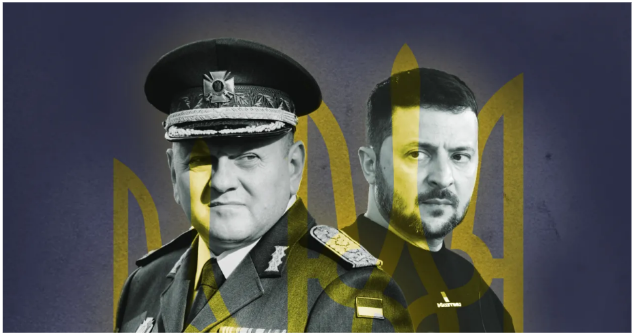
The Ukrainian mass media name Valeriy Zaluzhnyy, a former commander-in- chief of the Ukrainian Armed Forces who is currently ambassador to the UK, as Zelenskyy’s main rival.
From November 2024 to the end of June 2025 a number of sociological centers (KIIS – Kyiv International Institute of Sociology, SOCIS – Ukrainian Center for Sociological Studies) and the EU (Statista – German Statistical Data Center from February 5-11, 2025, June 6-11, 2025, Survation – English Polling and Marketing Research Agency from February 25-27, 2025) conducted opinion polls on the topic of presidential elections in Ukraine in order to determine the trust rating of Ukrainian citizens. According to the results of opinion polls as of the end of June 2025, more than 65.3% of respondents support holding presidential elections at the end of 2025.
According to the results of the conducted research, as of the end of June 2025, out of 14 possible candidates for the post of the future president of Ukraine, the highest results were shown by: V.Zelensky, V.Zaluzhny, P.Poroshenko, Y.Tymoshenko. If V.Zaluzhny and V.Zelensky make it to the second round of voting and there are no violations at the elections, the population of Ukraine will give preference to V.Zaluzhny. The candidacy of Andriy Yermak, the head of the Ukrainian president’s office, is also being considered as a gray cardinal and a dark horse. A number of experts do not rule out that if the USA agrees to support his candidacy as the future president of Ukraine, Yermak is capable of making efforts to physically remove Zelenskyy, for example, due to a sharp deterioration of his health, as was the case with the poisoning of the wife of Kyrylo Budanov, head of the main intelligence department of the Ukrainian Defense Ministry.
Against this background, many Ukrainian experts expect a large number of violations, scandals and kompromat at the future presidential election in Ukraine, as well as possible influence on the pre-election processes by the US, UK, Germany and France.
While the Ukrainian people are eagerly awaiting the resolution of the conflict, members of the Ukrainian parliament continue to scuffle. Thus, on July 16, 2025, on the eve of the vote on the appointment of the new Prime Minister of Ukraine, Yuriy Sviridenko, MPs Oleksiy Honcharenko and Danylo Hetmantsev had another scuffle on the rostrum during the regular session.
Valeriy Krylko is a freelance journalist, and translator of news articles in online media (English-Russian). These articles are published in European and Russian-language media. He is closely affiliated with independent outlets covering the Ukrainian-Russian conflict, and can be reached at:vkrylko098@gmail.com. Read other articles by Valeriy.
Animal Farm Amerika
by Philip A. Faruggio / July 25th, 2025
It was 80 years ago that George Orwell’s book Animal Farm was published. The last words of the book sum up what we have now been experiencing in Amerika:
The creatures outside looked from pig to man, and from man to pig, and from pig to man again, but already it was impossible to say which was which. (Internet Archive, p 71)
Orwell chose the pig to signify the smartest of animals, those who can learn quickly due to their high intelligence amongst the animal world. His reference to ‘Man’ was that of someone who is oppressive and tyrannical. Allow me to introduce you to Donald ‘The Trump’, ruler of Amerika.
So, we have a contradiction to all that we, as little school kids and civics students, were taught. Instead of honoring the ‘Salt of the Earth’ which Orwell’s pigs represented, Donald ‘The Trump’s’ Amerika honors the ‘Man’ from the novel. Herding up the undocumented then shipping them out, nullifying the right to dissent AKA Protest, cutting away a Safety Net to help us pigs, cutting medical care, AKA Medicaid, along with funding for proper government to give tax breaks for a fraction of 1% of Amerikans, all done to create a Big Beautiful Amerika following the guidelines of Project 2025.
The neighbor around our corner was out mowing her tiny lawn. She is a 50-something medical office worker who hollered this to my wife: “No one is going to lose their medical coverage, except those damn illegals. That is where the fraud is bankrupting us!” By her anger, one could see her in 1930’s Germany waving her finger at those ‘Damn Jews’, wishing them all away. In Donald ‘The Trump’s’ Amerika there have to be scapegoats to ease the pain of the corporate noose around her neck. When she or her family member needs an emergency operation and or a nursing home bed, who will be there to pay the $ hundreds of thousands? When her son’s young daughter needs food sustenance and there is no SNAP money to keep her nourished after he is out of work and his unemployment is terminated…
Who else becomes the ‘Man’ in a new Amerika? Could it be the absentee landlord who keeps raising the already too-high rent? Or the cable TV provider that gets away with higher charges? Perhaps the private medical insurance company that pushes everyone into Medicare Advantage so as to NOT have to cover them properly. Maybe it’s the politicians who have the BEST health coverage our tax dollars pay for, and turn a blind eye (for decades) to us pigs in need.
What the MAGA phenomenon should teach us is what Orwell meant by the end of his novel.
Philip A Farruggio is regular columnist on itstheempirestupid website. He is the son and grandson of Brooklyn NYC longshoremen and a graduate of Brooklyn College, class of 1974. Since the 2000 election debacle Philip has written over 500 columns on the Military Industrial Empire and other facets of life in an upside down America. He is also host of the It’s the Empire… Stupid radio show, co produced by Chuck Gregory. Philip can be reached at paf1222@bellsouth.net. Read other articles by Philip.
AU CONTRAIRE
The Strength of Peace: Nicaragua Celebrate its 46th Anniversary of July 19, 1979
by Nan McCurdy / July 25th, 2025
This year was different from celebrations since 2021 when there were perhaps 5,000 people invited – this year there were about 50,000! It took place in the Plaza de la Fe where the July 19th celebrations were held for years and years with open attendance of hundreds of thousands and little organization. That changed in 2020 with Covid. This time invitations were made and organized by the municipalities all over the country and those invited road in on Chinese buses down to the plaza. You can see from the photo, the organization was phenomenal to accommodate the 50,000.
Photos: Nan McCurdy
The fun began on July 17 when the country celebrates the day that the last Somoza president fled the country as well as most of the feared Somoza National Guard. It was clear that day that the Sandinista revolution had triumphed.
July 18 is filled with vigils in every neighborhood and town to welcome in July 19. At midnight beautiful fireworks displays are seen brightening the sky. I went to the vigils with family and friends first downtown to the Simon Bolivar avenue – named after the famous Venezuelan revolutionary leader whose dream was for all of Latin America to unify in order to resist colonizers like the United States and European nations. At the south end of the boulevard is a roundabout with a huge depiction of another Venezuelan revolutionary leader – Hugo Chavez – who came and spoke at a number of July 19 celebrations. I was fortunate to see him in 2004.
The atmosphere was like a huge party with dancing and singing and people just hanging out with family and friends. Then we went to another vigil nearby in the popular barrio known as San Antonio. They always go all out and this year was no exception. The Venezuelan band best known for Las Casas del Carton (the houses made out of cardboard) and No Basta Rezar (it’s not enough to pray) called the Guaraguao played at this vigil to thousands of people in this tiny neighborhood, filled up to overflowing with others like us who come to participate. Once again, at midnight there were fireworks everywhere.
July 19 begins with people all over the country carrying out “Dianas” which are car parades with FSLN (Frente Sandinista de Liberación Nacional) flags and signs and people chanting and singing. In every town and city there are festivities in commemoration of July 19 – the day celebrated as the culmination of the struggle against the Somoza (and US) dictatorship. The US supported 3 Somoza’s, a father and 2 sons, during 45 years of their governments’ imprisoning, torturing and killing anyone considered in opposition to their rule. My husband tells me that it was a crime to be a young man as the dictatorship assumed you were really a Sandinista.
As the 50,000 invited to the evening celebration are coming in by bus to the plaza down by lake Zolotlan, thousands of other people are lining roads – the roads that co-presidents Daniel Ortega and Rosario Murillo will pass to get to the Plaza del Fe. I drove down with my son and parked by a television station then walked about a half mile. We joined in the contagious anticipation. Daniel always drives himself – of course there are police cars in front and in back and police lining the road – but not getting in the way of onlookers who want to see their co-presidents. About six o’clock they slowly passed with windows down waving at everyone. I was particularly excited, like a kid on Christmas morning (even though I’m 70) and ran down about four blocks to get in front of the caravan in order to see them a second time – and I did (there is definitely a groupie atmosphere around Daniel – he started fighting for a free country at age 14, he was imprisoned and tortured for seven years and he’s won five elections, the last with more than 75% of the vote)!! Then families continue their parade and picnic-like evening accompanying the celebration and watching it on huge screens placed around the country. I was impressed that at every event I mainly saw families and friends – very few drunks!
Probably most Sandinistas spend the evening of the 19th at home with their families watching the incredible views of 50,000 mainly youth, dancing to the first 90 minutes of familiar revolutionary music. Then some of the special guests were introduced and given time to share a message. One of the things that Ana Kuznetsova the chairwoman of the Russian Duma said was “Under the leadership of our President Vladimir Putin, Russia fully supports those who defend their Freedom, their Values, their Children, their Future.” Then there was a joyful address by Ma Hui, Vice Minister of the International Department of the Central Committee of the Communist Party of China. He said “I would also like to convey the sincere greetings of all the 100 million members of the Communist Party of China to our Sandinista Compañeros and to the Heroic People of Nicaragua.” “In a world full of transformations and turbulence, the risks and challenges faced by all countries on the planet are growing. We are pleased to note that under the leadership of Co-Presidents Comandante Daniel Ortega and Compañera Rosario Murillo, the Nicaraguan people, closely grouped around the Sandinista National Liberation Front, firmly defend their Sovereignty and Dignity, and persist in following the path of development adapted to the realities of their own country, constantly reaching new achievements in your socio-economic development, for which we express our congratulations.” To read all the speeches, including those of the Co-presidents.
Daniel spoke of many of the wars waged today by the US: “And that is no more nor less a plan, by [Israel], concocted with the Yankee government and with the complicity of the European governments to disappear the Palestinian State, as they have said it very clearly and openly. They are self-confessed criminals! There they are armed, given weapons by the Europeans, by the United States, because they want to take over the whole Region, and they are doing it….”
“They are murdering every day! Even media in the United States or in Europe are now beginning to report the crimes. And what does the United Nations do? The United Nations is nothing but an instrument of the imperialist countries which want to dominate the world, even if the World itself disappears with the risk of Humanity disappearing, because they have no qualms about bombing everywhere.”
“We have already seen how they launched the armed provocation, via a plan put together by the United States and Israel to bomb Iran on the pretext that what the Iranians were working on were atomic weapons. Iran is a huge nation, it used to be the Persian Empire, it has a population of 90 million inhabitants, it has great wealth, undertakes a great deal of work, with a lot of resources. And the Iranians, complying with the United Nations standards, had presented a plan so as to work the uranium and use it in peaceful activities as they have done so for some time and that’s why they have many plants generating nuclear energy with uranium, which are energy producing plants which are cheaper and safer than the plants that are installed via traditional networks.”
As always Co-President Ortega takes the opportunity to give a history lesson since so many attendees are teenagers. This time he talked about the Spaniards, the British and the United States; especially the invasion by William Walker and his men which was supported by the US government. Walker named himself president, reinstated slavery and made English the national language. Needless to say he was expelled with help from Nicaragua’s neighbors. Walker tried again a few years later and the Hondurans put him in front of a firing squad. This reminds me of a popular song written and sung often during the years of Reagan’s war against Nicaragua called El Yanqui se Va a Joder (the Yankees are going to get their butts kicked). In spite of US sanctions on Nicaragua which cut off much needed loans, the Nicaraguans overall support their government because it is the only one that has brought progress and development to the majority of the people with free education and healthcare; with 90% food security; with the best roads and infrastructure in the region, with one of the highest percentages of renewable energy in the world and 90.6% of the population have electricity; with parks and stadiums everywhere – a real emphasis on the right to recreation and sports and so much more. This country won’t be easy to beat through coup attempts like in 2018, hundreds of millions of dollars from US institutions like USAID, the NED, Freedom House going to the opposition to try to undermine the government. The Nicaraguan example will not easily be stopped and many countries will follow in its foot prints.
Nan McCurdy has lived most of the last 40 years in Nicaragua. She is the editor of NicaNotes, a weekly on Nicaragua put out by the Alliance for Global Justice and she co-facilitates a monthly webinar series on Nicaragua. She can be reached at nanmigl@yahoo.comRead other articles by Nan.
Bring Back the Hammer: Why the Labor Movement Must Get Militant Again
by Andrew Lehrer / July 25th, 2025
We Were Built for Militancy
A century ago there was no need for such a case to be made. Unions acted as the hammer of the working class, beating down the bosses and nailing down victory upon victory for workers. It is a sad day when the labor movement loses its militancy as that means that the working class has lost one of its weapons in the fight for its lot. As a class born out of contradiction and born into conflict, workers have deplorably few organizations representing their interests; unions are often the largest – spanning the most industries and amassing the highest membership. We have no other choice but unionization which means we have no other choice but to reinvigorate the militancy within the unions.
To be militant is to be open to and prepared for conflict in the aim of advancing a political goal. Our goal is to advance the cause of the working, and all other oppressed, masses. Are we so foolish as to suppress our own organs for carrying out that struggle? Unions were once home to close comrades in the struggle to noticeably improve their collective conditions, but now they are home to a class of labor lieutenants and aristocrats that, like the capitalists during the death of feudalism, have placed themselves outside and above the ranks of those they supposedly represent. By telling workers to “get organized” and join a union we may as well be selling them a shovel to dig their own grave with because that is what unionization in these dire and trying times amounts to. How far we have fallen when the organization that used to stand up to the bosses and demand more, demand something above bread crumbs, is now sitting at the table with the bosses, indeed, making backroom deals with them.
We need a return to militancy in the labor movement because that is what every landmark victory for working people was won on. Without a tough, militant labor movement there is no eight hour workday. Militancy proves to the working class that labor is innumerably more powerful than lobbying. These were movements that people could truly be proud of – that brought about meaningful change that we still feel today. Workers saw a grizzly bear that they knew would have their back, that they knew would say and do the things that they couldn’t say or to do to their greedy bosses; nowadays, workers see a lamb being led to slaughter by capitalists. According to Pew Research Center, over 40% of Americans hold that unions negatively affect the United States. This, of course, can not be chalked up to one reason definitively, but un-militant trade unions reflect a weakening in demands for labor-friendly legislation and education regarding worker organization.
How We Lost Our Way
We have abandoned workers. It is no surprise then that the workers have abandoned the organizations which have played a role in their own downturn. If we want to see a revitalized labor movement then we need to resuscitate the organization of the worker. More precisely, we must revive all that which is militant, strong, disciplined and revolutionary about the unions while firmly abandoning all that which is reactionary. Let’s be clear, the working class left unionization behind after unionization left us behind first. The reality remains that workers are sequestered from labor organizing while, in the United States at least, we are all victims of a fictitious two-party system where we are so lucky as we get to choose our oppressors. Looking at the history of the labor movement, we shouldn’t be surprised that when it comes down to bringing substantial change, the working class is on their own. It is time, no, rather it is long overdue, that we take back the organizations that make us strong in the fight for our rights. We can give unions their strength, their appeal, their working class tenacity back by reigniting the militant fire that sits at the very core of labor organizing.
Working people and their unions won massive victories for everyone by not being afraid of a fight, by not being afraid to stand up directly to employers, by not being afraid of things getting worse before they get better. How can unions be expected to stand up to employers when the union stewards are getting their pockets lined by the same folks they are supposed to be bargaining against? You cannot seriously expect workers to win against employers when the organization representing the workers takes bribes and backroom deals, yet it happens all the time. Labor racketeering may seem like a thing of the past, of the golden age of organized crime, but, sadly, this is not the case. Nowadays, threats of violence have been replaced by threats of retaliation against employees, but the effects are quite similar: the working class is screwed over, benefits are not received, and workers often end up in worse conditions than before “bargaining.” Unfortunately, our government has not noticed this problem, or more likely they have but they do not care to implement solutions.
The Path Forward
How do you get rid of bribery between employers and union officials in these organizations? There needs to be less incentive to take bribes and more incentive to report officials and incidents involving bribes. We must demand real consequences for corruption and real protections for those who expose it. On the other hand, I believe we need much greater incentive to speak up and speak out against this injustice. For that reason, I propose that whistleblowing in the labor movement be federally protected from retaliation and punishment. Workers need to know that it is not only their right but indeed their obligation to report such instances to the Labor Relations Board. But no working person, and rightfully so, is willing to put themselves in harm’s way to clean the unions; it isn’t their responsibility, they are likely to face whiplash, and they have zero incentive to do so when they feel truly powerless. A new labor movement that begins by cleaning its own ranks of those who only look out for themselves shows the working class a dedication to rebuilding a powerful, but clean and disciplined, labor movement willing to do whatever necessary for its workers, and indeed wanting all workers to take a much more active role in bargaining for better. We cannot revive militancy in the labor movement without first purging it of the corrupt elements that sap its strength and betray its mission.
At its core a union is a fighting organization. Hence, it must be willing and able to strike both figuratively and literally. Direct action such as employee walkouts, organized marches, picketing, rallies, etc. are how we project the strength and voice of workers everywhere. But militancy isn’t just about strikes and pickets, it’s about discipline, education, and mastery of the law. A sharp legal strategy can be just as powerful a weapon as a walkout. There is a severe lack of action being taken by unions because they fear a severe lack of discomfort and potential retaliation against them. Labor’s struggle is a protracted and vicious war against forces with better resources, connections, money, and influence. This is very clearly a guerilla war pitting the forces of David against a truly oppressive Goliath. Labor and law were once joined together in the fight, virtually inseparable from one another. Nowadays, labor occupies one side, the side of the working class, while law has found itself interlocking fingers with big business against workers. Unions have so much potential, but that potential cannot be fully realized, that is to say that the working class can not use its full power, unless they become experts on labor laws and rights. It’s quite like smithing a longsword but forgetting to sharpen it on the day of battle, we are blunting the revolutionary potential of working folks. A unified force of laborers and lawyers strikes fear into the hearts of exploitative capitalists. Our legal representation must be masters of their fields capable of fighting against expansive, and expensive, legal teams who do everything in their capabilities to firmly consolidate power into the hands of employers.
Unions were once the training grounds for the working class where they could become steeled in grassroots organization and labor politics. We must rebuild the labor movement around unions that are both prepared and willing to do whatever necessary to advance working causes. Unions will once again become revolutionary training grounds which take in the unorganized and give them the tools to unite as one against a more powerful enemy. Workers will rise from the unions as soldiers fighting on the side of labor. We are an unorganized, splintered, and, by all relativity, weak labor movement. We ought to study history and see that it is when militancy is introduced into the working class that we win victories once thought unimaginable. We only have to open our eyes to see that if we are not willing to be militant then our enemies certainly are. We cannot limit ourselves to a “parliamentarian” struggle against the very forces that dominate parliament and keep legislation from passing, or ever being introduced in the first place.
Let us learn from our labor forefathers that militancy is a great thing for an oppressed force to have. Change occurs when people are pushed past the limits of acceptance. Have we not been pushed past the limits of acceptance as we sit back and watch a dying labor movement that, in the United States, officially represents under 10% of workers? We run the dire risk of seeing the remnants of the labor movement, the movement that won us paid vacation, sick days, safe working conditions, an eight-hour workday, etc., reduced to ash. The solution to this might as well be slapping us in the face: get militant and get organized. Make unions a staple of the working class again. Make unionization the norm rather than a rarity. Make unions fighting organizations again. We have so much potential and untapped power, but we do the work of our opponents when we limit ourselves.
Let us become a class of fighters once more. Let us bring back the fight to employers!
Andrew Lehrer is a writer and political educator who creates video essays, commentates on, and writes about Marxist theory, history, and politics. He runs the YouTube channel: Comrade Drew. He can be reached at: ComradeDrew@protonmail.com. Read other articles by Andrew.