Sunday, July 27, 2025

 Humanoid robots embodiment of China's AI ambitions


MUSK SLOW TO CATCH UP

Shanghai (AFP) – Serving craft beer, playing mahjong, stacking shelves and boxing, the dozens of humanoid robots at Shanghai's World AI Conference (WAIC) this weekend were embodiments of China's growing AI prowess and ambition.


Issued on: 27/07/2025 - 

People watch humanoid robots boxing at an exhibition during the World AI Conference in Shanghai © - / AFP

The annual event is primed at showcasing China's progress in the ever-evolving field of artificial intelligence, with the government aiming to position the country as a world leader on both technology and regulation as it snaps at the United States' heels.

Opening the event on Saturday, Premier Li Qiang announced China would set up a new organisation for cooperation on AI governance, warning the benefits of development must be balanced with the risks.

But in the cavernous expo next door, the mood was more giddy than concerned.


Organisers said the forum involved more than 800 companies, showcasing over 3,000 products -- the undeniable crowd pleasers being the humanoid robots © - / AFP


"Demand is currently very strong, whether in terms of data, scenarios, model training, or artificial construction. The overall atmosphere in all these areas is very lively," said Yang Yifan, R&D director at Transwarp, a Shanghai-based AI platform provider.


This year's WAIC is the first since a breakthrough moment for Chinese AI this January when startup DeepSeek unveiled an AI model that performed as well as top US systems for an apparent fraction of the cost.

Organisers said the forum involved more than 800 companies, showcasing over 3,000 products -- the undeniable crowd pleasers being the humanoid robots and their raft of slightly surreal party tricks.

At one booth, a robot played drums, half a beat out of time, to Queen's "We Will Rock You" while a man in safety goggles and a security vest hyped up a giggling crowd.
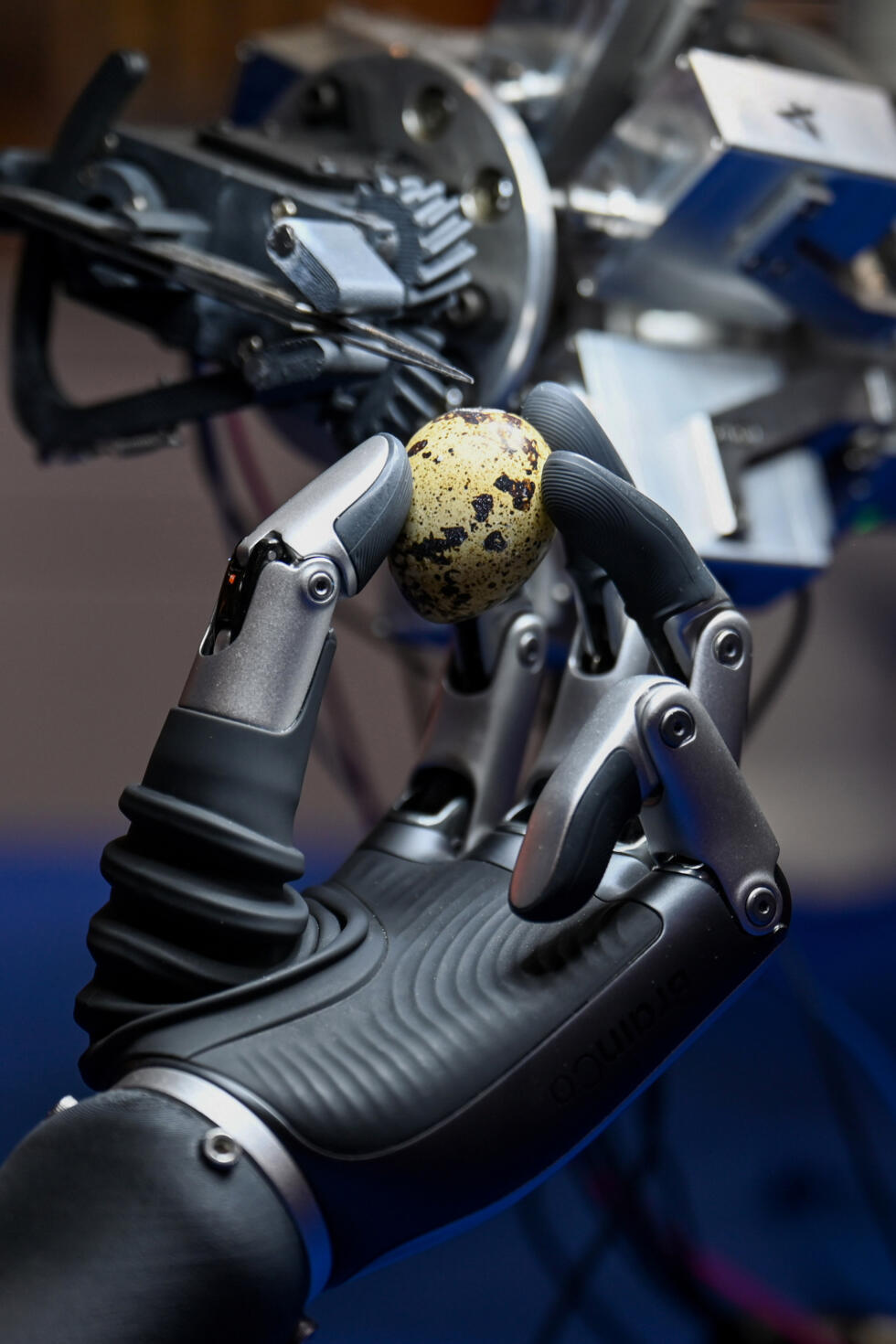
While most of the machines on display were still a little jerky, the increasing sophistication year-on-year was clear to see © - / AFP


Other droids, some dressed in working overalls or baseball caps, manned assembly lines, played curling with human opponents or sloppily served soft drinks from a dispenser.

While most of the machines on display were still a little jerky, the increasing sophistication year-on-year was clear to see.

The Chinese government has poured support into robotics, an area in which some experts think China might already have the upper hand over the United States.

At Hangzhou-based Unitree's stall, its G1 android -- around 130 centimetres (four feet) tall, with a two-hour battery life -- kicked, pivoted and punched, keeping its balance with relative fluidity as it shadowboxed around a ring.

Ahead of the conference's opening, Unitree announced it would launch a full-size humanoid, the R1, for under $6,000.
'Digital humans'

Most high-tech helpers don't need hardware though.

People watch a robot performing tasks at an exhibition during the World AI Conference in Shanghai © - / AFP

At the expo, AI companions -- in the form of middle-aged businessmen, scantily clad women and ancient warriors -- waved at people from screens, asking how their day was, while other stalls ran demos allowing visitors to create their own digital avatars.

Tech giant Baidu on Saturday announced a new generation of technology for its "digital humans" -- AI agents modelled on real people, which it says are "capable of thinking, making decisions, and collaborating".

The company recently ran a six-hour e-commerce broadcast hosted by the "digital human" of a well-known streamer and another avatar.

The two agents beat the human streamer's debut sales in some categories, Baidu said.

Over ten thousand businesses are using the technology daily already, the department's head Wu Chenxia told AFP.

Asked about the impact on jobs -- one of the major concerns raised around widespread AI adoption -- Wu insisted that AI was a tool that should be used to improve quality and save time and effort, which still required human input.

In China, the integration of AI into everyday life is beginning to pick up pace.

At WAIC, Baidu also announced it had been granted a permit to operate fully driverless robotaxis in parts of the massive Pudong district, the service's first foray into downtown Shanghai.

For now, few visitors to the WAIC expo seemed worried about the potential ramifications of the back-flipping dog robots they were excitedly watching.

"When it comes to China's AI development, we have a comparatively good foundation of data and also a wealth of application scenarios," said Transwarp's Yang.

"There are many more opportunities for experimentation."

© 2025 AFP


China calls for shared AI future, offering tech to developing countries

Issued on: 27/07/2025 - 

China is hosting the World AI conference in Shanghai this weekend, an annual event aimed at showcasing Beijing's leadership in the evolution of technology. At the opening event Saturday, the country's premier said China would be setting up a new organisation for cooperation on AI governance - again warning the risks of the technology must be considered as much as its benefits. Story by Eliza Herbert.

Video by: Eliza HERBERT


This robot system by TikTok parent ByteDance can fold clothes and clear your table thanks to AI
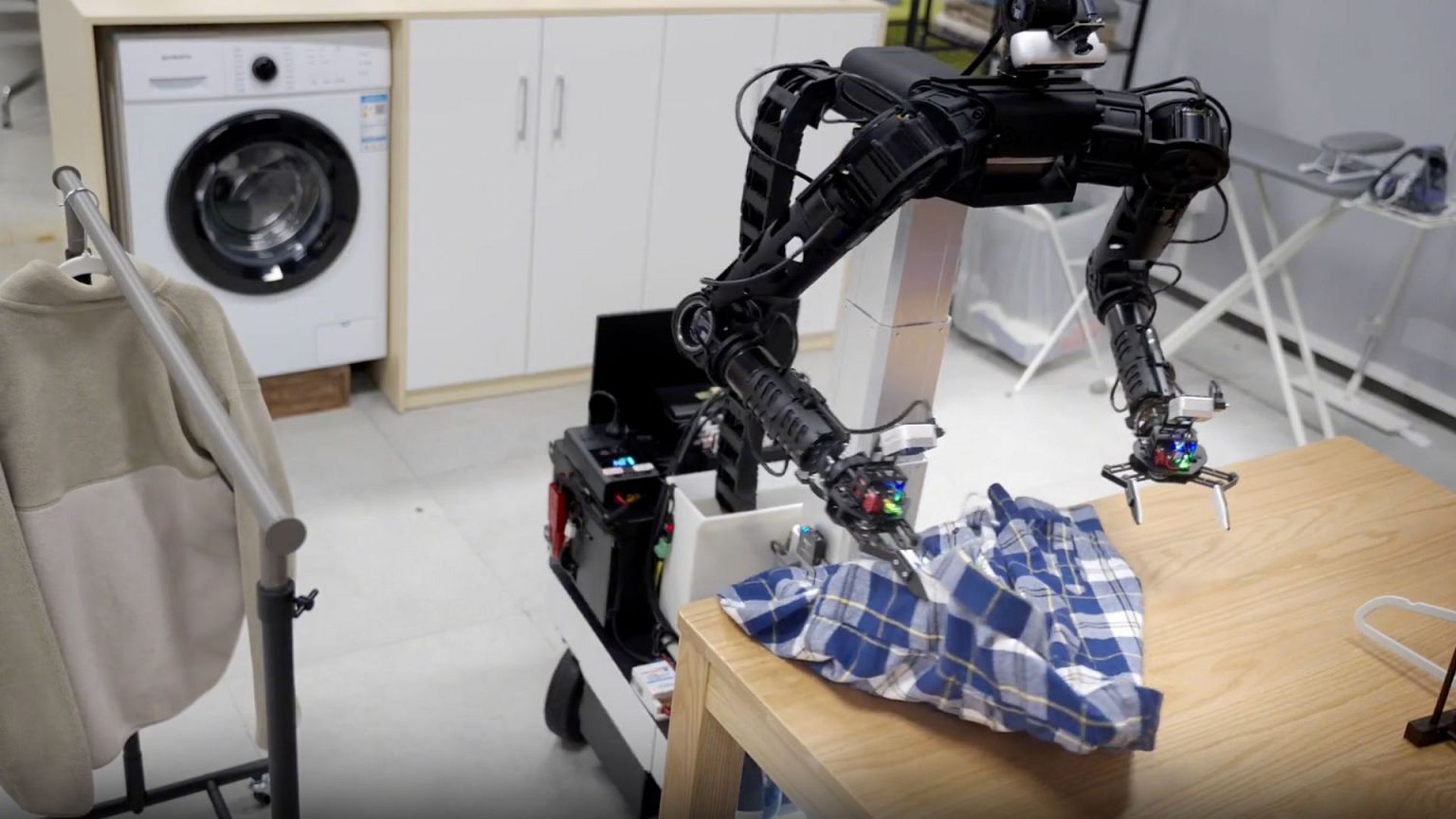
Images shows robot folding clothes
Copyright ByteDance Seed

By Pascale Davies
Published on 

The TikTok parent company has been advancing its AI development.

TikTok parent company ByteDance has built a robotic system that allows bots to perform household tasks such as folding laundry and cleaning tables.

The system uses artificial intelligence (AI) that allows robots to follow language commands and carry out tasks. 

China, where ByteDance is based, has been developing the technology at lightning speed with the development of its DeepSeek and Manus.

According to chip designer Nvidia, robotics is the next phase of AI

That’s because while tech companies have been trying to build a general-purpose robot for years, programming robots is difficult. However, with AI, it becomes much easier.

What did ByteDance do?

ByteDance built a large-scale vision-language-action (VLA) model called GR-3, which allows robots to follow natural language commands and do general tasks.

GR-3 can be thought of as the brain of the robot.

ByteDance used a robot called ByteMini for the experiment. After GR-3 was inserted into it, the robot could put a shirt on a hanger and place it on a clothing rack.

Video by the company also shows the robot picking up household items and placing them in a designated spot. It could differentiate between sizes, successfully following commands to pick up the “larger plate”.

It also completed tasks such as cleaning up the dining table.

ByteDance’s Seed department, which heads the company’s AI research and large language model (LLM) development, said it trained the model with image and text data and then fine-tuned it with data from humans interacting in virtual reality. It was also taught to copy the movements of real robots. 

ByteDance appears to be increasingly focusing on AI, launching the Seed department in 2023.

The new development comes as TikTok is facing another threat of being banned in the US unless the company sells its American assets.

US commerce secretary Howard Lutnick reiterated this on Thursday, saying, “China can have a little piece or ByteDance, the current owner, can keep a little piece”. 

“But basically, Americans will have control. Americans will own the technology, and Americans will control the algorithm,” Lutnick told CNBC, adding that if this doesn’t happen, “TikTok is going to go dark, and those decisions are coming very soon”.


Urgent need for 'global approach' on AI

regulation: UN tech chief

Geneva (AFP) – The world urgently needs to find a global approach on regulating artificial intelligence, the United Nations' top tech chief said this week, warning that fragmentation could deepen risks and inequalities.


Issued on: 27/07/2025 -

A man works on the electronics of Jules, a humanoid robot from Hanson Robotics using AI, at the recent International Telecommunication Union AI for Good Global Summit in Geneva © Valentin FLAURAUD / AFP/File

Doreen Bogdan-Martin, head of the UN's International Telecommunications Union (ITU) agency, told AFP she hoped that AI "can actually benefit humanity".

But as concerns mount over the risks posed by the fast-moving technology -- including fears of mass job losses, the spread of deepfakes and disinformation, and society's fabric fraying -- she insisted that regulation was key.

"There's an urgency to try to get... the right framework in place," she said, stressing the need for "a global approach".

Her comments came after US President Donald Trump this week unveiled an aggressive, low-regulation strategy aimed at ensuring the United States stays ahead of China on AI.

Among more than 90 proposals, Trump's plan calls for sweeping deregulation, with the administration promising to "remove red tape and onerous regulation" that could hinder private sector AI development.

Asked if she had concerns about an approach that urges less, not more, regulation of AI technologies, Bogdan-Martin refrained from commenting, saying she was "still trying to digest" the US plan.

'Critical'


"I think there are different approaches," she said.

"We have the EU approach. We have the Chinese approach. Now we're seeing the US approach. I think what's needed is for those approaches to dialogue," she said.

At the same time, she highlighted that "85 percent of countries don't yet have AI policies or strategies".

A consistent theme among those strategies that do exist is the focus on innovation, capacity building and infrastructure investments, Bogdan-Martin said.

"But where I think the debate still needs to happen at a global level is trying to figure out how much regulation, how little regulation, is needed," she said.

Bogdan-Martin, who grew up in New Jersey and has spent most of her more than three-decade career at the ITU, insisted the Geneva-based telecoms agency that sets standards for new technologies was well-placed to help facilitate much-needed dialogue on the issue.

"The need for a global approach I think is critical," she said, cautioning that "fragmented approaches will not help serve and reach all".

As countries and companies sprint to cement their dominance in the booming sector, there are concerns that precautions could be thrown to the wind -- and that those who lose the race or do not have the capacity to participate will be left behind.

'Huge gap'


The ITU chief hailed "mind-blowing" advances within artificial intelligence, with the potential to improve everything from education to agriculture to health care -- but insisted the benefits must be shared.

Without a concerted effort, there is a risk that AI will end up standing for "advancing inequalities", she warned, cautioning against deepening an already dire digital divide worldwide.

"We have 2.6 billion people that have no access to the internet, which means they have no access to artificial intelligence", Bogdan-Martin pointed out.

"We have to tackle those divides if we're actually going to have something that is beneficial to all of humanity."

Bogdan-Martin, the first woman to serve as ITU secretary-general in the organisation's nearly 160-year history, also stressed the need to get more women into the digital space.

"We have a huge gap," she said.

"We definitely don't have enough women... in artificial intelligence."

The 58-year-old mother of four said it was "a big honour" to be the first woman in her position, to be "breaking the glass ceiling (and) paving the path for future generations".

But she acknowledged there was a lot of pressure, "not just to achieve, but to almost overachieve".

Bogdan-Martin, who is being backed by the Trump administration to stand for re-election when her four-year mandate ends next year, said she was eager to stay on for a second term.

"There is a lot to do."

© 2025 AFP
Hundreds rally in Scotland to protest against Trump's golf visit


Hundreds of protesters took to the streets in Scotland Saturday to rally against US President Donald Trump's five-day visit, which is set to mix leisure with business and diplomacy. Trump is due to discuss trade with EU chief Ursula von der Leyen on Sunday and meet UK Prime Minister Keir Starmer during his visit.


Issued on: 26/07/2025 - 
By: FRANCE 24

Demonstrators hold placards during a "Stop Trump Coalition" protest near the US Consulate building in Edinburgh, Scotland on July 26, 2025. © Scott Heppell, AFP


US President Donald Trump played golf under tight security on the first full day of a visit to Scotland Saturday, as hundreds of protesters took to the streets in major cities.

Trump played at his Turnberry resort with son Eric and US ambassador to the UK Warren Stephens, waving to photographers following his arrival in his mother's birth country on Friday evening.

His presence has turned the picturesque and normally quiet area of southwest Scotland into a virtual fortress, with roads closed and police checkpoints in place.

Police officers -- some on quad bikes and others on foot with sniffer dogs -- patrolled the famous course and the sandy beaches and grass dunes that flank it.

Secret Service snipers were positioned at vantage points while some other golfers on the course were patted down by security personnel.


The 79-year-old Trump touched down Friday at nearby Prestwick Airport as hundreds of onlookers came out to see Air Force One and catch a glimpse of its famous passenger.

The president has professed a love of Scotland, but his controversial politics and business investments in the country have made for an uneasy relationship.

Speaking to reporters on the tarmac, Trump immediately waded into the debate surrounding high levels of irregular migration, and lashed out at renewable energy efforts.

"You better get your act together or you're not going to have Europe anymore," he said, adding that migration was "killing" the continent.

"Stop the windmills. You're ruining your countries," he added.

Trump's five-day visit, which is set to mix leisure with business and diplomacy, has divided the local community.

Several hundred protesters demonstrated outside the US consulate in the capital Edinburgh and in the city of Aberdeen, near where Trump owns another golf resort.

The protests were organised by the Stop Trump Coalition. Participants held placards with slogans like "Scotland hates Trump" and waved Palestinian flags.

"I am here because of fascism in America under Trump's rule. I am here because of genocide in Gaza that is being funded and enabled by British and American governments," said 44-year-old Amy Hanlon in Aberdeen.

No demonstrations could be seen near Turnberry.

Trade talks

Not everyone was against his visit.

At Prestwick Airport on Friday evening a boy held a sign that read "Welcome Trump" while a man waved a flag emblazoned with Trump's most famous slogan -- "Make America Great Again".

"I think the best thing about Trump is he's not actually a politician yet he's the most powerful man in the world and I think he's looking at the best interests of his own country," said 46-year-old Lee McLean, who had travelled from nearby Kilmarnock.

© France 24
01:44

"Most politicians should really be looking at the best interests of their own country first before looking overseas," he told AFP.

Trump had no public events scheduled for Saturday, but he posted on his Truth Social network to say he was talking with the leaders of Cambodia and Thailand in a bid to end their border conflict that has left at least 33 people dead.

Trump is due to discuss trade with EU chief Ursula von der Leyen in Turnberry on Sunday.

He is also due to meet UK Prime Minister Keir Starmer, before heading to Balmedie in Aberdeenshire where he is expected to formally open a new golf course at his resort there.

Trump is scheduled to return to the US on Tuesday but will be back in the UK for a state visit between 17-19 September, when he will be hosted by King Charles III.

(FRANCE 24 with AFP)


Hundreds demonstrate in protest-hit UK town

Epping (United Kingdom) (AFP) – Hundreds of demonstrators from rival groups marched through a UK town on Sunday under tight police security amid tensions over anti-immigrant protests.


Issued on: 27/07/2025

This was the latest in a series of demonstrations in Epping 
© Ben STANSALL / AFP

It was the latest in a series of demonstrations in Epping, northeast of London, after an asylum seeker was charged earlier in July with three counts of sexual assault, including allegedly attempting to kiss a 14-year-old girl.

But only about 400 people from rival groups demonstrated in the town, as police put in place a tight security operation, erecting barricades to keep them apart and banning the wearing of masks.

Essex police said they had "a robust policing operation in place to protect our community and to deal swiftly with anyone intent on causing crime or violent disorder".

Protestors gathered outside the Bell Hotel in the town, which has been used to house asylum seekers and refugees, despite pleas from the local council to close it down.

"They're a threat. They don't know who they are, who they're allowing in these hotels, and basically they're putting everybody at danger", one protester, who identified herself only as Cathy, told AFP.

There was also a counter-protest by the organisation Stand Up To Racism, who chanted "refugees are welcome here” and "Whose streets? Our streets".

Three people were arrested Sunday but the protest went off "peacefully," Essex police said in a statement.

The issue of thousands of irregular migrants arriving in small boats across the Channel, coupled with the UK's worsening economy, has triggered rising anger among some Britons.

Such sentiments have been amplified by inflammatory messaging on social networks, fuelled by far-right activists.

Almost exactly a year ago on July 29, 2024, three young girls were stabbed to death in a frenzied attack in northwestern Southport.

Nearly 24,000 migrants have made the perilous journey across the Channel so far in 2025, the highest-ever tally at this point in a year.

© 2025 AFP
US condemns French inquiry into Elon Musk's social media platform X

US officials have strongly condemned a criminal investigation by France into the social network X, owned by billionaire Elon Musk, on suspicion of foreign interference.


Issued on: 26/07/2025 - RFI

The US State Department has condemned the opening of an investigation by the French judiciary into Elon Musk's social network X © Dado Ruvic / Reuters

"As part of a criminal investigation, an activist French prosecutor is requesting information on X's proprietary algorithm and has classified X as an 'organized crime group,'" the US State Department's Bureau of Democracy, Human Rights and Labor wrote on their X account.

"Democratic governments should allow all voices to be heard, not silence speech they dislike. The United States will defend the free speech of all Americans against acts of foreign censorship."

Paris cybercrime prosecutors called for the police probe 11 July to investigate suspected crimes – including manipulating and extracting data from automated systems "as part of a criminal gang".

The social media company last week denied the allegations, calling them "politically motivated".

X also said it had refused to comply with the prosecutor's request to access its recommendation algorithm and real-time data.

X slams French probe as 'politically motivated', refuses to cooperate
Foreign interference

The investigation follows two January complaints that alleged the X algorithm had been used for foreign interference in French politics.

One of the complaints came from Eric Bothorel, an MP from President Emmanuel Macron's centrist party, who complained of "reduced diversity of voices and options" and Musk's "personal interventions" in the platform's management since he took it over.

X said it "categorically denies" all allegations and that the probe "is distorting French law in order to serve a political agenda and, ultimately, restrict free speech".

Tesla and SpaceX chief Musk has raised hackles with his forays into European politics, including vocal backing for the far-right Alternative for Germany (AfD) party ahead of February legislative elections.

"Democracy is too fragile to let digital platform owners tell us what to think, who to vote for or even who to hate," Bothorel said after the investigation was announced.

Tesla customers in France sue over brand becoming 'extreme right'

(with newswires)


French left urges Macron not to be complicit in US plan to bin contraceptives

Left-wing politicians in France have called on President Emmanuel Macron to intervene over US plans to destroy nearly $10 million worth of female contraceptives in Europe, calling it an "affront" to public health.


Issued on: 26/07/2025 - RFI

Flowers laid outside the US Agency for International Development (USAID) headquarters in Washington, DC, 7 February, 2025. AP - Jose Luis Magana

A State Department spokesperson told AFP this week that "a preliminary decision was made to destroy certain" birth control products from "terminated Biden-era USAID contracts".

The US Agency for International Development (USAID), the country's foreign aid arm, was dismantled by Donald Trump's administration when he returned to office in January, replacing former president Joe Biden.

Under the plan, some $9.7 million worth of implant and IUD contraceptives stored in Belgium are reportedly set to be incinerated in France.

83% of USAID programs to be scrapped: Rubio

'Shameful' waste

An open letter signed on Saturday by French Green leader Marine Tondelier and several female lawmakers called the US decision "an affront to the fundamental principles of solidarity, public health and sexual and reproductive rights that France is committed to defending".

In the letter, they urged the French president "not to be complicit, even indirectly, in retrograde policies," saying women's contraception products such as IUDs and implants were intended for "low- and middle-income countries".

"Cutting aid for contraception is shameful, destroying products that have already been manufactured and financed is even more mind-boggling," Tondelier told AFP.

The Greens urged Macron to request the suspension of the plan "as part of a joint initiative with the European Commission".

They also called on him to back humanitarian organisations that say they are ready to redistribute the contraception products.


IUDs are among the female contraceptives the US wants to destroy. © Business Wire 2021

Vital resources for 218 million women

Separately, Mathilde Panot, parliamentary leader of the hard-left France Unbowed (LFI) party, also urged Macron and Prime Minister François Bayrou to take action.

"You have a responsibility to act to prevent this destruction, which will cost lives," she said on X.

"These resources are vital, particularly for the 218 million women who do not have access to contraceptive care."

The US plan has sparked outrage from global health NGOs, with Doctors Without Borders (MSF) denouncing the "callous waste".

"It is unconscionable to think of these health products being burned when the demand for them globally is so great," said Rachel Milkovich of the medical charity's US office.

The State Department spokesperson said the destruction will cost $167,000 and "no HIV medications or condoms are being destroyed".

Doctors Without Borders says that other organisations have offered to cover the shipping and distribution costs of the supplies, but the US government declined to sign off.

US lawmakers have approved slashing some $9 billion in aid primarily destined for foreign countries.

(AFP)


Are 16-year-old voters the key to future-proofing democracy?

In the United Kingdom, Keir Starmer's Labour government has announced plans to lower the voting age from 18 to 16 for all future elections, in a bid to "modernise democracy". But for the handful of other countries who have made the move, results have been mixed.


Issued on: 27/07/2025 - RFI

A school pupil leaves a polling station in Edinburgh, having cast her vote in Scotland's independence referendum on 18 September, 2014. AFP - LEON NEAL

On 17 July, the UK government announced a major overhaul of the country's electorate.

"Today we’re delivering on our promise to give 16 and 17-year-olds the right to vote," Deputy Prime Minister Angela Rayner posted on X, adding: "Young people already contribute to society by working, paying taxes and serving in the military. It's only right they can have a say on the issues that affect them."

Once ratified by parliament – which is expected to pass it easily – the measure will allow those aged 16 and 17 to vote in all elections, including the next general election scheduled for 2029. Official data estimates this will result in an additional 1.6 million voters.

UK Prime Minister Keir Starmer has said that lowering the voting age from 18 – a measure which was promised in Labour's manifesto prior to their election in 2024 – will make elections and their results fairer for young people.

"I think it's really important that 16 and 17-year-olds have the vote, because they are old enough to go out to work, they are old enough to pay taxes," he told ITV News. "And I think if you pay in, you should have the opportunity to say what you want your money spent on."

The move will see the UK join a small but growing group of countries.

In the European Union, Belgium lowered its voting age to 16 for last year's European election, as did Germany, where 16-year-olds have been able to vote in municipal elections in some states since the mid 1990s – although on the national level the voting age remains 18.

In Austria, the voting age for all elections – local, national and European – has been set at 16 since 2007, as it has in Malta since 2018.

Greece split the difference and lowered its voting age to 17 in 2016. Cyprus lowered its voting age for all elections to 17 in May this year, ahead of its 2028 presidential election.


Elsewhere in the world, 16-year-olds can vote in Cuba, Nicaragua, Argentina, Ecuador and Brazil. Seventeen-year-olds can head to the polls in East Timor, Indonesia, Israel and North Korea.


Who stands to gain?

In the UK, as in several other countries where the issue is being debated, the idea behind the reform is to combat abstention. At last year's UK general election, turnout was 59.7 percent – the lowest since 2001.

"There is also an unspoken belief among many in [the left-wing] Labour [party] that the change may benefit the left, given that younger people have historically tended to be more left wing," the UK's Guardian newspaper reports.

This is far from a given, however, as the paper reports, citing a poll conducted for ITV News of 500 16 and 17-year-olds, which showed that while Labour did indeed have the highest support among them, at 33 percent, the second most popular party was the right-wing populist Reform UK, led by Nigel Farage – on 20 percent.

Farage, nonetheless, says he is against the move "even though we get lots of [young people's] votes". He told ITV News that people should not be able to vote in an election unless they can stand as a candidate – the minimum age for which is 18 in the UK.

Professor of politics at Glasgow's Strathclyde University and polling expert Sir John Curtice told the BBC he believes the Green Party is the most likely to benefit from the lowering of the voting age.

He added that young people are least likely to vote for the Conservative Party and Reform UK, and most likely to vote for the Greens, the Scottish National Party (SNP) or Labour – although the change has "maybe come too late for Labour to benefit from".

AI chatbots and TikTok reshape how young people get their daily news

However, the election of far-right presidents Jair Bolsonaro in Brazil in 2018 and Javier Milei in Argentina in 2023, as well as the historic victory of the far-right Freedom Party of Austria in the country's 2024 general election, suggest the correlation of young voters with liberal politics is not necessarily an automatic one.

Regardless of their voting intentions, a report published by the Council of Europe in 2022 supports the idea that lowering the voting age can breathe new life into the democratic process – in part by increasing turnout.

"Results from Austria show that the turnout of 16 and 17-year-olds is in fact higher than the turnout of older first time voters, and it is nearly as high as the overall turnout," the report notes. The abstention rate in Austria's parliamentary elections last September was just 25.1 percent.

In comparison, in France 33.3 percent of voters failed to go to the polls following the dissolution of the National Assembly by Emmanuel Macron in the aftermath of the European elections last year.

Scotland's 2014 independence referendum, the first vote in the country in which 16-year-olds were eligible to participate, had the highest turnout of any referendum or election in UK history – at 84.6 percent.
Lessons from Scotland

The expansion of the electorate would put all four of the nations that make up the UK on an equal footing, given that 16 and 17-year-olds in Scotland and Wales already have the right to vote in elections to their devolved national parliaments.

Unlike in the rest of the UK, in Scotland – which has a separate legal system – 16 is the age of majority. Scots of that age are able to marry, enter into contracts and legal agreements and can be tried in adult courts.

In March 2013, 18 months before the independence referendum when the SNP proposed the legislation to lower the participation age for the vote, then-Deputy First Minister Nicola Sturgeon said: "No one has a bigger stake in the future of our country than today's young people."

A new study by the University of Edinburgh and the University of Sheffield would suggest that young people in Scotland were equally enthusiastic about their enfranchisement. it found that 16 and 17-year-olds were more likely to vote in the referendum than Scots aged between 18 and 24.

The Council of Europe's examination of the 2014 referendum in its 2022 report backs this up, with its authors noting the "high levels of enthusiasm" among Scots aged 16-17, as demonstrated by figures showing that "109,593 of under-18s registered and 75 percent claimed to have voted".

One citizen, one vote: meet Scotland’s new electors on the eve of a telling test

It also noted another significant statistic – that "97 percent of those 16-17-year olds who reported having voted said that they would vote again in future elections and referendums".

These positive longer-term outcomes have been cited by campaigners in favour of lowering voter ages, and are borne out by the joint Edinburgh and Sheffield study.

It found that people who take part in their first election aged 16 or 17 are indeed more likely to turn out to vote in future elections than those who first voted at the age of 18.

The study used data collected from 863 young people in Scotland to investigate the effects of voting for the first time at 16 or 17 on the political behaviour of young people aged up to 24, examining turnouts for the 2021 Scottish Parliament elections.

"Scotland has maintained a boost in electoral engagement among first-time voters enfranchised at 16 or 17. Seven years after the initial lowering of the voting age in Scotland, we observe that young people who benefitted from [this] were more likely to turn out to vote in the 2021 Scottish Parliament elections than young people who were first eligible to vote in an election aged 18 or older," it found.

Almost 80 percent of those who were able to vote aged 16 or 17 voted in the 2021 Scottish elections, compared with around 50 percent of those who cast their first vote at 18.

"This suggests a lasting positive effect of being allowed to vote from 16 on young people’s voter turnout as they grow up," the study concluded.

Or, as the Council of Europe report phrased it: "Those who start as a voter, stay a voter."

This article was partially adapted from the original version in French.
WAR IS RAPE!

French former spy jailed on suspicion of ordering child rapes in Africa

A former French intelligence officer has been charged and imprisoned in eastern France on suspicion of ordering child rapes in Africa, particularly in Kenya, prosecutors said Saturday.


Issued on: 27/07/2025 - RFI

The suspect used to work for France's General Directorate for External Security (DGSE), a post that involved travelling on the African continent and dealing with highly sensitive information. 
AFP/File

The man was arrested on Monday and was remanded in custody on Friday, Strasbourg public prosecutor Clarisse Taron told France's AFP news agency.

The 58-year-old man, who is retired from the military, was charged with "aggravated human trafficking," "rape and sexual assault of minors," and "capture, import, and dissemination of a pornographic image of a minor," according to the daily newspaper Le Parisien, which first reported the case.

He is suspected of having ordered the rape of children in Africa, particularly in Kenya, which he visited for work, and "of having paid for and remotely orchestrated sexual abuse, filmed scenes that he then consumed to satisfy his criminal urges," the newspaper said.

The videos were spotted online by a US-based foundation fighting child sex crimes, which then alerted the French police.

There has been a recent rise in live-streamed child abuse in which children are sexually exploited at the request of clients, often based in Western countries. Scenes are broadcast in real time or recorded for online consumption.

Last month a 55-year-old Frenchman suspected of commissioning online pedophile crimes in Colombia was arrested and charged in France.
Outcry mounts in Eswatini over ‘illegal aliens’ deported from US

Eswatini, formerly known as Swazilandis Africa’s last absolute monarchy 


The arrival in Eswatini of five "criminal illegal aliens" deported from the US under Washington's tough anti-immigrant measures has sparked a rare wave of public dissent in the small African kingdom. Rights groups and the main opposition party are concerned over the lack of transparency involved in the operation.


Issued on: 27/07/2025 - RFI

The five men deported from the US are reportedly being held in the Matsapha Correctional Complex near Mbabane, Eswatini. AP

The five, nationals of Vietnam, Laos, Yemen, Cuba and Jamaica, were flown to Eswatini's administrative capital of Mbabane on 16 July on a US military plane and imprisoned after US authorities labelled them "criminal illegal aliens".

The US Department of Homeland Security said the men were convicted of violent crimes "so uniquely barbaric that their home countries refused to take them back".

Eswatini, formerly known as Swaziland, is Africa’s last absolute monarchy and has been ruled by King Mswati III since 1986.


The government has confirmed the men's presence. They are being held in the Matsapha Correctional Centre, 30 kms south of Mbabane.

The facility, notorious for holding political prisoners and overcrowding, has been undergoing renovations and expansions since 2018, reportedly funded by the United States as part of a programme covering all 14 of the country's penal centres.

Spokesperson Thabile Mdluli said the five men would not stay permanently, and "will be repatriated in due course to their different countries".

But such reassurance has failed to quel concerns from both rights groups and the Pudemo opposition party.

The five men deported from the United States were flown into Eswatini's administrative capital of Mbabane in mid-July aboard a US military plane © MARCO LONGARI / AFP/File

Lack of transparency


Civic and rights groups are wondering whether further deportees from the United States will arrive, and what rights the five detained men have.

Sources within the penitentiary administration said the men were being held in solitary confinement in a high-security section of the facility. Their requests to make phone calls were denied.

The sources said the men have access to medical care and the same meals as the thousand other inmates, as well as a toilet, shower and television in their cells.

On Wednesday a coalition of women’s rights organisations in Eswatini delivered a petition to the US Embassy in Mbabane.

It called for the urgent recall of “the deported criminals which were sent without proper consultation with citizens,” a coordinated dialogue and stopping the “forcing” of migrants into the country.

It also called for clarity and accountability from both the United States and Eswatini governments over the legal status and treatment of the deported individuals.

On Friday arçund 150 women protested outside the US embassy demanding the prisoners be returned to the US.


'Criminal dumping scheme'


Eswatini’s largest opposition party, the People’s United Democratic Movement (Pudemo), said in a statement last week: “Pudemo vehemently condemns the treacherous and reckless decision by King Mswati III’s regime to allow the United States of America to dump its most dangerous criminals on Swazi soil.

“This is not diplomacy but human trafficking disguised as a deportation deal. It is an insult to all Emaswati who value peace, security, and the sanctity of our homeland.”


Prime Minister Russell Dlamini has dismissed calls by lawmakers and civil society groups for the secrecy surrounding the agreement with Washington to be lifted.

"Not every decision or agreement is supposed to be publicly shared," he said.

Eswatini is the second African country to receive such deportees from the United States, after South Sudan earlier this month accepted eight individuals.

The situation has sparked concerns about the potential implications for Eswatini, a country already grappling with its own challenges under the absolute monarchy of King Mswati III.

The 57-year-old ruler has been criticised for his lavish lifestyle and has faced accusations of human rights violations.

King Mswati III (C), who rules Eswatini as an absolute monarch, is known for his lavish lifestyle © EMMANUEL CROSET / AFP/File


Controversial third-country deportations


US President Donald Trump has used the threat of high tariffs against other countries, such as Colombia, to coerce them to take in people deported from America.

Eswatini is currently facing a baseline US tariff of 10 percent – less than the 30 percent levelled at neighbouring South Africa – which the government has said will negatively impact the economy.

Trump has directed federal agencies to work hard on his campaign promise to expel millions of undocumented migrants from the US.

His government has turned to so-called third-country deportations in cases where the home nations of some of those targeted for removal refuse to accept them.

Rights experts have warned the US deportations risk breaking international law by sending people to nations where they face the risk of torture, abduction and other abuses.


(with AFP)


Iran passes controversial fake news bill amid free speech concerns

Iran passes controversial fake news bill amid free speech concerns
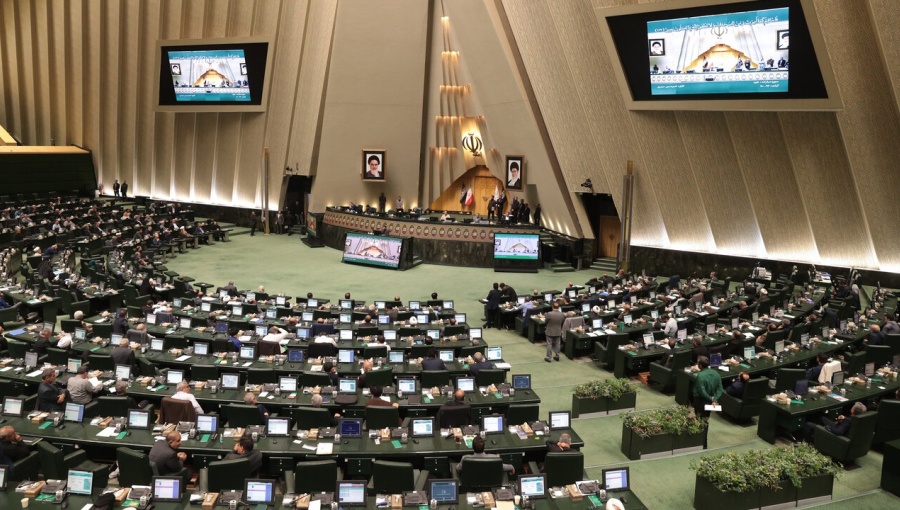
After a debate listening to both supporters and opponents, parliamentarians voted overwhelmingly in favour of the bill, with 205 votes in favour. / bne IntelliNews
By bnm Tehran bureau July 27, 2025

Iran's parliament on July 27 approved a contentious government bill aimed at "Combating the Spread of Untrue News Content" in social media, ISNA reported.  

The legislation has drawn significant criticism from various quarters, with opponents arguing it undermines freedom of speech and contradicts President Masoud Pezeshkian's campaign pledges.

The bill's passage comes just after Iran's 12-day conflict with Israel, leading many to view it as a governmental move to further tighten controls on public freedoms in response to the recent crisis. Earlier, a directive proposing freer internet access for certain businesses also sparked controversy, with critics labelling it a discriminatory and tiered internet service.

A group of lawmakers had previously voiced their concerns directly to the President, criticising the bill for its potential to restrict freedom of expression, threaten independent media, and weaken the country's social media space.

Prominent journalist and social activist Abbas Abdi, writing in Etemad Newspaper, argued that the bill's practical effect would be to prohibit freedom and monopolise news in the hands of the government. He stated this would be "the biggest blow to the truth," suggesting it would not prevent lies or rumours but rather spread them.

Former telecommunications minister Mohammad Javad Azari Jahromi echoed these concerns on his Telegram channel, stating that freedom of expression would "very highly probably" be violated due to the bill's broad definitions and disproportionate penalties. He sharply added, "This was not the president's promise to the people!"

Mohsen Borhani, in a detailed critique published in Shargh newspaper, highlighted several flaws. He pointed out that the bill's vague phrasing could lead to subjective interpretations when dealing with social media activists. Also, replacing "spreading lies" with "untrue content" significantly expands criminalisation. Borhani explained that even if someone conveys part of the truth but not the entire truth, they could still be accused of disseminating "untrue content" and face severe penalties.

Borhani also condemned the significantly harsher punishments introduced by the bill. Penalties, previously ranging from three months to two years for "spreading online lies," have now been increased to six months to two years, with the potential to escalate to two to five years, five to ten years, and even ten to fifteen years under easily met conditions. Alarmingly, Article 14 reportedly suggests that cases should first be investigated for "corruption on earth," which could potentially lead to the death penalty.

Regarding the social consequences, Borhani warned that the bill would induce "conservatism and silence" across society. He believes individuals will avoid commenting for fear of "possible slippage and heavy punishment," leading to a silence that he describes as the beginning of "social degeneration."

Despite the widespread criticism, the government has defended the bill, asserting that its passage does not impede freedom of expression but rather implements several principles of the Constitution. It argues that the conditions for the law's application are set out with strict detail to ensure it does not restrict free speech.

After a debate listening to both supporters and opponents, parliamentarians voted overwhelmingly in favour of the bill, with 205 votes in favour, 49 against, and 3 abstentions out of 257 members present. 

COMMIZAR ZELENSKY SHADOW BOXING

Kyiv mayor Klitschko and former president Poroshenko face criminal charges

Kyiv mayor Klitschko and former president Poroshenko face criminal charges
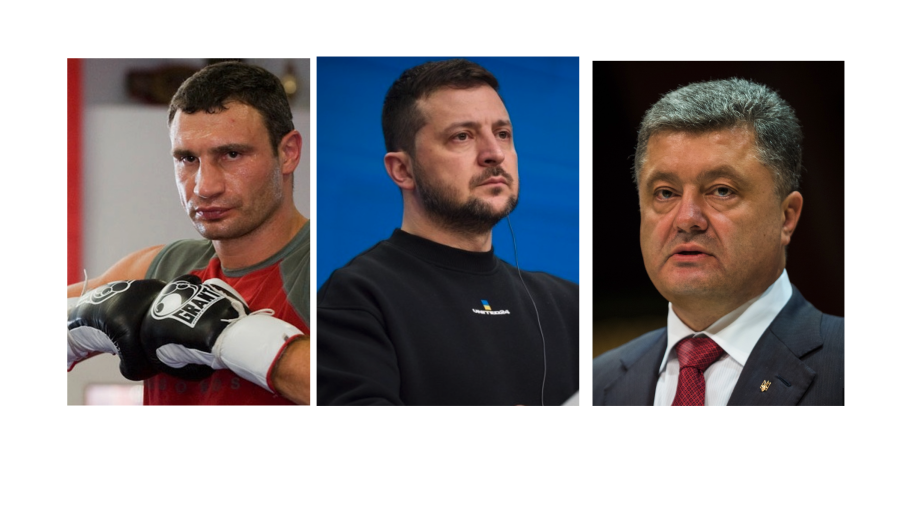
Boxer and KyivMayor Vitali Klitschko. Ukraine's President Zelenskiy. Former President Petro Poroshenko. / bne IntelliNews
By Ben Aris in Berlin July 25, 2025

Ukrainian President Volodymyr Zelenskiy has chosen to end what was probably his worst week in office since he was elected in 2019 by sparking a fresh scandal. Prosecutors are preparing criminal charges against two of his biggest political rivals: former President Petro Poroshenko and Kyiv Vitali Klitschko.

Long-standing charges of Zelenskiy becoming increasingly authoritarian have snowballed in just the last few weeks, to reach an apex on July 22 when his party rushed through in a single day a Law 21414 that guts Ukraine’s anti-corruption reforms.

The first anti-government demonstrations since the start of the war appeared on the streets of Kyiv, before Zelenskiy could even sign it into law. As the demonstrations swelled the next day, threatening to turn into a third Maidan, the president was forced into a humiliating climbdown, promising to introduce another law that would ensure the independence of the anti-corruption organs.

Law 21414 came after a growing crack down on the National Anti-Corruption Bureau of Ukraine (NABU) and Specialized Anti-Corruption Prosecutor’s Office (SAPO) – the two EU-backed independent organs tasked with investigating and prosecuting corruption in the government – by the Ukrainian Security Service (SBU), which is directly under the president’s control.

Just as it appeared that Zelenskiy was retaking control of the situation, a new flashpoint has flared up.

Ukrainian prosecutors are preparing criminal cases against former world boxing champion and Kyiv Mayor Vitalii Klitschko as well as former President Petro Poroshenko, according to a member of the Verkhovna Rada, Vedomosti reported on July 25.

Both are bitter Zelenskiy rivals. The president defeated Poroshenko in an emotional 2019 election campaign, and he has been trying to strip Klitschko of his executive control over the running of the capital for years. Both are outspoken public critics of Zelenskiy and his administration and would be potential rivals if elections are eventually resumed.

“Charges are being prepared against Poroshenko, I think that [Prosecutor General] Ruslan Kravchenko will sign them. Charges are being prepared against Klitschko, I think that Ruslan Kravchenko will sign them,” Verkhovna Rada deputy Anna Skorokhod said in an interview with Ukrainian political analyst Ruslan Bizyaev, Vedomosti reported on July 25.

One of the main objections to Law 21414 is that it gives the General Prosecutor Kravchenko complete discretion over all investigations – including those of NABU – empowering him to block investigations into the government. Kravchenko is also a presidential appointee and under the direct control of Zelenskiy.

The move comes amid mounting tensions between the presidential administration and regional political figures. Klitschko has often accused the central government of undermining local authorities, whereas the decentralization of Ukraine’s government has been one of the big successes of the liberal governments that took over after the Revolution of Dignity in 2014. On July 19, he said that Zelenskiy is not in communication with local officials. In an earlier interview with The Times, Klitschko warned that Ukraine already “stinks” of authoritarianism under Zelenskiy’s leadership.

In addition to the recent accusations that the SBU has been targeting anti-corruption officers and prominent civil society activist, Klitschko adds new charges that the Zelenskiy administration is also increasingly removing city mayors that are not loyal to the president’s office, claiming they are “obstacles to the centralization of power.”

Poroshenko, who served as Ukraine’s president from 2014 to 2019, has also been under attack by Zelenskiy’s administration. In February, the National Security and Defence Council of Ukraine imposed sanctions against him and he has been accused of treason. Reacting to the announcement on his Telegram channel, Poroshenko said the council had made an “unconstitutional, politically motivated decision.”

No formal charges have yet been filed, the Russian daily Vedomosti reported, and the Prosecutor General’s Office has not commented publicly on the allegations.