Wednesday, August 20, 2025


Foster care timing may affect children’s school performance


Q&A with Child Development Journal Authors


Society for Research in Child Development


Research shows that early childhood maltreatment is associated with significant delays in social and cognitive development. Unfortunately, according to the United States Department of Health and Human Services, children under age one face the highest risk of maltreatment, particularly neglect. The Child Protective Services (CPS) system is responsible for responding to maltreatment and preventing its recurrence. Most children with substantiated maltreatment reports remain with their parents, and CPS provides services to the parents (including substance use treatment or parenting classes) to rectify the conditions that led to maltreatment. Most foster care entries occur during early childhood, from the newborn period to five years old, but most research on foster care is focused on older children. Debate over the impacts of foster care has persisted for many years, yet little attention has been paid to the timing of children’s entry into foster care.

To remedy the gap in literature, researchers from the University of North Carolina at Greensboro and the Pennsylvania State University followed 8,795 Wisconsin children referred to CPS during their first year of life from birth until third grade. They examined the associations between the age of first foster care placement and school test scores, exposure to punitive discipline (suspension), and chronic absenteeism. The findings suggest that compared to no foster care intervention, foster care during early infancy is related to a higher likelihood of demonstrating basic or above reading skills and a lower likelihood of chronic absenteeism.

The study which was comprised of 51% male; 47% white, 21% Black, 16% Hispanic, and 16% other race/ethnicity, controlled for factors that may affect both foster care placement and educational outcomes, such as family structure, participation in poverty programs, disability, and maternal age. Researchers examined the following questions: compared with CPS-involved children who never experienced foster care by age five, how is foster care entry before age six months, at six-24 months, and at two-four years associated with third grade academic outcomes (math and reading tests, discipline, and chronic absenteeism). This study also explored racial disparities in foster care outcomes. Early childhood (especially infancy), is a highly sensitive period for cognitive and social development that affects later school performance and the change in environment provided by foster care –whether positive or negative – may be more impactful at younger ages. Improved school outcomes for children experiencing early-life foster care may reflect the fact that children receive more developmental and preventive health care services in foster care and there are a broader array of professionals monitoring their well-being. 

This research was featured in a new Child Development article with authors from Dr. Kierra Sattler from the University of North Carolina at Greensboro and Drs. Sarah Font and Carlomagno Panlilio from Pennsylvania State University in the United States. The Society for Research in Child Development (SRCD) had the opportunity to speak with the author team to learn more about the research. 

SRCD: Did anything in the results surprise you? 

Author team: We were surprised that the positive associations between early-life foster care and children’s academic outcomes were concentrated among Black children, with limited benefits for white children. These findings require cautious interpretation, given the uniquely traumatic history of Black families in America and the persistent racialized residential segregation and income inequality in Wisconsin. We also note that within our sample of infants reported to CPS – a distinctly disadvantaged population -- there were substantial disparities in family context for Black and white children, including family structure, maternal age, and anti-poverty program participation.

SRCD: Can you please explain how this research might be helpful for families, policymakers and the Child Protective Services system?

Author team: We believe these results are helpful for multiple audiences in several ways. First, there is large concern about the potential negative impacts of foster care on children who come into contact with CPS early in life that include facing substantial development threats that can disadvantage later academic outcomes. In our specific sample of young children who were the subject of a CPS investigation by age one in Wisconsin, we do not find that foster care placement is negatively related to academic outcomes. On the contrary, we found that early placement was linked to positive academic outcomes and lower absenteeism. Second, we think these findings can be helpful for informing home-based services. When children are placed in foster care, they are more likely to have many different providers checking on them, ensuring that they attend school, or engaging them in intervention services. However, children who remain in-home receive comparatively fewer support and resources, as agencies are primarily focused on safety monitoring and providing rehabilitative services to parents. This highlights an important area of growth for multidisciplinary systems to ensure that similar wrap-around services that include home visiting and early intervention services are provided. This underscores the need to connect children who remain in-home with targeted evidence-based services to mitigate risks to children’s development and learning.

SRCD: Can you please address some of the research limitations? 

Author team: It is important to acknowledge that our data were drawn from only one state, Wisconsin, and our results may not apply in other locations. Of particular relevance is the racial context of Wisconsin, in which the majority of Black children reside in a single county, Milwaukee, which is highly segregated. In addition, our data lacked information on the types, amount, and effectiveness of services offered to and accepted by families, both in-home and in foster care.

SRCD: What’s next in this field of research?

Author team: There remain many questions on the impacts of foster care on children and families. Based on this work, an important follow-up inquiry would be to understand the quantity, duration, type, and quality of services that parents and children receive at home and in foster care. It is unclear from our analysis whether these services – or other factors related to caregiving and the home environment – explain the associations between early-life placement in foster care and children’s developmental and academic well-being. 

This research was funded by the National Institutes of Health’s Eunice Kennedy Shriver National Institute of Child Health and Human Development at the University of Wisconsin-Madison and The Pennsylvania State University.

Summarized from an article in Child Development, “Foster care entry and later academic achievement among infants involved with child protective services,” by Sattler, K. (University of North Carolina at Greensboro), Font, S. and Panlilio, C. (The Pennsylvania State University). Copyright 2025 The Society for Research in Child Development. All rights reserved. 

Does red meat alter gut bacteria to aggravate inflammatory bowel disease?


Wiley


Epidemiological studies have revealed a strong correlation between red meat consumption and the development of inflammatory bowel disease. In a new study published in Molecular Nutrition and Food Research that was conducted in mice, red meat consumption caused an imbalance of bacteria in the intestinal microbiota. 

Investigators fed mice various kinds of red meat including pork, beef, and mutton for two weeks, and then they induced inflammation in the colon. Intake of these three red meat diets exacerbated colonic inflammation. Analyses revealed an overproduction of pro-inflammatory cytokines and infiltration of immune cells in the colon of mice fed red meat diets. 

These diets led to a marked decrease in the relative abundance of StreptococcusAkkermansiaFaecalibacterium, and Lactococcus bacterial strains, coupled with an increase in Clostridium and Mucispirillum.  

“This study contributes to improving food innervation approaches for inflammatory bowel disease treatment and indicates a close crosstalk among diet, gut microbiota, and intestinal immunity,” said co–corresponding author Dan Tian, MD, PhD, of Capital Medical University, in China. 

URL upon publication: https://onlinelibrary.wiley.com/doi/10.1002/mnfr.70203


Additional Information
NOTE:
 The information contained in this release is protected by copyright. Please include journal attribution in all coverage. For more information or to obtain a PDF of any study, please contact: Sara Henning-Stout, newsroom@wiley.com.

About the Journal
Molecular Nutrition and Food Research is a food science journal devoted to health, safety and all aspects of molecular nutrition, including nutritional biochemistry, nutrigenomics, and metabolomics. With over 60 years of publishing high quality original research, the journal aims to advance the field in a sustainable manner. Our focus is on food and nutrition at the molecular level, attracting a wide readership of researchers studying bioactivity, immunology, microbiology and chemistry in this field.

About Wiley     
Wiley is one of the world’s largest publishers and a trusted leader in research and learning. Our industry-leading content, services, platforms, and knowledge networks are tailored to meet the evolving needs of our customers and partners, including researchers, students, instructors, professionals, institutions, and corporations. We empower knowledge-seekers to transform today’s biggest obstacles into tomorrow’s brightest opportunities. For more than two centuries, Wiley has been delivering on its timeless mission to unlock human potential. Visit us at Wiley.com. Follow us on FacebookXLinkedIn and Instagram.


Should additional food allergens have mandatory labelling due to anaphylaxis risk?


Wiley


The European Regulation list on mandatory labelling of foods includes 14 allergenic foods. Research published in Clinical & Experimental Allergy has identified eight additional foods frequently involved in food-induced anaphylaxis. 

The research was based on an analysis of food-induced anaphylaxis cases reported to the Allergy Vigilance Network from 2002–2023. Allergenic foods involved in ≥1% of cases and not included in the European Regulation list included goat’s and sheep’s milk (2.8% of cases), buckwheat (2.4%), peas and lentil (1.8%), alpha-gal (1.7%), pine nut (1.6%), kiwi (1.5%), beehive products (1.0%), and apple (1.0%). 

Due to their frequency, severity, recurrence, and potential for hidden exposure, the study’s investigators propose that four of these—goat’s and sheep’s milk, buckwheat, peas-lentil, and pine nut—be considered for inclusion on the European mandatory labelling of foods list. The recurrence rate (the same allergen causing several anaphylactic accidents in the same patient) for these foods ranged from 7.3% for peas–lentil to 56% for goat’s and sheep’s milk. 

“In our series of nearly 3,000 food anaphylaxis cases, 413 were caused by one of these eight ‘emerging food allergens’ without mandatory labelling, with 2 deaths,” said corresponding author Dominique Sabouraud-Leclerc, MD, of CHU Reims, in France. "We therefore believe it is time to review the list of the 14 foods with mandatory labelling to include at least the most severe of these emerging food allergens." 

URL upon publication: https://onlinelibrary.wiley.com/doi/10.1111/cea.70130


Additional Information
NOTE:
 The information contained in this release is protected by copyright. Please include journal attribution in all coverage. For more information or to obtain a PDF of any study, please contact: Sara Henning-Stout, newsroom@wiley.com.

About the Journal
Clinical & Experimental Allergy is the official Journal of the British Society for Allergy & Clinical Immunology, publishing clinical and experimental observations in disease in all fields of medicine in which allergic hypersensitivity plays a part. Clinical & Experimental Allergy strikes an excellent balance between clinical and scientific articles and carries regular reviews and editorials written by leading authorities in their field.

About Wiley     
Wiley is one of the world’s largest publishers and a trusted leader in research and learning. Our industry-leading content, services, platforms, and knowledge networks are tailored to meet the evolving needs of our customers and partners, including researchers, students, instructors, professionals, institutions, and corporations. We empower knowledge-seekers to transform today’s biggest obstacles into tomorrow’s brightest opportunities. For more than two centuries, Wiley has been delivering on its timeless mission to unlock human potential. Visit us at Wiley.com. Follow us on FacebookXLinkedIn and Instagram.

LAVENDER & GREEN

Does LGBTQ+ workplace inclusion impact a company’s environmental performance?


Wiley


D.E.I. & E.S.G


An analysis in Business Strategy and the Environment reveals that among U.S. firms, those with stronger LGBTQ+ inclusion have higher environmental performance scores and greater renewable energy consumption.  

In the analysis of 2010–2023 data on 898 firms, this relationship was partially mediated by environmental innovation, indicating that LGBTQ+ inclusive workplace practices enhance environmental outcomes by fostering innovation.  

Investigators also found that firms headquartered in states that recognized same-sex marriage prior to the Obergefell v. Hodges case (which ruled that the fundamental right to marry is guaranteed to same-sex couples) demonstrate superior environmental performance.  

“Our findings show that workplace inclusion is not just a social or ethical imperative, it can also be a catalyst for innovation and environmental progress,” said corresponding author Erhan Kilincarslan, PhD, of the University of Huddersfield, UK. “If we want companies to achieve ambitious sustainability goals, fostering an inclusive culture should be part of the strategy.”  

URL upon publication: https://onlinelibrary.wiley.com/doi/10.1002/bse.70134


Additional Information
NOTE:
 The information contained in this release is protected by copyright. Please include journal attribution in all coverage. For more information or to obtain a PDF of any study, please contact: Sara Henning-Stout, newsroom@wiley.com.

About the Journal
Business Strategy and the Environment is a leading sustainable business journal aiming to advance the understanding of green business strategies for improving the natural environment. Covering topics including corporate environmental management, eco-innovation, green finance, and the circular economy, the journal welcomes contributions which examine the role of environmental regulation and policy in the business sector.

About Wiley     
Wiley is one of the world’s largest publishers and a trusted leader in research and learning. Our industry-leading content, services, platforms, and knowledge networks are tailored to meet the evolving needs of our customers and partners, including researchers, students, instructors, professionals, institutions, and corporations. We empower knowledge-seekers to transform today’s biggest obstacles into tomorrow’s brightest opportunities. For more than two centuries, Wiley has been delivering on its timeless mission to unlock human potential. Visit us at Wiley.com. Follow us on FacebookXLinkedIn and Instagram.

Russia Offers ExxonMobil a Path Back to Sakhalin

  • Putin’s amendments to Sakhalin-1 ownership melt the ice for the return of ExxonMobil — but only if sanctions thaw.

  • Sakhalin-1, once a symbol of global energy cooperation, now dangles as a diplomatic lever in US-Russia talks.

  • Russia shows readiness to see foreign partners back — under stricter terms and a new power dynamic.

On August 15, just as the much-anticipated meeting between President Trump and President Putin was taking place, a development of potentially far-reaching consequences but little immediate attention surfaced in Moscow. President Putin signed an alteration to his 2022 decree that had transferred the Sakhalin-1 project fully under Russian jurisdiction, this time supplementing it with conditions for the possible return of foreign companies to the venture. The change carries more weight than the quiet timing suggested. At its core lies Russia’s willingness to signal that U.S. companies — and ExxonMobil in particular — could once again have a place in one of Russia’s most strategic energy projects.

Sakhalin-1 is no ordinary asset. Located on the northeast shelf of Sakhalin Island, it consists of the Chayvo, Odoptu and Arkutun-Dagi fields, with recoverable reserves estimated at 2.3 billion barrels of oil and 17.1 trillion cubic feet of natural gas. ExxonMobil entered the project under a production-sharing agreement in the 1990s, after the fields – first discovered in the 1970s – had been left undeveloped for decades. Commercial production began in 2005, with ExxonMobil as operator. At its launch, the project set a world record in extended-reach drilling, reaching 11,282 meters (37,320 feet) with its Z-11 well back in 2007. The equity structure allocated 30% each to ExxonMobil and Russia’s Rosneft, with India’s ONGC Videsh and Japan’s SODECO each holding 20%.

Related: Energy Transition Stalls as Oil Super-Cycle Risks Return

For nearly two decades, this carefully balanced partnership not only demonstrated the viability of large-scale foreign involvement in Russia’s upstream sector but also withstood considerable geopolitical turbulence. Even the 2014 Crimea crisis, which unleashed the first wave of Western sanctions against Moscow, failed to derail Sakhalin-1, despite widespread speculation that the project’s multinational framework would become unfeasible. Yet what it survived in 2014, it could not withstand in 2022. With the outbreak of war in Ukraine and the far more sweeping sanctions that followed, ExxonMobil announced its withdrawal in March, just weeks after hostilities began, triggering a collapse in production from 220,000 b/d to just 10,000 b/d, grinding to a near halt within months. By April, Exxon booked a $4.6 billion impairment charge tied to Sakhalin-1, underscoring the scale of its retreat.

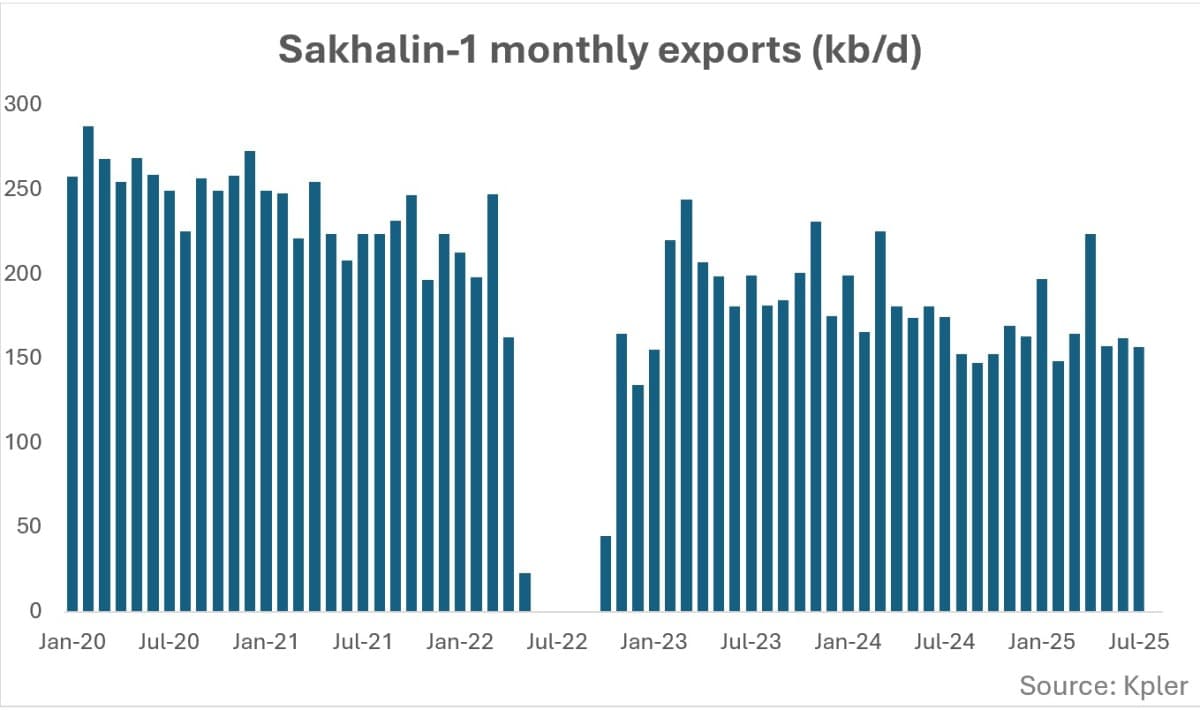
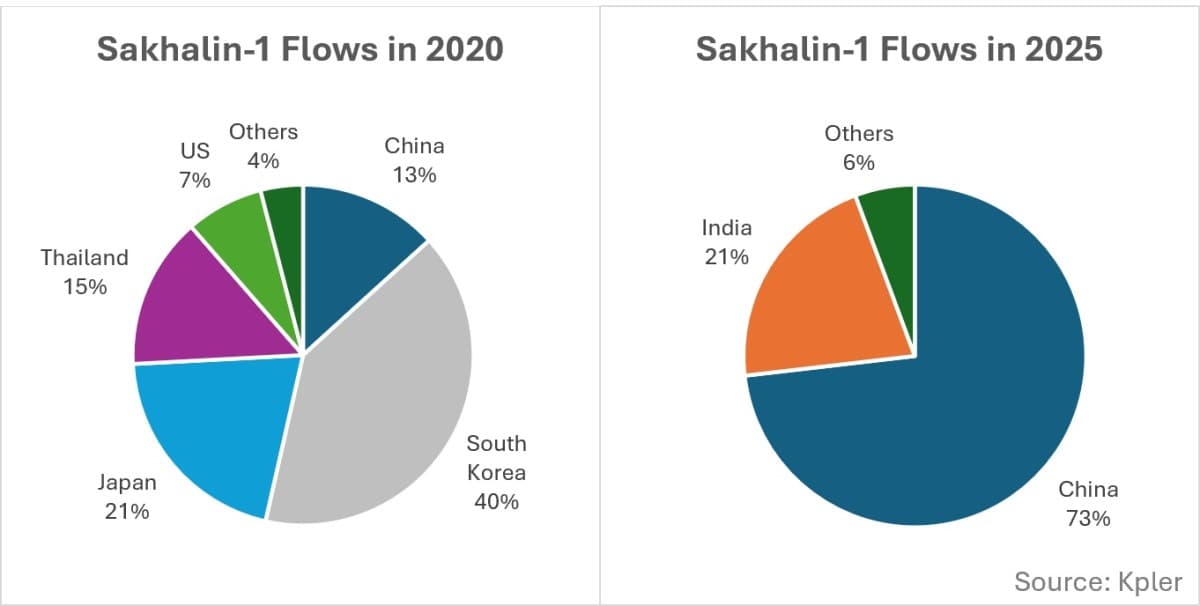
Exports also crashed. Annual shipments of Sakhalin-1 crude fell from 229,000 b/d before the war to 98,000 b/d in 2022, according to Kpler data. For four straight months — June through September — no exports left the terminal. Flows later recovered to 198,000 b/d but still have not reached the pre-war volumes, as sanctions complicated logistics and buyers grew more cautious. Before 2022, the crude had a diverse customer base, including South Korea, Japan, Thailand, China, and even the United States. By 2023, only India and China remained, with a small volume reaching Pakistan in 2024. Today, China has emerged as the largest buyer, taking in 118,000 b/d in 2025 to date.

This reshaping of trade flows coincided with a fundamental shift in the project’s ownership structure. Putin’s first decree on 7 October 2022 formally transferred Exxon’s stake into Russian hands, ending its tenure as the project’s lead. Exxon had explored the option of selling its 30% stake to Indian partners, but Moscow intervened, seizing the equity and placing it in a new state-backed entity, Sakhalinmorneftegaz-Shelf. India’s ONGC and Japan’s SODECO opted to remain. Exxon, for its part, viewed the forced transfer as hostile and unfair, but had little recourse.

Three years later, Moscow decided to soften its uncompromising stance. The amendment issued on 15 August 2025, reopened the door to foreign participation – but only under strict conditions. Partners may reclaim their shares if they succeed in lifting or mitigating sanctions that constrain the project, securing agreements for the supply of foreign-made equipment and spare parts, establishing new technical cooperation deals, and transferring previously accumulated funds from liquidation accounts into the new operator. In practical terms, Russia is signaling a willingness to reengage with foreign stakeholders, but only on terms that advance its own strategic and operational needs. The timing of the decree, however, suggests that more is at play. Signed on the very day of the Trump–Putin meeting, the amendment reads less like a technical adjustment and more like a political gesture — an overt signal to Washington that Russia is prepared to welcome US partners back into Arctic oil development if the broader climate allows. For President Putin, it amounts to a calculated offering, a card placed on the table to prepare the ground for future negotiations and potential concessions.

Yet even if the American side were to reconsider its involvement in Russian Arctic projects, the playing field would look very different from when they first entered. ExxonMobil’s original involvement rested on a production-sharing agreement – a ownership regime that raised controversies when first introduced under President Boris Yeltsin in the 1990s. These agreements were widely criticized in Russia for granting overly generous terms to foreign investors, depriving the state of substantial revenue and limiting transparency in how contracts were awarded and implemented. By the mid-2000s, only two PSAs remained: Sakhalin-1 and Sakhalin-2. The latter became a case study in Moscow’s assertiveness when in 2006, Putin pressured foreign investors to sell a controlling stake to Gazprom. A revived Exxon role today would come under a new legal and commercial regime, one far more tilted in Russia’s favor.

That said, the significance of such a return could extend well beyond Sakhalin itself. If ExxonMobil were to re-enter this project, it could also signal a pathway back into Russia’s broader Arctic ambitions. In 2014, the US sanctions forced Exxon to abandon its joint Arctic exploration with Rosneft after the discovery of the giant Pobeda field in the Kara Sea. With proven reserves of 130 million tonnes of oil and 422 billion cubic meters of gas (and potentially much more), the find rivaled or exceeded resource bases in the Gulf of Mexico, Brazil’s and Alaska’s continental shelves. At the time, the project’s potential was labelled as transformational. A thaw in US-Russia relations that could enable Exxon’s possible return to Sakhalin could open the door to reviving such ventures, which remain some of the most promising untapped hydrocarbon prospects in the world.

For now, Putin’s August decree is a signal, not a deal. But it underscores how tightly the fate of strategic energy projects like Sakhalin-1 is bound to the arc of geopolitics. The legal structures, the buyers, the flows – all have shifted under sanctions and war. What Putin offered on August 15 was not simply a regulatory amendment. It was an invitation, timed to a pivotal political moment, hinting at how energy remains a currency of diplomacy as much as commerce.

By Natalia Katona for Oilprice.com

KLIMATE KRISIS KARMA

BP’s Whiting Refinery Hit by Storm Flooding and is Flaring

BP’s massive 440,000-barrel-per-day Whiting refinery—the largest in the U.S. Midwest—was forced into flaring late Monday after severe thunderstorms dumped heavy rain across northwest Indiana, flooding the site and surrounding neighborhoods. The company said in a statement that materials were being burned in the flare stacks to maintain safe operations and that response teams were on the ground to manage the situation.

BP has not clarified whether output has been curtailed.

The Whiting facility, perched on the southern edge of Lake Michigan just outside Chicago, is critical to regional fuel supply, producing gasoline, diesel, and jet fuel for much of the Midwest. Any disruption at Whiting typically ripples quickly into regional fuel markets, where inventories are already leaner than normal this summer.

The timing could hardly be worse for BP, which is still reeling from operational setbacks in Europe. In June, both crude units at its 400,000-bpd Rotterdam refinery went offline—one for planned maintenance, the other unexpectedly—leaving one of Europe’s largest fuel plants completely out of commission. That outage tightened refined product markets in the Atlantic Basin, helping to buoy margins but adding stress to BP’s downstream network.

Now, with Whiting hit by weather-related disruptions, BP finds itself facing reliability questions on both sides of the Atlantic. While thunderstorms are a far cry from structural failures, flooding at refineries can wreak havoc on power systems, wastewater treatment, and crude handling infrastructure. Even brief interruptions at facilities of this scale can leave refiners scrambling to rebalance feedstocks and products.

The Midwest, in particular, has limited replacement capacity should Whiting go down for any length of time, making it a perennial pressure point in U.S. fuel supply chains. With hurricane season still ahead and climate volatility increasingly a factor in energy operations, the storm will test just how fragile refining reliability can be—even for giants like BP.

By Julianne Geiger for Oilprice.com

$50 Million Safe Harbor Deal Bolsters Enphase’s Solar Growth Plans

Enphase Energy Inc. (NASDAQ:ENPH) has signed a new safe harbor agreement with a solar and battery financing company, expected to generate about $50 million in revenue. The deal, announced in early August, strengthens Enphase’s presence in the third-party ownership (TPO) segment, which covers leases and power purchase agreements for homeowners.

The agreement applies to Enphase’s U.S.-manufactured IQ8HC microinverters, ensuring they qualify for the federal investment tax credit and the domestic content bonus. By locking in these incentives, developers gain protection from future policy changes that could otherwise threaten project economics.

Ken Fong, Enphase’s senior vice president and general manager for the Americas and APAC, said these arrangements are essential for stability in a shifting policy landscape. “These agreements allow developers and financiers to move forward with confidence, safeguard project economics, and accelerate clean energy deployment,” he noted.

The move follows new guidance from the U.S. Treasury and IRS, which eliminated the long-standing “5% safe harbor” for large-scale projects. Developers of systems above 1.5 megawatts must now demonstrate measurable construction progress to secure credits, while smaller projects remain eligible under the older rules. The clarification buoyed renewable energy stocks earlier this month, with First Solar (NASDAQ:FSLR) surging over 10% and peers Sunrun (NASDAQ:RUN) and Nextracker (NASDAQ:NXT) also advancing.

For Enphase, the deal underscores its strategy of expanding into TPO financing structures and reinforcing its U.S.-made product line. The Fremont, California-based company has shipped more than 83 million microinverters across 4.9 million systems worldwide and maintains a strong balance sheet, with more cash than debt and a market cap of $4.7 billion.

Recent product rollouts—including the fourth-generation Enphase Energy System and the IQ8P microinverter shipments to Europe—highlight the company’s continued innovation. Analysts remain divided: while Oppenheimer maintains an “Outperform” rating despite lowering its target to $77, Jefferies cut its target to $28 with an “Underperform” view, citing near-term challenges.

Still, the safe harbor agreement adds momentum to Enphase’s clean energy growth strategy, positioning the company to benefit from U.S. policy incentives while managing regulatory uncertainty.