Wednesday, August 20, 2025


Industry managed forests more likely to fuel megafires


The odds of high-severity wildfire are nearly one-and-a-half times higher on industrial private land than in publicly owned forests. Reducing tree density mitigates megafire risk, even in extreme weather conditions.


University of Utah

High severity vs low severity fire fallout 

image: 

11 years after the 2007 Moonlight Fire. (Left) A patch of forest that experienced high-intensity fire. The mature trees are charred from root to tip. (right) A patch of forest that experienced low-severity fire. The char-marks up the base of the truck indicate the flames didn’t make it to the crown of the tree. In the high-severity patch, shrubs have taken over, preventing the forest from regenerating. 

view more 

Credit: Credit: Jacob Levine


The odds of high-severity wildfire were nearly one-and-a-half times higher on industrial private land than on publicly owned forests, a new study found. Forests managed by timber companies were more likely to exhibit the conditions that megafires love—dense stands of regularly spaced trees with continuous vegetation connecting the understory to the canopy.

The research, led by the University of Utah, University of California, Berkeley, and the United States Forest Service, is the first to identify how extreme weather conditions and forest management practices jointly impact fire severity.Leveraging a unique lidar dataset, the authors created three-dimensional maps of public and private forests before five wildfires burned 1.1 million acres in the northern Sierra Nevada, California.

In periods of extreme weather, stem density—the number of trees per acre—became the most important predictor of a high-severity fire. Even in the face of accelerating climate change, how we manage the land will make a difference.

“That’s a really hopeful finding because it means that we can adjust how we manage these landscapes to impact the way fires move through them,” said Jacob Levine, postdoctoral researcher at the U and lead author of the study. “Strategies that reduce density by thinning out both small and mature trees will make forests more robust and resilient to fire in the future.”

In a 2022 study, Levine and collaborators found that fire severity was typically higher on privately managed forests. They also discovered the risks extended to areas near to, but not owned by, private industry, threatening the wilderness, small landowners and urban areas in their shadow. This new study is the first to identify the underlying forest structures that make high-severity fires more likely in some areas than in others.

The study was published on Aug. 20, 2025, in the journal Global Change Biology.

Lidar unlocks forest structure secrets

Plumas National Forest, the study area in California’s northern Sierra Nevada, is emblematic of the wider trend of wildfire occurrence and severity. The region’s mixed conifer forests are adapted to periodic, low- to medium-severity fires that cleared vegetation, creating large spaces between clumps of trees. Efforts to increase timber resources led the U.S. government to implement fire suppression policies in the 1800s, including a ban on controlled burns that Indigenous People practiced for millennia. In the absence of natural fire cycles and Indigenous burning, modern forests have more fodder to fuel high-severity fires, defined as a fire that kills more than 95% of overstory trees. 

Plumas National Forest is a mosaic of private industrial and public ownership, and 70% of the study area was burned in five massive wildfires between 2019 and 2021, including the largest single fire in California’s recorded history, the Dixie Fire. Serendipitously, a unique dataset had been collected a year before the region burned. 

In 2018, the U.S. Forest Service, Geological Survey and National Aeronautics and Space Administration surveyed the Plumas National Forest and surrounding private land using airborne light detection and ranging (lidar) flights. The lidar sensors shoot billions of lasers at the landscape below, which bounce off the grass, shrubs, saplings, tree canopies and other structures in the forest with high precision.

“We have a really detailed picture of what the forest looked like immediately before these massive fires. It’s an unbelievably valuable thing to have,” Levine said. “Understanding the forest structures that lead to high-severity fire allows us to target mitigation strategies to get ahead of this massive fire problem while still producing enough timber to meet market demand.”

Private vs public management strategies

Timber companies are focused on maximizing profits and providing a sustainable source of wood, a valuable resource for society and economic engine for rural communities. Most practice plantation forestry—clear-cutting an area and replanting the trees in a tightly packed grid. After 80 to 100 years, they do it all again, leaving a patchwork of dense stands of trees of similar age and size.

“You can think about stacking a bunch of matches together in a grid—that’s going to burn a lot better than if you have those matches dispersed as smaller clumps,” Levine explained. “A bigger fire can easily reach the canopy in dense forests. Then it’s ripping through one tree after another, tossing out chunks of burning material miles in advance. It's a different story.”

The objectives of public lands are more varied, requiring management for grazing, recreation, restoration, timber production and wildlife corridors. They’re also beholden to the public, which stymies their ability to do active management. Environmental organizations often sue to stop proposed projects that would remove trees to thin down density. 

Although the study demonstrates that private industrial lands fare worse, both private and public agencies have much room for improvement to protect our nation’s forests. Most Sierra Nevada trees lack adaptations to recover from high-severity fires, leading to more and more of our forests turning into shrub and grasslands.

“This has major implications for timber, but also for carbon sequestration, water quality, wildlife habitat and recreation,” Levine said. “Shrub and grasslands can be beautiful, but when we think of the Sierra Nevada we picture majestic forests. Without major changes in forest management, future generations could inherit a landscape that looks very different than the one we cherish today.”

*****

Other authors include Brandon Collins of the U.S. Forest Service and University of California, Berkeley; Michelle Coppoletta of the U.S. Forest Service; and Scott Stephens of University of California, Berkeley.

The study, “Extreme weather magnifies the effects of forest structure on wildfire, driving increased severity in industrial forests,” was published on Aug. 20, 2025, in the journal Global Change Biology.

Forest ownership boundary in the Moonlight fire, showing a newly established plantation on private land (right).

Credit

Jacob Levine

Maps of individual trees within a small patch of study area. The colors correspond to the height of individual trees in privately managed (left) and publicly owned (right) land. The private land has many trees of the same heights (mostly yellow color, dense plantations established after recent clear cutting in gray), and the public land has a mix of different heights, from gray to red.

Credit

Levine et. al. (2025) Global Change Bio

WHITE SUPREMACIST

New Zealand soldier admits attempted espionage in country's first such conviction

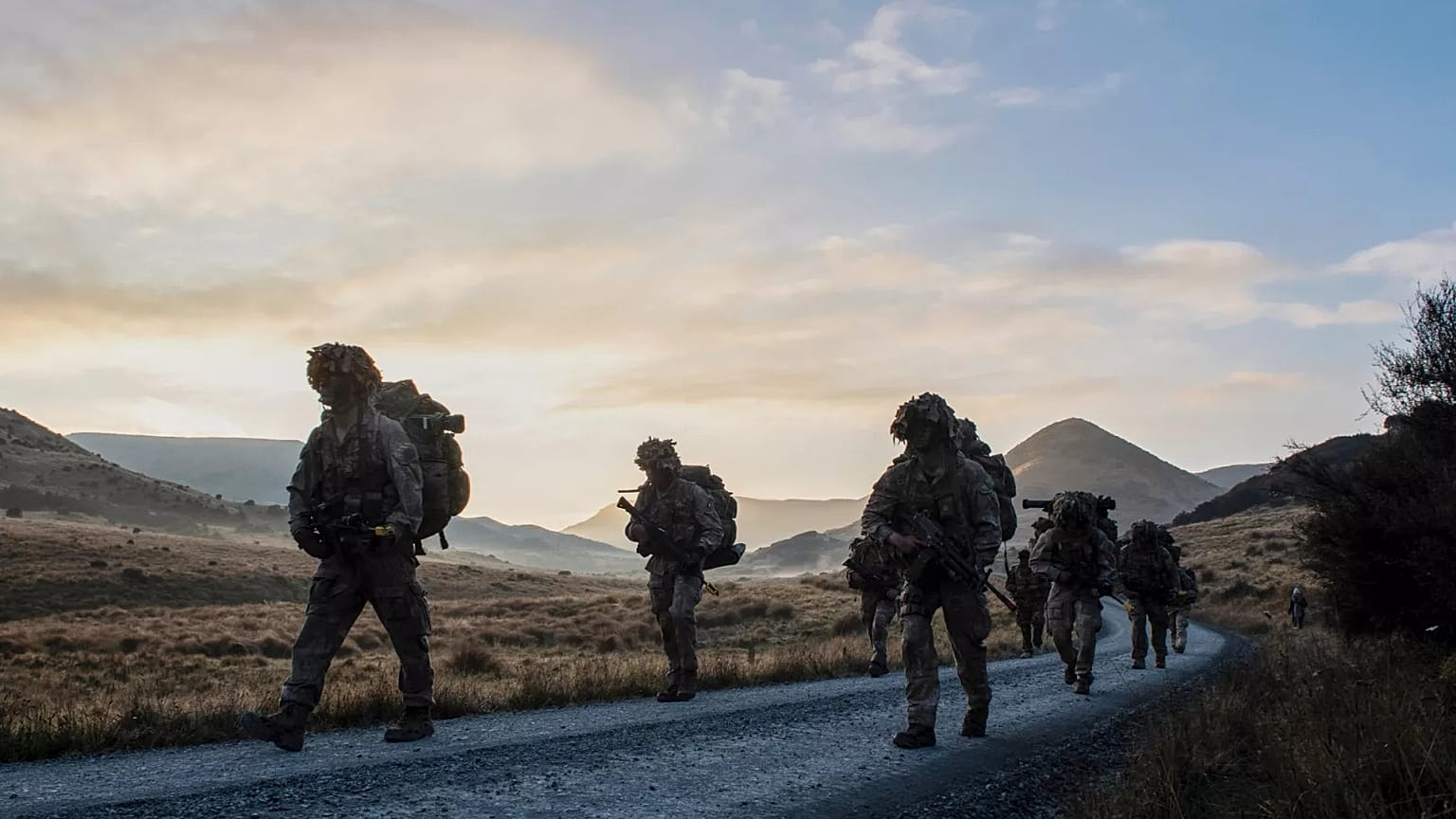
New Zealand army officer cadets move on exercise in the Waiouru training area in the central North Island of New Zealand, 6 May, 2022
Copyright AP Photo

By Gavin Blackburn
Published on 

The soldier cme to law enforcement attention as part of an operation after a 2019 terrorist attack on two mosques in Christchurch, when a white supremacist opened fire on Muslim worshipers, killing 51.

A New Zealand soldier who tried to spy for a foreign power has admitted to attempted espionage in a military court, in the first such conviction in the country's history.

The soldier's name was not revealed publicly, neither was the country he sought to pass secrets to.

Military court documents said the man believed he was engaged with a foreign agent in 2019 when he tried to communicate military information including base telephone directories and maps, assessments of security weaknesses, his own identity card and log-in details for a military network.

The wording of the charge said his actions were "likely to prejudice the security or defence of New Zealand."

He wasn't speaking to a foreign agent, but an undercover New Zealand police officer collecting intelligence on alleged right-wing extremist groups, documents supplied by the military court showed.

The soldier came to law enforcement attention as part of an operation that was established after a March 2019 terrorist attack on two mosques in Christchurch, when an Australian white supremacist opened fire on Muslim worshipers, killing 51.

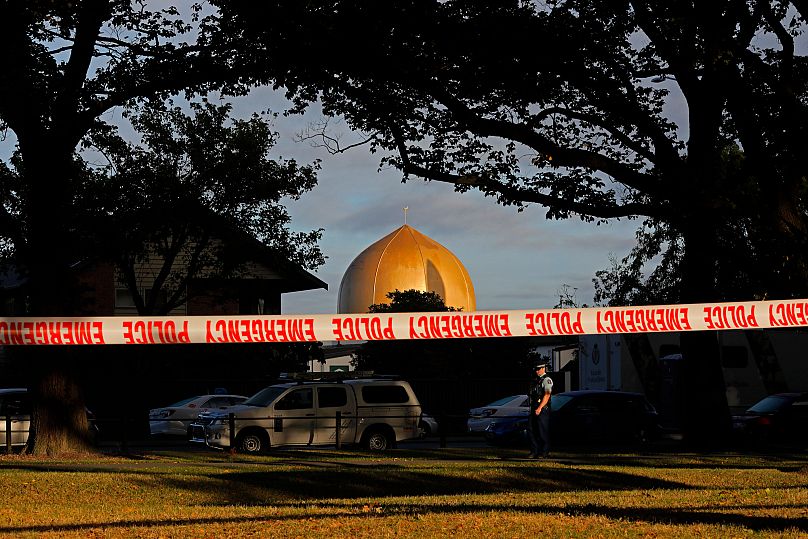
A police officer stands guard in front of the Masjid Al Noor mosque in Christchurch, 17 March, 2019
A police officer stands guard in front of the Masjid Al Noor mosque in Christchurch, 17 March, 2019 AP Photo

Officers spoke to the man twice about his involvement in a group, court documents showed, and after the government became aware he had expressed a desire to defect he was contacted by the undercover officer.

When the soldier’s hard drive was searched, investigators found a copy of Christchurch gunman Brenton Tarrant's livestreamed video of the massacre and a manifesto he published online before the killings.

Possession of either without permission is a criminal offence in New Zealand and the soldier, who admitted that charge too, joins several others convicted in New Zealand of having or sharing the terrorist's banned material.

In a statement read to the court by his lawyer, the man said the two nationalist groups with which he was involved were "no more than groups of friends with similar points of view to my own," according to Radio New Zealand (RNZ).

The lawyer, Steve Winter, added that his client denied supporting the Christchurch shooter’s ideology, RNZ reported.

The soldier, who was based at Linton Military Camp near the city of Palmerston North, also pleaded guilty to accessing a military computer system for dishonest purposes.

The amended suite of three charges replaced 17 counts levelled against him earlier in the proceedings.

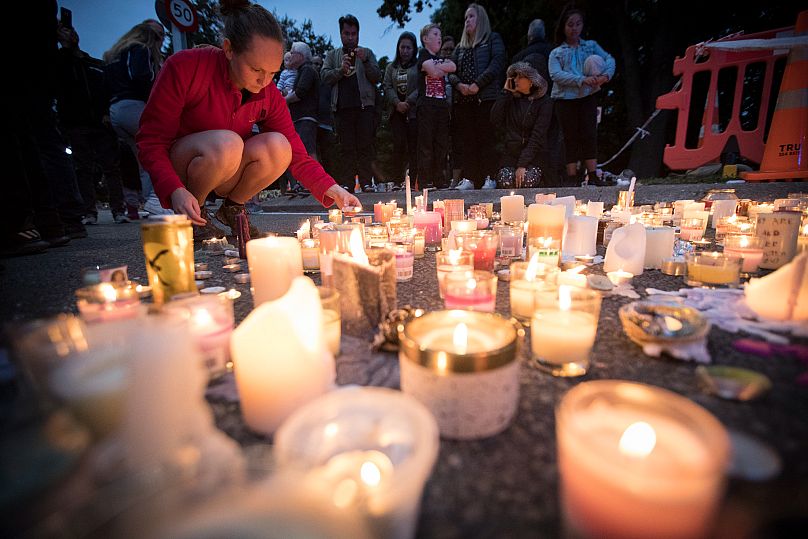
Candles are placed to commemorate victims of the shooting outside the Al Noor mosque in Christchurch, 18 March, 2019
Candles are placed to commemorate victims of the shooting outside the Al Noor mosque in Christchurch, 18 March, 2019 AP Photo

Each of the three charges he admitted carries a maximum prison term of either seven or 10 years in New Zealand. His sentence is expected to be delivered by a military panel within days.

The man was due to stand trial by court martial on the charges before he admitted the offences.

His was the first charge in a New Zealand military court for espionage or attempted spying. The last time such a case reached the civilian courts was in 1975, when a public servant was acquitted on charges alleging he had passed information to Russian agents.

A spokesperson for New Zealand's military said they would not comment until the proceedings against the soldier finished.

Additional sources 


Adaptation efforts like early warnings and preparedness have cut Europe’s flood deaths and losses

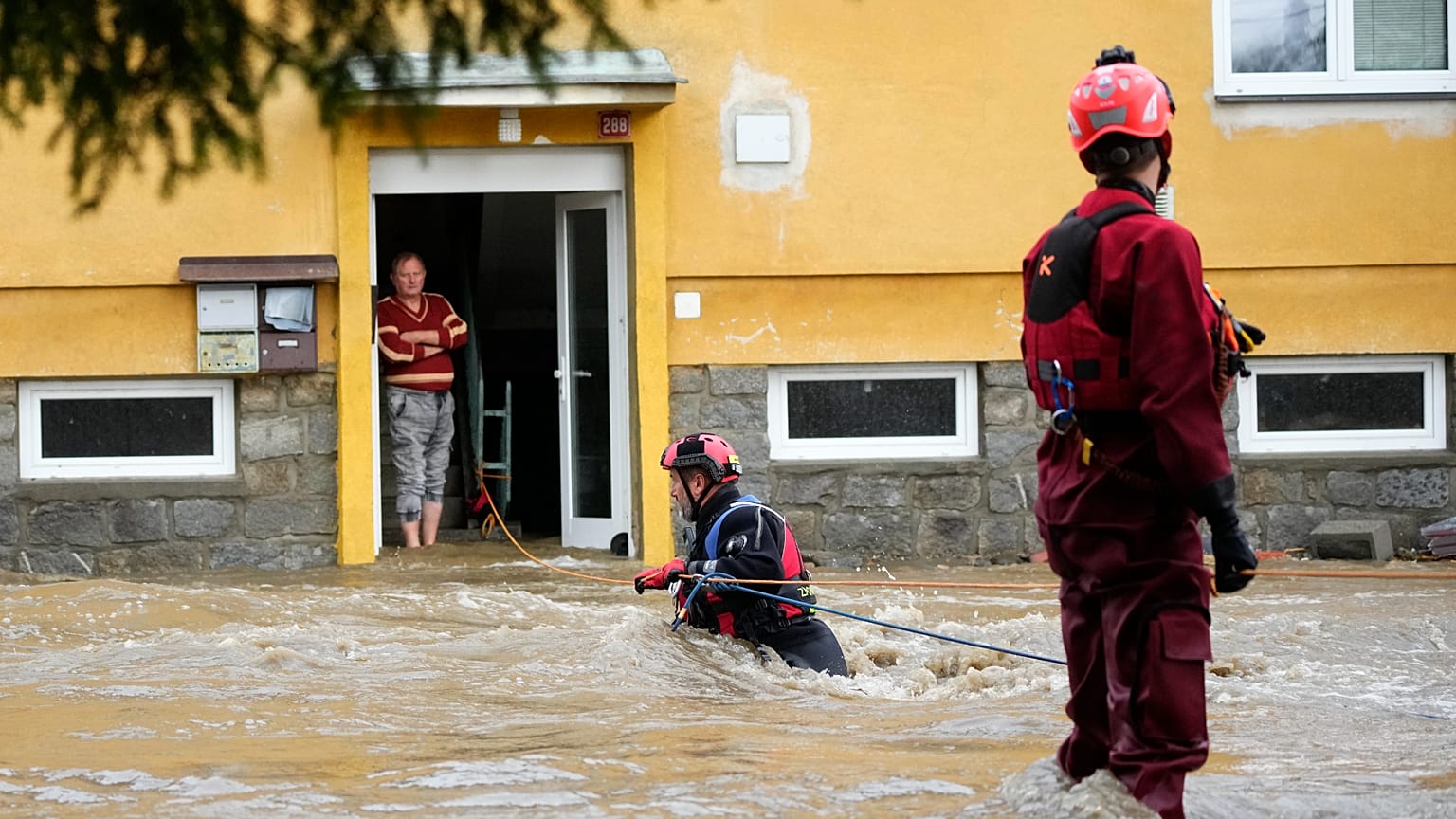
A resident waits to be evacuated from his flooded house in Jesenik, Czech Republic in September 2024.
Copyright AP Photo/Petr David Josek, File

By Euronews Green
Published on 

Researchers analysed more than 1,700 floods to untangle the effects of climate change, exposure, and adaptation.

Deaths from flooding in Europe have dropped by 52 per cent since 1950, thanks to solutions like early warning systems and emergency preparedness, a new study from the Potsdam Institute for Climate Impact Research (PIK) has found.

These kinds of non-structural adaptation measures have also cut economic losses from flooding by 63 per cent. This is despite the number of people affected by flooding in Europe increasing by 8 per cent due to climate change over the same period.

“Flood protection and other adaptation measures have largely offset the increasing flood risk from expansion into flood plains and climate change across the continent since 1950,” Dominik Paprotny, PIK researcher and lead author of the study, said in a press release.

“Vulnerability has been significantly reduced, but progress in adaptation has been slower in the past 20 years, indicating the need for additional efforts to prevent an increase in flood losses from climate change in the future.”

Scientists analysed decades of flooding data

Researchers looked at 1,729 floods that occurred across the continent between 1950 and 2020. They compared them in scenarios with and without climate and socioeconomic changes over the seven decades.

Using historical data about damage from these events, they were able to work out the level of protection offered by adaptations such as dikes, dams, early warning systems and changes to building regulations.

Total economic losses almost doubled from €37 billion between 1950 and 1960 to €71 billion in the past decade. The growth of gross domestic product means that the actual economic impact has decreased significantly in percentage terms, amounting to one-third of what it was in the 1950s.

In short, Europe’s GDP grew at a much faster pace than the economic damage from floods.

What is driving flood damage in Europe and what has helped reduce impacts?

Increased exposure to flooding - more people or buildings in flood-prone areas - was the biggest driver of rising flood damages.

Climate change has increased economic losses and affected populations by 8 per cent and fatalities by 1 per cent. Its impact is particularly prominent in northwestern and parts of southern and eastern Europe.

Other factors like urbanisation, population growth, GDP growth and changes in land use also had an impact.

A reduction in vulnerability was found to be the strongest overall mitigating factor. Measures like improved building standards, early warning systems and emergency preparedness cut impacts by between 39 and 63 per cent since 1950 and up to 75 per cent in the 2010s.

Flood protection infrastructure, including dams, dikes and levees, has also played a critical role. The study estimates that these structural defences have reduced the effect of flooding by between 14 and 21 per cent. In the most recent decade (2011–2020), this protective effect increased, reducing impacts by up to 38 per cent.

The study’s authors note that these figures are likely to be an underestimate too, and the analysis only included floods that had actually occurred, so those where flood defences were overwhelmed. They don’t account for events where floodwaters were entirely held back by these defences.

Adaptation has its limits

Though the research shows that adaptation methods have been effective, researchers warn that there are limits to the damage they can prevent.

“As warming increases, we are getting closer to those limits,” co-author of the study, Katja Frieler, said in a press release.

Europe is warming twice as fast as the global average, according to EU climate monitor Copernicus.

In the last four years, the continent has seen multiple particularly severe floods, including the Arh Valley floods in Germany in 2021. When the river burst its banks, almost 190 people died and whole villages were swept away, causing an estimated €33 billion in economic damage.

In 2024, Europe experienced its most extensive flooding in over a decade, Copernicus said in April. Almost one-third of its rivers swelled to bursting point during one of the wettest years since 1950.

Flooding in Valencia, Spain, in late October resulted in 232 deaths and total economic damage estimated to be around €10.7 billion.

Together, storms and floods killed more than 300 people last year and affected 413,000 more across the continent. They inflicted at least €18 billion in economic damage.

The study’s authors say it makes it important to keep track of the impacts of climate change and cut greenhouse gas emissions to keep them within manageable limits, alongside monitoring progress on adaptation measures.


Kneecap rapper Mo Chara to appear in UK court over alleged support for terror group

Kneecap rapper Mo Chara to appear in UK court over alleged support for terror group
Copyright AP Photo

By David Mouriquand
Published on 

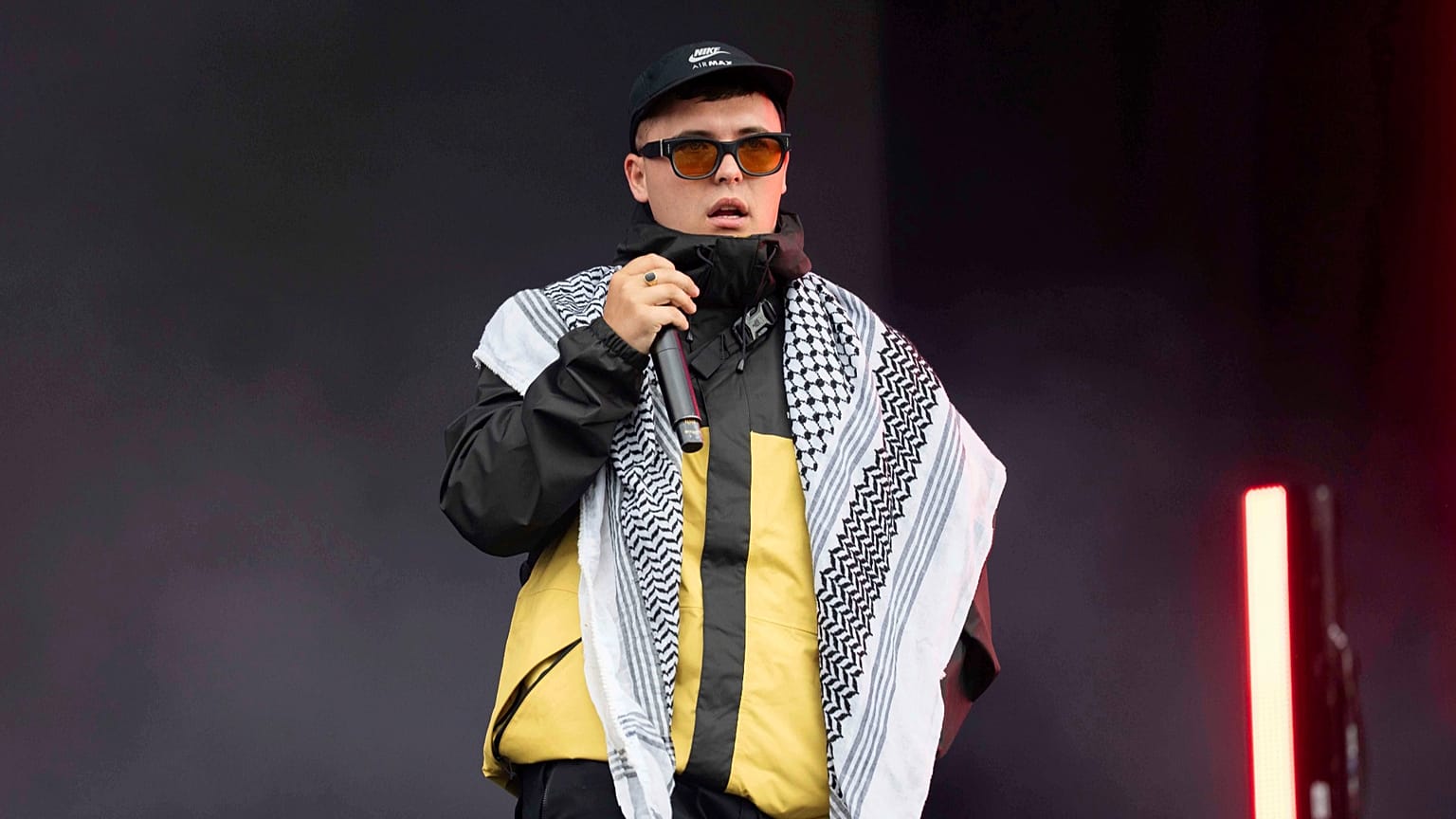
Kneecap member Mo Chara is scheduled to appear in court today in London. The Metropolitan Police has issued Public Order Act conditions for today’s court date, which has prompted Kneecap to react: "It is a distraction from war crimes that the British State support."

Kneecap member Mo Chara – real name Liam Óg Ó hAnnaidh – is scheduled to appear at the Westminster Magistrates Court today over allegedly displaying a Hezbollah flag onstage at a show last November. 

This will be his second appearance at the Westminster Magistrates Court for the Irish rapper, following an appearance on 18 June, after which he was released on unconditional bail

Today’s court proceedings will see fellow artists appear in support of Kneecap, reportedly including Nadine Shah and Maverick Sabre. 

Kneecap have been vocal supporters of Palestine in the Israel-Gaza conflict and sparked controversy for their repeated and defiant pro-Palestinian support during concerts and festivals. They have consistently denied supporting either Hamas or Hezbollah

Fans and supporters outside Westminster Magistrates Court in June AP Photo


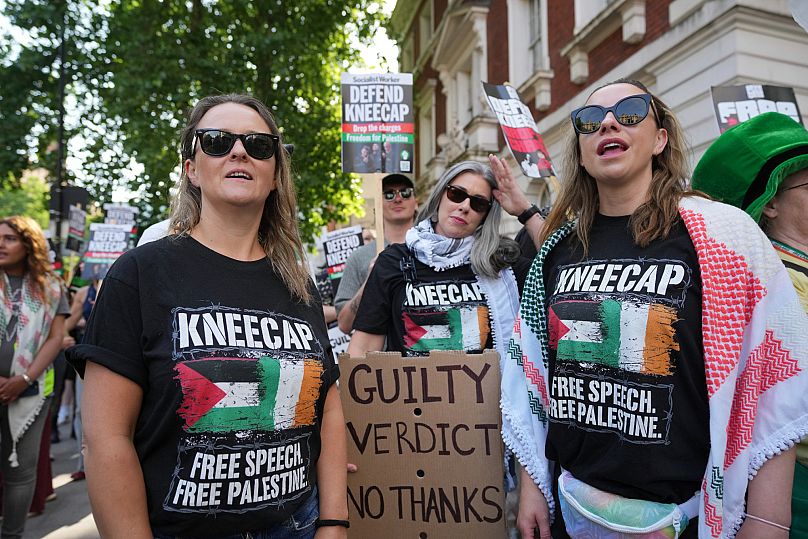
Many supporters and fans for both Kneecap and Palestine appeared at Westminster Magistrates Court in June, and this has prompted the Metropolitan Police to issue Public Order Act conditions for today’s court date. 

The conditions are being enacted to “prevent serious disruption being caused by a protest” outside the court, stated the Metropolitan Police.

Kneecap reacted to these Public Order Act conditions, writing on X: “We massively appreciate the support of what we know are the majority of the public, who can see this farce for what it is. It is a distraction from war crimes that the British State support. In our view this police action is designed to try and portray support for Kneecap as somehow troublesome.” 

Their post continued: “It is a calculated political decision the night before Mo Chara’s court appearance. There is no basis for this, our last hearing was entirely peaceful and a loving show of solidarity with the most disruptive attendees the right wing media. We know all of our supporters will be, but please go out of your way to be compliant with all instructions issued, irrespective of how pitiful. Free Palestine.” 

Mo Chara after June's court appearance AP Photo

Prior to the Metropolitan Police issuing the Public Order Act conditions, Kneecap shared another statement regarding Mo Chara’s last court appearance in June. 

“Since his last court appearance Israel has murdered another 9,000 Palestinians, mainly children and women,” Kneecap wrote. “Over 1,000 murdered whilst queuing for aid, starved due to their siege, whilst pitiful amounts of aid delivered by a sham agency controlled by Israel. Young children gunned down by snipers as they scramble for a bag of flour. Whole families, from babies to grandparents, murdered as they huddled in makeshift tents.”  

The band described the situation as “evil beyond any f*cking words” and urged people to “come down and show your support / solidarity outside the court” today.  

They ended their statement with: “British courts have long charged people from the North of Ireland with “terrorism” for crimes never committed. We will fight them. We will win.” 

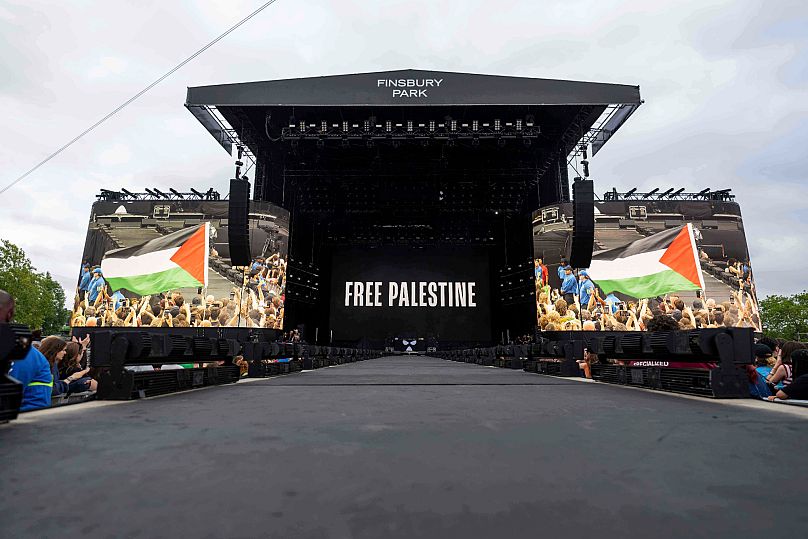
"Free Palestine" is displayed on screen prior to Kneecap performing in Finsbury Park on Saturday 5 July 2025, in London AP Photo

Kneecap were supposed to be headlining the last night of this year’s Sziget music festival but ended up being banned not just from the event but from Hungary for three years.

Hungarian Prime Minister Viktor Orbán announced last month that the trio were deemed a “national security threat” and officially banned from entering Hungary for “anti-Semitism and glorifying terror”.

Still, that didn’t stop the band from getting their voices heard loud and clear. Read more about it here.


Have Dutch police arrested Israelis for war crimes?


Copyright AP

By Lauren Walker
Published on 20/08/2025 


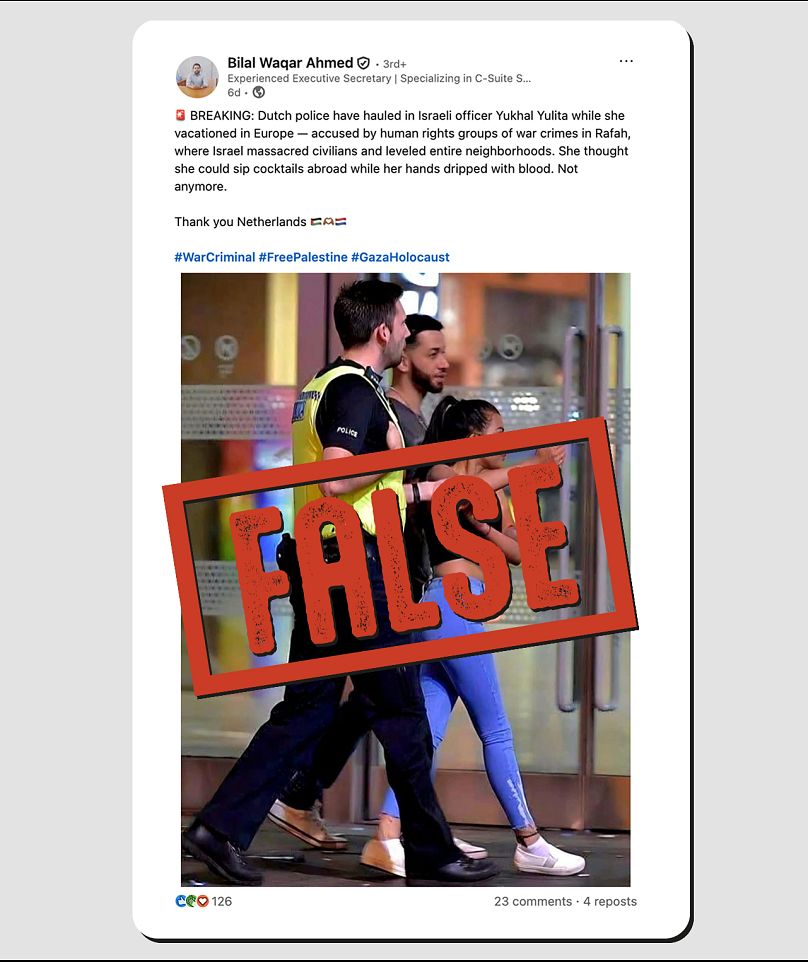
Several posts on social media allege that Dutch police have arrested an Israeli soldier and a major general. However, in both cases, the pictures show the arrest of other people in different countries.

Images have been shared on social media in recent days, allegedly showing Israeli military personnel being arrested by Dutch police

One photograph shows a police officer guiding a young woman by the arm. The caption shared alongside the picture in several posts states that it shows an Israeli named 'Yukhal Yulita' being arrested.

"BREAKING: Dutch police have hauled in Israeli officer Yukhal Yulita while she vacationed in Europe — accused by human rights groups of war crimes in Rafah, where Israel massacred civilians and levelled entire neighbourhoods," the post, shared on X, Facebook and LinkedIn, read.

LinkedIn/Euronews
LinkedIn/Euronews Social media posts claim this photograph shows the arrest of an Israeli soldier, but this is false.


Another picture claims to show Dutch police arresting a supposed Israeli major general called 'Shitan Shaul', who is allegedly a commander of the Armoured Corps. Again, social media users say he is being arrested on charges of committing war crimes in Rafah, near the Egyptian border.

A British partygoer and an Irish gangster

However, reverse image searches for both pictures revealed that the photographs feature different people who were arrested in other countries than claimed in the social media posts.

The image shared in posts related to the supposed arrest of Yukhal Yulita dates back to August 2016.

It featured in an article published at the time by the British tabloid paper The Daily Mail on people partying in the English city of Newcastle on the August Bank Holiday, which falls on the last Monday of August.

In the article, the photograph caption reads: "Police march a petite girl (right) away from the scene in the city centre".

Additionally, the label on the police officer's uniform states "police", while in the Netherlands, uniforms have the Dutch word for this role, "politie", written on them.

Meanwhile, the picture claiming to illustrate the recent arrest of 'Shitan Shaul' in fact dates to September 2022.

This photograph was included in articles by various media outlets on the arrest of "one of Europe's biggest money launderers", named by Irish newspapers as John Francis Morrissey, during a raid in southern Spain.

The operation was led by Spain's Guardia Civil—one of the country's two national police forces—of which an officer can be seen to the detainee's left in the photo, as well as the Irish Garda, of which the logo can be seen on the uniform of the person to the right in the picture.

None of the uniforms correlates with that of the Dutch police.

A spokesperson for the Dutch National Public Prosecutor's Office confirmed to Euroverify that the Dutch police had not arrested any Israeli citizen going by the name 'Yukhal Yulita' or 'Shitan Shaul'.

"No Israeli soldiers have been arrested in the Netherlands for committing war crimes," the spokesperson added.

Belgian arrests

The same photograph of the young woman being escorted by British police also featured in a viral social media post that again referred to her as an Israeli soldier named 'Yukhal Yulita'. The post stated she was one of two Israelis arrested in Belgium in connection with alleged war crimes.

"Belgian police have arrested two Israeli terrorists in connection with allegations of war crimes related to the conflict in Gaza," the post read. "The allegations include serious violations of international humanitarian law, such as the use of human shields and wanton destruction, with evidence drawn from the soldiers' social media activity."

Two members of the Israel Defense Forces (IDF) were indeed detained by police in Belgium after a complaint was filed against them by the Belgian-based NGO Hind Rajab Foundation and the Global Legal Action Network (GLAN). They claimed the two, allegedly members of the Givati Brigade, committed serious war crimes in the Gaza Strip.

The NGO monitors social media platforms to track Israeli soldiers on leave who post photos from abroad. These are usually preceded by footage from Gaza. Using these posts, the Hind Rajab Foundation calls on host countries to arrest and prosecute them.

The soldiers were attending the dance music festival Tomorrowland in Belgium, the Federal Public Prosecutor's Office—which received the complaints—confirmed. Here, they were reportedly seen waving their military unit's flag.

However, the image of the young woman shared in the viral social media post does not illustrate the Belgian arrest of these two soldiers.

The cases were referred to the International Criminal Court (ICC).

"The International Criminal Court is currently conducting an investigation into possible serious violations of humanitarian law in the Palestinian territories," the Public Prosecutor's Office said.

The court in The Hague has issued three public arrest warrants related to the Israel-Gaza conflict since the 7 October attacks.

The arrest warrants are for the highest commander of the military wing of Hamas, Mohammed Diab Ibrahim Al-Masri, Israeli Prime Minister Benjamin Netanyahu and former Israeli defence minister Yoav Gallant.

The Hind Rajab Foundation welcomed the decision to refer the cases to the ICC, stating this "confirms that the matter has reached the highest level of international legal attention".

However, the NGO was critical of Belgium, arguing it should have gone further.

"In our view, the suspects should not only have been arrested, but also detained and either prosecuted in Belgium or extradited to the ICC," a statement read. "Releasing individuals credibly accused of war crimes and crimes against humanity not only undermines public trust in justice, but risks reinforcing a sense of impunity and may enable those individuals to commit further atrocities."