Tuesday, October 14, 2025


Measles immunity 90% in BC’s Lower Mainland


Canadian Medical Association Journal


In British Columbia’s Lower Mainland, 90% of people have detectable antibodies against measles, indicating high vaccine coverage and population protection, according to a new study published in CMAJ (Canadian Medical Association Journalhttps://www.cmaj.ca/lookup/doi/10.1503/cmaj.250788.

Measles has been on the rise in North America, with more than 4000 cases reported in Canada as of August 2025, a fivefold increase over any full-year tally since Canada achieved measles elimination status in 1998. Measles is highly infectious, and herd immunity should be around 92% to 94% to prevent widespread circulation. Individuals born before 1970, during the time of endemic measles circulation, are considered immune through infection, while those born after the decline in measles circulation rely on vaccine-induced antibodies. Two doses of measles vaccine are recommended, with the first dose routinely given at 12 months and the second dose given at 4 to 6 years of age in BC.

In recent years, public health officials have expressed concern that the increase in vaccine hesitancy may be negatively affecting vaccine coverage. About 90% of the measles cases in Canada have involved unvaccinated people.

To gauge the risk of sustained measles transmission in the community at large, researchers analyzed blood samples collected in August 2024 from more than 1000 people within the most populated Lower Mainland region of BC. They found measles antibodies in about 90% of people overall, including 92% to 94% of 2- to 3-year-olds and 97% of 4- to 6-year-olds, reflecting high first- and second-dose measles vaccine coverage in children. Measles antibody levels were lower in older children, including those who had been due for their second dose of vaccine during the COVID-19 pandemic.

Virtually all adults aged 55 years or older but fewer than 75% of adults aged 20 to 39 years had detectable measles antibodies. The authors suggest that this may be due to a combination of factors, including a decline in vaccine-induced antibody with age that may be exacerbated in people vaccinated as infants who were born to previously infected mothers. Vaccinated people in whom antibodies cannot be detected likely still have some protection due to other components of the immune response.

“The observed epidemiology in BC and elsewhere in Canada indicates that current levels of population immunity are sufficient to suppress sustained or generalized measles transmission,” writes Dr. Danuta Skowronski, BC Centre for Disease Control and the University of British Columbia, Vancouver, BC, with coauthors. “This is supported by measles outbreaks that have been sporadic, self-limited, or centred on linked and largely nonvaccinated individuals or communities. … Ensuring high 2-dose coverage in the general population remains critical to elimination.”

The findings show that the vast majority of parents know the importance of vaccinating their children, with serosurveys helping to identify areas for improvement.

“Overall, our serosurvey in August 2024 identified a higher proportion of children with measles antibody, reflecting vaccine uptake, than vaccine coverage estimates would suggest. Our findings highlight missed documentation of administered measles vaccine doses and reinforce the importance of efficient and accurate systems to capture and confirm 2-dose coverage.”

“Periodic population-based serosurveys, interpreted within a public health context, can clarify estimates of vaccination coverage, inform vaccination catch-up and other program adjustments, and support measles elimination efforts overall,” concludes the investigative team.

Flood funds embezzlement leaves Filipinos at mercy of climate crisis

FRANCE24
Issued on: 13/10/2025 -

05:46 min
From the show


It’s one of the biggest corruption scandals the Philippines has seen since the final years of dictator Ferdinand Marcos. The government has admitted that 70 percent of the funds allocated for flood control measures have been embezzled since 2023, including a staggering eight billion euros in 2025 alone. Chloe Borgnon, Constantin Simon, Justin McCurry, and Aruna Popuri report from Manila Bay.

Ferdinand Marcos Jr., who assumed the presidency in 2022, was confronted with an uncomfortable truth during a recent visit to the site of a flood barrier that had never been built. Shortly after, he admitted that funds for most of the 10,000 planned flood prevention projects had been embezzled by corrupt officials. The revelation sparked massive protests and clashes between demonstrators and police, with the army being deployed in September to restore order. The Philippines is one of the countries most vulnerable to rising sea levels.
By:

Constantin SIMON

Aruna POPURI

Justin McCURRY

ChloƩ BORGNON


Greenland Is Shrinking Slightly And Drifting Slowly Towards Northwest

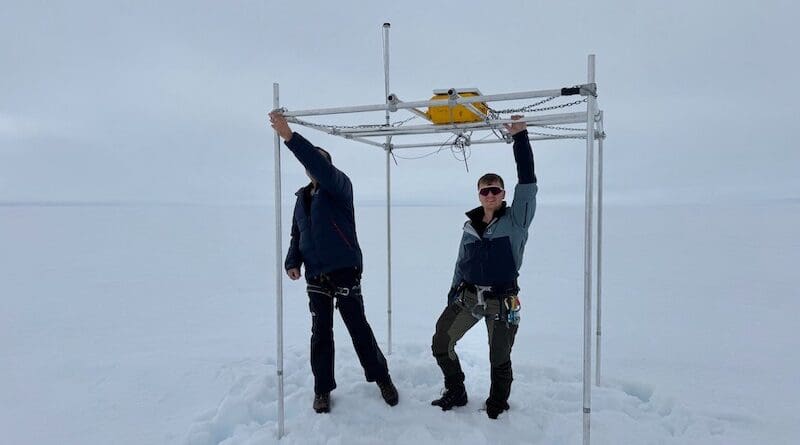
Greenland is shifting some centimeters northwest each year, shows new research led by Danjal Longfors Berg (right). The island’s size also changes due to bedrock stretching and compression. Photo: DTU Space


By 

Greenland is being twisted, compressed, and stretched. This happens due to plate tectonics and movements in the bedrock, caused by the large ice sheets on top melting and reducing pressure on the subsurface.

The pressure is easing both because large amounts of ice have melted in Greenland in recent years, and because the bedrock is still affected by the enormous ice masses that have melted since the peak of the last Ice Age around 20,000 years ago.

As a result, the entire island has shifted northwest over the past 20 years by about 2 centimeters per year.

At the same time, the movements are causing Greenland to both expand and contract horizontally. The effect is that Greenland’s area is currently being ‘stretched out’ and becoming slightly larger in some regions, while others are being ‘pulled together’.

This is shown by new research from DTU Space, recently published in the Journal of Geophysical Research.

”Overall, this means Greenland is becoming slightly smaller, but that could change in the future with the accelerating melt we’re seeing now,” says DTU Space postdoc researcher Danjal Longfors Berg, lead author of the article in Journal of Geophysical Research.


The geophysical processes affecting Greenland’s shape are pulling in different directions.

”The ice that has melted in recent decades has pushed Greenland outward and caused uplift, so the area has actually become larger during this period. At the same time, we see movement in the opposite direction, where Greenland is rising and contracting due to prehistoric changes in the ice masses related to the last Ice Age and its end,” says Danjal Longfors Berg.

A very detailed model

It is the first time the horizontal movements have been described in such detail.

”We have created a model that shows movements over a very long timescale from about 26,000 years ago to the present. At the same time, we have used very precise measurements from the past 20 years, which we use to analyze the current movements. This means we can now measure the movements very accurately,” says Danjal Longfors Berg.

The new measurements are based on 58 GNSS stations (GPS) placed around Greenland. They measure Greenland’s overall position, elevation changes in the bedrock, and how the island is shrinking and stretching.

”There have not previously been such precise measurements of how Greenland is shifting. The assumption has been that Greenland is primarily being stretched due to the dynamics triggered by the ice melting in recent years. But to our surprise, we also found large areas where Greenland is being ‘pulled together’, or ‘shrinking’, due to the movements,” says Danjal Longfors Berg.

Important for Arctic surveying and navigation

The new research provides useful information about what happens when climate change hits the Arctic with accelerating speed, as is the case in these years.

”It’s important to understand the movements of landmasses. They are of course interesting for geoscience. But they are also crucial for surveying and navigation, since even the fixed reference points in Greenland are slowly shifting,” says Danjal Longfors Berg.

The GNSS stations are owned by the Climate Data Authority under the Ministry of Climate, Energy and Utilities. They are used for research purposes and operated in collaboration with DTU Space. The research is conducted under the DTU Space research center Center for Ice-Sheet and Sea-Level Predictions (CISP).


‘No food, no business’: Kenyan women reveal hidden links between climate change and mental health

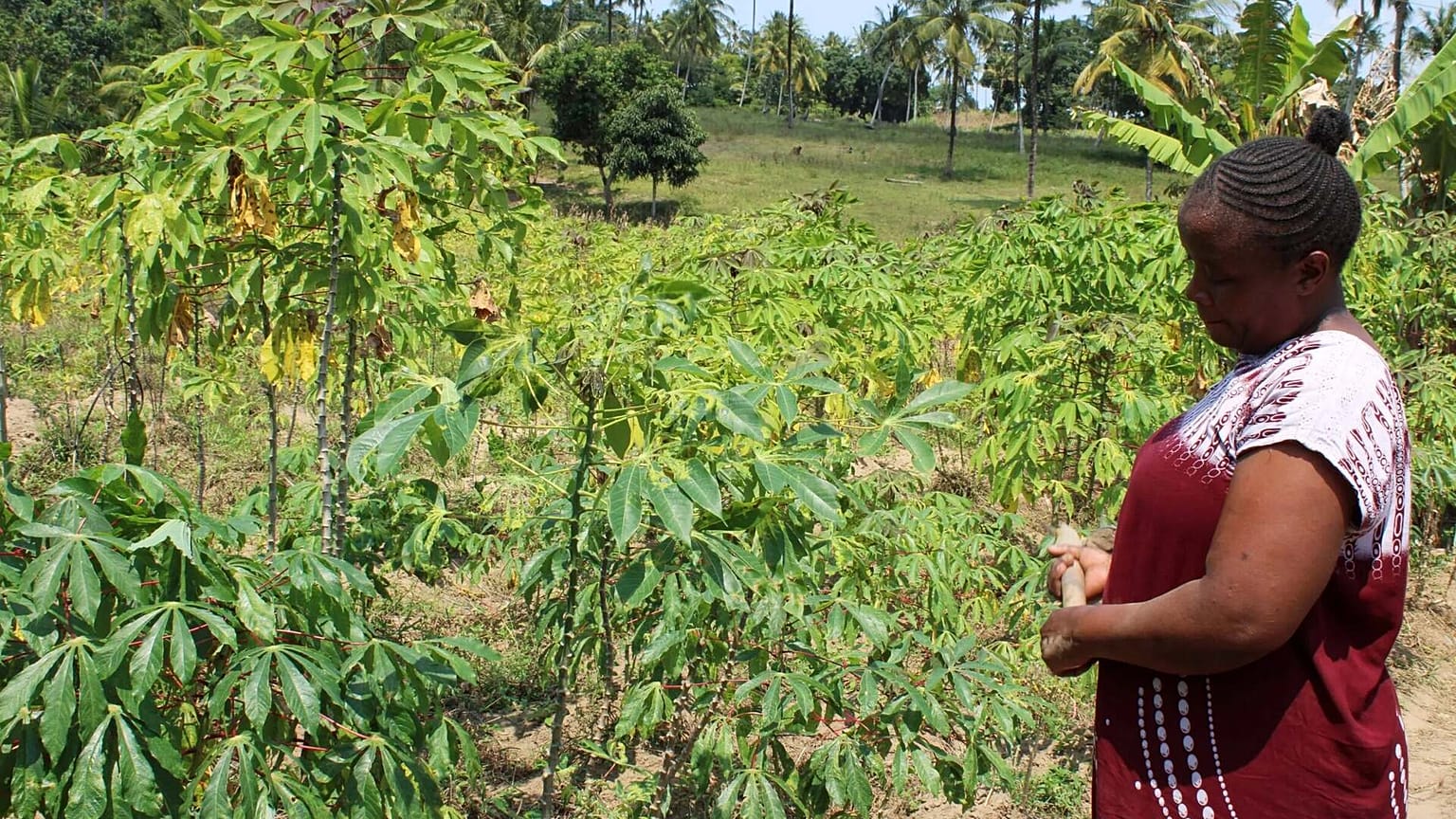
Elizabeth Amina Kadenge works on her farm in Kilifi, Kenya
Copyright AP Photo/Inaara Gangji

By Craig Saueurs & Desmond Tiro, Inaara Gangji and AP News
Published on 

Researchers in Madagascar, Spain and the Netherlands have also found links between climate change and depression and anxiety.

Across rural Kenya, extreme heat, failed rains and unpredictable seasons are doing more than devastating harvests. They’re taking a psychological toll.

In Kaloleni, one of the country’s poorest areas, researchers are uncovering how climate change is driving anxiety, depression and suicidal thoughts, particularly among women who shoulder the burden of keeping their families fed.

Here, homes are mostly built of mud and have no indoor plumbing, and during hot spells and droughts, the region’s all-important maize crops wither.

“These communities are struggling to grow their crops and have to spend money on food,” said Zul Merali from The Aga Khan University, who has set up a local institute for mental and brain health. “This creates a lot of pressure, particularly on women, because they are in charge of making sure that kids and families are fed.”

The human toll of climate stress

This farming community is one of the most studied populations in Kenya.

A network of community health workers visits all households every month to check how people are doing. They fill in questionnaires that the government uses to understand needs in rural communities.

Humphrey Kitsao is a community health promoter who looks after 115 households in Kilifi County totalling 532 people. He’s done this work for 18 years and says he’s seen a lot of change.

“People here still farm, but their income isn’t like before,” he told The Associated Press. “They have to spend a lot of money on their farms, but often there is no harvest.”

Jasmit Shah is a data scientist at The Aga Khan University’s Brain and Mind Institute who wanted to research the impact of climate change on the mental health of women in Kenya’s rural farming communities. While climate anxiety has been studied in the United States and Europe, no study on mental health had been done with women in this region.

The university was already supporting Kenya’s government in its data collection in Kilifi County. For its own research on mental health and climate change, it only had to add some questions.

“The questions are quantitative: Do you have any suicidal thoughts, and if you do, do you have them every day, several days a week, a few times a month?” Shah said.

“Then we asked them a set of about 15 questions related to climate shocks and looked at the correlation between climate shocks and people saying that they are having suicidal thoughts.”

Shah said the survey of nearly 15,000 women produced some concerning signs. For example, he said, it appears that droughts and heat waves are linked with much higher levels of suicidal thoughts.

Climate change is causing anxieties around the world

The links between climate change and mental health are becoming increasingly clear around the world.

In Europe, researchers have found that long-term exposure to cold led to anxiety, depression and other issues among adolescents and young adults in the Netherlands. Higher heat in Spain, on the other hand, has been tied to attention problems.

In rural areas, especially in developing regions, the effects are often more tangible.

Earlier this year, researchers revealed that climate change is causing a mental health crisis among adolescents in Madagascar, where fears of food insecurity and futures stolen by droughts and storms have led to spikes in anxiety and depression in rural areas.

In Kaloleni, Kenya, 41-year-old farmer and mother of four Elizabeth Amina Kadenge said her maize harvest had been wiped out by drought at the time of the study. This year, it was wiped out again – by too much rain.

“It has been very stressful because farming is also my business,” Kadenge said. “When I farm the way I know, some of my maize is for food, and some of it is for my business. But if it fails, I have no food and no business.”

Kadenge has addressed her anxiety around the unreliable weather by switching to planting cassava, which is less fickle. But maize takes three months from planting to harvest. Cassava takes a year. If the family is hungry, they must uproot it before it’s big enough to sell and use it for food “because we have no other option.”

Breaking the silence on mental health

With such serious problems in rural Kenya, mental health often isn’t a priority. “We don’t talk about it a lot, not only in that community, but everywhere,” Shah said.

Mercy Githara is the mental health and psychosocial manager at the Kenya Red Cross. In her experience, the mental fallout from droughts or floods is very real.

“There is a lot of psychological distress among these communities, and some of them have developed mental health conditions such as depression,” she said.

She wants to see a greater emphasis on mental health. “Ensure that communities that are facing climate change can be able to access mental health services,” she said.

Shah is hopeful it’s already starting to happen. He noted the government’s community health promoters’ program across Kenya and the mental health training for participants. “So if they see a problem with a certain household or individual, they can refer them to a facility where they can be seen by a health professional.”

Such support could be needed for the long run.

“Climate change is not going to be a short-term thing,” Merali said. “It’s here to stay.”

Brazil set to host COP30 with climate wins on deforestation, indigenous reserves


As Brazil prepares to host the UN COP30 climate summit in the Amazon next month, the country's president Luiz Inacio Lula da Silva has clocked impressive climate wins on curbing deforestation, legalising indigenous land reserves and securing conservation funding.


Issued on: 14/10/2025 
By: FRANCE 24

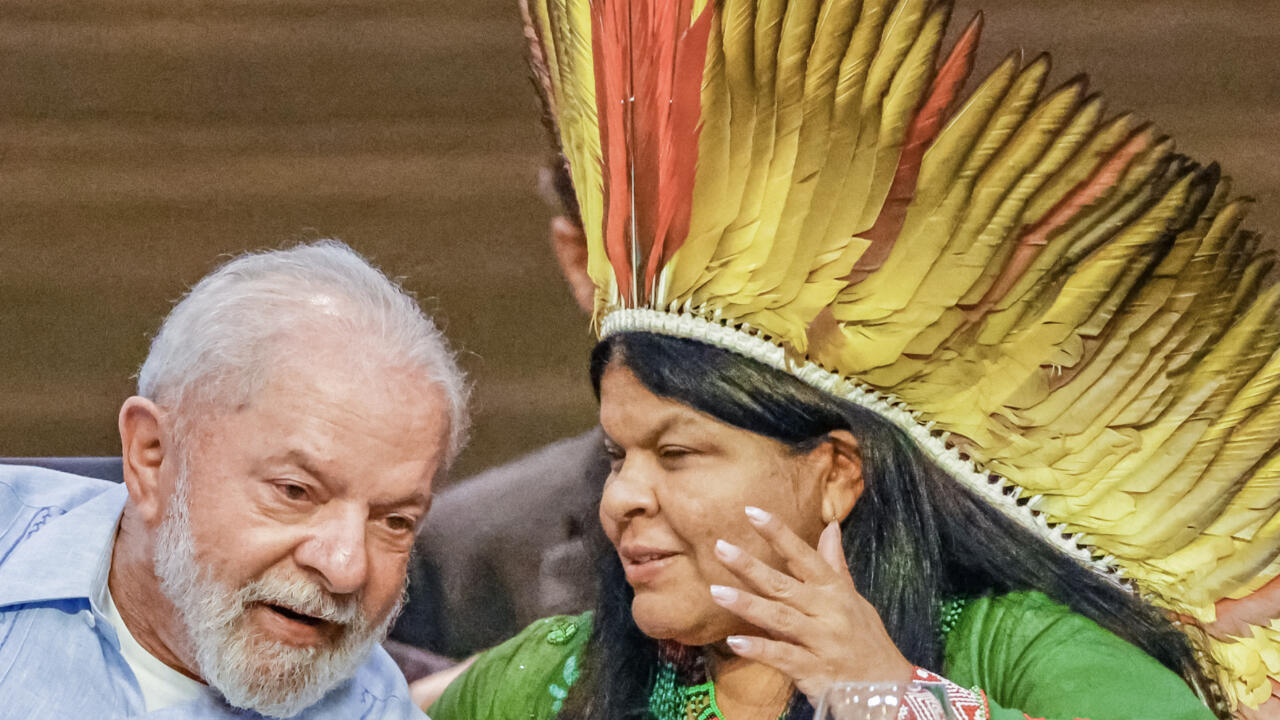
Brazilian President Luiz Inacio Lula da Silva appointed Sonia Guajajara (R) as his minister of indigenous peoples. © Ricardo Stuckert, AFP

Brazil's president has slashed deforestation in the Amazon and worked to better protect Indigenous people, giving him a generally positive environmental record as he prepares to host COP30 UN climate talks in a month.

However, veteran leftist Luiz Inacio Lula da Silva faces a strong agribusiness lobby in congress that has tried to weaken environmental laws, and the president has enraged green activists with his support for the expansion of oil exploration.

This is what experts say he is doing right:

Brazil's climate comeback

The 79-year-old has returned to office after years of rampant Amazon deforestation under his climate-sceptic predecessor Jair Bolsonaro.

"Brazil is back," he declared at COP27 in Egypt shortly after his re-election, receiving a rock star's welcome as he pledged to protect a rainforest with billions of carbon-absorbing trees that are a key buffer against global warming.

He announced plans to host COP30 in the Amazon itself so world leaders could get a first-hand look at one of Earth’s richest ecosystems.

Another strong message was Lula's choice of environment minister, Marina Silva – who cut deforestation dramatically during his first term.

The pair have previously feuded over the clash between development goals and environmental protection.

They set about rebuilding Brazil's environmental agencies and Lula also reactivated the Amazon Fund, an international financing mechanism to protect the forest that had been suspended under Bolsonaro.
Slowing forest loss

Lula pledged zero deforestation by 2030.

In the last year of Bolsonaro's presidency in 2022, deforestation reached more than 10,000 square kilometres (3861 square miles) – an area about the size of the country of Lebanon.

This number had dropped by more than half by 2024, falling to 4,200 square kilometers.

However, in 2024, Brazil suffered one of its worst waves of forest fires on record. The flames, often linked to agricultural activity, grew out of control amid a historic drought linked to climate change.

Silva said fires had become one of the main causes of deforestation.

Forest loss also slowed in other sensitive biomes like the Cerrado, a vast region of tropical savannah in central Brazil.
Indigenous lands

Indigenous lands are seen as a key barrier to Amazon deforestation.

Lula created an Indigenous people's ministry and legalised 16 Indigenous reserves during his third term – a process that had been paralyzed under previous governments.

Read more Brazil's Lula renews recognition of indigenous land reserves

Marcio Astrini of the Climate Observatory, a collective of NGOs, said the demarcation of Indigenous lands was particularly important in case a climate-sceptic candidate wins 2026 presidential elections.

"A new government can withdraw funding from climate policies, but it won't be able to undo a protected Indigenous area," he told AFP.

Government policies also expelled invaders from more than 180,000 square kilometers of Indigenous lands – an area slightly smaller than Uruguay – according to the state Indigenous affairs agency Funai.

Local populations "regained freedom to move around, resume hunting ... they recovered their territory," Nilton Tubino, coordinator of Indigenous policies for the federal government in the northern Amazon state of Roraima, told AFP.
Financing forest protection

Brazil's government has also designed a global initiative to finance the conservation of endangered forests: the Tropical Forest Forever Fund (TFFF).

"This is the main contribution Brazil intends to make to the COP," said Finance Minister Fernando Haddad.

Authorities envision the TFFF as a fund of more than $100 billion in public and private capital.

Three weeks ago, Lula announced that Brazil would invest $1 billion in this initiative during a speech in New York on the sidelines of the UN General Assembly.

(FRANCE 24 with AFP)

Climate Change Already Affects The Daily Lives Of Amazon Population

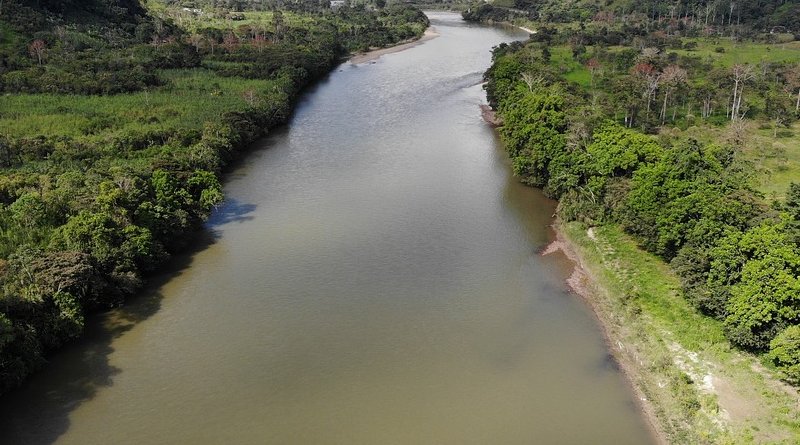
amazon river

By 

By Elaine Patricia Cruz


One in three residents of the Amazon (32%) can already feel the effects of climate change directly. The data can be found in the population perception survey Mais Dados Mais SaĆŗde – Clima e SaĆŗde na AmazĆ“nia Legal (“More Data, More Health – Climate and Health Care in the Legal Amazon”), released this week.

According to the study, this perception is even greater among people who identify as part of traditional communities – such as indigenous people, quilombolas, riverine communities, and rubber tappers. Of these, 42.2 percent say they can already experience the effects of climate change.

“The Amazon has been prioritizing the establishment of a number of hydroelectric dams, large agricultural businesses, and large-scale deforestation. This has consequences. This development model is exclusionary and predatory, and reinforces poverty and inequality. Traditional peoples are directly affected by these consequences,” Luciana Vasconcelos Sardinha, deputy director for chronic noncommunicable diseases at Vital Strategies and technical head for the study, said in an interview with AgĆŖncia Brasil.

Among the effects most commonly named by residents are increased electricity bills (83.4%), increased average temperatures (82.4%), increased air pollution (75%), increased occurrence of environmental disasters (74.4%), and increased food prices (73%).

Available at the Public Health Observatory, the survey was conducted online from May 27 to July 24, 2025, with 4,037 people living in one of the nine states that make up the Legal Amazon region – Acre, AmapĆ”, Amazonas, MaranhĆ£o, Mato Grosso, ParĆ”, RondĆ“nia, Roraima, and Tocantins.


Above-average temperatures

Two out of three respondents from the Legal Amazon (64.7%) reported experiencing heat waves in the last two years, with temperatures above the local average. Furthermore, about one-third of them (29.6%) stated that, also in the last two years, they experienced persistent drought, aggravated by more heat and less rain, as well as forest fires with intense smoke that impacted their daily activities (29.2%).

During the same time range, residents also reported witnessing environmental deforestation (28.7%), worsening air quality (26.7%), and worsening water quality (19.9%).

Among the people identifying as part of a traditional community, the top reports were of worsening water quality (24.1%) and problems with food production (21.4%).

Behavior

The survey also points out that climate change has already caused changes in the behavior of residents of the Legal Amazon. Half of the population stated, for example, that they had reduced practices they believe could contribute to the worsening of the problem (53.3%), and 38.4 percent said they felt guilty about wasting energy. Most residents usually separate their waste for recycling (64%), a practice that is even more common among traditional communities (70.1%).

According to Sardinha, even though traditional peoples are the most impacted by climate change, they are also the ones who can produce the most efficient responses to these consequences. “Respect for this cultural diversity, which comes from this [traditional] knowledge, is crucial when we think about how to solve these problems or improve quality of life,” she noted.

“We observe that traditional peoples are more exposed because they are more vulnerable and generally have lower incomes and less education. This is directly transforming the territory they live in, as well as their way of life. But it also shows their potential to reinvent themselves. They organize themselves largely in communities and networks, which has helped mitigate the consequences of climate change,” Sardinha said.

However, she went on to say, mitigating the effects of climate change also needs to be part of public policies that focus on reducing regional inequalities.

“We need to strengthen governance to achieve integrated planning and join forces to increase financial, logistical, and human resources, which are always scarce. So, if we do something in an integrated way, we can achieve better results. Another important way to mitigate these problems is through a development model that involves demographic participation, the socialization of these policies, and, above all, sustainability. We must take into account the initiative of traditional peoples,” she argued.


ABr

Agência Brasil (ABr) is the national public news agency, run by the Brazilian government. It is a part of the public media corporation Empresa Brasil de Comunicação (EBC), created in 2007 to unite two government media enterprises RadiobrÔs and TVE (Televisão Educativa).


China leads global energy export race as clean tech shipments hit record highs

China leads global energy export race as clean tech shipments hit record highs
The green tech race is on to see who can produce the clean energy to power the transition to a renewable new century and China is winning. / bne IntelliNews
By bne IntelliNews October 13, 2025

China is outpacing the United States in the global race to dominate energy exports, as demand for clean technology surges and fossil fuel revenues plateau. The country exported $120bn in green technology through July 2025, surpassing the $80bn in US oil and gas exports over the same period, Bloomberg reported on October 12.

With the AI revolution in full swing, the country that masters the supply of cheap, clean and renewable power supplies will win. The Trump administration is betting on boosting fossil fuel supplies and ramping up its LNG gas production and export, while China has thrown everything into the renewables pot and has already emerged as the global green energy champion.

According to Ember, a climate and energy think tank, Chinese exports of solar panels, batteries, electric vehicles and other carbon-cutting equipment reached a record $20bn in August.

“China reached a record value in cleantech exports even as technology prices have fallen sharply,” Euan Graham, a data analyst at Ember, told Bloomberg.

While the US set its own record for oil exports in 2024, China’s clean energy exports were $30bn higher. The US has positioned itself as a dominant fossil fuel supplier in recent years, significantly increasing output under both President Donald Trump and former President Joe Biden. Trump, now in his second term, is seeking to further expand fossil fuel production by rolling back regulations and scaling down support for clean technologies. The US president is openly hostile towards renewables and recently moved to gut the Environmental Protection Agency (EPA) of its Obama-era "endangerment finding” – a scientific conclusion that is the legal basis for US climate regulations.

Despite falling prices for solar equipment, China continues to increase export volumes. In August, it shipped 46,000 megawatts of solar power capacity abroad — a record high in volume, even if revenue remained below the peak set in March 2023.

More recently, Beijing has overseen a second revolution in battery technology that addresses the key renewables problem of covering the baseload demand when the wind is not blowing, or the sun is not shining.

Thanks to more heavy investment and its control over rare earth metals (REMs), China has raced ahead in the production of batteries that are rapidly becoming an integral part of any renewable energy product, fuelled by plunging battery prices. China holds a commanding position in the global battery manufacturing industry, particularly in the production of lithium-ion batteries used in electric vehicles (EVs), consumer electronics, and energy storage systems. China dominates the refining and processing of key battery minerals, including: lithium, cobalt, graphite and nickel.

According to data from BloombergNEF and the International Energy Agency (IEA), China currently accounts for over 75% of global lithium-ion battery production capacity. This includes the production of battery cells as well as upstream components such as cathodes, anodes, and electrolytes. China’s dominance is so complete that Sweden’s battery-maker Northvolt recently went bust, billed as Europe’s battery national champion.

Chinese electric vehicle exports are also expanding rapidly in developing markets. According to Ember, more than half of China’s EV exports in 2025 have gone to countries outside the Organisation for Economic Co-operation and Development, underlining a strategic shift toward emerging economies.

While China remains a significant importer of fossil fuels, it is deploying the majority of its clean technology domestically. In the current quarter, China is expected to sell more electric cars at home than the total number of cars — of any type — sold in the US.

Both China and the US maintain excess capacity in their respective energy sectors, generating significant export revenue. However, analysts suggest that China’s long-term influence may grow due to the enduring utility of clean energy technologies.

“Clean energy exports are hardware, which once a country has bought it, will generate electricity for a decade or two to come,” Greg Jackson, chief executive officer of Octopus Energy told Bloomberg. “Whereas with gas, the day you buy it, you use it, it's gone forever.”

The clean tech/battery-maker combination is giving China a decisive advantage in the green transition. Chinese companies are among the world’s largest battery makers. Contemporary Amperex Technology Co. Limited (CATL), headquartered in Fujian, is the world’s largest EV battery manufacturer, with a market share of over 35% as of 2025. Other key players include BYD, EVE Energy, and CALB.

China is also the largest EV market globally, accounting for over 60% of all electric cars sold worldwide in 2024, according to the International Energy Agency (IEA). Exports of Chinese batteries and electric vehicle components reached $65bn in the first half of 2025, driven by overseas demand for clean energy technologies, Bloomberg reported.