Tuesday, October 14, 2025

High-Skilled Immigration Makes America Great – OpEd

LIBERTARIANS AGREE WITH THE LEFT


October 14, 2025 
By Benjamin Powell

President Donald Trump decreased the number of high-skilled migration visas during his first term, but then spoke favorably about such migration before he started his second term. Unfortunately, he has flip-flopped back by imposing a massive new fee for those visas, which will drastically reduce high-skilled migration.

New high-skilled H-1B visas will now cost $100,000. They are currently under a severe annual quota of approximately 85,000, and fees before the change ranged from $2,000 to $5,000. The higher fee, then, will likely result in far fewer visas than allowed even by the quota, which typically attracted four to five times as many applicants as there were visas.

The existing cap was already too restrictive in relation to America’s needs, and the new fee will only exacerbate the issue. The native-born working-age population is shrinking and is projected to continue shrinking as baby boomers retire and birth rates remain low. Workforce growth, which is necessary to support the aging population, will depend largely on increased migration.

Cutting back high-skilled migration is particularly unwise because these workers tend to fill niches that native-born people undersupply. More than two-thirds of H-1B visas go to people in STEM-related jobs (science, technology, engineering, and mathematics), which companies often can’t fill with native-born Americans.

Those immigrants augment the productivity of Americans because immigrants’ skills are different. Rather than taking Americans’ jobs, high-skilled immigrants create a demand for complementary nontechnical jobs performed by the native-born. If high-skilled immigrants don’t come to the United States, some of the jobs they would have performed will move overseas, eliminating the complementary jobs.

High-skilled immigrants also go on to found and run major companies. Elon Musk (Tesla), Satya Nadella (Microsoft), and Sundar Pichai (Google) all originally entered the U.S. workforce with H-1B visas. Overall, 45 percent of Fortune 500 companies were founded by immigrants or children of immigrants.

Conservatives’ other usual concerns about immigrants do not apply either. Highly educated immigrants rarely commit crimes, and according to the National Academy of Sciences, immigrants with graduate degrees generate approximately $1 million more in tax revenue over their lifetimes than they consume in government services.

Meanwhile, China has introduced a new “K visa” to attract STEM workers; it will take effect on October 1. With more flexible employment rules than previous visas, the K visa will compete with the U.S. H-1B visas. President Trump’s new fee will likely encourage many talented South Asian tech workers to migrate to China rather than the United States.

President Trump frequently says the United States competes technologically with China. About semiconductor technology, Trump’s AI advisor, David Sacks, states, “We have to remain paranoid about China … because they are doing everything they can to catch up…. [W]e don’t want China to catch up.”

America’s large, prosperous economy and long history as a nation of immigrants make it the number-one choice for most would-be immigrants. The United States could easily outcompete China by attracting the world’s best and brightest workers. We should allow them in.

President Trump once said, “I’ve been a believer in H-1B. I have used it many times. It’s a great program.” If he wants to strengthen the American economy, provide it with workers that enable it to grow, and outcompete China in technology, he’d be wise to eliminate the new H-1B visa fee and instead dramatically raise the cap to allow more high-skilled workers to immigrate. That would make America (immi)great!


This article was published at the Independent Institute


Benjamin Powell

Benjamin Powell is Senior Fellow at the Independent Institute, Director of the Free Market Institute at Texas Tech University, and former President of the Association of Private Enterprise Education. Dr. Powell received his Ph.D. in economics from George Mason University and his Bachelor of Science degree in Finance and Economics from the University of Massachusetts at Lowell. He has been Associate Professor of Economics at Suffolk University, Assistant Professor of Economics at San Jose State University, a Fellow with the Mercatus Center's Global Prosperity Initiative, and a Visiting Research Fellow with the American Institute for Economic Research.
Trump tariffs on timber, furniture go into force
DW, AFP, EFE
October 13, 2025


Imports of softwood lumber, furniture and kitchen cabinets to the US now face tariffs of up to 25%. The duties are likely to cause a jump in construction costs in the US.

New tariffs on timber and furniture introduced by US President Donald Trump go into force on Tuesday in a move likely to make building a home in the US even more expensive.

The White House says the duties are being imposed to boost US industries and protect national security.

What are the tariffs?


As of Tuesday, imports of softwood lumber to the US will face duties of 10%, and some upholstered furniture and kitchen cabinets will be hit by tariffs of 25%.

Some tariffs are set to rise next year from January 1, when the levy on imports of upholstered furniture goes up to 30% and that for kitchen cabinets and vanities to 50%.

Some trading partners that have struck deals with the Trump administration, however, will not be affected as badly by the second rise.

Wood products from the UK will thus not face tariffs of more than 10% and there is a 15% cap on those from the European Union and Japan.

Who will be most affected?


Canada, which is the main supplier of lumber to the US, will be particularly hard hit, as the country is already facing 35% in anti-dumping and countervailing duties, meaning that the new tariff brings levies on Canadian lumber to 45%.

Vietnam, Mexico and China will also face a major impact from the tariffs as major exporters of furniture to the US.

Experts say the new tariffs will push up construction costs, making things even more challenging for homebuyers on an already difficult market.

Since taking office in January, the Trump administration has caused considerable turmoil on world markets by imposing seemingly arbitrary tariffs on a number of imported goods, including metals and cars, arguing that the US has too long been the victim of unfair trade practices by other countries.

Edited by: Wesley Rahn

Timothy Jones Writer, translator and editor with DW's online news team.
US, China impose reciprocal port fees amid trade war


DW, Reuters, AP
October 13, 2025

Port fees have kicked in after Washington said China's dominance of the global maritime, logistics and shipbuilding sectors resulted from unfair policies and practices.


China-owned COSCO is expected to end up paying almost half of the US port fees incurred (FILE: January 22, 2021)Image: DPR/picture alliance

The US and China on Tuesday began charging additional port fees on vessels linked with each other's country as a trade war between the world's two largest economies moves to the high seas.

US President Donald Trump's administration announced earlier this year it would be imposing the fees on China-linked ships, prompting the reciprocal move by Beijing announced last week.


What are the port fees?

China has said special charges will be levied on ships that are US-owned, operated, built or flagged but that Chinese-built vessels would be exempted.

Another exemption will be empty ships that are going to Chinese shipyards to be repaired, according to a report by state broadcaster CCTV.

The extra port fees charged by China are to be collected at the first port of entry on a single voyage or for the first five voyages within a year, with the billing cycle starting on April 17.

US probe suggests unfair practices by China

The move by Washington to impose the fees on Chinese-linked shipping came after an investigation by the previous administration of President Joe Biden concluded that China's dominance of the global maritime, logistics and shipbuilding sectors resulted from unfair policies and practices.

Analysts say that China-owned container carrier COSCO is likely to be hardest hit by the new fees, which are expected to cost $3.2 billion (€2.8 billion) in 2026.

The port fees come as the trade war between the US and China escalated further on Friday, with Trump threatening to impose new 100% tariffs on goods from China in return for China cutting its exports of critical minerals.

Trump also threatened to put export controls on "any and all critical software" by November 1.

Edited by: Wesley Rahn
Timothy Jones Writer, translator and editor with DW's online news team.

USTR and Chinese Retaliation Take Center Stage

Tanker
iStock

Published Oct 13, 2025 3:42 PM by Erik Broekhuizen / Poten & Partners


On Tuesday, October 14, the port fees targeting the Chinese maritime sector will go into effect. The Office of the United States Trade Representative (“USTR”) announced these fees in a detailed notice on April 17, 2025, but the plan included a 180-day grace period. The grace period allowed vessel owners and operators to adjust their operations and/or reposition their vessels to minimize the impact of these fees. 

On Friday morning, the Chinese Ministry of Transport (MOT) announced that China will impose their own fees, targeting vessel with U.S. connections. The Chinese port levies are a direct “tit-for-tat” response to the USTR fees, which, according to China “seriously violate the fundamental principles of international trade and the China–U.S. Maritime Agreement, causing severe disruption to maritime trade between the two countries.” These Chinese port fees, which will also go into effect on October 14 and are equivalent to the USTR charges imposed on Chinese owned/operated vessels, have thrown the tanker market in turmoil. It seems that, not for the first time, the shipping industry is caught up in the geopolitical jostling between the United States and China.

According to the announcement of the Chinese MOT, the “Special Port Service Fee” will be imposed on the following categories of vessels: (1) Vessels owned by U.S. enterprises, organizations, or individuals; (2) Vessels operated by U.S. enterprises, organizations, or individuals; (3) Vessels owned or operated by enterprises or organizations in which U.S. enterprises, organizations, or individuals directly or indirectly hold 25% or more of the equity, voting rights, or board seats; (4) Vessels flying the U.S. flag, and (5) Vessels built in the United States. The fee levels, phased implementation and the additional provisions (only pay at the first port of call and no more than five times per year) closely mirror those of the USTR (see Tables 1 and 3).

What will be the implications of these Chinese fees? The number of U.S. flagged and /or U.S. built vessels is small and they rarely call China, so the impact on those vessel categories will be minimal. However, the fees are also applicable to vessels owned or operated by US businesses, organizations or individuals. More importantly, it covers ships owned by companies in which US individuals directly or indirectly hold 25% or more of the company’s equity, including voting rights and board seats. This casts a wide net and could affect many public shipping companies with a listing on U.S. stock exchanges. The potential impact is significant.

At this point, it remains unclear what will happen next. According to one of our brokers, the tanker market has been “frozen” after the Chinese announcement. Many vessels that could be impacted by this rule are already on their way to China. Will they be exempt from these fees since their fixtures predate the announcement or not? Will owners try to get (Chinese) charterers to pay? What do charterparties say about this? Will private non-U.S. shipowners be in the driver’s seat now? The VLCC market already jumped on the back of new OFAC sanctions which targeted several Chinese ports and terminals because of their role in facilitating Iranian crude imports into China. Are further freight rate increases in the cards?

At first glance, these new fees, if they are indeed implemented and enforced as written, are likely to hurt China more than the U.S, at least in the short term. The heightened uncertainty in the market will cause owners that are at risk of being subject to these fees to avoid Chinese cargoes. This will limit the pool of available vessels for Chinese charterers and likely mean higher transportation costs for Chinese imports. We will need to wait to see if and how these measures will be implemented. According to their announcement, “The Chinese Ministry of Transport will formulate and issue detailed implementation measures in due course.” It will be an interesting few days until October 14.

The opinions expressed herein are the author's and not necessarily those of The Maritime Executive.

Will South Africa decriminalize sex work?
DW
October 13, 2025

Rights and advocacy groups have launched a legal challenge demanding the repeal of South African laws criminalizing sex work.


Activists from SWEAT gather outside a Cape Town courthouse in early September to support the constitutional challenge to South Africa's criminalization of sex work
Image: SWEAT


Back when she was 19 years old, Connie Mathe didn't consider herself a sex worker until a new friend pointed it out.

Mathe, a single mother of two struggling to make ends meet, was dating a married man who rented an apartment for her in an affluent Cape Town suburb.

The friend, a sex worker herself, told Mathe: "That's not a boyfriend, that's sex work. He only comes to have sex with you, bring you food and pay the rent."

Mathe had already tried working in retail, hospitality and in a call center, but it was never enough to cover her bills.

But by taking up full-time sex work, she thought at the time, she could be independent from her boyfriend; it promised greater financial security and autonomy.

With the money came danger

The work turned out to be dangerous, marked by constant police harassment and weekly raids, Mathe says.

Once she was arrested for operating a brothel. During the arrest, she says, officers forced her to strip and sexually assaulted her.

Upon her release, Mathe says she found someone had stolen her savings. She blames the police but has no way of proving it.

The arrest eventually led her to the Sex Workers Education and Advocacy Taskforce (SWEAT), South Africa's leading sex workers' rights organization.

Mathe is now a national coordinator at the Asijiki Coalition, which advocates for the decriminalization of sex work in South Africa.


Proponents of decriminalization say the move will remove stigma and increase safety for those selling sexImage: SWEAT

Why decriminalize sex work?

Though paying and accepting money for sex is illegal in South Africa, SWEAT estimates the country has some 150,000 sex workers.

SWEAT representative Megan Lessing told DW this is based on a 2013 study, which also estimated that 90% of sex workers were women. But Lessing believes that number to be closer to 80% today.

Importantly, sex work refers only to the consensual provision of sexual services between adults for money, goods or favors, according to the Global Network of Sex Work Projects.

Proponents for decriminalizing sex work point to people like Connie Mathe. They argue "sex work is work" — the industry is not inherently dangerous, but the criminalization and stigmatization of sex work make it so. Proponents also say decriminalization will reduce trafficking.

In 2021, South African researchers said about 70% of sex workers in South Africa experienced physical violence. Nearly 60% had been raped, while one in seven had been raped by policemen. The study found these violent crimes are rarely reported for fear of arrest or harassment.

Stigmatizing sex workers has led to them being disproportionately affected by HIV. While South Africa has made considerable strides in fighting the virus, the country still has the world's largest national HIV epidemic, according to UNAIDS.

SWEAT says instances where police arrest sex workers for having condoms as "evidence of sex work" undermines South African policies.

Activists and health professionals say sex workers seeking medical help often face mockery and contempt.


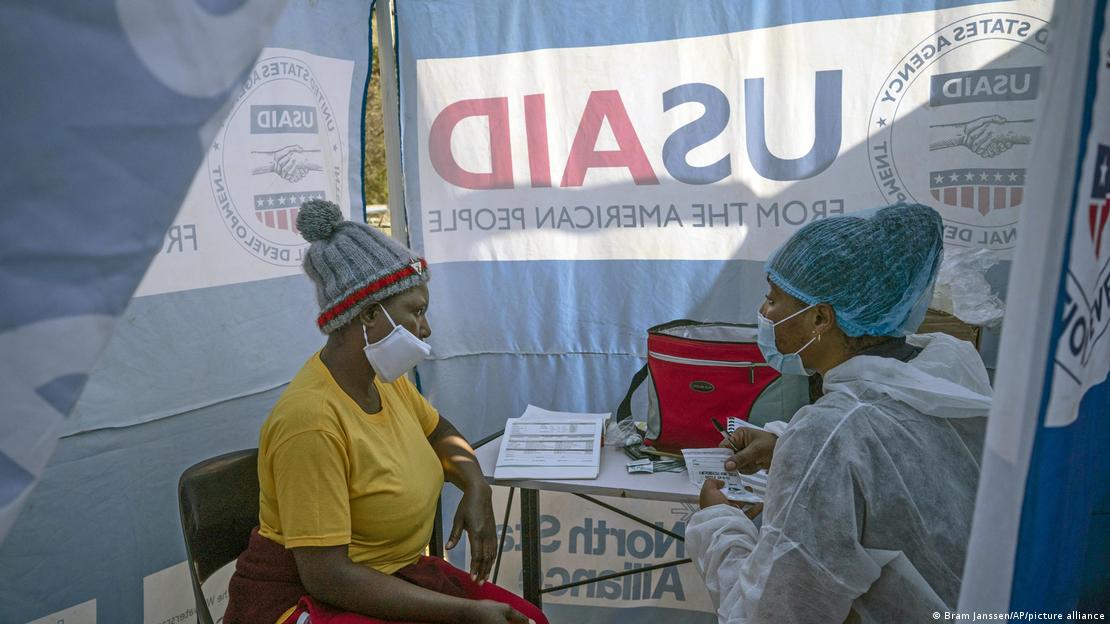
USAID was a key provider of funding for the fight against the HIV/Aids epidemic in South Africa, but funding cuts have left many sex workers in jeopardy
Image: Bram Janssen/AP/picture alliance


The case against decriminalizing sex work


In early September 2025, a Western Cape High Court judge ruled that 16 NGOs could argue in a case regarding the question of whether to decriminalize sex work. Fourteen are in favor of decriminalization. Two, including the Cause for Justice (CFJ), are against it, and the Western Cape High Court is bracing for a massive trial.

The CFJ stands for what it calls family values, and says the case is a matter of "fundamental human dignity." The NGO refers to sex work as prostitution, which it says "constitutes the commodification of the human body, reducing people to commercial sex objects for the gratification of predatory individuals."

The CFJ wants sex work to remain criminalized on the grounds that it is degrading towards women, promotes sex trafficking, leads to child prostitution, significantly increases the risk of transmitting sexually transmitted infections (STIs) and is a cause of public nuisance.

That sex work is inherently dehumanizing also appears in feminist debates, where it is viewed as an extreme form of gender-based violence and represents the complete exploitation of women's bodies.

Advocates for decriminalization, in contrast, say this view undermines their bodily autonomy.

Dual legal strategy


In 2022, the Department of Justice published the Decriminalization Bill, which would repeal laws that criminalize sex work.

But the bill remains stalled in the parliamentary process due to proposed content expansions, opposition from critics, and shifts in government leadership.

SWEAT representative Lessing tells DW urgency and political will have faltered.

While SWEAT continues to push for the Decriminalization Bill, it is now pursuing what Lessing calls a "dual strategy," where the organization also protests the constitutionality of laws targeting sex workers.

SWEAT's legal team asserts that the criminalization of sex work is unconstitutional as it pertains to the right to freedom and security, right of access to justice, right of access to fair labor practices and right to health care.

In a major triumph in August 2025, SWEAT was able to secure a national moratorium on the prosecution of sex workers until the trial in front of the Western Cape High Court begins.
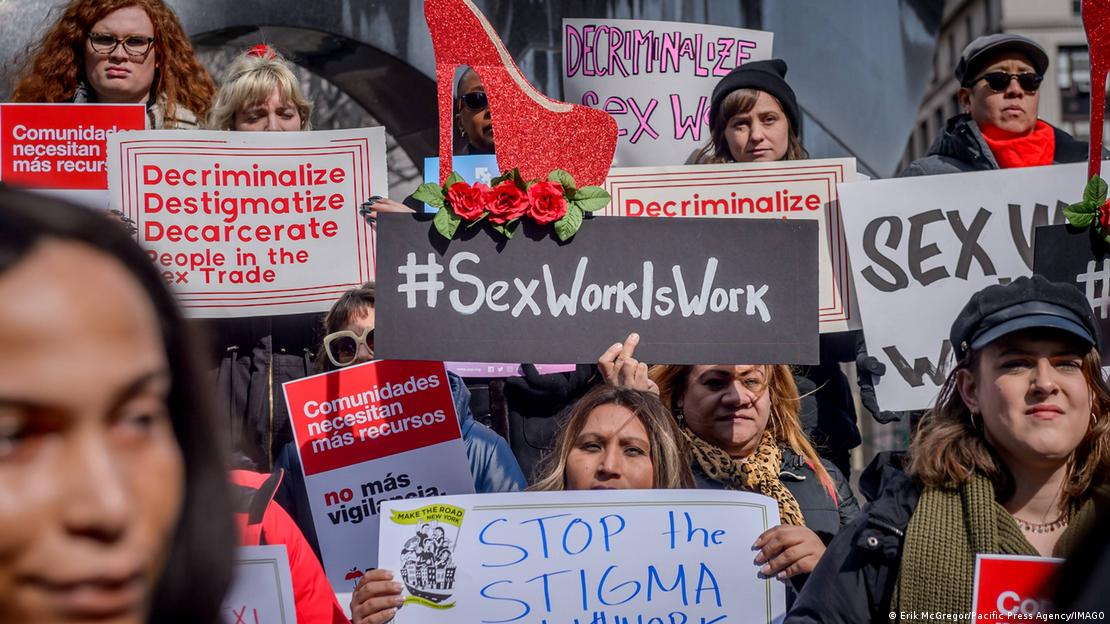
Globally, there has been increasing activism to decriminalize sex work, including in the United States. However, only Belgium and New Zealand have decriminalized sex work
Image: Erik McGregor/Pacific Press Agency/IMAGO


A global issue


South Africa is not the only country grappling with the appropriate legislation for sex work.

Globally, there are many models, and each one is contested. In countries like Sweden, Norway, Canada and Israel, the so-called Nordic Model is employed. Criminal penalties are removed for the sale of sex, but the purchasing of sex remains illegal.

In other countries, including Germany, the Netherlands, Peru and Senegal, sex work is legalized, which means governments impose specific laws and regulations. This allows certain sex work under controlled conditions, and some countries require registration and mandatory health checks.

Decriminalization, meanwhile, is only fully in place in New Zealand and Belgium. This refers to the removal of all laws and regulations that penalize sex work between consenting adults. Sex work is treated as any other profession to reduce stigmatization, uphold bodily autonomy and promote health and safety.

Decriminalization is the legal model most favored by global sex worker-led initiatives.

International organizations like the World Health Organization,Amnesty International, Human Rights Watch and the Joint United Nations Programme on HIV/AIDS have also advocated for the decriminalization of sex work.
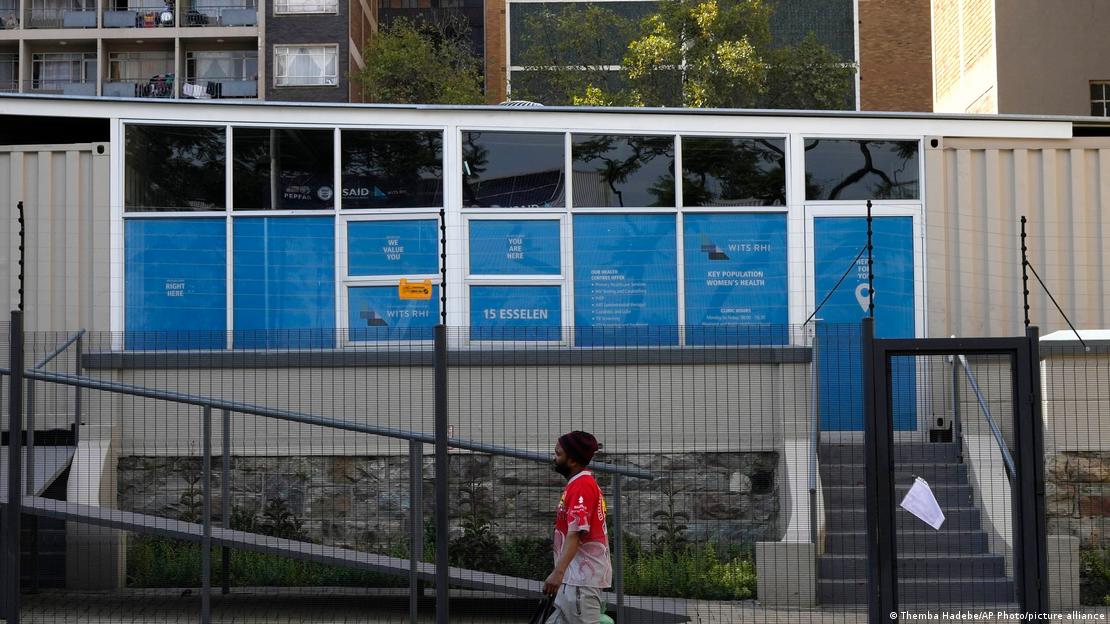
USAID cuts caused the shuttering of many clinics and health services across South Africa, leaving many vulnerable citizens unable to access lifesaving drugs
Image: Themba Hadebe/AP Photo/picture alliance


'Criminals for life'


Connie Mathe tells DW that exiting the sex industry is difficult, even if sex workers have further qualifications.

"Even though I have a diploma in legal studies, I'm afraid to ask for another job outside of SWEAT. If you have a criminal record in South Africa, no one will employ you. Even people who want to exit the industry can't," she said, adding a sex worker's criminal record can only be expunged 10 years after the latest arrest, effectively making many "criminals for life."

Recently, Mathe has been worried about the effects of USAID cuts in 2025 on sex workers' health. When picking up the results of routine medical tests, Mathe found the clinic she had done the tests at, the Ivan Toms Centre for Health in Cape Town, had closed.

The USAID-funded clinic was known for being discreet and LGBTQ+ friendly. According to Mathe, it was one of the few places where sex workers received respectful and fair treatment.

After its closing, Mathe and several other patients were sent to a local hospital, where she says they spent hours waiting for treatment and were told to consolidate their medical concerns as a group.

"We were not welcome in the public hospital," Mathe said. "They looked at us like we were demanding a special service."

Crucial sex work trial on the horizon


Mathe remains hopeful the Western Cape High Court will rule in their favor when the case goes to trial in May 2026. This would pave the way for sex workers to access the same fundamental rights and services as everyone else.

SWEAT representative Megan Lessing acknowledges, "We know that decriminalization won't fix everything. But it's the first step toward addressing the broad spectrum of issues surrounding sex work."

Edited by: Cai Nebe

Solimar Thurn DW journalist, video and television producer, and moderator.


Ukraine developing roadmap for new SMR capacity


A draft new law has been presented and a working group has met as part of the production of a draft action plan for the implementation of small modular reactors in Ukraine.
 
The working group aims to smooth the way to future SMRs (Image: Ministry of Energy)

First Deputy Minister of Energy of Ukraine Artem Nekrasov emphasised the strategic role of nuclear energy for Ukraine: "During war, nuclear energy plays an extremely important role, as it remains the basis of the stability of the energy system. At the same time, we see that the world is experiencing a real renaissance of nuclear energy as a source of clean, safe and sustainable energy, which plays a key role in the transition to carbon-free energy for Ukraine."

Development of the roadmap is aimed at creating the "institutional and technical foundations for the implementation" of the first such projects in the country. He said the draft law, "which has already been submitted to the Verkhovna Rada, creates a legal framework for attracting private investment and simplifying design and construction procedures. Combined with our Roadmap, this document will become a practical tool for implementing Ukraine's energy strategy for the period up to 2050".

The aim, he added, was to "create a basis for attracting investors, donors and technological partners and form mechanisms for communication with society at the level of future reactor locations".

It would look at global best practice, examine possible risks, consider possible sites and financing and investment instruments. It includes proposed measures to allow private sector owners to choose technology and operators from among providers licensed by the country's nuclear regulator. It also proposes to abolish the current obligation to submit three alternative sites for a possible small modular reactor (SMR).

The presentation highlighted that at the moment there is state ownership of all nuclear fuel so investors do not have ownership rights to the asset, and says the "current regulatory model is a key barrier to attracting private capital". The suggested solution is to allow private ownership of fuel for SMRs while maintaining the state monopoly on the management of radioactive waste and its repositories.

Next steps highlighted were to "actively work to accelerate and unify the regulatory framework and licensing process ... in accordance with best global practices" and the formation of targeted financing mechanisms. 

Ukraine is already involved in the development of SMR projects in cooperation with the US's FIRST Program to identify and assess the suitability of SMRs at decommissioned thermal power plants, in industrial zones and for use in industrial processes.

The Committee on Energy and Housing and Communal Services of Ukraine's parliament - the Verkhovna Rada - held a presentation of the draft Amendments to Certain Laws of Ukraine Regarding the Principles of Implementing Small Modular Reactors in Ukraine. As well as being attended by Ukraine's energy giant Energoatom and regulators, there were also representatives from the UK, USA, France and the European Union.

Anatoliy Kostyukh, Chairman of the Subcommittee on Nuclear Energy and Nuclear Safety, presented the bill and said it would create a legal framework for the implementation of SMR projects, help attract private investment, ensure the restoration of energy infrastructure, reduce dependence on gas and coal imports and strengthen Ukraine's integration into the EU energy market.

Ukraine, one of the world's leading nuclear energy countries, has established plans for a new fleet of large-scale reactors. And in July Eneroatom and Holtec International signed a document outlining the current areas of cooperation between the two companies as well as outlining their intention to implement joint projects to create a plant in Ukraine for the production of components for Holtec small modular reactors, with up to 20 SMRs potentially slated for operation in Ukraine.


Crew Rescued as Ukrainian Cargo Ship Sinks in Black Sea

liferafts alongside rescue vessel
Rafts along side the Turkish OSV which rescued the crew from the Ukrainian vessel (Bulgarian Navy)

Published Oct 13, 2025 2:44 PM by The Maritime Executive


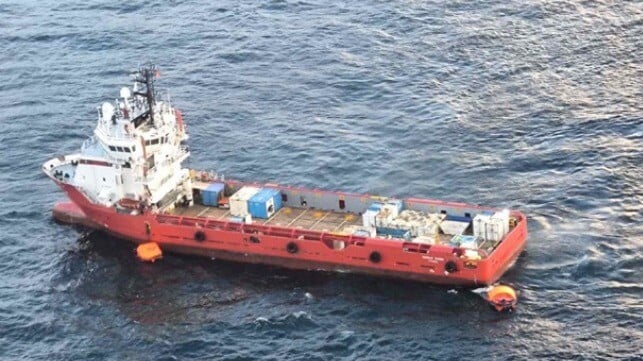
The Bulgarian Navy coordinated the rescue of 10 seafarers from a Ukrainian cargo ship that sank in the Black Sea on October 12.  Fears that the ship might have struck a mine, however, were dispelled by the Bulgarians, who said the incident was due to “structural weaknesses” which was supported by a poor maintenance record for the vessel.

The cargo ship Eileen (3,00 dwt) issued a distress call midday on Sunday, October 12, reporting that the vessel was taking on water. According to the Bulgarian Maritime Rescue Coordination Center, the crew said the vessel was listing and that they were unable to control the flooding. The crew determined that it would abandon the vessel into two liferafts.

The ship, which was sailing under the flag of Cameroon, was built in 1993 and appears to have been owned by a company in Ukraine since 2020. In June 2025, the vessel was detained for 15 days after an inspection in Greece, which cited issues including issues with stability instrumentation, fire pumps and piping, emergency lighting, crew training, as well as documentation. While not a detainable issue, the report noted deck corrosion and a structural issue. The vessel was released to proceed to a shipyard for repairs, but the Paris MOU issued a three-month ban citing multiple detentions.

“The breach was definitely not caused by an external source,” Bulgarian Transport and Communications Minister Grozdan Karadzhov is quoted as saying by BNT News Bulgaria. “A Bulgarian helicopter flew over the vessel and inspected it carefully to confirm this. Most likely, the incident was due to a structural weakness.”

The vessel was carrying a cargo of gypsum in bags and bound for Chornomorsk when the incident occurred.

The Bulgarian Navy deployed a helicopter and put its corvette Bordi on standby. A Turkish OSV operating from the port of Filyos was able to reach the scene. The forces were able to locate the two rafts, and the Turkish vessel was able to take the crew aboard. The helicopter was released when it was determined that the crew was in good condition and did not require immediate evacuation.

UKRAINE

Yes Virginia, David Can Slay Goliath – OpEd

file photo oil refinery


By 

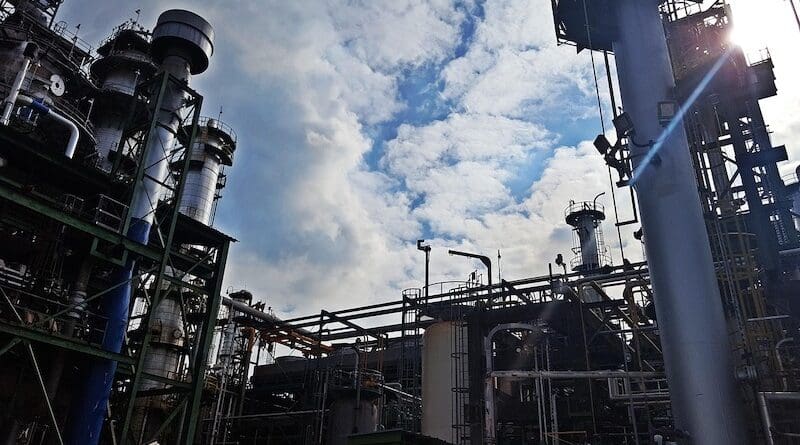
Recent activities by Ukraine against Russian refineries and the incident at the Chevron Refinery in California are exposing the vulnerability of major Goliath infrastructures being stationary targets for slaying by the Davids in the world.

The misunderstanding of “green” delusionists is treating electricity as interchangeable with materials, as it is the central flaw of the green movement. Electricity is a utility, not a substance.

Electricity drives processes, but those wind turbines and solar panels cannot themselves make things. Even basic metals like iron and copper require carbon as a reducing agent during smelting. Without carbon, humanity would lose the very means of transforming minerals into usable materials.

Meanwhile, governments pour trillions of dollars into policies designed to eliminate fossil fuels, without considering the economic or physical realities that wind and solar do totally different things than crude oil processed through refineries.

Yes Virginia, electricity can charge our iPhones, light our cities, and power our computers, but electricity cannot create the raw materials needed to build those very machines.

In fact, steel, cement, plastics, fertilizers, and pharmaceuticals all require hydrocarbons—not simply as fuel but as essential feedstocks. Oil, natural gas, and coal are the molecular foundations for over 6,000 everyday products that define modern life. Without them, hospitals would lack sterile equipment, farmers would lose fertilizers, and the construction of roads, bridges, and homes would grind to a halt.

The same contradiction appears globally. Electric vehicles are celebrated as zero-emission solutions, yet their manufacture depends heavily on fossil fuels—from the mining of lithium and cobalt with diesel-powered equipment to the production of tires, insulation, electronics, steel, glass, and plastic components derived from hydrocarbons. The result is more ways to use fossil fuels, which is a carbon shift, not a carbon elimination.

Government-mandated winners and losers are only applicable to those few in the wealthier countries that can afford huge subsidies, but the reality is that there are no silver bullet answers.

For those outside the few wealthy countries, we see that at least 80 percent of humanity, or more than six billion in this world, are living on less than $10 a day, and billions are living with little to no access to electricity

The zero-emission movement is a delusion that JUST electricity generated from wind and solar can replace refineries and the crude oil that they process to support the variety of more than 6,000 products and fuels in our materialistic society that did not exist 200 years ago.

As of January 1, 2025, there were 131 operable refineries in the United States according to the U.S. Energy Information Administration (EIA)‘s data. This total includes traditional refineries and some facilities that produce petroleum product blending components but lack atmospheric distillation capacity.

Over the years, the reduction in the number of operating refineries stems from aging infrastructure, high maintenance costs, and environmental regulations that have made smaller or less efficient plants uneconomical. Utilization rates have hovered between 85-93% annually, with 2024 seeing an average of 88%, indicating spare capacity but also highlighting vulnerabilities during peak demand or disruptions.

The number of operable refineries has large capacities and are aging, and thus have generally declined over the past few decades. The majority of refineries are concentrated along the Gulf Coast, particularly in states like Texas (47), Louisiana (19), and California (18).

Building new refineries is challenging due to high costs, large land footprints that easily exceed 1,000 acres, environmental concerns, and political opposition, especially as the nation focuses its mandates and subsidies toward the generation of JUST electricity from wind turbines and solar panels. Yet wind turbines and solar panels CANNOT support the supply chain of products to build anything, even to build more wind and solar!

Government policies are difficult to reverse. Onshore and offshore wind have been tied to three goals at once: decarbonization, electricity security, and industrial revitalization. Billions in subsidies through “green” funds are already committed, while local governments and industries expect contracts and jobs from these subsidized funds.

In effect, offshore wind has become a new type of public works project. Ports, construction companies, heavy industry, and trading houses all benefit from the government mandates to build more electricity generation from wind and solar, and the government’s financial support to build them. For politicians, it delivers regional development; for bureaucrats, it provides visible progress. Under these conditions, the withdrawal of corporate America investments is treated as a temporary setback and prompts no policy review.

Ukraine, the David trying to slay Goliath Russia, has been demonstrating via drone attacks at the heart of Russia’s military and economy, by attacking Russian refineries that provide the fuel for their Goliath empire.

By chance, in October 2025, the Chevron refinery in Southern California had an apparent leak that ignited and temporarily ceased production of 40% of the jet fuel demanded in Southern California. The Ukrainian drone attacks on Russian refineries and the Chevron incident are strong messages to America’s national security team that Goliath infrastructures are easy targets for “David.”


Ronald Stein

Ronald Stein, Founder and Ambassador for Energy & Infrastructure of PTS Advance, headquartered in Irvine, California.


Havana rejects US claims over Cuban fighters in Russia's ranks in Ukraine

Havana rejects US claims over Cuban fighters in Russia's ranks in Ukraine

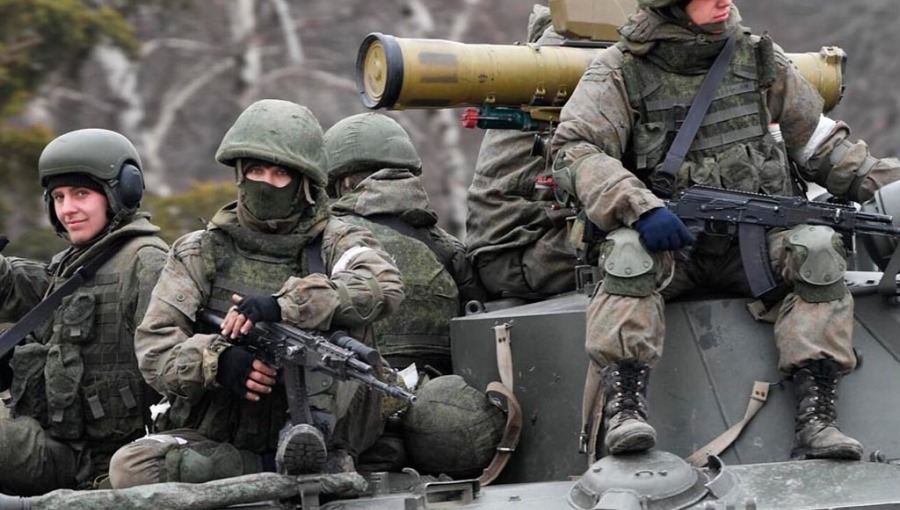
Ukrainian intelligence estimates between 6,000 and 7,000 Cubans currently serve on battlefields, representing the second-largest foreign contingent after North Korea's deployment of over 10,000 troops. / pl
By Cynthia Michelle Aranguren Hernández October 14, 2025

Cuba's Foreign Ministry has denied allegations from Washington regarding Cuban military participation in Ukraine, as diplomatic tensions ratchet up over recruitment schemes that have allegedly sent thousands of nationals to fight alongside Russian forces, AFP reported.

The ministry rejected what it termed "false accusations" from the US government about Cuban involvement in the conflict, stating that no nationals received official encouragement or consent from Havana for such activities. This rebuttal follows Washington's assertion earlier in October that the Cuban regime failed to protect citizens from exploitation in the Russia-Ukraine war, according to a US State Department spokesman quoted by AFP.

Ukrainian intelligence estimates between 6,000 and 7,000 Cubans currently serve on battlefields, representing the second-largest foreign contingent after North Korea's deployment of over 10,000 troops. Kyiv's "I Want to Live" surrender initiative claimed in May to possess verified data on 1,028 Cuban nationals who signed contracts with Russian armed forces during 2023-2024. Ukrainian officials who briefed US congressional leaders in September estimated 20,000 Cubans have been recruited since 2022, with hundreds reported killed.

The recruitment controversy deepens as Russia's Federation Council ratified a military cooperation agreement with Cuba on October 8, following signatures in Havana on March 13 and Moscow on March 19. The timing reinforces concerns about institutional links between the recruitment networks and broader strategic alignment, particularly as Russia committed to supplying Cuba with 1.64mn tonnes of much-needed oil and petroleum products annually alongside hydroelectric infrastructure development.

Cuba acknowledged sentencing 26 nationals to prison terms ranging from five to 14 years for mercenary activities since September 2023, when reports of battlefield recruitment first emerged. Investigative reporting by RFE/RL's Systema unit identified Yelena Smirnova, a 41-year-old alleged travel agent from Ryazan, as a central figure in recruitment networks that allegedly processed over 3,000 foreign fighters according to defence lawyer documents, with relatives of deployed Cubans describing deceptive social media advertisements promising construction employment whilst concealing military service obligations.

The diplomatic dispute threatens to hinder Cuba's economic recovery efforts, as the communist-run island grapples with energy shortages and relies on Moscow for strategic commodities including steel, wheat and political backing at multilateral forums. Cuba abstained in six United Nations votes condemning Russia's full-scale invasion of Ukraine, maintaining what EU High Representative Kaja Kallas described in May as "historic ties" with the Kremlin.

Washington's characterisation of recruitment as state-facilitated human trafficking marks a significant escalation from previous descriptions of isolated criminal networks, potentially triggering fresh sanctions that could further strain Cuba's struggling economy and limit already constrained access to international financial markets.

Russia’s Novatek Ramps Up LNG Exports Despite Sanctions

Russian Novatek is loading a new LNG cargo from its Arctic LNG 2, a heavily sanctioned facility that was only completed recently, while under sanctions. This is the tenth cargo of liquefied gas since June, Bloomberg reported.

Arctic LNG 2 began liquefying gas in late 2023, which was the year the Biden administration imposed sanctions on the facility in a bid to pressure Russia’s key energy industry. The European Union has also sanctioned Novatek. The sanctions have cut off the Russian company’s access to Western funding and shipping insurance, but, like oil exporters, it has found alternatives. This, despite the sanctions, exports of liquefied gas from Arctic LNG 2 began in August 2024 and continued until November, before the weather and, per Bloomberg, lack of buyers, put a temporary end to the shipments.

This year, exports have restarted, all of them going to China, after China stopped buying U.S. liquefied gas amid the two countries’ trade spat. Not only that, but Novatek last month reported record production for August, thanks to the summer thawing of the Northern Sea Route, which made it possible for more LNG cargos to be shipped to Asia. Since late August, when it started buying LNG from Novatek’s second facility, China has received over 370,000 tonnes of the superchilled fuel.

Arctic LNG 2 is designed for three trains of 6.6 million tons per year each for a total planned capacity of 19.8 million tons annually. Sanctions on Russian shipyards and technology suppliers have delayed deliveries of additional carriers, creating a shortage that caps export flexibility.

Located in the Gydan Peninsula, right next to one of Russia’s legacy oil and gas producing regions, the Yamal Peninsula, Novatek’s Arctic LNG 2 was considered key to Russia’s efforts to boost its global LNG market share from 8% to 20% by 2030-2035. U.S. and EU sanctions have interfered with these plans, but they appear to have failed to cancel them completely.

By Irina Slav for Oilprice.com