Tuesday, October 14, 2025


French Riviera Sets Rules to Restrict Calls by Large Cruise Ships
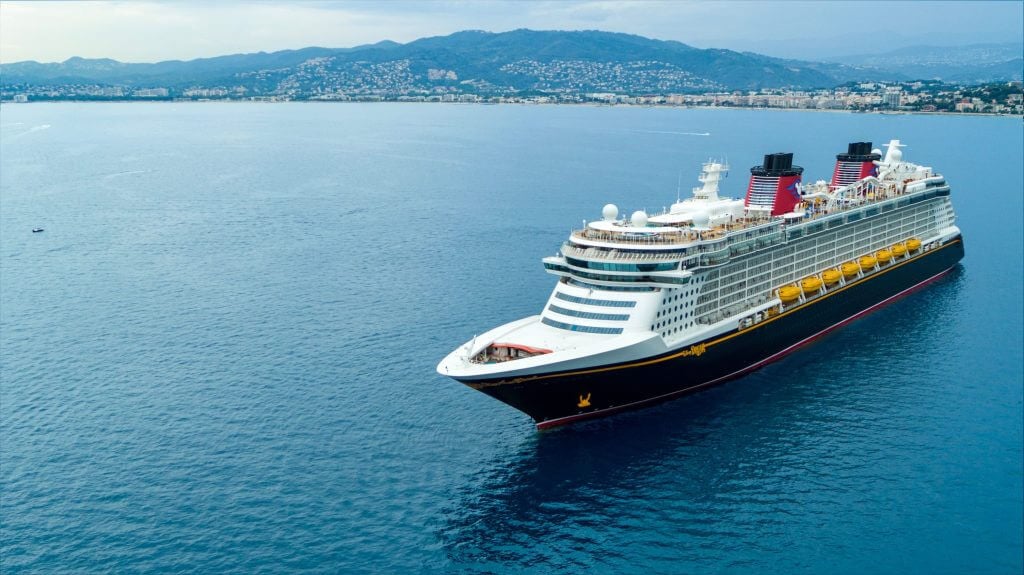
cruise ship anchored on French Riviera
Regional rules have been proposed to govern cruise ships in the Bay of Cannes and the popular Riviera ports (Disney Cruise Line)

Published Oct 14, 2025 5:04 PM by The Maritime Executive


The regional prefect for Alpes-Maritimes has finalized rules to manage future large cruise ship calls after the local authorities had attempted to take matters into their own hands. The prefects announced the proposed rules which will govern areas ranging from the Bay of Cannes and the popular ports of Cannes, Nice, and Villefranche.

The regional prefect of the Ales-Maritimes, Laurent Hottiaux, and the Maritime Prefect for the Mediterranean, Christophe Lucas, initiated a territorial consultation on the subject starting in July and concluded with a meeting on October 10. They included the various municipal authorities, the Chamber of Commerce, the Union of Businesses, and the trade group Cruise Line International Association in the discussions and will now present the final decision to the public for comments before it is finalized and published in a prefectural decree.

The debate created headlines when the outspoken Mayor of Nice, Christian Estrosi, who is also the President of the region enacted two different versions of a ban on large cruise ships from the Bay of Cannes. In July, he went out into the bay on a small boat creating a scene with the anchored cruise ship Voyager of the Seas. He was filmed yelling “Get lost. Get out of here,” as he claimed the ship was violating the new restrictions. He admitted that they needed regional rules and a court in July suspended the rules saying the authority was with the regional prefects.

The rules proposed by the prefect will set a maximum of 3,000 passengers per cruise ship stopover in each port and a limit of one per day for all ships with more than 1,300 passengers. Further, they are requiring an annual average of 2,000 passenger disembarkations per stopover per port. During high season in July and August they will permit a maximum of 15 ships per month.

Villefranche and Nice had instituted a ban prohibiting cruise ships with a capacity of over 2,500 passengers from disembarking in the bay. Nice also wanted to restrict cruise ships docking in the city to just 450 passengers. The goal had been to chase larger cruise ships to Marseilles or elsewhere to maintain the atmosphere of the French Riviera. 

The prefect highlighted the challenges with regulating the cruise ships. They said they did not want to disrupt port calls, which they said were booked two years in advance. The goal was not to postpone or cancel stopovers in the different bays, but they also recognized the need to maintain “tranquility” for the local population and reconcile the environmental concerns with those of economic and tourism. Also, the rules only focus on cruise ships and do not apply to the cruise ferries operating from the ports.

Under the new rules, the prefect also said that they will give priority to cruise ships and lines that are adhering to the “sustainable Cruise in the Mediterranean” charter that was adopted in 2025. It calls for the use of less polluting fuels and managing emissions while on dock or anchored close to shore.

A further restriction pertains when the prefect declares peak pollution events. During a Level 1 event cruise ships will be required to reduce emissions within three nautical miles from shore. In the event of a Level 2 declaration, the cruise ship stopover must be canceled.

The prefects thanked everyone for their cooperation. They said they were confident that the regional rules would balance the local concerns with the economic issues. 


Video: China Sets Speed Record as Boxship Completes Arctic Transit to UK

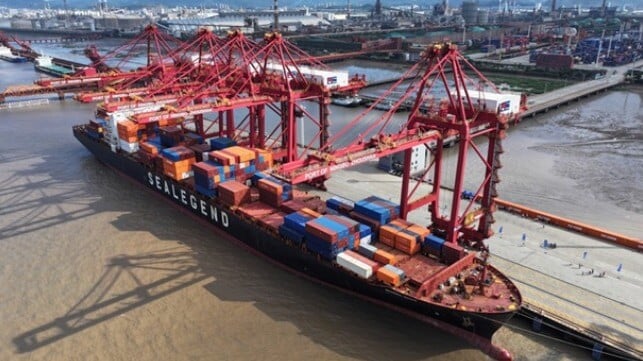
Chinese containership
Istanbul Bridge loading for the voyage in China ( Ningbo Zhoushan Port)

Published Oct 14, 2025 6:23 PM by The Maritime Executive


Chinese officials are celebrating the arrival in record time of the containership Istanbul Bridge at the Port of Felixstowe. The vessel arrived overnight in the UK, with Chinese officials saying it demonstrates the viability of the Arctic route and critically diversifies the shipping routes, adding a fourth means of getting goods between China and Northern Europe.

The vessel departed the Ningbo-Zhoushan port on September 22. It was expected to take about 18 days for the transit, but Reuters reports the ship was delayed for two days by bad weather off the coast of Norway. The transit was completed with the vessel docking in the UK around 2130 local time on October 13, approximately 21 days after departure. 

Chinese officials are saying it is the fastest route to Europe, noting that their China-Europe Railway Express requires approximately 25 days. Sailing via the Suez Canal takes about 40 days, while rounding the Cape of Good Hope in Africa adds about 10 days for a total transit of 50 days.

Built in 2000, the vessel is 66,781 dwt with a capacity of 4,890 TEU. The ship is registered in Liberia and operates for a Chinese company, Sea Legend. Reports vary on exactly how much cargo was aboard the ship, but it appears it had at least 4,000 TEU aboard, with the Chinese reporting it was transporting clothing, energy storage cabinets, batteries, and other goods. They set the value of the cargo at $197 million.


The reports note that the vessel was making the transit at the ideal time of the year with the lowest amount of ice. The ship does not have an ice hull but was able to make the transit without an icebreaker.

The Chinese also used the opportunity to make indirect negative remarks about the United States by emphasizing that their trade with Europe remains strong and uninterrupted. They said the Europeans are anxious for the deliveries of photovoltaics, lithium batteries, and electric vehicles, and that the use of this route would speed the deliveries and diversify routes to Europe. 

Officials at the port of Ningbo hailed the start of the new service, saying the European Union is its largest trading partner and growing in significance. They valued trade in the first nine months with the EU at more than $46 billion. The report says trade to the EU has grown 12 percent year-over-year and now accounts for about 18 percent of the Ningbo Port’s total foreign trade.

The ship departed Felixstowe on Tuesday afternoon and is underway to Hamburg, Germany, where it is due on Wednesday, October 15. It had been scheduled to stop in Rotterdam, but with the strike by lashers and delays at the port, it appears to be skipping the call. After Germany, it is to proceed to Gdansk, Poland.

The Chinese have been moving to adopt the Northern Sea Route in support of Russia and its goals for shipping through the Arctic. China’s NewNew Shipping Co. started operations on the route two years ago and has committed to growing the service. Its vessel NewNew Polar Bear arrived in the Russian Arctic port of Arkhangelsk for the first time this year in August.

Environmentalists continue to protest the use of the Arctic for shipping and cite the environmental and operational dangers. However, with the melting ice, Russia has committed to continuing to push toward its goal of consistent year-round transits through the region. By 2030, Russia’s goal is to see 200 million tons of cargo annually transit the Arctic.


New Zealand Selects Chinese Yard to Build Ferries for Interisland Service

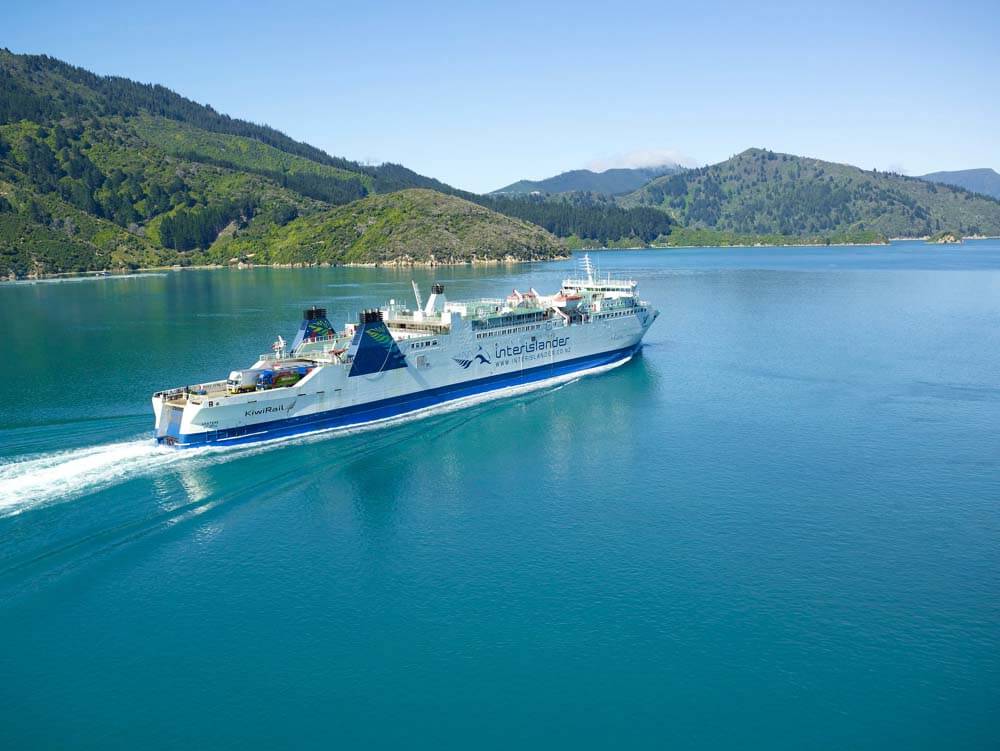
New Zealand Interislander ferry
New Zealand planes to replace its two remaining ferries with modern ships by 2029 (KiwiRail)

Published Oct 14, 2025 8:33 PM by The Maritime Executiv


New Zealand authorities announced the selection of a Chinese shipbuilder for the much-troubled and sometimes controversial project to build new interisland ferries. The project has become politically charged with a new promise of a “no-nonsense solution.”

Rail Minister Winston Peters announced that they have selected China’s Guangzhou Shipyard International (GSI) to build two new ferries. He said that contract negotiations are underway, as well as new port agreements. He reports that they intend to finalize all the contracts and announce the details before the end of the year.

“We want the best deal possible for New Zealand taxpayers, and a shipbuilder of the competence, capability, and capacity of GSI underscores the high degree of confidence in our no-nonsense ferry replacement program,” said Peters. He promises to also detail how the new approach is being accelerated, but will save money for taxpayers after the government ended in 2023 a previous project.

Media reports estimate that the government has spent approximately US$380 million to date on the replacement project, which started in 2020. The original concept was later replaced with more modern, high-tech ferries, and contracts were awarded in 2021 to South Korea’s HD Hyundai, before the government terminated the project. It had to settle with the Koreans to end the prior program.

Peters says they are back to the no-nonsense solution stated in May 2020. The project will be completed, he promises, on a fixed price and a firm delivery date of 2029. The ferries will be 200 meters (656 feet) in length with road and rail decks and room for 1,500 passengers. Media reports say there will be 2.4 km of lanes for trucks and space for 40 rail cars. The plan calls for the vessels to operate crossing the Cook Strait for the next 30 years.

Earlier this year, the government established a new entity to take responsibility for the Cook Strait ferry replacement work program following the cancellation of project iReX and the building of vessels that would have required new terminals. However, the new project will also require infrastructure upgrades at the ports for the vessels, which will be larger than the current two-vessel fleet.

KiwiRail has a troubled history of operations, which they also hope to correct with the new vessels. In August, the company retired a third ferry, Aratere, that had been operating for 26 years. It was the only one of the fleet fully designed to take rail cars, but its continued operation would have interfered with the required updates for the ports.

The company said at the end of last week that it had sold the Aratere for recycling. It is going to a middleman, who will deliver it to a shipyard in India. Executive General Manager for Interislander, Duncan Roy, said the company has conducted due diligence and a physical inspection of the yard to ensure the environmental standards. He said Aratere is not suitable for most ferry operators due to its age and that it would have required significant modifications or specialized port infrastructure. KiwiRail is repurposing appliances, furniture, and other items from Aratere across its operations or donating remaining quality items.


NGO Highlights the Violence of Libya's Militia-Operated Coast Guard

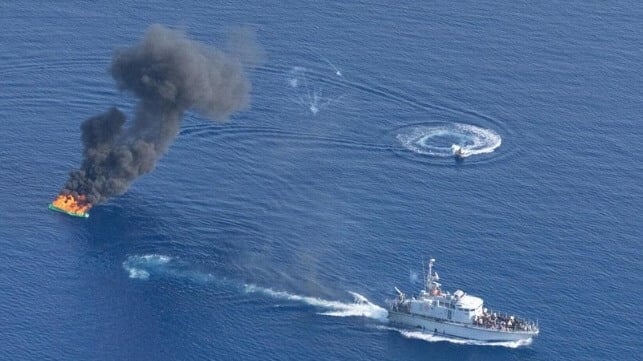
Libyan Coast Guard burns a boat
Courtesy Sea-Watch

Published Oct 14, 2025 6:35 PM by The Maritime Executive


Libya's trans-migration industry has been marked by violence for years, and stories of militia-led abuses against foreigners are commonplace. The Libyan Coast Guard is an umbrella group for the same militias, and its primary mission is in retrieving maritime migrants who have paid smugglers for passage to Europe. The business model is subsidized: the European Union underwrites the operating costs of the coast guard, and the migrants are typically imprisoned and extorted for funds once returned to Libya. In a new report, the NGO Sea-Watch details the frequent violence of a process that has slowed the pace of maritime migration to Europe.

The NGO estimates that since 2016, nearly 170,000 people have been caught at sea by the Libyan Coast Guard and brought back to Libyan shores for further imprisonment, where they re-enter what the UN Fact Finding Mission on Libya calls an "abhorrent cycle of violence." The real number of detainees is likely much higher, Sea Watch believes, but it is difficult to obtain testimony from those who have experienced an interdiction. 

The capture process is ostensibly a rescue but is frequently violent, including beatings and shootings. Occasionally, Libyan Coast Guard members open fire on migrant rescue NGO vessels using EU-donated weapons platforms, with no consequences for the militias' EU funding stream. Gunfire incidents occurred on August 24 and again on September 26; during the August incident, Libyan Coast Guard militia members fired on an NGO vessel for 20 minutes continuously, penetrating the superstructure, breaking bridge windows, and damaging antennas and RIB boats. 

According to Sea Watch, the frequency of known violent incidents is increasing. There were only three in 2016, but there were 11 last year and nine so far in 2025. The NGO believes that these run-ins are underreported, and likely much more frequent for intercepts that happen out of sight.

The report was released in advance of a welcome ceremony for Libyan representatives at the headquarters of Frontex, the EU border-control agency, and at the EU Commission building in Brussels. Both partner with the Libyan Coast Guard on migrant interdiction, and neither have expressed concern about the militias' creative and violent business practices.

"Every new agreement with Libyan regimes, every extension of mandates, legitimizes this violence. It is absolutely outrageous that Frontex and the Commission are now rolling out the red carpet on EU soil for militia men shooting bullets at migrants and our rescue ships," said Bérénice Gaudin, Sea-Watch Advocacy Officer.

The EU has its own challenges, however, and these extend beyond the human rights of individual migrants. Eastern Libyan warlord Khalifa Haftar is drawing closer to Russia, raising the prospect of a Russian-sponsored policy of unrestricted migration from Libya to Europe. This would help Russia to foment internal discontent in the EU and create a distraction for its leaders at a time when European unity and resolve are essential. 

"There is certainly a danger that Russia [will] use migrants and the migration issue as a whole as a weapon against Europe. This weaponization is taking place, and of course we also fear that Russia intends to do the same with Libya," EU Migration Commissioner Magnus Brunner told Politico this summer. "The fact that Russia is increasing its influence in Libya is precisely our concern, and that’s why we must also engage with Libya."


"Pirate Ship" Goes Down off Puerto Vallarta

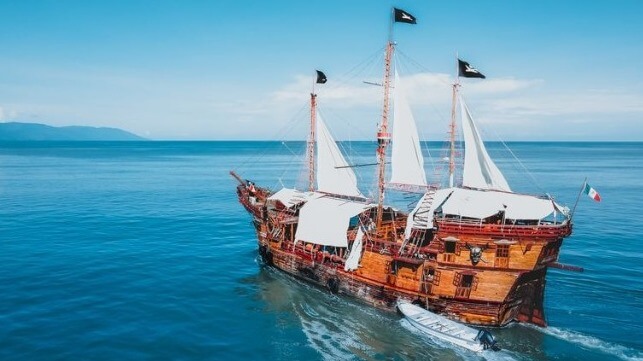
Marigalante
Marigalante (courtesy Pirate Ship Vallarta)

Published Oct 14, 2025 8:03 PM by The Maritime Executive


The sailing tour vessel Marigalante has gone down off the coast of Puerto Vallarta, its home port since the 1990s. The landmark local attraction fell victim to flooding and a failed bilge pump, according to the operator. 

Marigalante was a replica of Christopher Columbus' Santa Maria, and was built in 1987 to commemorate the 500th anniversary of his voyage of discovery. It had been in Puerto Vallarta for more than three decades and was a well-known fixture on the waterfront. As a harbor tour vessel, it motored out on two itineraries - a day trip and a dinner cruise. Though the vessel operated "under sail," its small spread of canvas was largely decorative. It received generally positive reviews on TripAdvisor. 

On October 11, Marigalante was operating off the coast of Puerto Vallarta in rough surface conditions. A bilge pump broke down, and the crew turned around to return to port. Upon nearing the Buenaventura Hotel, the problems became "more severe," and the vessel began to founder, operator Pirate Ship Vallarta said in a statement. 

All of the passengers were safely evacuated, and no injuries were reported. 

The company has promised to support employees who worked aboard the lost vessel, and will be paying out refunds to those who booked future trips. 

A replacement vessel, the Jolly Roger, is already under way and is expected by the end of the year. 

"Today, the Marigalante rests in the waters that were always her home, where she will live on in the memories and hearts of all who saw her sail," operator Pirate Ship Vallarta said in a statement. 


Wind Propulsion Must Anchor the IMO’s Path to Net Zero

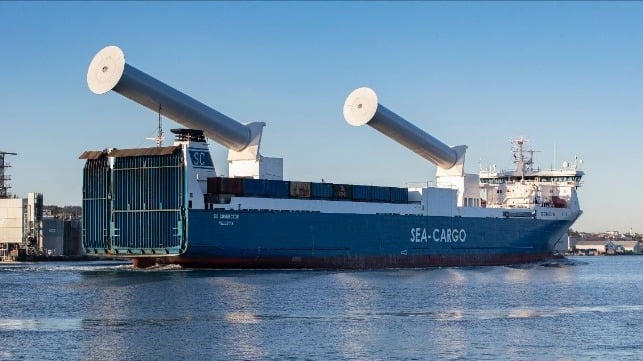
Norsepower rotor sails
Courtesy Norsepower

Published Oct 14, 2025 8:43 PM by The Maritime Executive


By 2050, the world has pledged to reach net zero. For shipping - a sector responsible for moving 90% of global trade - the clock is ticking loudly.

This week’s meeting at the IMO, aptly titled “Extraordinary Session of the Marine Environment Protection Committee (MEPC)” will likely adopt the widely anticipated GFI (Greenhouse Fuel Index), ensuring clarity and alignment of parties. But it still won’t be enough.

Before combustion engines were invented, shipping was a great example of zero carbon technology. For the past 100 years, however, shipping has relied on fossil fuels and, over time, ended up being responsible for some 3% of the world’s total global greenhouse gas emissions.

Alternative fuels like ammonia, methanol, and hydrogen are often framed as the future of clean shipping and will undoubtedly play an important role. But these fuels are costly and not always readily available. Wind, an abundant element, is the key to driving decarbonization.

Wind propulsion is as practical as it is scalable. Wind can reduce fuel consumption and emissions between 5-25% - and in good weather conditions, for up to 70%. This isn’t a hypothetical prediction; these results are verified, repeatable, and achievable across a range of vessels, as demonstrated across the world’s biggest trade routes.

The IMO’s Net-Zero Framework provides a unique opportunity to embed wind propulsion in regulatory and incentive mechanisms. The International Wind Shipping Association (IWSA) calls for consistent and equitable treatment of wind propulsion within its proposed framework. 

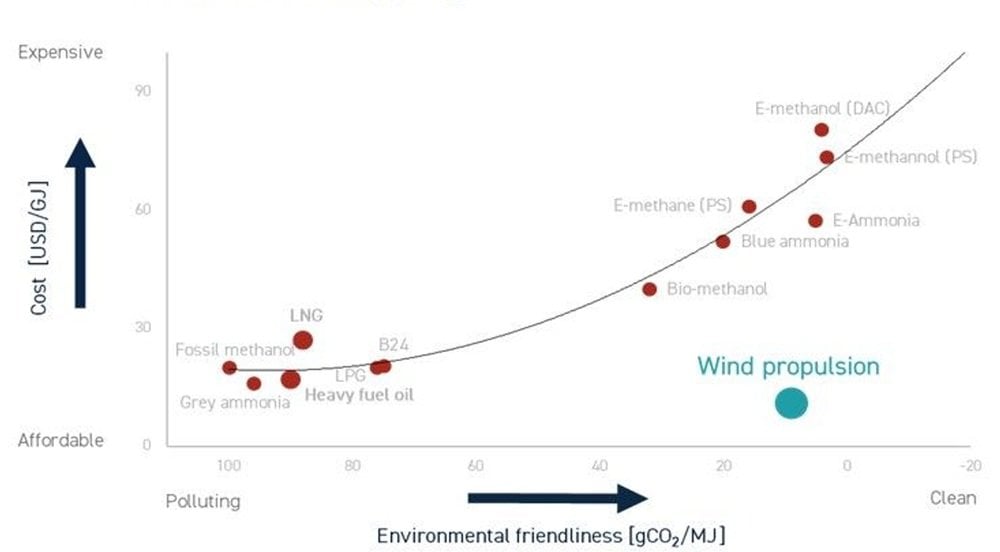
Based on the best data from our experts’ projections, Energy Cost-Emissions Curve’ measurement tool (below) shows that while adopting alternative fuel types mean lower carbon emissions, they also result in higher energy costs. As the pioneers of wind propulsion technology, we know this too well. With 35 sails built and installed and 48 on order now, we see wind propulsion as the only solution that achieves both low energy costs and high GFI improvement potential. 

Courtesy Norsepower

Recognition of wind propulsion as a cornerstone technology by the IMO would accelerate adoption, ensure better overall compliance, deliver long-term investment in sustainability and most importantly, significantly reduce emissions.

Momentum is already building, with wind propulsion technologies now increasingly recognized by shipowners and operators as a proven, class-approved technology, operating successfully across global fleets.

As the MEPC convenes, decision-makers must acknowledge that the winds of change are not theoretical: they are measurable, reliable, and ready to scale.

Heikki Pöntynen is CEO of Norsepower.

The opinions expressed herein are the author's and not necessarily those of The Maritime Executive.


Canada’s Horizon Aircraft picks Pratt & Whitney engine for its hybrid aircraft

By Reuters
October 14, 2025 at 8:22AM EDT

New Horizon unveiled the Cavorite X7 at The Rare Earths Mines, Magnets and Motors conference in Toronto.

The Canada-based electric vertical takeoff and landing aircraft (eVTOL) firm will integrate the engine, which powers thousands of commuter, agricultural, and business aircraft globally, into its Cavorite X7 aircraft.

While U.S. air-taxi firms like Joby and Archer Aviation have put much of their focus on all-electric models, Horizon is betting on hybrid-electric technology.

Horizon is also planning to produce the aircraft for customers including emergency services and defense companies, apart from commercial operators.

Hybrid aircraft offer operational advantages over all-electric designs, including using warm air from the engine for de-icing and cabin heating, CEO Brandon Robinson told Reuters.

The aircraft’s battery array can recharge en route within minutes, allowing for a full charge during the landing phase, he said.


The Cavorite X7 can carry up to seven passengers and travel up to 800 km.

Horizon plans to have certified aircraft in production prior to 2030.

EVTOL firms, including air taxi operators, are racing to secure approvals, strengthen their supplier base and bring their vehicles to market, aiming to meet the growing demand for faster, more sustainable urban transportation.

Pratt & Whitney Canada is a subsidiary of U.S.-based defense contractor RTX.

Horizon Aircraft has a market value of about US$150 million as of its closing price on Monday, according to data compiled by LSEG.

(Reporting by Anshuman Tripathy in Bengaluru; Editing by Sahal Muhammed)
Expanded U.S. tariffs an ‘existential threat’ to B.C. forestry industry, Eby says

By Ian Holliday
October 14, 2025 
CTV NEWS

B.C. Premier David Eby speaks at a news conference about new U.S. tariffs on softwood lumber on Tuesday, Oct. 14, 2025. (CTV News)

B.C. Premier David Eby is calling on the federal government to support workers whose jobs are put at risk by the “unfair” and “unjustified attack” on the Canadian forestry industry by U.S. President Donald Trump.

The U.S. leader recently announced an additional 10 per cent levy on softwood lumber, bringing the total tariff on such products to 45 per cent, which Eby said at a news conference Tuesday is higher than the tariff the U.S. imposes on lumber from Russia.

“It doesn’t make any sense, and this attack has serious consequences for Canadians and for British Columbians,” he said.

The new tariffs took effect Tuesday, leaving B.C.’s forestry industry on a “knife edge,” Eby said.

The premier compared the tariffs on softwood lumber to those the Trump administration has imposed on the automotive and steel industries, which are similarly “foundational” industries in Ontario. When jobs are threatened in those industries, it’s treated as a national crisis, “and rightly so,” Eby said.


“What we’re asking for today is that that same respect, that same concern, that same sense of emergency is shared for the forest sector in this country,” the premier said.

He added that forestry is a bigger contributor to Canada’s gross domestic product than automobiles or steel, and a similar response from the federal government ought to be forthcoming.

“We are calling on Ottawa to stand with us, all governments together, to ensure that they’re deploying the more than $1 billion they’ve committed to the forest sector with urgency,” Eby said. “There is no time to wait. Jobs and mills are on the line.”

Asked whether he thinks the federal government will show the urgency he’s asking for, Eby admitted to feeling some “anxiety.” He attributed the feeling, in part, to being from Western Canada and having seen issues affecting Ontario and Quebec take precedence for the federal government, historically.

He referenced recent comments from federal Minister of Industry Melanie Joly about trade negotiations with the United States.

“When I see Minister Joly say we’re talking about steel, we’re talking about energy, and she doesn’t include forestry in that list, it tells me that we’ve got to be more in the face of the federal government,” Eby said. “They don’t get it yet.”

The premier described the latest tariffs as an “existential threat” to the forestry industry, and said B.C. and Canada must work to find alternative markets for its products while supporting workers and communities facing curtailments.

Joining Eby at the news conference outside the United Steel Workers District Head Office in Burnaby were representatives from forestry workers’ unions, companies in the industry and First Nations.

Speakers – including B.C. Minister of Forests Ravi Parmar, USW District 3 director Scott Lunny and Unifor western regional director Gavin McGarrigle – praised the show of unity, saying all parties need to work together in the face of continued tariff aggression from the U.S.

“You know, 45 per cent is a number, but behind that there are real people,” said Lunny. “There’s paycheques, there’s families, there are whole communities.”


Parkland-Sunoco deal receives Investment Canada Act approval

By The Canadian Press
October 14, 2025 

Parkland Corp.'s Burnaby Refinery is seen on the waters of Burrard Inlet in an aerial view, in Burnaby, B.C., on Monday, June 30, 2025. The refinery produces gasoline, diesel, jet fuels, asphalts, heating fuels, heavy fuel oils, butanes, and propane. 
THE CANADIAN PRESS/Darryl Dyck

CALGARY — U.S. fuel distributor Sunoco LP’s proposed takeover of Calgary-based fuel retailer and refiner Parkland Corp. has cleared a key regulatory milestone with Ottawa’s approval under the Investment Canada Act.

The transaction is expected to close in the fourth quarter of this year, subject to remaining regulatory approvals and the satisfaction or waiver of customary closing conditions, Parkland said in a release Tuesday.

A review under the Investment Canada Act considers whether foreign investments would be a net benefit to the country or cause potential harm to national security.

The Parkland-Sunoco deal was announced at a time of fraught Canada-U.S. relations and amped-up resource nationalism amid the onslaught of U.S. President Donald Trump’s tariffs.

Earlier this year, Ottawa recently updated national security guidelines under the act to account for potential harms to Canada’s economic security. The government said it will consider the size of the Canadian business, its place in the innovation ecosystem and the impact on Canadian supply chains.

Parkland and Sunoco announced the friendly cash-and-stock deal valued at US$9.1 billion including assumed debt in May following a bitter proxy battle with investors in the Canadian company unhappy with its performance and strategy.

Parkland owns the Ultramar, Chevron and Pioneer gas station chains as well as several other brands in 26 countries. Sunoco outlets that had long operated in Canada were rebranded in 2009 under the Petro-Canada banner.

Parkland also runs a refinery in Burnaby, B.C., which supplies nearly one-third of the region’s domestically supplied gasoline and jet fuel.

The deal cleared a key U.S. antitrust hurdle last month when the waiting period under the Hart-Scott-Rodino Act expired.

Shareholders approved the takeover in June.

This report by The Canadian Press was first published Oct. 14, 2025.
N.S. creates portal aimed at making it easier for mining companies to track permits

By The Canadian Press
October 14, 2025 

Nova Scotia's provincial flag flies on a flagpole in Ottawa  
THE CANADIAN PRESS/Adrian Wyld

HALIFAX — Nova Scotia has created a new online portal it says would eventually allow mining companies to apply for and track their permit applications online.

The provincial government says this move is part of its efforts to make it easier for mining firms to do business in Nova Scotia.

The first phase of the project will allow firms to check the status of their applications for licences and permits.

An official with the department says it has spent $60,000 on this initial phase.

The province says it anticipates the portal will become a “one-stop shop” for mining companies.

Natural Resources Minister Tory Rushton says simplifying the permitting process in this way will give industry better access to important information about their projects.

The creation of the portal “further shows that Nova Scotia is open for responsible resource development,” Rushton says.

This report by The Canadian Press was first published Oct. 14, 2025.

The Canadian Press