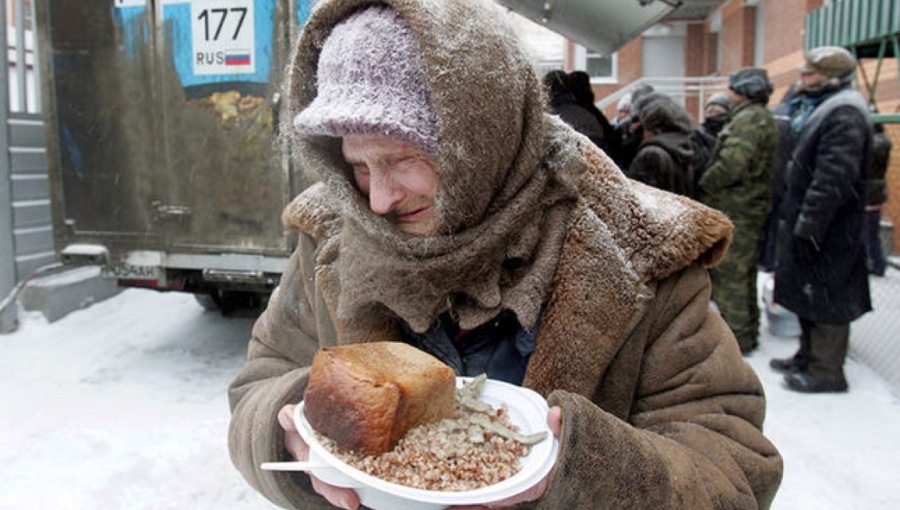
Ukraine’s reconstruction debate often centres on infrastructure, security guarantees and the scale of international financing. Yet a new analytical report by the Kyiv School of Economics (KSE) argues that the country is becoming more dependent on a shrinking number of workers.
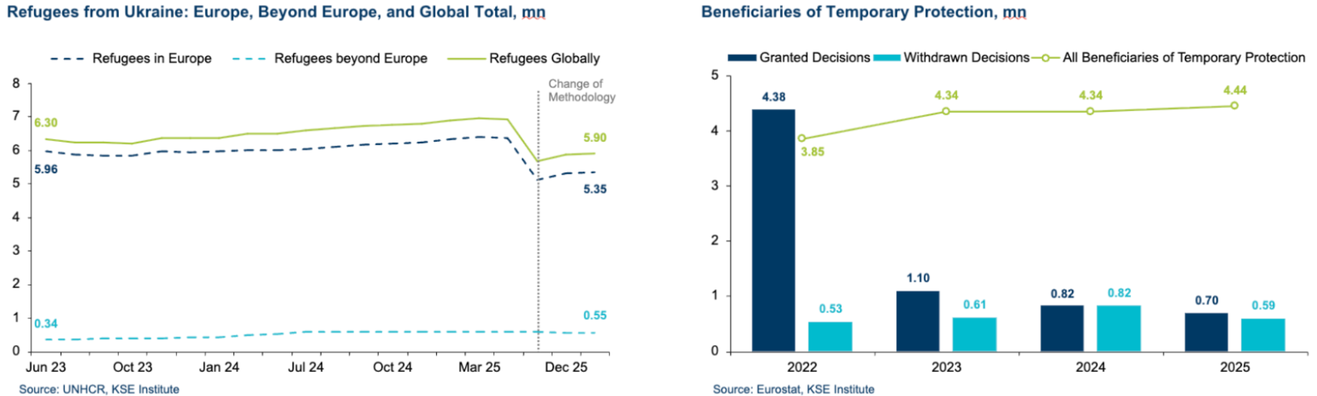
Ukraine has the worst demographics in the world. Mortality is running three times faster than fertility. And from the estimated 5.9mn Ukrainians living outside of the country, mostly in Poland and Germany, a recent survey found that less than half intend to go home should the war come to an end.
The country’s most pressing constraint is becoming demographics and social rather than physical or the lack of capital: a labour force shrinking relative to the number of people dependent on state support, says KSE.
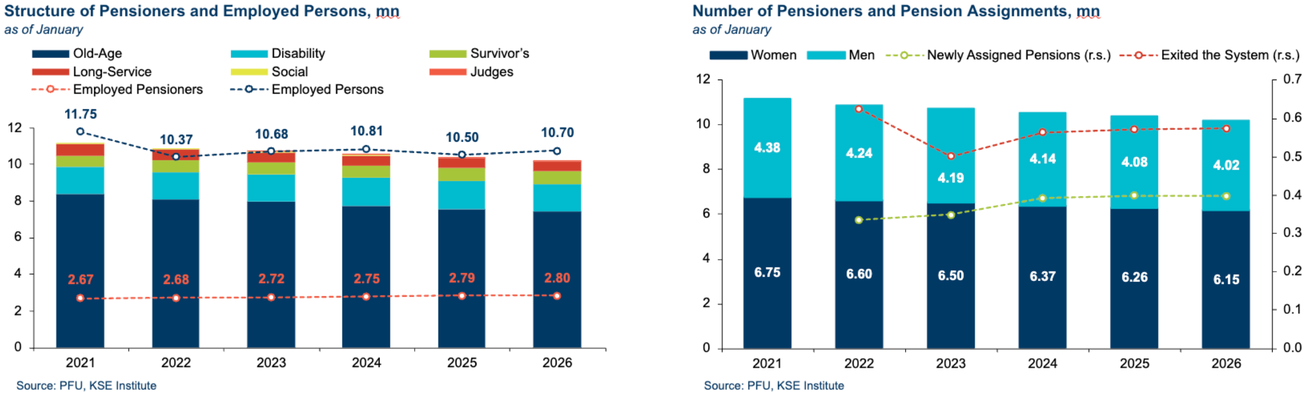
“Ukraine’s human capital profile is becoming more dependent,” KSE researchers write, warning that the narrowing gap between contributors and beneficiaries is placing growing strain on the country’s fiscal capacity. In 2025, employment fell to 10.7mn people, while the number of pensioners rose to 10.2mn. The result is a sharply compressed contributor–beneficiary base that complicates the financing of social protection during wartime and the eventual recovery period.
For comparison, in Russia, there are now roughly 1.7 to 1.8 workers for every pensioner, down slightly from about two workers per retiree around 2015, according to official pension and labour statistics. China’s ratio has fallen more sharply as its population ages rapidly: the country used to have ten workers for every pensioner 20 years ago but that has fallen to about 2.5 to 2.7 contributors per pensioner today, compared with roughly three workers per retiree a decade ago.
The vulnerability across Ukrainian society has expanded dramatically in recent years. The KSE analysis notes that 4.6mn internally displaced people remain within the country, alongside 1.7mn veterans and 3.6mn people living with disabilities. Together these groups significantly increase demand for public support services, from healthcare and rehabilitation to labour-market integration.
Fiscal capacity has not yet collapsed. Total resources allocated to social protection and security, including Social Security Contributions, reached $28.2bn in 2025, an increase of 6%. But KSE warns that wartime spending patterns mask deeper structural risks. “While resources have expanded, the risks of a post-war contraction remain high,” the report notes, suggesting that sustaining support levels could prove difficult once emergency financing subsides.
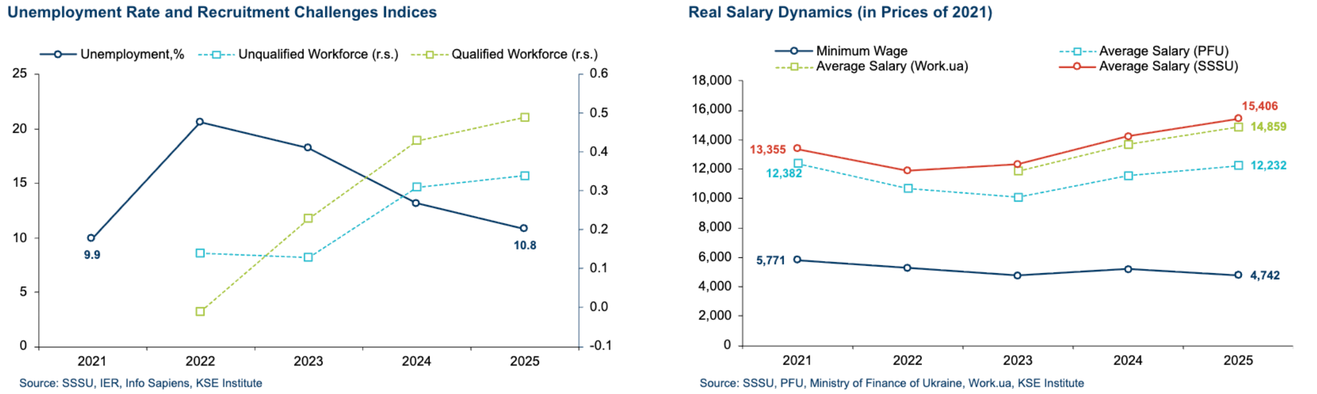
The labour market itself presents a paradox. Unemployment has fallen sharply since the early months of the invasion — from 20.6% in 2022 to roughly 10–11% in 2025 — yet employers continue to report acute labour shortages. According to KSE, this reflects structural mismatches created by displacement, mobilisation and skills gaps rather than a healthy labour market equilibrium.
“Shortages can coexist with high unemployment when geographic and skill displacement combine with mobilisation pressures,” the researchers argue. Existing policies, they add, remain fragmented and overly focused on retraining programmes. Only 21.8% of veterans who applied to the Public Employment Service in 2025 secured jobs, highlighting the need for broader measures to remove barriers to employment and expand inclusive labour-market participation.
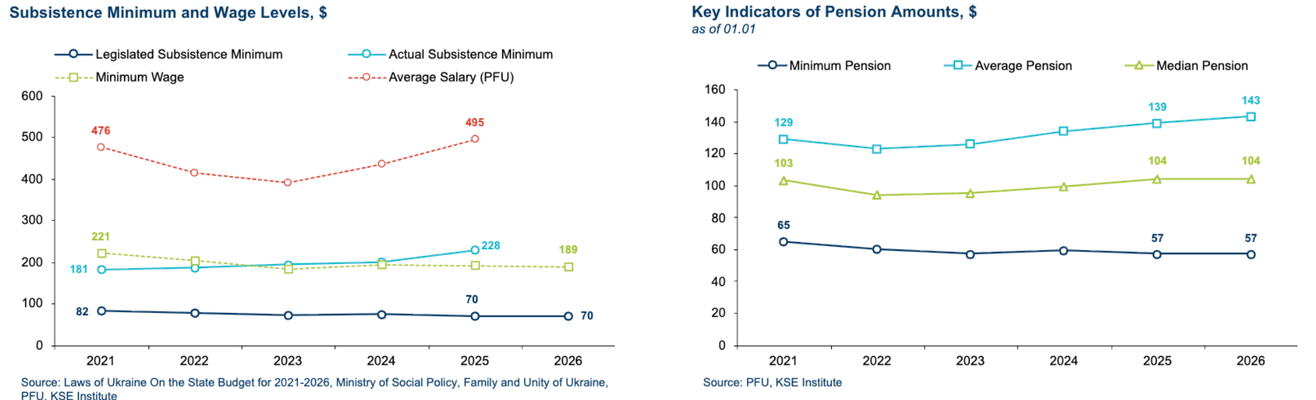
Inflation has further complicated the social landscape. With consumer prices rising by 11.2% in 2025, KSE estimates the actual subsistence minimum at $228 per month — far above the legislated level of $70 and the statutory minimum wage of $192. Pensioners are particularly exposed: the median pension stands at $104, with the minimum at just $57, leaving most retirees well below the cost of living.
Migration trends add another layer of uncertainty. Around 5.9mn Ukrainians remained abroad in 2025, including 5.3mn in Europe. Women and children account for nearly three-quarters of those outside the country, a demographic shift that reduces both the current labour supply and the future workforce.
“Large-scale permanent return appears unlikely in the near term,” the KSE report says, noting that refugee numbers have stabilised but remain fluid. As a result, policymakers should complement return incentives with long-term engagement with citizens abroad and circular mobility arrangements that allow Ukrainians to work across borders while maintaining ties to the domestic economy.
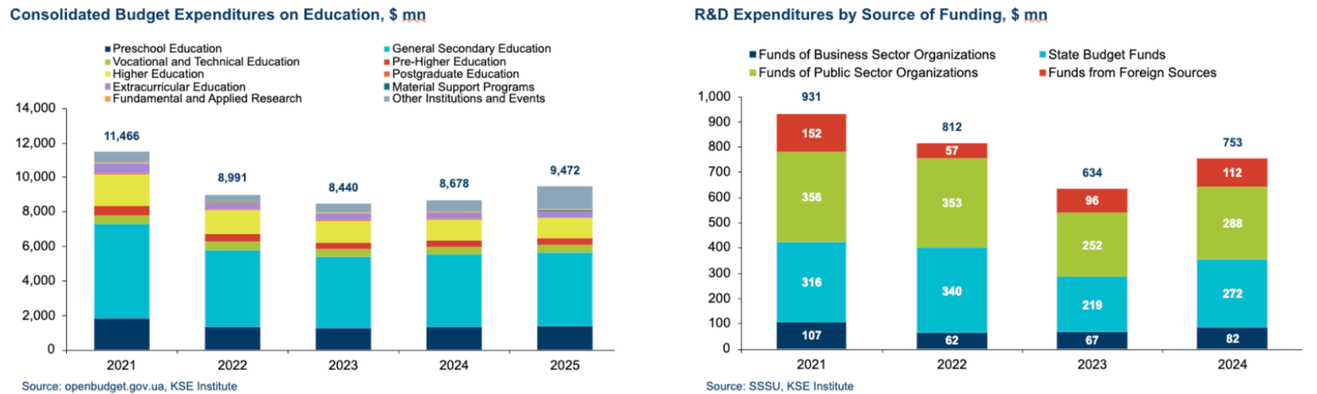
Education, another pillar of long-term growth, has stabilised after the disruption of the 2022 invasion but remains fragile. Nominal education funding in 2025 stood at 82.6% of its 2021 level, while student numbers fell to 87.8% of pre-war levels. Researchers also warn of declining participation in science subjects, narrowing the pipeline of STEM graduates needed for reconstruction.
Against this backdrop, the government is preparing a set of structural reforms in 2026. A new labour code is intended to expand labour-market participation among vulnerable groups, including women with children. Pension reform aims to strengthen adequacy and reduce poverty risks, while a revised methodology for calculating the living wage is expected to align social benefits more closely with actual living costs.
For KSE researchers, the underlying message is clear: rebuilding Ukraine will require more than capital investment. It will depend on whether the country can rebuild the foundations of its workforce and reduce the growing imbalance between those who contribute to the economy and those who depend on it.
The Kyiv School of Economics (KSE) is a bne IntelliNews media partner and a leading source of economic analysis and information on Ukraine. This content originally appeared on the KSE website. Read the full report here.

No comments:
Post a Comment