Monday, October 27, 2025


JMIR Medical Education invites submissions on bias, diversity, inclusion, and cultural competence in medical education


JMIR Publications

JMIR Medical Education Invites Submissions on Bias, Diversity, Inclusion, and Cultural Competence in Medical Education 

image: 

JMIR Publications invites submissions to a new theme issue in its premier open access journal JMIR Medical Education exploring the pervasive issue of implicit and explicit biases in health care, including those related to gender, ethnicity, and sexuality

view more 

Credit: JMIR Publications


(Toronto, October 27, 2025) JMIR Publications invites submissions to a new theme issue in its premier open access journal JMIR Medical Education titled "Bias, Diversity, Inclusion, and Cultural Competence in Medical Education." The open access journal is indexed in MEDLINE, PubMed, PubMed Central, Scopus, DOAJ, and the Emerging Sources Citation Index (Clarivate) and received a Journal Impact Factor of 12.5 according to the latest release of the Journal Citation Reports from Clarivate, 2025.

Biases, both conscious and unconscious, significantly impact judgment, decision-making, and ultimately patient care. This call for papers seeks research that examines how these biases manifest, from gender blindness and male bias to racial essentialism and diagnostic overshadowing, and their effects on clinical practice, professional advancement, and the educational training environment.

Bias and discrimination within the medical profession have far-reaching effects on population health, health care policy, and access to care. These issues influence clinical practice, professional development, and institutional decision-making, impacting health care workers across all disciplines. Submissions are encouraged that address disparities such as the underrepresentation of women in leadership and the challenges faced by men in female-dominated fields, and explore their consequences on professional opportunities, academic promotion, and clinician burnout.

To address these inequities, health care organizations are increasingly implementing equity policies and training. The journal welcomes papers that discuss the effectiveness of these interventions, explore the role of equity-focused language, and propose strategies to mitigate structural racism and health disparities. Submissions should contribute to fostering a more equitable and inclusive health care environment through explicit conversations about power dynamics, oppression, discrimination, and exclusion.

JMIR Medical Education is committed to advancing this agenda and is currently accepting manuscripts for a themed issue on bias, gender, ethnicity, and intersectionality in medical curricula. Possible topics include clinical delivery models, online resources, instructional modules, competency assessments, medical simulations, classroom dynamics, or gendered aspects of the hidden curriculum. Given the journal’s focus on technology-enhanced learning, digital education strategies, and health systems science, submissions that use digital health technologies and informatics competencies at the individual, community, population, or societal levels will be prioritized

Submissions are invited on, but not limited to, the following topics:

  • Strategies and educational frameworks for enhancing professional competence in gender awareness and anti-racism

  • Teaching health professionals about implicit and explicit bias as it relates to gender, race, and class with other social and structural determinants of health

  • Demonstrating how educators can incorporate intersectionality frameworks into digital learning environments 

  • Strategies using artificial intelligence (AI), virtual reality (VR), or augmented reality (AR) to teach intersectional approaches to patient care

  • Case studies of adaptive learning platforms to address the intersecting identities of patients and trainees

  • Gender awareness training in disciplines specializing in women’s health, including obstetrics and gynecology, internal medicine, family practice, mental health, and pediatrics and adolescent medicine

  • The role of health care professionals in recognizing and mitigating gender bias and racial discrimination relating to digital health products and health systems delivery

  • Interprofessional care models and communication strategies to improve women’s health, wellness, engagement, and overall health care experience

  • Instructional modules and practical strategies for health professional learners to address racism in the classroom and the workplace 

  • Simulations using digital health tools to provide professionals with experience managing women’s health issues, racial disparities, and immigrant health care needs

  • Online and mobile educational materials on intersectionality

  • The use of digital tools and other innovative strategies to teach topics such as interpersonal violence, sexuality and sexual problems, adverse childhood experiences, and trauma-informed care

  • Novel learning platforms and modalities for clinicians and health care professionals to learn and develop competencies in bias awareness, including the use of virtual reality (VR), augmented reality (AR), or extended reality (XR) and gamified or adaptive learning platforms

  • Development of institutional policies that promote diversity, equity, and inclusion across the continuum of learning

  • Digital and data science strategies to track bias in professional development, promotion, and practice (eg, gender data for faculty salary, appointments, editorial positions, and solicitations)

To learn more please visit the website

About JMIR Publications

JMIR Publications is a leading open access publisher of digital health research and a champion of open science. With a focus on author advocacy and research amplification, JMIR Publications partners with researchers to advance their careers and maximize the impact of their work. As a technology organization with publishing at its core, we provide innovative tools and resources that go beyond traditional publishing, supporting researchers at every step of the dissemination process. Our portfolio features a range of peer-reviewed journals, including the renowned Journal of Medical Internet Research.

To learn more about JMIR Publications, please visit jmirpublications.com or connect with us via BlueskyXLinkedInYouTubeFacebook, and Instagram.

Head office: 130 Queens Quay East, Unit 1100, Toronto, ON, M5A 0P6 Canada

Media Contact: communications@jmir.org

The content of this communication is licensed under the terms of the Creative Commons Attribution License (https://creativecommons.org/licenses/by/4.0/), which permits unrestricted use, distribution, and reproduction in any medium, provided the original work, published by JMIR Publications, is properly cited.


SwRI receives $9.9 million contract to assess reliability of F-16 landing gear components


Structural engineers will leverage probabilistic analysis, fatigue expertise


Southwest Research Institute

F-16 Fighting Falcon 

image: 

Southwest Research Institute (SwRI) has received a seven-year, $9.9 million contract from the U.S. Air Force to extend the life of landing gear for the F-16 Fighting Falcon fleet. SwRI will leverage its aging aircraft expertise to predict when parts need replacement, determine the root causes of failure and improve maintenance practices.

view more 

Credit: U. S. Air ForceSAN ANTONIO — October 27, 2025 — Southwest Research Institute (SwRI) has received a seven-year, $9.9 million contract from the U.S. Air Force to predict the life of landing gear components for the F-16 Fighting Falcon fleet. SwRI will leverage its aging aircraft expertise to predict when parts need replacement, determine the root causes of failure and recommend improvements to maintenance practices. The contract falls under the Comprehensive Landing Gear Integrity Program, a 20-year, $300 million Indefinite Delivery Indefinite Quantity (IDIQ) contract shared among three organizations, including SwRI.


The F-16 is a compact, multirole fighter first introduced in 1978 and is currently the world’s largest fixed-wing military aircraft fleet, with over 2,000 aircraft in active  service worldwide.

“Aircraft landing gear experience unique conditions compared to other aircraft components,” said SwRI Principal Engineer Laura Hunt, who oversees the project. “We are looking at impact forces during touchdown, stress from towing loads and factors like corrosion and vibration, which make the landing gear particularly vulnerable to fatigue and damage over time.”

SwRI has provided technical engineering support to the Air Force for several decades under the Aircraft Structural Integrity Program (ASIP) and the U.S. Air Force Academy Center for Aircraft Structural Life Extension (CAStLE). These programs address aging aircraft structures and material degradation. SwRI has developed structural health monitoring systems and specialized inspection probes, as well as the NASGRO® software, which analyzes fracture and fatigue crack growth in structures and mechanical components.

SwRI aims to improve the efficiency and accuracy of current methods used to estimate the lifespan of landing gear components by applying the Institute’s expertise in flight data recording, full-scale testing, life prediction and probabilistic analysis.

“Our fatigue life prediction experience and probabilistic analysis capabilities set SwRI apart on this work, allowing us to predict the service life of these parts while assessing uncertainties with greater confidence,” Hunt said.

For more information, visit https://www.swri.org/markets/defense-security/defense-aerospace-aircraft/aerospace-structures.


Earliest long-snouted fossil crocodile from Egypt reveals the African origins of seagoing crocs


New fossil species, Wadisuchus kassabi, from the Campanian (80 million years ago) pushes back the evolutionary timeline of Dyrosauridae and highlights Egypt’s Western Desert as a cradle of marine croc evolution.


Mansoura University Vertebrate Paleontology Center (MUVP)

Holotype skull of Wadisuchus kassabi (MUVP 180) 

image: 

Lead author Sara Saber (Assiut University / MUVP), pictured with the holotype specimen of Wadisuchus kassabi (MUVP 180) at the Mansoura University Vertebrate Paleontology Center, Mansoura, Egypt.

view more 

Credit: Hesham Sallam – Mansoura University Vertebrate Paleontology Center


In the Egyptian Western Desert, where red sandstones and green shales rise above the arid plains of Kharga Oasis, paleontologists have uncovered a fossil that fundamentally reshapes our understanding of crocodile evolution.

The new discovery, published in The Zoological Journal of the Linnean Society, was led by a team of Egyptian paleontologists. The newly described species, Wadisuchus kassabi, lived about 80 million years ago and is now recognized as the earliest known member of Dyrosauridae—a group of ancient crocodiles that differed markedly from their modern relatives.

Unlike today’s crocodiles, dyrosaurids thrived in coastal and marine environments, equipped with elongated snouts and slender, needle-sharp teeth ideal for seizing slippery prey such as fish and turtles. Their remarkable survival and dispersal after the extinction of the dinosaurs make them crucial for understanding how reptiles adapted and diversified when global ecosystems collapsed.

The name Wadisuchus kassabi blends Egypt’s landscape and legacy—Wadi (“وادي,” Arabic for “valley”) for the New Valley, where it was discovered, and Suchus for the ancient crocodile god Sobek. The species also honors Professor Ahmed Kassab (Assiut University), whose work in Egyptian paleontology continues to inspire new generations.

Professor Hesham Sallam, Egyptian Vertebrate Paleontologist at Mansoura University, and senior author of the study, said: “The fossils of Wadisuchus kassabi were excavated near Kharga and Baris oases in Egypt’s Western Desert. They include two partial skulls and two snout tips representing four individuals at different stages of growth, providing rare insight into how dyrosaurids developed”. Sallam added: “High-resolution CT scans and 3D surface models enabled us to reveal unprecedented anatomical details”.

Sara Saber, Assistant Lecturer at Assiut University, member of the Sallam Lab team at MUVP, and lead author of the study, said: “Wadisuchus kassabi, was a 3.5–4-meter-long crocodile-like reptile with a very long snout and tall, sharp teeth. It differed from other dyrosaurids, in having four teeth at the front of the snout instead of the primitive five, nostrils positioned on top of the snout for surface breathing, and a deep notch at the tip of the snout where the jaws met. These features show a gradual adaptation in the dyrosaurid bite, marking an important step in their evolutionary history. Saber added: “Beyond the distinctive features of Wadisuchus, it plays a crucial role in understanding the origin of the dyrosaurid group. The new species pushes back evidence for an African origin of Dyrosauridae and suggests that their diversification began earlier than previously thought—possibly during the Early Coniacian–Santonian (about 87–83 million years ago), rather than the traditionally assumed Maastrichtian (about 72–66 million years ago)”.

Belal Salem, PhD student at Ohio University, member of the Sallam Lab, Curator of Fossil Reptiles and Birds at MUVP, and faculty member at Benha University, states: “this discovery indicates that Africa was the cradle of dyrosaurid evolution, from which later lineages spread across the globe and our phylogenetic analyses consistently place Wadisuchus an ancestor of the dyrosaurid group”. Salem continued: “The significance of Wadisuchus lies not only in what it reveals about the evolutionary history of this remarkable group of crocodiles—though that is a major achievement—but also in what it reminds us of: Egypt’s Western Desert still holds treasures that preserve the secrets of our planet’s deep past. Our mission is not only to uncover these fossils but also to protect the fossil-rich sites from urban expansion and agricultural encroachment. They are a legacy for generations of Egyptians to come.”

Life reconstruction of Wadisuchus kassabi from the Late Cretaceous of Egypt, showing an adult capturing a lungfish in a wetland, with a juvenile nearby. The scene highlights the ancient ecosystem, including turtles and lush vegetation, based on fossil evidence from the Quseir Formation. Paleoart by Nathan Dehaut

Credit

Nathan Dehaut – Artwork / MUVP – Scientific supervision


3D compsite skull model of Wadisuchus kassabi [VIDEO] 

3D digital model of the Wadisuchus composite skull (MUVP 180, MUVP 635, MUVP 636, MUVP 637), generated using CT scanning and 3D surface reconstruction.

Credit

Produced by Belal Salem and Joseph Georanke, with data courtesy of Mansoura University Vertebrate Paleontology Center (MUVP).


‘An idea whose time has come again’


CLOCKS FALL BACK ONE HOUR, NOV 2


This weekend the clocks go back and, just like that, the evenings get darker, the days feel shorter, and winter gloom sets in.

But what if we didn’t have to lose all that evening daylight? What if, instead, we made time work for us?

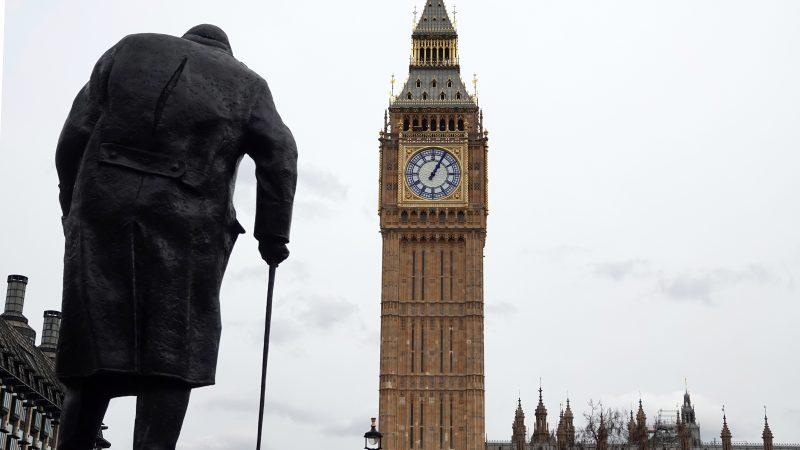
I believe we could, if Britain channels the wartime spirit of the 1940s and introduces double British Summer Time, otherwise known as “Churchill Time.”

READ MORE: ‘Tony Blair is wrong again on clean power – and on what voters really want’

It would create jobs and growth, cut carbon, save money on energy bills and – if Rachel Reeves is reading this – do it all without costing a penny.

A wartime idea fit for a climate crisis

Parliament has been tinkering with the clocks for more than a century. The first British Summer Time Act passed in 1916, was inspired by campaigner William Willett, who complained that too much daylight was being “wasted” while people slept. He even wrote a pamphlet called The Waste of Daylight to make his case.

That led to today’s system – Greenwich Mean Time in winter and GMT plus one hour in summer.

Subscribe here to our daily newsletter roundup of Labour news, analysis and comment– and follow us on BlueskyWhatsAppX and Facebook.

But as Britain faced peril in the Second World War, Winston Churchill went further and moved our clocks two hours ahead of GMT in summer and one hour ahead in winter. Britain was under pressure, and radical ideas were needed. By pushing sunset later and making better use of daylight we saved energy reducing pressure on supplies. 

Today, we face a very different emergency – the climate crisis. And once again, we need bold thinking. ‘Churchill Time’ could be one of those ideas.

Cutting carbon and saving money

The logic is as clear now as it was then. Lighter evenings mean homes and businesses switch on lights and heating later, reducing demand on the grid, and helping everyone cut their bills.

Researchers at the University of Manchester, who I’ve been working with estimate that ‘Churchill Time’ could cut up to five gigawatts from peak electricity demand and save households more than £400 a year. That is a huge saving in both emissions and cash. Experts at the University of Cambridge suggest one extra hour of evening daylight in winter could reduce carbon emissions by around 447,000 tonnes a year, the equivalent of taking 50,000 cars on a road trip around the world.

During a climate crisis, ‘Churchill Time’ offers a practical, no-cost measure that could deliver real and measurable results.

Safer streets and stronger communities

The benefits go well beyond saving energy. Every year, road collisions rise after the clocks go back. The Road Safety Foundation, which supports ‘Churchill Time’, estimates that lighter evenings could reduce accidents and save up to 40 lives a year, easing pressure on the NHS.

Lighter evenings encourage people to get out more, visiting parks, cafés and local shops. That means busier high streets, more customers for small businesses, and a welcome boost for tourism, especially during the October half term. It strengthens communities and supports the economic growth our Government rightly prioritises.

 It’s why organisations like Clacton Pier are on board. The British Association of Leisure Parks, Piers and Attractions says the change could add £3.5 billion a year to the visitor economy. For seaside towns and local attractions, that extra daylight could make a world of difference.

 A health and happiness dividend

 There’s a wellbeing case too. We know reduced sunlight affects mood and mental health. The NHS notes that darker days can lower serotonin levels and contribute to depression. Keeping our evenings brighter for longer could be a small but meaningful step towards improving national wellbeing and building a healthier, happier country.

 Children could play outside for longer. Families could enjoy the park after school or work. More daylight means more opportunity to connect, to move, to live well.

Time for Labour to lead

 This week I held an event in Parliament and quizzed the Prime Minister at PMQs to spark a serious conversation about changing time itself.

Share your thoughts. Contribute on this story or tell your own by writing to our Editor. The best letters every week will be published on the site. Find out how to get your letter published.

Churchill Time‘ costs nothing, yet it could cut carbon, reduce energy bills, boost growth, make our roads safer, and brighten up so many lives.

I think it’s an idea whose time has come again.


Write to UK CEOs who pay cleaners a poverty wage

Members of the Cleaners and Allied Independent Workers Union on a picket line outside the Old Bailey.


“What we are asking for is simply the bare minimum—that those who keep Net-A-Porter’s premises clean and safe are paid enough to live on.”

The Cleaners and Allied Independent Workers Union (CAIWU) have put out the following statement asking supporters to use their template to write a letter to the CEOs of NET-A-PORTER and Mitie.

Cleaners and Allied Independent Workers Union (CAIWU) needs your support.

Our members at NET-A-PORTER have been paid poverty wages by their outsourced employer, Mitie. Mitie has refused to guarantee payment of the London Living Wage (LLW) from the date of its official announcement last November. Mitie has stated that it will implement the new rate in April each year, but for the cleaners, this delay is unacceptable.

Expecting cleaners to survive on poverty wages for five months after the announcement undermines the very purpose of the LLW. What we are asking for is simply the bare minimum—that those who keep Net-A-Porter’s premises clean and safe are paid enough to live on.

Our members have voted to take strike action over their underpayment, and have voted overwhelmingly in favour with a 100% turnout and 100% yes vote.


  • You can write to Mitie and the Net-A-Porter CEOs here.