Thursday, October 30, 2025

Tsikhanouskaya supports Lithuania's border closure amid Belarusian 'hybrid attacks'
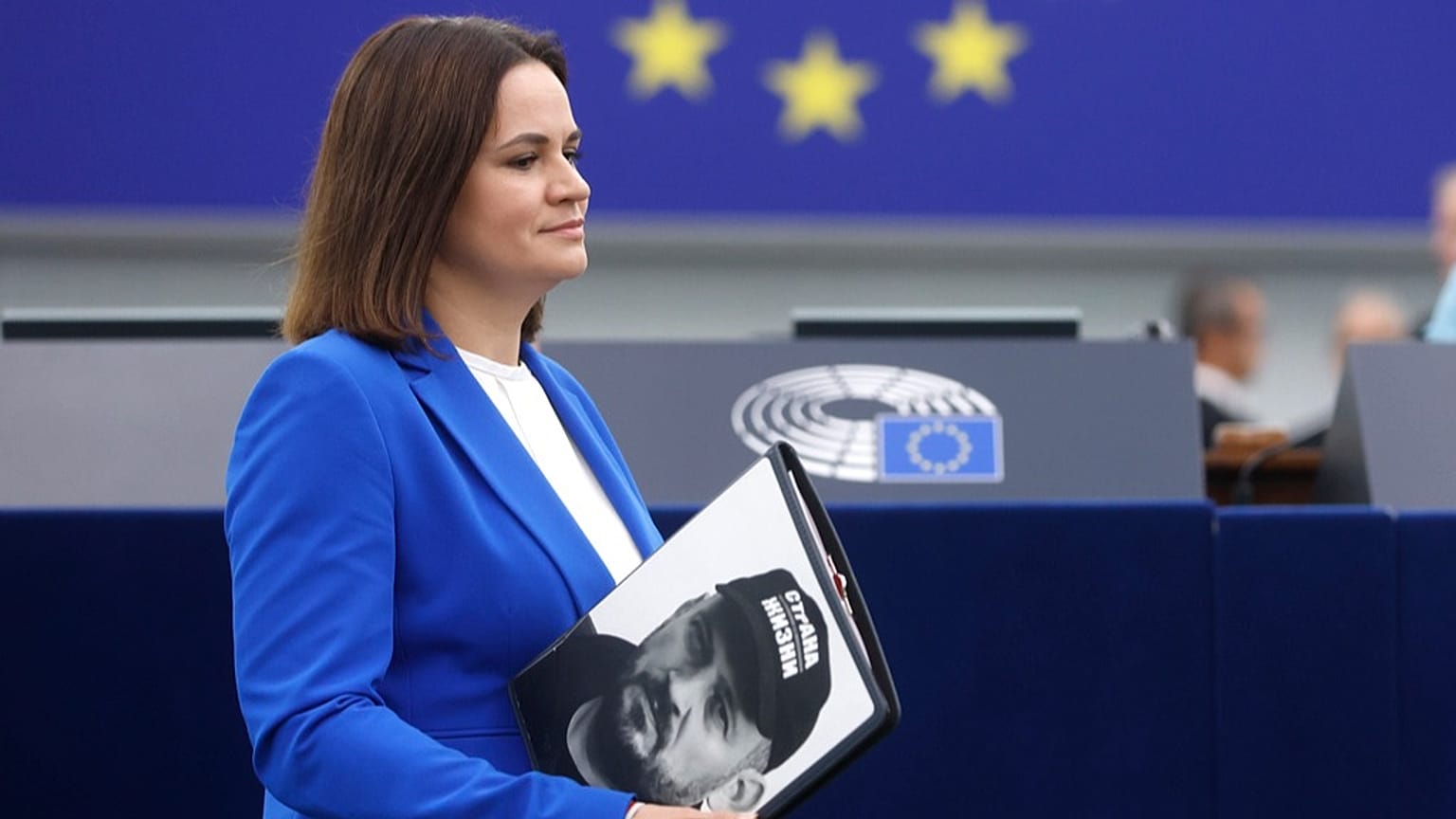
Sviatlana Tsikhanouskaya from Belarus arrives to deliver a speech at the European Parliament, Wednesday, Sept. 13, 2023 in Strasbourg
Copyright AP Photo


By Sophia Khatsenkova
Published on 

In an exclusive interview with Euronews, the Belarusian opposition leader, living in exile in Lithuania, called the measure justified and urged Europe to stay united against provocations from both Minsk and Moscow.

Lithuanian authorities have extended the closure of border crossings with Belarus until the end of November in response to a series of airspace violations involving balloons used to smuggle cigarettes, a move that exiled Belarusian opposition leader Sviatlana Tsikhanouskaya says is justified.

"We fully understand why the borders are closed by Lithuania," Tsikhanouskaya told Euronews.

"All these attacks and interference into airspace have to have consequences for the Lukashenka regime. We see how the regime is provoking Lithuania's border through different means. It's a really hybrid attack: the migration crisis, drones over Poland, and now these balloons smuggling cigarettes."

The opposition figure living in Lithuania said her host country should continue protecting its citizens while also ensuring that ordinary Belarusians fleeing repression are not trapped inside their country.

"The only thing that we are asking is to let Belarusian people, law-abiding people, cross the borders," she said. "Sometimes it's the only way to escape prison in Belarus."
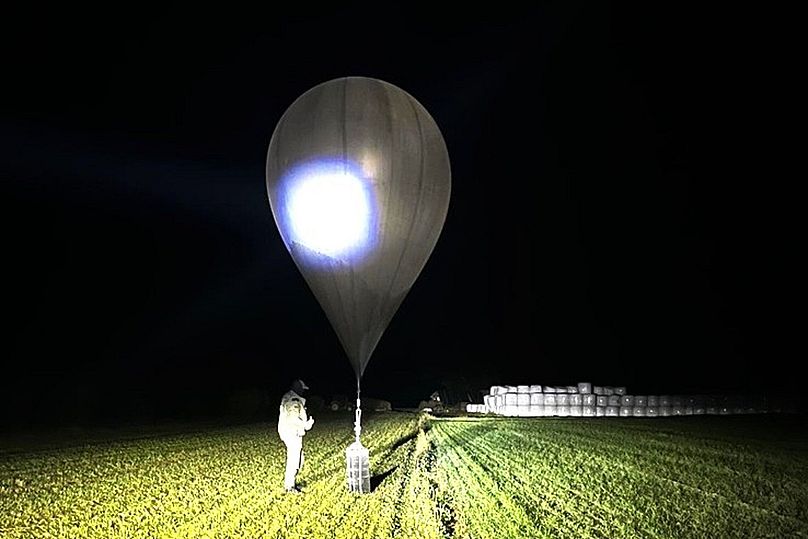
In this undated photo released by the State Border Guard Service an officer inspects a balloon used to carry cigarettes into Lithuania AP Photo

Lithuania announced the border closure earlier this week following what the authorities described as "constant violations" of its airspace.

The Lithuanian government said small hot air balloons carrying cartons of smuggled cigarettes entered Lithuanian skies multiple times this month, forcing airports to suspend operations.

Police have arrested several suspected smugglers and issued fines worth thousands of euros.

Vilnius has described the incidents as part of a broader "hybrid attack" orchestrated by Minsk, an assessment echoed by the European Union.

"These balloons are not merely smuggling tools, but occur in the context of a broader targeted hybrid campaign," said EU foreign policy chief Kaja Kallas, citing "state-sponsored migrant smuggling" as part of the same pattern.

European Commission President Ursula von der Leyen also denounced the incursions as "a hybrid threat," saying Europe "stands in full solidarity with Lithuania."
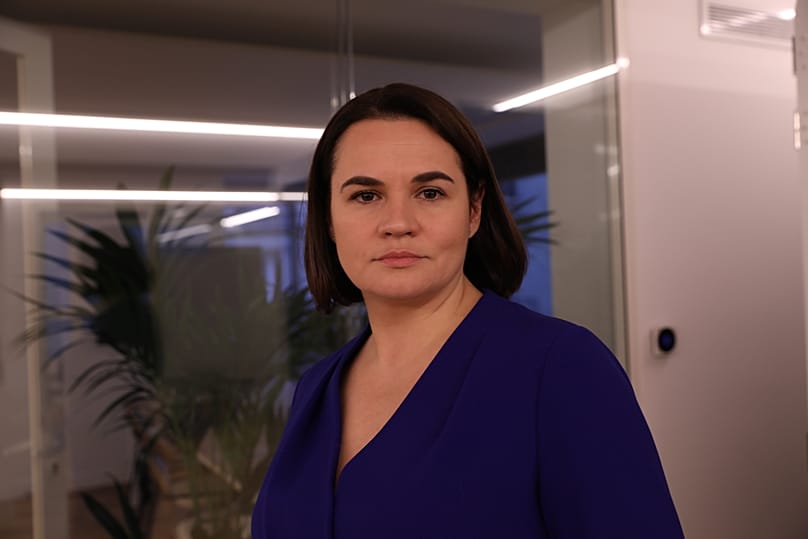
Sviatlana Tsikhanouskaya at the Euronews bureau in Paris, 29 October, 2025 Sophia Khatsenkova


Lithuania's Foreign Minister Kęstutis Budrys told Euronews that defending Europe's eastern flank "is now an existential question" after a series of air incursions put member states from the Baltics to Poland on high alert.

Earlier this year, NATO launched Operation Eastern Sentry to bolster air defences in the region following multiple drone and aircraft intrusions.

On 9 September, Poland shot down Russian drones that had violated its airspace, the first time NATO forces had fired in self-defence since the start of Russia's full-scale invasion of Ukraine.

Belarusian leader Alexander Lukashenka has dismissed the Lithuanian measures as a "crazy scam," accusing the West of waging a "hybrid war" against Belarus and Russia.

But Lithuania and its allies argue that Minsk has been deliberately escalating tensions.

"The regime is always testing how far they can go in their provocations before consequences," Tsikhanouskaya warned.

Lukashenka is a key ally of Russian President Vladimir Putin and allowed him to use Belarus as a staging ground for the full-scale invasion of Ukraine in February 2022.

Tsikhanouskaya urged the European Union to remain "united and principled" in confronting both Minsk and Moscow.

"Europe has to respond with all the brutality they can — economic sanctions, political isolation, diplomatic efforts," she said. "The best and most effective tool to punish dictators is sanctions against the regime, not against people."

The opposition leader also argued that the border closures could indirectly pressure Lukashenka by limiting Belarus' role as a transit hub for Chinese goods.

"Many countries will not work with a regime that cannot provide this transition," she said.

For Tsikhanouskaya, the recent provocations are part of Lukashenka's efforts to test European resolve and seek legitimacy on the international stage.

"It's testing Europeans — how far they can go just to escalate," she said. "The regime is seeking legitimisation, seeking normalisation. But how is it possible to talk to dictators who keep their citizens in fear and want to spill this fear over other nations?"

56% of citizens support EU enlargement, new Eurobarometer poll shows


Copyright AP Photo

By Gregoire Lory
Published on 28/10/2025 - EURONEWS

The European Union's enlargement policy has gained political momentum since Russia's invasion of Ukraine. Candidates and member states will meet in Brussels on 4 November for a debate organised and hosted by Euronews.

While EU enlargement is gaining new political momentum, a new poll indicates that more than half of Europeans support the process.

To be precise, 56% of citizens approve of opening up the European project to other countries.

According to a Eurobarometer poll, the most supportive Member States are Sweden (79%), Denmark (75%) and Lithuania (74%). Conversely, Austria (45%), the Czech Republic (43%) and France (43%) are the least receptive.

Young Europeans in particular support enlargement. 67% of 15-24 year olds are in favour, ahead of 25-39 year olds at 63%. Overall the survey indicates that two-thirds of Europeans approve of this opening up.

"The support comes to a large extent from young people and educated people. And that is not very surprising. You know, you it's it's the usual suspects who would be understanding and supportive of of such endeavours," said Corina Stratulat, Associate Director at the European Policy Centre.

"So now the question is how do we get to convince and get on board also the the young, non-educated electorates who go towards the the extreme and therefore would be on the opposing side of enlargement."

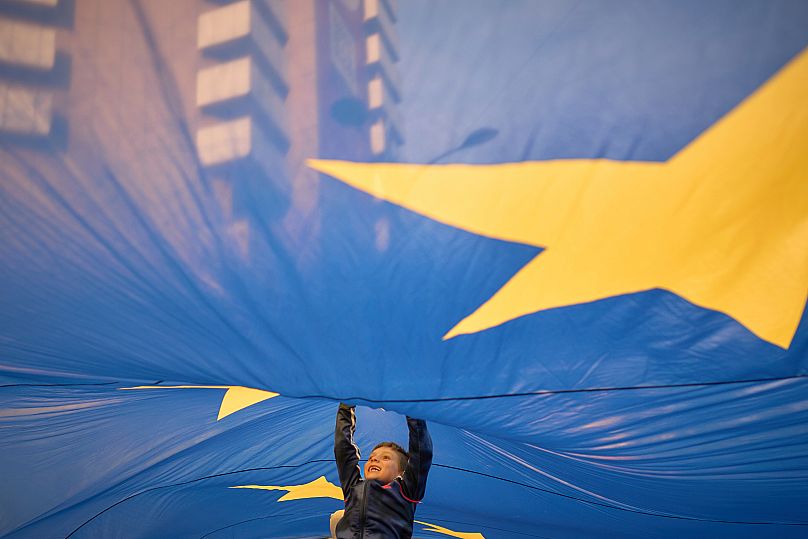
A child jumps under an EU flag during a rally in Bucharest, 9 May, 2025
A child jumps under an EU flag during a rally in Bucharest, 9 May, 2025 AP Photo

Perceived benefits

37% of respondents believe that enlargement will strengthen the EU's influence in the world. 37% also believe that it will strengthen the European market.

Finally, 30% of citizens believe that enlargement will lead to greater solidarity between Member States.

But behind this public support, political commitment is needed to move the process forward, Corina Stratulat points out.

"It would be nice if politicians now would ride on that wave of public support in order to be more ambitious and to actually act with regards to welcoming new members into the European Union and doing the necessary preparatory work to be able to accommodate more countries around the decision-making table."

This issue will be at the heart of the Enlargement Summit organised by Euronews on 4 November. Leaders of candidate countries will have the opportunity to discuss the challenges of this process with EU member state officials.

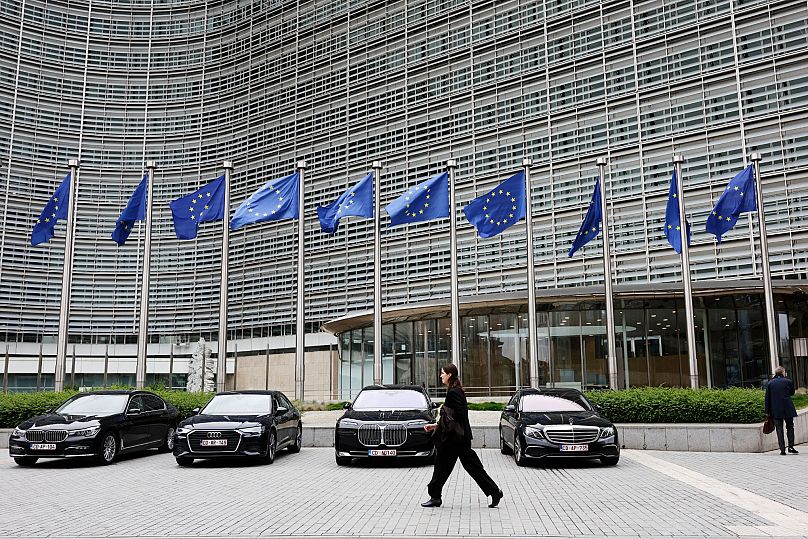
European Union flags flap in the wind as a woman walks past diplomatic vehicles outside the EU headquarters in Brussels, 27 May, 2025
European Union flags flap in the wind as a woman walks past diplomatic vehicles outside the EU headquarters in Brussels, 27 May, 2025 AP Photo

Perceived concerns

However, enlargement also raises concerns. 40% of citizens mention uncontrolled immigration, 39% point to the risks of corruption and crime, and 37% are concerned about the cost to taxpayers of this opening up.

In order for this political opening to be successful, European citizens believe that enlargement must be accompanied by measures to guarantee the rule of law and the fight against corruption (44%).

They also call on candidate countries to make clear commitments to implement EU reforms (38%). Finally, respondents suggest strengthening the accession criteria to ensure that candidates apply EU standards upon eventual accession.

EU inks agriculture deal with Ukraine even as political divisions remain over vast exports


Copyright AP Photo

By Peggy Corlin
Published on 29/10/2025 - EURONEWS

The EU’s new export agreement with Ukraine comes into effect on Wednesday, even as Hungary, Poland and Slovakia maintain a ban on Ukrainian agricultural imports — a move that underscores the challenges of integrating Ukraine’s vast farming sector into the European Union.

An agreement designed to further liberalise trade between the EU and Kyiv came into force on Wednesday.

Adopted on 13 October, it will replace the deal in place since 2016, by expanding tariff-free access for Ukrainian goods and services.

However the new agreement has become a political headache for the European Commission, as Hungary, Poland and Slovakia are not lifting bans on Ukrainian agricultural imports.

“We are engaging with all the parties to try to find solutions,” Commission deputy chief spokesperson Ariana Podesta said on Tuesday.

“We believe (the agreement) is a stable, fair framework, that can be reliable both for the EU and for Ukraine, to ensure a gradual integration in our single market, while providing stable trade flows," Podesta added.

The new deal includes safeguards limiting imports of certain sensitive products such as grains and oil. Nevertheless, Hungary, Poland and Slovakia have refused to lift their national bans on Ukrainian agri-food imports.

These restrictions were first introduced after the EU opened its market completely to Ukrainian agricultural products following Russia’s invasion of Ukraine, as the Black Sea — a vital export corridor for Kyiv — was effectively blocked.

The resulting land corridors into the EU, designed to keep Ukrainian exports flowing, sparked anger among farmers in neighbouring countries who accused Brussels of allowing unfair competition.

Politically charged

The issue became politically charged, weighing on Poland’s 2023 general election and fuelling tensions in Slovakia and Hungary.

“After the war, imports of agriculture to the EU doubled. We have 117% increase compared to the pre-war levels,” Tinatin Akhvlediani, an expert at the Centre for European Policy Studies (CEPS), told Euronews.

However, Akhvlediani added that “it has been unnecessarily politicised because these Ukrainian goods were easily absorbed by the neighbouring countries.”

Ukraine’s main agricultural exports — grain, sugar and oil — are largely unprocessed goods.

“This is complementary with the trading of the EU because it mostly exports processed agricultural goods,” Akhvlediani explained.

“Ukrainian goods in fact are highly demanded in the EU market. That explains why Ukraine is the third largest import partner for the European Union after Brazil and the UK.”

The new trade deal includes a “safeguard clause” allowing either side to impose protective measures if surging imports damage domestic industries.

Yet this has not eased concerns in neighbouring countries.

“Although Brussels wants to give farmers’ money to Ukraine, we are protecting the resources, the livelihoods of Hungarian producers and our market,” Hungarian Agriculture Minister István Nagy wrote on Facebook on Monday, as he and his EU peers met in Brussels.

The ongoing dispute illustrates the broader obstacles facing Ukraine’s path to EU membership.

Within the bloc, some are concerned about how Ukraine’s enormous agricultural capacity — 42 million hectares of cultivated land, the largest in Europe — would affect the Common Agricultural Policy (CAP), which distributes funds based on farm size.

Ringfenced, but reduced: EU Commission shrinks agriculture share in record budget

Even if CAP payments were reformed to focus on production rather than land area, “Ukraine remains quite competitive,” Akhvlediani said.

“The solution could be that the EU puts transition measures in the accession treaty which would limit the benefit from certain policies or not benefit from them at all. This could be the case for the CAP. It’s completely up to the EU," she concluded.
omanian President NicuÈ™or Dan, whose country also borders Ukraine, is one of the rare EU leaders to have spoken openly about the issue, saying the discussion about agriculture is “pending”.

According to the Romanian president, the risks of imbalances for the EU are “significant”, especially since Ukraine "does not currently meet the standards that we impose on the agricultural sector in the EU."

"The discussions taking place are that, in terms of agriculture, Ukraine should have a special status so that it can continue to make significant exports to non-European countries while, in all other clusters, it should be treated as an equal," Dan said.
At IPRD 2025, Vietnam Calls On India To Safeguard The Indo-Pacific’s Digital Arteries – OpEd


Dr. Do Than Hai, Deputy Director-General of the East Sea Institute at Vietnam's Diplomatic Academy speaking at the Indo-Pacific Regional Dialogue (IPRD) 2025 in New Delhi


October 30, 2025
By Aritra Banerjee

Southeast Asia’s vital submarine-cable network is under rising pressure, and India may need to step into a linchpin role for regional connectivity and resilience, said a Vietnamese expert at the Indo-Pacific Regional Dialogue (IPRD) 2025.

At a session titled “Co-operative Regional Capability Enhancement for the Protection of Critical Underwater Infrastructure in and off Vietnam,” Dr Do Than Hai, Deputy Director-General of the East Sea Institute at Vietnam’s Diplomatic Academy, warned that Vietnam’s underwater fibre-optic and energy-infrastructure backbone is increasingly vulnerable. He noted that Vietnam currently depends on undersea fibre-optic routes such as AAG, APG/IA, AAE-1, SMW-3 and ADC, which together carry roughly 95 percent of its external data traffic. At the same time, Vietnam plans to deploy ten new cable routes by 2030 to expand capacity and resilience.

He raised alarm bells over recent performance: “Since late 2022, all five cables had troubles — a loss of 75 percent capacity.” In June 2024, three of the five were down simultaneously; historically, the annual incident rate runs around fifteen, with average restoration times well over 40 days. Dr Do flagged multiple risk layers: anchoring and accidental ship-drag damage in heavily trafficked waters (80,000–90,000 vessels traverse the region annually), destructive fishing activities (including trawling and explosives), natural hazards (fault-lines in the Pacific Ring of Fire), and geopolitical friction with fragmented jurisdictions and delayed repairs. On the global side, only about 60 dedicated cable-repair ships operate, contributing to Southeast Asia’s lengthy “40-plus-day” average for restoration versus North America’s roughly 15 days.

Against this backdrop, Dr Do — who previously served as Vietnam’s Deputy Chief of Mission to India — called for enhanced regional infrastructure cooperation in which India plays a key role. He listed India’s “expected contributions” as regional monitoring, route diversification and infrastructure resilience, capacity-building, and formation of a Quad-ASEAN partnership. Given its strategic location between Europe and Asia, India is well positioned to provide maritime domain awareness and help ASEAN countries bolster infrastructure resilience.
What are the Implications for India?

For India, the stakes are significant. If positioned as a regional connector between ASEAN and global data-centre hubs, it can sharpen its footprint in the Indo-Pacific while contributing to regional digital resilience.

Beyond economics, the underwater backbone is pivotal for sovereignty, security and strategic vision. Dr Do emphasised that: “The underwater internet lifeline is not just economic — it is national security and vision.”

However, the task is not trivial. The region lacks a comprehensive regional plan, suffers limited surveillance and domain awareness, has fragmented responsibilities, weak communications, and remains reactive rather than proactive.

As Vietnam pushes ahead with its ambition of ten new submarine-cable routes by 2030, the entry of India as a partner in planning, training, monitoring and redundancy offers a tangible avenue for broader collaboration. With the region’s underwater internet lifelines increasingly entangled in geopolitical, environmental and technical risk, Vietnam’s call for India to embrace a strategic connector role signals the evolving nature of digital infrastructure in the Indo-Pacific.


Aritra Banerjee

Aritra Banerjee is a Contributing Editor, South Asia at Eurasia Review with a focus on Defence, Strategic Affairs, and Indo-Pacific geopolitics. He is also the co-author of The Indian Navy @75: Reminiscing the Voyage. Having spent his formative years in the United States before returning to India, he brings a global perspective combined with on-the-ground insight to his reporting. He holds a Master's in International Relations, Security & Strategy from O.P. Jindal Global University, a Bachelor's in Mass Media from the University of Mumbai, and Professional Education in Strategic Communications from King's College London (King's Institute for Applied Security Studies)


World’s Largest TB Prize Illuminates Indian Molbio’s Tech Innovation Reaching The Unreached – OpEd


October 30, 2025
By Shobha Shukla and Bobby Ramakant
Citizen News Service

The world’s largest prize devoted to TB, the coveted Kochon Prize, was awarded to India’s Molbio Diagnostics for its technological innovation which is helping over 90 governments worldwide to reach the unreached with best of diagnostics (molecular tests). This is the third time India won Kochon Prize with previous two recipients being 2006-head of Indian government’s TB programme Dr LS Chauhan, and country’s apex medical research body – Indian Council of Medical Research (ICMR) in 2017.

On 29th October 2025, the United Nations OPS hosted Stop TB Partnership in Geneva and Korean Kochon Foundation conferred upon the prestigious Kochon Prize to Molbio’s founder head Sriram Natarajan in Manila on 29th October 2025. Along with global recognition, Kochon Prize consists of a medal and a US$ 65,000, that is the largest prize globally devoted to TB.

Molbio became the first private innovator company worldwide to receive the much sought-after Kochon Prize.

It all begins with an idea!
Making highly specialised diagnostics simpler

When Molbio was founded 25 years ago (in 2000), the gold standard polymerase chain reaction (PCR) test was only restricted to bio-safety level-3 laboratories (BSL-3) where those entering had (and still have) to wear hazmat suits with high-low air pressure controls and several other essential infection prevention and control mechanisms. Of course, stable power supply and air-conditioning and other highly specialised laboratory infrastructure were, and is, essential to run such a diagnostic facility. No surprise that PCR laboratories were confined only to a few laboratories in tertiary care hospitals or medical teaching institutions.

Team Molbio had an idea


“An idea whose time has come”

Researchers at team Molbio embarked on an insane exploration: to transform PCR molecular diagnostics in a way that it can be deployed in a setting that serves the underserved, without stable electricity, air-conditioning or other resource-intensive laboratory infrastructure. Can we innovate to develop RT-PCR in a way which is not dependent on electricity, air-conditioning or laboratory infrastructure and still test for a range of disease-causing pathogens with high sensitivity and specificity? would have been the research question that perhaps drove them – to impact change – and inspire.

It took them almost one and a half decade (and a lot of belief, undeterred conviction, grit, insanity, drive, motivation and investment) to develop a RT-PCR molecular test Truenat that was highly sensitive and specific for several disease-causing pathogens.

In 2017, Indian government’s ICMR validated Truenat, soon after which Indian government’s Ministry of Health began its deployment in remote or peripheral settings across the country. And then, thanks to Geneva-based FIND (Foundation for Innovative New Diagnostics), the United Nations apex health agency – the World Health Organization (WHO) endorsed it in 2020 after rigorous validation studies conducted worldwide.

Truenat became WHO’s first truly point-of-care, decentralised, laboratory independent and battery powered (with solar charging capabilities) molecular test for TB – and a range of ~40 other diseases, such as human papilloma virus (HPV), hepatitis B virus, hepatitis C virus, sexually transmitted infections, COVID-19, among others.

“Unless best of health technologies reach those who are most underserved and need them most, how will we reduce human suffering and avert untimely deaths? Technologies must be made to serve those who need them most. If health technologies cannot be deployed in resource-constrained settings, then they would remain inaccessible to those in acute need. Point-of-care technologies are not enough, we need to deploy them too at point-of-need,” said Tariro Kutadza, a noted community rights activist and defender from Zimbabwe. She leads TB People (Zimbabwe) and was in Manila meet when Kochon Prize was conferred upon Molbio Diagnostics.
Truenat has enabled progress on keeping the promise

Truenat has made it possible to deliver on the promise of Find.Treat.All (initiative first launched in 2018 by the highest level leadership of the WHO, Stop TB Partnership and others) by completely replacing microscopy with upfront molecular testing – especially in low- and middle-income countries. This promise was also echoed by the World Leaders at the UNHLM on TB 2023 political declaration to be met by 2027.

Unless we stop missing TB cases among those who take a TB test, and unless we reach the unreached populations with equity and rights with WHO recommended diagnostics (and full cascade of TB care services in a person-centred manner), we would not be able to stop the spread of the infection as well as fail to reduce avoidable human suffering and untimely deaths due to TB.

As Truenat is a multi-disease molecular testing platform, with its growing deployment (especially in the Global South), we are also strengthening the laboratory infrastructure for key and other vulnerable populations so that they can access highly sensitive and specific diagnostics for over 40 diseases closer to their communities. Early and accurate diagnosis is not only an entry-gate to right treatment but also prevents misuse and overuse of medicines (which is vital to prevent antimicrobial resistance).
Solar powered molecular test Truenat

Several countries, such as, Democratic Republic of the Congo (DRC), have deployed Truenat molecular test in remote peripheral settings where there is no stable power supply to recharge the battery. So, solar power capabilities became a lifesaver in such circumstances.

Last year in December 2024, Nigeria launched the largest rollout of Truenat and Molbio’s Prorad artificial intelligence (AI) enabled X-Rays on African continent. Each of these point-of-care diagnostics have been deployed in remote and peripheral settings.

Likewise, over 90 countries now benefit from Truenat when they deploy it to reach the underserved communities – and bring best of diagnostics closer to the most-at-risk peoples and communities.
India led from the front

Indian government came forward to support in-country scientific validation studies for Truenat, thankfully.

“Research for validating new tools, designing new tools and relying on Made-in-India tools for screening and diagnosing TB and not depending on the outside, has made a phenomenal difference,” had said Dr Urvashi B Singh, Indian government’s head of National TB Elimination Programme, Ministry of Health and Family Welfare; and a distinguished scientist and microbiologist (who had an illustrious inning as Microbiology Professor and in-charge TB at Indian government’s prestigious All India Institute of Medical Sciences (AIIMS), Delhi). She was speaking at World Health Summit Regional Meeting earlier this year.

Truenat is the largest used molecular test for TB in government’s programme since several years now.

When point-of-care tools are deployed at point-of-need, impact happens. Recently, India launched a massive 100-days campaign (7 December 2024 to 24 March 2025) to screen everyone among high-risk populations of 347 districts with ultraportable and handheld X-Rays which were powered with artificial intelligence (AI) computer-aided detection (CAD) of TB (as far as possible). The concept note of this campaign on a government website states that those with presumptive TB should be offered an upfront Truenat.

The concept note of 100 days campaign states that point-of-care screening tool (X-Ray) and diagnostic test (Truenat) should be taken in a ‘Nikshay Vahan’ van to point-of-need where high-risk populations reside.

In a span of 100 days, India could screen over 120 million people across the country from high-risk groups. More importantly, India found 285,000 people with active TB disease who had no symptoms (asymptomatic or sub-clinical TB). These people would not have been found with TB disease if an X-Ray was not done. Imagine the public health impact of finding 285,000 asymptomatic people with TB disease early on, and putting them on effective treatment – so that not only infection stops spreading to others but also they get on the path of healing and recovery.

Now, after 24 March 2025, India has expanded this science-backed campaign nationwide.

Confirmed Dr Urvashi at WHS-RM: “Based on evidence, Indian government’s National TB Elimination Programme adopted Truenat in 2018. Today India has a network of over 9000 NAAT systems across the country – deployed at the level of primary health centres, community health centres and even at the block levels.” Developing, standardising and validating made-in-India health technologies and deploying them “is about making the country self-reliant,” said Dr Singh. “Today, Truenat is in fact, getting exported to 82 countries. So, that is where our Indian indigenous technology, which was supported by ICMR, has reached.”About the authors: Shobha Shukla is the Founder Executive Director and Managing Editor of CNS (Citizen News Service) and Bobby Ramakant works with CNS. Follow them on X/Twitter: @Shobha1Shukla, @BobbyRamakant


FacebookTwitterEmailFlipboardMastodonLinkedInShare

Shobha Shukla

Shobha Shukla co-leads the editorial content of CNS (Citizen News Service) and is on the governing board of Global Antimicrobial Resistance Media Alliance (GAMA) and Asia Pacific Media Alliance for Health and Development (APCAT Media).

Groundwater Decline And Land Subsidence Threaten India’s Big Cities


Across many of the world’s fastest-growing cities, demand for water has outpaced what rivers and reservoirs can provide. This has increased dependence on groundwater and placed heavy strain on underground reserves. Climate change has also worsened the problem by disrupting rainfall and causing surface water to dry up more quickly. Yet each time water is pumped from underground, it removes the support that keeps the ground stable, putting overlying structures at risk of damage.

A new study published in Nature Sustainability, finds that gradual land subsidence poses a growing threat to buildings across India’s largest cities. The analysis led by Dr. Manoochehr Shirzaei, the Chief Scientist of UNU-INWEH’s Global Environmental Intelligence Lab, shows that over 2,400 structures in New Delhi, Mumbai, and Chennai are already at high risk of damage. It also warns that if current trends continue, more than 23,000 buildings across India’s five megacities could face very high risk of structural damage in the coming decades.

“You can think of land subsidence as the Earth’s response to our growing pressure on its surface and subsurface systems,” said Shirzaei, who is also an associate professor at Virginia Tech. “It starts quietly, with the ground sinking by just a few millimetres each year, but when combined with extreme events such as floods or storms, it amplifies their impact by increasing the vulnerability of structures.”

The study explains that land subsidence is largely linked to falling pressure in underground aquifers as groundwater is withdrawn faster than it can be replaced. In India, this problem is intensifying with population growth and rapid urban expansion, while changing monsoon patterns further limit the natural recharge of these underground reserves.  

“In many places around the world, the irreversible damages to groundwater resources are orders of magnitude greater than what we have done to surface water resources,” said Professor Kaveh Madani, Director of UNU-INWEH. “But such damage remains invisible and unnoticed until the sinking land makes our cities unsafe.”

The authors call for a preventative approach that combines research, mitigation, adaptation, and technology to strengthen infrastructure resilience. They emphasize that reducing groundwater extraction, improving surface water management, promoting groundwater recharge, and conserving soil and vegetation are essential to protect cities and their inhabitants from the growing risks of land subsidence.

China’s Donkey Skin Demand Drives Illegal Trade In Africa

By Africa Defense Forum


Donkeys are essential pack animals in many rural African communities. They are the quiet laborers that carry clean water and firewood, transport children to school, mothers to clinics, and goods to market.

However, donkeys are disappearing and rising in cost due to Chinese demand for their hides. Wiebke Plasse of the German animal welfare group Welttierschutzgesellschaft recently visited a market in the southwestern Kenyan town of Bisil, about 60 kilometers from the Tanzanian border. Plasse saw several hundred donkeys at the market, and a trader said more were coming.

“When you ask, you find out: All these donkeys are reserved for a single buyer, who isn’t even here,” Plasse told The Revelator, an online environmental news and ideas platform run by the Center for Biological Diversity.

Many of the donkeys in Bisil were to be illegally slaughtered. Their hides were to be stripped, dried and packed in shipping containers bound for China’s Shandong Province. There, the hides would be boiled into a gelatin known as ejiao, which is used in traditional Chinese medicine.

Although there is no evidence of its effectiveness, ejiao historically has been used to prevent miscarriage, treat circulatory issues and reverse premature aging. Modern-day marketing fuels demand for ejiao. It has become a lifestyle product that is ground into powder, pills or liquid, or added to food, The Revelator reported.

China once had an estimated 11 million donkeys, the world’s largest population according to the Animal Welfare Institute. Demand for ejiao has driven China’s donkey population to as low as 3 million, prompting the ejiao industry to target Africa, home to about two-thirds of the world’s 53 million donkeys. Now, continental donkey populations have plummeted, and 41% of African donkey owners surveyed by The Donkey Sanctuary said they have had animals stolen.

On the outskirts of Nairobi, Kenya, a water seller named Steve relied on donkeys to pull him and his cart of jerrycans to his customers. One morning, Steve went to the field to get his animals.

“I couldn’t see them,” he told the BBC. “I searched all day, all night and the following day.”

Days later, a friend told Steve he had found the donkeys’ skeletons.

“They’d been killed, slaughtered, their skin was not there,” said Steve, who was saving money to study medicine. But without his donkeys, he cannot deliver water.

Soaring prices mean many families can’t afford to replace a stolen donkey. When incomes plummet due to donkey theft, girls often are forced to leave school and women suffer physically and emotionally as they struggle to perform heavy labor.

“When a family loses its livelihood … women are left to carry heavy burdens alone,” Anne Odari Onditi, a donkey owner and treasurer of the Association of Donkey Owners in Kenya, told The Donkey Sanctuary. “It is heartbreaking to see how quickly our donkeys are disappearing and how deeply this loss is felt.”

In response to thefts, Botswana, Burkina Faso, Ethiopia, The Gambia, Ghana, Kenya, Mali, Niger, Senegal, Tanzania and Uganda have banned or severely restricted the commercial slaughter of donkeys and the export of their hides.

In June, more than 200 African leaders met at the two-day Pan-African Donkey Summit in Côte d’Ivoire, where they committed to support the Pan-African Donkey Strategy developed by the African Union Inter-African Bureau for Animal Resources. The strategy calls for enforcement of the AU’s 2024 ban on the donkey skin trade, integration of donkey welfare into national policies, and investments in value chains, veterinary services and data systems.

“We have turned the moratorium into a springboard for action,” Moses Vilakati, the AU’s commissioner for Agriculture, Rural Development, Blue Economy and Sustainable Environment, said in a report by Kenya’s Capital FM news outlet. “Now, it is time for implementation — through law, community awareness, and surveillance.”

The Africa Defense Forum (ADF) magazine is a security affairs journal that focuses on all issues affecting peace, stability, and good governance in Africa. ADF is published by the U.S. Africa Command.


Beasts of. Burden. Capitalism · Animals. Communism as on ent ons. s a een ree. Page 2. Beasts of Burden: Capitalism - Animals -. Communism. Published October ...

Nov 18, 2005 ... This is a letter sent by French readers to the authors of Beasts of Burden. This pamphlet has the merit of addressing a vital question: If ...

The GERD Dispute: Lessons For Water Governance And The Future Of The Nile Basin – Analysis

The Grand Ethiopian Renaissance Dam (GERD). 
Photo Credit: Ethiopian Electric Power Corporation (EEPCO)


October 30, 2025 
Published by the Foreign Policy Research Institute
By Thomas Rijntalder


Introduction

(FPRI) — Water-related conflict is among the key concerns for a future marked by rising incidences of droughts, increasing water scarcity, and growing demands. The main aquatic project that has shaped contemporary diplomatic relations in the Nile Basin is the Grand Ethiopian Renaissance Dam (GERD).

Being the largest hydroelectric dam in Africa, with a maximal power production capacity of 5150 MW, it is capable of generating electricity for millions of Ethiopians and people in neighboring countries. Its construction started in 2011, and the final filling of its water reservoir was completed on Sept. 5, 2024. On March 20, 2025, Ethiopia’s Prime Minister Abiy Ahmed Ali reported that six out of 13 turbines were already operational, and announced the completion of the GERD project on July 3. The inauguration took place on Sept. 9 and was attended by several regional leaders, among them Kenya’s President William Ruto and Somalia’s President Hassan Sheikh Mohamud.

Since the first announcement of its construction, the GERD has sparked outrage in Egypt, historically the largest consumer of the Nile waters. According to Egypt, Ethiopia’s aquatic policies are threatening the survival of the Egyptian state by unilaterally taking control of the primary source of the Nile water, namely the Blue Nile. Letters to the UN Security Council have been exchanged, with Egypt repeatedly accusing Ethiopia of violating international law by continuing to fill the GERD basin without the approval of the downstream riparian countries. Ethiopia, in turn, argues that Egypt persists in undermining negotiations and points to its repeated threats of violence, while simultaneously stressing how the GERD can provide a mutual benefit. One of these additional benefits, Ethiopia argues, is that the GERD will be instrumental in avoiding future Nile floods throughout extremely wet years, which regularly threaten Khartoum, the capital of Sudan.

This article assesses the risk of escalation of the GERD conflict by analyzing different scenarios and drawing on factors that involve diplomatic posture, climate, and national water needs. Although Sudan is geographically located between the two countries, the central focus is on Egypt and Ethiopia due to their central roles in the dispute and Sudan’s limited influence in the region. The main finding is that, under the current GERD operational framework, Ethiopia would only be able to seriously harm Egypt’s access to water after a prolonged drought and if it simultaneously exhibits a hostile posture towards Egypt. Other factors, like increasing water demands from population growth, may also heighten tensions, even if unrelated to the GERD’s operation. Cooperative water management and advanced drought planning are therefore key in alleviating Egyptian concerns and in establishing a viable future for all three riparian countries.
The History of the Nile

The Nile is the most important river in Africa and has enabled civilizations to prosper for thousands of years. It is formed by the confluence of the White and Blue Niles, originating respectively in Lake Victoria in Uganda and Lake Tana in Ethiopia. During the summer monsoon, rainfall over Ethiopia feeds Lake Tana, the source of the Blue Nile, which accounts for about 85 percent of the Nile’s flow at that time and roughly 59 percent over the course of a year. The Blue and White Nile Rivers converge at Khartoum in Sudan, where they become the Nile proper. The Nile provides about 97 percent of Egypt’s water needs, and its basin has long been one of the most densely populated regions on earth. At present, more than 104 million people live in the Nile Valley and Nile Delta, only about 3–4 percent of Egypt’s land surface, in an area comparable in size to Catalonia or the Netherlands. Threats to the Nile have therefore always been seen as an existential risk to Egypt.

The first international law regarding the river was the 1929 Nile Water Agreement, a bilateral arrangement between Egypt and the United Kingdom, the former colonial administration, granting Egypt complete ownership of the Nile and veto power over upstream countries’ future decisions. In return, the United Kingdom would continue oversight over the Suez Canal, which they required to maintain the fastest shipping route to India. UN Treaty 6519 of 1959 granted Egypt 66 percent and Sudan 22 percent of the Nile’s flow, with the rest accounting for losses such as evaporation. Ethiopia, not having been a British colony, was left out of both agreements. The dispute between Egypt and Ethiopia over the ownership and use of the Nile has been going on since then, and the peaceful resolution of their disagreements has been the norm up until now, despite recurring bellicose rhetoric. Since the rule of Muhammad Ali in the first half of the 19th century, Egypt had been the main regional power and, therefore, de facto able to exert its rights. Due to climate change and growing populations in all riparian states, however, water scarcity has increasingly become a problem, leading to friction. When Ethiopia’s former leader, Mengistu Haile Mariam, first proposed the building of hydroelectric dams in 1978, Egypt’s then-president Anwar Sadat considered it a red line: “We are not going to wait to die of thirst in Egypt. We’ll go to Ethiopia and die there.” This statement was in line with Article 44 of the Egyptian constitution, which stipulates the protection and maximization of the Nile’s use. No dam was built back then, but relations between the two countries slowly started to change. Since 2004, Ethiopia’s GDP has been growing approximately 10 percent per year, and it was even the world’s fastest-growing economy between 2013 and 2018. Along with changing power dynamics came the confidence to overtly reevaluate former treaties. Ethiopia asserted that it would not have to adhere to what were seen as “colonial” treaties, calling Egypt’s claim to the Nile “the most absurd thing you ever heard” and arguing for the right to use its resources as it saw fit.

When the 2011 Arab Spring saw Egypt’s president Hosni Mubarak deposed, Ethiopia took advantage of the situation and started construction of the GERD. Africa’s largest hydroelectric dam would more than double the country’s energy production by delivering over 5 GW/year. Ending energy poverty was urgent in Ethiopia, where, as late as January 2024, nearly 60 percent of the population (over 100 million people) still had no electricity. Without the help of foreign aid or investors, the dam was completely funded by Ethiopians through donations and special bonds. As such, the GERD became a national symbol, unifying over 80 different ethnic groups, and people became personally invested in the project. Yielding to Egyptian pressure would risk major financial loss, hinder Ethiopia’s development, and threaten national unity in an already politically unstable country.


To operate the dam, its reservoir had to be filled to maintain a steady flow through the turbines. Despite Egypt’s and Sudan’s concerns, short-term from filling the reservoir and long-term over Ethiopia controlling the Blue Nile flow, no treaty on water management was ever signed. Furthermore, Egypt repeatedly stressed its concerns about the dam’s safety, the lack of oversight by international experts, and what its finalization would mean for the energy production of its own hydroelectric dam, namely the Aswan High Dam (AHD). Most importantly, Ethiopia declined to commit to specified volumes of future water flows to Sudan and Egypt, instead insisting on non-binding mechanisms to resolve disputes. Addis Ababa, in turn, emphasized the mutual benefits of the dam: generating power for export purposes and preventing seasonal flooding of the Blue Nile. These arguments did not reassure the downstream countries. With a populationthat has more than doubled within the last 30 years, around 20 percent of the total labor force working in agriculture, and unemployment rates that occasionally approach those of the period just before the 2011 revolution, the lack of certainty regarding the Nile is a continuous thorn in Cairo’s eye.

There are, thus, two sides to the Nile dispute. Egypt, the historical master of the river, regards the GERD as an existential threat to its water supplies, while Ethiopia regards it as necessary for its progress. The question remains, though, whether these differences are irreconcilable.

The Present Situation

Construction of the dam was finished in 2020, and the first filling of its reservoir occurred in the same year. During the filling phase, some became optimistic because it did not lead to a decline in downstream reservoir water. Egypt’s greatest fear had not materialized, while the most significant hurdle had been overcome. However, such optimism had been partially confounded by excessive rainfall in Egypt during the filling of the GERD´s reservoir, a rare occurrence at the right moment. The unseasonable wet weather made Egypt less reliant on the Blue Nile during these years. Now that the GERD is completed, and Egypt is faced with a fait accompli, the topic of discussion will shift from the conception of the dam to its future operation. Although Egypt allegedly threatened to blow up the GERD in the past, this is unlikely. Not only would its demolition contaminate the Nile’s water with debris and toxic waste, but the vast quantities of acutely released water would also flood Sudan, not to mention the potential for military retaliation and diplomatic isolation. Nonetheless, Egypt remains anxious about its future water supplies. The country’s current water share is approximately 560m3 per capita per year, which is already below the water poverty line of 1000m3cap⁻¹ yr⁻¹. This is projected to drop further below the absolute water scarcity line of 500m3 cap⁻¹ yr⁻¹ by 2030. For this reason, Egypt wants assurances of sufficient downstream releases, particularly during periods of drought. Moreover, even before the GERD became operational, Egypt already relied on imports for 60–70 percent of its wheat consumption, highlighting its dependency in terms of food security. Before the outbreak of the Russo-Ukrainian war in 2022, Egypt received approximately 82 percent of its imports from Russia and Ukraine. Since then, it has looked to diversify its sources, though with limited success. Egyptian water and food security are therefore intrinsically tied together. So far, however, the two countries have not agreed on issues such as minimum flow, the definition of drought, and other water management affairs.
Future Scenario 1: The Posture-Precipitation Axis

Research has suggested that under normal hydrological circumstances, the GERD will be able to operate optimally, meaning that it has a near-optimal hydraulic head, without any notable downstream repercussions. When Ethiopia displays a cooperative posture, when there is no drought, and under acute droughts that are not extreme, the chance of harming Egypt and subsequent escalation is estimated to be low, based on the precipitation axis alone. Under such conditions, the GERD reservoir is nearly full, with water levels ranging between 625 and 640 meters above sea level (asl) (see Figure 2). This enables optimal hydropower for Ethiopia while being unlikely to cause significant downstream water deficits, even under hostile intentions.

The reasons for this are:The primary objective of the GERD is power production, which requires a perpetual flow of water through its turbines. Reducing or stopping GERD activity is self-defeating and unlikely.
Since both the GERD and AHD reservoirs are already near or at full capacity under the aforementioned conditions, there remains limited storage capacity for additional water inflow. During these scenarios, curtailing GERD operations would require discharging excess water through the dam’s spillways (see Figure 2). As this water flows downstream anyway, without producing power, it is in Ethiopia’s interest to sustain power generation by releasing volumes approximately equal to the reservoir’s inflow. This is irrespective of its posture.


The reservoirs at both the GERD and the AHD have storage capacities exceeding the annual flow of the Nile. To hurt Egypt, the AHD basin would first have to be depleted, while the GERD reservoir would simultaneously have to be able to store a significant amount of extra water. Given arguments 1) and 2), this can only occur following a prolonged, multi-year drought.


Based on this, the most plausible scenario in which Egypt’s water security could be undermined is after a prolonged drought that leaves both the GERD and AHD basins nearly empty, combined with an egocentric or a hostile Ethiopian stance. Following this period, both reservoirs would require replenishment, raising critical questions about the sequencing and pace at which this process should occur. This scenario resembles the discussions that have taken place over the past few years, with the key difference that now, the AHD basin is (almost) empty too, increasing Ethiopia’s strategic leverage and the possibility of escalation. For Egypt, a worst-case scenario could unfold if, after such a drought, Ethiopia decided to prioritize filling the GERD reservoir over turbine activation. If the GERD reservoir drops below the dam’s minimal operating level of 590m asl (see Figure 2), Ethiopia might choose to re-establish power production capacity rather than ensuring a water supply to downstream countries. Above 590m asl, the generators can produce energy, with higher water levels resulting in greater hydroelectric yield. The decision then becomes striking a balance between refilling the reservoir to its optimal levels and instant energy production. Favoring the first over the second becomes more likely if Ethiopia determines that it is in its best interests or if it wishes to harm Egypt.
Future Scenario 2: Extended Use, Population, and Climate Change

Another way Ethiopia could harm Egypt, outside of the posture-precipitation axis, is by initiating new dam projects or siphoning water from the GERD reservoir for consumptive use, such as irrigation for agriculture. Although this is not currently the case, pursuing such a course could have serious downstream consequences. Not only would it delay the flow of water, but the total quantity of the Blue Nile released downstream from the GERD would decrease as well. Given Ethiopia’s rapid population growth and limited current irrigation, this scenario remains plausible. Doing so would not necessarily infringe international law, however. Under customary international water law, reflected in instruments such as the 1997 UN Watercourses Convention, Ethiopia holds the right to the equitable and reasonable use of transboundary waters, provided it avoids causing significant harm to downstream states and provided it cooperates with other riparian states.

Rising water demands in both countries, coupled with an increasing drought incidence, may lead to a legal paradox: The pursuit of equitable use by one side could inevitably cause significant harm to the other. If Ethiopia increases its water use, it could be viewed as violating these principles, particularly if Egypt’s water security is affected as a result. Ethiopia, in turn, might highlight its historical underutilization of the Nile’s waters relative to Egypt. It still only uses a fraction of the amount of water from the Nile that Egypt uses, despite having a larger population, and could assert its legitimate right to benefit from the river on par with other riparian states to justify an increase in consumptive use. New projects can accordingly be interpreted as steps towards a more equitable distribution of water, not as unfair.

Finally, even if the GERD’s output remains unchanged, Egypt’s population growth alone could intensify domestic water shortages and strain mutual perceptions, thereby reinforcing a zero-sum mindset.


Reflection

Much of the current friction stems from fears of worst-case scenarios, regardless of their likelihood. Such worries can themselves fuel conflict, consistent with the logic of defensive realism. Assuming that states mainly seek security for themselves, defensive actions by one state can be interpreted as a threat by another. In an international system characterized by anarchy, so goes defensive realism, Egypt cannot fully know Ethiopia’s true intentions, and its actions regarding valuable and finite resources, such as water, can trigger a security dilemma that leads to pre-emptive balancing behavior. Mistrust may arise even if everyone’s needs could, in theory, be satisfied. During and following periods of drought, any resulting water shortage in the AHD reservoir might be politically exploited by Egypt and attributed to the operation of the GERD, despite reductions in flow from other tributaries. In this way, a lower total volume of the Nile could be experienced in Egypt, even if the GERD adheres to agreed-upon release volumes, arousing suspicion and feeding the security dilemma.

Whichever scenario comes true, it is clear that the key to securing a workable future lies in overcoming historical, colonial, political, and cultural preconceptions through pragmatic water management and transparent, cooperative agreements. Unless cooperation is made open and trustworthy, Egypt will keep interpreting the existence and operation of the GERD as a loss in water security. A zero-harm scenario is increasingly unlikely due to factors beyond the GERD’s operation, mainly climate change and demographic pressure, and believing otherwise only hinders progress.

In the short term, the main risk is that both sides misread each other’s intentions. Reaching an accord on the GERD’s operation would reduce Egyptian concerns of Ethiopian self-interest and enable coordinated long-term responses to severe droughts. Transparent guidelines and information management also reduce the chance of natural events being wrongly interpreted, as not all water issues can be automatically attributed to the GERD. A sustainable agreement between Ethiopia, Egypt, and Sudan would ideally contain consensus on political, legal, and technical clauses:The affirmation of customary international water law.
The organization of dialogue forums for future Nile projects. A ban on all future upstream Nile projects, as proposed by Egypt, will not be accepted by Ethiopia.
Definitions of terms such as average climate conditions, acute drought, prolonged drought, and drought recovery. These have to be based on hydrological data.
A commitment to yearly flows of water under the climatic conditions stipulated above. Ethiopia will not sign a “fixed-flow treaty”: Under the argument of equitable and reasonable use, it will wish to release water in proportion to the annual hydrological conditions, discharging more during wet years and less under dry conditions. In contrast, Egypt has so far insisted on a fixed annual minimum release, irrespective of climatic conditions, to safeguard its dependence on Nile waters. This mismatch likely makes (4) the hardest point to resolve in reaching an agreement.
Operational guidelines such as prioritizing basin refilling vs. GERD activity, hydrological thresholds of turbine activation, and their relation to (3) and (4). This will provide clarity and offer the possibility to prepare for the future.
Transparency and an open data policy. The sharing of data should be done regularly and include: [1] GERD reservoir levels, [2] reservoir inflow and GERD outflow volumes, [3] precipitation forecasts, and [4] turbine performance metrics and operation schedules. These data are critical for ensuring compliance with the other points in the agreement and mutual trust.

A periodical revision and, if necessary, modification of the agreement according to climate change, population growth, and other drivers of water demand.
The establishment of a conflict resolution framework that specifies how disagreements will be settled. This could include setting up an independent arbitrage committee or a provision to appeal to a third, neutral party, and thereby mitigate mistrust.

Considering the countries’ divergent viewpoints, reaching binding agreements on these matters currently appears improbable. Nevertheless, the riparian countries should also address the structural factors driving regional water scarcity. These might include investments in desalination projects, reducing water loss (for example, by switching from flow irrigation to drip irrigation), recycling wastewater and agricultural drainage, and diversifying towards less water-intensive crops. 

Only by addressing all these issues can successful water governance be achieved in the Nile Basin.About the author: Thomas Rijntalder holds an MA in International Relations and War from King’s College London, an MS in Medicine, and an MA in Philosophy.


Source: This article was published by FPRI.

Published by the Foreign Policy Research Institute

Founded in 1955, FPRI (http://www.fpri.org/) is a 501(c)(3) non-profit organization devoted to bringing the insights of scholarship to bear on the development of policies that advance U.S. national interests and seeks to add perspective to events by fitting them into the larger historical and cultural context of international politics.