Monday, December 01, 2025


US Congress investigates reported follow-up attack on Venezuelan ship

Issued on: 01/12/2025 - FRANCE24

US lawmakers are investigating a reported second strike on a suspected drug boat in the Caribbean after a Washington Post report claimed Defense Secretary Pete Hegseth ordered the killing of all survivors. Trump denies knowing about the alleged follow-up attack. UN experts and Venezuela call the strikes extrajudicial killings, as tensions between Washington and Caracas continue to rise.


TRUMP LIES!

Trump confirms call with Maduro, Caracas slams US maneuvers

Caracas (AFP) – US President Donald Trump confirmed Sunday he had recently spoken with Venezuelan leader Nicolas Maduro amid soaring tensions between the two countries, while Caracas slammed what it called US preparations for an attack.


Issued on: 01/12/2025 - FRANCE24
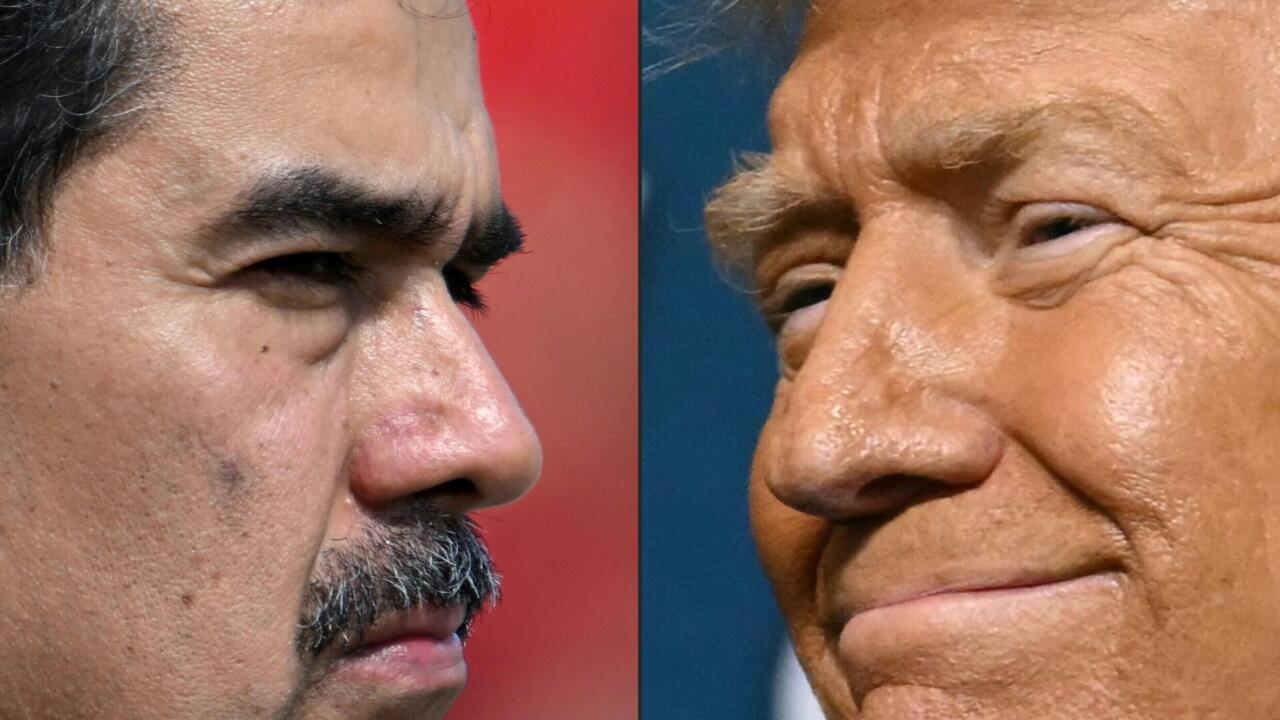
US President Donald Trump (R) confirmed he has recently spoken to Venezuelan leader Nicolas Maduro (L) amid soaring tensions between their two countries © Juan BARRETO, ANDREW CABALLERO-REYNOLDS / AFP/File

The United States is piling the pressure on Venezuela, with a major military buildup in the Caribbean, the designation of an alleged drug cartel run by Maduro as a terrorist group, and an ominous warning from Trump that Venezuelan airspace is "closed."

Washington says the aim of the military deployment launched in September is to curb drug trafficking in the region, but Caracas insists regime change is the ultimate goal.

"I wouldn't say it went well or badly. It was a phone call," Trump told reporters Sunday aboard Air Force One.

The New York Times reported Friday that Trump and Maduro had discussed a possible meeting, while The Wall Street Journal said Saturday that the conversation also included conditions of amnesty if Maduro were to step down.

Republican Senator Markwayne Mullin said Sunday on CNN's "State of the Union" talk show that the United States has offered Maduro the chance to leave his country for Russia or elsewhere.

The United States accuses Maduro, the political heir to Venezuela's late leftist leader Hugo Chavez, of heading the "Cartel of the Suns" and has issued a $50 million reward for his capture.

But Venezuela and countries that support it insist no such organization even exists.

Several Venezuela experts say what Washington calls the Cartel of the Suns refers to the corruption of senior officials by criminal gangs.

The United States also does not recognize Maduro as the legitimate winner of last year's presidential election.

Though Trump has not publicly threatened to use force against Maduro, he said in recent days that efforts to halt Venezuelan drug trafficking "by land" would begin "very soon."

- Aid from OPEC? -

Venezuela says it has requested assistance from the Organization of the Petroleum Exporting Countries (OPEC), of which it is a member, to help "stop this (American) aggression, which is being readied with more and more force."

The request came in a letter from Maduro to the group, read by Vice President Delcy Rodriguez, who is also Venezuela's oil minister, during a virtual meeting of OPEC ministers.

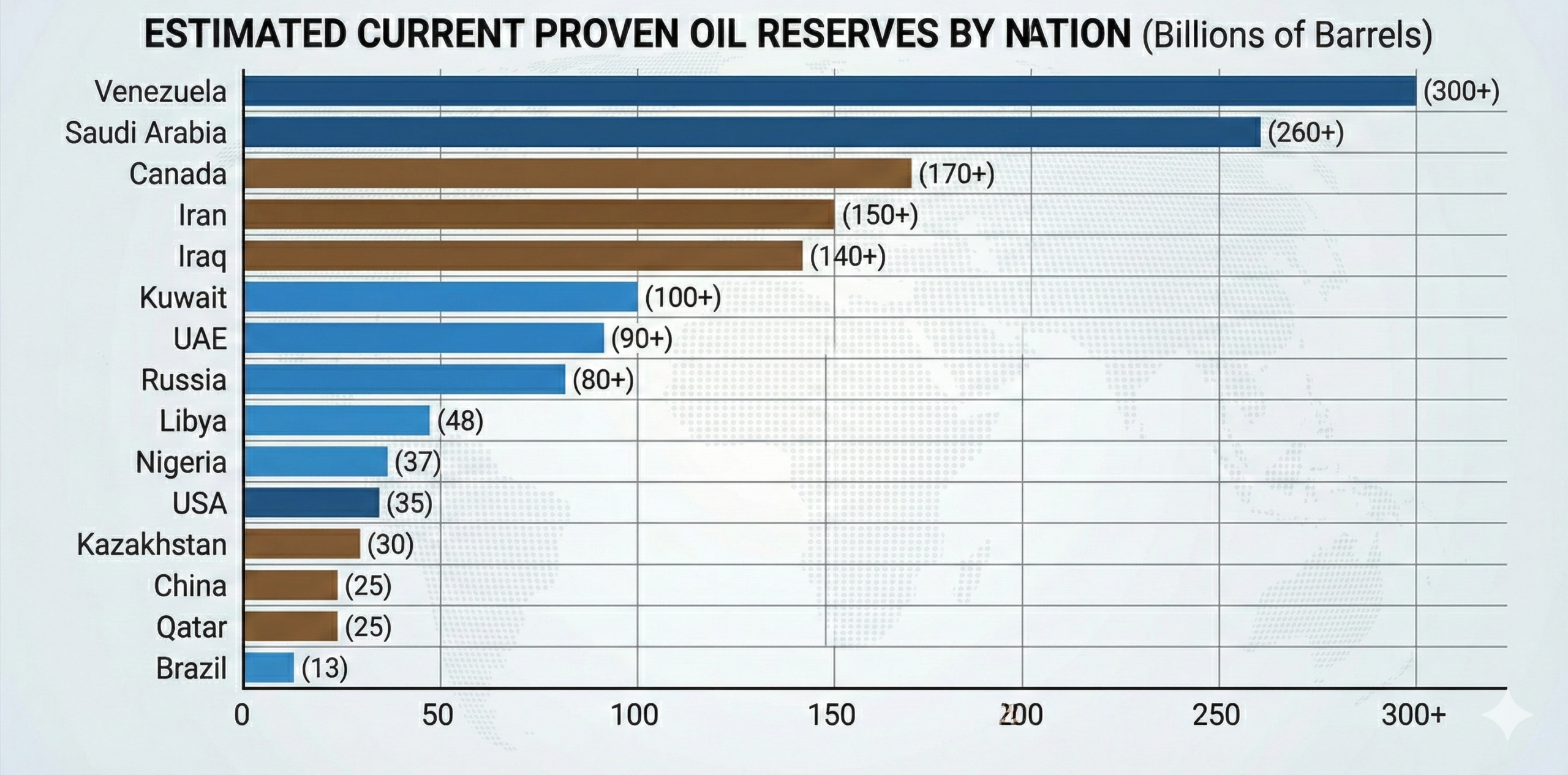
Washington "is trying to seize Venezuela's vast oil reserves, the biggest in the world, by using military force," Maduro wrote in the letter.

Since September, US air strikes have targeted alleged drug-trafficking boats in the Caribbean Sea and the eastern Pacific Ocean, killing at least 83 people.

Trump's administration has offered no concrete evidence to back up the allegations behind its campaign, and numerous experts have questioned the legality of the operations.

US media reported Friday that in one strike in September, the US military conducted a follow-up strike that killed survivors of an initial attack.

The Washington Post and CNN said Defense Secretary Pete Hegseth had issued a directive to "kill everybody," but Trump said Sunday that Hegseth had denied giving such an order.

"We'll look into it, but no, I wouldn't have wanted that -- not a second strike," Trump told reporters. "Pete said he did not order the death of those two men."
'Extrajudicial executions'

The head of Venezuela's legislature, Jorge Rodriguez, said he met Sunday with relatives of Venezuelans killed in the strikes.

He would not comment on a possible Trump-Maduro call.

But when asked about the report about the Hegseth order, he said: "If a war had been declared and led to such killings, we would be talking about war crimes."

"Given that no war has been declared, what happened...can only be characterized as murder or extrajudicial executions," he added.

The steady US military buildup has seen the world's largest aircraft carrier deployed to Caribbean waters, while American fighter jets and bombers have repeatedly flown off the Venezuelan coast in recent days.

Six airlines have canceled services to Venezuela, but on Sunday, the airport in Caracas was functioning as usual.

© 2025 AFP


The Caribbean Faces Two Choices: Join the US Attempt to Intimidate Venezuela or Build Its Own Sovereignty


 December 1, 2025

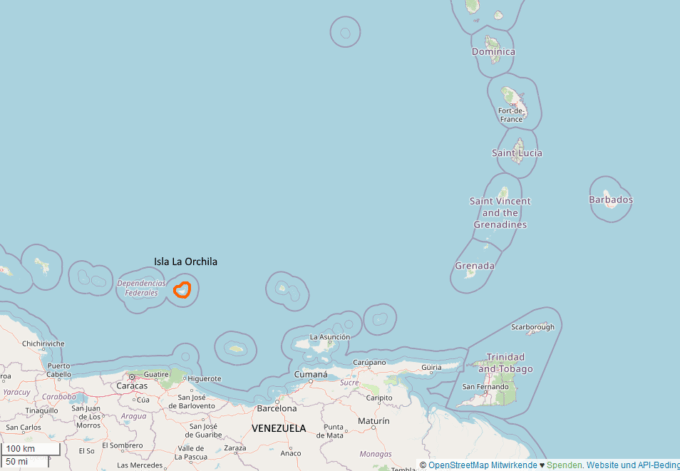
Map of Southern Caribbean around Venezuelan coast showing La Orchila Island. Image Source: GilPe – © OpenStreetMap contributors – CC BY-SA 2.0

US President Donald Trump has authorised the USS Gerald R. Ford to enter the Caribbean. It now floats north of Puerto Rico, joining the USS Iwo Jimaand other US navy assets to threaten Venezuela with an attack. Tensions are high in the Caribbean, with various theories floating about regarding the possibility of what seems to be an inevitable assault by the US and regarding the social catastrophe that such an attack will occasion. CARICOM, the regional body of the Caribbean countries, released a statement affirming its view that the region must be a “zone of peace” and that disputes must be resolved peacefully. Ten former heads of government from Caribbean states published a letter demanding that “our region must never become a pawn in the rivalries of others”.

Former Trinidad and Tobago Prime Minister Stuart Young said on 21 August, “CARICOM and our region is a recognised zone of peace, and it is critical that this be maintained”. Trinidad and Tobago, he said, has “respected and upheld the principles of non-intervention and non-interference in the internal affairs of other countries and for good reason”. On the surface, it appears as if no one in the Caribbean wants the United States to attack Venezuela.

However, the current Prime Minister of Trinidad and Tobago, Kamla Persad-Bissessar (known by her initials as KPB), has openly said that she supports the US actions in the Caribbean. This includes the illegal murder of eighty-three people in twenty-one strikes since 2 September 2025. In fact, when CARICOM released its declaration on the region being a zone of peace, Trinidad and Tobago withdrew from the statement. Why has the Prime Minister of Trinidad and Tobago gone against the entire CARICOM leadership and supported the Trump administration’s military adventure in the Caribbean?

Backyard

Since the Monroe Doctrine (1823), the United States has treated all Latin America and the Caribbean as its “backyard”. The United States has intervened in at least thirty of the thirty-three countries in Latin America and the Caribbean (90 percent of the countries, in other words) —from the US attack on Argentina’s Malvinas Islands (1831-32) to the current threats against Venezuela.

The idea of the “zone of peace” emerged in 1971 when the UN General Assembly voted for the Indian Ocean to be a “zone of peace”. In the next two decades, when CARICOM debated this concept for the Caribbean, the United States intervened in, at least, the Dominican Republic (after 1965), Jamaica (1972-1976), Guyana (1974-1976), Barbados (1976-1978), Grenada (1979-1983), Nicaragua (1981-1988), Suriname (1982-1988), and Haiti (1986).

In 1986, at the CARICOM summit in Guyana, the Prime Minister of Barbados, Errol Barrow, said “My position remains clear that the Caribbean must be recognised and respected as a zone of peace… I have said, and I repeat, that while I am prime minister of Barbados, our territory will not be used to intimidate any of our neighbours be that neighbour Cuba or the USA.” Since Barrow made that comment, Caribbean leaders have punctually affirmed, against the United States, that they are nobody’s backyard and that their waters are a zone of peace. In 2014, in Havana, all members of the Community of Latin American and Caribbean States (CELAC) approved a “zone of peace” proclamation with the aim “of uprooting forever threat or use of force” in the region.

Persad-Bissessar or KPB has rejected this important consensus across political traditions in the Caribbean. Why is this so?

Betrayals

In 1989, trade union leader Basdeo Panday formed the United National Congress (UNC), a centre-left formation (whose former name was the Caucus for Love, Unity, and Brotherhood). KPB joined Panday’s party and has remained in the UNC since then. Throughout her career till recently, KPB stayed at the centre of the UNC, arguing for social democratic and pro-welfare policies whether as opposition leader or in her first term as Prime Minister (2010-2015). But even in her first term, KPB showed that she would not remain within the bounds of the centre-left but would tack Far-Right on one issue: crime.

In 2011, KPB declared a State of Emergency for a “war on crime”. At her home in Phillipine, San Fernando, KPB told the press, “The nation must not be held to ransom by groups of thugs bent on creating havoc in our society”, “We have to take very strong action”, she said, “very decisive action”. The government arrested seven thousand people, most of them released for lack of evidence against them, and the government’s Anti-Gang Law could not be passed: this was a policy that mimicked the anti-poor campaigns in the Global North. Already, in this State of Emergency, KPB betrayed the legacy of the UNC, which she dragged further to the Right.

When KPB returned to power in 2025, she began to mimic Trump with “Trinidad and Tobago First” rhetoric and with even harsher language against suspected drug dealers. After the first US strike on a small boat, KPB made a strong statement in support of it: “I have no sympathy for traffickers, the US military should kill them all violently”. Pennelope Beckles, who is the opposition leader in Trinidad and Tobago, said that while her party (the People’s National Movement) supports strong action against drug trafficking, such action must be “lawful” and that KPB’s “reckless statement” must be retracted. Instead, KPB has furthered her support of the US militarisation of the Caribbean.

Problems

Certainly, Trinidad and Tobago faces a tight knot of economic vulnerability (oil and gas dependence, foreign exchange shortages, slow diversification) and social crises (crime, inequality, migration, youth exclusion). All of this is compounded by the weakness of State institutions to help overcome these challenges. The weakness of regionalism further isolates small countries such as Trinidad and Tobago, which are vulnerable to pressure from powerful countries. But KPB is not only acting due to pressure from Trump; she has made a political decision to use US force to try and solve her country’s problems.

What could be her strategy? First, get the United States to bomb small boats that are perhaps involved in the centuries-old Caribbean smuggling operations. If the US bombs enough of these little boats, then the small smugglers would rethink their transit of drugs, weapons, and basic consumer commodities. Second, use the goodwill generated with Trump to encourage investment into Trinidad and Tobago’s essential but stagnant oil industry. There might be short-term gain for KPB. Trinidad and Tobago requires at least $300 million if not $700 million a year for maintenance and for upgrading its petrochemical and Liquified Natural Gas plants (and then it needs $5 billion for offshore field development and building new infrastructure). ExxonMobil’s massive investment in Guyana (rumoured to be over $10 billion) has attracted attention across the Caribbean, where other countries would like to bring in this kind of money. Would companies such as ExxonMobil invest in Trinidad and Tobago? If Trump wanted to reward KPB for her unctuousness, he would tell ExxonMobil CEO Darren Woods to expand on the deepwater blocks investment his company has already made in Trinidad and Tobago. Perhaps KPB’s calculation to set aside the zone of peace ideas will get her some more money from the oil giants.

But what does this betrayal break? It certainly disrupts further any attempt to build Caribbean unity, and it isolates Trinidad and Tobago from the broader Caribbean sensibility against the use of the waters for US military confrontations. There are real problems in Trinidad and Tobago: rising gun-related violence, transnational trafficking, and irregular migration across the Gulf of Paria. These problems require real solutions, not the fantasies of US military intervention. US military interventions do not resolve problems, but deepen dependency, escalate tensions, and erode every country’s sovereignty. An attack on Venezuela is not going to solve Trinidad and Tobago’s problems but might indeed amplify them.

The Caribbean has a choice between two futures. One path leads toward deeper militarisation, dependency, and incorporation into the US security apparatus. The other leads toward the revitalisation of regional autonomy, South-South cooperation, and the anti-imperialist traditions that have long sustained the Caribbean’s political imagination.

Vijay Prashad’s most recent book (with Noam Chomsky) is The Withdrawal: Iraq, Libya, Afghanistan and the Fragility of US Power (New Press, August 2022).

Venezuela War Would Be Over Oil, Agrees Pentagon, US Congress, Maduro, and Colombian President


by  | Dec 1, 2025 |

Having amassed an enormous combined arms force off the coast, placed the Venezuelan President on the US list of known terrorists, and closed the airspace to commercial flights above Venezuela, all signs point to the White House’s intention of attacking the Venezuelan regime.

The war would be fought to steal Venezuela’s oil and other natural resources: if that sounds illegal or below the moral standard of the US military, consider that the presidents of both Colombia (a NATO partner) and Venezuela, a sitting US Congresswoman, and the former Commander of Southern US Command, have all said that the US would fight a war in Venezuela to take its oil and other natural resources.

Modern American history is replete with military actions sanctioned on poorly substantiated evidence, liberal interpretation of US law, and complete disregard for international law. But could the Pentagon and White House really bomb or invade another country for such a blatantly base and illegal justification?

The answer is that they could if they face no resistance or punishment.

WaL has reported that since the beginning of the Pentagon’s build-up in the southern Caribbean, Venezuelan President Nicolas Maduro has stayed on message that the war is an imperial attempt to seize the country’s oil reserves: larger as they are than even Saudi Arabia’s. Following the first of Trump’s 21 lethal attacks of fishermen and boats in Venezuelan and international waters, Maduro told his people “they want our oil for free”.
On November 26th in an interview with Fox Business, Florida Congresswoman Maria Salazar was asked why Americans should support an aggressive war in Venezuela that could leave American soldiers and sailors dead, and she responded “for the American oil companies, [it] will be a field day”.

“Venezuela, for those Americans who do not understand why we need to go in… Venezuela, for the American oil companies, will be a field day, because it will be more than a trillion dollars in economic activity,” said the daughter of Cuban exiles.

Salazar made more absurd claims – that Maduro is transferring uranium to Iran and Hezbollah, without citing any evidence, but she was only taking the line that former Commander of US Southern Command said at the Aspen Security Forum in 2022 – that South America is rich in resources and “adversaries” take advantage of that “every single day”.

“[O]ur competitors and adversaries also know how rich in the resources that this region is. 60% of the world’s lithium is in the region, you have heavy crude, you have light sweet crude, you have rare earth elements… and there are adversaries that are taking advantage of this region every single day right in our neighborhood,” said General Laura Richardson in her opening remarks of a QA in which she was asked how she viewed the SOUTHCOM Area of Responsibility in terms of national security. The terms are of resources, and of adversaries having them.

The heart of the matter

Others who see that oil is the reason behind the uptick in threats and violence against the South American country include the Gustavo Petro, the President of Colombia, a major non-NATO ally nation.

“(Oil) is at the heart of the matter,” he told CNN in an interview, adding that US President Donald Trump is “not thinking about the democratization of Venezuela, let alone the narco-trafficking”.

He said that Colombian investigations have not found any major link between narco-trafficking and Venezuela. The problem with his eastern neighbor, he said, was a “lack of democracy,” not narcotics.

Oil has consistently featured in Washington’s narrative around its problems with Venezuela. During the Trump Administration, when the 2018 Venezuelan presidential elections saw Maduro receive a second term, Washington backed a political nobody with a penchant for street fights named Juan Guaido, whom 81% of Venezuelans had never heard of, and whose political party received just 2% of the vote, to be a so-called “Interim-President”.

Putting aside the matter of whether Maduro rigged the election as some in Washington have accused, and others have denied in testimony to the UN, in 2019 Vice President Delcy Rodriguez released a recorded phone message between Guaido’s close aid in-country Manuel Avendaño and his party’s top envoy in London, Vanessa Neumann, in which the envoy explains that London won’t back Guaido’s claim to the presidency unless he “drop the topic” of Essequibo, a disputed oil-rich border area with Guyana.

Neumann tells her party ally that she’d been told in talks with the British Foreign Commonwealth Office and Guyana’s high commissioner that “they won’t support [Guaido’s efforts to overthrow Maduro] while we continue [that] line,” the line being that “we want to take control of the Essequibo from Guyana”.

In 2015, ExxonMobil, whose former legal advisor Carlos Vecchio was Juan Guaido’s ambassador to the US, discovered some 12.8 billion barrels of oil in the Essequibo region. It was first concluded to belong to Guyana in 1899 at a conference when no Venezuelan envoys were present. That agreement was annulled at a Geneva Summit in 1969. In 2023, after years of hearing evidence and statements, the International Court of Justice concluded that it did have jurisdiction to rule on the disputed territory. No ruling has yet been made.

Venezuela’s Attorney General Tarek William Saab launched an investigation into Juan Guaido over the phone call and other charges which he said amounted to “high treason”. Reported on worldwide, the video of the phone call recording on YouTube has been removed, but is available here on the Way Back Machine.

While there is a lot of accusations coming out of the US of Nicolas Maduro running a narco-state, Venezuela and Colombia dispute this. There’s only one casus belli that everyone in the region can agree on: Venezuela has lots of oil, and the US wants it.

Andrew Corbley is founder and editor of World at Large, an independent news outlet. He is a loyal listener of Antiwar radio and of the Scott Horton Show. Reprinted with permission from World at Large.


This terrifying build-up shows Trump's threat

to Venezuela is very real indeed


The Conversation
November 30, 2025 
By Evan Ellis,
 Latin America Research Professor, 
US Army War College.


As an analyst who has worked on security issues for over 30 years, I've been monitoring the US military build-up in the Caribbean for months.

The US administration now has the potential to take decisive military action in Venezuela.


Washington has described Nicolás Maduro as the leader of a terrorist group and deemed his regime illegitimate.

The US has named its mission in the Caribbean Sea and eastern Pacific Ocean "Operation Southern Spear" and briefed President Donald Trump on military options.


The arrival of the USS Gerald R. Ford gives the US Joint Task Force established in the region the option to launch a high volume of attacks against land targets, should Trump give the order. According to media reports, there are now 15,000 troops in the region, including marines on ships and some 5,000 personnel at bases in Puerto Rico.


This massive deployment has, arguably, sought to convince Maduro's loyalists that US action is now an option on the table.

The message is clear: if a military solution is pursued, the US is highly likely to be successful.

This quantity of US military hardware in the region has not been seen since "Operation Uphold Democracy" in Haiti in 1994, when American-led forces helped end the military regime that had overthrown the democratically elected government.


The most modern aircraft carrier in the US Navy is the Gerald R. Ford aircraft carrier. Its ability to rapidly launch and recover the 75 modern fighter aircraft on board would allow it to generate a significant number of strikes against Venezuelan targets. This would serve as a complement to the substantial numbers of missiles and other weapons on the other ships in the region.

It joins an Iwo Jima Amphibious Ready Group. This group includes a helicopter dock ship and two landing platform vessels capable of transporting the 2,200 marines of the 22nd Marine Expeditionary Unit and their vehicles and equipment onto land, should they be needed.

If such an event occurs, they would be transported by V-22 tilt-rotor aircraft, helicopters and rapid air cushioned landing craft with the capacity to carry marines and heavier equipment over the beach to their objectives.


In addition, the US has six destroyers and two cruisers with hundreds of missiles for both land attack and air defence and an AC-130 gunship capable of delivering high volumes of missiles against land targets.

The special operations force's support ship, the "Ocean Trader", is also in the region and there is at least one attack submarine under the water's surface.

Then on nearby US territory in Puerto Rico, the US has at least 10 F-35s, the most advanced fighter jet in the world. Flight tracking shows on Nov. 21 at least four additional aircraft were flown into the region from the US.


These capabilities are further complemented by rapidly deployable assets from nearby bases in the continental US, from which the US has already flown sorties with B-52 and B-1 bombers.

At least one MQ-9 Reaper attack and surveillance drone has also been deployed in the region.

The imbalance of military firepower cannot be overstated. The small number of man-portable Igla-S anti-aircraft weapons that Maduro can rely on could take out a handful of US helicopters. But it is likely that few are in workable condition and even those may not be in the hands of people who know how to use them.


Venezuela has around 63,000 soldiers, 23,000 troops in the National Guard and 15,000 marines. There are also unknown thousands in the militia. A submarine, two frigates, two corvettes and several missile and patrol boats are patrolling the coast. But they are massively dwarfed by the number, power and reach of what the US has stationed there.
How it could unfold

Any move by Venezuelans to oust Maduro themselves could be supported by limited US operations on land targets, including military leaders and facilities supporting what the US alleges are drug operations.


Should a home-grown attempt be unsuccessful, a large-scale, decisive US operation to capture or eliminate the regime's leadership, is one option.

One way this could be done could involve a massive barrage of missiles and strikes by stealth aircraft, supported by electronic warfare, special operations missions, and clandestine operations from inside the country. The aim would be to take down the regime’s air defence systems, command nodes, fighter aircraft and other threats.

Whether the United States would follow up such an operation with "boots on the ground" is not certain.

But if Washington has the will, the US certainly has the military might needed to remove the US-designated terrorist group "Cartel de los Soles," including its alleged head, Maduro, which it claims is a threat to US interests.

Call to put child welfare at the heart of business regulation in Africa

Plagued by child labour and other harmful industrial practices, countries in Africa have a duty to regulate business and hold companies to account for violating children's rights, experts told a conference in Lesotho this week.


Issued on: 30/11/2025 - RFI

Children look for gold in the village of Gam in the Central African Republic, 
 More children are engaged in child labour in Africa than on any other continent.
 © ISSOUF SANOGO / AFP

By: Melissa Chemam


The Institute for Human Rights and Development in Africa (IHRDA), which brought together lawyers, academics, development experts and human rights institutions on the sidelines of a session of the African Union's child protection committee in Maseru, is calling on African governments to examine how business impacts children's welfare.

"Millions of children on the continent are engaged in child labour – between 70 to 90 million children in Africa and particularly in the informal sector," Musa Kika, the NGO's executive director, told RFI.

"And because Africa has a huge informal sector, we actually really don't know the extent of the problem. And it's very difficult to track what children are doing, the hazards they are facing."

In sub-Saharan Africa alone, more children are in child labour than in the rest of the world combined, the International Labour Organisation estimates.

Nor is the problem limited to child labour. "When it comes to business and child rights, it's not just child labour, it also concerns how children are affected as consumers of services and products," said Kika.

Health hazards

In a report released last week, the IHDRA describes how unsafe products and harmful corporate practices affect children.

"We were recently in Zambia in a town called Kabwe, for instance," Kika said, "where lead, zinc and manganese mining has been happening for almost a century. Kabwe is now known as perhaps one of the most polluted towns in the world. The soil has been contaminated by lead."

Lawsuit demands justice for Zambians 'poisoned' by lead mine

While medical experts report that both adults and children in the area have experienced increased health problems, young children are especially vulnerable to lead poisoning.

"As a result, children are suffering deformities, deformities, developmental challenges, etc," said Kika.

The problem represents not only unsafe mining practices, he noted, but the failure of the Zambian government to enforce environmental protection laws.
National and international action required

Children also suffer indirectly when their caregivers work in poor conditions, the report underlines, or without proper renumeration and rest periods.

The IHRDA recommends incorporating children's rights into both national and Africa-wide action plans on business and human rights.

"The current state of affairs is that only five out of 55 African countries have national action plans," Kika told RFI. "So 50 countries don't have any coordinated, coherent plan on how they are going to be mindful of child protection in regulating and carrying out business."

Ghana faces mounting pressure to take action over illegal mining

International coordination is also essential, he said. "We are going to need a multi-pronged approach at the African Union level, continental level.

"It's timely now because Africa has just adopted what is called the African Continental Free Trade Area, an agreement that was contracted recently trying to build a single market for Africa in terms of movement of goods and services and people.

"If that framework is fully implemented without a binding mechanism for children's protection at continental level, there are going to be massive violations."


South Korean government declares emergency over Coupang cyber attack

South Korean government declares emergency over Coupang cyber attack
/ Max Bender - Unsplash
By bno - Busan Office December 1, 2025

The South Korean government convened an extraordinary ministerial summit on November 30, a public holiday, to address the extensive security breach at the e-commerce firm, Coupang (CPNG), Chosun Daily reports. This meeting, held at the Government Complex Seoul, saw the attendance of top officials, including the Deputy Prime Minister and Minister of Science and ICT, the head of the Office for Government Policy Coordination, and the Chairperson of the Personal Information Protection Commission (PIPC).

This incident is particularly alarming because Coupang is one of South Korea's dominant online retailers, meaning this massive data theft affects a substantial portion of the nation's consuming public, necessitating an immediate and authoritative state response.

Following Coupang’s late-night announcement on November 29 of the massive data loss, authorities immediately declared a thorough inquiry. The Ministry of Science and ICT confirmed that their on-site inspections began following initial reports from Coupang on November 19 and November 20. Investigators verified that threat actors leveraged authentication flaws in the company’s systems to illicitly extract data for more than 30mn customer accounts, including names, email addresses, and delivery contact details. This suggests that the attackers bypassed standard login protocols by exploiting server vulnerabilities.

To date, no malicious code has been found on the servers. A joint public-private taskforce was mobilised on November 30 to investigate all possibilities, including attacks by sophisticated, possibly state-aligned, hacking entities. The PIPC’s focus is to determine if Coupang neglected its mandatory security obligations, such as proper access control and encryption. The head of the Ministry of Science and ICT's Network Policy Office noted the complexity of identifying the attack source, acknowledging that past breaches have involved insiders or stolen credentials. The government stressed that financial accounts were supposedly safe, but cautioned the public to await definitive findings.

The Deputy Prime Minister issued an apology for the breach at a platform relied upon by the populace, warning citizens to remain vigilant against phishing attempts. Coupang’s representative apologised to its customers and committed to full cooperation with the investigation. The government initiated a three-month period of reinforced monitoring on November 30 for stolen data distribution, including on the dark web.


South Korea’s corporate giants shift focus to domestic investment

South Korea’s corporate giants shift focus to domestic investment
/ Mathew Schwartz - Unsplash
By bno - Busan Office November 30, 2025

On November 16, South Korean President Lee Jae‑myung met with the leaders of the country’s major conglomerates to address concerns arising from the recent trade and tariff negotiations with the United States. According to the Chosun Daily, Lee noted that “people worry that investment in the US will be strengthened too much and domestic investment will decline” and urged companies to take “good steps so there will be no such worries.” With the agreement involving $150bn in US shipbuilding and $200bn in direct equity investment, totalling $350bn (around KRW509 trillion), Lee emphasised the need for businesses to continue supporting the domestic economy.

Unprecedented public-private mobilisation

Lee described the engagement as unprecedented: “I don’t think there has ever been a case where the government and corporations matched so well and responded jointly like this.” According to the Chosun Daily, the meeting at the Yongsan presidential office included Samsung Electronics Chairman Lee Jae‑yong, SK Group Chairman Chey Tae‑won, Hyundai Motor Group Chairman Chung Eui‑sun, LG Group Chairman Koo Kwang‑mo, HD Hyundai Chairman Chung Ki‑sun, Celltrion Chairman Seo Jung‑jin, Hanwha Group Vice Chairman Yeo Seung‑joo, and senior presidential aides and ministers who led the tariff negotiations.

The Korea‑US framework establishes $200bn in cash direct equity investment, with an annual cap of $20bn for at least 10 years, paid in stepwise installments according to milestones. The US will lead investment destination decisions based on “commercial reasonableness.” According to Chosun Daily reporting, concerns have been raised that large-scale capital outflows could weaken Korea’s domestic market.

In response, Lee urged corporations to prioritise domestic spending when conditions allow and stressed the importance of balanced regional development. “I again ask you to show more interest in revitalising industries in regions and localities,” he said. The president reassured business leaders that the government would minimise obstacles to corporate operations, signalling strong policy support for domestic activity.

Regulatory relief and government support

Lee also outlined measures for regulatory relief. Chosun Daily reports that he stated that tax cuts were not the preferred solution, adding, “If you have to do business while cutting taxes, that means there is a problem with international competitiveness.” Instead, he encouraged businesses to highlight areas where deregulation or relaxation could support investment. The government also floated purchasing subordinated bonds to bolster R&D and high-risk corporate projects.

Corporate investment pledges

The business community responded with ambitious domestic commitments. Samsung Electronics (005930.KS) / (ADR)(SSNLF) pledged to expand domestic investment, create jobs for young professionals, and strengthen partnerships with small and venture companies. Chairman Lee Jae‑yong emphasised that Samsung would continue plans to hire 60,000 people domestically over five years and pursue R&D and facility development, particularly in AI data centres outside the capital region Korea Times reports.

Hyundai Motor Group (005380.KS) / (ADR)(HYMTF) pledged KRW125.2 trillion for domestic investment from 2026 to 2030, representing a 40.5% increase over its average annual spending over the past five years. According to the company website, roughly KRW89 trillion will go to AI, robotics, autonomous driving and software-defined vehicles, with the remainder for R&D and facility expansion. Hyundai and Kia will build a 150,000-unit EV plant in Hwaseong and a 200,000-unit facility in Ulsan, expected to begin operations next year.

SK Group (096770.KS) announced plans for the largest domestic industrial investment in Korean history. According to Korea JoongAng Daily, the Yongin semiconductor cluster is projected to receive up to KRW600trillion, far exceeding the initial KRW128 trillion plan through 2028. SK intends to partner with Nvidia, Amazon Web Services, and Siemens to develop autonomous manufacturing systems and a network of regional AI data centres.

LG Group (373220.KS) committed KRW100 trillion for domestic investment, with 60% directed to materials, components, and equipment to strengthen the supply chain. According to Chosun Daily, Chairman Koo Kwang‑mo emphasised maintaining Korea’s industrial base to ensure innovation continuity despite external shocks.

Other companies are joining the wave. Celltrion (068270.KS), according to The Korea Economic Daily, plans KRW4 trillion across production sites in Incheon, Ochang, and Yesan over three years and will increase its R&D budget from KRW600bn to KRW1 trillion by 2027. It also acquired Eli Lilly’s New Jersey plant for KRW460bn, its first US manufacturing base as a hedge against potential tariffs.

Strategic motivations

The shift reflects a broader strategy to strengthen Korea as a hub for next-generation manufacturing. According to Chosun Daily, the focus is on reinforcing supply chains, advancing core technologies, and promoting regional economic development. Corporates are responding to rising global demand for AI computing, memory semiconductors, and advanced mobility technologies. For example, SK’s Yongin expansion aligns with surging requirements for high-bandwidth memory.

Execution will be critical. According to CIO Southeast Asia, SK’s projected annual job creation of 14,000 to 20,000 depends on construction timelines and market conditions. Capital deployment for advanced manufacturing must navigate global supply chain challenges, technology shifts, and workforce constraints.

The government’s role in enabling regulatory relief and timely approvals will also determine outcomes. According to Chosun Daily, President Lee’s promise of subordinated bond support and deregulation is designed to ensure corporate pledges translate into tangible domestic growth.

Success will be measured by several factors:

  • Job creation: Realising tens of thousands of domestic positions annually.

  • Regional investment: New facilities outside the capital to aid balanced development.

  • Investment allocation: Funding directed to R&D, AI, robotics, and next-generation manufacturing.

  • Regulatory follow-through: Effective policy implementation supporting corporate expansion.

  • Domestic vs global balance: Managing home investment alongside the $350bn US commitment

The November 16 meeting marked a clear turning point. According to Korea Times, the South Korean government and its largest corporations have signalled a coordinated shift, prioritising domestic investment, industrial strength, and regional development while continuing global operations. If fully realised, these investments could reinforce Korea as a global centre for AI, robotics, semiconductors, and next-generation automotive technologies, ensuring sustained domestic economic growth amid international pressures.

Weak currency hides South Korea’s domestic GDP expansion, IMF warns

Weak currency hides South Korea’s domestic GDP expansion, IMF warns
/ minho jeong - Unsplash
By bno - Busan Office December 1, 2025

The Republic of Korea’s Gross Domestic Product (GDP) is anticipated to increase by 2.1% this year when measured in the national currency, the won, Korea JoongAng Daily reports. However, the international benchmark, the US dollar value of the economy, is projected to shrink by 0.9% due to the currency’s historic depreciation, according to the International Monetary Fund (IMF).

This trend is critical because South Korea's economic status relies heavily on its ability to compete globally, and a contracting dollar-denominated GDP weakens its international standing and delays key national economic goals, like reaching a $2 trillion economy and $40,000 in per capita GDP.

The IMF’s recent annual consultation, released November 30, forecasted Korea’s nominal GDP for 2025 at $1.86 trillion. This marks a 0.9% decrease, or $16.8bn drop, from the $1.88 trillion recorded in 2024. Furthermore, the total dollar-denominated growth across the two years since 2023 (when it was $1.84 trillion) is only $13.8bn, or 0.7%, signaling near-stagnation when compared globally.

Conversely, the domestic nominal GDP is expected to reach KRW2.61 quadrillion, a 2.1% increase from KRW2.56 quadrillion in 2024. Nominal GDP, which does not account for price changes, typically rises with inflation. The persistent strength of the dollar and unusual weakness of the won has largely undermined these domestic gains.

By the end of November, the average exchange rate for the year was KRW1,417.68 per dollar, surpassing the previous peak of KRW1,394.97 set in 1998 following the Asian financial crisis. This rate represents a 4% increase, or KRW54.3 weakening, compared to the KRW1,364.38 average of last year. Analysts caution that the continued slide of the won could postpone milestones, including reaching $40,000 in per capita GDP, a target previously anticipated by 2027. Domestic political turmoil in December, which included the declaration of martial law and the impeachment of President Yoon Suk Yeol, contributed to greater exchange rate instability.

The IMF noted that while currency fluctuations alone are unlikely to pose a significant risk, periods of global market uncertainty can lead to thinner liquidity and more pronounced currency movements in the foreign exchange market.


South Korean religious leader on trial on graft charges


Seoul (AFP) – The leader of one of South Korea's largest cult-like churches stood trial on Monday accused of bribing the country's former first lady with gifts including a designer handbag and a diamond necklace.


Issued on: 01/12/2025 - RFI

Han Hak-ja (pictured in April) took over leadership of the Unification Church after the death of her husband Moon Sun-myung, who founded the assembly in 1954 © Jung Yeon-je / AFP/File

The arrest of leader Han Hak-ja in September rocked the Unification Church, which claims to have 10 million followers worldwide and controls a sprawling business empire.

The 82-year-old defendant, known to her followers as "holy mother", also faces graft charges over cash payments to a lawmaker linked to disgraced president Yoon Suk Yeol.

Han appeared in court in a wheelchair wearing a face mask on Monday.

Her defence team denied that she had bribed former first lady Kim Keon Hee or that lawmaker, insisting the gifts were arranged by a former church official acting independently and without her knowledge, according to a transcript of the hearing.

"We do not accept any of the charges," her attorneys said.

Prosecutors rejected the claim, saying Han's alleged offence was "extremely egregious".

They said church members had donated to the organisation despite their financial hardship, only for the funds to be used for "bail payments and illicit political ties".

Han Hak-ja, known to her followers as 'holy mother', faces graft charges over cash payments to a South Korean lawmaker linked to disgraced president Yoon Suk Yeol © Jung Yeon-je / AFP/File

In August, Han told her followers in a video message: "I have never ordered any unlawful political request or monetary transaction."

Han took over leadership of the Unification Church after the death of her husband Moon Sun-myung, who founded the assembly in 1954 after he was rejected by mainstream Protestant churches.

Moon claimed to be the second coming of Jesus Christ and the church has a rigid, hierarchical culture and its followers are sometimes derisively referred to as "Moonies".
'Only begotten daughter'

Han, who has 14 children with Moon, is referred to by followers as God's "only begotten daughter" and the "holy mother".

The church rose to global prominence in the 1970s and 80s, becoming known for mass weddings often held in stadiums.

Over the decades, it amassed a business empire that spans construction, food, education and the media, including the ownership of Washington Times and Sunmoon University.

But it also came under repeated scrutiny over how it obtained financial donations from members and its links to politicians.

Japan this year took legal action to order the Japanese chapter of the Unification Church dissolved, after the gunman who killed former prime minister Shinzo Abe was believed to have targeted him over grudges against the church.

In Seoul, Han will have to answer allegations that she gave luxury goods worth around 82 million won ($56,000) to Yoon's wife Kim, herself under arrest over charges of bribery and stock-market manipulation.

Han is also suspected of having conspired to pay 100 million won to a People's Party MP in 2022 in a bid to seek favour with Yoon, who went on to win the presidency that year.

A separate trial will open on December 9 with Han facing charges that she violated the political parties act.

Prosecutors believe she had directed more than 2,000 church members to sign up for Yoon's People Power Party ahead of a party convention to influence its outcome.

Han was briefly released in November to undergo eye surgery but has returned to pre-trial custody.

© 2025 AFP


Seoul mayor indicted over alleged illegal polling payments

Seoul (AFP) – South Korean prosecutors indicted the mayor of Seoul on Monday for allegedly violating political funding laws.


Issued on: 01/12/2025 RFI


Oh Se-hoon of the conservative People Power Party is now serving his fourth term as mayor of South Korea's capital and has long been tipped as a possible future presidential candidate © Jung Yeon-je / AFP/File

Oh Se-hoon of the conservative People Power Party is serving his fourth term as mayor of South Korea's capital and has long been tipped as a future presidential candidate.

Prosecutors accuse him of arranging for a supporter to cover the cost of opinion polling ahead of the 2021 by-election.

They said the 64-year-old mayor had a businessman pay 33 million won ($22,400) over five occasions to fund polls, in breach of the Political Funds Act.

The indictment was launched by a team of lawyers investigating alleged corruption linked to jailed former first lady Kim Keon Hee.

Oh has denied any wrongdoing, dismissing the indictment as a "political scheme".

"This is a far-fetched case without a shred of direct evidence and will only end in acquittal," Oh said in a statement.

"I will stand firm alongside the people of Seoul," he added.

First elected Seoul mayor in 2006, Oh returned to office in 2021 following the death by suicide of successor Park Won-soon.

He has consistently topped recent opinion surveys for next year's local elections -- a race seen as a potential springboard for a presidential bid if he secures another term.

Under South Korea's election laws, a conviction carrying a fine of one million won or more would strip him of eligibility to run next year.

© 2025 AFP

Migrant domestic workers seek support, solace after Hong Kong fire

Hong Kong is home to nearly 370,000 migrant domestic workers, predominantly women from the Philippines and Indonesia 


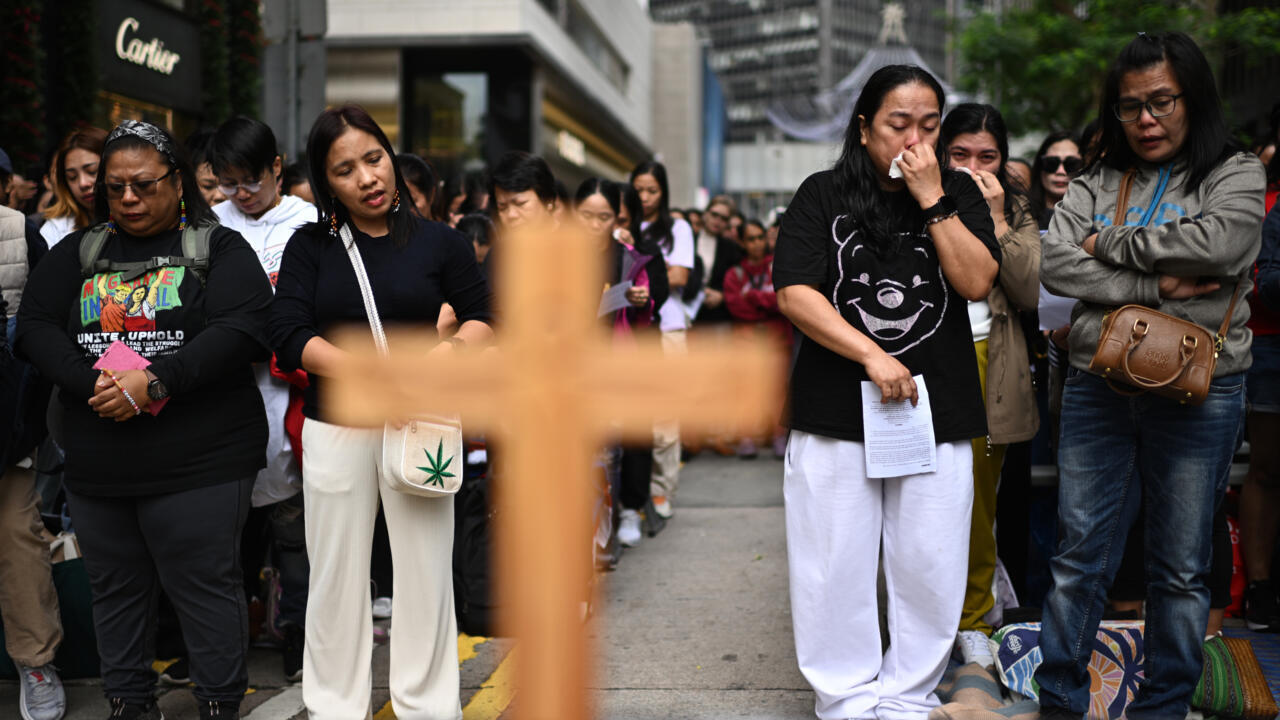
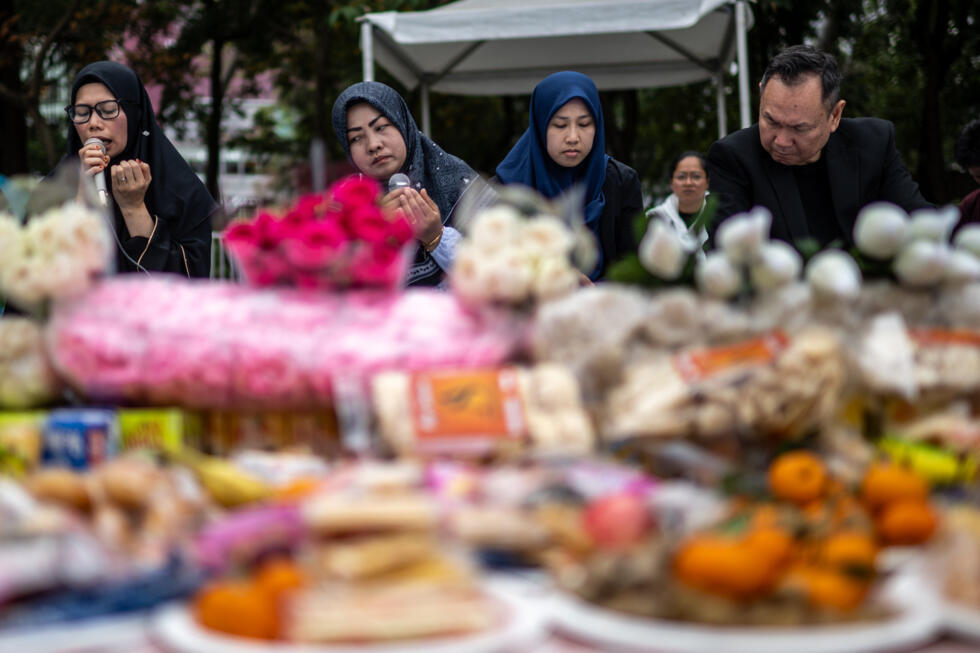
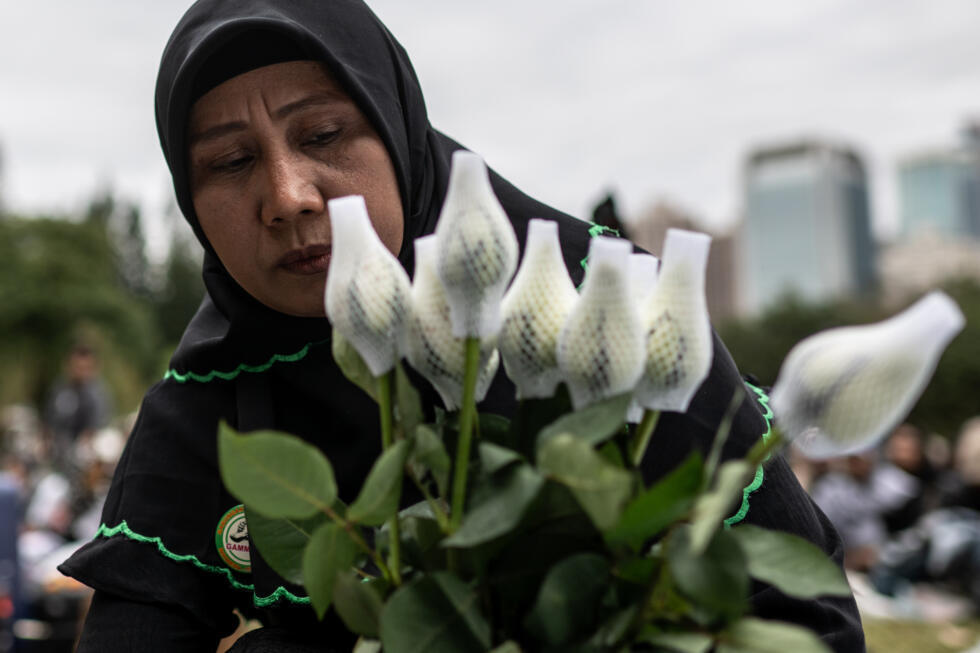
Hong Kong (AFP) – Sobs could be heard across Hong Kong's Victoria Park at the weekend as hundreds of migrant workers mourned victims of Hong Kong's worst fire in more than a century and prayed for missing friends.


Issued on: 01/12/2025 - FRANCE24


Filipinas in Hong Kong take part in a prayer service for victims of the Tai Po fire. At least 10 of the 146 killed were migrant workers © Philip FONG / AFP

Many found themselves in limbo after the disaster.

At least 10 of the 146 people killed in the fire that devastated the high-rise towers of Wang Fuk Court were migrant workers, an often overlooked segment of the workforce.

Dozens more are unaccounted for, according to an AFP tally based on information from consulates.

Hong Kong is home to nearly 370,000 migrant domestic workers, predominantly women from the Philippines and Indonesia caring for infants and the elderly in a city with an ageing population.

Migrant workers typically have Sundays off and prayers were held in neighbourhoods across the city. Attendees told AFP about friends who had gone missing and how support efforts for survivors at times fell short.

Indonesians pray for victims of the fire, which killed at least nine Indonesians with 42 others unaccounted for © Philip FONG / AFP


Sudarsih, an Indonesian woman who has worked in Hong Kong for 15 years, said two of her friends were still missing.

"God bless, they will be found quickly and are safe," she said.

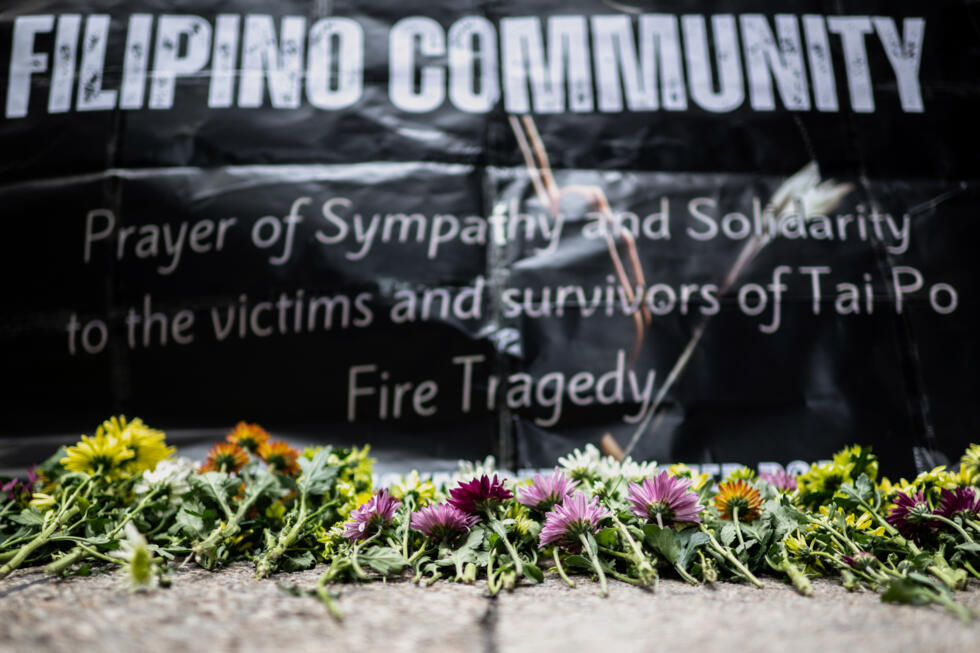
Those at the Victoria Park event sang hymns and prayed near a banner on the ground that read: "Dearly departed ones: highest respect and recognition to the loyalty and bravery of migrant domestic workers."

Dwi Sayekti, 38, said she hoped the disaster would be the "first and last".

"I hope in the future, it doesn't happen again. And all of those who lost their lives in Tai Po can be found," she said in a broken voice.

Across town, in Hong Kong's central business district, around 100 Filipino workers held a prayer meeting at their usual Sunday gathering spot with glittering office buildings looming overhead.

"We are praying that hopefully there will be no more casualties in this fire tragedy," said Dolores Balladares, chairwoman of United Filipinos in Hong Kong.
'Duty'

Many of the well-wishes were directed towards Rhodora Alcaraz, a young woman from the Philippines who started working in Hong Kong just a few days before the tragedy.

In an unverified but widely circulated account of events, Alcaraz shielded her employer's three-month-old infant with her body when the fire broke out.

When firefighters found them in the smoke-filled apartment, she was still cradling the baby.

Alcaraz was reportedly admitted to an intensive care unit, though AFP was unable to confirm her latest condition.

Migrant workers are an often overlooked segment of the workforce, caring for infants and the elderly in a city with an ageing population © Philip FONG / AFP


Fellow migrant worker Michelle Magcale said she felt "so sad" and "speechless" upon hearing the news.

"I can't express how sad it is," the 49-year-old said.

"On behalf of her duty, on behalf of her responsibility, she saved one more life ... we are thankful for that," she added.

Balladares, the Filipino group leader, said, "We also salute her because she gave her best... to protect the family."

Manila's consulate in Hong Kong said a woman named Maryan Pascual Esteban was killed in the fire, leaving behind a 10-year-old son and her family in Cainta, Rizal.

One Filipino national was injured and the status of seven others had yet to be verified, the consulate added.

Jakarta's consulate said nine Indonesians were killed in the fire with one injured and 42 others currently unaccounted for.
Support needed

More than 50 survivors have sought help from the Asian Migrants' Coordinating Body, according to spokeswoman Shiela Tebia.

Tebia said the women urgently needed clothing, especially underwear, adding that their ID cards and passports had been burned .

They are "still processing, and some actually cannot sleep well... they are also traumatised," Tebia told AFP.

Hong Kong is home to nearly 370,000 migrant domestic workers, predominantly women from the Philippines and Indonesia © Philip FONG / AFP


"But despite that condition, they still need to support their employer because their employer is also grieving."

Tebia said the consulates have promised help for victims but specifics were lacking.

Sringatin, chair of Indonesian Migrant Workers Union, told AFP the consulate could not provide information in a timely manner, while her group tried to "make people less panicked".

Family members of each deceased victim will receive HK$200,000 ($25,700) in government assistance.

But that was only an "initial step", said Edwina Antonio, the executive director at Bethune House migrant women's refuge.

"What about those who survived?" she said. "(Those) who are still in Hong Kong, they lost everything that they have."

Antonio urged the government to include migrant workers when offering financial assistance, because they are "often the only breadwinners of their families".

© 2025 AFP


Hong Kong student urging probe into deadly fire leaves police station


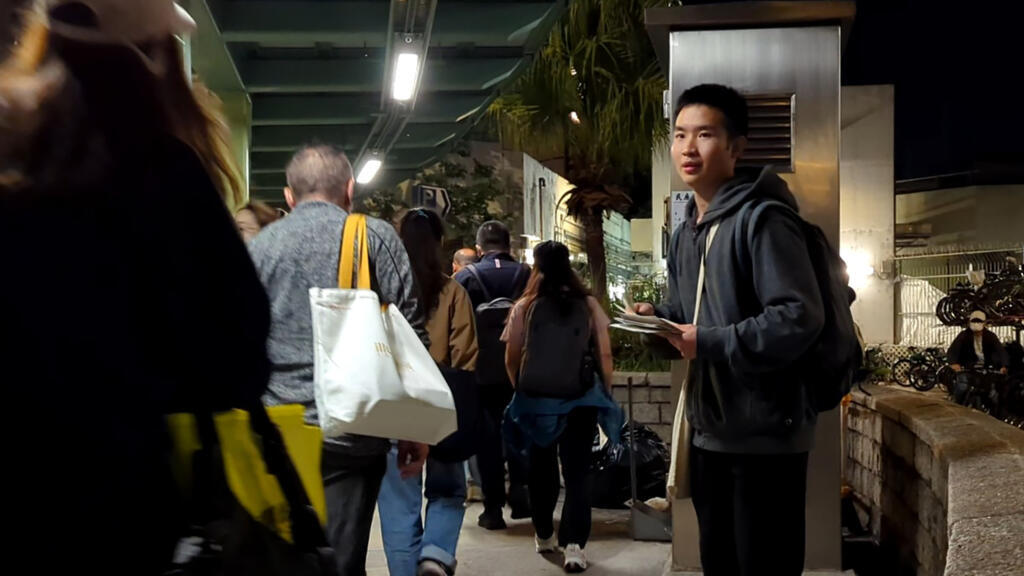
Hong Kong (AFP) – A Hong Kong student, who was reportedly detained by police after handing out flyers calling for an independent probe into a fire that killed 146 people, left a police station on Monday.


Issued on: 01/12/2025 - RFI

Miles Kwan handing out flyers outside a station in Hong Kong's Tai Po district on November 28 calling for a probe into the deadly fire © Holmes CHAN / AFP/File

Miles Kwan left the Cheung Sha Wan Division police station in a taxi on Monday afternoon, according to an AFP reporter at the scene.

The 24-year-old pulled down his face mask and nodded at reporters from the taxi as it drove out of the police station. He did not comment.

Kwan was among several people behind a petition over the fire that broke out in high-rise towers of Wang Fuk Court housing estate last Wednesday, which became the world's deadliest residential building fire since 1980.

The petition called for government officials to be held accountable, an independent probe into possible corruption, proper resettlement for residents, and a review of construction oversight.

Local media reported on Saturday that Kwan was arrested for "seditious intention" by national security police, citing unnamed sources.

Multiple news outlets reported late on Sunday that another two people, including former district councillor Kenneth Cheung, were similarly arrested.

Asked by AFP about the three cases, police declined to confirm if any arrest had been made, saying only that they "will take actions according to actual circumstances and in accordance with the law".

Kwan said Friday he was only "proposing very basic demands".

"If these ideas are deemed seditious or 'crossing the line', then I feel I can't predict the consequences of anything anymore, and I can only do what I truly believe," he told AFP at the time.

Hong Kong's anti-corruption watchdog has arrested 11 people in connection to the blaze, with three of them also being arrested by police for manslaughter.

Mourners who turned up by the hundreds near Wang Fuk Court continued to leave notes of remembrance on Monday, some calling for accountability.

"Rest in peace, Hong Kongers don't give up on freedom and truth, don't stop being angry," one unsigned note read.

Another read, "Hope your deaths were not in vain, the truth must come out for your sakes."

© 2025 AFP