WHO IS TRUMP'S WAR FOR...
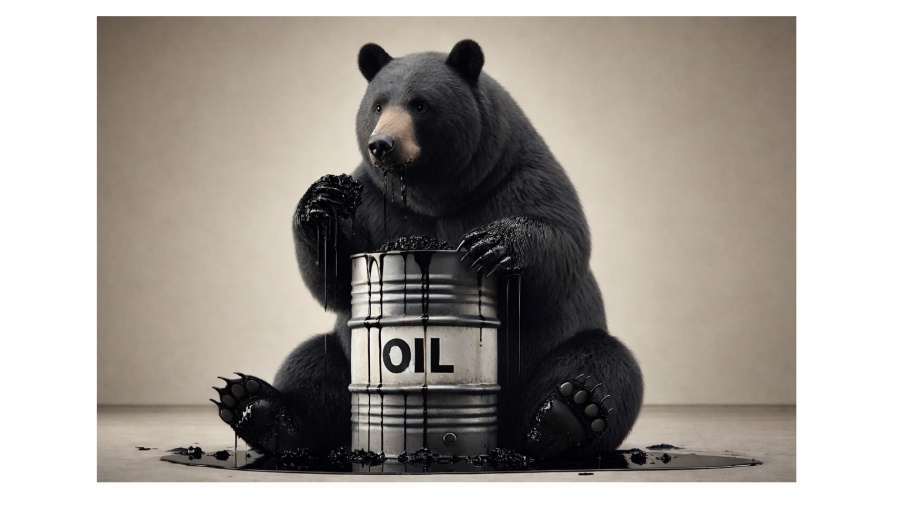
Russia has pocketed over $6bn of excess revenues in just the first two weeks of war in Iran, the Centre for Research on Energy and Clean Air (CREA) said in a report released on March 12.
Russia’s fossil fuel revenues have surged in the wake of the launch of Operation Epic Fury that set off the 2026 oil shock. Markets were suffering from whiplash after oil prices rose to $120 per barrel on March 9 as the global energy crisis gathered momentum, only to fall back to $85 again by the end of the day after Trump said the war was “pretty much over”.
The crisis is escalating as Gulf producers are rapidly running out of storage space and have already begun to cut production that will exacerbate the crisis which is expected to last at least a month, and probably longer.
The German non-profit Urgewald climate NGO, working with CREA, estimates that Russia has earned roughly €6bn from fossil fuel exports since Israeli and US strikes on Iran began on February 28 at a time when the Russian budget was under severe pressure due to the increasing effectiveness of new oil sanctions imposed by the Trump administration at the end of last year.
However, it already clear that Russia will be one of the biggest winners from the outbreak of war in the Middle East. Russia is positioning itself to take advantage of turmoil in global energy markets, Russian President Vladimir Putin told a cabinet meeting on March 10, and will boost oil exports to “friendly countries”. Russia exports some 5mn barrels of oil a day, a quarter of the 20 mbpd that has been taken off the market by the closure of the Straits of Hormuz on March 2.
According to CREA, Russia’s export revenues averaged about €510mn a day in the week following the strikes, around 14% higher than the daily average recorded in February.
Alexander Kirk, sanctions campaigner at Urgewald, said the surge highlights the structural dynamics of energy markets during geopolitical crises. “Russia is already profiting from this geopolitical crisis,” he said. “In the week after the strikes on Iran began, Russia’s fossil fuel export revenues rose to €510mn per day, 14% higher than February’s average.”
Kirk argued that such gains illustrate how volatility tends to favour large hydrocarbon exporters. “That is the reality of fossil fuel geopolitics,” he said in a press release sent by email to bne IntelliNews. “When markets panic, authoritarian exporters cash in. In less than two weeks, Russia has earned an estimated €6bn from fossil fuel exports, money that ultimately feeds the Kremlin’s war machine.”
The surge in revenues comes as Washington debates whether to ease restrictions on Russian oil sales further amid market turbulence triggered by the Iran crisis. US Treasury Secretary Scott Bessent last week issued a 30-day waiver allowing India to purchase Russian oil already at sea, describing it as a limited measure designed to stabilise supply. However, the 20mn barrels of oil currently stored on Russian tankers is only enough to supply India with four days worth of oil and the Trump administration is mulling further easing sanctions to meet soaring global demand.
For campaigners, the discussion about broader sanctions relief risks sending the wrong signal. “Easing sanctions now would not stabilise markets,” Kirk said. “What it would do is allow Russia to sell the same oil for a far better price.”
The International Energy Agency proposed the largest ever release of oil reserves on March 10 to further calm markets that has already seen the price of oil fall from a peak of $120 at the start of this week to $87 as of the time of writing.
But Russia has been a big winner in another way: the discounts on Russia Urals blend over the benchmark Brent blend of up to $20 have disappeared and as of March 11 Urals was trading over $100 at a $13 premium to Brent for the first time since the invasion of Ukraine four year ago, adding to the Kremlin’s earnings. Last week, Putin told Indian Prime Minister Narendra Modi, “Now its business, not friendship,” and Russia would no longer offer India the deep discounts that New Delhi has enjoyed since Russia rerouted its exports of Asia in 2022 following the EU’s sanctions on Russian oil imports.
According to Kirk, lifting sanctions constraints will narrow the discount and significantly increase Moscow’s revenues without requiring any increase in production.
“A rollback closes that gap overnight and hands the Kremlin a revenue boost worth billions, at the very moment that pressure is starting to bite,” he said.
Kirk framed the debate in stark terms for policymakers. “This is a political choice,” he said. “Governments can hold the line on sanctions, or they can signal that if energy prices rise high enough, the West will always find a reason to blink.”
In parallel to the oil shocks, a gas crisis is rapidly unfolding in Europe as the Gulf, led by Qatar, also supplies about a fifth of global LNG supplies.
International Energy Agency executive director Fatih Birol warned Reuters on March 6 that returning to Russian gas would be “economically and politically wrong”, even amid current LNG market turbulence. The same logic applies to Russian oil sanctions.
"The current crisis in the Middle East has led to questions in some quarters about whether to go back to Russia or not," Birol told reporters following a meeting between European Commission President Ursula von der Leyen and EU commissioners on global energy markets. "One of Europe's historical mistakes was the over-reliance of its energy sources on one single country, Russia.”
EC officials and analysts acknowledge there is no quick fix, while EU governments are split on how to respond. Europe remains hooked on Russian gas and despite a threat to ban Russian gas imports from January 1, 2027, the EU actually increased Russian LNG imports last year due to the extremely cold winter.
Again to capitalise on the chaos in the energy markets, Putin is proposing to turn the tables on Europe and ban Russian exports of gas to the EU immediately and sell the surplus to Asia instead which will only inflame gas prices that have already doubled since Operation Epic Fury began in just the first week of war.
Russia Emerges As The Biggest Winner In Middle East War
Oil markets continue to experience heightened volatility as the Middle East conflict escalates, with oil prices trending north on Wednesday, shortly after U.S. President Donald Trump signaled that the war in the Middle East is nearly complete.
In remarks made a couple of days ago, Trump described the conflict as a "short-term excursion" that is ahead of schedule and is nearing its final phase. At 3.55 p.m. ET on Wednesday, Brent crude for April delivery was up over 5% to trade at $92.21 per barrel, while the corresponding WTI crude contract was up 5.13% to change hands at $87.73 per barrel.
In the meantime, the 32-member countries of the International Energy Agency (IEA) have unanimously agreed to a record release of 400 million barrels from emergency reserves in a bid to tame soaring oil prices.
“The oil market challenges we are facing are unprecedented in scale, therefore I am very glad that IEA Member countries have responded with an emergency collective action of unprecedented size,” said IEA Executive Director Fatih Birol. “Oil markets are global so the response to major disruptions needs to be global too. Energy security is the founding mandate of the IEA, and I am pleased that IEA Members are showing strong solidarity in taking decisive action together.”
But here’s the kicker: Russia is the biggest beneficiary of the Middle East war, based on Standard Chartered analysis.
Russia is eagerly capitalizing on both higher market prices and desperate customers looking for alternate sources.
The U.S. Treasury has granted special permission for Indian refiners to purchase sanctioned Russian crude, as long as it was loaded onto a tanker before 5th March. StanChart notes that these loaded, but previously uncommitted, cargoes have been rapidly bought in the spot market, saying that this short-term waiver could potentially double the volume of Russia’s oil exports to India from 1 mb/d to 2 mb/d in the near term.
Russian crude surged 10.7% to trade at $100.67 per barrel at 1.45 pm ET, with Urals crude trading at a premium to the Brent international benchmark for the first time in history, primarily due to the severe supply shock in the Middle East and shifting trade dynamics in Asia. Facing a massive shortage of Middle Eastern "medium sour" crude (a grade similar to Urals), Indian refiners have turned aggressively to Russian supplies.
This surge in demand was facilitated by the 30-day waiver from the U.S. allowing Indian refiners to receive Russian crude already on tankers to stabilize local energy security. Brent is a light, sweet crude, whereas Urals is a medium sour grade. Because Middle Eastern production of sour crude is currently offline or unreachable, refiners that require this specific feedstock are paying a premium of $4 to $5 per barrel above Brent on a delivered basis to secure Russian barrels.
The Strait of Hormuz blockade largely remains unchanged, with transit limited to mostly Iranian and Chinese vessels whose modus operandi is operating without their transponders activated, making it difficult to estimate total volumes transiting the Strait. However, commodity analysts at Standard Chartered have predicted we could see a reduction in these dark fleet transits in the event of U.S. Navy escorts, or patrols to ensure safe passage, effectively removing Iranian sea-borne supply from the market. Such a pivot would, however, still result in a net drop in supply.
And it comes as Tehran warns the West that oil prices will soar to $200 a barrel as a result of the U.S.-Israeli campaign against Iran.
StanChart estimates that Middle East producers have been the biggest losers in the ongoing conflict, with the Strait of Hormuz impasse forcing Saudi Arabia to cut output by 2.0-2.5 mb/d; Iraq by 2.9 mb/d, UAE by 0.5-0.8 mb/d, Qatar by 0.5 mb/d and Kuwait by 0.5 mb/d. At the same time, a 45% reduction in Iranian gas flaring compared to pre-conflict levels suggests an additional 1 mb/d of Iranian crude may also be offline.
StanChart has reported that these producers are using alternate export routes where possible, with Saudi Arabia utilizing the temporary additional capacity in the East-West pipeline to transport the maximum 7 mb/d to the Red Sea. The commodity experts have predicted that this is likely to reach full capacity within a few days.
By Alex Kimani for Oilprice.com
Iran called Trump's bluff — and somehow Putin won
Michelangelo Signorile
March 11, 2026

Donald Trump after delivering remarks in Miami. REUTERS/Kevin Lamarque
Donald Trump suddenly popped on TV screens late Monday, giving his most extensive remarks on the war in Iran and taking questions from the press.
Trump had previously given no public speech to the American people upon the initiation of this war — unlike every American president taking the country to war in the past. His communication to the American public was mostly in the form of videos or speaking by phone to select reporters, offering wildly shifting rationales for the war and its goals.
On Monday, however, he finally came before the White House press corps and repeated what he’d said earlier in the day to CBS, that the war — which he now dubbed a mere “excursion” — is “very complete.” But he also said it would go on, even though it would end “soon,” and said that Pete Hegseth, who earlier said the war is “just the beginning,” is correct, even though Trump himself said that it’s “complete.”
ALSO READ: Trump made a catastrophic miscalculation — and the worst ones are still ahead
What?
He’s trying to have it all ways in a war that had no planning or an endgame.
The crazy presser perhaps is explained by two things that happened in the hours before it: Trump spoke at length to Russian President Vladimir Putin, and Trump saw oil prices surge to $120 a barrel on Sunday, tanking markets around the world and in the U.S. on Monday morning.
Let’s take the latter first. We learned from the tariff upheaval that Trump cannot stomach the markets crashing and particularly the bond market starting to teeter. It’s the only thing that stops him. Corporate America and his billionaire friends and GOP donors wind up shrieking. And average Americans — in this case looking at the price of gasoline — become very attuned to the economy and high prices.
Trump’s earlier statement in the day to CBS, while the markets were open, that the war is “very complete” was meant to calm the markets.
“I think the war is very complete, pretty much,” Trump told CBS. “They have no navy, no communications, they’ve got no Air Force ... Wrapping up is all in my mind.”
And the intended effect worked. The markets began to rebound as the price of oil came down. It actually had been coming down a bit from earlier when Trump promised insurance and military escorts for companies. None of that may actually happen. It’s risky for American military vessels to escort ships in the Strait of Hormuz, which has essentially been brought to a standstill, stranding 20 percent of the world’s oil supply. But the market operates on hope and fear.
Trump knows that. The real economy operates on facts — real data as well as on experiences on the ground by Americans in their jobs and in their consumer spending — but the market operates on hope and fear until that real economy catches up. The market can be temporarily lifted, and Trump lent it a helping hand.
But later, in the presser, after the markets had closed, Trump gave much more mixed signals — the New York Times called it a “zigzag” — saying the war may go on for a while. He even responded to a question about Hegseth, saying it’s “just the beginning” by saying that “both” could be true.
Clearly, Trump still wanted to convey that he had massive leverage over Iran, and that the bombing will continue — which it has. That’s because, in essence, this was all a capitulation to the Iranian regime, which knew the US wouldn’t have the stomach to go on for long.
Trump had only on Friday called for an “unconditional surrender” from Iran and said he’d need a say in who would be its leader, promoting his most extensive thoughts on regime change yet. And Trump absolutely rejected the idea that the son of the former Supreme Leader could be the new Supreme Leader.
But Iran indeed installed as Supreme Leader the son of 86-year-old Ali Khamenei, who was killed in a U.S. strike along with a few dozen other leaders, some of whom were viewed as more moderate by U.S. intelligence and as leaders with whom the U.S. could work. As national security analyst Joe Cirincione, a member of the Council on Foreign Relations, told me on my SiriusXM program yesterday, that strike was a strategic blunder — spurred on by Israel — as the U.S. now had no top leaders with whom it could negotiate.
The son, Mojtaba Khamenei, is much more hardline than his father and is only 56 years old. So Trump killed the old man who could likely have been replaced when he died by one among several moderates — all of whom Trump also killed — and now the hardline, young son will be there for a long time.
Iran’s regime defied Trump’s demand — there would be no surrender — and they chose their more extreme leader. And then the markets tanked as oil was cut off. And Trump caved.
So Trump’s bluster at the presser yesterday was his way of trying to make Iran’s brutal government feel afraid of him. But why should they feel afraid? He’d, after all, just melted away. Trump also completely sidestepped a question from a reporter about how the Iranian people — the vast majority of whom support democracy — could feel betrayed by him? Trump had promised them he’d save them, only to now cave and hand them over to a new ayatollah.
Trump’s move to declare victory wasn’t, however, just a response to the market and the billionaire overlords. He’d had a long conversation with Putin earlier in the day as well, a call that Putin initiated, according to reports in the media. We learned in recent days that Putin was continuing to supply Iran with intelligence, which is outrageous since Iran was targeting American soldiers using intelligence from Russia. And yet, both Trump and Hegseth dismissed that, as usual tiptoeing around Putin. And now Trump had a long conversation with Putin.
The conservation, which Trump said was a “good” one, is pretty much shrouded in mystery. But we can put together how it went. Putin had earlier said that the attack would trigger an oil crisis and said oil transport would stop in the Strait of Hormuz. He was, of course, right.
Putin also said that Russia — whose economy is collapsing under sanctions but which is the second-largest oil exporter in the world and has the biggest reserve of natural gas — was happy to once again sell Europe its oil and gas. Europe had stopped importing Russian energy after the Ukraine invasion began.
Putin wanted a long-term deal again. And Trump, we’ve learned, is now considering pulling back on oil sanctions against Russia. He’d already announced a few days ago that he was allowing India to buy oil from Russia, dropping the threatened tariffs if India bought Russian oil, because of the shortage of oil coming from the Gulf.
“We’re also waiving certain oil-related sanctions to reduce prices,” Trump said at the presser yesterday. “So we have sanctions on some countries. We’re going to take those sanctions off until this straightens out.”
So Trump capitulated not only to Iran but to Russia.
Putin now had more leverage on Trump, able to help Trump out in the oil crisis he created. Putin is getting Trump to actually help sell Russian oil, and lift Putin’s devastated economy. The invasion of Ukraine be damned.
Trump may be trying to claim the U.S. has won, but the only winners so far are Putin and, to the extent that they survive even if their military capability is damaged for now, the Iranian regime.
The Iranian people are still living under a horrific, murderous theocracy. Thousands have been killed in Iran and the region, including hundreds of Iranian children killed in a school that analysts have determined was caused by an American Tomahawk missile. Seven American service members lost their lives. And the American people are paying higher gas prices, as the oil shock will last a while.
The Gulf nations suffered casualties because the U.S. didn’t plan for this war, mindbogglingly thinking the war would be over in days and that Iran wouldn’t attack U.S. assets in the Gulf states, while thousands of Americans and people from other countries were stranded in the war zone.
And U.S. credibility took another dive, as Trump weakens this country’s standing in the world by the day.Michelangelo Signorile writes The Signorile Report, a free and reader-supported Substack. If you’ve valued reading The Signorile Report, consider becoming a paid subscriber and supporting independent, ad-free opinion journalism.

No comments:
Post a Comment