France says EU must obtain energy self-reliance through civilian nuclear power
French President Emmanuel Macron has urged European countries to expand the use of civilian nuclear power to secure the continent’s energy independence, warning that the war in the Middle East has exposed Europe’s vulnerability.
Issued on: 10/03/2026 - RFI

European Commission President Ursula von der Leyen echoed his remarks at a nuclear energy summit in Paris.
The event – organised by the International Atomic Energy Agency (IAEA), comes amid heightened tensions over global energy supplies as the US-Israeli war with Iran enters its second week.
Macron said civilian nuclear power helped provide energy sovereignty. "Nuclear power is key to reconciling both independence – and thus energy sovereignty – with decarbonisation, and thus carbon neutrality."
"We can see it in our current geopolitical context: when we are too dependent on hydrocarbons, they can become a tool of pressure, or even of destabilisation," he added.
Macron announces 'defensive' mission to reopen Strait of Hormuz
Strategic 'mistake'
Von der Leyen said Europe's turn away from civilian nuclear power had exposed the continent's fossil fuel "vulnerability".
"It was a strategic mistake for Europe to turn its back on a reliable, affordable source of low-emission power," she said at the opening of the second Nuclear Energy Summit held just outside Paris.
"For fossil fuels, we are completely dependent on expensive and volatile imports. They are putting us at a structural disadvantage to other regions. The current Middle East crisis gives a stark reminder of the vulnerability it creates."
"We have home-grown low-carbon energy sources: nuclear and renewables. And together, they can become the joint guarantors of independence, security of supply, and competitiveness, if we get it right." she added.
Von der Leyen explained that while in 1990, a third of Europe's electricity came from nuclear, today this figure is only around 15 percent.
"In the last years, we see a global revival of nuclear energy. And Europe wants to be part of it," she said.

She adde that the European Union would "create a €200 million guarantee to support investment in innovative nuclear technologies", unveiling a new strategy for small modular reactors.
"We want this new technology to be operational in Europe by the early 2030s."
Small modular reactors are advanced nuclear reactors that have a power capacity of up to 300 megawatts of electricity per unit, or about a third of the generating capacity of a traditional nuclear power reactor.
They are relatively simple to build, which makes them more affordable than large power reactors.
Nuclear energy fell into crisis after the 2011 Fukushima disaster in Japan, which reinforced fears highlighted by the 1986 Chernobyl catastrophe.
Controversial topic
The use of nuclear energy as an alternative to fossil fuels is highly controversial, however, with many environmental groups warning about safety risks and the disposal of nuclear waste.
The start of the summit was briefly interrupted by two Greenpeace activists who took to the stage as Macron greeted attendees and unfurled a banner reading: "Nuclear power fuels Russia's war."
One of the activists shouted: "Why are we buying uranium from Russia?" before both were taken away by security personnel.
Greenpeace has accused France of maintaining ties with Russia's state nuclear corporation, Rosatom, despite Moscow's invasion of Ukraine, now in its fifth year.
In 2018, France's EDF signed a multi-million deal with a Rosatom subsidiary, Tenex, for reprocessed uranium from French nuclear power plants to be sent to Russia to be converted and then re-enriched before being reused in power production.
Greenpeace said that around 15 activists disrupted the arrival of officials heading to the event.
"This global summit on nuclear energy is completely out of touch with the current global situation, both in terms of geopolitical tensions and armed conflicts, and in the context of the fight against climate change," Greenpeace said.
(with AFP)
Indonesian Nuclear Energy: Quo Vadis? – Analysis
March 12, 2026
East-West Center
By Albertus Siagian and Djarot Wisnubroto
The Indonesian government has committed to building the country’s first-ever nuclear power plant by 2032. However, they must deal with funding limitations, uranium procurement issues, location selection issues, and diplomatic challenges (due to the sensitive nature of nuclear discussions). Although the absence of nuclear energy has not caused any electricity system inadequacy and instability so far, shortfalls are expected in the future when Indonesia aims to achieve the target of Net Zero Emission (NZE) by 2060.
This paper recommends that the government use a build-operate-transfer (BOT) scheme with foreign vendors (to mitigate the funding and uranium limitation issues) for plants built in remote coal ex-mining areas in Borneo (to mitigate location selection issues) with small modular reactor (SMR) technology. Furthermore, given the strong need to involve foreign parties in this nuclear planning, the government must maintain diplomatic credibility on the global stage by using the climate rationale, which is now increasingly accepted worldwide.
Climate Change as a New Impetus for Nuclear Presence
Indonesia remains today the most populous country on earth without a nuclear power plant. All the countries with larger populations (India, China, and the United States) have nuclear power plants. Amidst the growing worldwide urgency to mitigate climate change and to have clean-sourced electricity, the question is more about when and how Indonesia could rather than should add nuclear energy into its power generation mix.
The discussion on how fast nuclear can be integrated into Indonesia’s power generation mix is relatively new. Until quite recently, most discussions were more about whether nuclear should be integrated in the first place. With an energy security rationale, several past Indonesian presidents favored or at least had no objections to nuclear power (Sjamsuddin, 1993; Widodo, 2015; Fadeli, 2021; Muhid, 2024). Yet, the opposition was strong enough to counterbalance that view. As a result, for years the government explicitly designated nuclear energy as “the last option” (Government of Indonesia, 2014).
The climate change mitigation narrative, however, has become increasingly popular in Indonesia, and this has elevated nuclear energy discussion in the country to a new height. The Indonesian parliament ratified the Paris Agreement in 2016, making it legally binding for Indonesia (Government of Indonesia, 2016). In accordance with the Paris Agreement, Indonesia submitted an enhanced nationally determined contribution (NDC) in 2022, in which Indonesia mentioned its desire to formulate and implement a long-term pathway to achieve NZE by 2060 or sooner, as implied by Article 4.19 of the Agreement (Indonesian Ministry of Environment and Forestry, 2022).
Now, adding climate change to the situation, both energy security and energy cleanliness have become the two rationales for having nuclear energy. Nuclear power emits little emissions (unlike oil, gas, coal, biofuel, and municipal waste), provides stable energy (unlike solar and wind), and is location-flexible (unlike hydropower and geothermal). Nuclear energy becomes a crucial instrument in supporting Indonesia’s NZE agenda while maintaining energy security.
NZE itself might be achieved through three scenarios. The first scenario is keeping some fossil-powered plants in the power system. But to deal with the emissions, carbon capture and storage (CCS) must be installed. This scenario entails costs, primarily because CCS technology is expensive.
The second scenario is entirely using variable renewable power plants (solar and wind) in the power system. But to deal with the intermittency, battery storage must be put in place. This scenario also entails hugh costs, primarily because energy storage must be equally abundant and of similar cost.
The third scenario is integrating nuclear energy into the power system. Although it never revealed the exact cost, the National Energy Council has concluded that the third scenario is the most economical way to achieve NZE. It reduces the need to include expensive CCS and energy storage. Moreover, the ability of nuclear power plants to run at high capacity for 60 to 80 years means the levelized cost of electricity (indicated by the lifetime cost, divided by the lifetime of electricity produced) can be competitive. Furthermore, nuclear plants (especially small modular reactors) also require less land than solar or wind farms, which is an important factor because land cost can be significant with an ever-growing population.
Hence, since 2018, the Indonesian parliament has opined that nuclear energy should not be the last option anymore (Indonesian Nuclear Energy Regulatory Agency, 2018). Finally, the administration under current president Prabowo Subianto officially adopted the National Electricity General Plan (RUKN) in November 2024. Nuclear energy is now officially part of achieving Indonesia’s NZE status in 2060, when RUKN envisions that 14.2 percent of the country’s power should come from nuclear power plants (Indonesian Ministry of Energy, 2024).
Furthermore, RUKN even said that the first-ever nuclear power plant in Indonesia should commence its operation in 2032. But this begs more questions. Assuming a nuclear power plant requires around 7 years to construct (Cameron & Taylor, 2011), and this is already 2025, people are wondering what further preparation is necessary for Indonesia to begin construction now.
Domestic Funding and (Enriched) Uranium Limitation Issues
Uranium procurement is another challenge. Indonesian uranium reserves (from domestic mining) are small (Dhanya, 2025). From 1997 to 2022, Indonesian law prohibited the commercial mining of uranium and thorium in Indonesia (Government of Indonesia, 1997). This stunted the development of the local uranium and thorium mining industry. Although the recent Omnibus Law (enacted in 2020) and its derivative regulation have lifted this restriction since 2022 (Government of Indonesia, 2022), the local mining industry needs time to mature.
Low domestic uranium stock means that most likely Indonesia will have to rely on the foreign market. This may cause a uranium import dependency, exposing Indonesia to global risks. For example, the uranium-exporting countries might ban the supply of uranium. The most recent Integrated Nuclear Infrastructure Review (INIR) of the International Atomic Energy Agency (IAEA) corroborated that, for Indonesia, “significant actions are needed” to make procurement viable (Suprawoto & Suparman, 2009).
Indonesia is not only dependent on uranium imports, but also does not have uranium enrichment technology within the country. It has not been needed up to now. There has been a surplus in the global uranium market because the global nuclear weapon disarmament from the Cold War era provided an unexpected supply of ex-military uranium into the global market (World Nuclear Association, 2024b). So long as this excess supply persists globally, there might be weak incentives for Indonesia to invest in uranium enrichment technology rather than simply buying the enriched uranium from abroad.
Another reason for not having domestic enrichment technology is that Indonesia wants to prevent the perception that it wants to build nuclear weapons (Herutomo, 2015). This approach seems even more justified after the recent US bombing of Iran’s nuclear facilities because of the belief that Iran’s nuclear enrichment goes beyond what is necessary for nuclear power plants. Indonesia may want to continue this low-profile path.
Geopolitical and Domestic Political Challenges
Nuclear is the most politically and geopolitically challenging clean energy source. Within Indonesia, lobbyists—especially those backed up by the Indonesian coal industry, which dominates the power industry—try to block Indonesia’s nuclear power plan. Some high-ranking government officials, military and police veterans, other politically influential persons, as well as business conglomerates, are known to have links to the coal industry (Wasef et al, 2020). Environmental civil society organizations, such as foreign-based Greenpeace and the locally-originated Indonesian Forum for Living Environment (WALHI), also express objections to nuclear power plants (Greenpeace, 2023; WALHI, 2024).
Domestic resistance also stems from the location selection issue. A site might meet public resistance if it is decided through a top-down decision. For instance, the government’s decision to build a nuclear power plant in Jepara in Central Java in 2007 was aborted because of public resistance. The local people feared nuclear accidents (Burhani, 2007). However, proposing the location for the nuclear power plant site through a bottom-up approach might be cumbersome. The latest government survey done in 2016 revealed that while 77.53 percent of the Indonesian people accepted a plant being built in Indonesia, they could not say where (Indonesian National Nuclear Energy Agency, 2016). Some might have answered affirmatively under the assumption the plant would not be built nearby (Purnama, 2021).
Location selection is complicated by Indonesia’s high earthquake potential, which might further drive down public approval. As a result of the 2011 Fukushima incident, Indonesians’ approval of having nuclear power plants dropped from 59.7 percent to 49.5 percent (Indonesian National Nuclear Energy Agency, 2011).
As for geopolitical consequences, Indonesia once suffered reputational after Indonesia’s first president, Soekarno, announced an intention to acquire an atomic bomb with China’s help after initially saying he wanted only a peaceful nuclear capability (Fadeli, 2021). Amidst the Cold War, such an announcement was easily misunderstood as Indonesia aligning with the Eastern Bloc.
Indonesia’s second president Soeharto then had to freeze Indonesia’s diplomatic ties with China for more than 20 years (until 1990) to regain the trust of the West. This gave Indonesia a hard lesson that a misunderstood nuclear agenda can cause a seismic repercussion. Since then, the government has deliberately maintained a non-hostile posture toward the West, sometimes at the expense of Indonesia’s diplomatic freedom.
BOT Scheme to Mitigate Funding and Uranium Issues
Given that the domestic capacity (both public and private) to fund and finance nuclear power plants is limited, Indonesia may have to look at foreign sources of money. The government may want to consider the BOT scheme, where a foreign entity would build and operate a nuclear power plant inside Indonesian territory.
There are several examples. In 2015, Rosatom (from Russia) planned to build two nuclear power reactors in Laos with the BOT scheme (Maierbrugger, 2015). The same year, Rosatom struck an intergovernmental agreement to build a nuclear power plant in Egypt with a “take-back” option at the end (Lorenzini, 2023). Also, Turkey once had the plan to build its second nuclear power plant with a BOT scheme with Japan and France, but the plan was canceled in 2018 (World Nuclear Association, 2024a). Currently, Turkey is trying to revive the plan with Rosatom (Turkiye Today, 2025).
With this scheme, the government leaves both funding and operation of the plant to other entities. One of these operational matters is the procurement of uranium. By having an experienced entity operating the plant initially, the government can train local people in preparation for future plant transfer. Transfer would occur after the foreign entity makes a profit, allowing the government to satisfy the national aspiration to own the plant. The plant’s remaining lifetime after transfer would be significant, as such plants can operate for up to 80 years (Fawaz-Huber, 2017).
The next serious question, then, is with whom Indonesia should cooperate in this BOT scheme. Russia’s state-owned Rosatom has helped build around 76 percent of overseas nuclear power plants around the world (Astrasheuskaya, 2021), so it seems natural for Indonesia to cooperate with the experienced Rosatom. Moreover, Russia controls around 44 percent of the global uranium enrichment capacity (Bryanski, 2024). As the leading nuclear supplier in the world, it is not in Russia’s interest to stop the trade. Otherwise, Russia would aggravate many of its client countries, causing them to turn to other, smaller suppliers, costing Russia market share.
Compared to Western countries, Russia also tends to be more open to technological transfer to Indonesia (Pramudyani, 2024). This fits with the nuclear politics logic of Indonesia, where acquiring the ability to make its own nuclear power plant in the future would greatly satisfy Indonesia’s technological nationalism.
Furthermore, like China, Russia tends to employ international partnerships through a government-to-government arrangement. State interventions can offer collaboration at lower costs. On the other hand, Western countries favor business-to-business arrangements, which tend to involve higher costs. However, despite being a big country, Indonesia is not necessarily an important country on the global stage. Hence, Indonesia needs geopolitical leverage. Building balanced ties with everyone, including the US, might serve that purpose best.
As of 2025, the US is still the second-largest trading partner of Indonesia. Also, according to the Indonesian Ministry of Investment data, the US is still a major FDI contributor to Indonesia. On the other hand, many Russian businesses are under economic sanctions imposed by the Western countries. Hence, although Russia’s Rosatom might be the primary nuclear vendor for the first batch of nuclear plants, Indonesia should diversify its vendors among both Western and non-Western countries for the latter batch. Diversification acts as Indonesia’s de-risking mechanism in coping with geopolitical dynamics.
Ex-Mining Areas Repurposing and Floating Stations to Mitigate Location Issues
The BOT scheme above assumes that such a plant can be built somewhere in the country. But as mentioned before, the location selection itself is an issue. In solving this problem, the government may need to come up with “outside of the box” ideas. For example, the government could select a location that is far away from highly populated areas to minimize the “not in my backyard” phenomenon.
Favorable prospective locations could include remote disused coal mining areas, which are numerous on Borneo Island compared to other main islands. Repurposing some of these sites into nuclear power plant sites can also be a smart way to appease nuclear opponents, many of whom happen to be coal businessmen who are also frequently criticized for their open-pit legacies.
It is true that putting the plants far from urban centers will raise the costs of power transmission. This problem, however, is not unique to nuclear energy. Other kinds of clean energy plants would also have to be situated far from urban centers. Hydropower and geothermal plants follow the location of the large river and geothermal reserves, which are often not near the cities. Solar plants need a vast surface area for the placement of solar panels, and cheap, available land is usually far from the city centers. Wind farms often receive resistance from urban dwellers who consider them an eyesore.
Borneo also happens to be the Indonesian island with the lowest earthquake potential. Another choice for dealing with earthquakes is using floating low-power nuclear power stations. The plant is not stationary on land, but rather is cushioned by surrounding sea water, while connecting to coastal communities that need electricity. Indonesia currently does not have this technology. But again, Russia’s Rosatom once talked with the Indonesian government about this transferring this technology, which is another reason why Indonesia naturally may bind more with the Russians in the nuclear space (World Nuclear Association, 2025).
The planning for the BOT scheme above could be made more detailed once Indonesia chooses a technology to be used in the nuclear power plants. The SMR offers many benefits that fit Indonesia’s situation. Despite having a higher capital cost per capacity unit (or USD/MWe) than conventional nuclear power plants, the SMR’s small scale still makes the overall cost lower. A conventional plant can be more than 1,000 MWe, while an SMR can be as small as 300 MWe. This cost advantage is appealing for a country with limited funding or financing issues, such as Indonesia. The SMR is not only small, but its modularity makes it simpler (and thus quicker) to install. When these two features are combined, the plants can be deployed more flexibly, which suits the archipelagic character of Indonesia.
Lastly, on the operational side, SMR relies more on a passive safety system, where the reactor cooling uses general physical law (such as gravity and natural convection) so that human intervention (and the possibility of human error) can be minimized. If this benefit is communicated properly, society may be more likely to buy in.
Climate Diplomacy to Secure Credibility
All the explanations thus far have shown how Indonesia may be dependent on foreign parties for many inputs (money, uranium, and technology), and thus vulnerable to international shocks. The most unwanted input shock is arguably the uranium trade ban. So, Indonesia needs a mitigation strategy in case the uranium trade is banned. As the first layer of mitigation, Indonesia might choose to reuse leftover uranium to fuel its nuclear power plant operation after a ban. Technically, not all uranium nuclei might be reacting when nuclear fission occurs in nuclear power plants. Hence, leftover fuel can be reused.
Plutonium is an unintended but normal by-product of routine nuclear fission in power plants. In theory, it can be used to make nuclear weapons. As the second layer of mitigation, Indonesia could use this plutonian as a bargaining chip in trade negotiations—i.e., Indonesia will relinquish this plutonium stock in exchange for reopening the uranium trade.
As the last layer of mitigation, Indonesia should seriously consider mastering the uranium enrichment technology by itself, but still within the boundaries of peaceful civilian purposes. Indonesia has considerable technical skill. The latest INIR by the IAEA in Indonesia concluded in 2009 that only “minor actions are needed” for Indonesia to meet international standards in important aspects of nuclear safety, including radiation protection, human resources, environmental protection, emergency planning, security, the nuclear fuel cycle, and radioactive waste management (Suprawoto & Suparman, 2009). This conclusion is rather unexpected for many Indonesians, who reject the nuclear power plan because they falsely believe Indonesia lacks competence in nuclear power management.
An interest in mastering uranium enrichment technology may raise suspicion about Indonesia’s motives. Therefore, to secure international approval, Indonesia should always discuss its nuclear plans within the context of climate change mitigation. The climate rationale might be the most acceptable justification from a global perspective, given that climate change mitigation is already a global aspiration and mostly non-controversial.
As things stand today, countries around the globe are becoming more pragmatic in embracing nuclear energy as an option to provide clean electricity and mitigate climate change. The recent COP28 saw more than 20 countries from four continents launching the Declaration to Triple Nuclear Energy (Day, 2024). Despite nuclear technology being geopolitically sensitive, the Declaration demonstrates that this sensitivity might have been overshadowed by the climate change emergency.
Another benefit of wrapping the nuclear power plan in the climate change mitigation banner is that any international collaboration that Indonesia engages in to advance its nuclear program, say with Russia and Brazil, as indicated by the president in 2024 (Priyasmoro, 2024; Yanwardhana, 2024), might be perceived by the West less through a geopolitical lens and more through an environmental lens.
Further, Indonesia should capitalize on the current pacifist profile that it has carefully nurtured on the global stage. Indonesia is a credible signatory of the Nuclear Non-Proliferation Treaty, expressing its zero intention to build nuclear weapons. Indonesia is also a founding member of ASEAN, which also has declared Southeast Asia a Nuclear WeaponFree Zone (Boutin & Acharya, 1998). This positive global perception is an asset for Indonesia.
A good diplomatic strategy is also needed in the event of an international emergency such as cross-border radioactive fallout or contamination of international waters. This is relevant because archipelagic Indonesia shares land and maritime borders with 10 other Asia-Pacific countries.
Policy Recommendations
In realizing Indonesia’s commitment to have the first-ever nuclear power plant in the country ready by 2032, this paper argues that the Indonesian government should consider a BOT scheme with foreign entities as a strategic move to navigate around domestic limitations in funding and financing the plant, as well as in procuring the (enriched) uranium. The plant transfer to the Indonesia at the end of the scheme can also satisfy the country’s technological nationalism. And for choosing the plant’s location, repurposing remote, disused coal mining areas on Borneo Island is recommended. This can avoid public resistance, as these areas are far from population centers. Additionally, floating (mobile) nuclear power stations can also be a smart choice. Technology-wise, the small modular reactor (SMR) technology can be a good fit for Indonesia.
It is important for Indonesia to prepare a diplomatic strategy to go along with the plan. First, the ndonesian government must always invoke climate change mitigation when discussing its nuclear power aspirations. Maintaining a positive international reputation is an asset. Suspicion is likely to arise when, say, Indonesia decides to enrich uranium by itself. A plan is also needed for dealing with the international consequences of a nuclear accident or emergency.
Second, diversifying its nuclear vendors for a BOT scheme could help Indonesia minimize the risk of geopolitical blowback.
Coordinating all these actions above may not be easy, but it is needed. These recommendations, and methods for implementing them, should be built into the country’s Nuclear Energy Program Implementing Organization (NEPIO). Apart from coordinating, this organization can help inform the world how these plans will remain consistent with Indonesia’s international legal commitments. If done right, providing for its own continued economic development need not damage Indonesia’s global reputation.
About the authors:
Djarot Wisnubroto is the former Chairman of the Indonesian National Nuclear Energy Agency (2012–2018). He was also a member of the Standing Advisory Group for Nuclear Applications in the IAEA (2019–2022). He obtained his doctoral degree from the School of Nuclear Engineering at the University of Tokyo. He can be reached at djar002@brin.go.id.
Source: This article was published by East-West Center (PDF), where the references for this article can be found
East-West Center
The East-West Center promotes better relations and understanding among the people and nations of the United States, Asia, and the Pacific through cooperative study, research, and dialogue. Established by the U.S. Congress in 1960, the Center serves as a resource for information and analysis on critical issues of common concern, bringing people together to exchange views, build expertise, and develop policy options.
Energy Secretary backs congressman's call to reopen Indian Point
_88941.jpg)
Indian Point's two operational pressurised water reactors - unit 2 and unit 3 - were closed down in 2020 and 2021 respectively. The premature closure of the units, which both had several years of their operating licences left, followed on from a settlement agreement between the plant's then-owner Entergy and the State of New York. The plant - which is also home to unit 1, which shut down in 1974 as the newer units came on line - was then sold to subsidiaries of Holtec International for decommissioning.
The two reactors once supplied a quarter of the region’s electricity, but their closure has contributed to higher electricity costs and increased strain on New York’s electric grid, Lawler said during a visit to the former Indian Point Energy Center with Wright.
New York Governor Kathy Hochul last year announced plans to reinvest in new nuclear capacity in upstate New York, Lawler said, but there is "no reason" that Indian Point could not be brought back online in the same way that Holtec International is bringing the Palisades plant in Michigan back into service.
"I'm calling for the rebuilding and reopening of Indian Point Energy Center and for an all-of-the-above energy strategy," Lawler said. "That means supporting nuclear energy, approving critical infrastructure like natural gas pipelines, and ensuring communities like Buchanan are not left behind after decades of helping power our state."
"Across the Northeast, including in New York, Americans are paying some of the highest electricity prices in the country because political leaders blocked critical infrastructure and prematurely shut down power plants that deliver affordable, abundant power," Wright said, actions which had "driven up electricity costs for millions of Americans".
_cb9f4152.jpg)
Chris Wright's visit to the Indian Point Energy Center (Image: Energy Secretary Chris Wright/X)
Both Lawler and Wright pointed to Holtec International's ongoing project to restart the Palisades nuclear power plant in Michigan. Palisades, a single-unit pressurised water reactor, ceased operations in May 2022 and was defuelled the following month. The unit's licence was transferred from previous operator Entergy Nuclear Operations to Holtec Decommissioning International, LLC and Holtec Palisades, LLC, for decommissioning, but in late 2023, Holtec began the process of obtaining the licensing approvals needed to return the plant to operational status.
"In a few months in Michigan, the first-ever restart of a nuclear power plant is going to happen," Wright said. "And it's a similar story. It was just a foolish political decision, blowing with the winds of the day that we're going to shut down our nuclear power plant."
Rwanda 'making significant progress' on nuclear energy programme

The 10-strong Integrated Nuclear Infrastructure Review mission took place during the first week of March in Rwanda, which currently has no nuclear power reactors, but plans for nuclear power to supply 60-70% of its energy mix in future decades.
President Paul Kagame told the Nuclear Energy Summit in Paris on Tuesday nuclear capacity will "diversify our energy mix while providing the stability required for industrial growth and long-term transformation".
Referring to the International Atomic Energy Agency (IAEA) mission, he added: "We are grateful to the International Atomic Energy Agency for supporting the Rwanda Atomic Energy Board as well as our national regulator in this endeavour."
"Nuclear energy is not too complex or risky for developing countries. The standards developed by the IAEA provide a universal framework that can be applied by countries at every income level."
Good practices observed during the IAEA mission which could be shared with other prospective nuclear energy countries included "proactive engagement with stakeholders, and early and comprehensive preparation for emergency preparedness and response … progress made in the areas of drafting a new comprehensive nuclear law, initiating work to enhance the regulatory framework for a nuclear power programme, conducting site surveys and identifying candidate sites for the planned SMR project".
Recommendations included "finalising the comprehensive report to support the national decision-making to introduce nuclear power, completing the review of national legislation, and further developing and adopting policies and strategies to support the nuclear power programme".
The leader of the mission, Mehmet Ceyhan, Technical Lead of the IAEA Nuclear Infrastructure Development Section, said: "Strong government support and the effective coordination of the preparatory work helped Rwanda make significant progress towards deciding on a nuclear power programme.
"The level of preparation and involvement from all participating organisations and teams during the mission reflected a deep commitment to the programme."
Such missions take place at the invitation of the host country. Jimmy Gasore, Rwanda's Minister of Infrastructure, said: "Rwanda remains firmly committed to the responsible, safe and transparent development of nuclear power infrastructure. The IAEA's review provides us with invaluable guidance to ensure that our national framework aligns with international safety standards and global best practices."
Following the mission, whose members included experts from Egypt, Estonia, Kenya and Pakistan as well as agency staff, the IAEA and Rwanda will develop an integrated plan for continuing support during the development of the nuclear energy programme.
Kagame added in his speech: "Our country is prepared to proceed through the agency's milestone approach to the next stage. Nuclear technology is evolving in ways that benefit countries with small grids, allowing Africa to be among the early adopters. Small modular reactors in particular are especially suited to Africa's requirements."
China and Brazil among new signatories to tripling nuclear goal
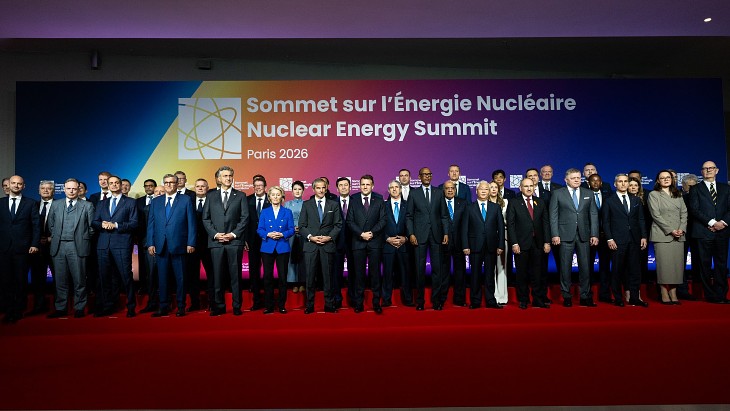
The decision by the countries, announced at the Nuclear Energy Summit 2026 in Paris, means there are now 38 countries signed up to the Declaration to Triple Nuclear Energy by 2050.
Earlier this month South Africa also signed the declaration, with the country's Minister of Electricity and Energy, Kgosientsho Ramokgopa, emphasising the importance of reliable and scalable power to support economic development and industrial growth across Africa.
Chinese President Xi Jinping's Special Representative Zhang Guoqing attended the summit, which heard that, to address climate change and ensure energy security, China endorsed the tripling declaration, and "to deliver such ambitious goals we should uphold multilateralism, strengthen solidarity and cooperation and resist unilateralism and protectionism. We are ready to work with all related parties to implement the building of a community with a shared future for all".
Italy's Minister of the Environment and Energy Security Gilberto Pichetto announced the country had signed the declaration and said the country was "building a responsible, modern and transparent nuclear strategy - our goal is a secure, decarbonised and competitive energy mix capable of integrating all sustainable sources within a framework of technological neutrality”.
He said: "In the short to medium term we are looking closely at advanced third-generation small modular reactors, while also carefully considering fourth-generation technologies, particularly lead-cooled fast reactors."
Sama Bilbao y León, Director General of World Nuclear Association - speaking from the summit - said: "Today's announcement adds tremendous momentum to the global coalition of the ambitious, who are supporting the declaration to triple nuclear capacity by 2050. The ambition of the countries joining the declaration is recognised in our World Nuclear Outlook Report which shows nuclear capacity can exceed the tripling goal, if government targets are met. Collectively, governments and industry must now turn this ambition into action and deliver."
It was during COP28 - held in Dubai, UAE, in December 2023 - that an initial 25 countries backed a Ministerial Declaration calling for an at least tripling of global nuclear energy capacity by 2050. The declaration says the countries recognise the need for a tripling of nuclear energy capacity to achieve "global net-zero greenhouse gas/carbon neutrality by or around mid-century and in keeping a 1.5°C limit on temperature rise within reach". It also recognises that "new nuclear technologies could occupy a small land footprint and can be sited where needed, partner well with renewable energy sources and have additional flexibilities that support decarbonisation beyond the power sector, including hard-to-abate industrial sectors".
The number of signatories has continued to grow, to reach the current total of 38 countries - Armenia, Belgium, Brazil, Bulgaria, Canada, China, Croatia, Czech Republic, El Salvador, Finland, France, Ghana, Hungary, Italy, Jamaica, Japan, Kazakhstan, Kenya, Kosovo, Moldova, Mongolia, Morocco, Netherlands, Nigeria, Poland, Romania, Republic of Rwanda, Senegal, Slovakia, Slovenia, South Africa, South Korea, Sweden, Turkey, Ukraine, UAE, the UK, and the USA.
Deep Fission begins drilling first data acquisition well
_27741.jpg)
The well will be drilled to a depth of approximately 6,000 feet (1,830 metres) and will have a diameter of roughly eight inches (20 centimetres). The three planned wells represents the initial phase of site characterisation and engineering validation.
The data acquisition well will enable the company to gather critical geological, hydrological, and thermal data to inform final engineering design, safety analysis, and regulatory planning. The drilling campaign and subsequent testing programme will support a series of technical evaluations.
"The three-well drilling programme is expected to provide the subsurface data necessary to advance reactor demonstration and future commercialisation efforts," Deep Fission said.
The company has also completed construction of the drilling pad at the Parsons site, preparing the location for safe and efficient drilling operations. Pad completion marks another key infrastructure milestone as the company advances from planning and engineering into active field development.
"Drilling our first borehole is a major step forward for Deep Fission," said Liz Muller, CEO and co-founder of Deep Fission. "It represents the shift from concept to construction and begins the process of demonstrating a fundamentally new approach to nuclear energy deployment."
Deep Fission's Gravity reactor is a small modular reactor (SMR) designed to be placed underground in an optimised borehole one mile (1.6 km) deep. Using traditional pressurised water reactor technology and LEU fuel, each reactor will generate 15 MWe, the company says, while its small footprint and dense power output means it will need a fraction of the land needed for traditional surface nuclear: ten reactors on the same site would deliver 150 MWe, or 100 reactors would produce 1.5 GWe. The passive shielding and natural containment offered by the surrounding geology, and the combination of mature technologies from the nuclear, oil and gas, and geothermal industries, while using off-the-shelf parts and readily available LEU fuel, aims to improve safety and security and enable a faster, more cost-effective path to deployment.
Deep Fission broke ground in December at the Great Plains Industrial Park in Parsons, Kansas, for its pilot project and plans to build a full-scale commercial plant there following the test reactor demonstration.
In August last year, Deep Fission was one of 10 companies selected by the US Department of Energy to receive support under its Nuclear Reactor Pilot Program, which aims to see at least three designs achieve criticality by 4 July 2026.
Deep Fission was founded in 2023 by father-daughter team Elizabeth and Richard Muller, who also co-founded Deep Isolation in 2016 to develop the concept of placing canisters of radioactive waste hundreds of metres underground via a borehole.
Framatome and NuScale expand fuel partnership
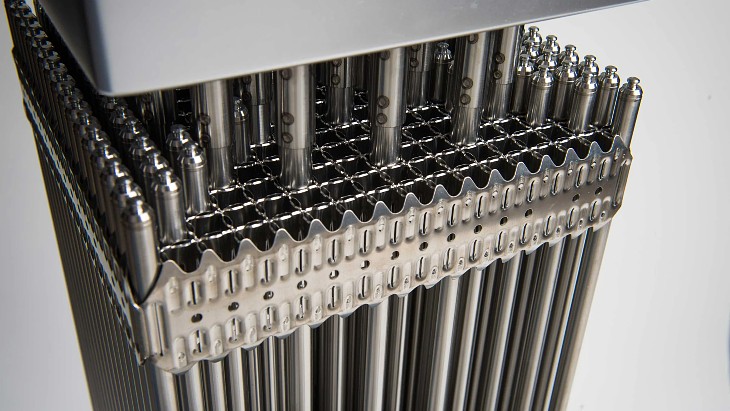
The NuScale Power Module is a 77 MWe Generation III+ pressurised water reactor that uses NuFUEL-HTP2 fuel, which is based on existing Framatome HTP pressurised water reactor fuel technology. A fuel manufacturing contract was signed in 2015.
The companies said: "Framatome has now been issued notice to qualify the Richland, Washington facility for manufacturing and delivery of the NuFUEL-HTP2 fuel design. In addition to supporting manufacturing readiness, the notice includes direction to produce at least 444 fuel assemblies for NuScale’s first US customer as early as 2030, reflecting growing momentum for the nuclear energy industry and rising demand for baseload electricity."
Their links are to be expanded to Framatome's European facilities for the future fabrication of fuel assemblies for NuScale's European SMR customers.
Lionel Gaiffe, Senior Executive Vice President, Fuel Business Unit at Framatome, said: "By leveraging our proven expertise and advanced American and European manufacturing facilities, we are ensuring reliable, high-quality fuel delivery for NuScale's customers worldwide - this milestone reflects our shared vision for a sustainable energy future and reinforces Framatome's role as a trusted partner in advancing next-generation nuclear solutions."
Carl Fisher, Chief Operating Officer at NuScale Power, which is listed on the New York Stock Exchange, said: "NuScale is proud to continue our decade-long relationship with our partners at Framatome to supply fuel for our global customers. This newest agreement will allow us to continue to meet our critical supply chain and manufacturing milestones to fulfill project timelines and prepare to deploy our groundbreaking technology."
Framatome, which is 80.5% owned by French state-owned EDF Group and 19.5% by Mitsubishi Heavy Industries, says the fuel design "combines low pressure drop with robust mechanical strength and seismic resilience to assure reliable fuel performance in this new reactor type. Over 20,000 HTP fuel assemblies have been delivered to a wide range of PWRs in 11 countries".
EDF launches global nuclear investment and financing advisory board
_78201.jpg)
Launched at the Nuclear Energy Summit 2026 in Paris, the board's participants include ABN AMRO Bank, BNP Paribas, Bpifrance Assurance Export, Crédit Agricole CIB, HSBC, La Caisse (Caisse de dépôt et placement du Québec), Royal Bank of Canada and SFIL.
Nuclear energy's competitive, sovereign, and low-carbon electricity makes it a key lever for addressing energy and climate challenges, EDF said, citing International Energy Agency scenarios that see global installed nuclear capacity potentially growing from 400 GWe today to 600-1,000 GWe over the next 20 to 30 years. But this momentum will require massive public and private sector investment.
From its "unique" experience in delivering large and complex industrial projects and involvement in nuclear power programmes in France, the UK and worldwide - including through its subsidiaries Framatome and Arabelle Solutions - EDF said it is "well placed to help clients structure the bankable models needed to secure robust financing solutions for new nuclear projects".
The Financing and Investing in Nuclear - Advisory Board EDF (FINABe) aims to identify market expectations, promote best-practice sharing and contribute to the gradual development of robust financial mechanisms supporting investments in new nuclear projects for both large-scale and small modular reactors, through a coordinated dialogue with leading financial experts.
"For many countries considering new nuclear programmes, securing credible financing solutions is now as critical as selecting the right technology," EDF Chief Financial Officer Claude Laruelle said. "Through FINABe, we seek to capitalise on our unique expertise and work hand-in-hand with leading financial institutions to craft robust financing frameworks and support the development of new nuclear capacities."
It will be chaired by Vakis Ramany, EDF's Senior Vice President, International Nuclear Development.
Arthur van Dijk, head of New Energies & Infrastructure at Netherlands-based ABN AMRO, said the bank will participate in FINABe in an advisory capacity, focused on financing and investment frameworks that support informed decision-making in the context of the European energy transition, bringing its financial expertise to the dialogue. "As a financial institution, we support the financing of reliable and low-carbon energy solutions, including renewable energy, grid flexibility and decarbonisation technologies," he said.
"We recognise the growing need for affordable and secure energy in a resilient Europe and the importance of diversified financing to support largescale energy and infrastructure projects. Nuclear energy can, when deployed responsibly and within national frameworks, play a role within a broader energy mix."

No comments:
Post a Comment