Monday, December 01, 2025


‘Trump is now doing their bidding’: Journalists say they know why trafficker got pardon

Alexander Willis
November 30, 2025 
RAW STORY
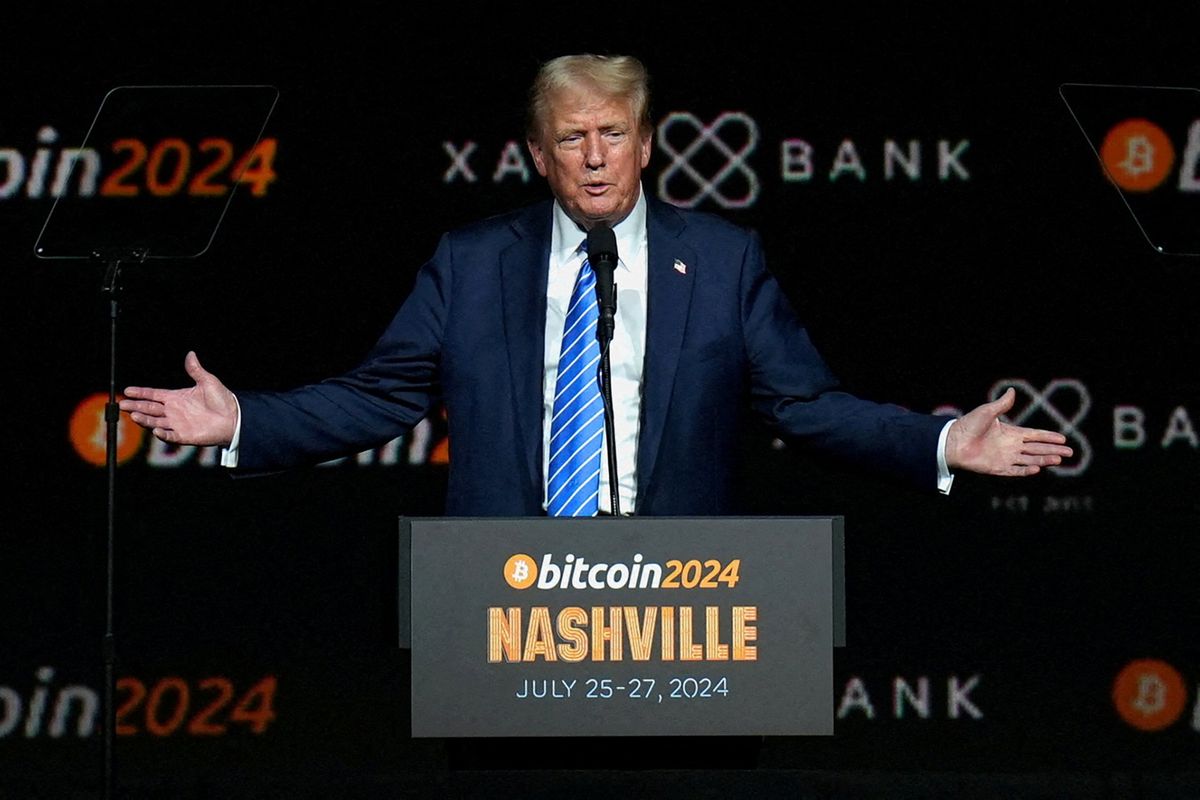

FILE PHOTO: Republican presidential nominee and former U.S. President Donald Trump gestures at the Bitcoin 2024 event in Nashville, Tennessee, U.S., July 27, 2024. REUTERS/Kevin Wurm/File Photo/File Photo

President Donald Trump has been hammered over his recent pardon of a convicted Honduran drug trafficker, with the president being pressed for an explanation as his administration escalates military pressure on Venezuela over alleged narcotics trafficking. But on Sunday, two journalists said they’ve uncovered the real reason behind the move.

On Friday, Trump said he plans to pardon Juan Orlando Hernández, former president of Honduras and convicted drug trafficker who, according to court testimony, planned to “stuff the drugs right up the noses of the gringos.”

The move comes amid Trump declaring Venezuela’s air space to be closed, ongoing strikes on suspected Venezuelan drug-carrying sea vessels, and the deployment of an aircraft carrier strike group to Venezuela’s coast – all with the purported aim of combating drug trafficking.

While Republican lawmakers have struggled to reconcile Trump’s war on drugs with his pardoning of a major drug trafficker, journalist Pedro Gonzalez said recently that he believes he’s figured out the reason.

“There’s a 90% chance Trump wants to pardon Juan Orlando Hernández, the former president of Honduras, who was convicted for his role in a major drug trafficking enterprise, because he is connected to people like Peter Thiel and Marc Andreessen and the rest of the tech bro morons,” wrote Chronicles Magazine correspondent Gonzalez in a recent social media post on X.

Thiel and Andreessen – two billionaire tech industry giants that hold major influence over the Trump administration – are both strong backers of Honduran Zones for Employment and Economic Development, or ZEDEs, a proposal for a type of autonomous city or area with its own administrative and political system operating on libertarian principles.

Hernández was a supporter and promoter ZEDEs, which Gonzalez – tying the two topics together – suspects is the primary reason for Trump’s unprecedented and poorly timed pardon of the convicted drug trafficker.

“Let’s be very clear: the narco dictator Trump is pardoning was beloved by the crypto world for creating lawless, sovereign zones for tech utopias organized around crypto,” wrote journalist Ryan Grim in a social media post on X. “The current [government] moved to shut them down. The crypto class fought back and Trump is now doing their bidding.”


'A Biden setup': Trump doubles down on pardon for drug trafficker

Ewan Gleadow
December 1, 2025 
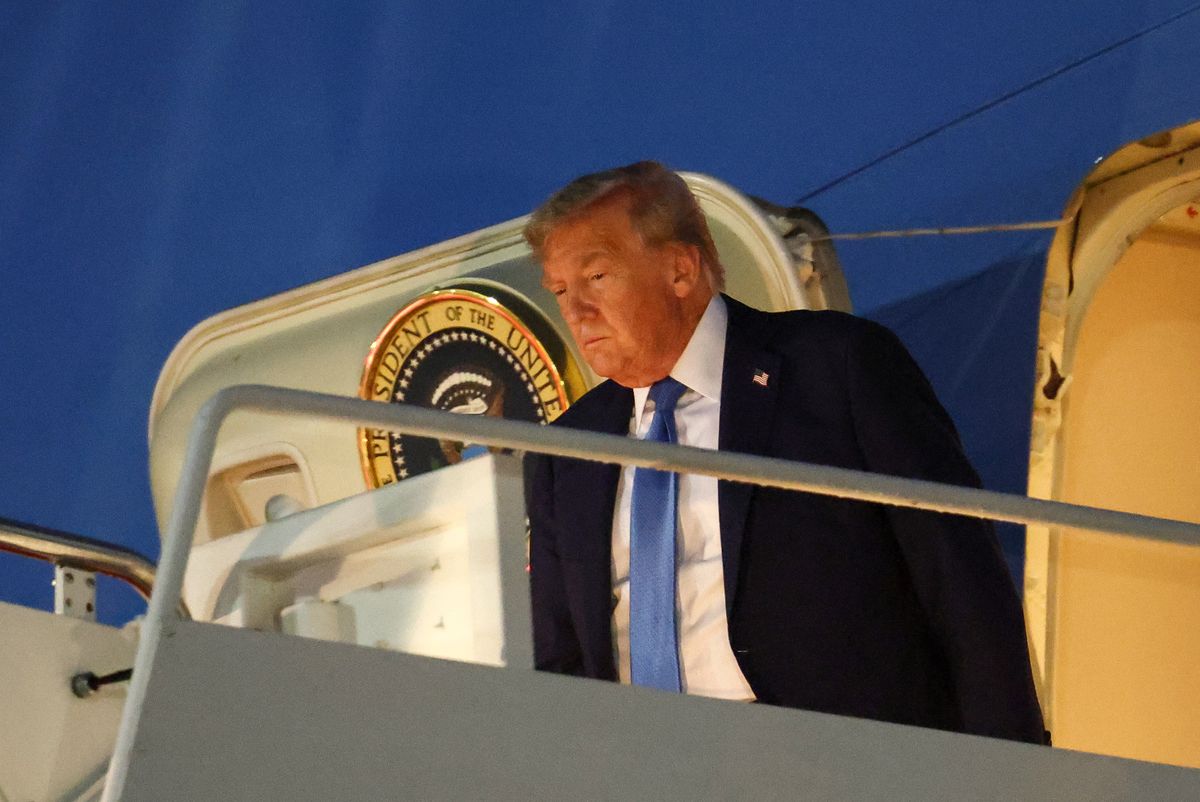

Donald Trump disembarks Air Force One after the G7 Summit in Canada. 
REUTERS/Kevin Lamarque


Donald Trump says a convicted drug trafficker will receive the presidential pardon, doubling down on a statement made two days ago.

The president made it clear he would issue a "full and complete pardon" to former Honduran president Juan Orlando Hernandez, who was convicted of drug trafficking last year. He was sentenced to 45 years in U.S. federal prison for helping move massive quantities of cocaine into the United States.

Trump announced the plan to pardon Hernandez on Friday, and speaking with reporters on Air Force One on Sunday, confirmed the plan to pardon the former president would go ahead. Trump even referred to the arrest and subsequent charge of Hernandez as "a Biden setup", The Daily Beast reported.


He said, "Well, I was told—I was asked by Honduras, many of the people of Honduras, they said it was a Biden setup. He was the president of the country. And they basically said he was a drug dealer because he was the president of the country."

Hernandez was extradited to the U.S. in 2022 and sentenced in a New York federal courtroom two years later for taking bribes from drug traffickers to move “well over approximately 4.5 billion individual doses of cocaine.”

But Trump has since insisted that the people of Honduras believe Hernandez was set up, and that he "agreed" with them. He added, "He was the president of the country, and they basically said he was a drug dealer because he was the president of the country, and they said it was a Biden administration setup. And I looked at the facts, and I agreed with that."

When pushed to share evidence of Hernandez's innocence, Trump replied, "They could say that you take any country you want, if somebody sells drugs in that country, that doesn’t mean you arrest the president and put him in jail for the rest of his life. That includes this country."

Earlier this week, Trump passed comment on the Honduras elections, calling on people to "vote for Tito Asfura" and even congratulated Hernandez on his "upcoming pardon".

He wrote, "This cannot be allowed to happen, especially now, after Tito Asfura wins the Election, when Honduras will be on its way to Great Political and Financial Success.

"VOTE FOR TITO ASFURA FOR PRESIDENT, AND CONGRATULATIONS TO JUAN ORLANDO HERNANDEZ ON YOUR UPCOMING PARDON."

The Scapegoating of Peasants for the Pollution Crisis


 December 1, 2025

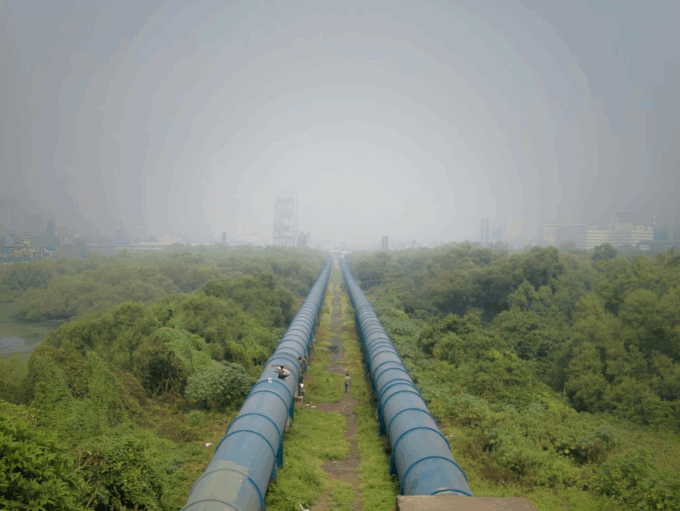
Photo by Ronak Naik

It is that time of year again when India’s national capital Delhi’s air quality turned acutely hazardous. Official Indian air quality indicators hit their maximum adverse readings of 500, while indices based on international norms shoot past 1,000 or even 2,000 —a level that effectively turned the city into a gas chamber. The thick smog, loaded with toxic gases, seeps into every corner of the city, including inside people’s homes, with residents having nowhere safe to go.

Winter, not just in Delhi, but across the Indo-Gangetic plains, which house nearly half the country’s population, has become increasingly toxic in the past decade and more. While emissions from vehicles are a major contribution to the hazardous air, firewood use in rural households for cooking and heating, paddy-stubble burning after the Kharif harvest (October–November), and industrial pollution, smoke from brick kilns, open incineration of garbage, together produce huge quantity of pollutants that remained trapped above the ground for prolonged periods in winters.

The winter conditions on the northern plains —low temperatures, high atmospheric moisture, weak winds, and the Himalayan barrier— create a stable inversion layer that prevents the dispersion of pollutants. The result is a persistent blanket of smog over cities and towns of the region, broken only by occasional days of showers in January that provide relief for very brief periods.

While toxic air in winters is far more geographically pervasive, covering multiple states of northern India, the pollution in Delhi attracts much attention, due to it being the seat of the country’s political, administrative, judicial and media elite —whose privileged spaces are not spared of the toxic air. In fact, winter pollution in some of these smaller cities and towns is worse than in Delhi, but their plight rarely registers in the media.

The hazardous winter pollution has created a serious health crisis, with rise in respiratory illnesses, higher rates of hypertension and cancer, cognitive decline in children, greater disease burden overall, and increased mortality among both the elderly and infants. Its impact is most severe on the bottom 90 percent of the population, who face an underfunded public health system, cannot afford or access adequate care, and for whom illness means lost wages and costly medical visits and tests that push them even further into poverty.

Identifying the core causes of pollution and addressing the health crisis, without placing the cost of prevention on the most vulnerable —the working class and the peasantry— is an urgent task for the Indian government

But the Indian government, instead of formulating a comprehensive plan to tackle the pollution crisis, has shifted the blame onto farmers in Haryana, Punjab, and Uttar Pradesh —treating post-harvest stubble burning as the primary cause of Delhi’s toxic air and pushing states to impose heavy fines on cultivators, ranging from Rs 5,000 to Rs 30,000.

Increasing Automobiles – The Main Culprit

In reality, the biggest driver of Delhi’s pollution is the rising ownership and use of automobiles. Studies estimate that more than half of the city’s air pollution comes from vehicular emissions. This is hardly surprising, given that Delhi has more cars than the next three biggest Indian cities—Mumbai, Kolkata, and Chennai —combined, and 90 percent of them are private vehicles.

It’s not just Delhi. Rising car ownership among the top decile has made road congestion and heavy pollution routine even in semi-urban areas in India, that once had relatively clean air.

Car ownership and road transportation have been placed at the centre of India’s neoliberal growth model. With the push toward privatisation, successive governments have deliberately weakened the less-polluting public transportation system, including the railways. State-owned Indian Railways has been left with ageing, overstretched infrastructure: its share of freight transportation has collapsed from around 60 percent in 1991 to about 29 percent today, and its passenger share has fallen in parallel

As rail capacity stagnated, road transportation —especially the use of personal and commercial vehicles— was allowed to expand unchecked. The automobile sector now accounts for roughly half of manufacturing value added. It has been propped up by the rapid expansion of the road network, even as public road transport has been left to decay: state road transport undertakings, which provide mass public transit, have been chronically neglected. While the number of cars, jeeps, and taxis has grown at a compound annual rate of 8.56 percent, the number of buses —the mainstay of public road transport— has increased by only 2.48 percent.

Over the past few decades, the Union government has poured a disproportionate share of its capital expenditure into road construction, to encourage an automobile-centric economy. India now has one of the largest road networks in the world —out of sync with its geography and population density— and it continues to expand rapidly while the railway system stagnates. India’s total road length even exceeds China’s, despite China having a comparable population, three times the land area, and a far larger economy. By contrast, India’s railway route length has stagnated: the two countries had roughly the same route length around 2010, but India’s has grown by only about 6 percent in the two decades since, while China’s has expanded by roughly 65 percent over the same period and is now about 60 percent longer than India’s.

Poverty and Pollution

If affluence drives pollution at one end, the skewed, trickle-down pattern of India’s economic growth leaves millions of families still dependent on collected firewood for household energy and forces much of the peasantry to resort to stubble burning. The limited economic growth that trickles down gives them little capacity to adopt alternatives. This, too, worsens air quality

It is estimated that about 30 percent of pollution in north Indian winters is caused by the burning of biomass – wood and dung used for daily cooking and winter heating, along with stubble burning in late October and November.

Government schemes intended to help households shift from firewood to LPG remain underfunded, making the transition too expensive for much of rural India, where firewood collected by women continues to be a major energy source. With electric heating simply out of reach for the majority, open fires remain the main source of winter heating in rural north India —and even for migrant workers in the cities.

Are the peasants at fault?

The smoke from stubble burning in mid-October to November adds a temporary spike to an already high baseline of winter pollution generated by motor vehicles and other sources. Indian media seizes on this spike as the main culprit. Yet pollution levels remain just as severe through December and January —long after stubble burning has stopped— making it clear that the primary drivers of toxic air in Delhi and the wider region are the persistent sources, above all motor vehicles.

In the years 2023, Delhi had just a single day where the air quality was shown to be good. In 2024, Delhi did not have a single day of good air quality. All this can not be due to stubble burning which is limited to a month in winter.

Unwilling to confront the core issue of vehicular pollution —which would require abandoning its prioritisation of private road transport over cheaper public alternatives— the government has instead chosen to target farmers.

It is a fact that stubble burning worsens air quality. Farmers are not unaware of this; the smoke chokes their own villages before it ever reaches cities like Delhi. But with narrow margins and declining state support, the peasantry lacks workable alternatives. If stubble isn’t cleared quickly, the sowing of the Rabi crop is delayed, disrupting the entire crop cycle. Climate change has made this worse. For the past five to six years, the southwest monsoon has been arriving late in north India. June, once the normal sowing month, is now too dry, pushing sowing into July and shifting the Kharif harvest deeper into winter. At times the monsoon even lingers into October —as it did this year— so paddy ready for harvest gets drenched and must stand in the field for extra weeks to dry, delaying the harvest. As a result, there is little time after Kharif paddy for crop residue to decompose naturally before fields must be prepared for Rabi wheat.

In India where the majority of the peasants are small and marginal, who barely break even, it is the government’s responsibility to invest in technologies and develop crop varieties suited to the changing climate. Instead, the Indian state has been trying to withdraw even the limited support that exists, which is largely restricted to MSP (Minimum Support Price) for paddy and wheat. (The government has been trying to do away with MSP and fully hand agricultural markets to corporates, which resulted in historic farmers agitation in 2020-21).

The government frequently urges farmers to diversify into different crops to conserve water, to adjust to climate change, to withstand market vagaries, and so on,but offers no meaningful price support for alternative crops, invests little in new varieties and agricultural technologies, leaving it to agribusinesses, thereby making crop diversification unviable for farmers.

Rather than invest in technologies to manage crop residue and provide the financial support needed for farmers to adopt them, the government has chosen to impose heavy fines on an already strained peasantry while encouraging a steady stream of negative media coverage that paints farmers as the primary culprits of pollution. This framing serves a political purpose: it erodes public sympathy for farmers and lays the groundwork for future legislation that favours corporate interests seeking greater control over agriculture.

The scapegoating of farmers for pollution serves a dual purpose for the corporates whose interests the Indian state actively promotes. It lays the groundwork for a future push to corporatise agriculture by portraying farmers’ ‘backward practices’ as in need of modernisation. It also diverts attention from the real culprits —the automobile industry, the rise in private vehicle use, and the systematic neglect of public transport.

This article was produced by Globetrotter

Bodapati Srujana works in the area of agrarian relations in India, having participated in several studies around the country. She often writes on issues in the Indian Economy.

Health risks of air pollution from stubble burning poorly understood in various parts of Punjab, India


Research Institute for Humanity and Nature

Results of questionnaire asking the perception about air quality and its health risks 

image: 

While many recognized severe air pollution in Delhi, fewer viewed local air quality as severe. Most households believed that smoke from stubble burning did not affect their health, even though many agreed that the practice is a major issue.

view more 

Credit: Aakash Project, RIHN


In Punjab, India, paddy stubble burning is a widespread agricultural practice that contributes to seasonal air pollution in the region and beyond. However, the extent to which residents recognize its impact on their own environment and health or in the highly populated areas of Delhi National Capital Region (NCR) has remained unclear. To address this gap, the Aakash Project (led by researchers from Hokkaido University in collaboration with Indian research partners) conducted interviews with 2,202 households across 22 districts in Punjab.


Urban air pollution is recognized, but local sources are undervalued

About 46% of respondents perceived air pollution in Delhi as “severe,” while only 25% viewed air pollution in their own areas of Punjab as severe.


Personal health experience increases awareness

Households with family members experiencing respiratory or cardiovascular problems were more likely to recognize smoke from stubble burning as harmful and to view the practice as a pressing issue requiring action.

The study reveals a perception gap: while urban air pollution is widely acknowledged, the contribution of locally generated smoke from stubble burning remains less recognized. Personal or familial health experiences and health literacy play a crucial role in shaping awareness. These insights suggest that efforts to reduce stubble burning and improve air quality must include clear, locally grounded communication on health impacts, supported by accessible and visible air quality information.


*The Aakash project is exploring ways to shift people's behaviour to sustainable agriculture in the Punjab region to reduce the health hazards caused by air pollution, by clarifying observation-based relationship between straw burning and local air pollution; raising awareness of the importance of maintaining clean air among residents; and proposing the effective and beneficial use of rice straw by farmers.


Article information

Title: Perceptions of air pollution from stubble burning and its health risks in Punjab, India

Journal:Scientific Reports

Authors: Zhesi Yang, Kayo Ueda, Tomohiro Umemura, Kazunari Onishi, Hiroaki Terasaki, Tomoki Nakayama, Yutaka Matsumi, Kamal Vatta, Hikaru Araki, Sachiko Hayashida, Prabir K Patra

Article Publication Date: October 27, 2025

URL:https://doi.org/10.1038/s41598-025-21235-8


###

About RIHN

The Research Institute for Humanity and Nature (RIHN) is a national institute established in Kyoto in 2001. RIHN aims, through research that integrates the humanities and sciences, to address environmental issues concerning the relationship between "humanity" and "nature" in a broad sense as fundamental issues of human culture. We strive not only to engage the research community but also to collaborate with diverse stakeholders in society, including local residents, to find solutions to global environmental problems. 

For more detail, visit https://www.chikyu.ac.jp/rihn_e/.


Experts work on UN climate report amid US pushback

Saint-Denis (France) (AFP) – Some 600 experts began to work Monday on the next major UN climate report, as the international consensus on global warming is challenged by US President Donald Trump, who deems the science a "hoax".


Issued on: 01/12/2025 - FRANCE24

Experts are meeting at the Tour Pleyel skyscraper to begin drafting the next UN climate report © Thomas SAMSON / AFP/File

French Ecological Transition Minister Monique Barbut, whose country is hosting the five-day meeting in a Paris suburb, told the scientists their "extremely precious" work is crucial as multilateralism has weakened.

"There is also something that should concern us all: The rise of climate-related disinformation on our social media, in our newspapers and even at the heart of our policy political institutions," Barbut said.

"Too many people deny the results of your work," she told the experts from more than 100 countries gathered in a skyscraper in Saint-Denis.

Their work faces hurdles in the face of a US administration whose president called climate change the "greatest con job ever" and a "hoax" during a speech at the United Nations in September.

One of the lead authors of the next IPCC report is US climate expert Katherine Calvin, who was fired from her job as chief scientist at NASA following orders from the Trump administration.

"The statements, for example, from the American administration on the origin of climate change, the fact that it's a hoax, if you will, we still find that quite surprising," said an official at the French ecological transition ministry who requested anonymity.

Veto power

The previous report by the Intergovernmental Panel on Climate Change (IPCC), released in 2023, had warned that the world was on track to exceed the 1.5C warming threshold by 2030.

The UN now says that safer limit will be breached earlier than feared, greatly increasing the risk of violent storms, floods and droughts and irreversible changes to nature.

The meeting in France launches a process that will culminate with the IPCC's Seventh Assessment Report (AR7), due to be published in 2028 or 2029.

It brings together lead authors of the report in a single venue for the first time, in an effort to tackle interdisciplinary climate questions.

The IPCC operates by consensus.

"If any country opposes the text, the report cannot be approved. Every country has a sort of veto," climate scientist Robert Vautard told reporters last week.

While the US government stays out of the climate fray, dozens of American scientists are among the experts working on the IPCC report.

"IPCC reports are going to continue to underpin climate policies and climate action at every level, including international negotiations," IPCC chairman Jim Skea told the gathering in Saint-Denis.

'IPCC not in crisis'

There already appear to be disagreements over the timing of the next report's publication.

A group called the High Ambition Coalition, which includes European Union countries and developing nations vulnerable to climate change, wants the assessment to come out in 2028.

That would coincide with the global stocktake -- a review, required under the 2015 Paris Agreement, of the progress countries have made in limiting climate change and its impacts.

But a group of emerging economies and major fossil fuel-producing countries say more time is needed and are advocating for 2029.

The divide echoes the disagreements seen at the UN's recent COP30 climate summit in the Brazilian Amazon city of Belem, which concluded with a deal that left out an explicit call to phase out fossil fuels.

Despite the disagreements over when to publish the next report, Skea told AFP in March: "I don't think the IPCC is in crisis. We will resolve this issue about the timeline."

© 2025 AFP