Wednesday, March 04, 2026


COMMENT: Iran's oil war could reshape the global economy — and Europe has the most to lose

COMMENT: Iran's oil war could reshape the global economy — and Europe has the most to lose
Iran's Azadi Square with smoke behind from Israeli strike on city's old Mehrabad airport March 3. / CC: IRNA Akbar Tavakoli
By bnm Tehran bureau March 4, 2026

Iran's retaliatory strikes on American and British oil tankers and, most dramatically, on oil storage facilities in the United Arab Emirates, have pushed an already fragile global energy market to breaking point. The Strait of Hormuz remains effectively blocked. Oil and fertiliser prices are surging. Fuel costs in Britain have doubled. And the reverberations are only just beginning, with people fleeing the UAE and Qatar as fast as they can. 

The immediate consequences are stark enough: 800-plus Iranians are dead and a growing number of Americans, Kuwaitis, Lebanese, Israelies and others. Even if hostilities were to cease tomorrow -  purely hypothetical scenario - the damage to freight rates and insurance premiums would persist for months, if not years. Ships and their cargoes are insured separately, and underwriters have no appetite for risk in what has become the most volatile chokepoint in global trade. Every barrel transiting the Persian Gulf now carries a hefty geopolitical surcharge, and that cost will be passed directly to consumers at a record-breaking speed. Probably the fastest increase since the 2020 Coronavirus (COVID-19) spike. 

The latest numbers speak for themselves. Roughly 20% of the world's natural gas and up to 30% of its oil passes through the narrow mouth of the Hormuz Strait, connecting the Persian Gulf to the Gulf of Oman and on to the Indian Ocean. Of the cargo that reaches the Indian Ocean, some 80% is bound for South-East Asia - principally China, India, Japan and South Korea. Only 15-20% heads to Western Europe and elsewhere, but don't let that calm readers in London into thinking that risk price is spreading far and wide.

This matters enormously. China absorbs between 30% and 40% of that 80% share. India takes a substantial portion of the remainder. These are the two great locomotives of global economic growth, and both now face a sharp and unavoidable increase in the cost of energy. Beijing may have stockpiled strategic reserves and developed alternative supply routes - including the Power of Siberia pipeline and shipments via Vladivostok - but restructuring supply chains is a process, not an event. In the near term, the hit is real.

The likely outcome is not collapse but deceleration. China's growth rate could slip from 5% to 4%, still impressive by Western standards, but a meaningful slowdown for an economy on which much of the developing world depends. India faces a similar trajectory. And when the world's primary growth engines lose momentum, the drag is felt everywhere. Countries teetering on the edge of positive growth risk tipping into contraction, with all the social and political instability that entails.

Europe's position is particularly precarious, as Tucker Carlson remarked on his latest podcast this week. On paper, only 10-15% of Persian Gulf energy supplies are destined for European markets. But context is everything. The continent entered the winter heating season with underground gas storage already below 30%. The Netherlands, once a pillar of European gas security, has seen reserves plummet to a catastrophic 11%. With a month and a half of winter still ahead, every percentage point of supply matters.

For Britain, the unlucky Chancellor of the Exchequer, Racheael Reeves, was blindsided by events (again) despite careful planning for the spring financial statement. British homes are particularly vulnerable at the moment, as around 20% of the country's gas supply comes from Qatar as liquid natural gas (LNG), which could add around GBP500 to households' annual bills, already under immense pressure. For them, a sigh of relief, however, as spring appears to be a saving grace as thermostats turn down. 

There is no evidence that summer will bring relief for the rest of Europe. The EU's increasingly brutal heatwaves drive air-conditioning demand that rivals winter heating loads. The continent faces the unenviable task of replenishing its depleted reserves amid sustained global supply disruption - and must do so while drawing down strategic stocks once considered untouchable.

On currency markets, predictions of a dollar crash appear premature. The greenback remains anchored to the fundamentals of the American economy, which continues to post roughly 3% growth with inflation contained below 4%. The United States' $921bn trade deficit - near its post-2022 record - is a structural vulnerability, not an acute crisis. The dollar's real weakness is not economic but political: Washington's aggressive use of dollar-denominated sanctions has accelerated de-dollarisation, not because the currency is unsound, but because it is feared as a weapon.

The gold market tells a more revealing story. Prices have surged past $5,500 per troy ounce, with some analysts forecasting $5,600 in the near term. Gold's role as the ultimate safe haven is being reaffirmed in spectacular fashion, and these elevated levels are unlikely to retreat even if a ceasefire materialises.

For oil-producing nations outside the conflict zone, the picture is mixed. Higher prices mean higher revenues, and the prospect of increased supply volumes to China, India and - eventually - a chastened Europe is commercially attractive. But no economy is hermetically sealed. Higher global energy prices feed through into domestic inflation, squeeze industrial margins and invite tighter monetary policy. For countries already struggling with anaemic growth, the net effect may be negative even as headline oil revenues climb.

The geopolitical implications are perhaps the most consequential of all. A Europe pushed to the wall on energy security will find it increasingly difficult to sustain support for Ukraine (US isn't helping). With reserves dwindling and prices climbing, the fiscal and political space for continued military and economic assistance is shrinking by the week.  What is clear is that Iran's strikes have altered the calculus for every major economy on earth. This is not a regional skirmish with localised consequences. It is a systemic shock to the architecture of global energy trade, and its effects will be measured in slower growth, higher prices and harder choices for years to come.

The Strait of Hormuz crisis may yet prove to be the United States' "Suez Crisis" and Europe's final jolt to break free from Washington's increasingly insane actions. 


Tusk hints Poland could seek own nuclear deterrent

Tusk hints Poland could seek own nuclear deterrent
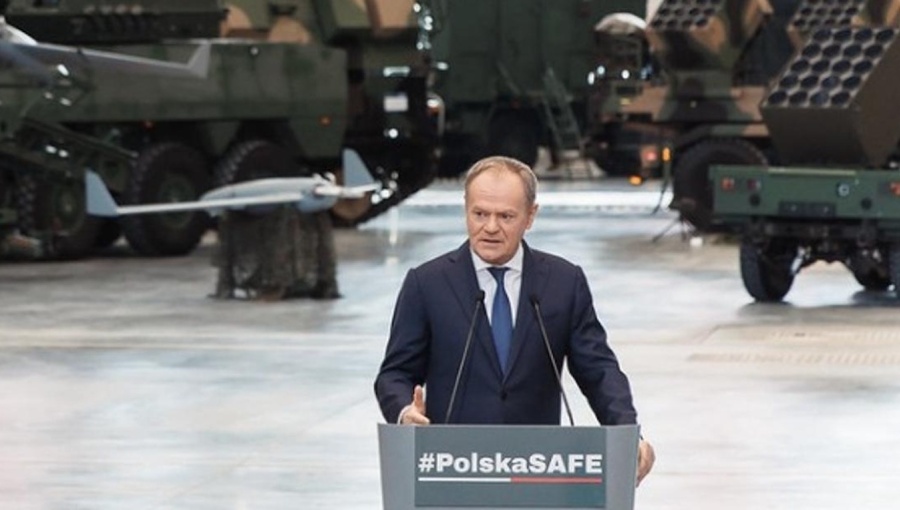
Poland's Prime Minister Donald Tusk favours European cooperation on nuclear deterrence. / gov.pl
By Wojciech Kosc in Warsaw March 4, 2026

Poland will seek greater autonomy in nuclear security and may in future pursue access to nuclear weapons, Prime Minister Donald Tusk said on March 3.

Following the US-Israeli war with Iran and Russia’s invasion of Ukraine, now in its fifth year, European countries are stepping up deterrence efforts amid uncertainty over long-term US security guarantees.

“Poland takes nuclear security very seriously. As our autonomous capabilities grow, we will strive to prepare Poland for the most autonomous actions possible in this matter in the future,” Tusk said before a weekly cabinet meeting.

Tusk said earlier this week that Poland was ready to hold talks with France after President Emmanuel Macron proposed a “nuclear umbrella” by deploying nuclear-capable aircraft to allied states. Several other EU member states, including Germany, Sweden and Denmark, also expressed interest in the initiative.

The next stage of discussions is due at a nuclear energy summit in Paris on March 10, Tusk said.

Tusk has favoured European cooperation on nuclear deterrence, while President Karol Nawrocki has indicated a preference for cooperation with the United States.

Nawrocki said last month that he was “a big supporter of Poland joining the nuclear project.” 

However, the president’s foreign policy chief, Marcin Przydacz, said this week that he doubted whether “the French side has an adequate nuclear arsenal to actually provide a protective umbrella” and argued that the United States possessed the most credible deterrent capability.

Poland has been a signatory to the nuclear Non-Proliferation Treaty since the 1960s and has committed not to seek or acquire nuclear weapons. Last year, however, Warsaw signed a treaty with France that opened the possibility of coming under French nuclear protection.

The debate over deterrence has intensified since Russia’s full-scale invasion of Ukraine in 2022. That year, then-President Andrzej Duda said Poland was open to hosting nuclear weapons and had discussed the issue with Washington. 

Two years later, Duda reiterated Poland’s readiness to host weapons from NATO allies and, in 2025, said that he welcomed Macron’s idea of extending France’s “nuclear umbrella” to European partners.

In March last year, in an address to the parliament, Tusk said Poland would examine gaining access to nuclear weapons. 


Ukraine endures harshest winter of war as energy grid holds under Russian assault


Ukraine endures harshest winter of war as energy grid holds under Russian assault
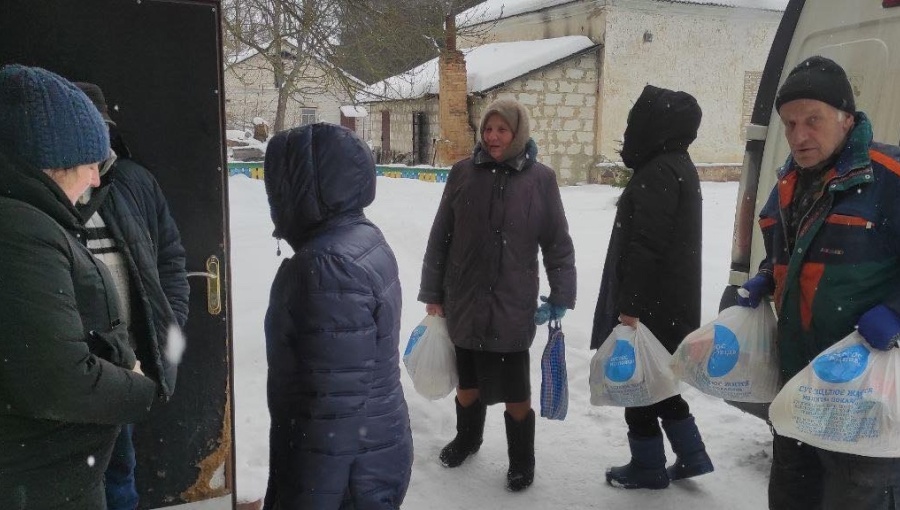
Food kits are distributed to families in the Sumy region as part of Hope for Ukraine's humanitarian efforts. / Hope for Ukraine via Facebook
By bne IntelliNews March 4, 2026

Ukraine has emerged from what officials describe as the most punishing winter since the war began in 2022, after months of record sub-zero temperatures and an intensified air campaign that pushed the country’s energy system to the brink, reported The Kyiv Independent.

In the first three months of 2026 alone, Russia launched more than 1,700 attack drones and 700 missiles, according to Ukrainian authorities. President Volodymyr Zelenskiy said that during the final week of winter, Moscow fired over 1,720 drones, nearly 1,300 guided aerial bombs and more than 100 missiles of various types.

Over the entire winter period, Russia launched more than 14,670 guided aerial bombs, 738 missiles and nearly 19,000 attack drones, most of them Iranian-designed Shahed models, Zelenskiy said.

“But despite everything, Ukrainians made it through this difficult winter, when Russia did not even try to seek justification for its bestial strikes on civilian critical infrastructure,” Zelenskiy wrote on X.

The winter of 2025–2026 combined heavy Russian strikes on the energy system with severe frosts that saw daytime temperatures plunge to minus 20 degrees Celsius, bringing parts of the country close to a humanitarian crisis.

In January and February, repeated attacks on power plants and substations forced grid operators to move from scheduled outages to emergency blackouts lasting more than eight hours at a time. Kyiv, particularly districts on the eastern bank of the Dnipro River, was among the hardest hit, with hundreds of high-rise apartment blocks left without heating as centralised systems struggled to operate until the end of March.

Russia carried out its most severe strike on February 7, targeting substations connected to Ukraine’s nuclear power plants. The attack temporarily reduced electricity output from the nuclear fleet by around 50%, according to Vitaliy Zaichenko, head of state grid operator Ukrenergo.

The assaults were part of a broader energy campaign. State oil and gas company Naftogaz said Russia conducted 229 attacks on its facilities last year – more than in the previous three years combined.

Yet despite the scale of the bombardment, the grid held. Analysts and Ukrainian officials describe this as a strategic setback for the Kremlin, which they say had hoped to trigger a humanitarian collapse that would sap morale and force Kyiv to negotiate from a position of weakness.

Instead, officials are framing the end of winter as a psychological turning point – a “March of Hope” that marks a shift from survival to adaptation.

According to Yuriy Boyechko, chief executive of humanitarian organisation Hope For Ukraine, the country is now entering a phase of industrial and military transformation. “Russia bet on darkness and despair. It did not get either,” he said.

While front lines remain largely static in a high-casualty stalemate, Ukraine is increasingly relying on technological innovation to offset manpower shortages. The domestic defence sector is projected to double production capacity in 2026, officials say, with tens of thousands of first-person-view (FPV) drones rolling off assembly lines alongside domestically produced long-range cruise missiles.

Zelenskiy has linked Russia’s use of Iranian-designed drones in Ukraine to their deployment in the Middle East amid a new regional conflict.

“The same Iranian drones are now being used elsewhere,” he said. “Evil must be confronted in every part of the world.”

He added that when the United States and its partners show sufficient resolve, “even the bloodiest dictators ultimately pay for their crimes”.

The coming months will test whether Ukraine’s transition from winter resilience to industrial mobilisation can alter the strategic balance. Although Russia retains numerical advantages in personnel and ammunition, Kyiv’s leadership argues that precision strikes, drone swarms and improved air defences could erode Moscow’s ability to sustain its offensive.

For now, the survival of the energy system – despite record bombardment and freezing temperatures – stands as a symbol of endurance. As the frost thaws, Ukraine’s focus is shifting from simply keeping the lights on to reshaping the tools of war itself.

Local And Regional Media In Russia Play Major Role In Promoting Putin’s War In Ukraine As ‘A Given’ And Entirely ‘Normal’ – OpEd


March 4, 2026 

By Paul Goble


When people talk about propaganda on the war in Ukraine, they typically focus on outrageous statements of Moscow TV personalities; but the NeMoskva portal suggests that local and regional media play a major role in delivering the message that the Kremlin now wants, that the war is “a given” of Russian life and entirely “normal.”

The portal examined more than 200 outlets in regions and localities across the country and spoke with numerous experts on the Russian media scene and said that the propaganda in this part of the Russian scene is less propagandistic and often isn’t even recognized as such by viewers and readers (nemoskva.net/2026/02/26/propaganda-dlya-normisov/).

That is because local and regional media do not cover the war as such and seek to include stories about those from the region who have been touched by it within the normal flow of coverage about life more generally. That encourages Russians to think about the war as something “entirely normal” and more simply “a given.”

In reporting the study and especially its conversations with media experts who appear to be in universal agreement, NeMoskva says there are a number of ways in which these outlets are promoting such a view: They talk about how the area is “making its own contribution;” their main hero is “the local soldier, ‘one of us;” they celebrate as “another hero the regional volunteer;” they “heroize those who have died” in the conflict; and they either “idealize” or at least minimize the problems of veterans coming home.

Such messaging is calmer and more reassuring that the comments of Moscow figures like Vladimir Solovyev and thus corresponds to the way most Russians want to think about it: “They simply want to live their own lives” and see the war as something in the background, according to several commentators.


One of these commentators pointedly notes that “the regional media do not ‘sell’ the war directly but ‘combine’ it with the whole information flow.” That gives the media at the local and regional levels a kind of “therapeutic effect,” one that makes the war something very much like the weather: it just is – and no one needs to do more than support it.

And NeMoskva concludes: “Regional propaganda integrates into normalcy and creates a context that becomes acceptable to the audience. All of this, taken together, “holds together the social fabric” in the face of prolonged conflict and helps people feel at least some sense of support.”

As a result, for the consumers of this media, “the fighting becomes a backdrop and that helps the authorities achieve both of their goals: ensuring an influx of people and resources and preventing people from thinking that what is going on in Ukraine is an all-out war” that is going to radically change their lives or even force them to do more than they are doing now.


Paul Goble

Paul Goble is a longtime specialist on ethnic and religious questions in Eurasia. Most recently, he was director of research and publications at the Azerbaijan Diplomatic Academy. Earlier, he served as vice dean for the social sciences and humanities at Audentes University in Tallinn and a senior research associate at the EuroCollege of the University of Tartu in Estonia. He has served in various capacities in the U.S. State Department, the Central Intelligence Agency and the International Broadcasting Bureau as well as at the Voice of America and Radio Free Europe/Radio Liberty and at the Carnegie Endowment for International Peace. Mr. Goble maintains the Window on Eurasia blog and can be contacted directly at paul.goble@gmail.com .


Makhno and the GAK quickly established a system of social organizations under their control: a peasant union (later a Soviet), trade unions, factory committees, ...

Nov 19, 2025 ... Ukrainian anarchist Nestor Makhno was among the factions who took advantage of the power vacuum left by the collapse of the Russian Empire ...

Aug 23, 2025 ... What do we think of Nestor Makhno? recently got into the Russian revolution and thus into the Ukrainian free territory so i wonder what do most ...

Makhno was the commander of the Revolutionary Insurrectionary Army of Ukraine, commonly referred to as the Makhnovshchina (loosely translated as "Makhno ...


NATIONALIST BULLSHIT

Because of the injustice he experienced Makhno joined an anarcho-communist group. As a result of the group's terrorist activities Makhno was twice arrested; the ...

Tuesday, March 03, 2026

EU to unveil ‘Made in Europe’ rules despite pushback

By AFP
March 3, 2026


Supporters of 'Made-in-Europe' rules say if the EU does not act to shield its strategic sectors like cars and chemicals, it will not have industry to defend - Copyright AFP/File Ronny HARTMANN


Raziye Akkoc, Umberto BACCHI

The EU will on Wednesday unveil “Buy European” rules to boost domestic production, which Brussels says will help defend European businesses against fierce global competition, especially from China.

Ramping up the European Union’s competitivity has gained urgency since the Covid-19 pandemic and soaring energy prices following the Ukraine war exposed the vulnerability of the bloc to supply shocks.

Expected last year, the “Made in Europe” measures were pushed back several times due to disagreements over its scope inside the European Commission and divisions among member states.

The commission will propose that if companies want public money, they must meet minimum thresholds for EU-made parts in “strategic sectors”, set to include cars, green tech and “energy-intensive” industries such as aluminium and steel.

For example, electric-vehicle manufacturers will have to make sure at least 70 percent of their car’s components are made in the EU if they want to access public money, according to the draft document, which could change.

France has led the push for the proposal that will be announced by EU industry chief Stephane Sejourne, a former French government minister.

The proposal will be subject to approval by EU states and parliament.

Its supporters say that if the EU does not shield its strategic sectors it will not have any industry left to defend.

But sceptics, including the EU’s largest economy Germany, argue that Europe can support domestic industries through a “Made with Europe” approach instead, that would see the bloc include its trading partners.

The looming rules are unpopular outside the EU with fears in countries including Britain, Canada, Japan and Turkey over how strict they will be.


– Screening foreign investment –


The proposal, known as the “Industrial Accelerator Act”, aims to to ensure foreign companies partner with European firms if they want to set up shop in the bloc and gain better access to its market, according to the draft document.

To do so it imposes conditions on foreign investments of over 100 million euros ($116 million) in “emerging strategic sectors” such as batteries and electric vehicles.

These kick in when they involve an investor from a country that holds more than 40 percent of the related global manufacturing capacity — an implicit reference to China’s dominance in those sectors.

For such projects to go ahead, foreign investors need to meet conditions including employing at least 50 percent EU workers, holding no more than 49 percent of the related EU company, and passing on technological know-how.

“If access to the EU market is one of the most valuable industrial assets in the world, it is legitimate to attach conditions that strengthen European capabilities,” said Joseph Dellatte of the Paris-based Institut Montaigne, dismissing criticism that the plans amounted to “protectionism”.

The measures are among many the EU will push to regain its competitive edge.

Later this month, the EU will propose creating a pan-European legal regime for innovative start-ups, which it says will make it easier to do business by slashing the time it takes to set up enterprises across the 27 countries.

For many, the plans are necessary to boost the development of EU green tech.

The goal is to make sure EU taxpayers’ money is “used strategically to strengthen Europe’s industrial base — rather than subsidising Chinese overcapacity”, said Neil Makaroff of the Strategic Perspectives climate think tank.

But some experts argue that if the EU wants to confront what it sees as unfair competition, Brussels has other tools at its disposal.

“If the policy goal is to make sure that your industry is not being destroyed by China, I think we have better instruments,” said Niclas Poitiers, an international trade specialist at the Bruegel think tank, pointing to rules that give the EU the power to investigate and counteract unfair foreign subsidies.
Second-hand phones surf rising green consumer wave


By AFP
March 3, 2026


Devices with all the latest bells and whistles abound at the Mobile World Congress in Barcelona, but some people just want an old, reliable phone - Copyright AFP Florent VERGNES


Robin BJALON

The second-hand market for smartphones has surged in recent years, borne up by lower prices as well as interest in eco-friendly consumption even as some still fear buying a dud.

The success of refurbished phones is a reminder that flashy new gadgets and cutting-edge capabilities, on show this week at Barcelona’s Mobile World Congress (MWC) telecoms trade fair, are not the only engines of the sector.

Around 46 percent of Europeans have already taken the plunge by buying a second-hand device, marketplace Recommerce found in a 2025 survey commissioned from pollsters Kantar.

But the picture varies around the world, as “mature markets in Europe and parts of North America tend to show higher refurbished uptake”, according to a report from analysis firm Mordor Intelligence, which estimates the second-hand market at 10 percent of worldwide phone purchases annually.

Western consumers “are increasingly aligning with circular-economy principles, prioritizing lifecycle extension and reducing electronic waste” as environmental concerns permeate public debate, the authors wrote.

Meanwhile “several emerging markets remain predominantly new device driven”.

– Price and planet –

Price remains the killer argument for refurbished phones, with second-hand models sometimes half as expensive as a factory-fresh alternative, attracting consumers who have seen purchasing power ground down by inflation.

Almost twice as many respondents to Recommerce’s survey named price as a factor in their choice, compared to the environment.

“It gives citizens and consumers yet another reason to not go out and buy a product that’s too expensive,” said Thibaud Hug de Larauze, co-founder of refurbished tech marketplace Back Market.

Although smartphone sales remain dominated by new devices from hardware giants such as Apple and Samsung, his company achieved profitability for the first time in its 12-year history in 2025.

Meanwhile the environmental impact of buying a second-hand phone can be significantly lower, avoiding the use of new materials and the carbon emissions that go into producing each device.

“A refurbished phone can have an 87-percent lower climate impact compared to a new phone,” said Steven Moore, head of climate action at the GSMA global mobile operators’ group.

– $100-billion market? –

But such arguments do little to allay the fears of prospective buyers who fear they could find they’ve handed over hundreds for a lemon.

“There’s still a perception that the phones will break sooner,” Moore said.

Hug de Larauze said refurbishing companies are trying to “counter the scepticism”, including with offers for “premium” devices with a like-new finish and fresh batteries — now accounting for around 20 percent of Back Market’s sales.

Recommerce chief Augustin Becquet said the company had turned to “transparency” to win over consumers, offering an externally audited quality label and warranties for one or two years.

“Warranties are critical,” Claire Gillies, head of BT Group’s consumer division, told AFP at the Mobile World Congress (MWC) in Barcelona.

Buyers want “standardisation… some understanding of what quality I’ll be getting”, she added.

Forecast to be worth around $70 billion this year, the refurbished device market is set to grow to $100 billion in five years’ time, according to Mordor Intelligence.

But like many other tech fields, it could fall victim to the geopolitical and trade tensions that have re-emerged since US President Donald Trump returned to the White House.

“It’s definitely not helping… it’s a shame that things are being slowed when we really need things to be accelerated,” said the GSMA’s Moore.
Chinese consumers scout lower prices, secondhand goods as spending sputters


By AFP
March 3, 2026


Stagnating wages, youth unemployment and a property crisis are making Chinese consumers rethink their spending - Copyright AFP Jade GAO


Jing Xuan TENG with Peter CATTERALL in Baoding

In a Shanghai shopping centre, customers browsed racks of used winter coats, $2 trousers and household appliances — pre-used items that would have been out of place in a major Chinese mall a decade ago.

But these days, stagnating wages, youth unemployment and a years-long property crisis are making consumers rethink their spending.

China’s leaders will likely announce policies aimed at boosting domestic consumption at the annual Two Sessions political conclave this week, but they face an uphill battle.

“Everyone is feeling the pinch financially, so everyone is looking for cheaper stuff,” said Liu, a 42-year-old secondhand book buyer visiting the Shanghai store.

A longstanding taboo in Chinese culture against used goods, seen as unclean or a shameful sign of poverty, is lifting rapidly.

“Getting a free milk tea is better than paying full price for it,” Liu, who gave only her surname, offered as an analogy for her outlook.

Online, the secondhand market is flourishing too, led by Xianyu, the Alibaba-owned answer to eBay with more than 600 million users, and Zhuanzhuan, a Tencent-backed resale platform known mainly for electronics.

Xianyu opened a physical location in 2024 and has expanded to more than 20 sites nationwide.

Its stores resemble European charity shops, with plush toys displayed alongside strollers and sneakers in varying states of wear — a novel concept in a country where the upwardly mobile have typically prized the latest luxury goods

Zhuanzhuan, which runs hundreds of small resale counters across the country, opened an enormous warehouse-like store in Beijing last year selling everything from gaming equipment to handbags.

Chinese shoppers are becoming more eco-friendly, Li Yujun, founder of a used goods store in Shanghai, told AFP.

Still, she said low prices were a major draw, with good quality secondhand items priced at 30 to 60 percent of the original cost.

“A lot of communities are organising flea markets,” Lin, a 37-year-old shopper, told AFP.

“We can buy (useful things) at very good prices.”

– Subdued festive season –

Consumption has remained stubbornly sluggish post-pandemic despite government efforts to coax spending.

The Two Sessions come just after Lunar New Year, which was extended into a nine-day public holiday aimed at encouraging people to spend on tourism and leisure.

Despite a record-breaking 596 million domestic trips throughout the holiday, tourism spending per capita was 8.8 percent below pre-pandemic levels and 0.2 percent down from last year, Goldman Sachs analysts said.

After taking a train home to her native Hebei province, Beijing resident Hua Lei told AFP she would observe a subdued festive season.

“I usually just stay inside when I come home, I don’t go out and about very much,” the 34-year-old said.

Chai Lihong, another passenger, was travelling to her son-in-law’s home in Hebei’s Baoding city.

“We took the green train, the slowest kind,” she said. “The high-speed rail is perhaps a bit expensive for rural residents.”

Authorities have held back from mass issuing stimulus checks and have tried instead to entice shoppers with subsidies and coupons limited to certain types of purchases.

However, subsidies promoting trade-in purchases for cars and appliances “have had limited effect, bringing forward spending that would have taken place anyway and leading people to curb spending elsewhere”, Duncan Wrigley from Pantheon Macroeconomics told AFP.

– ‘Pretty scary’ –

At a mall dedicated to home furnishings in central Shanghai, a furniture seller who did not want to give her name told AFP she had not seen much impact on business.

“You have to enter a competition to win the coupons,” she said, adding her daughter had had to enlist 10 friends for a coupon lucky draw to buy a bed.

She pointed to the largely empty shopping centre, which she said in past years would have been filled with customers immediately after the New Year period.

“The market situation is pretty scary right now,” she said.

Allen Feng from think tank Rhodium Group warned of diminishing returns from subsidies, as “they don’t create income”.

The International Monetary Fund has urged Beijing to expand healthcare, pensions and social benefits to improve consumer willingness to spend.

Other economists have championed more direct incentives.

Zhu Tian of Shanghai’s China Europe International Business School suggests authorities could issue a one-off handout of four trillion yuan ($580 billion) split across the entire population.

Analysts anticipate stimulus policies from the Two Sessions, with leaders saying in October they would “work toward improving living standards while increasing consumer spending”.

Authorities are now “talking about boosting consumption propensity, which is the right way to think about it”, said Feng.
Polish doctors jailed for denying woman abortion


By AFP
March 3, 2026


The death of Izabela in 2021 after an abortion was delayed set off mass protests in Poland
- Copyright AFP Wojtek Radwanski


Katarzyna SKIBA

A Polish court on Tuesday sentenced three doctors to prison sentences over the 2021 death of a pregnant woman, which sparked nationwide protests and renewed scrutiny of the country’s restrictive abortion laws.

The woman, Izabela, whose last name has not been made public, died of sepsis in 2021 while experiencing complications in the 22nd week of pregnancy.

Her death came a year after a law toughening abortion restrictions in the mainly Catholic country came into effect and reignited mass protests.

The three doctors were charged with directly endangering Izabela’s life.


A regional court in Katowice sentenced one, who was also charged with causing involuntary manslaughter, to 18 months in prison and barred him from practicing medicine for six years.

A second was sentenced to 15 months behind bars and barred from practicing for six years. The third doctor was given a one-year jail term and barred from practicing for four years.

“It’s an appropriate, fair punishment,” Karolina Kolary, a laywer for Izabela’s family, told journalists after the closed-door hearing.

“This was a case involving extraordinary negligence, a pure disregard for the most basic and fundamental medical duties,” she added.

Abortion in Poland is legal only in two circumstances: when the pregnancy resulted from a criminal act — such as rape or incest — or if it threatens the mother’s life or health.

– Septic shock –

Several pregnant women have died in Polish hospitals in recent years, in many cases after doctors refused to carry out abortions.

Izabela, 30, was at a hospital in Pszczyna, in southern Poland, after her amniotic fluid broke. The woman and the doctors were aware of defects affecting her foetus, but the termination of her pregnancy was delayed.

Less than 24 hours later, Izabela died of septic shock. She left behind a young daughter from a previous pregnancy.

According to Izabela’s family, doctors waited for her foetus to die before acting, fearing legal consequences.

The hospital said the decisions of medical staff were based on concerns for the health of both mother and foetus.

– ‘Not one more’ –

Izabela’s death was the first case linked to a 2020 decision by the Constitutional Tribunal, which ruled that severe foetal abnormalities were not legal grounds for abortion.

Prior to this ruling, 98 percent of legal abortions in Poland were performed for this reason.

The new restrictions set off a torrent of protests throughout the country, which became the largest mass demonstrations in Poland since the 1989 anti-communist movement.

After Izabela died, nationwide protests broke out again, this time under the slogan “Not One More”.

On top of the charges against the doctors, Poland’s National Health Fund (NFZ) found numerous irregularities in Izabela’s care and fined the hospital 650,000 Polish zloty ($179,000).

The Polish patients’ rights ombudsman also found that Izabela’s rights had been violated, and recommended new protocols for septic shock and for situations posing threats to a woman’s health.

– Politics –

Poland’s centrist ruling coalition promised to reverse the most restrictive elements of Poland’s abortion laws before their election in 2023 — but internal disagreements among its different factions have halted this.

Any attempt by parliament to ease the abortion laws would likely face a veto by President Karol Nawrocki, a conservative-nationalist who was endorsed by the Law and Justice (PiS) party that brought about the 2020 court ruling.

Poland has one of the most restrictive abortion laws in Europe.

In the first half of 2025, only 411 legal abortions took place, according to the NFZ.

“Izabela was not the first or last woman in Poland to die for lack of a safe abortion,” Mara Clarke, co-founder of the NGO Supporting Abortions for Everyone (SAFE), told AFP.

“I pray there are no more dead women in future,” she added.

Lawyers for the doctors said they would appeal to the Supreme Court.