Friday, March 20, 2026


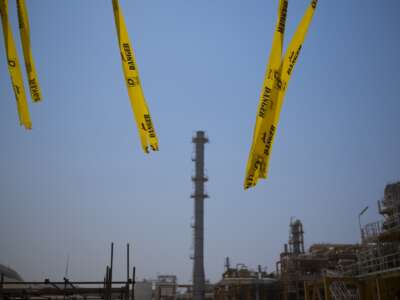
African food security threats spike as Iran war strangles fertiliser supplies, prices soar

African food security threats spike as Iran war strangles fertiliser supplies, prices soar
/ bne IntelliNews
By Brian Kenety March 20, 2026

Conflict-driven disruption to fertiliser supply chains in the Middle East is raising the risk of price shocks across Africa, with analysts warning that benchmark urea prices could approach levels seen after Russia’s invasion of Ukraine in February 2022, when global prices roughly doubled, impacting food security.

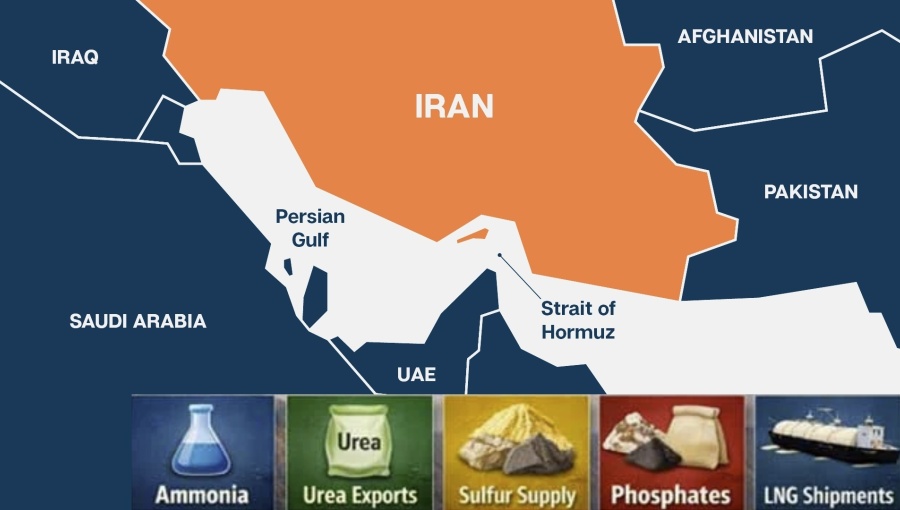
Africa imports more than 6mn tonnes of fertiliser annually and remains heavily dependent on external suppliers, particularly for nitrogen-based products such as urea and ammonia produced in the Gulf. Disruptions to shipments through the Strait of Hormuz, a key maritime corridor, have tightened supply and increased costs.

Urea export prices in the Middle East had risen by around 40% to above $700 per tonne as of mid-March from below $500 prior to the US and Israel joint attacks on Iran, according to Argus, a specialist energy and commodities price reporting agency, highlighting the market’s sensitivity to geopolitical shocks.

Fertiliser markets are structurally vulnerable because production is concentrated in a small number of exporting regions, while most sub-Saharan African countries lack domestic manufacturing capacity. A handful of North African producers, Morocco, Egypt and Algeria, dominate continental output, but exports are insufficient to meet broader regional demand.

Egypt, which supplies about 8% of globally traded urea, may struggle to produce nitrogen fertiliser after Israel declared force majeure on gas exports to the country, according to Scotiabank and Rabobank analysts. Prices for nitrogen-based fertilisers such as urea could roughly double if the Iran war, now in its third week, drags on.

The Food and Agriculture Organization (FAO) has warned that fertiliser affordability is a key factor affecting crop production in developing economies, where farmers often cut fertiliser use when prices rise. Lower fertiliser use can quickly translate into reduced crop yields, particularly for staple crops such as maize, wheat and rice.

The most important fertilisers in the short term are nitrogen-based products such as urea: if farmers do not apply them for one season, yields will suffer, with the same true, to a lesser extent, for other key products such as those based on phosphate and potassium.

In many African countries, farmers already apply less than 20kg of fertiliser per hectare, compared with a global average of about 140kg per hectare. The 2022 fertiliser crisis triggered by the war in Ukraine forced many farmers to further reduce these already low application rates, resulting in even weaker crop yields – and higher food prices.

Svein Tore Holsether, chief executive of Yara International (OSE:YAR), warned that prolonged disruption to Gulf supply routes could have severe consequences for agriculture. “If the Strait of Hormuz was closed for a year it would be catastrophic,” he said, as quoted by The Guardian, adding that fertiliser markets are facing pressure from both supply constraints and rising gas prices, “a double impact”.

Holsether added that Europe would always be able to outbid poorer countries. “The countries that are most vulnerable still pay the highest price,” he said. “In a global auction for fertiliser, Europe will have stronger buying power than poorer parts of the world, we need to keep in mind the magnitude of this before it is too late.”

The 2022 Russia-Ukraine fertiliser crisis sent urea to $925 per tonne, anhydrous ammonia above $1,635 per tonne at retail, and DAP above $1,000 per tonne, according to ProFarmer.

“The current crisis shares similarities, but there are key differences. For one, the Gulf’s exposure is much higher. Also, Russian fertiliser wasn’t removed from the market in 2022, but was instead rerouted. In 2026, there are fewer options for products trapped behind a closed Strait,” the industry publication writes.

Fertiliser costs are a key input in agricultural production, and price increases are typically passed through to consumers. The World Bank has previously warned that fertiliser price spikes feed directly into food inflation, particularly in import-dependent economies.

The continent’s largest agricultural economies — including Kenya, Ethiopia and Ghana — depend on imported fertiliser supplies to maintain crop yields. Price increases can therefore quickly translate into higher food prices and increased fiscal pressure on governments that subsidise fertiliser purchases.

Larger economies such as Ethiopia, Tanzania and Zambia also depend on imports despite growing demand, as local production capacity remains insufficient. Meanwhile, according to the UN’s trade and development agency (Unctad), more than half of war-torn Sudan’s fertiliser comes from the region, while for famine-prone Somalia the figure is close to one-third.

According to the Global Hunger Index 2025, hunger is considered “alarming” in seven countries worldwide, all but two of them in Africa: Burundi, Democratic Republic of the Congo (DRC), Madagascar, Somalia and South Sudan, while hunger remains “serious” across much of sub-Saharan Africa.

“Conflict remains the most destructive force driving hunger. Armed violence fuelled 20 food crises affecting nearly 140 million people in the past year. The wars in Gaza and Sudan illustrate how conflict devastates both livelihoods and lifelines: global famine-level food insecurity, concentrated largely in those two settings, more than doubled between 2023 and 2024,” the GHI report states. 

Georgians continue fight for democracy after almost 500 days of protest

THE COUNTRY NOT THE STATE
Georgians continue fight for democracy after almost 500 days of protest
/ bne IntelliNews
By bne IntelliNews March 20, 2026

It's Saturday night in Tbilisi. A crowd is gathering outside the city's State Concert Hall, chatting among themselves. For some, the gathering offers a brief respite from the exhaustion of prolonged demonstration. For others, it is an act of defiance against a government that opposition figures, Western observers and many Georgians say is illegitimate.

A marching band strikes up, signalling the march to begin. The crowd steps off the pavement and onto the road, bringing traffic to a halt. Several women move to the front, each carrying a photograph. The faces in the images belong to some of Georgia's more than 118 political prisoners, people convicted on charges ranging from protest activity to drug offences to espionage since Georgian Dream came to power in elections that have been widely disputed. The women carrying the photographs are their mothers, a group that has come to be known as the Mothers of Conscience.

The crowd slowly marches down Rustaveli Avenue, growing in size as it does. By the time we are outside parliament, the numbers have reached 800 or so. Tonight is a technical violation of new laws that prohibit blocking the road and pavement. The only way to get around it is to request police permission – which puts protestors in an awkward spot: to ask permission from an authority they don't recognise.

"This is a resistance," 36-year-old Guram Chukhrukidze told bne IntelliNews. "We are not complying with the stupid laws they adopt."

After more than a year of continuous protests, sparked by a disputed election in which Georgian Dream claimed victory despite widespread allegations of fraud, many faces in the crowd have grown familiar.

Sustaining hope

But beneath the conversational mood lies a real paradox: how to sustain hope as new authoritarian legislation is continuously pushed through. Georgian Dream has severely cracked down on the right to protest, freedom of speech and political pluralism. Opposition leaders and protesters have faced new charges ranging from drug offences to espionage. So far, the impact of international sanctions has remained limited; Georgia still has one of the region's fastest-growing economies.

As of March 20, Georgians are on their 478th consecutive day of pro-European protest. Many demonstrators say these protests are the last thing preventing Georgian Dream from presenting itself as a democracy.

"The main source of the government's illegitimacy is this," said Chukhrukidze gesturing toward the crowd gathered outside parliament on March 7.

"They adopted this new law which says that we are obliged to ask to protest. Whenever we want to go and protest, we have to apply first to the police. But actually… this law is against the constitution of Georgia."

Since Georgian Dream was elected, newly introduced laws mean that first-time offences including concealing your face to evade facial recognition, or blocking the road or pavement, can be punished with up to 15 days of immediate detention.

Protests have also adapted in response to these laws. Numbers are smaller and actions are less disruptive; there is no longer tear gas, the use of lasers or a heavy police presence.

"We want to avoid escalation," said Chukhrukidze. "One of the main values of our protest is that we are fully peaceful."

Political legacy 

But for some, continuing to show up is becoming harder as hope grows scarcer. Weekday protests are noticeably smaller than Saturdays as the energy required to continuously show up wanes.

What motivates those who continue to show up is not only the desire for a democratic Georgia, but also the memory of everything they have already endured in its name.

"I personally don't have hope and I don't live in illusions," said 51-year-old Ioska Jandieri, a former political prisoner under ex-president Mikheil Saakashvili. Jandieri was sentenced to eight years for burning his state documents outside parliament in 2007, in protest against a prior election widely suspected of being rigged. The protests that followed contributed to one of the most significant democratic upheavals in the country's history, the Rose Revolution.

"Still, I might be wrong. I'm an ordinary mortal person," said Jandieri. "Maybe today I feel no hope and yet tomorrow the regime could collapse on its own, like what happened with [former Venezuelan president Nicolás] Maduro, for example," he said.

In spite of his fading hope, Jandieri can easily count the number of days he has missed the protests: seven when he was arrested, and four when he had a virus.

"I am a patriot of my country, and I feel obliged to stand on the right side of history every day and to come out and fight for the democracy of my country," he said.

Mothers of Conscience

Tsaro Oshmakashvili, 62, is another dedicated protester who comes to Rustaveli each night. She has taken it upon herself to campaign on behalf of one of over a hundred Georgians imprisoned for political reasons since 2024.

Oshmakashvili met Archil Museliantsi, 30, a political prisoner who has been an orphan since childhood, on Rustaveli Avenue at the height of the protests. At the time, Museliantsi told Oshmakashvili he was ready to die for his country.

He was later arrested and sentenced to four years in prison for setting fire to one of the CCTV cameras the government uses to identify protesters through facial recognition. The video used to convict him does not clearly show his face, and the footage is widely believed to have been spliced together.

Since his arrest, Oshmakashvili has dedicated herself to campaigning for his release alongside the Mothers of Conscience, a group representing the mothers of Georgia's political prisoners, bringing him supplies in Gldani prison, and keeping his name in the public eye.

Despite her near-nightly presence outside parliament, Oshmakashvili also finds herself struggling with hopelessness.

"Lately my mood has been a bit heavy. To say it directly, I feel tired and not in a very good emotional state," she told bne IntelliNews on March 11.

"First, Archil and the boys are in prison, and they absolutely must be released. That gives me the motivation to keep fighting… [but] sometimes a sense of hopelessness comes over me, thinking that it may take a very, very long time."

Camping out 

Darejan Tskhvitaria, 68, has sacrificed a great deal to sustain the protests. When bne IntelliNews visited her on March 11, she had been living in a makeshift tent set up outside parliament for the past 13 months, sleeping on a mattress placed on wooden crates beneath a tarpaulin roof.

"Every day, I go over to the Gallery-Museum to use the toilet and tidy myself up. I bring a bottle of water and wash there. Three times a week, I leave for an hour to go to my cousin's house to bathe, and then I come straight back here."

"This sacrifice is worth it to ensure the protest on Rustaveli never stops. It's worth it for that. Girls used to tell me, 'Darejan, it's so cold, I can't go out,' but then they would say, 'I remembered you, a woman sitting there 24 hours a day, and I told myself I had no right to stay home.'"

That same night, Tskhvitaria was forcibly evicted from her tent after a fire broke out in a neighbouring protester's tent, which was quickly extinguished. Police arrived at the scene, confiscated her phone, and took her to the station.

After four hours, Tskhvitaria was released and her phone was returned, but she found that all her contacts had been deleted. When she arrived back at parliament, her possessions and tent had been removed.

Tskhvitaria says she plans to continue her protest regardless.

"They will probably allow me to set up a tent again, I don't know. But with or without it, I am going to stay here. Last winter I didn't have a tent, but I spent nights here on the concrete. I will continue being here," she told OC Media.

Tskhvitaria also has a personal reason to keep going: her seven-year-old son was poisoned on April 9, 1989, and died seven months later. 

"I've been fighting and involved in activism my entire life. I've fought injustice forever; this is nothing new to me," she told bne IntelliNews.

"If I didn't have hope, I certainly couldn't stay here like this. Hope for the future and faith are what keep me here; they give me the will to fight, because we are right."

"No state has granted legitimacy to this 'pseudo-government' that has seized power. That is a huge trump card for us. We will fight, Europe will help, and we will send them packing."

"A government that supports the Iranian dictatorship and kills its own people has no future. I want to say a huge thank you to Britain for sanctioning these propaganda media outlets, Imedi and POSTV. Their resources will slowly dry up because they won't be able to run ads, and the propaganda will decrease," she said.

Absent youth

Another new feature of the protests is the noticeable absence of young people, many of whom previously endured arrest, severe police brutality, tear gas, and the onslaught of police water cannons during the immediate fallout of the contentious election in November and December 2024. The BBC later reported that these cannons were laced with toxic chemicals.

"Most of the students who were previously active have decided to step back," 22-year-old Sergey Kacheli told bne IntelliNews. "Students are avoiding the protests and withholding their solidarity because of the sheer scale of the crackdown, the ongoing oppression, and the harsh new laws regarding custody."

A report published on March 12 under the OSCE's Moscow Mechanism found clear evidence of democratic backsliding in Georgia, pointing to a pattern of violence and abuse against protesters, journalists, and opposition figures, alongside near-total impunity for those responsible. It warned that efforts to ban the main opposition parties pose a direct threat to political pluralism, and highlighted repressive protest laws, worsening press freedom, and a legislative "chilling effect" driving journalists toward self-censorship.

The report called for the release of political prisoners, new elections under international observation, an end to attempts to outlaw opposition parties, and sanctions against Georgian officials. The government, however, dismissed the findings as politically biased and factually flawed, leaving those on the streets to continue their protests in a standoff over the country's democratic future.

Dems quietly weighing move to oust Schumer as frustrations boil: report

Erik De La Garza
March 20, 2026  
RAW STORY


Senate Minority Leader Chuck Schumer (D-NY) speaks at a press conference following the weekly policy luncheon on Capitol Hill in Washington, D.C. on Nov. 19, 2025. REUTERS/Tom Brenner

Frustration with Senate Minority Leader Chuck Schumer is intensifying among some Democrats, with conversations quietly underway about whether he should step aside after the midterm elections, according to an exclusive Wall Street Journal report.

Sen. Chris Murphy (D-CT) told progressive activists during a February dinner that lawmakers had been conducting informal vote counts to gauge whether enough support existed to remove the New York Democrat from his leadership post, the Journal reported Friday.

Murphy told the outlet he does not recall referencing any specific tally and maintains Schumer still has the backing of the caucus. “But the disclosure stood out nonetheless, because it revealed that frustration inside the Senate had reached a high enough level that some Democrats were actively contemplating how to oust Schumer,” the report said.

Murphy is among a group of Democratic senators – including Massachusetts ' Elizabeth Warren and Minnesota's Tina Smith – who have grown dissatisfied with Schumer’s negotiating style and his approach to candidate strategy ahead of November’s elections. Some progressive lawmakers – dubbed “Fight Club” – have even discussed countering Schumer-backed candidates in key races.

Schumer dismissed the criticism, saying scrutiny “goes with the territory” of leadership and insisting his support remains “deep and strong.” Allies also say he retains enough backing to remain minority leader.

Still, some Democrats privately view the 75-year-old top Senate Democrat as an obstacle to change, “who is slowing the party’s drive to stand up to President Trump and thwarting a new generation of leadership from rising.”

Among the names quietly circulating as possible replacements when Schumer does step aside are Sens. Chris Van Hollen (D-MD), Catherine Cortez Masto (D-NV), and Brian Schatz (D-HI), who the Journal reported is viewed as Schumer’s preferred pick.
Trump’s HUD Is Pushing Low-Income Tenants Out of Subsidized Housing

The Trump administration’s housing agenda targets immigrant families and the nation’s poorest renters.
March 19, 2026

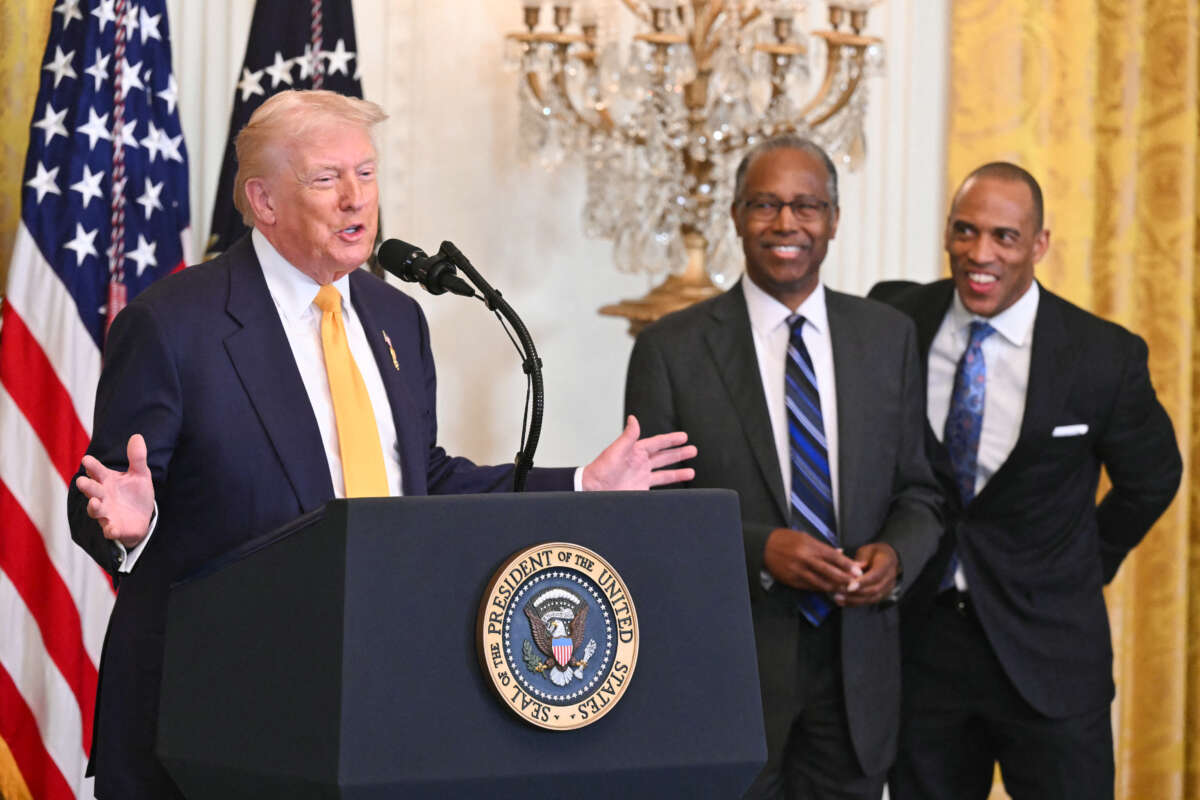
U.S. President Donald Trump speaks alongside former Secretary of Housing and Urban Development Ben Carson and current Secretary of Housing and Urban Development (HUD) Scott Turner during a Black History Month event in the East Room of the White House in Washington, D.C., on February 18, 2026.
SAUL LOEB / AFP via Getty Images


Housing advocates celebrated a temporary victory last week after a lawsuit filed by tenants’ rights groups pushed the Department of Housing and Urban Development (HUD) to delay implementation of a policy change that would have gutted eviction protections for an estimated 3.8 million people in low-income households. The policy change was set to take effect on March 30, but HUD backed down on its implementation after tenants’ groups filed a lawsuit on March 2.

On March 13, HUD announced it would delay implementation of the policy change indefinitely and give the public 60 days to comment on the proposal, which would have left the nation’s poorest tenants in certain states vulnerable to “rapid, unfair evictions” for being “as little as one dollar short or one day late on rent,” according to the National Housing Law Project.

The proposal is backed by the landlord lobby and would revoke the 30-day notice rule, which requires federally subsidized housing authorities to notify tenants about unpaid rent and other charges at least 30 days before an eviction. The 30-day notice rule protects vulnerable renters in states with few legal protections, and the proposal is one of several by the Trump administration that would deepen housing insecurity amid an affordability crisis that is driving record rates of homelessness.

Scott Turner, President Donald Trump’s housing secretary at HUD, is also pushing controversial time limits and work requirements for federal housing assistance alongside new regulations that critics say are designed to separate families with mixed immigration status as part of Trump’s mass deportation agenda.

“Instead of addressing the housing crisis, Trump is dismantling programs and protections that keep our poorest neighbors housed,” said Hannah Adams, a senior staff attorney at the National Housing Law Project, in an interview. “The aggressive push to cut families’ housing benefits will harm all of us, while targeting immigrants, Black people, poor people, and people with disabilities.”


Trump Administration Threatens Housing for Millions in “War on the Poor”
Proposed cuts to Section 8 put 3.3 million people at risk of eviction and homelessness.
By Eleanor J. Bader , Truthout September 22, 2025


“War on the Poor”


HUD manages federal programs that fund housing projects and voucher programs for lower-income renters, doling out billions of dollars each year in subsidies earmarked by Congress to combat housing insecurity. The Biden administration strengthened protections for families receiving federal housing assistance during the COVID-19 pandemic, but Trump’s HUD slashed budgets for housing, gutted enforcement of federal standards, and is working to dismantle protections for vulnerable renters in what has been called a “war on the poor.”

Nick MacLeod, director of the North Carolina Tenants Union, said the Trump administration’s housing policies are colliding with the reality of the housing crisis in his state, leaving low-income tenants with nowhere to go. In North Carolina, Black communities, the working poor, the elderly, and people with disabilities are disproportionally displaced by evictions and gentrification, MacLeod said.

“Trump is dismantling programs and protections that keep our poorest neighbors housed.”


“We are on the precipice of a disaster,” MacLeod told Truthout. “This disaster that we are on the precipice of is not one that only affects very poor folks first, it is part of the broader move in the housing market to make sure everybody’s rent is going up and everybody’s costs are going up.”

HUD’s targeting of families of mixed immigration status has likely received the most public attention. In February, HUD proposed a rule that would require anyone receiving federal housing assistance to prove their status as a citizen or legal resident. This would bar an estimated 80,000 people in families with undocumented members from housing assistance, forcing them to choose between housing and staying together as a family.

“Separately, HUD has been trying to pressure housing authorities to verify immigration status and citizenship status in ways that are really questionable,” Adams said. “It’s transparently part of a larger project to discriminate against people without American citizenship.”

Adams said HUD does not provide rental assistance to undocumented immigrants, but in some cases, undocumented people live with family members who receive housing vouchers or reside in public housing projects.

“In short, it’s going contrary to Congress’s will and violates existing law, and it will force families to either give up their desperately needed housing assistance or break up their families,” Adams said. “We believe families have a right to stay together as they currently do in HUD-assisted housing.”

The proposals would also create more hoops for citizens and legal residents to jump through before receiving support for affordable housing, a basic human need. About 3.8 million adults in the U.S. lack any form of documentation proving their citizenship, and another 17.5 million cannot easily access such documents, according to the Associated Press.

Breaking the Safety Net


A separate proposal would limit federal housing assistance to two years for adults without disabilities and require them to prove with documentation that they are working up to 40 hours per week. When Arkansas added similar work requirements to Medicaid, the federal health insurance program for low-income people, thousands of people lost their health coverage, but the state saw no increase in employment.

Trump originally proposed the work requirements along with a 40 percent cut to rental assistance for lower-income tenants, which was rejected by Congress. HUD Secretary Turner is now pushing the proposal through HUD as a federal regulation.

“Under President Trump’s leadership, the days of illegal aliens, ineligibles, and fraudsters gaming the system and riding the coattails of American taxpayers are over,” Turner said in a statement in February.

In many parts of the United States, where the wage floor remains at the measly federal minimum of $7.25 an hour, the cost of rent is simply unaffordable for large numbers of people.

As a result, about 9 million people receive some form of federal housing subsidies, and MacLeod said HUD’s citizenship and work requirements put virtually all of them at risk of losing their homes over issues with paperwork.

“The broader housing market is as unaffordable as it is” in part “because the public option has been so intentionally degraded,” MacLeod said, adding that the housing safety net is suffering “death by a thousand cuts.”

It appears that the Trump administration may be attempting to leave the agencies and institutions that make up the safety net defunded and broken, which would bolster Republican arguments for dismantling HUD and the safety net altogether.

MacLeod said public housing in the U.S. is at a crossroads. Policy makers must invest in the system or allow it to be dismantled by Republicans and private interests.

“So, we are either going to be looking at mass homelessness … or we can say enough of this breaking the system, enough death by a thousand cuts,” MacLeod said.
ICE Jails Have Repeatedly Denied Muslims the Right to Fully Observe Ramadan

The infringement of Muslims’ religious rights has intensified in ICE jails under Trump 2.0, civil rights advocates say.
Truthout/TheAppeal
March 18, 2026

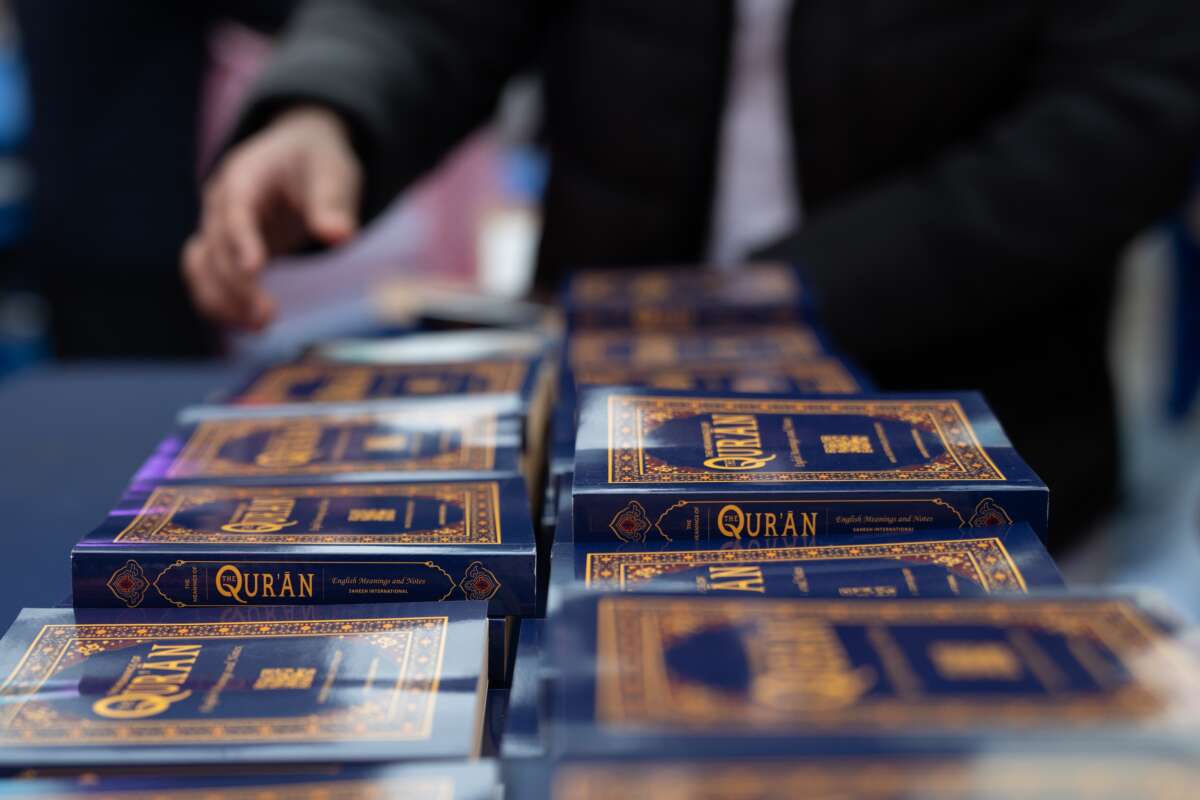
Access to Qurans is crucial for observing Ramadan, but ICE jails have repeatedly denied Muslim immigrants access to them, in addition to imposing inflexible mealtimes incompatible with fasting from dawn to sunset. Here, Qurans appear on a table in New York City during a Ramadan gathering in 2024.David Dee Delgado / Getty Images

The second Ramadan under Trump 2.0 has come with new denials of rights for Muslims detained in the administration’s fast-growing network of immigration jails.

Ramadan, which began in mid-February and will end this week, is one of the holiest months in the Islamic calendar. Muslims observe it as a month of fasting each day from sunrise to sunset, engaging in communal prayer, studying the Quran, and performing acts of charity and community service. Many of these practices are made difficult in immigration jails, where inflexible mealtimes, prohibitions on gathering, and a denial of access to items such as Qurans, prayer mats, or religious dress are the norm year-round. This is the case even though immigration detention is a form of civil detention, and it is not supposed to be punitive.

​​“The very least that people who are detained are entitled to is the right to practice their religion with dignity, yet they are often unable to exercise this basic right,” Faiza Duale, deputy legal director at the Council on American–Islamic Relations (CAIR) Washington, told Truthout. “This is especially troubling during Ramadan, a holy month of additional devotion and a time when there are greater spiritual rewards for that devotion.”

The number of people detained by Immigration and Customs Enforcement (ICE) has shot up to 75,000 compared to just 40,000 about a year ago, before Donald Trump returned to office. These individuals are warehoused across more than 225 facilities, which have come under mounting criticism, including from members of Congress. Critics condemn the inhumane living conditions, lack of oversight, and denial of basic rights like access to legal representation.

Religious practice is another fundamental right often denied or at least made difficult for those held in immigration jails. Although ICE’s own standards require that detainees be “provided reasonable and equitable opportunities to participate in the practices of their respective faiths,” civil rights advocates who spoke to Truthout said that, oftentimes, religious accommodations are not offered or met when requested.


Muslim Jailhouse Lawyers Are Reshaping the Fight for Prisoners Rights
Incarcerated Muslims are building on a legacy of community resistance that goes way beyond our current moment. By Khawla Nakua , Truthout September 22, 2023


“The way that religious needs are accommodated in these systems is very poorly developed or nonexistent,” Maria Kari, attorney and executive director at Project TAHA, told Truthout.

“They’re not getting enough calories to sustain their fasting and their health.”

Kari is part of the legal team representing Yaakub Ira Vijandre, a Filipino American journalist and pro-Palestine activist who has been jailed by ICE since October 2025. Vijandre is a Deferred Action for Childhood Arrivals (DACA) recipient, but in September, U.S. Citizenship and Immigration Services announced it intended to terminate that status due to statements he made on social media. He was later arrested at gunpoint and transferred to Bluebonnet Detention Facility in Texas, and then to the Folkston ICE Processing Center in Georgia.

Still imprisoned after more than five months, Vijandre is now one of the thousands of Muslims practicing their faith from within an immigration jail this Ramadan. While data on detainees’ religions is not published, advocacy groups offer some insights from their work in the facilities. For example, CAIR-Texas estimates that at least 5 percent of the almost 19,000 people detained in the state are Muslims.

“There are a significant amount of Muslims from all over the world — from countries like Palestine, and Jordan, and Turkey, and Egypt — who are detained in these facilities,” Dyaa Terpstra, operations director at CAIR-New Jersey, which has been advocating for improved accommodations for Muslims at Delaney Hall in Newark, told Truthout.

Agents at the Georgia facility where Vijandre is being held confiscated religious texts that he had intended to spend the remainder of Ramadan studying.

Through friends and family, Vijandre has taken to sharing his Ramadan routines and the difficulties of practicing them in immigration jail on Instagram. His series of Ramadan missives includes reports of suhur, the pre-dawn meal, being offered too late, meaning Muslim detainees could be forced to fast from one evening to the next. Kari told Truthout that sometimes some of the Muslim detainees are denied suhur altogether, and others share their meals — meaning, Kari said, “They’re not getting enough calories to sustain their fasting and their health.”

Last Ramadan, Kari was part of the legal team representing Ward Sakeik, a stateless Palestinian American woman, who was detained in February on the way home from her honeymoon in the U.S. Virgin Islands, despite being in the process of obtaining a green card. She was held for almost five months in two different Texas immigration jails before being released last July. Sakeik experienced similar problems with meals not being offered at the right times.

“She’d be given a meal four hours before the fast was supposed to open, and the food’s going to go bad. It’s just going to taste awful. There’s not going to be any opportunity to warm it up or get fresh food at the time her fast broke,” Kari told Truthout. “There were instances where the time to break her fast came and went, and she got no food for hours.”

Advocacy groups in Washington also told Truthout that this Ramadan, they have received reports that Muslim detainees at the Northwest ICE Processing Center in Tacoma, Washington, have been given non-halal meals or offered their evening iftar meals hours after sunset, meaning they are forced to fast longer than needed.

Lack of religious accommodations for Muslim detainees does not end with mealtimes. Recently, agents at the Georgia facility where Vijandre is being held confiscated religious texts that he had intended to spend the remainder of Ramadan studying.


Detainees have reported not being able to congregate to pray at the right times or at all.

Kari told Truthout that agents even tried to confiscate his Quran. “The only reason they didn’t take it away is because another detainee chimed in and said, ‘That’s like his Bible,’ [and] they did end up taking away his other books that were religious texts — and that was nothing but punitive.”

Some detainees at Delaney Hall did not have access to Qurans at all until a recent CAIR-New Jersey campaign delivered dozens of them in various languages alongside other items, including kufis, religious education materials, prayer mats, and hijabs.

“These items are not just items,” Terpstra told Truthout. “Practicing our faith is really core to our identity, it is essential for our existence, our being as Muslims, to be able to connect with our Creator by reading His words, the Quran, by being able to pray properly, by being able to fast properly.”

Elsewhere, detainees have reported not being able to congregate to pray at the right times or at all. This is the case at the Northwest ICE Processing Center in Washington, where Duale told Truthout, “Detainees are not able to pray the Friday prayers that are required for Muslim men, which results in them being unable to practice their religion to the extent that they want to.”

That’s also the case at Folkston ICE Processing Center, where agents “randomly break up congregational prayers for no reason at all, give detainees a hard time, move them around in units,” Kari told Truthout. A recent COVID-19 outbreak at the facility has resulted in quarantine measures, further limiting congregational prayer.

A lack of religious accommodations in immigration jails, particularly during Ramadan, which requires schedule changes, is not new. “Regardless of who’s in the White House, we have had Muslim religious rights being infringed on,” Kari told Truthout. “Muslim prisoners are always having to turn to the courts for basic things.”


“Faith becomes what they hang onto during their time in prison. It’s kind of the strongest protection for their mental and physical health when they’re in these isolated, awful, and inhuman conditions.”

However, advocates also told Truthout that the Trump administration’s fast-paced scaling-up of immigration detention operations and its penchant for shuttling detainees from one facility to the next, seemingly without reason, has created confusion and brought in new agents who lack training and knowledge of their obligations and detainees’ rights.

“Those that we have spoken to speak about the difficulty of practicing their faith at Delaney Hall with the disorganization, the dysfunction of the operation,” Terpstra told Truthout. “This isn’t something extra that we’re asking for; they have a moral and legal obligation to uphold our civil and religious rights to be able to practice our faith properly and meaningfully.”

The targeting of Muslim communities has also spurred an increase in the number of detainees needing Ramadan accommodations this year. “Faith becomes what they hang onto during their time in prison. It’s kind of the strongest protection for their mental and physical health when they’re in these isolated, awful, and inhuman conditions,” Kari told Truthout. The indignities of being denied the full practice of their religion, she said, “build up and are crushing to the spirit of somebody who’s already in this place that’s designed to crush the spirit.”

An urgent appeal for your support: 6 Days to raise $38,000

Truthout relies on individual donations to publish independent journalism, free from political and corporate influence. In fact, we’re almost entirely funded by readers like you.

Unfortunately, donations are down. At a moment when independent journalism is urgently needed, we are struggling to meet our operational costs due to increasing political censorship.

Truthout may end this month in the red without additional help, so we’ve launched a fundraiser. We have 6 days to hit our $38,000 goal. Please make a tax-deductible one-time or monthly donation if you can.


This article is licensed under Creative Commons (CC BY-NC-ND 4.0), and you are free to share and republish under the terms of the license.

Marianne Dhenin

Marianne Dhenin is an award-winning journalist and historian. Find their portfolio or contact them at mariannedhenin.com.


Georgia Woman Charged With Murder After Attempted Abortion

“It’s mind-blowing that she got charged with that over something like this,” a friend of the woman said.

THE STATE NOT THE COUNTRY
March 20, 2026

An empty bed in a hospital room.
Getty Images

Awoman in Georgia was charged with murder last week after she attempted to have an abortion nearly three months ago.

Alexia Moore, 31, faces felony murder charges for her attempt to abort her fetus using the abortion medication Misoprostol. She also faces charges for possession and use of a controlled substance, as she reportedly used Oxycodone to deal with the pain she believed she would experience from the abortion.

In Georgia, abortion is illegal after six weeks under the state’s so-called “heartbeat” law. It’s unclear how Moore obtained the medication.

Moore was admitted to a hospital in late December after having taken the medications. Her pain was so severe that doctors birthed the fetus, which died hours afterward. Moore was not charged with any crime until last week, and is currently in jail without bond, awaiting a hearing set for Monday.

The murder charges Moore faces are an escalation of the lengths law enforcement and states are going to in order to punish people who exercise autonomy over their own bodies, reproductive rights and abortion journalist Jessica Valenti said in a brief video reporting on the story.

Related Story

Kansas Senator Is Framing an Anti-Abortion Proposal as an Equal Rights Amendment
The same language is used in Senate calendar listings, where no language clarifies that it’s an anti-abortion measure. By Morgan Chilson , KansasReflector March 10, 2026


“The fact that they are charging this woman with murder is really relevant because they know they’re not supposed to do it,” Valenti said, noting that Georgia law isn’t supposed to go after individuals who have abortions but rather their providers. “Especially in this case, where they took the first police report on this in December, but they didn’t arrest or charge her until a week ago.”

The delay in charging Moore “means that this is well-considered,” Valenti added. “They had months to think about this, and to decide what to charge her with. And they decided to charge her with murder.”

Law enforcement was called to the hospital in December shortly after it was learned that Moore had attempted to have an abortion. The local sheriff’s department based her eventual arrest on statements from a staffer at the hospital as well as from a friend who drove her there. The arrest warrant also refers to documentation taken by the hospital.

It is believed that this is the first case, following the newer restrictions, in which a person in Georgia has been charged with murder after attempting to self-administer an abortion.

The arrest report does not indicate how many weeks pregnant Moore was, but a friend who she reportedly confided in said she was around 14 weeks pregnant. Fetal viability is generally recognized to be between 22-25 weeks of pregnancy, and the arrest warrant alleges that her pregnancy was closer to being in that timeframe.

Per the warrant, Moore faces charges for “unlawfully and with malice aforethought caus[ing] the death of Baby Girl Moore, a human being who was born alive and survived for one hour.”

Prior to the Supreme Court upending federal abortion protections in the summer of 2022, Moore likely could have received a safe abortion in the state, under the guidance of qualified practitioners, without facing any legal repercussions or harm to her health.

Moore’s mother notes that Moore, an Army veteran with a 6- and 9-year-old child, suffered from post-traumatic stress, relating to and going beyond her military service.

“It was trauma after trauma, it was situation after situation,” Edith Moore said.

A friend of Moore’s also expressed deep concern with the fact that she was being charged with murder.

“She is a great person. She is super bright. She has two amazing little boys that she’s raising to be young men,” that friend said. “It’s just, it’s mind-blowing that she got charged with that over something like this. This is just crazy.”

Abortion rights advocates are criticizing the decision to charge Moore with murder.

“No one should be criminalized for having an abortion,” said Dana Sussman, senior vice president of Pregnancy Justice, adding that the charges are “unprecedented,” and that “no law in the state of Georgia permits such a charge.”

“When lawmakers ban abortion, this becomes an inevitable outcome,” Sussman continued. “Do they really want to send women to prison for abortions? This will cause untold harm to this woman and to the women of Georgia.”
Switzerland Says It’s Halting Weapons Exports Licenses to US, Citing Neutrality

The country said it hasn’t issued new weapons licenses to the US since the start of US bombardments on February 28.
March 20, 2026
Matthias Balk / picture alliance via Getty Images

Switzerland announced on Friday that it is halting the issuing of licenses for weapons exports to the U.S. amid its war on Iran, citing Swiss neutrality principles, a week after barring the use of its airspace to U.S. war flights.

The country said that it would not authorize the export of weapons to countries involved in the war “for the duration of the conflict.”

“Exports of war materiel to the USA cannot currently be authorised,” Swiss federal authorities said in a statement. “Since the escalation of the conflict on 28 February, no new licences have been issued for exports of war materiel to the USA.”

The country said it also hasn’t issued export licenses for military equipment to Israel or Iran for years.

Last week, Switzerland denied flyover requests by two U.S. aircrafts last week related to the war, but allowed three other flights to pass, the government said.

Switzerland has previously barred flights over its airspace and weapons licenses to the U.S., when the U.S. invaded Iraq in 2003.

The country is one of the first to take action directly affecting the U.S. amid the war.

Spain’s socialist prime minister, Pedro Sánchez, has been outspoken against the U.S. and Israel’s aggression. Last week, the country said it was withdrawing its ambassador to Israel, citing the country’s position of being against the war.

Prior to that, Spain said it was denying the use of military bases to U.S. warplanes, causing nearly a dozen U.S. aircraft to depart the country.

Many countries have not directly entered the U.S. and Israel’s war on Iran, but they have provided support for the U.S. and Israel as they bombard the country.

On Thursday, the U.K., Canada, France, Germany, Italy, the Netherlands, and Japan issued a joint statement condemning Iran’s retaliatory closure of the Strait of Hormuz, blaming Iran unilaterally for the “escalating conflict.”

“We express our readiness to contribute to appropriate efforts to ensure safe passage through the Strait. We welcome the commitment of nations who are engaging in preparatory planning,” the countries said.

EU allies have largely rejected President Donald Trump’s call for a naval coalition to reopen the strait through military means. But some governments have expressed support for aiding the U.S. in the mission through other means, and the U.K. sent a small team of military planners to the U.S. for a meeting this week to discuss scenarios for the reopening of the strait.
Iran’s Retaliation Reignites Discontent With US Military Bases in Middle East

The US spent decades building an empire of military bases throughout the Middle East. Now they’re under attack.
March 20, 2026

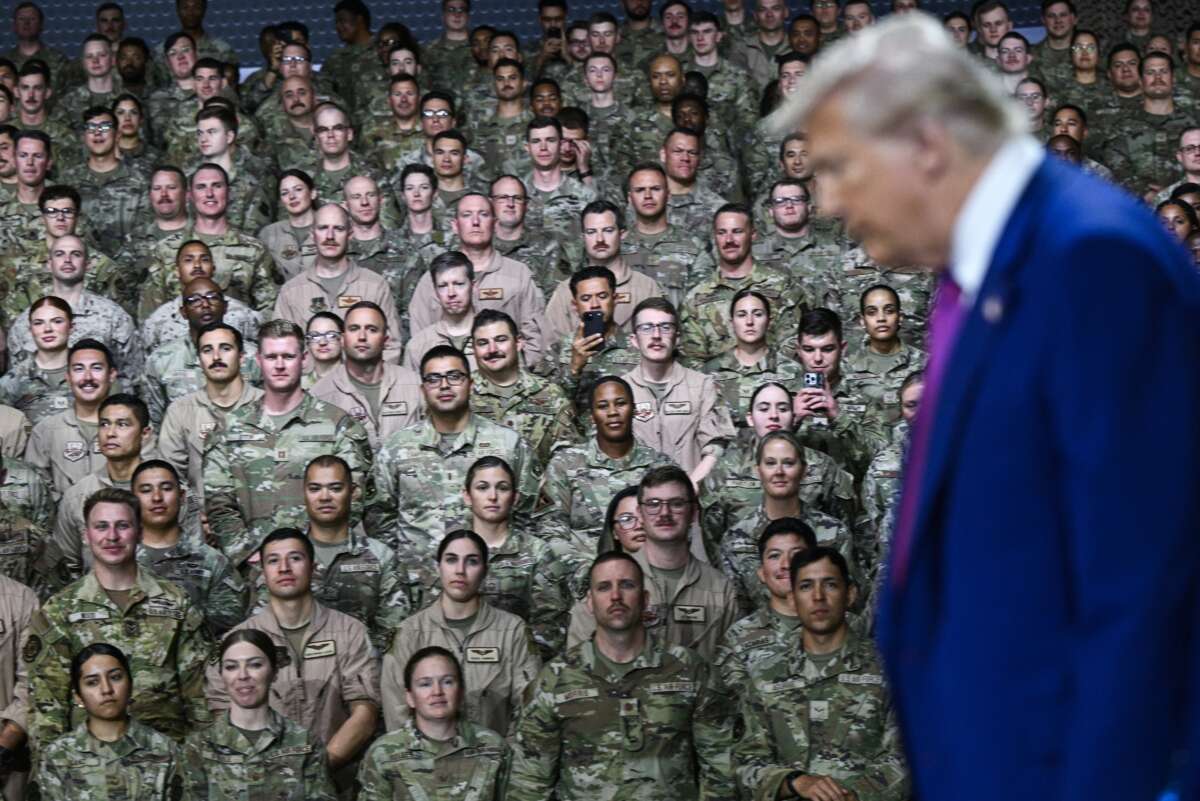
Donald Trump arrives to address troops at the Al Udeid Air Base southwest of Doha, Qatar, on May 15, 2025.Brendan SMIALOWSKI / AFP via Getty Images

On Thursday, March 19, Saudi Arabia’s foreign minister Prince Faisal warned Iran that tolerance for its regional attacks was running short — and that the Saudi regime has “the right to take military actions if deemed necessary.” He elaborated that Saudi Arabia and other Gulf states have “very significant capacities and capabilities that they could bring to bear” if the attacks continue. This came a day after Iranian attacks on Gulf energy sites in Saudi Arabia, Qatar, and the United Arab Emirates, which Iran said was in retaliation for an Israeli strike on an Iranian gas field.

Over the past three weeks of the U.S.-Israeli war on Iran, Iran has increasingly targeted sites across the Gulf, further regionalizing the war. Among its prime targets are U.S. military bases in the region: Iran has targeted, and damaged, at least 17 U.S. sites in the region, 11 of which are military bases. The two largest bases, Al Udeid Air Base in Qatar and the U.S. Navy’s Fifth Fleet in Bahrain, host 10,000 and 9,000 U.S. military personnel, respectively — of an estimated 50,000 U.S. military personnel across the region.

The existence of these military bases should alert us to a larger problem — that the U.S. has come to dominate the region militarily, building relationships with local regimes that further encourage repression and domination. Now, Iranian retaliation against these bases spurred by U.S.-Israeli attacks is reigniting a divide between Gulf leaders and their populations.

Popular Pressure and the First Wave of U.S. Military Bases

In the mid-20th century, the U.S. had very few military bases in the Middle East — and these were not permanent, but subject to popular pressure that led to their removal during the 1960s. One of the first U.S. military bases in the Middle East was built in 1946 in Dhahran, atop a major Saudi oil field. This was just after the U.S. discovered that Saudi Arabia was an oil-rich kingdom, and thus as it began to orient towards the Middle East as a region of key strategic interest. A year later, Aramco, the oil company based in Saudi Arabia, became dominated by U.S. firms.

But the U.S. military base at Dhahran was removed in 1962, after anti-imperialist and Arab nationalist sentiment gained strength across the region in the 1950s and ‘60s. Throughout the 1950s, Saudi Arabia witnessed a militant labor movement made up of both Saudi and other Arab workers from across the region, the latter of whom brought Arab nationalist, socialist, and communist ideas to the country. The movement initiated major strikes in the oil fields at Dhahran in 1953 and ’56. In 1956, just before the general strike at Aramco, a demonstration confronted King Sa’ud’s visit to Dhahran demanding, in the words of historian Toby Matthiesen, “the removal of the American military base there and the nationalization of Aramco.” Escalating popular pressure led King Sa’ud — who was otherwise friendly to the U.S. — to eject the U.S. military base in 1962. Due to widespread anti-U.S. sentiment across the region, Saudi Arabia did not allow the U.S. to have a permanent base in the country until the 1990s (though it did allow the U.S. to have temporary forces there, as discussed below).


Gulf Allies Fuming at Israel and US After Gas Field Bombing, Report Says
Reports say Arab countries are furious that the US gave the go ahead to Israel’s strike on a key gas facility this week.
By Sharon Zhang , TruthoutMarch 19, 2026

This period was one of anti-colonial struggle, independence movements, and the rise of Egyptian leader Gamal Abdel Nasser and his version of Arab nationalism — all of which spread anti-imperialist and Arab nationalist sentiments across the region. Nasser’s popularity surged after his 1956 nationalization of the Suez Canal. At times, Nasser directly addressed the issue of foreign military bases in the region. In February 1964, for example, The New York Times reported that Nasser “called on Libya… to ‘liquidate’ United States and British military bases” from the country. The U.S.’s Wheelus Air Base in Libya, which it used during WWII and the Cold War, was forcibly vacated and handed over to the Libyan government after Muammar Gaddafi’s 1969 coup — Gaddafi was, at the time, strongly influenced by Nasser and his version of Arab nationalism. In Morocco, the U.S. had built four air bases in the 1950s, and the local Istiqlal (Independence) Party pushed forward the demand to remove the American bases; they were removed in 1963 following Morocco’s independence from France. This largely closed the first chapter of U.S. military bases in the Middle East and North Africa until after the Iranian Revolution of 1979.

The Iranian Revolution and the Fall of the USSR

The U.S. began to prioritize expanding its military reach across the Middle East after the Iranian Revolution of 1979, with the loss of its ally, the Shah. Throughout the 1970s, the U.S. had worked with the Shah’s regime, with the U.S. embassy and other intelligence stations in Iran conducting surveillance against the USSR, and 50,000 U.S. advisors training the Shah’s army and secret police. The Shah’s regime was seen as an important ally in the region, and in the early ‘70s it assisted in funding Iraqi Kurds to fight against the Iraqi state, and in ’73 sent troops to repress a popular, left-wing uprising in Oman. Israel, while cemented as a key U.S. ally in the region after its defeat of Egypt, Jordan, and Syria in the 1967 war, was not yet seen as capable of intervening on the U.S.’s behalf across the Gulf. With the loss of Iran, the U.S. began to search for other sites in the region from which to exert its power and military might, and other ways to control the Persian Gulf. Though Arab regimes were reluctant to associate openly with the U.S., Egypt, Oman, Bahrain, and Saudi Arabia allowed limited use of their military sites and began to build up a military relationship with the U.S. — often covertly and without the knowledge of their populations.

But the real expansion of U.S. military bases across the Middle East began in the early 1990s during and after the Gulf War, with the establishment of permanent U.S. bases in Kuwait, Qatar, and Bahrain, as well as sites in Saudi Arabia that the U.S. would use for long stretches. Though many expected U.S. global military presence to decrease after the collapse of the Soviet Union, the 1990 Gulf War saw a seismic expansion of U.S. troops in the Middle East along with the start of a unipolar world order dominated by the U.S. With the fall of the Soviet Union, the U.S. was now the world’s sole superpower, and the Middle East would experience its military might. Following the 1990-’91 Gulf War, Kuwait, Bahrain, Qatar, and the UAE all signed public, formal defense agreements with the U.S., granting the U.S. access to each country’s bases and other facilities. With the exception of Saudi Arabia, U.S. military presence was now well-known rather than discreet. And soon after the U.S.-led campaign ended Iraq’s occupation of Kuwait, the U.S. played a role in bringing the Palestinian First Intifada to an end, pushing for first the Madrid Conference and then the Oslo Accords to contain and end the uprising that challenged Israel’s brutal status quo. In the wake of the Oslo Accords, the U.S. also facilitated neoliberal transitions throughout the Middle East, accelerating privatization, deregulation, and the selling off of state assets — thereby reversing the nationalization policies of earlier decades and aligning the region with U.S. political and economic interests through a set of reforms and interventions commonly called the Washington Consensus. Thus, in the few years after the fall of the USSR, the U.S. managed to restructure the Middle East according to its designs; its military bases represented one pillar of its dominance and control over the region.


An Empire of Bases and Local Authoritarian Regimes

In 2001, the U.S. expanded its military bases even further, creating an “empire of bases” in the region as it launched its endless “war on terror.” During its wars on Afghanistan and Iraq, the U.S. held more than 1,000 installations in those two countries alone. New bases were established and old ones expanded in Qatar, the UAE, Kuwait, Iraq, and Jordan.

Though international and regional dynamics have changed over the past two-and-a-half decades, U.S. bases still dominate the region. The presence of these bases has also further encouraged U.S. support for authoritarian regimes capable of suppressing popular opposition to U.S. imperialism and support for the Palestinian cause. This is particularly obvious in the case of Bahrain, which hosts the U.S. Navy’s Fifth Fleet and some 9,000 U.S. troops — the second largest base in the region after Qatar’s Al Udeid Air Base — and is thus seen as a crucial base in the region. During the wave of revolutions that swept across the Middle East and North Africa in 2011, Bahrain witnessed an uprising in February and March that saw 150,000 people taking to the streets at its height — over 10 percent of the island country’s population — and a mass strike that included 80 percent of the country’s workforce. The majority-Shia population confronted its Sunni ruling class and its repression and marginalization of the popular classes. But the Bahraini regime quickly and harshly suppressed the popular protests, with the support of troops from the UAE and Saudi Arabia. While the U.S. tepidly criticized Bahrain’s crackdown, it was clear that it prioritized the maintenance of Bahrain’s regime, at least in part because of the presence of its Fifth Fleet in the country.

Protests are rare in Bahrain given the level of repression; but over the course of the current U.S.-Israeli war on Iran, they have reemerged in the island country. These have been in solidarity with Iran, against the killing of Khamenei, and against the U.S. military presence in Bahrain; the regime has responded by arresting at least 65 protesters, including individuals posting on social media about the war. As Iran’s regime has targeted numerous sites in Bahrain, and particularly the headquarters of the U.S. Navy’s Fifth Fleet, protesters have explicitly blamed the U.S. presence in their country for their lack of safety. Bahrainis similarly protested against the U.S.’s Fifth Fleet and their country’s normalization of relations with Israel in 2024, seeing their ruling elite, the U.S., and Israel all as colluding, oppressive forces. It should be noted that Israel has used intelligence gathered from U.S. military bases when coordinating its attacks against Yemen and Iran in 2024 and 2025, and throughout its regional war emerging from its genocidal war on Gaza. While protests have reemerged in Bahrain against the U.S. military presence, Bahrain’s ruling regime has doubled down, reaffirming its security agreement with the U.S. and U.K.

Qatar, home to the U.S.’s largest military base in the region, the Al Udeid Air Base — housing 10,000 U.S. troops and including components of the U.S. Central Command coordinating military operations across the region — has also maneuvered to get closer to Donald Trump over the past several years. The Al Udeid base, constructed in the ’90s after a defense agreement between the U.S. and Qatar in the wake of the Gulf War, was first used by the U.S. in its bombing campaigns of Afghanistan followed by Iraq. More recently, the U.S. has used the base in its bombing campaigns against the Houthis in Yemen, and in coordination with Israel during the 12-day war on Iran. The base has been targeted by Iran throughout the current war and in the 12-day June war. But the U.S. military base has also helped facilitate the close relationship between Qatar and Trump. Qatar drafted the “Trump peace plan” for Gaza — which rejects any Palestinian representation or self-determination — and Trump has visited Qatari regime officials at the air base at least twice. Qatar’s rulers have maneuvered to negotiate multiple other peace processes, and to secure investment deals, and defense and energy partnerships with Trump. When Israel attacked Hamas officials involved in ceasefire negotiations in Qatar in September 2025, Trump gave Qatar a security guarantee followed by an executive order promising to defend Qatar in the face of another attack. On Wednesday, March 18, Trump warned Iran not to attack the “very innocent” Qatar, threatening more bombing of Iran’s South Pars Gas Field.

The US-Israeli war on Iran and the regionalization of the war highlight both the U.S.’s historic domination of the region, and the extent to which the region’s regimes have normalized relations with the U.S — straying far from the anti-imperialist sentiments that dominated the region in the 1950s and ‘60s. Instead, it is a reactionary status quo that is entrenched across the Middle East. While Bahraini people dare to protest against their regime, the U.S., and Israel, the Gulf states’ ruling regimes double down in their reliance on U.S. military support, making their alignment clear. Qatar in particular has used its military base to cozy up to Trump. And yet it is this U.S. military presence itself that has pulled them into the increasingly regionalized war. Still, the large U.S. military presence remains in tension with the wishes of the vast majority of the population in most countries in the region, and it remains to be seen if the current U.S.-Israeli war on Iran, and Iran’s widespread retaliation against this network of bases, will once again reshape the U.S. military presence in the Middle East.


This article is licensed under Creative Commons (CC BY-NC-ND 4.0), and you are free to share and republish under the terms of the license.

Shireen Akram-Boshar

Shireen Akram-Boshar is a socialist writer, editor and Middle East/North Africa solidarity activist.