Saturday, March 21, 2026

COMPRADOUR BONAPARTISM

Venezuela interim president replaces top military commanders in sweeping reforms

Venezuela’s interim President Delcy Rodriguez said on Thursday she had replaced all senior military commanders, expanding sweeping reforms after the US ousted Nicolas Maduro. The move follows the dismissal of a long-serving defence minister and the appointment of a former intelligence chief, as Caracas reshapes its armed forces.


Issued on: 20/03/2026 - 04:10Modified: 20/03/2026 - 07:23
1 minReading time
Share
By:
FRANCE 24
Vice President Delcy Rodriguez, left, smiles at Defense Minister Vladimir Padrino Lopez, Venezuela on March 15, 2023. © Matias Delacroix, AP

Venezuela's interim president said Thursday that she had replaced all her senior military commanders, the latest in a flurry of reforms since the United States ousted Nicolas Maduro.

Delcy Rodriguez announced the changes in a social media post a day after firing the long-serving defence minister, who had been close to Maduro, and replacing him with a former intelligence chief.

"I announce the designation of the renewed Military High Command," said Rodriguez, who served as vice president under Maduro, the authoritarian leftist toppled in an American special forces raid on January 3.

Under US pressure and even a threat of violence, Rodriguez is tasked with leading a country with the world's largest proven oil reserves but an economy in shambles, with widespread shortages of food, medicine and other basics.


READ MOREUS, Venezuela restore diplomatic relations as Washington pushes for access to minerals

She has enacted a historic amnesty law to free political prisoners jailed under Maduro and reformed oil and mining regulations in line with US demands for access to her country's vast natural wealth.

President Donald Trump has said he effectively runs Venezuela now and is letting Rodriguez stay in power so long as she toes the US line.

Rodriguez is in the delicate position of trying to satisfy both Trump and Venezuelans still loyal to Maduro, who was taken to New York along with his wife for trial on US-issued drug trafficking charges.

The Venezuelan military, which has sworn loyalty to Rodriguez, is a powerful entity. It oversees oil, mining and food distribution enterprises, as well as customs operations and key government ministries, amid allegations of abuse and corruption.

(FRANCE 24 with AFP)


Marx wrote The Eighteenth Brumaire of Louis Napoleon between December 1851 and March 1852. The "Eighteenth Brumaire" refers to November 9, 1799 in the French ...

The Eighteenth Brumaire of Louis Napoleon is an essay written by Karl Marx between December 1851 and March 1852, and originally published in 1852 in Die ...

Apr 25, 2007 ... It is a military-police dictatorship with which we are confronted, barely concealed with the decorations of parliamentarism. But a government of ...

Apr 22, 2007 ... To perpetuate the systematic theft of the bureaucracy, its apparatus is compelled to resort to systematic acts of banditry. The sum total of all ...

EXPLAINER

'Harm at a population level': World Happiness Report flags social media's negative impact


Young people have a “much lower” level of wellbeing than 15 years ago due to the effects of social media use, according to the 2026 edition of the World Happiness Report, which sees Finland maintain its position as the world’s happiest country for the ninth consecutive year.


Issued on: 20/03/2026 
FRANCE24
By: Pauline ROUQUETTE


Teenagers use their smartphones at the entrance of their high school in Seville, Spain on February 6, 2026. © Cristina Quicler, AFP

Where is the happiest country in the world? For the ninth consecutive year, Finland found itself at the top of the annual ranking of 147 countries compiled by the World Happiness Report, from the University of Oxford’s Wellbeing Research Centre.

Nordic countries maintained their typical dominance of the upper echelons of the list, which was published on Friday, with Iceland, Denmark, Costa Rica, Sweden and Norway completing the top six. The fourth-place ranking for Costa Rica is the best ever achieved by a Latin American country.

Meanwhile France placed 35th – its lowest ever ranking and a fall of two places in the past 12 months.

The report, which was compiled in partnership with global analytics firm Gallup and the UN, is published each year on the first day of spring and has become an indispensable resource for addressing the growing global interest in incorporating happiness – or well-being – into public policy.

As well as giving country rankings, it also provides insights into global wellbeing trends which, this year, came with a warning: Social media is taking a significant toll on the happiness of young people in the West.

The authors concluded, “if social media platforms did not exist, many users would be better off”.

Cyberbullying, sextortion, depression

The harms caused by social media to young users are “diverse and vast in scope”, the report found, ranging from “overwhelming evidence of severe and widespread” direct harm such as cyberbullying and sextortion, to “compelling evidence” of indirect harm such as depression.

This years’ report comes as more and more governments around the world are introducing laws to reduce social media use in a bid to protect younger users.

READ MOREFrench lawmakers advance measure that would ban social media for under-15s

Researchers for the report compile data on happiness by asking around 100,000 participants from each country to rank where they stand on a scale of zero to 10, with zero being the worst possible version of their life and 10 being the best.

Responses are collected throughout the year, taking into account factors such as religious observances, weather patterns, pandemics and war.

The survey results give an overall score: for example this year, French participants came out with an average 6.586 compared with 7.764 for their Finnish counterparts.

The scores are then filtered through six measurable indicators with “demonstrable links to subjective well-being, and more specifically to life satisfaction”. These include: having someone to count on, GDP per capita, a healthy life expectancy, freedom to make life choices, generosity, and freedom from corruption.

Some trends come as no surprise. In Afghanistan, the Taliban’s return to power in 2021 has made life particularly difficult for women there, who have an average wellbeing score of just 1.26.

Afghanistan is the bottom country on this year’s list, and is joined at the lower end largely by nations experiencing major political and social difficulties, including Sierra Leone, Malawi, Zimbabwe, Botswana, Yemen, Lebanon, and the Democratic Republic of the Congo.


Youth happiness crisis

Other results are less expected. Despite happiness levels increasing in central and eastern Europe – part of a convergence in European happiness levels that has been clear for more than a decade – the report found that most industrialised Western countries are now less happy than they were during a base period between 2005 and 2010.

The data also shows a sharp decline in life satisfaction among people under 25 over the past decade, particularly in English-speaking countries and Western Europe.

This “youth happiness crisis” was first mentioned in the 2024 World Happiness Report, but the 2026 edition highlights the specific link between social media use and decreased wellbeing among young people in the West.

“In North America and Western Europe, young people are much less happy than 15 years ago. Over the same period, social media use has greatly increased,” it noted.

What puts western youth at higher risk than their counterparts in other parts of the world is the amount of time they spent on social media platforms.

READ MORE‘Addiction is profitable’: Meta, Google stand trial over social media effects on children

Citing an OECD study, the report found that “those who use social media for over seven hours a day have much lower wellbeing than those who use it for less than one hour”.

It found heavy use of social media caused a wellbeing drop of almost a full point for girls in Western Europe and half a point for boys.

“Heavy users of social media are at risk, especially in English-speaking countries and Western Europe,” the authors wrote.

'Thoughtful regulation'


It seems that many young people are aware of the harm such platforms can cause. According to a Harris poll cited in the report, more than a third of users aged 18-27 wished that platforms including X, TikTok, Snapchat, Facebook and Instagram did not exist at all.

Social media companies are also aware that young people see their products as dangerous, with Gen Z users – born between 1997 and 2012 – perceiving “high levels of harm”, the report found.

In fact, the scale and scope of negative impacts is impossible to ignore. They are so widespread that the report warned social media is causing “harm at a population level”.

But a blanket ban might not be possible – or even advisable. While intensive social media use is associated with negative impacts, “those who voluntarily disconnect also seem to miss out on certain positive effects,” says report author Jan-Emmanuel De Neve, in a press release.

Instead the report calls for “thoughtful regulation of social media environments” that could “play a role in mitigating harmful effects”.

It expects teachers, parents and school administrators are likely to back the idea.

“The belief that social media and smartphones are harming students’ education and mental health is not isolated or fringe. It is the dominant perception among educators across many Western nations,” the report found.

This article was adapted by Joanna York. Click here to read the original in French.


King Harold's 200-mile march to the Battle of Hastings was a 'myth', historian says

Rather than enduring a legendary 200-mile (320-kilometre) overland march to confront the invading William the Conqueror at the famous Battle of Hastings in 1066, King Harold Godwinson's forces likely launched a "sophisticated land-sea operation" that ultimately failed to stop the Norman conquest of England, a British historian has found.


Issued on: 21/03/2026
FRANCE 24

A file photo showing the Bayeux Tapestry taken on January 17, 2018. © Stéphane Maurice, Ville de Bayeux via AFP

King Harold's legendary 200-mile march across England to the Battle of Hastings in 1066 is a "myth" that likely never happened, according to research published Saturday.

In arguably the most famous battle in English history, the Anglo-Saxon leader was defeated by William the Conqueror, who became the first Franco-Norman king of England, at Hastings on October 14, 1066.

In the weeks before the battle, Harold had defeated the Norwegian King Harald Hardrada and his Viking forces at the Battle of Stamford Bridge before racing south to confront the Norman invaders.

The decisive clash, which marked the start of the Norman conquest of England, is depicted in the Bayeux Tapestry, set to be brought to London from France this year.


READ MOREFast facts on the Bayeux Tapestry

Ahead of the tapestry's exhibition, starting in September 2026, new research from the University of East Anglia (UEA) revealed that the tale of Harold's famed march to the fight was a "misunderstanding".

The account of the march, as taught in British classrooms and museums, rests on what a British historian argues is a misinterpretation of the Anglo-Saxon Chronicle, a written record of medieval English history.

The Chronicle recounts that Harold's ships "came home". For at least 150 years, historians understood that to mean the king dismissed his fleet in September 1066.

This photo provided by the Ville de Bayeux shows a technician inspecting the tapestry in Bayeux, Normandy, in January 8 2020. © Ville de Bayeux via AP


That shaped the narrative that Harold and his troops were forced to march more than 200 miles (320 kilometres) from Stamford Bridge in Yorkshire in the northeast to Hastings on the south coast to ward off the Norman invasion.

But Tom Licence, a professor of medieval history and literature at UEA, found the ships returned to their home base in London and remained operational, which suggests that they were likely used by Harold during his journey and to defend against the invasion.

"I checked the evidence for him having sent the fleet home and found that it was just a misunderstanding. I went looking in the sources for evidence of a forced march and found there wasn't any," said Licence, who will present the findings at the University of Oxford on Tuesday.

According to Licence, the story of Harold and his men traversing the vast distance in 10 days is "implausible".

Workers and volunteers rest before preparing to pack the Bayeux Tapestry to transfer to the British Museum, at the Bayeux Tapestry Museum, in Bayeux, northwestern France, Thursday, September 18, 2025. © Lou Benoist, AP


The historian also pointed to other early accounts which describe Harold sending hundreds of ships to Hastings after William's landing, suggesting he still had a fleet at his disposal.

"Harold's campaign was not a desperate dash across England, it was a sophisticated land-sea operation. The idea of a heroic march is a Victorian invention that has shaped our understanding, or misunderstanding, of 1066 for far too long."

The 68-metre-long Bayeux Tapestry, on loan from France, will be on display at the British Museum for 10 months.

(FRANCE 24 with AFP)

1066 and All That: A Memorable History of England, Comprising All the Parts You Can Remember, Including 103 Good Things, 5 Bad Kings and 2 Genuine Dates is ...

When Sweyn died shortly after his father,. Ælfgifu threw her full support behind Harold Harefoot. 1066: The Year That Changed Everything. Lecture 2 England and ...


WILL AIRPORTS DE-ICE
Trump threatens to send ICE agents to airports amid TSA funding impasse

SURE AS SHOOTING, THAT'S THE SOLUTION

President Donald Trump on Saturday warned he may deploy ICE agents to US airports if Congress fails to fund airport security. The move comes as TSA staff face a second missed paycheck in a 36-day partial government shutdown, raising fears of travel disruption. Critics question ICE’s suitability for airport duties, given its focus on immigration enforcement.


Issued on: 21/03/2026
FRANCE 24

Travelers wait in line at a TSA security checkpoint at George Bush Intercontinental Airport in Houston, Texas on March 20, 2026. © Ronaldo Schemidt, AFP

US ​President Donald Trump on Saturday threatened to deploy Immigration and Customs Enforcement agents to US ​airports if congressional Democrats do not immediately agree to fund airport safety.

"I will move our brilliant and patriotic ICE Agents to the Airports where they will do ​Security ‌like no one has ever seen before," Trump wrote in ⁠a social media post.

Transportation Security Administration personnel are set to miss a second full paycheck on March ‌27 amid a partial government shutdown now in its 36th day ⁠as lawmakers clash over funding for the Department of Homeland Security, the parent agency for TSA and ICE.

TSA officers have called in ​sick in recent weeks as paychecks have dried up. The ‌shortage of security agents has led to travel disruptions at major airports.

READ MOREFacial recognition: ICE agents use app to scan US citizens and immigrants

ICE agents are not specifically trained for airport security, which is TSA's domain. ICE has played a ‌central role in the Trump administration’s immigration crackdown, drawing criticism from many Democrats, civil liberties advocates and immigration advocacy ​groups.

The agency, along with Customs and Border Protection, has deployed agents over the past few months to multiple areas as part of the crackdown, most ​recently to Minnesota in an operation that resulted in agents fatally shooting American citizens ​Renee Good and Alex Pretti.

Their deaths sparked a ​backlash and led the Trump administration to adopt a more targeted approach in Minnesota.

Trump this month fired ​Homeland Security Secretary Kristi Noem amid growing criticism of the administration's immigration tactics. The US Senate is considering the nomination of Senator Markwayne Mullin, an Oklahoma Republican, as the next DHS secretary.

Trump has said his immigration policies are intended to curb illegal ⁠immigration and improve national security.

Last year, the American Civil Liberties Union said TSA had provided ⁠lists of airport ​travelers to ICE, calling the move a break from TSA’s prior practices.

(FRANCE 24 with Reuters)


ANALYSIS


Streamlining the kill chain: how AI is changing modern warfare


The US-Israeli war with Iran has put AI use in defence systems in the spotlight like never before. AI's exact role in the military, its accuracy and possible repercussions are slowly beginning to emerge – but the extent of its use and role in the war so far still largely remain a mystery.


Issued on: 21/03/2026 
FRANCE24
By: Diya GUPTA

This satellite image from Planet Labs PBC shows Iran's Parchin military base outside Tehran, on February 26, 2026. © Planet Labs PBC, AP

The war in Iran has been unfolding at breakneck pace ever since the US and Israel launched a series of surprise attacks across the country on February 28. An eye-watering 1,000 targets were hit in the first 24 hours of operation ‘Epic Fury’ alone, and within days, Supreme Leader Ali Khamenei and numerous other high-level Iranian officials were assassinated in targeted strikes.

In a video posted to X on March 11, Admiral Brad Cooper, head of US Central Command (CENTCOM), said that American forces had at the time hit more than 5,500 targets inside Iran. Cooper credited the success of at least part of those operations to advanced AI tools. “Humans will always make final decisions on what to shoot and what not to shoot and when to shoot. But advanced AI tools can turn processes that used to take hours and sometimes even days into seconds,” he said. The statement offered rare insight into how AI is used in modern warfare.


© France 24
43:35


Since announcing a $200 million defence contract in July 2025, AI company Anthropic quickly became embedded in the military's workflow and its AI model, called ‘Claude’, was the first approved to operate on classified military networks.

Then came a public squabble.

Days before the attacks on Iran, Anthropic’s leadership refused the Pentagon’s demand for “unrestricted” access to Claude. Its co-founder Dario Amodei released a public statement, saying that Anthropic could not ‘in good conscience’ accede to the requests of The Pentagon, and adding that “some uses are also simply outside the bounds of what today’s technology can safely and reliably do.”

Anthropic implied that the US Department of War was attemping to overturn two conditions: to use its AI models for mass domestic surveillance, and for fully autonomous weapons. Just hours after the statement was released, another AI company – Sam Altman’s OpenAI – swooped in and took Anthropic’s place in the Department of War.

US Secretary of War Pete Hegseth in turn banned Anthropic, and called its decision to turn down the Pentagon’s defense contract a “master class in arrogance and betrayal”, adding that his department would designate Anthropic a Supply-Chain Risk to National Security (recent reports claim that Anthropic’s AI tools remain in use despite the blacklisting, and that Pentagon staffers are reluctant to use other models). Anthropic sued the Department of War and other federal agencies in response.

Defense Secretary Pete Hegseth stands outside the Pentagon during a welcome ceremony for the Japanese defense minister at the Pentagon in Washington, Jan. 15, 2026 © Kevin Wolf, AP


The feud brough to light a side of AI that could have more worrying consequences than slop-associated-brainrot. Its role in defence is accellerating at a disquieting pace and the US is not the only government with which it is enmeshed. Israel, China, Russia, France and the UK are among the growing lists of nations incorporating large language models (LLMs) – modern AIs pre-trained on vast amounts of data – into their defence systems.

Information about how, where and why it is used is slowly begininning to trickle out.
A lack of accuracy and oversight

The US military has reportedly been using the Maven Smart System built by Palantir and Anthropic’s technology during their operations in Iran. Maven was also used by the Pentagon to capture Venezuelan President Nicolas Maduro, according to reports by the Wall Street Journal.

The precise details of its use are unlikely to be made public. Dr. Heidy Khlaaf, Chief AI Scientist at the AI Now Institute says its primary role is to streamline what’s known as a ‘kill chain’ – a military concept which identifies the sequence of an attack

“That would include surveillance, gathering intelligence, selection and then ultimately striking a target,” says Khlaaf. She says that AI could significantly reduce the time for each step, and the personell required to do it. “For example Maven, Anthropic’s and Palantir’s system, claims that their technology allowed one unit of just 20 people to do the work of 2,000 staff. Speed is what’s being sold here.”

Most of these AI tools collate, analyse and synthesise data in what is known as ‘Decisions support systems’. Khlaaf says that, theoretically, decisions support systems just make military reccomendations and require oversight. However, she adds, that oversight may not be very effective.

Dario Amodei, CEO and co-founder of Anthropic, attends the annual meeting of the World Economic Forum in Davos, Switzerland, Jan. 23, 2025. © Markus Schreiber, AP


“People have what we call an automation bias, which is a tendency for humans to favor suggestions made by automated systems like AI. So that oversight is really superficial in practice, especially in the military space where the automation bias is the worst. Human beings just become rubber stamps at that point. It veers into autonomous systems technologies,” Khlaaf argues.

Autonomous weapon systems have the power to select targets and perform their function without any oversight from a human being. It’s unclear if the Pentagon’s push for unrestricted use of AI signals the use of these systems, which have the power to launch strikes on their own.

The US isn’t the only government using AI to streamline the kill chain. Before Israeli jets fired the ballistic missiles that killed Iran’s Supreme Leader Ali Khamenei, Israel’s intelligence services had long used AI to monitor Tehran’s hacked traffic cameras and intercept communications. The main platform used by the IDF today is an AI system called Habsora (“The Gospel”), which has allegedly been used to generate large numbers of target recommendations – often residential homes linked to suspected Hamas members in Gaza.

READ MOREPropaganda in 21st-century wars: Iran conflict flooded with AI-generated fakes

Former intelligence officers describe it as enabling a “mass assassination factory,” with strikes reportedly killing entire families, including in homes with no confirmed militant presence.

This is even more disturbing when the innacuracy rates of AI are taken into account. Khlaaf says generative AI and large language models (LLMs) often have accuracy rates as low as 50% or even lower. For targeting systems, such as those investigated in Israel's Gaza operations like Gospel or Lavender, accuracy is as low as 25-30% in some cases.

The accuracy rates are specifically low for large language models like the ones militaries are using now. “We have been using AI since the 1960s, but those were built by the military itself and worked with limited data sets that focus on specific tasks, so they were a lot more accurate.”

Khlaaf says the sheer scale of new AI models make things inherently opaque – “One model will have to analyse billions of data points. How would you know where the errors come from?”
Safety and security risks

Most AI models used in the military are ‘black boxes’ – their internal workings are a mystery to its users. Khlaaf cites a recent investigation that quoted the US military as saying it had “no way of knowing” whether it used artificial intelligence in conducting a specific airstrike in Iraq in February 2024 that killed 20-year-old student Abdul-Rahman al-Rawi.

“This is a huge problem because it completely obscures accountability. There’s no way of knowing if attacks are deliberate, if they are intelligence failures or if the AI is innacurate. The black box nature of AI makes it particularly opaque.”

That opacity won’t just hurt the people being targeted – according to Khlaaf, it could also end up putting the national security of the countries using AI at risk.

WATCH MORETrump's Claude ban: The first salvo in a long battle over who controls AI

“Large language models are seriously compromised: they have huge amounts of vulnerabilities because they are trained on the open internet. There is no control of the supply chain. False claims can come from reddit, or someone's blog posts – there isn’t much discretion in picking what goes in.”

“So it’s easy to create backdoors and very hard to find out. We have seen targeted operations from Russia and China, where huge amounts of propaganda have been put out into the world to try and change the outcomes of large language models. Anthropic has even said that you need just 250 data points to change the behaviour of an AI model. We could be compromised right now, and we would’t even know.”


People clean debris from their apartment in Tehran, Iran, Sunday, March 15, 2026 © Vahid Salemi, AP


Perhaps one of the most worrying aspects about AI use in military comes from a recent study led by Professor Kenneth Payne from the Department of Defence Studies at King's College London. Three leading AI models, versions of GPT, Claude and Gemini, were placed in a tournament of 21 simulated nuclear crisis scenarios. The nuclear taboo, according to the paper, was weaker than expected. “Nuclear escalation was near-universal: 95% of games saw tactical nuclear use and 76% reached strategic nuclear threats,” the paper said. “Claude and Gemini especially treated nuclear weapons as legitimate strategic options, not moral thresholds, typically discussing nuclear use in purely instrumental terms.”

“Those results should give us pause,” Khlaaf says, citing the King’s College study as one sobering example. “There’s a lot of research that shows AI compromises restraint and increases the chances of escalation. This should be nowhere near human lives.”

AI is not a weapon of war, because unlike nuclear arms or missiles, the evidence of the efficacy, accuracy and full uses of AI are unknown.

“There’s a narrative that this is like an AI arms race, that the military that conquers AI will win. But we have no idea if that’s true, because we lack the evidence to show that the tech will actually serve a purpose we want,” says Khlaaf. “The US is seen as setting a precedent for AI, but it should really be a cautionary tale.”
THE MILK OF HUMAN KIDNESS

‘I’m glad he’s dead’: Trump reacts to death of ex-FBI chief Robert Mueller, 81


Robert Mueller, the former FBI director who led the investigation into alleged Russian interference in US President Donald Trump’s 2016 election campaign, has died aged 81. The veteran prosecutor, long seen as a bipartisan figure, drew a sharply divisive response from Trump, who said he was “glad he’s dead” in a post on social media.


Issued on: 21/03/2026 - 
By:  FRANCE 24

File photo: Special Counsel Robert Mueller speaks on the investigation into Russian interference in the 2016 Presidential election, at the US Justice Department in Washington, DC, on May 29, 2019. © Mandel Ngan, AFP

Robert Mueller, the former FBI director who led a politically explosive investigation into Donald Trump, has died aged 81, triggering a gloating response Saturday from the US president.

US media reported that Mueller died late Friday, citing a family statement, but did not specify a location or cause.

Trump responded quickly on Truth Social, writing: "Robert Mueller just died. Good, I'm glad he's dead. He can no longer hurt innocent people!"

Mueller led the FBI for 12 years, starting just days before the September 11, 2001 Al-Qaeda attacks on the United States, during which time he built up the bureau's counterterror mission.

After his tenure at the FBI, he was tapped as a special counsel for the Justice Department to lead an investigation into whether Trump's presidential campaign conspired with Russia to get him elected.

Starting in 2017, Mueller operated for two years quietly behind the scenes, emerging in July 2019 to testify before Congress about the probe that Trump regularly denounced as a "witch hunt."

READ MOREMueller report reveals Trump tried to seize control of Russia probe

For many Americans, the nationally televised hearing was the first close look at the patrician, grey-haired former FBI director.

What many saw was a cautious career prosecutor who was forced to testify under duress and who deflected questions from both Democrats and Republicans by referring repeatedly to his voluminous report.

Mueller said his report did not exonerate Trump but he mostly deflected questions from lawmakers seeking to score political points for their sides.
A 'straight shooter'

That was in keeping with the career of a public servant who had spent four decades serving both Democratic and Republican presidents.

Before taking on the politically sensitive Russia investigation, Mueller, a former marine who was wounded and decorated for heroism in Vietnam, enjoyed a sterling reputation in Washington.

Mueller is a "consummate professional and a straight shooter," then-FBI chief Christopher Wray, a Trump appointee, said in July 2019.

As a young prosecutor in San Francisco and Boston, Mueller took on cases involving grisly murders, organized crime, fraud by powerful banks and terror attacks – winning some, losing some, but rarely drawing serious criticism for his work.

At the FBI, he gained a reputation of being an exacting taskmaster and, despite his early Republican political alignment, someone who was appreciated by politicians of both political parties.

Two of his most heralded prosecutions involved New York mobster John Gotti and General Manuel Noriega of Panama.

After retiring in 2013, he joined a private Washington law practice where he handled official arbiter missions.

Trump's May 2017 firing of Mueller's successor at the FBI, James Comey, resulted in Mueller being recalled to public service to lead the investigation into suspected Russia meddling.

Over 22 months, his investigators issued charges against 34 individuals, including six Trump associates, and three companies.

READ MORE'No determination on whether Trump committed a crime,’ Mueller says in first remarks since Russia report

Born August 7, 1944, in New York City, Mueller grew up on Manhattan's tony upper East Side. He attended the elite, and at the time all-male, Princeton University where he earned his bachelor's degree in 1966.

After college, Mueller enlisted in the US Marines, and after one year as an enlisted man, entered officer candidate school. As a marine, Mueller earned a Bronze Star for valor and a Purple Heart for wounds received in combat.

In 2001, he took over an FBI beset by scandals, including the years-long deception by FBI mole Robert Hanssen and the agency's failure to turn over thousands of pages of investigative documents to Oklahoma City bomber Timothy McVeigh's attorneys.

Then-president George W. Bush and legislators agreed that Mueller was the person to set the bureau right. "His skills should be a perfect match for the challenge," Republican Senator Jeff Sessions said at the time.

Chuck Schumer, a Democrat, heartily agreed. "Bob Mueller," he said, "will give the FBI a major boost that will help it get back on its feet."

(FRANCE 24 with AFP)
CHRISTIAN NATIONALIST CRUSADERS

US drones deployed to Nigeria alongside troops for intelligence and training

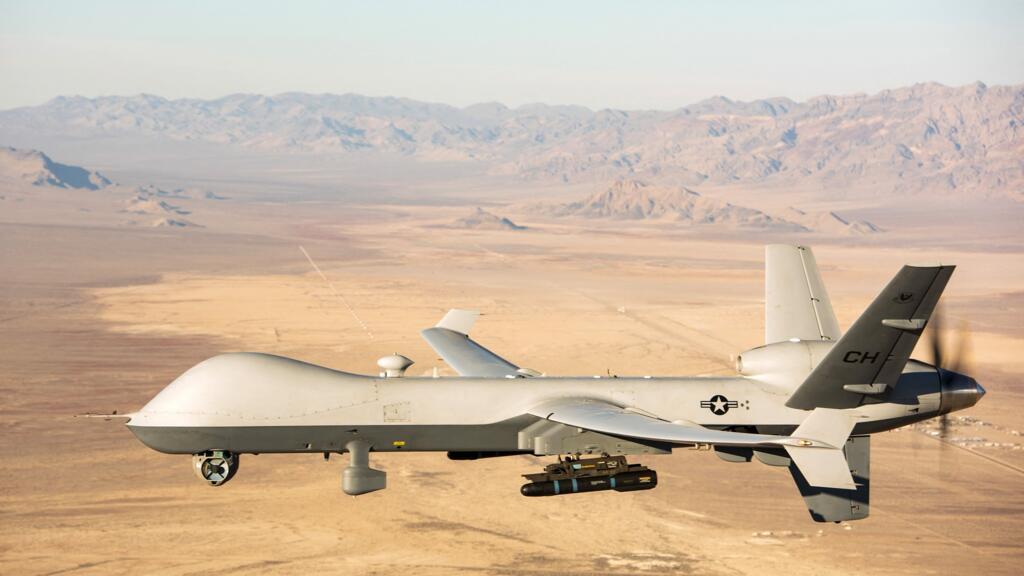
The US military has multiple MQ-9 drones ​operating in Nigeria alongside 200 troops – in a non-combat role providing training and intelligence support to the military in its fight against Islamist militants across the north, US and Nigerian officials have confirmed.


Issued on: 21/03/2026 - RFI

The US says it's sent MQ-9 Reaper drones, like the one pictured, to Nigeria to help in the fight against a 17-year insurgency by Islamist militants in the north of the country. © WILLIAM ROSADO/AFP PHOTO/US AIR FORCE


A US defence official said the drones had been deployed alongside troops at the request of the Nigerians to collect intelligence. "We see this as a shared security threat," the official told Reuters news agency.

Major General Samaila Uba, ‌director of defence information at Nigeria's Defence Headquarters, confirmed that the US was operating assets from Bauchi airfield in the northeast.

"This support builds on the newly established US-Nigeria intelligence fusion cell, which ​continues to deliver actionable intelligence to our field commanders," he told Reuters. "Our US partners remain in a strictly non-combat role, enabling operations led by Nigerian authorities."

Uba said the timeline for the United States' deployment in Nigeria would be determined in agreement by ​both sides.

MQ-9 drones, which are sometimes known as Reaper drones and can loiter at high altitude for more than 27 hours, ​can be used for both intelligence gathering and airstrikes.

But the two officials stressed the troops were not integrated within Nigerian units on the frontline and the drones are not carrying ​out airstrikes.

However, the US deployment, which follows US airstrikes targeting militants in northwest ⁠Nigeria in late 2025, shows Washington getting involved once more in tackling Islamic State and al Qaeda-linked insurgencies that are spreading across West Africa.

Long partnership


Washington has had a long partnership with Nigeria's military, providing training and selling weapons.

The US military previously had a $100 million drone ‌base in neighbouring Niger with about 1,000 troops monitoring militants across the Sahel region. It closed in ⁠2024 after the Niger junta requested their departure – part of a broader rejection of western military support by countries in the Sahel region.

The US carried out airstrikes in the northwest on Christmas Day, saying it was aimed at stopping the targeting of Christians in the region.

Nigeria's government and experts on the conflict have rejected claims of a concerted anti-Christian ⁠campaign, saying it oversimplifies a complex crisis.

US strikes on Nigeria set 'deeply troubling precedent' for African governance

Suicide bombers launched an assault on the northeastern Nigerian garrison town of Maiduguri on 16 March, killing at least 23 people and wounding more than 100 others.

It was not immediately clear who carried out the attack.

Uba said it was still being investigated, ⁠adding that both Boko Haram ​militants and ISWAP, an Islamic State-allied faction, remain a persistent threat, adapting their tactics over time.

(with Reuters)
CRIMINAL CAPITALI$M


Elon Musk misled shareholders during Twitter purchase, US jury finds

Tech multi-billionaire Elon Musk could be forced to pay billions of dollars in damages after a federal jury found that the world's richest man had misled Twitter shareholders while purchasing the social media platform by posting false statements to drive down the company's share price. The tycoon's lawyers said that Musk would appeal the decision.


Issued on: 21/03/2026 
FRANCE 24


Musk acquired Twitter in October 2022 after months of back and forth with the social media company's board. © Josh Edelson, Getty Images North America via AFP
01:34

A federal jury in California found Friday that tech tycoon Elon Musk misled Twitter shareholders, driving down the company's share price as he was poised to buy it in a $44 billion deal. But the jury absolved him of some fraud allegations, finding that he did not “scheme” to mislead investors.

The verdict in the class action securities lawsuit means the world's richest person could be ordered to pay billions of dollars, according to damages calculated by jurors.

Minutes after the judgment was announced, the entrepreneur's lawyers informed AFP that their client will appeal the decision, characterising it as a "setback".


Police raid Paris offices of Musk's X over child sexual deepfakes
TRUTH OR FAKE © FRANCE 24
05:15

After a three-week trial in a San Francisco federal court – which included in-person testimony from Musk – the jury found that two tweets posted in May 2022 by the Tesla and SpaceX CEO contained false statements responsible for a plunge in Twitter's share price.

Investor Giuseppe Pampena had filed the suit on behalf of people who sold Twitter shares between mid-May and early October 2022.

Musk acquired the social media platform in late October 2022 and later renamed it X.

Jurors agreed that Musk violated a securities rule that bars false and misleading statements that sink a stock price, in this case that of Twitter, the verdict form showed.

The jury awarded shareholders between about $3 and $8 per stock per day as damages, which the plaintiffs' lawyers said amounts to about $2.1 billion in stock and another $500 million in options. Musk's fortune is currently estimated at about $814 billion, much of it tied up in Tesla shares.

“It’s an important victory, not just for investors of Twitter, but for the public markets,” said Mark Molumphy, an attorney for the plaintiffs. "I think the jury’s verdict sends a strong message that just because you’re a rich and powerful person, you still have to obey the law, and no man is above the law.”

Musk, who has a near-constant presence on X, did not immediately react to the verdict.
Teflon tycoon?

The judgment marks a rare legal defeat for Musk, often dubbed "Teflon Elon" for his ability to emerge unscathed from lawsuits he is expected to lose.

His lawyers, in fact, reminded AFP of this track record, noting that a Texas court cleared him just that same day in a separate defamation case.

In 2023, a jury in the same San Francisco federal court cleared him within hours of similar charges brought by Tesla shareholders, following his 2018 tweets claiming he had the funding to take the automaker private.

The civil complaint in California accused Musk of driving down Twitter's stock price to gain leverage to renegotiate the purchase price or get out of the deal completely, causing people who sold shares to lose money.

Musk tweeted at one point during the process that the acquisition deal was temporarily on hold until Twitter executives could prove the percentage of "bots" – fake accounts run by software instead of real users – was as low as the social media platform claimed.

The plaintiffs contended that these statements were part of a scheme designed to pressure the board of directors into accepting a price lower than his initial offer – at a time when Tesla's share price was falling, meaning Musk would have to sell more of his shares to finance the deal.


Tech 24 © France 24
05:27

Monte Mann, a business litigation lawyer who was not a part of the case, said the "verdict sends a clear message – if you move the market with your words, you own the consequences”.

“The law has always prohibited misleading statements. What’s new is the scale and speed," Mann said. "When one person can move billions with a tweet, the consequences of those statements are amplified – and juries are starting to take that seriously.”

Musk abandoned his effort to get out of buying Twitter in late 2022 after the company took him to court to uphold the contract.

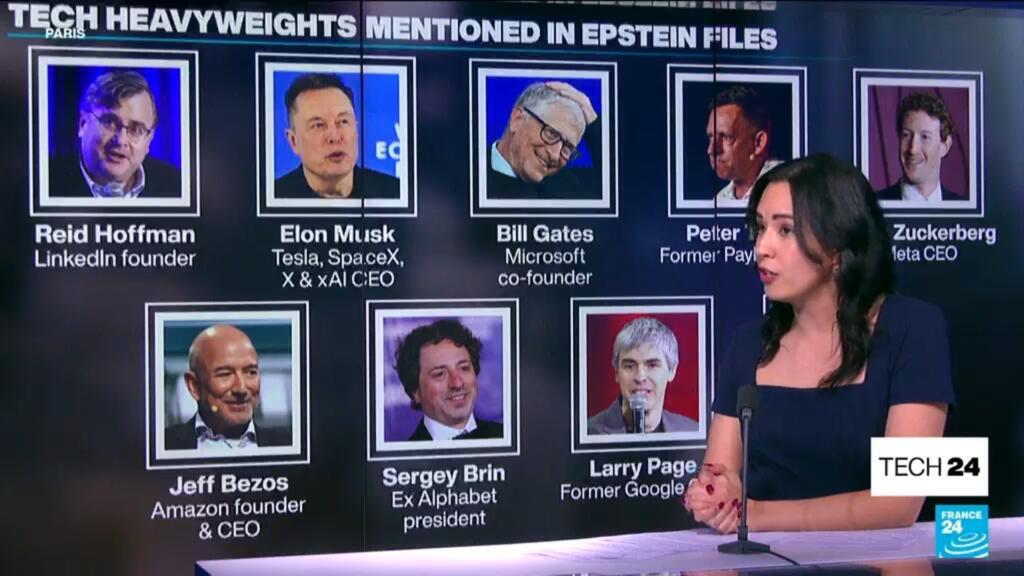
Musk has since merged the social media platform with his artificial intelligence startup xAI and his private space exploration firm SpaceX.

Forbes magazine early this month estimated Elon Musk's net worth at $839 billion, a figure based primarily on his stakes in his portfolio of companies including Tesla and SpaceX.

(FRANCE 24 with AFP and AP)

French prosecutors suspect tycoon Musk encouraged deepfakes to inflate value of X


French prosecutors say they have alerted US authorities to a suspicion that tech billionaire Elon Musk encouraged sexualised deepfakes on social media platform X to "artificially" increase his company's value.


Issued on: 21/03/2026 - RFI

Elon Musk is the world's richest individual, but French prosecutors say the value of his company X may have been boosted artificially via deepfakes. REUTERS - Evelyn Hockstein

The Grok chatbot – developed by xAI and hosted on Musk's social media platform X – allows users to make nonconsensual sexualised deepfakes, including of women and children. The practice has triggered investigations in Europe and the UK.

"The controversy sparked by sexually explicit deepfakes generated by Grok may have been deliberately generated in order to artificially boost the value of companies X and X AI", the Paris prosecutor's office said Saturday.

This may have been done, it said, with a view to "the planned June 2026 stock market listing of the new entity created by the merger" between Space X and X AI.

It said it had reached out on Tuesday to the US Department of Justice, as well as French lawyers at the US Securities and Exchange Commission (SEC), a financial market regulation body, to share its concerns.

On Monday this week three young women filed a lawsuit against xAI in a federal California court. They claim the company facilitated child pornography by allowing the creation of sexually explicit images of them.

In February, the data protection watchdog in Ireland – where X's European HQ is based – launched a probe into Grok's generation of sexualised deepfake images.

Ireland watchdog opens probe into sexual AI imagery from Grok chatbot


Mounting investigations

Since last year, the French authorities have been investigating X over allegations that its algorithm was used to interfere in French politics.

It now also includes a probe into the Grok AI tool's dissemination of Holocaust denials and sexual deepfakes.

French authorities last month summoned Musk to a "voluntary interview" and searched the local offices of his social media network, in what Musk called a "political attack".

US officials have strongly condemned the enquiry.

In a separate case, a US federal judge on Friday found Musk misled Twitter shareholders, driving down the company's share price as he was poised to buy it in a $44 billion deal in 2022.

US jury finds Elon Musk misled Twitter shareholders

Musk was accused of falsely claiming on social media that Twitter (which he rebranded X) underreported how many fake and spam accounts, known as bots, were on its platform.

Damages have yet to be calculated but Francis Bottini, a lawyer for the shareholders, estimated they could total about $2.5 billion.

(with newswires)
INTERVIEW


Cities can improve air quality ‘quite rapidly’ with political will


Air pollution is the leading environmental risk to human health, causing respiratory and cardiovascular disease as well as cancer in millions of people every year. Yet some cities are already managing to cut pollution significantly, new analysis by the environmental network Breathe Cities shows.


Issued on: 21/03/2026 - RFI


A view of Paris from the Generali balloon, which measures air quality. AP - Christophe Ena

Cities contend with the worst air quality, thanks to traffic, industry and dense populations. Yet they are also the places where anti-pollution measures can produce the fastest and most visible results.

Breathe Cities analysed the strategies used by 19 major cities that have significantly reduced pollution levels. Cecilia Vaca Jones, executive director of the organisation, says cities can improve air quality faster than many people think.

RFI: What do the 19 cities that have been most successful in reducing air pollution have in common?

Cecilia Vaca Jones: First of all, all these cities do an excellent job collecting reliable data. That data helps guide policies and shows where anti-pollution action should focus.

Cities that invest in infrastructure for cyclists and pedestrians understand that they can achieve two goals at once. They reduce polluting emissions and improve air quality, while also encouraging healthier behaviour.

Another point they all share is that they try to make air quality more tangible in people’s daily lives and show how improving it can directly benefit their health.

From food to transport, how cities are rewriting the climate playbook

RFI: How important is it to collect reliable data on urban air quality?

CVJ: We need to expand air quality monitoring systems because they help guide policies and programmes.

I am currently in Bangkok, where the authorities have tools that map in real time which parts of the city have the most polluted air and who is affected. This also allows them to predict pollution peaks and take very targeted action.

Having good data on a continuous basis also allows us to check whether the actions we take are really working – whether we are actually reducing emissions of fine particles and nitrogen dioxide. So it is very important to have data of that quality.

Finally, the data must be shared transparently with citizens. This information raises awareness and allows people to make informed decisions. Sometimes it also leads them to change their behaviour and help reduce air pollution.

RFI: What solutions have the cities you studied introduced that are proving effective?

CVJ: Several solutions have proved effective across all 19 cities. One example is the introduction of low-emission zones. These exist in London and also in Paris, where the city has closed streets in front of nursery and primary schools to traffic.

In Paris, as in other major European cities such as Amsterdam and Rotterdam, space for cars has been reduced to create cycle lanes, pedestrian areas and green spaces.

Public transport networks have been expanded and buses electrified, allowing residents to leave their personal vehicles at home. Reducing traffic in cities significantly improves air quality.

There are also measures targeting other sources of pollution. For example, Warsaw has banned coal as a heating fuel.

Paris mayoral race puts city's green transformation to the test

RFI: Governments clearly need to take action. But what role can citizens play in the fight against air pollution?

CVJ: What I find remarkable is that air quality is truly a public good – probably the only public good we share across the entire world.

Efforts to reduce air pollution often go beyond the boundaries of a single city. In Asia, for example, the air in many cities is badly affected by agricultural burning in surrounding rural areas. That means discussions have to go beyond the city itself.

Citizens also have a very important role to play. In Nairobi, for example, I recently met local organisations and communities working to manage waste. Burning waste is another major source of emissions.

But these communities have developed different waste management methods. They have changed their behaviour, and that also helps reduce air pollution. The first step – and the most important – is awareness. People need to understand the risk that poor air quality poses to their health and the health of their children.

New estimates show France still off track on climate goals

RFI: How long does it take to clean up the air in a city?

CVJ: People often think that improving air quality takes decades. But what we have learned from this study is that change can actually happen quite rapidly.

This is especially true when there is strong political will. But it also requires the right tools, reliable data and the right people to implement these programmes on the ground.

This interview has been adapted from the original version in French and lightly edited for clarity.