It’s possible that I shall make an ass of myself. But in that case one can always get out of it with a little dialectic. I have, of course, so worded my proposition as to be right either way (K.Marx, Letter to F.Engels on the Indian Mutiny)
Friday, January 09, 2026
Funded by Our Own Tax Dollars, American Fascism Is Here
Civil disobedience is a moral requirement now. We do more after Renee Nicole Good’s murder, not less.
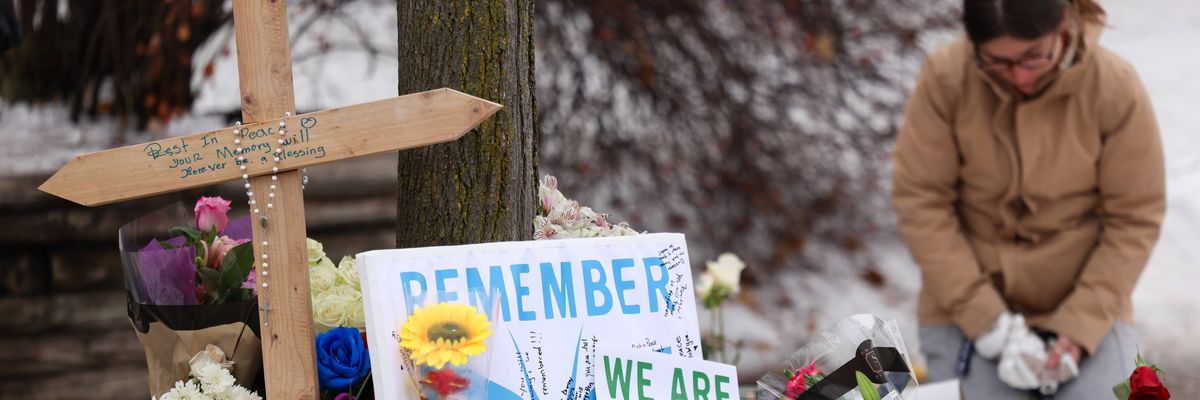
People gather at a makeshift memorial for 37-year-old Renee Nicole Good, who was shot and killed at point blank range on January 7 by a US Immigration and Customs Enforcement (ICE) agent as she apparently tried to drive away from agents who were crowding around her car, in Minneapolis, Minnesota, on January 8, 2026. (Photo by Charly Triballeau / AFP via Getty Images)
One of the hardest tasks we face collectively is identifying the moment when we have passed a point of no return. It isn’t a question of simply identifying the crises. These are clear and plenty. The question is: when have we shifted into a form no longer recognizable to ourselves?
In the span of one week, we have watched more of the unthinkable unfold, earthshattering moments piling up. It is only a week into a new year, yet we are already exhausted by 2026. The US government abducted the president and first lady of Venezuela in violation of every norm established through the UN to hold our fragile world together. Trump has reached beyond the bounds of international law with such brazen contempt that even the pretense of world order has shattered.
And in that same week, on a snowy Minnesota morning, an ICE agent, later identified as Jonathan E. Ross, emboldened by this brutal administration shot Renee Nicole Good through her car window. He shot her through the front windshield. As she slumped forward, he shot her again and again through the side window. He murdered her. And then his fellow ICE officers stood by as she died. They prevented a physician who rushed to help from providing emergency care, when the physician asked if he could check for a pulse, ICE agents refused and said “I don’t care” as Renee bled out.
This Is Who We Are Now
Renee had dropped her children off at school that morning. She drove with her partner and their dog to be a legal observer, to ensure there would be witnesses to the illegal acts happening around our country. She drove toward the vulnerable, members of her community who were being targeted by masked thugs, to make sure they were not alone. And she was murdered for it.
We will organize. We will refuse. We will not fund our own terror.
The ICE officers near her did nothing to try to revive her. Nothing to keep her alive. They barred those around her from helping. The shooter simply walked away, gazed at his phone flippantly, got in a car, and drove off.
So who are we? Are we Renee Good, whose children’s toys were squeezed into every crevice of her car, who understood that when neighbors are under attack, showing up to bear witness is not optional, rather, it is our obligation? Or are we the masked agent who carelessly takes a gun and shoots an unarmed witness in the head?
The Architecture of Exclusion
What we are witnessing is what social psychologist Morton Deutsch called moral exclusion—the process by which we come to see more and more people as undeserving of rights, as outside the sphere of justice. When people are morally excluded, their mistreatment becomes justifiable. Their discrimination becomes policy. Their exploitation becomes economic strategy. Their murder becomes enforcement.
The ICE agents who killed Renee and prevented anyone from saving her life had excluded her from their moral community. She was not a mother to three children. Not a neighbor. Not a beloved partner and precious daughter to her mom and dad. Not a person worthy of life-saving intervention. She was disposable.
This is not new in America. We have always had these ebbs and flows, moments when fascistic violence surges and moments when it recedes just enough for us to pretend it’s over. For the majority of this country’s history, Black and brown people were morally excluded by white people. And white people learned to accept this. We became numb to it. Look at who fills our prisons: the majority are Black and brown people. We have been complicit in building and funding a system that treats Black and brown lives as disposable. We pay our taxes knowing where they go. We see the incarceration rates and do nothing.
The moral universe in the eyes of the state has always been small. What is happening now is that it is shrinking further, faster. The violence we accepted against Black and brown communities is expanding. Fascism is here.
Funded By Our Money
It is critical for us to understand that we are the ones funding this. Soon we’ll be filing our taxes. Many of us, including those who are undocumented and continue to work and pay taxes, are funding the very system that is murdering our neighbors.
When we seek funding for education, for healthcare, for research, we are really asking for our own money back. Instead, anything that benefits us is being diminished and defunded by the Trump administration. Anything that supports our quality of life, our thriving, our children is being stripped away. And our taxpayer money is being used to fund thugs who are murdering Renee, who are abducting our neighbors, who are terrorizing our communities.
The same money that could be ensuring every child has what they need to learn is instead arming untrained ICE agents who shoot mothers in front of witnesses. The same money that could be providing healthcare is instead funding mass deportation operations. The same money that could be supporting research and innovation is used to blow up boats in the Mediterranean.
The Point of No Return
This is a watershed moment. This is the point of no return.
Until now, we at least had a story. Even if for Black and brown Americans, for poor Americans, equal rights were always an empty promise, we had a story of America that mattered to the world.
I know because it mattered to me. As a little Hungarian girl under Ceaușescu in Romania, I believed in a place where you could be an ethnic minority without persecution, speak your language without criminalization, name histories without being targeted. It is all so complex, and really both things were simultaneously true. The dream was real even when the reality fell devastatingly short. That dream saved lives. Saved my life. It animated people risking everything, crossing deserts, floating across seas, to reach what America promised to be.
Now that story is gone. The norms are being exploded and we are being exploded along with it.
When the institutions fail, when the story shatters, ordinary people must become what we thought the country would be. Renee Good understood this. She showed up to protect the persecuted because no one else would.
In the face of fascistic terror, there are always people who crumble and people who refuse. Renee refused. She refused to look away. She refused to let the vulnerable face terror alone. And for that refusal, she was murdered.
Refusing to Fund Our Own Terror
We cannot afford to crumble. We must refuse. We must show up more, not less.
This means becoming sanctuary. Houses of worship, community centers, neighborhoods. When ICE comes, we document, witness, disrupt. We block deportation buses. We make this machinery of exclusion slower, harder, more costly to operate. Civil disobedience is a moral requirement now. We do more after Renee’s murder, not less.
This means we have power. Take it back. Build mutual aid networks. Fund bail funds, legal defense, sanctuary. Take care of each other when the government we fund refuses to.
Demand it back. Call every elected official. Tell them: not one more dollar for ICE. Not one more dollar for detention centers, where 32 people died in 2025 while in ICE custody. Not one more dollar to militarize our communities. Every dollar used to fund this violence is stolen from us. We will organize. We will refuse. We will not fund our own terror.
We will not buckle before the masked cowards who murder our neighbors. Like Renee, we show up. We build sanctuary. We make our communities ungovernable to fascism.
This is the point of no return. We are the ones who refuse.
Our work is licensed under Creative Commons (CC BY-NC-ND 3.0). Feel free to republish and share widely.
Emese Ilyés Emese Ilyés is a critical social psychologist and participatory action researcher whose work examines community resistance and collective survival in the face of authoritarianism. Her research focuses on grassroots movements and mutual aid networks. Full Bio >
Progressive Groups to Lead ‘ICE Out for Good’ Weekend Rallies After Renee Good Killing
“They have literally started killing us—enough is enough,” said one campaigner.
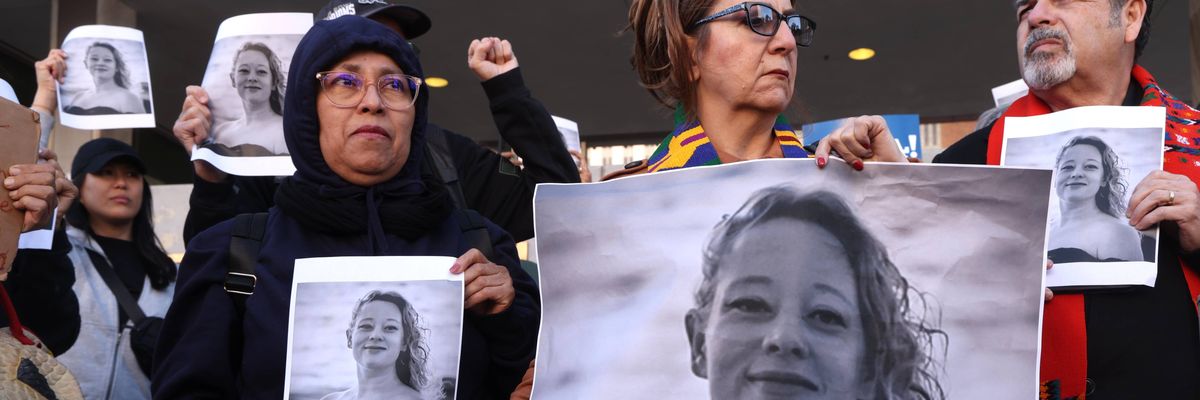
Protesters hold photos of Renee Nicole Good, who was shot and killed by a federal immigration officer in Minneapolis, outside the Federal Building in downtown Los Angeles on January 8, 2026. (Photo by Genaro Molina/Los Angeles Times via Getty Images)
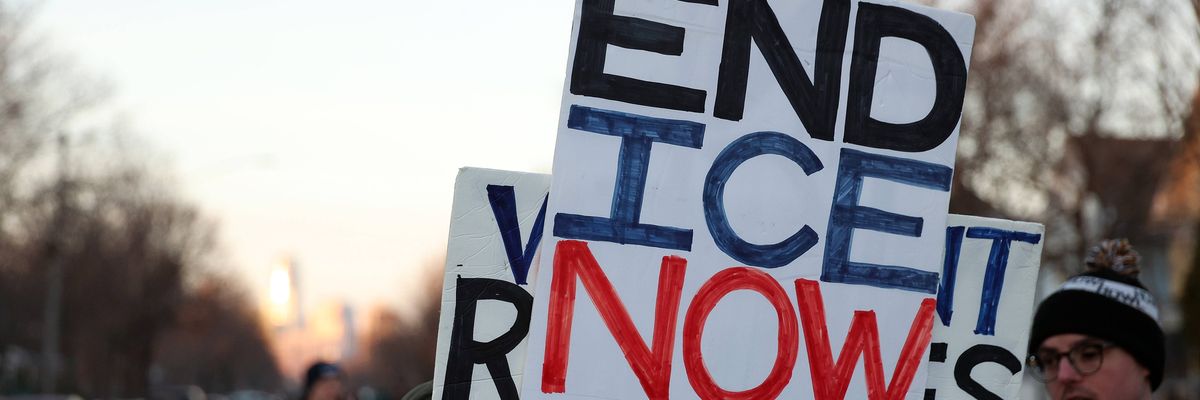
Progressive advocacy groups are set to lead nationwide rallies this weekend to protest Wednesday’s killing of Renee Good by an immigration officer in Minneapolis and the Trump administration’s wider deadly mass deportation campaign.
Groups including 50501 Movement, Indivisible, the Disappeared in America campaign, MoveOn, the ACLU, Voto Latino, and United We Dream are planning demonstrations across the country to protest the killing of Good and what Indivisible called the “broader pattern of unchecked violence and abuse carried out by federal immigration enforcement agencies against members of our communities.” RECOMMENDED...
Good, a US citizen, was shot multiple times by veteran Immigration and Customs Enforcement (ICE) deportation officer Jonathan Ross on Wednesday while driving in south Minneapolis. Bystander video shows Good slowly maneuvering a Honda Pilot SUV in an apparent effort to drive away from officers when Ross draws his pistol and fires at her head.
President Donald Trump and senior members of his administration quickly spread lies about Good, with the president saying she “ran over” Ross and Homeland Security Secretary Kristi Noem and others accusing the 37-year-old mother of three—one of whose children is now orphaned—of “domestic terrorism.”
“After ICE executed Renee Nicole Good in Minneapolis and federal agents shot two more people in Portland, the 50501 Movement is demanding the immediate abolition of ICE,” 50501 said in a statement Friday. “Renee Nicole Good and the Portland victims are just the most recent victims of ICE’s reign of terror. ICE has brutalized communities for decades, but its violence under the Trump regime has accelerated.”
“Marginalized communities have taken the brunt of their force; in 2025, at least 32 people died in ICE custody,” 50501 added. “This past September, ICE shot and killed Silverio Villegas González, a father and cook from Mexico who was living in Chicago. In that same city, a Border Patrol agent celebrated after repeatedly shooting and injuring Marimar Martinez. The American people have had enough.”
The ACLU said in a statement that “an ICE agent killed Renee Nicole Good, a 37-year-old Minneapolis mother, shooting her three times in the head through her car window. This is a reckless, horrific shooting that should have never happened.”
“Renee’s killing came just one day after the Trump administration stormed Minnesota communities with an unprecedented 2,000 federal agents. Children are afraid to go to school and Minnesota families are reeling from fear and a sense of chaos,” the group continued. “For months, the Trump administration has been deploying heavily armed federal agents into our communities. They are smashing car windows, dragging people from their cars, zip-tying children, and physically harming our neighbors—citizens and noncitizens alike.”
“We can’t wait around while ICE harms more people,” the ACLU added. “Congress MUST demand an end to these reckless immigration raids, and oppose any bill that would add to ICE’s already massive budget.”
United We Dream said that Good’s “brutal killing is a horrifying reminder of the threat armed forces pose to our collective safety, especially at a time when local, state, and federal officials have consistently called on the federal government to invest in the resources working families truly need—healthcare, housing, access to food—instead of indiscriminate terror in our communities.”
“In 2025 alone, 32 people died in immigration detention,” the group added. “Billions poured into immigration raids for the sake of ripping apart communities in cities like Los Angeles, Chicago, and Minneapolis does nothing but lead to irreparable damage, violence, and death. We demand an immediate end to this cruelty and for elected leaders at every level to speak out in defense of immigrant communities and our shared safety.”
MoveOn argued that “the Trump administration is not making anybody safe—they are creating chaos and destroying lives.”
“You don’t raid peaceful cities, schools, libraries, and churches unless your goal is to terrorize communities and silence dissent,” the group added. “MoveOn is outraged and devastated that the unnecessary, reckless, and escalatory deployment of ICE is causing even more senseless killings. Trump’s ICE agents need to follow the advice of local officials and leave Minnesota immediately.”
Represent Maine, an “ICE out for Good” national coalition partner, said in a promotion for a Saturday noon rally in Augusta that “ICE’s campaign of terror is out of control and leading to the murder of our people.”
“Entire communities are being traumatized,” the group continued. “Immigrants, refugees, and American citizens are being targeted. This is not normal border enforcement: This is state violence.”
“We will gather to remember those who have been killed, kidnapped, and disappeared by ICE, and the families and communities devastated in their wake,” Represent Maine added. “We demand ICE out of Maine NOW!”
Dan Harmon of 50501 Minnesota said Friday, “They have literally started killing us—enough is enough.”
“We are a peaceful and community-oriented state that will not allow the violent ICE secret police to continue kidnapping our neighbors and killing our friends,” he said. “Immediately after the shooting, hundreds of Minnesotans gathered to respond on site, just as we did in 2020 after officer Derek Chauvin murdered George Floyd.”
“ICE must be removed from Minnesota and permanently abolished,” Harmon added.
The Killing of Renee Good Should Change How We Talk About ICE
Renee Good deserved to live. Her death should not be explained away or absorbed into process language. It requires accountability. A demonstrator holds a sign during a vigil following a shooting by an ICE agent during federal law enforcement operations on January 7, 2026 in Minneapolis, Minnesota. (Photo by David Berding/Getty Images)
Renee Good was killed under a Trump administration that expanded ICE’s authority and encouraged aggressive enforcement nationwide.
Words matter. When we soften them, we make it easier to look away.
Renee Good was killed during an Immigration and Customs Enforcement (ICE) operation in Minneapolis, not far from where George Floyd was murdered on May 25, 2020. Many people in this city recognize what happens after state violence occurs. We have seen how language is used to slow things down and move attention elsewhere.
As I write this, ICE activity continues across Minneapolis. American citizens were picked up and detained at a local Target. Less than two miles from where Renee Good was killed, ICE agents detained two staff members at Roosevelt High School in South Minneapolis, where I went to school. Shortly after, the school went into lockdown. The library across the street closed. Schools across the city were closed for the rest of the week.
These actions affect far more than the individuals detained. They interrupt schools, workplaces, and daily life. They place entire neighborhoods in a state of fear.
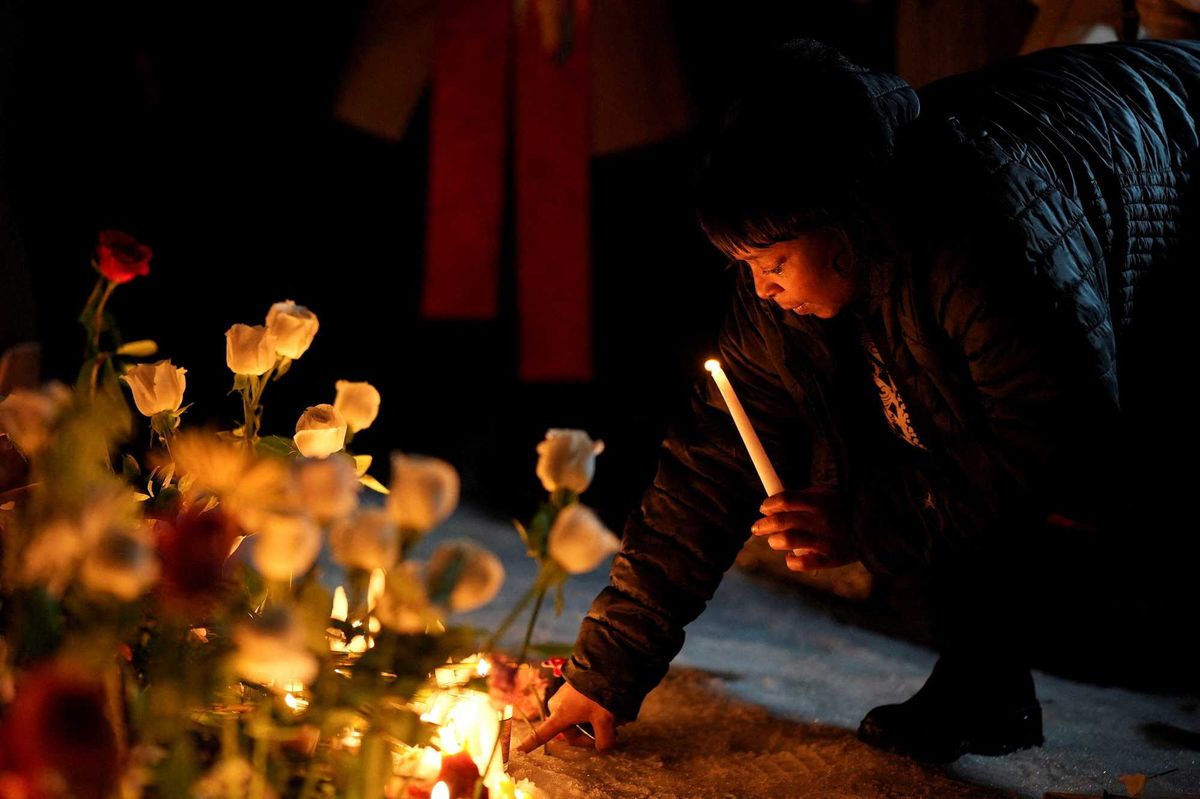
Wednesday night, we went to the vigil for Renee Good. We stood on ice and snow where she had been killed only hours earlier. People came quietly. Many did not know what to say. The weight of what had happened was still there.
The response from authorities has raised serious concerns. Federal agencies have taken control of the investigation and have not allowed the Minnesota Bureau of Criminal Apprehension, the Minneapolis Police Department, or the Hennepin County Sheriff’s Office to conduct their own independent investigations.
We continue to urge state and local authorities to investigate and to document what happened in pursuit of the (T)ruth. The (T)ruth does not lie. We know what we saw, just as we knew what we saw on May 25, 2020. Communities do not forget what they experience firsthand.
At CAIR-Minnesota, we work with families who adjust their lives to avoid harm. Parents change routines. Workers stay silent about exploitation. Survivors hesitate before calling for help because they are unsure who will respond. This is the reality many people live with when ICE operates without accountability.
Renee Good was killed under a Trump administration that expanded ICE’s authority and encouraged aggressive enforcement nationwide. Across the country, ICE has been doing the unimaginable, often without transparency and with serious consequences for communities.
Renee Good deserved to live. Her death should not be explained away or absorbed into process language. It requires accountability.
We have been here before.
We know what unchecked power looks like.
We will overcome.
We will see to it. As God is our witness.
Our work is licensed under Creative Commons (CC BY-NC-ND 3.0). Feel free to republish and share widely.
Renee Good Died From the Kind of State Violence Our Founders Warned Against
When state authority stops serving the people but instead lords over them, stops being questioned by the media and the people, and stops fearing consequences because it lives behind a shield of immunity, a police state is inevitable.
Protesters gather in Minneapolis after 37-year-old Renee Nicole Good was fatally shot by an Immgration and Customs Enforcement officer in Minnesota, United States on January 8, 2026. (Photo by Mostafa Bassim/Anadolu via Getty Images)
When I read that the young mother who was executed at point-blank range by one of President Donald Trump’s Immigration and Customs Enforcement goons on Wednesday was named Renee Nicole Good, it sent a chill down my spine.
As the pain and outrage was washing through me, it also struck me as almost too much of a coincidence that she was there protesting state violence and Ben Franklin had been using the name “Silence Dogood”—as in “Do Good”—to warn American colonists about the very same dangers of state violence.
When 16-year-old Franklin slipped his first Silence Dogood essay under the door of his brother’s print shop in 1722, America had few police departments, no body cameras, no qualified immunity, and few militarized patrols prowling city streets. But young Franklin already understood the danger.
Writing as a fictional widow, Franklin warned that “nothing makes a man so cruel as the sense of his own superiority.” The remark was in the context of self-important ministers, magistrates, and petty officials, but he was also talking about raw state power itself as we saw with the execution of Renee Nicole Good.
If we want to live in the democratic republic Franklin, Paine, and Madison imagined where power is given by “the consent of the governed,” then outrage isn’t enough.
Power that is insulated, Franklin taught, answers only to itself and believes its very authority excuses the violence it uses.
Franklin’s insight didn’t die on the printed page but, rather, became the moral backbone of the American Revolution. As Do-Good, he repeatedly cautioned us that power breeds cruelty when it’s insulated from consequence, that authority becomes violent when it believes itself superior, and that free speech is usually the first casualty of abusive rule.
In “Essay No. 6”, in 1722, Dogood wrote: Whoever would overthrow the Liberty of a Nation must begin by subduing the Freeness of Speech.
Renee Nicole Good was on that Minneapolis street to express her freedom of speech, her outrage at the crimes, both moral and legal, being committed by ICE on behalf of Donald Trump, Tom Homan, Kristi Noem, and Stephen Miller.
Thomas Paine took Franklin’s warning and sharpened it into a blade. Government, Paine said, is a “necessary evil” but when it turns its legally authorized violence against its own people, it becomes “intolerable.” Authority doesn’t legitimize force, Paine argued; instead, the ability to use force without accountability inevitably corrupts authority.
And here we are. This is the ninth time ICE agents have shot into a person’s car, and the second time they’ve killed somebody in the process.
For Paine, violence by agents of the state isn’t an aberration, it’s the default outcome when power concentrates without clear accountability. Where Franklin warned about cruelty born of a sense of superiority (as armed, masked white ICE officers search for brown people as if they were the Klan of old), Paine warned us that force will always be directed against the governed unless that power is aggressively constrained.
James Madison—the “Father of the Constitution”—then took both men at their word. He didn’t design a constitution that assumed virtue; instead, he designed one that assumed abuse.
“If men were angels, no government would be necessary,” he wrote in Federalist 51, adding, “You must first enable the government to control the governed; and in the next place oblige it to control itself.”
Because we and our politicians and police aren’t angels, Madison pointed out, state power must be restrained, divided, watched, and continuously challenged. Which is why the Framers of the Constitution adopted the checks-and-balances system—splitting the government into three co-equal parts—that Montesquieu recommended, based on what he had learned from the Iroquois (as I lay out in The Hidden History of American Democracy).
Franklin himself became even clearer about the threat of unaccountable state-imposed violence as he aged. Governments, he repeatedly warned, always claim violence is necessary for safety and we saw that Wednesday when puppy-killer Kristi Noem claimed that Renee Good was a “domestic terrorist.” Her comment is the perfect illustration of Franklin’s assertion that state violence, once normalized, always tries to claim justification.
To add insult to murder, Trump pathetically waddled over to his Nazi-infested social media site and claimed: The woman driving the car was very disorderly, obstructing and resisting, who then violently, willfully, and viciously ran over the ICE Officer, who seems to have shot her in self defense. Based on the attached clip, it is hard to believe he is alive, but is now recovering in the hospital… [T]he reason these incidents are happening is because the Radical Left is threatening, assaulting, and targeting our Law Enforcement Officers and ICE Agents on a daily basis.“
Silence Dogood would have confronted him head-on, as she-Franklin repeatedly did with the petty, self-important officials of colonial New England. He repeatedly noted that surrendering liberty for a little temporary security not only doesn’t prevent state brutality but actually it invites it. In a 1759 letter, Franklin explicitly warned us about men like Donald Trump and the siren song of “law and order”: Those who would give up essential Liberty, to purchase a little temporary Safety, deserve neither Liberty nor Safety.
Once a state teaches its agents that force is the solution, force becomes their habit. That’s how police states are formed out of democracies, as the citizens of Russia, Hungary, and Venezuela have all learned. And now, it appears, we’re learning as America becomes the world’s most recent police state.
This isn’t an uniquely American problem: It’s older than our republic. And Franklin told us exactly how it happens: When state authority stops serving the people but instead lords over them, stops being questioned by the media and the people, and stops fearing consequences because it lives behind a shield of immunity, a police state is inevitable.
As Minnesota Gov. Tim Walz noted Wednesday, the killing of Renee Nicole Good in Minneapolis wasn’t a “tragic anomaly.” It was the predictable outcome of systems Franklin would have recognized instantly; the kind of corrupt strongman systems that reward domination, excuse cruelty, and punish dissent.
Trump wants us on the “radical left” to shut up and go away. But Ben Franklin taught us that silence in the face of power isn’t neutrality but is, instead, an extension of permission. He wrote as Silence Dogood precisely because he understood that abuse flourishes when citizens turn their eyes away and lower their voices.
If we want to live in the democratic republic Franklin, Paine, and Madison imagined where power is given by “the consent of the governed,” then outrage isn’t enough. We must demand accountability, insist on transparency, and refuse to accept state violence and a firehose of official lies as the price of order.
Three centuries ago, a teenage printer’s apprentice warned us that silence enables abuse. He was right then. He is right now.
Our work is licensed under Creative Commons (CC BY-NC-ND 3.0). Feel free to republish and share widely.
Thom Hartmann Thom Hartmann is a talk-show host and the author of "The Hidden History of Monopolies: How Big Business Destroyed the American Dream" (2020); "The Hidden History of the Supreme Court and the Betrayal of America" (2019); and more than 25 other books in print. Full Bio >
Trump and his vile liars forget one vital thing about the ICE victim they smear
A vigil for Renee Nicole Good, victim of the Minneapolis ICE shooting. REUTERS/Tim Evans
One of the most disturbing things about the Trump administration’s response to the shooting death of Renee Nicole Good in Minneapolis isn’t just that they’re lying. It’s how easy the lying seems to be. It starts at the top, with the liar-in-chief, and trickles down through a dishonest and delusional cabinet.
They didn’t hesitate. They didn’t hedge. They didn’t wait for the facts. One wonders if they even watched the video evidence, because they contradicted it without blinking. Within hours, officials confidently described Good as a “domestic terrorist” who used her vehicle as a “weapon.”
Trump and his allies are inventing threats that simply do not appear in the footage all Americans can watch. The certainty with which they spew these fabrications tells you something important: they believe this strategy works. And that belief has less to do with the facts than with who Renee Good was.
She wasn’t famous. She didn’t hold office. She wasn’t wealthy or politically connected. She didn’t have a MAGA bumper sticker on her SUV.
She was a woman — that’s important. She was a mom, a neighbor, a queer woman married to another woman. She was living an ordinary suburban life. She was like millions of women across this country.
Good had no institutional power. No connections. She was harmed by the state, by Trump’s Gestapo, and her life was immediately sexualized, and flattened into justification. When armed ICE agents — all men — surrounded her car, one trying to open the door, she was terrified in a way most can easily imagine. She did what anyone would do: she tried to get away.
She had undoubtedly heard stories about rogue male ICE agents, how many have no law enforcement experience. How many can barely read or write. Fear had been planted. And that fear, entirely unnecessary, deliberately cultivated, sealed her fate.
After her death, Trump and his fellow misogynists turned that fear into “aggression.” Her confusion became “instability.” Her ordinariness became the excuse. The killing itself was treated as less important than protecting the thuggish authorities who carried it out.
That pattern explains why this administration dug in so quickly and so deeply. Lying about Renée Good was easy. It came from muscle memory. JD Vance said it was a “tragedy of her own making.” Trump said, “She behaved horribly.” Kristi Noem said, “She rammed [ICE agents] with her vehicle.” Notice the prevalent use of the female pronouns.
This response fits a posture toward women that runs through Trumpworld. Vance has built a political identity around belittling women’s judgment and independence. Defense Secretary Pete Hegseth has denied multiple allegations from women, including sexual assault. This week he announced a review of women’s role in combat, having said they don’t belong there.
As for Trump, he has been accused by numerous women of sexual assault and was found liable for sexually abusing and defaming journalist E. Jean Carroll. He has spent years smearing women who challenge him as “liars,” “nasty,” “pigs,” “dogs,” “slobs,” and “disgusting animals.”
The women in his administration offer no counterweight. Noem has gone after Good more aggressively than many male counterparts, showing little interest in advocating for women harmed by brutish agents of the state. She has chosen to posture as one of the guys in Trump’s hyper-masculine administration.
In this worldview, women are denied political agency. They are treated as variables to be managed, controlled, or erased.
Add queerness to the picture, and the erasure becomes even easier. The right has spent years portraying queer people, especially the trans community, as threats, criminals, or accessories to violence. Just look what happened after the assassination of Charlie Kirk, when right-wing meda like the New York Post twisted itself in knots trying to make a trans woman an accomplice.
Renée Good’s family? It was almost immediately scrubbed from the official narrative, replaced with a caricature meant to frighten and distract: a wild, antifa-like woman, driving ferociously, hell-bent on killing ICE agents.
The administration didn’t just lie about what happened. It erased who she was.
But there’s one thing they are forgetting: women are watching.
Women are no niche constituency. They are the largest and most decisive voting bloc. In recent elections, women, especially suburban women and mothers, have moved away from Trump-aligned politics, driven less by policy disagreements than by disgust with the cruelty, chaos, and impunity that define this movement.
Women are watching that video. They are reading about Renee Good. They do not see a “domestic terrorist” using her SUV as a weapon. They see someone like themselves. Someone ordinary. Someone who thought that being a law-abiding citizen, a parent, a neighbor, a friend — a soccer mom — would offer at least minimal protection from being lied about after death.
What they see instead is a government telling them not to believe their own eyes, and doing so with absolute confidence. But think of any mother you know. Think of your own mom. Think of your spouse. Women can spot a lie a mile away.
Tracking Trump’s lies used to feel like a never-ending game. It involved tallying exaggerations, fact-checking absurdities. But this is something else. This is lying as domination. It’s sinister. It’s inhumane. It’s vulgar. It’s dangerous. And it involves a human being who meant no harm. A human being who was murdered.
It is unforgivable.
Tragically, Renee Good’s death may not be remembered as the worst abuse of power in this era, or even the worst lie this administration tells. That alone is terrifying. Trump, Noem, Vance — none will show remorse. They will never admit wrongdoing. They will never apologize. Especially not to a woman.
Like every other woman-hater, they will only dig deeper.
But perhaps Renee Good’s death will be remembered as something else. Just maybe, it will be the moment when too many Americans, especially women, realized this administration believes some lives are small enough to lie about, and assumes no one would care.
French Foreign Minister Jean-Noel Barrot warned that the European political order 'is today in danger' - Copyright VATICAN MEDIA/AFP Handout
Delphine Touitou
France has the right to say “no” to its historical ally the United States when it acts in a way deemed unacceptable, the foreign minister said on Friday, warning that the European political order was “in danger”.
In his annual address to France’s ambassadors, Jean-Noel Barrot warned that the European Union was threatened by adversaries from the outside, and also hit back at US claims Europe faced “civilisational erasure”.
European leaders are juggling multiple priorities as they try to come up with a plan to help end nearly four years of Russia’s war against Ukraine and formulate a coordinated response to Washington’s increasingly assertive foreign policy posture including Donald Trump’s designs on Greenland.
Overnight, Russia hit western Ukraine, close to the border with EU and NATO member Poland, with its hypersonic Oreshnik missile after rejecting the latest post-war peacekeeping plan from Kyiv’s European and US allies.
“In a matter of months, the new American administration decided — and that is its right — to rethink the ties that bind us,” Barrot said.
“It is also our right to say ‘no’ to a historical ally, however historical it may be, when its proposal is not acceptable and when we must say ‘no’.”
The EU, he added, was “threatened from the outside by adversaries who are trying to unravel the bonds of solidarity that unite us” and “from within by democratic fatigue”.
“Let’s be clear: nothing guarantees today that we will still be living within the European Union as we know it in 10 years,” he warned.
– No ‘civilisational erasure’ –
France’s top diplomat spoke one day after President Emmanuel Macron warned that the United States was “gradually turning away” from some of its allies and “breaking free from international rules”, offering some of his strongest criticism yet of Washington’s policies under Trump.
“No, European civilisation will not fade away,” Barrot said.
“But yes, our political order is today in danger, despite its precious stability in an unpredictable world, despite its immense scientific, technological, cultural and financial wealth.”
A US national security strategy released in December by Trump’s administration was brutally critical of Europe, describing it as facing “civilisational erasure” from migration and calling for “cultivating resistance” among right-wing parties.
“No, Europe is not on the brink of civilisational erasure, and the presumptuous voices claiming it is would do better to watch out for their own erasure,” the French minister said.
Barrot also warned that the world was “facing the risk of nuclear proliferation” due to the erosion of the legal framework on arms control and the expiration of the New START treaty.
The New START treaty is the last bilateral nuclear arms control agreement between the United States and Russia.
It expires on February 5.
White House UFC cage fight disrupts plans for international gathering: 'Utterly humiliating'
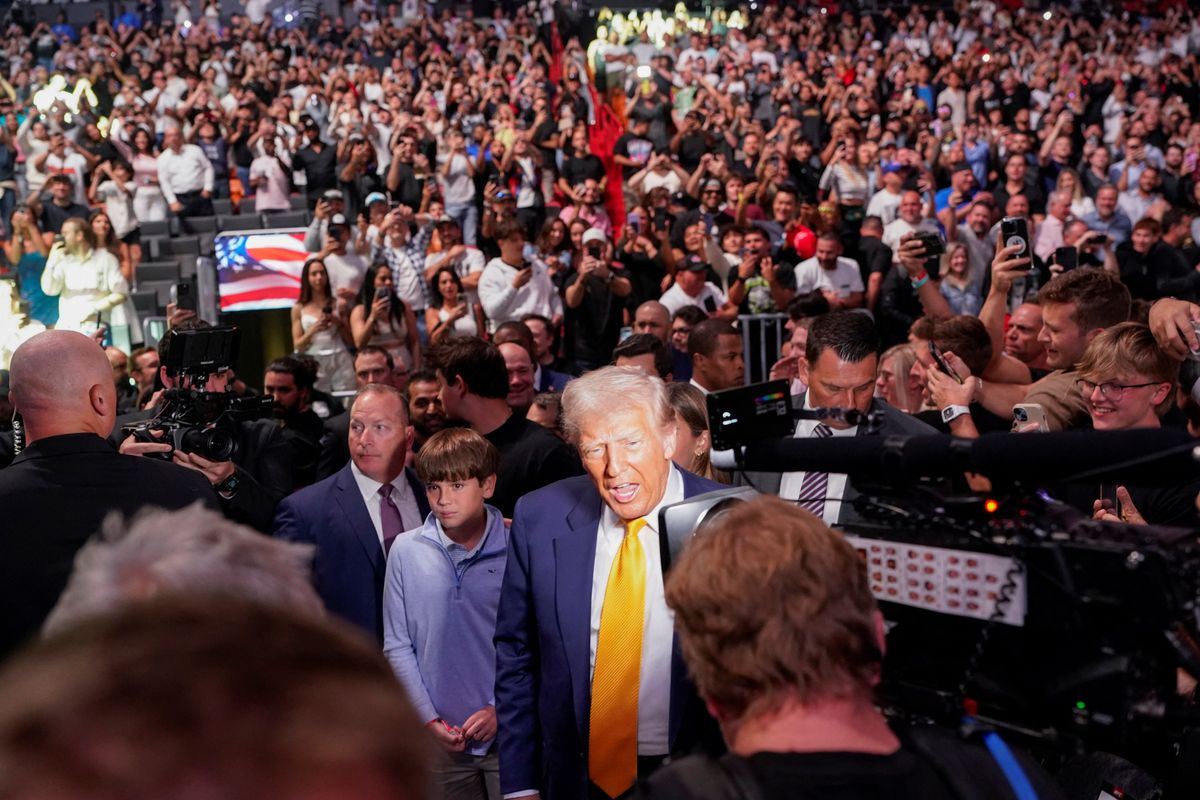
U.S President Donald Trump arrives ahead of UFC 314 at the Kaseya Center, Miami Florida, U.S, April 12, 2025. REUTERS/Nathan Howard
President Donald Trump's cage fighting match on the White House lawn is forcing the rescheduling of a planned international gathering.
France announced it will delay this year's Group of 7 summit to avoid a scheduling conflict with the mixed martial arts event planned June 14 at the White House, two officials with direct knowledge of the planning told Politico.
"This is an actual headline not a joke," posted former GOP congressman Adam Kinzinger in response to the report, which was given the headline "France delays G7 to avoid clash with White House cage fighting on Trump’s birthday."
Paris had previously set the date for June 14 to host the gathering of world leaders in Evian-les-Bains, on the shores of Lake Geneva, but will move the event to June 16.
Trump announced the "big UFC fight" in October, and Ultimate Fighting Championship CEO Dana White said this week that logistics for the event have been finalized.
White told CBS News that organizers expected up to 5,000 people on the South Lawn to watch the fights.
"French President Emmanuel Macron’s office declined to confirm whether the scheduling change was related to the UFC event and the U.S. Embassy in Paris did not immediately respond to a request for comment.
"We are in hell," said activist Deray Mckesson, reacting to the reports.
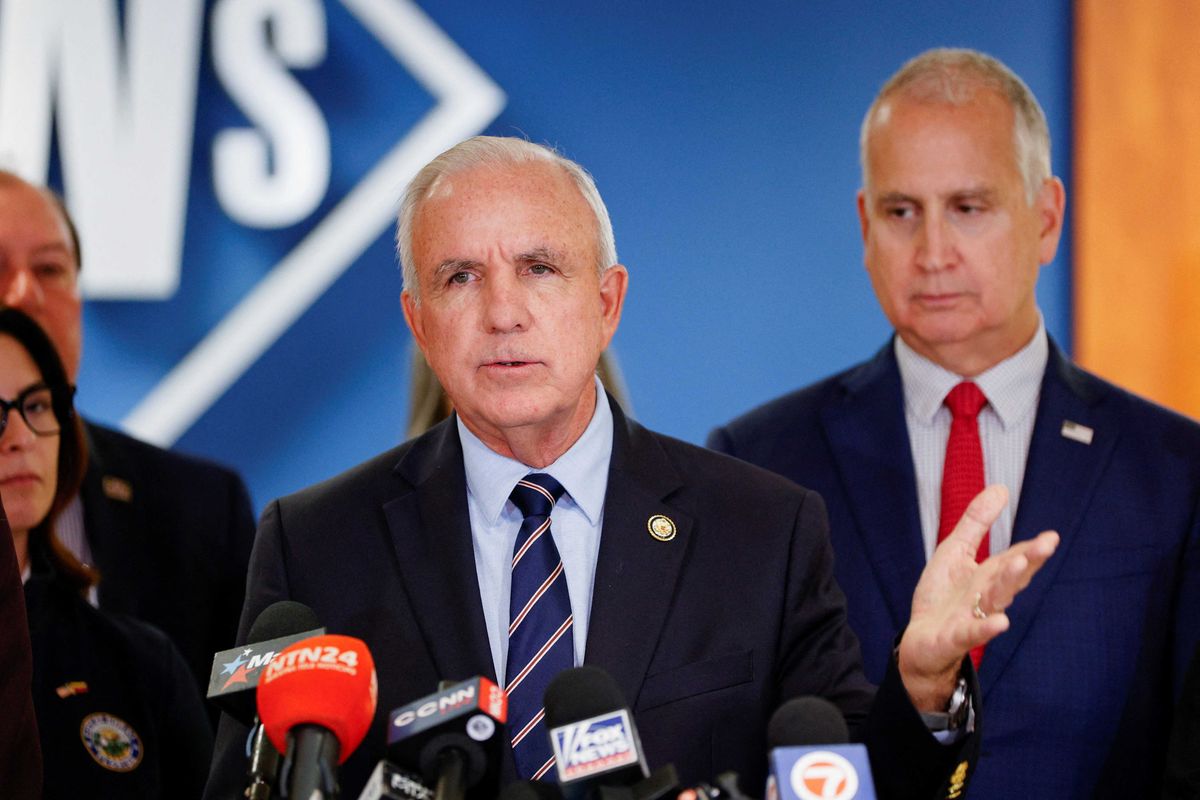
U.S. Representative Carlos Gimenez speaks during a press conference on the U.S. strikes in Venezuela, in Doral, Miami-Dade County, Florida, U.S., January 3, 2026. REUTERS/Marco Bello
Rep. Carlos Giménez (R-FL), a close ally of President Donald Trump, openly cheered the toppling of the Cuban government on Thursday, posting an image on social media of the Caribbean nation plastered with the logos of American companies like Walmart, Exxon Mobil and McDonald’s, leaving onlookers stunned.
“When the inevitable happens in Cuba & the narcoterrorist dictatorship is no more, there won’t be a company that won’t want to invest in the stunning, beautiful island of my birth,” Giménez wrote in a social media post on X. “As President Trump has said: the end is near for these thugs.”
The United States has sought to topple the Cuban government since 1959, when Cuban revolutionaries ousted the U.S.-backed Cuban leader Fulgencio Batista, a brutal dictator who transformed the Caribbean nation into what experts have called a “virtual slave state,” and at the behest of American companies.
The United States has maintained a decades-long embargo on Cuba and, in the past, pursued covert efforts to assassinate the country’s former leader, Fidel Castro. While all efforts to topple Cuba’s government thus far have failed, the recent U.S. attack and takeover of Venezuela – a major energy supplier to Cuba – a number of Republicans say they are more hopeful than ever that Havana’s government could fall.
It was Giménez’s blatant calls for American companies to take root across Cuba, however, that stunned critics online Friday.
“Not satire: A US Congressman and close Trump ally threatens to overthrow Cuba's revolutionary government so US corporations can colonize the country,” wrote journalist Ben Norton, editor of the Geopolitical Economy Report, in a social media post on X Friday.
“When US imperialists say they wage war for ‘freedom,’ they mean this: McDonald's and Walmart. This is whom US politicians serve.”
Others, like Danny Valdes, a Cuban American and organizer with the New York City Democratic Socialists of America, came to a similar conclusion.“After 65 years of strangling Cuba’s economy, they’re openly salivating over carving it up for Exxon, Walmart, and Airbnb,” Valdes wrote in a social media post on X Friday. “That’s not ‘freedom.’ It’s colonialism.”
Trump Vows to ‘Do Something’ With Greenland ‘Whether They Like It or Not’
The Trump administration has been ratcheting up threats against Europe in the wake of its invasion of Venezuela and the abduction of President Nicolás Maduro.
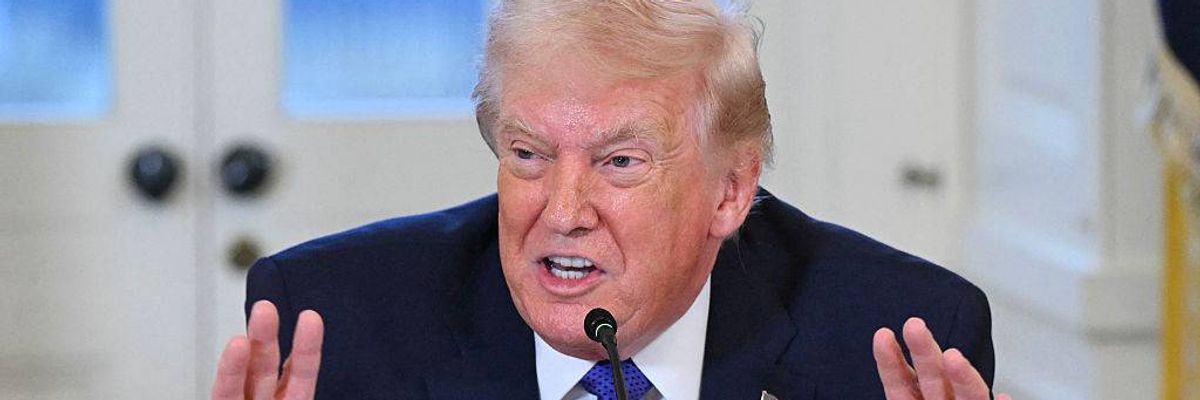
President Donald Trump speaks during a meeting with US oil companies executives in the East Room of the White House in Washington, DC on January 9, 2026. (Photo by Saul Loeb/AFP via Getty Images)
President Donald Trump finished up a busy week by once again leveling threats against longtime allies over their refusal to hand Greenland over to US control.
While taking questions from reporters at the White House on Friday, Trump was asked about a reported plan to win over Greenlanders on joining the US by giving them annual $10,000 payments.
“I’m not talking about money for Greenland yet,” the president replied. “I might talk about that, but right now we are going to do something on Greenland, whether they like it or not.”
Trump then explained his purported rationale for making Greenland a US territory.
“If we don’t do it, Russia or China will take over Greenland,” he said. “And we’re not going to have Russia or China as a neighbor.”
Neither Russia nor China have shown any indication that they want to take over Greenland, which is currently a self-governed Danish territory. Because Denmark is a founding member of NATO, an attack on its territory from Russia or China would trigger a counterattack by all other NATO members, theoretically including the US.
Trump then informed the press that he would “like to make a deal the easy way” to acquire Greenland, before adding that “if we don’t do it the easy way, we’re going to do it the hard way.”
The president then claimed that he was a “fan of Denmark,” even though seconds ago he hinted at using military force to seize their territory.
“The fact that they had a boat land there 500 years ago doesn’t mean that they own the land,” Trump said. “I’m sure we had lots of boats go there also.”
The Trump administration has been ratcheting up threats against Europe in the wake of its invasion of Venezuela and the US abduction of President Nicolás Maduro last week.
Top Trump aide Stephen Miller on Monday refused to rule out using the military to take Greenland, telling CNN host Jake Tapper that “we live in a world... that is governed by strength, that is governed by force, that is governed by power.”
Trump floats shocking new excuse for taking Greenland
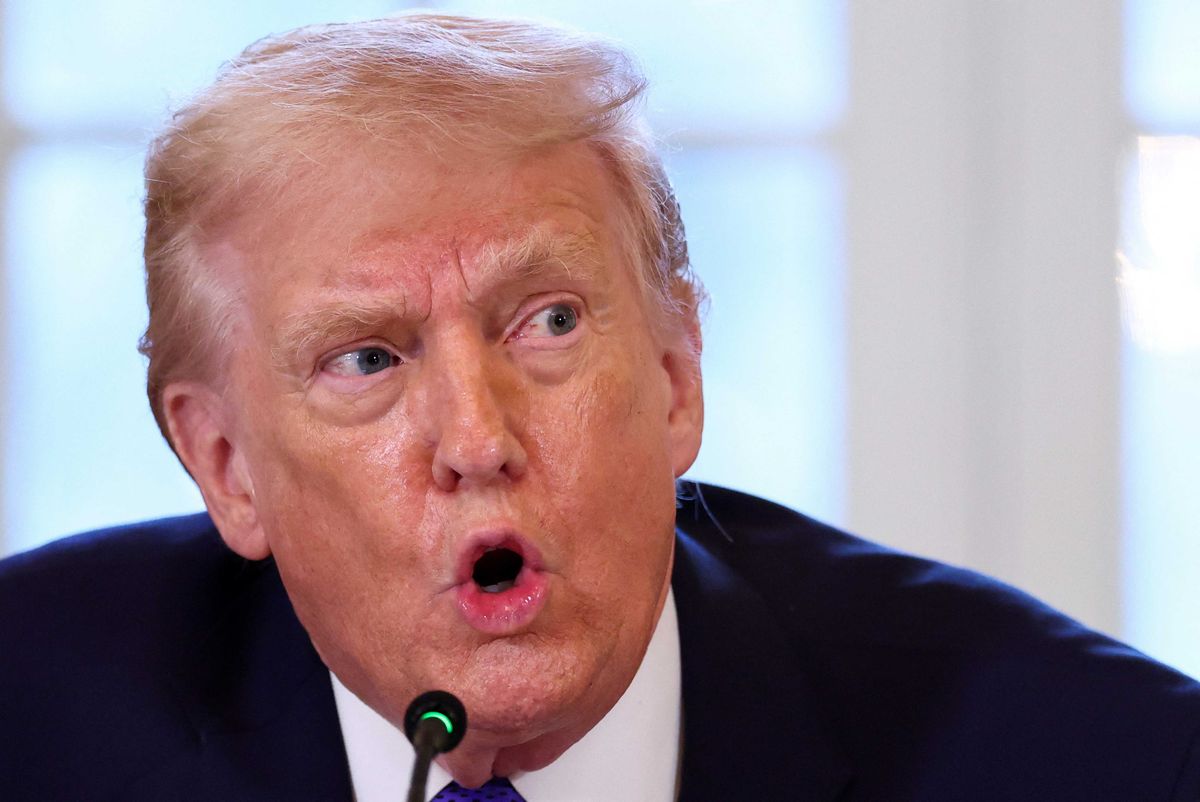
President Donald Trump reacts to a question about the the fatal shooting in Minnesota, in which a U.S. Immigration and Customs Enforcement (ICE) agent fatally shot Renee Nicole Good, as he attends a meeting with oil industry executives, at the White House in Washington, D.C. on Jan. 9, 2026. REUTERS/Kevin Lamarque
President Donald Trump dropped a stunning new excuse for why the United States should take over Greenland Friday.
Trump was meeting with American oil executives over the military incursion of Venezuela and his goals to shift the country's oil production to benefit the U.S. when a reporter asked about Venezuela and if the country would be considered an ally.
"Right now they seem to be an ally and I think it'll continue to be an ally," Trump said. "We don't want to have Russia there. We don't want to have China there. And by the way, we don't want Russia or China going to Greenland, which if we don't take Greenland, you're going to have Russia or China as your next door neighbor. That's not going to happen."
'It would snap our threads': Veteran offers grim prediction about Trump Greenland invasion
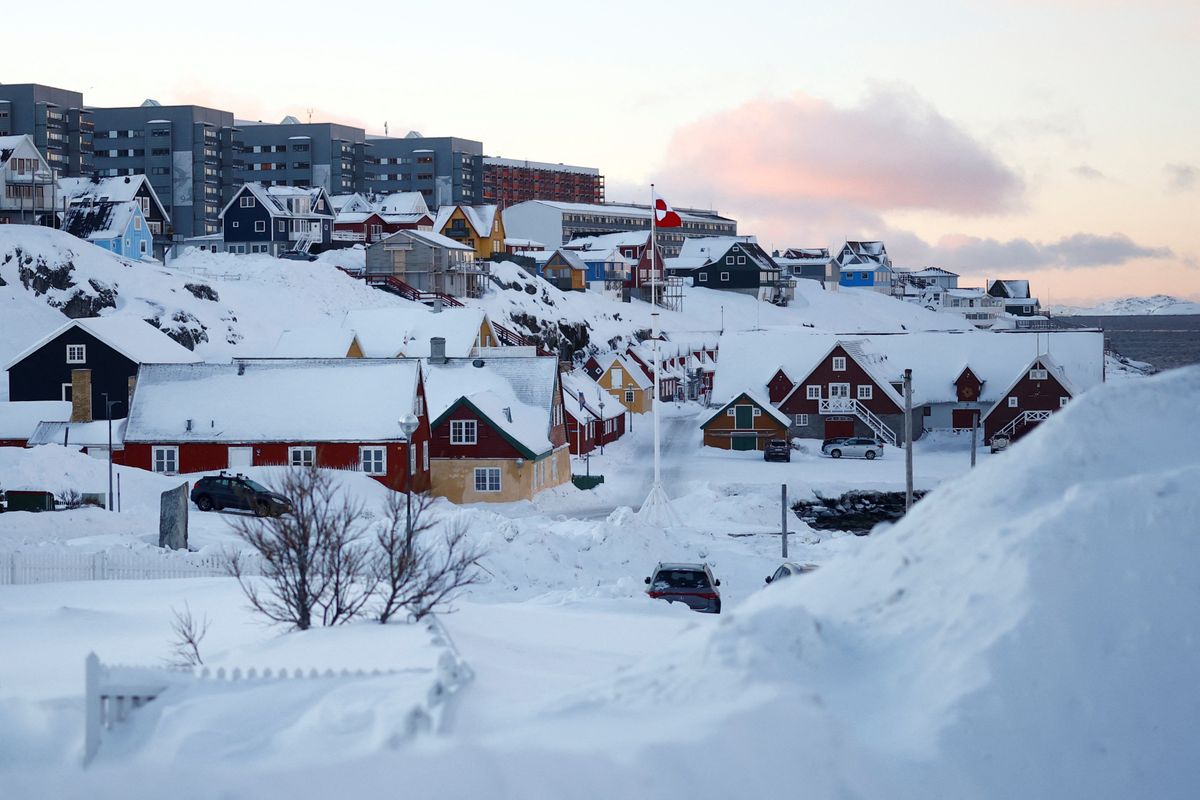
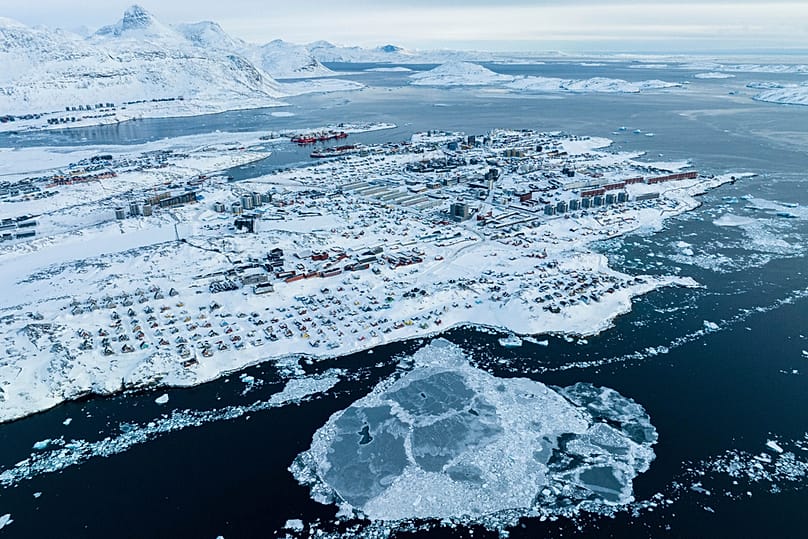
A general view shows Nuuk in Greenland, February 5, 2025. REUTERS/Sarah Meyssonnier
A proposed military action against Greenland would "crumble alliance" with NATO nations and spells disaster for public approval, a veteran has warned.
The White House has suggested acquiring Greenland is a matter of national security, and that they would move to take over the country. This has been met with opposition from both Greenland's officials and Danish members of parliament. Donald Trump and members of the administration are keen to take the country into their possession for matters of national security.
But an Iraq War veteran believes sentiment for the war would be broadly negative, with a "disillusioned" public turning on the administration more than they already have.
Problems could also come with the damage an invasion of Greenland does to NATO members. Patrick Murphy, who served as the 32nd Under Secretary of the U.S. Army and is an Iraq War combat veteran, said a military operation in Greenland would be a point of no return for the US.
He told The Mirror US, "A military takeover of Greenland is certainly possible. But it's absolutely not practical. Military action would put the most strain on Article 5 since the creation of NATO, and it would effectively crumble our alliance. It would snap our last threads of allyship with European nations, and they're our strongest allies."
NATO, the North Atlantic treaty Organization, has 32 member states, 30 of which are in Europe. Article 5 of NATO states that an armed attack against one NATO member is an attack against all.
While military action in Greenland would need congressional approval, it has not stopped some from worrying about how the public mood would turn should such a strike happen.
Murphy said, "I'm hoping this is just irresponsible rhetoric. I hope and pray that America goes back to our roots as a reluctant warrior who honors our NATO commitments with our closest allies."
"The American people are fatigued of conflict abroad and would be further disillusioned by conflict with one of our historic allies." He added that "a majority of Americans understand that Europeans are [our] closest and most reliable allies in this world."
'It may be a choice' between NATO and Greenland, Trump says
Copyright AP Photo
By Euronews
Published on
In an interview published on Thursday, Trump also suggested that NATO is toothless without the US, claiming his own morality guided his decisions on US military actions.
US President Donald Trump said on Thursday that "it may be a choice" for Washington if it were to pick between controlling Greenland and maintaining the NATO alliance, amid a renewed push to acquire the island in the Arctic Circle.
Trump also hinted that the alliance would be toothless without the US.
“I think we’ll always get along with Europe, but I want them to shape up," he said. "If you look at NATO, Russia I can tell you is not at all concerned with any other country but us.”
Speaking days after ordering the operation that removed Venezuela's Nicolás Maduro and issuing threats against multiple nations, Trump said in an interview with the New York Times that his personal sense of right and wrong provides the sole limitation on his authority to deploy US military force globally.
"My own morality, my own mind (is) the only thing that can stop me," Trump said when questioned about constraints on his global military powers.
"I don't need international law," Trump said in an interview with the New York Times, before adding "I do" need to follow it but suggesting the definition remains unclear.
"I'm not looking to hurt people," he pointed out.
Relate
Despite describing himself as a "peace president" and expressing interest in the Nobel Prize, Trump has authorised military strikes in Iran, Iraq, Nigeria, Somalia, Syria, Yemen and Venezuela since beginning his second term.
Following Maduro's capture, Trump has issued warnings to Colombia and renewed demands for Greenland, an autonomous territory within the Kingdom of Denmark, which is part of the NATO alliance.
Trump, who built his wealth through property development, said US control of Greenland represents "what I feel is psychologically needed for success."
Both Denmark and Greenland's governments reject Trump's proposals to purchase or seize the island.
Danish Prime Minister Mette Frederiksen said this week that a military attempt at taking Greenland would mark the end of NATO.
"Greenland belongs to its people. It is for Denmark and Greenland, and them only, to decide on matters concerning Denmark and Greenland," the leaders of France, Germany, Italy, Poland, Spain, the UK and Denmark said in a joint statement this week.
Mining, climate and smokescreens: What's driving Trump's interest in Greenland?
Copyright Copyright 2026 The Associated Press. All rights reserved.
Experts warn that Trump could exploit Greenland for its critical mineral resources, which are seen as “essential” for green energy.
Trump’s growing interest in Greenlandhas highlighted the nation’s largely untapped mineral resources, which many experts argue are key to phasing out fossil fuels.
According to the International Energy Agency (IEA), critical minerals are “essential” for transitioning to a green energy future – used for technologies such as wind turbines and electric vehicles (EVs).
Acquiring Greenland may help the US reduce its dependency on China, but is Trump’s plan really that simple?
Greenland’s critical minerals
A 2023 survey found that 25 of the 34 minerals deemed “critical raw materials” by the European Commission were found in Greenland. The nation is estimated to hold between 36 and 42 million metric tons of rare earth oxides, making it the second-largest reserve after China.
The IEA says that lithium, nickel, cobalt, manganese and graphite are “crucial” for battery performance, while rare earth elements are used to make powerful magnets found in wind turbines and EV motors. Electricity networks also need huge amounts of aluminium and copper.
The global rare earth elements market is growing in tandem with the green energy boom and is expected to be worth over €6.5 billion this year. It makes the autonomous island particularly appealing to the US, which is 100 per cent reliant on imports for 12 minerals deemed criticalfor the economy and national security by the US Geological Survey
Tapping into these resources could help the US reduce its dependency on China, which currently processes over 90 per cent of the world’s rare earth minerals, and empower the US as demand rises.
Relate
According to the Centre for Strategic and International Studies (CSIS), the US “cannot preserve” its leadership in national security, economic competitiveness or energy resilience while remaining dependent on foreign adversaries for critical minerals.
It’s a problem Trump has been trying to tackle since his first time in office. In March 2025, he signed an executive order to take “immediate measures” to increase American mineral production to the “maximum possible extent”.
The POTUS used the Defense Production Act to provide loans to boost the domestic mining industry and cut the red tape stalling projects. It also allowed federal agencies to prioritise federal lands for mining over other uses.
Last year, Trump also signed an executive order aimed at stepping up deep-sea miningwithin both US and international waters as his country races to become what it describes as a “global leader in responsible seabed mineral exploitation”.
Just last month, the US Department of State struck a deal with the Democratic Republic of the Congo, which holds more than 70 per cent of the world’s cobalt. The partnership will increase the level of US private sector investment in the mining sector while upholding “responsible stewardship” in the management of mineral resources.
Does Trump want to mine in Greenland?
Greenland currently lacks the infrastructure needed to support industrial-scale mining. Due to its harsh climate, it is also only mineable for six months out of the year.
Analysts estimate that extracting Greenland’s minerals would therefore cost “billions upon billions upon billions” and would be a logistical nightmare.
As Nick Bæk Heilmann, a senior associate at Kaya Partners, a business consultancy operating in Greenland, points out, Greenland isn’t the only nation sitting on critical minerals.
“I would strongly argue that minerals are not the driving force in the US quest for control and acquisition of Greenland,” he says. “That’s because Greenland is open for investments and mining. In Greenland there’s general social licence to mine, which is very important. The US does not need to acquire Greenland.”
Critical minerals also sell at “extremely low prices”, which Heilmann argues quashes the business case.
Are critical minerals needed to meet climate goals?
The demand for critical minerals has triggered concern from climate groups around the ethical and environmental impacts of mining, both on land and on the seabed.
Trump has also moved to accelerate deep-sea mining. In April 2025, he signed an executive order instructing the Secretary of Commerce to “expedite the process for reviewing and issuing seabed mineral exploration licences and commercial recovery permits in areas beyond national jurisdiction under the Deep Seabed Hard Mineral Resources Act”.
It means the US has side-stepped ongoing talks with the UN’s International Seabed Authority (ISA), which has agreed a moratorium on seabed mining pending negotiations.
Last month, Norway postponed its plans to dig up the seabed in search of critical minerals, after becoming the first country in the world to greenlight the practice.
Still, the country has allowed for around 280,000 square metres of its national waters – located between Svalbard, Greenland and Iceland – to eventually be opened to collect rocks containing cobalt and zinc.
Norway has long echoed the argument that these minerals are needed to lead a “green transition”. However, a 2024 report published by the Environmental Justice Foundation found that deep-sea mining isn’t necessary for a fossil fuel-free world.
It predicts that a combination of new technology, a circular economy and recycling could cut demand for minerals by 58 per cent between 2022 and 2050.
The foundation’s CEO and founder, Steve Trent, says deep-sea mining is a pursuit of minerals we don’t actually need that risks environmental damage “we can’t afford”.
“We know so little about the deep ocean, but we know enough to be sure that mining it will wipe out unique wildlife, disturb the world’s largest carbon store, and do nothing to speed the transition to clean economies,” he adds.
A smokescreen for other plans?
Experts caution against interpreting Trump’s interest in Greenland primarily through the lens of climate policy or the green transition
They argue that, while these critical minerals have featured prominently in US rhetoric, they are not the key driver behind POTUS’s renewed focus on the country.
“This leaves the last, maybe most scary, important driver, which is the expansion of US territory, the idea of manifest destiny, which was also mentioned in Trump’s speech,” Heilmann says.
“We are increasingly convinced that this is the main driver, which is, for Greenland, Denmark, the EU - non-negotiable.”
Others stress that while climate policy may not motivate Trump personally, environmental change is reshaping the strategic context in which decisions are being made.
Jakob Dreyer, a researcher in climate and security politics at the University of Copenhagen, argues that global warming and the green transition are altering the economic logic of the Arctic.
“We cannot fully understand this dynamic without regarding global warming and the impact of the green transition on the global economy,” he explains. With the Arctic warming three to four times faster than the global average, rising temperatures could open new shipping routes and lower barriers to extraction as Greenland’s ice sheets melt.
Ultimately, this is, as Dreyer points out, “improving the business case” for both fossil fuel and critical raw material extraction.
“Trump is sceptical about climate change,” he adds, “but his advisers are not.”
'Appalling' and 'nonsense': Republicans push back against Trump’s Greenland plans
Donald Trump’s proposal to take control of Greenland faces opposition not just in Europe, but in the US – even in Trump’s own Republican Party.
It seems European leaders frantically trying to find ways to save Greenland from Donald Trump can hope for support from the US Congress. Over the past several days, opposition to the White House’s threats to seize the Danish territory has been growing on both sides of the aisle.
While it comes as no surprise that Democrats have largely condemned Trump's designs on Greenland, particularly any use of military force to seize the island, the fact that even leading Republicans are publicly breaking with their president on this issue is highly unusual.
With the November midterm elections coming into focus, this rare show of dissent underscores how seriously Congressional Republicans view the situation.
“This is appalling," Republican Congressman Don Bacon said in a TV interview. "Greenland is a NATO ally. Denmark is one of our best friends… so the way we’re treating them is really demeaning and it has no upside.”
Referring to the Greenland rhetoric as one of the “silliest things” to come out of the White house over the past year, Bacon urged his fellow Republicans to join him in taking a stand
“I hope other Republicans line up behind me and make it clear to the White House this is wrong,” Bacon said.
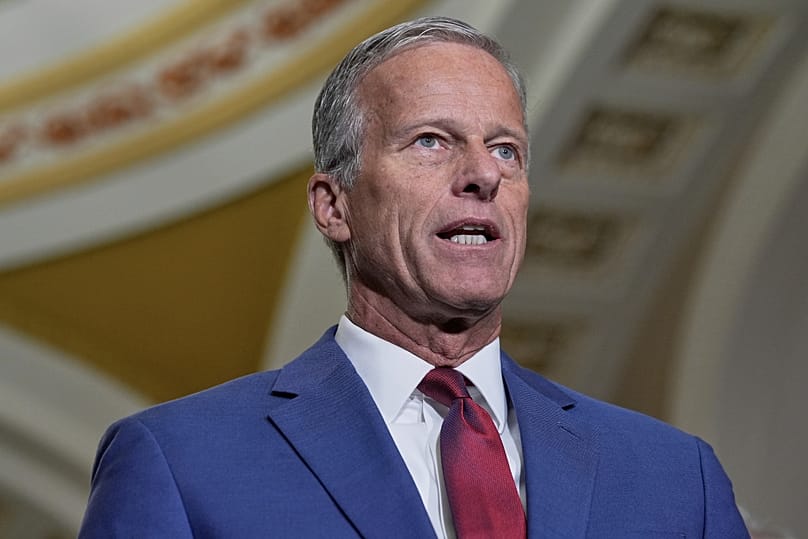
Senate Majority Leader John Thune speaks during a news conference at the Capitol in Washington.(APPhoto/Mariam Zuhaib) AP Photo
Senate Majority Leader John Thune, meanwhile dismissed out of hand the prospect of deploying the military to seize the Arctic island, saying on Tuesday it was “not something that anybody is contemplating seriously.”
Thune’s remarks came after White House Deputy Chief of Staff Stephen Miller used an interview to insist that Greenland should rightfully belong to the US.
“What right does Denmark have to assert control over Greenland? What is the basis of their territorial claim? What is their basis of having Greenland as a colony of Denmark?, Miller said on CNN
Miller’s remarks also prompted a searing speech on the Senate floor by retiring Republican Senator Thom Tillis, the party’s top representative of the Senate NATO Observer Group.
“I’m sick of stupid,” a fiery Tillis said. “I want good advice for this president, because I want this president to have a good legacy. And this nonsense on what’s going on with Greenland is a distraction from the good work he’s doing, and the amateurs who said it was a good idea should lose their jobs.”
Tillis, who is usually aligned with the administration, was still angry hours later when he went on cable television.
“Either Stephen Miller needs to get into a lane where he knows what he’s talking about or get out of this job,” he declared.
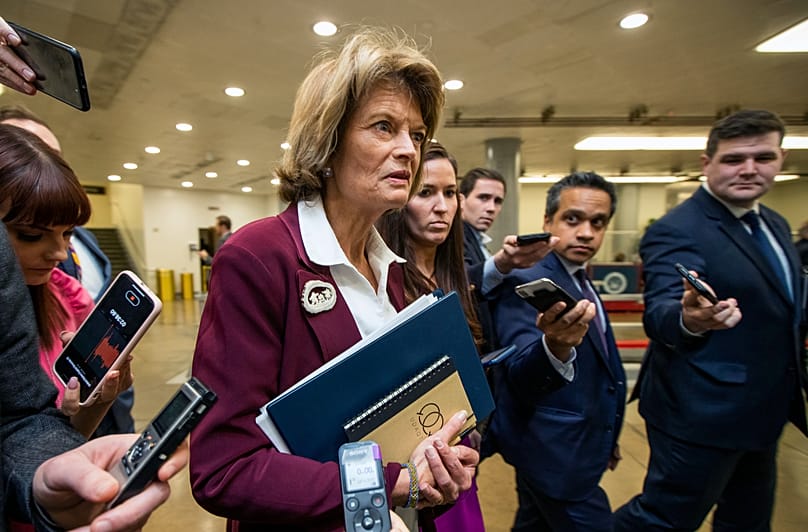
Alaska Senator Lisa Murkowski, who co-chairs the Senate Arctic Caucus, said she “hates” the idea of the US taking Greenland by purchase or force, and “I don’t use the word hate very often.”
Senator Lisa Murkowski talks to reporters as she leaves the Capitol in Washington. (AP Photo/Manuel Balce Ceneta)
“I think that it’s very, very unsettling,” Murkowski told reporters
“Any effort to claim or take the territory by force would degrade both our national security ad our international relationships,” she added on X.
And former Republican Senate leader Mitch McConnell cautioned that threatening a NATO ally would be “counterproductive” and harmful to US interests.
“Threats and intimidation by US officials over American ownership of Greenland are as unseemly as they are counterproductive,” McConnell, a Trump critic, said in a statement.
“And the use of force to seize the sovereign democratic territory of one of America’s most loyal and capable allies would be an especially catastrophic act of strategic self-harm to America and its global influence.”
The right's Greenland dilemma
The split between the Republican congressional leadership and the White House highlights the tensions in the party over the president’s military adventurism.
While most Republicans have backed Trump’s military strikes around the world – including in Yemen, Iran and Venezuela – some lawmakers are now warning that threatening a NATO ally is going too far.
So far, Republicans have largely dismissed Trump's threats to invade the island as a negotiating tactic, but that position is becoming increasingly difficult to maintain as senior White House officials repeatedly confirm that military force is on the table.
That’s why more and more Republicans feel they need to put their heads above the parapet, especially in view of a planned Senate vote by the Democratic opposition on a resolution to prevent the US from invading Greenland.
A large iceberg is photographed near the city of Ilulissat, Greenland. (AP Photo/Emilio Morenatti) AP Photo
With Congressional midterm elections ten months away, Republicans are realising that Greenland is not a winning campaign issue. On the contrary: ever since Trump first brought up the Arctic territory as “a large real estate deal” in 2019, polls showed Americans consider a Greenland land grab a low priority or poor idea by large margins.
In addition, they consider Trump’s rhetoric unrealistic and a distraction from domestic concerns.
Republican members of Congress also don’t seem to buy the argument that the US needs Greenland for national security, since a US-Danish agreement from 1951 already enables Washington to “construct, install, maintain, and operate” military bases across Greenland at will.
Related
So, why does Trump want the territory at all?
“He wants the United States to look bigger on a map," said Democratic strategist Julie Roginsky in an emailed statement. "Combined, the United States and Greenland would have a greater land mass than Russia – the largest land mass in the world. For Trump, who is all about optics, this matters."
But for many Republicans who are already facing tough headwinds because of Trump’s unpopular domestic policies, defending a Greenland grab in their own re-election campaigns seems a bridge too far.
Danish soldiers would shoot back if invaded, government confirms
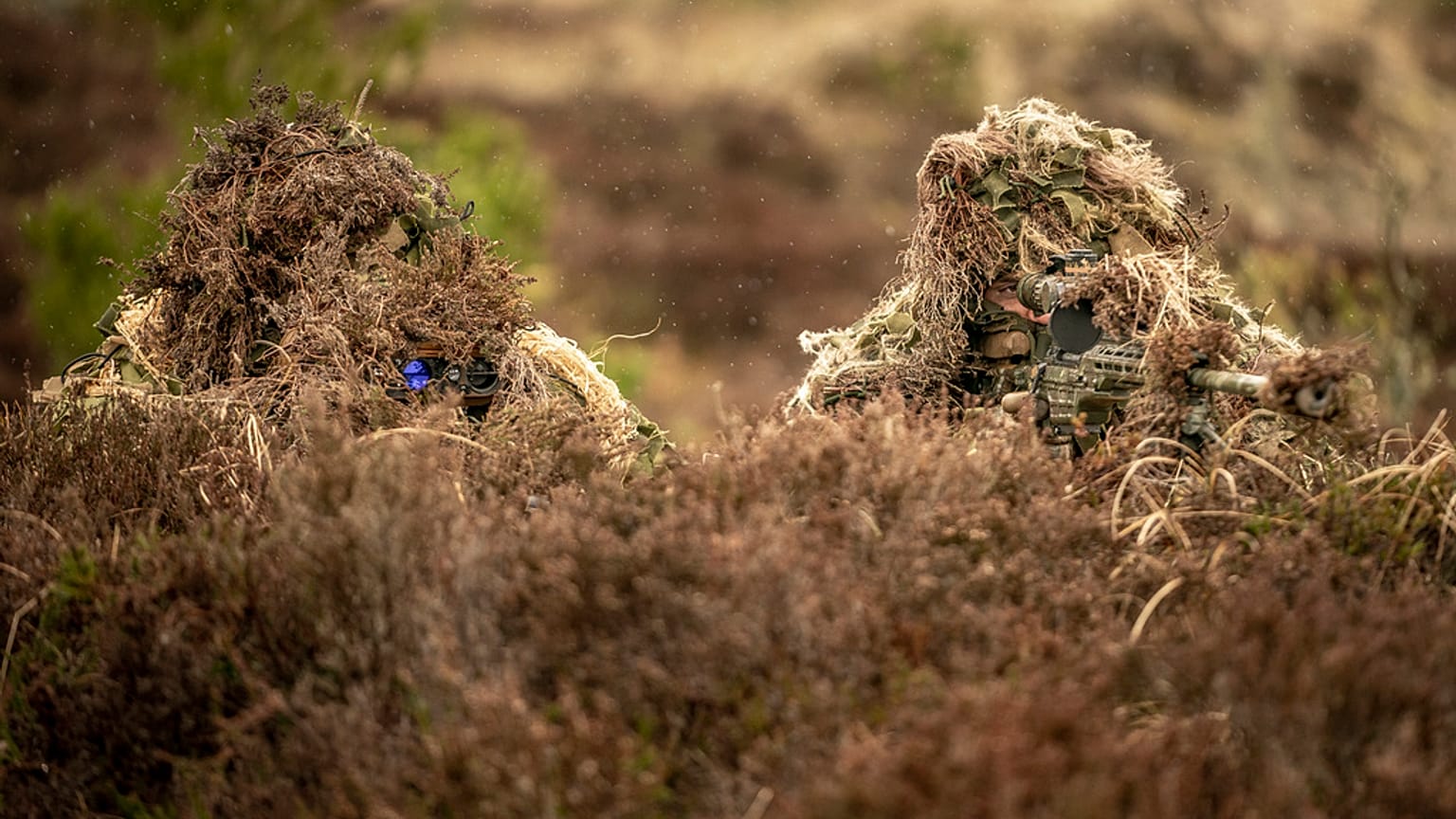
Danish soldiers must open fire even without orders if US troops were to try and capture Greenland by force, according to a 1952 directive that Denmark's Defence Ministry confirmed remains in place, domestic media reported.
Soldiers must engage without awaiting orders if anyone were to invade Danish territory, including US troops attempting to seize Greenland, according to a 1952 military directive that Denmark's Defence Ministry has confirmed remains in force.
The standing order requires Danish military personnel to "immediately take up the fight" against any attack on Danish territory without waiting for commands, even if commanders are unaware of a declaration of war, the Defence Command and Ministry told Danish newspaper Berlingske.
The directive has gained attention after US President Donald Trump repeatedly threatened to take control of Greenland by force if necessary, describing the Arctic territory as vital to American national security.
Danish Prime Minister Mette Frederiksen said this week that a military attempt at taking Greenland, an autonomous territory within the Kingdom of Denmark, would mark the end of NATO.
“If the United States chooses to attack another NATO country militarily, then everything stops,” Frederiksen told Danish broadcaster TV2 on Monday.
“That is, including our NATO and thus the security that has been provided since the end of World War II.”
The 1952 order states that attacking forces must respond without hesitation or seek authorisation. The Defence Ministry confirmed to Berlingske that the directive "remains in force," Danish and Greenlandic outlets reported.
The Arctic Command, Denmark's military authority in Greenland, would assess whether any situation constitutes an attack, according to procedures in place.
Relate
The directiv was created following Nazi Germany's attack on Denmark in April 1940, when communications partially collapsed and many military units did not know how to respond, according to Denmark's National Encyclopedia.
The order ensures military forces engage in combat upon attack without requiring specific commands.
Both Denmark and Greenland's governments reject Trump's proposals to purchase or seize the island.
Top-level meeting in the works
Meanwhile, Denmark has welcomed a meeting with the US next week to discuss Trump’s renewed push for Greenland to come under US control.
“This is the dialogue that is needed, as requested by the government together with the Greenlandic government,” Danish Defence Minister Troels Lund Poulsen told Danish broadcaster DR on Thursday.
US Secretary of State Marco Rubio had said on Wednesday that a meeting about Greenland would happen next week, without giving details about timing, location or participants.
“I’m not here to talk about Denmark or military intervention. I’ll be meeting with them next week, we’ll have those conversations with them then,” Rubio told reporters on Capitol Hill.
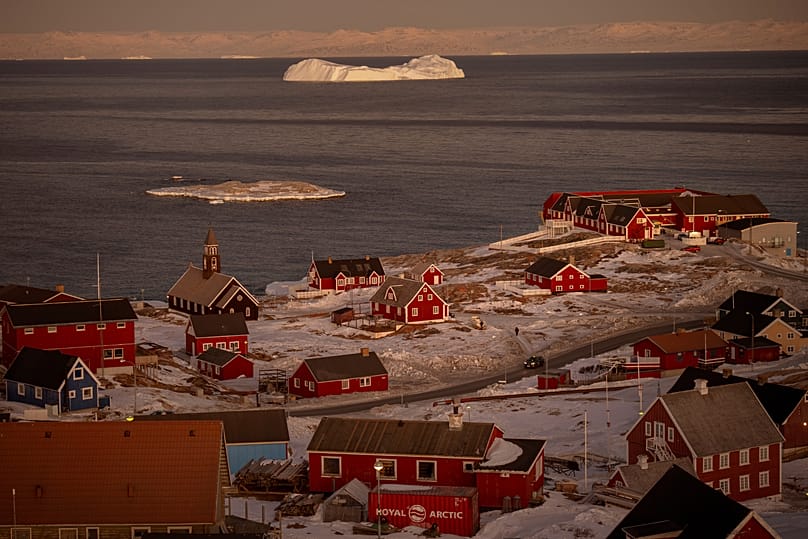
Houses covered by snow are seen on the coast of a sea inlet of Nuuk, Greenland, 7 March 2025
Greenland's government has told Danish public broadcaster DR that Greenland will participate in the meeting between Denmark and the US announced by Rubio.
“Nothing about Greenland without Greenland. Of course we will be there. We are the ones who requested the meeting,” Greenland’s Foreign Minister Vivian Motzfeldt told DR.
The island of Greenland, 80% of which lies north of the Arctic Circle, is home to about 56,000 people, mostly Inuit.
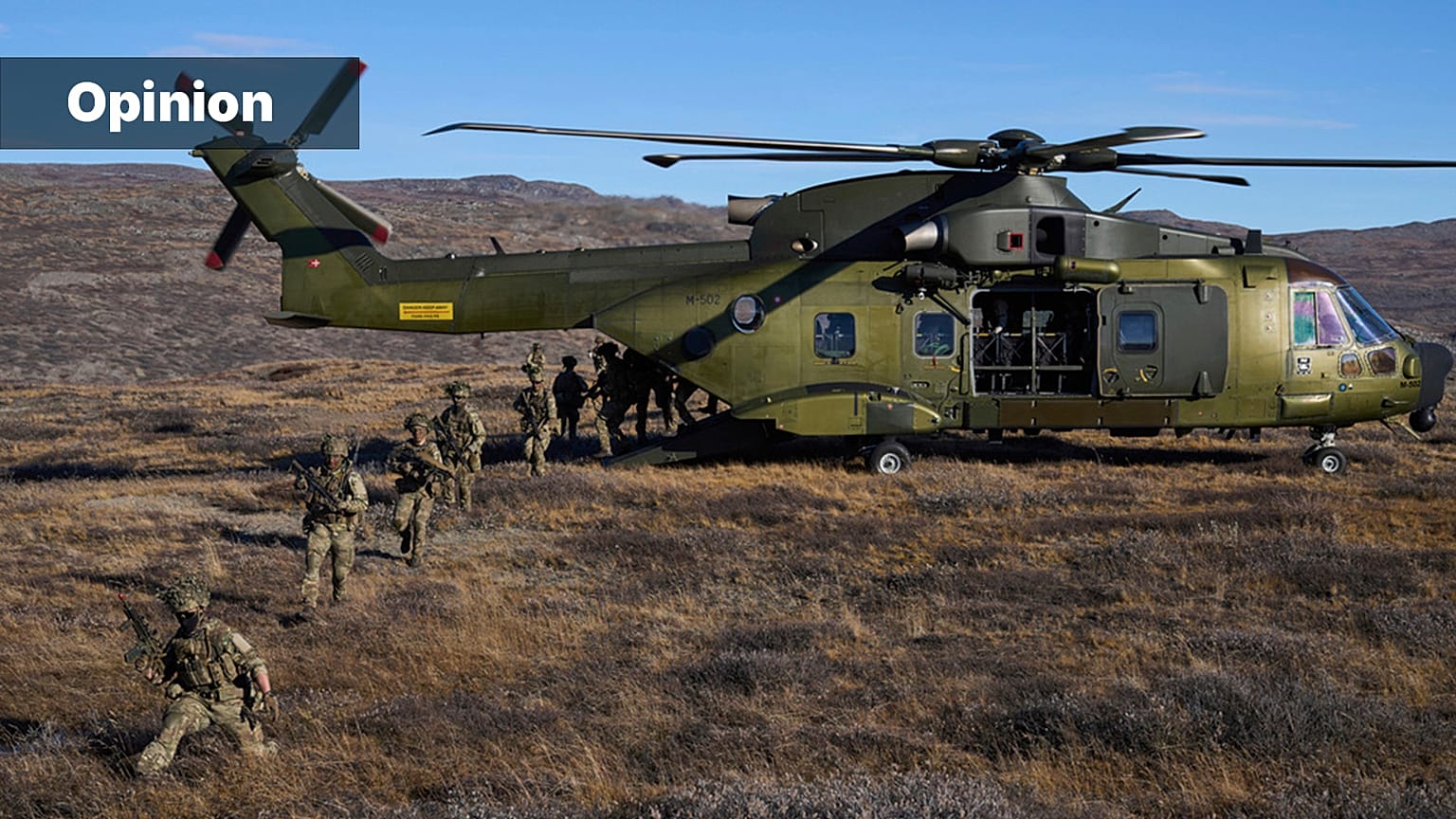
Euroviews. EU troops might be needed to stop a US showdown in Greenland
The opinions expressed in this article are those of the author and do not represent in any way the editorial position of Euronews.
If cooperation or Greenlandic independence fails, a preventive EU troop deployment could avert a US confrontation on the island, German Green MEP Sergey Lagodinsky argues in an opinion article for Euronews.
Nine months ago, I was travelling to Nuuk. After a five-hour journey, the snowy island came into view — only for the plane to suddenly make a sharp U-turn due to fog.
Another five hours later, we completed our round trip. It took me ten hours to get from Copenhagen to Copenhagen. Greenland remained an enigma: easy to talk about, difficult to reach.
It felt like a scene from the 1970s. Yet this reality is far from outdated. In the new world shaped by US President Donald Trump, NATO must monitor not just its eastern flank, but increasingly its western edge as well.
Within days, a Venezuela moment evolved into a Western Hemisphere moment, into a Greenland moment, and finally into a NATO crisis momentum. Ukraine already feels like a distant war.
For the EU, Greenland presents a looming dilemma: overextend or concede. This is a NATO-made crisis, member against member, and existential in nature.
No empty “deep concerns” or agitating statements are in order. Foresight, preparedness and action should be our response. This response must be tailored. We need to prepare for three scenarios and draw difficult long-term conclusions from each of them.
US-Greenland cooperation is the path forward
The preferred path is cooperation. In a normal world, it is possible to meet American concerns regardless of Greenland’s territorial status.
The three defence treaties—starting with the debatable Greenland treaty of 1941, continuing with the still valid and NATO-compatible Agreement of 1951, and its Igaliku modification of 2004, which gave Greenland a say—form a solid and flexible basis for deeper cooperation and broader rights for the American military.
It is possible to expand the US military presence within these agreements. It is possible to strengthen NATO cooperation in the Arctic, as Nordic foreign ministers recently emphasised.
Economic cooperation with the US, especially since Greenland is not in the EU, is another avenue.
But cooperation has prerequisites. The United States must formally recognise Danish sovereignty and Greenland’s right to self-determination.
Given Trump’s lack of reliability, any widening of US presence without formal confirmation of Danish rule and Greenlandic rights could become a trap. More US presence could turn into a prelude to a later takeover.
I doubt that the cooperative scenario is the current administration’s desire. The US administration does not sound like it wants to cooperate. It wants to own.
In that case, the scenarios become messy, but one still looks acceptable from a European point of view, under certain conditions.
Greenlandic independence is possible
The acceptable scenario would test the EU’s and Copenhagen’s credibility in respecting Greenland’s right to self-determination.
Making Greenland an independent state is possible and legitimate under the 2009 Self-Government Act.
A number of American officials and businesspeople are eager to facilitate such independence and later establish a close relationship with Greenland, for example, along the lines of the Marshall Islands.
This path is legitimate. But it comes with caveats and must meet clear preconditions.
First, the process is not fast. Negotiations between Denmark and Greenland would need to lead to an agreement between the two governments, confirmed by Greenland’s parliament and sealed by a referendum among Greenland's population.
The agreement would then require confirmation by the Danish parliament. The process exists, and it matters.
For this option to be acceptable, two prerequisites must be met. If the free will of Greenlanders and the Danish leadership is to be respected, that will must be free and informed.
First, the US administration must stop its threats of military action. Under international law, threats of force are as illegal as the use of force. Negotiations under coercion are unacceptable.
Second, there must be no propaganda. The EU should already begin a strategic anti-disinformation effort to prepare for external pressure and manipulation, particularly through social media.
Only if threats are eliminated and disinformation neutralised can independence become a viable path with this American administration.
Given the time required for independence negotiations and the narrow political window before US midterm elections, a third option may appear tempting in Washington, but it would be devastating for all. This is the confrontational scenario: a forceful takeover.
Two points matter. First, the most likely form would be an instantaneous fait accompli.
That would mean a sharp increase in American troop numbers from today’s roughly 150 personnel at Pituffik Space Base.
EU boots on the ground
To counter this scenario, European troops, Danish or otherwise, should be positioned in Greenland in advance. This would raise the threshold for presenting Europe with accomplished facts on the ground.
Second, clarity about consequences is essential. No one believes a war between the US and the EU is desirable or winnable.
But a military move against the EU would have devastating consequences for defence cooperation, markets, and global trust in the United States — not just in an administration, but in the country itself. Preparing a list of consequences is grim but necessary.
Relate
Then comes the homework. Europe must know what and how it can compensate if military, economic, or financial dependencies are used against it.
Designing alternatives to strategic enablers, technologies, and market structures is difficult. But in this case, the EU has no choice. Preparations must advance quickly.
We also need to rethink our structures. Europe needs a fast and strategic decision centre for defence.
That is why I advocate for a small but strong European Security Council — a circle of the most influential countries together with the President of the European Parliament, able to decide for a coalition of the willing.
Finally, Europe should not abandon cooperation with Washington. But it cannot permanently live on alert, dependent on moods in Mar-a-Lago.
Keeping the US within NATO is crucial — but only stronger European capabilities and autonomous decision-making will allow Europe to sleep safely at night.
Sergey Lagodinsky (Greens/EFA) is a Member of the European Parliament (MEP) from Germany.