Tuesday, March 10, 2026


Eight countries, eight red caps: TIME drops controversial and MAGA-misunderstood cover

TIME drops controversial and MAGA-misunderstood cover
Copyright TIME screenshot

By David Mouriquand
Published on 

The cover of TIME magazine's 23rd March issue has been unveiled, and it is not only dividing the internet but showing that even some of Trump's MAGA base aren't happy with his interventionist foreign policy.

TIME magazine has never been afraid to ruffle feathers and use its cover as a way to contribute and reflect current affairs, as well as spark debate. Its upcoming issue has done just that, dividing social media and going viral mere hours after its unveiling.

The 23 March issue’s powerful and striking cover features a collection of eight MAGA hats with “America” replaced with the name of nations including Iran, Venezuela, Nigeria, Iraq and Syria.

It serves to illustrate the publication’s feature story titled "Trump's War" by Eric Cortellessa, who examines not only the aftermath of the strike that killed Iran's Supreme Leader but also how Donald Trump's MAGA slogan seems to extend to his foreign policy – despite Trump running for reelection as the self-styled “Peace President”.

“Trump promised to end wars, not start them,” reads an extract from the article, which has been circulating online. “Instead, he has deployed military force in increasingly dizzying ways. No other modern American leader has directed assaults in as many countries in such a short span of time.”

As of writing, the TIME post on X featuring the cover has amassed nearly 800K views, with reactions ranging from praise for TIME’s political commentary to outrage given the ongoing war in the Middle East.

Surprisingly (or maybe not?), many Trump supporters seem to have misinterpreted the cover, which comments on the ills of American interventionism.

MAGA supporters online are praising the cover for championing Trump, with one user writing: “Trump delivers. Like him or not, you can’t say this about many other Presidents before him. Kudos to Trump.” Another states that TIME “has certainly come a long way”, while one adds: "I am surprised that THIS is the new cover of TIME Magazine. Even they are recognizing our President Trump as a major consequential historical figure."

One fan even posted a picture of Trump with the caption: “We did not elect him to be nice – we elected him to get the job done.”

There has been some pushback over the cover being pro-Trump.

One user wrote "I love all of the MAGA Cult members who think TIME is praising him here", while another penned: "I think this is meant to be subversive.. like Trump is more interested in other countries than the actual one he promised to 'make great again'.”

Many also reshared a drawing by Carlos Latuff...

Some criticism even came from his MAGA base, buttressing the results of a new poll from Fox News which shows that more than half (57 per cent) of US citizens disapprove of Trump’s performance in office.

“Trump campaigned on “no new wars” “wanting the dying to stop" and “on day one I will end all foreign wars” - Total and complete betrayal of MAGA and America First. We never changed. Trump did.”

The recent Fox News survey shows the majority of voters are unhappy with Trump’s handling of immigration, foreign policy and the economy. Six in ten said Trump was focused on the wrong issues.

However you choose to interpret TIME’s latest cover, one user managed to sum things up nicely: "Eight countries, eight red caps, zero words needed - Time made the most efficient political argument of the year without writing a single sentence."

 THE EPSTEIN CLASS

Do the Epstein files show he was working for Russia or another intelligence agency?


By Estelle Nilsson-Julien & Tamsin Paternoster
Published on 

From internet users to US lawmakers, speculation abounds regarding convicted sex offender Jeffrey Epstein's ties to intelligence agencies. Questions about his links to Russian elites have come to the forefront following the release of the latest batch of files.

The latest tranche of the Epstein files has raised questions about the disgraced financier's ties to the world of intelligence, prompting mass online speculation about his links to the US CIA, Israel's Mossad, and Russia.

Following the release of the documents, Polish Prime Minister Donald Tusk announced a wide-ranging investigation into child sex offender Jeffrey Epstein, including a probe into his possible links to Russian intelligence.

While the files offer an insight into Epstein's contacts with high-level Russian figures — some of which have intelligence ties — and show that he tried to arrange a meeting with President Vladimir Putin, they do not contain any direct evidence that he worked for a foreign government.

However, Epstein's behaviour and actions, which included setting up video cameras in his home to record people in compromising situations, have raised parallels with the methods employed by Russian intelligence.

This led to mounting theories that he collected material on the rich and powerful to blackmail them, material known as "kompromat" in Russian.

Euronews' fact-checking team, The Cube, breaks down exactly what the Epstein files reveal about his connections to politicians and officials.

Russia emails: What the files show

The files show that Epstein sought to cultivate ties with influential Russian figures, including Sergei Belyakov, a graduate of Russia's Academy of the Federal Security Service (FSB) and a former deputy economy minister.

In 2014, Belyakov became chairman of the annual Russian business forum known as the St Petersburg International Economic Forum.

According to journalist and author Craig Unger, who has extensively researched the links between Russia and certain US figures, the event can be described as "Russia's Davos", in reference to the World Economic Forum.

"It was considered the 'Super Bowl' of honey traps," Unger, who also believes that President Donald Trump is a Russian asset, told The Cube. "A lot of billionaires and world leaders would show up there, and so would a lot of young women who were there to participate in the honey trap. Epstein was tied in with that."

There is little evidence in the files that Epstein attended the St Petersburg forum when Belyakov was chairman. However, one email from 2015 reportedly shows former Israeli Prime Minister Ehud Barak — who Epstein knew well and who served from 1999 to 2001 — detailing his meetings at the forum, including with Russian Foreign Affairs Minister Sergei Lavrov.

A follow-up email shows Barak thanking Epstein for "setting the whole thing together".

In one exchange from 2015, Epstein asked Belyakov to collect information on a Russian woman he alleged was trying to blackmail a prominent US businessman.

Emails between Epstein and Belyakov show Epstein asking him for information about a girl from Moscow.
Emails between Epstein and Belyakov show Epstein asking him for information about a girl from Moscow. @USJusticeDepartment

Belyakov provided Epstein with a description of the woman's background, detailing her "sex and escort" activities while highlighting her "business problems", which he speculated could be behind her blackmail attempts.

In another email, which Epstein appears to have sent to himself and in what could be a draft response to the woman, the disgraced financier told her that he had consulted "some friends in the FSB" who said she would be "dealt with extremely harshly" if she continued to threaten US businessmen.

In other instances, Belyakov and Epstein also discussed women, with Epstein suggesting that Belyakov look into hiring "pretty women" as English-speaking editors for his business proposals in 2016.

Epstein also appears to have introduced Belyakov to powerful figures, including US businessmen Peter Thiel and Thomas Pritzker.

Belyakov was not the only high-profile Russian in Epstein's orbit. Other documents show that Epstein met with Vitaly Churkin, a former Russian diplomat who served as the country's representative to the United Nations. Epstein also appears to have arranged an internship for Churkin's son.

It wasn't just male contacts that he targeted, either, according to Unger.

"You also have to look at the women who worked for Epstein, many of whom were tied to Russia," he told The Cube. "Maria Bucher [née Drakova], a Russian woman who had been the head of Nashi, Putin's Youth Movement, worked as a publicist for Epstein when she moved to the US."

"Vladimir Putin has previously said that whoever runs artificial intelligence will run the world," Unger added. "Epstein was reaching out to a lot of figures in that world, such as Elon Musk and Peter Thiel, for whom she was one of the intermediaries."

Nevertheless, there is no evidence that Bucher was a spy for Russia.

In pursuit of Putin

Alongside his contact with Russian officials, the files largely show that Epstein repeatedly attempted to get in touch with the Russian government and Vladimir Putin, whose name appears in the files more than 1,000 times.

Epstein attempted to contact Putin through a string of different contacts, who included Norway's former Prime Minister Thorbjørn Jagland.

In May 2013, Epstein told Ehud Barak that Jagland was "going to see putin in sochi." [sic]

Epstein said that he had never met Putin but that he had been asked to meet him "to explain how russia can structure deals in order to encourage western investment."

In a separate email, Jagland told Epstein that he would inform Putin that Epstein was a useful contact.

In 2018, Jagland emailed Epstein about arranging a stay at his Moscow residence, where he planned to meet Putin and Lavrov.

"I'm just sorry I'm not with you to meet the Russians," said Epstein.

There is no evidence in the documents that suggests that Epstein successfully managed to meet Putin in person.

In response to the mass of allegations, including that Epstein was some sort of Russian asset, the Kremlin stated that it did not want to waste time answering questions on the matter, with Kremlin spokesman Dmitry Peskov stating in February, "I would like to joke about such versions, but let's not waste our time."
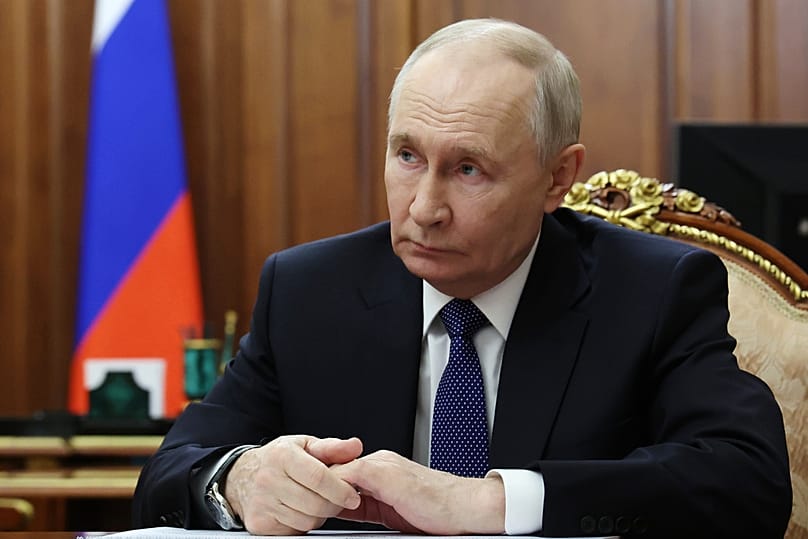
Russian President Vladimir Putin listens to Head of the Federal Treasury Roman Artyukhin at the Kremlin in Moscow, 3 March 2026 Gavriil Grigorov/Sputnik, Kremlin Pool Photo via AP

'Asset, not spy'

Nevertheless, despite a lack of evidence that Epstein was a spy, some say there are grounds to believe that he was indeed a Russian asset.

"I would think he's an asset, not a spy," Unger told The Cube. "An agent or spy is employed by an intelligence agency. He or she would receive a regular pay cheque. They could be tasked with specific operations."

"An intelligence asset is someone who's a trusted contact, you do favours for them, they do favours for you," he added. "Epstein had ties to Russian intelligence, he had ties to Israeli intelligence, and he worked with them, but in the end, I think he was serving himself."

US lawmakers have also weighed in on the speculation with a range of contradicting claims. Some believe that Epstein was a spy, with Republican Congressman Thomas Massie alleging that the reason the Epstein files have not been released in their entirety is due to his ties with US and Israeli intelligence.

Speculation about Epstein's Mossad ties was fuelled by an FBI memo from 2020 included in the files, which said that a source was convinced Epstein "was a co-opted Mossad agent" who "trained as a spy" for Israeli intelligence.

Epstein's long-term friendship with Israel's former Prime Minister Barak, the details of which became clear in the files, also raised questions.

The pair maintained regular contact, while Barak visited the disgraced financier's Manhattan apartment multiple times and travelled to Epstein's private island in the US Virgin Islands once. The documents also reveal that Epstein was in touch with Barak’s long-term aide Yoni Koren.

Israeli Prime Minister Benjamin Netanyahu has firmly rejected theories that Epstein worked for the Mossad, instead suggesting that the revelations prove "the opposite" and accusing him of working to "undermine Israeli democracy" to "overthrow the elected Israeli government".

Netanyahu's comments were sparked by exchanges in the files, which showed that Barak consulted Epstein during his 2019 campaign for Israel's parliamentary elections.

Theories about Epstein working for intelligence agencies may have blown up with the release of the files, but they are, in fact, long-standing.

Speculation has been fuelled by suspicious and conflicting reports about his 2008 plea deal, longstanding questions about how he amassed his vast wealth despite his humble origins, as well as his connections with convicted sex offender Ghislaine Maxwell, whose father, Robert Maxwell, has been allegedly tied to Israeli intelligence.

 

As temperatures rise, the number of male births is decreasing, study finds

As temperatures rise due to climate change, heat above 20°C leads to fewer male births, according to a new study.
Copyright Cleared/Canva


By Marta Iraola Iribarren
Published on 

As temperatures rise due to climate change, heat above 20°C leads to fewer male births, according to a new study.

When temperatures rise above 20°C, fewer baby boys are born compared to girls, a new study has found

Researchers at the University of Oxford found that heat exposure can increase prenatal mortality in early pregnancy, particularly among males.

For many years, human sex ratios at birth – the ratio of male to female offspring – were thought to be constant, genetically determined, and invariant to social or environmental shocks, the authors wrote.

However, the results published in Proceedings of the National Academy of Sciences of the United States of America (PNAS) show that extreme heat may play a role in the number of boys and girls that are born worldwide.

The researchers analysed data from more than five million births in 33 sub-Saharan countries and India. They found that ambient heat can increase prenatal mortality in early pregnancy, particularly among males, in both world regions.

“We show that temperature fundamentally shapes human reproduction by influencing who is born and who is not born,” said Abdel Ghany, co-author of the study.

He noted that the findings indicate that temperature has measurable consequences for foetal survival and family planning behaviour, with implications for population composition and gender balance.

“Understanding these processes is essential for anticipating how the environment affects societies in a warming climate,” he added.

The 20°C threshold

The study identified 20°C as the temperature at which the sight in ratios occurs, although hotter days do not proportionally amplify the effect.

Previous research has found that gestational heat exposure threatens the maternal body’s ability to thermoregulate, increasing the risk of pregnancy loss. If the mother is dehydrated, the baby may not get enough blood, oxygen, or nutrients.

Not only a biological response

Heat exposure not only harms maternal health but also influences family planning behaviour.

High temperatures could impact abortion access through mobility disruptions or by increasing financial uncertainty and reducing income generation, the authors noted.

The study highlights that the effects of heat are not evenly distributed, the authors wrote.

Women with fewer resources and those living in more vulnerable settings are more strongly affected, raising concerns about widening health inequalities under climate change.

In Europe, countries are experiencing rising temperatures, with more than 100 days of heat season in regions such as Albania, Greece, Portugal, and Spain.

2024 saw the second-highest number of heat stress days and tropical nights, when the temperature didn't fall from 20°C on record, according to the World Meteorological Organization.

As global temperatures are expected to rise, the researchers call for further studies on environmental factors to protect maternal health and improve access to healthcare, to reduce long-term impacts on reproduction and population dynamics.

Climate change impact on fertility

Studies have documented the impact of climate health on both male and female fertility.

In 2024, many European countries reported their lowest birth rates in several decades. While experts say 2.1 children per woman are needed to keep the population's size stable, several countries present numbers consistently below 1.5.

A recent systematic review by researchers at the Catholic University of Chile found that increased climate-related events and natural disasters are severely disrupting reproductive processes ranging from conception to care, including reproductive intentions, pregnancy, birth, fertility, and parenting.


Bird populations are shrinking ever faster in the face of climate change and agriculture - US study


By Joshua Bickel and Julián Trejo Bax
Published on 

‘Extremely adaptable’ bird species are declining at an alarming rate – with worrying implications for humans.

Billions fewer birds are flying through North American skies than decades ago and their population is shrinking ever faster, a new study has found. The decline is mostly due to a combination of intensive agriculture and warming temperatures.

Nearly half of the 261 species studied showed big enough losses in numbers to be statistically significant and more than half of those declining are seeing their losses accelerate since 1987, according to the paper published in journal Science.

The study is the first to look at more than the total bird population by examining the trends in their decrease, where they are shrinking the most and what the declines are connected to.

“Not only are we losing birds, we are losing them faster and faster from year to year,” says study co-author Marta Jarzyna, an ecologist at Ohio State University.

Are shrinking bird species at risk of extinction?

The only consolation is that the birds that are shrinking in numbers the fastest are species – such as the European starling, American crow, grackle and house sparrow – with large enough populations that they aren't yet at risk of going extinct, says study lead author Francois Leroy, also an Ohio State ecologist.

Cornell University conservation scientist Kenneth Rosenberg, who wasn't part of the study, says the species declining fastest in the new research “are often considered pests or ‘trash birds,’ but if our environment cannot support healthy populations of these extreme generalists and extremely adaptable species that are tolerant of humans, then that is a very strong indicator that the environment is also toxic to humans and all other life.”

The same bird species showed the biggest population drops in Rosenberg's 2019 study that found North America had 3 billion fewer birds than in 1970, but didn't look at changes in the rate of loss or causes.

Where are birds declining fastest?

The biggest locations for acceleration of bird loss were in the Mid-Atlantic, the Midwest and California, the study found. And geography proved important when Leroy and Jarzyna looked for reasons why so many bird species are shrinking ever faster.

When it came to population declines – not the acceleration – the scientists noticed bigger losses further south, such as in Florida and Texas. When they did a deeper analysis they statistically connected those losses to warmer temperatures from human-caused climate change.

“In regions where temperatures increase the most, we are seeing strongest declines in populations,” Jarzyna says. “On the other hand, the acceleration of those declines, that’s mostly driven by agricultural practices.”

The scientists found statistical correlations between speeded-up decline rates and high fertiliser use, high pesticide use and amount of cropland, Leroy says. He adds that they couldn't say any of those caused the acceleration of losses, but it indicates agriculture in general is a factor.

Why are birds important?

More than just wildlife, birds are fundamental to our ecosystems.

“We see birds being good pollinators. We see them dispersing seeds, we see them as pest control, they play really important functions," says Jarzyna. "And if they disappear, those functions are gone as well. So from the perspective of ecosystem functioning, it's really important that our birds don't go away.”

But habitat destruction is widespread.

“Basically every single habitat type, so species that breed in things like grasslands or deserts or marshes and so on, is declining with exception of forests, of forest birds," says Jarzyna. "So we need to ask ourselves a question. How do we protect these groups of birds?”


Dangerous droughts triggered by heatwaves are accelerating at an alarming rate, study shows

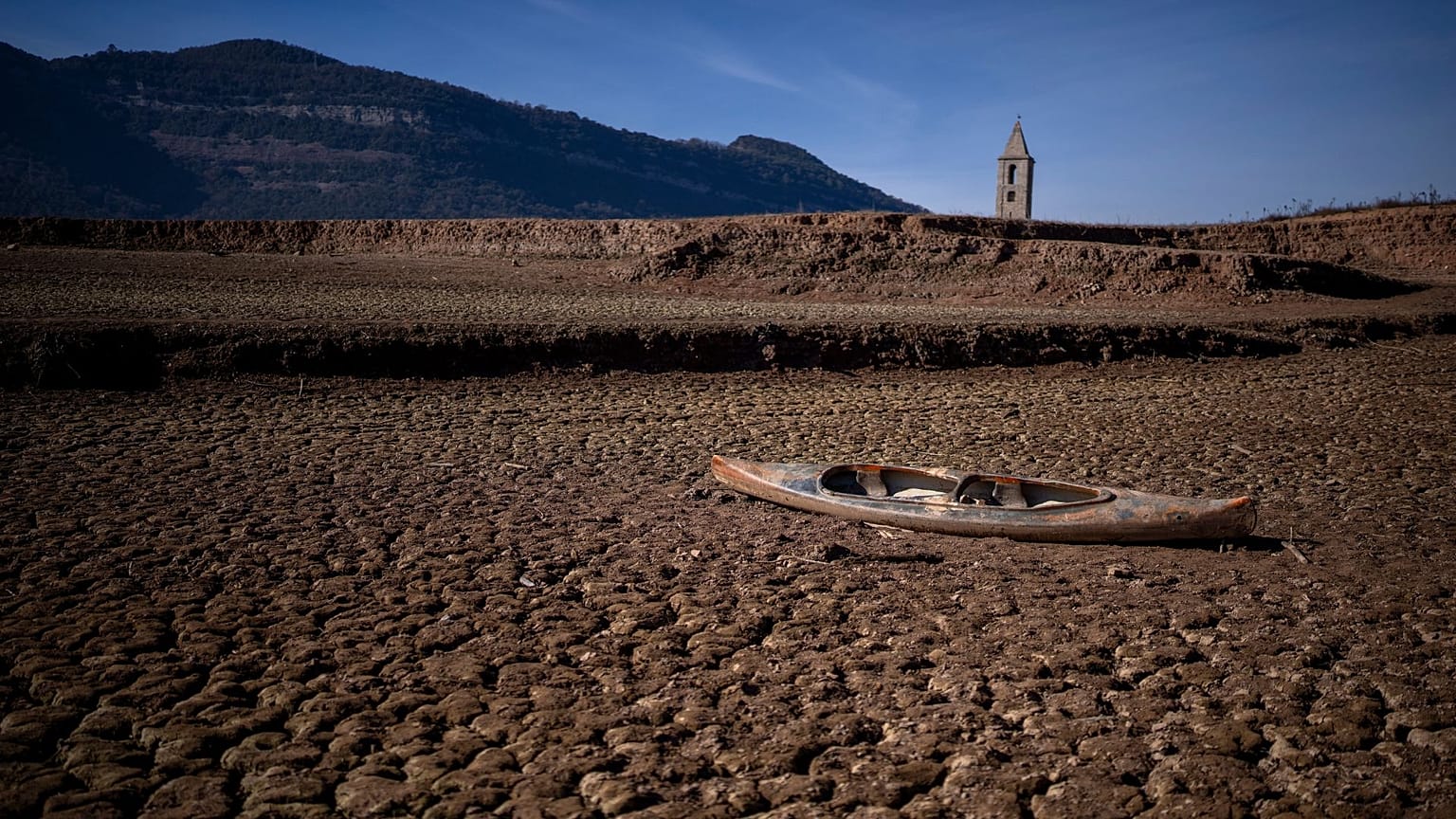
FILE - An abandoned canoe sits on the cracked ground amid a drought at the Sau reservoir, north of Barcelona, Spain, Monday, Jan. 22, 2024.
Copyright AP Photo/Emilio Morenatti, File

By Seth Borenstein with AP
Published on 

Heatwaves, drought, wildfire risk and El Niño are compounding to create a dangerous cocktail of climate change.

Heatwaves that lead to sudden and damaging drought are spreading across the globe at an accelerating rate, highlighting how climate change-fuelled extremes can build dangerously off each other, a new study found.

Researchers from South Korea and Australia looked at compound extreme weather – a one-two punch of heat and drought – and found it increasing as the world warms. But what's rising especially fast is the more damaging type when the heat comes first and that triggers the drought.

In the 1980s, that kind of extreme covered only about 2.5 per cent of Earth's land each year. By 2023, the last year the researchers studied, it was up to 16.7 per cent, with a 10-year average of 7.9 per cent.

The average has likely gone even higher with 2024's record global heat and a 2025 that was nearly as warm, the study's authors said.

Extreme heat followed by drought is rising at an alarming pace

In their study published in Science Advances on 6 March, the scientists said the quickening rate of change is even more concerning than the raw numbers. For about the first two decades since 1980 they examined, the spread of heat-first extremes increased, but the rate in the last 22 years is eight times higher than the earlier rate, the study found.

Events where drought happens first, followed by high heat, remain more common and are also rising. But the researchers focused on those increasing cases where heat struck first. That's because when heat strikes first, the droughts are stronger than when the droughts come first or don't come with high heat, says co-author Sang-Wook Yeh, a climate scientist at Hanyang University in South Korea.

They also lead to 'flash droughts', which are more damaging than ordinary droughts because they come on suddenly, not allowing people and farmers to prepare, says lead author Yong-Jun Kim, a Hanyang climate scientist.

Flash droughts – when warmer air gets thirstier it sucks more water out of soil – have been increasing in a warming world, past studies show.

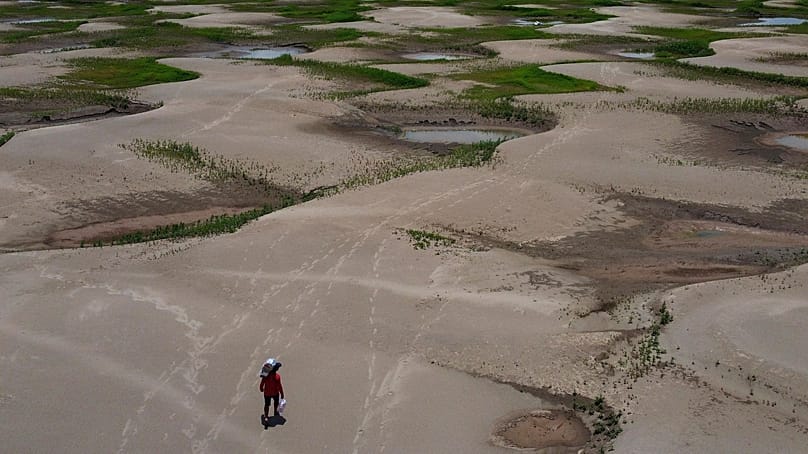
A resident of a riverside community carries food and containers of drinking water during a drought in Careiro da Varzea, Amazonas state, Brazil, Oct. 24, 2023. AP Photo /Edmar Barros, File

Climate change is driving 'compound extremes'

“The study illustrates a key point about climate change: the most damaging impacts often come from compound extremes. When heatwaves, drought and wildfire risk occur together – as we saw in events like the Russian heatwave of 2010 or the Australian bushfires in 2019-20 – the impacts can escalate quickly,” says Andrew Weaver, a climate scientist at the University of Victoria in British Columbia, Canada

“What this study shows is that warming doesn’t just make heatwaves more likely – it changes how heat and drought interact, amplifying the risks we face."

Weaver was not part of the study, but he lives in the Pacific Northwest, where the 2021 heat dome and drought was what Kim calls a top example of what they see rapidly increasing. Others include the 2022 heat and drought around China's Yangtze River and the 2023-24 record heat and drought in the Amazon, Kim says.

“The 2021 Pacific Northwest heat dome illustrates how quickly these compound extremes can escalate – temperatures near 50°C in Lytton (British Columbia) were followed by rapid drying and extreme wildfire conditions that destroyed the community,” Weaver, a former Canadian legislator, says.

Where is most at risk of heat-first droughts?

The study found the biggest increases in heat-first droughts in South America, western Canada, Alaska and the western United States, and parts of central and eastern Africa.

Kim and Yeh say they noticed a “change point” around the year 2000, when everything sped up for heat-then-drought situations.

Jennifer Francis, a Woodwell Climate Research Center climate scientist who wasn’t part of the study, says that change point was “eerily coincident with the onset of rapid Arctic warming, sea-ice loss, and decline in spring snow cover on Northern Hemisphere continents.”

In addition to long-term warming causing more compound extremes, Kim says they saw a speeding-up in the way heat went from land to air and back again just before that 2000 change point. He and Yeh speculate that Earth may have crossed a “tipping point" where the change is irreversible.

Several aspects of Earth's climate and ecological systems changed in the late 1990s, with a possible trigger by a major El Niño event in 1997-98, says Gerald Meehl, a climate scientist at the National Center for Atmospheric Research who wasn't part of the study. But he adds that it's hard to tell whether they are permanent changes.

Some computer models forecast another major El Nino – a natural warming of parts of the Pacific that warp weather worldwide – brewing later this year.


Ariane 64: Europe enters the era of mega-constellations with Amazon Leo satellites


By Monica Pinna
Published on 

On 12 February 2026, the French company Arianespace successfully launched 32 Amazon LEO satellites with its Ariane 64 mega-rocket from the European spaceport in Kourou, French Guiana. The satellites were placed into low Earth orbit with a launch that went far beyond a simple mission.

Ariane’s day starts early. Ours too: we are a group of around thirty international journalists invited to attend the maiden launch of Ariane 64, the most powerful European rocket. We arrive about a hundred metres from the launch pad shortly after three o’clock in the morning to watch the structure surrounding the rocket being moved

Shortly afterwards, the area is evacuated in preparation for the launch. It’s a slow and delicate process.

Philippe Clar, Director of Space Transport Programmes at ArianeGroup, explains:

“In Europe, 13,000 people from 13 countries have been working on this launch vehicle. 600 European companies have supplied the various components of the rocket. ArianeGroup, as prime contractor and designer, has done everything possible to ensure that things run smoothly. But, there is always a small amount of uncertainty, and that is what keeps us excited every time. In the world of launch vehicles, that’s what we live for.”

Europe has come a long way to reach this launch. The Ariane family of European rockets began in 1979 with Ariane 1. Since then, this project has continued to evolve. The development of Ariane 6 began in 2014. It has two versions: Ariane 62, with two boosters – or auxiliary thrusters – and 64, with four boosters. Arianespace selects the version best suited to the mission. On 12 February 2026, the launch of 32 Amazon LEO (Low Earth Orbit) satellites required the maximum power of Ariane 64.

The rocket carried the heaviest payload ever transported by the European launch vehicle into space: nearly 20 tonnes, almost double the payload capacity of the two-booster version, Ariane 62.

David Cavaillolès, Chief Executive Officer of Arianespace, explains:

“This is a major step forward for us. Arianespace was founded 45 years ago, and the vision of my predecessors was to take an institutional launch vehicle, Ariane 1, and bring it to the commercial market.”

Challenge met. After years of waiting, Arianespace has secured its largest private contract with Amazon: 18 launches. The American e-commerce giant plans to deploy more than 3,000 satellites in the coming years. This is a group of satellites - a ‘constellation’ - which work to provide fast internet connectivity to underserved areas. Amazon Leo is in direct competition with Elon Musk’s Starlink.

The hours pass, the excitement builds. I head to the Toucan Station to watch the launch. Only eight kilometres from the launch pad, the closest one authorised. At 1:45 p.m. local time, Ariane 64 takes off. The launch is a success.

“With the success of Ariane 64’s maiden flight,” says Arianespace Chief Executive Officer David Cavaillolès, “the European heavy-lift launch vehicle has demonstrated its ability to accomplish the most complex missions, such as the deployment of large-scale constellations.”

Ariane 5 was decommissioned in 2023 after 27 years of loyal service. The delays accumulated by Ariane 6 left Europe without autonomous launch capacity and dependent on foreign providers for over a year.

The successful launches of Ariane 62 last year, followed by Ariane 64, mark Europe’s return to full autonomy in space access and a step towards greater space sovereignty.

For mere spectators like me, this launch sparked cries of joy, followed by a respectful silence, charged with emotion. This trail of fire in the sky remains etched in my memory, like a striking image of humanity’s ability to go beyond its own limits.