US–Israel–Iran War: Second‑Order Coercion And Strategic Fragmentation – OpEd
March 12, 2026
Observer Research Foundation
By Kartik Bommakanti
The escalation in hostilities between the United States (US), Israel, and Iran began on 28 February 2026, following a large-scale attack on Iran’s leadership, nuclear facilities, and conventional forces. Two issues merit attention. The first is second-order coercion, which Iran is pursuing against both Israel and the United States. Second, the administrations of US President Donald Trump and Israeli Prime Minister Benjamin Netanyahu appear to be leveraging domestic instability and fragmentation as part of their strategy.
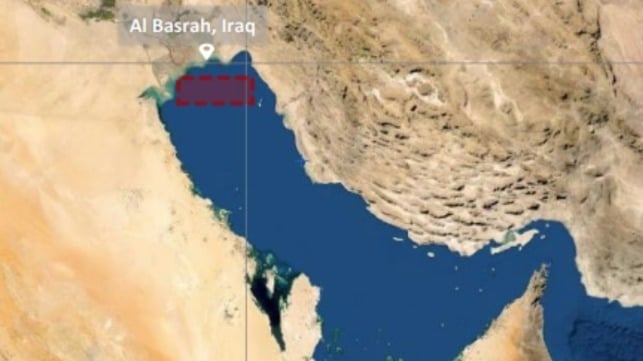
At present, nearly all Gulf Cooperation Council (GCC) countries have been targeted by Iran. These operations have ranged from missile strikes to one-way drone missions. The GCC states affected include the United Arab Emirates (UAE), Qatar, Oman, Bahrain, Saudi Arabia, and Kuwait. Iran’s escalation has compelled these countries to respond, primarily through defensive measures such as intercepting ballistic missiles and shooting down drones using surface and airborne assets. In addition, Qatar has arrestedsleeper agents of the Islamic Revolutionary Guard Corps (IRGC) operating on Qatari soil. To date, Oman remains the only GCC country not targeted by Iran, largely because it does not host any American base and remains resolutely neutral. Although reports indicate its oil tankers were struck off the Omani coast by Iran.
Iran’s decision to target the Gulf Cooperation Council (GCC) states, despite their limited role in the conflict, warrants closer examination. The simple answer is that Iran believes GCC states suffering material and economic losses are more likely to wield influence in Washington and Tel Aviv than direct Iranian assaults on American bases in the Middle East and Israel.
The Iranians are currently resorting to second-order coercion to compel the Americans and the Israelis to back down and cease their military assault. Fundamentally, second-order coercion involves a coercing state pressuring a third party or secondary target that wields influence over the primary target to yield and comply with the coercer’s demands. Iran has done precisely this by launching missile and drone attacks not only against American military bases in the region and Israel, but also against civilian targets in Arab states in the GCC. Tehran has gambled that military assaults on GCC states will compel them to pressure Washington and Tel Aviv.
However, for the moment, Tehran’s assault appears to be working against itself, with the Americans, Israelis, and their GCC partners rallying to defend themselves. Yet, as the conflict unfolds over the coming days and weeks, the costs for the GCC states could become difficult to sustain, potentially compelling them to pressure Israel and the United States to halt hostilities. For Israel and the United States, it is therefore a race against time. President Donald Trump initially indicated that the military campaign could last at least four to five weeks, although the United States may be facing a more protracted engagement.
For Iran’s clerical regime, the objective is to hold out against the joint US–Israeli air campaign while inflicting sufficient pain on Washington’s GCC partners. If attacks against the GCC states diminish significantly or cease, and the economic pressure on them eases, Iran’s strategy of second‑order coercion may fail to compel a swift end to the hostilities.
Secondly, the American–Israeli military campaign may not be aimed explicitly at regime change, but the degradation or elimination of Iran’s military capabilities—including its nuclear and ballistic missile programmes—is a stated objective. At most, regime change may be an Israeli objective, while the United States remains conflicted over this goal, creating challenges for US–Israeli unity and coordinated military action. Israel may therefore be compelled to act independently. More broadly, the current military campaign appears, at a minimum, aimed at limiting Iran’s ability to project military power beyond its borders. However, a secondary objective—one that remains unstated—may be to stoke internal instability through insurrection and support for disaffected groups such as the Kurds. The latter could potentially be armed and trained by the Central Intelligence Agency (CIA). In such a scenario, the Islamic Revolutionary Guard Corps (IRGC) would be compelled to respond to a Kurdish offensive, forcing its forces into the open. This would allow Israel and the US to target IRGC fighters from the air.
Apart from the Kurds—who constitute around 10 percent of Iran’s population and are unlikely to be effective on their own—the Israelis and the Americans would also need to identify and militarily support Iranian dissidents and ethnic groups opposed to the regime. Taken together, these efforts would need to be sustained for several weeks, and potentially months, to produce significant internal chaos and fragmentation within Iran. A former Israeli official familiar with the Netanyahu government’s military strategy conceded: “…this will take time…There is a lot of work to be done. Iran is huge.”
The domestic chaos, fragmentation, or even civil war that Israel may be seeking to trigger could prevent any surviving elements of the regime from reconstituting a credible military and nuclear capability that threatens Israel, the United States, and their regional partners and allies. If Israel and the United States succeed, they could significantly undermine the clerical regime. However, at this stage of the war, it remains far from clear whether the objective of substantially weakening Iran’s revolutionary regime can be achieved.
Further, if Iranian military capabilities are significantly degraded while the regime remains intact, Iran may redouble efforts to rebuild its nuclear and ballistic missile programmes, posing a long‑term threat to its neighbours. Preventing this outcome is therefore essential. The US–Israeli military campaign will consequently need to be conducted with considerable discipline and sustained effort. At the same time, Israel and the United States will need to maintain domestic cohesion and public support for what is likely to be a prolonged military campaign unless they capitulate or prematurely terminate hostilities due to rising costs. Iran is mining the Strait of Hormuz and has signalled it will not relent in its attacks, rejecting calls for a ceasefire. The country may also face long‑term consequences with the GCC states, which are unlikely to overlook its strikes and may deepen military cooperation against it.
About the author:
Kartik Bommakanti is a Senior Fellow with the Strategic Studies Programme at the Observer Research Foundation.
Source: This article was published by the Observer Research Foundation.
Observer Research Foundation
ORF was established on 5 September 1990 as a private, not for profit, ’think tank’ to influence public policy formulation. The Foundation brought together, for the first time, leading Indian economists and policymakers to present An Agenda for Economic Reforms in India. The idea was to help develop a consensus in favour of economic reforms.