Sunday, March 22, 2026

PAK AFGHAN WAR

Mass burials expected for victims of Kabul drug rehab centre strike

PAK WAR CRIME


By AFP
March 18, 2026


Monday's strike was the deadliest in the recent upsurge of violence between the two sides - Copyright AFP Wakil KOHSAR


Aysha SAFI, Qubad WALI

Afghans readied on Wednesday to bury their dead from this week’s Pakistani air strike on a Kabul drug treatment centre, as an international NGO confirmed that hundreds were killed and wounded.

The Taliban authorities have said that around 400 people were killed and more than 200 wounded on Monday night, in the deadliest attack yet in the recent upsurge in violence between the two neighbours.

Islamabad, which denies deliberately targeting the centre, accuses Kabul of harbouring extremists who have carried out cross-border attacks on its territory.

Two large excavators were seen digging on a hill in Kabul, and interior ministry spokesman Abdul Mateen Qani confirmed a mass funeral would be held there later Wednesday.

“Not all 400 bodies will be buried in Kabul because some of them were transferred to their provinces,” he added.

Obtaining immediate independent confirmation of exact death tolls is difficult in Afghanistan and Pakistan, with attacks often in hard-to-reach places and conflicting information.

AFP journalists at the scene on Monday evening and Tuesday morning saw at least 95 bodies extracted from the rubble at the devastated centre.

Jacopo Caridi, the Afghanistan country director for the Norwegian Refugee Council, a humanitarian NGO, said they had teams on the ground at the same time, and one building in the compound was “completely burned and destroyed”.

“From what we saw and what we discussed with the others involved in the (emergency) response, we can say that there were hundreds of killed and wounded,” he told AFP.

“The facility was supposed to house around 2,000 patients, and it was heavily damaged.”

Recovery of bodies has proved difficult because of the debris and collapsed structures.

Caridi described the scene, which included body parts in the debris, as “shocking” and indicated that definitively counting and identifying the victims would be difficult.

“In Europe, we have the systems to identify the people, even from body parts,” he added.

“But here, I don’t know if they have these systems. But what I saw was a finger in one place, a foot in another place, a hand in one location. It was really horrific,” said Caridi.


– Mediation stalled –


Afghanistan and Pakistan have faced calls for an immediate end to the conflict, with the overall civilian death toll mounting and concern about those displaced.

The UN said before Monday’s strike that at least 76 Afghan civilians had been killed in the fighting, and that more than 115,000 families had been forced from their homes.

“Our call is clear,” said Caridi. “The protection of the civilians is a must for all the parties in conflict, and both the parties in conflict need to respect international humanitarian law.”

Mediation efforts, however, have so far proved fruitless.

The focus of Gulf countries, which led early attempts, has shifted to the situation in their own backyard since the start of US-Israeli strikes on Iran last month.

Before Monday’s strike, China had dispatched a special envoy to mediate between Afghanistan and Pakistan, pledging to play a “constructive role in de-escalating tensions”.

Russia’s special representative for Afghanistan, Zamir Kabulov, has said Moscow is “concerned” by the fighting, and could step in to broker a deal if asked.

“We are trying to find a compromise solution that would make it possible to stop the clashes and move to diplomacy,” he was quoted as saying by the pro-Kremlin outlet Izvestia.

“Russia will be ready to consider such an option if both sides simultaneously turn to it with a request for mediation. So far, this has not happened.”

Afghan Foreign Minister Amir Khan Muttaqi said Tuesday that the country would continue “proportionate and legitimate defensive measures until the other side ceases its violations”.

Pakistan’s information minister Attaullah Tarar said its attacks were against “military and terrorist infrastructure” as part of Islamabad’s “ongoing war against terrorism”.


Arizona charges prediction market Kalshi with illegal election betting


By AFP

March 17, 2026


Once dismissed as a niche corner of the crypto world, prediction markets have rapidly broken into the mainstream in the United States - Copyright GETTY IMAGES NORTH AMERICA/AFP SCOTT OLSON

Arizona’s attorney general filed criminal charges Tuesday against prediction market platform Kalshi, accusing the company of illegally accepting bets on election outcomes and sporting events.

The 20-count filing in Maricopa County Superior Court charges Kalshi with four counts of election wagering, which is banned in Arizona, as well as 16 counts of illegal betting and wagering, mainly on sporting events.

“Kalshi may brand itself as a ‘prediction market,’ but what it’s actually doing is running an illegal gambling operation and taking bets on Arizona elections, both of which violate Arizona law,” Attorney General Kristin Mayes said. “No company gets to decide for itself which laws to follow.”

Once dismissed as a niche corner of the crypto world, prediction markets have rapidly broken into the mainstream in the United States, positioning themselves as an alternative to both traditional polling and licensed sports betting.

But Kalshi faces similar legal challenges in several other states where gaming regulators have issued cease-and-desist orders or filed suit accusing the platform of operating an unlicensed gambling business.

Platforms like Kalshi and its biggest rival Polymarket remain illegal or unregulated in most countries outside the United States, where regulators have generally classified them as unlicensed gambling.

The charges allege Kalshi accepted wagers on the outcome of the 2028 US presidential race, the 2026 Arizona gubernatorial election and its Republican primary, and the 2026 Arizona secretary of state race.

Among the specific bets cited was a $2 wager on whether JD Vance would win the presidency in 2028.

The remaining counts allege Kalshi operated an unlicensed sports wagering business, accepting bets as small as $1 on NFL, NBA, college basketball and Super Bowl matchups.

New York-based Kalshi has positioned itself as a federally regulated “event contracts” exchange rather than a traditional sportsbook, a distinction that has fuelled ongoing legal battles with state regulators.

Kalshi dismissed the charges as “seriously flawed” and “gamesmanship,” saying Arizona was attempting to short-circuit its own lawsuit against the state, filed on March 12.

Kalshi argues that its activities are not gambling but something closer to market trading and that this places its activities beyond the reach of state authorities.

“These charges are meritless, and we look forward to fighting them in court,” the company said.


UK PM leads efforts to halt deadly meningitis spread


By AFP
March 18, 2026


UK health minister Wes Streeting says the 20 cases of deadly meningitis B link back to a Canterbury nightclub popular with students - Copyright AFP Ilia YEFIMOVICH


Helen Rowe

UK Prime Minister Keir Starmer on Wednesday led urgent calls for young people who visited a nightclub at the centre of a deadly meningitis outbreak to come forward, as the number of cases rose.

Starmer told parliament the outbreak centred on Canterbury, in southeastern England, had left two dead and others were seriously ill in hospital.

Health experts were working to identify the close contacts of those who had contracted the life-threatening condition, Starmer said.

He asked “anyone who attended Club Chemistry on March, 5, 6th or 7th to come forward, please, to receive antibiotics”.

All the cases linked back to that nightclub in the university city, Health Minister Wes Streeting said earlier.

The number of cases being probed by UK authorities rose in the past 24 hours from 15 to 20.

Those who died have been identified as a 21-year-old university student and an 18-year-old school student.

The focus of public health measures so far has been the University of Kent in Canterbury, which has around 18,000 students, some of whom are among those hospitalised.

One of the cases involved a patient who had been living in Kent, but who was taken ill in London, amid fears the disease could spread as students head home for their Easter vacation.

Meningitis is a potentially deadly infection affecting the protective membranes surrounding the brain and spinal cord. It is most common in young children, teenagers and young adults.

It can progress rapidly and is spread through prolonged close contact, including kissing or the sharing of vapes or drinks.

“As of 5 pm on 17 March, nine laboratory cases are confirmed and 11 notifications remain under investigation,” bringing the total to 20, the UK Health Security Agency (UKHSA) said in a statement, an increase of five.

Students at the university have been queueing this week for preventative antibiotics with four centres open in Canterbury.

A targeted meningitis B vaccination programme was also due to begin, authorities said, with the jab initially being offered to 5,000 University of Kent students living on campus.

The programme could be extended, the UKHSA added.

– ‘Halt the spread’ –

Initial symptoms of meningitis include headache, fever, drowsiness and a stiff neck — but those signs can be vague, hampering prompt diagnosis.

Six of the confirmed cases are of group B meningococcal disease, according to the UKHSA.

The bacterial strain is rarer and deadlier than the viral type.

Family doctors nationwide have been told to prescribe antibiotics to anyone attending their surgeries who visited Club Chemistry between March 5-7 and to University of Kent students “if they have been asked to seek preventative treatment”.

“This is so that anyone who has travelled home, or away from Kent, can easily access this important preventative treatment close to them,” the UKHSA said.

The agency said it was also investigating the case of a baby with confirmed meningococcal group B infection, but who was apparently not linked to the outbreak.

The baby girl is reportedly in hospital in nearby Folkestone.

Children in Britain are usually routinely vaccinated against meningitis B with three doses given at eight and 12 weeks and one year.

Another vaccination targeting meningococcal groups A, C, W and Y is offered to children aged 14.


What we know about the UK’s deadly meningitis outbreak


By AFP
March 19, 2026


People wearing medical scrubs and face masks walk across campus at the University of Kent in Canterbury which is the centre of a deadly, unprecedented outbreak of meningitis - Copyright AFP/File Jim WATSON


Akshata Kapoor

UK health authorities are probing 27 cases linked to a deadly meningitis outbreak believed to have spread at a nightclub in southeast England.

Here’s everything we know about the disease and the outbreak:


– What is meningitis? –


Meningitis is a potentially deadly infection causing the inflammation of the brain or spinal cord linings, which can lead to sepsis.

Bacterial meningitis, as seen in this outbreak, is rarer and deadlier than the viral type.

Initial symptoms of meningitis include headache, fever, drowsiness and a stiff neck — but those are symptoms of different illnesses and can hamper prompt diagnosis.

Another sign can be a rash, and the disease can progress rapidly.

“It is certainly not as infective as say flu or COVID-19, and requires often fairly prolonged close contact before transmission takes place,” said Andrew Lee, Professor of Public Health at the University of Sheffield.

It can spread through close contact like kissing or the sharing of vapes or drinks.

More than two million people get meningitis worldwide each year, according to a tracker by the Meningitis Research Foundation — 80 percent of them in developing countries.

Outbreaks among university students have been particularly common in the West.


– Where does the infection come from? –


Meningococcal disease is a rare but serious illness caused by the meningococcal bacteria, which can result in meningitis.

It is usually spread by the people who carry the bacteria in the back of their throat or nose but don’t develop any symptoms.

“Between 10-24 per cent of the population unknowingly carry this germ at the back of their throats usually without any harm,” said Lee.

There are multiple strains of the bacteria. In this outbreak, at least nine of the confirmed cases are of group B meningococcal disease (MenB) — the most common in the UK.

The epicentre of this outbreak is believed to be Club Chemistry in Canterbury, according to Health Secretary Wes Streeting. At least 10 of the confirmed cases went to the nightclub between March 5-7.


– How big is the outbreak? –


It has been described as “unprecedented” by Streeting.

At least 27 cases were being probed as of Thursday, with 15 confirmed. That figure has risen rapidly in the last week, with the first case reported on Friday, March 13.

There have also been two deaths.

“The risk of transmission and further cases is usually highest in the first week after contact with a case and the probability rapidly decreases afterwards,” Lee said.

Many of those affected are University of Kent students. There have also been cases in four Kent schools and a London higher education institute.

The local authority was unable to confirm whether the outbreak had been contained as of Thursday.


– Why is it unprecedented? –


Health experts point to the unusual speed and spread of the outbreak in a short timeframe.

In the UK, meningitis tends to occur in small clusters.

“In my 35 years working in medicine, in healthcare and hospitals, this is the most cases I’ve seen in a single weekend with this type of infection,” UK Health Security Agency (UKHSA) head Susan Hopkins said.

“This looks like a superspreader event, with ongoing spread within the halls of residence in the universities,” Hopkins added.

The UKHSA was alerted to the first case on March 13, and began tracing contacts. France informed UK authorities on March 14 of a case of a person who had been at the university and was hospitalised in France.

Samples collected from patients are being analysed in the laboratory, which could give a better picture about the strain and why the infection has been more invasive.


– What has the official response been? –


Health authorities are racing to identify close contacts of those who were ill, and have set up multiple health clinics in Canterbury distributing antibiotics.

UK Prime Minister Keir Starmer urged anyone at the nightclub on the weekend of the outbreak to seek antibiotics to help halt the spread of the disease.

For the general UK public, “the overall risk remains very low,” said Zina Alfahl from the University of Galway’s School of Medicine.

Bacterial meningitis usually needs to be treated in the hospital.

It can be prevented through vaccines. The University of Kent has rolled out a targeted vaccination programme to provide 5,000 jabs to students on campus.

While vaccines against some meningitis strains are administered routinely to children in the UK, the shot against MenB has only been part of the immunisation schedule since 2015 — when the UK became the first country in the world to add the jab to its programme.

As people rush to buy vaccines in response to the outbreak, health minister Streeting said it was “not necessary”.

burs-aks/jkb/pdw
US judge orders Trump admin to bring VOA employees back to work

VOA was created in the wake of World War II as a key instrument of American soft power worldwide.


By AFP
March 18, 2026


Image: — © AFP

A US federal judge on Tuesday ordered the Trump administration to bring more than 1,000 Voice of America employees back to work and resume broadcasts by the government-funded media outlet.

District Judge Royce Lamberth’s order comes 10 days after he ruled that President Donald Trump’s pick to oversee mass layoffs at VOA was unlawfully appointed, rendering the job cuts invalid.

Kari Lake, a former TV anchor, slashed jobs and funding after she was appointed by Trump to head the US Agency for Global Media (USAGM), which runs VOA, Radio Free Europe, Radio Free Asia and other stations.


Kari Lake was hired by President Donald Trump to oversee layoffs at the US Agency for Global Media – Copyright GETTY IMAGES/AFP JOE RAEDLE

Lamberth, an appointee of Republican president Ronald Reagan, ordered the reinstatement by March 23 of 1,042 VOA employees who have been on paid administrative leave for the past year.

The judge also ordered USAGM to come up with a plan by next week to resume international broadcasts.

VOA was created in the wake of World War II as a key instrument of American soft power worldwide.

Trump frequently attacks media outlets and denounced the editorial firewall at VOA that prevents the government from intervening in its coverage.

Three VOA employees who filed a lawsuit seeking to reverse Lake’s moves welcomed the judge’s ruling.

“We are eager to begin repairing the damage Kari Lake has inflicted on our agency and our colleagues, to return to our congressional mandate, and to rebuild the trust of the global audience we have been unable to serve for the past year,” they said in a statement.

The Trump administration has said it plans to appeal the judge’s previous ruling that Lake’s appointment was unlawful.
NEW FASCIST LATAM ALLIANCE
US launches new era of drug war with Latin American allies


By AFP
March 18, 2026


The United States and allies in Latin America and the Caribbean have ushered in a new phase of anti-drug cooperation including extraditions, shared intelligence and security plans despite criticism from international organizations.

The joint initiative dubbed “Shield of the Americas,” largely modeled on the Salvadoran approach, was announced on March 8 by President Donald Trump and leaders from 16 nations at a Florida summit.

On Saturday, US authorities took custody of Uruguayan drug trafficker Sebastian Marset following his capture in Bolivia — barely a year after he was added to Washington’s list of most-wanted fugitives.

Marset appeared before a judge on Monday following his swift expulsion by Bolivian authorities.

The collaboration has extended to other nations, with Ecuador recently carrying out an air strike on a FARC rebel training camp in a border area shared with Colombia.

Colombian President Gustavo Petro condemned the attack but his Defense Minister Pedro Sanchez told AFP cooperation exists with Ecuador, Venezuela and the United States to quell such pockets of rebellion.

The FBI has opened a permanent office in Ecuador, whose government recently imposed curfews in the regions hardest hit by violence related to organized crime.

Last week Washington also announced the arrest, pending extradition, of a suspect accused of being one of the leaders of “Los Piratas,” the Chilean affiliate of the Tren de Aragua gang.

The suspected drug kingpin, 40-year-old Venezuelan national Rafael Enrique Gamez Salas, could be deported to Chile in the near future.


– Picking up the pace –


The Trump administration is acutely aware of the conservative political shift that has swept through the region and is trying to accelerate its efforts before a new political cycle.

The growing collaboration also means suspects can be sent home from the United States.

In January, the Department of Homeland Security announced the arrest of Chilean national Armando Fernandez Larios, a former military officer and agent of the DINA, the feared political police force of Augusto Pinochet’s regime.

Larios, who pleaded guilty to the 1976 assassination of former Chilean minister Orlando Letelier in Washington, had been living in the United States since the late 1980s.

After nearly four decades, he could soon be deported to his home country, a Department of Homeland Security spokesperson confirmed to AFP.


– Three reluctant nations –


Brazil, Mexico and Colombia did not attend the Florida summit, but intelligence cooperation remains ongoing, according to their leaders and diplomatic sources in Washington.

Trump continues to exert pressure on Mexican President Claudia Sheinbaum, as shown by Mexico’s operation that led to the death of kingpin Nemesio Oseguera, or “El Mencho,” leader of the Jalisco New Generation Cartel (CJNG).

“The economic pressure from President Donald Trump, along with his veiled military threats, has compelled her to take action,” observed Amanda Mattingly, a former diplomat and founder of ACM Global Intelligence.

In Brazil, the next chapter in a relationship marked by ups and downs could involve the official designation of two powerful criminal factions — the “Comando Vermelho” (Red Command) and the “Primeiro Comando da Capital” (PCC) — as terrorist groups.

Such a designation is a source of tension in the Brazilian government.

When questioned by AFP, a State Department spokesperson said Washington does not “anticipate possible designations” of the groups, but remains “committed to taking appropriate measures against foreign groups that engage in terrorist activities.”

The anti-drug campaign, which includes controversial elements such as attacks on suspected drug-smuggling boats in the Caribbean, is sparking alarm in some parts of the region.

“These serial extrajudicial killings constitute a grave violation of the right to life,” said Ben Saul, the UN Special Rapporteur on the promotion and protection of human rights, in hearings recently held by the Inter-American Commission on Human Rights (IACHR) in Guatemala.

But the State Department said the IACHR “lacks competence to examine issues regarding the interpretation and application of international humanitarian law” on such issues.


Thousands rally in Istanbul to mark year since mayor’s arrest


By AFP
March 18, 2026


Ekrem Imamoglu was arrested on March 19, 2025 in a pre-dawn raid on his home - Copyright AFP/File Yasin AKGUL


Fulya OZERKAN

Thousands of people gathered outside Istanbul City Hall Wednesday to mark one year since the arrest of the city’s mayor, Ekrem Imamoglu in a graft probe widely seen as a politically motivated act against the key opponent of President Recep Tayyip Erdogan.

Waving Turkish flags, crowds including university students chanted “President Imamoglu”, in a show of support for the opposition CHP’s candidate for the next presidential vote.

“We will win by resisting”, they shouted.

Police heightened security around City Hall, which saw major clashes when police cracked down on protests a year ago.

The mayor was arrested on March 19, 2025 just days before he was to be formally named candidate for the Republican People’s Party (CHP) in Turkey’s next presidential elections, due by mid-2028.

The unexpected arrest was denounced by critics as a bid to hobble the chances of one of the few politicians seen as capable of beating Erdogan at the ballot box.

Imamoglu, 54, has remained behind bars, facing a growing array of cases, the biggest of which went to trial on March 9. Prosecutors are seeking to have him jailed for 2,430 years.

“It’s all political,” Yasemen Unlu, 63, told AFP as she stood behind the iron barriers despite the cold weather.

“He’s been in jail for a year in vain. Imamoglu was a presidential candidate and one step ahead. There’s nothing that holds up,” she said.


-‘Biggest rival’-


After the arrest vast crowds hit the streets daily, defying a protest ban in Istanbul and other big cities, with the biggest crowds gathering after dark, sparking running battles with riot police.

The rallies sparked a crackdown by the security forces, who arrested around 2,000 people, among them students, journalists and lawyers.

Although the protests eventually tailed off, the CHP continued to hold rallies across Turkey, boosting the party’s standing in the polls.

Since the CHP won a resounding victory in March 2024 local elections against Erdogan’s Islamic-rooted Justice and Development Party (AKP), it has faced a sweeping legal crackdown. Fifteen of its mayors are behind bars.

Analysts say Imamoglu almost certainly will not be able to contest the next election. Even if he was cleared of graft charges, another lawsuit aims to challenge the validity of his university degree — a constitutional requirement for candidates in Turkey.

“I don’t think there’s any hope,” Erkan Acar, one of the protesters, said.

“He is the biggest rival against Erdogan. They will hold him back, of course, and keep him isolated,” the 39-year-old public employee said.

“We’ll use every opportunity we get. We chose him. We cannot just leave him in prison like that.”

Should Imamoglu be barred, political observers expect CHP leader Ozgur Ozel to emerge as the likely candidate for the presidential race.
New particle discovered by Large Hadron Collider


By AFP
March 17, 2026


Physicists using the Large Hadron Collider have discovered a new particle - Copyright AFP/File VALENTIN FLAURAUD

The Large Hadron Collider has discovered a new particle, the 80th identified so far by the world’s most powerful particle smasher, Europe’s CERN physics laboratory announced Tuesday.

The new particle has been named “Xi-cc-plus”. Scientists hope the particle — which is similar to a proton but four times heavier — will reveal more about the strange behaviour of quantum mechanics.

All the matter around us — including the protons and neutrons that make up the nucleus of atoms — are made of baryons.

These common particles are composed of three quarks, which are fundamental building blocks of matter.

Quarks come in six “flavours”: up, down, charm, strange, top and bottom. Each has varying mass, electric charge and quantum properties.

In theory, there could be many different types of baryons that mix these flavours — however most are extremely difficult to observe.

To chase them down, the Large Hadron Collider sends particles whizzing around an underground ring at phenomenal speeds until they smash into each other.

This gives scientists a brief chance to measure how the more stable elements decay, then deduce the properties of the original particle.

The newly discovered “Xi-cc-plus” contains two “charm” quarks and one “down” quark.

Normal protons have two “up” quarks and one “down” quark. Because the new particle has two heavier “charm” quarks instead of “up” ones, it has a much greater mass.

Vincenzo Vagnoni, spokesman for the Large Hadron Collider beauty (LHCb) experiment, said it was “only the second time a baryon with two heavy quarks has been observed”.

It is also “the first new particle identified after the upgrades to the LHCb detector that were completed in 2023,” he said in a statement.

“The result will help theorists test models of quantum chromodynamics, the theory of the strong force that binds quarks into not only conventional baryons and mesons but also more exotic hadrons such as tetraquarks and pentaquarks.”

In 2017, the LHCb experiment announced that it had discovered a similar particle, made of two “charmed” quarks and one “up” quark.

The new particle has an expected lifetime six times shorter than this earlier one, making it far more tricky to spot, CERN said.

The Large Hadron Collider is a 27-kilometre (17 mile) long proton-smashing ring running about 100 metres below France and Switzerland. Mostly famously, it proved the existence of the Higgs boson — known as the “God particle” — in 2012.

The latest discovery comes as CERN plans to build an even bigger particle smasher, the Future Circular Collider, to continue probing the mysteries of the universe.

'They beat us with whips': Sudan RSF detainees tell of horrors in El-Fasher

Tawila (Sudan) (AFP) – In the suffocating darkness of a sealed shipping container, every thud signalled to Ibrahim Noureldin that one more detainee had died in the crush as Sudanese paramilitary fighters kept forcing more men inside
.


Issued on: 22/03/2026 - RFI

Thousands of people are estimated to have been detained in the Rapid Support Forces' (RSF) October takeover of North Darfur's El-Fasher, a battle that a UN investigation found bore the "hallmarks of genocide".

"When people died of thirst and hunger, we were beaten and forced to bury them outside," 42-year-old Noureldin said.

"We were put to work, lifting their luggage, materials, weapons. If we moved too slowly, they beat us with whips," he told AFP from Tawila -- an overwhelmed refugee town west of El-Fasher now sheltering hundreds of thousands of people.

In February, the United Nations' rights office and the London-based Centre for Information Resilience (CIR) said that the RSF had converted hospitals, schools, warehouses and shipping containers -- like the easy-to-lock, inescapable box that nearly killed Noureldin -- into a sprawling network of makeshift prisons.

The RSF, at war with Sudan's regular army for nearly three years, has an iron grip on El-Fasher, and has only allowed in a handful of humanitarians, who say the city is "a ghost town".

But in Tawila, an AFP journalist gathered rare testimonies from five former detainees, speaking to them inside fragile shelters of straw and tattered fabric.
'Sips of water'

Under one straw awning, Noureldin leaned on a crutch, still weak from his injuries.

On October 26, he and six others were fleeing the RSF's final assault on the city when they were "shot at, beaten and accused of fighting for the army".

He was loaded into a Land Cruiser and taken to al-Borsa market in the city's east, then locked with about 120 men in the airless container.

For over a month, they survived on "tiny sips of water" and "a little lentils".

Months of testimony, satellite imagery and verified videos analysed by the UN and CIR show that the detainees included government workers, doctors, journalists, teachers and aid staff.

Many were held for ransom, accused of army affiliation or based on tribal identity.

The RSF denies the abuses. A spokesman told AFP the reports were "propaganda", accusing the army of "using civilians as human shields".

Both warring sides have been accused of atrocities against civilians, including deliberate targeting and detention.
'Nails ripped with pliers'

One of the RSF's largest detention centres was El-Fasher Children's Hospital, where "more than 2,000 men" were held "without access to water and food", the UN said.

Abdullah Idris says he was detained by Sudan's paramilitary Rapid Support Forces © - / AFP


"They brought us to the children's hospital, said we were fighters and kept me there for a month," Abdullah Idris, 45, told AFP.

With nothing but saline solution to drink, he said he "could only watch" as dozens of people died every day.

The UN recorded up to 40 deaths a day during a cholera-like outbreak, killing 260 people in a single week.

Besides disease, "the torture was horrible, especially to the young men", he said.

"If you tried to speak, they'd kill you with a single shot."

Ahmed Aman, 45, another hospital detainee, said some detainees "had their fingernails ripped out with pliers".

After weeks at the hospital, he was moved to Garni, northwest of El-Fasher, where CIR-verified footage showed "at least 600 detainees" being forcibly marched, including women and children.
'Like animals'

Nedal Yasser, 27, was abducted the day after the RSF assault on the city.

For six weeks, she was shuttled with other women between detention sites, including al-Mina al-Bary, a bus depot near the market where the UN said hundreds were held in about 70 shipping containers.

"I was beaten, tied up, interrogated. When they found out my husband was a soldier, the torture got even worse," she told AFP.

"We were exploited and sexually harassed, only sometimes allowed to go to the bathroom."

She and the other women were ordered to pay $2,000 ransoms, but everything she owned had "already been looted".

Finally, she was brought to a house, "assaulted", then dumped in a remote area.

She walked dozens of kilometres to Tawila, suffering a miscarriage on the way.

The UN has documented widespread torture and "cruel, inhuman and degrading treatment", including sexual violence, beatings with wooden rods, flogging and being suspended in painful positions from trees.

In the open fields of Tawila, survivors carry the scars.
Ahmed Aman says some detainees "had their fingernails ripped out with pliers" © - / AFP


Aman's back remains "torn apart" from beatings.

Yasser regularly faints when she tries to stand.

And mechanic Ahmed al-Sheikh, 43, walks with a limp and cannot see out of his right eye after being struck by an RSF fighter.

He reached safety only in February after four months in Shala prison, where the UN said the RSF held more than 2,000 detainees by January.

"They'd kill people right in front of us," he told AFP.

"They would select people randomly, killing us like animals."

According to the UN, at least 6,000 more detainees were transferred from El-Fasher to Tagris prison in the RSF's de facto capital, Nyala, where they maintain a complete communications blackout.

© 2026 AFP
Integrating Farms, Finance, And Markets – OpEd


March 22, 2026 

By Simon Hutagalung

Rural economies in emerging markets are often fragile, and this International Growth Centre brief explores the challenges and opportunities that they face. The vast majority of emerging market commodity production is carried out by smallholder farmers who have limited plots of land and are therefore often highly vulnerable to increases in input costs, uncertainty and shocks to global commodity markets. There is a growing demand for more disclosure and sustainability in global commodity supply chains, which is also having an impact on rural areas. Improving rural futures will require action on smallholder agriculture, supply chains and finance. This brief argues that there is a role for an integrated approach to improving rural economies through the overlap of smallholder agriculture, supply chains and finance. Such an approach could deliver more sustainable, inclusive and long-term gains for rural development than current approaches.

Food and nutrition security is a global challenge that can only be met through the development of smallholder agriculture. Smallholder farmers working in food systems dominated by old fields, low yields and inadequate agricultural services face major challenges. Climate change is also introducing new factors that affect their production and exacerbating others that are already well known, such as interannual rainfall variability, increased incidence of pests and diseases, and land degradation. In addition, smallholder farmers are excluded from formal markets and financial services, primarily because of the lack of formal proof of land ownership. Limited extension services are a major factor in not having the appropriate agricultural skills to practice the recommended agricultural practices to obtain higher yields and therefore increase productivity and income. This is one of the main factors of rural youth exodus to urban areas in search of employment opportunities. Our mission is to transform the smallholder agriculture from a model of development characterised by insufficient livelihoods for the rural population, to an innovative and climate change resilient sector.

Agriculture faces many challenges, and for each of these, on the field as well as on the policy level, potential solutions have been identified. For example, clearing old crop from the field should be solved by re-planting, and this should be supported by investments in Climate Smart Agriculture (CSA) technologies like seeds, soil and irrigation management. Farmer Institutions (FIs) can be strengthened by training farmers and enabling them to be powerful, for example, cooperatives and local farmer associations, in order to address fragmentation. Many agritech innovations like digital advisory tools and remote sensing have the potential to empower farmers and increase their capacity to make informed decisions, but further research is required in order to confirm their applicability in the agriculture sector.

The global supply chains for commodities that are demanded on the world market need to be transformed so that traceable and sustainable commodities can be delivered. The declarations from many of the large buyers on the principles of No-Deforestation, No-Peat, No-Exploitation (NDPE) must be translated into real action on the land. However, land-use maps are not available or reliable in many parts of rural areas and are often lacking in the land of smallholders. This lack of availability of maps makes verification of compliance with the required land use arrangements very difficult. Most smallholders do not have direct access to markets served by buyers that require adherence to forest stewardship principles. Instead, they are selling their products to traders or middlemen who may not have any formal forestry principles to adhere to. This leads to two-track forestry where there is a formal sector alongside an informal sector.

The first step on the way to meeting the sustainable living challenges we are all faced with is to guarantee that our production and supply systems are both sustainable and inclusive. Small farmers must be included in traceability systems so they are not excluded from the global market, because large buyers require sustainable products. It is also important that land use classification and verification processes are harmonised and simplified for small farmers, so that they are not overwhelmed by administrative tasks. In order to apply global standards to local realities, it will be necessary for companies, NGOs, governments and local communities to engage in multi-stakeholder dialogue. If standards are imposed without the participation of the local population, they will simply become a formal procedure and will not have an impact on rural development.


Small holder farmers are structurally excluded from access to finance due to several factors that include the length of the agricultural production cycle, lack of adequate collateral and low and unstable income. There are no compelling returns for banks to provide finance to smallholder farming due to high perceived risk. In farming, an individual deciding to plant crops can forfeit income over several years. It is therefore impossible to provide finance to meet this risk. Affordable long-term finance will be required to facilitate access to high-value agricultural products and services. Without access to affordable long term finance, the productivity of the small holder farmer is unlikely to improve significantly, and the resultant small holder farmer income and consequent vulnerability to poverty is unlikely to improve.

Agricultural Finance is a pressing issue that needs to be addressed. We need to develop and implement new and innovative forms of agricultural finance using commercial capital, impact investment and public funds. Blended finance approaches can incentivise and mitigate risks for commercial banks, and therefore increase access to banking services for farmers at affordable interest rates. Cooperatives can play a key role in this context. They provide a stable market for produce and are more efficient in the collection of produce from members. In addition, they can offer competitive interest rates on loans to their members. This can be done by providing credit on an after-sales basis and thus offering time to farmers to replant and allowing them to manage their cash flow. Long-term loans can also be provided for specific crops that require time to mature. A grace period and flexible repayment terms can also be provided to enable farmers to replant. Agritech and sustainability systems can also be linked to the financial products and services to increase the comfort level of the commercial banks and to better support the financial and sustainability needs of the farmers.


The solutions found in the 4 domains are interlinked. When farmers adopt new practices, their yields and incomes are higher, and they are less exposed to risk and therefore more bankable. Sustainable supply chains provide the right incentives to farmers to practice more sustainable agriculture. Alternative models of financing enable the transition. Each solution on its own is limited. But together, they open a sustainable pathway for the development of high-performing, inclusive and sustainable rural economies.

Small farmers must be recognised as an important part of the world commodity system because their work contributes to the maintenance of the environment and also to the economy. The main purpose of this article is to reflect on the potential of an integrated strategy to develop agriculture and rural economy, linking agricultural and climate change issues with corporate social responsibility and access to innovative financial services. This strategy aims to reinforce the rural economies so that they are able to face the challenges arising from climate change, to be competitive at an international level and to ensure that the farmers have decent living and work conditions today and tomorrow.

The opinions expressed in this article are the author’s own.

ReferencesKehinde, A. D., Akinola, A., & Tijani, A. (2026). Unlocking yield potential through credit access: Insights from smallholder tomato farmers in Nigeria. Springer Nature (BMC Agriculture).
Yang, Z., & Li, X. (2026). From credit access to farmers’ income resilience: Evaluating the impact of financial reform on urban–rural inequality and rural income stability. Frontiers Media (Frontiers in Sustainable Food Systems).


Simon Hutagalung

Simon Hutagalung is a retired diplomat from the Indonesian Foreign Ministry and received his master's degree in political science and comparative politics from the City University of New York. The opinions expressed in his articles are his own.
Alaska Officials Step Toward Wider Oil And Gas Exploration On State Land Near Yukon River


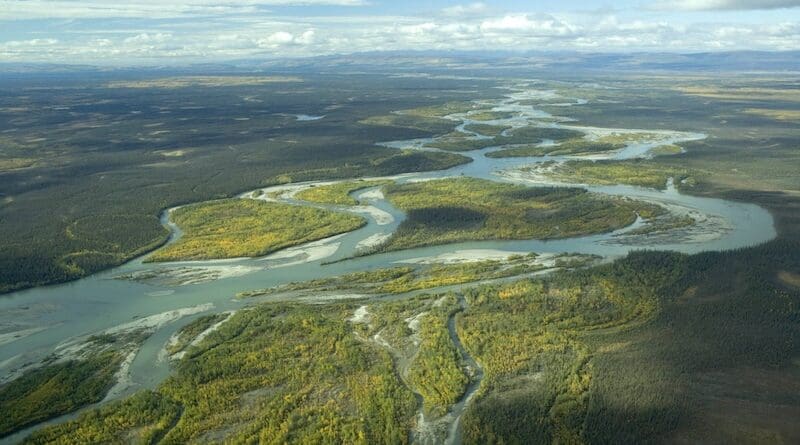
The Yukon Flats National Wildlife Refuge is seen from the air 
 (Photo provided by U.S. Fish and Wildlife Service)

March 22, 2026 
 Alaska Beacon
By James Brooks

(Alaska Beacon) — The Alaska Department of Natural Resources has tentatively decided that oil and gas exploration should be allowed on state land in the vicinity of the Yukon River.

In a public notice published March 4, the agency said its determination for the Yukon Flats “comports with constitutional direction to encourage the development of the state’s resources, and with the legislature’s direction that it is in the state’s interest to develop the state’s oil and gas resources.”

The flats are a large area of wetlands and lowlands at the confluence of the Yukon and Porcupine rivers in Interior Alaska.

DNR’s preliminary approval is subject to a public notice process, and public comments on the agency’s position are due by April 6. They may be emailed to dog.bif@alaska.gov.


This month’s public notice comes as the oil and gas firm Hilcorp enters another year of operations in the area with Doyon Ltd., the regional Alaska Native Corp. for Interior Alaska.

Last summer, Hilcorp drilled for oil on land leased from Doyon near the village of Birch Creek, south of Fort Yukon. Doyon’s subsidiary, Doyon Drilling, conducted much of the work.

As that drilling took place, Hilcorp applied for permission to conduct oil and gas exploration on state land nearby.

Most of the surrounding territory is within the Yukon Flats National Wildlife Refuge, an area prized for its waterfowl nesting and breeding grounds.

The only state land within the requested area is on “subsurface waters,” riverbeds and lake beds controlled by the state under federal law and a 2019 U.S. Supreme Court decision.

Hilcorp’s permit application is on hold until the state completes the regulatory process covered by this month’s public notice.

The Yukon Flats are in what the state has colorfully labeled “Middle Earth” — a vast swath of Alaska between the North Slope and Cook Inlet that has no active oil and gas production and hasn’t been thoroughly surveyed for oil and gas.

The determination signed this month by Derek Nottingham, director of the Division of Oil and Gas, states that “the land within the Yukon Flats determination area has unknown oil and gas potential and there is limited access to existing oil and gas infrastructure in much of the region. Although oil and gas exploration has occurred in the past, technological advancements may facilitate more effective and efficient exploration. Further, the state would benefit from geological and geophysical data that may result from potential exploration.”

If the state does determine that oil and gas exploration is appropriate in the area, it would then have to go through a separate process to determine whether Hilcorp in particular should be given permission to explore.

A similar process took place in the Susitna River valley last year.

State permission in the Yukon Flats doesn’t automatically mean that a company could plop a drilling rig in the middle of the Yukon River. That kind of development plan would be subject to many different levels of regulation by several state and federal agencies.

Instead, the biggest impact is likely to be in cases where subsurface rights are split between the state and Native corporations. If an underground oil pool is beneath land with split ownership, ownership of that pool could be complicated.

An explorer working from corporate land wouldn’t have to worry about ownership issues if it also holds a permit from the state.

In Hilcorp’s case, the Birch Creek area being leased from Doyon is dotted with lakes whose bottoms could be state-owned.

Hilcorp has not yet announced its plans for the summer 2026 season. Last year, it had plans to drill two exploration wells but ended up drilling only one, according to data published by the Alaska Oil and Gas Conservation Commission.

That well stopped work in October, but significant amounts of equipment, including a drill rig, remain on site at Birch Creek.

Sarah Obed, a spokeswoman for Doyon, said by email that the company will be sharing an update with shareholders soon and is grateful for local residents’ collaboration on the project.

“As always, Hilcorp and Doyon will prioritize shareholder employment when opportunities arise and will continue to work closely with partners and our communities through this upcoming season and beyond,” she wrote by email.


Alaska Beacon

Alaska Beacon is an independent, nonpartisan news organization focused on connecting Alaskans to their state government. Alaska, like many states, has seen a decline in the coverage of state news. We aim to reverse that.