Showing posts sorted by relevance for query CHILD LABOR. Sort by date Show all posts

Wednesday, July 13, 2022

A blockchain trial helps eliminate child labor (and safeguard education)

People all over the world enjoy sweets and desserts made from chocolate and cocoa after meals or during breaks from work. Few are aware that much of the cacao used in their production is harvested by children who are forced to work instead of attending school. JICA recently collaborated with Deloitte Tohmatsu Group in an initiative that used blockchain technology in an effort to eradicate child labor and safeguard children's educational opportunities. The project took place in Côte d'Ivoire in West Africa, where many children labor in support of the world's largest cocoa-producing country.
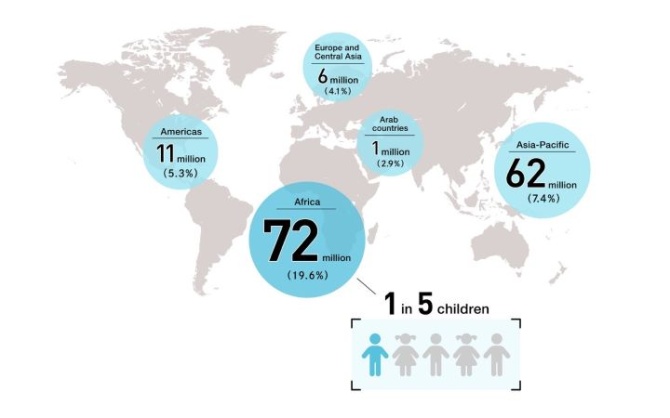
photoNumber of child laborers in each region. The figures in parentheses are the proportion of children who are laborers.

Child labor is on the rise in Africa: One in five is now involved.

The International Labor Organization (ILO) estimates that one in ten children are child laborers. In Africa, where child labor is most common, the rate is one in five. Seventy percent of the world's working children are engaged in the agricultural sector, which includes the production of cacao and coffee beans. Most of them are also engaged in domestic labor, helping their parents and not attending school. Because it deprives children of educational opportunities, child labor continues to be a global problem. Although it has been decreasing in the Asia-Pacific region, Latin America, and the Caribbean since 2016, it is actually increasing in Sub-Saharan Africa.

One of the major issues regarding child labor is that it prevents children from attending school. Depriving children of educational opportunities greatly limits their future access to jobs that provide sufficient income.

Côte d'Ivoire accounts for 43 percent of the world's cocoa production. It is reported that 38 percent of the country’s children between the ages of 5 and 17 who are raised in cocoa-producing households are engaged in child labor related to cocoa production.*1 There are multiple reasons for the proliferation of child labor. Côte d'Ivoire’s many small, family-owned farms rely on children for labor—a practice that has been passed down from generation to generation. Another major factor is that as consumers demand cheaper products, costs are shifted onto farmers, reducing their income. Of course, using children for the labor helps lower costs.
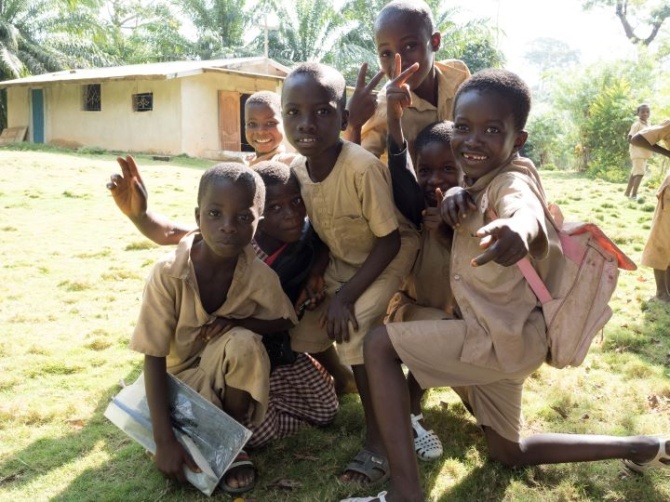
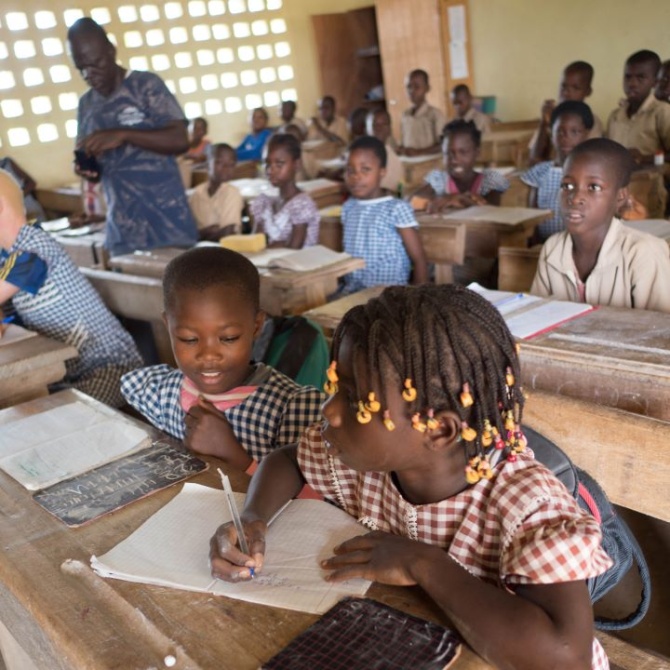
photoSchool children in the rural community of Gagnoa, south-central Côte d'Ivoire. The enrollment rate of primary school in Côte d'Ivoire’s largest city of Abidjan is 91.1 percent and the junior high school enrollment rate is 62.4 percent. In contrast, the enrollment rate in rural areas is lower: 74.1 percent for primary schools and 38.5 percent for junior high schools. (From Integrated regional survey on employment and the informal sector 2017)

photoChildren attending classes at the same school as above. The literacy rate among those aged 15 and older in Côte d'Ivoire has improved significantly, from an extremely low 43.9 percent in 2014 to 89.9 percent in 2019. However, many people in rural areas are still unable to read and write. (From UNESCO Institute of Statistics: http://uis.unesco.org/en/country/c)

The blockchain-based child labor deterrent system

In order to eliminate child labor, it is important to make the production process of cacao transparent. This makes buyers such as exporters, retailers, and consumers aware of issues related to production, including child labor and farmer poverty. Buyers who are aware of these problems can be encouraged to purchase sustainable cacao instead at a premium (incentive) price. Paying this premium to farmers who do not employ child laborers not only improves these farmers' incomes, but improves their future quality of life by liberating the children from work so that they can receive an education.
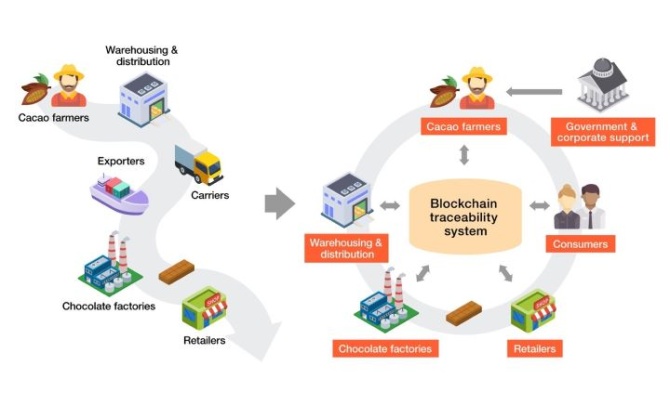
photoThe current supply chain (above left), in which information channels between producers (e.g. farmers) and buyers (e.g. retailers) are not interconnected. Information from the buyer side to the producer side is not traced, making it impossible for retailers, for example, to grasp the nature of problems in production areas. The goal is a circular supply chain (above right) in which producers and buyers share information in real time. Blockchain technology can be used to ensure traceability while preserving information.

JICA collaborated with Deloitte Tohmatsu Group for establishing a system for monitoring child labor by utilizing blockchain technology to make the current situation more transparent.

Blockchain technology allows many participants to share the same data, and protects the reliability of any information shared on this system. It is characterized by its high transparency and low cost of operation, as once registered, all the data is extremely difficult to alter and cannot be erased.

The project started as a trial demonstration in November 2021 in Gagnoa, a rural community 140 kilometers southwest of Yamoussoukro, the capital of Côte d’Ivoire. Participants include farmer-parents of children, members of farmer organizations, teachers and other school staff, and the monitoring team consisting of members of Beyond Beans, an NGO working to eradicate child labor practices in West Africa’s cocoa cultivation.

In the first step, school teachers input data of the attendance of the children into a database, while representatives from the farmer organizations also input information as to whether child labor was used on their farms. If two correlated entries did not match, the monitoring team interviewed both parties and conducted field visits before correcting the database entries. Then local traders paid premium prices for the cocoa beans produced by those farmers’ groups that had low rates of child labor and high rates of school attendance. Meanwhile, schools were rewarded for the accurate input of information in the form of maintenance and renovation of school facilities, improved school lunches, and educational materials.

As a further incentive, the project team provided cash or mobile funds to farmers’ organizations on behalf of the operators. Retailers and consumers did not take part in this demonstration experiment; however, the database will be accessible in the future through QR codes or other means attached to products, allowing buyers to instantly check the information registered with the database. By utilizing blockchain technology with a database, producers and buyers can share information with a high degree of assurance. The application of this blockchain system is also expected to expand in the future to provide information about financial services (such as payments and loans) that are available to farmers.
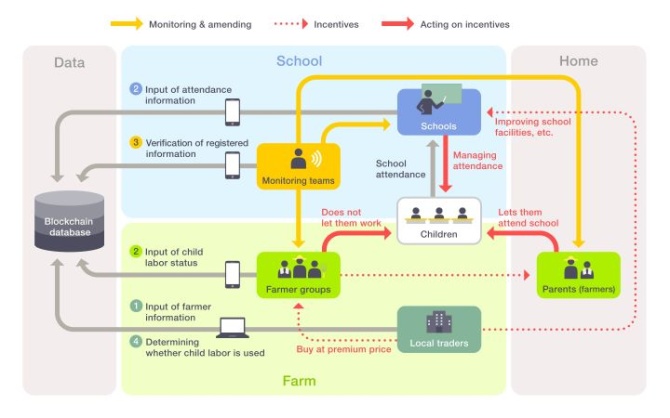
photoThe flow of data input and incentives in a blockchain system

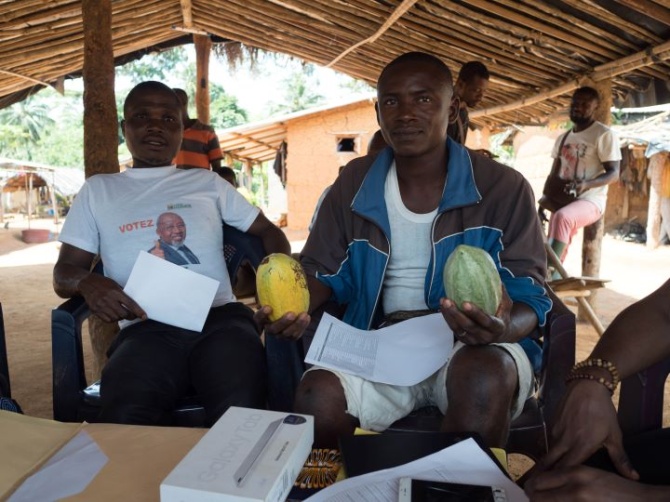
photoThe leader of a local farmers’ group (holding cacao nuts) receives a computer terminal in which data will be regularly input.

photoThe monitoring team checks information in the database using a terminal.

A successful demonstration: "We want our children to go to school."

ONO Miwa of Deloitte Tohmatsu Consulting was in charge of the field survey. “The farmers and schools we asked to cooperate with this experiment were very supportive,” she said. In addition to their curiosity about this novel idea, many of them were eager to see a decrease in child labor. Global awareness of child labor has been increasing. European and US companies involved in the chocolate business need to certify that they use cacao harvested without child labor, and they have been working on programs to eliminate child labor and to improve farmers' incomes. The government of Côte d’Ivoire is also aware of the problem, and is acting on measures such as the regular declaration of the status of child labor, as monitored by NGOs and local volunteers who patrol farmland areas. Prior to this demonstration, the farm management company that got involved was already implementing a program to stop child labor in the area, so awareness of this issue has spread among the farmers as well.

The results of the demonstration experiment proved the effectiveness of this system. The rate of involvement by farmer groups was 100 percent, whereas the involvement rate by schools reached 95.6 percent. When the registered data was inconsistent, the monitoring team interviewed the children and their parents, who confirmed that most inconsistencies were due to input or application errors. Child labor was revealed in three cases out of 2,366 applications (103 cases applications were not made due to the school's communications environment or excessive workload).

FUJINO Kojiro, Chief Representative of the JICA Côte d'Ivoire Office, was involved in the survey. “Our impression is that this system is viable from a technical standpoint,” he said. “We think this system will enhance the reliability of child labor reporting because it enables more efficient and accurate monitoring of child labor compared to conventional methods that rely on manpower.” He spoke about the needs of the community. “The truth is that farmers want to send their children to school, and their children want to go to school too,” he said. “Education is essential to improving their lives. Free of child labor, they can go to school. It's important to design incentives to achieve this.”
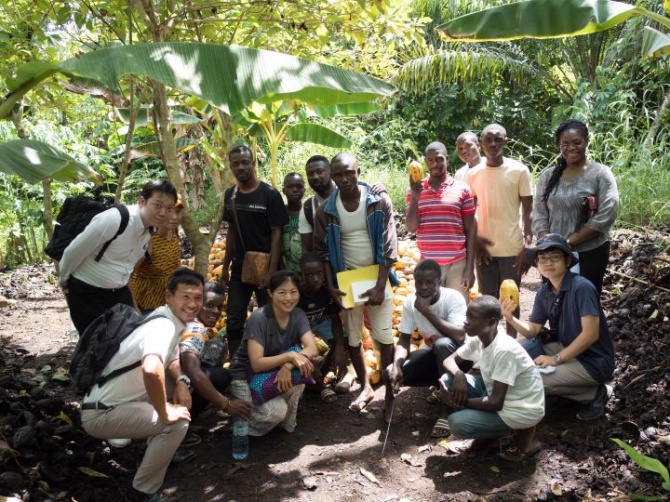
photoMs. Ono of Deloitte Tohmatsu Consulting (bottom row, third from left) poses with the research team and farmers who participated in the demonstration experiment.

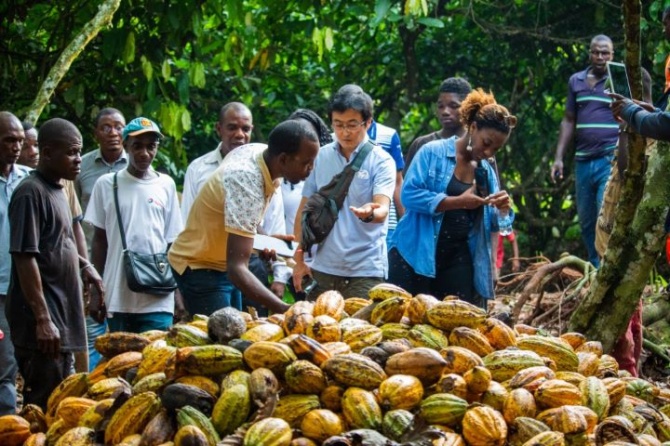
photoJICA’s Mr. Fujino (center) interviewing farmers who took part in the project.

Making the system sustainable

Certain issues were revealed in the process of this field survey. Some data were unable to be input on the application due to the communications environment. The application should be improved so that daily data can be input even in areas with a poor communication. In addition, in order to keep communities involved over time, it is important to provide incentives for farmers who do not use child labor to improve their income, for example, by ensuring their products are purchased at a premium price.

A consumer survey conducted in Japan at the same time as the demonstration revealed that teenagers are the demographic most interested in purchasing sustainable chocolate. The most commonly stated reason was to alleviate poverty and cooperate internationally (nearly 35 percent), followed by the desire to safeguard the rights of cacao producers (31 percent). These results indicate a high awareness of the desire for sustainable products among teenagers. Furthermore, there were people who are willing to spend 1.2 to 2 times as much for sustainable products. However, awareness of sustainability goals is low overall, so the need to raise consumer consciousness about production areas and to encourage consumers to purchase more sustainable products at premium prices remains. The proceeds gained through consumer purchases at premium prices will bolster farmers' incomes, protecting their children's educational opportunities, and creating a “chain of happiness.
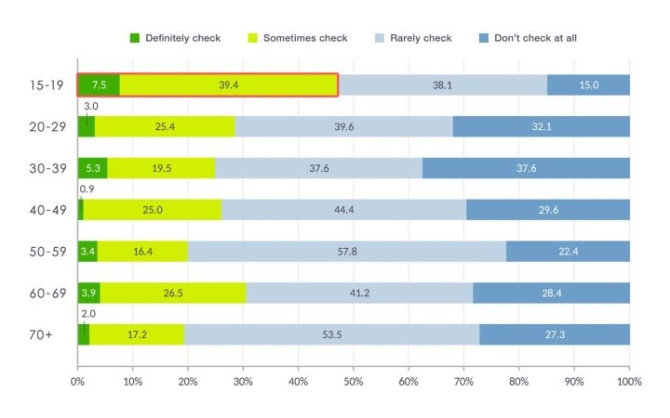
photoPercentages of sustainable chocolate buyers in Japan who check the sustainable certification mark at time of purchase, by age group. Nearly half of the teenagers surveyed said they check the mark before purchasing—a remarkably high ratio compared to other age groups. (From a web-based survey conducted from October 29 to November 1, 2021. This survey included at least 100 people in each age group; a total of 1,400 respondents)

Based on the results of the experiment, government agencies and companies in Côte d'Ivoire have expressed interest in this system as a new method of monitoring child labor, and are considering using it in other projects. It may be possible to use the system to build upon other programs to eliminate child labor and improve farmers' incomes, helping to achieve a sustainable, positive society where children do not have to engage in child labor and can attend school.

WAKABAYASHI Motoharu, Deputy General Director of JICA's Africa Department, spoke about using blockchain-based traceability systems more widely in the future.

“By recording the origin of mineral resources and timber and distributing products free of human rights issues and fraud, we can protect human rights, and we can also work together to prevent corruption by making administrative procedures transparent via the blockchain,” he said. “Technology is a crucial tool for overcoming many of Africa’s challenges. JICA intends to continue providing support by connecting social issues with technology."

Tuesday, March 26, 2024

Kids as young as 14 were found working at a Tennessee factory that makes lawn mower parts


Laura Strickler
Tue, March 26, 2024 


Immigrant children as young as 14 were found working illegally amid dangerous heavy equipment at a Tennessee firm that makes parts for lawn mowers sold by John Deere and other companies, according to Labor Department officials.

The company, Tuff Torq, was fined nearly $300,000 for hiring 10 children. As part of a consent agreement with the federal government, the company is also required to set aside $1.5 million to help the children who were illegally employed. Ryan Pott, general counsel for Tuff Torq’s majority owner, the Japanese firm Yanmar, acknowledged the violations to NBC News.

“The department will not tolerate companies profiting on the backs of children employed unlawfully in dangerous occupations,” said Seema Nanda, the department’s chief legal officer, whose office obtained the consent judgment against Tuff Torq. “Tuff Torq has agreed to disgorge profits, which will go to the benefit of the children. This sends a clear message: putting children in harm’s way in the workplace is not only illegal, but also comes with significant financial consequences.”

Tuff Torq Corporation (Google)

The Labor Department did not specify what work the children were doing. But Labor official Juan Coria said what his investigative team found in Tuff Torq’s “very busy” Morristown manufacturing plant was “astonishing.”

Coria, southeast regional administrator for the Labor Department’s Wage and Hour Division, described an environment that he says caused anxiety among his investigators who witnessed children as young as 14 working late at night at the 24-hour manufacturing facility amid power-driven equipment that was being moved around the plant.

Pott, the general counsel for Tuff Torq’s majority owner, said the child workers were temporary and were not hired directly by Tuff Torq. He said they used fake names and false credentials to obtain jobs through a temporary staffing agency, and said Tuff Torq is “transitioning” away from doing business with the staffing company.

“Tuff Torq is dedicated to ensuring that their products and services are produced under ethical conditions, with a strong emphasis on fair labor practices, and Tuff Torq is further strengthening our relevant training and compliance programs,” said Pott. “We are also actively engaging with our suppliers to reinforce our expectations regarding ethical labor practices and collaborate with them on implementing our updated policies.”

According to the Labor Department, within 30 days Tuff Torq must also hang signs at every entrance to the plant that say, “Stop! You must be at least 18 years of age to enter and work in this building.”

Nanda said through such agreements the agency is sending a message to the company and its whole community of suppliers and contractors. “They will look at their supply chain meaning their contractors, their staffing agencies, and make sure that they are doing these things as well.”

John Deere did not respond to a request for comment.

Labor officials say their investigation into the company began almost a year ago, in spring 2023, and investigators visited the facility multiple times. Officials declined to say what sparked the investigation.

The Labor Department has prioritized child labor enforcement since last spring amid a 152% increase in children found to be illegally employed since 2018, according to department figures.

This article was originally published on NBCNews.com

Tennessee parts supplier for John Deere, Yamaha fined for illegally employing children. What to know


Keenan Thomas, Knoxville News Sentinel

Updated Tue, March 26, 2024

The U.S. Department of Labor’s Office of the Solicitor is cracking down on Morristown manufacturer Tuff Torq Corporation for illegally employing children as young as 14-years-old.

Tuff Torq will pay a $296,951 penalty after the department's Wage and Hour Division confirmed several children worked for the outdoor power equipment parts manufacturer. Additionally, Tuff Torq will set aside $1.5 million from profits made during the kids' employment, which will go to the kids illegally employed.

The department received the federal consent judgement to hold Tuff Torq Corporation accountable and make sure the company complies with federal child labor laws.

“Even one child working in a dangerous environment is too many,” Wage and Hour Division administrator Jessica Looman said in a press release. “Over the past year, we have seen an alarming increase in child labor violations, and these violations put children in harm’s way. With this agreement, we are ensuring Tuff Torq takes immediate and significant steps to stop the illegal employment of children. When employers fail to meet their obligations, we will act swiftly to hold them accountable and protect children.”

U.S. Department of Labor headquarters
How many kids did Tuff Torq Corporation employ illegally?

The department determined that 10 kids illegally worked for Tuff Torq under opressive child labor conditions.

The Wage and Hour Division began probing in 2023, but received proof of the unlawful work Jan. 23, 2024. On that day, investigators witnessed a child operating a "power-driven hoisting apparatus" like a forklift. Workers under 18 are prohibited from operating this type of machinery.

The department filed the action against Tuff Torq Corporation March 22, 2024, in the U.S. District Court for the Eastern District of Tennessee at Greeneville.
What does Tuff Torq Corporation say about the Department of Labor findings?

Yanmar Group, who owns Tuff Torq Corporation, emailed a statement to Knox News.

Yanmar states that "Tuff Torq did not directly hire and employ the individuals" and that the minors were provided through a "temporary workforce staffing agency."

Yanmar adds the employees used fake idenentification and names during the hiring process through the agency.

"Tuff Torq is dedicated to ensuring that their products and services are produced under ethical conditions, with a strong emphasis on fair labor practices, and Tuff Torq is further strengthening our relevant training and compliance programs," Yanmar spokesperson Ryan Pott said in the email. "We are also actively engaging with our suppliers to reinforce our expectations regarding ethical labor practices and collaborate with them on implementing our updated policies."
What else will Tuff Torq Corporation have to do under the judgement?

Tuff Torq Corporation will stop employing children and comply with federal child labor laws moving forward. In addition to the penalty and payments, Tuff Torq Corporation agrees to do the following:

Work with community organizations to regularly train staff, managers and contractors


Create a tip line for anonymous reporting of child labor and other Fair Labor Standards Act (FLSA) violations


Allow unplanned and warrantless searches of the Tuff Torq Corporation facility for three years


Abstain from creating new contracts with staffing agencies or contractors with FLSA violations


Require contractors to disclose violations and hiring protocols before entering into contracts
What does Tuff Torq Corporation work in?

The manufacturer supplies power equipment parts for companies like John Deere, Toro and Yamaha. Tuff Torq Corporation invests in new technology, tests products and provides electric alternatives.

Tuff Torq Corporation operates at 5943 Commerce Blvd. in Morristown.
What are Tennessee's child labor laws?

Tennessee's Child Labor Act protects minors between the ages of 14 and 17 as they enter into the workforce. Protections under this act include hours working, types of jobs and exceptions for Work Based Learning Programs.

A few off-limits jobs and hazardous environments for workers under 18 include manufacturing establishments, meat packing, demolition and operation of power-driven hoisting apparatuses.

The Child Labor Act includes rules for hours minors can work throughout the week. Kids 14 and 15 can only work three hours a day during school days after 7 a.m. but before 7 p.m. for a total of 18 hours a week. When school isn't in session, minors can work up to eight hours a day between 6 a.m.-9 p.m. for up to 40 hours a week.

For kids 16 and 17, the rules are a little more flexibile as long as minors aren't working during classes and only between 6 a.m.-10 p.m. They can get a parental slip signed to work up until midnight, but only for a three days a week between Sunday and Thursday.

Minors also get a mandatory 30 minute break for every six hours of work in a day.
How many child labor violations has the U.S. Department of Labor investigated?

The department investigated 955 cases with child labor violations in 2023. This included 5,792 children nationwide with 502 of those kids employed in either violation or hazardous conditions.

As a result, the department assessed employers for more than $8 million in civil money penalties.

This article originally appeared on Knoxville News Sentinel: Tennessee parts supplier for John Deere fined for employing children


Manufacturing company ordered to turn over $1.5M in profits for child labor violations

LAURA ROMERO
Mon, March 25, 2024 

Manufacturing company ordered to turn over $1.5M in profits for child labor violations

A Tennessee parts manufacturer for major companies including John Deere and Yamaha has been ordered to turn over $1.5 million in profits after the Department of Labor found children employed in dangerous jobs.

"The U.S. Department of Labor's Office of the Solicitor has obtained a federal consent judgment that requires a Morristown manufacturer of outdoor power equipment components for major companies including John Deere, Toro and Yamaha to stop employing children illegally and to follow federal child labor laws in the future," the Labor Department said in a statement Monday.

The $1.5 million that the company, Tuff Torq, will have to turn over will be used to compensate victims, department officials said.

MORE: Labor Department cites meatpacking cleaning company for 'oppressive child labor' practices

The company was also fined $296,951 for subjecting "10 children to oppressive child labor," according to the department.

During their probe, investigators said they obtained clear evidence when they "observed a child operating a power-driven hoisting apparatus, an occupation prohibited for workers under the age of 18."

"The DOL did identify temporary workforce employees at the Tuff Torq facility that were subject to child labor violations," an attorney for Tuff Torq said in a statement. "The temporary workforce employees were provided to and placed at Tuff Torq by a temporary workforce staffing agency. Tuff Torq did not directly hire and employ the individuals. The violations investigation revealed that the temporary employees identified as child labor violations had utilized fake names and credentials in the staffing agency hiring process."

PHOTO: Tuff Torq Corporation in Morristown, Tenn. (Google Maps Street View)

"Tuff Torq is dedicated to ensuring that their products and services are produced under ethical conditions, with a strong emphasis on fair labor practices, and Tuff Torq is further strengthening our relevant training and compliance programs," the attorney said.

"Even one child working in a dangerous environment is too many," said Jessica Looman of the Labor Department's Wage and Hour Division. "Over the past year, we have seen an alarming increase in child labor violations, and these violations put children in harm's way."

Last year, the Labor Department investigated 955 cases of child labor violations, involving 5,792 children nationwide, including 502 children employed in violation of hazardous occupation standards.

Manufacturing company ordered to turn over $1.5M in profits for child labor violations originally appeared on abcnews.go.com


Thursday, August 24, 2023

Biden admin to fund $4M study linking climate change to child labor, trafficking in Nepal, grant docs show

Danielle Wallace
Wed, August 23, 2023 

The Biden administration is funding a $4 million project to determine a connection between child labor and climate change in the South Asian country of Nepal.

The U.S. Department of Labor on Monday announced the availability of $4 million in federal taxpayer dollars to be released through its Bureau of International Labor Affairs (ILAB) "to fund a technical assistance project in Nepal to increase the responsiveness of local communities to child labor and/or forced labor in the context of a changing climate." Interested parities have until Oct. 9 to apply for the massive grant, and award decisions are expected to be announced by the end of December.

One of the desired outcomes is "increased understanding of the link between climate change and vulnerability to child labor and/or forced labor risks," while another is "increased implementation of child-centered, gender-sensitive and socially inclusive climate adaptation initiatives," according to documents released on the federal government's grant website.

The Labor Department said applicants must propose strategies "based on a gender equity and social inclusion analysis to identify potential barriers of access to and control of resources and decision-making faced by men, women, boys and girls from diverse backgrounds and underrepresented populations, and how these barriers will be overcome by the project."

President Biden's Department of Labor is aiming to fund a $4 million study linking climate change to child labor in Nepal.

"Locally-led" climate change strategy, according to the grant details, should be collaborative with the Nepalese government to address the "priorities of climate-vulnerable populations, such as children, women, indigenous populations, and other disadvantaged groups."

"While further research is needed on the link between climate change and child labor and forced labor, there is evidence of climate change increasing vulnerability to labor exploitation and trafficking, gender-based violence and trafficking of women and girls, child labor, and forced labor and trafficking," the grant documents say.

Rep. Mike Johnson, R-La., who sits on the House Judiciary Committee, is among critics who ripped the Biden administration for shelling out $4 million toward this study.

"The Biden administration’s priorities are simply absurd," Johnson told the Washington Examiner. "While 5.8 million Americans are out of work, Biden’s DOL is spending money to investigate how 'a changing climate in Nepal' impacts child labor?!?"

Students hold a poster to mark the World Day Against Child Labor in Kathmandu, Nepal, June 12, 2022. (Getty Images)

"This failed, woke approach to governance is destroying our country," he added.

Fox News reached out to the Department of Labor for comment on the grant and the GOP criticism but they did not immediately respond.

Kathleen Sgamma, president of Western Energy Alliance, an energy and public lands trade group with 200 member companies, told the Examiner the Biden administration is trying to use climate change as an "explanation for everything" instead of offering viable solutions to lift the Nepalese people from poverty.

"One way to do that is by helping them access more reliable, affordable energy in the form of oil, natural gas, and coal, which would actually reduce the poverty that causes families to have to rely on child labor," Sgamma said. "A convoluted study about climate change does nothing to lift families out of poverty and free children to go to school instead of work in sweatshops."


In recent years, the number of children working in the brick kilns of Nepal has boomed after the 2015 earthquake and the COVID-19 pandemic, Getty reported.

"The real irony is that misguided climate change policies in the West that favor intermittent solar energy over reliable fossil fuels are actually directly leading to slave labor in China, where solar panels are made by enslaved Uyghurs," Sgamma added.

Tax forms show Thea Lee, deputy undersecretary and leader of ILAB, which will distribute the grant funding, served as president of the progressive Economic Policy Institute think tank between 2018 and 2021 and has also sat on the board of the Congressional Progressive Caucus Center, the Examiner reported.

The Labor Department said Nepal ranks 10th on the list of countries most at risk of climate change, according to the Global Climate Risk Index 2021. The World Bank estimates that 80% of Nepal’s population faces "climate-related peril," according to the grant details.

Nepal also has pernicious rates of child labor and forced labor, the Labor Department said, estimating 1.1 million children are in child labor, 222,493 of whom are in hazardous work and 85% are working in agriculture. Agri

Monday, February 27, 2023

U.S. announces plan to reverse rising 'scourge' of illegal child labor
By Sheri Walsh

Labor Secretary Marty Walsh, along with the Department of Health and Human Services, announced a new interagency task force Monday to end "Child Labor Exploitation," following a 69% increase in illegal child labor in the United States over the last five years. 
File photo by Bonnie Cash/UPI | License Photo

Feb. 27 (UPI) -- The Biden administration is taking new steps to end illegal child labor, following a 69% increase in the number of children employed illegally by U.S. companies over the last five years.

The Departments of Labor, Health and Human Services announced a new interagency task force on "Child Labor Exploitation" on Monday, in addition to a national enforcement initiative on child labor.

"We see everyday the scourge of child labor in this country, and we have a legal and moral obligation to take every step in our power to prevent it," said Secretary of Labor Marty Walsh.

"Too often, companies look the other way and claim that their staffing agency, or their subcontractor or supplier, is responsible," Walsh added. "Everyone has a responsibility here."

RELATEDCompany pays $1.5 million for breaking child labor laws in 8 states, Labor Department says

The Labor Department also announced plans to hold all employers accountable to ensure child labor is removed from supply chains. Many of the children are migrants from Latin America, who fled violence and poverty, and do not have a parent in the United States.

"Every child in this country, regardless of their circumstance, deserves protection and care as we would expect for our own child," said Health and Human Services Secretary Xavier Becerra.

"At HHS, we will continue to do our part to protect the safety and well-being of unaccompanied children by providing them appropriate care while they are in our custody, placing them in the custody of parents, relatives and other appropriate sponsors after vetting and conducting post-release services including safety and well-being calls," Becerra added.

Earlier this month, the Labor Department announced $1.5 million in civil penalties against Packers Sanitation Services for violating child labor laws in eight states.

The department said the company employed more than 102 children between the ages of 13 and 17 "in hazardous occupations and had them working overnight shifts at 13 meat processing facilities in eight states."

The Labor Department said it currently has more than 600 child labor investigations underway throughout the country.

In addition to the new task force and enforcement initiative, the administration also wants mandated follow-up calls for unaccompanied children who report safety concerns, expanded post-release services, increased funding and new training materials to educate unaccompanied children on their rights.

The Labor Department is also calling on Congress to increase penalties for child labor violations, which are currently $15,138 per child. The department argues the penalties are not high enough to deter large companies, while urging Congress to add protections for those who report child labor law violations.

"This is not a 19th century problem -- this is a today problem," Walsh said. "We need Congress to come to the table, we need states to come to the table. This is a problem that will take all of us to stop."

Saturday, May 27, 2023

FORWARD TO THE PAST
U$ Kids could fill labor shortages, even in bars, if these lawmakers succeed

By HARM VENHUIZEN
May 25, 2023

 Iowa Governor Kim Reynolds holds a news conference on COVID-19 in Johnston, Iowa, Tuesday, May 19, 2020. As the federal government scrambles to crack down on surging child labor violations, some state lawmakers want to let children work longer hours and in more hazardous occupations. In addition to allowing 16- and 17-year-olds to work unsupervised in child care centers last year, the Iowa Legislature sent a bill to Republican Gov. Reynolds earlier this month to expand the hours minors can work and allow 16- and 17-year-olds to serve alcohol in restaurants. 
(Olivia Sun/The Des Moines Register via AP, Pool, File)

MADISON, Wis. (AP) — Lawmakers in several states are embracing legislation to let children work in more hazardous occupations, for more hours on school nights and in expanded roles, including serving alcohol in bars and restaurants as young as 14.

The efforts to significantly roll back labor rules are largely led by Republican lawmakers to address worker shortages and, in some cases, run afoul of federal regulations.

Child welfare advocates worry the measures represent a coordinated push to scale back hard-won protections for minors.

RELATED COVERAGE
– US urges meat companies to ensure they don't use child labor
– White House promises crackdown on migrant child labor
– Investigators: Firm that cleans meat plants employed minors

“The consequences are potentially disastrous,” said Reid Maki, director of the Child Labor Coalition, which advocates against exploitative labor policies. “You can’t balance a perceived labor shortage on the backs of teen workers.”

Lawmakers proposed loosening child labor laws in at least 10 states over the past two years, according to a report published last month by the left-leaning Economic Policy Institute. Some bills became law, while others were withdrawn or vetoed.

Legislators in Wisconsin, Ohio and Iowa are actively considering relaxing child labor laws to address worker shortages, which are driving up wages and contributing to inflation. Employers have struggled to fill open positions after a spike in retirements, deaths and illnesses from COVID-19, decreases in legal immigration and other factors.


The job market is one of the tightest since World War II, with the unemployment rate at 3.4% — the lowest in 54 years.

Bringing more children into the labor market is, of course, not the only way to solve the problem. Economists point to several other strategies the country can employ to alleviate the labor crunch without asking kids to work more hours or in dangerous settings.

The most obvious is allowing more legal immigration, which is politically divisive but has been a cornerstone of the country’s ability to grow for years in the face of an aging population. Other strategies could include incentivizing older workers to delay retirement, expanding opportunities for formerly incarcerated people and making child-care more affordable, so that parents have greater flexibility to work.

In Wisconsin, lawmakers are backing a proposal to allow 14-year-olds to serve alcohol in bars and restaurants. If it passed, Wisconsin would have the lowest such limit nationwide, according to the National Institute on Alcohol Abuse and Alcoholism.

The Ohio Legislature is on track to pass a bill allowing students ages 14 and 15 to work until 9 p.m. during the school year with their parents’ permission. That’s later than federal law allows, so a companion measure asks the U.S. Congress to amend its own laws.

Under the federal Fair Labor Standards Act, students that age can only work until 7 p.m. during the school year. Congress passed the law in 1938 to stop children from being exposed to dangerous conditions and abusive practices in mines, factories, farms and street trades.

Republican Arkansas Gov. Sarah Huckabee Sanders signed a law in March eliminating permits that required employers to verify a child’s age and a parent’s consent. Without work permit requirements, companies caught violating child labor laws can more easily claim ignorance.

Sanders later signed separate legislation raising civil penalties and creating criminal penalties for violating child labor laws, but advocates worry that eliminating the permit requirement makes it significantly more difficult to investigate violations.

Other measures to loosen child labor laws have been passed into law in New Jersey, New Hampshire and Iowa.

Iowa Republican Gov. Kim Reynolds signed a law last year allowing teens aged 16 and 17 to work unsupervised in child care centers. The state Legislature approved a bill this month to allow teens of that age to serve alcohol in restaurants. It would also expand the hours minors can work. Reynolds, who said in April she supports more youth employment, has until June 3 to sign or veto the measure.

Republicans dropped provisions from a version of the bill allowing children aged 14 and 15 to work in dangerous fields including mining, logging and meatpacking. But it kept some provisions that the Labor Department says violate federal law, including allowing children as young as 14 to briefly work in freezers and meat coolers, and extending work hours in industrial laundries and assembly lines.

Teen workers are more likely to accept low pay and less likely to unionize or push for better working conditions, said Maki, of the Child Labor Coalition, a Washington-based advocacy network.

“There are employers that benefit from having kind of docile teen workers,” Maki said, adding that teens are easy targets for industries that rely on vulnerable populations such as immigrants and the formerly incarcerated to fill dangerous jobs.

The Department of Labor reported in February that child labor violations had increased by nearly 70% since 2018. The agency is increasing enforcement and asking Congress to allow larger fines against violators.

It fined one of the nation’s largest meatpacking sanitation contractors $1.5 million in February after investigators found the company illegally employed more than 100 children at locations in eight states. The child workers cleaned bone saws and other dangerous equipment in meatpacking plants, often using hazardous chemicals.

National business lobbyists, chambers of commerce and well-funded conservative groups are backing the state bills to increase teen participation in the workforce, including Americans for Prosperity, a conservative political network and the National Federation of Independent Business, which typically aligns with Republicans.

The conservative Opportunity Solutions Project and its parent organization, Florida-based think tank Foundation for Government Accountability, helped lawmakers in Arkansas and Missouri draft bills to roll back child labor protections, The Washington Post reported. The groups, and allied lawmakers, often say their efforts are about expanding parental rights and giving teenagers more work experience.

“There’s no reason why anyone should have to get the government’s permission to get a job,” Republican Arkansas Rep. Rebecca Burkes, who sponsored the bill to eliminate child work permits, said on the House floor. “This is simply about eliminating the bureaucracy that is required and taking away the parent’s decision about whether their child can work.”

Margaret Wurth, a children’s rights researcher with Human Rights Watch, a member of the Child Labor Coalition, described bills like the one passed in Arkansas as “attempts to undermine safe and important workplace protections and to reduce workers’ power.”

Wednesday, June 23, 2021

World’s No. 1 Stock Owner Grapples With Child Labor Dilemma


Lars Erik Taraldsen and Leanne de Bassompierre
Mon, June 21, 2021,\

(Bloomberg) --

In Oslo, where the world’s biggest sovereign wealth fund decides how to allocate $1.4 trillion, a huge contradiction lurks.

The fund is trying to reconcile a sustainable-investing mantra with the billions it owns in companies that source cocoa from regions where children pick beans that feed the world’s craving for chocolate. So far, it has chosen to stay involved rather than sell so it can push for positive change.

“We expect companies to work against child labor, but at the same time we recognize that child labor in supply chains and agriculture has complex underlying causes,” said Line Aaltvedt, a spokeswoman for the fund.

In a global financial world increasingly obsessed with ethical matters, the world’s biggest investors -- from BlackRock Inc. to Fidelity Investments -- are navigating gray areas and trying to figure out the best way to engage. While the Norwegian fund’s actions are primarily financial, as was the case when it sold $6 billion worth of companies that purely focus on oil exploration and production last year, ethical considerations increasingly play a part.

The stakes aren’t insignificant for Norway’s wealth fund, which according to its most recent filings owns shares valued at more than $16 billion in some of the world’s largest chocolate makers and confectioners, including Nestle SA, Hershey Co. and Barry Callebaut AG. The companies all acknowledge child labor exists in their supply chain, have explicit policies forbidding the practice and programs in place to mitigate the problem.

It’s the International Year for the Elimination of Child Labour, and the United Nations held its World Day Against Child Labor a week ago. Still, the practice remains hard to eradicate in the world’s cocoa farming regions. Just ask Nouffo.

He was rescued as part of a police operation to clamp down on child labor in Soubre, the heart of the Ivory Coast cocoa belt in early May. Nouffo said he was brought to the country from neighboring Burkina Faso by his father when he was 13 years old. He was left to work on his uncle’s plantation, where he was found splitting open cocoa pods with a machete.

“Two Ramadans have passed since I’ve been here,” said Nouffo in his limited French. That makes him 15 now.

Nouffo, who spoke while being held in a center in Soubre, said he worked seven days a week splitting open cocoa pods gathered by adult workers, drying them and then transporting them by motorcycle to buying centers. School was out of the question.

His uncle was among 24 people arrested as part of the two-day police raid in partnership with the National Committee for the Monitoring of Actions to Combat Child Trafficking, Exploitation and Labor, which is led by First Lady Dominique Ouattara.

Five of those arrested were sentenced to 20 years in prison for child trafficking, including Nouffo’s uncle, said Luc Zaka, the police commissioner in charge of the raid. Seventeen others were handed five years behind bars and two were released.

As supply chains in the cocoa market are difficult to track, it could not be established whether any of the world’s large chocolate makers were supplied by the farm Nouffo worked on.

Demanding Action

”We must increase the pressure on companies to force them to take responsibility, also for what happens further down the value chain,” Freddy André Ovstegard, a member of parliament for the Socialist Left Party who sits on the Standing Committee on Scrutiny and Constitutional Affairs, said in an email. He said he lodged a request Monday with the “Minister of Finance to explain how these concerns have been followed up.”

Last year, the Norwegian fund conducted about 3,000 meetings with portfolio companies to discuss how ESG targets were being met. Children’s rights were the topic of 17 such meetings. In 2019, it initiated talks with nine companies in the cocoa business on the subject.

“Typically, the chocolate producers are in the fund, while the cocoa producers are private farms in West Africa,” said Eli-Ane Lund, a spokeswoman for the ethics council that makes recommendations to guide the fund.

The debate usually revolves around how patient investors should be with transition assets – those with a self-improvement plan – and when it’s time to punish companies through exclusion. When it comes to child labor, mostly in the cocoa business but also in the coffee, tea, cotton, seeds and palm oil trade, the Norwegian fund has often decided to stay involved.

Take Barry Callebaut, the Swiss chocolate maker that says it will probably continue to have child labor in its supply chain until 2025. It counted Norway’s wealth fund among its biggest shareholders, with a 1.4% stake, the latest filings show.

The fund, which also meets with non-governmental organizations as part of its environmental, social and governance investing strategy, is putting pressure on firms like Barry Callebaut to improve, Carine Smith Ihenacho, chief corporate governance officer at the Oslo-based fund, said in an interview.

In another example, Norges Bank’s executive board asked the fund in 2018 to address the risk of child labor at UPL Ltd., an Indian agro-chemicals maker, and its Advanta Seeds unit.

“In our dialogue with the company, we have, among other things, addressed the need to prevent child labor in the supply chain and the company’s approach to monitoring the supply chain,” fund spokeswoman Aaltvedt said.

That led to Advanta recently updating its agreements with farmers and further developing procedures for monitoring the supply chain to uncover possible child labor. It also has information activities aimed at farmers, suppliers and local authorities to prevent child labor.

“Child labor in the production of hybrid cotton seeds and other seed varieties was among the very first issues considered by the Council on Ethics, and this was an issue that the council worked on for many years,” said Eli-Ane Lund, a spokeswoman for the council.

The ethics panel, an independent body, has made three recommendations for observation or exclusion of companies on child labor grounds: Monsanto Co. in 2006, Zuari Agro Chemicals Ltd. in 2013 and UPL in 2018. Of the three, only Zuari Agro Chemicals was actually excluded.

Global Footprint

With so much money to invest, Norges Bank Investment Management’s footprint spans the globe, and it owns close to 1.5% of all listed companies, making it the biggest stock owner in the world.

Other companies exposed to child labor that counted the fund as a shareholder as of the end of 2020 included Nestle, Hershey, Mondelez International Inc., Procter & Gamble Co., Starbucks Corp. and Lindt & Spruengli AG. The fund’s investments in those companies, including Barry Callebaut, amounted to more than $16 billion.

While some progress is being made, the task remains monumental.

Barry Callebaut says poverty is the root of the problem, and that it works to alleviate it, provide access to education and raise awareness. It has a code of conduct regarding human rights, forced labor and child labor that all employees are obliged to follow.

Working with the International Cocoa Initiative in 2019/20, the company monitored and took remedial action covering 113 farmer groups, including 39,909 farmers in Ivory Coast and Ghana. It uncovered 22,965 cases of child labor.

“ESG has moved from a peripheral investment criteria to a central one,” the company said in an emailed statement. “Barry Callebaut welcomes the dialogue with its shareholders on ESG topics.”

Read more: Supreme Court Backs Nestle, Cargill on Child-Slavery Suit

Read more: Switzerland Inc. Sweats as Global Accountability Vote Nears

Cocoa-producing nations in West Africa have come under increased pressure to clean up the industry, with a report last year sponsored by the U.S. government showing that despite chocolate companies pledging to cut child labor, the problem actually got worse in the 10 years prior to the publication of the report.

Lagging ESG Standards

While the EU prepares to introduce stricter laws later this year, Europe remains the leading destination for Ivorian beans, accounting for 67% of its cocoa exports. As fund managers wait for global ESG standards, they’ve created their own methodologies to fill in the perceived gaps.

Norges Bank Investment Management says divestments tied to ESG standards are set to rise as it screens for wrongdoers.

The fund has set seven criteria for sustainable investing, according to Ihenacho. For the S in ESG, it looks at how well companies protect children’s rights and human rights, whether they’re transparent taxpayers, and whether they avoid corruption.

Over the past two decades, the ethics council has successively introduced socially responsible guidelines for the fund manager to follow, ranging from selling stakes in fossil-fuel companies to blacklisting firms that abuse migrant workers or dabble in corrupt practices.

After Walmart Inc. was beset by criticism for human rights violations in 2005, including the risk of child labor, the fund sold out. The retail giant cleaned up its act and was removed from the fund’s exclusion list more than a decade later, in 2019. Norway now owns a stake in Walmart valued at about $2.1 billion.

In a more recent instance, the fund has for two years voted in favor of a proposal at Facebook Inc. “to assess the risk of possible exploitation of children on the company’s platforms,” Aaltvedt said.

Measuring Misconduct

The fund says it’s harder to catch companies guilty of social misconduct than to identify climate sinners.

“It’s quite clear that the S is in many ways harder to quantify and measure” than the E in ESG, Ihenacho said.

Amnesty International in Norway, which follows the wealth fund closely, says the screening can be tightened up.

“It would have been better if the fund could have avoided investing in a company where there’s a high risk of breaching the ethics council’s framework,” said Hanne Sofie Lindahl, political adviser at Amnesty in Oslo. “Preemptive screening in countries where we know that there are widespread abuses of human rights could help strengthen the fund’s ethical framework.”

The fund’s chief executive officer, Nicolai Tangen, says databases with different sustainability targets now used on portfolio companies will be used to improve its screening of companies being considered for addition.

“You have good and bad companies in all countries, really,” Tangen said in a June 2 live-streamed discussion. “The goal is to keep the rotten apples out of the basket.”

(Adds comment from opposition lawmaker in 13th paragraph)


©2021 Bloomberg L.P.

Monday, February 22, 2021

The 1.5 million child slaves behind your chocolate bar


Jillian S. Ambroz, DCReport @ RawStory
February 22, 2021


Enslaved cocoa plantation boys with their machetes in Ivory Coast 
(Terrence Collingsworth / IRAdvocates)

Jillian S. Ambroz, DCReport @ RawStory


Next time you take a bite of a chocolate bar, consider the small hands that farmed the cocoa beans.

Industrial food heavyweights like Nestlé USA, Hershey and MARS Inc., rely on cocoa grown in Côte D'Ivoire, the Ivory Coast, to make their confections. And the West African nation relies on enslaved child laborers to farm its cocoa crops, a well-known fact in the candy world that keeps the cocoa at favorably low prices for the big companies.

A class-action civil suit brought against the big chocolate companies sheds stark light on the entire candy bar industry. It outlines the relationships between the candy makers and the cocoa farms in West Africa, which provide 70% of the world's cocoa supply. Half is grown in Ghana and Ivory Coast. Most American chocolate is made from Ivory Coast cocoa beans.

In cocoa-growing regions of Ghana and the Ivory Coast more than 43% of all children between the ages of 5 and 17 living in agricultural households are engaged in hazardous work.

The plaintiffs are eight former enslaved children who, the court papers charge, were trafficked from their home country Mali, and sold to cocoa farms in the neighboring West African country.

"This lawsuit against the cocoa and chocolate industry is about much more than the eight Malian citizens who were trafficked and exploited as child slaves to harvest cocoa," says Fernando Morales-de la Cruz, founder of Cacao for Change and Cartoons for Change. Both organizations in Strasbourg, France, seek to raise awareness of child labor in both the cocoa and coffee trades.

Low Price Business Model


"The business model of the chocolate industry is cruel, exploitative, and illegal because it exploits between 2.2 and 3 million children worldwide, besides exploiting millions of farmers and farmworkers, all to buy cocoa for less than one-third of the real price," Morales-de la Cruz said.

He noted that a number of chocolate companies run their revenues through Switzerland to avoid taxes in countries, like the United States, where they earn their profits selling chocolate confections. "With their Swissploitation business model the cartel of cocoa companies 'saves' more than $20 billion per year buying cheap cocoa," he said.

This is the International Year for the Elimination of Child Labor as declared by the United Nation's International Labor Organization. The time is ripe to press for an end to profiting off exploitive and forced child labor

Make no mistake, chocolate is big business. The global chocolate market is a $136 billion business. It's expected to grow to $182 billion by 2025.

The plaintiffs filed the lawsuit in U.S. District Court in Columbia just days ago, selecting the U.S. legal system for several reasons. In 2000, Congress and President Bill Clinton enacted a landmark law against human trafficking known as the Trafficking Victims Protection Act, or TVPA. It has been reauthorized five times, most recently in 2019 with Congress earmarking $250 million toward the effort. That law gives us extraterritorial jurisdiction.

Our Government Knows


Since the 1990s, the U.S. State Department and the Department of Labor have recognized the existence of child slavery in the cocoa industry in the Ivory Coast. In 2004, State estimated there were at least 15,000 child laborers working on cocoa, coffee and cotton farms there. As the photo above shows these children wield machetes to do their dangerous harvesting.

A study conducted by Tulane University in 2015 found that the number of children engaged in the 'Worst Forms of Child Labor' on cocoa plantations grew substantially between 2009 and 2014.

In October 2020, a new report by the National Opinion Research Center (NORC) at the University of Chicago, which was funded by Labor, was released showing child labor had increased again in the cocoa production sector since the Tulane study.
Report Advertisement

In the 2018 to 2019 harvest season, the prevalence of children involved in hazardous child labor in the cocoa sector in the Ivory Coast and Ghana rose to almost 1.5 million children. That's also 1,000 times the official U.S. estimate in 2004. The Ivory Coast has fewer than 26 million people.

Hazardous Work


The study also found that in cocoa-growing regions of Ghana and the Ivory Coast more than 43% of all children between the ages of 5 and 17 living in agricultural households are engaged in hazardous work – not just child labor, but hazardous child labor.

Comparing a 10-year span concluding with the 2018-2019 harvest season, the NORC report found a 14% increase in child labor and a 62% increase in production over the same period.

"There is a large group of extremely poor, vulnerable boys in Mali and Burkina Faso who are on the verge of starving and will do about anything for the promise of a paying job," said Terry Collingsworth, who was arrested by the Ivory Coast police as he interviewed enslaved boys at a cocoa plantation. Collingsworth is executive director of International Rights Advocates.

Mali and Burkina Faso both border the Ivory Coast. Cacao refers to the beans harvested to make chocolate. Cocoa refers to the product after the beans are roasted.


Sweet Talk

So, what's the U.S. government doing besides bankrolling studies?

In 2001, the House passed a bill that would require U.S. importers and manufacturers to certify and label their products "slave-free." Have you seen those startling words on your recent candy wrappers? No? That's because of what's known as the Cocoa Cartel, the defendants in the lawsuit, rallied against it.

Instead, they were able to get themselves a sweet deal, the Harkin-Engel Protocol, a voluntary private inspection and enforcement system that all but guaranteed the continuance of enslaved child labor.

In fact, as part of the initial Harkin-Engel Protocol, the candy companies gave themselves an arbitrary deadline till 2005 to end their reliance on child labor for cocoa harvesting. That deadline got extended again and again.

Now the industry has a goal to stop profiting from enslaved child labor by 2025, though an industry spokesperson admitted in 2018 that the industry would fail to meet that deadline.


As the class-action suit alleges, the defendants' "voluntary initiative is a sham, and they are getting away with and profiting from an international human rights crime while claiming they are making progress."

Given the fact that enslaved children are still picking the beans, it's fair to call it the Cocoa Cartel strategy "see no enslaved children." Clearly, this willful blindless strategy worked.

The U.S. government has several agencies monitoring human trafficking, in addition to the State Department and Department of Labor, including the U.S. Department of Homeland Security (DHS) and the U.S. Department of Health and Human Services (HHS).

A Loophole Hurts Kids


There are several federal laws going back to the Tariff Act of 1930 designed to reduce the profit motive for labor trafficking by barring the import of goods made with trafficked labor.

But these laws had a loophole. All importers had to do was show that domestic production could not meet demand and the use of enslaved children was irrelevant. Since the United States is not a cocoa bean country, that was as easy as breaking off a piece of a KitKat bar.

That loophole was supposedly closed in 2015, although almost no one noticed. The Trade Facilitation and Trade Enforcement Act of 2015 was intended to close a loophole in an earlier law that made it possible for goods produced using forced labor to still enter the United States.

The new law enhanced the Customs and Border Patrol's ability to block such products altogether.

Clearly, the chocolate titans found a workaround. The lawsuit brought on behalf of the enslaved children asserts that the "defendants have engaged in various deceptive practices to avoid taking responsibility for their long-term profiting from various forms of child slavery."

After the Tulane report came out, the defendants "renewed their false assurances to consumers and regulators that they would initiate programs to reduce child labor in their supply chains," according to the suit. As the NORC study showed, child labor increased.

The suit states, "Defendants control production and could, if they wanted to, stop profiting from child labor. Instead, they chose to delay taking action by creating ineffective programs that provide public relations cover for their obviously failed efforts."

Helping 1 in 1,000

One such example is Nestlé's remediation assistance for some 15,000 children. By remediation, they mean handing out school kits, birth certificates, tutoring and other provisions – not assistance ending their enslaved labor conditions.

Other chocolate heavyweights named as defendants are Cargill Inc., Barry Callebaut USA LLC, Mars Wrigley Confectionery, Olam Americas Inc. and Mondelēz International Inc. (Nestle's American candy division has been sold to the Ferraro Group.) In addition, the suit lists 10 unidentified 'Corporate Does' as defendants.

These candy companies have higher profits because using child laborers keeps the cost of cocoa down. If the farms paid adult workers using proper protective equipment to maintain the crops and harvest the beans, prices would rise. Chocolate makers would see profits fall unless they could raise their prices. Upping consumer prices, whether by subtly shrinking candy bars or slapping on a higher price, runs the risk that people will eat fewer chocolate treats, causing sales volume to fall, lowering the profit margins of the Cocoa Cartel companies.


Dangerous Jobs for Kids

We've already noted that the work done by children on cocoa plantations is classified as hazardous and the "worst forms of child labor," according to the Tulane and NORC studies.

So, what are these enslaved children doing exactly? Children who work on cocoa plantations burn and clear fields, fell trees to expand cocoa plantations, spray hazardous pesticides without any personal protection, wield machetes to break cocoa pods and transport heavy loads of cocoa pods and water.

Add to that claims of negligent supervision, intentional infliction of emotional distress and physical abuse. Enslaved child laborers are not usually paid. They are forced to work long hours. That's true even when sick. The lawsuit says they are underfed and locked in their housing at night to prevent them from running away.
Industry Standard

Though the defendants, the Hershey's, MARS' and Nestlés, do not own cocoa farms – a fact they like to hide behind – they maintain and protect a steady supply of cocoa by forming exclusive buyer-seller relationships with Ivorian farms, according to the lawsuit. This is similar to the practice with chicken farms in the United States where companies like Perdue and Tyson Foods require chicken ranchers to rear the birds in cages of specific sizes, to feed them exact amounts of food bought from the big meat companies or at their direction and many more details that effectively make the farmers not independent businesspeople, but 21st century American serfs.

The Cocoa Cartel manages its relationships with the cocoa farms through memorandums of understanding and written and oral agreements and contracts, according to the suit. These companies dictate the terms by which such farms produce and supply cocoa to them, including "specifying labor conditions under which the beans are produced."

The candy companies control so much of the world chocolate business that they can easily wield economic leverage over the West African farmers, effectively controlling the production of Ivorian cocoa while insisting they have not seen any enslaved children.

Willful Blindness


To cultivate and keep their exclusive relationships with the farms, candy makers offer both financial assistance and technical farming assistance designed to support cocoa agriculture. Financial assistance includes advanced payment for cocoa and spending money for the farmers' personal use, according to the lawsuit. Tech support includes equipment and training in various growing techniquesnand even appropriate labor practices. Just what do these conglomerates consider appropriate?

The defendants or agents working for them visit the cocoa plantations regularly throughout the year and therefore must see firsthand the enslaved children working the crops. They know the deal. Instead of using their position to effect change for the sake of the enslaved children, they choose profit via willful blindness and zero accountability.

"The chocolate industry owned by multibillionaires and large corporations exploits millions of children and women, paying them less than the price of a candy bar," Morales-de la Cruz says. "They also deceive consumers claiming that they are fair and ethical.

"This has to stop!"


Meanwhile, Nestlé USA Inc. and Cargill Inc., which is also named in the class-action suit, are facing a consolidated legal battle before the U.S. Supreme Court with an anonymous defendant for their responsibility in the human rights violations in the cocoa industry. A third defendant, Archer Daniels Midland, reportedly was dropped from the suit after settling with the plaintiffs.


The court heard oral arguments in January in that consolidated case, Nestlé USA, Inc. v. Doe 1 and Cargill, Inc. v. Doe 1.

That case goes back to an initial filing in 2005. It was dismissed in 2010 by Judge Stephen V. Wilson of the U.S. District Court for the Central District of California. He held that "corporations could not be sued under the current understanding of the Alien Tort Statute (ATS)." In 2013, that decision was reversed by the U.S. Court of Appeals for the Ninth Circuit. The candy companies filed petitions for review by the Supreme Court after being denied an en banc hearing, a review by a panel of judges or all the judges of a court.

Corporate Accountability


At the heart of that lawsuit is whether domestic corporations can be held accountable and liable for aiding and abetting human rights crimes committed abroad. The case could redefine the limits of corporate liability under the ATS, according to the blog Just Security.

The Trump administration tried to intervene in the case. Strangely, the acting solicitor general filed briefs on an issue none of the parties raised: whether aiding and abetting liability claims are ever permissible under the Alien Tort Statute.

"Child labor is unacceptable and goes against everything we stand for. Nestlé has explicit policies against it and is unwavering in our dedication to ending it. We remain committed to combatting child labor within the cocoa supply chain and addressing its root causes as part of the Nestlé Cocoa Plan and through collaborative efforts," a Nestlé spokesperson said. "This lawsuit does not advance the shared goal of ending child labor in the cocoa industry. Child labor is a complex, global problem. Tackling this issue is a shared responsibility. All stakeholders – including governments, NGOs, the communities and the broader cocoa industry – need to continue to address its root causes to have an impact."

Some candy companies have made public efforts to at least make seem like they are trying to make changes – putting band-aids on a cancerous practice. MARS launched an endeavor in 2018 to "reshape the cocoa industry," noting the child labor and forced labor practices of the cocoa farms, for example. That effort is backed by what the company says is $1 billion.

Since the cocoa industry's use of child labor has been on the world's radar for years, it clearly will require a large-scale public reckoning and massive revenue loss to see any real change.

We would love to tell you much more about this story from the perspective of the candy companies and the federal agencies that are supposed to seize as contraband imported products made with child labor and slave labor. The problem? Calls to Hershey's, MARS and the Customs Border Patrol were not returned. Only Nestlé responded, as noted above.