Showing posts sorted by relevance for query KOSOVO NATO. Sort by date Show all posts

Wednesday, July 08, 2020

 
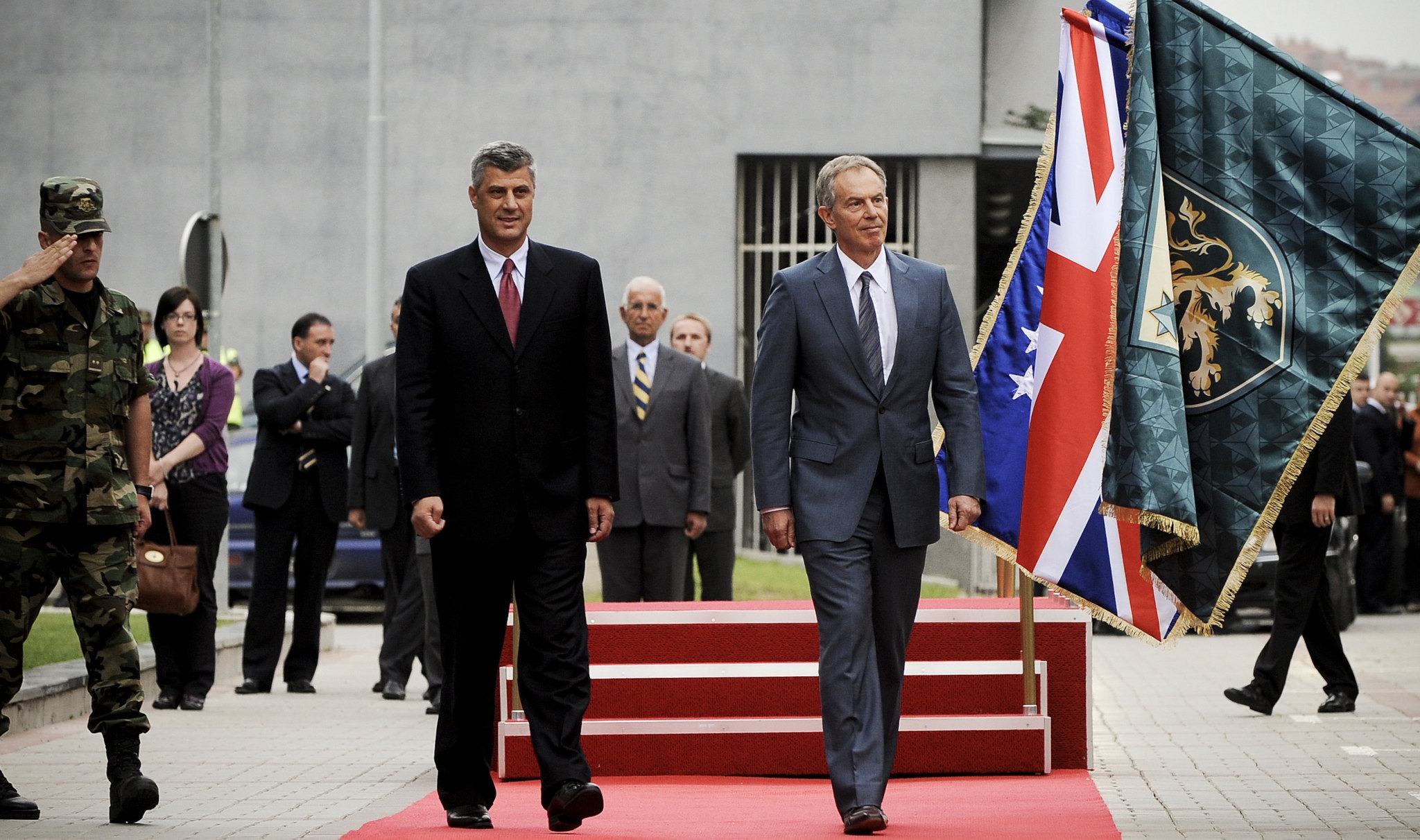
Photograph Source: Andrew Milligan sumo – CC BY 2.0
When President Clinton dropped 23,000 bombs on what was left of Yugoslavia in 1999 and NATO invaded and occupied the Yugoslav province of Kosovo, U.S. officials presented the war to the American public as a “humanitarian intervention” to protect Kosovo’s majority ethnic Albanian population from genocide at the hands of Yugoslav president Slobodan Milosevic. That narrative has been unraveling piece by piece ever since.
In 2008 an international prosecutor, Carla Del Ponte, accused U.S.-backed Prime Minister Hashim Thaci of Kosovo of using the U.S. bombing campaign as cover to murder hundreds of people to sell their internal organs on the international transplant market. Del Ponte’s charges seemed almost too ghoulish to be true. But on June 24th, Thaci, now President of Kosovo, and nine other former leaders of the CIA-backed Kosovo Liberation Army (KLA,) were finally indicted for these 20-year-old crimes by a special war crimes court at The Hague.
From 1996 on, the CIA and other Western intelligence agencies covertly worked with the Kosovo Liberation Army (KLA) to instigate and fuel violence and chaos in Kosovo. The CIA spurned mainstream Kosovar nationalist leaders in favor of gangsters and heroin smugglers like Thaci and his cronies, recruiting them as terrorists and death squads to assassinate Yugoslav police and anyone who opposed them, ethnic Serbs and Albanians alike.
As it has done in country after country since the 1950s, the CIA unleashed a dirty civil war that Western politicians and media dutifully blamed on Yugoslav authorities. But by early 1998, even U.S. envoy Robert Gelbard called the KLA a “terrorist group” and the UN Security Council condemned “acts of terrorism” by the KLA and “all external support for terrorist activity in Kosovo, including finance, arms and training.” Once the war was over and Kosovo was successfully occupied by U.S. and NATO forces, CIA sources openly touted the agency’s role in manufacturing the civil war to set the stage for NATO intervention.
By September 1998, the UN reported that 230,000 civilians had fled the civil war, mostly across the border to Albania, and the UN Security Council passed resolution 1199, calling for a ceasefire, an international monitoring mission, the return of refugees and a political resolution. A new U.S. envoy, Richard Holbrooke, convinced Yugoslav President Milosevic to agree to a unilateral ceasefire and the introduction of a 2,000 member “verification” mission from the Organization for Security and Cooperation in Europe (OSCE). But the U.S. and NATO immediately started drawing up plans for a bombing campaign to “enforce” the UN resolution and Yugoslavia’s unilateral ceasefire.
Holbrooke persuaded the chair of the OSCE, Polish foreign minister Bronislaw Geremek, to appoint William Walker, the former U.S. Ambassador to El Salvador during its civil war, to lead the Kosovo Verification Mission (KVM). The U.S. quickly hired 150 Dyncorp mercenaries to form the nucleus of Walker’s team, whose 1,380 members used GPS equipment to map Yugoslav military and civilian infrastructure for the planned NATO bombing campaign. Walker’s deputy, Gabriel Keller, France’s former Ambassador to Yugoslavia, accused Walker of sabotaging the KVM, and CIA sources later admitted that the KVM was a “CIA front” to coordinate with the KLA and spy on Yugoslavia.
The climactic incident of CIA-provoked violence that set the political stage for the NATO bombing and invasion was a firefight at a village called Racak, which the KLA had fortified as a base from which to ambush police patrols and dispatch death squads to kill local “collaborators.” In January 1999, Yugoslav police attacked the KLA base in Racak, leaving 43 men, a woman and a teenage boy dead.
After the firefight, Yugoslav police withdrew from the village, and the KLA reoccupied it and staged the scene to make the firefight look like a massacre of civilians. When William Walker and a KVM team visited Racak the next day, they accepted the KLA’s massacre story and broadcast it to the world, and it became a standard part of the narrative to justify the bombing of Yugoslavia and military occupation of Kosovo.
Autopsies by an international team of medical examiners found traces of gunpowder on the hands of nearly all the bodies, showing that they had fired weapons. They were nearly all killed by multiple gunshots as in a firefight, not by precise shots as in a summary execution, and only one victim was shot at close range. But the full autopsy results were only published much later, and the Finnish chief medical examiner accused Walker of pressuring her to alter them.
Two experienced French journalists and an AP camera crew at the scene challenged the KLA and Walker’s version of what happened in Racak. Christophe Chatelet’s article in Le Monde was headlined, “Were the dead in Racak really massacred in cold blood?” and veteran Yugoslavia correspondent Renaud Girard concluded his story in Le Figaro with another critical question, “Did the KLA seek to transform a military defeat into a political victory?”
NATO immediately threatened to bomb Yugoslavia, and France agreed to host high-level talks. But instead of inviting Kosovo’s mainstream nationalist leaders to the talks in Rambouillet, Secretary Albright flew in a delegation led by KLA commander Hashim Thaci, until then known to Yugoslav authorities only as a gangster and a terrorist.
Albright presented both sides with a draft agreement in two parts, civilian and military. The civilian part granted Kosovo unprecedented autonomy from Yugoslavia, and the Yugoslav delegation accepted that. But the military agreement would have forced Yugoslavia to accept a NATO military occupation, not just of Kosovo but with no geographical limits, in effect placing all of Yugoslavia under NATO occupation.
When Milosevich refused Albright’s terms for unconditional surrender, the U.S. and NATO claimed he had rejected peace, and war was the only answer, the “last resort.” They did not return to the UN Security Council to try to legitimize their plan, knowing full well that Russia, China and other countries would reject it. When UK Foreign Secretary Robin Cook told Albright the British government was “having trouble with our lawyers” over NATO’s plan for an illegal war of aggression against Yugoslavia, she told him to “get new lawyers.”
In March 1999, the KVM teams were withdrawn and the bombing began. Pascal Neuffer, a Swiss KVM observer reported, “The situation on the ground on the eve of the bombing did not justify a military intervention. We could certainly have continued our work. And the explanations given in the press, saying the mission was compromised by Serb threats, did not correspond to what I saw. Let’s say rather that we were evacuated because NATO had decided to bomb.”
NATO killed thousands of civilians in Kosovo and the rest of Yugoslavia, as it bombed 19 hospitals, 20 health centers, 69 schools, 25,000 homes, power stations, a national TV station, the Chinese Embassy in Belgrade and other diplomatic missions. After it invaded Kosovo, the U.S. military set up the 955-acre Camp Bondsteel, one of its largest bases in Europe, on its newest occupied territory. Europe’s Human Rights Commissioner, Alvaro Gil-Robles, visited Camp Bondsteel in 2002 and called it “a smaller version of Guantanamo,” exposing it as a secret CIA black site for illegal, unaccountable detention and torture.
But for the people of Kosovo, the ordeal was not over when the bombing stopped. Far more people had fled the bombing than the so-called “ethnic cleansing” the CIA had provoked to set the stage for it. A reported 900,000 refugees, nearly half the population, returned to a shattered, occupied province, now ruled by gangsters and foreign overlords.
Serbs and other minorities became second-class citizens, clinging precariously to homes and communities where many of their families had lived for centuries. More than 200,000 Serbs, Roma and other minorities fled, as the NATO occupation and KLA rule replaced the CIA’s manufactured illusion of ethnic cleansing with the real thing. Camp Bondsteel was the province’s largest employer, and U.S. military contractors also sent Kosovars to work in occupied Afghanistan and Iraq. In 2019, Kosovo’s per capita GDP was only $4,458, less than any country in Europe except Moldova and war-torn, post-coup Ukraine.
In 2007, a German military intelligence report described Kosovo as a “Mafia society,” based on the “capture of the state” by criminals. The report named Hashim Thaci, then the leader of the Democratic Party, as an example of “the closest ties between leading political decision makers and the dominant criminal class.” In 2000, 80% of the heroin trade in Europe was controlled by Kosovar gangs, and the presence of thousands of U.S. and NATO troops fueled an explosion of prostitution and sex trafficking, also controlled by Kosovo’s new criminal ruling class.
In 2008, Thaci was elected Prime Minister, and Kosovo unilaterally declared independence from Serbia. (The final dissolution of Yugoslavia in 2006 had left Serbia and Montenegro as separate countries.) The U.S. and 14 allies immediately recognized Kosovo’s independence, and ninety-seven countries, about half the countries in the world, have now done so. But neither Serbia nor the UN have recognized it, leaving Kosovo in long-term diplomatic limbo.
When the court in the Hague unveiled the charges against Thaci on June 24th, he was on his way to Washington for a White House meeting with Trump and President Vucic of Serbia to try to resolve Kosovo’s diplomatic impasse. But when the charges were announced, Thaci’s plane made a U-turn over the Atlantic, he returned to Kosovo and the meeting was canceled.
The accusation of murder and organ trafficking against Thaci was first made in 2008 by Carla Del Ponte, the Chief Prosecutor of the International Criminal Tribunal for the Former Yugoslavia (ICTFY), in a book she wrote after stepping down from that position. Del Ponte later explained that the ICTFY was prevented from charging Thaci and his co-defendants by the non-cooperation of NATO and the UN Mission in Kosovo. In an interview for the 2014 documentary, The Weight of Chains 2, she explained, “NATO and the KLA, as allies in the war, couldn’t act against each other.”
Human Rights Watch and the BBC followed up on Del Ponte’s allegations, and found evidence that Thaci and his cronies murdered up to 400 mostly Sebian prisoners during the NATO bombing in 1999. Survivors described prison camps in Albania where prisoners were tortured and killed, a yellow house where people’s organs were removed and an unmarked mass grave nearby.
Council of Europe investigator Dick Marty interviewed witnesses, gathered evidence and published a report, which the Council of Europe endorsed in January 2011, but the Kosovo parliament did not approve the plan for a special court in the Hague until 2015. The Kosovo Specialist Chambers and independent prosecutor’s office finally began work in 2017. Now the judges have six months to review the prosecutor’s charges and decide whether the trial should proceed.
A central part of the Western narrative on Yugoslavia was the demonization of President Milosevich of Yugoslavia, who resisted his country’s Western-backed dismemberment throughout the 1990s. Western leaders smeared Milosevich as a “New Hitler” and the “Butcher of the Balkans,” but he was still arguing his innocence when he died in a cell at The Hague in 2006.
Ten years later, at the trial of the Bosnian Serb leader Radovan Karadzic, the judges accepted the prosecution’s evidence that Milosevich strongly opposed Karadzic’s plan to carve out a Serb Republic in Bosnia. They convicted Karadzic of being fully responsible for the resulting civil war, in effect posthumously exonerating Milosevich of responsibility for the actions of the Bosnian Serbs, the most serious of the charges against him.
But the U.S.’s endless campaign to paint all its enemies as “violent dictators” and “New Hitlers” rolls on like a demonization machine on autopilot, against Putin, Xi, Maduro, Khamenei, the late Fidel Castro and any foreign leader who stands up to the imperial dictates of the U.S. government. These smear campaigns serve as pretexts for brutal sanctions and catastrophic wars against our international neighbors, but also as political weapons to attack and diminish any U.S. politician who stands up for peace, diplomacy and disarmament.
As the web of lies spun by Clinton and Albright has unraveled, and the truth behind their lies has spilled out piece by bloody piece, the war on Yugoslavia has emerged as a case study in how U.S. leaders mislead us into war. In many ways, Kosovo established the template that U.S. leaders have used to plunge our country and the world into endless war ever since. What U.S. leaders took away from their “success” in Kosovo was that legality, humanity and truth are no match for CIA-manufactured chaos and lies, and they doubled down on that strategy to plunge the U.S. and the world into endless war.
As it did in Kosovo, the CIA is still running wild, fabricating pretexts for new wars and unlimited military spending, based on sourceless accusationscovert operations and flawed, politicized intelligence. We have allowed American politicians to pat themselves on the back for being tough on “dictators” and “thugs,” letting them settle for the cheap shot instead of tackling the much harder job of reining in the real instigators of war and chaos: the U.S. military and the CIA.
But if the people of Kosovo can hold the CIA-backed gangsters who murdered their people, sold their body parts and hijacked their country accountable for their crimes, is it too much to hope that Americans can do the same and hold our leaders accountable for their far more widespread and systematic war crimes?
Iran recently indicted Donald Trump for the assassination of General Qassem Soleimani, and asked Interpol to issue an international arrest warrant for him. Trump is probably not losing sleep over that, but the indictment of such a key U.S. ally as Thaci is a sign that the U.S. “accountabilty-free zone” of impunity for war crimes is finally starting to shrink, at least in the protection it provides to U.S. allies. Should Netanyahu, Bin Salman and Tony Blair be starting to look over their shoulders?
More articles by:
Nicolas J S Davies is the author of Blood On Our Hands: the American Invasion and Destruction of Iraq and of the chapter on “Obama At War” in Grading the 44th President: A Report Card on Barack Obama’s First Term as a Progressive Leader.

Wednesday, May 31, 2023

Kosovo: ‘fascist mobs’ guided by Serbia causing violence, says country’s PM
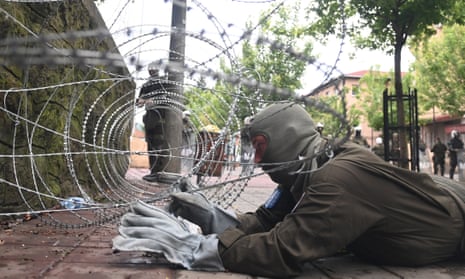
A soldier from the Austrian contingent of the Nato-led international peacekeeping force in Kosovo sets up a razor wire fence in front of a municipal building in Zvecan, Kosovo, on Wednesday,A soldier from the Nato-led peacekeeping force in Kosovo sets up a razor wire fence in front of a municipal building in Zvecan, Kosovo, on Wednesday. Photograph: Georgi Licovski/EPA

More than 30 Nato peacekeeping soldiers were injured in clashes on Monday after ethnic Albanian mayors took office


Shaun Walker in Bratislava and Lorenzo Tondo
THE GUARDIAN
Tue 30 May 2023 

Kosovo’s prime minister has blamed violence in the north of the country on “fascist mobs” controlled by the government of neighbouring Serbia, and said he had rejected a US request to relocate recently installed mayors out of their official offices.

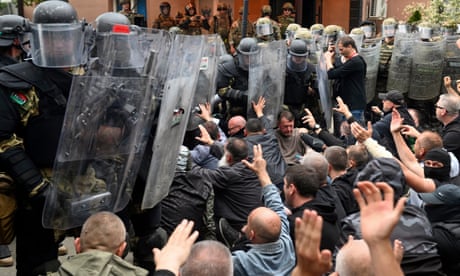
More than 30 Nato peacekeeping soldiers were injured in clashes on Monday, prompting the alliance to announce it would send another 700 troops to the country. Serbia’s president Aleksandar Vučić put his country’s army on high combat alert.

The Nato peacekeeping mission, Kfor, said Italian and Hungarian peacekeepers were subjected to “unprovoked attacks and sustained trauma wounds with fractures and burns due to the explosion of incendiary devices”.


Kosovo clashes: Nato commander criticises ‘unacceptable’ attacks on troops

“Yesterday was very severe, we were very lucky that no life was lost,” Kosovo prime minister Albin Kurti told the Guardian by telephone from Pristina on Tuesday. He said “several” Nato peacekeepers were still in hospital.

Italy’s prime minister, Giorgia Meloni, called the attacks “unacceptable and irresponsible”.

The violence came after ethnic Albanian mayors took office in Serb-majority areas of northern Kosovo, after elections in April which Serbs boycotted. Kurti blamed Belgrade for orchestrating the boycott, which led to an extremely low turnout.


00:50Kosovo: Serb protesters throw teargas at Nato soldiers as internal frictions escalate – video

The area’s majority Serbs have never accepted Kosovo’s 2008 declaration of independence from Serbia, and consider Belgrade their capital more than two decades after the Kosovo Albanian uprising against repressive Serbian rule.

Ethnic Albanians make up more than 90% of the population in Kosovo, but northern Serbs have long demanded the implementation of an EU-brokered 2013 deal for the creation of an association of autonomous municipalities in their area.

The violence has been widely condemned, but western allies of Kosovo have also sharply criticised the government in Pristina for the decision to install the mayors.

On Friday, the US secretary of state, Antony Blinken, issued an unusually strong rebuke to a US ally, saying the decision to use force to access municipal buildings in the north had been taken “against the advice” of the US and European partners and had “sharply and unnecessarily escalated tensions”.

Kurti expressed his displeasure at the statement, calling it “appeasement” of Vučić.

“I think it’s not just unfair and wrong and hurtful but at the same time very naive,” said Kurti, speaking to the Guardian by telephone from Pristina. “Perhaps secretary Blinken will explain this further one day, but definitely it was not helpful.”


Since then, Kurti said he had spoken to Gabriel Escobar, the US special envoy for the Balkans. He said Escobar had asked the Kosovan authorities to move the mayors to different premises, or to have them work from home, a request he had rejected.

“We cannot have Zoom mayors, we are a democratic republic,” said Kurti. “A democratic republic cannot surrender to fascist militia,” he added.

In a sign of how much the recent events have damaged the relationship between Washington and Pristina, the US ambassador to Kosovo, Jeff Hovenier, told the Financial Times on Tuesday that the US will cancel joint military drills with Kosovo and put diplomatic meetings on hold.

“I would be surprised if, in this situation, Kosovo officials would visit the US,” Hovenier said.

Kurti insisted that the new mayors would continue to work from municipal offices.

“These are administrative, technical mayors who are necessary for smooth functioning of municipalities … I acknowledge that the political legitimacy of these mayors is low, however the legitimacy of others is zero,” he said.

Kosovo has been backed strongly by the west, but non-recognition by Russia, China and even five of the 27 EU nations has meant it has not been able to take up a seat at the UN or most other international organisations.

A deal signed earlier this year, mediated by the EU, foresaw Kosovo granting rights to Serb municipalities in the north and Belgrade agreeing to Kosovo’s accession to international institutions, but the recent violence shows that there is still a long way to go to implement the agreement.

On Tuesday, the Nato secretary general, Jens Stoltenberg, told a press conference in Oslo that the alliance would send additional troops to Kosovo.

“We have decided to deploy 700 more troops from the operational reserve force for western Balkans and to put an additional battalion of reserve forces on high alertness so they can also be deployed if needed,” he said.

Monday, April 29, 2024

WHEN TONY BLAIR BOMBED MONTENEGRO

Britain’s direct involvement in NATO raid that killed a Montenegrin civilian revealed for the first time.

PHIL MILLER
29 APRIL 2024

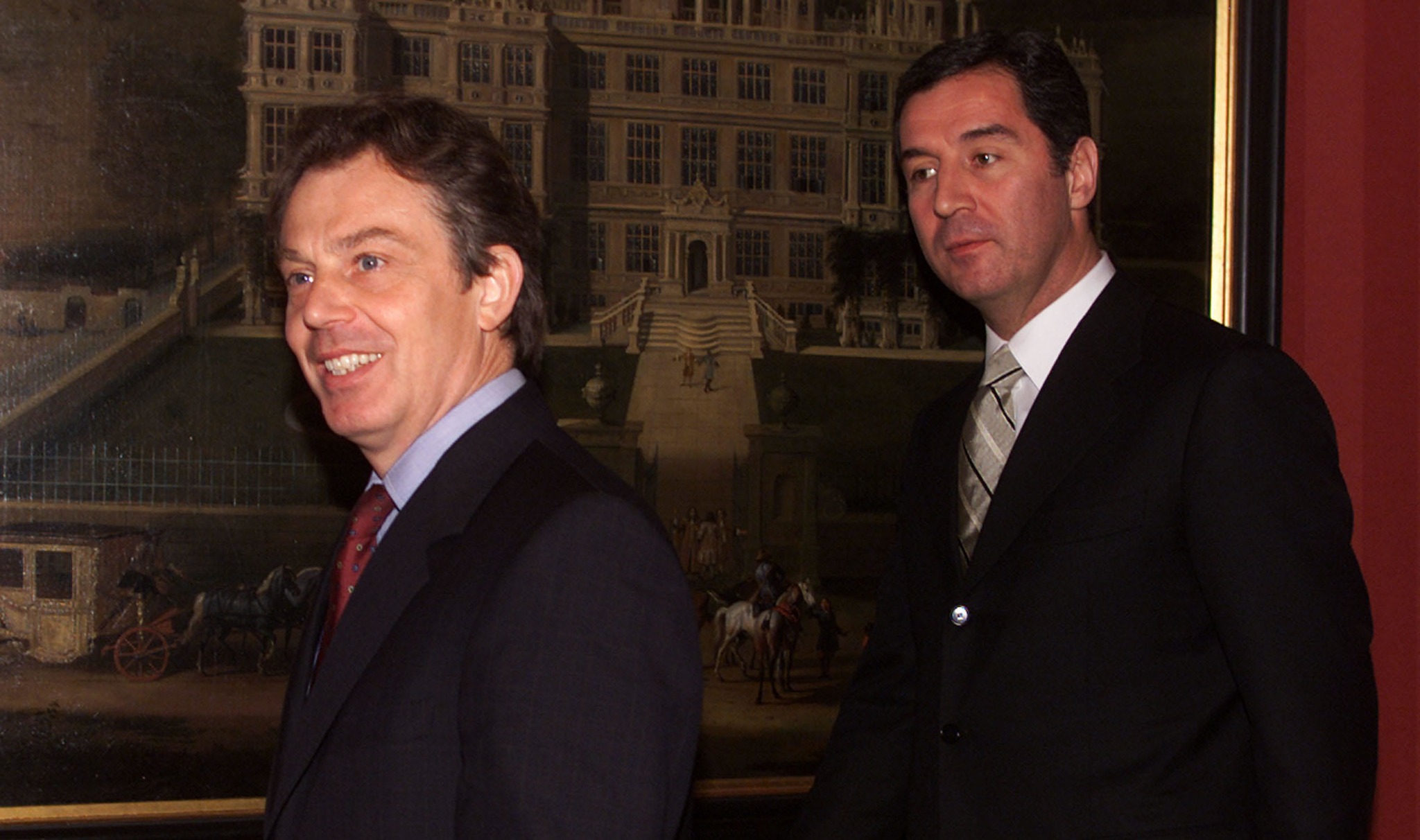
Blair welcomed Montenegro’s president Milo Djukanovic to Downing Street, a year after bombing his country. (
Photo: PA via Alamy)

Montenegro opposed Serbia’s conduct in the Kosovo war of 1999 but was not spared from NATO bombing of Yugoslavia

Future head of MI6 gave clearance for “precision guided munitions” to be dropped on Montenegro’s capital

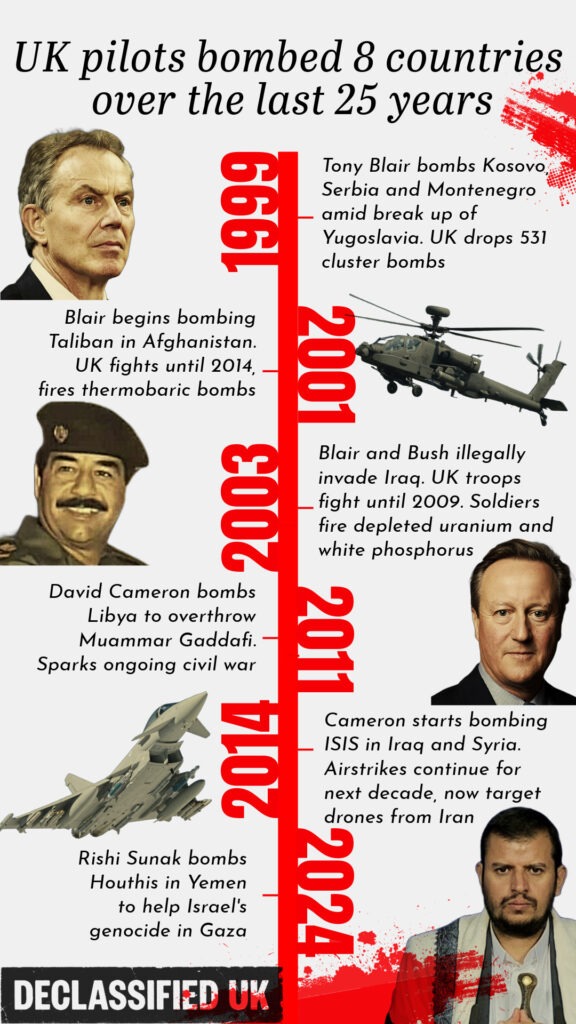
Royal Air Force has bombed eight different countries or territories since 1999

Twenty five years ago today NATO bombed Montenegro’s main airport.

It came amid airstrikes on Yugoslav forces in Kosovo, where Bill Clinton and Tony Blair waged a “humanitarian intervention” ostensibly to save ethnic Albanians from Serb leader Slobodan Milosevic.

Yet a 61-year-old woman, Paska Juncaj, was killed in the strikes on Montenegro’s capital Podgorica, which lasted for 24 hours.

“Shrapnel hit her in the head while she was on the way to an air raid shelter with her son,” a hospital official told Reuters.

Three others were injured – one seriously – and two houses destroyed after a cluster bomb missed its target.

Bombing Montenegro at all was controversial, because the country was friendly to NATO.

And although it remained in Yugoslavia with Serbia, its president Milo Djukanovic was anti-Milosevic and took a neutral stance on Kosovo.

The country would eventually join NATO as a member in 2017.
Approving air strikes

The Atlantic alliance did not specify which of its members had taken part in the air strikes on Montenegro at the time.

Such secrecy would become a common feature of future NATO air wars, making it hard for victims to hold individual states responsible.

But a formerly classified document reveals that Britain was heavily involved in the attack on Montenegro.

Blair’s defence secretary, George Robertson, believed an attack on Podgorica’s airport was justified because “it was being used as a base for operations in and over Kosovo” by Yugoslav jets and helicopters.

John Sawers, Blair’s foreign affairs adviser and future head of MI6, gave clearance for “precision guided munitions” to be dropped at 4 points of the airfield, which had both civilian and military functions.

“The risk of casualties was low, for both civilian and military, and of collateral damage, medium”, Robertson’s private secretary Christopher Deverell noted in a memo to Downing Street marked, “Secret – Personal” and “Limited distribution”.

On the same day, a Cabinet Office meeting of legal advisors recorded “some concern about the acceptability of explanations that have been given by NATO and national spokesmen for attacks by non-UK NATO forces on certain targets which were on the face of it civilian in character.”

Sawers concluded: “I think it would be right to continue to plan on the assumption that the Prime Minister is almost certain to agree to targets where collateral damage is assessed as high but civilian casualties remain low.”

The file has since been declassified and was passed to the National Archives in London this December.

The MoD, NATO and Lord Robertson did not respond to requests for comment.
Culture of impunity

Dr Iain Overton from campaign group Action on Armed Violence told Declassified: “The lack of transparency displayed by the Ministry of Defence over its air strikes is long and concerning. They repeatedly deny civilian harm even in the face of detailed evidence. This revelation just adds to the proof that this culture of opacity and impunity prevails at the highest level.”

It is unclear whether Britain had any involvement in another NATO attack on Montenegro the following day – 30 April 1999 – when a bridge in the village of Murino was struck by ten missiles.

Six civilians died in that airstrike, including three children, sparking a long running campaign for justice.

British aircraft did participate in the wider bombing of Serbia and Kosovo. The 78-day campaign by NATO left around 500 civilians dead, according to Human Rights Watch.

Milosovic was later overthrown and died while on trial at The Hague. Blair’s ally in the conflict, Kosovo Liberation Army (KLA) leader Hashem Thaci, is currently on trial for war crimes.

Over the next 25 years, Britain conducted airstrikes in eight countries, including Afghanistan, Iraq, Libya, Syria and Yemen.

The list does not include military interventions like in Sierra Leone, as they did not feature aerial bombardments.

This month the RAF flew missions to protect Israel from Iranian drones.
‘My enemy’s enemy’

Britain’s military intervention in Kosovo produced mixed results. Although it allowed the return of ethnic Albanian refugees, it sparked reprisals against ethnic Serbs and empowered the KLA.

During the air war, Sawers pushed for Britain to deepen ties with the KLA, who were fighting Serb forces on the ground.

Sawers said Britain risked being “too sniffy” towards the KLA and that: “Our starting point in a conflict like this should be that your enemy’s enemy is your friend. We can sort out our differences later.”

Sawers also suggested a “minimalist interpretation” of the UN arms embargo. Blair replied: “I agree”. The KLA had easy access to small arms from their bases in Albania, where the collapse of pyramid schemes had left the state in tatters.

The file gives an important insight into the mindset of Sawers, who went on to run MI6 a decade on from the Kosovo war. In 2011 he oversaw a similar strategy in Libya where British intelligence sided with banned terrorist groups to topple Muammar Gaddafi.


Narco-state


In both cases, the Machiavellian policies have left a troubled legacy. Kosovo became virtually a narco-state on the edge of Europe, while Al Qaeda spin off groups like ISIS flourished in Libya’s power vacuum and spread terrorism to the UK.

A memo on the KLA written by a Whitehall staffer in 1999 noted it “does contain unsavoury elements…Links to drugs/crime.”

It added that the UK “do not support their goal (independence) or methods,” although Britain would be the first country to recognise Kosovo’s unilateral declaration of independence from Serbia in 2008.

The MoD and Foreign Office warned: “Not all the Kosovo Albanians support the KLA. And the KLA is prone to feuding, and not incapable of atrocities itself. NATO cannot be seen to be in alliance with them…KLA rule might not be a liberal experience.”

Another document warned they were “not much better than the Serbs”.

Two months after Milosevic agreed to pull his forces out of Kosovo, leaving Thaci in control, the Independent reported “around 30 people a week are being killed in Kosovo as organised gangs take advantage of the UN’s failure to police the province.”

A NATO spokesman admitted there was a “law and order vacuum” with Western diplomats saying “gangs, some of which are suspected of having links to the Kosovo Liberation Army, are taking apartments, real estate, businesses, fuel supplies and cars from Kosovo Albanians and Serbs, who have little recourse to justice.”

RELATED

ON TRIAL FOR WAR CRIMES – TONY BLAIR’S FORMER ALLIES


A declassified British government file written shortly after the war said a senior KLA veteran was “up to his neck in smuggling and organised crime”. Kosovo was described in the media as a “smugglers’ paradise” and “the Colombia of Europe”, supplying up to 40% of heroin on the continent.

Sex trafficking and forced prostitution also rose in post-war Kosovo as gangs supplied NATO peacekeepers with “hundreds of women, many of them under-age girls”, Amnesty International warned in 2004.
Organised crime

Thaci became Kosovo’s first prime minister, despite NATO believing he was among the country’s “biggest fish” in organised crime.

An investigation by the Council of Europe accused Thaci of organ harvesting, with his inner circle allegedly murdering Serb captives to sell their kidneys on the black market.

It also cited reports from anti-narcotic agencies who identified Thaci as having “violent control over the trade in heroin”.

Kosovar gangs often have close familial links with the wider Albanian mafia. The National Crime Agency said in 2017 that “Albanian crime groups have established a high profile influence within UK organised crime, and have considerable control across the UK drug trafficking market, particularly cocaine.”

Drug deaths in Britain have now reached a 30-year high, with almost 5,000 fatalities in 2022.

After decades of impunity, Thaci is now on trial for 10 counts of war crimes and crimes against humanity relating to the KLA.

The degree of corruption and intimidation is so high in Kosovo that his trial has to be held at a special court in The Hague.

Tougher rules on prison visits had to be implemented in December after prosecutors complained that visitors tried to compel “witnesses to withdraw or modify their testimony in a manner favorable” to the defendants.

Thaci denies all the charges against him.


ABOUT THE AUTHOR

Phil Miller is Declassified UK's chief reporter. He is the author of Keenie Meenie: The British Mercenaries Who Got Away With War Crimes. Follow him on Twitter at @pmillerinfo

Thursday, August 15, 2024

NATO WAR ON SERBIA 1999

Tony Blair’s lawyer had ‘serious doubt’ over bombing Serb TV studio

Britain’s attorney general secretly warned Blair against NATO strikes on civilian targets during Kosovo war, newly released files reveal.
DECLASSIFIED. UK
15 August 2024

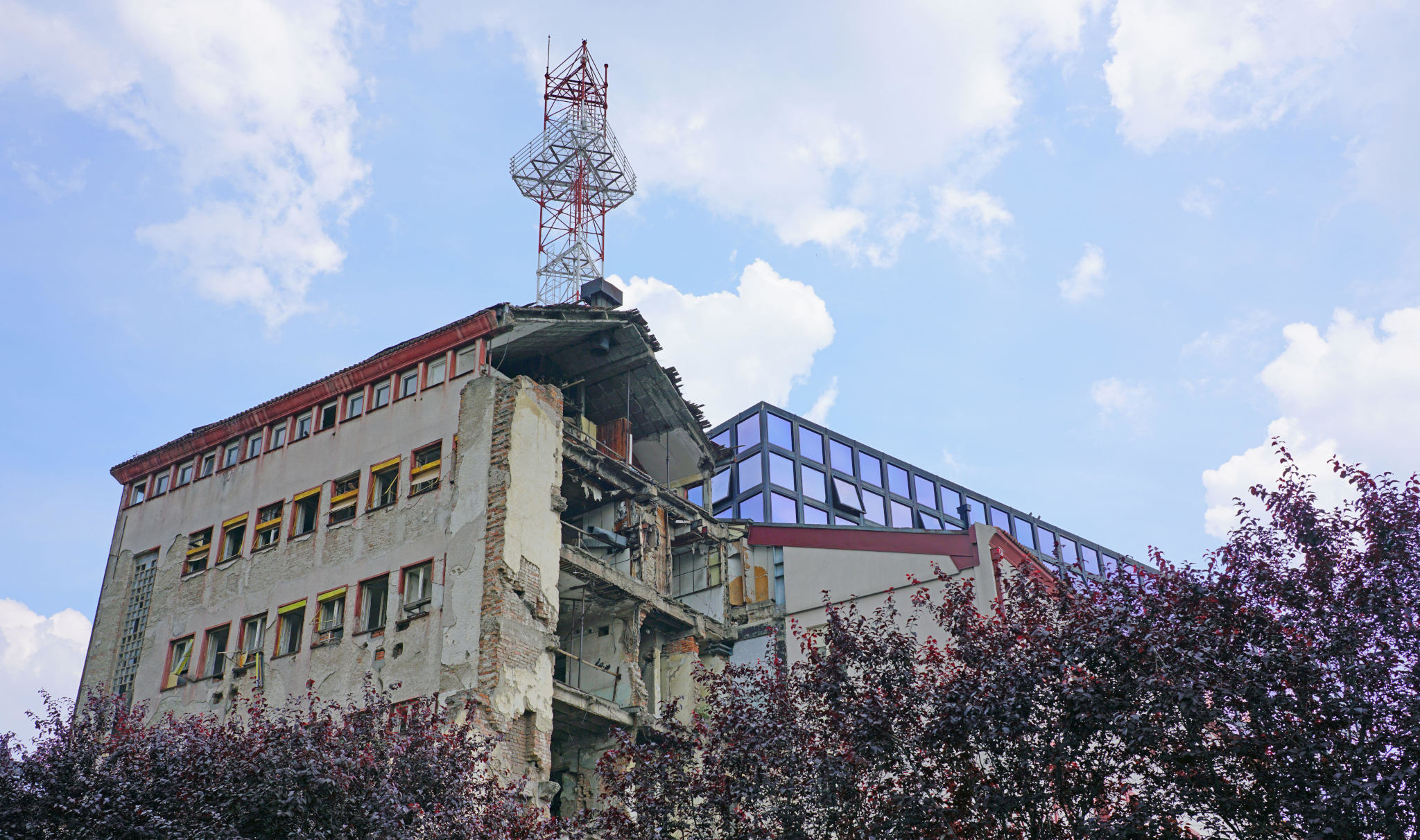
The TV station bombed by NATO. (Photo: EQRoy / Alamy

Twenty five years ago, NATO bombed the main studio of Yugoslavia’s state-owned broadcasting company, Radio-Television Serbia (RTS).

The attack at 2am on 23 April 1999 came amid Bill Clinton and Tony Blair’s “humanitarian intervention” in Kosovo.

Officially they wanted to stop Serbian president Slobodan Milosevic massacring ethnic Albanians during the breakup of Yugoslavia.

But 16 media workers were killed and 19 injured in the strike on RTS, which remains the single most controversial event in NATO’s 78-day military campaign.

Speaking at a NATO summit the next day, Blair insisted that bombing the television station was “entirely justified” since it was “part of the apparatus of dictatorship and power of Milosevic”.

Human rights and media organisations disagreed.

Amnesty International condemned the attack as a “war crime”, while the National Union of Journalists described it as “barbarity”.

Declassified files now reveal that Blair was privately warned by Britain’s most senior lawyer about bombing civilian targets including the RTS building.

The documents, released to the National Archives last month, suggest Blair misled the British public over the legitimacy of NATO’s military operations in Yugoslavia.
War aims

Britain’s attorney general John Morris issued a “secret and personal” memorandum to Blair just hours after the bombing of the RTS studio.

“I have hesitated before minuting you personally on the legal aspects of our policy on Kosovo”, he wrote.

But Morris, alongside the legal advisers to the UK’s foreign and defence secretaries, had become concerned that NATO “could lose sight… of the legal constraints which necessarily apply to our action” in Yugoslavia.

It was “not clear” to Morris, for instance, how targets such as “radio and TV stations” related to the “relief of humanitarian need in Kosovo” – even “assuming they are lawful targets”.

Without a UN Security Council resolution, the US and Britain had justified armed intervention in Yugoslavia with reference to averting a humanitarian catastrophe.

To this end, Morris argued that it would be “a pity” if NATO’s bombing raids “gave the appearance of placing the objective of crushing or humiliating Milosevic above the objective of relieving humanitarian need”.

Morris’ concerns were not ill-placed. Earlier in April, Blair had privately confessed that “we are moving towards a situation where our aim will become removing Milosevic”, as revealed by The Grayzone.

“We will not want to say so now, but autonomy for Kosovo inside Serbia is becoming absurd. And plainly Milosevic will threaten the stability of the region as long as he remains”, Blair continued.

RELATED

When Tony Blair Bombed Montenegro


‘Serious doubt’

Yet Morris went even further in his letter to Blair, declaring that there was “room for serious doubt about the lawfulness of attacking” economic, political and media targets “whatever our overall objective”.

He continued: “I do not know for example how the… radio and television stations, or the building which housed the Serbian Television Service could have qualified as military objectives”.

NATO did not specify which of its members had taken part in the airstrikes on the RTS building at the time.

But even if Britain had not been directly involved, Morris argued that “the attacks were carried out by the Alliance acting in our name and on our behalf” and “with our full endorsement”.

The New Labour government could therefore expect “close scrutiny from parliament and the British public”.

Blair was also reminded that Britain’s actions could arise for adjudication before the International Court of Justice, the European Court of Human Rights, and the European Court of Justice.

“Litigation in any of these fora would quickly bring under judicial scrutiny the legal justification for our action against Yugoslavia”, Morris warned. “The outcome of that scrutiny cannot be guaranteed”.

In a highly contested ruling, the International Criminal Tribunal for the Former Yugoslavia (ICTY) would later conclude there were no grounds to investigate the bombing of the TV station as a possible war crime.
Milosevic ‘is not losing’

Parallel to the legal warnings, Blair was receiving gloomy reports that NATO could be losing the war.

Paddy Ashdown, then leader of the Liberal Democrats and a former MI6 officer, had visited the Balkans between 18 and 22 April and prepared a briefing for Blair about the situation on the ground.

“It is said that we are winning this war”, Ashdown wrote. “I have, as yet, seen no evidence for that and a great deal of evidence that Milosevic is not losing it”.

He continued: “I am unable to say to what extent his forces have been damaged, especially on the ground in Kosovo – though I have a suspicion that this is less, and progressing less quickly than we like to believe”.

NATO’s air strikes had been hampered by bad weather, reducing visibility over targets.

Ashdown thus recommended that NATO might intensify its military campaign by preparing for a ground invasion and collaborating with the Kosovo Liberation Army (KLA), an ethnic Albanian separatist militia with links to organised crime.

While Blair privately believed that the KLA were “not much better than the Serbs”, Ashdown said “I believe we should take a risk with them”.

He continued: “Crudely, the more we are able sensibly to use them the more effective our air operations will be and the fewer casualties we will take when the ground action starts”.

The insurgent group would effectively act as NATO’s ground force. Its leader Hashim Thaci went on to run Kosovo and is currently standing trial for war crimes in the Hague.

RELATED

On trial for war crimes – Tony Blair’s former allies


‘Make it happen‘

Concerned about the slow progress of the war, Blair apparently ignored Morris’ legal advice and set about intensifying NATO’s bombing campaign to degrade Serbia’s economy.

Shortly after the strike on the RTS building, the British plan of action for Kosovo involved streamlining target selection so that “if the main [NATO] players agree, we just make it happen”.

This would look like a “war cabinet i.e. a small group of the big five or six” who would “take critical decisions” on what to bomb.

“All blockages to targets must be removed or the responsibility laid clearly at the door of those blocking”, the file continued.

Hesitant members of the Alliance included Portugal, Canada and Greece, who feared that escalation would result in more civilian casualties.

British plans were also drawn up for the sinking of the Yugoslav navy and the use of special forces in order to “unnerve”, “surprise”, or “deter” Milosevic.

Over the following weeks, on British guidance, NATO forces continued to hit civilian targets in Yugoslavia including Montenegro’s main airport and Belgrade’s iconic Hotel Jugoslavija.

Morris would seemingly go on to regret signing off on the hotel bombing, noting how the legal implications were “too close for comfort”.

Milosevic agreed to withdraw Serb forces from Kosovo on 9 June, after almost three months of fighting, amid threats of a NATO ground invasion.

He was overthrown by pro-democracy protests a year later and died in 2006 while awaiting trial at the Hague. Britain was the first country to recognise Kosovo’s unilateral declaration of independence from Serbia in 2008.

“War is never civilised”, declared a triumphant Blair. “But war can be necessary to uphold civilisation”.

‘Astonishing’


Morris, who passed away last year aged 91, published a memoir in 2011 which shed more light on his two-year stint as Blair’s first attorney general.

He said the New Labour government “was probably one of the most warlike of modern world governments” with a prime minister “who was ready to commit British troops with a frequency unparalleled in modern times”.

During the whole of his involvement with Kosovo, Morris “never had a personal meeting with Tony Blair”, which he described “as an astonishing state of affairs”. On one occasion at a Cabinet committee, Blair even questioned his “presence and role”.

Blair’s hostility to legal advice, according to Morris, was inspired by a “strong temptation […] to cut corners” and “to keep in line with the Americans”.

“On the great march to victory”, he wrote, “it would be pretty bad form for us to find it difficult to keep up with the others (that is, with the Americans)”.

In hindsight, the former attorney general maintained that “it was extremely doubtful whether” the RTS building “was an appropriate target”.

Morris reflected how the Kosovo campaign had “aged me a little” and found the choice of some targets “troubling”.

“I did not know how the headquarters of political parties, radio and television stations etc, could have qualified as ‘military objectives’,” he remarked.

NATO and Blair were asked to comment.

ABOUT THE AUTHOR

John McEvoy is an independent journalist who has written for International History Review, The Canary, Tribune Magazine, Jacobin and Brasil Wire.VIEW MORE ARTICLES


SEE https://plawiuk.blogspot.com/search?q=KOSOVO

Seeing the Forest for the Trees
Thesis on The Kosovo Crisis and the Crisis of Global Capitalism

(originally written May 1999, Bill Clinton set the stage for George W. to invade Afghanistan and Iraq for humanitarian purposes.)
http://plawiuk.blogspot.com/2005/01/war-whats-it-good-for-profit.html

Saturday, March 05, 2022

EXPLAINER: Putin’s Balkan narrative argument for Ukraine war

By DUSAN STOJANOVIC

1 of 5
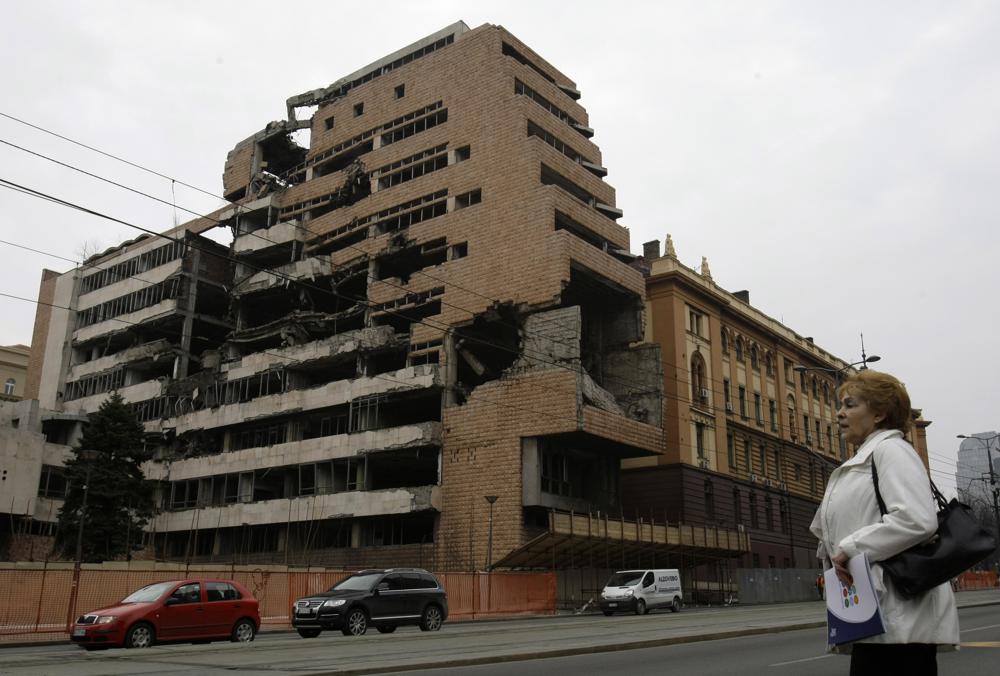
FILE - A woman walks in front of the destroyed former Serbian army headquarters in Belgrade, Serbia, on March 24, 2010. Well before Russian tanks and troops rolled into Ukraine, Vladimir Putin was using the bloody breakup of Yugoslavia in the 1990s to ostensibly offer justification for the invasion of a sovereign European country. The Russian president has been particularly focused on NATO’s bombardment of Serbia in 1999 and the West’s acceptance of Kosovo’s declaration of independence in 2008. He claims both created an illegal precedent that shattered international law and order, apparently giving him an excuse to invade Ukraine. (AP Photo/Darko Vojinovic, File)


BELGRADE, Serbia (AP) — Well before Russian tanks and troops rolled into Ukraine, Vladimir Putin was using the bloody breakup of Yugoslavia in the 1990s to ostensibly offer justification for the invasion of a sovereign European country.

The Russian president has been particularly focused on NATO’s bombardment of Serbia in 1999 and the West’s acceptance of Kosovo’s declaration of independence in 2008. He claims both created an illegal precedent that shattered international law and order, apparently giving him an excuse to invade Ukraine.

Putin’s arguments, repeated several times since Russia annexed Crimea in 2014, appear to follow this line: If different ex-Yugoslav republics and the former Serbian province of Kosovo could become independent with Western backing and wars, why can’t Ukraine’s strategic Black Sea peninsula and the rebel-controlled, majority Russian areas in the east of the country split from their mother nations — with Russian help?

With strong U.S. support, ethnic Albanian-dominated Kosovo seceded over Serbia’s strong objections. Russia, a historic ally of the Serbs, argued then that this set a precedent that could trigger a series of statehood claims elsewhere in the world.

In July 2010, U.N.’s highest court ruled that Kosovo’s declaration of independence was legal but did not outright endorse Kosovo’s claim to statehood.

There are many differences between the Russian attack on Ukraine, seen in the West as one of the darkest moments for Europe since World War II, and the wars in the Balkans that left more than 120,000 people dead and millions homeless. There are also some similarities.

WHAT ARE THE MAIN DIFFERENCES?

NATO didn’t occupy Kosovo after driving Serbian forces out of the former Serbian province, but sent in peacekeepers. Russian troops, meanwhile, took control of Crimea even before its referendum to join Russia was held.

NATO intervened in Kosovo only after significant evidence of Serbian abuses against ethnic Albanians, including mass killings and deportations. Russian forces intervened in Ukraine with no major abuses or violence reported against ethnic Russians.

Kosovars declared independence but did not join their ethnic brethren in neighboring Albania in a single state. Crimea, which has a majority Russian population, signed a deal to join Russia two days after the referendum which was deemed flawed and undemocratic by the West.

WHAT ARE THE MAIN SIMILARITIES?

Both interventions started with false claims that ethnic minorities are being persecuted in neighboring countries. The Serb-led military unleashed a heavy barrage of artillery against towns and villages in Croatia in 1991, something similar to the initial attacks by Russian forces against Ukraine.

Just as Croats, Bosnians and Kosovo Albanians feared Serbian repression during the autocratic rule of late Serbian leader Slobodan Milosevic, ethnic Russians feared Ukrainian nationalists.

WHAT DID PUTIN SAY?

“(German Chancellor Olaf Scholz) has just said that the people of his generation — and I certainly belong to that generation myself — find it difficult to imagine some war in Europe,” Putin said following talks with Scholz in Moscow on Nov. 15.

“But all of us were witnesses to the war in Europe that NATO unleashed against Yugoslavia,” Putin said. He recalled that it was a major military operation involving bombing strikes against a European capital, Belgrade.

“It did happen. Without any sanctions by the U.N. Security Council. It is a very sad example, but it is a hard fact,” Putin said.

He has argued that by intervening in Kosovo, the West created a precedent with longstanding consequences.

WHAT IS THE WEST’S TAKE ON THAT?

At the press conference with Putin, Scholz hit back at the Russian president’s arguments over NATO’s actions in Kosovo, saying this was done to prevent genocide, referring to the persecution of Kosovo’s majority ethnic Albanians by Serbian forces.

Western leaders have repeatedly rejected Putin’s arguments, saying Kosovo was a unique case due to the large number of victims during the Balkan wars amid the violent breakup of Yugoslavia. Former German Chancellor Angela Merkel had insisted that Putin’s analogies between the West’s actions in Kosovo and Russia’s intervention in Crimea are “shameful.”

WHAT COULD BE THE CONSEQUENCES?

There are fears that the pro-Russian Serbian leadership could try to use the international attention focused on Ukraine to further destabilize its neighbors, particularly Bosnia where minority Serbs have been threatening to join Serbia.

European Union peacekeepers in Bosnia have announced the deployment of some 500 additional troops, citing “the deterioration of the security internationally (which) has the potential to spread instability” to the region.

Kosovo’s leadership fears Serbia could be encouraged by Russia to try to intervene in its former province to stop the alleged harassment of minority Serbs. Kosovo has asked NATO for a fast track to membership in the wake of the Ukrainian crisis, something neither Serbia nor Russia would likely accept peacefully.

Kosovo officials have rejected Putin’s parallels between the NATO intervention in Kosovo and his invasion of Ukraine as “totally baseless and ridiculous.”

___

AP Balkan correspondent Dusan Stojanovic covered the Yugoslav wars in the 1990s and events in Ukraine in 2014.


SEE https://plawiuk.blogspot.com/search?q=KOSOVO

Seeing the Forest for the Trees
Thesis on The Kosovo Crisis and the Crisis of Global Capitalism

(originally written May 1999, Bill Clinton set the stage for George W. to invade Afghanistan and Iraq for humanitarian purposes.)
http://plawiuk.blogspot.com/2005/01/war-whats-it-good-for-profit.html


Monday, March 25, 2024

Kosovo in Retrospect: Rise and Fall of the ‘Rules-Based Order’

Philip Hammond reflects on the significance of the Kosovo war, which began 25 years ago this week
March 25, 2024
Source: Originally published by Z. Feel free to share widely.


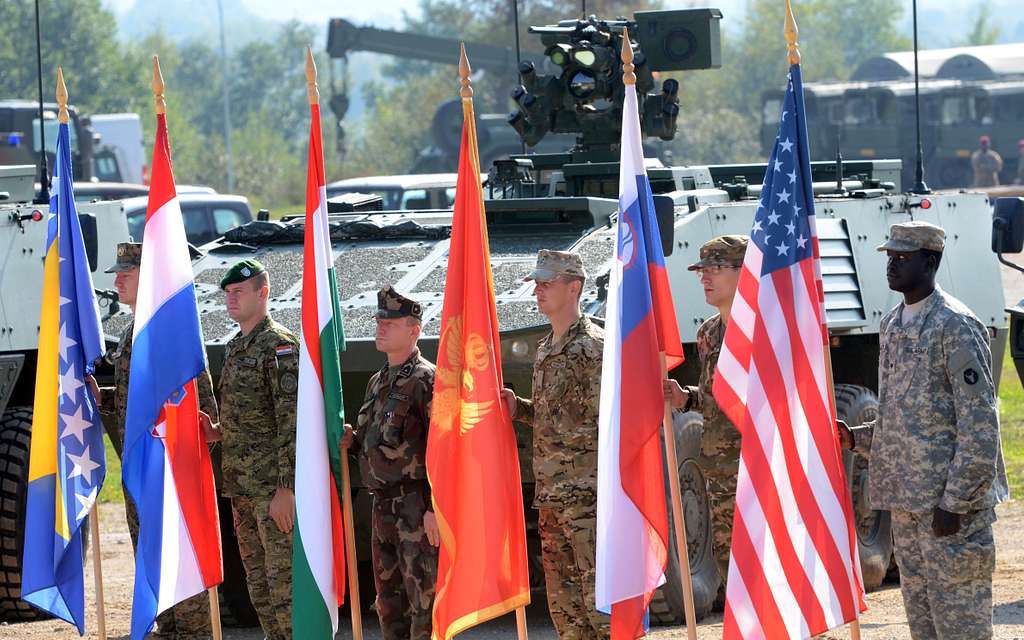
Soldiers representing NATO partner and allied nations. Image via GetArchive


NATO expansion, Western leaders vaunting wars for values, international judges ruling on accusations of genocide, calls to defend civilisation against barbarism — it sometimes feels as if we are still in the 1990s. Yet looking back to the 1999 Kosovo conflict reveals how much has changed in the past quarter century. Then, the West’s post-Cold War ‘rules-based order’ was at its height. Today, it is slowly, violently collapsing as a new, multipolar world emerges.

Dawn of the rules-based order

The Kosovo conflict was the key event in establishing the ‘rules-based order’. The term sounds like it might just be a synonym for ‘international law’, but is in fact its antithesis — as legal scholars have belatedly begun to notice. Specifically, the ‘rules-based order’ entails a break from the post-1945 UN system, which was premised on the principles of sovereign equality and non-interference in the internal affairs of other states.

In 1999 the UN was bypassed, to avoid a Security Council veto by Russia, and the bombing of Yugoslavia was instead carried out by NATO. Even its supporters admitted this was illegal under international law, but argued it was nevertheless ‘justified on moral grounds’. This was the era of what in Britain was called ‘ethical foreign policy’, when conscience was said to compel military action in defence of universal moral values.

In a famous April 1999 speech, Prime Minister Tony Blair claimed NATO was waging a ‘just war’ which laid the basis for a ‘new doctrine of international community’. The doctrine essentially consisted of a globalist perspective on the economy, the environment and ‘international security’: Blair said the ‘most pressing foreign policy problem’ was to ‘identify the circumstances in which we should get actively involved in other people’s conflicts’.

This was a vision of a ‘community’ that would be policed by the dominant military states since, as Blair explained, ‘nations which have the power, have the responsibility’. This is the essence of the rules-based order: in line with their own self-proclaimed ‘values’, the powerful decide where and how to ‘get actively involved’ in the affairs of the less powerful.

A ‘right to intervene’

Less than a fortnight before it started bombing Yugoslavia, NATO completed its first wave of eastward enlargement, admitting Hungary, Poland and the Czech Republic. Already it appeared that, as Secretary of State Anthony Blinken put it recently, ‘if you’re not at the table in the international system, you’re going to be on the menu’.

The same month as Blair was preaching his ‘doctrine’, Czech president Vaclav Havel similarly envisaged a future world governed by ‘cooperation between larger, mostly supranational, entities’, in which ‘the notion that it is none of our business what happens in another country’ would ‘vanish down the trapdoor of history’. Conceding that Yugoslavia was being ‘attacked … without a direct mandate from the UN’, Havel maintained that this was because of NATO’s ‘respect … for a law that ranks higher than the law which protects the sovereignty of states’ — the ‘higher value’ of universal human rights.

The logic was drawn out by Bernard Kouchner, the first governor of post-war Kosovo. He claimed it was time for a ‘decisive evolution in international consciousness’, whereby a ‘new morality’ would be ‘codified in the “right to intervention” against abuses of national sovereignty’. Mere humanitarianism was not enough: ‘we need to establish a forward-looking right of the world community to actively interfere in the affairs of sovereign nations’.

After 9/11, ethical justifications for war were incorporated into the ‘war on terror’, despite occasional incongruities of tone. Washington reportedly spent hundreds of thousands of dollars hiring public relations consultants to ‘humanise the war’ in Afghanistan, where US planes dropped aid as well as cluster bombs (both in yellow packaging) in an effort to save some Afghans while killing others. According to US Secretary of State Colin Powell, the bombing was ‘a triumph for human rights’. Similarly, in Iraq president George Bush Jr. promised ‘liberation’ while Blair emphasised the ‘moral case for removing Saddam’.

‘Benign’ dictatorship

Many observers criticised what they saw as the cynical, instrumental use of humanitarianism in the war on terror, yet the problem is not simply that interventions are selective, poorly implemented or undermined by ulterior motives. Rather, the core problem is that the best one can hope for under such a system is a benign global dictatorship. The rules-based order returns us to a neo-colonial world where the powerful decide which people need to be ‘helped’ and abrogate to themselves the right to do so.

It is the polar opposite of sovereign equality, a world of international protectorates (in Bosnia and Kosovo) and regime-change wars (in Afghanistan, Iraq and Libya). The latter have produced nothing but bloody chaos; the former have merely frozen conflicts rather than resolving them. In Kosovo, a quarter century of Western state-building has produced a ‘failed state’ where the Serbian minority still endures daily harassment and violence.

None of this is to idealise the UN, where real power has always resided in the Security Council. Before Kosovo, interventions under the UN banner were launched against Iraq, Somalia and Haiti, and Western powers took it upon themselves to decide where to draw the borders of new states in the former Yugoslavia, knowingly exacerbating conflict as they did so. For much of the 1990s it looked like a retooled UN might provide the framework for the ‘new world order’ proclaimed by George Bush Snr. at the start of the decade, but the logic of a unipolar world pointed in the opposite direction.

During the Cold War, although the post-1945 conventions of sovereign equality and non-interference were often infringed, they were nevertheless important in delegitimising aggressive foreign policy, and represented an historic gain for states which were previously mere colonial possessions. The ‘Illegal yet legitimate’ formula used for Kosovo showed how far this had unravelled in the 1990s.

The propaganda war

Critics of Western policy in the 1990s tended to argue that it was not forceful enough; that terrible things were allowed to happen while the Western powers were constrained by the unwieldy UN system. In 1999, NATO leaders were largely successful in presenting themselves as the solution to this problem, thanks to the extreme subservience (with a few honourable exceptions) of Western journalists.

The claim that NATO bombing was morally justified, even if illegal, meant the media presentation of the war was crucial. Yet virtually everything NATO said about Kosovo was either misleading or outright false. NATO supposedly went to war reluctantly, after diplomatic efforts had been exhausted, but the so-called ‘peace agreement’ was designed to be rejected. A US official explicitly told reporters at the time that ‘We intentionally set the bar too high for the Serbs to comply. They need some bombing, and that’s what they are going to get.’ To keep this information from the public, journalists were simply told not to report it, and they complied.

The other key claim in the build-up to war was that Yugoslav forces were massacring ethnic-Albanian civilians, notably at the village of Račak on 15 January 1999. William Walker, the American head of the Organisation for Security and Cooperation in Europe (OSCE) mission in Kosovo, visited the scene and immediately declared it an ‘unspeakable atrocity’ and a ‘crime against humanity’. The New York Times ran a front-page story about ‘mutilated bodies’ with ‘eyes gouged out’ and ‘heads smashed in’. President Bill Clinton described ‘innocent men, women and children taken from their homes to a gully, forced to kneel in the dirt, sprayed with gunfire’.

These accounts bore little relation to what actually happened at Račak — a firefight between Yugoslav security services and Kosovo Liberation Army (KLA) guerrillas — but most Western journalists just repeated them. One of the few who did contest the official version of events, French reporter Renaud Girard, said he was rounded on by British and American colleagues who complained ‘You’re killing our story’. As one study of this and other episodes in the propaganda war notes, the media created an ‘illusion of multiple sources’ as different outlets reproduced the same distorted accounts, and an ‘illusion of independent confirmation’ as officials cited news reports as corroboration of stories they had fed to journalists in the first place.

NATO also repeatedly claimed it had to start bombing to prevent a refugee crisis. State Department spokesman James Rubin, for example, said on 25 March 1999 that if NATO had not acted, ‘you would have had hundreds of thousands of people crossing the border’. Privately, however, they knew they were about to cause just such a crisis. A US diplomat with the OSCE, Norma Brown, later said that ‘everyone knew there would be a humanitarian crisis of massive proportions if NATO bombed. It was discussed in NATO; it was discussed in the OSCE’. Yet as the crisis unfolded, journalists treated it as confirmation that the airstrikes were necessary and right, ‘forgetting’ that preventing it had ever been a justification for bombing. One British TV journalist claimed afterwards: ‘This is why NATO went to war: so the refugees could come back to Kosovo’.

NATO of course denied any responsibility, insisting the ‘ethnic cleansing’ of Kosovo Albanians was the result of a premeditated policy and would have happened anyway. On cue, secret documents outlining just such a Serbian plan – ‘Operation Horseshoe’ – were revealed by the German government. This supposed ‘blueprint for genocide’ was exposed as a fake concocted by the German intelligence services – but only months after the war ended.

Germany was also among the first Western states to start arming and training the KLA from the mid-1990s. In addition to building a guerrilla army, NATO powers also undermined what remained of the Yugoslav state by funding political opponents of the regime, leading to the overthrow of President Slobodan Milošević in 2000 — a blueprint for subsequent ‘colour revolutions’.

The fall

The propaganda surrounding the current wars in Ukraine and Israel can sometimes make it seem as if little has changed politically in the West, but of course much has. We are long past the messianic zeal of liberal interventionism or the hubris of war-on-terror attempts to remake reality. The West is even more risk-averse than in 1999, when NATO did its own high-altitude bombing. Now it sends weapons and celebrates what a ‘good deal’ this is for arms manufacturers.

Blair’s description of the Kosovo war as ‘a battle between good and evil; between civilisation and barbarity; between democracy and dictatorship’ was an attempt to sell NATO bombing as an epic struggle for values. Now, just beneath the surface of the values-talk, commentators promote the West’s proxy war against Russia on the grounds that it is ‘cheap’ and that it is somebody else’s sons who are being killed.

Some have taken up Israel’s claim to be waging an ‘existential struggle between civilisation and barbarism’ in Gaza, but Israeli actions — killing more than 30,000, injuring twice as many again, and displacing most of the population — present an even less attractive advertisement for ‘civilisation’ than NATO’s 78-day bombing of Serbia. As one assessment puts it, whatever the outcome of current conflicts, ‘the West seems to have already lost on the normative and narrative front’.

In part, this is due to the affordances of social media and the increasing irrelevance of the ‘legacy’ gatekeepers, though of course governments are seeking new means of control. But there are two more fundamental changes. The first is the underlying shift in geopolitical power and a growing willingness to challenge Western hegemony. The second is the rise of populism and the rejection of globalist elites within Western countries. When Donald Trump was elected in 2016, one of the elite’s greatest worries was that this would be a setback for globalism. The influential writer (and husband of Victoria Nuland) Robert Kagan, for example, said he feared that ‘America may once again start behaving like a normal nation’, pursuing its own interests but not taking ‘responsibility for global order’.

There is no room for complacency. As a new, multipolar order begins to take shape, it sometimes seems that we are entering a period of heightened danger with little to look forward to but a choice between different kinds of authoritarianism. And populist leaders have mostly so far failed to live up to their promises — in Britain, for example, the post-Brexit political class has done everything possible to reinforce the UK’s involvement in trans-national institutions, particularly NATO.

Yet the decline of Western dominance and the rise of multipolarity are inherently positive insofar as they represent a challenge to globalism and offer new possibilities for smaller states to reassert their sovereign independence. Today there is new hope that Kagan’s nightmare — that the US and its allies will get ‘out of the world order business’ — may yet come true.


Philip Hammond is Emeritus Professor of Media & Communications at London South Bank University. He is the editor, with Edward S. Herman, of Degraded Capability: The Media & the Kosovo Crisis (Pluto Press, 2000).


SEE https://plawiuk.blogspot.com/search?q=KOSOVO

Seeing the Forest for the Trees
Thesis on The Kosovo Crisis and the Crisis of Global Capitalism

(originally written May 1999, Bill Clinton set the stage for George W. to invade Afghanistan and Iraq for humanitarian purposes.)
http://plawiuk.blogspot.com/2005/01/war-whats-it-good-for-profit.html